

Best Budget Gaming Monitors: Best Budget Displays in 2026

Eneba Hub contains affiliate links, which means we may earn a small commission if you make a purchase through them—at no extra cost to you. Learn more



Recent update
This list is regularly updated to match what’s trending and in-demand among gamers.
Best budget gaming monitors deliver high refresh rates, low response times, and adaptive sync without draining your wallet. Our top pick, the KTC G27P6, stands out as the best overall budget gaming monitor, combining sharp visuals with smooth performance at a price that makes sense. I tested and compared top picks to help you find the sharpest, fastest, and most reliable displays under budget.
Jump to:
Our Top Picks for the Best Budget Gaming Monitors
After thorough comparisons, I’ve identified the absolute best budget gaming monitors that deliver exceptional value without burning a hole in your pocket. Each of these displays offers a standout feature that makes it perfect for specific gaming needs – be it performance, visuals, or versatility.
- KTC G27P6 – The top-tier performance combined with OLED technology makes this TV an unmatched budget option that can make even some of the premium setups appear weak.
- Z-Edge UG27 – The curved display for high contrast and a surprising 200Hz refresh rate at a wallet-friendly price point
- AOC Q27G3XMN – An all-rounder with 1440p resolution, 180Hz refresh rate, and excellent color accuracy that rivals gaming monitors twice its price.
Keep reading for my detailed breakdown of each monitor, complete with technical specifications, performance analysis, and an honest assessment of the most notable pros and cons.
9 Best Budget Gaming Monitors
Below, you’ll find gaming monitors that have been evaluated based on their performance, features, overall gaming experience, and, most importantly, value proposition. So, behold, these are the best budget gaming monitors that the market has to offer:
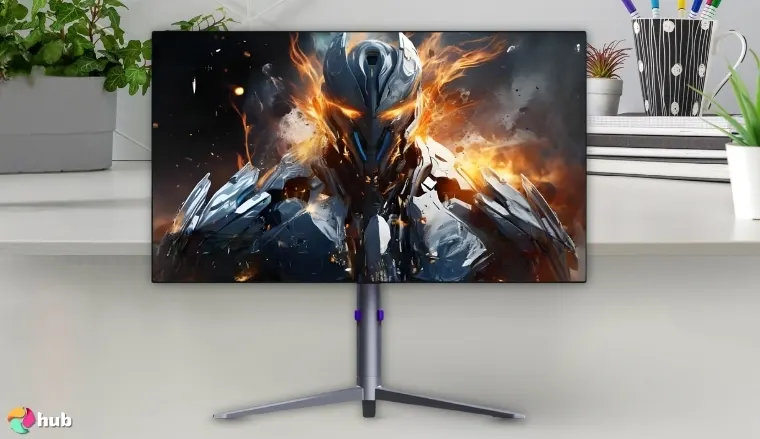
1. KTC G27P6 [Best Overall Budget Gaming Monitor]
| Specs | Details |
|---|---|
| Screen Size | 27″ |
| Resolution | 2560 x 1440 (QHD) |
| Panel Type | OLED |
| Refresh Rate | 240Hz |
| Response Time | 0.03ms |
| Curvature | No |
| Adaptive Sync | G-Sync Compatible & FreeSync Premium |
| HDR | HDR10 |
| Ports | 2x HDMI 2.0, 1x DisplayPort 1.4 |
Trying an OLED screen for the first time is like jumping from a 60Hz panel to 144Hz – you simply cannot go back.
That’s why the KTC G27P6 is a surprisingly cheap entry point into these types of monitors, making it easily stand out as the overall best budget gaming monitor option. Simply put, the perfect blacks and vibrant colors made other gaming monitors look flat by comparison.
The brilliant OLED panel’s instant pixel response time effectively eliminates any motion blur even in frantic gameplay, while the 240Hz refresh rate displays motion more fluidly than any other class of monitors out there.
With such a high refresh rate and shockingly small response time of 0.03 ms, this is one of those gaming monitors that are perfect for action-packed, fast-paced games, like MOBA and FPS, where each second can make a difference between winning and losing.
The color performance is simply outstanding, covering 101% of the DCI-P3 color space. Even with that, the HDR takes it a whole leap forward.
The per-pixel illumination creates a dramatic 150,000:1 contrast ratio between light and dark areas that makes games look breathtaking.
Best OLED gaming monitors like G27P6 also include thoughtful features to protect the panel, including pixel shifting and an anti-burn-in tech to increase the monitor’s lifespan.
| Pros | Cons |
|---|---|
| ✅ OLED-powered perfect blacks ✅ Incredibly fast 0.03ms response time ✅ 240Hz refresh rate is ultra-smooth for competitive titles ✅ HDR performance is incomparable to LCD monitors ✅ Virtually no input lag ✅ Built-in features protect against burn-in | ❌ Maximum brightness is lower than high-end gaming monitors, but that’s great for horror games |
Final Verdict: The KTC G27P6 brings previously luxurious OLED technology to the budget gaming monitor market, delivering unmatched contrast, color quality, and response times that transform gaming visuals at a surprisingly affordable price point.
It’s also a great PS5 monitor when it comes to value for money.
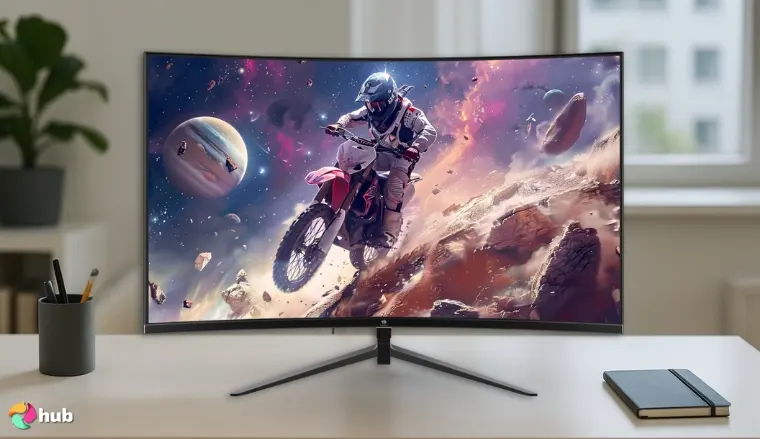
2. Z-Edge UG27 27-Inch [Best Budget Curved Monitor]
| Specs | Details |
|---|---|
| Screen Size | 7″ |
| Resolution | 1920 x 1080 (FHD) |
| Panel Type | VA |
| Refresh Rate | 200Hz |
| Response Time | 1ms |
| Curvature | 1500R |
| Adaptive Sync | FreeSync Premium and G-Sync Compatible |
| HDR | HDR Ready |
| Ports | 1x HDMI 2.0, 1x DisplayPort 1.4 |
The Z-Edge UG27 immediately got my attention with its elegant 1500R curved design that keeps every pixel facing your eyes for a much clearer image.
Its VA panel brings 3000:1 contrast with surprisingly deep blacks for this class of monitor, excellent for darker games or horror titles that look particularly atmospheric.
The 200Hz refresh rate, coupled with 1ms response time, is actually one of the best bargains you can find in the curved display market right now.
To no surprise, the color coverage is what you’d expect for a VA panel, producing vibrant, punchy colors, while the Eye Care Technology filters out blue light.
The FreeSync technology works wonders when it comes to reducing screen tearing and stuttering. And even though it was initially designed for AMD cards, NVIDIA graphics cards have been running it almost as flawlessly since 2019, all thanks to G-Sync Compatible mode.
A little detail I particularly like is Z-Edge’s OSD menu, which is easy to navigate and switch between gaming presets. The FPS mode, for instance, brightens shadows slightly to help spot enemies in dark corners.
| Pros | Cons |
|---|---|
| ✅ More immersive gaming with 1500R curve ✅ Excellent contrast ratio for a VA panel ✅ Extra smooth 200Hz refresh rate ✅ Deep blacks for atmospheric games ✅ Affordable entry into curved gaming monitors ✅ Very slim and sleek design | ❌ Non-adjustable stand height |
Final Verdict: The Z-Edge UG27 27-inch curved monitor for gaming is simply a no-brainer pick for immersive gaming experiences further boosted by great contrast and smooth performance, especially if you’re in the market for a lower-resolution panel.
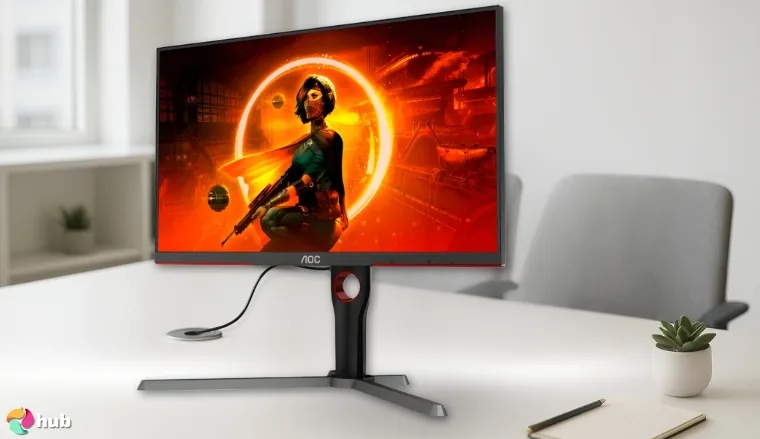
3. AOC Q27G3XMN [Best Budget Monitor for Compatibility]
| Specs | Details |
|---|---|
| Screen Size | 27″ |
| Resolution | 2560 x 1440 (QHD) |
| Panel Type | VA |
| Refresh Rate | 180Hz |
| Response Time | 1ms |
| Curvature | No |
| Adaptive Sync | G-Sync & FreeSync Compatible |
| HDR | DisplayHDR 1000 |
| Ports | 2x HDMI 2.0, 1x DisplayPort 1.4 |
The AOC Q27G3XMN will immediately impress anyone with its crisp 1440p resolution and premium gaming features at a budget-friendly price.
And to be completely frank, the 180Hz refresh rate and 1ms response time are everything you’ll need to eliminate any motion blur for that additional competitive edge in multiplayer matches.
AOC’s Quantum Dot technology also produces surprisingly vibrant colors that make atmospheric games pop, as expected with a VA panel powered by Mini-LEDs.
It’s also very important to mention its DisplayHDR 1000 capability and flawless adaptive sync compatibility with both NVIDIA and AMD graphics cards.
The build quality is also fairly impressive at this price point, with slim bezels for a sleek modern appearance and a solid port selection for anyone planning to hook up more devices.
While the stand isn’t the most premium-feeling, it offers good stability and an upgrade path with any VESA mount.
| Pros | Cons |
|---|---|
| ✅ Exceptionally clear 1440p for high detail ✅ 180Hz refresh rate ideal for competitive games ✅ Vibrant colors and good contrast ✅ Both G-Sync and FreeSync compatibility ✅ three ports for a multi-monitor setup ✅ Best color accuracy in this price range | ❌ Limited stand adjustability, but supports VESA mounting |
Final Verdict: The AOC Q27G3XMN is an easy pick for all-around gaming performance with impressive specs that would typically cost significantly more, making it ideal for any budget-conscious gamers who don’t want to compromise quality.
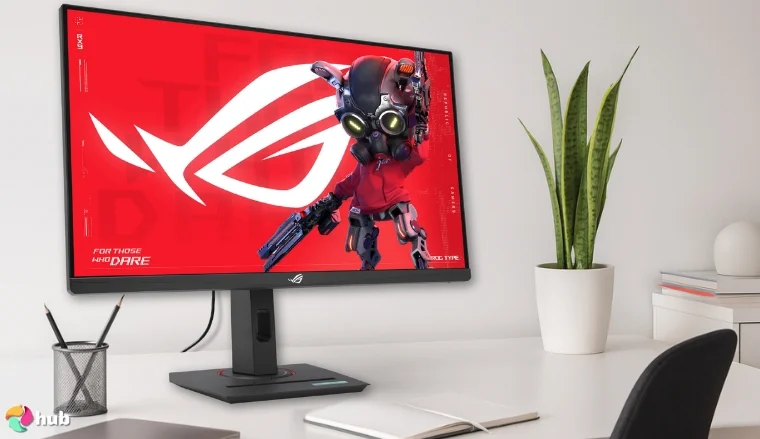
4. ASUS ROG Strix XG27UCS [Best Budget 4K Monitor]
| Specs | Details |
|---|---|
| Screen Size | 27″ |
| Resolution | 3840 x 2160 (4K) |
| Panel Type | IPS |
| Refresh Rate | 160Hz |
| Response Time | 1ms |
| Curvature | No |
| Adaptive Sync | G-Sync Compatible |
| HDR | HDR400 |
| Ports | 2x HDMI 2.0, 2x DisplayPort 1.4, USB-C |
ASUS ROG Strix 27″ is a shot you definitely won’t miss, especially if you’re looking for the crisp 4K image quality.
Despite pushing four times as many pixels as a 1080p display, the 160Hz refresh rate provides smooth gameplay that’s both responsive and fluid.
This is ideal not just for visually rich single-player experiences but also for top RTS games that benefit the most from small details accentuated by high resolutions.
The IPS panel delivers excellent color accuracy, covering 130% of the sRGB color space, which results in vibrant, lifelike visuals.
The HDR400 certification provides some improvements in compatible games, with better highlight detail and more natural lighting.
I was particularly impressed with the monitor’s Extreme Low Motion Blur Sync (ELMB SYNC) technology, which eliminates ghosting and tearing at high frame rates.
| Pros | Cons |
|---|---|
| ✅ Exceptional 4K clarity and sharpness ✅ 160Hz refresh rate rarely found on budget 4K gaming monitors ✅ High-class sRGB color accuracy ✅ ASUS Eye Care technology reduces eye fatigue during long gaming sessions ✅ Multiple game-specific display profiles ✅ Sturdy build quality with a premium feel ✅ Loads of ports with multiple HDMI and DisplayPort inputs | ❌ HDR performance is entry-level but still enhances compatible content |
Final Verdict: The ASUS ROG Strix 27″ offers an accessible entry point into 4K gaming with performance that rivals way more expensive, premium gaming monitors, making it perfect for detail-oriented gamers who want maximum visual clarity without breaking the bank.
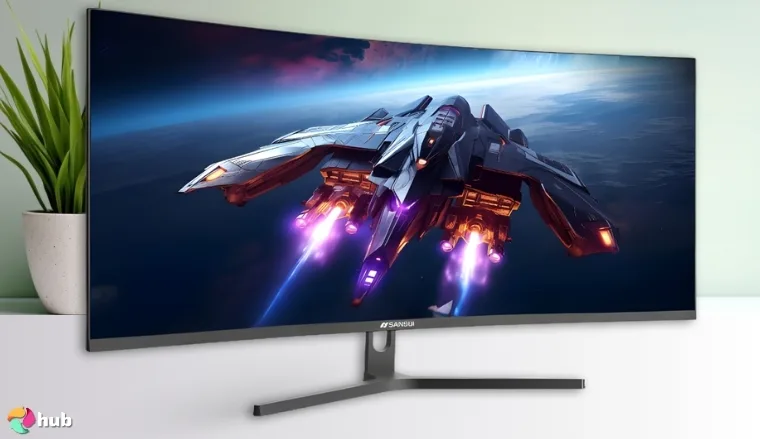
5. SANSUI 34-Inch UWQHD [Best Budget Ultrawide Monitor]
| Specs | Details |
|---|---|
| Screen Size | 34″ |
| Resolution | 3440 x 1440 (UWQHD) |
| Panel Type | VA |
| Refresh Rate | 165Hz |
| Response Time | 1ms |
| Curvature | 1500R |
| Adaptive Sync | FreeSync |
| HDR | HDR Ready |
| Ports | 2x HDMI 2.0, 2x DisplayPort 1.4 |
Everyone I know who uses an ultrawide monitor says the same thing – it changes your gaming experience dramatically.
SANSUI 34-inch ultrawide monitor’s 21:9 aspect ratio immediately creates a sense of immersion that standard 16:9 gaming monitors simply can’t match, with the curved display wrapping around your field of view.
Top racing games and FPS titles particularly benefit from the extended peripheral vision, giving a better sense of surroundings and speed.
The VA panels like this one are the best choice when it comes to contrast for more pronounced dimension to nighttime scenes.
The 165Hz refresh rate is more than enough for even high-speed games, though running them at this framerate may require a little beefier PC setup for those extra pixels.
What impressed me most was how best ultrawide gaming monitors like Sansui transform productivity alongside gaming, allowing you to comfortably work with multiple windows side by side.
| Pros | Cons |
|---|---|
| ✅ A wider field of view gives you an advantage in FPS games ✅ 1500R curve is perfect for an ultra-wide panel ✅ 3440×1440 resolution is great for clarity without demanding extreme GPU power ✅ Extensive screen real estate for both gaming and productivity ✅ Picture-by-picture allows connecting multiple devices ✅ Pretty good built-in speakers | ❌ Doesn’t support G-Sync, but makes up for it with decent FreeSync compatibility |
Final Verdict: The SANSUI 34-inch UWQHD monitor is one of my personal favorites for cinematic gaming and the additional productivity benefits of a wider panel at a super fair price point.
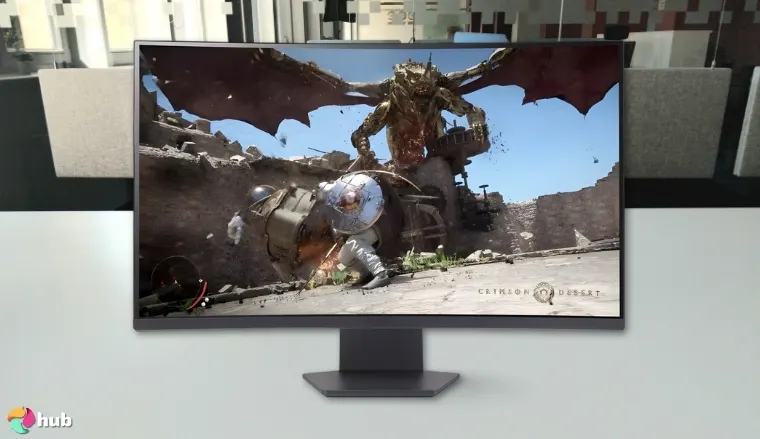
6. LG 32GS60QC-B [Best Budget 180Hz Monitor]
| Specs | Details |
|---|---|
| Screen Size | 31.5″ |
| Resolution | 2560 x 1440 (QHD) |
| Panel Type | VA |
| Refresh Rate | 180Hz |
| Response Time | 1ms |
| Curvature | 1000R |
| Adaptive Sync | FreeSync compatible |
| HDR | HDR10 |
| Ports | 2x HDMI 2.0, 1x DisplayPort 1.4 |
LG is one of the top dogs in display space, and 32GS60QC-B makes it immediately apparent. The 180Hz refresh rate delivers butter-smooth motion that will make tracking fast-moving targets noticeably easier than on standard 144Hz displays.
In addition, LG’s Dynamic Action Sync reduces input lag to a sweet 1ms for a tangible advantage in tracking enemy movements in even the fastest FPS games.
While I personally prefer IPS gaming monitors, the quality of this VA panel is almost indistinguishable from its IPS counterparts, especially when combined with the 1000R curvature that it offers. The HDR10 support is also a welcome addition for compatible games with dramatic lighting.
The monitor’s build quality is on par with all top LG gaming monitors, with a sturdy stand offering tilt adjustments, while the matte screen finish is a huge bonus to reduce glare during daytime or while using intense indoor lighting. Completing your desk arrangement with a top soundbar for gaming ensures the audio experience is just as immersive as the smooth visuals provided by the high refresh rate panel.
| Pros | Cons |
|---|---|
| ✅ Exceptional motion clarity with 180Hz ✅ The 1ms response time adds a competitive advantage ✅ Dynamic Action Sync ensures reduced input lag ✅ VA panel produces impressive contrast for atmospheric games ✅ 1440p resolution doesn’t demand excessive GPU power ✅ Very sturdy and stable stand | ❌ No built-in speakers, so external audio solutions may be needed |
Final Verdict: The LG 32GS60QC-B offers competitive gamers an affordable entry into high refresh rate gaming with its 180Hz performance, making it perfect for players who prioritize smooth motion and responsiveness.
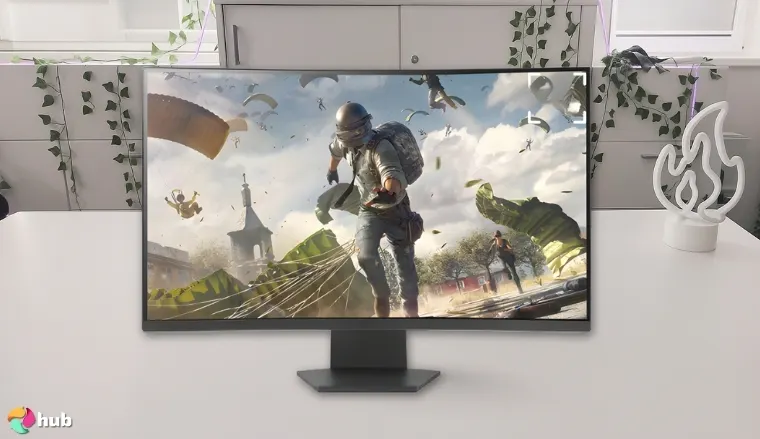
7. LG 32GS60QC-B Ultragear [Best 32-Inch Budget Monitor]
| Specs | Details |
|---|---|
| Screen Size | 32″ |
| Resolution | 2560 x 1440 (QHD) |
| Panel Type | VA |
| Refresh Rate | 180Hz |
| Response Time | 1ms |
| Curvature | 1000R |
| Adaptive Sync | FreeSync compatible |
| HDR | HDR10 |
| Ports | 2x HDMI 2.0, 1x DisplayPort 1.4 |
The huge screen of the LG 32GS60QC-B Ultragear is the best budget monitor in the 32-inch market to immediately transform your gaming setup.
This 1000R curved display strikes an excellent balance – large enough to be truly immersive without requiring the desk space of an ultrawide or the GPU demands of a 4K panel.
The 1440p resolution at this screen size provides excellent pixel density on top of already impressive performance stats.
What surprised me most was how the 180Hz refresh rate maintains great fluidity despite being a large VA panel.
In fast-paced titles like Call of Duty, the 1ms response time ensures minimal motion blur, while AMD FreeSync effectively eliminates any screen tearing.
I particularly appreciated the Black Stabilizer feature, which improved visibility in dark scenes without washing out the image into blobs of grey.
| Pros | Cons |
|---|---|
| ✅ Matte finish for less visible glare ✅ 1440p offers a balanced blend of sharp visuals and smooth performance ✅ Impressive 180Hz refresh rate for cinematic games ✅ 3000:1 contrast ratio enhances image depth and detail accuracy ✅ Black Stabilizer feature for deeper blacks ✅ Versatile connectivity options for seamless integration with various devices | ❌ Requires adequate desk depth for optimal viewing distance |
Final Verdict: Only select displays are good enough to deliver smooth performance on a large screen, and the LG 32GS60QC-B Ultragear is definitely one of them, while being one of the lightest on your wallet.
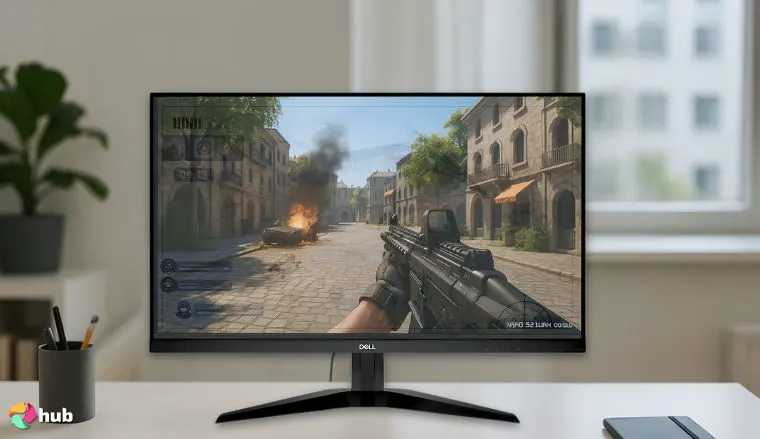
8. Dell G2725D [Best 27-Inch Budget Monitor]
| Specs | Details |
|---|---|
| Screen Size | 27″ |
| Resolution | 2560 x 1440 (QHD) |
| Panel Type | IPS |
| Refresh Rate | 180Hz |
| Response Time | 1ms |
| Curvature | No |
| Adaptive Sync | FreeSync compatible |
| HDR | No |
| Ports | 2x HDMI 2.0, 1x DisplayPort 1.4 |
The Dell G2725D arrives with the company’s trademark simplistic design that would look at home in any setup.
As expected of Dell, the monitor’s build quality is as solid as it gets, which feels more premium than its price tag suggests.
The same can be said for the provided stand, which offers full height, tilt, and swivel adjustments, often missing in the budget class.
The best part, of course, is its IPS panel with excellent color accuracy and significantly wider viewing angles that cannot be matched by any VA or TN displays.
The 1440p resolution at 27 inches is the jackpot for image sharpness, with the most optimal pixel density you can get for this size.
And the icing on the cake is the 180Hz refresh rate paired with the 1ms response time that keeps all the motions smooth and leaves practically no ghosting, particularly evident when playing competitive shooters like CS2 or Apex Legends.
| Pros | Cons |
|---|---|
| ✅ Excellent build quality with a premium feel ✅ Wide viewing angles thanks to the IPS panel ✅ 180Hz refresh rate and 1ms response time for the cheapest price ✅ Stand with fully adjustable height and tilt ✅ ComfortView Plus reduces blue light without compromising color ✅ USB hub for multiple peripherals | ❌ HDR support is not included, which may limit dynamic range in some content |
Final Verdict: The Dell G2725D is the top value for the dollar, packing excellent build quality and all essential monitor features at the 27-inch sweet spot made by one of the most trusted brands.
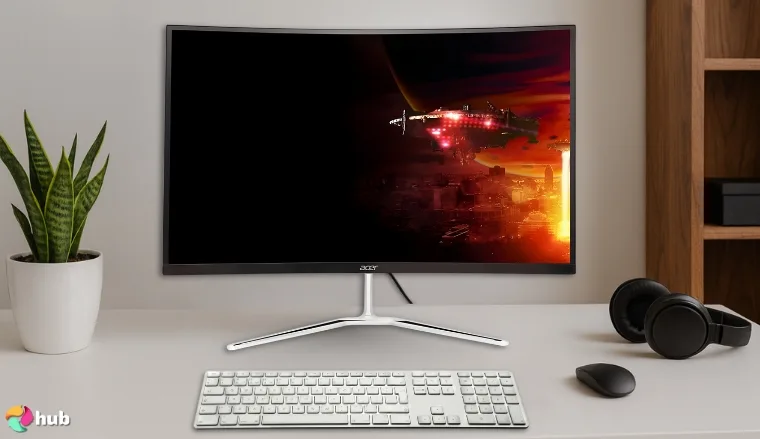
9. Acer Nitro EDA270U P [Best Budget 1440p Monitor]
| Specs | Details |
|---|---|
| Screen Size | 27″ |
| Resolution | 2560 x 1440 (WQHD) |
| Panel Type | VA |
| Refresh Rate | 170Hz (OC) |
| Response Time | 1ms |
| Curvature | 1500R |
| Adaptive Sync | FreeSync Premium |
| HDR | HDR10 |
| Ports | 2x HDMI 2.0, 1x DisplayPort 1.2 |
Acer Nitro EDA270U P is a smart upgrade path for anyone looking to replace their 1080p display with something sharper.
The jump to 1440p resolution gives you almost 77% more pixels, clearly evident when examining textures and small details in highly detailed games. On the other hand, while it’s typical for VA displays to have a narrower viewing angle, it makes up for it with extra vibrant colors and simply excellent contrasts.
And to be fair, the 170Hz refresh rate was more than enough for me to recommend this monitor to my friend looking for best mini PC setup.
The 1ms response time keeps any motion blur to a minimum, even during rapid camera movements, particularly in games where spotting enemies quickly makes all the difference.
Yet, if you want to get the most advantage out of this monitor, I suggest pairing it with the best budget gaming mouse for precise control and a high-quality gaming headset for immersive audio.
| Pros | Cons |
|---|---|
| ✅ Excellent VA panel with high contrast ✅ Solid 170Hz refresh rate ✅ AMD FreeSync Premium compatibility ✅ Slim bezels are ideal for multi-monitor setups ✅ Adequate built-in 2W speakers ✅ Included both DP and HDMI cables | ❌ Stand offers limited adjustability, which may affect ergonomic positioning |
Final Verdict: The Acer Nitro EDA270U P is a safe bet for anyone stepping into the 1440p realm and makes a perfect upgrade path from 1080p displays without the premium cost of 4K.
How To Choose a Monitor for Gaming on a Budget in 202?
Finding the best budget gaming monitor requires balancing several key factors to get the most value for your money.
This includes drawing several crucial lines of where to compromise and where to hold firm when shopping on a budget. In this monitor buyer’s guide, I’ll teach you all the most important things to look for and how to choose the best monitor for your needs.
1. Resolution vs. Performance
When shopping for a budget gaming monitor, one of the most crucial decisions you’ll face is balancing resolution against performance. This trade-off directly impacts both visual quality and gameplay smoothness. Here are your main resolution options:
| Resolution | Description | Ideal Use Case |
|---|---|---|
| 1080p (Full HD) | Most budget-friendly; works well on smaller screens (24-27 inches) and requires less GPU power | Competitive gaming or mid-range graphics cards |
| 1440p (QHD) | Balanced sharpness and performance; about 77% more pixels than 1080p; great for 27-inch displays | Immersive gaming in open-world or story-driven titles |
| 4K (UHD) | Highest detail level; requires powerful hardware and higher budget | Detail-oriented genres like strategy or simulation games |
From my personal experience, 1440p is the best value proposition for most gamers, offering noticeably improved visuals over 1080p without the steep hardware requirements and price increase of 4K.
If you’re primarily playing competitive games where frame rates matter most, 1080p remains the best option to make the most out of your hardware.
2. Refresh Rate & Response Time
When choosing a gaming monitor, refresh rate and response time are two of the most important specifications to consider. These directly impact how smooth your gameplay feels and how clearly fast-moving objects are displayed on screen.
Refresh rate, measured in Hertz (Hz), tells you how many times per second your monitor updates with a new image. Higher refresh rates produce smoother motion, which can significantly enhance your gaming experience.
| Refresh Rate | Performance Description | Best For |
|---|---|---|
| 60Hz | Basic; now largely outdated | Casual gaming, general desktop use |
| 144Hz | Noticeably smoother | Ideal for most gamers on a budget |
| 165–240Hz | Ultra-smooth motion | Competitive and high-FPS gaming |
Upgrading from 60Hz to 144Hz is often the most noticeable improvement in visual fluidity. In fast-paced games like shooters or battle royales, smoother motion makes it much easier to track moving targets and respond quickly.
Response time refers to how quickly a pixel can change from one color to another, typically measured in milliseconds (ms). Lower response times reduce motion blur and ghosting, which is critical in high-speed gameplay.
| Response Time | Performance Description | Common Use |
|---|---|---|
| 1ms | Excellent; minimal motion blur | Competitive gaming, esports |
| 4–5ms | Acceptable for most users | Casual and mid-range gaming |
| >5ms | Noticeable blur in fast scenes | Office use, older or budget displays |
Response time becomes most apparent during rapid camera movements or when tracking fast-moving objects. For competitive players, a 1ms response time is recommended to ensure sharp visuals and minimize distractions during gameplay.
3. Size & Aspect Ratio
When shopping for a budget gaming monitor, screen size and aspect ratio play a major role in shaping your gaming experience (and how much money you’ll spend).
| Screen Size | Description |
|---|---|
| 24 inches | Most affordable; great for competitive gaming where full view is essential |
| 27 inches | Balanced option; immersive without excessive head movement |
| 32 inches and up | Highly immersive; more expensive and needs a deeper desk |
Many users and reviews agree that 27 inches strikes the ideal balance, providing enough screen real estate for visual detail without overwhelming desk space. For better comfort during long sessions, consider pairing your monitor with a high-quality gaming chair within your budget.
| Aspect Ratio | Description |
|---|---|
| 16:9 | Standard widescreen; best compatibility with games and media |
| 21:9 | Ultrawide; more immersive, especially in racing or simulation games, but pricier |
| 16:10 | Offers slightly more vertical space; uncommon and mostly suited for productivity |
For most gamers, 16:9 remains the most practical and cost-effective option. While 21:9 ultrawide monitors offer a more cinematic feel, especially in certain genres, they tend to fall outside the typical budget range.
4. Panel Type
Panel technology plays a crucial role in determining image quality, response speed, and overall cost of a gaming monitor and each panel type has its own strengths and weaknesses.
| Panel Type | Pros | Cons |
|---|---|---|
| TN (Twisted Nematic) | ✅ Fastest response times (often 1ms) ✅ Highest refresh rates ✅ Most affordable | ❌ Poor viewing angles ❌ Weaker color reproduction ❌ Limited contrast |
| VA (Vertical Alignment) | ✅ Better contrast ratios with deeper blacks and vibrant colors ✅ Affordable mid-range option | ❌ Slower response times can cause ghosting in fast-paced games |
| IPS (In-Plane Switching) | ✅ Superior color accuracy ✅ Wide viewing angles ✅ Increasingly affordable | ❌ Typically higher response times ❌ Potential for IPS glow ❌ Slightly more expensive |
TN panels excel in speed and affordability but compromise on color and viewing angles. VA panels provide better contrast and deeper blacks but may introduce motion blur in fast games.
IPS panels deliver the best overall image quality and viewing experience, making them the preferred choice for most gamers who want a balanced combination of performance and visuals.
5. Adaptive Sync (G-Sync vs. FreeSync)
Screen tearing, which is a distracting horizontal split in your image during fast motion, can affect even high-end gaming setups.
Adaptive sync technologies address this by synchronizing your monitor’s refresh rate with your graphics card’s output, resulting in smoother gameplay.
| Technology | Pros | Cons |
|---|---|---|
| NVIDIA G-Sync | ✅ Provides more consistent performance and a wider effective range | ❌ Requires proprietary hardware, typically found only in higher-priced monitors |
| AMD FreeSync | ✅ More budget-friendly, widely available, and compatible with NVIDIA GPUs | ❌ Quality and performance can vary significantly between models |
For budget gamers, FreeSync monitors offer the best value. Additionally, many newer FreeSync displays support NVIDIA graphics cards through “G-Sync Compatible” mode, though performance and compatibility may vary depending on the specific monitor.
FAQs
What is the best budget gaming monitor?
The best budget gaming monitor is AOC Q27G3XMN. It’s one of the best bang for the buck offering 180Hz refresh rate at 1440p, 1ms response time, and adaptive sync support.
On top of that, it comes at a very wallet-friendly price.
What is the best gaming monitor?
The best gaming monitor right now is the MSI MPG 321URX with a 32-inch 4K OLED panel offering an incredible pixel density and a stunning 240Hz refresh rate bolstered by 0.03ms response time.
However, it’s far from budget-friendly, costing $800-$900 USD.
What is the best Hz for gaming?
The best refresh rate for gaming is 144Hz or higher, as it provides smooth, responsive gameplay for fast-paced games, reducing motion blur and input lag.
If you’re playing competitive FPS or action games, a 240Hz monitor is even better for a more fluid experience.
What makes a good gaming monitor?
A good gaming monitor combines the right resolution (1080p, 1440p, or 4K ), fast refresh rate (at least 144Hz), low response time (1-4ms), and panel type (IPS, VA, TN) suited to your gaming style.
Features like G-Sync and FreeSync support can boost the experience even further.
How to choose a monitor for gaming?
To choose a monitor for gaming, first decide on your budget, then choose features based on the games you play. Focus on refresh rate and response time for competitive games or resolution and panel quality for story games.
What type of monitor is best for gaming?
IPS monitors are best for gaming due to excellent color accuracy and great viewing angles. TN panels are viable for competitive gaming on a tight budget, while VA panels are best for atmospheric games with dark scenes.
Who makes the best gaming monitors?
The best gaming monitors are made by ASUS, LG, Samsung, and AOC. However, each brand has strengths: ASUS – competitive gaming features, LG – superior IPS panels, Samsung – VA panels, and AOC – best value for money.
How much is a gaming monitor?
Gaming monitors range from $150 to $2000+. Budget gaming monitors with 1080p resolution cost $150-$250, mid-range 1440p displays range from $250-$500, and premium options with 4K resolution, HDR, or ultra-high refresh rates usually start at $500.