


How to Spot Fake Pokémon Cards


Learning how to spot fake Pokémon cards is essential for anyone serious about collecting or playing the TCG. Counterfeit cards have plagued the trading card game since its early days, and they continue flooding the market today. Some fakes are laughably obvious, while others require a trained eye to identify.
This guide walks you through practical, non-destructive methods to authenticate your cards. You will learn to examine everything from card texture and font accuracy to holographic patterns and the iconic card back design. These techniques work for both modern and vintage cards, helping you protect your collection and avoid costly mistakes.
Jump to:
Why Fake Pokémon Cards Are So Common
The Pokémon trading card game has exploded in popularity over the past few years. Rare cards now sell for hundreds or even thousands of dollars, making counterfeiting an attractive proposition for criminals. Counterfeiters target both collectors and casual buyers, knowing that excited fans may overlook obvious red flags.
Most fake cards originate from overseas printing operations using cheap materials and inferior production methods. These operations pump out millions of counterfeit cards each year. Some fakes target children with flashy designs and impossibly high HP values. Others attempt to replicate genuine rare cards to deceive serious collectors. The variety of counterfeiting methods means you need multiple authentication techniques to stay protected.
How to Spot Fake Pokémon Cards (Step-by-Step Checks)
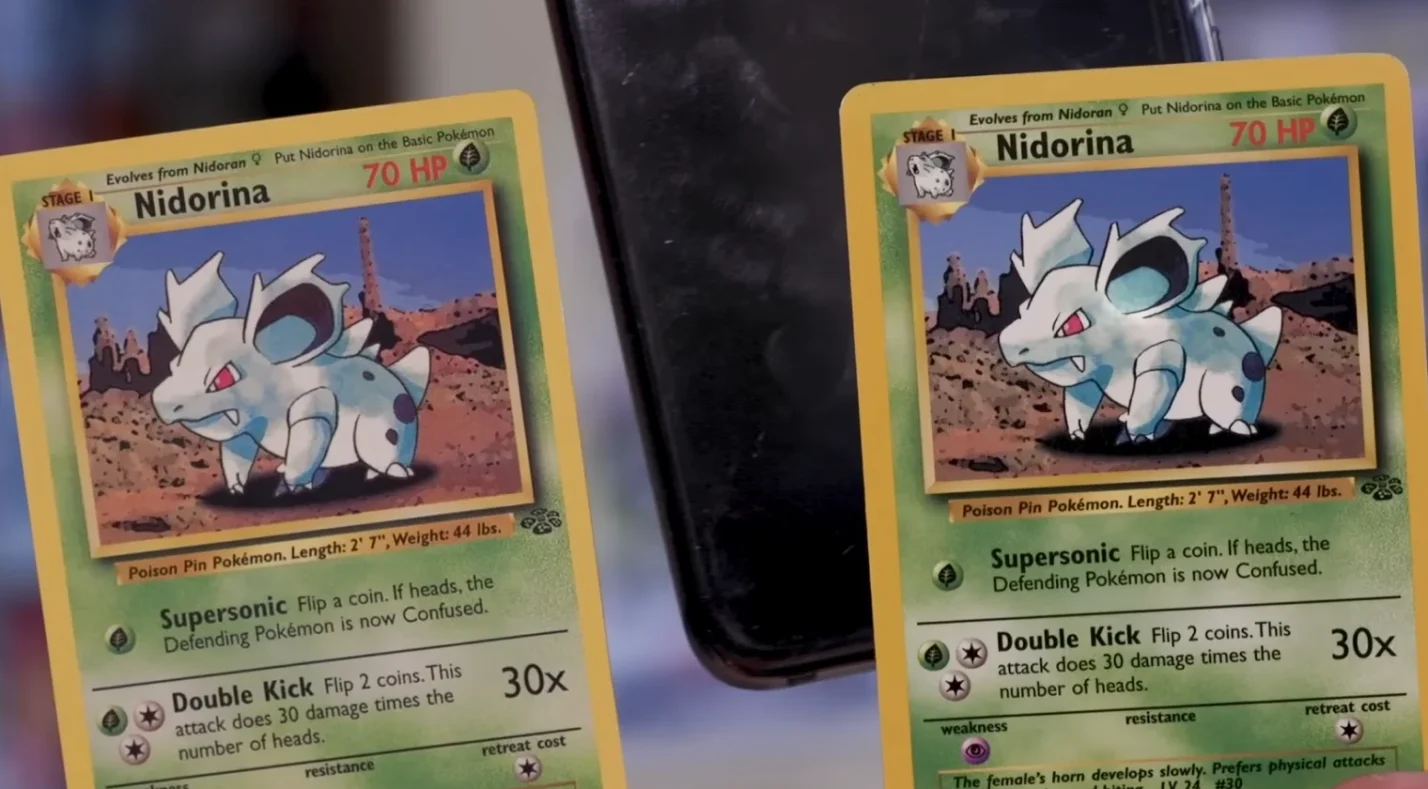
The best approach combines several verification methods. A card might pass one test but fail another. I recommend checking at least three or four elements before concluding that a card is authentic. Always compare suspicious cards against known genuine examples whenever possible.
Texture and Card Feel
The feel of a card is often the first indicator of authenticity. Genuine Pokémon cards are printed on high-quality cardstock with a distinctive texture that counterfeiters struggle to replicate. Authentic cards feel sturdy and smooth with a slight matte finish on the surface.
Fake cards typically feel wrong in your hands. Some feel papery and flimsy, while others feel plasticky or overly glossy. The surface might be too slick, similar to a fresh deck of playing cards. If the cardstock feels thicker than usual or resembles construction paper, you likely have a counterfeit. Understanding the different types of Pokémon cards helps you recognize what authentic cards from each era should feel like.
Text and Font Accuracy
Typography errors are among the most common tells on counterfeit cards. The Pokémon Company uses specific fonts and precise spacing throughout their cards. Counterfeiters often use similar but incorrect typefaces that look slightly off to trained eyes.
Examine the spacing between letters carefully. This spacing should be consistent and balanced on authentic cards. Fake cards frequently show abnormally large gaps between letters or cramped text that looks uncomfortable. Spelling errors are another dead giveaway. Check every piece of text on the card, including attack descriptions and rules text.
Missing the accent mark on “Pokémon” is a classic counterfeiter mistake that should never appear on genuine cards. If you want to verify specific text details, compare your card against official database scans or check resources about how to check Pokémon card value, which often include authentication tips.
Holo Foiling and Shine
Holographic patterns separate many genuine rare cards from counterfeits. Authentic holo cards display specific foil patterns unique to their card type and era. These patterns change smoothly as you tilt the card under light, creating depth and movement in the holographic effect.
Fake holo cards almost always get this wrong. The most obvious fakes have a flat, generic rainbow sheen without any specific pattern. The colors often appear muted or have a brownish, yellowish, or orange tint that authentic cards never display.
Modern ultra-rare cards feature textured surfaces with patterns you can feel with your fingernail. Cards from the GX, V, VMAX, and VSTAR eras should have fingerprint-like textures etched into the card surface. Fake versions are usually completely smooth because counterfeiters lack the technology to reproduce this texture.
Card Back Comparison
The card back is your most reliable authentication tool. Every English Pokémon card since 1999 features the same iconic design: a Poké Ball surrounded by swirling blue patterns. This design was intentionally created to be difficult to counterfeit.
Pay attention to the blue border around the edge. Genuine cards display a rich, deep blue that creates a sharp boundary with the swirling pattern inside. Fake cards often show a lighter, washed-out, or purplish border that bleeds into the interior design. The transition should be sharp and defined.
Examine the area directly to the top-right of the Poké Ball’s red hemisphere. On authentic cards, this diagonal sweep contains dappled dark and light blue colors. Counterfeits typically show solid, flat blue in this area because replicating the subtle color variation is technically challenging.
Layering and Core Structure
Authentic Pokémon cards consist of multiple layers bonded together during manufacturing. English cards have a black or dark gray layer sandwiched between the front and back surfaces. This layer provides structural integrity and prevents light from passing through the card.
You can sometimes see this black layer by examining the edge of a card closely without damaging it. Look at cards with naturally worn edges where the layers might be slightly visible. Genuine cards show distinct layering, while fake cards are typically printed on single-layer cardstock.
Compare the Card to an Authentic Pokémon Card
Direct comparison is the most effective authentication method available. Place your suspicious card next to a known authentic example from the same set or era. Differences in size, weight, color saturation, and print quality become immediately apparent.
Check that the card measures exactly 63mm by 88mm, the standard size for trading cards. Compare every detail: the yellow border width on the front, the energy symbol sizes, the copyright text at the bottom, and the set symbol positioning. Any discrepancy could indicate a fake.
How to Spot Fake Pokémon Packs and Sealed Products
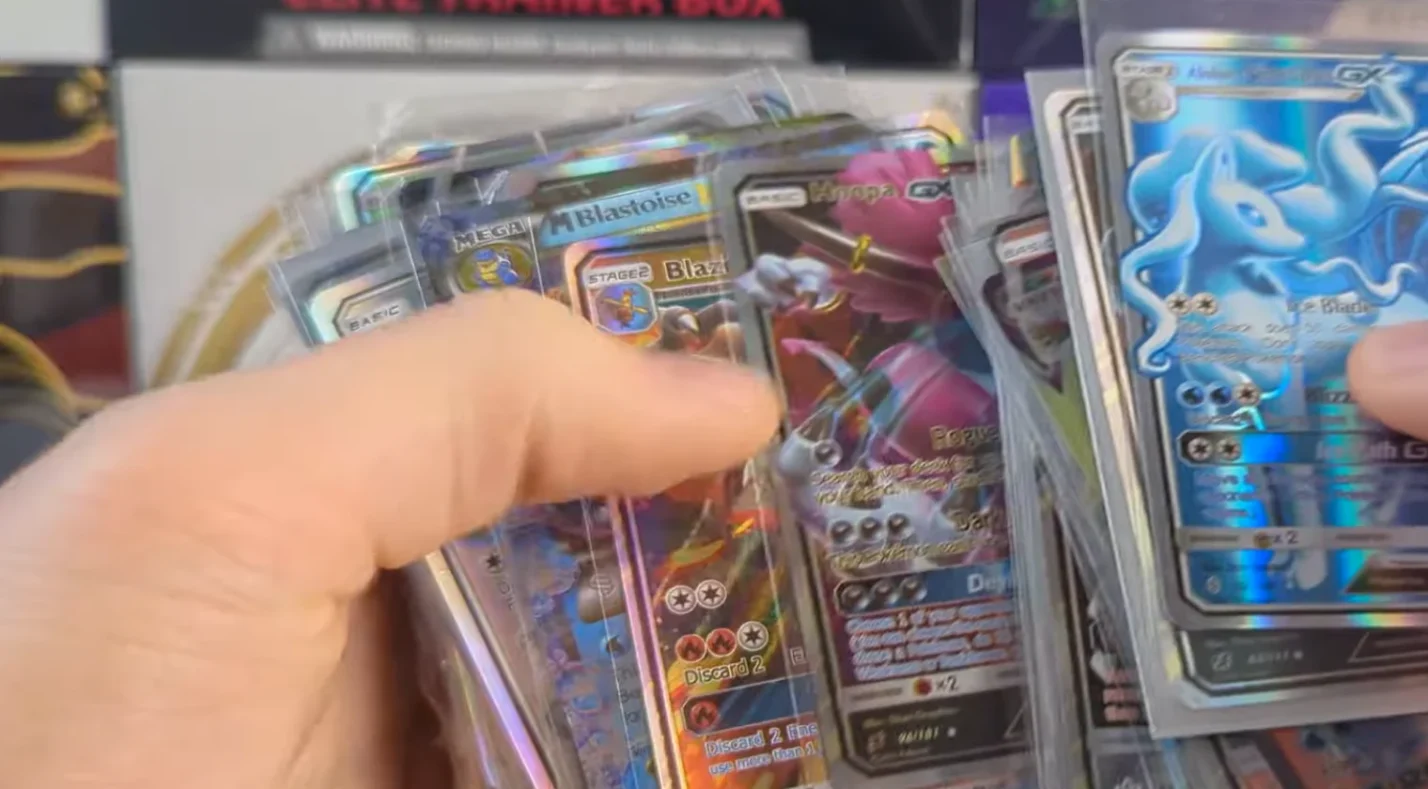
Counterfeiters do not limit themselves to individual cards. Fake booster packs and sealed products flood online marketplaces and less reputable retail locations. These fake products represent an even greater risk because you cannot inspect the cards before purchasing.
Pack artwork should be sharp and professionally printed. Fake packs often display blurry images, incorrect colors, or distorted text. Look for spelling errors in product descriptions and set names. Some counterfeit products reference sets that do not exist.
Examine the crimping and seals carefully. The Pokémon Company seals their products in specific ways with consistent crimp patterns. Fake packs might show stretch marks, burn marks from heat sealing, or irregular crimp lines. Price is another important indicator. If a deal seems too good to be true, it probably is. Our guide on the best Pokémon packs to buy for profit emphasizes purchasing from authorized retailers.
How to Spot Fake Japanese Pokémon Cards
Japanese Pokémon cards require slightly different authentication approaches. These cards are generally smaller than their English counterparts and use different cardstock with a distinct feel and internal structure.
Print quality on authentic Japanese cards is exceptionally sharp with vibrant, consistent colors. Counterfeit Japanese cards often show blurry or pixelated printing. Japanese text should be crisp and clear with proper kanji, hiragana, and katakana characters.
Rarity symbols and set numbers on Japanese cards differ from English versions. Familiarize yourself with legitimate Japanese set symbols to identify inconsistencies in suspected fakes. Some counterfeit Japanese cards use simplified Chinese characters instead of proper Japanese text.
What NOT to Do When Checking Pokémon Cards
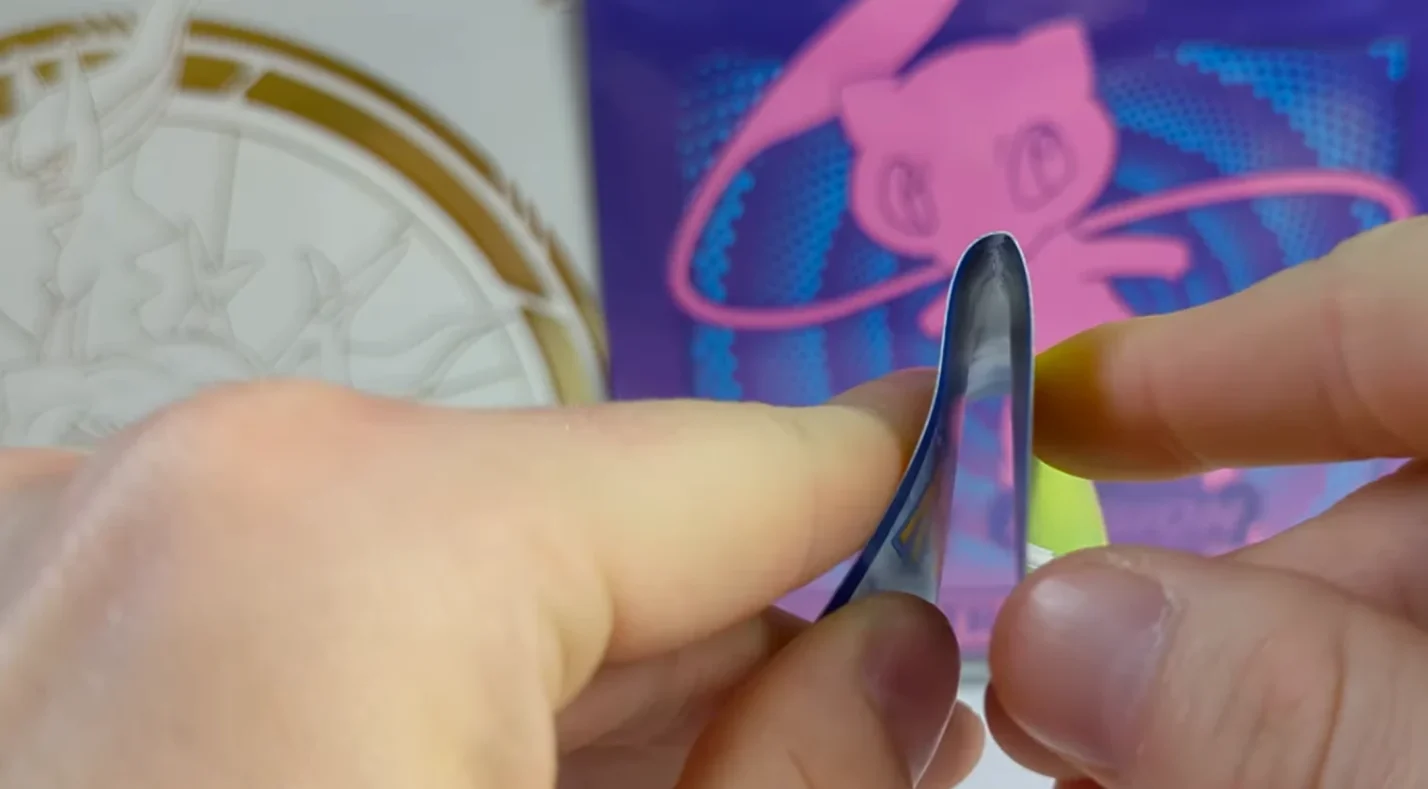
Some popular authentication methods cause more harm than good. Before you damage a potentially valuable card, understand which tests to avoid.
Don’t Do the Light Test
The light test produces unreliable results. Different card types and holographic treatments react to light in completely different ways. Modern counterfeits often pass this test, while some authentic cards appear more translucent than expected.
Don’t Do the Bend Test
The bend test risks permanently creasing or damaging your card. Even authentic cards can crease if bent too aggressively. Worse, some counterfeits pass the bend test without issue.
Don’t Do the Rip Test
The rip test involves tearing a card to examine its internal layers. This destroys the card and should never be performed on cards you want to keep. There are plenty of non-destructive methods providing reliable results. Once you confirm authenticity, explore options for how to sell Pokémon cards.
Research Your Pokémon Cards Before Buying
Prevention beats detection every time. Research cards thoroughly before purchasing, especially for expensive items. Use official databases and trusted community resources to learn what authentic versions should look like.
Purchase from reputable sellers with established track records. Be extremely cautious with marketplace listings from unknown sellers offering deals significantly below market value. Request clear photographs before purchasing online. If a seller refuses detailed photos, walk away.
Consider professional authentication services for high-value cards. Companies like PSA, CGC, and BGS employ experts using specialized equipment. Professional grading protects your investment by encapsulating authenticated cards in tamper-evident holders.
FAQs
To tell if a Pokémon card is fake, examine the card’s texture, font accuracy, holographic patterns, and card back design. Fake cards often feel flimsier and display printing errors like misspelled text or missing accent marks on “Pokémon.”
Fake cards can be either heavier or lighter depending on the materials used by counterfeiters. Most fakes tend to be lighter because they use cheaper, single-layer cardstock. However, weight alone is not reliable for authentication.
Yes, fake Pokémon cards are illegal to produce and sell as they violate trademark and copyright laws. Selling counterfeit cards constitutes fraud and trademark infringement with serious legal consequences.
No, fake Pokémon cards have zero value to collectors or players. They cannot be used in official tournaments and have no collectible worth regardless of the Pokémon featured.
Yes, grading companies like PSA, CGC, and BGS can detect most fake cards using trained experts and specialized equipment. However, even professionals can occasionally be fooled by sophisticated counterfeits. Always verify graded cards through online certification databases.