

Pokemon Card Types: Complete TCG Guide in 2026

Eneba Hub contains affiliate links, which means we may earn a small commission if you make a purchase through them—at no extra cost to you. Learn more

If you’ve ever fallen down the rabbit hole of Pokémon card types, you know it’s more than just colorful paper with monsters printed on them.
Each card has a purpose, and that purpose changes depending on how you approach the game. Every card isn’t just about power, but also about history, art, and the rush of finding something rare in a pack.
In this guide, I’m walking you through all the Pokémon card types that exist right now. We’ll break them down by function, then zoom into subtypes, rarities, and those special cards that collectors lose their minds over.
Jump to:
Pokémon Cards by Function and Role
At its core, the Pokémon Trading Card Game splits into three groups – Pokémon cards, Trainer cards, and Energy cards. Each serves a specific role that shapes how matches play out, and you’ll find out soon why these are essential. How many of these have you had?
Pokémon Cards
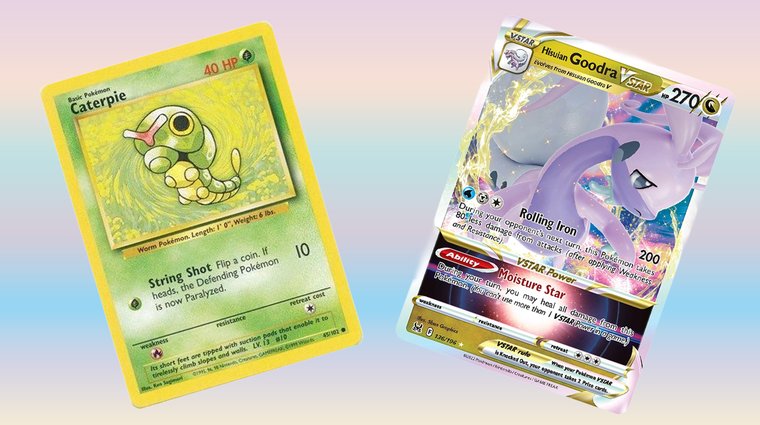
The Pokémon Trading Card Game includes a variety of card subtypes, each with its own role in shaping strategy and gameplay. From simple Basic Pokémon to powerhouse evolutions like VMAX and VSTAR, understanding these categories is key to building strong decks and mastering the flow of a match.
| Subtype | What It Means |
|---|---|
| Basic Pokémon | Your starters – no evolutions needed, just drop them on the field and get rolling. Basic Pokémon are the backbone of every deck, from iconic legendary Pokémon like Mewtwo to low-key heroes like Caterpie. They’re also the ones you place as your active Pokémon at the start of a match. |
| Stage 1 Pokémon | These evolve from a Basic. They bring more HP, stronger attacks, and often new abilities. Think of them as your second gear – turning an average fighter into a threat that can pressure the defending Pokémon across the board. |
| Stage 2 Pokémon | The final evolution step for many creatures. Stage 2 cards usually pack heavy damage, unique abilities, and can flip matches. They take time to set up, but once they hit the table, they’re game-changers. |
| Pokémon EX | The old-school flex. Pokémon EX cards were famous for their massive stats and flashy designs. They come with risk, though – if your EX gets knocked out, your opponent takes two prize cards instead of one. That gamble is what made them iconic in sets like Neo Destiny and EX Team Rocket Returns. |
| Pokémon GX | Introduced in the Sun & Moon era, GX cards added GX attacks – once-per-game moves that could swing a duel hard in your favor. Collectors also love them for their alternate arts and shine. |
| Pokémon V | Debuting in the Sword & Shield era, Pokémon V come with big HP and strong attacks right out of the gate, often based on specific Pokémon with huge fanbases. They’re the foundation for more advanced evolutions like VMAX and VSTAR. |
| Pokémon VMAX | The big bosses. Inspired by Dynamax and Gigantamax from the video game, Pokémon VMAX cards tower over regular ones with outrageous HP and devastating attacks. Pulling one from booster packs instantly feels like finding treasure. |
| Pokémon VSTAR | The successor to VMAX, Pokémon VSTAR cards come with VSTAR powers – once-per-game abilities that can flip the board. They’ve been central to competitive decks in the Scarlet & Violet and Sword & Shield eras, and collectors chase their special illustration, rare, and ultra rare versions. |
Every subtype plays differently, and knowing how they evolve or interact is what makes building decks exciting.
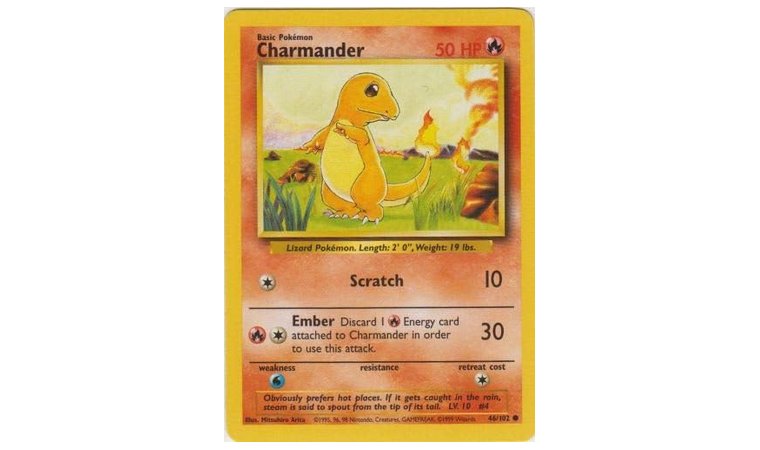
1. Charmander (46/102) – Base Set [Starter Nostalgia]
| Our Score | 10
☆
★
☆
★
☆
★
☆
★
☆
★
☆
★
☆
★
☆
★
☆
★
☆
★
|
| Evolves From | N/A (basic) |
| HP | 50 |
| Type | Fire |
| Weakness | Water ×2 |
| Resistance | N/A |
| Retreat Cost | 1 |
| Ability | N/A |
| Attacks | Scratch (10); Ember (30, discard 1 Fire Energy) |
Charmander from the original Base Set is pure nostalgia fuel. This fiery little lizard might not look like much compared to today’s flashy pulls, but it represents the foundation of the game.
With modest HP and simple fire attacks, Charmander embodies the starter Pokémon vibe – easy to play, easy to understand, and perfect for teaching new players how the mechanics flow.
Its Fire-type energy requirements set the tone for building your deck around energy management. Sure, the damage output isn’t insane, but when paired with its evolution line into Charmeleon and eventually Charizard, this card shows how growth and progression work in Pokémon battles. That’s the real charm: it’s a stepping stone that reminds players that every powerhouse begins small.
Collectors prize this card not for raw power, but for what it represents. Pulling a Charmander from a vintage booster feels like unboxing a piece of history. Among all the Pokémon card types, I think this Base Set common proves that even the simplest cards can leave the strongest impression.
Pair Charmander with consistent Fire energy acceleration so you can evolve fast and hit harder.
My verdict: Charmander is a must-have if you’re chasing vintage vibes; weak in meta, strong in heart.
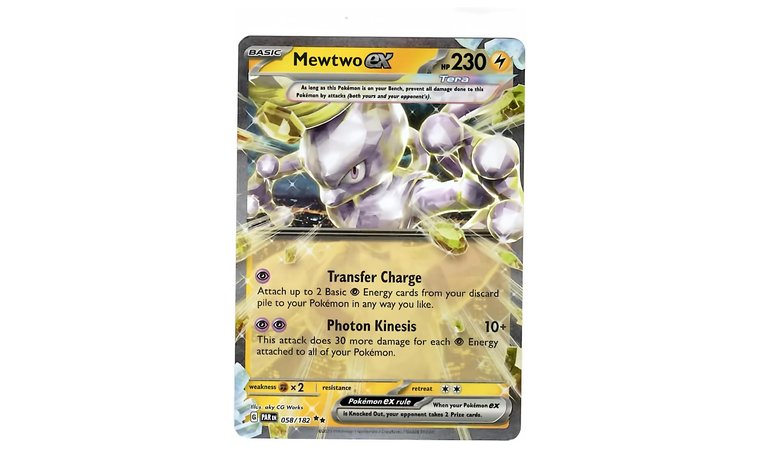
2. Mewtwo – EX [Psychic Powerhouse]
| Our Score | 9.8
☆
★
☆
★
☆
★
☆
★
☆
★
☆
★
☆
★
☆
★
☆
★
☆
★
|
| Evolves From | N/A (basic) |
| HP | 170 |
| Type | Psychic |
| Weakness | Psychic ×2 |
| Resistance | N/A |
| Retreat Cost | 2 |
| Ability | N/A |
| Attacks | X Ball (20×, 20× total Energy on both Actives); Psydrive (120, discard an Energy) |
Mewtwo-EX brought serious firepower to the table during its era, which helped redefine what high-tier cards could do. With boosted HP and devastating Psychic-type moves, it’s the kind of card that forced opponents to rethink strategies on the fly. Its energy acceleration and damage scaling made it a threat no matter the matchup.
The beauty of EX cards is the risk-reward balance. Yes, Mewtwo-EX hits like a truck, but if it gets knocked out, your opponent claims two prize cards instead of one. That mechanic gives every play high stakes: you either dominate the board or gamble with a big liability. It turns every duel into a test of guts and timing.
I personally love Mewtwo-EX because of its iconic artwork and legacy status. It represents the era when Pokémon card battles really started leaning into high-impact, high-drama mechanics. Out of all the Pokémon card types, EX cards like Mewtwo stand tall as game-changers that pushed the boundaries of both gameplay and collectability.
Build your deck with Psychic energy recovery to keep Mewtwo-EX rolling without losing tempo.
My verdict: Mewtwo-EX is a legendary flex piece; unstable, but absolutely worth the gamble.
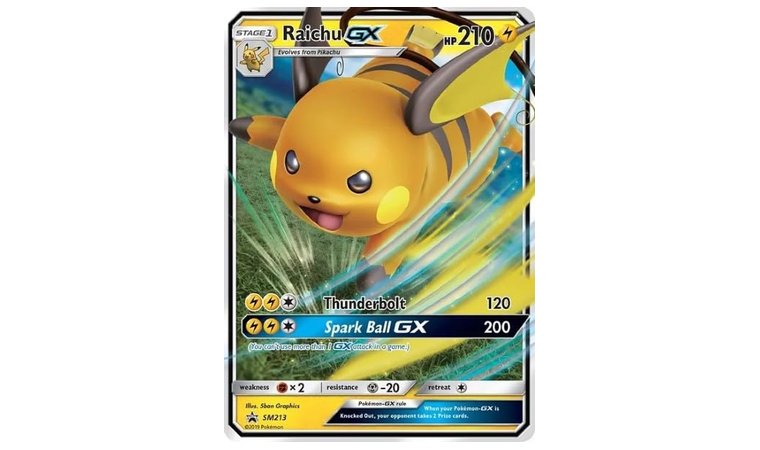
3. Raichu – GX [Lightning Speed]
| Our Score | 9.5
☆
★
☆
★
☆
★
☆
★
☆
★
☆
★
☆
★
☆
★
☆
★
☆
★
|
| Evolves From | Pikachu |
| HP | 210 |
| Type | Lightning |
| Weakness | Fighting ×2 |
| Resistance | Metal −20 |
| Retreat Cost | 1 |
| Ability | N/A |
| Attacks | Thunderbolt (120); Spark Ball-GX (200, GX attack) |
Raichu-GX is the perfect mix of speed and shock factor. Packing serious Electric-type moves, this card turned the tide in Sun & Moon battles with its ability to dish out huge damage while keeping energy costs manageable. Its GX attack, which players could only fire once per game, added that layer of tension: when to unleash it became a make-or-break decision.
What makes Raichu-GX especially fun for me is how it synergizes with fast-paced decks. Electric strategies have always leaned on mobility and quick strikes, and this card fits the mold perfectly. Its balance of strong base moves and one explosive GX attack gives players a toolkit that could wreck unprepared opponents.
Beyond the battlefield, Raichu-GX shines as a collectible. Fans (including me) adore the artwork variations, from the standard print to full art and rainbow versions, which makes it a chase card for both casual fans and hardcore collectors.
In the world of the fun Pokémon TCG sets, Raichu-GX proves that electric energy isn’t just about power; it’s about shocking your opponent when they least expect it.
Save the GX attack for late-game when your opponent least expects the burst damage.
My verdict: Raichu-GX is underrated and flashy, perfect for players who love high-voltage plays.
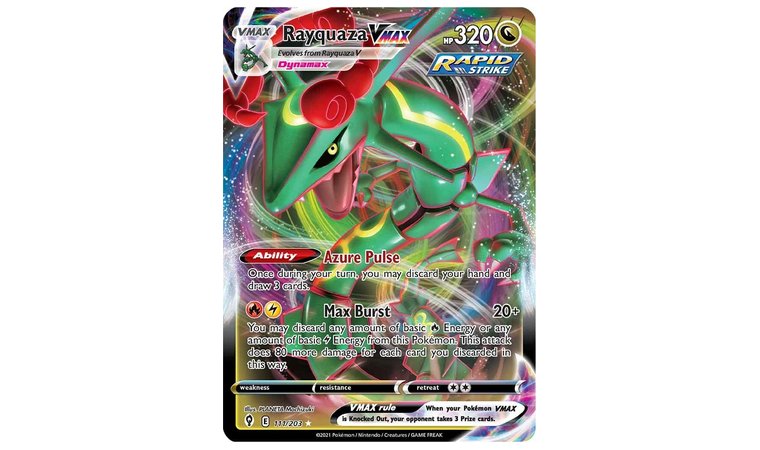
4. Rayquaza – VMAX [Dragon Colossus]
| Our Score | 9.4
☆
★
☆
★
☆
★
☆
★
☆
★
☆
★
☆
★
☆
★
☆
★
☆
★
|
| Evolves From | Rayquaza V |
| HP | 320 |
| Type | Dragon |
| Weakness | N/A |
| Resistance | N/A |
| Retreat Cost | 2 |
| Ability | Azure Pulse — once per turn, discard your hand and draw 3. |
| Attacks | Max Burst (20+, discard any number of basic Fire and/or Lightning Energy; +80 for each) |
Rayquaza-VMAX is a monster, both literally and figuratively. This towering Dragon-type brings insane damage scaling tied to discarding energies, which makes it one of the most aggressive attackers in Sword & Shield. To scratch that curiosity itch, check out most expensive Sword and Shield Pokémon card.
Its VMAX form also means ridiculous HP, so it can tank hits while charging up for devastating swings. The strategy here is all about resource management. You dump energies to power up its signature move, then rebuild quickly with supporting cards.
This loop creates high-octane gameplay: fast, risky, but incredibly rewarding when executed right. Facing a Rayquaza-VMAX often felt like a boss fight within the TCG.
Collectors chase this card hard thanks to its epic artwork, especially the alternate art that shows off the dragon’s scale and majesty. As part of the modern wave of Pokémon TCG sets, Rayquaza-VMAX defines why VMAX mechanics became such a highlight: massive creatures, damage, and hype.
Pair Rayquaza-VMAX with cards that recycle Energy quickly: you’ll need it.
My verdict: Rayquaza-VMAX is a meta beast and a collector’s grail. Expensive, but worth every spark.
5. Giratina – VSTAR [Dark Disruption]
| Our Score | 9.2
☆
★
☆
★
☆
★
☆
★
☆
★
☆
★
☆
★
☆
★
☆
★
☆
★
|
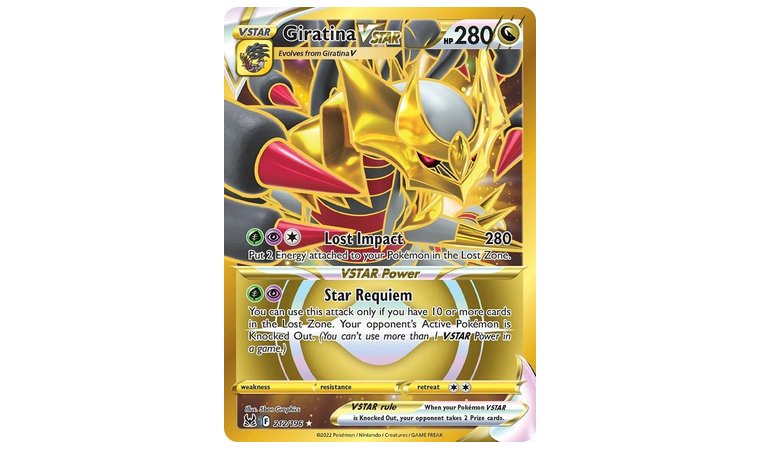
| Evolves From | Giratina V |
| HP | 280 |
| Type | Dragon |
| Weakness | N/A |
| Resistance | N/A |
| Retreat Cost | 2 |
| Ability | N/A |
| Attacks | Lost Impact (280, put 2 Energy attached to your Pokémon in the Lost Zone); Star Requiem (VSTAR Power, {G}{P}, requires 10+ cards in Lost Zone; opponent’s Active is Knocked Out) |
Giratina-VSTAR carves its own niche in the meta with dark, disruptive gameplay. Its Lost Zone mechanic lets players remove cards from play entirely, which opens up strategies that feel way different from the usual damage race. Combined with heavy-hitting moves, Giratina-VSTAR punishes opponents who aren’t ready to adapt.
The VSTAR power is the centerpiece here – once-per-game ability that can wipe out nearly anything in front of it. Using it at the right time can completely flip the game, which makes Giratina-VSTAR one of those cards that demanded respect the moment it hits the table.
I also love this card for its eerie, otherworldly design. Giratina has always carried that mysterious, almost villainous vibe, and the VSTAR artwork amplifies it. As one of the standout new Pokémon cards, Giratina-VSTAR shows how new mechanics keep the game fresh while staying true to the legendary status of certain Pokémon.
Time your VSTAR ability carefully – it’s your ace in the hole.
My verdict: Giratina-VSTAR is both tactical and stylish, perfect for players who love control-heavy decks.
Trainer Cards
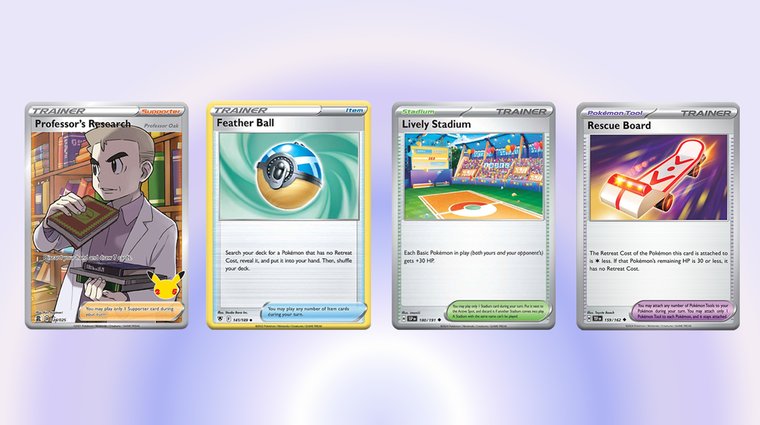
Trainer cards are the backbone of the Pokémon TCG. They don’t just sit in your deck looking pretty. They dictate how fast and flexible your strategy is. There are four core types to know: Supporter cards, Item cards, Stadium cards, and Tools.
| Card Type | What It Does |
|---|---|
| Supporter | It’s a powerful Trainer card that provides strong effects, such as drawing cards, searching your deck, or disrupting your opponent. You may only play it once per turn. |
| Item | This is a really useful card that you can play any number of times during your turn. Items offer useful effects like drawing cards, retrieving Pokémon or Energy, and switching Pokémon. |
| Stadium | It’s a Trainer card that changes the rules of the field for everyone. Since only one Stadium can be in play at a time, playing another immediately removes the existing Stadium. |
| Tool | This is a Trainer card that attaches to a Pokémon in play, granting continuous bonuses such as extra damage or added protection. There can be only one Tool attached to a Pokémon card at a time. |
Each role has its own utility, and mastering how they interact is key to dominating matches. Once you get a feel for these card types, you’ll realize Trainer cards are the secret sauce that makes decks tick.
Understanding these synergies is essential for competitive play and helps players identify the top Pokémon TCG Pocket decks in the digital format.
1. Professor’s Research [Draw Reset Staple]
| Our Score | 9
☆
★
☆
★
☆
★
☆
★
☆
★
☆
★
☆
★
☆
★
☆
★
☆
★
|
| Evolves From | N/A |
| HP | N/A |
| Type | Trainer – Supporter |
| Weakness | N/A |
| Resistance | N/A |
| Retreat Cost | N/A |
| Ability | N/A |
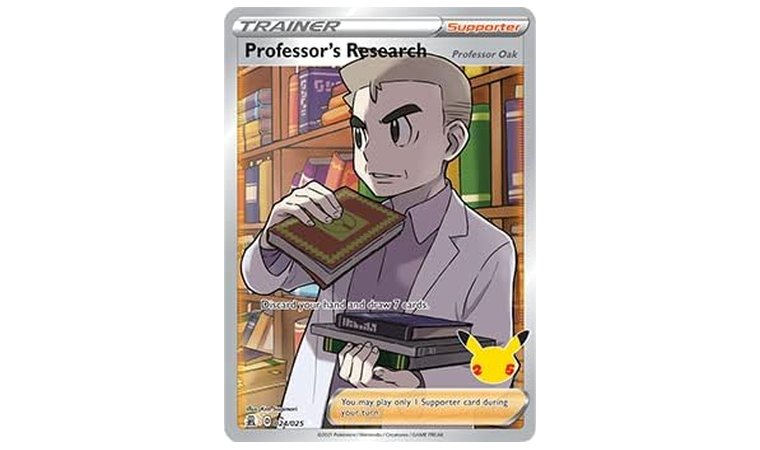
| Attacks | Discard your hand and draw 7 cards. (Only 1 Supporter can be played per turn.) |
This card is an absolute staple. If you play the Pokémon TCG, you’ll probably use it. The effect is brutal but brilliant: discard your hand and draw seven fresh cards. It’s a hard reset that can dig you out of bad situations or set you up for explosive plays.
Strategically, Professor’s Research forces you to think about timing. Do you risk losing valuable resources just to grab a fresh hand? Or do you wait until your hand is clogged and desperate for a reset? That tension is what makes it so powerful. It punishes hesitation but rewards boldness.
Collectors don’t chase it like they would rare Pokémon cards, but multiple prints (with different Professors on the artwork) make it a fun card to track across expansions. It’s easily one of the most iconic Trainer cards ever printed.
Don’t be afraid to discard. Build decks with recursion so you can recover what you lose.
My verdict: Professor’s Research is a must-run in almost every deck – simple, strong, and timeless.
2. Houndoom [Single Strike Accelerator]
| Our Score | 9
☆
★
☆
★
☆
★
☆
★
☆
★
☆
★
☆
★
☆
★
☆
★
☆
★
|
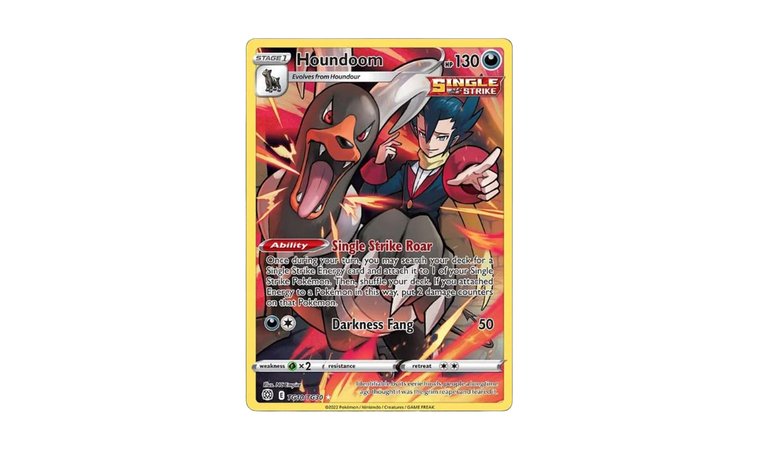
| Evolves From | Houndour |
| HP | 130 |
| Type | Darkness |
| Weakness | Grass ×2 |
| Resistance | N/A |
| Retreat Cost | 2 |
| Ability | Single Strike Roar — Once per turn, search your deck for a Single Strike Energy and attach it to 1 of your Pokémon. Put 2 damage counters on that Pokémon. |
| Attacks | Darkness Fang (50 damage) |
Houndoom has seen love as both a Pokémon card and a Trainer-style ability engine. In the Sword & Shield era, it became infamous for its Single Strike Roar – an ability that lets you search your deck for Special Energy cards and attach them directly to your Single Strike Pokémon. The catch? You take damage in the process.
This creates high-risk, high-reward plays. You supercharge your attackers fast, but at the cost of your own board’s HP. It fits perfectly into aggressive archetypes that don’t care about taking hits as long as they can hit back harder.
As a collectible, the Houndoom card (especially the Holo version) carries solid appeal because of the fan-favorite status of this fiery Dark-type. It’s a perfect example of a Pokémon card that bridges utility and style.
Pair Houndoom with heavy-hitting Single Strike attackers. You’ll overwhelm opponents before they can stabilize.
My verdict: Houndoom is risky but worth it, ideal for aggressive players who thrive on tempo.
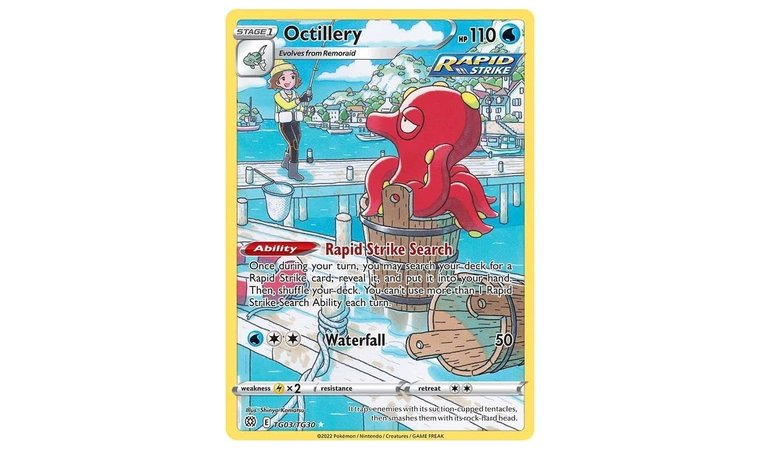
3. Octillery [Rapid Strike Engine]
| Our Score | 8.5
☆
★
☆
★
☆
★
☆
★
☆
★
☆
★
☆
★
☆
★
☆
★
☆
★
|
| Evolves From | Remoraid |
| HP | 110 |
| Type | Water |
| Weakness | Lightning ×2 |
| Resistance | N/A |
| Retreat Cost | 2 |
| Ability | Rapid Strike Search — Once per turn, search your deck for a Rapid Strike card, reveal it, and put it into your hand. Shuffle afterward. |
| Attacks | Waterfall (50 damage) |
Octillery has been one of the most underrated consistency engines in the game. With its Rapid Strike Search ability, it lets you pull Rapid Strike cards from your deck once per turn. That kind of tutoring ability smooths out draws and keeps your strategy flowing, no matter how awkward your opening hand looks.
Its role isn’t flashy, but it is clutch. You sit Octillery on the Bench while it quietly guarantees you have the tools you need. In decks that rely on multiple moving parts, Octillery is the glue that holds everything together.
I love Octillery for its quirky design and the fact that it’s been printed in different styles across eras, including some really slick full-art versions. It’s a great example of utility Pokémon that doubled as a valuable card in competitive play.
Always protect Octillery. It’s a low-HP support Pokémon that opponents will target early.
My verdict: Octillery is a quiet MVP – unassuming, but wins you games with consistency.
Energy Cards
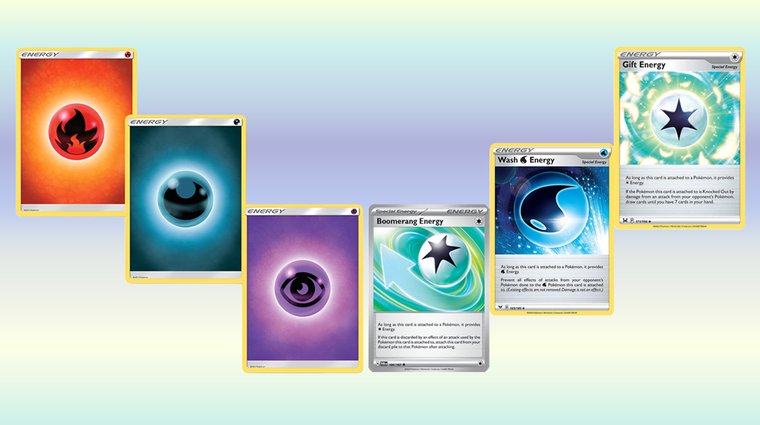
Energy is the lifeblood of this fantastic trading card game. Without it, your cards are just sitting ducks. Energy comes in two main flavors – Basic Energy cards and Special Energy cards.
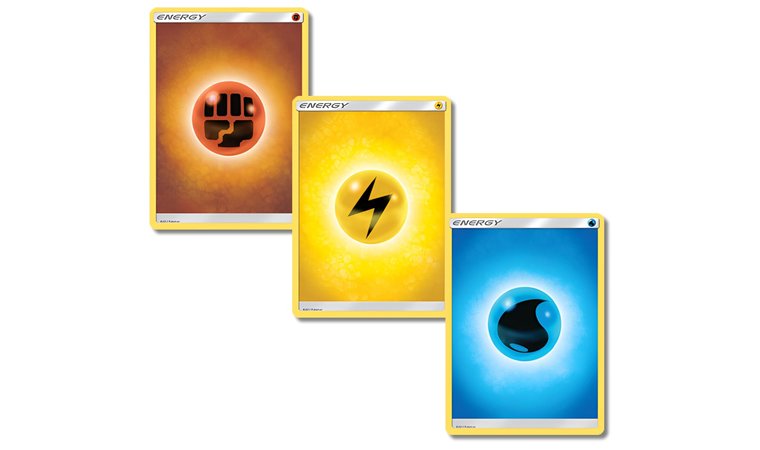
Basic Energy powers the moves of your Pokémon. It’s tied to elemental types like Fire, Water, Grass, Lightning, and Psychic.
Special Energy takes things up a notch, adding effects like extra healing, multiple types in one card, or special boosts.
The smart use of both makes or breaks a deck. Energy may look simple compared to flashier pulls like Ultra Rare cards, but trust me – it’s one of the most important Pokémon cards to master.
1. Basic Energy Cards [Elemental Backbone]
| Our Score | 7
☆
★
☆
★
☆
★
☆
★
☆
★
☆
★
☆
★
☆
★
☆
★
☆
★
|
| Evolves From | N/A |
| HP | N/A |
| Type | Basic Energy (Grass, Fire, Water, Lightning, Psychic, Fighting, Darkness, Metal, Fairy [discontinued], Dragon [special cases]) |
| Weakness | N/A |
| Resistance | N/A |
| Retreat Cost | N/A |
| Ability | N/A |
| Attacks | Provides 1 Energy of its type. Unlimited copies allowed per deck. |
At first glance, Basic Energy seems boring. But without it, the game doesn’t function. These cards provide the elemental backbone for your strategy. If you’re running Fire Pokémon, you’ll need Fire Energy. If you’re going Psychic-heavy, Psychic Energy fuels your attackers.
Gameplay-wise, Basic Energy is unlimited – you can put as many as you want in your deck, unlike Special Energy, which has restrictions. This makes these cards reliable, flexible, and essential for deck-building.
Collectors usually don’t chase these unless they’re Holo promos or Rare misprints. Still, Basic Energy has some truly beautiful designs, especially in modern Pokémon sets with dynamic foil patterns.
Always balance your Energy count: too many and you brick, too few and you stall.
My verdict: Basic Energy is boring on the surface, but completely indispensable – you can’t play without it.
2. Special Energy Set [Meta Flexibility]
| Our Score | 8
☆
★
☆
★
☆
★
☆
★
☆
★
☆
★
☆
★
☆
★
☆
★
☆
★
|
| Evolves From | N/A |
| HP | N/A |
| Type | Special Energy |
| Weakness | N/A |
| Resistance | N/A |
| Retreat Cost | N/A |
| Ability | N/A |
| Attacks | Provides multiple or conditional Energy. Limited to 4 copies per deck. |
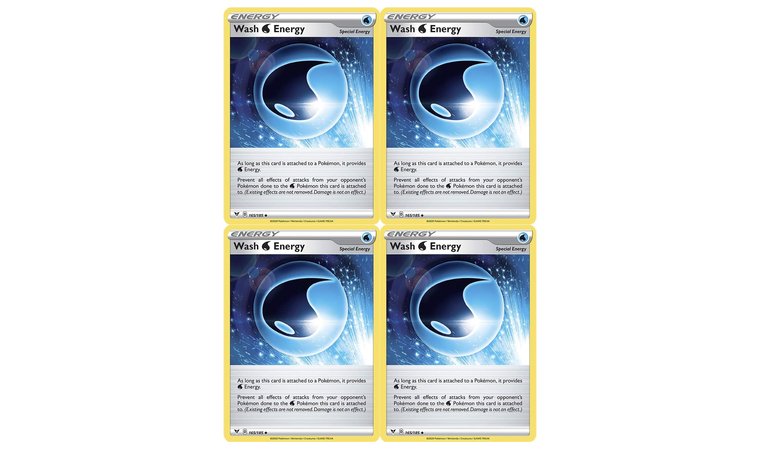
Special Energy cards bring spice to the formula. Unlike Basic Energy, these cards often reduce damage or enable unique mechanics. Think Double Colorless Energy, Single Strike Energy, or Capture Energy. These cards let you bend the rules and speed up your strategy.
Mechanically, Special Energy adds flexibility but comes with deck-building restrictions. You can only run four of each type, so managing which ones you include becomes a meta call. In the right setup, though, they make decks smoother, faster, and harder to stop.
Collectors dig Special Energy for their Holo prints, especially when tied to iconic expansions. They might not be the flashiest Pokémon TCG products, but gameplay-wise, they’re clutch.
Use Special Energy to cover weaknesses or give utility. Don’t rely on them as your only source.
My verdict: Special Energy is high-impact but situational – great in the right deck, dead weight in the wrong one.
Elemental Types of Pokémon TCG Cards
Every Pokémon card belongs to an elemental type, and these types decide how your deck performs in battle. Each one has its own strengths, weaknesses, and signature style, giving players endless ways to build and compete.
Below, I’ll break down each type and what makes it unique in this trading card game.
1. Grass [Best for Control]
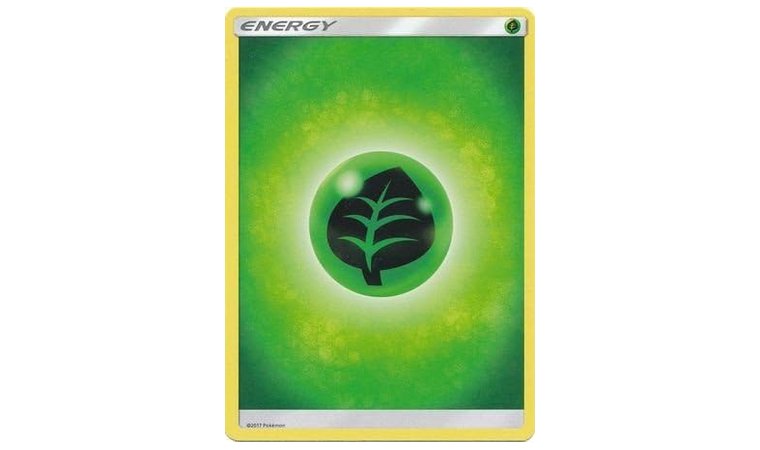
| Evolves From | N/A |
| HP | N/A |
| Type | Grass |
| Weakness | Typically Fire ×2 |
| Resistance | Rare (sometimes Water in older sets) |
| Retreat Cost | N/A |
| Ability | N/A |
| Attacks | Grass Pokémon often focus on healing, Special Conditions (like Poison), and Energy acceleration. |
Grass Pokémon thrive on steady recovery and battlefield control. Their identity often revolves around healing abilities, status effects like Poison, and deck manipulation tricks that let you keep resources flowing. Grass decks usually win through endurance, outlasting opponents with sustain and smart energy setups.
Grass Pokémon excel against Water and Fighting types. Thematically, plants absorb water for growth and roots break down the earth, so they naturally overpower these categories.
Their biggest struggles come against Fire and Metal. Flames burn through plants, and blades slice right through them, which translates into vulnerability in the card game. Grass decks need to lean on healing loops or multi-type synergy to survive these counters.
2. Fire [High Damage Potential]
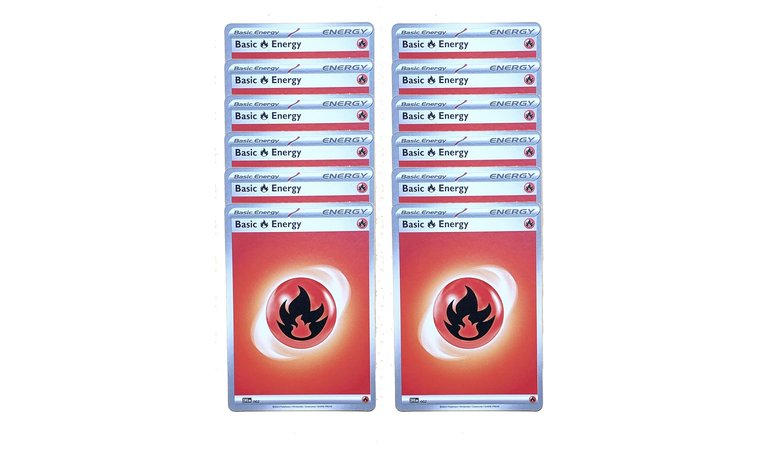
| Evolves From | N/A |
| HP | N/A |
| Type | Fire |
| Weakness | Typically Water ×2 |
| Resistance | None |
| Retreat Cost | N/A |
| Ability | N/A |
| Attacks | Fire Pokémon usually have high-damage attacks that require discarding Fire Energy as a cost. |
Fire Pokémon bring explosive offense and aggressive plays. Their attacks often hit for massive numbers but usually burn through Energy fast, forcing you to commit resources quickly. Some Fire cards also spread Burn or discard Energy for added impact; ideal for players who love going all-in on high-risk, high-reward damage.
Fire naturally melts through Grass and Metal. The theme’s clear: flames consume plants and warp steel, so Fire cards are perfect for shredding those strategies.
Fire’s weakness is Water. Just like in the games, water douses flames and shuts down overheating plays. To counter, Fire decks often stack Energy acceleration or pivot to fast knockouts before Water decks stabilize.
3. Water [Strong Recovery]
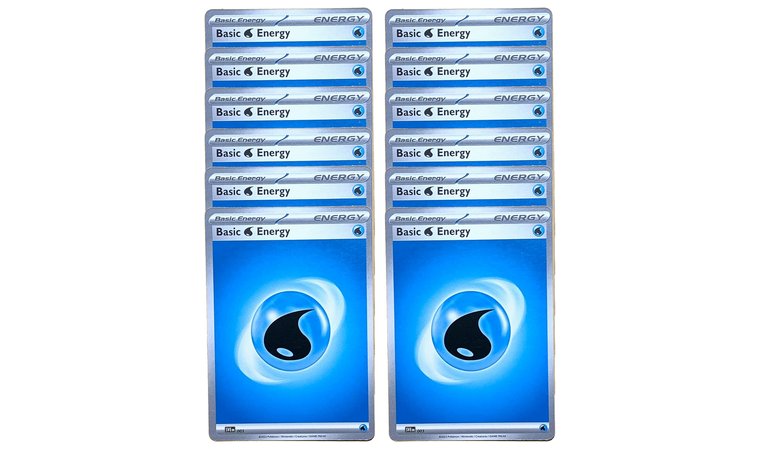
| Evolves From | N/A |
| HP | N/A |
| Type | Water |
| Weakness | Typically Lightning ×2 |
| Resistance | None |
| Retreat Cost | N/A |
| Ability | N/A |
| Attacks | Water Pokémon often manipulate Energy (moving/discarding), heal, or spread damage to multiple Pokémon. |
Water Pokémon specialize in adaptability and control. Many Water cards can manipulate Energy, like moving it around, accelerating it, or even locking down opponents. Healing effects are also common, which makes Water decks fluid and resilient. Their gameplay feels like tides: slow buildup followed by overwhelming waves of pressure.
Water dominates Fire and Rock-based Fighting types. Thematically, water extinguishes flames and erodes stone, so these matchups often tilt in Water’s favor.
Water falters against Grass and sometimes Lightning. Plants drink up water, and electricity travels easily through it, so Water decks have to be careful, especially against speedy Lightning builds.
4. Lighting [Fast Aggression]
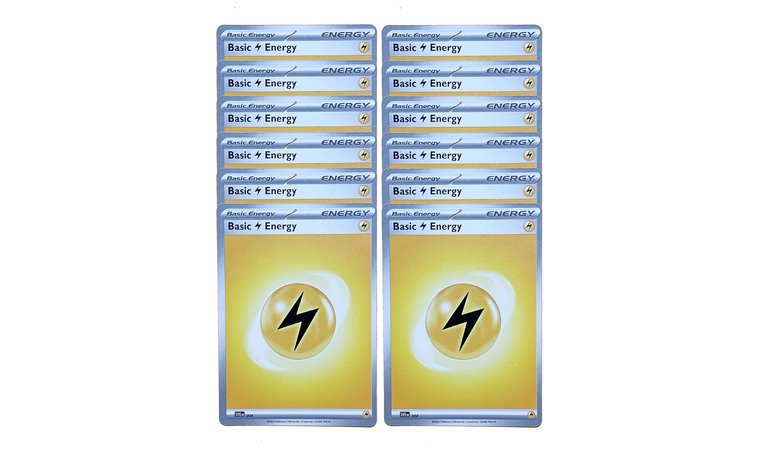
| Evolves From | N/A |
| HP | N/A |
| Type | Lightning |
| Weakness | Typically Fighting ×2 |
| Resistance | Metal (−20 in older sets) or none |
| Retreat Cost | N/A |
| Ability | N/A |
| Attacks | Lightning Pokémon are known for speed, cheap attacks, and Energy acceleration. |
Lightning Pokémon are all about raw speed and sudden bursts of damage. Many of them have low Energy requirements so you can strike fast before opponents can set up. Abilities often revolve around Energy acceleration or spreading quick chip damage across the board. If you want to play hyper-aggressive, Lightning is your jam.
Lightning zaps through Water and Flying Pokémon (covered under Colorless in TCG). Electricity is a natural counter to water conductors and airborne foes, so Lightning cards often take the upper hand here.
Their biggest struggles are against Fighting types, which ground electricity in both theme and gameplay. Lightning decks tend to run glass-cannon strategies, so a solid Fighting wall can short-circuit them fast.
5. Psychic [Disruption Specialist]
| Evolves From | N/A |
| HP | N/A |
| Type | Psychic |
| Weakness | Typically Psychic ×2 (in modern sets), Darkness/Ghost in older sets |
| Resistance | Sometimes Fighting −20 (older sets) |
| Retreat Cost | N/A |
| Ability | N/A |
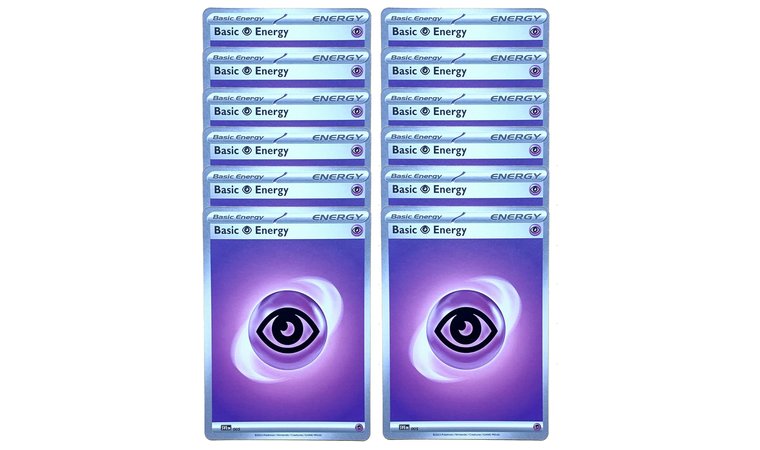
| Attacks | Psychic Pokémon often use damage counters, status effects, and scaling attacks based on Energy or opponent’s Pokémon. |
Psychic Pokémon bring disruption and mind games to the table. Their abilities often revolve around manipulating damage counters, forcing discards, or locking opponent actions. Some Psychic cards also hit insanely hard against specific archetypes, especially those tied to status effects or Special Energy plays.
Psychic dominates Fighting and opposing Psychic-weak Pokémon like Poison or Ghost types. The lore connection is simple: psychic power overcomes brute force and mystical shadows.
Psychic falls short against Darkness and Metal. Darkness Pokémon thrive in corrupting or resisting mental attacks, while Metal types represent logic and defense, countering the fragile nature of psychic energy.
6. Fighting [Consistency and Utility]
| Evolves From | N/A |
| HP | N/A |
| Type | Fighting |
| Weakness | Typically Grass or Psychic ×2 (varies by era) |
| Resistance | Lightning −20 (older sets) |
| Retreat Cost | N/A |
| Ability | N/A |
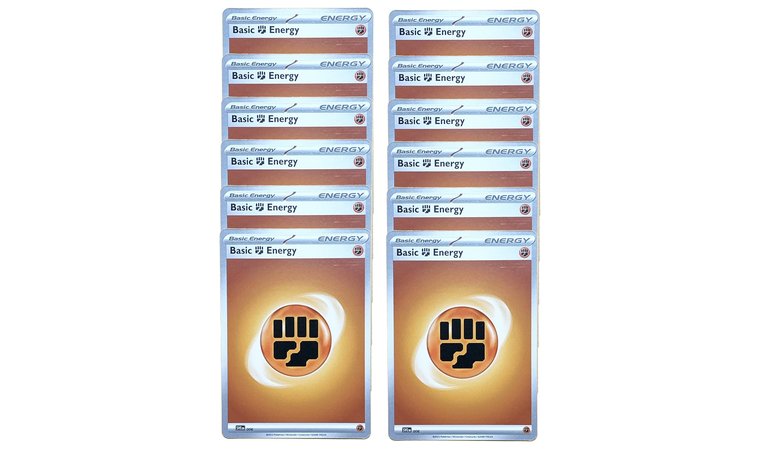
| Attacks | Fighting Pokémon excel at damage boosts against specific types (like Colorless) and spreading damage to Benched Pokémon. |
Fighting Pokémon embody brute force and endurance. Their cards usually pack cost-efficient attacks, which let you hit hard without massive Energy commitments. Many also target Lightning-weak opponents, making them a great meta counter. If you want relentless physical pressure, Fighting decks are for you.
Fighting Pokémon crush Lightning, Darkness, and even some Colorless threats. Thematically, grounded warriors overpower electricity, knock back shadows, and smash through generalist strategies.
Fighting struggles against Grass and Psychic. Grass can choke out fighters with poison and terrain control, while Psychic overwhelms them mentally. To balance that, Fighting decks usually double down on raw numbers to keep pressure high.
7. Darkness [Strategic Disruptor]
| Evolves From | N/A |
| HP | N/A |
| Type | Darkness |
| Weakness | Typically Fighting ×2 |
| Resistance | Psychic −20 |
| Retreat Cost | N/A |
| Ability | N/A |
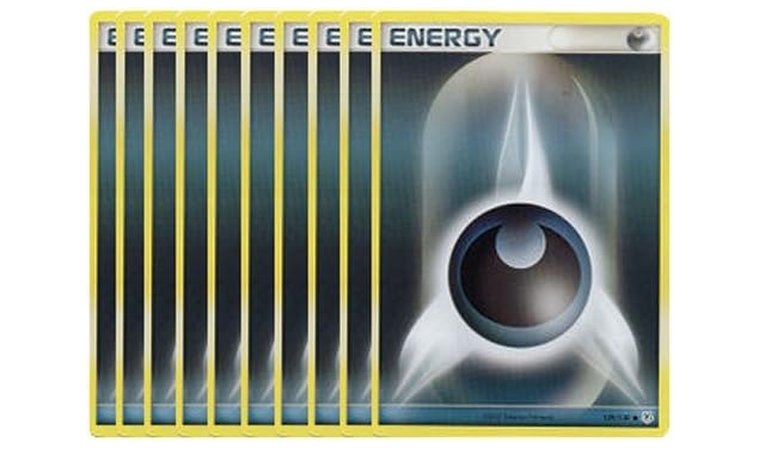
| Attacks | Darkness Pokémon often focus on disruption — discarding cards, inflicting Special Conditions, and using sneaky effects. |
Darkness Pokémon lean into sneaky damage boosts and effects that punish opponents for overextending. Their identity revolves around corrupting the flow of the game, like forcing discards, spreading damage counters, or empowering themselves through risky plays. If you like dirty tricks and mind games, Darkness decks deliver.
Darkness hits especially hard against Psychic types. Thematically, shadows corrupt the mind and overpower psychic energy, making it easy to tilt those decks off balance.
Their main weakness is Fighting. Grounded physical strength can stand up to underhanded tactics, and in the card game, Fighting decks often serve as the meta answer to Darkness’s tricks.
8. Metal [Defensive and Sturdy]
| Evolves From | N/A |
| HP | N/A |
| Type | Metal |
| Weakness | Typically Fire ×2 |
| Resistance | Psychic −20 (in most sets) |
| Retreat Cost | N/A |
| Ability | N/A |
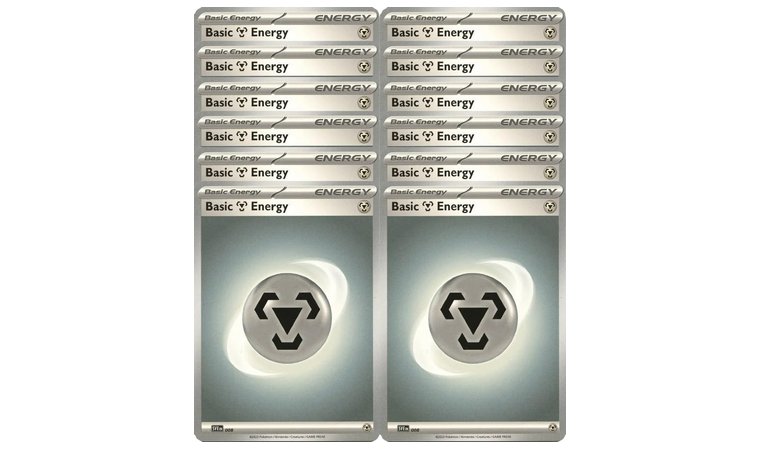
| Attacks | Metal Pokémon are defensive, often reducing incoming damage or manipulating Energy efficiently. |
Metal Pokémon are tanks on the battlefield. They usually pack high defenses, damage reduction abilities, and sometimes Energy acceleration tied to durability. Their gameplay is all about grinding down the opponent’s offense and slowly turning the tide in your favor.
Metal Pokémon are strong against Fairy and sometimes Ice-themed Water cards (depending on the set). Lore-wise, steel cuts through enchantment and resists elemental cold, which translates into reliable matchups.
Metal is weak to Fire, which makes perfect sense: heat melts steel and armor can’t withstand flames for long. Fire decks are a direct counter to slow, defensive Metal strategies.
9. Fairy [Supportive Effects]
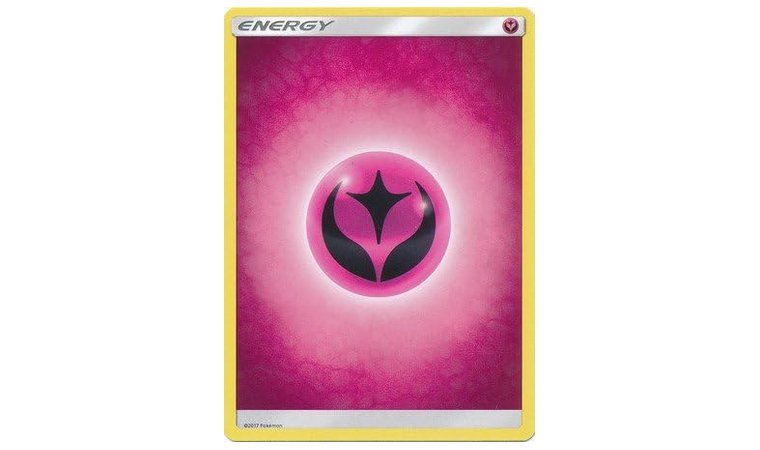
| Evolves From | N/A |
| HP | N/A |
| Type | Fairy |
| Weakness | Typically Metal ×2 |
| Resistance | Darkness −20 |
| Retreat Cost | N/A |
| Ability | N/A |
| Attacks | Fairy Pokémon specialized in healing, Energy manipulation, and type advantage against Dragon Pokémon. |
Fairy Pokémon bring charm and disruption: specializing in healing, status manipulation, or protection. Their gameplay identity is rooted in controlling the tempo of a match with energy denial and type-based counters. Though Fairy was eventually retired from the TCG, its identity remains iconic.
Fairy types were powerful against Dragon Pokémon. Thematically, fairytale magic and purity overpower raw primal might, so Fairy cards consistently shut down dragons in play.
Fairy struggled against Metal. Steel resists enchantment and cuts through delicate magic, which translates into Fairy being punished by heavy, armored decks.
10. Dragon [Powerhouse Finishers]
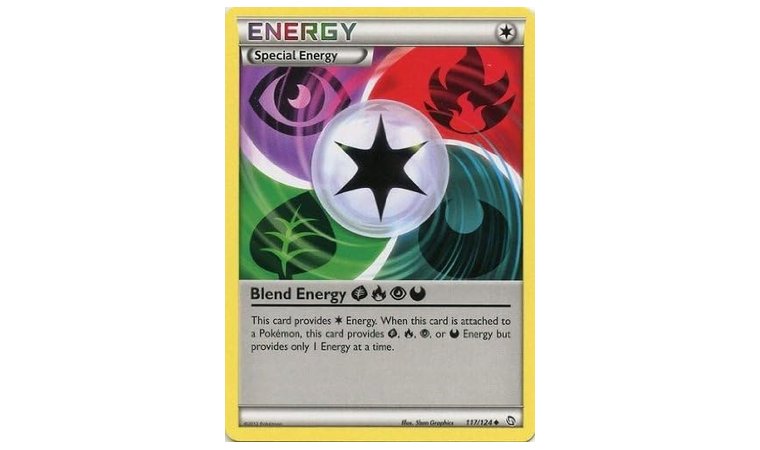
| Evolves From | N/A |
| HP | N/A |
| Type | Dragon |
| Weakness | Originally Colorless, later Dragon, then Fairy ×2, and now none (as of Sword & Shield / Scarlet & Violet). |
| Resistance | None |
| Retreat Cost | N/A |
| Ability | N/A |
| Attacks | Dragon Pokémon usually require multiple different Energy types for attacks, balancing high damage with tricky requirements. |
Dragon Pokémon are powerhouses with versatile move pools. Their identity revolves around raw strength, multi-type Energy requirements, and big payoffs for the investment. Dragons are often late-game monsters: rewarding players who can support them with the right setup.
Dragon Pokémon shine against other Dragon types, which creates epic mirror-match duels where the stronger setup wins. Their identity is dominance, so it makes sense they stand tallest against their own kind.
Dragons are weak to Fairy, which plays into the classic fantasy trope of magic overcoming brute power. This gives Fairy a clear counter role while balancing Dragon’s overwhelming potential.
11. Colorless [Versatile All-Rounder]
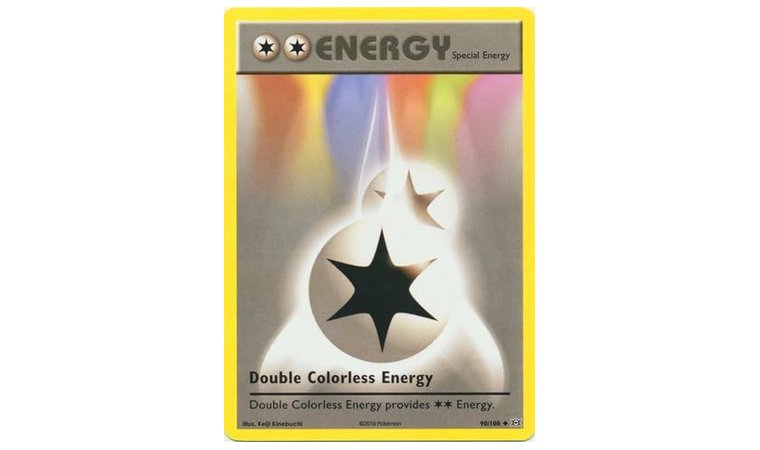
| Evolves From | N/A |
| HP | N/A |
| Type | Colorless |
| Weakness | Typically Fighting ×2 |
| Resistance | Psychic −20 (older sets) |
| Retreat Cost | N/A |
| Ability | N/A |
| Attacks | Colorless Pokémon are versatile and flexible, often focused on consistency, healing, and support. |
Colorless Pokémon are the all-rounders of the Pokémon TCG. They’re super easy to slot into any deck and often focus on utility effects like drawing cards, searching the deck, or boosting consistency. Their gameplay identity is versatility; they don’t specialize in one theme but instead adapt to any team.
Colorless Pokémon generally don’t have explicit type advantages, but their strength lies in neutrality and synergy. They can fit anywhere, so they’re perfect for flexible deck-building.
Many Colorless cards are weak to Fighting. Thematically, grounded strength overcomes adaptability, so Fighting decks often punish Colorless’s lack of raw type identity.
Pokémon Card Rarity Levels
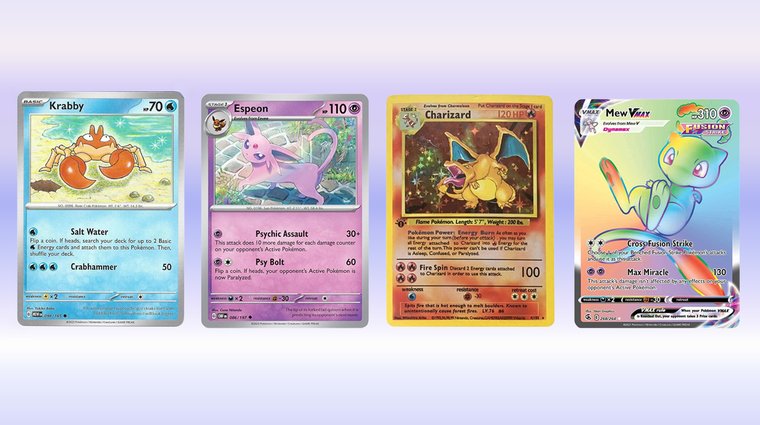
Pokémon cards aren’t all created equal. The thrill often comes from spotting that shimmer or symbol that screams “rare.” Each rarity tier has its own flair, and knowing how to recognize them makes both playing and collecting way more fun.
At the base level, you’ve got Common cards, marked with a simple circle, and Uncommon cards, shown with a diamond. These make up the backbone of most decks, which offer consistent play options without stealing the spotlight. Then you’ve got Rare cards, denoted by a star. Pulling one of these always feels satisfying, even if it’s not the flashiest piece in your awesome Pokémon binder.
Collectors chase after the sparkle. Holo cards feature a shiny image that adds extra flair, while Reverse Holo flips the effect, making the card border shimmer instead. Then there are the showstoppers: Full Art cards, which stretch the illustration across the entire card; Rainbow Rare cards, shimmering with rainbow foil; and the elusive Gold Secret Rare, hiding set numbers that go beyond the listed range.
The appeal is clear; commons and uncommons matter for building solid decks, but Holos and higher rarities deliver that collector’s dopamine hit. If you want to identify rarity at a glance, look for the symbols (circle, diamond, star) at the bottom corner and pay attention to Holo patterns across the card. Mastering these little details helps you navigate the exciting world of Pokémon cards.
Visual nuances between the foil types often confuse new enthusiasts trying to organize their binders. A detailed Holo vs Reverse Holo guide clarifies these differences and ensures you know exactly which version you hold in your hand.
The Evolution of Pokémon Cards & Key Mechanics
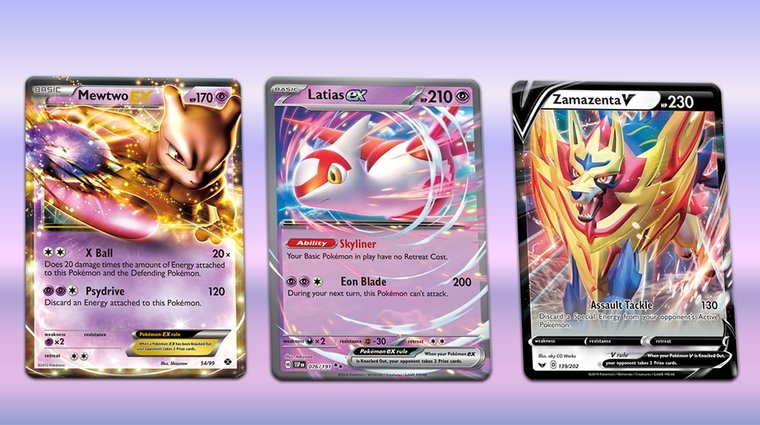
Pokémon has never stood still, and its card game proves it with generations of innovation. Each new era introduced fresh mechanics that redefined how players battle and collect, turning the franchise into a constantly evolving playground.
The Pokémon-ex and Pokémon-EX cards set the tone during the Black & White series, introducing powerful creatures with game-shifting potential. They weren’t just stronger; they came with the risk of giving opponents more prize cards when knocked out. That trade-off made every move feel high-stakes.
Later, the Sun & Moon series brought in Pokémon-GX, which upped the ante with GX attacks. These once-per-game abilities could flip the script of a duel, so timing and strategy are more crucial than ever.
Fast forward to the Sword & Shield and Scarlet & Violet eras, and you’ve got Pokémon V and their evolutions: VMAX and VSTAR. These cards pushed mechanics to new heights with higher HP, devastating moves, and unique VSTAR powers.
Each of these mechanics left a mark on how the game is played. For collectors, they also represent milestones in Pokémon’s history – cards that define not just a deck, but an era. That’s what makes the evolution of Pokémon card types so much fun to track, no matter if you’re shuffling into battle or curating a collection. If you’re new to collecting or want to dive deeper into the essentials, check out our Pokémon cards guide for a full breakdown of everything you need to know.
Collecting Pokémon Cards
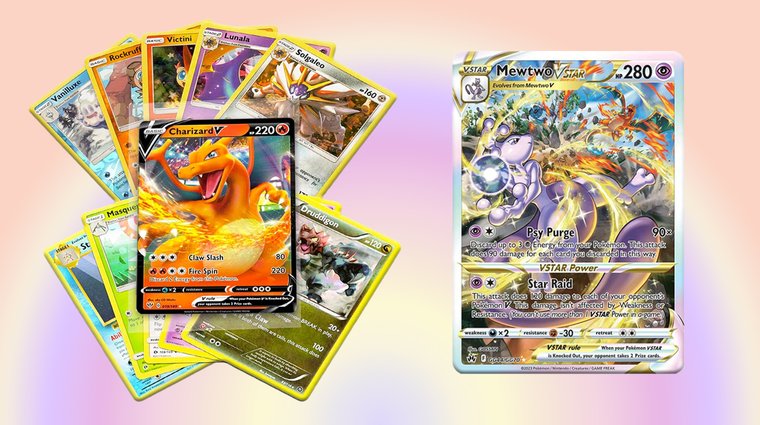
By now, you’ve got a solid handle on the basics of Pokémon card types, from functional roles to rarity tiers and the mechanics that shaped the game. But knowing is only half the fun. The real joy comes from getting these cards in your hands.
Some players chase after competitive decks, while others live for that binder full of shiny pulls. Commons and Uncommons are easy entry points, giving you cards to play with right away, while Rare pulls and special variants feed the collector’s thrill. Whether you’re cracking booster packs, trading with friends, or hunting singles online, each card adds to your personal story as a Trainer.
The best part? Collecting the best Pokémon cards doesn’t have to be all-or-nothing. You can focus on building a competitive deck or chasing after high-value cards for investment. Every path offers its own kind of excitement, and there’s no wrong way to dive in.
So, now that you know how Pokémon card types work and why they matter, it’s time to start your journey. Pick up a deck, chase that Holo, and join the community of fans who’ve been keeping the game alive for decades. How many cards will end up in your collection?
FAQs
How many types of Pokémon cards are there?
There are three card types in the Pokémon TCG: Pokémon cards, Trainer cards, and Energy cards. Pokémon battle your opponent, Trainers provide strategy, and Energy powers attacks. The Pokémon Company International continues to design new mechanics in every Pokémon TCG set, making gameplay fresh for Pokémon fans.
How many types of energies are there in Pokémon?
There are eleven types of basic energy cards in the Pokémon trading card game: Grass, Fire, Water, Lightning, Psychic, Fighting, Darkness, Metal, Fairy, Dragon, and Colorless. Some sets also include special energy cards that give decks more flexibility in powering active Pokémon and matching different Pokémon types.
What are the big 3 Pokémon cards?
The big 3 in Pokémon cards are Charizard, Blastoise, and Venusaur from the original 1st Edition Base Set. These valuable cards are considered rare cards and remain some of the most collectible pieces of Pokémon TCG products, with Pokémon fans still chasing them through booster packs today.
What’s better, Pokémon EX or GX?
Pokémon GX is better than Pokémon EX. GX introduced stronger effects, ultra-rare cards, and once-per-game GX attacks, while Pokémon EX cards were strong basics with simpler mechanics. In the Sword Shield and Scarlet Violet eras, GX evolved further into Pokémon V, Pokémon VMAX, and now Tera Pokémon EX.
How to tell the rarity of a Pokémon card?
To tell the rarity of a card, check the rarity symbol at the bottom: black circle (common), diamond (uncommon cards), star (rare cards). Special categories include Reverse Holo, Secret rare cards, Rainbow rare cards, Art rares, Special Illustration rare, and even Vintage Gold stars like the Neo Destiny three gold stars promos.
How to organize your Pokémon cards?
To organize your Pokémon cards, sort them by Pokémon types, set number, or rarity symbol. Use card sleeves, binders, or boxes to protect entire card surfaces from damage. Collectors often separate Trainer cards, Supporter cards, and Stadium cards for easier deck-building and long-term care of valuable cards.
How to grade Pokémon cards?
To grade Pokémon cards, send them to PSA or Beckett. They examine corners, edges, centering, and the surface of the entire card. High grades boost demand for Rare cards, especially Secret Rare, Special Illustration, or Ultra Rare pulls. Many graded Pokémon TCG products become prized among Pokémon fans worldwide.
What Pokémon card is worth $20,000?
The Pokémon card that is worth $20,000 is the BaseSetCharizard (1st Edition Holographic). This specific Pokémon is one of the most iconic legendary Pokémon in collecting, and mint-graded copies rank among the most valuable cards in the Pokémon TCG, often fetching record prices at auctions.