

Most Secure VPN in 2026: 5 Services Compared for Encryption, Leaks, and Safety

Eneba Hub contains affiliate links, which means we may earn a small commission if you make a purchase through them—at no extra cost to you. Learn more


Finding the most secure VPN takes more than skimming a few features. Every provider throws around “military-grade encryption” like it’ll solve all your problems. That’s just the baseline. You still need to dig into their logging policy, where they’re based, and how their security tools work when you turn them on.
So, I went through audit reports, checked jurisdictions, looked at past incidents, and tested kill switches and DNS leaks myself. Most VPNs fell apart fast. A few didn’t.
Let’s see why.
Jump to:
Quick Comparison: Most Secure VPN Services Side-by-Side With Security Ratings
| VPN | My Security Rating | Independent Security/No-Log Audits | Encryption | Kill Switch | Jurisdiction | Lowest Price |
|---|---|---|---|---|---|---|
| NordVPN | 10/10 | ✅ | AES-256/ChaCha20 + PQE | System-level | Panama | $2.99/month |
| ExpressVPN | 9.8/10 | ✅ | AES-256/ChaCha20 + PQE | Network Lock | British Virgin Islands | $4.99/month |
| Proton VPN | 9.6/10 | ✅ | AES-256/ChaCha20 | Always-on | Switzerland | $3.59/month |
| Surfshark | 9.9/10 | ✅ | AES-256/ChaCha20 | System-level | Netherlands | $1.99/month |
| VeePN | 9.0/10 | Independent audit of browser extensions only | AES-256/ChaCha20 | App-level kill switch | Sweden | $1.99/month |
5 Most Secure VPN Services Reviewed: My Hands-On Results for Real Protection
After that quick guide, we can start exploring the most secure VPNs, according to our in-house testing and official specifications. Keep reading to find out which one works best for you.
1. NordVPN [Most Secure VPN Service]
NordVPN sits at the top because its security isn’t based on promises. It’s backed by repeated audits, hardened infrastructure, and features that go beyond the basics. Five no-logs audits, post-quantum encryption, RAM-only servers, and owned hardware make it the most secure VPN for personal use.
| Feature | Details |
|---|---|
| Servers | 9,000+ in 100+ countries |
| Encryption | ChaCha20-Poly1305 (NordLynx), AES-256-GCM (OpenVPN) |
| Key exchange | 4096-bit DH keys, Curve25519 |
| Post-quantum encryption | Yes (NordLynx, May 2025) |
| Protocols | NordLynx, OpenVPN, NordWhisper |
| Kill switch | System-level and app-level options |
| No-logs audits | 5 (PwC 2018, 2020; Deloitte 2022, 2023, 2024) |
| Server type | RAM-only, colocated hardware |
| Jurisdiction | Panama |
| Simultaneous connections | 10 devices |
| Starting price | $2.99/month (2-year plan) |
Security Analysis
NordVPN’s no-logs policy has been audited five times – PwC in 2018 and 2020, Deloitte in 2022, 2023, and 2024. Auditors reviewed server configurations, infrastructure, and data handling procedures. No logging issues were found. Cure53 ran separate app and infrastructure assessments through 2025 with no critical vulnerabilities.
In May 2025, Nord added post-quantum encryption to NordLynx, pairing NIST-approved algorithms with ChaCha20. Quantum decryption isn’t practical yet, but “harvest now, decrypt later” attacks are a legitimate concern. This closes that gap early.
The network runs on RAM-only servers, so data doesn’t persist after reboot. In some locations, Nord owns and operates its hardware instead of renting it, reducing third-party exposure.
NordWhisper, launched in 2025, disguises VPN traffic as regular HTTPS to bypass network blocks without weakening encryption. That’s one reason it performs well in restrictive regions, and why I have it at the top of my list of the best VPNs for China.
Threat Protection Pro blocks malware, phishing domains, and trackers at the DNS level. In 2024, AV-Comparatives awarded NordVPN anti-phishing certification – the first VPN provider to receive it.
| Pros | Cons |
|---|---|
| ✅ 8 independent security audits ✅ Post-quantum encryption enabled ✅ RAM-only and colocated servers ✅ Panama jurisdiction outside surveillance alliances ✅ AV-Comparatives certified threat protection | ❌ Threat Protection Pro limited to desktop |
Final Verdict: Nord is the most secure VPN for personal use I tested that combines verified audits, strong infrastructure decisions, and forward-looking encryption.
2. ExpressVPN [Real-World No-Logs Proof]
ExpressVPN is on my most secure VPN list because its privacy claims have been tested “outside the lab”. Three KPMG no-logs audits, RAM-only TrustedServer infrastructure, and post-quantum support in Lightway give it a strong security foundation.
| Feature | Details |
|---|---|
| Servers | 3,000+ in 100+ countries |
| Encryption | ChaCha20-Poly1305 (Lightway), AES-256-GCM (OpenVPN) |
| Key exchange | 4096-bit RSA, Curve25519 |
| Post-quantum encryption | Yes (Lightway, January 2025) |
| Protocols | Lightway, OpenVPN, IKEv2 |
| Kill switch | Network Lock (system-level) |
| No-logs audits | 3 (KPMG 2022, 2024, 2025) |
| Server type | TrustedServer RAM-only |
| Jurisdiction | British Virgin Islands |
| Simultaneous connections | Up to 14 devices |
| Starting price | $4.99/month (2-year plan) |
Security Analysis
ExpressVPN’s no-logs policy has been audited three times by KPMG (2022, 2024, 2025). The June 2025 audit confirmed that TrustedServer technology prevents activity and connection logs from being stored.
TrustedServer runs entirely on RAM. Nothing writes to disk, and every reboot wipes the system clean. Servers load from read-only images, which prevents tampering even with physical access. Express is also one of my favorite streaming VPNs thanks to its top-tier network.
That setup was tested in 2017 when Turkish authorities seized one of ExpressVPN’s servers. They found nothing – because there were no logs to find.
Lightway supports ChaCha20-Poly1305 or AES-256-GCM and is built on the wolfSSL cryptographic library. It has undergone independent security assessments by Cure53 and Praetorian. Post-quantum encryption was added in January 2025, making Lightway a top contender for most secure VPN encryption.
ExpressVPN operates from the British Virgin Islands, which has no mandatory data retention laws and sits outside surveillance alliances.Network Lock blocks all traffic at the system level if the VPN connection drops. In testing, it cut traffic immediately with no IP leakage.
| Pros | Cons |
|---|---|
| ✅ 3 no-log audits ✅ Post-quantum encryption deployed ✅ TrustedServer RAM-only pioneered ✅ Real-world server seizure proved no-logs ✅ Lightway protocol audited multiple times | ❌ Highest price among major VPNs |
Final Verdict: Express isn’t the cheapest option on this list. But if you’re looking for the most secure VPN service backed by audited no-logs claims and a real-world server seizure that proved the architecture works, ExpressVPN delivers.
3. Proton VPN [Court-Tested No-Logs Policy]
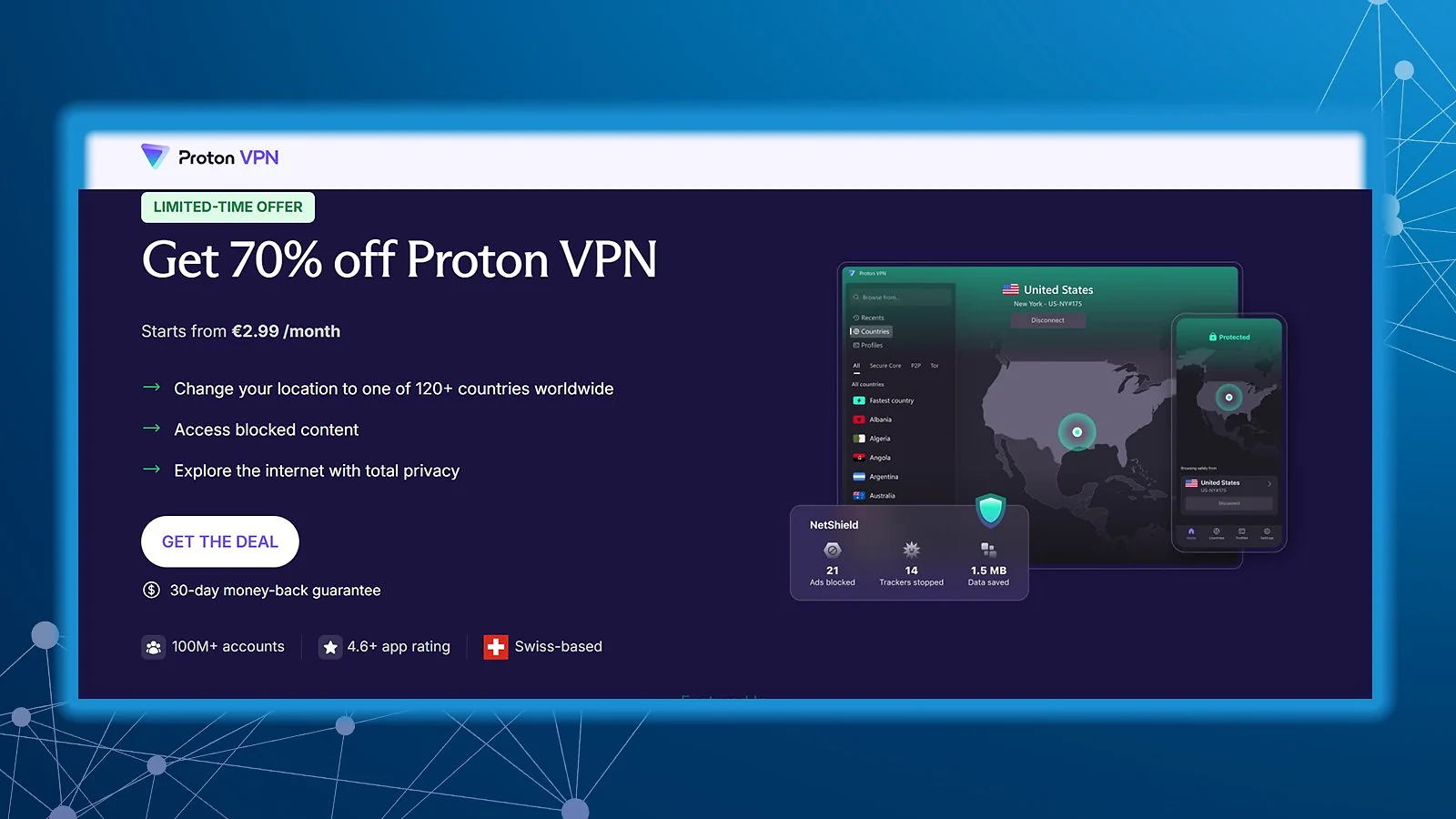
Proton takes a different approach than most providers on this most secure VPN service list. The focus isn’t just encryption strength but also legal protection, transparency, and infrastructure design.
| Feature | Details |
|---|---|
| Servers | 15,000+ in 126 countries |
| Encryption | ChaCha20-Poly1305 (WireGuard), AES-256-GCM (OpenVPN) |
| Key exchange | 4096-bit RSA, Curve25519 |
| Post-quantum encryption | In development |
| Protocols | WireGuard, OpenVPN, IKEv2, Stealth |
| Kill switch | Always-on |
| No-logs audits | 4 (Securitum 2022, 2023, 2024, 2025) |
| Server type | Secure Core hardened servers |
| Jurisdiction | Switzerland |
| Simultaneous connections | 10 devices |
| Starting price | $3.59/month (2-year plan) |
Security Analysis
Proton’s no-logs policy has been audited four years in a row by Securitum (2022–2025) with no logging activity found. The company also holds SOC 2 Type II certification (July 2025), and its no-logs claims have been tested in court – when authorities requested data, there was nothing to hand over. I talk more about this in my full guide on how to choose the best VPN for privacy.
Switzerland gives Proton a strong legal position. There are no mandatory data retention laws, the country sits outside intelligence-sharing alliances, and any data request requires a Swiss court order.
All Proton VPN apps are open-source under GPLv3 and published on GitHub. Anyone can review the code. Vulnerabilities are addressed publicly. You’re not just trusting statements – the code is visible.
Secure Core routes traffic through hardened servers in Switzerland, Iceland, or Sweden before reaching the exit node. If an exit server is monitored, attackers still can’t trace traffic back to your real IP. The permanent kill switch blocks all non-VPN traffic even when the app isn’t running – critical for high-risk scenarios.NetShield adds DNS-level blocking for ads, malware, and trackers with adjustable protection levels. My “Is Proton VPN Safe” guide goes into more detail about this.
| Pros | Cons |
|---|---|
| ✅ Court-tested no-logs policy ✅ Swiss constitutional privacy protection ✅ Open-source apps for code verification ✅ Secure Core multi-hop architecture ✅ Permanent kill switch | ❌ Post-quantum encryption not yet deployed |
Final Verdict: If you care about legal privacy guarantees and open-source transparency, Proton is one of the strongest options available. It’s the most secure VPN for users who want court-tested no-logs policies and Swiss jurisdiction backing the claims.
4. Surfshark [Best Value for the Price]
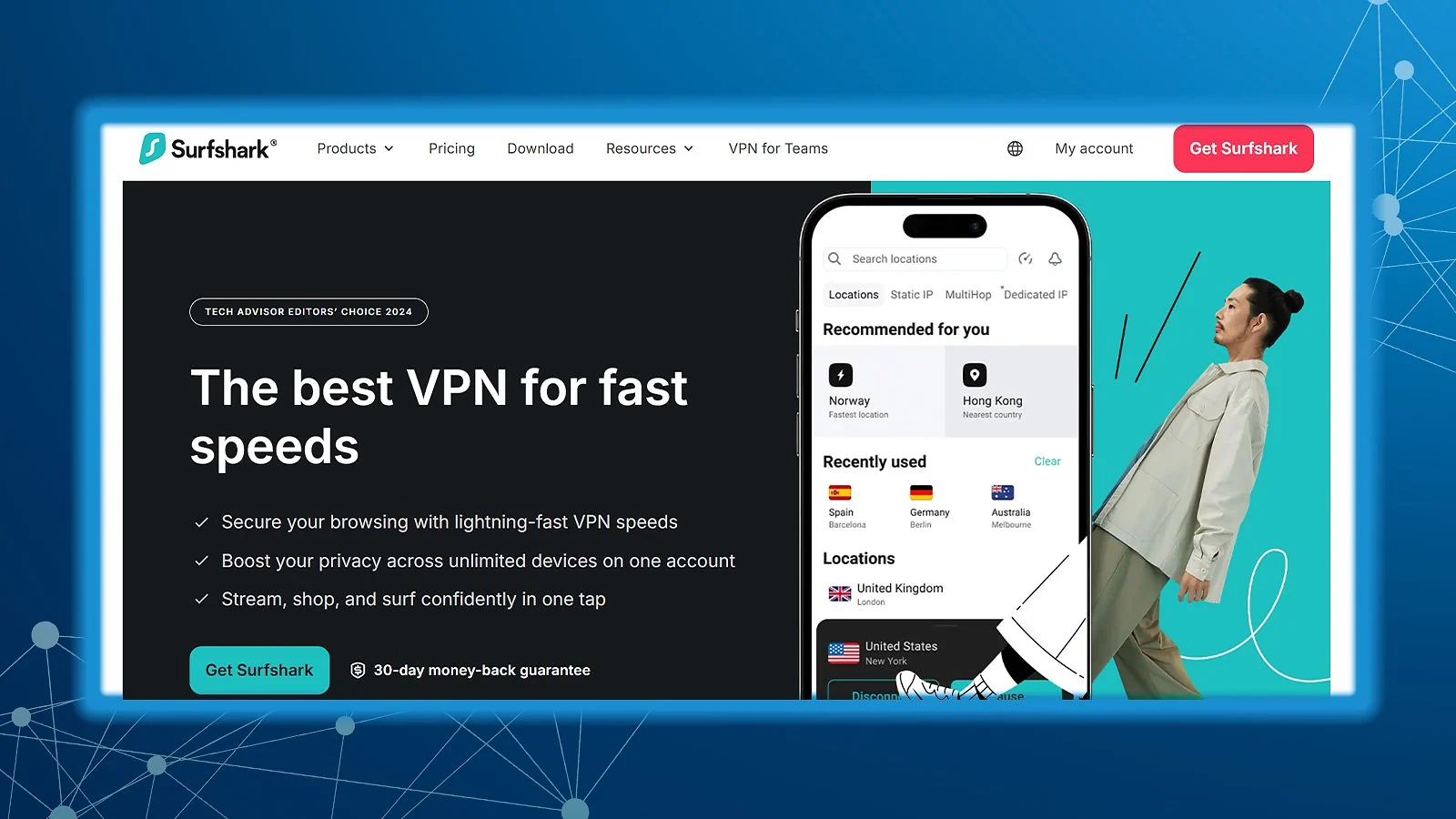
Surfshark is the most secure VPN for personal use without the premium price tag. It’s had multiple independent audits, runs RAM-only servers, and includes a system-level kill switch on every platform.
| Feature | Details |
|---|---|
| Servers | 4,500+ in 100 countries |
| Encryption | ChaCha20-Poly1305 (WireGuard), AES-256-GCM (OpenVPN) |
| Key exchange | 2048-bit RSA, Curve25519 |
| Post-quantum encryption | In development |
| Protocols | WireGuard, OpenVPN, IKEv2 |
| Kill switch | System-level on all platforms |
| No-logs audits | 2 (Deloitte 2023, 2025) |
| Server type | RAM-only, 10 Gbps infrastructure |
| Jurisdiction | Netherlands |
| Simultaneous connections | Unlimited |
| Starting price | $1.99/month (2-year plan) |
Security Analysis
Surfshark’s no-logs policy has been audited twice by Deloitte (2023 and June 2025). The reviews confirmed it doesn’t store browsing history, IP addresses, connection timestamps, or session data.
Beyond that, Cure53 audited its browser extensions (2018) and server infrastructure (2021), and SecuRing completed a full security assessment in April 2025 covering web, desktop, and mobile apps. The entire network runs on RAM-only servers, so nothing survives a reboot. The kill switch operates at the system level across all platforms – in my testing, traffic cut instantly with no IP leaks.
Surfshark is based in the Netherlands, inside the EU and the Nine Eyes alliance. That raises eyebrows for some privacy purists. Still, Dutch law doesn’t require VPN logging, so there’s no legal obligation to retain user data.
MultiHop routes traffic through two servers for double encryption, and unlike fixed-pair setups elsewhere, you can choose both locations yourself. Camouflage Mode disguises VPN traffic as regular HTTPS, while NoBorders handles restrictive networks. CleanWeb covers DNS-level ad, tracker, and malware blocking.
In 2024, Surfshark upgraded its infrastructure to 10 Gbps across the network, with experimental 100 Gbps servers rolling out in Amsterdam. That headroom keeps performance stable even with heavier security features enabled. Unlimited connections also make it the best VPN for multiple devices.
| Pros | Cons |
|---|---|
| ✅ Lowest price ($1.99/mo) ✅ Unlimited device connections ✅ System-level kill switch on all platforms ✅ Multiple independent audits ✅ MultiHop with custom server selection | ❌ Netherlands jurisdiction (Nine Eyes) ❌ Post-quantum encryption not yet deployed |
Final Verdict: Surfshark is the most secure VPN at this price point. Multiple audits, full system-level protection, and unlimited connections make it hard to justify paying more unless you want Nord’s extra layers.
5. VeePN [Affordable, Solid Security]
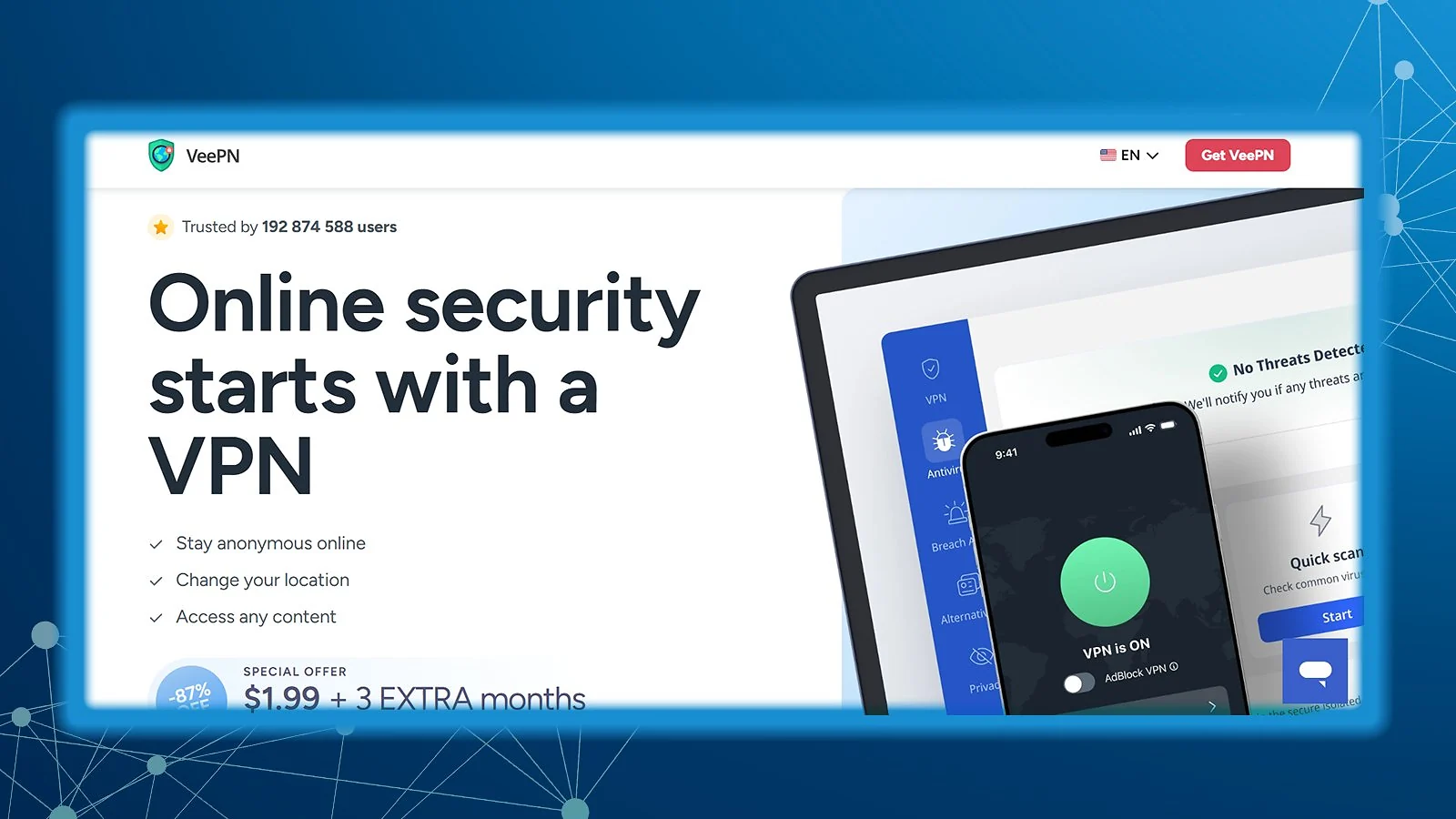
VeePN isn’t trying to be the most secure VPN here, but it shows up with all the basics done right at a low price. It uses strong encryption, a kill switch, RAM-only servers, and a strict no-logs policy.
| Feature | Details |
|---|---|
| Servers | 2,600+ servers in 80+ countries |
| Encryption | ChaCha20-Poly1305 (WireGuard), AES-256-GCM (OpenVPN) |
| Key exchange | Curve25519, 2048-bit RSA |
| Post-quantum encryption | No |
| Protocols | WireGuard, OpenVPN, IKEv2 |
| Kill switch | System-level (desktop), app-level (mobile) |
| Infrastructure audits | Independent audit of browser extensions (Cure53) |
| App audits | No |
| No-logs verification | No |
| Server type | RAM-only servers |
| Jurisdiction | Panama |
| Simultaneous connections | 10 devices |
| Starting price | $1.99/month |
Security Analysis
VeePN ticks the essentials: AES-256 encryption, WireGuard/OpenVPN/IKEv2 support, a kill switch, and RAM-only servers that wipe data on reboot. In my real-world testing, these basics prevented DNS and IPv6 leaks.
Panama jurisdiction is a plus for privacy – it’s outside the Eyes alliances and doesn’t have mandatory data retention laws.
Where VeePN diverges from the other picks here is audit coverage. The main independent audit that exists is for the browser extensions, not the core VPN applications or no-logs claim of the full service. That’s useful but not the same as a full no-logs verification for desktop/mobile clients like the ones Nord, Surfshark, Proton, or Express have.
You also get extras like split-tunneling, NetGuard ad/malware blocking, and double-VPN servers, which aren’t strictly security game-changers but are nice add-ons. Still, we’re talking about a VPN with solid encryption, good privacy, and independent auditing going in the right direction.
| Pros | Cons |
|---|---|
| ✅ Panama jurisdiction (no mandatory data retention laws) ✅ Strong encryption ✅ RAM-only server infrastructure ✅ Affordable pricing ✅ Browser extension independently audited | ❌ No full independent audit of core VPN apps ❌ No verified third-party no-logs audit |
Final Verdict: VeePN is one of the more affordable VPNs with solid fundamentals and real leak protection. But compared with the top picks in this list, it hasn’t had the same level of independent verification across its full apps. That’s fine if you want basic, low-cost protection – just don’t expect it to be on the same audit footing as the others.
What Makes the Most Secure VPN Service? The Core Standards I Used in Testing
Now that you’ve seen my picks, here’s what I looked at when deciding which services deserved to be on this most secure VPN list.
Encryption Implementation
AES-256 and ChaCha20 are standard at this point. That alone doesn’t tell you much. What matters is how the protocol is configured and how keys are handled behind the scenes.
The providers on this list use:
- AES-256-GCM or ChaCha20-Poly1305
- Curve25519 or RSA-2048+ for key exchange
- Perfect forward secrecy
- Strong authentication (SHA-256 or better)
Strong encryption can still be undermined by weak key exchange or sloppy configuration. The implementation is what counts when evaluating most secure VPN encryption.
Independent Security Audits
I gave serious weight to third-party verification.
The most secure VPN service shouldn’t rely on trust alone. Reputable firms like Deloitte, PwC, KPMG, Cure53, and others should be involved – and ideally more than once.
I looked for audits covering:
- No-logs policy enforcement
- Server configurations
- Infrastructure access controls
- Application vulnerabilities
Repeat audits matter more than one-time checkups. You should never be left wondering is my VPN working or whether it can make good on its claims.
Kill Switch Reliability
If the VPN drops and your traffic keeps flowing, encryption doesn’t matter.
System-level kill switches that block traffic at the OS or firewall level are far more reliable than app-level versions. During testing, I watched for IP leaks during reconnects, sleep states, and network changes.
If it leaked, it didn’t make the cut.
Jurisdiction and Legal Risk
Jurisdiction isn’t everything – but it matters.
Some countries require data retention or cooperate heavily with intelligence alliances. Others offer stronger privacy protections. I prioritized providers operating from jurisdictions with no mandatory logging requirements and a track record of resisting data collection.
Infrastructure and Transparency
Finally, I looked at how the service is built.
RAM-only servers, self-owned hardware, open-source apps, vulnerability disclosures, and post-quantum encryption all add weight. None of these alone makes the most secure VPN – but together, they tell you how seriously the company takes security. If your provider can’t protect you, why use a VPN in the first place?
My Overall Verdict
Choosing the most secure VPN for personal use comes down to proof. Not marketing or pretty homepages. Audits, infrastructure decisions, jurisdiction, and how the service behaves when you test it – that’s what matters. These are the providers that held up.
- Most Secure VPN Overall > NordVPN. Five no-logs audits, post-quantum encryption, RAM-only servers, and hardened infrastructure. If you want the best most secure VPN with the strongest verification behind it, this is the one.
- Proven Infrastructure > ExpressVPN. Three KPMG audits and a real-world server seizure that confirmed its no-logs design. Expensive, but the architecture has been tested outside a marketing page.
- Verified Privacy > Proton VPN. Four consecutive audits, open-source apps, Secure Core routing, and Swiss jurisdiction. If legal backing and transparency matter most, this is your most secure VPN option.
- Best Value > Surfshark. Multiple audits, system-level protection, unlimited connections, and a $1.99/month entry price. It doesn’t stack as many advanced layers as Nord, but it earns its place on the most secure VPN list.
- Best Budget Entry > VeePN. Panama jurisdiction, strong encryption, and a low starting price. It doesn’t have the same audit depth as the others, but it covers the fundamentals.
So, “what is the most secure VPN” isn’t a question we can answer in a vacuum. The real question is how much independent verification (and for which features) you want behind your connection.
FAQs
NordVPN is the most secure VPN for personal use based on verified security metrics. Five independent audits from PwC and Deloitte confirm its no-logs policy, post-quantum encryption protects against future threats, RAM-only servers prevent data persistence, and Panama jurisdiction provides strong legal protection.
Yes, independent VPN audits from reputable firms (Deloitte, PwC, KPMG, Cure53) are trustworthy and provide meaningful security verification. They examine systems at a specific point in time, though, so changes after the audit aren’t covered.
Swiss VPNs like Proton VPN benefit from constitutional privacy protections. Panama (NordVPN) and the British Virgin Islands (ExpressVPN) have no mandatory data retention. However, even a US-based VPN can be safe for you if it adheres to a strict no-logging policy.
Post-quantum encryption uses algorithms designed to resist attacks from future quantum computers. While practical quantum computers capable of breaking current encryption don’t exist, attackers could store encrypted data today and decrypt it once quantum computers mature (“harvest now, decrypt later”). VPNs like NordVPN and ExpressVPN have deployed post-quantum encryption using NIST-approved algorithms alongside traditional encryption.
Rarely. Most free VPNs compromise security through logging, ads, or selling user data. However, some premium providers offer secure free tiers: Proton VPN Free provides unlimited data with full security on limited servers. The keyword is “limited servers.” You get a few free servers that are often congested and won’t get you far with serious gaming, streaming, or torrenting.
WireGuard and OpenVPN are currently the most secure VPN protocol options when properly configured. WireGuard uses modern cryptography with a smaller codebase, while OpenVPN is highly mature and extensively audited. The real difference comes down to implementation.