

17 Best Deck Building Games 2026: Strategic and Addictive



Recent update
This list is regularly updated to match what’s trending and in-demand among gamers.
The best deck-building games mix smart decision-making with the thrill of creating powerful card combinations. Every card you add to your deck shapes the way you play, turning each run into a unique challenge. From tense tactical battles to sprawling roguelike journeys, these games reward planning, adaptability, and creative thinking.
This list brings together 17 titles that stand out for their depth, replay value, and clever mechanics. You’ll find everything from indie gems pushing the genre forward to polished hits that have defined it for years. Personally, I think deck-building games are one of the most satisfying genres in gaming – they keep you learning and improving with every match.
Jump to:
Our Top Picks for Deck Building Games
Some deck-building games earn their place at the top by doing more than just offering a solid card system – they combine mechanics, theme, and pacing in a way that keeps players engaged for dozens of hours.
The games mentioned are chosen for their balance of strategic depth, replay value, and the ability to offer something new each time you play. They’ve influenced the genre, attracted dedicated communities, and remain relevant well after release.
-
Buy nowSlay the Spire 2017A genre-defining roguelike that made deck-building accessible without sacrificing complexity. Its blend of random events, character-specific abilities, and a huge variety of cards ensures that no two runs are ever alike, pushing you to adapt your strategy on the fly.
-
Buy nowGloomhaven 2020A card-driven tactical game that merges the depth of a strategy RPG with the precision of turn-based combat. Its branching campaign, cooperative elements, and varied character abilities create long-term goals that make every decision feel impactful.
-
Buy nowDune: Imperium 2023A hybrid of deck building and worker placement that thrives on tension and timing. The Dune setting enhances the experience, with cards and actions reflecting the shifting alliances, political intrigue, and resource battles that define the universe.
Each one offers a complete, well-crafted experience that demonstrates the range of what deck-building games can achieve. As you continue, you’ll see how other titles bring their own twists to the genre while still delivering that satisfying loop of building and refining your deck.
17 Best Deck Building Games: Strategic and Replayable Favorites
This list covers standout titles that mix smart strategy with replay value, each offering its own twist on the genre. Some focus on competitive tension, others on unpredictable roguelike runs, but all reward careful planning.
How many of these best deck-building games have you played?
1. Slay The Spire [Best Overall Roguelike Deckbuilder]
| Our score | 10
☆
★
☆
★
☆
★
☆
★
☆
★
☆
★
☆
★
☆
★
☆
★
☆
★
|
| Genre | Roguelike Deckbuilder, Card Game, Card Battler |
| Platforms | PC, PlayStation 4, Xbox One, Nintendo Switch, iOS, Android |
| Year of release | 2019 |
| Creator/s | Developer: Mega Crit; Publisher: Mega Crit |
| Average playtime | 50–200+ hours (highly replayable) |
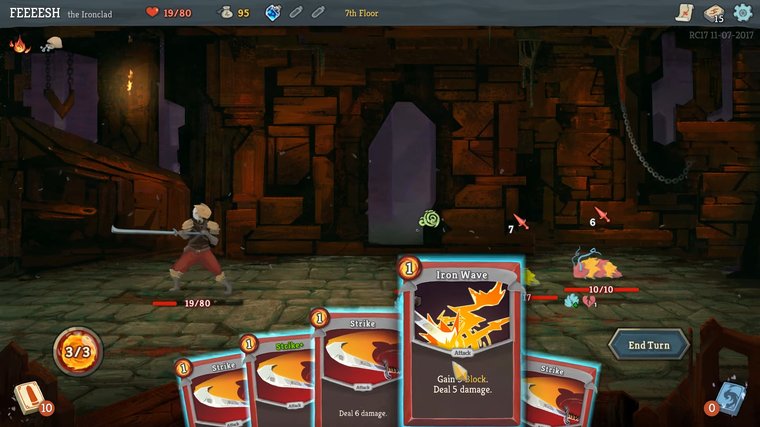
Slay the Spire combines the structure of a great roguelike game with the tactical depth of a deck-building card game. Players choose one of four characters, each with a unique starting deck and gameplay, then battle through procedurally generated floors filled with enemies, events, and treasures.
The goal is to reach the top of the Spire, refining your deck along the way by acquiring new cards, upgrading existing ones, and finding powerful relics that grant game-changing effects. The visual style is functional but distinctive, with hand-drawn characters and enemies that make each encounter easy to read.
Prioritize card removal at shops early on, trimming weak strikes or defends from your deck makes your powerful synergies show up more consistently in key fights.
Runs feel fresh thanks to hundreds of cards, over 200 items, and dozens of legendary encounters that demand different strategies. Randomized paths, branching routes, and varied enemy types ensure the first game never plays the same way twice.
This game is the progenitor and gold standard of the roguelike deck-builder genre. Its simple, elegant design and near-infinite replayability through diverse characters and card synergies make it a benchmark for all other games in the category.
My Verdict: Slay the Spire remains one of the most influential titles in modern strategy gaming, setting the bar for balance, depth, and replay value.
GAMES LIKE SLAY THE SPIRE
2. Gloomhaven [Best Deckbuilder for Deep Campaign Tacticians]
| Our score | 9.5
☆
★
☆
★
☆
★
☆
★
☆
★
☆
★
☆
★
☆
★
☆
★
☆
★
|
| Genre | Tactical RPG, Digital Board Game, Turn-Based Combat |
| Platforms | PC, macOS |
| Year of release | 2021 |
| Creator/s | Developer: Flaming Fowl Studios, Saber Interactive; Publisher: Twin Sails Interactive |
| Average playtime | 100–200+ hours (campaign and side missions) |
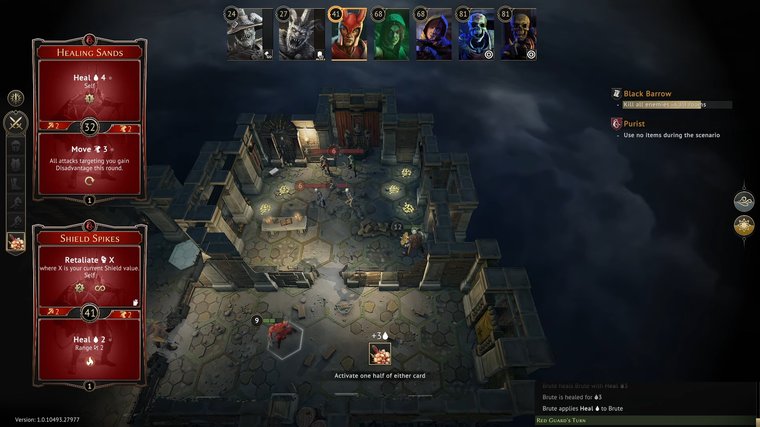
Gloomhaven brings the acclaimed greatest strategy game to the digital space, keeping its layered tactical combat and intricate world-building intact. Players command a team of mercenaries, navigating branching storylines and completing missions across a dark, medieval fantasy setting.
Combat unfolds on hex-based maps, where you select cards to dictate both movement and abilities, making every turn a careful balance between offense, positioning, and resource management.
The game starts with 17 distinct mercenaries, each with a personal deck of ability cards and over 1,000 skills to master. Choices made during the campaign carry forward, shaping the story, relationships, and available missions.
Between quests, you can visit the city to upgrade equipment, recruit allies, and prepare for the dangers ahead. The visual presentation leans into atmospheric environments – dank caves, corrupted forests, and oppressive cities – reinforcing the stakes of each expedition.
Don’t burn your best cards too early, manage your hand carefully, as losing cards permanently shortens your mission lifespan and can lead to premature exhaustion.
It is a digital adaptation of a popular and complex board game. It offers a deep, cooperative campaign with legacy elements, where players’ choices and progression have lasting effects on the world and characters.
My Verdict: Gloomhaven is ideal for players who enjoy methodical, high-stakes decision-making and long-term progression.
GAMES LIKE GLOOMHAVEN
3. Dune: Imperium [Best Deckbuilder for Board Game Strategists]
| Our score | 9.5
☆
★
☆
★
☆
★
☆
★
☆
★
☆
★
☆
★
☆
★
☆
★
☆
★
|
| Genre | Strategy, Deckbuilding, Worker Placement |
| Platforms | PC, macOS |
| Year of release | 2023 |
| Creator/s | Developer: Dire Wolf; Publisher: Dire Wolf |
| Average playtime | 20–50+ hours (varies by mode and playstyle) |
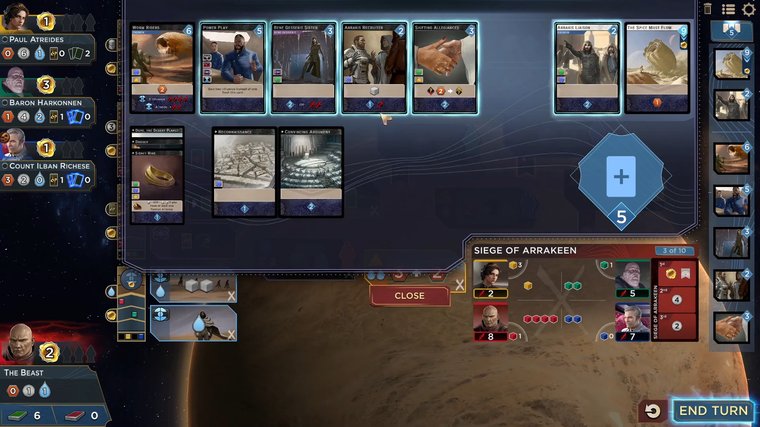
Set in the political and treacherous world of Arrakis, Dune: Imperium tasks players with balancing influence, resources, and military power to claim control of the Spice. Each turn, you play cards to deploy agents on the board, securing locations that grant vital advantages or forging alliances with key factions in this best indie game.
The worker placement mechanic forces you to compete for limited spots, while the deck-building element ensures your available actions grow stronger and more specialized over time. This constant change pushes players to adapt their strategy rather than relying on a single path to victory. The thematic art and UI borrow heavily from the Dune universe, immersing you in its political intrigue and high-stakes power struggles.
Prioritize early influence with the Fremen or Bene Gesserit factions to unlock powerful rewards and secure key location access before your opponents snowball their deck strength.
It uniquely blends deck-building with the “worker placement” board game mechanic, allowing players to strategically control the board and factions of Dune while also improving their card decks.
My Verdict: Dune: Imperium delivers a rare mix of tactical board control and evolving gameplay, making it a standout for strategy fans who want both long-term planning and dynamic competition.
Steam Wallet Gift Cards
4. Balatro [Best Poker-Inspired Roguelike Deckbuilder]
| Our score | 9
☆
★
☆
★
☆
★
☆
★
☆
★
☆
★
☆
★
☆
★
☆
★
☆
★
|
| Genre | Card Game, Roguelike Deckbuilder |
| Platforms | PC, Nintendo Switch |
| Year of release | 2024 |
| Creator/s | Developer: LocalThunk; Publisher: Playstack |
| Average playtime | 30–100+ hours (campaign and challenge runs) |
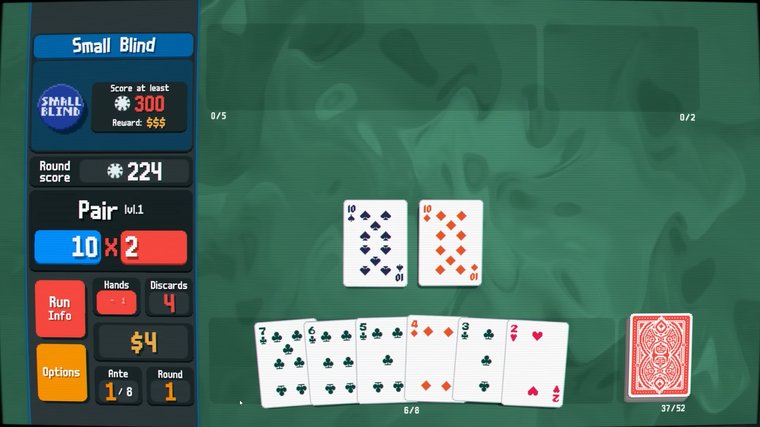
Balatro is a game like Slay The Spire that reimagines poker through the lens of a roguelike, turning familiar hands into the foundation for unpredictable, high-stakes runs. Instead of simply aiming for the strongest card combinations, you collect and deploy Jokers, Tarot cards, and other modifiers that radically change how each round unfolds.
The pixel art presentation, paired with a CRT-style visual filter and synthwave soundtrack, creates a retro-inspired atmosphere that’s both vibrant and hypnotic. Each session feels distinct thanks to over 150 unique Jokers, 15 deck types with special rules, and dozens of permanent or temporary power-ups.
Focus on upgrading hand size and multiplier Jokers early, scaling your scoring potential quickly is key to surviving the escalating blind requirements in later rounds.
It takes the simple, familiar premise of poker and transforms it into a highly addictive roguelike. The core loop of building powerful hands and combining them with wild jokers and vouchers creates a puzzle-like experience with explosive combos. You can learn how to get Balatro at no cost to start building high-scoring hands without an upfront purchase.
My Verdict: Balatro is perfect for players who enjoy the thrill of pushing their luck while engineering clever, high-value plays.
GAMES LIKE BALATRO
5. Wildfrost [Best Deckbuilder for Timing-Based Tactics]
| Our score | 9
☆
★
☆
★
☆
★
☆
★
☆
★
☆
★
☆
★
☆
★
☆
★
☆
★
|
| Genre | Roguelike Deckbuilder, Card Battler |
| Platforms | PC, Nintendo Switch |
| Year of release | 2023 |
| Creator/s | Developer: Deadpan Games, Gaziter; Publisher: Chucklefish |
| Average playtime | 25–80+ hours (campaign and daily runs) |
Wildfrost drops you into a frozen world where the sun has vanished, leaving only the settlement of Snowdwell as humanity’s last stand. To reclaim the world, you assemble a deck of companions, elemental gear, and magical charms, then lead your chosen tribe into battles against the Wildfrost’s icy forces.
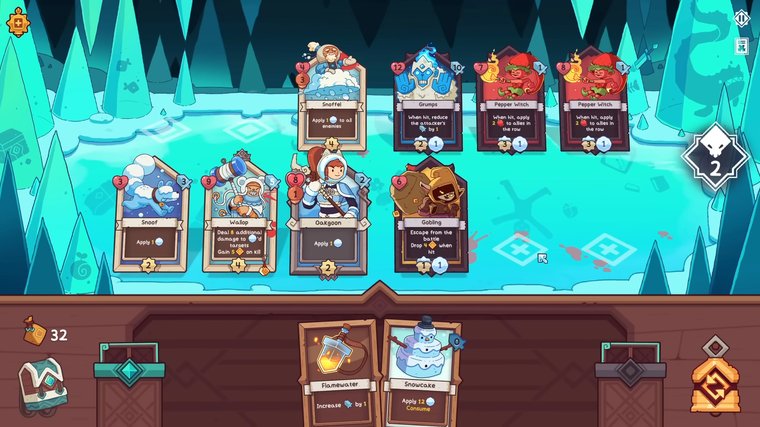
Its standout feature is a dynamic “counter” mechanic – every card and enemy has a timer that dictates when they act. This forces careful turn planning, as mismanaging your counters can leave you vulnerable to devastating attacks.
Between runs, the town of Snowdwell can be upgraded, unlocking new cards, events, and customization options. The art direction is warm and whimsical despite the harsh setting, with expressive characters and environments giving each encounter personality.
Always keep an eye on enemy counters, delaying or redirecting high-damage attackers with freeze effects or companion rotation can turn a losing round into a clutch survival play.
It is known for its charming art style and a dynamic combat system based on a “counter” mechanic. Every card and enemy unit has a timer, forcing players to think several moves ahead to control the battlefield.
My Verdict: Wildfrost is a clever mix of tactical foresight and deck customization, offering a steady challenge wrapped in an inviting, hand-drawn world.
6. Dicey Dungeons [Best Dice-Driven Deckbuilder Hybrid]
| Our score | 8.5
☆
★
☆
★
☆
★
☆
★
☆
★
☆
★
☆
★
☆
★
☆
★
☆
★
|
| Genre | Roguelike Deckbuilder, Card Battler |
| Platforms | PC, Nintendo Switch, iOS, Android |
| Year of release | 2019 |
| Creator/s | Developer: Terry Cavanagh; Publisher: Terry Cavanagh |
| Average playtime | 15–50+ hours (varies by character and challenge mode) |
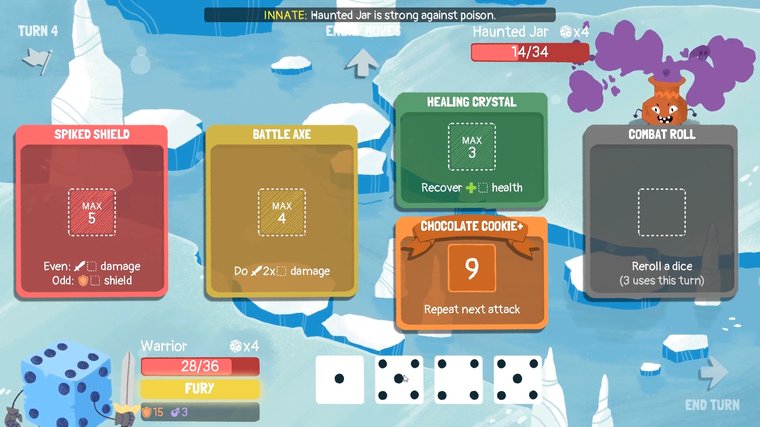
Dicey Dungeons turns you into a walking dice, navigating procedurally generated dungeons in a battle against Lady Luck. Instead of traditional cards, you acquire “equipment” that functions as your abilities – each requiring specific dice values to activate.
Combat becomes a blend of the highest tactical game and risk management, as you work with whatever rolls you’re given to deal damage, apply status effects, or manipulate your next turn’s outcome. The game offers six radically different characters, each introducing its own ruleset that reshapes the entire playstyle.
The Robot manages a push-your-luck energy meter, the Thief steals enemy abilities, and the Inventor dismantles gear to create new gadgets, among others. The cheerful, cartoonish visuals contrast with the sometimes punishing difficulty, while a lively soundtrack keeps the pace energetic.
When playing as the Robot, stop just before maxing out your CPU meter, overclocking and busting wastes your whole turn, while staying just under lets you roll again safely and often squeeze in more damage.
It uniquely blends deck-building with the luck and chaos of dice-rolling, turning combat into a puzzle where you must strategically use the random numbers you’re given. Instead of collecting cards, you collect “equipment” that you slot your dice into, and the game features a cast of six radically different characters, each with their own unique rules and playstyles that fundamentally change how the best game is played.
My Verdict: Dicey Dungeons is a smart mix of chance and strategy, rewarding creative thinking as much as lucky rolls.
GAMES LIKE DICEY DUNGEONS
7. Vault of the Void [Best Deckbuilder for Min-Max Players]
| Our score | 8.5
☆
★
☆
★
☆
★
☆
★
☆
★
☆
★
☆
★
☆
★
☆
★
☆
★
|
| Genre | Roguelike Deckbuilder, Strategy Card Game |
| Platforms | PC |
| Year of release | 2022 |
| Creator/s | Developer: Spider Nest Games; Publisher: Spider Nest Games |
| Average playtime | 30–100+ hours (varies with difficulty and class choice) |
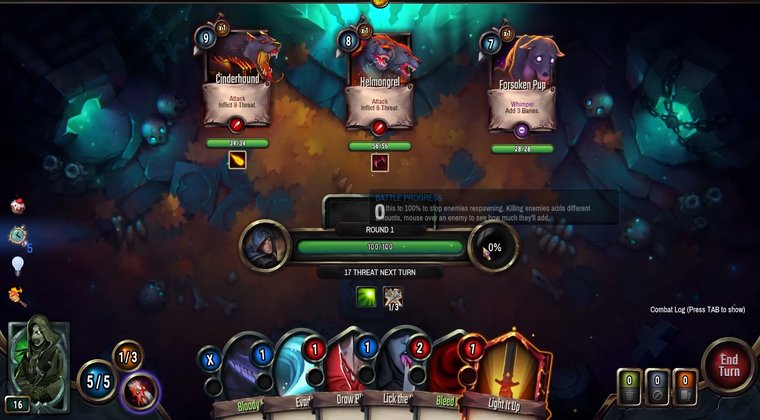
Vault of the Void is built around the idea of giving players maximum control over their deck at all times. You start each run by selecting one of four classes in this trading card game, each with a distinct set of mechanics, then work your way through encounters against over 90 different enemies.
What makes it stand out is the ability to add, remove, or modify cards mid-run, using systems like Void Stones to enhance abilities or purging cards entirely to refine your strategy. With more than 440 cards and 320 artifacts, the combinations are extensive, and creative planning often matters more than lucky draws. The clean, minimalistic visuals keep the focus on the cards and the battlefield, while clear UI elements make complex strategies easier to manage in the heat of combat.
Regularly purge zero-impact cards at rest points or events, even a slightly leaner, tighter deck drastically boosts your synergy execution and increases draw consistency in boss fights.
The game focuses on a high degree of player control and strategic depth by allowing players to customize their deck mid-run and purge cards, giving them more agency over their build than many other games in the genre.
My Verdict: Vault of the Void is ideal for players who want skill and planning to take precedence over randomness.
8. Zoeti [Best Poker-Hand Combat Deckbuilder]
| Our score | 8.5
☆
★
☆
★
☆
★
☆
★
☆
★
☆
★
☆
★
☆
★
☆
★
☆
★
|
| Genre | Roguelike Deckbuilder, Turn-Based RPG |
| Platforms | PC |
| Year of release | 2023 |
| Creator/s | Developer: Dusklight CO., LTD.; Publisher: Akupara Games |
| Average playtime | 15–40+ hours (varies with mode and difficulty) |
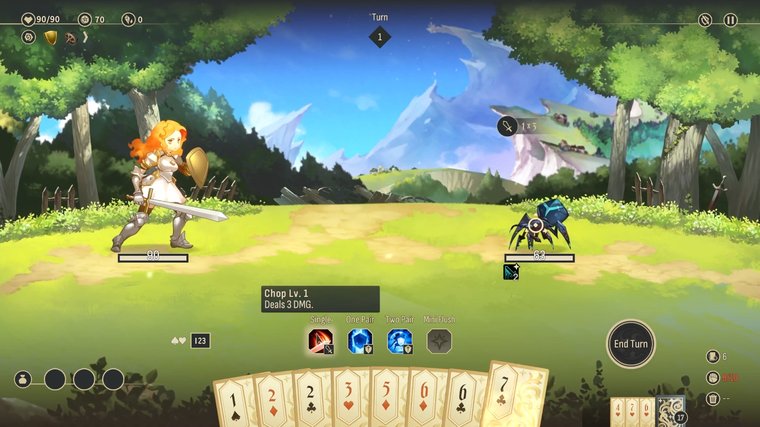
Zoeti is a classic RPG game. Your deck is made of standard playing cards, but instead of matching suits for points, you form poker hands – pairs, straights, full houses – to trigger character skills and special attacks.
This system layers luck and planning, pushing you to make the best of the cards in your hand while anticipating your opponent’s moves. The game features three main characters, each with their own abilities, progression paths, and storylines.
Between battles, you can upgrade skills, acquire powerful items, and take on optional encounters that offer higher rewards at greater risk. Its anime-inspired visuals and hand-drawn animations give battles a dynamic feel, while the variety of enemies and bosses keeps each run from feeling repetitive.
Prioritize upgrading skills that trigger off high-frequency hands like pairs and two pairs early, these are much easier to form consistently and let you build momentum without relying on rare combos.
It blends traditional turn-based RPG combat with a poker-inspired card system. Players use poker hands to activate character skills and attacks, adding a unique layer of luck and strategy to the genre.
My Verdict: Zoeti is a distinctive twist on deckbuilding RPGs, offering a satisfying mix of tactical decision-making and poker-style risk management.
9. Pirates Outlaw [Best Mobile-Friendly Roguelike Deckbuilder]
| Our score | 8
☆
★
☆
★
☆
★
☆
★
☆
★
☆
★
☆
★
☆
★
☆
★
☆
★
|
| Genre | Roguelike Deckbuilder, Card Game |
| Platforms | PC, iOS, Android, Nintendo Switch |
| Year of release | 2019 |
| Creator/s | Developer: Fabled Game; Publisher: Fabled Game |
| Average playtime | 20–60+ hours (varies by mode and unlocks) |
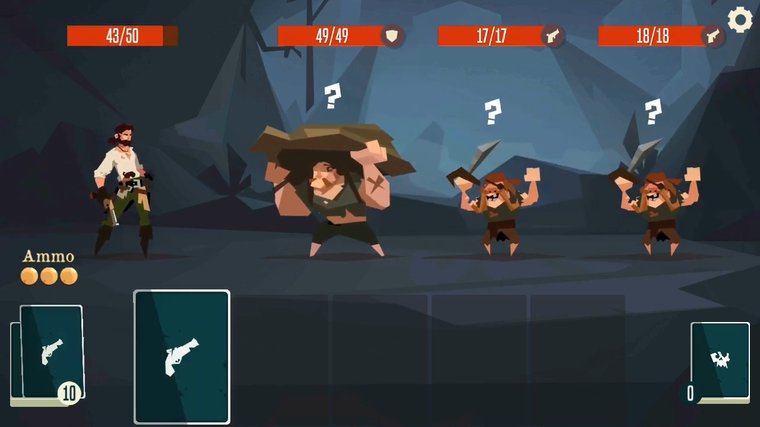
Pirates Outlaws takes the deckbuilding roguelike formula to the high seas, mixing turn-based card battles with a swashbuckling exploration loop. You choose from over a dozen playable heroes, each offering unique starting decks and abilities, then navigate across different maps filled with enemy ships, random events, and bosses.
Combat is streamlined for quick turns, making it well-suited to short play sessions without sacrificing strategic depth. With more than 700 cards and 200 relics in this best PC game, the variety of builds is extensive, and special modes like Arena and Tavern Brawl introduce alternative challenges outside of the main adventure.
Always visit taverns to remove cards when possible, deck thinning is crucial to increase the odds of drawing high-damage combos, especially before boss encounters.
It’s a mobile-friendly roguelike deck-builder with a pirate theme, offering a large variety of heroes, cards, and relics. Its turn-based combat system is specifically designed for quick, satisfying sessions.
My Verdict: Pirates Outlaws is flexible, like most deckbuilders that work equally well for dedicated marathon runs or quick on-the-go matches.
10. Inscryption [Best Horror-Themed Deckbuilder]
| Our score | 8
☆
★
☆
★
☆
★
☆
★
☆
★
☆
★
☆
★
☆
★
☆
★
☆
★
|
| Genre | Card Battler, Roguelike Deckbuilder, Horror |
| Platforms | PC, PlayStation 4, PlayStation 5, Nintendo Switch |
| Year of release | 2021 |
| Creator/s | Developer: Daniel Mullins Games; Publisher: Devolver Digital |
| Average playtime | 12–30+ hours (varies by story progression and replay runs) |
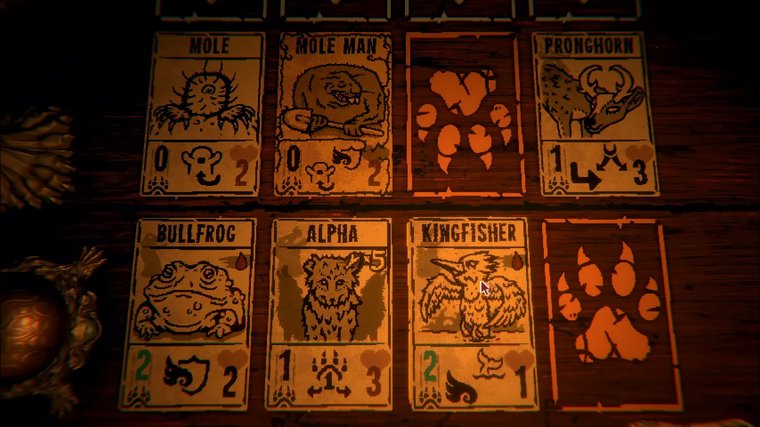
Inscryption takes the structure of a deckbuilding roguelike and blends it with escape-room puzzles and psychological horror. You begin trapped in a mysterious cabin, playing a dark and cryptic card game against a shadowy opponent.
Each match uses woodland creature cards, where positioning, resource management, and sacrificing units are key to surviving. Between games, you explore the cabin, solve environmental puzzles, and uncover unsettling secrets about your captor.
The visuals in this greatest puzzle game lean into a grainy, analog horror style, with dim lighting and an ominous atmosphere that keeps you uneasy. As the cooperative game progresses, it shifts genre and perspective in unexpected ways, constantly recontextualizing your cards and mechanics.
Always pick up the Undying (infinite-use) sigil early, pairing it with high-cost or high-damage creatures lets you create unstoppable combos that carry across acts.
A mind-bending, narrative-driven experience that subverts the deck-building genre. It features a dark, unsettling atmosphere and a meta-narrative that breaks the fourth wall, making it feel like more than just a card game.
My Verdict: Inscryption is essential for players who enjoy when a great game challenges not just their strategy but their expectations.
GAMES LIKE INSCRYPTION
11. Monster Train [Best Multi-Lane Defense Deckbuilder]
| Our score | 7.5
☆
★
☆
★
☆
★
☆
★
☆
★
☆
★
☆
★
☆
★
☆
★
☆
★
|
| Genre | Roguelike Deckbuilder, Card Battler, Strategy |
| Platforms | PC, Xbox One, Nintendo Switch |
| Year of release | 2020 |
| Creator/s | Developer: Shiny Shoe; Publisher: Good Shepherd Entertainment |
| Average playtime | 30–100+ hours (varies by clan mastery and difficulty) |
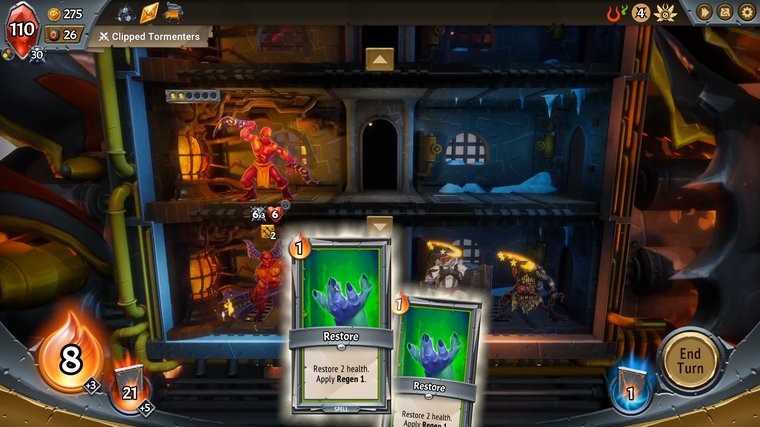
Monster Train brings a fresh twist to deckbuilding by adding a vertical battlefield with three floors to defend. You lead a train carrying the last Pyre of Hell, placing units and casting spells to hold back waves of heavenly forces. Strategic positioning matters as much as card selection, since enemies advance floor by floor toward your Pyre, forcing you to adapt to threats in real time.
The base game offers five unique clans, each with its own champion and distinct playstyle, plus the ability to mix two clans in a top single-player game run for more complex synergies. With over 220 cards, multiple upgrade paths, random events, and daily challenges, every run presents new tactical puzzles. Its vibrant art style and clean UI make the chaos easy to follow, and optional multiplayer modes like Hell Rush and custom challenges extend replay value.
Always upgrade your champion early and build your strategy around their strengths, fully upgraded champions can often carry an entire run if you synergize your support units and spells accordingly.
A unique vertical combat system where players defend a “Pyre” on a train across multiple floors. The gameplay blends strategic card play with a top tower defense game, forcing players to manage their units’ positions to maximize their effectiveness.
My Verdict: Monster Train is a sharp, replayable blend of deckbuilding and tactical placement.
GAMES LIKE MONSTER TRAIN
12. Roguebook [Best Dual-Hero Deckbuilder Adventure]
| Our score | 7.5
☆
★
☆
★
☆
★
☆
★
☆
★
☆
★
☆
★
☆
★
☆
★
☆
★
|
| Genre | Roguelike Deckbuilder, Card Game, Strategy, RPG |
| Platforms | PC |
| Year of release | 2021 |
| Creator/s | Developer: Abrakam Entertainment SA; Publisher: Nacon |
| Average playtime | 20–100+ hours (varies by hero combinations and difficulty) |
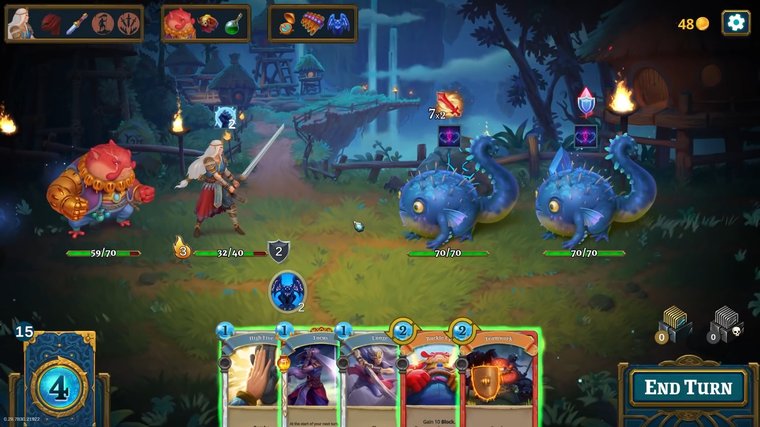
Co-created by Richard Garfield, the mind behind Magic: The Gathering, Roguebook blends a dual-hero combat system with a map exploration mechanic where you “paint” the world to uncover new paths, resources, and hidden encounters.
Roguebook mixes roguelike exploration with strategic deckbuilding, but its twist lies in pairing two heroes whose cards, relics, and abilities can be combined for devastating synergies. Battles are turn-based and highly tactical, with enemy patterns and positioning shaping every move. Between encounters, you’ll “paint” the hex-based map to uncover hidden loot, events, and new routes, giving each run a sense of discovery and risk/reward decision-making.
Visually, the base game leans on a colourful, storybook aesthetic, with rich fantasy environments and animated card effects that make even small plays feel impactful. The map’s brushstroke reveal mechanic stands out, turning exploration into a puzzle of resource management.
Always prioritize uncovering hidden vaults with your ink and brushes early, they often contain powerful combo cards or relics that can define your dual-hero synergy for the rest of the run.
Deckbuilding here rewards experimentation – over 200 cards and dozens of relics mean no two runs are identical. Progress unlocks new cards, skills, and difficulty levels, keeping the challenge fresh long after the first clear.
My Verdict: Roguebook’s dual-hero combat and map-painting exploration make it one of the more inventive than other deck builders on the market.
GAMES LIKE ROGUEBOOK
13. Loop Hero [Best World-Shaping Deckbuilder]
| Our score | 7.5
☆
★
☆
★
☆
★
☆
★
☆
★
☆
★
☆
★
☆
★
☆
★
☆
★
|
| Genre | Roguelike, Deckbuilder, Strategy |
| Platforms | PC, Nintendo Switch |
| Year of release | 2021 |
| Creator/s | Developer: Four Quarters; Publisher: Devolver Digital |
| Average playtime | 20–80+ hours (varies by unlock progression and playstyle) |
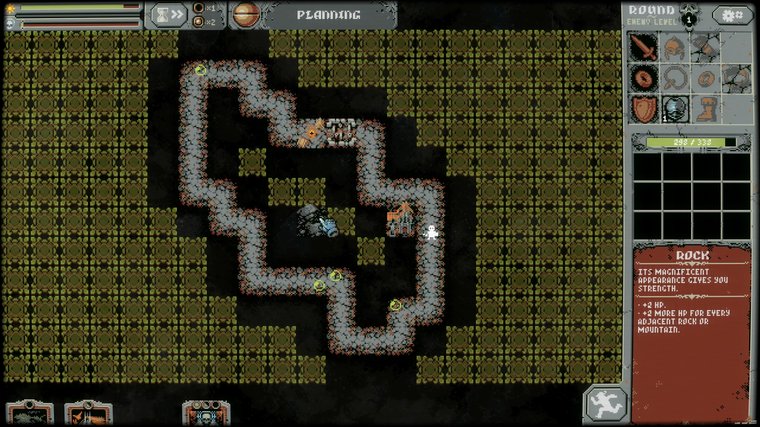
Loop Hero flips the roguelike formula by removing direct hero control. Your character automatically traverses a looping path while you strategically play cards from your deck to place enemies, buildings, and terrain. These placements shape the difficulty, rewards, and long-term growth.
Visually, it’s a nostalgic pixel-art world with a moody, post-apocalyptic tone, reminiscent of early RPGs but layered with modern effects. Deckbuilding comes into play through selecting and combining terrain and structure cards before each run, allowing for synergies that can dramatically alter odds in this top survival game.
Place Meadows adjacent to other tiles, this turns them into Blooming Meadows, which heal more each morning and scale your sustainability as enemy difficulty rises.
A genre-blending experience where you don’t control the hero directly – instead, you craft the world itself. The challenge is in balancing danger and reward so your hero gains strength without being overwhelmed, while managing resources to rebuild your camp and unlock permanent upgrades.
My Verdict: Loop Hero is perfect for players who enjoy strategic planning over fast reflexes. Its mix of roguelike runs, deckbuilding, and base-building creates an addictive gameplay loop.
GAMES LIKE LOOP HERO
14. Neurodeck [Best Psychological Deckbuilder]
| Our score | 7
☆
★
☆
★
☆
★
☆
★
☆
★
☆
★
☆
★
☆
★
☆
★
☆
★
|
| Genre | Roguelike Deckbuilder, Card Battler |
| Platforms | PC, Nintendo Switch |
| Year of release | 2021 |
| Creator/s | Developer: TavroxGames; Publisher: Goblinz Publishing, Maple Whispering Limited |
| Average playtime | 5–15 hours (varies by mode and difficulty) |
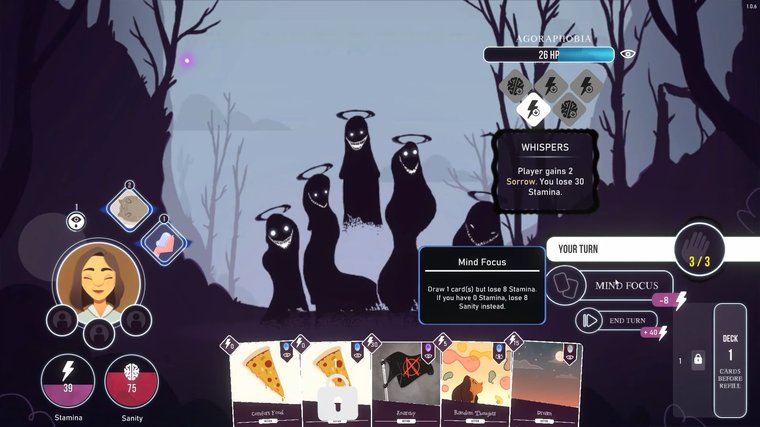
Neurodeck is a psychological deckbuilding card game where battles represent confronting fears and mental health struggles. Instead of fighting traditional monsters, you face manifestations of phobias, each with unique abilities tied to psychological concepts. The deckbuilding process is influenced by personality tests, meditation, and room exploration, giving every run a different tone.
Visually, the game blends surreal, dreamlike environments with unsettling yet symbolic enemy designs inspired by real-life fears. Deckbuilding is tightly tied to the theme – cards are rooted in coping strategies, mental resilience, and emotional triggers, creating a distinct blend of mechanics and narrative.
Prioritize cards that generate Focus early, it’s essential for triggering powerful effects mid-battle and staying ahead of phobias that drain or block your stamina.
Neurodeck stands out for integrating mental health themes directly into gameplay, using its card system not only for combat but also to reflect emotional growth and personal resilience.
My Verdict: If you’re looking for a deckbuilder with emotional depth and a unique premise, Neurodeck delivers an experience that is as thought-provoking as it is strategic.
15. Griftlands [Best Story-Driven Deckbuilder]
| Our score | 7
☆
★
☆
★
☆
★
☆
★
☆
★
☆
★
☆
★
☆
★
☆
★
☆
★
|
| Genre | Roguelike Deckbuilder, Card Battler |
| Platforms | PC |
| Year of release | 2021 |
| Creator/s | Developer: Klei Entertainment; Publisher: Klei Entertainment |
| Average playtime | 15–40 hours (varies by character and choices) |
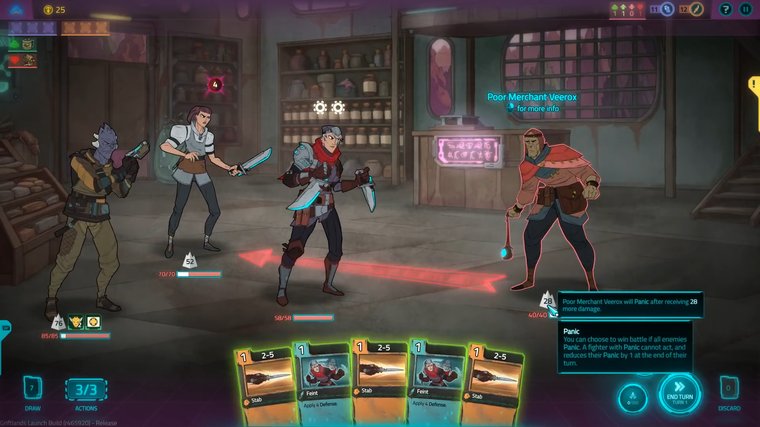
Griftlands is a narrative-driven roguelite deckbuilder where every decision matters, from the jobs you take to the allies you recruit. Set in a broken sci-fi world, the new game uses vibrant, comic-inspired visuals with fluid animation. Each location is richly detailed, while character designs emphasize the alien yet human nature of the setting.
Players manage two evolving decks that cater to different playstyles: diplomacy, intimidation, or direct combat. Negotiation decks use argument-based mechanics to sway opponents, while combat decks focus on damage, defense, and synergies. Each campaign introduces unique cards, abilities, and allies for added replay value.
Invest in negotiation cards that apply composure early, stacking defenses on your arguments is crucial to outlasting hostile debates and avoiding damage to your core resolve.
Features two separate decks for combat and negotiation (diplomacy). This dual-deck system allows players to solve problems and progress through the story without always resorting to violence, creating a unique narrative and gameplay experience.
My Verdict: Griftlands offers a rare combination of story depth and mechanical variety, rewarding players who value choice-driven gameplay. With its dual-deck system, every encounter feels like an opportunity to either fight or finesse your way forward.
GAMES LIKE GRIFTLANDS
16. The Royal Writ [Best Comedic Courtroom Deckbuilder]
| Our score | 7
☆
★
☆
★
☆
★
☆
★
☆
★
☆
★
☆
★
☆
★
☆
★
☆
★
|
| Genre | Roguelike Deckbuilder, Strategy Card Game |
| Platforms | PC |
| Year of release | 2025 |
| Creator/s | Developer: Save Sloth Studios; Publisher: Yogscast Games |
| Average playtime | 15–30 hours (varies by campaign and difficulty) |
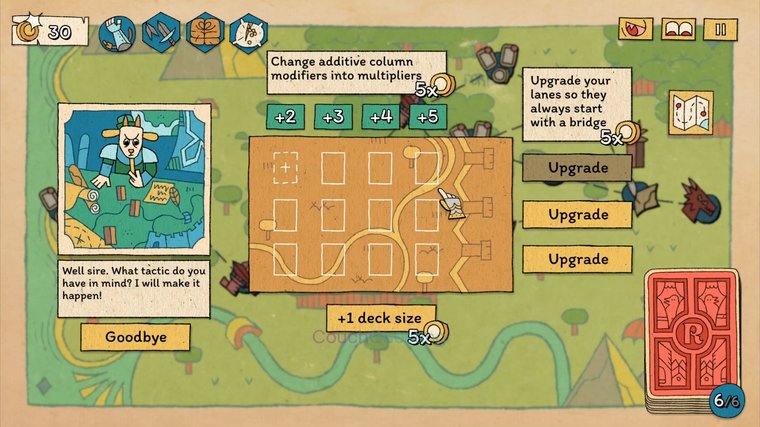
Yogscast’s new deck-builder leans hard into comedy, dressing classic card mechanics in a cheeky medieval-court theme where every play feels like pushing a ridiculous royal decree through a room full of schemers.
Draft cards that manipulate Influence early, stacking it lets you override rival plays and pull off absurd combos before the court devolves into complete chaos.
You assemble a deck of edicts, characters, and tricks, then chain synergies to outmaneuver rivals and survive shifting scenarios that keep you adjusting your plan. Turns are quick and readable, with clear effects and punchy animations that make the humor land without getting in the way of strategy.
My Verdict: The Royal Writ is a clever, chaotic romp through courtly nonsense, equal parts strategy and silliness, and all the better for it.
17. Death Howl [Best Dark Survival Deckbuilder]
| Our score | 6.9
☆
★
☆
★
☆
★
☆
★
☆
★
☆
★
☆
★
☆
★
☆
★
☆
★
|
| Genre | Strategy Game, Soulslike Deckbuilder |
| Platforms | PC |
| Year of release | 2025 |
| Creator/s | 11 Bit Studios |
| Average playtime | 25–30 hours |
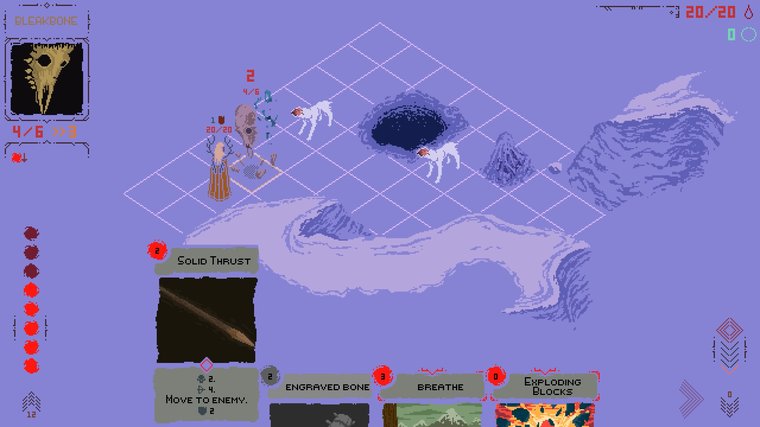
Death Howl throws you into a frozen wasteland where every choice carries weight. You guide a tiny squad through hostile territory, using cards to move, fight, and manage stress before the cold or the creatures overwhelm you.
In play, the tension ramps up fast. Every turn asks for smart sequencing, and one bad decision can sink a run. Some fights spike harder than I expected, but that unpredictability keeps each trek gripping.
Build around one noise strategy early. Either go silent and evasive or lean into lure-and-ambush tactics, but don’t split the approach.
The visuals lean into icy blues and stark shadows, paired with sound cues that amplify the isolation. The board stays readable, which helps when the pressure climbs.
My Verdict: Death Howl is a sharp, compact survival challenge built for players who want tough decisions, smart card play, and a bleak, memorable atmosphere.
Steam Wallet Gift Cards
What’s The Difference Between Deck-Building and Trading Card Games?
While both deck-building games and trading card games involve managing cards and creating strategies, the way you build your deck and when you build it makes all the difference.
How Deck-Builders Work
In deck-building games, you don’t bring a deck to the table, you build it as you play. Everyone starts with a small, identical deck of basic cards. As the game unfolds, you gain new cards from a shared pool, gradually shaping your deck around synergies, combos, and evolving strategies. It’s a self-contained system, with no outside collection required. Every run feels fresh because your choices happen in real time, not before the match.
What Sets TCGs Apart
Trading Card Games (TCGs), by contrast, are all about pre-built decks crafted from a larger personal collection. You spend time outside the game acquiring cards, through packs, trades, or purchases, and building decks that reflect your strategy or playstyle. The thrill comes not just from winning, but from collecting rare cards, fine-tuning combos, and adapting to a shifting meta.
Games like the Pokémon TCG focus on easy-to-learn mechanics and creature evolution, making them great for new players and collectors alike. Magic: The Gathering offers deeper, more complex systems, rewarding long-term planning and mastery of card interactions. And across the genre, TCGs share the appeal of rarity, community trading, and customization.
The Core Difference
Deck-builders are about reacting in the moment, while some of the best trading card games are about planning ahead. One gives you a toolbox as you go, the other lets you craft it before the match even begins. Both offer rich strategy, but they deliver it in completely different ways.
FAQs
The best deck-building game depends on your preferences, but Slay the Spire is often considered the gold standard for its strategic depth, replayability, and balance of challenge and accessibility.
What makes a game deck-building is the mechanic where players start with a small, basic deck of cards and improve it over time by acquiring new, more powerful cards during play.
No, Pokémon is not a deck-building game in the traditional sense. Players build their decks before matches rather than constructing them progressively during gameplay.
Yes, there is an online version of MTG called Magic: The Gathering Arena, which offers digital card collection, deck building, and competitive play against other players worldwide.
The first widely recognized deck-building game is Dominion (2008), which established the core mechanics and inspired the modern deck-building genre, setting up the scene for the games we know today.