


Sekiro vs Elden Ring: A Brutal Soulsborne Showdown


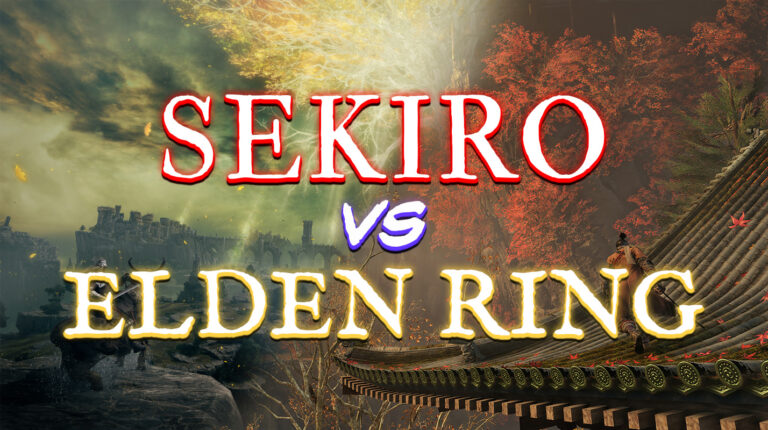
Sekiro vs Elden Ring is a real clash of FromSoftware philosophies. One throws you into a brutal, no-magic, parry-or-die samurai gauntlet where precision is king. The other lets you ride a ghost horse, summon giant jellyfish, and accidentally aggro a dragon the size of a cathedral just by minding your own business. Both games are unforgiving, unforgettable, and packed with that signature FromSoft sting – but they scratch very different itches.
I’ve sunk unhealthy hours into both, died in every way imaginable, and come out the other side with strong opinions and permanent controller grip marks. If you’re torn between these two heavyweights, this comparison is for you.
I’ll cover everything that matters – combat mechanics, level design, difficulty, pacing, builds, bosses, and how each game feels to play. Whether you’re chasing Sekiro’s fast-paced combat or the open-ended chaos of Elden Ring, I’ll help you figure out which one suits your style (and sanity) better.
Jump to:
Sekiro vs Elden Ring: Combat System
Sekiro and Elden Ring are worlds apart when it comes to combat mechanics. One is a technical rhythm-based game of chess, the other gives you freedom to experiment. Let’s see what makes them so great.
Sekiro
Sekiro is all about precision. Every fight is a technical and merciless duel. There are no builds, no leveling your way out of trouble, and definitely no hiding behind iconic video game weapons and a healing spell.
You’re given one katana, a parry button, and a prayer. Combat is rhythm-based, built around posture damage and perfectly timed deflections. If you mess up, you’ll feel it fast.
Elden Ring
Elden Ring is a truly great action RPG that I would describe as a pure playground of pain. Want to roll around in heavy armor with a colossal hammer? Go for it. Prefer casting spells from a mile away while your spirit ash tanks the damage? That’s valid too.
Elden Ring’s combat thrives on flexibility – you can brute-force some bosses, cheese others, or get fancy with skill-based builds. It’s punishing, but you’ve got options.
How Do They Compare?
Elden Ring vs Sekiro comes down to this: Sekiro makes you play by its rules (one blade, one path, no crutches). You need to master the system if you don’t want to parry blows with your face.
Elden Ring lets you bend the rules, break them, or ignore them entirely. You can mix melee, spells, and spirit summons to crush bosses your way (whether that’s charging in or sniping them from a safe distance). They’re both among the best soulslike games, but they cater to different audiences.
Sekiro: Shadows Die Twice
| Our score | 10
☆
★
☆
★
☆
★
☆
★
☆
★
☆
★
☆
★
☆
★
☆
★
☆
★
|
| Platforms | PC, PS4, Xbox One |
| Year of release | 2019 |
| Developer | FromSoftware |
| Publisher | Activision |
| Average playtime | ~40 hours |
| Best for | Players who want precise and punishing sword combat |
| Unique features | Posture-based combat, deflection-focused gameplay, minimal stamina emphasis |
| Pro tip | Master deflect timing (it’s your lifeline). Dodge sparingly. |
| Metacritic score | 90 |
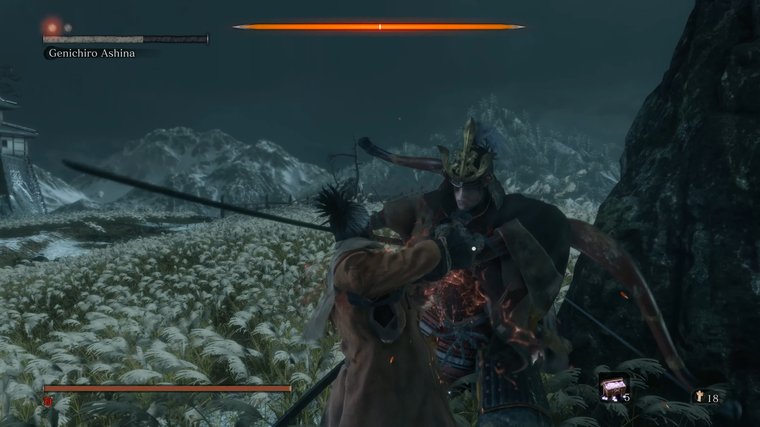
Sekiro is a game of precision and mastering your opponent that throws you into a brutal late-1500s Japan, steeped in myth and blood. You play as a one-armed shinobi on a mission to rescue your kidnapped lord and avenge your past. The story is tight, but secondary. This title may not be a traditional fighting game, but it’s definitely all about the feel of the fight.
Playing Sekiro felt like stepping into a duel where every second counts. Forget the stamina bar dance common in other action games. Here, it’s all about deflecting enemy attacks to break their posture and open them up for a deathblow. Dodge less, parry more. The swordplay is aggressive and precise. One misstep means eating dirt, and trust me, you’ll be eating a lot.
Memorable moment? Facing the Guardian Ape boss. That wild swing and the freak-out second phase left me shaking and laughing, all at once. Sekiro not only challenges you, but it also demands respect.
Why play it?
Sekiro doesn’t care if you’re having fun. It wants your focus locked, your timing perfect, and your mistakes punished without mercy. It’s pure sword combat stripped down to the essentials. If you want to sweat every parry and savor every hard-earned victory, Sekiro is the only dojo worth stepping into.
GAMES LIKE SEKIRO: SHADOWS DIE TWICE
Elden Ring
| Our score | 10
☆
★
☆
★
☆
★
☆
★
☆
★
☆
★
☆
★
☆
★
☆
★
☆
★
|
| Platforms | PC, PS4, PS5, Xbox One, Xbox Series X/S |
| Year of release | 2022 |
| Developer | FromSoftware |
| Publisher | Bandai Namco |
| Average playtime | ~60+ hours |
| Best for | Players who want open-world exploration and flexible combat |
| Unique features | Huge open world, spirit summons, horseback combat, build variety |
| Pro tip | Experiment with builds and summons – there’s no single “right” way. |
| Metacritic score | 96 |
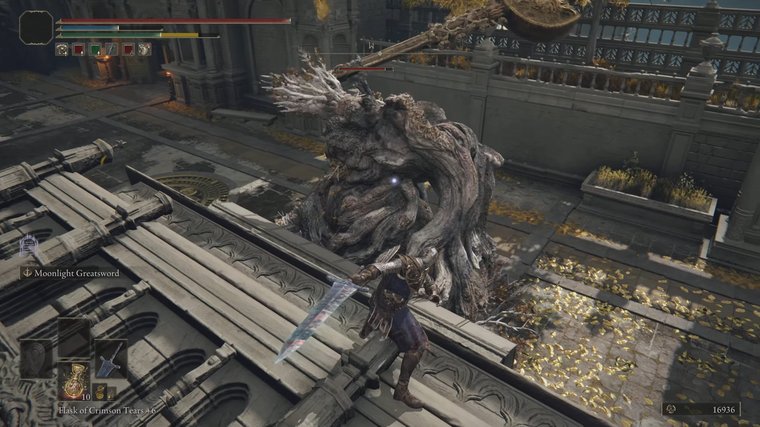
Elden Ring drops you into the Lands Between, a scattered, mysterious world full of deadly secrets and even deadlier bosses. You’re a Tarnished, summoned back to piece together a shattered legacy. The story’s vague but woven into every corner, encouraging you to explore and piece it together yourself.
Playing Elden Ring feels like trying to control live chaos. Combat is flexible – swing huge swords, fling powerful spells, or summon spirits to fight for you. The world is massive, with horseback combat, secret dungeons, and plenty of “oh, that’s how you beat it” moments. Like when I summoned a pack of spectral wolves to cause chaos and keep a boss busy while I snuck in a few hits. It’s one of the best open-world games in the genre.
You’ll quickly realize that Elden Ring is a marathon, not a sprint. It’s both punishing and forgiving at the same time. Sure, it’ll make you forget your own name at times, but it lets you choose how to do things, and you can tackle challenges at your own pace. It’s one of my top games on Steam, according to the reports.
Why play it?
Elden Ring hands you the keys and says, “Go make your own rules.” Huge world, endless builds, and bosses that don’t care how you fight them. Want to spam spells? Cool. Prefer charging in with a giant sword? Go for it. It’s punishing, but it never feels unfair. You decide how brutal you want it.
GAMES LIKE ELDEN RING
Sekiro vs Elden Ring: World Design
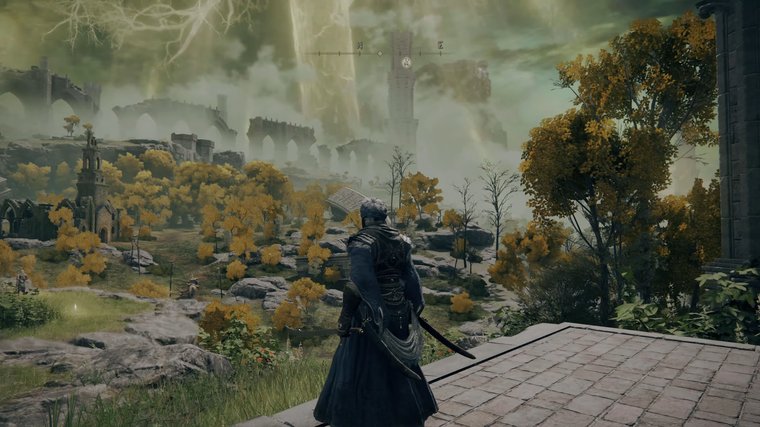
Sekiro and Elden Ring don’t come with the biggest video game maps ever, but you’ll have plenty of room to explore, admire, and get lost in the scenery. One is linear with some loop-back make up, the other is a solid open-world experience.
Sekiro
Sekiro’s world is sharp, controlled, and deadly by design. Progression is mostly linear, but the way areas loop back into each other is classic FromSoftware. Each zone feels handcrafted – from the ash-covered rooftops of Ashina Castle to the poison-filled pits of the Sunken Valley.
There’s a clear path forward, and while you can occasionally branch off or take a shortcut, the game’s pushing you through a tightly tuned gauntlet. Every new area is distinct, with its own tone, layout, and enemy types. And because there’s no map, you’re forced to actually learn the terrain.
Look up. Sekiro rewards vertical movement way more than you think. Darting around with your grappling hook can reveal hidden paths and shortcuts most players miss.
Elden Ring
Elden Ring flips all of that on its head. The Lands Between is a sprawling open world where nothing stops you from running straight into a boss 40 levels above your pay grade. Exploration is the reward – hidden caves, mini-dungeons, legacy castles, and entire zones tucked behind illusory walls or optional bosses.
There’s no handholding, just landmarks and curiosity. You can clear a region, miss an entire storyline, or fall into a dungeon you weren’t ready for, and it all feels intentional. Also, the landscapes look beautiful on console, PC, and a powerful gaming laptop.
If an area feels too hard, leave. The world’s massive, and there’s always something else to discover (and overlevel on).
How Do They Compare?
Sekiro gives you a meticulously directed world that tests your mastery at every turn. Elden Ring hands you a massive, mysterious sprawl and says, “Go nuts.” One’s a sharp katana slash through handcrafted hell. The other’s an open-ended plunge into beautiful chaos. I did most of my playthrough on consoles (they look amazing), but they’re both also great PC games.
Sekiro vs Elden Ring: Story & Lore
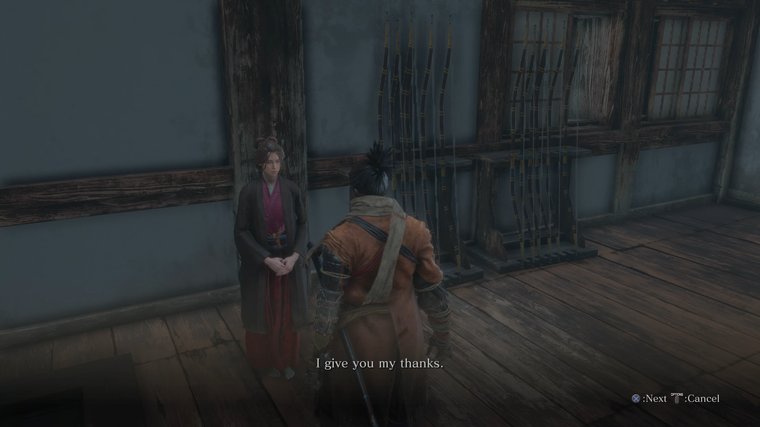
Both titles come with rich lore and storylines worthy of the top Dark Souls games. You can see the influence but also the evolution. Each game takes the legacy of Dark Souls and runs with it in its own way.
Sekiro
Sekiro tells its story like a blade to the chest – direct, focused, and impossible to ignore. You play as Wolf, a shinobi bound by loyalty to a divine child. Your mission is clear from the start: protect your lord, reclaim your honor, and cut through anything that stands in your way.
The narrative unfolds through cinematic cutscenes, in-your-face boss encounters, and character dialogue that tells you what’s going on. It’s a traditional story by FromSoftware standards with named characters, emotional stakes, and a through-line that stays strong from start to finish. You’re not just surviving; you’re part of something personal.
Pay close attention to NPC dialogue. Even throwaway lines can hint at which ending you’re headed toward.
Elden Ring
Top-tier games like Elden Ring, on the other hand, barely tell you anything – and that’s the point. You’re a Tarnished in a broken world, tasked with becoming Elden Lord… for reasons that remain unclear unless you dig.
The lore is buried in item descriptions, cryptic one-liners from unsettling NPCs, and environmental storytelling that begs to be interpreted. It’s co-written by George R.R. Martin, and you can feel the density. There’s a full mythology here, but FromSoft makes you earn it. Or ignore it. Your call.
Read item descriptions. Seriously. That useless-sounding helmet in your inventory probably holds more lore than the NPC you just talked to.
How Do They Compare?
Sekiro gives you a story to follow. Elden Ring hands you a shattered world and asks, “What do you think happened here?” One is tight and character-driven; the other is vast, cryptic, and up for debate. Both are compelling, just in completely different ways.
Sekiro vs Elden Ring: Difficulty & Flexibility
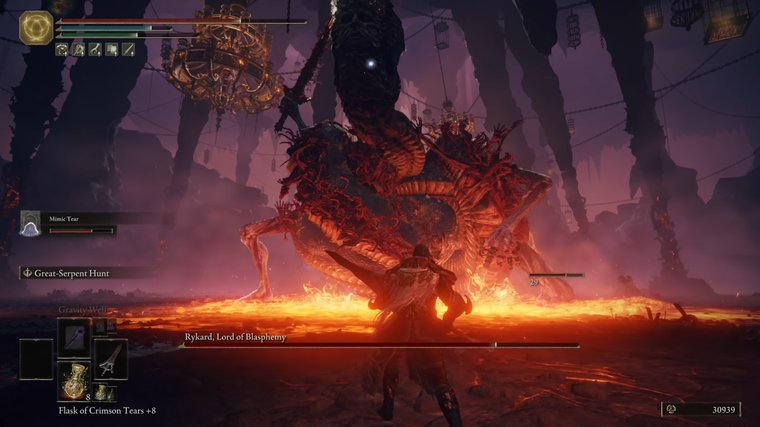
Souls games don’t mess around when it comes to difficulty, but these two adopt different approaches. Sekiro locks you into one brutal, unforgiving combat style (slightly easier to handle on a great gaming PC), and Elden Ring hands you tools and options to make the fight your own. Let’s see how that works.
Sekiro
Sekiro is hard (no surprise there), but it’s the kind of hard that leaves no room for shortcuts. You get one sword, one combat style, and one way through: master the system or get crushed. Its difficulty comes from strict timing, relentless enemies, and a zero-tolerance policy for sloppy play. Stealth mechanics do help a bit.
There’s no grinding your way out or switching to magic when things get rough. You can’t respec or change your approach mid-game. Either you learn to deflect, manage posture, and play aggressively, or you die trying (repeatedly). It’s an elite single-player game that won’t let you forget you’re on your own in this world.
Don’t button-mash. Tap deflect like a metronome and learn enemy rhythms. Brute force won’t get you far.
Elden Ring
Elden Ring is also hard, but far more forgiving. Can’t beat a boss? Go explore, level up, tweak your build, summon some help, or come back later. You can respec your stats, swap weapons, or change playstyles entirely. Want to play as a sorcerer with a shield-wielding jellyfish buddy? You can.
Spirit Ashes and co-op give you plenty of breathing room if you’re stuck. Elden Ring can be an excellent multiplayer game when you need it the most. Difficulty here feels more self-directed – punishing when you want it, manageable when you don’t.
Use Spirit Ashes often, even if you think you don’t need them. They draw aggro, deal decent damage, and let you breathe.
How Do They Compare?
So, Sekiro vs Elden Ring comes down to this: Sekiro demands perfection from one sharp skillset. Elden Ring lets you mold your experience, dial the challenge up or down, and experiment until something clicks. One’s a trial by fire. The other gives you the matches, the wood, and a full field to burn. They’re both excellent PS5 games, and it was a tad easier for me to play on the console than on my gaming PC.
Sekiro vs Elden Ring: Progression & Customization
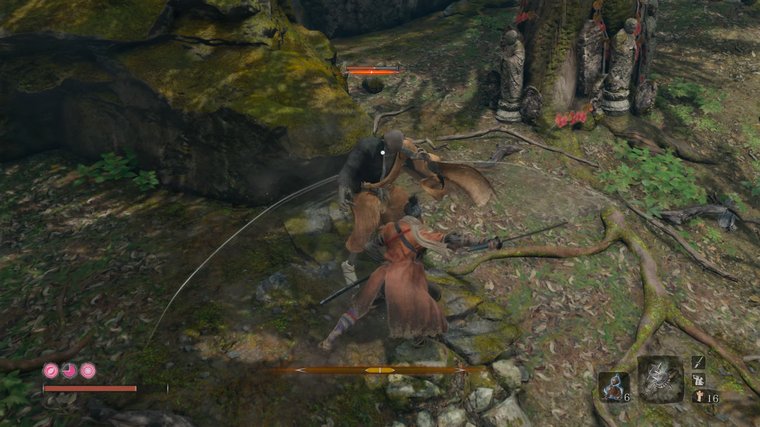
Sekiro puts you on rails, and Elden Ring is just a playground of possibilities. Whether you like linear progression or experimenting with giant swords and loincloths, let’s talk freedom.
Sekiro
This was one laser-focused experience. You play as Wolf – no sliders, no classes, no picking a hairstyle or debating between Strength and Dexterity. It’s a character-driven story, and progression reflects that.
Instead of leveling stats, you grow by unlocking new Prosthetic Tools, Combat Arts, and skill trees. These give you more options, but your core kit stays consistent. You’ll still be deflecting, punishing posture, and sticking to your katana from start to finish.
There’s no build variety in the traditional sense. Everyone plays roughly the same character, but how well you use your tools separates veterans from button-mashers. Think of progression more as mastery than transformation.
Don’t overlook the Mikiri Counter. It’s arguably the strongest move in the entire game and essential for surviving later fights.
Elden Ring
Elden Ring is a solid action RPG game that hands you freedom on a silver platter. From the moment you choose your class and tweak your character’s nose shape, you’re defining your journey. You can pump Vigor and become an unkillable tank, focus on Mind and melt enemies with sorceries, or do something in between. The game supports nearly any playstyle – dual-wielding bleed builds, poison daggers, colossal swords, stealth archers, you name it.
And if you change your mind? You can respec your stats later with a Larval Tear and completely reinvent your build. Progression here isn’t just about getting stronger – it’s about sculpting your perfect version of the Tarnished. One thing I noticed during my countless playthroughs? Playing on a solid gaming monitor really helps track buffs, debuffs, and weird status effects.
Don’t over-commit to a single stat early on. Keep things balanced until you figure out what kind of build clicks with you.
How Do They Compare?
In short, Sekiro offers refinement, while Elden Ring offers reinvention. One channels you into mastery of a defined role, and the other opens the door to endless experimentation.
My Verdict
Sekiro and Elden Ring couldn’t feel more different, even if they share the same FromSoftware DNA. Sekiro is tight, focused, and brutally honest. There’s one way to fight, and you either get good at it or hit a wall. The world unfolds in a straight shot, with carefully designed levels and boss fights that demand perfect timing and sharp reflexes. There’s no stat tinkering or build crafting – just you, your sword, and your skill.
Elden Ring, on the other hand, is the opposite kind of beast. It’s sprawling, cryptic, and lets you bend the rules. Don’t like a boss? Go somewhere else. Need help? Summon a spirit or a co-op partner. You can go in as a mage, a heavy tank, or a glass cannon with a whip (and respec later if it’s not working out). It’s still tough, but it gives you the breathing room to find your own way through.
If you want a pure test of combat skill with no shortcuts, Sekiro delivers. If you’d rather explore, experiment, and make the game your own, Elden Ring is the clear pick. They’re both brilliant, just built for very different kinds of players.
FAQs
Which is better, Sekiro or Elden Ring?
It depends on what you’re looking for. Sekiro offers razor-sharp combat and a focused story. Elden Ring gives you freedom, build variety, and a massive world to explore. If you want structure and precision, go with Sekiro. If you prefer flexibility and discovery, Elden Ring wins.
Is the Elden Ring harder than Sekiro?
No. Elden Ring is tough, but it gives you tools to manage difficulty. You can level up, summon allies, or explore elsewhere when stuck. Sekiro is more rigid, with no character customization or co-op, forcing you to master its combat system. Most players find Sekiro a more punishing experience.
Is Sekiro the hardest game ever?
Sekiro is definitely one of the hardest mainstream games, especially if you try to brute-force it. Its parry-focused combat leaves little room for error, and there’s no grinding or summoning to make things easier. It’s brutal, but fair – and for many, that makes it the most rewarding too.
Is Sekiro more linear than the Elden Ring?
Yes. Sekiro has a tightly structured world with clear progression from one area to the next. Some paths do branch or loop back, but you’re mostly on a guided journey. Elden Ring is fully open-world, with large regions and a non-linear structure that encourages exploration and experimentation.
Should I buy Elden Ring or Sekiro as my first Souls game?
Elden Ring is the better entry point to the Souls genre. Its open-world structure, co-op options, and flexible game mechanics make it more forgiving and adaptable. Sekiro is laser-focused, punishing, and has no character builds. If this is your first FromSoft game, definitely go with Elden Ring.