

E-Commerce Business Ideas: How It Works & How Much You Can Earn

Eneba Hub contains affiliate links, which means we may earn a small commission if you make a purchase through them—at no extra cost to you. Learn more


Business Ideas, E-Commerce Snapshot
Print-on-demand is cheap to test, with Printify handling fulfillment.
Digital products are another low-cost option with no inventory or shipping.
The best e-commerce business ideas share the same trick: you get to test them before you spend big. Print-on-demand and digital products barely touch your inventory risk, while private label, subscription boxes, and wholesale resale ask for real cash and a plan before you launch. None of these e-commerce business ideas comes with a promise of income, and the same applies to most online business ideas, so prove the demand, then scale.
This guide breaks down eight e-commerce business ideas: real costs, current platform fees, the risks worth knowing, and one simple first test for each. If you are working through online business ideas and want to know how to start an online store without blowing your budget, go with whichever model teaches you the most for the least. That keeps the first test worth running, and the strongest e-commerce business ideas always leave you a cheap way in.
Jump to:
Is Starting an E-Commerce Business Idea Actually Realistic?
Yes, if you treat the first few months as a test. Learning how to start an online store does not require a huge launch, and several e-commerce business ideas let you begin with little or no inventory. What takes time is finding a product people want, pricing it properly, and bringing in customers without spending more than you make.
That is why the safest e-commerce business ideas are not always the flashiest ones. A print-on-demand business lets you test designs without buying stock, while a dropshipping business lets you test products before committing to inventory. Higher-cost online business ideas can work too, but they leave less room for expensive mistakes.
Plan for taxes as well as platform fees. In the US, people with $400 or more in net self-employment earnings generally need to calculate self-employment tax, while income tax may apply separately. Check the IRS self-employment tax guidance for details. Every earnings figure here is before tax.
Need cash before your store makes its first sale? Some e-commerce business ideas take time to ramp up, so see how to earn $2,000 quickly instead of expecting a new shop to pay immediately.
8 Real Business Ideas for E-Commerce Beginners
These e-commerce business ideas are ordered roughly from lower commitment to higher complexity. The point is not to crown one winner, but to show which model fits your budget, time, and tolerance for risk. Good e-commerce business ideas should survive a small test first and give you something clear to measure.
1. Print-on-Demand Merch
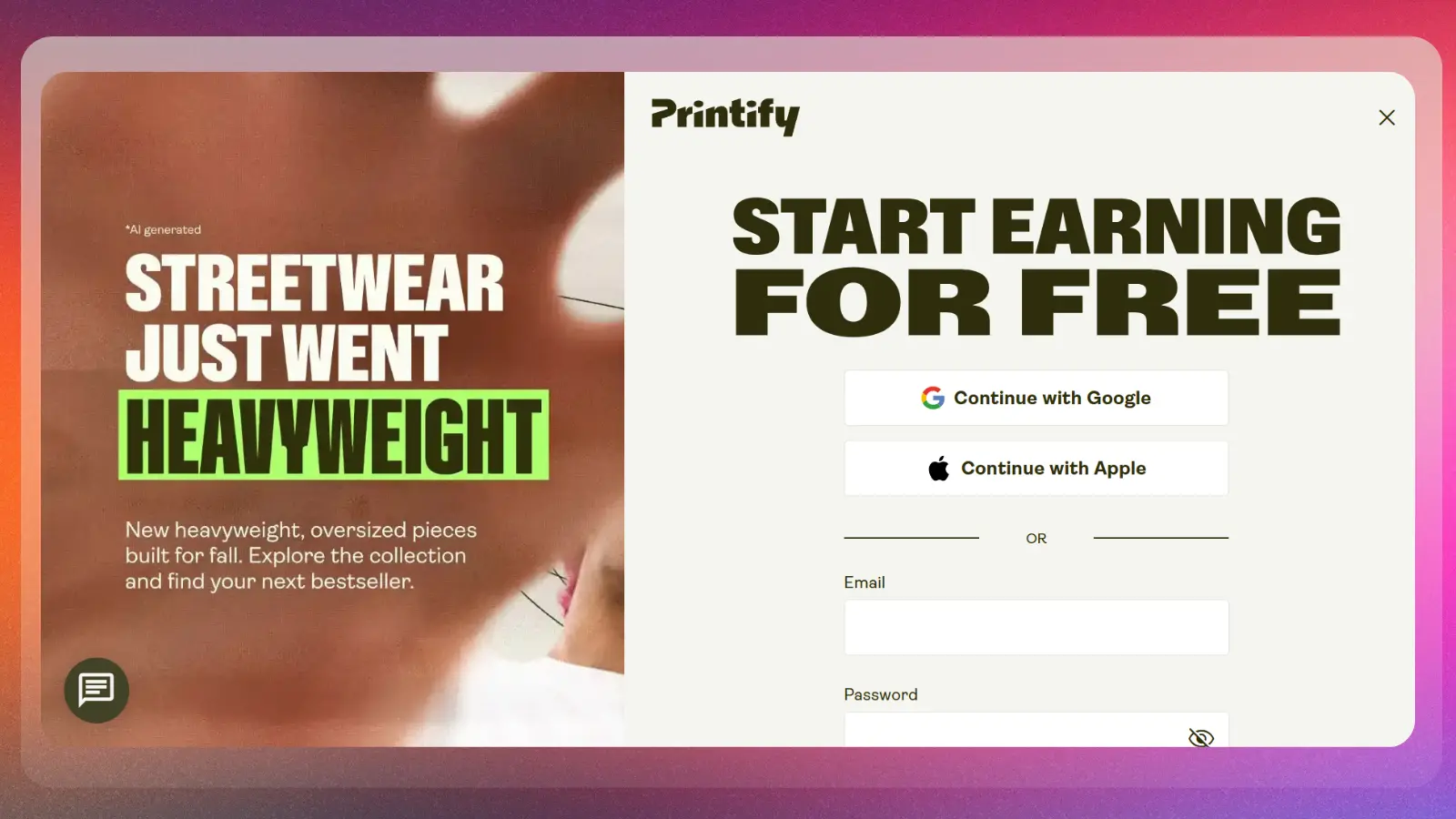
A print-on-demand business is one of the easiest e-commerce business ideas to test without inventory, especially compared with online business ideas that require upfront stock or paid tools. Printify has a $0 Free plan for up to five stores. Production starts after a customer orders, so a failed design does not leave you with unsold stock.
Printify Premium starts at $39 a month and offers up to 20% off products. Upgrade only when your order savings beat the monthly fee. Printify currently has a 4.5/5 Trustpilot score, though provider quality and shipping speed can vary.
A first print-on-demand business test is simple:
- Pick one niche and one design style instead of a huge catalog
- Connect Printify to an Etsy, Shopify, or other supported storefront
- Order a sample and calculate the real margin before advertising
- Publish a small set of listings and track clicks, favorites, and sales
For business ideas e-commerce beginners can test, print-on-demand is easy to change. If a design gets no traction, test another. That flexibility makes a print-on-demand business useful for learning how to start an online store.
| 💡Need to know |
| Entry: Free plan; order a sample first. Cost: Production is charged per order. Best for: Testing designs without inventory. Watch for: Provider quality and shipping speed. |
2. Handmade Goods on Etsy
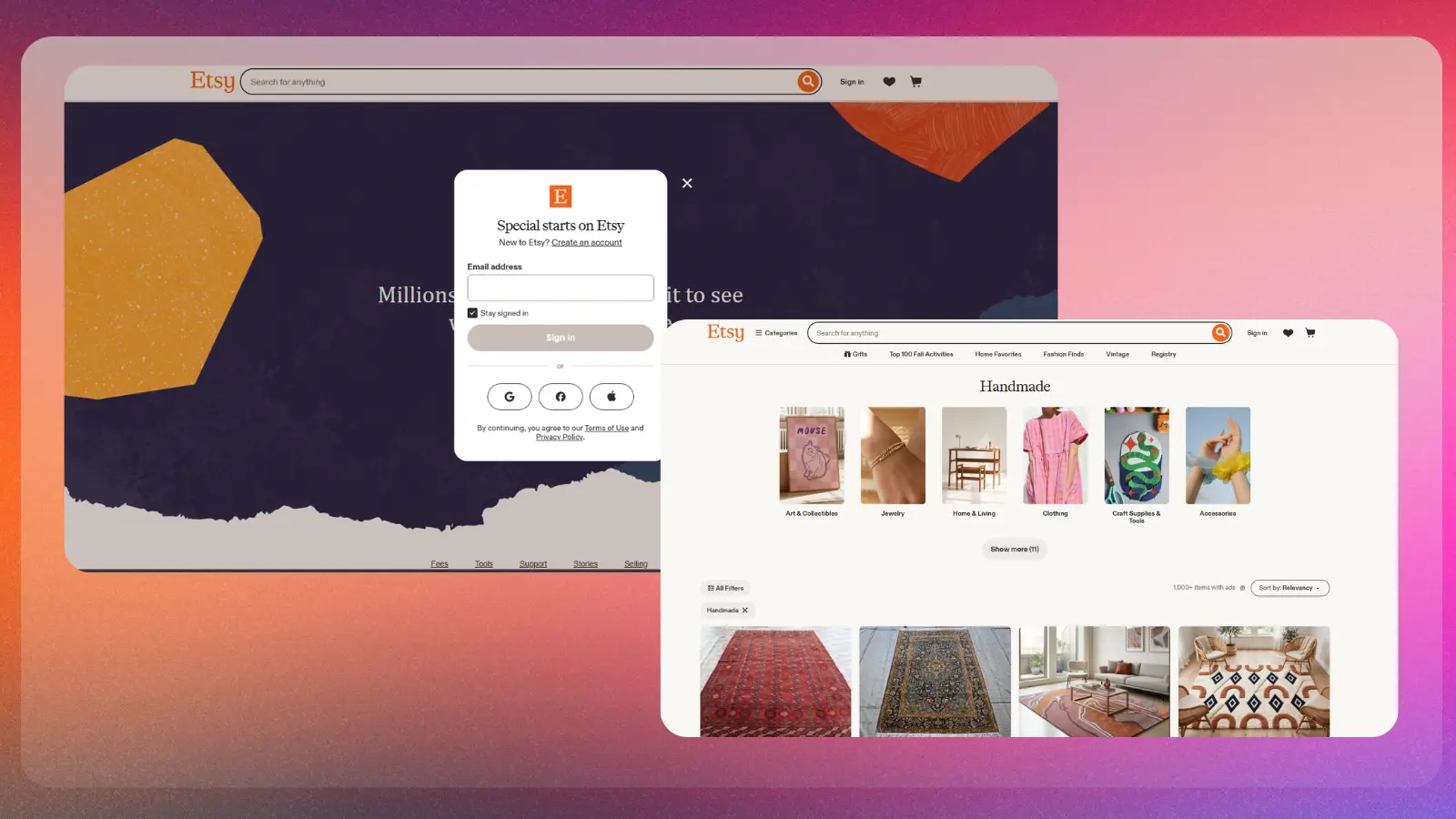
If you want to sell handmade products online, Etsy keeps setup simple, but the fees still matter. Listings cost $0.20 and the transaction fee is 6.5% of the order total. Payment processing is separate and varies by country, and some sellers may also face setup, advertising, or currency-conversion fees.
This is one of the better e-commerce business ideas if you want to learn how to start an online store with jewelry, candles, ceramics, prints, or accessories, and it is one of the more hands-on online business ideas on this list. If you sell handmade products online, include materials, packaging, shipping supplies, and your own time when you set the price.
Before your first listing goes live:
- Photograph the product clearly and show scale, texture, and details
- Write a title that tells the buyer what the item actually is
- Price in materials, marketplace fees, packaging, shipping, and labor
- Start with a small batch so slow demand does not become dead inventory
If you sell handmade products online, there is no reliable rule that a new shop should get its first sale within a month. Demand, competition, photos, pricing, reviews, and search visibility all matter. These business ideas e-commerce makers try work best when you genuinely want to make the product, not just list it.
| 💡Need to know |
| Entry: Best if you already make a product. Fees: Listing, transaction, and processing fees. Best for: Distinct handmade goods. Watch for: Labor, packaging, and shipping costs. |
3. Digital Products and Printables
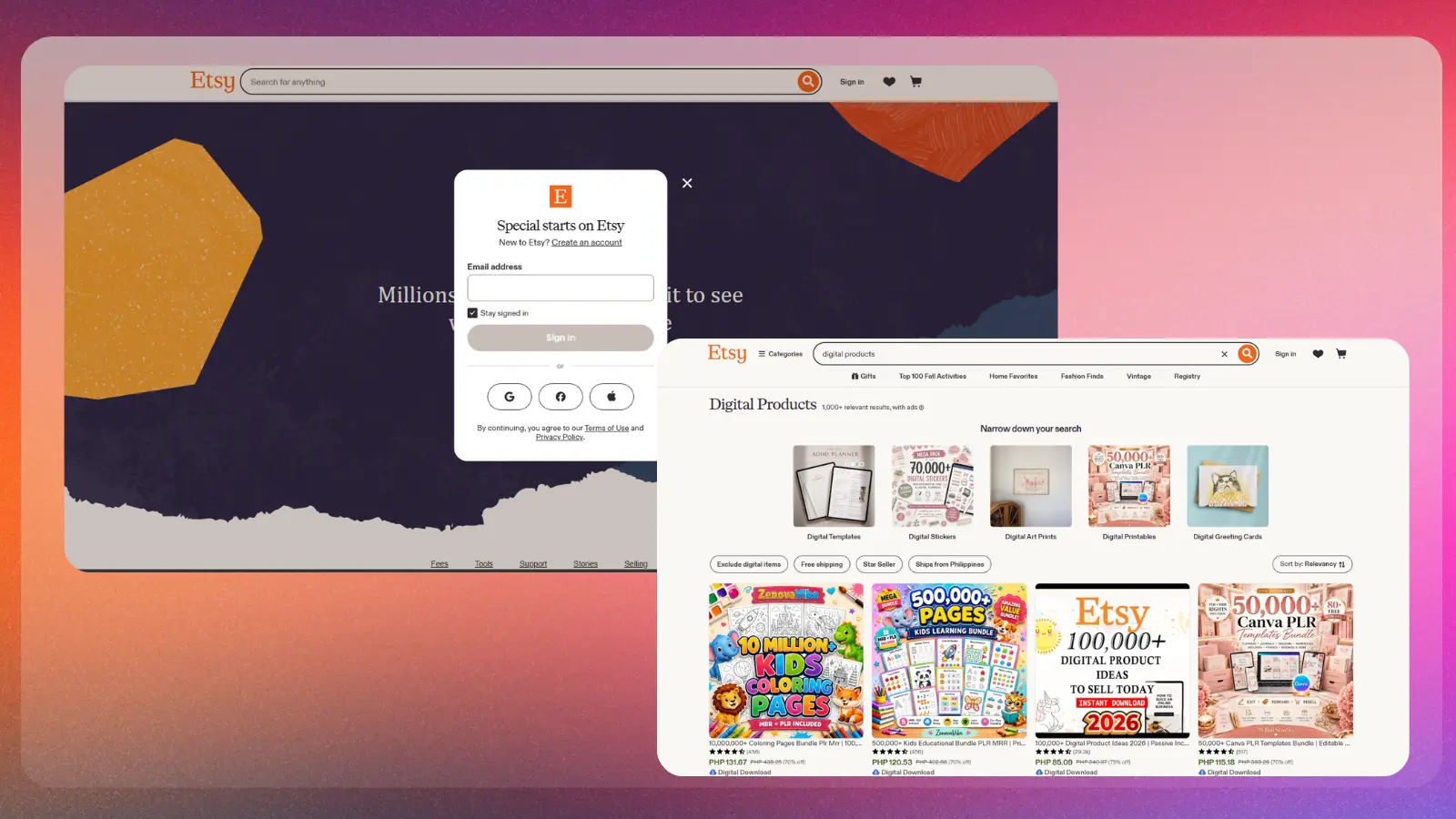
Among online business ideas, digital downloads are easy to test without inventory or shipping. A planner, template, worksheet, pattern, or editable design can be sold repeatedly once it is finished. That keeps operating costs low, but there is no reliable marketplace-wide income average for new sellers.
You can use the same Etsy storefront you would use to sell handmade products online, but digital products have different costs. Marketplace fees still apply, and you may also pay for design software, fonts, ads, or mockups. Treat 85% to 95% profit claims as possible gross margins in some cases, not guaranteed net profit.
A useful first digital-product test looks like this:
- Create one focused template in Canva instead of a full product line
- Export and test the file yourself, including instructions and links
- Use clear mockups that show exactly what the buyer receives
- Test pricing and improve the listing before spending money on ads
These e-commerce business ideas can start cheaply, which makes digital products useful if you are learning how to start an online store, but traffic still matters. A catalog with no demand can sit untouched for months. If you need money sooner, earning $200 fast can cover a short gap while you build the shop.
| 💡Need to know |
| Entry: Start with one finished file. Cost: No physical inventory. Best for: Templates, planners, and printables. Watch for: Saturated niches and copying. |
4. Dropshipping
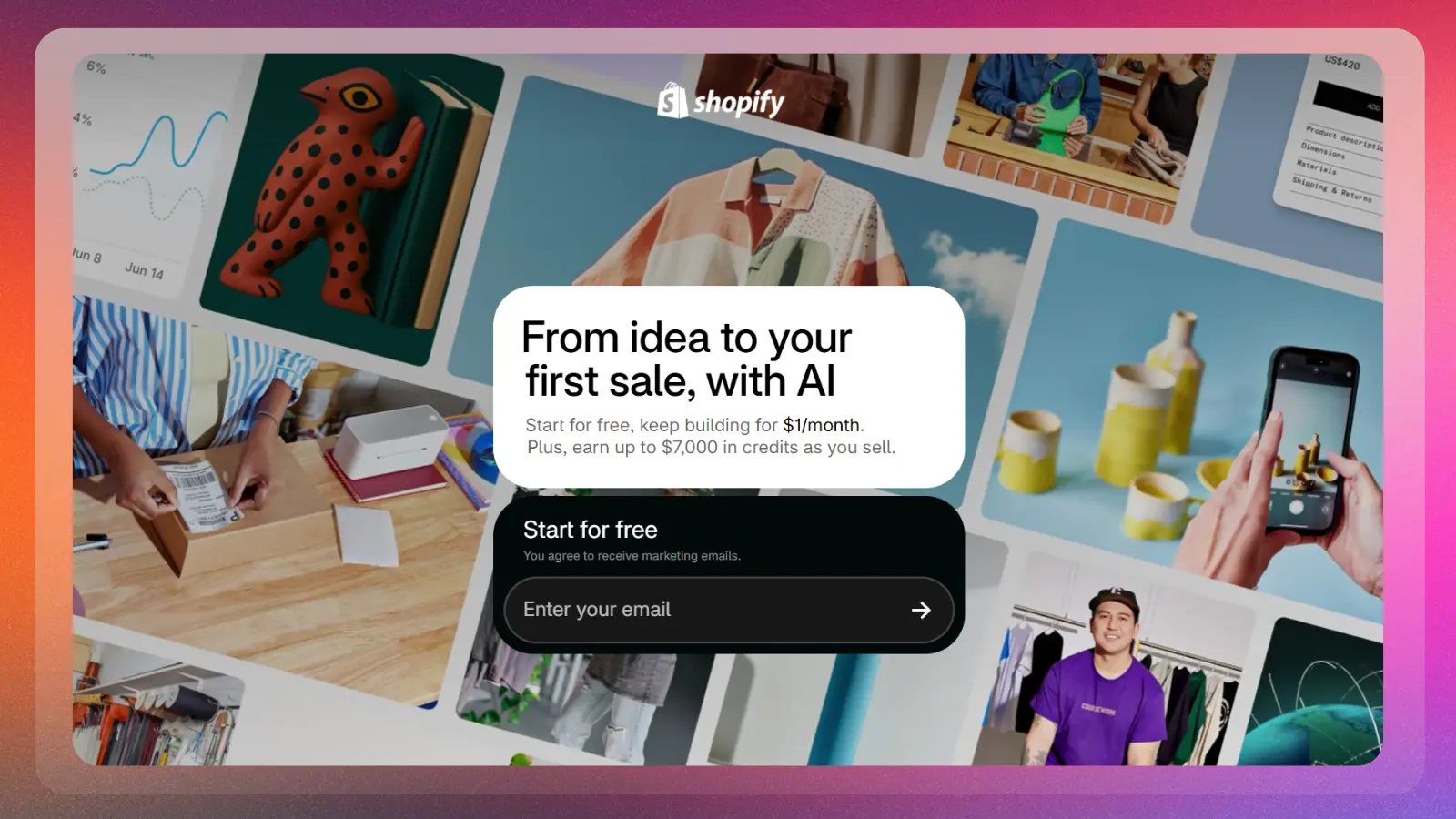
A lean dropshipping business can cost about $200 to $600 a month once the store, apps, samples, and a small marketing test are included. Shopify gives that range as a lean setup. Among e-commerce business ideas without owned inventory, it is flexible but easy to overspend on, which is worth remembering when comparing online business ideas with low upfront stock costs.
A dropshipping business usually uses a supplier such as AliExpress or CJdropshipping while you handle the storefront and marketing. If you are new to the model, our guide on how to start a dropshipping business covers the setup in more detail. Ignore dramatic universal failure-rate claims. Focus on whether the price covers supplier cost, shipping, refunds, platform fees, and customer acquisition.
Test a dropshipping business in this order:
- Choose one product with clear demand and enough room for marketing costs
- Order a sample and check packaging, delivery time, and product quality
- Build one strong product page before creating a large catalog
- Set a small test budget and stop if the economics do not work
For business ideas e-commerce sellers test through dropshipping, fast learning matters most. If you are learning how to start an online store, calculate break-even cost before the first ad. A dropshipping business works only when the numbers still make sense after refunds and marketing.
| 💡Need to know |
| Entry: Budget for samples and a small test. Cost: Store, apps, supplier, shipping, and ads. Best for: Testing products without inventory. Watch for: Supplier quality and ad costs. |
5. Subscription Box Business
Subscription boxes are e-commerce business ideas worth testing with pre-orders before a large inventory run, especially if you are learning how to start an online store without overcommitting to stock. Startup costs can range from a few thousand dollars to much more depending on the products, packaging, shipping, minimum orders, and launch plan. There is no universal 40% to 60% margin you can safely assume.
The real number to watch is retention. A beautiful first box is not enough if customers cancel after one delivery. Compare product cost, packing, postage, replacements, marketing, and churn before deciding whether the subscription price leaves enough room to grow.
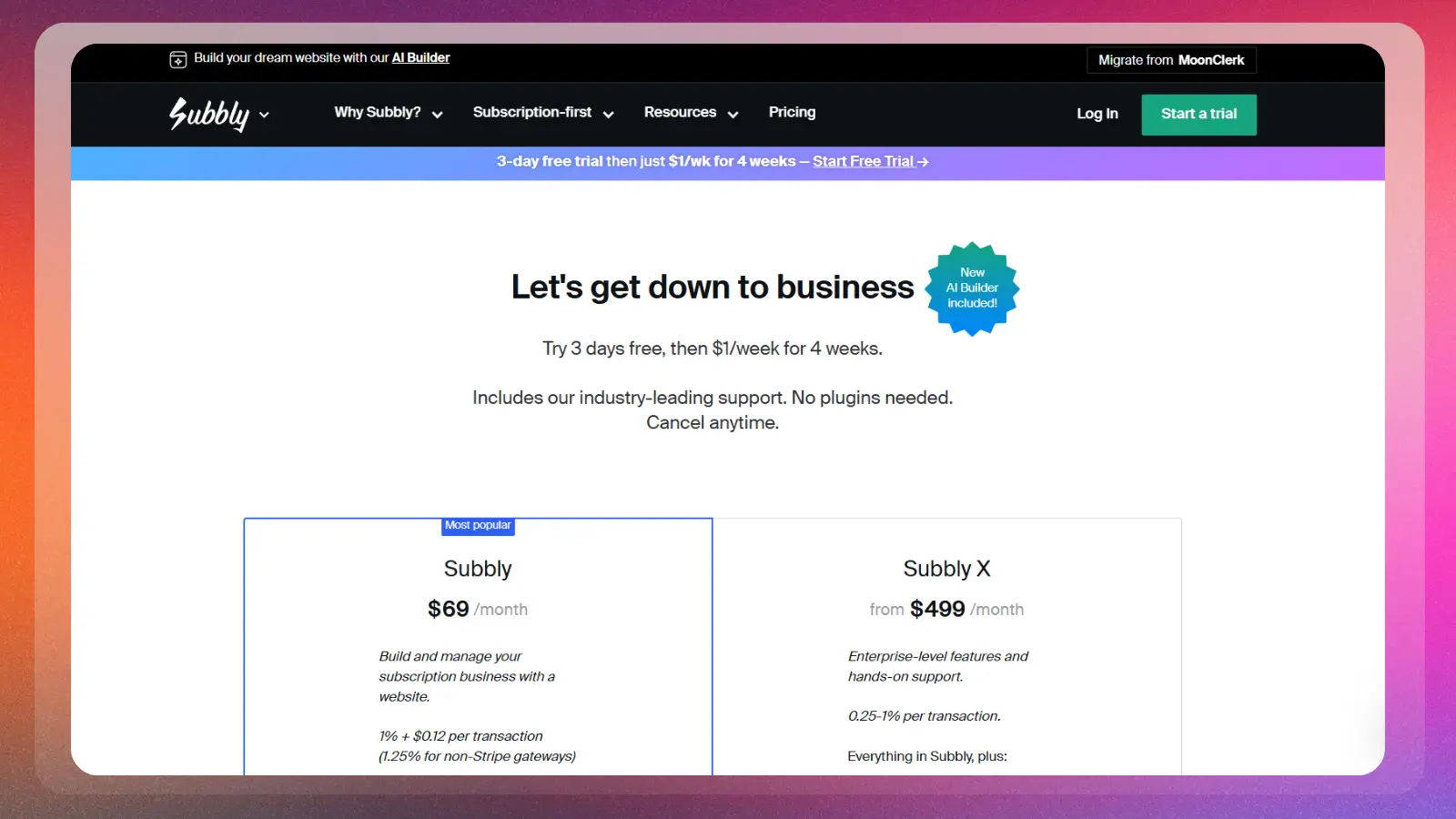
Subbly is built around subscription commerce, but pricing and features can change, so check the live pricing page before budgeting.
Before you launch a box:
- Choose a narrow theme with a clear reason to stay subscribed
- Get supplier quotes and minimum order quantities before setting a date
- Model product, packaging, postage, replacement, and marketing costs
- Open pre-orders or a waitlist before committing to full inventory
For business ideas e-commerce brands build around repeat purchases, retention matters as much as the first sale. Subscription boxes are less forgiving than low-cost online business ideas because inventory and shipping commitments arrive early.
| 💡Need to know |
| Entry: Validate with pre-orders first. Cost: Inventory, packaging, shipping, and marketing. Best for: Niches with repeat demand. Watch for: Churn and expensive fulfillment. |
6. Wholesale and Liquidation Resale
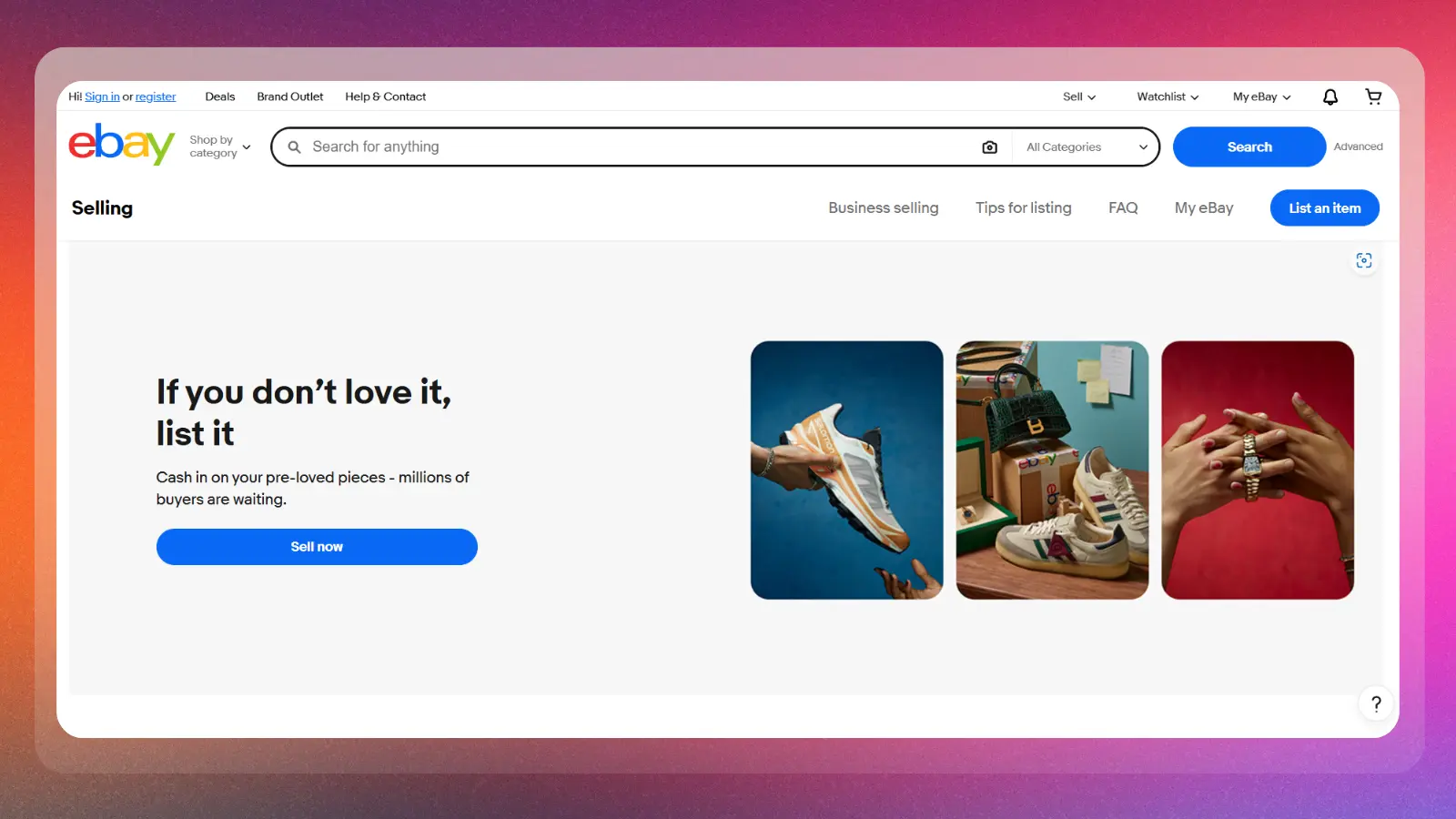
If you are learning how to start an online store for resale, a wholesale reselling business can start with one manifested lot instead of a truckload. Some beginners spend roughly $500 to $1,500 on a first pallet, but prices vary widely by category, condition, seller, freight cost, and manifest quality. Do not treat one liquidator’s advertised price as an industry average.
Margins vary just as much. A wholesale reselling business can look profitable on paper and still lose money after damaged units, missing parts, marketplace fees, storage, and shipping. eBay is one common resale channel, but the best marketplace depends on what is actually in the lot.
The biggest risk in a wholesale reselling business is inventory you cannot inspect well enough. Counterfeit, recalled, expired, incomplete, or heavily damaged items can turn a cheap pallet into an expensive disposal problem.
For your first wholesale reselling business purchase:
- Buy one manifested lot and read the condition notes before paying
- Check categories for recalls, expiry dates, restrictions, and counterfeit risk
- Sort, test, and photograph the stock before creating listings
- Track sell-through and net profit by item, not just total revenue, so you know whether your wholesale reselling business is actually working
These business ideas e-commerce resellers pursue scale only when sourcing becomes repeatable. Treat the first lot as data. If you want a wholesale reselling business to last, learn which categories sell cleanly before buying more volume.
| 💡Need to know |
| Entry: Start with one manifested lot. Cost: Add freight, fees, storage, and shipping. Best for: Hands-on resellers. Watch for: Counterfeit or damaged stock. |
7. Amazon FBA Private Label
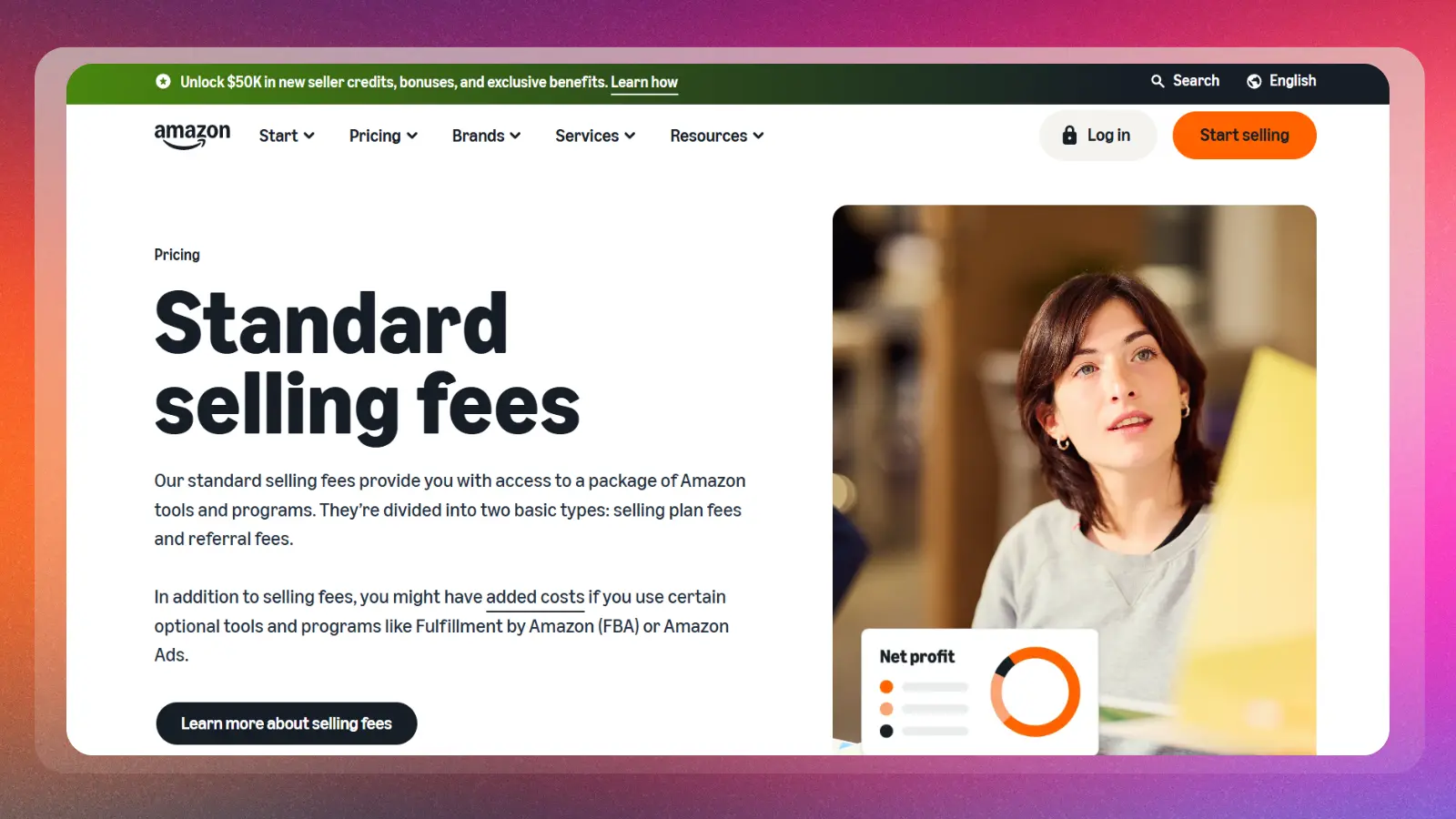
Among online business ideas, private label is one of the higher-capital options. A few thousand dollars can disappear quickly into samples, inventory, packaging, freight, photography, ads, and launch costs, so do not use an old seller survey as a current guarantee of what your first product will cost.
On Amazon, the Professional selling plan is $39.99 a month. Referral fees vary by category, and optional Amazon FBA adds fulfillment, storage, aged-inventory, removal, and other possible costs. That is why a single 30% to 45% total-fee estimate is too crude for pricing a real product.
Use Amazon‘s revenue calculator for the exact size, weight, category, and selling price you plan to use. Your margin should still work after returns, ads, storage, discounts, and freight. These e-commerce business ideas have a high ceiling, but they punish sloppy cost estimates.
A safer first private-label launch looks like this:
- Validate demand and competition before ordering inventory
- Order samples and a smaller first production run before scaling
- Check trademark, category, and product-compliance requirements early
- Calculate referral, fulfillment, storage, freight, ad, and return costs
Of the e-commerce business ideas that need real capital, private label needs the most disciplined spreadsheet. If you are still learning how to start an online store, a cheaper model gives you more room to learn.
| 💡Need to know |
| Entry: Plan for several launch costs. Fees: Referral, FBA, storage, and ads vary. Best for: Sellers ready to manage inventory. Watch for: Generic fee estimates. |
8. Social Commerce and Live Selling
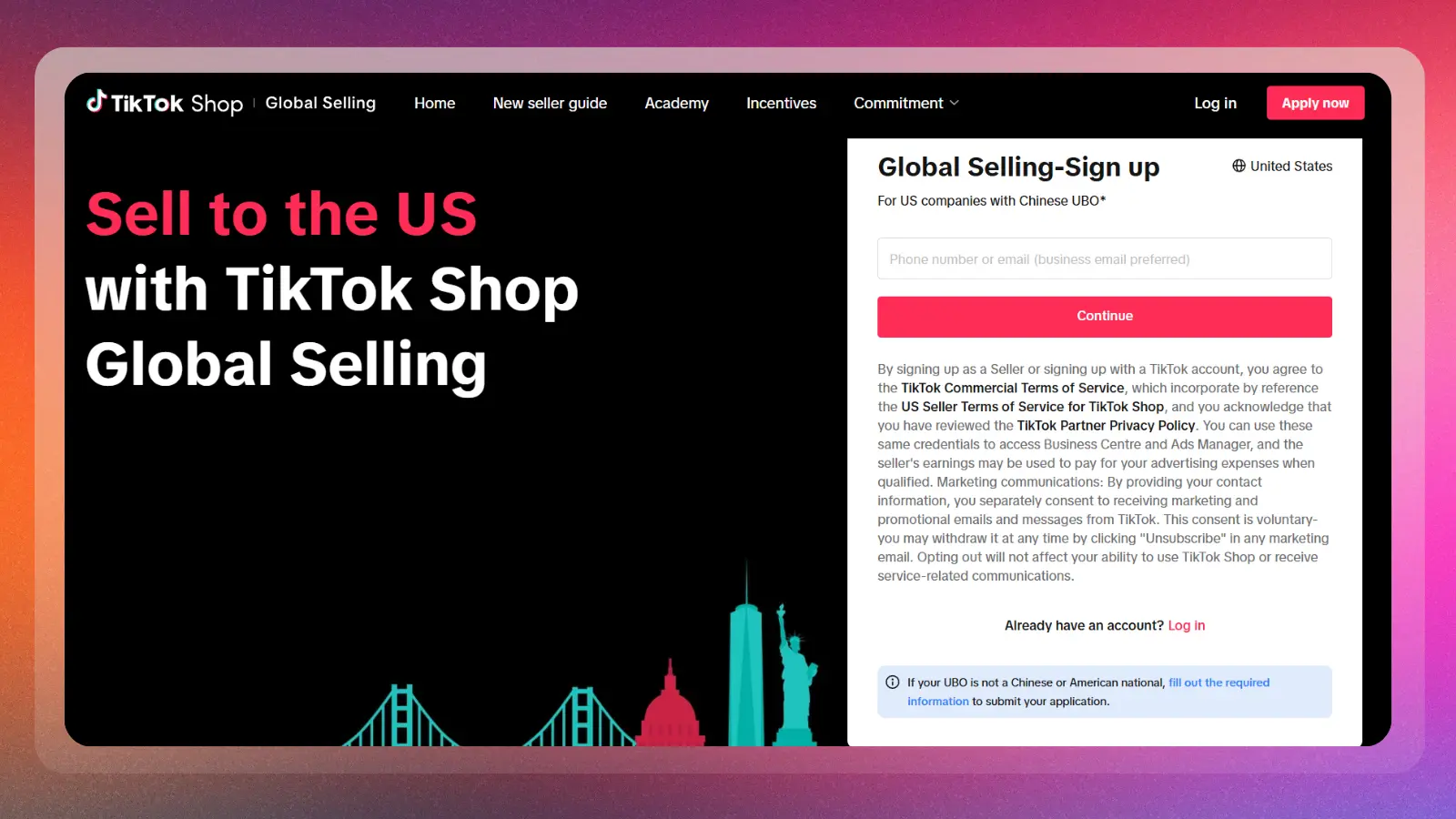
TikTok Shop charges a 6% referral fee on most US categories, while some categories use different rates. The old flat $0.30 per-order transaction fee no longer belongs in the calculation. Creator affiliate commissions are separate and set by the seller.
SSocial selling works differently from most e-commerce business ideas because discovery can happen inside short videos and live streams, making it one of the more content-heavy online business ideas here. You still need clear product demos, reliable fulfillment, and enough margin for any creator commission you offer. There is no honest universal combined-fee percentage for every seller.
For a first social-commerce test:
- Register as a seller and complete the platform verification process
- List one product you can demonstrate clearly in short-form video
- Set creator commission only after calculating the margin you can afford
- Track creator-attributed orders, returns, and net contribution after fees
These business ideas e-commerce creators try can scale quickly when content converts, but visibility also amplifies bad reviews and fulfillment problems. Treat TikTok Shop as a sales channel, not a shortcut around product quality, especially if you are still learning how to start an online store and manage fulfillment properly.
| 💡Need to know |
| Entry: Complete seller verification first. Fees: Usually 6% referral + optional creator commission. Best for: Products that demo well on video. Watch for: Returns and fulfillment issues. |
Why These Business Ideas Made the List
Every idea on this list had to pass one test: could a total beginner actually try it, not just screenshot someone else’s revenue and copy it. That’s why the list mixes:
- Physical products
- Digital products
- Outsourced fulfillment
- Resale
Spreading it across budget levels keeps comparing e-commerce business ideas fair, and it keeps e-commerce business ideas grounded in real work instead of hype.
Next filter: can you actually measure it? Every one of these e-commerce business ideas gives you something concrete to track:
- Clicks
- Conversion
- Repeat orders
- Return rates
- Ad cost
- Sell-through
Compare that to online business ideas sold on vague passive income promises, and the gap is obvious.
Some models share a platform but count as separate e-commerce business ideas, since the inventory risk and workflow differ. Etsy works for digital products and for sellers who sell handmade products online. Shopify can run a print-on-demand business or a dropshipping business just as easily, although a dropshipping business usually needs more ongoing supplier and ad testing. A wholesale reselling business plays by its own rules too.
Comparing E-Commerce Business Ideas: Costs and Payouts
Startup cost and margin do not move together. The cheapest e-commerce business ideas are not automatically the most profitable, and higher-cost models do not guarantee a better return. Use the table below as a planning shortcut rather than an earnings promise.
The best e-commerce business ideas still depend on your actual product economics, whether you are testing private label, dropshipping, or a wholesale reselling business, so compare e-commerce business ideas by net numbers.
| Business Idea | Startup Cost | Platform Fees | Typical Profit Margin | Effort Level |
|---|---|---|---|---|
| Print-on-demand | Low; samples optional | Printify Free or Premium from $39/month | Depends on product cost, price, shipping, and ads | Low to medium; fulfillment outsourced |
| Handmade goods | Materials + packaging | Etsy $0.20 listing + 6.5% transaction + processing | Depends heavily on materials and labor | Active, ongoing production |
| Digital products | Low; creation tools optional | Etsy listing, transaction, and processing fees | High gross margin is possible; net profit varies | Low to medium after creation |
| Dropshipping | $200 to $600/month lean test | Shopify plan + apps + marketing | Must absorb shipping, refunds, and ads | Active, constant testing |
| Subscription box | Usually thousands; varies widely | Platform + payment and operating costs | Retention and shipping drive profitability | Active, retention-driven |
| Wholesale resale | $500 to $1,500 can cover a first lot | Marketplace, freight, storage, and shipping fees | Varies by lot condition and sell-through | Active, sourcing and sorting |
| Amazon private label | Often several thousand dollars | $39.99/month + referral + optional FBA/ads | SKU-specific; calculate before launch | Active, inventory-driven |
| Social commerce | Can start low if inventory exists | Mostly 6% US referral fee + creator commission | Depends on product cost, returns, and commissions | Active, content-driven |
Can Reward Apps Add Cash While You Build Your Store?
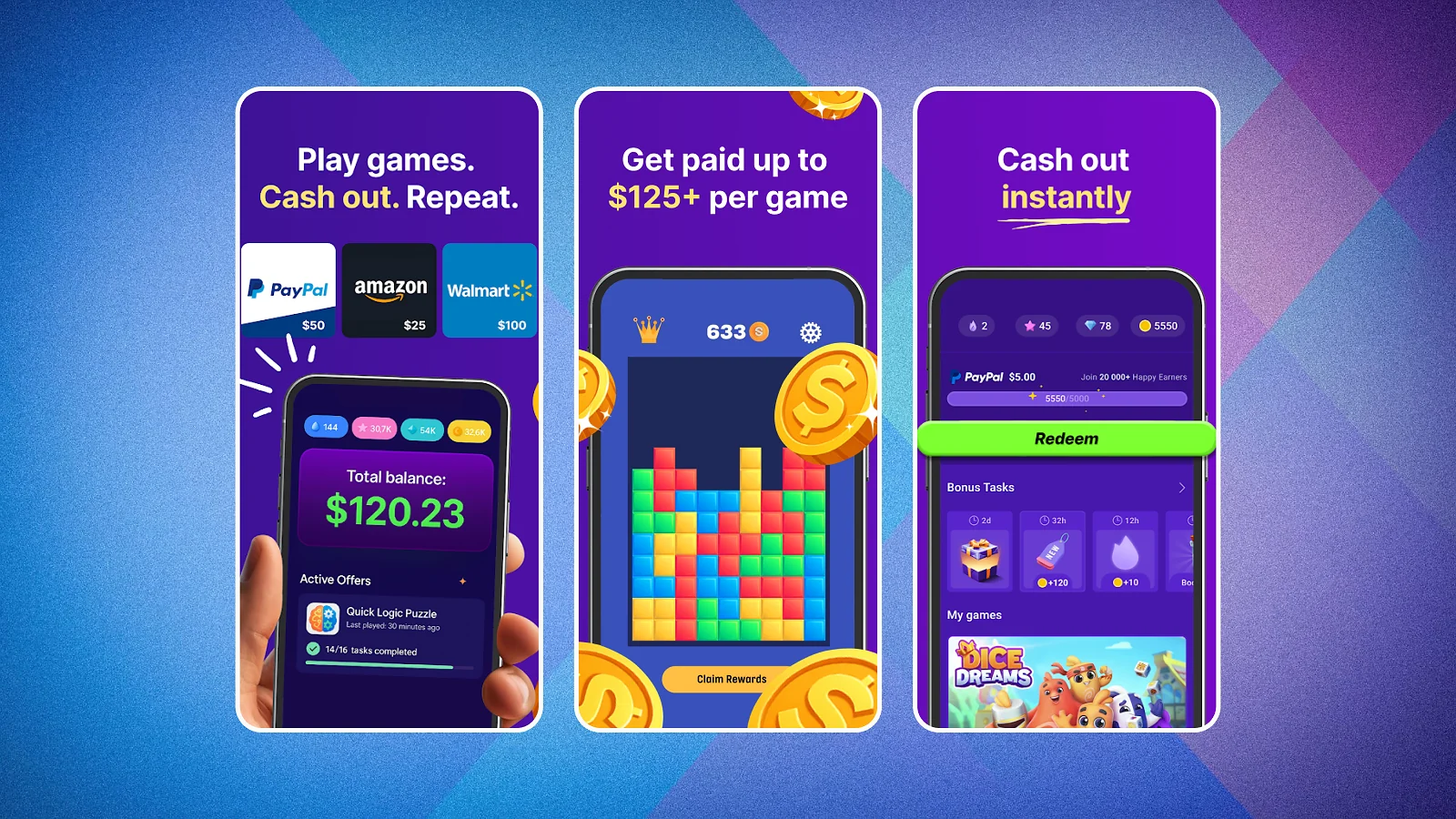
Reward apps will not fund most e-commerce business ideas or replace store income. They can give you a small side balance while you test products. If you want a larger target outside the store, earning $1,000 a week covers other methods worth comparing.
Two apps are worth trying alongside a new store, not instead of one. Snakzy, Eneba’s own play-to-earn app, pays out from a $35 minimum and costs nothing to join. Bigcash pays out from a much lower minimum, also free, for someone who wants a fast first payout.
For lighter phone-based options, the best game apps for real money guide covers a separate category of small rewards. Treat those as pocket money, not capital for a print-on-demand business or dropshipping business.
Turn spare time into rewards with Snakzy while you work on your e-commerce business.

What Doesn’t Work
The worst e-commerce business ideas are often not the models themselves. The problem is the expensive course, fake automation package, guaranteed-sales service, or supplier pitch wrapped around them. Real e-commerce business ideas do not need guaranteed-income claims. Sustainable e-commerce business ideas should work without hype.
- Six-figure mentor courses: the FTC permanently banned operators of an e-commerce business-opportunity scheme after allegations of deceptive earnings claims. Treat guaranteed-income promises as a warning sign.
- Counterfeit or mislabelled liquidation stock: never build a wholesale reselling business around a pallet with no useful manifest or condition information.
- Fake “guaranteed sales” services: bots and fake traffic do not fix weak demand and can put marketplace accounts at risk.
- A full inventory run before testing demand: one of the fastest ways to make e-commerce business ideas expensive is to order your maximum quantity before proving anyone wants the product.
Good business ideas e-commerce sellers can test have one thing in common: you can measure what is happening before doubling down. The same skepticism helps elsewhere, and avoiding gift card scams covers more warning signs around fake payment requests.
Final Verdict on E-Commerce Business Ideas
If you want the lowest inventory risk, start with a print-on-demand business or digital products. If you already make physical goods, Etsy is a straightforward way to sell handmade products online. A dropshipping business gives you fast product testing without stock, while a wholesale reselling business and private label need more money and operational work.
The best e-commerce business ideas are the ones you can afford to test properly, which is a useful rule for online business ideas in general. Keep the first version small, calculate the real margin, and scale after demand appears. While you build, join Snakzy free for optional pocket money, but keep the store itself as the main project. Treat e-commerce business ideas as businesses first, not quick-cash hacks.
Play on Snakzy for extra rewards while your e-commerce store is still getting off the ground.
FAQs
Some e-commerce business ideas can start under $100. Dropshipping may need $200–$600, wholesale resale around $500–$1,500, while private label or subscription boxes often need several thousand dollars.
A print-on-demand business is usually one of the fastest e-commerce business ideas because you do not buy inventory first. Digital products can also go live quickly once the file and listing are ready.
Yes, dropshipping is still worth trying, but treat it as the highest-risk model here. Most stores stop within 90 days, and net margins average under 15% for beginners. It rewards fast product testing over building a full catalog.
There is no reliable Etsy-wide average, but earnings can range from under $100 a month for a small or new shop to $1,000–$5,000+ a month for established sellers with steady demand. Actual profit will be lower after materials, fees, shipping, and ads.
No, most beginners can start selling online as a sole proprietor without a special license. You may still need a standard sales tax permit once you are selling regularly in your state.
In the US, $400 or more in net self-employment earnings can trigger self-employment tax calculations, while federal and state income taxes may apply separately. Rules vary by situation.
A print-on-demand business is among the cheapest e-commerce business ideas because inventory is produced after a sale, while a dropshipping business usually needs more budget for the store, samples, apps, and marketing.