

Small Business Ideas: The Real Costs, Profits, and Tools Behind Each One in 2026

Eneba Hub contains affiliate links, which means we may earn a small commission if you make a purchase through them—at no extra cost to you. Learn more



Choosing a profitable small business depends on your budget, skills, and time. Popular options range from digital storefronts and online freelancing to hands-on local services and mobile businesses that require low upfront cash.
Service-Based Small Business Ideas:
- Cleaning — provide routine cleaning or space decluttering
- Virtual Assistant — help clients remotely with administrative tasks
Home and Local Small Business Ideas:
- AI Automation Consulting — help businesses automate repetitive processes
- Lawn Care — provide outdoor maintenance services
- Handyman — handle general home repairs and maintenance
Content and Marketing Small Business Ideas:
- Freelance Writing — write articles, website content, or specialized content
- Social Media Management — manage businesses’ social media accounts
Teaching and Creative Small Business Ideas:
- Sell Handmade Products — create and sell handmade products through Etsy
- Tutoring — teach a specific subject one-on-one or in small groups
- Online Coaching — provide personalized guidance or instruction
Below is a more detailed description of each small business idea and search for the one that fits you best.
Jump to:
What Makes a Small Business Idea Actually Worth Starting?
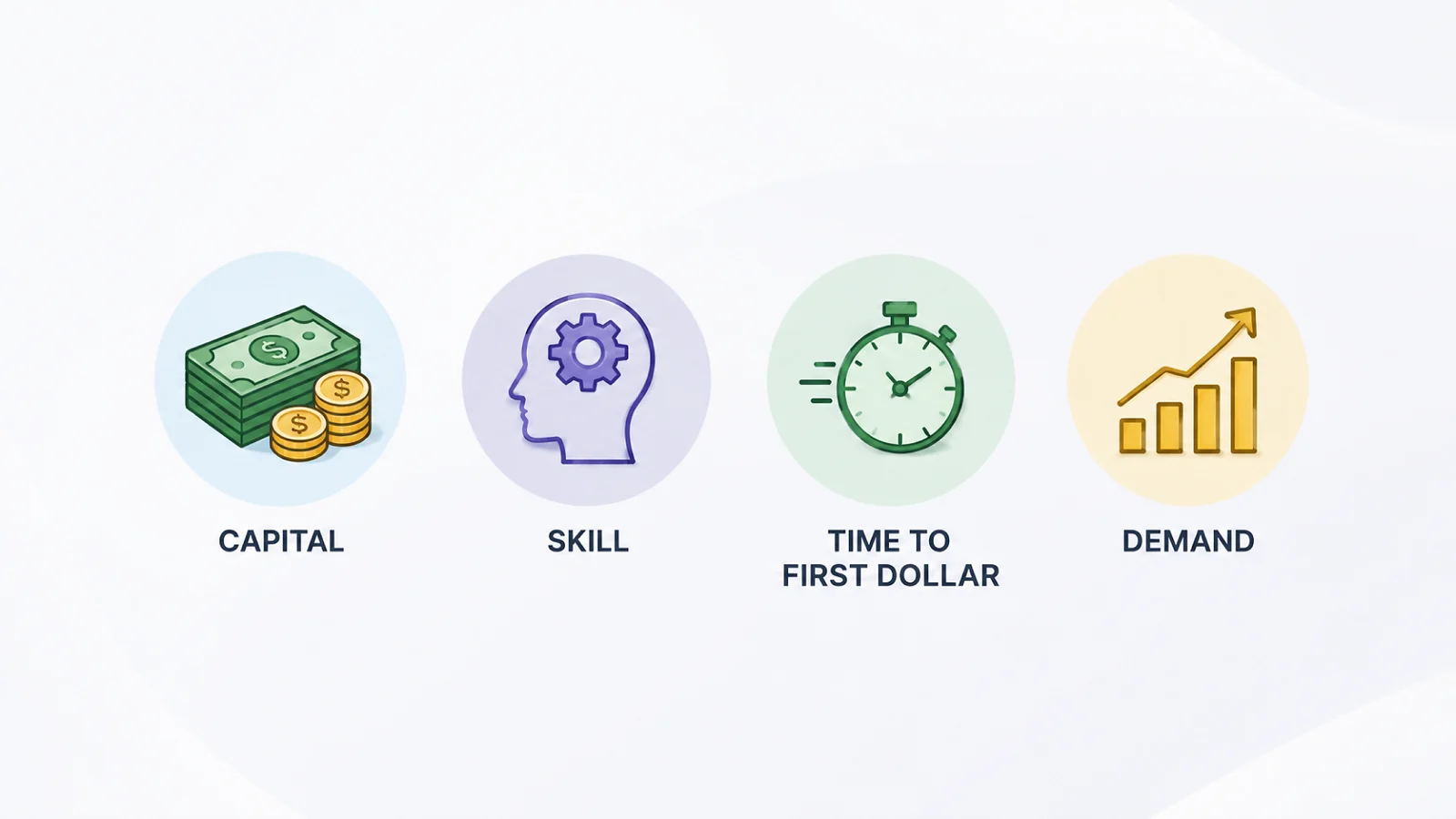
The best small business ideas share four characteristics:
- Low or manageable startup costs that fit your available budget.
- Skills you already have or can learn quickly without expensive certifications.
- A short path to first income, ideally within days or weeks rather than months.
- Existing customer demand, so you are entering a proven market instead of creating a new one.
Business ideas that score well across all four areas generally have lower risk and a faster path to profitability. Service businesses such as cleaning, virtual assistance, and tutoring often perform well because they require little upfront investment while allowing owners to earn revenue soon after acquiring their first client.
Small Business Ideas at a Glance: Startup Cost, Profit Potential, and Best Tools
Most profitable small businesses share three traits you can compare before you start: a clear startup cost, a realistic monthly income ceiling, and a proven tool stack. The table below puts all three factors side by side, making it easier to compare the most profitable business ideas without jumping between multiple resources.
Use the table to shortlist the best small business ideas that fit your budget and time commitment, then read the deep-dive sections below for the full picture on costs, income ceilings, and trade-offs.
| Business Idea | Startup Cost | Monthly Revenue (Solo) | Typical Net Margin | Best Tool/Platform | Best For |
|---|---|---|---|---|---|
| Cleaning Business | $1,000–$5,000 | $2,500–$5,000 | 10–25% (up to 28% specialized) | Housecall Pro | Physical workers with a local client base |
| Virtual Assistant | Under $500 | $1,500–$4,500 | 85–95% (near-zero overhead) | Notion / Asana | Remote workers with strong organizational skills |
| AI Automation Consulting | $2,000–$15,000 | $2,000–$5,000 (up to $20,000 niched) | 70–90% | n8n / Make / Zapier | Tech-comfortable process solvers |
| Lawn Care / Handyman | $755–$6,900 | $5,000–$10,000 | 10–20% (up to 40% for landscaping) | Jobber | Outdoor, hands-on workers |
| Freelance Writing | Under $500 | $1,500–$5,000 | 90%+ | Grammarly / Hemingway | Research-strong writers |
| Social Media Management | $200–$2,000 | $600–$3,000 (1–2 clients) | 80–90% | Buffer / Canva | Platform-savvy marketers |
| Tutoring / Online Coaching | $500–$2,000 | $300–$3,000 part-time | 85–95% | Zoom | Subject matter experts |
| Etsy Seller (Handmade) | $200–$800 | $500–$1,500 (median: $574) | 40–60% gross, minus ~10–13% fees | Etsy / Printify | Crafters and makers |
One caveat on the income figures: these ranges reflect what real solo operators earn, rather than the outlier results commonly featured in lists of the best small business ideas. Where your income lands will depend on how quickly you attract clients and how well you price your services from day one – two factors that separate ordinary ventures from the most successful small business ideas.
Service-Based Small Business Ideas
Service-based small business ideas are the lowest-barrier tier of the ideas in this guide. They need little to no specialized equipment, and income starts as soon as the first client books.
There’s no inventory to hold, no warehouse to rent, and no product to build before you can earn. Ideas for small business in the service category – cleaning and virtual assistant work – represent the two ends of the spectrum: one physically local, the other fully remote. Both are proven, repeatable, and generate income that scales directly with the number of clients or hours worked.
Start a Cleaning Business

A cleaning business can start paying off from the very first booking, which is why it remains one of the most successful small business ideas for local entrepreneurs. Startup costs usually fall between $1,000 and $5,000, covering equipment, cleaning products, liability insurance, and basic promotion.
With consistent bookings, a solo operator may recover those costs within a month. Among realistic profitable business ideas, the earning potential is solid: $30,000–$60,000 a year for a solo cleaner and $100,000–$300,000 in annual revenue for a small team, with net margins of 15–25%.
Margin varies by service type. Residential cleaning sits at 10–15% margin, commercial cleaning at 15–20%, and specialized services like carpet cleaning and pressure washing reach 20–28%.
Get business insurance before the first job – not after. One accident at a client’s home without coverage is enough to shut a business down before it earns its first dollar back.
Tools needed: a scheduling app like HouseCallPro or Jobber, general liability insurance (required before booking), eco-friendly cleaning supplies, and a basic vacuum and mop kit. This is one of the more accessible business ideas for beginners because no certification is required – physical stamina, reliability, and attention to detail matter much more.
Become a Virtual Assistant

A virtual assistant business is one of the most accessible small business ideas you can start this week – your startup cost is under $500, and your first client often comes through a job board like Upwork or a well-crafted LinkedIn pitch. Junior VAs start at $10–$15/hour, mid-level average around $28/hour, and senior or specialized VAs command $35–$100+/hour; the US average freelance VA salary lands around $50,000/year.
Specializing in a specific tool adds real money. Proficiency in QuickBooks, HubSpot, Asana, or any major project management platform typically adds 15–30% to base rates. For anyone exploring business ideas for beginners, picking a specialty early can make a big difference.
Tools needed: a laptop, Google Workspace or Microsoft 365, and a project management tool like Asana, Notion, or ClickUp. Increasingly, comfort with AI tools like ChatGPT or Claude to draft, research, and summarize faster is what separates higher-earning VAs from generalists – no formal certification is required, but strong written communication is essential.
Home and Local Small Business Ideas
The best small business ideas from home in this category involve hands-on work tied to a local area, but the business operations themselves run from a home office. Scheduling, billing, client communication, and route planning all happen before the truck leaves the driveway.
Small business ideas from home like AI automation consulting and lawn care are physically very different – one is entirely digital and location-independent, the other is outdoor and equipment-intensive – but both are operated from home.
Income scales with how many clients or routes you can realistically service in a day, so the ceiling is set by your capacity, not by the idea.
Start an AI Automation Consulting Business

An AI automation consulting business is the most timely small business idea in this entire guide – none of the top-ranked competing pages cover it, despite it being one of the fastest-growing consulting categories in 2026.
Startup costs range from $2,000–$15,000 (no-code automation platform subscription, professional liability insurance, and a basic business banking account), and new consultants typically earn $2,000–$5,000/month; those with a clear niche reach $10,000–$20,000/month within the first year, charging $100–$200/hour or $1,500–$5,000/month in recurring retainers.
You don’t have to be a programmer to make this one of your profitable business ideas. n8n, Make, and Zapier are all visual, drag-and-drop platforms. The real skill being sold is process-mapping: understanding a client’s workflow well enough to identify exactly what can be automated and rebuilt more efficiently.
Pick a narrow niche from day one. Automating lead follow-up for real estate agents, or invoice processing for small retailers, is dramatically easier to market and price than a generic “AI consulting” offer. A narrow focus gets you to your first client faster, and the first case study is the most important marketing asset you’ll have.
Start a Lawn Care or Handyman Business

A lawn care or handyman business generates income from the first week of operation – it’s one of the few small business ideas where you can earn back your startup cost within a single month of regular bookings.
Startup costs range from $755–$1,360 for a basic kit (mower, trimmer, blower, hand tools) to $6,900+ for a fuller setup; solo operators typically earn $5,000–$10,000/month serving 10–20 customers, with net margins of 10–20% for basic mowing and up to 40% for higher-value work like landscaping design or hardscaping.
Underpricing is the most common early mistake in this category. Setting rates too low to win early clients creates a trap – raising them later without losing those same clients is difficult. Price your services properly from day one. The most successful small business ideas may take longer to gain traction, but undercharging will only cause problems later.
Tools needed: mower, trimmer, blower, and a truck or trailer to transport gear between jobs. Basic mowing requires no license, but specialized work like electrical or plumbing repairs does – check local requirements before advertising those services.

Content and Marketing Small Business Ideas
Content and marketing small business ideas are skill-based and fully remote – the main cost is time spent building a portfolio and a client base, not equipment. These represent some of the most accessible creative small business ideas for beginners who want to keep startup costs under $500.
The two profitable business ideas below – freelance writing and social media management – have low barriers to entry and high income ceilings for those who specialize. Both are competitive fields, so portfolio quality and niche focus determine earning power far more than time spent. A strong first sample often outweighs years of unfocused experience.
Start a Freelance Writing Business

Freelance writing is one of the best small business ideas for anyone starting under $500 – you can launch with a laptop, a free portfolio on Google Docs or Contently, and a first pitch. Per-word rates scale with experience: beginners target $0.05–$0.15/word, intermediate writers $0.20–$0.50/word, and specialized or technical writers earn $0.50–$1.50+/word in niches like SaaS, finance, healthcare, and legal.
The honest income reality: most freelance writers earn under $30,000/year. Freelance writing can still rank among the best small business ideas, but only if you treat the early stage as a time to build your portfolio and choose a clear niche. Give it 12–18 months of focused work, and your earning potential can rise considerably. The key is becoming known for something specific, not simply putting in more hours.
Tools needed: a portfolio site (or Google Docs samples), Grammarly or Hemingway Editor for editing, and increasingly, comfort using AI writing assistants for research and first drafts while keeping fact-checking and final voice human. Many clients now explicitly ask about AI use – transparency is a stronger position than silence.
Start a Social Media Management Business

Social media management is a freelance business you can launch with $200 using free tool tiers – Buffer, Canva, and Meta Business Suite all have capable free versions. Full pro subscriptions push startup costs up to $2,000, but most freelancers start lean. Beginners typically charge $300–$800/month per client; experienced managers command $1,500–$3,000+/month.
Set realistic expectations with clients from day one. Results on social media take 90 days to a year to show. State this upfront in your contract, not after a frustrated client asks why their follower count hasn’t moved. Of all the business ideas for beginners, social media management is easy to start gradually: most freelancers take on one or two clients first, then go full-time when monthly income reaches roughly $4,000–$6,000.
Tools needed: Canva for graphic design, Buffer or Later for scheduling, and basic analytics literacy for reading engagement data and reporting results to clients. Among profitable business ideas in digital marketing, social media management has a fairly low barrier to entry because you don’t need a certificate. You do, however, need to understand where short videos, static graphics, and long-form posts perform best.
Teaching and Creative Small Business Ideas
The small business ideas in this category all sell something specific: knowledge you already have, a skill you’ve trained, or a craft you make with your hands. That changes the economics. You’re not competing to be the cheapest – clients choose you because you can actually deliver, and your rates can grow with your reputation.
Both are solid business ideas for beginners that can start small. Tutoring sells your knowledge straight to one person at a time. An Etsy shop turns your craft into a product and puts it in front of a marketplace that already has shoppers browsing.
Start a Tutoring or Online Coaching Business

Tutoring is one of the most straightforward small business ideas to start: you already have the subject knowledge, and the startup cost is $500–$2,000 for a lean online setup. Hourly rates start at $20–$40/hour for beginners, average $30–$60/hour, and reach $40–$120/hour for specialized subjects – STEM, coding, test prep, and language instruction.
Tutoring can become one of the most successful small business ideas for people who are both knowledgeable and good at teaching. Realistic monthly income: $300–$3,000+/month part-time, with full-time solo tutors who treat this as a real business realistically reaching $50,000–$80,000/year. Subject mastery is the obvious requirement, but teaching ability is a distinct skill from just knowing the material. The tutors who earn at the top of the rate scale are the ones who break concepts down, adapt pace to each student, and communicate progress clearly.
Tools needed: Zoom or Google Meet for sessions, a digital whiteboard like Miro or Bitpaper for online work, and subject-specific curriculum materials. A teaching license isn’t required, which makes tutoring one of the more accessible business ideas for beginners, though having one can help you charge premium rates.
Sell Handmade Products on Etsy
Selling handmade products on Etsy is a legitimate small business idea with a real income ceiling, but the baseline expectations matter before you start. Startup costs run $200–$800 (materials, basic product photography, and initial inventory), and profitable gross margins target 40–60% on each item after Etsy‘s fees: a 6.5% transaction fee, a $0.20 listing fee per item, and 3% + $0.25 payment processing, which together take roughly 10–13% of each sale. Offsite Ads add 15% on top of any sale they generate, and become mandatory at 12% once your shop passes $10,000 in annual sales.
The honest baseline: median Etsy seller revenue is around $6,883/year – roughly $574/month – and the average is skewed upward by a small number of very large shops. It can still be one of the most profitable small businesses, but you’ll likely need 3–6 months of consistent listing, product photography, and promotion before you see steady results.
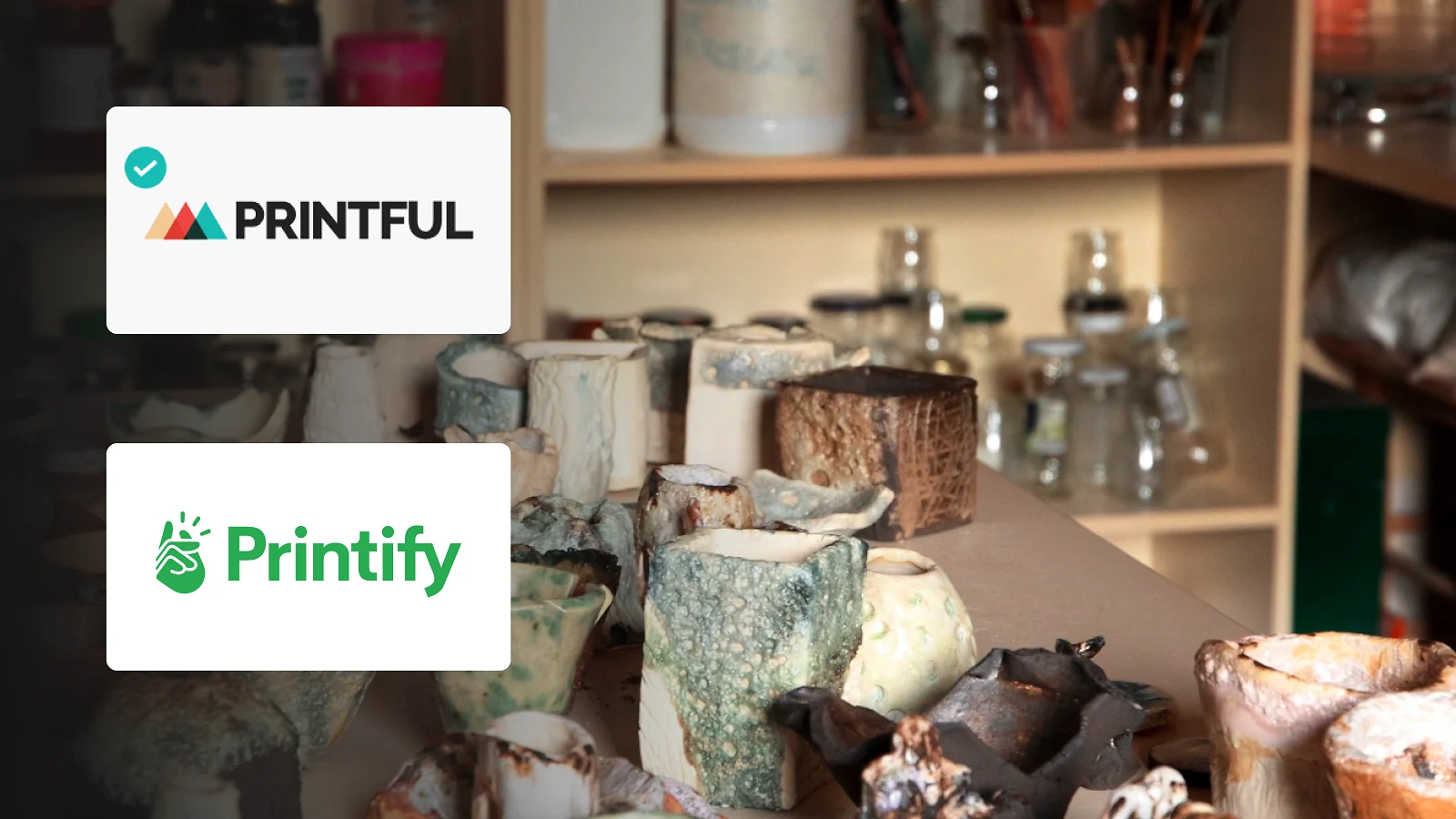
Print-on-demand is also one of the best small business ideas for creatives who don’t want to keep inventory. Platforms like Printful and Printify handle production and shipping, so you can sell your designs without the usual stock risk.
Tools needed: a natural-light or lightbox photography setup, packaging materials, and the ability to write search-optimized product listings. The craft itself is the foundation, but Etsy is a highly visual, search-driven marketplace – photography and listing copy directly affect sales volume.
20+ More Small Business Ideas Worth Exploring
The eight ideas above are the ones worth the deep-dive treatment, but they aren’t the only small business ideas worth your time. The list below is a quick-reference shortlist: enough to point you somewhere useful, without the full cost-and-income breakdown.
If you’re after profitable business ideas with a low barrier to entry, or business ideas for college students that fit around a class schedule, start with the tutoring, campus-adjacent services, and content categories.
Service-Based
- Event planning – coordinate private and corporate events
- Pet sitting or dog walking – recurring local client base, no equipment required
- Personal shopping or errand service – high urban demand
- Resume and LinkedIn writing – specialized copywriting niche with premium rates
- Bookkeeping – remote, recurring, strong hourly rate for a licensed operator
Home and Local
- Mobile car detailing – low overhead, high per-job margins
- Pool maintenance – seasonal but highly recurring, great for warm climates
- House painting – strong demand, scales well with a small team
- Moving assistance – physical work, no license required in most states
Content and Marketing
- Podcast editing – strong demand as creator economy grows
- Video editing and YouTube production – high demand, scalable service packages
- Email marketing management – strong recurring retainer potential
- SEO consulting – remote, high-value, strong demand from small businesses
Teaching and Creative
- Music or art lessons – these are creative small business ideas for beginners with a specific artistic skill
- Language tutoring – strong adult-learner demand; solid business ideas for college students with a second language
- Photography – events, portraits, and product photography all pay well
- Jewelry and soap making – Etsy-adjacent physical craft, proven market
Food and Hospitality
- Meal prep and delivery – growing demand in time-pressed urban households
- Cottage bakery – home kitchen laws vary by state; verify local regulations before selling
- Coffee cart service – low startup cost, events-driven income
Personal Care
- Mobile massage therapy – requires licensure in most US states; check requirements first
- Nail technician – home studio or mobile setup, strong repeat client base
If digital income streams interest you alongside any traditional small business idea, our guide to the best survey sites that pay real money covers a low-barrier parallel income option.
How To Set Up Your Small Business the Right Way (Legal, Banking, and Taxes)
Setting up any small business correctly takes less than a week across three distinct steps: business formation, a dedicated bank account, and basic accounting software. The three steps are sequential – formation first, then banking, then accounting – and skipping or delaying any one of them creates problems that are harder to fix retroactively.
Business formation
In the US, many freelancers start as sole proprietors and form an LLC later for stronger liability protection or clearer business finances. State LLC filing fees typically range from about $35 to $500, while services like LegalZoom or ZenBusiness may charge extra.
In the UK, sole traders generally register for Self Assessment with HMRC once gross trading income exceeds £1,000 a year. A limited company must be registered with Companies House, which costs £100 online in 2026, either directly or through an agent such as 1st Formations.
Business banking
A separate business bank account protects from liability bleed, simplifies bookkeeping, and makes tax season straightforward. In the US, Novo is the cleanest option for solo freelancers – no monthly fee, strong mobile UI, and good integration with invoicing tools. Mercury suits scaling businesses with treasury and team spending needs. In the UK, Starling is the default recommendation for most small businesses (free, unlimited UK transfers, solid app), and Tide is a better fit for operators with thin credit histories.
Accounting and invoicing
Even the most profitable business ideas can become messy without proper bookkeeping. QuickBooks, Wave (free tier available), and Xero all handle invoicing, expense tracking, and basic tax prep for a solo operator. Any of the three is a sound starting point – the main goal is clean records from the first transaction.
How To Avoid Small Business Scams and Costly Mistakes
The biggest risks for first-time small business owners fall into two categories: formation scams and “guru” course scams. Both exploit the same gap: the space between what something officially costs and what an opportunist charges. Knowing the real government fees before comparing services is the simplest protection.
Formation and registration scams
Official government filing never costs what some third-party sites imply. An LLC filing in most US states costs $50–$500 in state fees; the IRS charges $0 to register a sole proprietor EIN. UK limited company registration costs £12 directly through Companies House. Any service charging dramatically above these rates without clearly disclosing the government fee separately is charging for convenience, not legal necessity.
Guru course and coaching scams
These mirror the same red-flag pattern found across the broader “best ways to make money on the internet” space: a course seller guarantees a specific income figure for a specific small business idea, backed by selective screenshots and no auditable track record. No legitimate business course guarantees income. Watch for these signals: guaranteed monthly earnings, “secret method” framing, and pressure to buy within a limited window.
Quick checklist before paying any service:
✔️ Look up the real government filing fee independently before comparing markups
✔️ Verify the service’s Trustpilot and BBB reviews (minimum 500 reviews, score above 4.0)
✔️ Never pay a marketing or course seller who promises a specific income
For a wider view of digital income options and how to evaluate them honestly, our guide to the best ways to make money on the internet applies the same critical lens to online earning opportunities.
Which Small Business Idea Fits You?

You don’t need to reread the entire article to match a small business idea to your situation. The four-criteria framework from the opening section – capital, skill, time-to-first-dollar, and demand – applies directly to each of the scenarios below. Find the one that fits your constraints and go there first.
If you want to start with under $500: virtual assistant, freelance writing, or social media management. All three are great business ideas for beginners with near-zero startup costs, remote-first delivery, and active job board demand. A portfolio of two to three strong samples is enough to win a first client on Upwork or LinkedIn. For digital income options that start with even less commitment, our guide to making money playing video games covers the entertainment end of the income spectrum.
If you want hands-on, local work with fast recurring income: cleaning or lawn care. Both are profitable business ideas that generate income from the first client, scale with team size, and produce predictable recurring revenue from returning customers. Get insurance in place before the first booking – this is non-negotiable for either idea.
If you’re comfortable with tools and enjoy solving process problems: AI automation consulting. It has the highest income ceiling of any small business idea in this guide and the lowest online competition. Start by automating one process for one business in your network, and use that as your first case study. A narrow niche gets you to a first paying client far faster than a broad “I do AI stuff” pitch.
If you have a specific skill or craft to teach or sell: tutoring, coaching, or an Etsy shop. Tutoring generates income from the first session. An Etsy shop takes 3–6 months before meaningful revenue arrives – factor that timeline in before treating it as a side hustle that pays this month.
For anyone exploring gaming and digital side income alongside a traditional small business, our guide to making money by playing games covers the digital entertainment side of the income picture in detail.
Final Thoughts
So what is the best small business idea? There is no single best small business idea for everyone. The right choice depends on your budget, skills, available time, and income goals.
- Best under $500: Virtual Assistant or Freelance Writing
- Fastest path to income: Cleaning Business
- Highest long-term earning potential: AI Automation Consulting
- Best home-based business: Social Media Management
- Best for creative entrepreneurs: Etsy Shop
- Best for subject-matter experts: Tutoring or Online Coaching
Most successful small businesses take between three and six months to produce reliable income, regardless of industry. Starting with realistic expectations, pricing services correctly, and focusing on one niche gives new business owners the best chance of long-term success.
FAQs
Virtual assistant, freelance writing, and social media management all start for under $500. Each generates income from a first client within days or weeks of launching – no inventory, no equipment, and no office space required.
Service businesses with recurring clients – cleaning, lawn care, and bookkeeping – rank among the most successful because income is predictable and scales with a team. Cleaning scales fastest: a 2–5 person team can reach $100,000–$300,000 in annual revenue.
Tutoring, freelance writing, and social media management are the best small business ideas for college students. All three have flexible hours, under $500 in startup costs, and can be run entirely between classes without any formal license or degree required.
With $5,000 you can start a cleaning business, a lawn care operation, or an AI automation consulting practice. Cleaning and lawn care use that capital for supplies, insurance, and equipment; consulting uses it for software subscriptions and professional liability insurance.
A virtual assistant or freelance writing business starts well under $1,000, leaving budget for a portfolio site, basic tools, and a few months of job board presence. Both generate income faster than any product-based small business idea at the same investment level.
Virtual assistant work, freelance writing, social media management, AI automation consulting, and online tutoring are all fully home-based small business ideas. None require a commercial space, customer-facing location, or daily commute.