

How to Start a Dropshipping Business: What It Really Costs and Pays

Eneba Hub contains affiliate links, which means we may earn a small commission if you make a purchase through them—at no extra cost to you. Learn more


Dropshipping is a retail business model where you sell items online without keeping physical stock. When a customer buys a product from your store, you purchase it from a third-party supplier who ships it directly to them. You act as the marketer and middleman, pocketing the profit margin.
Jump to:
Dropshipping Business at a Glance
Dropshipping works in 4 simple steps
- Customer buys: A person places an order on your website and pays your retail price.
- Order forwarded: You forward the order details to your wholesale supplier.
- Supplier ships: The supplier packages the item and sends it straight to the customer under your business name.
- You keep the difference: Your gross profit is the difference between the two prices.
| Pros | Cons |
|---|---|
| ✅ Low startup cost ✅ Location freedom ✅ No inventory storage ✅ Wide product selection | ❌ Thin profit margins ❌ Low quality control ❌ Requires strong marketing |
What Is Dropshipping, and How Does It Actually Work?
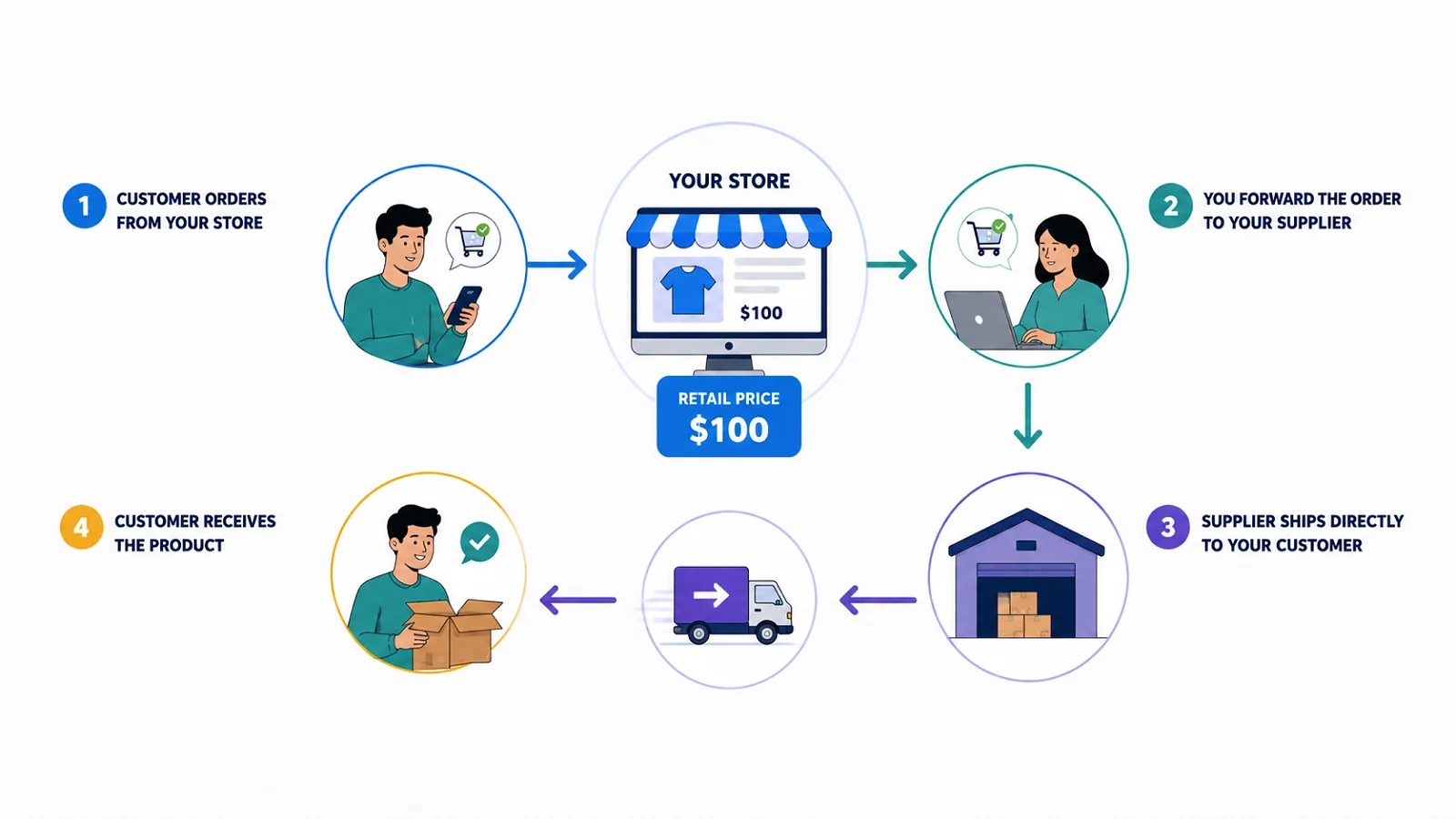
Dropshipping is a retail model where your store sells products it never physically stocks. A supplier ships each item straight to your customer once the order comes in, so you handle the storefront and the marketing while a manufacturer or wholesaler handles inventory and fulfillment.
That flow is what makes a dropshipping business different from traditional retail, where you buy and store stock upfront. It also differs from print-on-demand, a specific type of dropshipping where each product is manufactured or customized per order rather than pulled from existing stock.
Be clear-eyed about the trade-off. The upside is a low starting cost and no inventory risk. The downside is thin margins, little control over shipping times, and heavy reliance on suppliers you do not own. That honesty is exactly what most explainer pages skip.
Realistic Dropshipping Earnings: What You Can Actually Make

People ask can you make money dropshipping, and the realistic answer is yes, but modestly for most and only after real work: beginners typically earn very little to nothing in month one, while net profit margins run roughly 10 to 25 percent once a store is properly up and running. Stores that never find a winning product, which is the majority, earn close to nothing at all.
Here is the realistic timeline for dropshipping business. In the first three to six months, most stores do $0 to $2,000 a month in revenue at 5 to 15 percent margins, which often works out to net profit of just $50 to $300. Stores that survive and find a winner can reach $5,000 to $15,000 a month in revenue at around a 20 percent margin by month 12. The part most guides bury is that a large majority of dropshipping businesses never reach consistent profitability at all, so read these as what is possible, not what is promised.
Market matters as much as niche. US sellers usually get faster domestic supplier options and no VAT to manage early on, while UK sellers face VAT once they cross the registration threshold and often longer inbound shipping, both of which trim margins.
For a wider reality check, ZipRecruiter’s salary data puts dropshipping-related roles at roughly $19.70 to $21.55 an hour, about $41,000 to $45,000 a year. That page updates monthly, so treat it as a moving figure rather than a fixed one.
The table below previews realistic gross margins and beginner monthly profit by product niche and by target market. Read every number as an industry-estimate range, not a guarantee. These are gross margins; your net margin after ad spend, platform fees, and returns typically lands 10 to 30 points lower, depending on how competitive the niche is.
| Niche/Category | Typical Gross Margin | Realistic Monthly Profit (Beginner) | Best-Fit Market | Notes |
|---|---|---|---|---|
| Private-label jewelry and accessories | 40 to 60% | $150 to $300 | US or Both | Lightweight, brandable, low return rate; the margin leader |
| Health, wellness, and beauty | 35 to 55% | $100 to $300 | Both | Repeat purchases; mind product claims and regulations |
| Pet products and accessories | 30 to 45% | $100 to $250 | Both | Steady, loyal demand; avoid fragile or sized items |
| Home and organization | 25 to 40% | $50 to $200 | Both | Broad appeal; watch bulky shipping costs |
| Apparel and fashion (general) | 15 to 30% | $0 to $150 | US or Both | Sizing and returns drag margins; POD cuts stock risk |
| Generic electronics and gadgets | 10 to 20% | $0 to $100 | Both (hard) | Saturated and price-compared; thin net margin |
Example: What Does a $5,000 Revenue Month Actually Look Like?
| Metric | Amount |
|---|---|
| Monthly revenue | $5,000 |
| Gross margin (35%) | $1,750 |
| Advertising costs | -$900 |
| Platform & payment fees | -$180 |
| Refunds & miscellaneous costs | -$170 |
| Estimated monthly net profit | $500 |
This example shows why revenue and profit are not the same. Many new dropshippers focus on sales numbers, but advertising costs often determine whether a store is actually profitable.
Step 1: Choose a Profitable Dropshipping Niche

The best dropshipping business ideas all start with one decision: your niche. Niche choice is the single biggest driver of the margin ranges you just saw, and it can be the difference between a 10 percent and a 40 percent net margin on the same amount of effort.
A profitable niche is not about chasing whatever is trending. It is about picking products with room for markup, low return rates, and steady demand you can actually reach with ads or content. Get this part right and every later step, from pricing to suppliers to marketing, gets easier. Get it wrong and no amount of clever marketing rescues a product that cannot carry a margin.
How to Evaluate a Niche’s Margin Potential
Judge any product against four questions before you commit.
- Weight and shipping cost: light items are cheaper to ship and far easier to profit on.
- Perceived value versus wholesale cost: a $4 item that looks and feels like a $25 item leaves real room for margin.
- Return rate risk: sized clothing and fragile goods generate refunds that quietly eat your profit.
- Commoditization: if a shopper can find the identical item cheaper in two clicks, you are stuck competing on price alone.
This is why lightweight, brandable, low-return products like jewelry, wellness items, and pet accessories consistently beat generic gadgets and commodity electronics on margin. The four-question test points you toward the top of that earnings table, not the bottom.
Best Things to Dropship Right Now
The best things to dropship right now are the durable, higher-margin categories, not the viral ones. Pulling straight from the earnings table, these hold up well for beginners:
- Private-label jewelry and accessories (40 to 60 percent gross margin)
- Health, wellness, and beauty items (35 to 55 percent)
- Pet products and accessories (30 to 45 percent)
- Home and organization products (25 to 40 percent)
One warning about dropshipping business worth taking seriously: the products you see all over TikTok and YouTube ad libraries are usually the most saturated and shortest-lived, because thousands of other stores pile onto them at the same time. A niche with steady, less flashy demand is far more sustainable for a beginner than this week’s viral gadget.
How to Price Your Products So You Actually Turn a Profit
In dropshipping business, profitable pricing starts with your real costs, not your competitor’s sticker price. The price you charge should equal your landed cost, plus fees, plus your target profit margin, worked out in that order.
Build it up step by step: landed cost (the supplier’s product price plus any shipping you cover), plus payment processing fees (typically 2.9 percent plus a small per-transaction charge), plus your advertising cost per sale (often the biggest hidden cost beginners underestimate), plus your target profit margin from the niche table above. Add those together and you have the price to charge. As a worked example, a private-label jewelry piece with an $8 landed cost, targeting a 60 percent gross margin, needs to sell for about $20.
The most common beginner mistake in dropshipping business is pricing only off what competitors charge without checking your own landed cost and fees first, which is one of the fastest ways to sell at a loss without noticing.
Pro Tip: Before you set any price, estimate your advertising cost per sale, not just your product cost. New store owners routinely calculate margin on landed cost alone, launch ads, then discover their real cost per sale (total ad spend divided by orders) is higher than their markup. Test with a small ad budget and track your cost per acquisition first, so your price covers the one expense that quietly sinks most beginners.
Write a Simple Dropshipping Business Plan
You do not need an investor-ready document. A working dropshipping business plan fits on a single page and answers five practical questions:
- Your target niche and customer (who buys this, and why from you)
- Your chosen supplier or suppliers
- Your store platform
- Your starting budget, split between ad spend and platform fees
- A realistic 90-day profit goal, anchored to the beginner figures above (think $50 to $300 a month in net profit at first, not four figures)
Keep it honest and specific. A dropshipping business plan that assumes month-one riches is not a plan, it is a wish, and it pushes you into overspending on ads before you have a proven product.
If a limited starting budget is holding you back, the best game apps to win real money are a low-risk way to fund your first product test.
Step 2: Set Up Your Online Store and Business
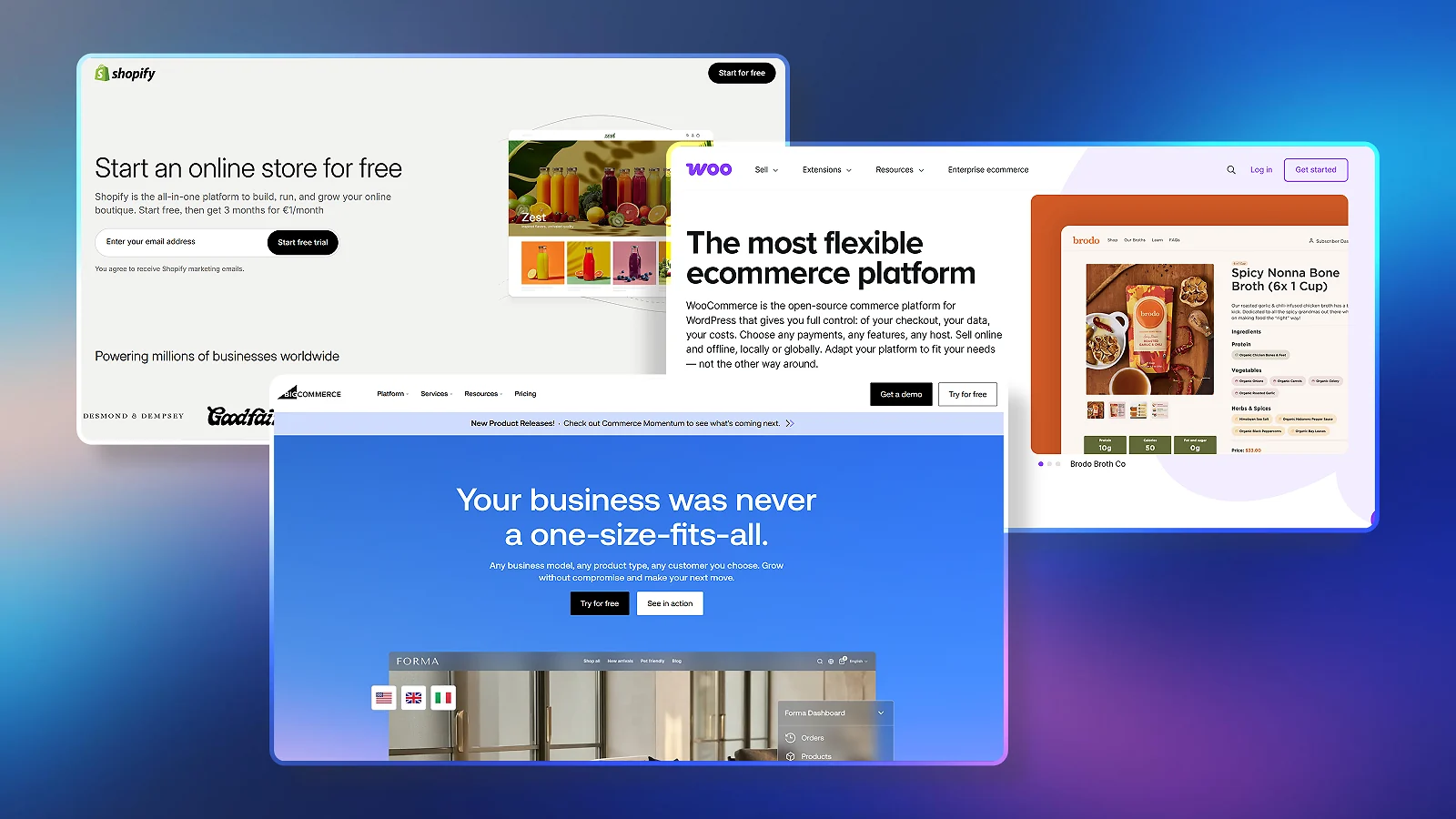
With a niche and a plan in hand, the next move is making your store official. Setting up your dropshipping business means choosing a store platform and handling the legal and tax basics before your first sale, not after it.
There are two parts to this stage, and beginners tend to rush the second one. The first is your storefront, the platform that hosts your products, takes payments, and connects to your suppliers. The second is the less glamorous but critical part: registering your business and understanding how tax works in your market, so a surprise bill does not undo your early profit.
Choose a Store Platform: Shopify vs. WooCommerce vs. BigCommerce
Do not pick a platform because an ad told you to. Each of the three main options fits a different kind of seller, so here is the honest comparison for a dropshipping business.
| Platform | Typical Cost | Dropshipping App Ecosystem | Best For |
|---|---|---|---|
| Shopify | From $39/mo ($29 billed annually) | Largest, 500+ dedicated apps | Beginners who want the simplest path |
| WooCommerce | Free plugin; about $75 to $920/yr all-in | Large via WordPress, more manual setup | Sellers who know WordPress and want the lowest long-term cost |
| BigCommerce | $39/mo (Core) up to $399/mo (Scale) | Smaller than Shopify for dropshipping | Stores built to scale that use an embedded gateway (Stripe, PayPal, Adyen) |
A few honest notes sit behind that table. Shopify is the easiest on-ramp and has by far the deepest set of dropshipping apps, which is why most beginners start there. WooCommerce looks free because the core plugin is, but the real cost of a small store usually lands between $75 and $920 a year once you add hosting, a theme, and paid plugins; the payoff is more control and a lower long-term bill. BigCommerce charges no transaction fees of its own on standard checkout, though its 2026 plans added a small fee on orders processed through third-party payment gateways.
My recommendation is simple. Choose Shopify if you want the simplest path, WooCommerce if you already know WordPress and want the lowest long-term cost, and BigCommerce if you are building to scale and will run payments through one of its embedded gateways.
Register Your Business and Handle Taxes: US vs. UK
Tax setup looks different in each market, and almost no competing guide covers both at once. Here is the side-by-side for the two markets most readers sell into.
In the US, most beginners start as a sole proprietor and form an LLC once revenue is steady. As you grow, you also have to track sales tax nexus state by state, because selling into a state can create a tax obligation there.
In the UK, most start as a sole trader registered with HMRC. You must register for VAT once your taxable turnover crosses the current £90,000 threshold, and because suppliers often ship from outside the UK, you may need an EORI number to import goods. If you want a limited company from day one instead of a sole trader setup, that is a Companies House registration, the rough UK equivalent of forming a US LLC.
One caveat matters more than any single number here: thresholds and rules change. Confirm the current figures with a local accountant or an official resource, IRS.gov in the US and gov.uk in the UK, before you rely on them.
Step 3: Find Reliable Suppliers and Fulfillment Tools
In dropshipping business, your supplier is your silent business partner, so choose carefully. Finding reliable suppliers means matching a fulfillment source to your niche and market, because supplier choice directly shapes your shipping times, product quality, and therefore your return rate and margin.
Tie this straight back to the earnings table. A cheap supplier with three-week shipping can crush the margins of an otherwise strong niche through refunds and chargebacks, while a slightly pricier supplier that ships in a few days protects your reviews and repeat sales. The tools below are the ones sellers actually use, compared honestly on speed, cost, and quality.
Compare Dropshipping Suppliers: AliExpress, CJdropshipping, Spocket, and Zendrop
Each supplier suits a different stage of the journey. Here is how the four most common options stack up on the things that actually move your margin in dropshipping business.
| Supplier | Best For | Typical Shipping Time | Supplier Base | Starting Cost |
|---|---|---|---|---|
| AliExpress | Cheap product testing | 1 to 3+ weeks | Global, mostly China | Free to use |
| CJdropshipping | Low cost with US warehouse options | 2 to 6 days (US) or up to 2+ weeks | China plus US and global warehouses | Free to start |
| Spocket | Faster shipping and brand-building | 2 to 7 days | Mostly US and EU | Free to browse; paid plans from about $40/mo |
| Zendrop | Beginner-friendly, curated US shipping | 3 to 6 days (US) | China plus US | Free tier; Pro about $49/mo |
Match the supplier to your stage. When you are still testing whether a product sells, AliExpress and CJdropshipping let you validate cheaply. Once a product is proven and shipping speed starts affecting your reviews and repeat purchases, Spocket and Zendrop are worth their higher cost. With AliExpress and CJdropshipping you vet supplier quality yourself, so read reviews and order samples; Spocket and Zendrop pre-vet their suppliers, which is part of what you are paying for.
One accuracy note that separates a current guide from a stale one: do not use Oberlo. Several competing articles still list it as a live tool, but Shopify shut Oberlo down back in 2022, and it no longer exists. If a guide still recommends it, that tells you exactly how old its advice is.
Print-on-Demand as a Dropshipping Alternative: Printful vs. Printify
Print-on-demand is the same dropshipping principle applied to custom goods. Instead of pulling an existing item from a warehouse, each product, whether apparel, mugs, or wall prints, is manufactured to order once a customer buys, so nothing is stocked in advance. That makes it a natural dropshipping alternative for anyone who wants to sell branded or designed products.
The two names you will compare most are Printful and Printify. Printful runs its own fulfillment centers, which gives more consistent quality, and its Growth plan costs $24.99 a month, waived once your Printful sales pass $12,000 over a rolling year. Printify is a marketplace of more than 90 third-party print providers rather than its own facilities, so base costs are generally lower thanks to provider competition, and its catalog is larger, over 1,300 products against Printful’s roughly 500, though quality depends on which provider you pick.
The recommendation splits cleanly. Choose Printful if you prioritize consistent quality and will pay a little more for it, and Printify if you want the lowest base cost and are willing to vet individual print providers.

Step 4: Launch, Market, and Scale Your Store

Launching is where a dropshipping business is actually won or lost. The setup steps above are the easy part; most of the real work, and most of the failure risk, lives here in marketing and iteration, not in picking a platform.
The honest truth about dropshipping business is that your first product probably will not be your winner. Successful stores treat launch as the start of a testing phase, not a finish line: you put a product in front of the right audience, read the data, cut what does not work, and double down on what does. Expect to spend more time here than on every earlier step combined.
Basic Marketing to Get Your First Sale
There are two honest paths to your first sale, and they trade speed for risk.
Paid social ads are the fastest way to get in front of buyers, but also the riskiest for a small budget. Most beginners in dropshipping business lose money testing several products before they find one that converts, so treat early ad spend as tuition, not profit.
Organic content and SEO, meaning short videos, a blog, and social posts, are slower to pay off but far lower risk, and they compound over time as your content keeps pulling in free traffic long after you publish it. If you already build an audience around games, you have a head start here, and the same content skills sit behind how to make money playing video games.
Whichever you pick, hold on to the realistic timeline: most stores take three to six months of testing to reach consistent profit. This is a long stretch with no income, so keep something else ticking over, like making money by playing games, while the store finds its footing.
When and How to Reinvest and Scale
Scaling your dropshipping business is not about spending more the moment you make a sale. It starts only once a product proves consistently profitable across enough orders that you can trust the numbers.
When you hit that point, do two things. Reinvest a portion of profit, not your rent money, into more ad spend on the proven product. And consider upgrading from a slower supplier like AliExpress to a faster one like Spocket or Zendrop, so your growing base of repeat customers gets the shipping speed that keeps them coming back.
As a benchmark, scaling successfully looks like the month-12 figures from earlier: roughly $5,000 to $15,000 a month in revenue at about a 20 percent margin, and only for the stores that make it that far. That is a strong outcome, not a promise.
Common Beginner Mistakes That Reduce Profit
Most unsuccessful dropshipping stores fail because of avoidable mistakes rather than because the business model itself does not work. Watch out for these common pitfalls:
- Choosing products based only on TikTok trends instead of long-term demand.
- Pricing products without including advertising and payment processing costs.
- Relying on a single supplier without ordering sample products first.
- Launching paid ads before installing analytics and conversion tracking.
- Ignoring shipping times, which often leads to refunds and poor reviews.
- Expecting profitability within the first few weeks instead of allowing time for testing.
Avoiding these mistakes will usually have a greater impact on profitability than switching ecommerce platforms or suppliers.
How to Avoid Dropshipping Scams and Red Flags

The biggest scams in dropshipping business are not fake apps, they are expensive courses and unreliable suppliers. The most common way beginners lose money is not a hacked store, it is paying thousands for a “guru” program or trusting a supplier who never ships.
Course and coaching scams. Be deeply skeptical of any program charging thousands of dollars while promising guaranteed income. Almost everything you genuinely need to learn is available free or cheap, on platform blogs, YouTube, and supplier documentation. Guaranteed-riches language is the tell, because real businesses do not come with guaranteed returns.
Supplier scams. Never pay a supplier outside the platform’s official payment system. Before you place inventory-level orders, verify the supplier’s reviews and how many years they have been active, and walk away from anyone who cannot provide real, working shipping tracking.
Run through this short checklist before trusting any supplier:
- Verify them through the platform’s own vetting (Spocket and Zendrop vet suppliers for you; on AliExpress and CJdropshipping you vet manually)
- Order a sample yourself before you list the product
- Never wire money directly to a supplier outside the platform’s payment processor
Apply the same skepticism to any of the easy ways to make cash online that promise guaranteed returns – the promise is the tell.
Handling Returns and Refunds When You Never Touch the Product
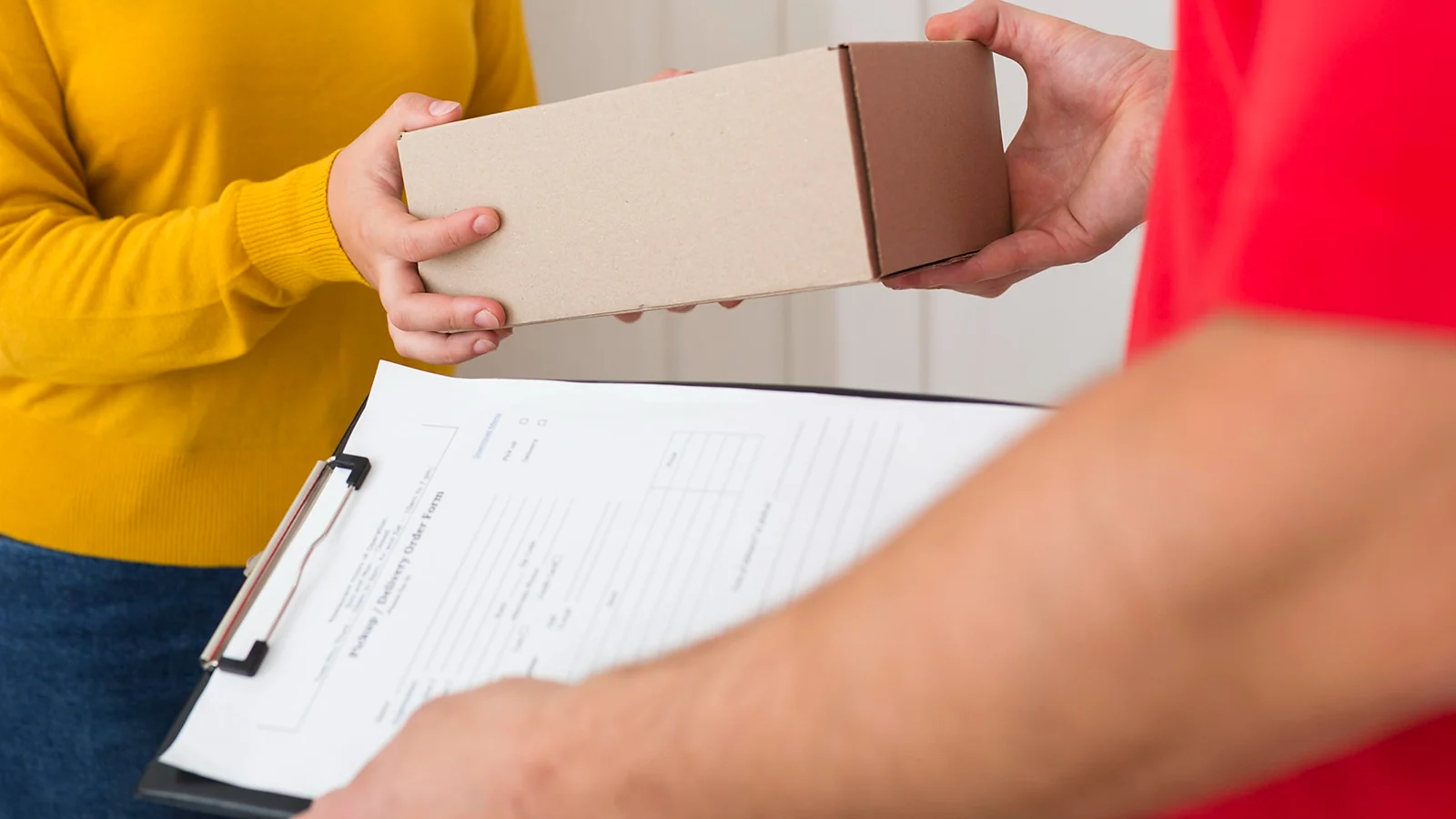
Returns are the part of dropshipping nobody advertises, and they are completely manageable once you plan for them. The catch is structural: your store is legally and reputationally responsible for the customer’s experience, yet you have no physical control over a product once it ships from a supplier you have never met.
That means a refund request is really a coordination problem between your customer and your supplier, and how you handle it depends on who that supplier is.
Established suppliers like CJdropshipping, Spocket, and Zendrop usually have a formal returns and refund policy you can rely on. Check that policy before you list a product, not after your first angry email. AliExpress-style suppliers often do not support traditional returns at all, so many dropshippers simply issue a partial refund or send a free replacement rather than making the customer ship an item back internationally, since return shipping frequently costs more than the product itself.
Here is the practical tip: write your own store return policy around what your suppliers actually support. Promising a standard 30-day return before confirming your supplier backs it is one of the most common beginner mistakes, and a direct path to bad reviews and payment-processor disputes. Handled properly, returns are a routine part of running your dropshipping business, not a reason to avoid the model.
Which Dropshipping Model Fits You?
Dropshipping is only one of the best ways to make money on the internet, so match the setup to your budget and your goals rather than to someone else’s.
The right dropshipping business setup depends on your budget, your goals, and how much hands-on work you want. Use these quick scenarios to skip straight to the combination that fits you, each one pointing back to a tool covered above.
- If you have under $500 to start: pair a free supplier like AliExpress or CJdropshipping with Shopify’s entry plan, and test cheaply before you commit real money.
- If you want to build a real brand, not just test products: choose Spocket or Zendrop for faster, higher-quality shipping and pick a private-label niche from the high-margin list, such as jewelry, wellness, or pet products.
- If you would rather not touch physical inventory logistics at all: go with print-on-demand through Printful or Printify and sell custom, made-to-order goods.
- If you want the lowest long-term platform cost and are comfortable with WordPress: build on WooCommerce and trade a little setup effort for a smaller monthly bill.
Pick the dropshipping business scenario that sounds most like you and start there. You can always change suppliers or upgrade your platform later, and none of these choices lock you in.
Final Thoughts
You now have what most guides leave out. Not just what is dropshipping and how the model works, but what a dropshipping business actually costs to start, what it realistically pays by niche and by market, and which tools and suppliers are worth your money in 2026.
Keep these five things front of mind:
- It is a real business, not a passive-income button. Most stores take three to six months of patient testing before they turn a consistent profit.
- Your niche decides your ceiling. The best things to dropship are lightweight, brandable, and cheap to return. Generic gadgets are a race to the bottom.
- Duty is part of your cost now. Price it in from the first order, or your margin is fiction.
- Advertising is your biggest expense. Not the platform, not the plugins. Know your cost per sale before you scale.
- Your first product probably will not be your winner. That is normal. Test, cut, repeat.
Can you make money dropshipping? Plenty of people do, and modestly for most of them: think $50 to $300 a month at first, growing into four figures for the disciplined few who stick with it past the first six months.
So if you are ready, keep it simple. Write a one-page dropshipping business plan, pick one niche and one supplier, give it an honest 90-day runway, and start building your dropshipping business.
FAQs
Dropshipping is selling products online without stocking them yourself: when someone buys, your supplier ships the item straight to them and you keep the markup. You handle the store and the marketing, while the supplier handles inventory and delivery.
Yes, you can still make money dropshipping, but most beginners earn little to nothing at first and only a disciplined minority reach steady profit. Realistic net margins run about 10 to 25 percent once a store is working, so treat it as a real business rather than fast money.
You can start a dropshipping business for a few hundred dollars: roughly $39 a month for a platform like Shopify, plus a product-testing ad budget of about $100 to $300. Your biggest early cost is almost always advertising, not the store itself.
The most profitable dropshipping business niches are lightweight, brandable, low-return categories like private-label jewelry, wellness, and pet products, which can reach 40 to 60 percent gross margins. Generic electronics sit at the other end, thin and heavily saturated.
No, not in most cases: you can begin as a sole proprietor in the US or a sole trader in the UK, then formalize as an LLC or limited company once revenue is steady. Always confirm current tax rules, like the UK’s £90,000 VAT threshold, with an accountant or an official government site.
Print-on-demand is a type of dropshipping where each product is custom-made to order, such as printed apparel or mugs, rather than shipped from existing stock. Standard dropshipping business resells ready-made products, while print-on-demand creates a fresh custom item every time someone buys.