


Best Investments for Passive Income in 2026

Eneba Hub contains affiliate links, which means we may earn a small commission if you make a purchase through them—at no extra cost to you. Learn more


Passive Income Investing Quick Pick
Start with the Schwab US Dividend Equity ETF (SCHD) if you want the simplest of these investments for passive income. It pairs a real, current dividend yield with one of the lowest fees on this list.
Investments for passive income are real, and the fastest one you can open today is a high-yield savings account or a low-cost dividend ETF. This works for almost anyone with a small amount to set aside, as long as you never mistake an interest rate or a dividend yield for a guaranteed number.
The right mix of investments for passive income can turn a few hundred idle dollars into a steady stream of dividends, interest, or rent that keeps paying you whether or not you show up. None of the investments for passive income below promises a fixed return, but each one is real, regulated, and open to a first-time investor.
Jump to:
Is Investing for Passive Income Actually Realistic?
Yes, money placed into real investments for passive income earns something almost every year, just never a fixed or guaranteed amount. A modest balance split between a savings account near 4.30% APY and a dividend ETF near 3.3% yield would realistically clear $150 to $225 in the first year, before rates or the market move it.
FINRA’s own investor education is blunt about one limit here. An index fund is only as diversified as the index it tracks, so a narrow sector fund will not spread your risk the way a broad market fund does, which puts it among low-risk investments for passive income.
Two safety nets sit behind different pieces of this list. The Securities Investor Protection Corporation covers up to $500,000 per brokerage account, including $250,000 in cash, though it never covers a market loss. The FDIC separately insures savings accounts and CDs up to $250,000 per bank.
While buying and gifting crypto is easy, crypto pays no dividend or interest unless it is staked, and staking adds its own platform risk on top of the price risk. It does not belong on this list of investments for passive income the way a dividend ETF or a savings account does.
8 Real Ways for Passive Income Investments
These eight ways cover the realistic range of investments for passive income available to an ordinary retail investor today, from a same-day savings account to a riskier peer-to-peer note. These passive income investments are ranked from the most accessible and lowest-risk down to the more specialised options.
1. Dividend and Index ETFs
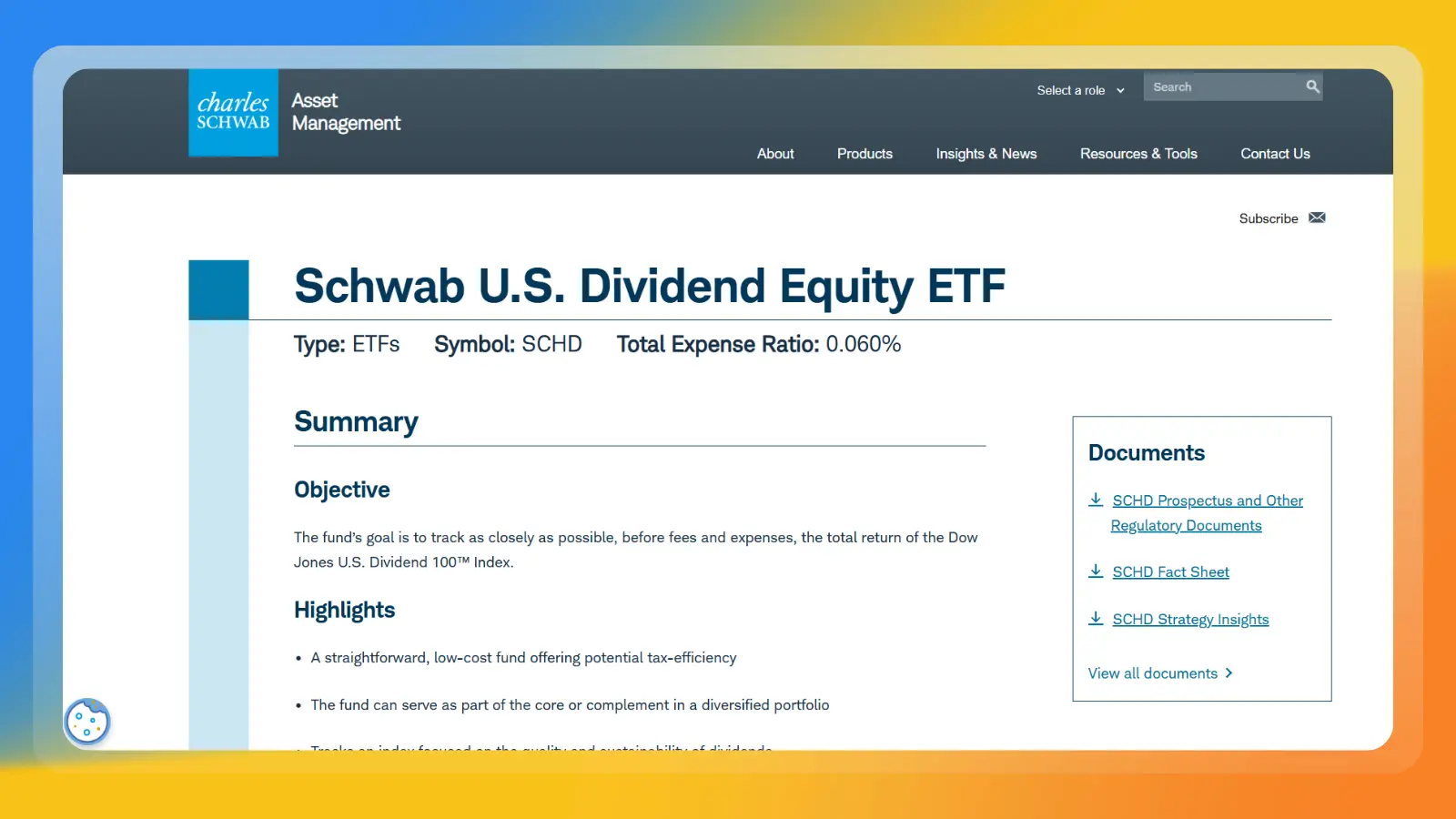
SCHD, the Schwab US Dividend Equity ETF, is one of the simplest investments for passive income, paying a dividend yield of roughly 3.1% to 3.5% for a 0.06% annual fee. It is run by Schwab Asset Management, and that fee is a fraction of what many old-style mutual funds still charge, which is most of why index investors default to it first.
VYM, Vanguard’s High Dividend Yield ETF, trades some of that yield for an even lower cost. It charges a 0.04% fee and has recently yielded closer to 2.2% to 2.4%, spread across a wider basket of dividend-paying companies than SCHD holds.
Buying either fund works the same way as buying any stock, and it is the entry that most of the other passive income investments on this list end up funneling money into eventually. How to invest for passive income with this method? Here’s how it works:
- Open a brokerage account with a broker that charges no commission on ETF trades.
- Search for the ticker, SCHD or VYM, and decide how many shares to buy.
- Turn on automatic dividend reinvestment if you want the payout to compound.
- Set a recurring monthly purchase instead of trying to time a single lump sum.
Among good passive income investments, the dividend here is paid whether the share price is up or down that quarter, which is the entire appeal: you are getting paid to hold something, not paid to guess where it goes next.

2. High-Yield Savings Accounts and CDs

A high-yield savings account or a 12-month CD is one of the simplest investments for passive income you can open, paying about 4.10% to 4.50% APY as of September 2026, against a national average of just 0.38%. That gap is pure upside for moving idle cash out of a checking account that pays almost nothing.
A 12-month CD currently locks in around 4.10% to 4.35% APY at the better banks and credit unions, in exchange for a penalty if you withdraw early. Ally Bank is one online bank that publishes both rates on its own site. Both the savings account and the CD are insured by the FDIC up to $250,000 per depositor, per bank, so the money itself is never at risk in the way a stock or a bond fund is, which puts this among low-risk investments for passive income.
How to invest for passive income with this method? Opening a high-yield savings account rarely takes more than 10 minutes, and the steps are the same at almost every online bank:
- Compare APY, minimum balance and monthly fees across two or three online banks.
- Apply online with your Social Security number and a government ID.
- Link an existing checking account and transfer your opening deposit.
- Set up direct deposit or a recurring transfer so the balance keeps growing.
If you’re looking into good passive income investments but the opening deposit is the part holding you back, a fast reward-app payout like earning $200 quickly covers most banks’ minimum in a single afternoon.

3. Treasury Bonds, T-Bills and I Bonds
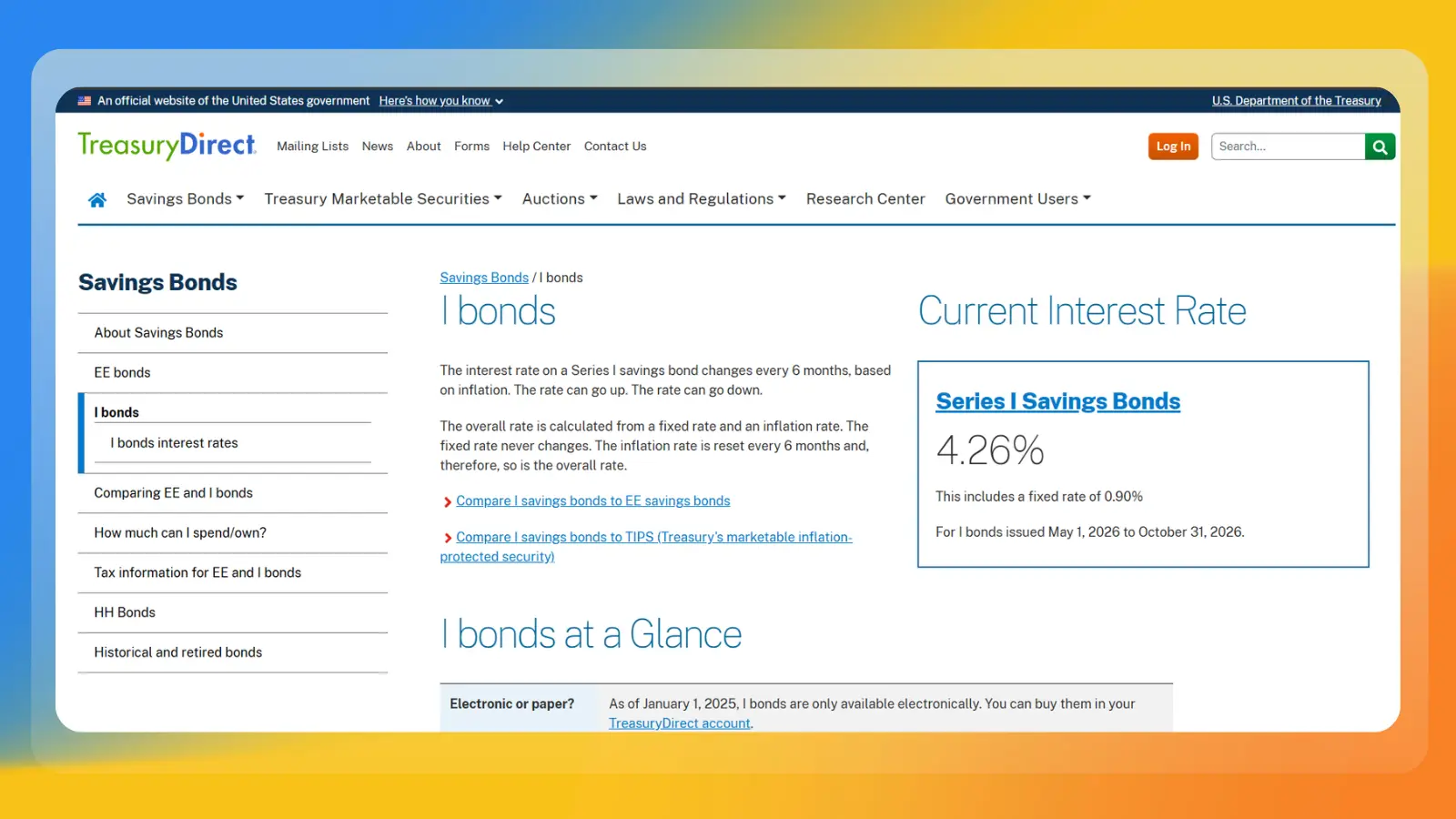
Among good passive income investments, Series I savings bonds pay a 4.26% composite rate for anyone who buys between May and October 2026, made up of a 0.90% fixed rate plus a 3.34% inflation-linked rate that the Treasury resets every May and November. That composite rate is set by the US government and paid directly through TreasuryDirect, with no bank or broker in between.
Short-term Treasury bills work the same way over weeks instead of years. Both are backed by the full faith and credit of the US government, which puts this method among the low-risk investments for passive income. The trade-off is liquidity: an I bond cannot be cashed in the first year, and cashing one before five years costs the last three months of interest.
How to invest for passive income with this method? Buying either one takes a few minutes on the Treasury’s own site:
- Open a free TreasuryDirect account with your Social Security number and bank details.
- Choose I bonds or T-bills and set the amount, $25 minimum for I bonds.
- Let the purchase settle, then track the rate reset every May and November on the same TreasuryDirect account.
For this method on low-risk investments for passive income, there is no card, no app, and no fee involved, just a government account that pays interest directly into your bank. The one real limit is that a single person can only buy $10,000 in I bonds a year this way, so it works better as a savings backbone than a place for a large lump sum.
4. Dividend-Paying Stocks (Dividend Aristocrats)
The S&P 500 Dividend Aristocrats, companies that have raised their dividend every year for at least 25 straight years, have averaged roughly a 2.4% to 2.8% yield in 2026. That is well above the plain S&P 500’s own 1.1% to 1.3% average, because Aristocrats skew toward older, steadier businesses instead of high-growth ones that reinvest everything.
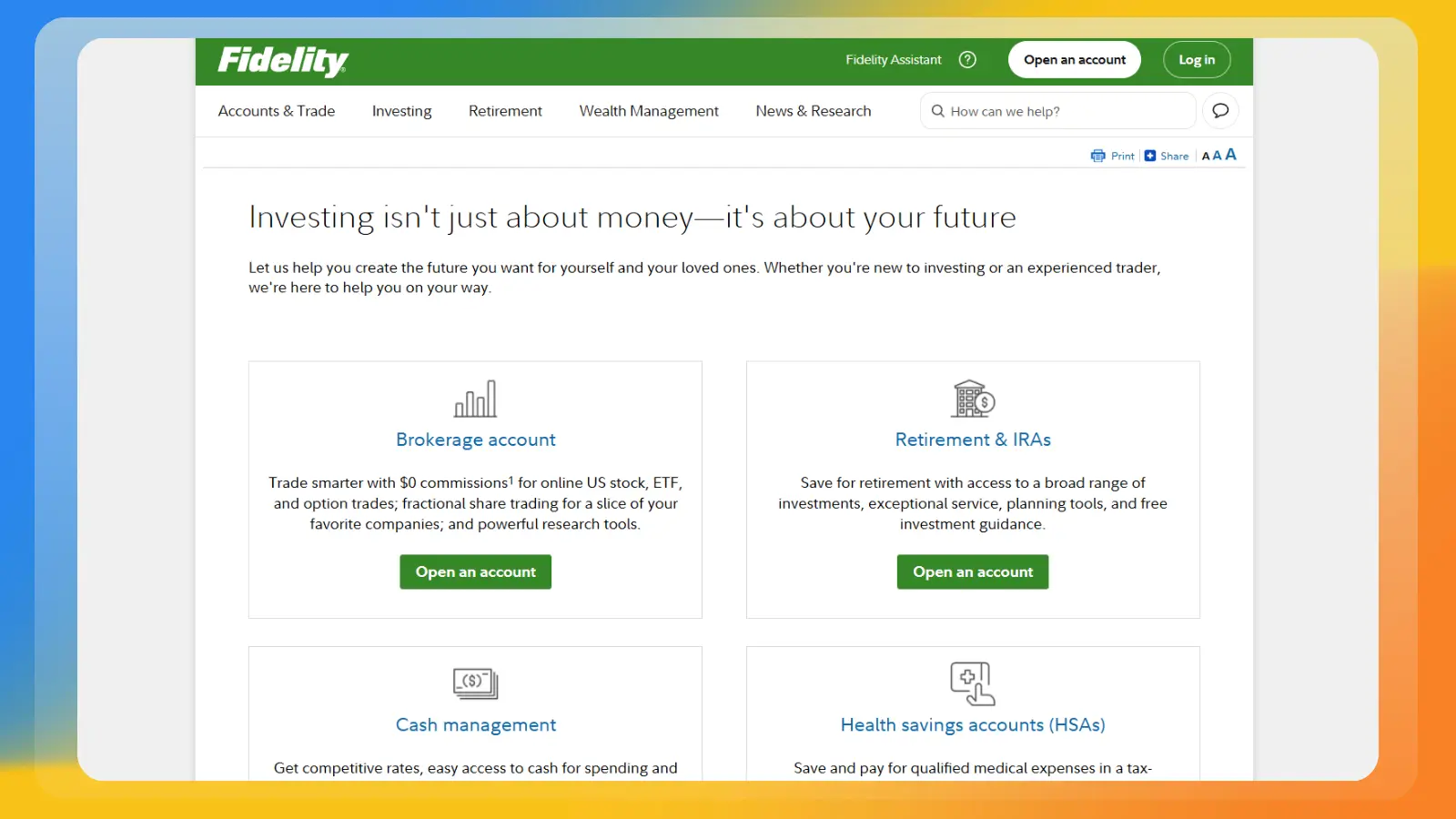
Owning the stock directly, instead of through a fund, means dividends land in your brokerage account four times a year and can be set to reinvest automatically through a dividend reinvestment plan. Fidelity, like most major brokers, charges no commission on US stock trades and has no minimum to open an account, which is why it is a common on-ramp for a first individual dividend stock.
How to invest for passive income with this method? Buying your first Dividend Aristocrat works the same way as any other stock purchase:
- Open a standard brokerage account and link a bank account to fund it.
- Search for the stock by its ticker and decide how many shares to buy.
- Turn on automatic dividend reinvestment if you want the payout to compound.
- Check the company’s dividend history before buying, since a cut is the real risk.
A dividend cut, a company skipping or shrinking its payout, is the main risk here, so keep that in mind if you’re looking into low-risk investments for passive income. That risk is exactly why the Aristocrats list only counts companies with 25 years of raises behind them, not one good year.

5. REITs (Real Estate Investment Trusts)
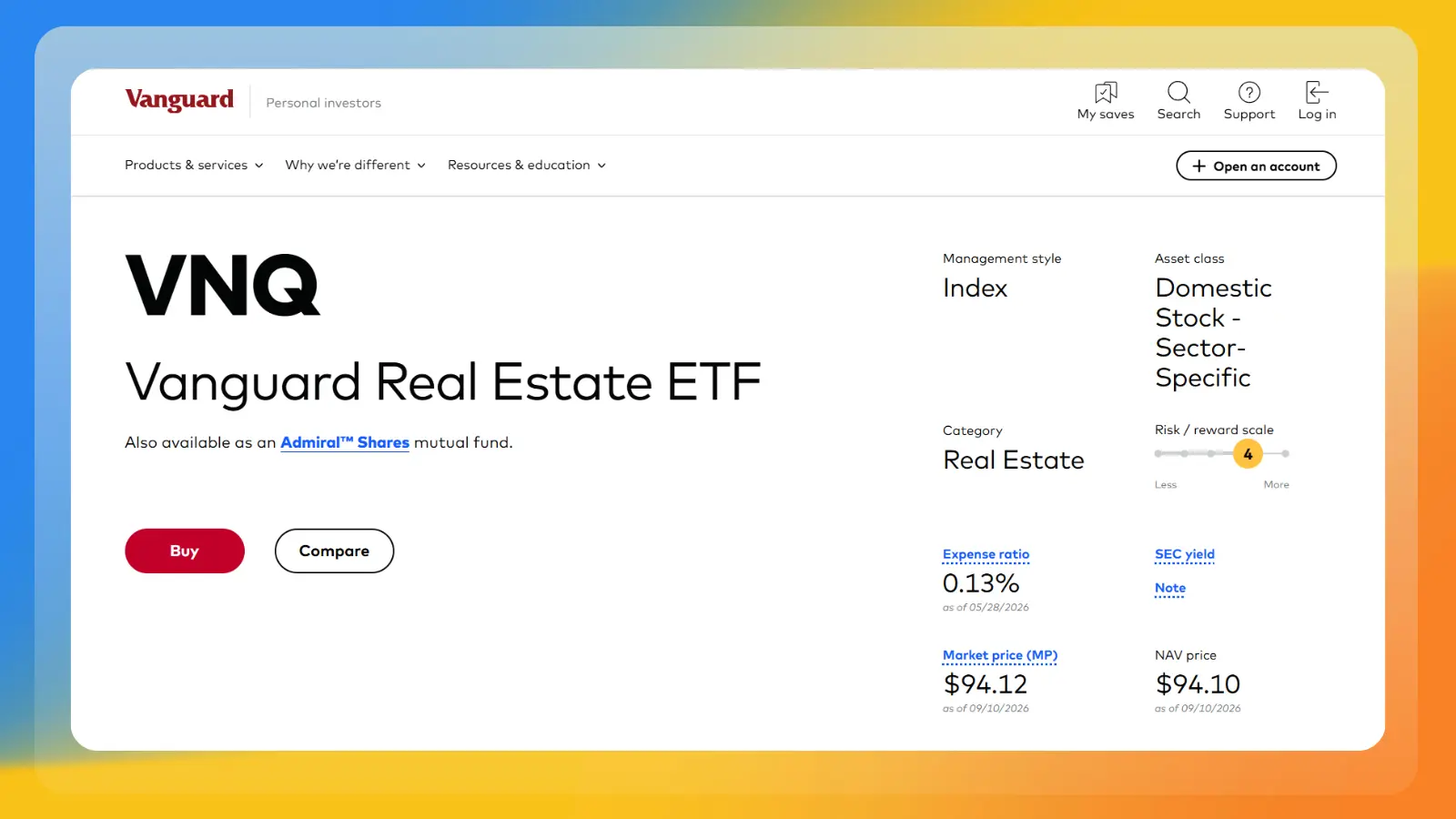
REITs, companies that own income property and are legally required to pay out at least 90% of their taxable income to shareholders, have paid a combined dividend yield of roughly 3.68% to 3.98% through 2026, per Nareit’s own index data. That legal requirement is what makes REITs pay more than an average stock, since they cannot retain most of their profit the way a typical company can.
A REIT can hold anything from apartment buildings to data centers to hospitals, so the sector mix inside a fund matters more than the label alone. Vanguard runs one of the largest and cheapest REIT funds available, and REIT prices are also sensitive to interest rates, so share prices can fall even while the dividend itself holds steady.
How to invest for passive income with this method? Buying a REIT fund looks exactly like buying any other ETF:
- Open a brokerage account if you do not already have one.
- Search for a broad REIT ETF, like Vanguard’s VNQ, by its ticker.
- Decide between a lump sum or a recurring monthly purchase.
- Reinvest the dividend automatically if you want it to compound.
A single-property REIT concentrates that interest-rate risk in one sector. A broad fund like VNQ spreads it across dozens of REITs instead, which is the safer way to hold this one.

6. Real Estate Crowdfunding (Fundrise)
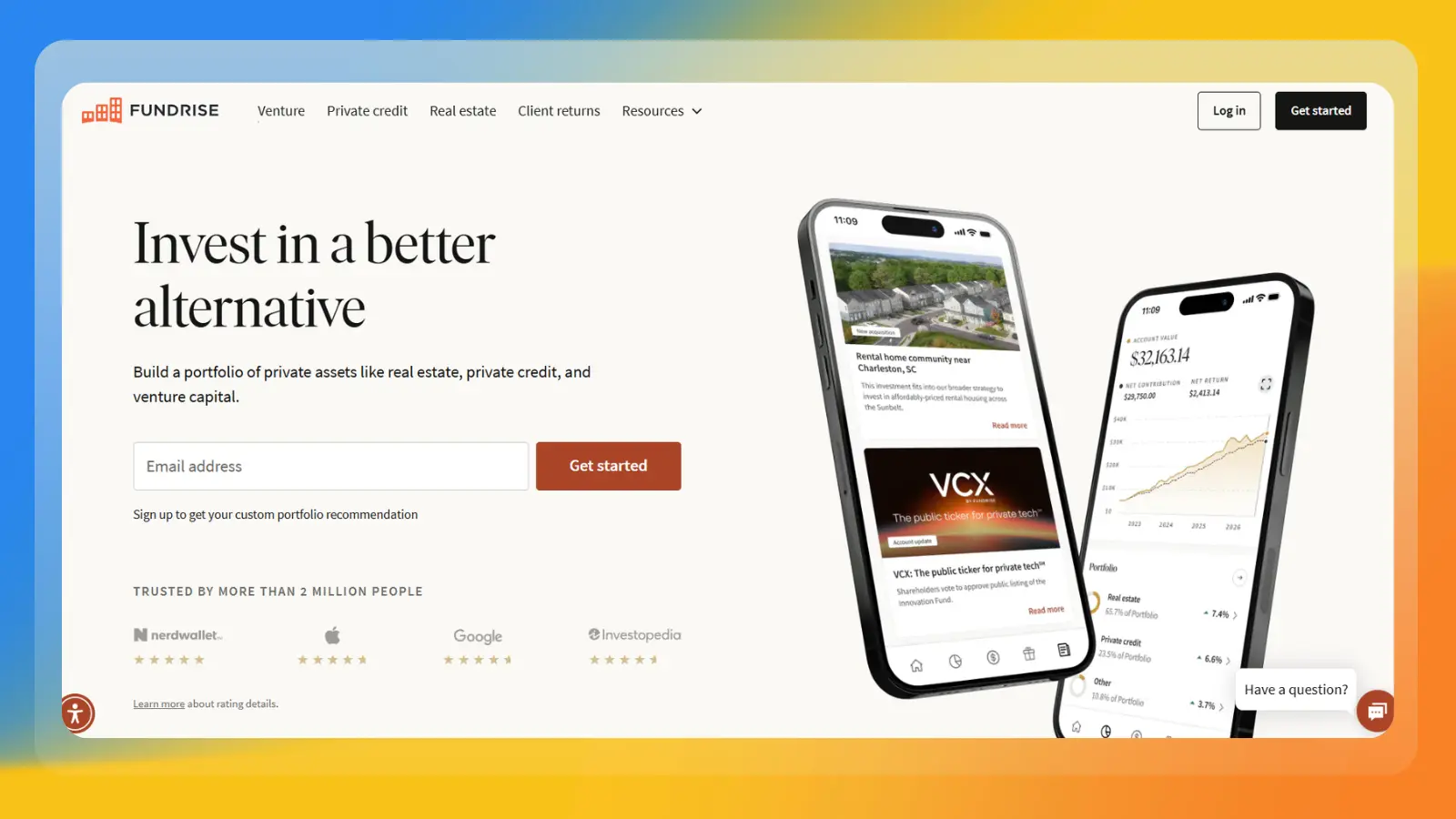
Fundrise opens real estate crowdfunding to anyone with $10, using an SEC Regulation A+ structure that does not require accredited-investor status the way a private real estate deal usually does. Its Supplemental Income Plan has paid a 7.94% annualised dividend yield, in quarterly payments, built mostly from real estate debt and preferred equity, not property appreciation.
Most private real estate deals use Regulation D instead, reserved for accredited investors. That means $200,000 or more in individual income for two years running, or a net worth over $1 million outside a primary home, per the SEC’s own definition. Fundrise skips that requirement entirely, which is the main reason it shows up on beginner lists instead of the private deals professional investors use.
How to invest for passive income with this method? Getting started takes about 10 minutes on Fundrise’s own site:
- Create an account and choose a plan: Income, Growth, or Balanced.
- Fund it with a bank transfer, $10 minimum.
- Set up automatic monthly contributions if you want the balance to grow steadily.
- Expect quarterly dividend payments rather than instant access to your cash.
Redemptions are not instant: Fundrise can delay a withdrawal request during a slow real estate market, so this money should be cash you can leave alone for a few years. If the $10 minimum is the only thing stopping you, a quick payout from one of the best game apps that pay real money covers it in an afternoon.
7. Robo-Advisors
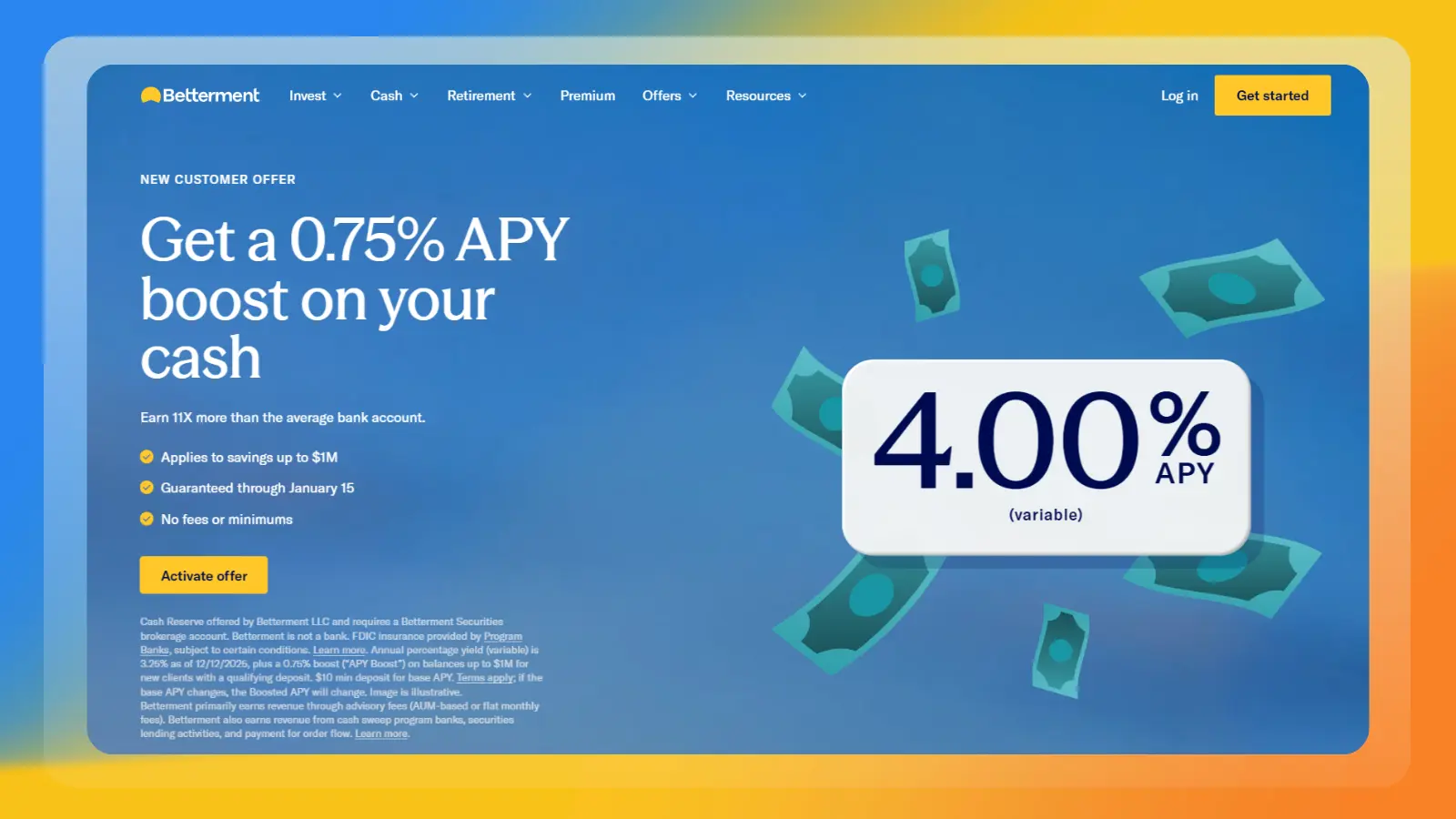
Betterment and Wealthfront, the two largest robo-advisors, both charge a flat 0.25% annual fee to build and rebalance a diversified portfolio of index ETFs for you automatically. That fee buys you the dividend income from the underlying funds plus automatic rebalancing, without picking a single stock or ETF yourself.
The dividends from those underlying ETFs still land in your account and either pay out as cash or reinvest automatically, the same as if you had bought the funds yourself. What you are really paying for is not having to choose or rebalance those funds on your own, which suits someone who wants the income without the research.
How to invest for passive income with this method? Setting one up takes a short questionnaire and a first deposit:
- Answer a few questions about your goals and risk tolerance, especially if you’re exploring low-risk investments for passive income.
- Link a bank account and choose your first deposit amount.
- Let the platform build and rebalance a diversified portfolio automatically.
- Turn on automatic dividend reinvestment if you want the payout to compound.
Compared to other good passive income investments, a robo-advisor will not beat a dividend ETF you pick and hold yourself over the long run, since that 0.25% fee buys convenience, not extra performance. It does remove the one step, choosing and rebalancing funds, that stops many people from starting these investments for passive income at all.

8. Peer-to-Peer Lending (Prosper)
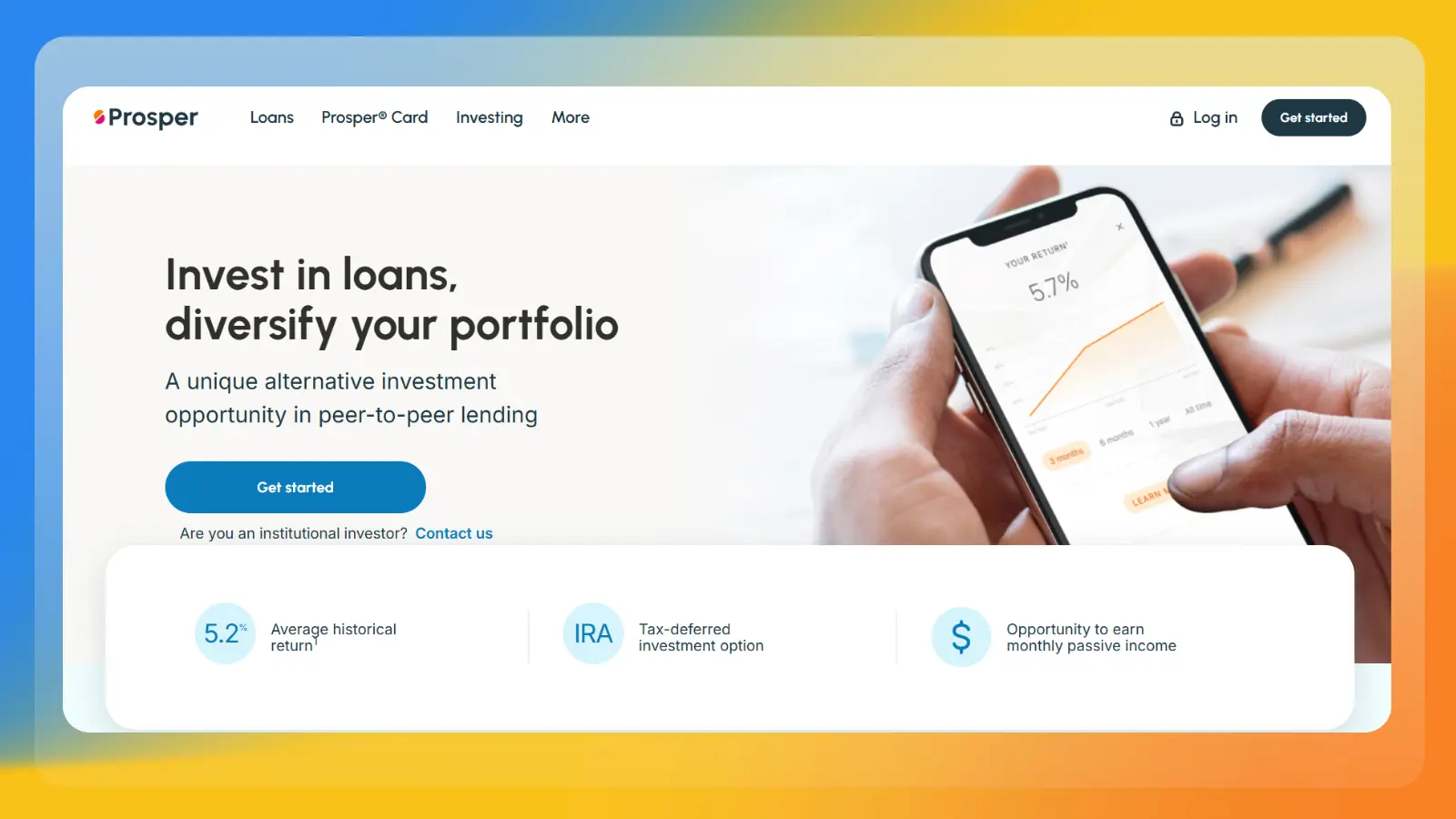
Prosper, the only major US platform still open to individual peer-to-peer lending investors after LendingClub exited retail lending in December 2020, states a 5.2% to 5.3% average historical return net of fees on its own site. That return comes from the interest on personal loans you help fund, not from owning a stock or a fund share.
Compared to other good passive income investments, these are not savings deposits. Prosper’s own risk disclosure states that notes are not FDIC-insured and can lose money to borrower default, so this is meant for money you can afford to have tied up. Spreading a deposit across many small loans instead of a few large ones is the platform’s own recommended way to manage that risk if you’re interested in low-risk investments for passive income.
How to invest for passive income with this method? Getting started as a lender takes a small first deposit:
- Open an account and verify your identity.
- Fund it with a bank transfer, $25 minimum per note.
- Choose an Auto Invest mix or pick individual loans yourself.
- Reinvest repayments automatically so the balance keeps compounding.
A $25 minimum per note is low enough to test with a small amount first. If you’re a CS2 player interested in passive income and that $25 is the obstacle, selling unused CS2 skins for real money is one quick way to raise it.

Passive Income Investments at a Glance
The eight investments for passive income above differ mainly in how much control they need and how safe the principal is. This comparison table of the best investments for passive income lines up typical yield, minimum to start, and how passive each one really is, so you can compare them side by side before picking a passive income investing method.
| Investment | Typical Yield | Minimum to Start | How Passive It Is |
|---|---|---|---|
| SCHD / VYM (dividend ETFs) | 2.2% to 3.5% | Price of 1 share | Fully passive once bought |
| High-yield savings / CDs | 4.10% to 4.50% APY | $0 to $100 | Fully passive |
| Treasury bonds and I bonds | 4.26% composite | $25 | Fully passive |
| Dividend Aristocrats | 2.4% to 2.8% | Price of 1 share | Mostly passive, some stock picking |
| REITs (VNQ) | 3.68% to 3.98% | Price of 1 share | Fully passive once bought |
| Fundrise | 7.94% (Income Plan) | $10 | Passive, but illiquid |
| Robo-advisors | Market return minus 0.25% fee | $0 to $500 | Fully passive |
| Prosper (P2P lending) | 5.2% to 5.3% | $25 per note | Mostly passive, some note selection |
How We Chose These Investments for Passive Income
Every option on this list of investments for passive income needed three things: a real regulator or federal backstop behind it, a payout figure confirmed on the platform’s own page today, and a minimum low enough that a beginner could actually use it. That ruled out passive income investments where the only proof of a return was a screenshot, a testimonial, or a promise with no regulator anywhere near it.
Individual cryptocurrency did not make this list of passive income investments because it pays no yield of its own unless staked, and a handful of unregulated crypto-lending apps that once promised a fixed high return have since collapsed. Penny stocks and pre-IPO investment clubs were left off for the same reason: no regulator stands behind the numbers being promised.
If you are starting from close to zero with passive income investments, build a small deposit first. Trim a subscription, or pick up a fast payout like earning $1,000 in a week. Then pick the method that matches how long you can leave that money alone.
Can Reward Apps Help Fund Your Investments?

A reward app will not replace investments for passive income, but it can supply the small deposit that starts one. Apps like Snakzy and Swagbucks pay out real cash for simple tasks and surveys. That cash spends just as well on a first Fundrise deposit or a savings account opener as money from anywhere else, which is really all most of these investments for passive income need to get going. The reward apps below are worth trying first, since both are free to join and both pay real money:
| App | Best For | Entry Cost |
|---|---|---|
| Snakzy | Extra earnings from mobile games | Free |
| Swagbucks | Surveys, shopping, games, and offers | Free |
| Freecash | Games, offers, and surveys between other gigs | Free |
Snakzy pays out through gift cards and is the best game reward app if you want something for casual gaming.
Earn extra money with Snakzy while exploring investments for passive income.

What Doesn’t Work
Not every passive income investing method is regulated, and a few common pitches are outright warning signs, precisely the pitches that give real investments for passive income a bad name by association. The clearest one is a promise of a fixed return on something that is legally a security, which the SEC’s own investor alerts name as a classic sign of fraud.
- Fixed-return crypto lending – Celsius Network and Voyager Digital both promised steady, fixed yields on deposited crypto before freezing customer funds and filing for bankruptcy in 2022, a collapse regulators have since pursued enforcement action over.
- Day trading sold as passive – Watching charts and placing trades all day is a job, not passive income, whatever the course selling you on it calls it.
- Penny stock newsletters – A stock tip that arrives by email with a specific price target and a countdown timer follows a pattern the SEC has warned about for decades, known as a pump and dump.
- Guaranteed-return pitches – No SEC-registered investment can legally guarantee a fixed return, so any pitch that does is either unregistered, untrue, or both.
None of the eight investments for passive income earlier in this guide make any of these promises, which is exactly the difference worth checking for before moving money anywhere. If you’re looking for ways to build your starting deposit for the best investments for passive income, earning $2,000 quickly is one of several other fast options worth trying.
Final Verdict on Investments for Passive Income
The best investments for passive income for a true beginner are a high-yield savings account and a low-cost dividend ETF, since both are open the same day, both are regulated, and both need no special status to buy. Once that base is earning something, REITs, Fundrise, or a robo-advisor are the natural next step for someone willing to accept more risk for a higher yield.
Prosper and individual dividend stocks sit further out on the risk end among the best investments for passive income, better suited to money you will not need back on short notice. For a plain checklist on splitting money across any of these, FINRA’s own guide to asset allocation is a solid next stop. Whichever mix you choose, treat every number in this guide as a snapshot, not a promise, and keep building your investments for passive income a little at a time.
Earn extra money with Snakzy while exploring investments for passive income.
FAQs
The best investments for passive income for a beginner are a high-yield savings account and a low-cost dividend ETF like SCHD. Both are easy to open in one sitting, and both are regulated, so there is little guesswork involved at the start.
You can start investing for passive income with as little as $10 through Fundrise or $25 through Prosper, among good passive income investments. A full brokerage account for stocks or ETFs usually has no minimum at all.
Yes, REITs are good investments for passive income because they are legally required to pay out at least 90% of their taxable income as dividends. That legal requirement is what gives REITs a higher yield than the average stock.
No single option is strictly better among good passive income investments. A high-yield savings account is safer and fully liquid, while a dividend ETF usually pays more over time but carries real price risk, so keep these in mind when exploring low-risk investments for passive income.
Yes, you can lose money on investments for passive income. Stock and REIT prices fall, Prosper loans can occasionally default, and only FDIC-insured savings accounts and CDs guarantee your original deposit.
Yes, most brokerages, robo-advisors, Fundrise, and other good passive income investments require you to be at least 18 to open an account in your own name. A parent can open a custodial account earlier that holds the same investments for passive income until you turn 18.