

11 Tales of Games in Order: Major Milestones and Iconic Titles


Listing the Tales games in order is important to understand the history and direction of the series. Tales games have always defined themselves through their strong character writing, interaction snippets, and one-of-a-kind combat system, but they didn’t get that way overnight.
If you’re looking to dive into the story of the franchise, I’ve got you covered. While I won’t cover the entire list of Tales games in order, I’ll shine the light on 11 prominent titles that highlight the growth (and growing pains) of the Tales series.
Jump to:
Our Top Picks for the Best Tales of Games
While this list is primarily concerned with listing important Tales games in order, I should point out that some of them are both historically relevant and top-tier games too:
- Tales of the Abyss (2006) – My personal favorite, this Tales game really dives into the nitty-gritty of character development.
- Tales of Vesperia (2008) – A JRPG that lacks for nothing and is one of the best starting points for players new to the series.
- Tales of Berseria (2016) – A darker, more mature spin on Tales’ usual hero, as well as dynamic combat, make this one stand out.
But while these are my picks for standouts in this list, they’re not the only milestones in the series, so do read on.
11 Tales Games in Order – Oldest to Newest
Before we begin, I need to point out a few things.
First off: this isn’t a complete list. There are 11 titles on this list, but the actual number of Tales games (counting spin offs, mobile titles, and more) would be around 25–30, as a ballpark number.
Secondly, games will be listed in chronological order, not descending score. While we’ll go over what made each of these games remarkable, keep in mind that they’re not sorted by best to least best.
Lastly, I will warn you of some personal bias here, and while every game on this list left an important mark on the Tales series, not all of them did so via excellence.
Now, let’s dive right in. Which of these Tales games have you tried?
1. Tales of Eternia [The Height of Late 90s JRPGs]
| Our Score | 8.8
☆
★
☆
★
☆
★
☆
★
☆
★
☆
★
☆
★
☆
★
☆
★
☆
★
|
| Platforms | PlayStation 1, PSP |
| Year of Release | 2000 |
| Creator/s | Namco |
| Average Playtime | ~40 hours |
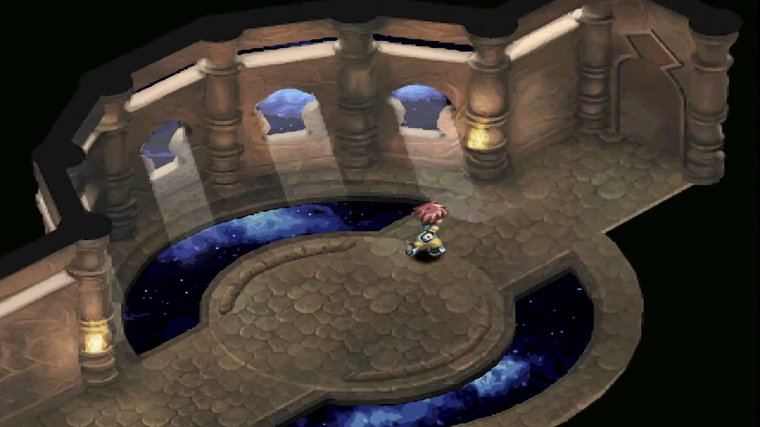
Let’s start with one of the series’ early superstars, Tales of Eternia (or Tales of Destiny 2 in its original NA release). Many, including me, consider this one of the best JRPGs of all time, and alongside Final Fantasy 7, it epitomizes the storyline, game design, and aesthetic of late 90s and early 2000s RPGs.
And when I mean “late 90s storyline”, I mean it. You’ll play as Reid Hershel, a farm boy living an idyllic existence in Rasheans when a girl falls out of an airship and into your metaphorical lap, who, of course, bears a warning about the apocalypse. Long story short, you’ll be dragged on a quest to save the world.
While it might seem primitive today, Tales of Eternia is still very much worth playing due to the core Tales gameplay and super-satisfying linear motion battle system.
Routine, sure, but for its time, Eternia was (and still is) stellar. There are admittedly better Tales of games today if you’re looking for either a stronger story or combat system, but Eternia is the peak of a simpler, classical era. With good pacing, strong FMVs and graphics, solid RPG foundations, as well as oodles of secrets and extra content, Eternia’s one for the ages.
My Verdict: Old but gold; while Tales of Eternia isn’t strictly the first game in the series, it cements its place as one of the greats due to its outstanding performance in every regard.
2. Tales of Symphonia [The Jump to 3D]
| Our Score | 9
☆
★
☆
★
☆
★
☆
★
☆
★
☆
★
☆
★
☆
★
☆
★
☆
★
|
| Platforms | PC, GameCube, Nintendo Switch, PlayStation 2/3/4, Xbox One |
| Year of Release | 2003 |
| Creator/s | Namco |
| Average Playtime | ~50 hours |
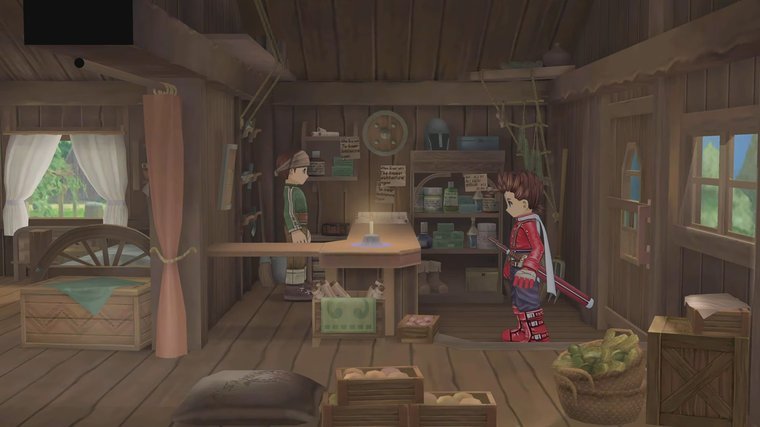
If you were into the series in the 2000s and had just come off fresh from Eternia, you didn’t have to wait long for the next game in the series, assuming you had a GameCube. Released in 2003, Tales of Symphonia was kind of clunky and in that awkward phase where the series was attempting to transition to 3D…but it remains a beloved staple to this day.
The JRPG core is still here: you’ll play as Lloyd Irving, a wide-eyed idealist (honestly, kind of an idiot) as he embarks on a quest to protect his childhood friend Colette Brunel on her Journey of World Regeneration. This ritual aims to reawaken the goddess Martel and seal the evil Desians away…but of course, this is a JRPG, so expect things to go sideways many, many times.
Modern gamers will no doubt find Symphonia kind of clunky; keep in mind that Symphonia was transitioning to 3D. Still, if you can look past these faults, Symphonia has the character writing and satisfying combat that are the hallmarks of the Tales of franchise.
While the story wasn’t as widely acclaimed as previous titles, Symphonia remains a very polished game, with a strong soundtrack and lots of replay value. For me though, the star is the combat: yes, it’s clunky, but the departure from the linear motion battle system to a multi-line version heralded the beginning of even bigger Tales games down the road.
My Verdict: If you’re looking for some nostalgic JRPG action and want to see the roots of the Tales series, Tales of Symphonia is an excellent starting point.
GAMES LIKE TALES OF SYMPHONIA
3. Tales of Legendia [Read the Story, Skip the Combat]
| Our Score | 7
☆
★
☆
★
☆
★
☆
★
☆
★
☆
★
☆
★
☆
★
☆
★
☆
★
|
| Platforms | PlayStation 2 |
| Year of Release | 2005 |
| Creator/s | Namco (Project MelFes) |
| Average Playtime | ~35 hours |
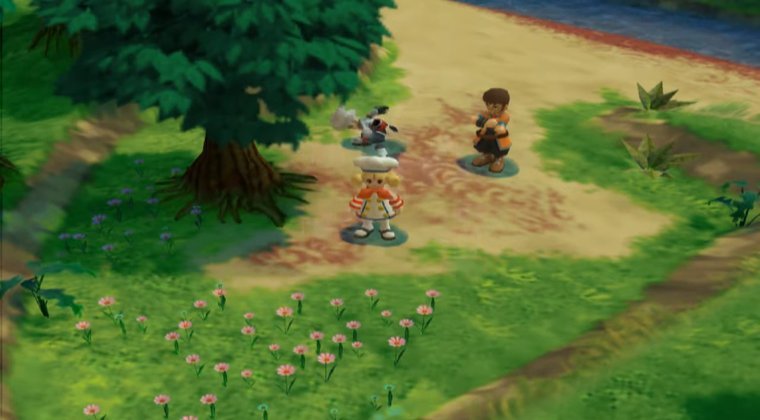
Let’s set the record straight: I don’t think Tales of Legendia is bad, but among the Tales games, it’s quite contentious. Many will agree that this is a game you play for the storytelling and the character; combat, on the other hand, is widely seen as meh. It’s not terrible, but it looks and feels incredibly dated, and is super basic to boot.
Legendia is a one-and-done kind of game, but I believe it’s an important point in the series. Its lukewarm reception, especially compared to the beloved Symphonia, was a wake-up call to Namco and paved the way for stronger games down the line.
It’s worth noting that Legendia’s faults can be somewhat traced back to its development team. Rather than being handled by previous Tales game teams, Symphonia was made by Project MelFes, a hybrid team composed of Namco staff, as well as devs from Tekken and the Soulcalibur series.
Legendia, as with other JRPGs, follows a general “save the world” plot. But what really sets Legendia apart (and perhaps even redeems it) are its character quests: large arcs where you get to know each of your characters more intimately. Say what you want about Legendia’s combat, but the character development and writing here is nothing short of outstanding.
My Verdict: If you’re willing to put up with the lackluster combat, Tales of Legendia’s character quests will constantly wow you with their breadth and depth.
4. Tales of the Abyss [A Modern Classic]
| Our Score | 10
☆
★
☆
★
☆
★
☆
★
☆
★
☆
★
☆
★
☆
★
☆
★
☆
★
|
| Platforms | PlayStation 2, Nintendo 3DS |
| Year of Release | 2006 |
| Creator/s | Namco |
| Average Playtime | ~60 hours |
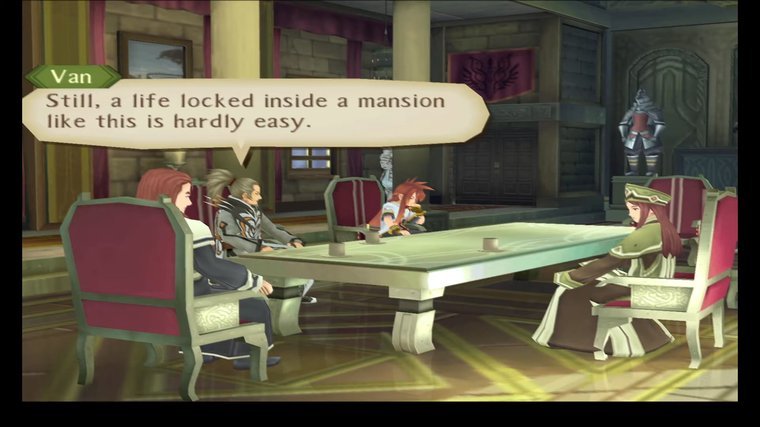
Now we’re talking. Legendia was kind of a low point for Tales games, but its successor, Tales of the Abyss, more than made up for it. This one’s a JRPG par excellence, with surprisingly mature storytelling, a very strong ensemble cast with deep protagonist development, and satisfying combat that puts it on par with the best action RPG games.
In this story, you’ll play as Luke fon Fabre, a rather naive young man who gets blasted halfway across the world with Tear Grants, a mage on a mission to kill her own brother. As with most Tales games, expect many plot twists and gut punches on your quest to once again save the world.
Tales of the Abyss is a game that does everything right. Sure, it might not be super innovative and mind-blowing, but everything from the narrative to the combat is precise and well-executed, leading to an all-around superb experience.
Where Tales of the Abyss really shines is in its markedly more mature story than its predecessors. Luke is a character that really grows on you, and his slow and painful development from an arrogant, self-centered boy to a true hero is something that you need to experience for yourself.
My Verdict: If I could pick just one game to represent Tales games as a whole, it’d easily be Tales of the Abyss.
5. Tales of Vesperia [Great Intro Point for New Players]
| Our Score | 9.8
☆
★
☆
★
☆
★
☆
★
☆
★
☆
★
☆
★
☆
★
☆
★
☆
★
|
| Platforms | PC, Nintendo Switch, PlayStation 3/4, Xbox 360, Xbox One |
| Year of Release | 2008 |
| Creator/s | Namco |
| Average Playtime | ~50 hours |
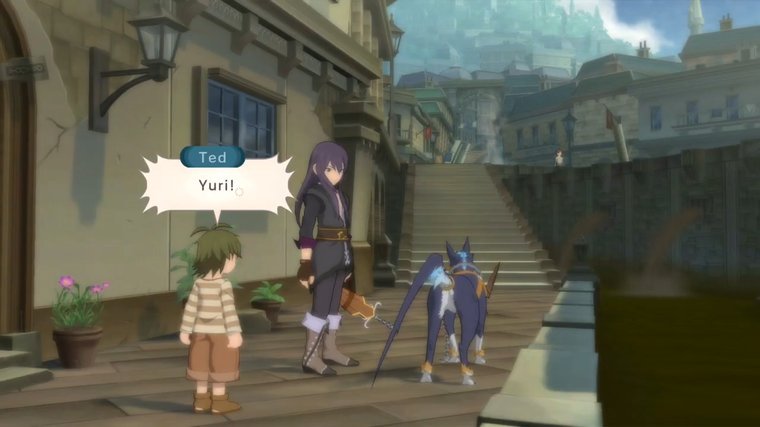
Going through this list, you can see how the Tales games have grown over the years, from the shift to 3D in Symphonia to a bigger focus on storytelling in Abyss. Things would come to a head in the beloved Tales of Vesperia, one of the best JRPGs on Switch and a very excellent starting point for new players, so much so that it received a remaster in 2019.
Vesperia is considered one of the series’ high points for a good reason. This game incorporates all the lessons learned from other Tales games and refines them into a punchy, powerful narrative with a fun battle system.
This time around, you’ll be playing as vigilante Yuri Lowell, a former knight who takes a hands-on approach to injustice. As with most Tales games, a simple errand (fountain theft) quickly spirals into something much, much bigger. Spoilers abound, though I will add that I think the story is a bit weaker than the previous game.
Vesperia is a shining example of the maturation of Tales games. By this time, Namco had a concrete idea of what worked and what didn’t, and you can see both how they strived to refine their strong points (particularly the story and the uniqueness of the Tales combat system) while experimenting with how to move the franchise forward.
My Verdict: Vesperia deserves its places as one of the most beloved entries in the Tales series, and is still 100% worth looking into today.
6. Tales of Xillia [Dual-Perspective Storytelling]
| Our Score | 8.6
☆
★
☆
★
☆
★
☆
★
☆
★
☆
★
☆
★
☆
★
☆
★
☆
★
|
| Platforms | PlayStation 3 |
| Year of Release | 2011 |
| Creator/s | Namco |
| Average Playtime | ~35 hours |
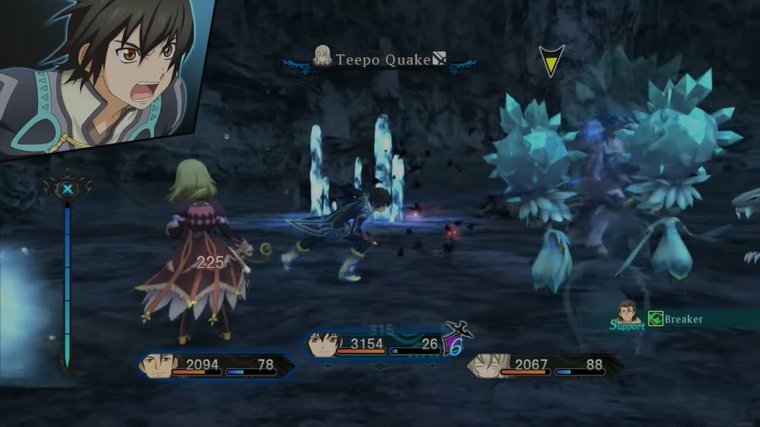
And speaking of experimentation, that’s exactly what Namco did with Tales of Xillia. This one distinguishes itself via its dual-perspective storytelling; that’s right, you get two protagonists and two campaigns for the price of one. I kind of wish they just did a single, bigger, better storyline though.
The story begins in the realm of Rieze Maxia, where humans and monsters co-exist in relative harmony. When medical student Jude Mathis discovers a horrible truth in the heart of the country of Rashugal, he’s saved by Milla Maxwell, and together, they embark on a quest to restore peace to the world.
Xillia’s plot may be kind of eh compared to its peers in the Tales series, but it’s buoyed up by the rest of its good points: a likeable and memorable cast, strong art direction and soundtrack, and tight and modernized combat.
The plot promises an interesting story, to be sure, but the execution is rather lacking. However, this is more than made up for in the battle system. Xillia’s combat takes the best elements from Destiny’s and Symphonia’s systems, while adding link attacks for even bigger combo potential. It’s seriously fun, and perhaps my personal favorite part of this game.
My Verdict: While Tales of Xillia’s plot is one of its low points, its playable characters, modern aesthetic, and especially its battles.
7. Tales of Xillia 2 [An Actual Sequel]
| Our Score | 8.9
☆
★
☆
★
☆
★
☆
★
☆
★
☆
★
☆
★
☆
★
☆
★
☆
★
|
| Platforms | PlayStation 3 |
| Year of Release | 2012 |
| Creator/s | Bandai Namco |
| Average Playtime | ~35 hours |
Yup, you read that right: Tales of Xillia 2 is one of the few games in the Tales series that gets a direct sequel. A miracle, I know.
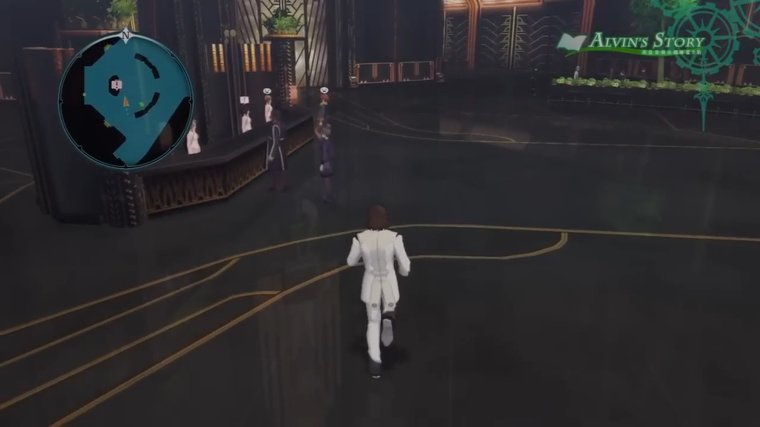
While it takes place in the same world as the previous entry, Xillia 2’s story is generally seen as an improvement over the first title. You’ll be playing as Ludger Kresnik of Elympios, and together with the cast of Xillia, seek to help a mysterious girl find the mystic Land of Canaan. Parallel worlds are involved this time, too, and the new story is much darker. Have fun.
The best way to describe Xillia 2 is “Xillia”, but better. Xillia 2 iterates on Xillia’s gameplay mechanics and improves the pacing of the story, leading to a much better experience.
Xillia 2 also offers a strong follow-up to Xillia’s combat. More of the same, sure, but it’s even more refined. There are lots of tiny tweaks to improve the systems, and every character from Xillia 2’s cast to returning stars from the first game is a blast to play as.
My Verdict: Tales of Xillia 2 is an incredible successor to an already good game. If you loved Tales of Xillia, you’ll definitely enjoy Tales of Xillia 2.
8. Tales of Zestiria [A Lesson in Experimentation]
| Our Score | 6.5
☆
★
☆
★
☆
★
☆
★
☆
★
☆
★
☆
★
☆
★
☆
★
☆
★
|
| Platforms | PC, PlayStation 3/4 |
| Year of Release | 2015 |
| Creator/s | Bandai Namco |
| Average Playtime | ~45 hours |
Let’s rewind to that part where I said “Namco was experimenting with how to move the franchise forward”, because Zestiria was definitely not it. It’s not totally unplayable, but one can’t deny how much Zestiria pales in comparison to the rest of the Tales series, so much so that you’ll probably be wondering why you aren’t just playing other Tales games instead.
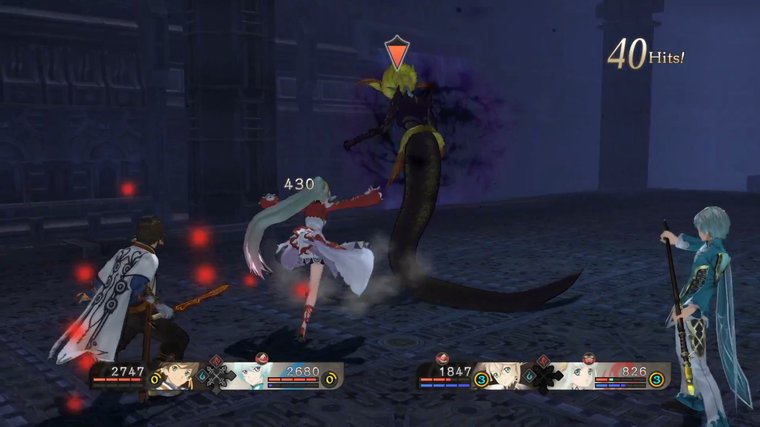
The best way to sum Zestiria up is that it’s either too vanilla or too complicated with no in-between. Many criticize the plot for being surprisingly bland for a Tales game. Combat, on the other hand, is an unholy mess of where even basic things (like the equipment system) are a nightmare. I kind of wish they’d just pivoted to their take on a great turn-based-RPG.
Zestiria is a game whose ambition far outweighed its execution. Nonetheless, I will admit that some of its mechanics are genuinely interesting and worth looking into.
That said, Zestiria does have a fan base. Its soundtrack can be moving at times, and its story supposedly gets better if you stick it out (admittedly, there’s a LOT to chew through). Still, it’s widely regarded as a “what-if” game in the Tales series, with so much potential left unrealized. At least later games learned from this one, I guess.
My Verdict: If you’re a fan of experimental JRPG mechanics, Tales of Zestiria is sure to give you a run for your money.
9. Tales of Berseria [A Darker, More Mature Story]
| Our Score | 9.5
☆
★
☆
★
☆
★
☆
★
☆
★
☆
★
☆
★
☆
★
☆
★
☆
★
|
| Platforms | PC, PlayStation 3/4 |
| Year of Release | 2016 |
| Creator/s | Bandai Namco |
| Average Playtime | ~45 hours |
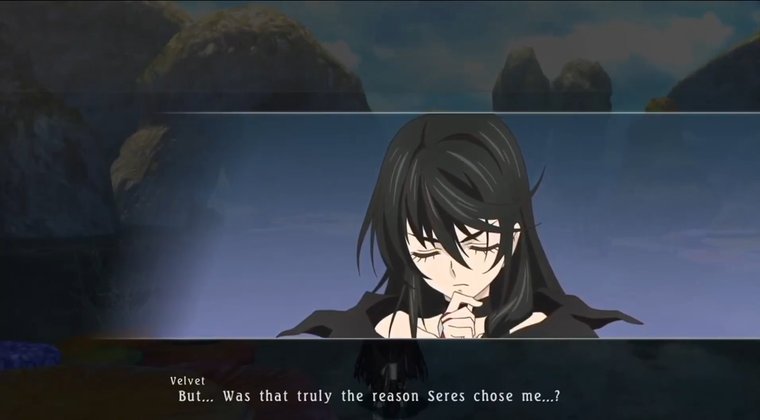
One might think that Namco would be quick to wash their hands of Zestiria, but no. The next entry, Tales of Berseria, isn’t set in a new world, but rather, serves as a prequel to Zestiria. And while that might sound like a red flag, it isn’t: Berseria’s a big hit, and is one of the best fantasy games when it comes to more grounded takes on JRPG storylines.
Unlike past games in the series, Berseria is straight-up a story of revenge. Yes, you do end up getting sidetracked into saving the world at some point (it’s a JRPG, after all), but vengeance is an all-consuming influence on the main character, Velvet Crowe. It seeps into everything she does, so much so that you’ll feel like you’re playing as an anti-hero sometimes.
Let’s not mince words: Velvet carries a lot of Berseria. Yes, the rest of the enemy and playable characters are nice, but Velvet steals the spotlight both with her impeccable character arc and peerless combat performance.
As expected from a Tales game, Berseria shoots for and achieves excellence in every department. Combat is outstanding, the soundtrack and atmosphere are powerful, and the voice acting in this one (especially Velvet) is particularly poignant.
My Verdict: Tales of Berseria is an all-around fantastic game, but is particularly great for those looking for a departure from the usual wide-eyed JRPG fare.
10. Tales of Arise [A Triumphant Return to Form]
| Our Score | 9.2
☆
★
☆
★
☆
★
☆
★
☆
★
☆
★
☆
★
☆
★
☆
★
☆
★
|
| Platforms | PC, PlayStation 4/5, Xbox One, Xbox Series X/S |
| Year of Release | 2021 |
| Creator/s | Bandai Namco |
| Average Playtime | ~50 hours |
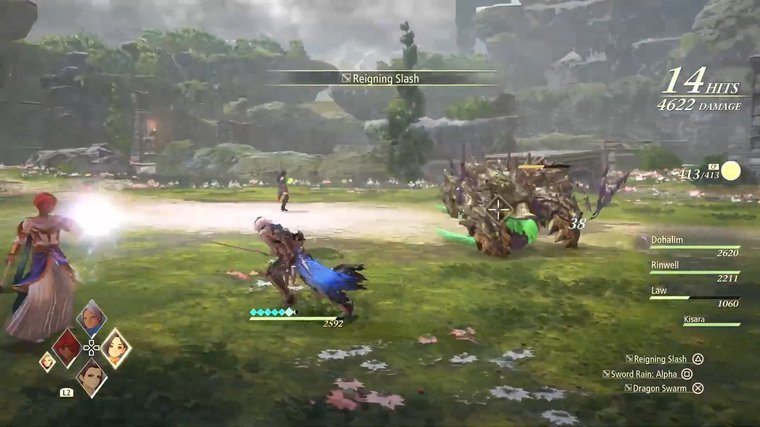
A lot of people consider Tales of Arise to be at the top of the best tales games ranked. I’m not completely sold on that idea, but I can’t deny that yes, Tales of Arise is a great game.
Arise perfectly carries the spirit of the Tales series into the modern era, all without losing sight of what makes the franchise special.
In Tales of Arise, we’re back to the usual story fare. This time, the stage is set in a realm divided between the advanced, skybound world of Rena and the conquered lands of Dahna. As expected, our protagonists come from both Rena and Dahna, and naturally, you’ll need to work to mend the rift between the two peoples.
While Arise doesn’t do anything new, it more than makes up for it with sheer polish. Everything, and I mean everything, is so much more refined: strong, cinematic presentation and art direction, an exceptional soundtrack and voicework, and polished core systems, especially its combat.
My Verdict: Tales of Arise is a If you’re looking for a more modern entry point into the series, Arise is a good candidate.
GAMES LIKE TALES OF ARISE
11. Tales of Graces f Remastered [More Accessibility for Old Titles]
| Our Score | 8.7
☆
★
☆
★
☆
★
☆
★
☆
★
☆
★
☆
★
☆
★
☆
★
☆
★
|
| Platforms | PC, Nintendo Switch, PlayStation 4/5, Xbox One, Xbox Series X/S |
| Year of Release | 2025 |
| Creator/s | Tose (remaster), Bandai Namco |
| Average Playtime | ~45 hours |
Last, but definitely not least on this list is the modern remake of an old title, Tales of Graces f Remastered. Just to clarify: Tales of Graces f was an updated Graces, and so Graces f Remastered isn’t just a remaster, but a definitive version with all the DLC and some nice new QOL tweaks, as well as improving its accessibility for modern audiences.
You’ll play as Asbel Lhant, a young (and of course, idealistic) noble who seeks to gain more power to better serve the people he’ll one day rule over. In practice, stuff happens, and more than a few bonds break. Yeah, it’s a very “power of friendship” story, though it does make up for it with its character chemistry and skit writing.
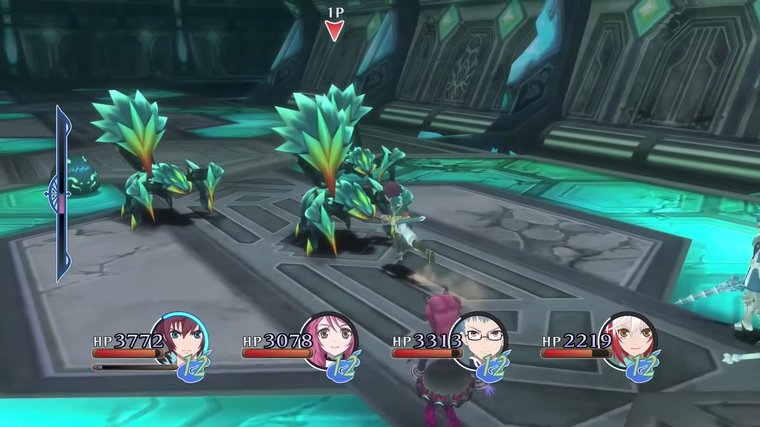
Tales of Graces f Remastered is an enjoyable game all throughout, but what really sells it is the CC-based combat system. While some might not like it, I absolutely adore how it makes combat fast, furious, and virtually similar to a fighting game.
Like other titles in the series, Tales of Graces f Remastered aims to do well in every aspect. With its frenetic action combat (which I’d say qualify it as a nice little tactical RPG), good pacing, wealth of post-game content, evocative soundtrack, and modern touches, this one’s definitely a Tales game you should check out.
My Verdict: Tales of Graces f Remastered is a top-notch modernization job that any Tales player or JRPG fan should consider.
Everything You Need to Know About The Tales of Games
Now that you’ve had a quick rundown of some of the key Tales games over the past years, let’s dive a little bit more into the Tales series as a whole.
How the Tales of Series Evolved Over Time
The Tales series started with Tales of Phantasia, which was originally a Japan-only release in 1995 for the Super Famicom (SNES). This JRPG immediately stood out for pushing the graphics and sound quality of the console to its utmost limits, as well as its then-unique linear motion battle system.
Phantasia’s success led to several more titles in the same vein: Tales of Destiny debuted in 1997, and Tales of Eternia followed in 2001. While all of these games were modest to great successes, the next big leap would come from Tales of Symphonia’s transition to 3D graphics, which many games were moving towards at the time.
From there, Namco worked to both refine the Tales series and differentiate it from other JRPGs. The next big innovation would come from adapting their battle system to fit a 3D environment; this would be seen in Tales of the Abyss’ free run mode, where a character could break off from linear battle lines and reposition themselves elsewhere in the battleground.
Today, Tales games continue to distinguish themselves not only by creating deeper and more mature storylines, but also by continually evolving and adding new things onto their renowned battle system. Mind you, not every experiment has ended with success, but credit where it’s due: they keep trying new things.
What Makes the Tales of Series Stand Out in the JRPG Genre?
Remember that Tales started in 1995, a time when JRPGs were super mainstream. This means that the very first game had to offer something very different from what the likes of Final Fantasy could. And deliver it did: Tales of Phantasia not only wowed with its mastery of the Super Famicom’s hardware, but offered an entirely new combat system.
The Tales series has always distinguished itself via battle. Where other JRPGs went turn-based, Tales was already using real-time combat that was very similar to fighting games. It was innovative, unique, and most importantly, fun to engage with.
As the series grew, Namco experimented more with this system, from adding links and combos to more movement options and even the polarizing Armatization system in Zestiria. But no matter the era, Tales has always had a very different combat system.
Apart from this, Tales games also set themselves apart by focusing very heavily on character growth and interaction. While their plots are almost always regular JRPG fare, Tales games infuse life into their character models through small chats and skits, transforming them from simple sprites or 3D graphics into living, breathing characters.
Which Tales of Game Should You Play First?
With all that said, you might be asking, “okay, which game should I play first?” There’s no single best answer to that, but the Tales community often points to either Symphonia, Vesperia, or Xillia as great starting points.
Tales of Symphonia is the oldest among these, but as I said in my review, it’s a beloved staple for a very good reason. With simple yet solid gameplay, fantastic graphics (for its time), and a moving story, Symphonia offers a glimpse into the series’ foundations.
Tales of Vesperia is another great entry point since I believe it’s the height of the “middle era” of Tales. It’s a mix between the strong fundamentals of old games and the conveniences and quality of modern games, which offers a nostalgic JRPG feel along with a powerful cast.
Tales of Xillia is the most modern among the three. Xillia shows off the series’ growth with a mix of a decent story and outstanding real-time action gameplay. This one’s especially great for people coming fresh off the boat of traditional turn-based RPGs: it’s not too complex, but it’s super satisfying.,
Lastly, there are no rules on where you should start. Begin with whichever game appeals to you the most, whether it’s an older title, a modernized take, or a remaster.
My Overall Verdict on the Best Tales of Games
Right now, you probably have a good idea of where to start. But if you’re still having trouble deciding, let me assist you by boiling things down to the basics.
Best starting point for Tales of Games today?
- For Newcomers → Tales of Symphonia, Tales of Vesperia, or Tales of Xillia. Any of these three are excellent titles that offer a perfect blend of gameplay, story, character development, and combat.
- For Newcomers looking for More Modern Entries → Tales of Arise. This one feels like the original games repackaged for the modern gamer, with fantastic character designs, a solid story, fluid combat, and eye-catching visuals.
- For Character Growth → Tales of the Abyss. Love Luke or hate him, nobody can deny that this game has a hell of a character arc.
- For Those Tired of the Idealist Hero → Tales of Berseria. Main protagonist Velvet Crowe’s dark path and pinpoint focus on revenge offers a different and refreshing take on the series.
FAQs
No, you don’t need to play the Tales of games in order. Tales games are standalone when it comes to story and setting, and even numbered titles, such as Destiny 2 and Xillia 2, do not strictly require you to play their predecessor, though I’d strongly suggest you start with their respective first games.
The best Tales of game to start with will depend on your personal choice, but Symphonia, Vesperia, and Xillia are the ones that series veterans often suggest.
No, Tales of games are only loosely connected to each other. While there are some recurring elements in each Tales of game, every title is a standalone entry in the series.
You can play most Tales of games on modern consoles (Nintendo Switch, PlayStation 3/4/5, Xbox 360, One, and Series X/S), either as individual games or via emulation. Other games, like Abyss or Innocence, will also require different consoles such as a PlayStation 2 and Nintendo DS, and that’s if you can get them at all.
As of writing, Tales of Xillia Remastered is the newest offering on the list, which came out on October 31, 2025. No new games or remasters have been announced since then.
It’s hard to agree on a single number as there are a lot of Tales of spin-offs, Japan-exclusives, mobile-only titles, and more. A rough estimate would be around 25 games in all
You don’t have to start with any particular Tales game, but I recommend starting with one of the big three for beginners: Symphonia, Vesperia, or Xillia.
No, Tales of Symphonia is not a direct sequel to Tales of Phantasia. If anything, Symphonia is somewhat of prequel in that it takes place thousands of years before the events of Phantasia.