

33 Immortals Review: A 33-Player Rebellion That Somehow Actually Works



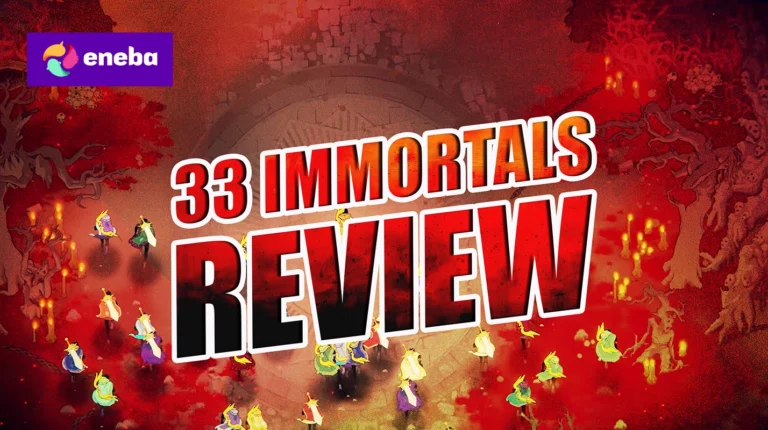
Putting 33 complete strangers into a single roguelike run sounds like a recipe for immediate disaster. Instead, the concept clicks within minutes. A full lobby spills into a massive boss fight, abilities flash across the screen, and somehow everyone piles onto the right glowing synergy tile just in time.
This 33 Immortals review looks at Thunder Lotus Games‘ boldest pivot yet. Known for the quiet, emotional journey of Spiritfarer, the studio takes a hard left turn into online raids. The result is a top-down, action-roguelike built for fast-paced co-op.
Published alongside Kepler, 33 Immortals serves up a hand-drawn take on Dante’s Divine Comedy. Only this time, the focus is squarely on high-stakes teamwork over quiet reflection.
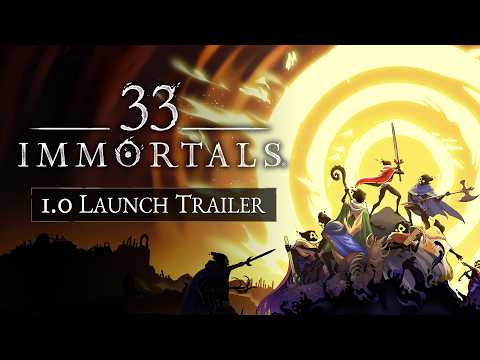
The game hit full 1.0 release on June 10, 2026, across Steam, Epic Games Store, and Xbox Series X|S with full cross-play after 15 months in early access.
It carries a standard $14.99 price tag (with optional Immortal Menagerie Pack and Supporter’s Pack editions available) and dropped as a day-one title for 33 Immortals Game Pass subscribers, making any initial 33 Immortals review assessment focused heavily on accessible value.
The core hook here is pure “pick up and raid” simplicity. Matchmaking is nearly instant, runs last about 25 minutes, and coordination happens through quick pings, emotes, and shared map goals rather than mandatory voice chat. You get the scale of a big MMO raid without the scheduling headaches.
Early Steam player feedback settled around a “Mostly Positive” 33 Immortals rating (roughly 75% positive reviews), which matches the perspective of my 33 Immortals review. The multiplayer concept feels genuinely fresh, even if long-term loop questions linger.
In this 33 Immortals review, join me to break down the Torture Chambers, Wrath of God encounters, Ascension Battles, the 14-weapon sins-and-virtues arsenal, Dark Woods progression, platform performance, and whether this rebellion has enough legs to hold your attention.
Jump to:
Quick Verdict: The 33-Player Experiment That Works
Before diving into the detailed mechanics, my quick-take 33 Immortals review verdict highlights a rare co-op achievement.
Rather than forcing complex class roles, 33 Immortals turns large-scale raiding into an intuitive numbers game. You spend 20 minutes clearing mini-dungeon Torture Chambers in small squads, collecting temporary relics and building up shared co-op powers.
Then the map forces all 33 players into a single Ascension arena. This amazing roguelike game bridges the gap between arcade brawlers and MMO encounters, delivering immediate satisfaction whether you show up with a full four-player squad or queue completely solo.
| Genre | A top-down co-op action-roguelike for up to 33 players. Jump in solo through matchmaking or bring up to four friends |
| Core loop | Pick a weapon, enter a shared run, clear Torture Chambers, survive God’s wrath, tackle Ascension Battles, beat the boss, then spend your haul in the Dark Woods before going again |
| Biggest strength | A fresh multiplayer idea that actually works, backed by gorgeous hand-drawn art, quick matchmaking, and a very approachable price |
| Biggest weakness | Thin long-term content and progression that stalls after the first several hours; repetition/grind; launch-window bugs; no voice chat limits coordination; health depends on player population |
| Verdict | A lively, great-value co-op experiment: a strong yes for group players and Game Pass subscribers, but a wait-and-see for anyone chasing a deep long-term grind |
| Release date | June 10, 2026 (full 1.0; early access began March 18, 2025) |
| Platforms | PC via Steam and Epic Games Store, plus Xbox Series X|S, with cross-play |
| Price | $14.99 for the standard edition |
| Best for | Co-op players; Game Pass subscribers; roguelike fans who want spectacle over grind; budget multiplayer buyers |
| Game Pass | Included day-one on Xbox Game Pass / PC Game Pass |
| Session length | Up to 33 players per run; sessions run roughly 25 minutes |
Understanding the loop is essential for any 33 Immortals review, as the game balances mini-dungeons with massive raids. The gameplay shines brightest when lobbies fill up fast, and everyone leans into shared map goals.
You don’t need elite mechanical skills to contribute. A less experienced player can still turn a run around by clutching a revive or holding a glowing synergy tile during a major boss fight.
Keep your expectations aligned with a fast-paced social action-roguelike rather than a slow, story-driven solo campaign. During my 33 Immortals review, I tested how well those systems hold up under pressure.
The core loop is built specifically around drop-in raids and shared run momentum, meaning its staying power depends entirely on players continuing to answer the matchmaking call.
Hell Has Never Been This Crowded
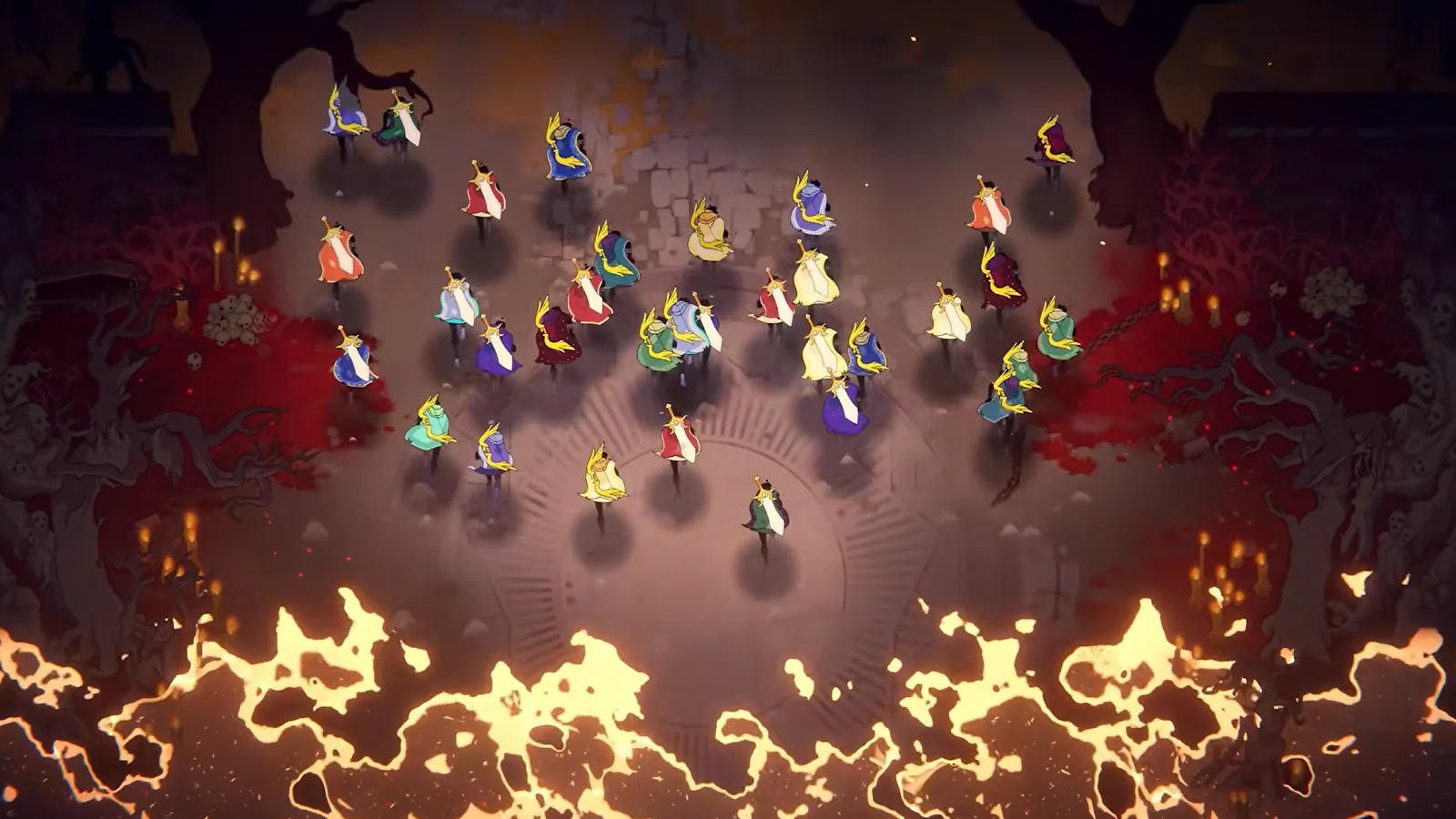
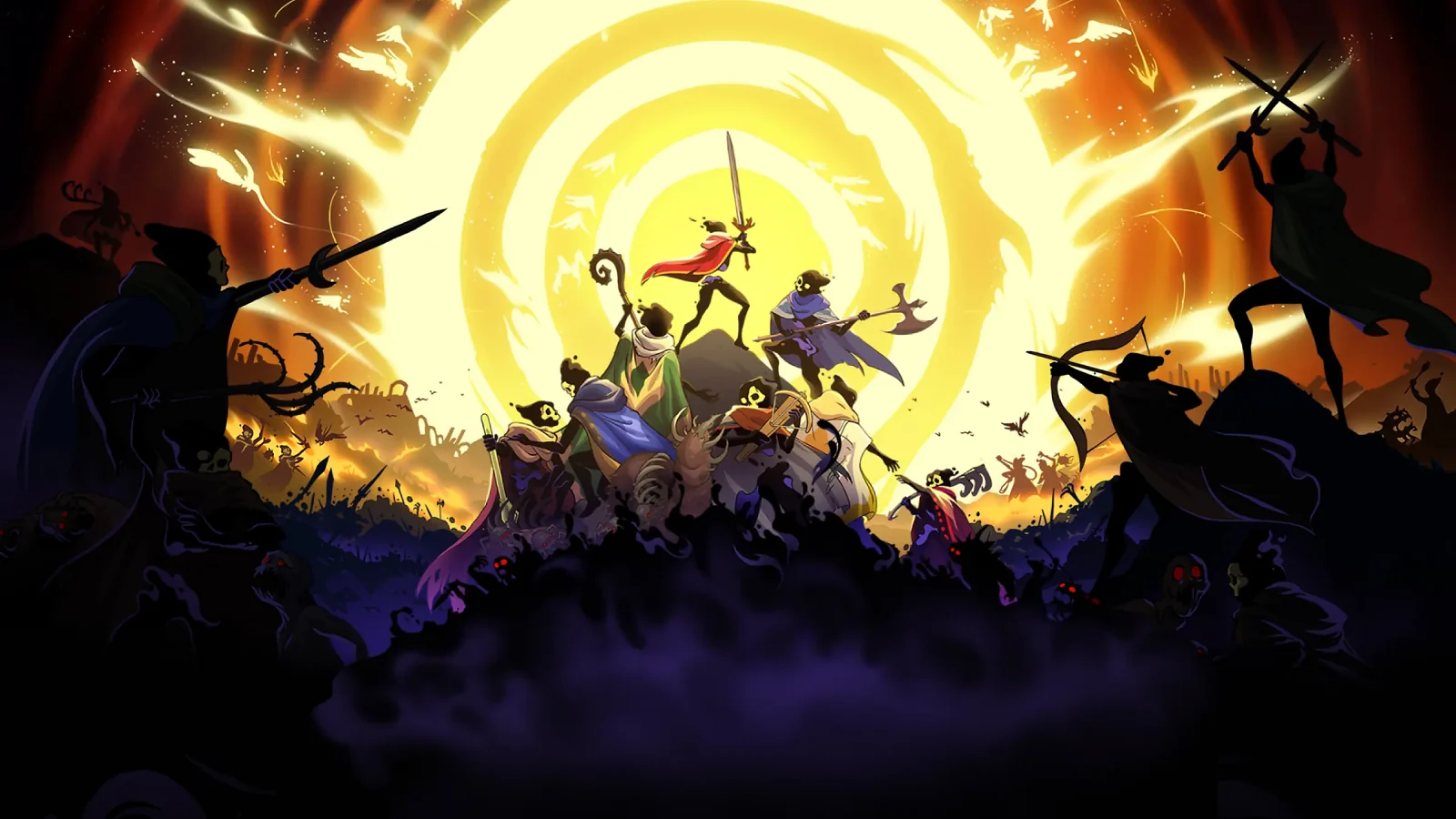
Setting the scene for this 33 Immortals review, the premise drops you straight into an unlikely rebellion. You play a damned soul trapped in Hell, facing eternal punishment. But instead of accepting your fate, you join other sinners to storm the gates of Heaven.
It’s a dark, stylized spin on Dante’s Divine Comedy that sets high stakes immediately. You aren’t playing as legendary demigods or holy champions. You’re just part of an angry mob fighting for redemption.
33 Immortals is not a traditional MMO raid. You won’t spend hours managing guild schedules, organizing class rosters, or sitting in tedious party finder lobbies. It isn’t a complex, gear-heavy RPG where you spend hours analyzing stat spreadsheets or managing endless inventory screens.
Nor is it a story-rich, narrative-driven single-player campaign like Thunder Lotus’s previous hit, Spiritfarer. As I emphasize in this 33 Immortals review, if you come expecting a deep solo story or a classic lock-and-cast system, you will be disappointed.
Mechanically, a run functions like a reverse battle royale. All players deploy across an expansive, open map, fanning out into smaller squads to tackle mini-dungeons and gather perks before map hazards force the entire lobby back together. As I noted during my 33 Immortals review, this dynamic forces players to converge naturally.
While exploring expansive worlds on handheld consoles is always a treat – much like playing the best open-world Switch games – this game focuses solely on large-scale multiplayer momentum.
Rather than locking you into rigid tank or healer classes, your role remains entirely fluid, shifting on the fly based on which weapon you equip and which synergy tiles you step on alongside nearby teammates.
Already sold after playing the demo? The cheapest way onto PC is the 33 Immortals key on Eneba, typically below Steam’s direct price.
Something I want to make clear in this 33 Immortals review is how much the game relies on smart visual cues, shared map goals, and contextual pings. Even if a few teammates fall early, the sheer collective power of the group keeps the momentum going – a core design win highlighted in many other positive 33 Immortals reviews.
That immediate accessibility makes the game easy to jump into without losing the excitement.
You can drop in for a quick session, experience a massive 33-player battle, and hop off without any guild drama. Thunder Lotus nailed the core hook: making online raids fast, accessible, and thrilling for everyone involved.
Raid, Wipe, Repeat, Together
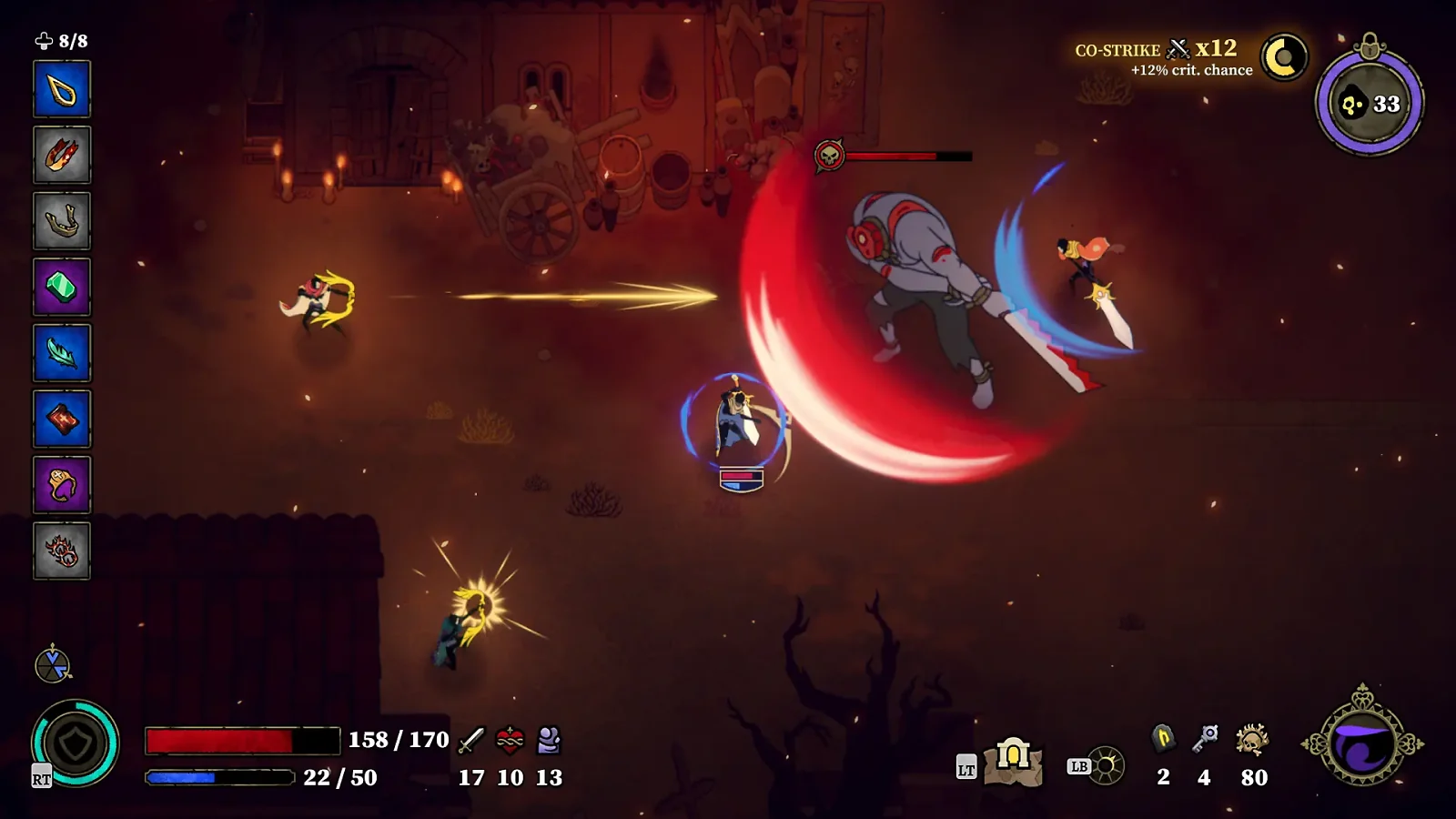
Combat revolves around a 14-weapon arsenal divided strictly between the 7 Deadly Sins and 7 Heavenly Virtues. Testing these combinations was a highlight of my 33 Immortals review.
Sin weapons, like the high-crit Sword of Wrath or heavy Daggers of Envy, pack aggressive area-of-effect strikes designed to shred enemy shields. Virtue weapons, such as the Bow of Compassion or Staff of Mercy, lean heavily into team shielding, area-of-effect healing, and crowd-control stuns.
Mastering these weapons unlocks permanent Masteries and unique Co-Op Powers; during my 33 Immortals review testing, this allowed me to tailor my loadout whether I preferred playing a frontline initiator or a backline combat healer.
Each run unfolds across distinct phases that steadily crank up the tension. As I discovered throughout my 33 Immortals review, sticking with smaller squads during the initial exploration phase allows you to cover maximum ground across the expansive purgatory map.
Inside Torture Chambers, up to six players tackle wave-based arena combat to unlock chest relics and harvest Dust for mid-run stat boosts. Balancing this risk is key to a successful run and a core focus of my 33 Immortals review.
However, greed comes with a price: clearing and exiting these chambers triggers severe environmental hazards across the map, creating a high-risk dynamic where lingering too long directly threatens other surviving squads.
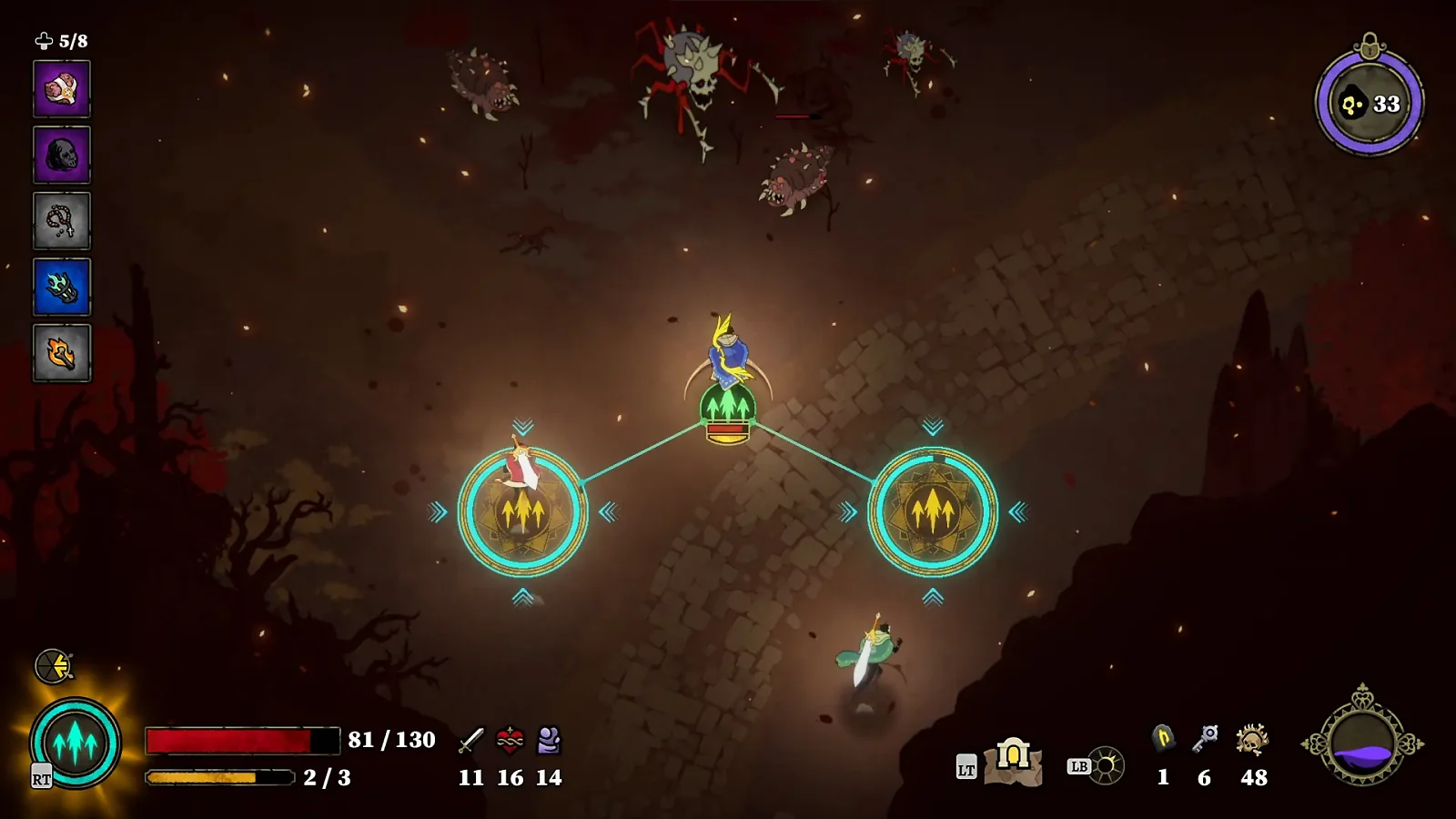
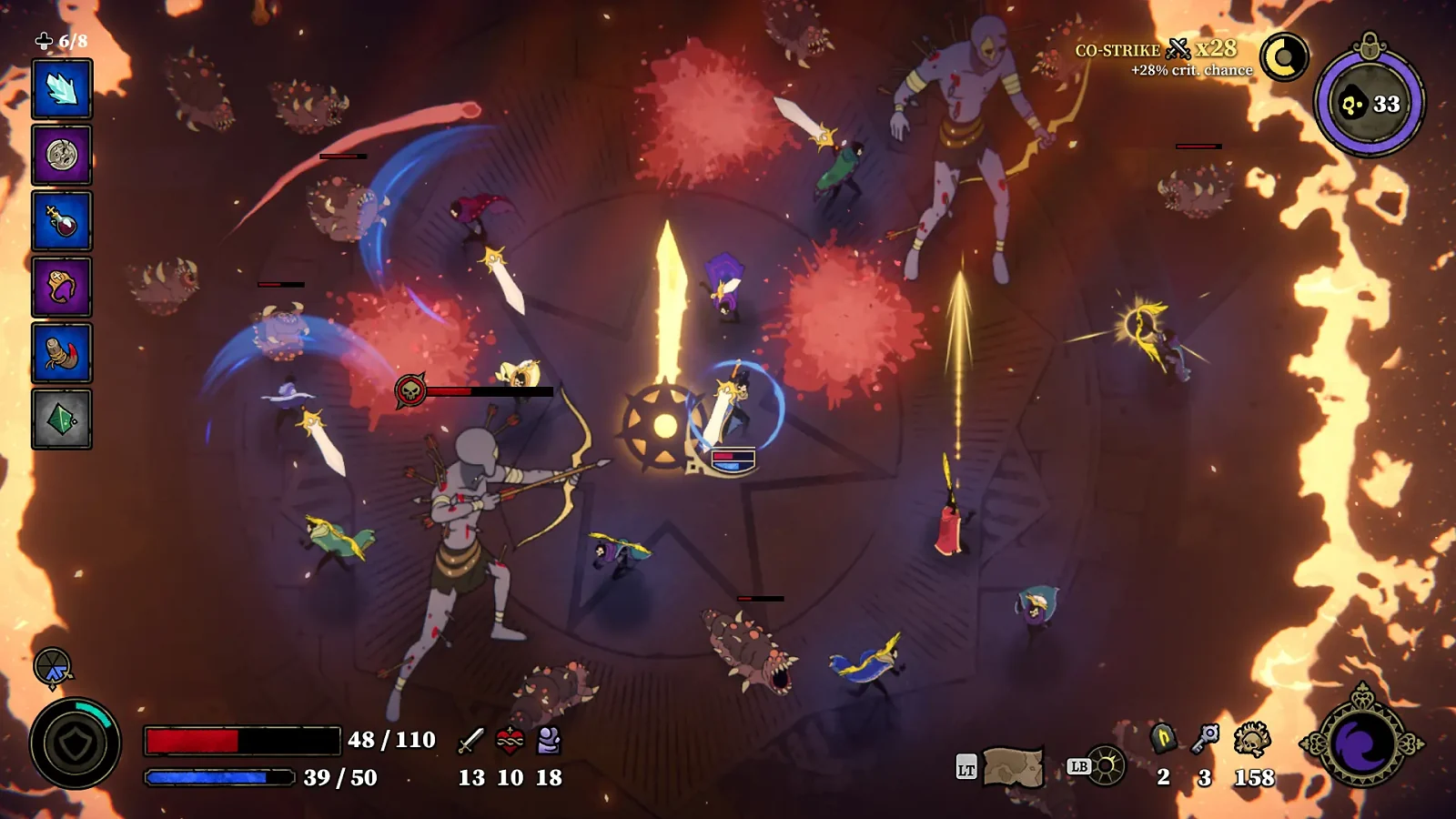
What makes gameplay land so well during my 33 Immortals review is its reticle-free visual synergy design. Rather than managing complex tab-target hotbars, your abilities drop glowing channeling rings and synergy tiles directly onto the battlefield.
When a teammate runs over to step onto your active tile, your basic attack morphs into a massive, screen-clearing team ability. A basic holy strike transforms into an orbital beam of light, a fragile ward expands into a massive barrier protecting a dozen players, or a simple regen tick turns into a massive recovery zone.
This seamless 33 Immortals co-op / multiplayer design encourages total strangers to stick together and play like a seasoned guild without ever needing to coordinate over voice chat.

As your team explores and gathers power, the realm itself fights back through a constantly ticking map timer. God’s Wrath steadily corrupts the outer edges of purgatory, triggering divine lightning strikes and shrinking the safe zones like a top-down battle royale.
This environmental pressure forces all surviving squads toward the Ascension Gates. Any thorough 33 Immortals review must note how seamlessly this mechanic drives action. To break through to the next zone, players must stand shoulder-to-shoulder inside glowing channeling seals while fending off elite champions and aggressive monster swarms.
Once you pass through the final gate, every surviving player gets thrown into a massive arena for a multi-stage boss fight against divine archangels and colossal wardens. As any gameplay-focused 33 Immortals review will point out, these multi-stage encounters are the absolute highlight of the experience.
Bosses unleash screen-filling bullet-hell patterns, sweeping laser grids, and wipe mechanics explicitly designed to test collective positioning. Throughout my 33 Immortals review, I found myself constantly balancing offensive damage windows against chaotic dodging and environmental hazards. If you thrive on testy encounters, these fights rival some of the hardest video game bosses.
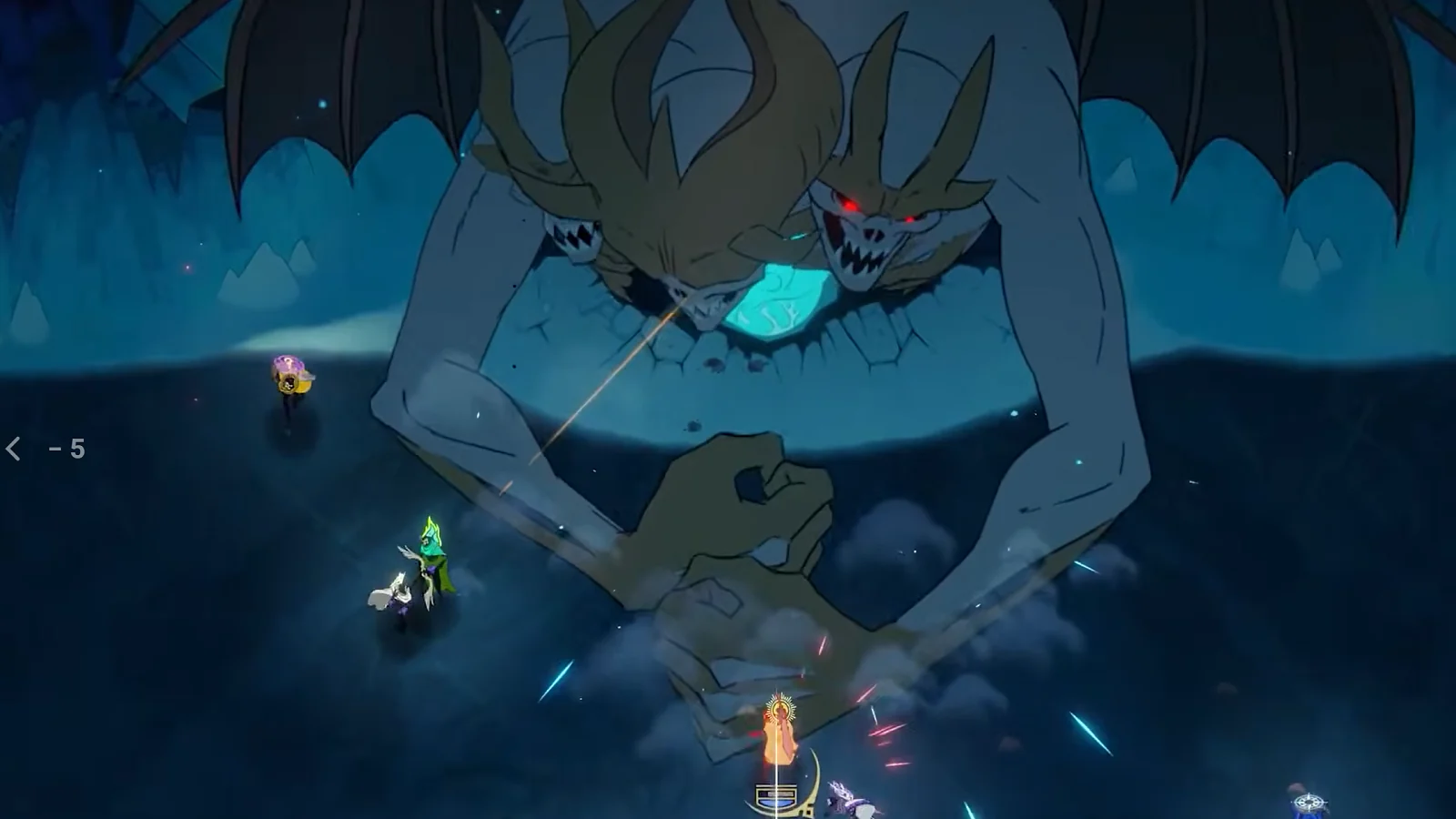
Despite the punishing difficulty of these encounters, a single mistake does not mean game over. The true hero mechanic of combat is the instant revive system. When a player takes lethal damage, they do not get booted back to the menu; instead, their ghost remains on the field, allowing any nearby teammate to channel a quick revive.
During intense final boss phases, it is common to see half the 33-player lobby wiped out in a single devastating attack. That is where the ultimate dopamine hit happens: surviving players can dodge through incoming bullet-hell projectiles, pull off clutch multi-person revives, and drag twenty dead teammates right back into the fight just in time to execute a final damage phase.
That push-and-pull dynamic between total disaster and dramatic recovery made every successful kill feel insanely rewarding during my 33 Immortals review sessions.
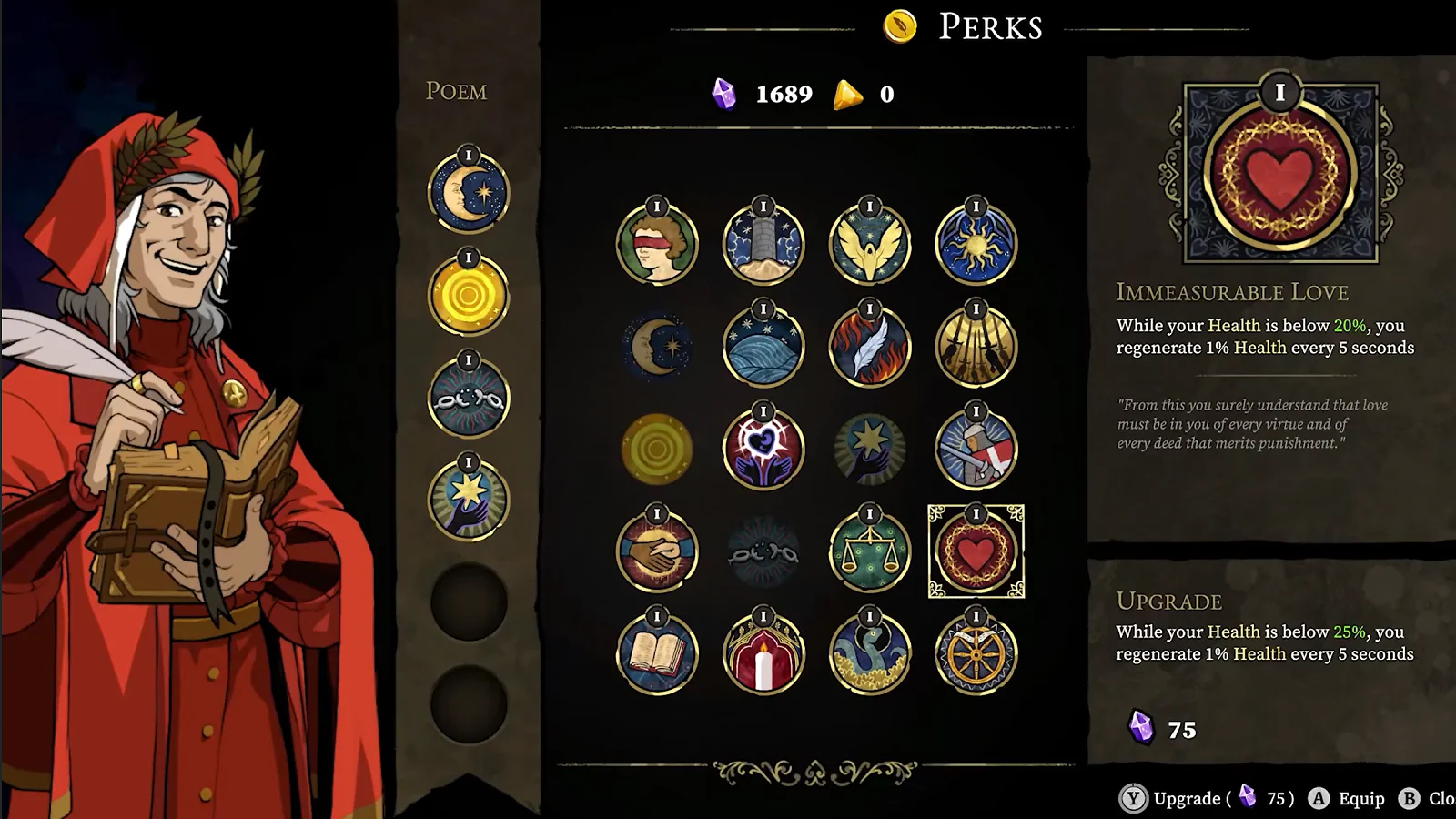
All the resources gathered during my 33 Immortals review runs – I mean bones, dust, and dark souls – are brought back to the Dark Woods hub between runs. Here, you spend your currencies at persistent upgrade trees to boost your base health, unlock new weapon blueprints, and customize your character’s look.
This guarantees that even if your lobby wipes early, you still walk away with permanent progression that makes your next drop into Hell a little easier. For players debating is 33 immortals worth it for long-term play, this persistent hub loop provides a satisfying safety net for your time investment.
That accessibility extends directly to how you play. Skipping complex party menus altogether, the instant queue system lets you dive straight into massive divine battles whether you drop in alone or with a group.
Because the title launches directly into 33 Immortals Game Pass, testing out its mass-revive system and localized synergy mechanics costs nothing extra for subscribers. Ultimately, the game’s staying power will depend on how reliably the server matchmaker continues to pull scattered sinners into the fight.
Dante’s Comedy, Remixed
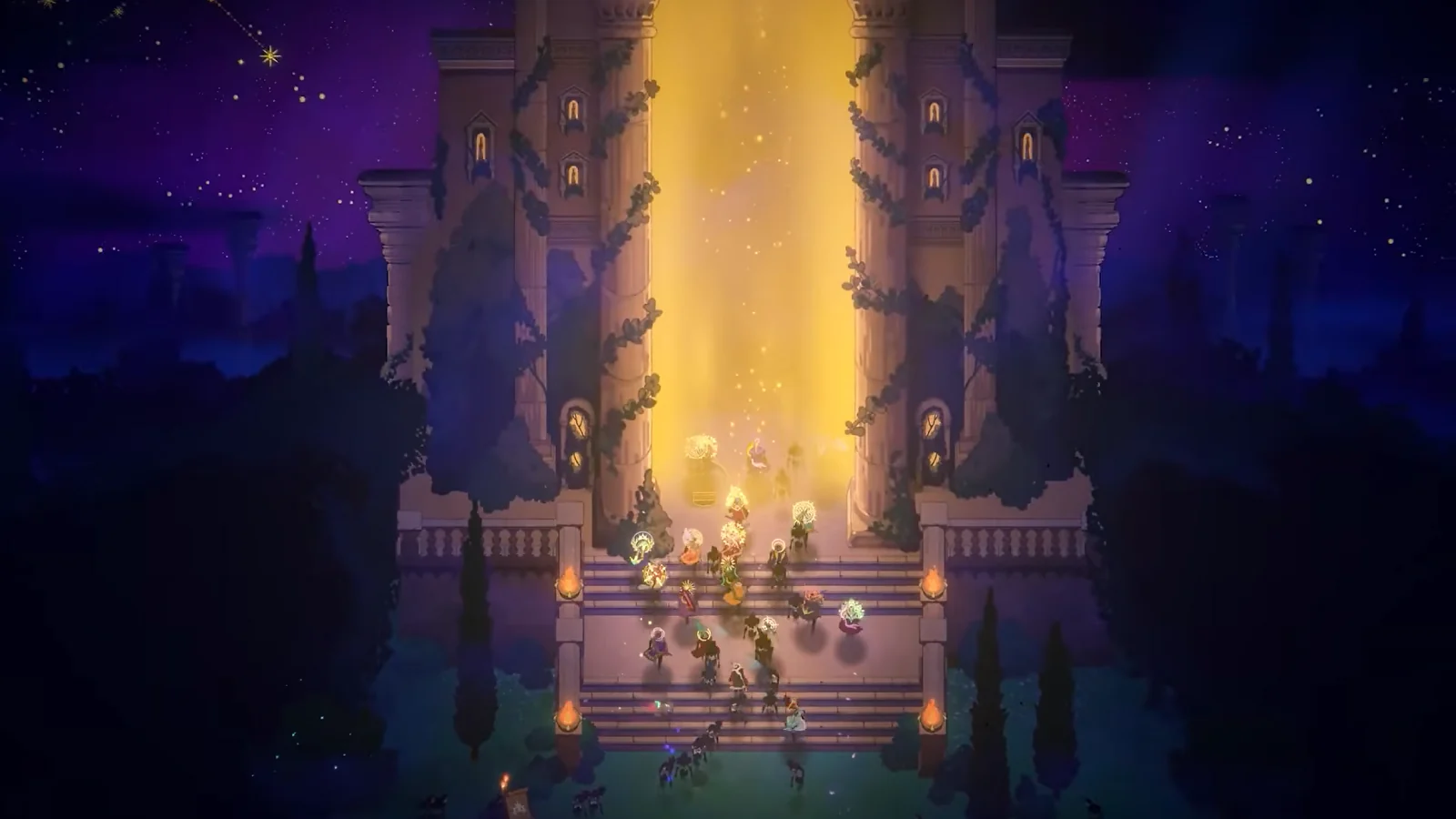
If you’ve played other Thunder Lotus games, you know they usually craft soft, hand-drawn worlds that hit you right in the feels. But as I experienced for my 33 Immortals review, they also throw out a gentle tragedy and hand you a giant battleaxe instead.
The narrative takes classic 14th-century Italian epic poetry–specifically Dante Alighieri’s Inferno and Purgatorio–and remixes it into a heavy-metal holy uprising. You play as a damned soul trapped in the infernal depths of Hell.
What I really appreciate about this setup is how the studio delivers its narrative without killing the game’s momentum. You won’t sit around reading giant, unskippable walls of text while your squad waits for you to hit the ready button.
Here, the world-building comes through dark medieval visual design, haunting enemy aesthetics, and subtle item flavor text. The lore is woven directly into your equipment. Every weapon, relic, and perk embodies specific historical sins or virtues, letting you piece together the narrative history of the afterlife as you fight.
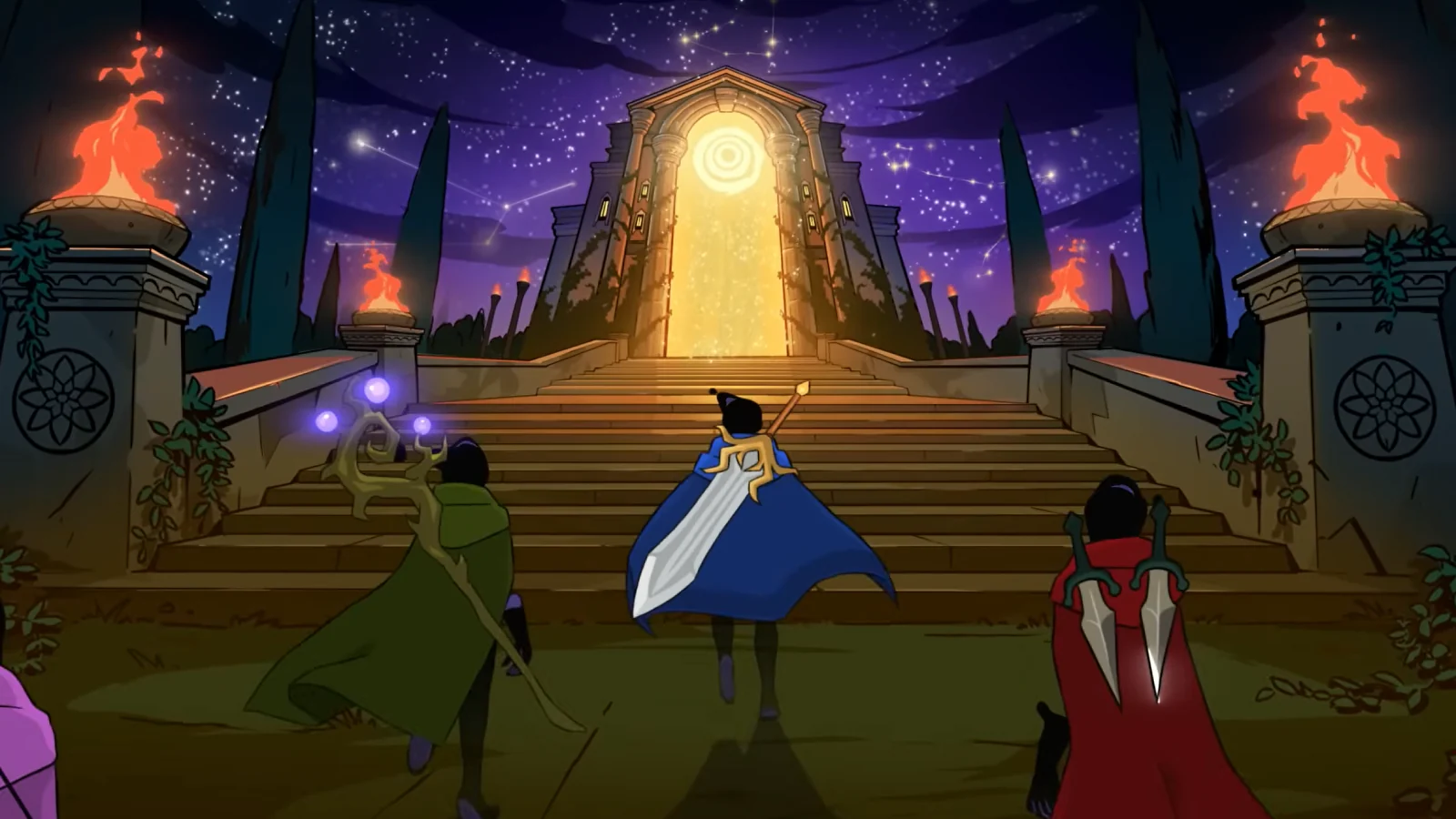
When writing this 33 Immortals review, what stood out most to me was how cleverly the developers modernize classic literary figures. Instead of acting as a passive spirit guide floating through Purgatory, Beatrice has been reimagined as the fierce, battle-hardened field commander leading your entire rebellion.
Charon isn’t just a shadowy ferryman rowing across the River Styx; he’s a dapper, sharp-witted merchant who sells you cosmetic upgrades and persistent perks with a smirk. Meanwhile, Virgil appears as a scholarly ally helping you decode the deep secrets of the realms.
Between your reckless charges into hostile territory, your main base of operations is the Dark Woods. It’s a moody, atmospheric graveyard that serves as a quiet sanctuary for fallen rebels. Here, you take a breather to unlock persistent upgrades, swap your gear, and talk with Beatrice before launching your next attempt.
For my 33 Immortals review, the Dark Woods provided a welcome moment to recalibrate and absorb the world’s subtle narrative beats before dropping back into the fray.
The Dark Woods gives you a welcome moment to recalibrate and absorb the world’s subtle narrative beats before dropping back into the fray.
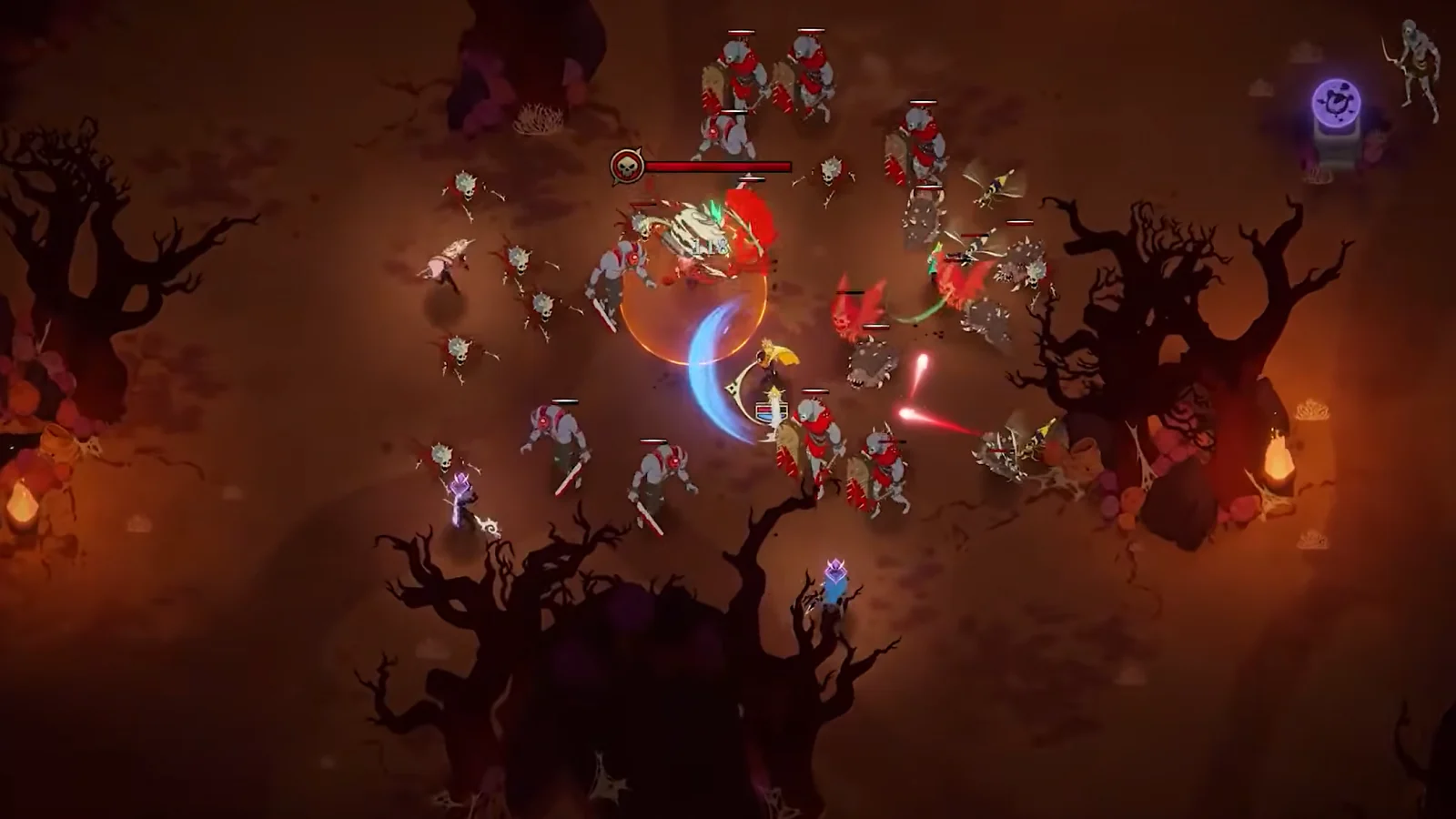
Once you launch a run, the surrounding environments constantly remind you that Heaven is furious. One detail I need to highlight in my 33 Immortals review is how you push through grim Torture Chambers based on the circles of Hell, ruined purgatorial landscapes, and massive celestial checkpoints.
The monsters aren’t just generic fantasy beasts, they are literal manifestations of divine judgment sent down to crush your uprising. Arrogant archangels and divine sentinels look down on your mob as lower-class trash, adding a distinct class-warfare edge to the story that truly enriched my 33 Immortals review playthrough.
That narrative framing elevates the entire 33 Immortals multiplayer experience. You aren’t playing as some chosen demigod destined to save the universe on your own. You are just one nameless sinner in an angry, desperate peasant army.
Defeating divine guardians feels less like a typical video game boss fight and more like an actual uprising against impossible odds. This collective survival theme gives every milestone a thematic weight you rarely find in standard online brawlers.
While it delivers incredible co-op moments, gamers looking for cinematic single-player journeys on Sony’s console might prefer checking out the best single-player PS5 games.
Is 33 Immortals Worth It?
After spending time jumping into runs, unlocking weapons, and battling divine guardians alongside dozens of strangers, my verdict in this 33 Immortals review is a resounding yes – especially if you love fast-paced multiplayer games that actually respect your time.
What makes this title stand out is how efficiently it delivers high-intensity fun. Traditional MMO raids usually force you to schedule entire evenings, coordinate team roles, and sit through endless setup before swinging a single weapon. As I noted during my 33 Immortals review, Thunder Lotus stripped all of that administrative headache away.
You launch the game, hit matchmaking, and drop into a massive 33-player brawl within seconds. Packing the grand spectacle of a massive raid into a clean 25-minute session is a massive win for anyone with a busy schedule.
Accessibility plays a huge role in that overall value too. If you already subscribe, jumping in through 33 Immortals Game Pass on day one makes trying this experiment a total no-brainer. There is essentially zero financial risk, so you and your friends can dive right into Hell without second-guessing it.
For most PC players, the 33 Immortals key on Eneba is the cheapest way in. If your Game Pass has lapsed, an Xbox Game Pass covers 33 Immortals plus the rest of the library for less than the price of many single games. Just check the current plan, regional availability, and pricing before you commit.
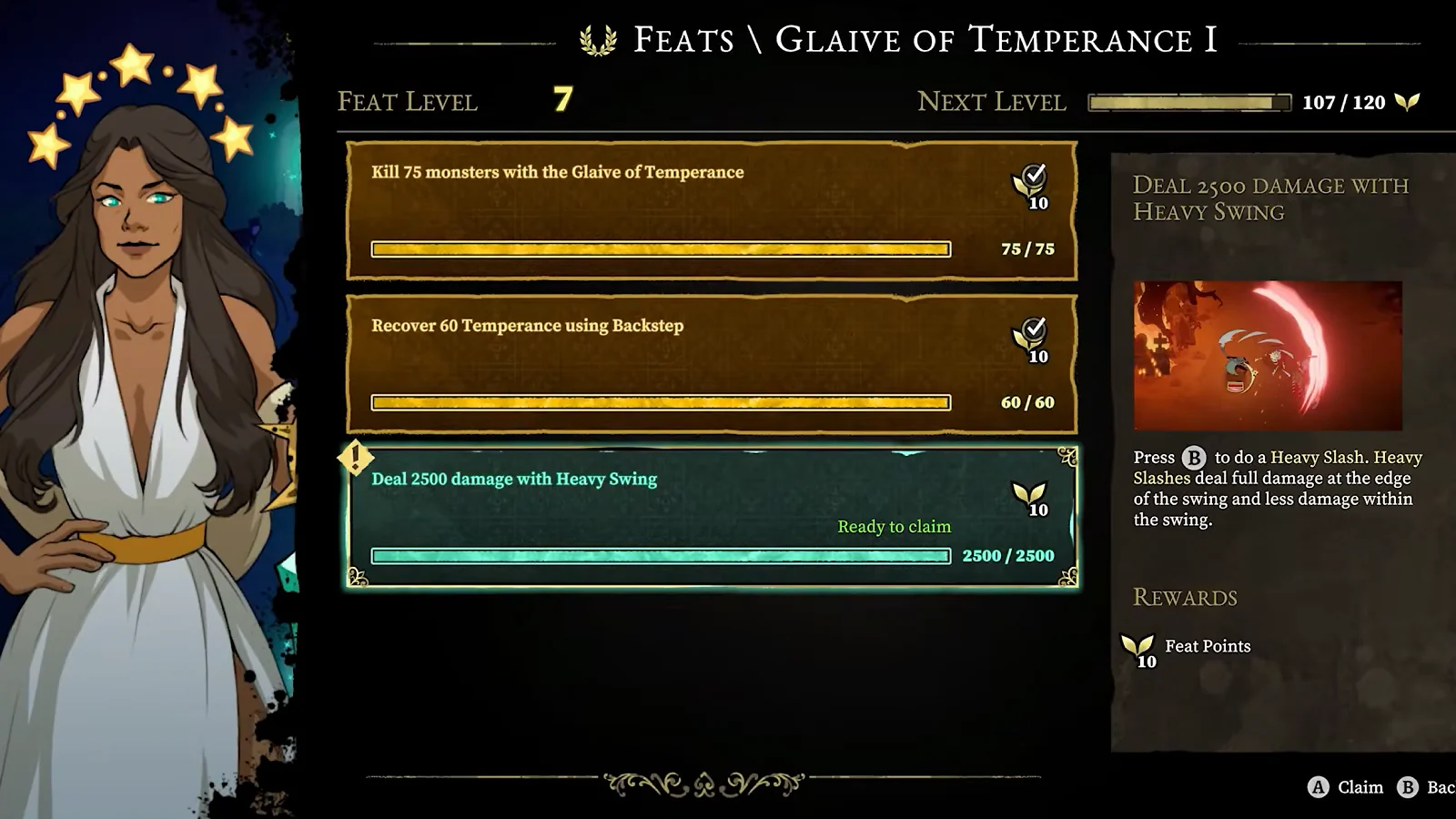
During my 33 Immortals review, I found that long-term fun here comes down to high-stakes endgame runs. Hitting higher Feat levels unlocks Ordeals: brutal match modifiers that trade buffed enemies and Agony effects for top-tier loot. Between these escalating challenge tiers and regular weapon drops, there is plenty of room to cook up wild build synergies long after your first run.
At a $14.99 base price, it delivers massive value. As any hands-on 33 Immortals review will tell you, it hits the sweet spot for anyone who loves big team fights without the soul-crushing grind.
If your ideal gaming session requires a heavy narrative arc or fifty-button action bars, this will not be your style. But if you just want to drop in, link up with a huge squad, and immediately start wrecking divine guardians, it is an absolute ride.
Which Version Should You Buy?

Before picking a platform, remember that 33 Immortals is strictly an always-online title. You will not find an offline mode quietly waiting in the settings menu, so a steady internet connection is mandatory no matter where you play. On the plus side, seamless cross-play keeps the global player base unified across Steam, Epic Games Store, and Xbox Series X|S.
Your platform choice really hinges on price, ecosystem preference, and where your crew hangs out rather than split player bases. For pure PC buyers, Steam is the easiest recommendation. You get straightforward controller support, achievements, fast patch updates, and a busy community hub to check current feedback and active player counts.
The hardware requirements are surprisingly gentle, meaning you do not need a top-tier rig just to keep the divine battles running smoothly. It’s rated as playable on Steam Deck, making it a great pick for sneaking in quick runs away from your main desk setup.
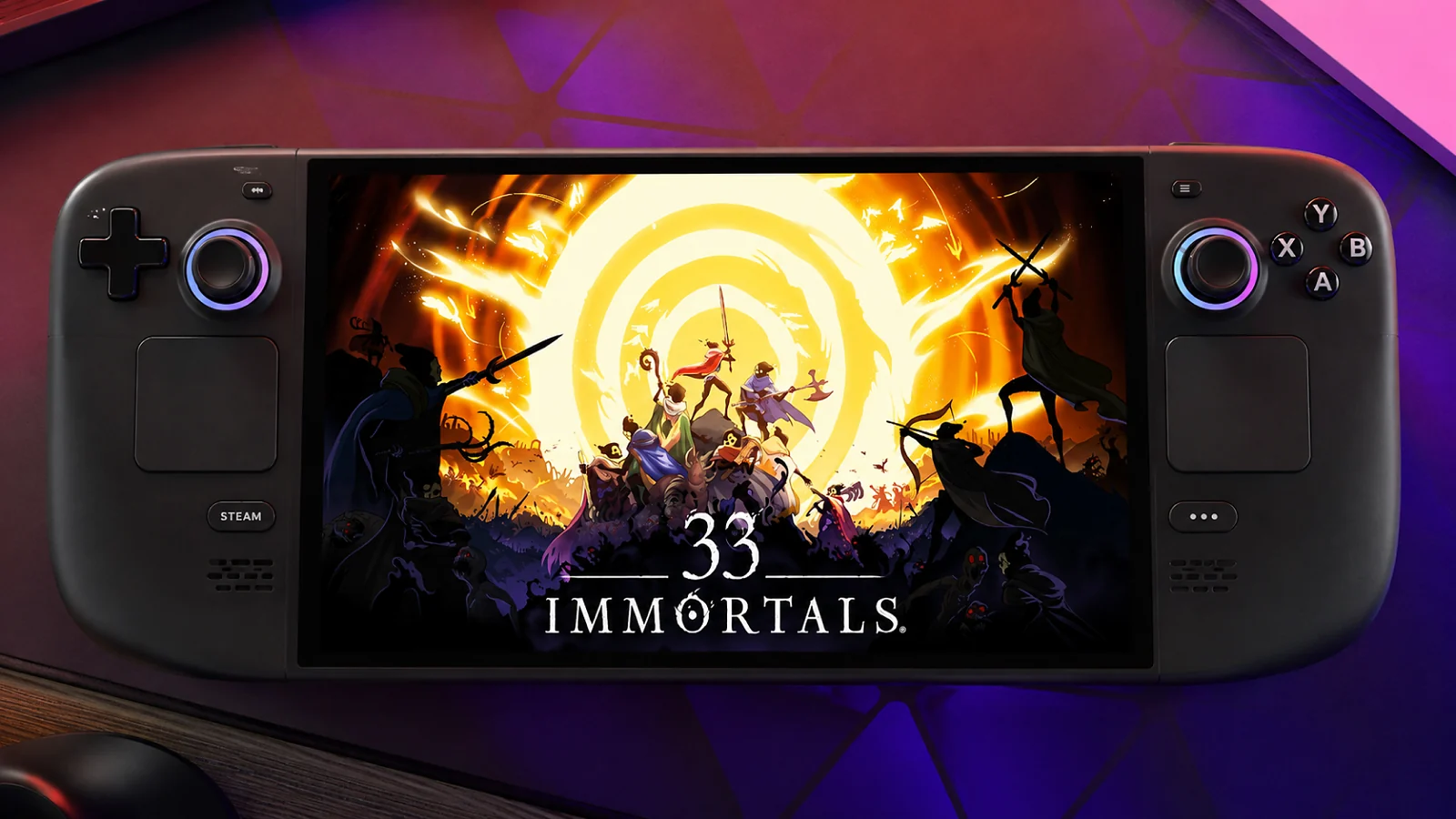
However, “playable” does not mean flawless; handheld players should cap framerates at 30 FPS to prevent performance dips during effect-heavy boss encounters. Epic Games Store is a solid alternative if you prefer leveraging Epic Rewards or existing wallet balances, and full cross-play ensures your matchmaking pool remains identical regardless of where you buy.
For most buyers, though, the 33 Immortals key on Eneba is the better-value entry point when it is priced below the direct store option. That is the PC recommendation in this 33 Immortals review: buy where the deal makes sense, then play with whoever you like.
On Xbox, the path is even clearer if you hold an active sub. Taking the 33 Immortals Game Pass route lets you dive in with zero extra cost: perfect for rallying an entire squad for a trial without committing upfront. It complements the game’s bite-sized session design effortlessly.
Download it, run a few raids, and see if it earns a spot in your weekly rotation. If your subscription has lapsed, an Xbox Game Pass on Eneba is the sensible place to look, since it covers 33 Immortals alongside a much larger library.
Keep a few live-service realities in mind. Early launch windows saw minor sync hiccups, random disconnects, and hotfixed save bugs. That should not ruin any specific platform choice, but it highlights that actual performance depends on server stability as much as raw frame rates.
My pick: take the Steam route if you want to own the game on PC, choose Game Pass if you are playing on Xbox or already have the right subscription, and do not overthink platform loyalty. Cross-play does the important job here: keeping the rebellion crowded.
What Critics and Players Say
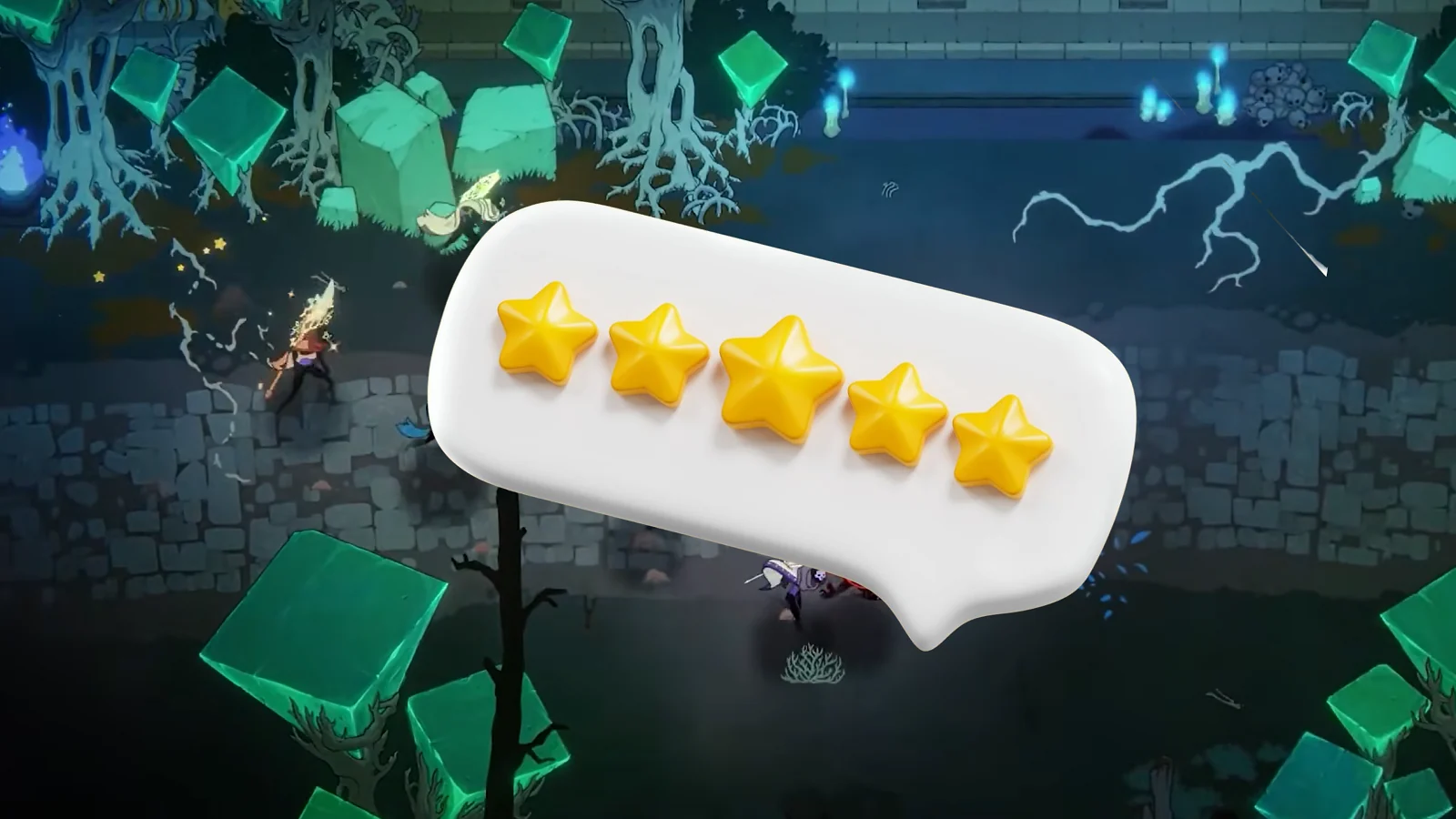
The 33 Immortals rating picture is positive, but not glowing across the board. At the time of writing:
- Steam User Reviews: Sits at a “Mostly Positive” 74% positive rating across more than 2,000 player reviews.
- Metacritic: Holds a 71 Metascore on PC, reflecting a generally favorable yet cautious critic response.
- OpenCritic: Averages a 73 Top Critic Score, with roughly 57% of critics recommending the game.
That spread makes sense. 33 Immortals has a great idea at its center, but it does not fully escape the problems that come with making that idea work over dozens of hours. The praise is pretty consistent. Critics and players enjoy the sheer novelty of 33 people sharing a roguelike run, especially when a full lobby survives a messy encounter and finally clicks into place.
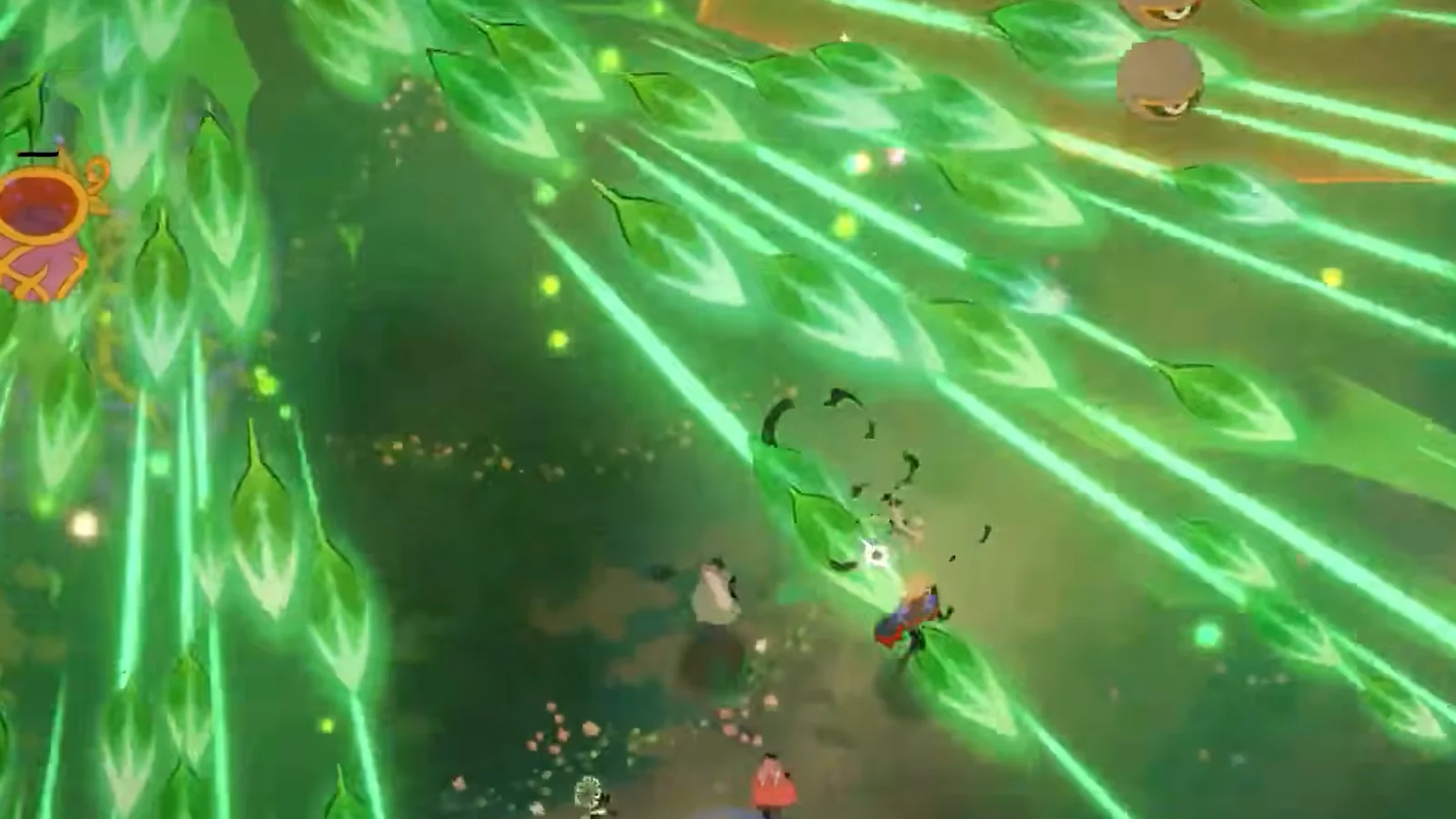
The hand-drawn art gets plenty of love, as does the orchestral score and the way the game gets you into a run without turning party setup into a chore. Its lower price also helps. This is a game that asks for a fairly small upfront commitment before showing you what makes it different.
The criticisms are just as consistent. The content pool can feel limited once you move beyond the early excitement, and progression is often described as plateauing sooner than it should. Some players enjoy repeating runs to test weapons and builds; others hit the same rhythm and start to feel the grind.
Launch bugs, connection hiccups, and the lack of voice chat also crop up across 33 Immortals reviews. The ping-and-emote system is smart, but it cannot always solve the problem of 33 strangers trying to read the same fight in different ways.
So, is there enough to do long-term? Right now, that depends on your appetite for the core loop. If you love quick co-op sessions and like getting better at a game through repetition, there is plenty of fun to pull from it. If you need a constant stream of new maps, systems, and rewards, the runway may feel short.
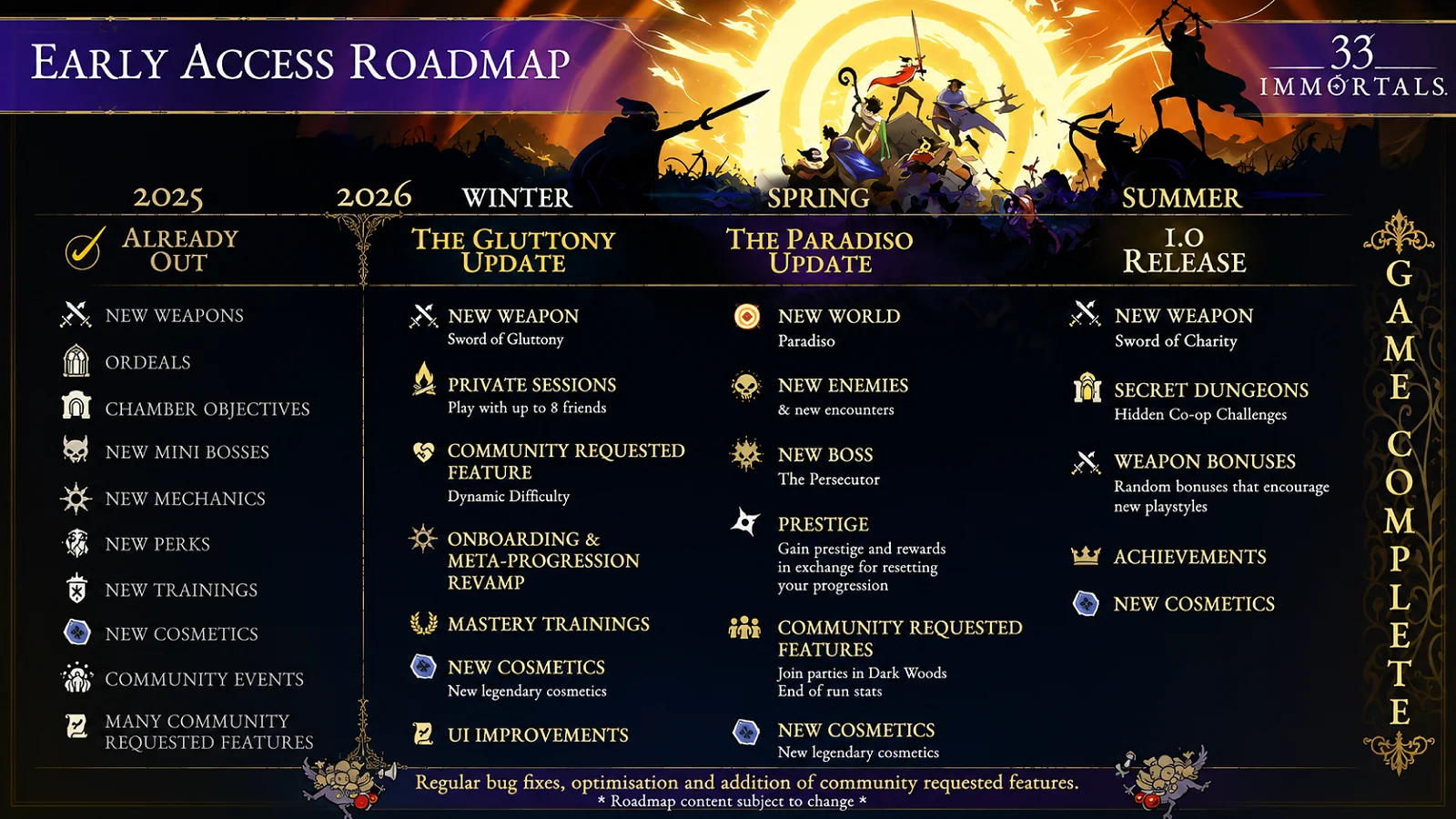
The population question is harder to answer. The game needs active matchmaking more than most roguelikes, so a smaller player base would hurt the experience. Thunder Lotus did publish a 2026 roadmap and has said it will continue server support, bug fixes, and patches after 1.0.
However, 1.0 was also framed as the feature-complete version, so players hoping for a huge post-launch content plan should keep expectations realistic. The game is in a good spot now; whether it stays there depends on how well the crowd holds.
Beautiful, Brutal, Biblical
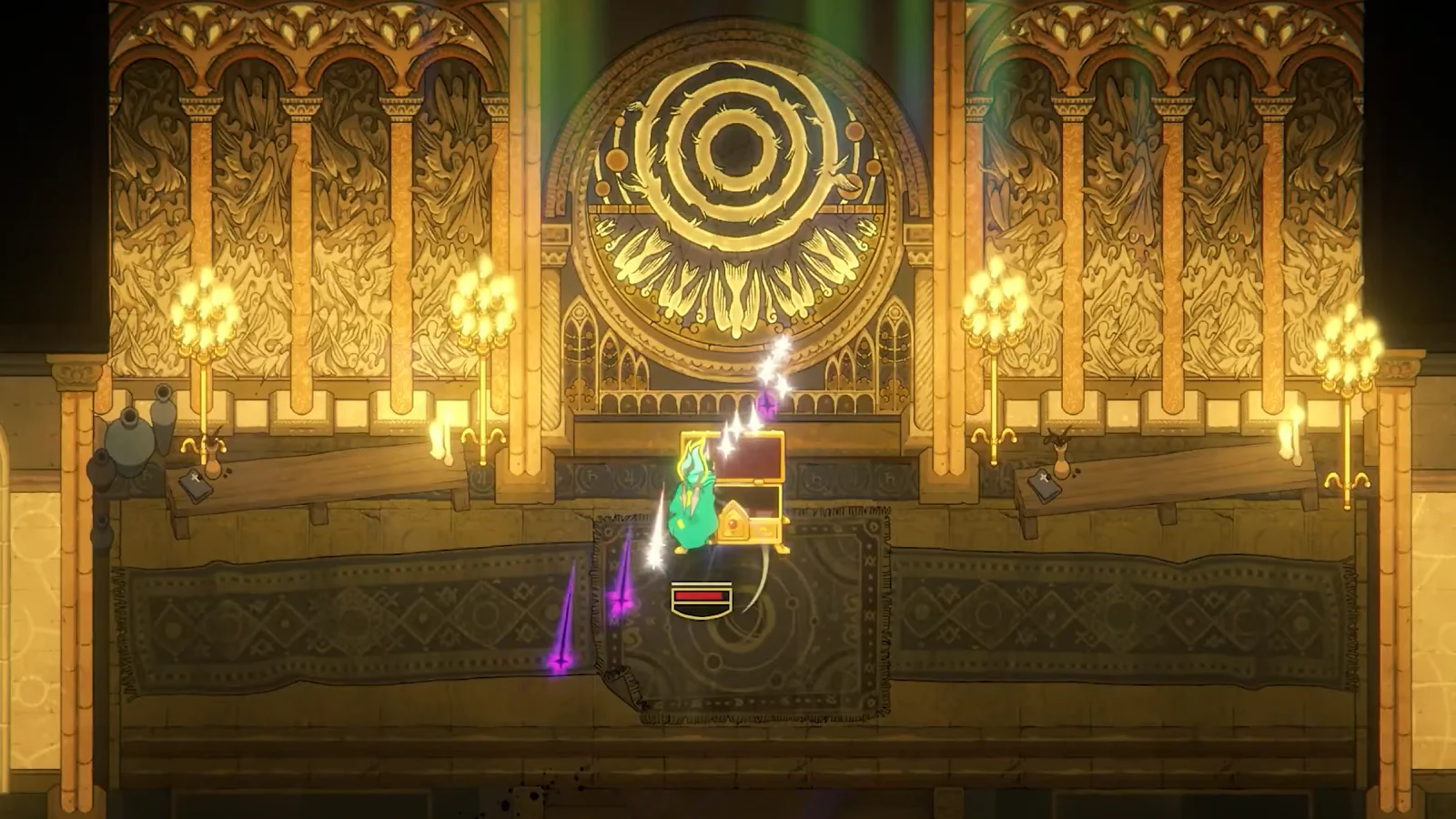
The hand-drawn art is doing serious work in 33 Immortals. Hell is full of torture imagery, demons, and bodies having a very bad day, but it never turns into a brown-and-grey blur. The colours are bold, the characters have clean silhouettes, and enemy designs stay readable even when the screen is packed.
It definitely looks like a Thunder Lotus game, just one that traded warm tea and grief for fire, halos, and 32 other players panicking beside you. The three-world journey also keeps the game from looking like one long trip through the same infernal corridor.
Inferno is all heat, menace, and harsh reds. Purgatorio changes the mood without losing the religious weight, while Paradiso goes brighter and stranger. That contrast matters. Each world has its own visual identity, so moving deeper into the game feels like a real shift in place rather than a new biome with a different filter.
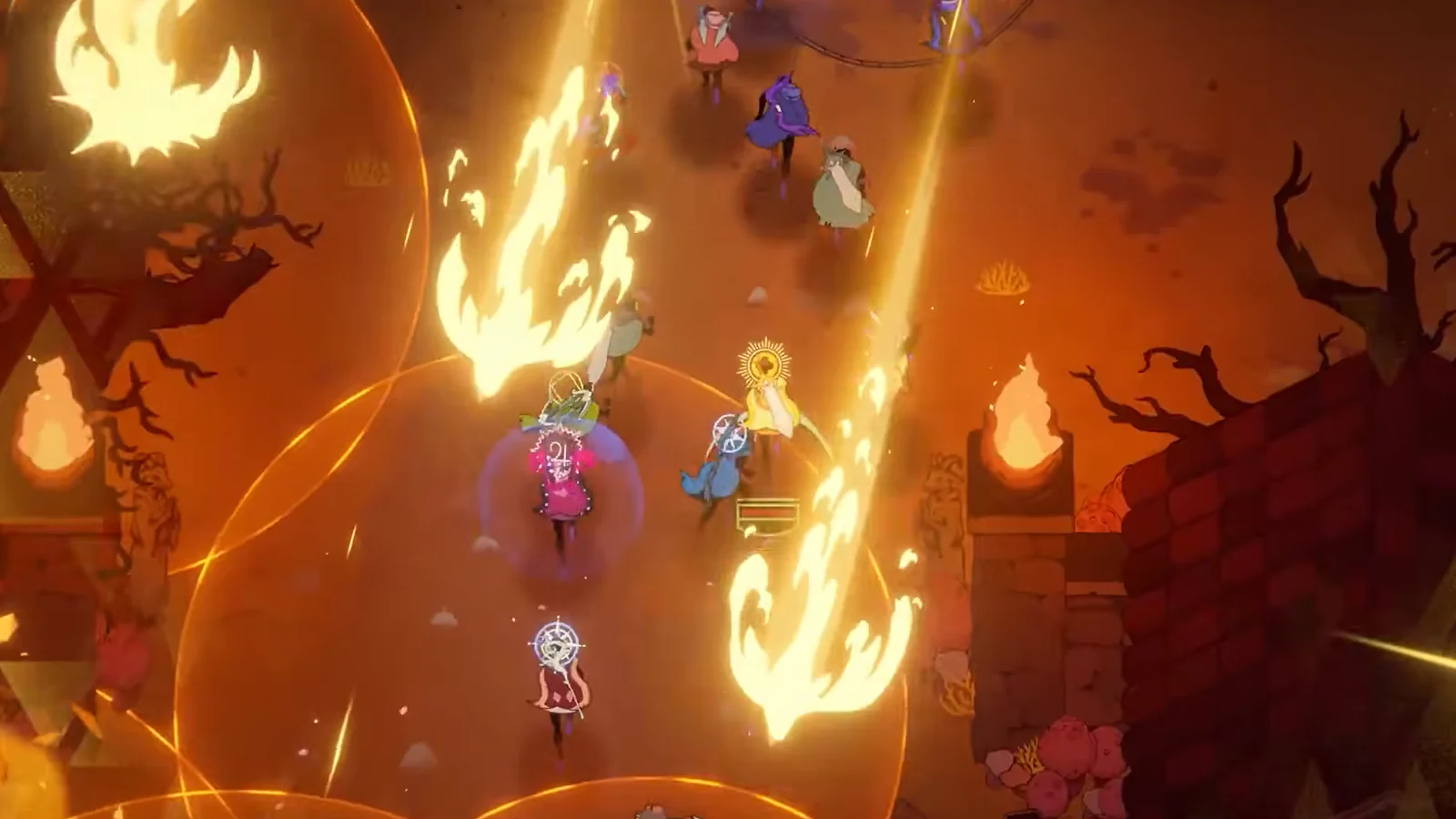
Of course, 33 Immortals gameplay can become a lot to process. A huge lobby means overlapping attacks, enemy effects, pings, revives, and objectives fighting for your attention. God’s wrath is where that tension is most obvious.
The large-scale puzzles are exciting because the entire group has to react, but their solutions can be hard to parse when the battlefield is already going off in six directions at once. For me, that is a scale problem more than an art problem. The game is polished; it is just asking your eyes to keep up with a small apocalypse.
The soundtrack helps sell that mayhem. It mixes orchestral swells with church-organ drama, then pushes both harder during boss encounters. The result gives the action a properly weighty, religious edge without making every fight feel overly serious. It is a score that knows when to sound grand and when to let the chaos breathe.
The lack of voice chat is an interesting audio decision, too. Instead of hearing 33 people call out at once, you rely on emotes, pings, and visual cues. That makes the game easier to jump into with strangers and much less intimidating for players who do not want to talk to a lobby.
The downside is obvious: there is a coordination ceiling. A good ping can say “come here,” but it cannot explain a complicated plan while a boss is trying to flatten everyone.
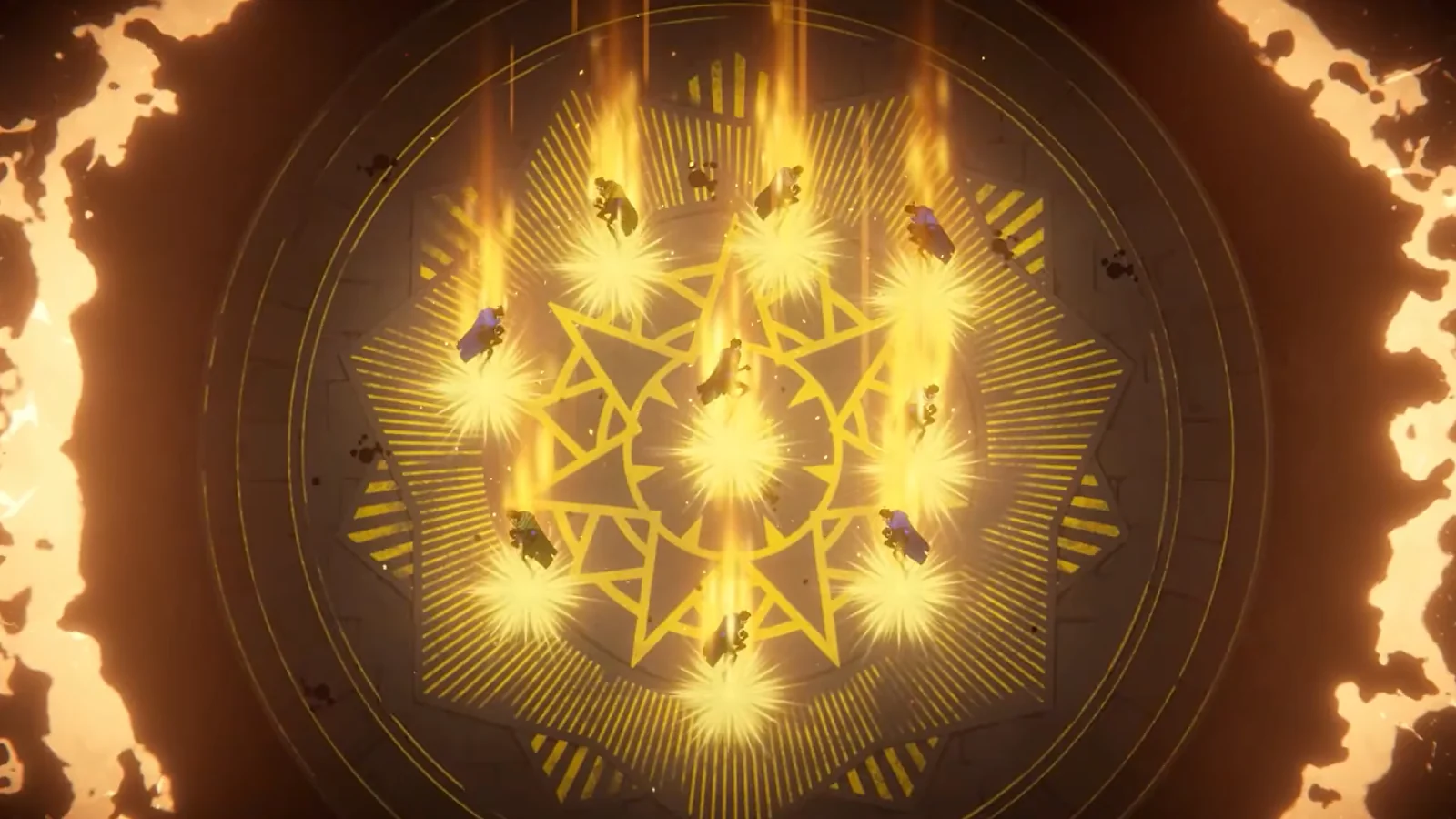
Recent patches show that Thunder Lotus is still working on clarity. The 1.0 update improved Wrath of God camera timing, cleaned up effects that were not fading correctly, and removed some placeholder visuals.
Earlier updates also made Chamber objectives easier for new players to spot on the map, added more useful loading-screen tips, and improved UI cues around mechanics. The latest known-issues list still flags a ready-check UI overlap at the Eternal Gate, so not every interface edge case is gone.
Still, for this 33 Immortals review I wouldn’t call the visual noise a deal-breaker. It is the price of the game’s scale, and most of the time the spectacle is worth the extra effort.
33 Immortals Is a Great-Value Co-Op Experiment That Lives or Dies by Its Crowd
At its best, 33 Immortals turns a premise that sounds like someone lost a bet into something genuinely memorable. Thirty-three strangers sharing a roguelike run should be a recipe for confusion.
Instead, when a full lobby rallies for a boss, revives the fallen, and somehow lands the right co-op power at the right time, it feels like a proper event. My 33 Immortals review comes away impressed by how well Thunder Lotus made that big idea work without turning every session into an MMO commitment.
The strengths are easy to see. The hand-drawn world has real personality, matchmaking gets you into the action quickly, and the combat has enough teamwork baked in to make victories feel shared. Around the $15 mark, it is also priced like a game that understands its own risk. You are not being asked to bet a full-price purchase on an unproven live-service concept.
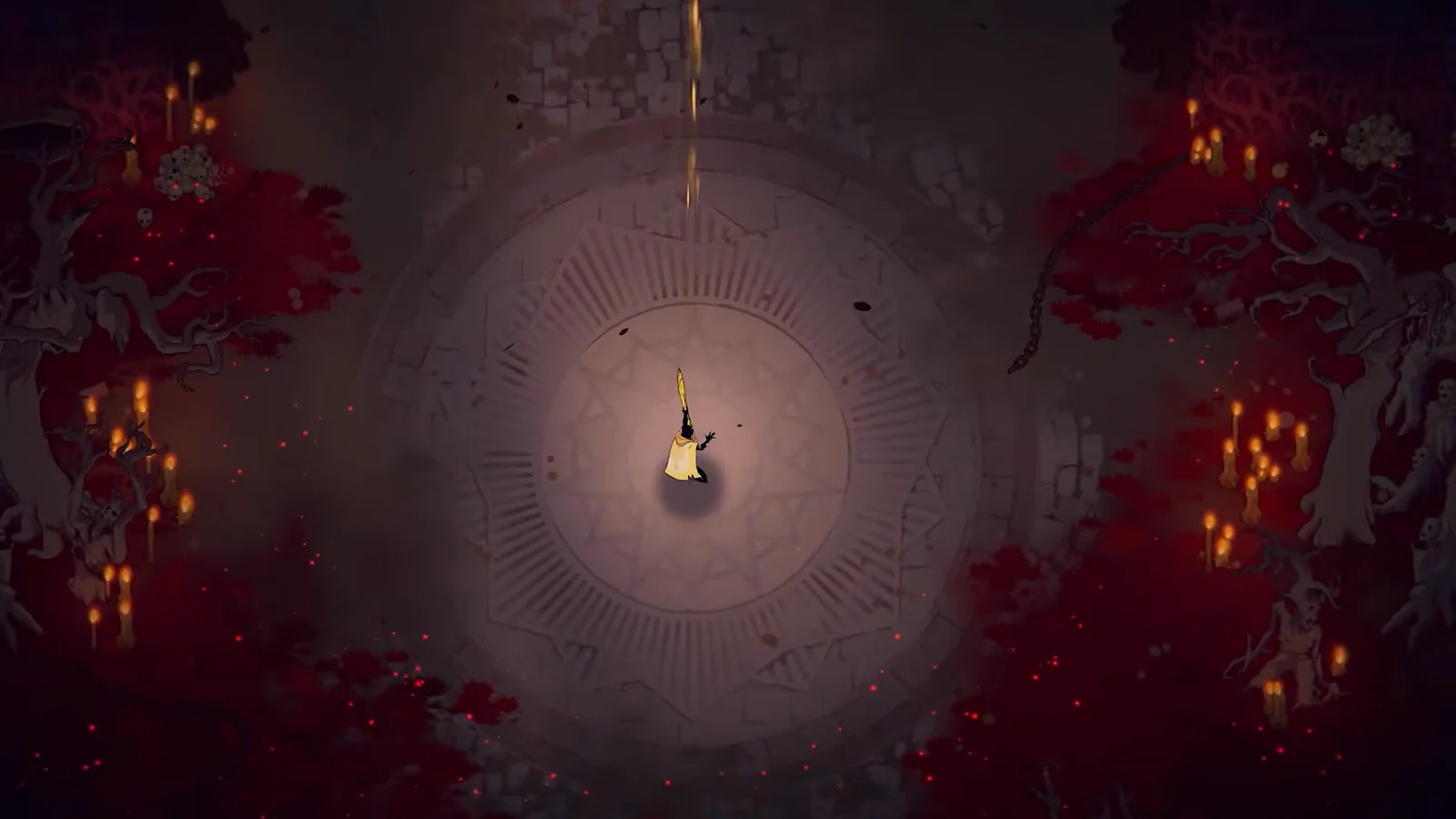
So, is 33 Immortals worth it? For co-op players with a regular group, and for anyone already covered by Game Pass, absolutely. It is an easy game to throw on for a few quick runs, and it has a much higher fun ceiling when people are willing to work together.
For everyone else, the answer is a qualified yes. The content pool is not deep enough to promise endless progression, and the game’s always-online structure means its future depends on matchmaking staying populated.
The split in 33 Immortals reviews comes down to what players want from a roguelike. If you love repeating a strong combat loop, getting a little better with each weapon, and sharing ridiculous saves with friends, the repetition is part of the appeal.
If you need a long solo grind, a large endgame, or a story that carries the experience, the novelty may wear off faster than you’d like.
| Pros | Cons |
|---|---|
| ✅ Massive Co-Op That Works: Turns 33-player madness into smooth, readable action ✅ Gorgeous Audiovisuals: Stunning hand-drawn art paired with an epic orchestral score ✅ Zero Matchmaking Friction: Drops you straight into the action without tedious lobby waits ✅ Unbeatable Value: Budget-friendly $14.99 price tag, plus day-one Game Pass availability ✅ Unified Community: Full cross-play across Steam, Epic, and Xbox keeps lobbies full | ❌ Short-Lived Progression: Hits a plateau quickly once you exhaust the main loop ❌ Feels Grindy Fast: Repetitive run structures start to bleed together during longer sessions. ❌ Silent Squads: Lacks built-in voice chat, making tight endgame calls a gamble |
Great for:
- Co-op groups, Game Pass subscribers, and roguelike fans who prefer spectacle and quick sessions over a deep grind.
- Budget-minded multiplayer gamers looking for a distinct game night without a huge upfront cost.
Less ideal for:
- Players after deep, long-term solo progression, complex stat-heavy character builds found in the best CRPGs, or a story-driven campaign.
- Anyone who does not want to rely on always-online matchmaking.
Ready to join the rebellion? The 33 Immortals key on Eneba is the cheapest PC path; Xbox players are already covered on Game Pass. Cross-play means friends do not need to match platforms, which removes one of the usual co-op headaches.
There is no detailed public post-1.0 content roadmap yet, so it would be premature to promise a major expansion of the game’s long-term loop. Thunder Lotus has committed to server support, bug fixes, and patches after 1.0.
If that support keeps the crowd healthy and adds meaningful reasons to return, 33 Immortals could grow into something with real staying power. Right now, it is a low-risk, high-charm co-op night that is best enjoyed while the lobby is full.