



Fallout 4 vs Fallout 76: Should You Go Lone Wanderer or Team Up Online?


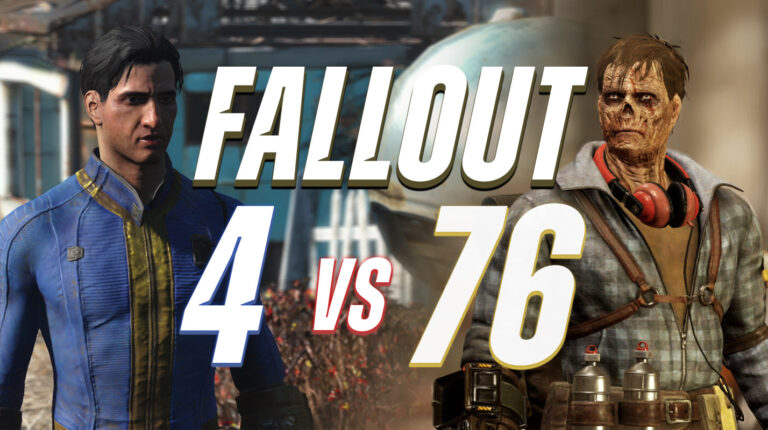
Fallout 4 vs Fallout 76 might sound like a simple pick; same Fallout franchise, same post-apocalyptic world, right? Not quite. These two games take the Fallout universe in completely different directions – and that contrast is exactly what makes comparing them so fun.
In this guide, I’ll walk you through what sets each game apart and help you figure out which one fits your playstyle best. If you’re curious about exploring more of the Fallout world, this is the perfect place to start.
Jump to:
Fallout 4 vs Fallout 76: Game Overview
The Fallout franchise has never been afraid to take risks, and that shows big time with Fallout 4 and Fallout 76. These two games might share DNA – post-apocalyptic wasteland, mutated creatures, and that signature dark humor – but they play out in totally different ways.
Fallout 4, which came out in 2015, sticks closer to what longtime fans love. You’re looking at a game with gripping narrative elements and gameplay that adapts to your style. The modding scene hasn’t slowed down either; new tweaks, overhauls, and fan-made experiences are constantly keeping it alive and fresh.
With its layered mechanics and refined design, it’s no surprise this entry still holds a special place among Fallout fans, especially if you’re into single-player games and player-driven freedom.
Then there’s Fallout 76. Let’s be real; its release was kinda.. rough. But over time, Bethesda put in the effort to turn it into something that actually feels worth playing.
After years of ongoing updates, the game has evolved into an MMO-lite RPG packed with events, new weapons, crafting, and squad-based exploration. If you’re geared up to step into an always-online Fallout setting with your crew, there’s a massive world of fresh content waiting to be explored. Games like Fallout offer similar immersive worlds and adventures.
At their core, both games still stick to that familiar rhythm. They share a familiar combat feel and visual style, but the way they let you engage with the Fallout experience couldn’t be more different. That’s the point of this article: to help you figure out which one is your next go-to game.
Fallout 4 vs Fallout 76: Core Gameplay Experience
These two games serve up different flavors of the apocalypse, as they’re often considered some of the best Fallout games in the franchise. Fallout 4 sticks to a clear loop: explore the wasteland, build your base, chase down quests, and shape the story your way. It’s a solid pick if you like taking full control in unpredictable situations.
Fallout 76, on the other hand, thrives on multiplayer moments. You explore the world in real time with others while shaping your own journey, which makes it one of the best multiplayer games available today. The systems push you to act as a team and adapt quickly, which turns Fallout into a more unpredictable and socially driven experience.
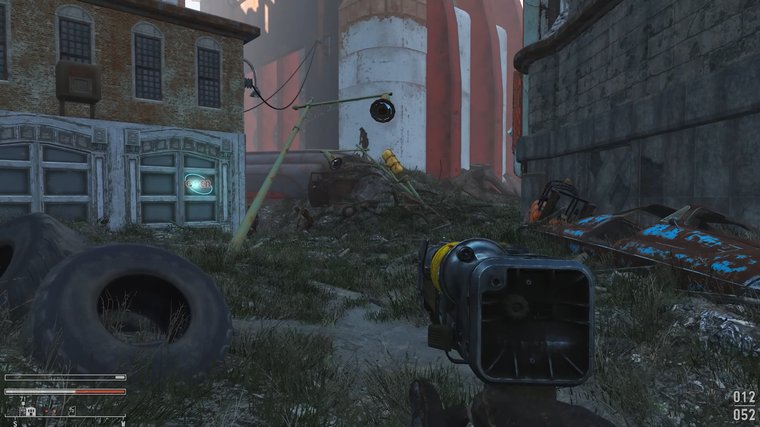
Fallout 4’s Single-Player RPG
| Our Score | 10
☆
★
☆
★
☆
★
☆
★
☆
★
☆
★
☆
★
☆
★
☆
★
☆
★
|
| Platforms | PC, PlayStation 4 & 5, Xbox One/X/S |
| Year of release | 2015 |
| Developer | Bethesda Game Studios |
| Best for | Solo exploration, deep customization, immersive storytelling |
If you grew up on Fallout games like New Vegas, then Fallout 4 probably feels like home, standing strong among the best action RPG games ever made.
It’s a solo RPG: you’re tossed into the wreckage of the Wasteland, where you chase after a lost son in a broken world. It throws you into a world that slowly changes you, depending on how you play.
You get full control over your character, from the way you act to the way the world reacts. That’s what makes it such a strong entry in the Fallout franchise.
The systems give you room to experiment while still keeping things grounded enough to feel purposeful. You’re carving out something personal in the middle of all the ruins.
The base building system lets you build safe zones, decorate them, defend them, or even turn them into profit hubs. Want to recruit settlers or design a whole market street? Go wild.
The combat system got major improvements, too. It’s more fluid than previous entries and makes every firefight feel personal, which places Fallout 4 in the conversation of best FPS games.
Plus, the thriving modding community keeps the game alive years after release; with mods that overhaul graphics, add new stories, or turn your dog into a Deathclaw (yes, really). Use a gaming laptop to fully enjoy these visual upgrades.
Among the two games in the Fallout 4 vs Fallout 76 debate, this is the one that keeps its Fallout universe roots the strongest. It gives you the room to approach things on your own terms and shape the adventure to fit your style.
Want better visuals and cooler gear? Tap into the modding scene: it enhances the game completely and turns the Fallout 4 experience into something new every time.
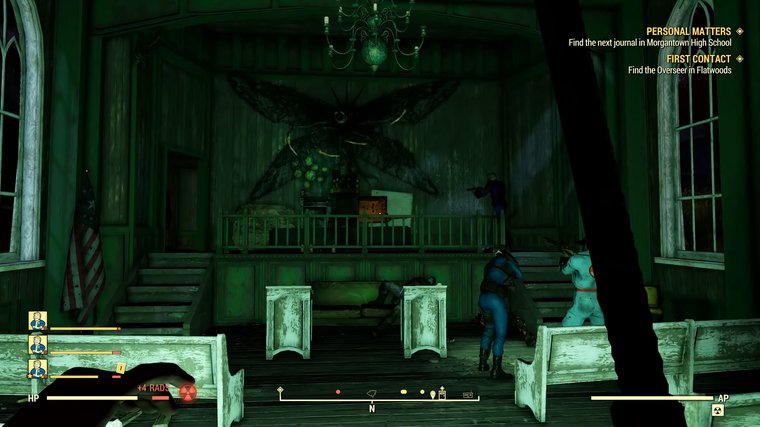
Fallout 76’s Online Multiplayer
| Our Score | 9.5
☆
★
☆
★
☆
★
☆
★
☆
★
☆
★
☆
★
☆
★
☆
★
☆
★
|
| Platforms | PC, PlayStation 4, Xbox One |
| Year of release | 2018 |
| Developer | Bethesda Game Studios |
| Best for | Co-op exploration, live content, survival gameplay |
At release, Fallout 76 didn’t land smoothly. The game launched without NPCs, full of bugs, and missing what fans expected.
But after years of effort and ongoing updates, it’s now a fully playable (and genuinely fun) MMO built around multiplayer chaos. Truly one of the best co-op games out there for fans who want to team up and explore.
This entry flips the typical Fallout experience on its head. You’re still deep in the Wasteland chaos, but this time, the tension and decisions are shared with real people around you.
Random encounters are everywhere, from allies to trolls. You never know what’s around the corner. Every choice you make feeds into your survival run and changes how the game treats you in return.
If you’re after structure, this might not be the better game, but if you love player-driven chaos? This one’s it.
And yes, Fallout 76 finally has human characters with actual dialogue. Quests and story bits now give you more to latch onto, even if they’re not as emotionally deep as Fallout 4 or New Vegas.
The seasonal model adds new content, rare weapons, cosmetics, and game-altering challenges; there’s always more Fallout to chase. Everything is making Fallout 76 a top MMORPG experience for Fallout fans.
This is the kind of game where friends make it better. If you’re drawn to the kind of chaos where your squad actually matters and the world pushes back in real-time, this could be the Fallout that sticks with you the longest.
Play with a mic and a squad. Direct communication turns chaotic events into strategic gold, especially when tackling high-level combat zones.
Winner: It’s definitely Fallout 4. Goes harder on RPG mechanics, buffs solo grind, and stays fresh with mods that keep pulling you back in.
Fallout 4 vs Fallout 76: Story & Narrative
Fallout 4 delivers a personal, character-driven story with big choices that shape the world around you. You’re tied to a fixed backstory, but how you handle the journey – and who you become – is fully up to you.
Fallout 76, meanwhile, started with no human NPCs: just a trail of clues scattered across the world, leaving you to piece the story together on your own. The Wastelanders update flipped the script – now you actually interact with people who react to your choices, not just text logs or background noise.
Both Fallout games offer different storytelling styles: one is classic and personal, the other is more dynamic and community-driven.
Fallout 4’s Personal Journey
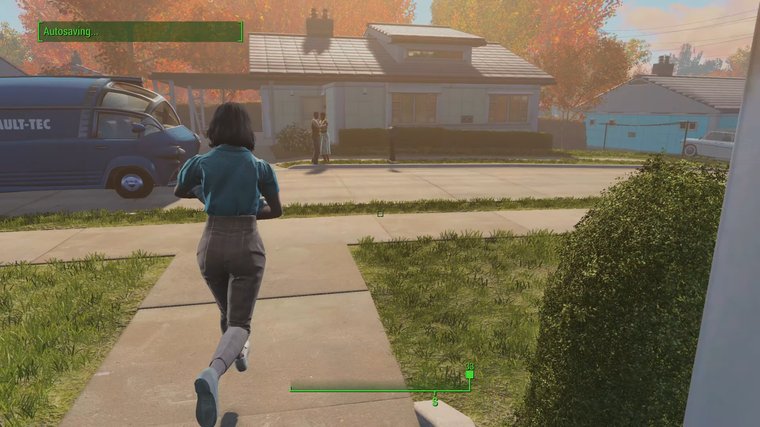
At its heart, Fallout 4 is all about you. You step into the shoes of the Sole Survivor: a parent ripped from their old life and thrust into a shattered world to find their missing son.
But this isn’t just a rescue mission. The story lets you shape your identity in the Fallout universe: do you align with the Brotherhood? Join the Institute? Stay solo and build up settlements? It’s up to you.
Bethesda brings their signature storytelling depth to the table, so you’re free to shape the world around you in ways that genuinely matter. Your choices determine who lives, who dies, and what kind of leader (or destroyer) you become. Even the combat system reflects this flexibility, with V.A.T.S. that lets you slow things down and plan each shot with precision.
Beyond the main quest, the game constantly pulls you toward discoveries that feel just as rewarding, from carving out your own space to diving into unexpected detours.
And with the modding community still going strong, there’s still fresh new content rolling in – from fully voiced companions to entirely new Vegas-level campaigns.
This is the Fallout experience that set the bar for modern single-player games, and it’s absolutely worth playing for fans who crave emotional depth and freedom of choice.
Want to enhance replayability? Try role-playing a completely different character type. Your faction choices and dialogue decisions will completely shift your adventure.
Fallout 76’s Evolving Lore
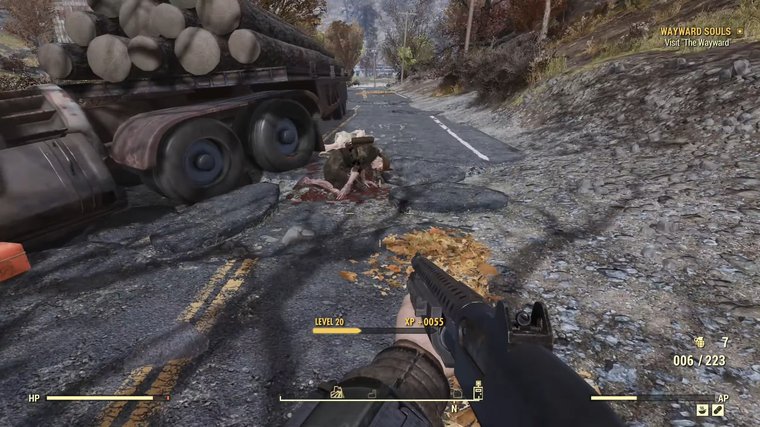
Fallout 76 launched with a bold concept: no human NPCs, just you and the ruins. The original vision focused on environmental storytelling, where you pieced together the history of post-war Appalachia. It was atmospheric, but for the most part, it lacked emotional weight.
That changed with the Wastelanders update, which brought human NPCs and proper questlines back into the mix.
Suddenly, Fallout 76 started feeling like a more familiar entry in the Fallout franchise. No matter if you’re helping a town defend itself or deciding which faction to support, the quests now carry real narrative stakes.
The game keeps shifting, it’s always rolling out fresh content that reshapes how you experience the world; sometimes subtly, sometimes with a full-blown twist.
The real magic lies in the cooperative chaos; you might be bartering for survival one minute, then suddenly dragged into a chaotic gunfight the next. No two moments play out the same way when the world reacts in real-time.
With its blend of MMO and classic RPG elements, Fallout 76 might not be the better game for purists, but it’s undeniably more Fallout than it used to be, especially if you enjoy sharing the Wasteland with friends.
Join a public team to get group-wide perks and XP boosts. It’s a smart way to level up while also meeting helpful (and hilarious) survivors.
Winner: Fallout 4. Story hits way harder this time; every choice sticks, and the emotional weight actually matters.
Fallout 4 vs Fallout 76: World & Atmosphere
Fallout 4’s Commonwealth drops you into a dense, war-torn Boston filled with layered detail and environmental storytelling. Every area feels like it’s trying to tell you something. It’s practically a world built to be unraveled piece by piece.
Fallout 76’s Appalachia goes bigger and wilder. It’s a sprawling map full of eerie beauty. One moment you’re wandering misty forests, the next you’re caught in a radiation storm. You’ll still find scattered lore, but the world evolves with seasonal updates and live content.
Both games nail atmosphere: one intimate and crafted, the other wide-open and ever-changing.
Fallout 4’s Commonwealth
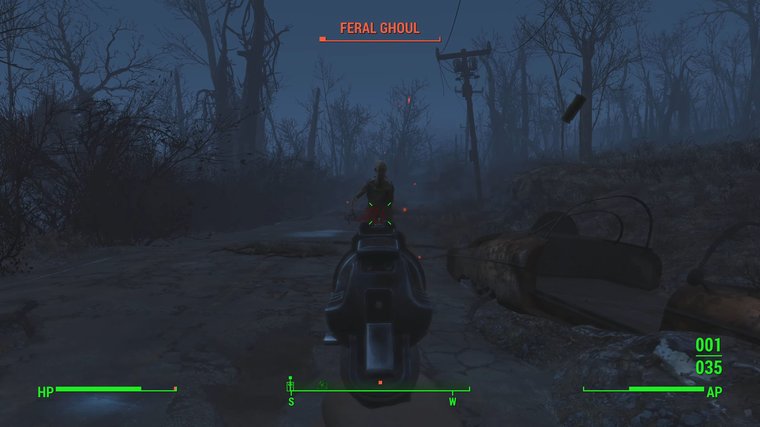
Out of all the Fallout games, Fallout 4 probably gave me the strongest sense of “I need to see what’s around that corner”.
You’re dropped into the Commonwealth, this wrecked version of Boston, where the past still lingers in every alley, vault, and half-buried ruin. One second you’re sneaking past a rusted tank, the next you’re knee-deep in a creepy factory crawling with synths.
It’s not just about the quests or gameplay mechanics – the world itself pulls you in. Places like Diamond City, Vault 111, and the glowing sea feel alive, even when everything’s dead. It’s the kind of map that makes you wander off from your main mission just to check out a weird building in the distance.
Don’t even get me started about the weapons in Fallout 4. Plasma Rifle and Fat Man? They’re truly some of the most iconic video game weapons in gaming history.
And then there’s the modding community, which basically turned Fallout 4 into a hobby, constantly adding new content that stretches the game in every direction. It’s the kind of game that just keeps growing, even years after release.
If you’re into solo open-world games that suck you in for hours, Fallout 4 still hits hard.
Throw in a few survival and weather mods. Makes the whole Fallout experience way more intense without messing with the original vibe.
Fallout 76’s Appalachia
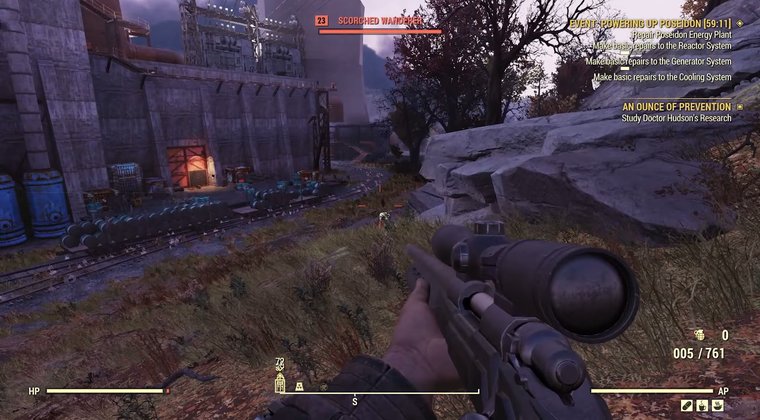
Fallout 76 is weird in the best way.
It takes everything you expect from the Fallout franchise and throws it into Appalachia – this massive, eerie version of West Virginia – complete with toxic swamps, haunted forests, and rusty old rollercoasters in the middle of nowhere. It’s chaotic but surprisingly beautiful for a Wasteland.
At launch, it was mostly just you and a bunch of other players picking through ruins and piecing together the story through tapes and journals. Kinda lonely, but interesting.
Over time, though, new content dropped. NPCs showed up and proper quests came in, so it finally started to feel like a real Fallout game again.
Now, there’s always something going on. Events pop up constantly, the map keeps evolving, and playing with friends really clicks because of the public team perks that boost the experience. The combat system has gotten better, too, especially when you build your loadout right.
If you want a Fallout world that keeps you on your toes with constant surprises and evolving challenges, this one’s the place to be.
Join a team with shared goals. It’s a chill way to get XP bonuses and breeze through tougher mechanics like base building or boss fights.
Winner: Fallout 4. The world feels tighter and more alive, with handcrafted zones that scream “yo, explore me.”
Fallout 4 vs Fallout 76: Performance & Technical Aspects
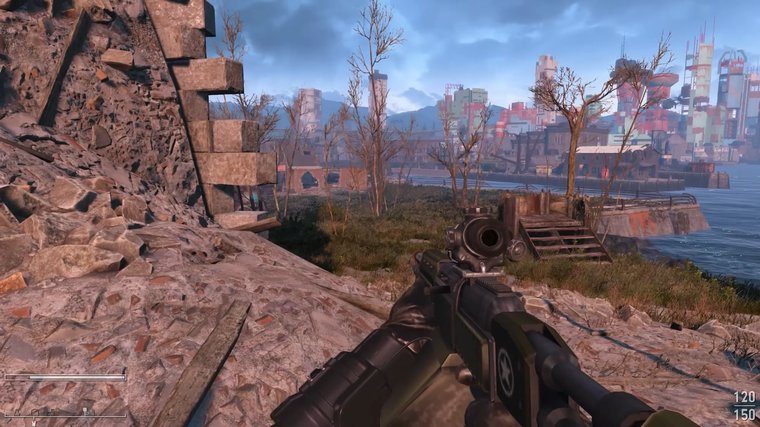
Let’s dive into how Fallout 4 and Fallout 76 stack up on performance and stability, from launch day bugs to how smooth they run now. We’ll check out frame rates, graphics, and how updates have shaped both games.
| Aspect | Fallout 4 | Fallout 76 |
|---|---|---|
| Launch State | ✅ Mostly stable with minor bugs | ❌ More buggy, frequent crashes |
| Current Performance | ✅ Stable and well-patched | ✅ Getting better with regular updates |
| Graphical Fidelity | ✅ Solid base experience, shines more with mods | ✅ Improved over time, but can be inconsistent |
| Bugs/Optimization | ✅ Rough at launch, fixed through patches | ❌ Big improvements, though some issues remain |
| Framerate Stability | ✅ Stable 30-60 FPS on consoles | ❌Performance varies, especially in multiplayer |
| Modding Support | ✅ Massive modding community | ❌ Growing but still smaller than Fallout 4’s |
| Graphics & Presentation | ✅ High-quality textures boosted by mods | ❌ Better with updates, but some parts look dated |
Fallout 4 launched pretty solid, with just some minor hiccups early on. Bethesda patched bugs and polished performance that helps the gameplay stay smooth and stable at 30-60 FPS on consoles.
Visuals got a serious upgrade as the modding community kept pumping out fresh tweaks and enhancements. And to really catch all those details, playing on a good gaming monitor makes all the difference.
Fans of Fallout 4 on newer platforms will appreciate the enhanced visuals and smoother performance, making it one of the best PS5 games for an immersive RPG experience.
Fallout 76 had a rough start; bugs and crashes were common. Bethesda’s regular updates and expansions, especially Wastelanders with real NPCs, have seriously improved the experience.
If you’re a fan of immersive RPGs, Fallout 76 offers a remarkable experience on Xbox One that makes it one of the best Xbox One games available.
Even though Fallout 4 and Fallout 76 dropped years ago, both games keep going strong. Constant updates and a passionate community make sure the Fallout world stays alive and kicking. Bethesda’s ongoing support, plus mods, really make these games last.
If you want to play at peak performance, a proper gaming PC is essential for smooth gameplay. Performance is way better now, though some lag still pops up.
Winner: Fallout 4. Launched more stable, runs smoother, and boasts a massive modding scene that keeps visuals and gameplay fresh.
Fallout 4 vs Fallout 76: Monetization & Post-Launch Content
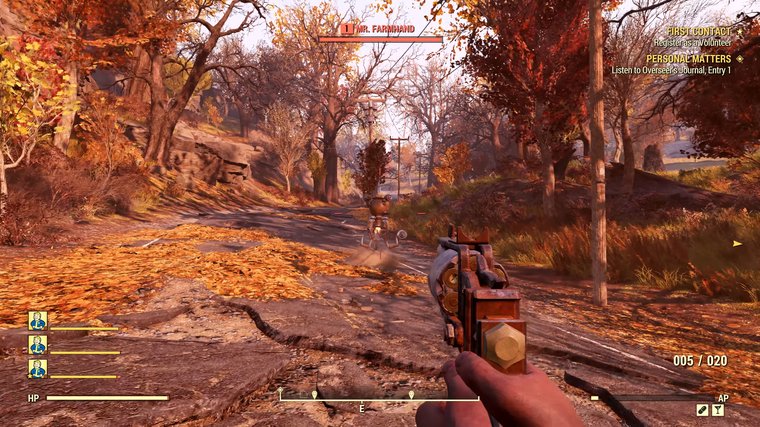
Now, let’s break down how these two handle monetization and post-launch content. Fallout 4 leans on paid DLCs, while Fallout 76 goes for seasonal events and subscriptions. I’ll walk you through what each game offers and how they keep the extras coming.
| Aspect | Fallout 4 | Fallout 76 |
|---|---|---|
| Launch Model | ✅ Traditional DLCs | ✅ Live service model with updates |
| Post-Launch Content | ✅ Paid expansions like Far Harbor and Nuka-World | ✅ Free seasonal updates plus paid skins |
| Monetization | ✅ One-time buy, no extra fees | ✅ Atom Shop and optional Fallout 1st subscription |
| Additional Features | ✅ New zones, quests, and features through DLC | ✅ Private servers, exclusive gear, and ongoing content drops |
| Player Accessibility | ✅ DLCs cost extra, but no subs are needed | ✅ Free-to-play with optional subscription perks |
Fallout 4 sticks to the classic DLC route: pay once, get huge expansions like Far Harbor and Nuka-World. You get fresh areas, quests, and stories without any subscription hassle. These DLCs are still fan favorites years later.
Fallout 76 rolls as a live service game with constant updates and seasonal events. There’s an in-game shop for cosmetic stuff and a Fallout 1st subscription that unlocks private worlds and exclusive perks. Some players aren’t thrilled about paid extras, but the game keeps growing with big expansions like Wastelanders and Steel Dawn.
Fallout 4 leans on classic expansions, while Fallout 76 keeps evolving with live updates. No matter if you want a polished solo journey or an ever-changing world, Bethesda delivers a Fallout experience that’s still fresh and full of adventure.
Winner: It’s a tie. Fallout 4 sticks to classic DLCs with no extra fees, while Fallout 76 shines with free seasonal updates and optional subscription perks.
Final Verdict
Look, Fallout 4’s the OG for anyone who’s all about that solo grind. Deep RPG vibes, crazy choices that actually matter, plus a modding scene that keeps the game feeling brand new no matter how many hours you dump in.
Sure, you gotta drop some extra cash for DLCs, and no multiplayer squad runs here. But if you want to run your own show in the Wasteland, this one’s the boss.
Fallout 76? It’s a different animal. If you’re into rolling with your crew, diving into unpredictable chaos, and a world that’s always shifting, it’s a solid pick. Just a heads up: those microtransactions and the Fallout 1st subscription might not be everyone’s cup of Nuka-Cola.
At the end of the day, it’s all about your playstyle. Wanna fly solo and craft your own legend? Fallout 4’s your jam. Looking for multiplayer madness and a live world? Fallout 76 has you covered.
But if we’re talking overall package – gameplay, story, world, and tech – Fallout 4 still holds the crown.
FAQs
Which is better, Fallout 4 or Fallout 76?
Fallout 4 is better for deep solo play, with a richer story and exploration. Fallout 76 focuses on multiplayer chaos and live updates, but can’t exactly match Fallout 4’s classic RPG depth.
Is Fallout 4 the same game as Fallout 76?
No, Fallout 4 is not the same as Fallout 76. Fallout 4’s a classic single-player RPG, while Fallout 76 puts you in an online multiplayer world focused on co-op survival and exploration. Same Fallout universe, but totally different vibes.
Is Fallout 4 bigger than Fallout 76?
Fallout 76 has a bigger map, but it’s not as packed with story or detail. Fallout 4’s areas are tighter and story-rich, whereas Fallout 76 spreads out with vast biomes and multiplayer events that keep things moving slower.
Do I play Fallout 4 or Fallout 76 first?
If story and character growth matter most, start with Fallout 4. It’s a complete, self-contained adventure. Fallout 76’s better if you’re into multiplayer, live updates, and don’t mind a steeper learning curve.
Can I play Fallout 76 without playing Fallout 4?
Yes, you can play Fallout 76 without playing Fallout 4. It stands on its own with its own story, so no prior Fallout knowledge needed.