


10 Best Planeswalkers in MTG in 2026: Top Picks for Commander and Casual Play

Eneba Hub contains affiliate links, which means we may earn a small commission if you make a purchase through them—at no extra cost to you. Learn more


Magic was built on the idea that you are the planeswalker, a spell-slinging mastermind flinging Lightning Bolts and summoning monsters like it’s no big deal. Then Wizards dropped the best planeswalkers in MTG had ever seen onto the battlefield in 2007, and everyone collectively went, “Wait… so who am I now?”
Suddenly, dragons, mind mages, and a suspicious number of shirtless heroes were doing my job for me. Fast-forward to 2026, and there are 300+ planeswalkers roaming the Multiverse, each promising value, control, tokens, emblems, and at least one ability your opponent forgot to read. Some are incredible. Some are draft bulk with ambition.
In that light, this guide highlights the best planeswalkers MTG players actually want.
Jump to:
10 Best Planeswalkers in MTG That Actually Win Games in 2026
When it comes to the best planeswalkers in MTG, they all have to create the same reaction; the table shifts the moment they resolve. These walkers generate value fast, pressure opponents immediately, and can snowball a game if they survive a single rotation.
Many of these walkers have become permanent fixtures among the best Commander staples, appearing in decks across multiple color combinations.
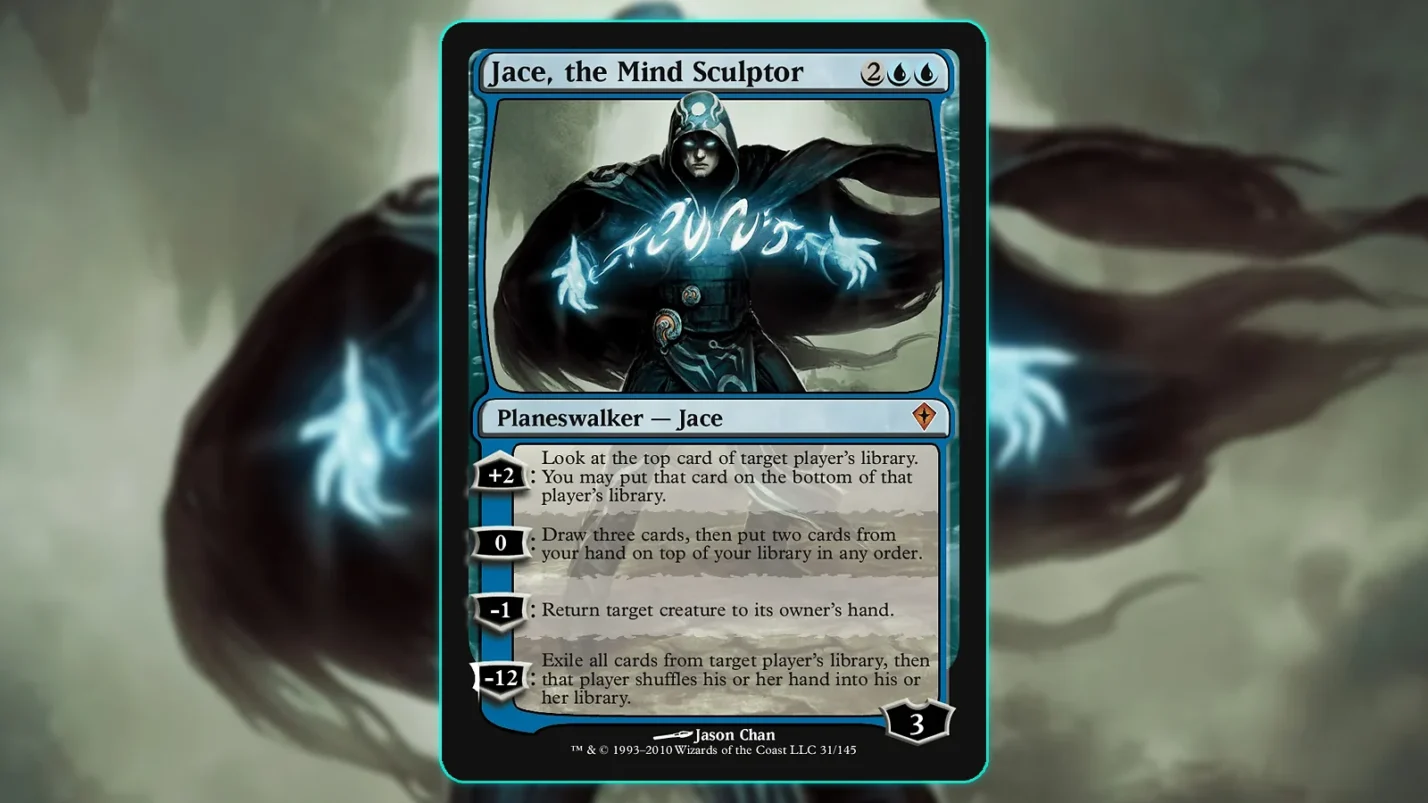
1. Jace, the Mind Sculptor [Best Control Planeswalker of All Time]
| Specs | Details |
|---|---|
| Mana Cost | 2UU |
| Card Type | Legendary Planeswalker – Jace |
| Color Identity | Blue |
| Format Legality | Commander, Legacy, Vintage |
| Starting Loyalty | 3 |
| Key Abilities | Brainstorm, creature bounce, library control |
The best planeswalkers in MTG history always start with Jace, the Mind Sculptor. When we reviewed this card, it felt like the blueprint for control walkers (efficient, flexible, and brutally punishing if unanswered).
Based on actual Commander table experience, Jace still behaves like a side character but somehow wins the game anyway. He consistently shows up on lists of good planeswalkers because he doesn’t depend on the special combos or perfect setups to pull his weight.
Jace set the standard for the best planeswalkers in MTG by combining control, card advantage, and long-term inevitability into one absurdly efficient package.
Now, from a design and gameplay perspective, Jace works because every ability pushes the same control game plan instead of pulling in different directions. The bounce keeps aggressive creatures honest, Brainstorm fixes bad hands, and the +2 messes with opponents’ draws in a way that makes them feel cursed without always knowing why.
This is exactly why he still appears in decks built around multiple planeswalker commanders. He thrives in decks where protecting walkers and building slow and overlapping value engines becomes the main strategy.
And yeah, Jace defined an era of Magic and still shows up in Eternal formats today. Jace earned his reputation by standing shoulder to shoulder with the best MTG cards ever printed during Magic’s most control-heavy era.
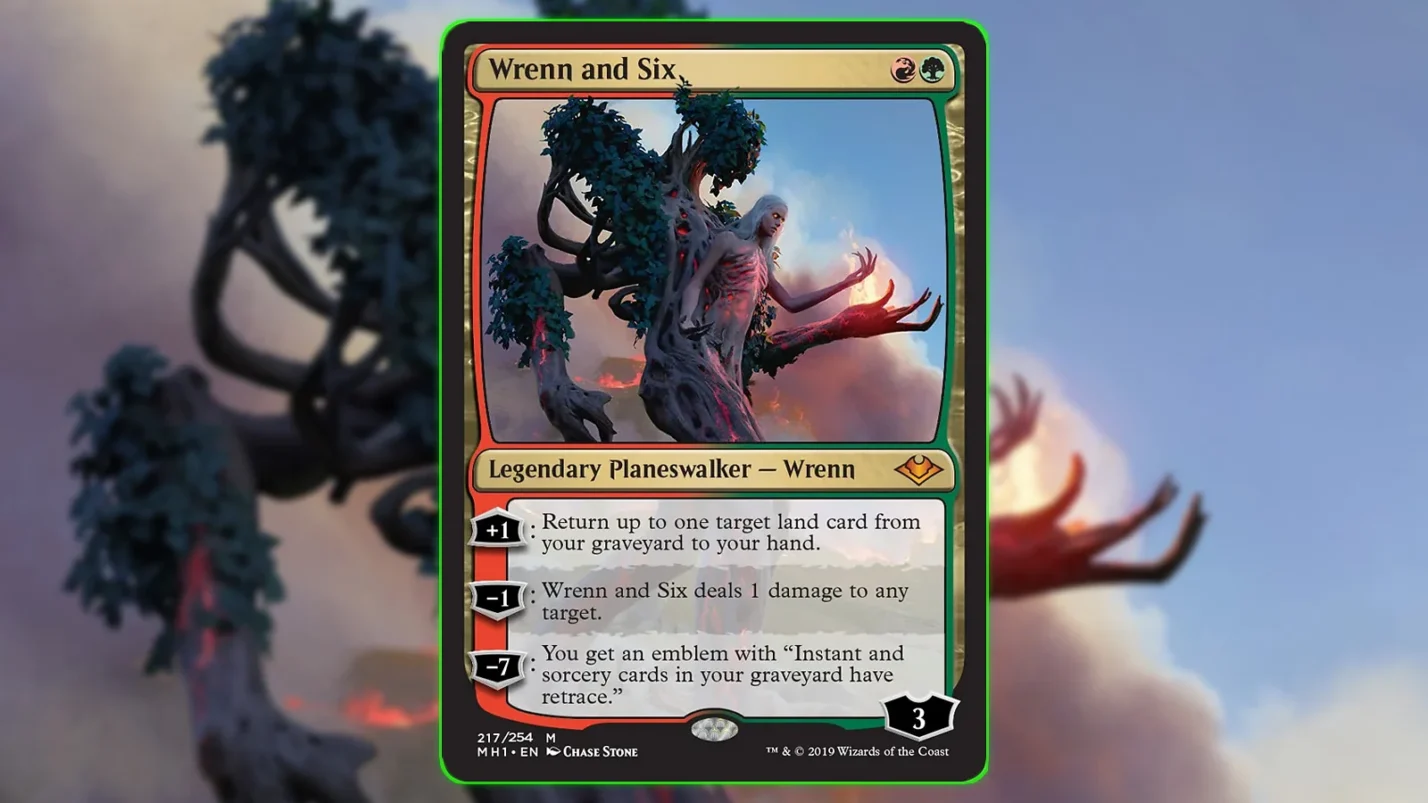
2. Wrenn and Six [Most Efficient Two-Mana Planeswalker]
| Specs | Details |
|---|---|
| Mana Cost | RG |
| Card Type | Legendary Planeswalker – Wrenn |
| Color Identity | Red–Green |
| Format Legality | Commander, Modern, Vintage |
| Starting Loyalty | 3 |
| Key Abilities | Land recursion, repeatable damage, retrace emblem |
Discussions about the best planeswalker always end up circling back to Wrenn and Six, usually followed by someone saying, “It’s only two mana.” Yes, and that’s the problem. Wrenn hits the table early, starts pinging X/1s out of existence, and somehow makes sure you never miss a land drop again.
Based on real Commander and Modern gameplay experience, Wrenn and Six behave like that tiny engine that looks harmless until you realize your opponent has been replaying the same fetch land for four turns straight. It consistently lands on lists of good planeswalkers because it generates value without asking for complicated board states or fragile combos. It just sits there, recycling lands and slowly turning small advantages into a very annoying inevitability.
Two-mana value monster. Land recursion plus repeatable damage creates absurd long-game control.
The +1 turns fetch lands into a recurring resource loop, the −1 keeps mana dorks and utility creatures honest, and the emblem is pure nonsense once your graveyard fills up. Wrenn pairs perfectly with fetch lands and the best dual lands.
Now, from a gameplay and design standpoint, Wrenn and Six push red and green into graveyard-focused value play rather than pure aggression. This is a surprisingly effective shift when it comes to the best planeswalkers in MTG. This is also why Wrenn and Six fit naturally into strategies built around multiple planeswalker commanders, where protecting incremental advantage engines matters more than winning quickly.
Wrenn rarely ends the game alone, but it consistently sets up turns where burn spells, retrace effects, or graveyard recursion explode into massive tempo swings. For a two-mana walker, that kind of long-term control is honestly a little rude… but it is also exactly what makes Wrenn and Six one of the best planeswalkers in MTG.
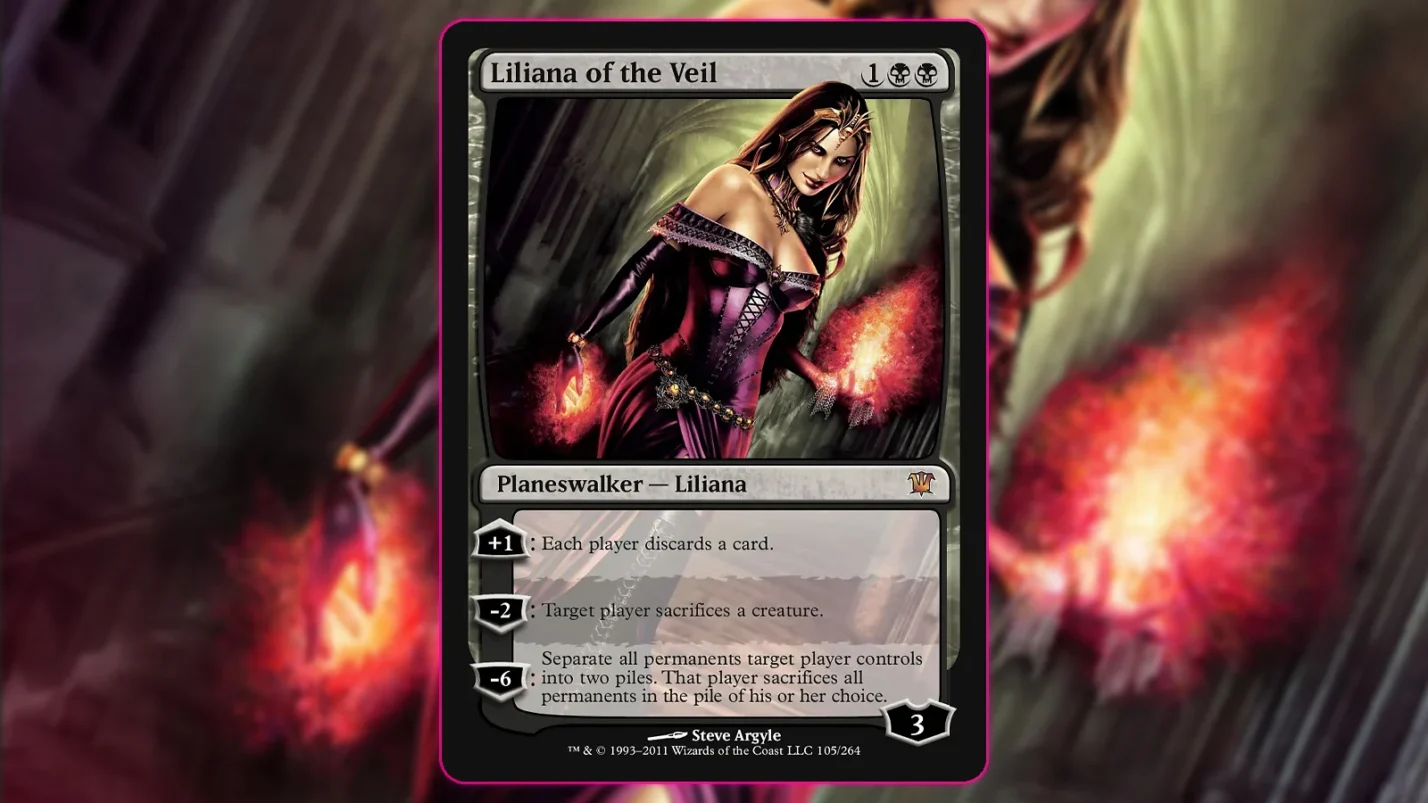
3. Liliana of the Veil [Best Early-Game Disruption Walker]
| Specs | Details |
|---|---|
| Mana Cost | 1BB |
| Card Type | Legendary Planeswalker – Liliana |
| Color Identity | Black |
| Format Legality | Commander, Modern, Legacy, Vintage |
| Starting Loyalty | 3 |
| Key Abilities | Discard pressure, forced sacrifice, permanent split |
When Liliana of the Veil first appeared, she completely changed expectations around what a three-mana planeswalker could do. At a time when most walkers were slower and clunkier, she hit the battlefield early and immediately started pulling games apart. That early efficiency is a big reason she still comes up in discussions about the best planeswalkers in MTG, even if her raw dominance has faded with time.
In practical play, Liliana excelled in decks that actively benefited from her symmetrical discard. Midrange strategies like Jund barely blinked at pitching extra cards, while opponents often struggled to recover. That interaction turned her +1 into a weapon rather than a drawback and helped cement her place among the best planeswalkers in MTG for early disruption and resource denial.
Few planeswalkers apply this much pressure this early for so little mana, which makes her efficient disruption hard to ignore.
The +1 taxes resources, the −2 answers untouchable creatures, and the ultimate still ends friendships. Not the terror she once was, but Liliana’s design remains clean, punishing, and unmistakably iconic.
Also, Liliana is a reminder that planeswalkers are often defined by what they do turn after turn. For example, removing a key creature, stripping hands, and forcing awkward decisions add up quickly. She may no longer headline modern planeswalker commanders, but her efficiency and longevity explain why Liliana of the Veil remains a reference point whenever players talk about the best planeswalkers in MTG and how early pressure can win games quietly.
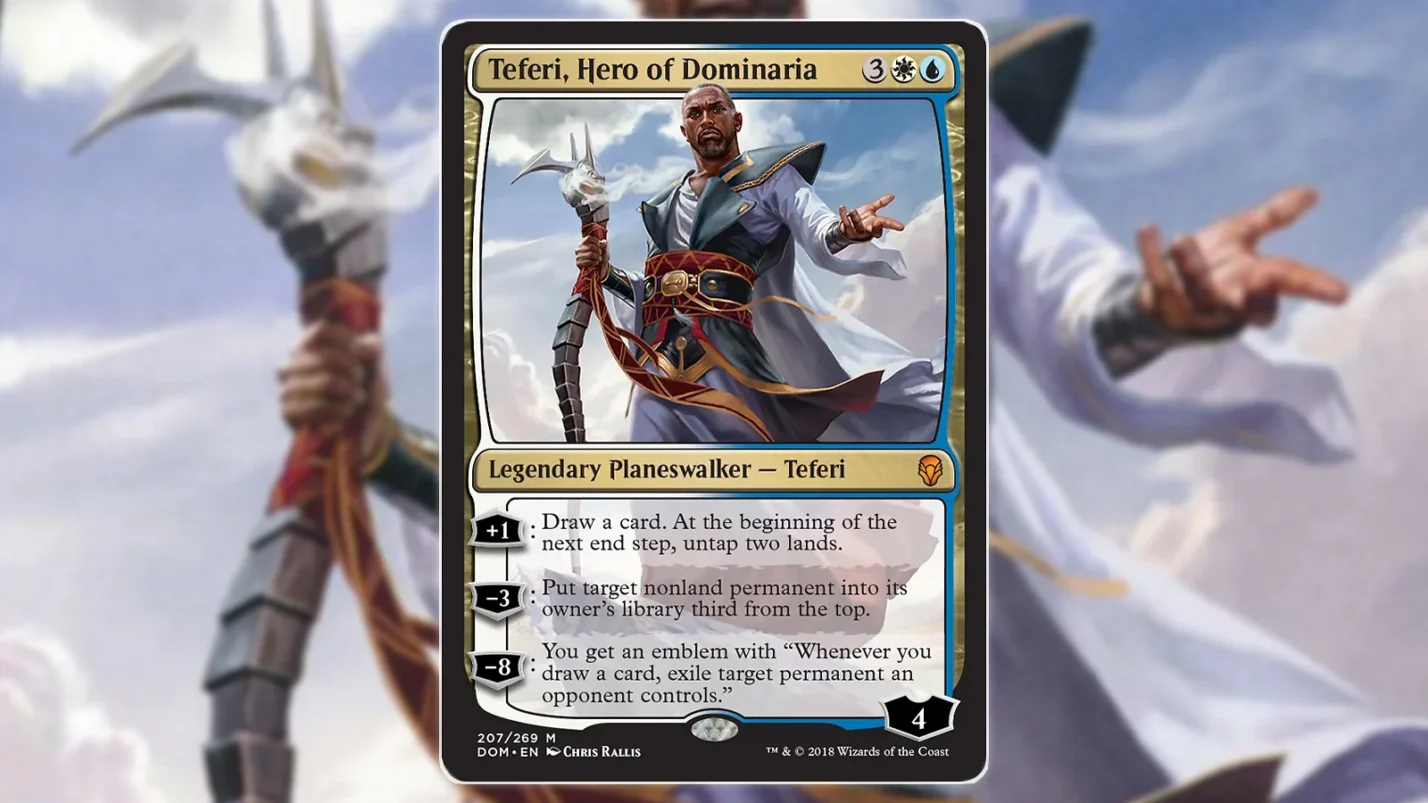
4. Teferi, Hero of Dominaria [Best Card Advantage Engine for Control]
| Specs | Details |
|---|---|
| Mana Cost | 3WU |
| Card Type | Legendary Planeswalker – Teferi |
| Color Identity | White–Blue |
| Format Legality | Commander, Modern, Pioneer, Historic |
| Starting Loyalty | 4 |
| Key Abilities | Card draw, permanent removal, game-winning emblem |
The history of MTG planeswalkers has a recurring theme: if a control deck is winning, Teferi is probably involved. Teferi, Hero of Dominaria, doesn’t reinvent anything. Five mana looks expensive until you +1, draw a card, and untap two lands, which effectively makes him a three-mana play.
Now, let’s talk about a real control-deck play. This is where Teferi, Hero of Dominaria, earns his reputation by turning time itself into a resource. His +1 is the quiet all-star here, which lets control players draw a card while still keeping mana open for counterspells or removal.
That single interaction is a big reason Teferi is up high on the list of best planeswalkers in MTG for white-blue control. He simply stretches games until opponents run out of options.
Card draw plus mana refund makes Teferi absurdly efficient. He’s the control finisher that pays for himself.
In longer games, especially in Commander, Teferi’s −3 ability shows why time magic is terrifying. Tucking away even the largest threats buys multiple turns and sidesteps death triggers entirely, which is invaluable when answers are limited. While his ultimate takes work, it completely locks games once it resolves, especially in slower environments where protecting planeswalkers is easier.
Teferi is not fun or appealing, but his ability to stabilize bad positions and slowly suffocate opponents is exactly why players use him. Heck, he’s still one of the best planeswalker commanders.
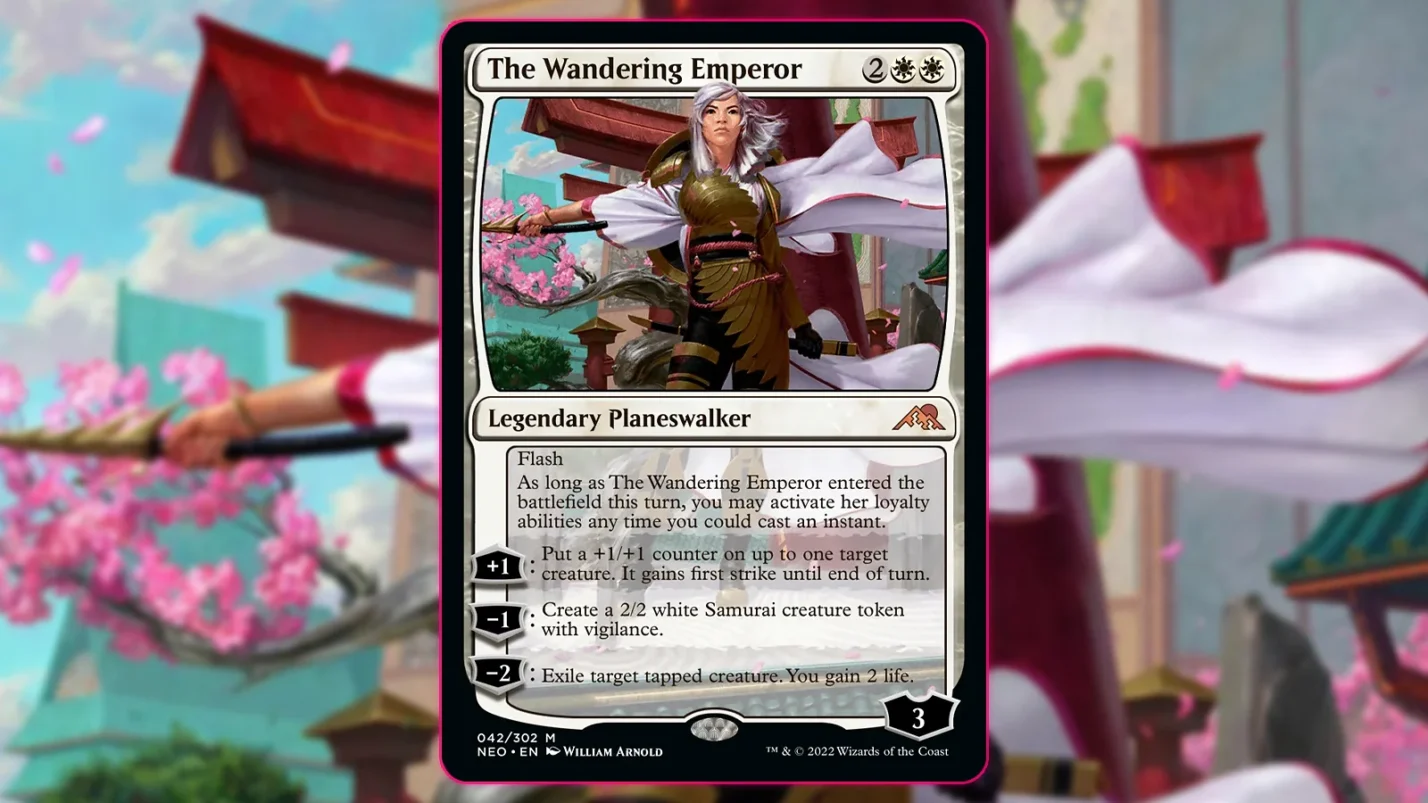
5. The Wandering Emperor [Best Flash Planeswalker Ever Printed]
| Specs | Details |
|---|---|
| Mana Cost | 2WW |
| Card Type | Legendary Planeswalker – Emperor |
| Color Identity | White |
| Format Legality | Commander, Standard, Pioneer, Modern |
| Starting Loyalty | 3 |
| Key Abilities | Flash deployment, exile removal, and token generation |
The best planeswalkers in MTG don’t usually make opponents nervous just for passing the turn, but The Wandering Emperor absolutely does. Four untapped white mana now triggers paranoia. Is it removal? A surprise blocker? A planeswalker with flash?
You’ll just need to attack and find out.
The Wandering Emperor became memorable the moment players realized she turns patience into a weapon. Simply passing the turn with four white mana open creates hesitation across the table. Now, this is something very few cards manage to do consistently. That constant psychological pressure is a major reason to consider her as one of the best planeswalkers in MTG.
Flash plus flexible abilities make every combat miserable and turn instant-speed pressure into a legitimate win condition.
Dropping in mid-combat to exile a tapped creature is already brutal. Add token generation, lifegain, and combat tricks, and suddenly the board belongs to you. Powerful without being broken, The Wandering Emperor rewrote how planeswalkers are allowed to function. The Samurai tokens she creates also slot neatly into decks built around the best token commanders.
Truth be told, her strength comes from abilities that are already solid on paper but become borderline unfair when used at instant speed. Exiling an attacker mid-combat, creating surprise blockers, or suddenly boosting creatures turns combat math into guesswork for opponents. Those tools helped her dominate Standard and translate better into deeper formats. And that’s why she is considered one of the best planeswalkers in MTG.
This consistent creature generation and instant-speed utility make her a flawless addition for anyone playing top-tier token commanders MTG.
6. Karn, the Great Creator [Best Artifact Control and Combo Enabler]
| Specs | Details |
|---|---|
| Mana Cost | 4 |
| Card Type | Legendary Planeswalker – Karn |
| Color Identity | Colorless |
| Format Legality | Commander, Modern |
| Starting Loyalty | 5 |
| Key Abilities | Artifact lockdown, sideboard tutoring, combo enabler |
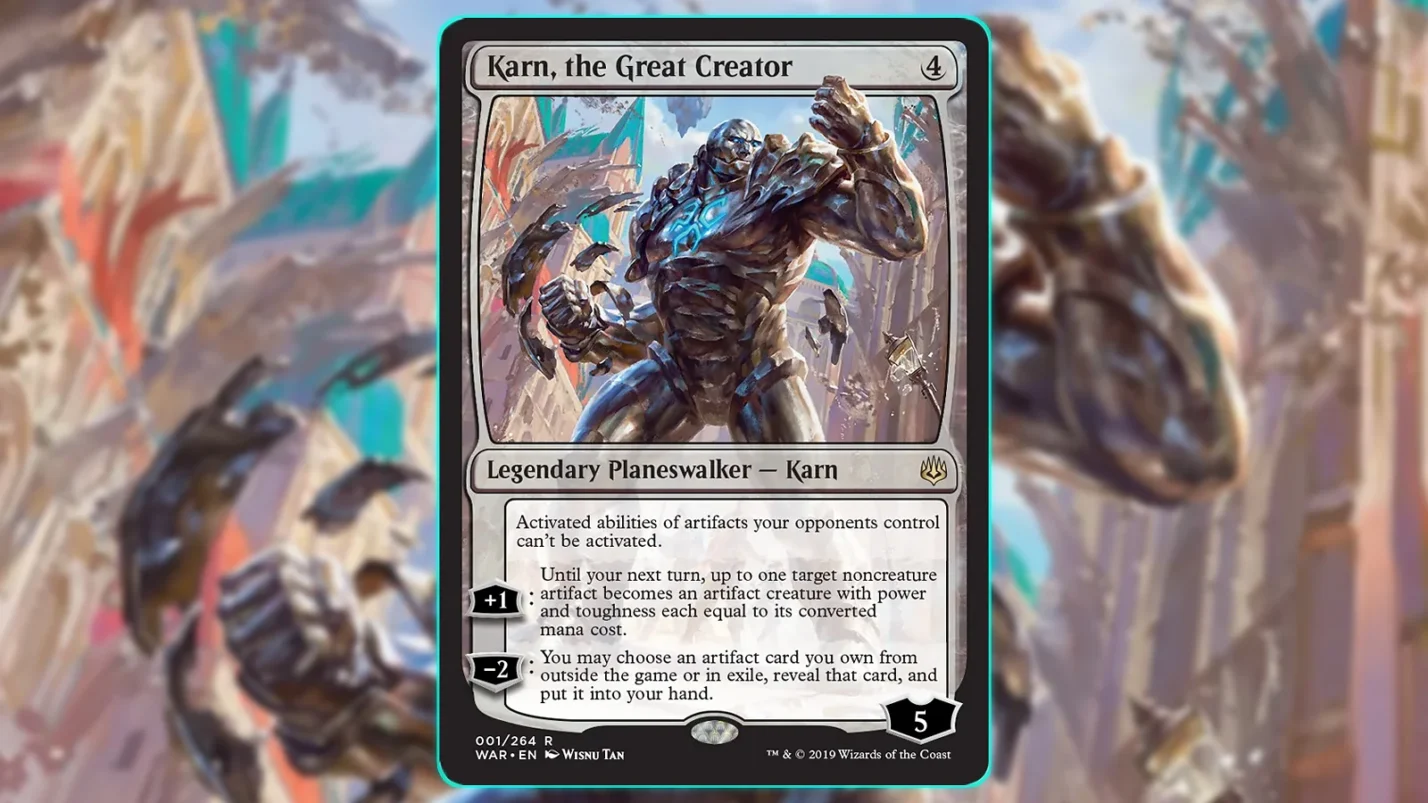
Karn’s reputation really comes from that static ability while doing heavy lifting before you even touch his loyalty. Shutting off opposing artifacts is something players normally dedicate sideboard slots to, which is why Karn instantly landed among the best planeswalkers in MTG the moment War of the Spark released.
Turning mana rocks, artifact lands, and combo pieces into expensive paperweights changes games immediately. This is especially true in formats where artifacts quietly hold everything together.
Lock opponents while tutoring your win conditions – that’s artifact control mastery in one package.
Where Karn truly becomes oppressive is the −2 ability. Being able to “wish” artifacts from outside the game or recover key pieces from exile turns him into a toolbox engine disguised as disruption. Cards like Mycosynth Lattice or Trinisphere push Karn from irritating to game-ending, and the fact that this happens without attacking explains why he ranks among good planeswalkers, arguably one of the best to ever get printed for artifact-heavy metas.
So, in Commander, Karn functions less as a finisher and more as a control lever that warps the table around him. He fits cleanly into colorless shells and artifact strategies that want redundancy and inevitability rather than speed. He simply punishes greedy setups, and that’s exactly why he’s the best planeswalkers in MTG whenever artifact control is part of the conversation.
7. Ugin, the Spirit Dragon [Best Colorless Board Wipe Planeswalker]
| Specs | Details |
|---|---|
| Mana Cost | 8 |
| Card Type | Legendary Planeswalker – Ugin |
| Color Identity | Colorless |
| Format Legality | Commander, Modern, Legacy, Vintage |
| Starting Loyalty | 7 |
| Key Abilities | Board wipe, direct damage, massive ultimate |
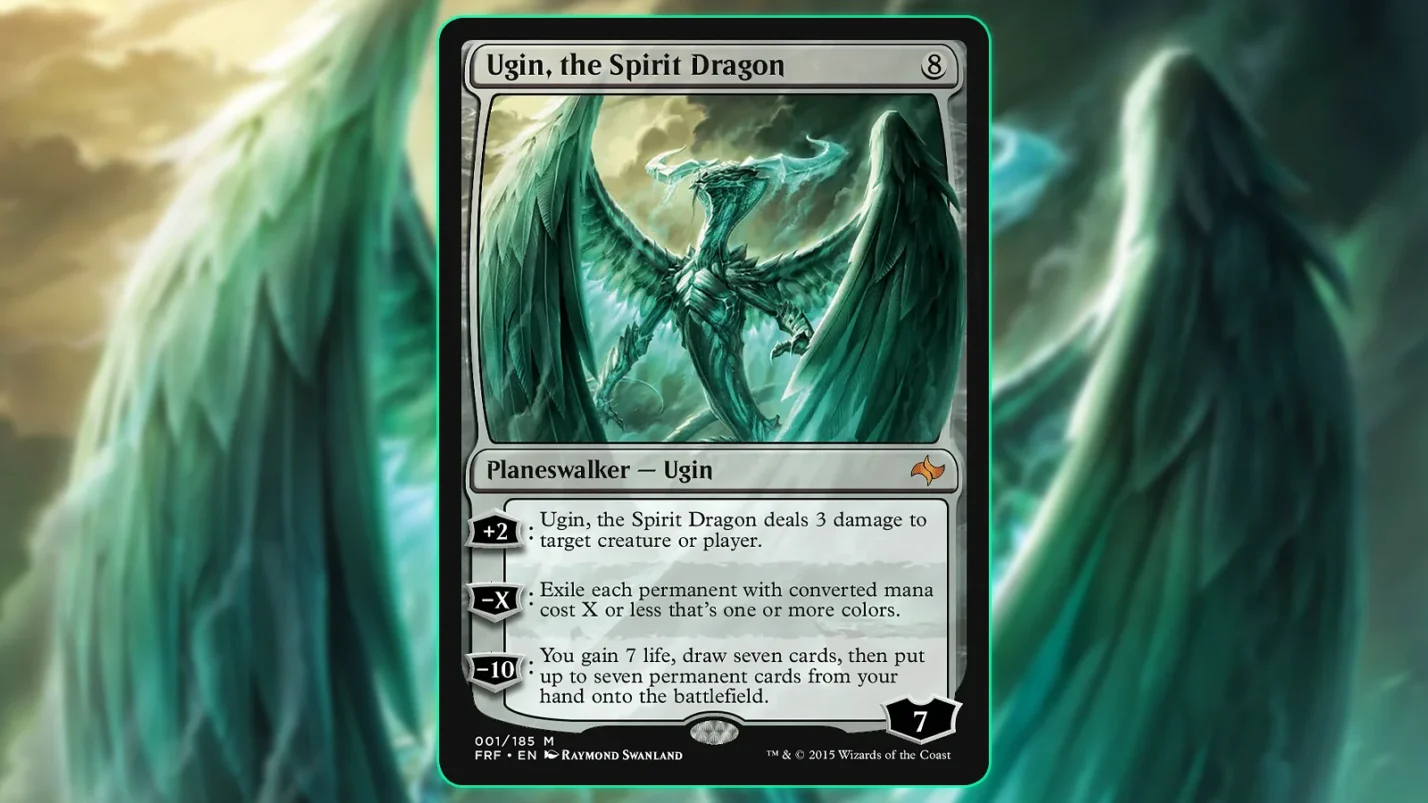
Ugin earned his legendary status by proving that raw power doesn’t always need card draw or complicated synergy. When he first appeared in Tarkir, players quickly realized he could control nearly every permanent type while being playable in any deck willing to reach eight mana. That flexibility is the main reason Ugin is considered one of the best planeswalkers in MTG. Add strategies that rely on ramp or late-game stabilization, and he’s rocking hard.
Few cards swing games this hard on resolution, and colorless board resets don’t get cleaner than this.
Part of Ugin’s appeal comes from his universal mana cost. Unlike many walkers locked into specific color combinations, Ugin rewards decks that can accelerate mana regardless of color identity. Ramp shells, Tron builds, and Commander decks built around big-mana engines all benefit from having a reset button that sticks around afterward.
Ugin’s battlefield impact also reflects his lore power. As one of the figures responsible for containing the Eldrazi, his in-game presence mirrors that overwhelming control. Once resolved, he rewrites them entirely.
Even without reaching his ultimate, repeated damage from the +2 ability quickly closes games. This explains why he’s still, possibly, the best planeswalkers in MTG, whenever players discuss late-game finishers that double as emergency resets.
8. Nissa, Who Shakes the World [Best Mana-Ramping Planeswalker]
| Specs | Details |
|---|---|
| Mana Cost | 3GG |
| Card Type | Legendary Planeswalker – Nissa |
| Color Identity | Green |
| Format Legality | Commander, Pioneer, Historic |
| Starting Loyalty | 5 |
| Key Abilities | Mana doubling, land animation, ramp payoff |
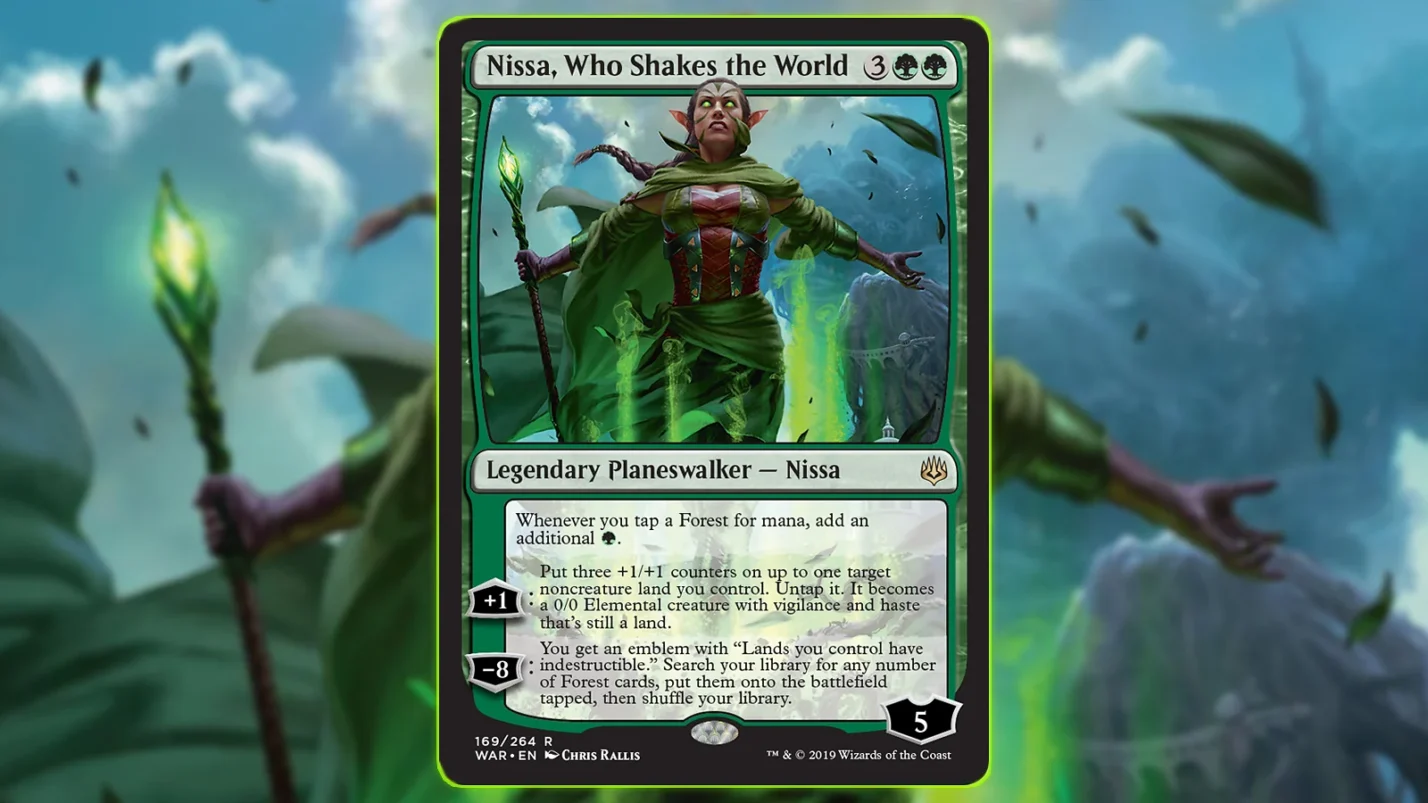
The best planeswalkers in MTG turn your mana into a weapon. Nissa is one of those cards that teaches a brutal lesson fast: if she resolves and you don’t have hard removal, the game usually ends. Double mana changes everything. Decks go from “doing fine” to “doing illegal things” in a single turn.
Doubles resources while creating attackers and blockers. Green’s most explosive mana engine.
In real games, Nissa feels unfair in the best possible way. Forests tapping for two mana snowball absurdly fast, and animated lands suddenly become hasty attackers and blockers that dodge most sweepers. Against midrange decks, she takes over instantly. Against control, sticking her once is often enough. That kind of pressure is why many players think she’s among the good planeswalkers ever printed for pure resource dominance.
She isn’t unbeatable, though, but she is unforgiving. Fast aggro can run under her, and counters still matter. Still, when Nissa lands early with even a little ramp support, things spiral quickly. That ability to turn mana into inevitability is exactly why she remains one of the best planeswalkers in MTG for mono-green, and Forest-heavy builds, even years after release.
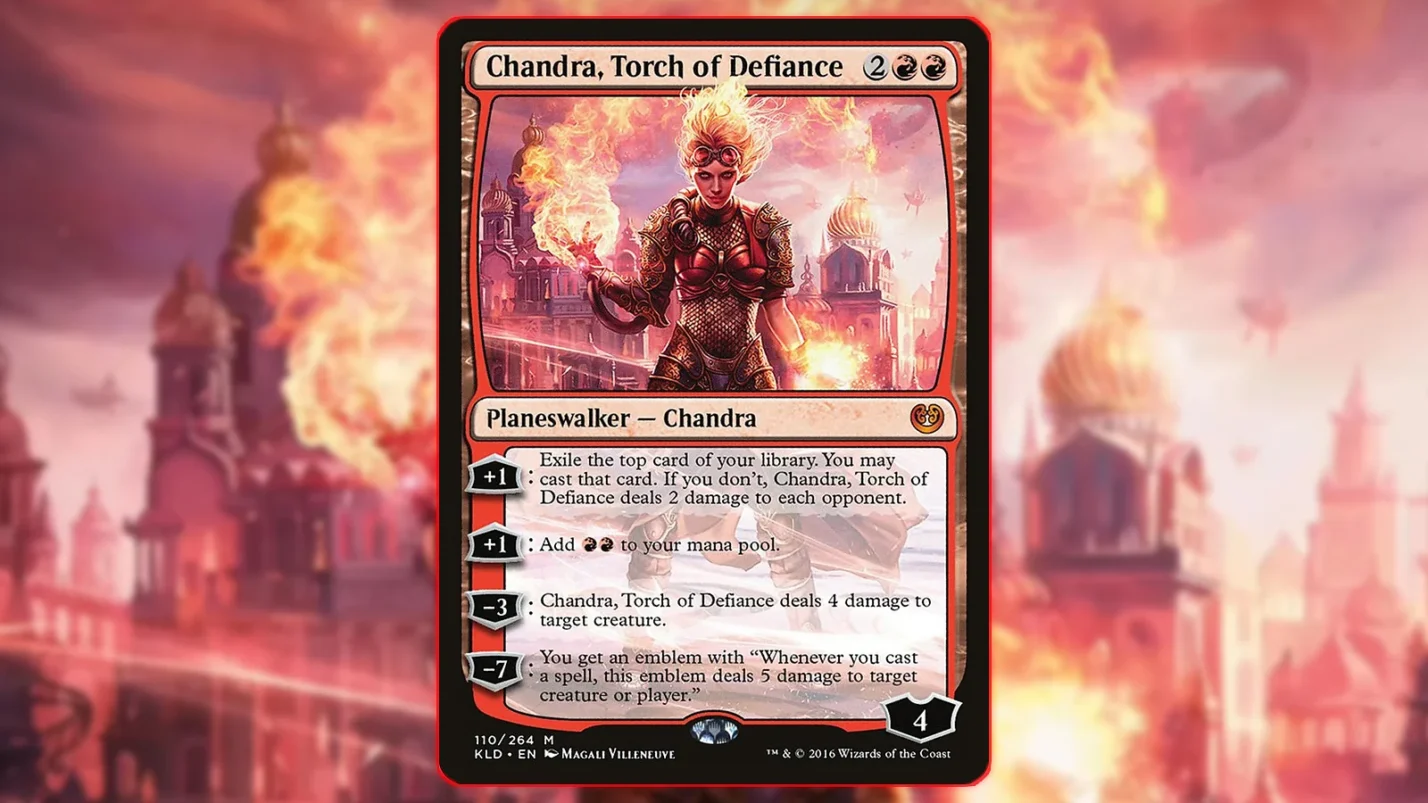
9. Chandra, Torch of Defiance [Most Versatile Red Planeswalker]
| Specs | Details |
|---|---|
| Mana Cost | 2RR |
| Card Type | Legendary Planeswalker – Chandra |
| Color Identity | Red |
| Format Legality | Commander, Pioneer, Modern |
| Starting Loyalty | 4 |
| Key Abilities | Ramp, impulse draw, removal, burn emblem |
Chandra earned her reputation because she solves problems instead of waiting for them to happen. She shows up, makes mana, removes threats, and keeps cards flowing. That versatility is why people pick her as one of the best planeswalkers in MTG for red decks. Most red walkers pick one job. Chandra clocks in and does all of them. Her high-impact abilities mirror the power found among the best red cards MTG that define the color’s aggressive identity.
In real gameplay, she feels like a momentum engine. The ramp mode pushes explosive turns earlier than opponents expect. The impulse draw keeps pressure going without running out of gas. If things get messy, four damage usually cleans it up fast. That consistency is exactly why players discussing good planeswalkers frequently point to her as red’s strongest walker, a color that rarely gets this level of power.
Every ability matters in real games, which is why she’s Red’s most complete planeswalker.
Chandra also fits into almost every red strategy without forcing awkward deckbuilding choices. Midrange decks use her as a steady advantage. Control shells use her for removal and card flow. Prison builds love for her because she generates value while locking boards. That flexibility keeps her firmly planted among the best planeswalkers in MTG whenever red needs reliability instead of flashy gimmicks.
She rarely needs her emblem to matter. Most games are already slipping away once she survives a few turns. That steady pressure is what makes Chandra dangerous.
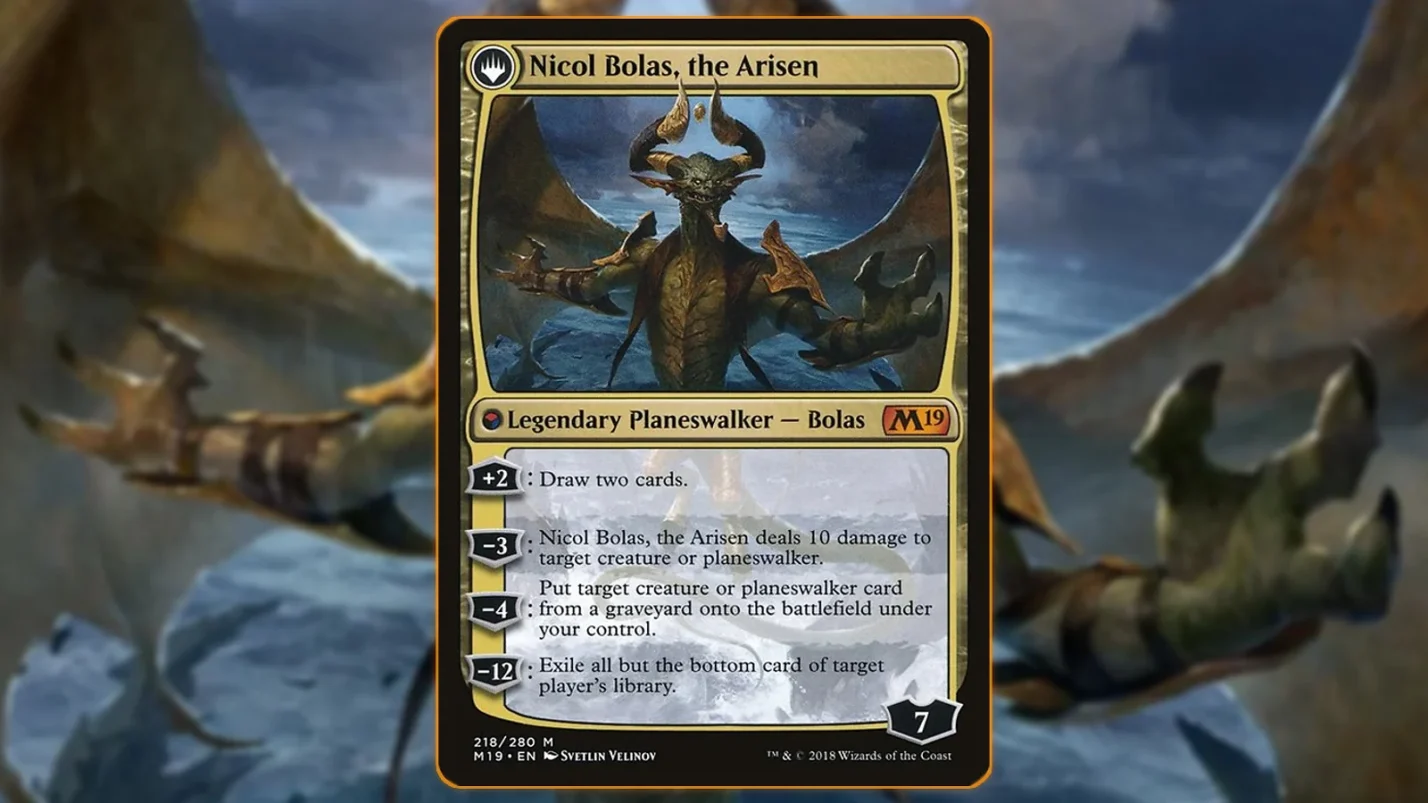
10. Nicol Bolas, the Ravager [Best Transforming Planeswalker]
| Specs | Details |
|---|---|
| Mana Cost | 1UBR |
| Card Type | Legendary Creature / Planeswalker (via transform) |
| Color Identity | Blue–Black–Red |
| Format Legality | Commander, Modern, Legacy, Vintage |
| Starting Loyalty | 7 (as Bolas, the Arisen) |
| Key Abilities | Card draw, disruption, removal, graveyard recursion |
Nicol Bolas earns his reputation because he’s dangerous before and after transforming. A four-mana 4/4 flyer with discard already pressures opponents and forces early answers. That early impact is a big reason Bolas keeps appearing in conversations about the best planeswalkers in MTG, even before his planeswalker side takes over.
Once Bolas flips, games usually spiral fast. Card draw, removal, and reanimation give him answers to almost everything, and starting at seven loyalty makes him hard to remove cleanly. This mix of flexibility and inevitability is what separates truly good planeswalkers from cards that only look powerful on paper.
Combines disruption and raw power in one card – the Grixis menace that does everything control decks need.
Once Bolas, the Arisen hits the board, the +2 refills your hand, the −3 can clear threats, and the −4 brings back game-ending permanents. His toolkit embodies what makes control decks tick in both Commander and Grixis builds: card advantage, disruption, and inevitability in the late game. As a three-color threat, Nicol Bolas thrives in one of the most popular MTG Color combinations.
In Commander, Bolas fits perfectly into slower Grixis control shells that reward patience. He rarely needs to lead planeswalker commanders to dominate games, but he thrives in decks that protect threats and grind value. That high payoff is exactly why he remains one of the best planeswalkers in MTG for players who prefer late-game control finishes.
Banned or Restricted Planeswalkers
Some of the best planeswalkers in MTG were so powerful that entire formats warped around them. Truth be told, these are the ones Wizards eventually had to step in and remove from regular play.
1. Oko, Thief of Crowns
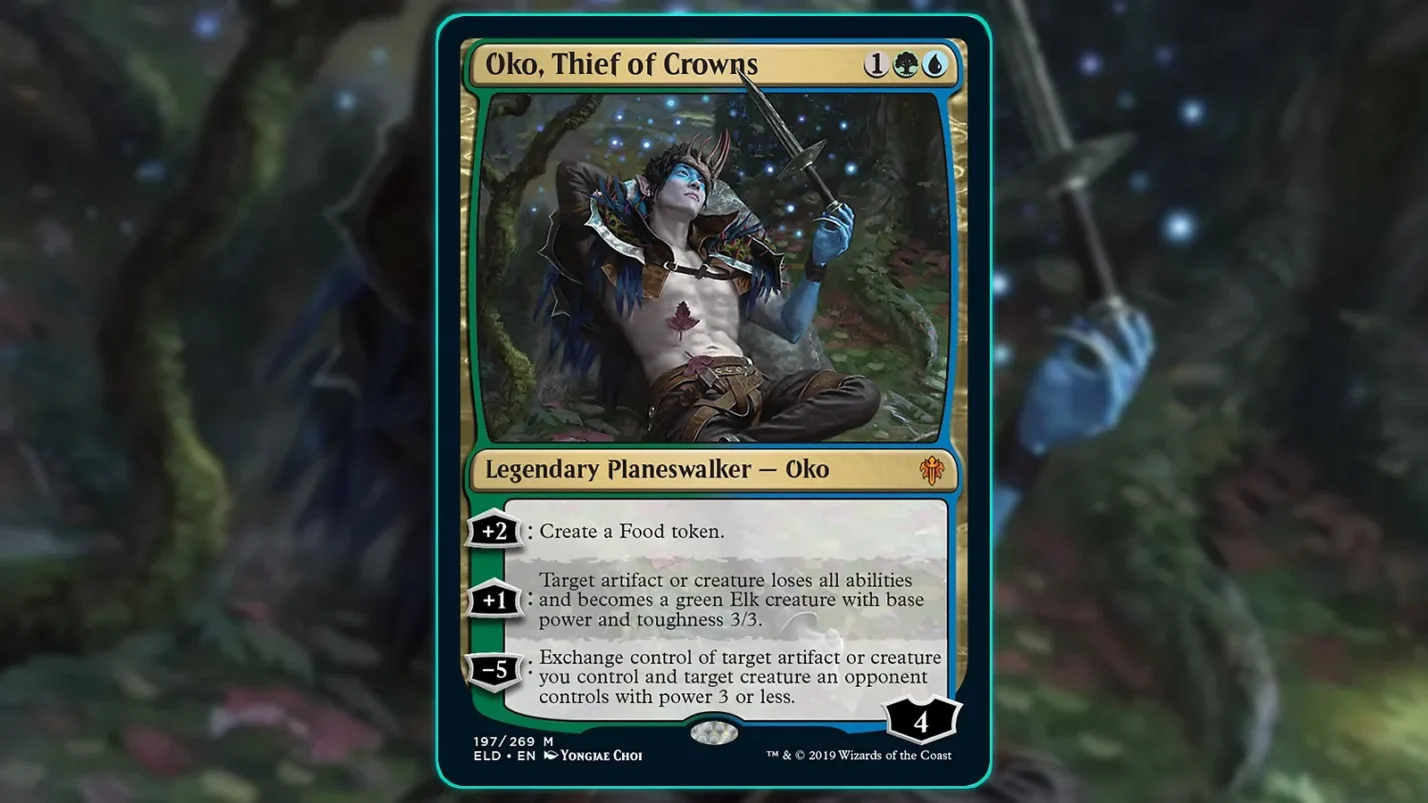
At some point, every Magic format collectively asked the same question: “Why is everything an Elk?” Oko, Thief of Crowns, arrived quietly, then proceeded to flatten entire metagames like it was his full-time job. Three-mana planeswalkers aren’t supposed to invalidate creatures, artifacts, and win conditions all at once, but Oko didn’t get that memo.
His dominance is exactly why he still appears in conversations about the best planeswalkers in MTG, even if those conversations usually end with “please never again.”
His loyalty jumped upward while turning real cards into decorative 3/3s, which makes interaction feel optional and deckbuilding pointless.
The result was a ban tour across Standard, Modern, Pioneer, Legacy, and anything else that tried to contain him. Oko remains legal in Commander, but he’s excluded here on purpose, not because he’s weak, but because he broke the rules of the game itself.
2. Narset, Parter of Veils
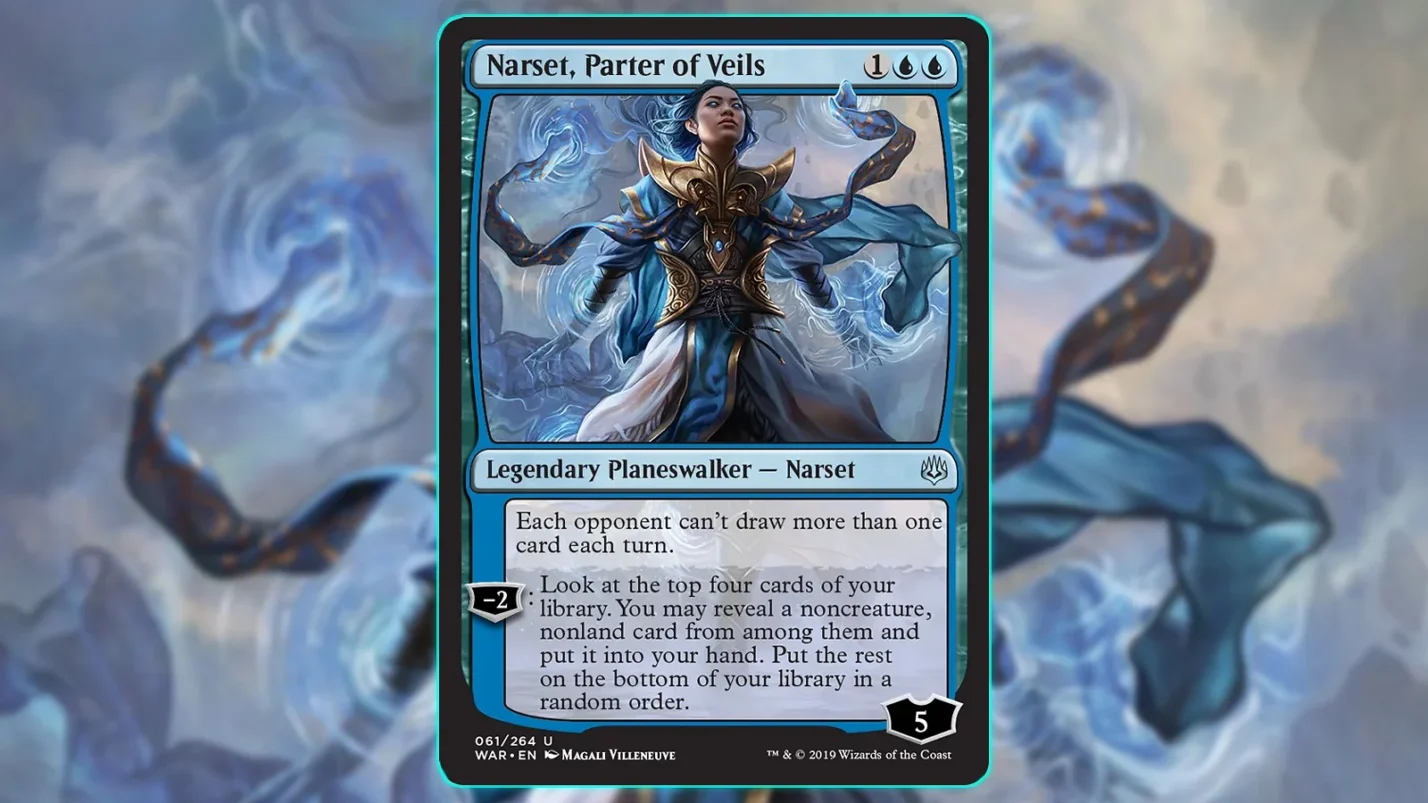
Printed in War of the Spark’s “let’s try static abilities” era, Narset quietly slipped into play and informed your opponents they were no longer allowed to draw cards. At all. One per turn. That’s it. This kind of effect is exactly why she still gets mentioned in discussions about the best planeswalkers in MTG, even if that mention usually comes with a sigh.
On her own, she’s already annoying, a two-turn Dig Through Time glued to a three-mana planeswalker. Add wheel effects, and suddenly everyone else discards their hand and draws exactly one card while you reload completely. That interaction alone earned her restriction in Vintage and eternal hatred everywhere else.
Narset is legal in many formats, but she’s excluded from “best legal” lists for the same reason as Oko: she doesn’t play Magic with you; she tells you no.
3. Teferi, Time Raveler
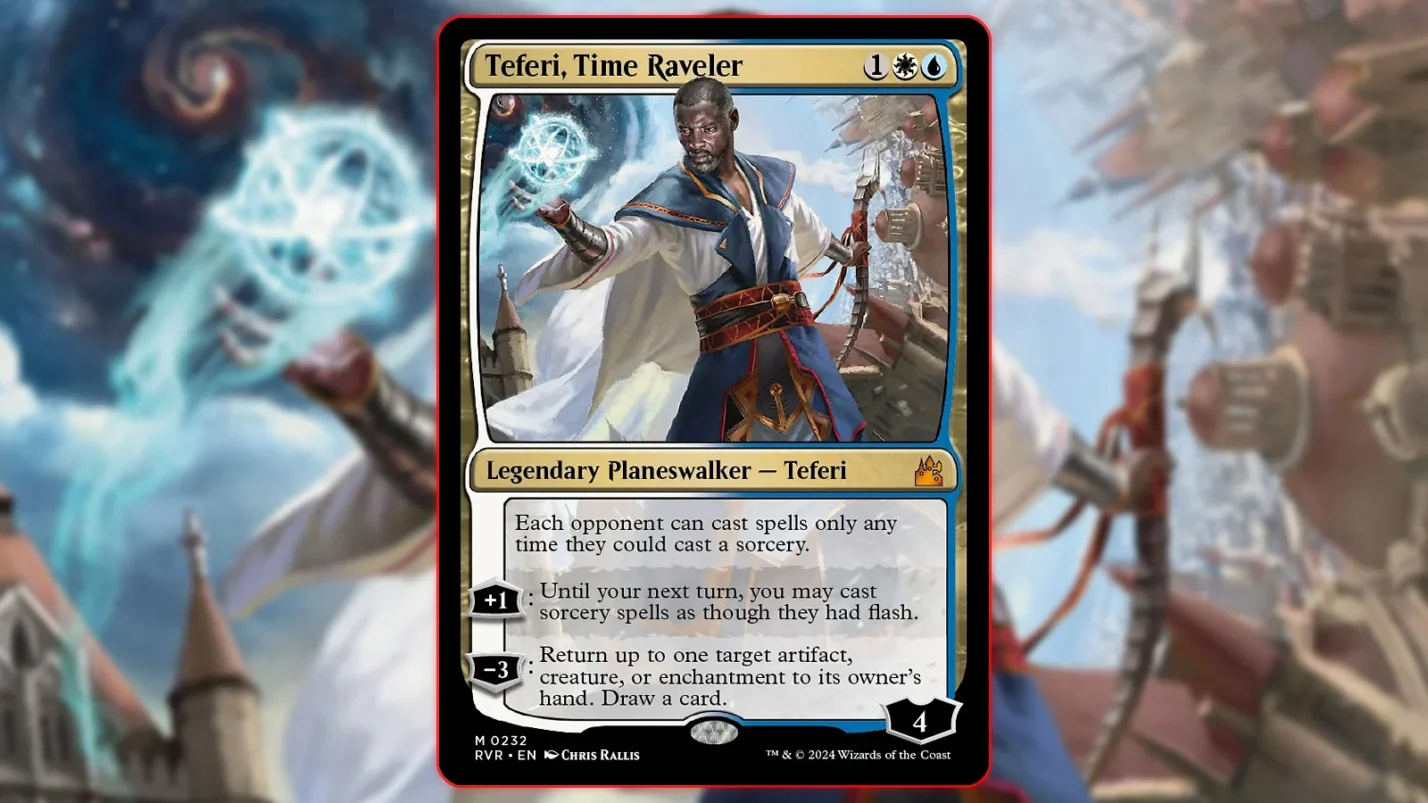
Some cards bend the rules. Teferi, Time Raveler deletes them. The moment he hits the battlefield, counterspells turn into decorative cardboard, and instant-speed interaction quietly packs its bags. That static ability (stapled on for free) rewrote how entire matches were played. This is exactly why he still comes up in debates about the best planeswalkers in MTG, even when players argue he might be too oppressive for healthy gameplay.
That static ability (stapled on for free) rewrote how entire matches were played.
The loyalty abilities themselves are fine. Giving your sorceries flash is strong but manageable, and the −3 is clean tempo plus a card. The issue is that opponents are locked out during your turn, which makes stack-based strategies nearly unplayable.
That design choice earned Teferi bans across multiple formats. He’s excluded here not due to lack of power or popularity, but because shutting off interaction doesn’t create better Magic.
How Do Planeswalkers Work in MTG?
Planeswalkers are a special card type in Magic: The Gathering that function like repeatable spell engines. When the best planeswalkers in MTG enter the battlefield, they arrive with a set number of loyalty counters, which represent their health and determine how many times their abilities can be used.
Each turn, you may activate one loyalty ability of a planeswalker you control, and only at sorcery speed. This happens during your main phase, when the stack is empty. Abilities with a plus (+) add loyalty counters, while minus (–) abilities remove them. If a planeswalker ever reaches zero loyalty, it’s put into the graveyard.
Planeswalkers can be attacked directly by creatures, and they can also take damage from spells and abilities. Opponents often have to choose between attacking you or dealing with your planeswalker, which creates meaningful combat decisions.
On top of that, planeswalkers don’t produce mana themselves, but many interact with lands or untap effects. This is important to understand when learning about mana abilities in MTG and how it’s generated during a turn.
Most planeswalkers also have an ultimate ability, usually marked by a large negative number. These effects are designed to end games quickly.
Plainswalkers Always Change the Game
As we can see, planeswalkers change the game the moment they hit the table. If they survive even one turn, they usually start pulling you ahead, big time. Also, the best planeswalkers in MTG are popular because they work, not because of how cool they look. They create value fast, fit into many decks, and stay relevant even years after printing.
If you’re ready to put one on the battlefield and watch the table panic, you know what to do.
Pick up the best MTG planeswalkers today.
Quick tip: Before sleeving up your new walkers, make sure they’re protected in the best MTG storage box to avoid damage during transport or long-term storage.
FAQs
Jace is widely considered one of the best planeswalkers in MTG due to his power, flexibility, and long-term impact across multiple formats.
There is no specific limit to how many planeswalkers are allowed on a deck. You can include as many planeswalkers as you want, as long as your deck follows format rules and doesn’t exceed four copies of the same card outside Commander. Many decks that focus on the best planeswalkers in MTG often run several different walkers to maximize value and board control.
Yes, planeswalkers can be commanders, but only the ones that specifically say “This card can be your commander” are allowed to lead a Commander deck. Planeswalker commanders are usually built around synergy and often include some of the best planeswalkers in MTG as support cards.
To defeat a planeswalker, you can attack it with creatures, deal damage with spells, or remove its loyalty counters through direct removal until it reaches zero and goes to the graveyard. Even some of the best planeswalkers in MTG can be answered with the right pressure and removal.
Chandra Nalaar is the MTG planeswalker with the most card versions, featuring 23 unique planeswalker cards printed across multiple sets. She notably received four different cards in Core Set 2020 alone.
Yes, you can have two planeswalkers at the same time, even with the same subtype, as long as they have different card names. Many decks built around the best planeswalkers in MTG rely on controlling several walkers at once to generate overlapping value.