


MTG Color Combinations: All 26 Color Combo Names


MTG color combinations define how you build decks and shape your strategy in Magic: The Gathering. Each pairing brings unique strengths, weaknesses, and playstyles to the table. From aggressive two-color builds to complex five-color strategies, knowing these names helps you communicate with other players and understand deck archetypes. The naming conventions come from various sets throughout Magic’s history, and learning them opens up a whole new way to discuss the game.
I remember the first time someone mentioned they were playing “Golgari” at my local game store. I had no clue what they meant. Was it a card? A format? A secret club? Once I learned the color combo names, everything clicked. The game suddenly made more sense, and I could follow conversations about deck types without feeling lost. Deck tech videos started making sense, and I could finally understand what streamers meant when they talked about “Jeskai tempo” or “Sultai value.”
This guide breaks down all 26 official MTG color combination names so you can speak the language and pick the right colors for your next deck. You’ll learn the guilds, shards, wedges, and everything in between. I’ll cover what each combination does best, where it struggles, and which formats suit it most.
Jump to:
Understanding MTG Color Combinations
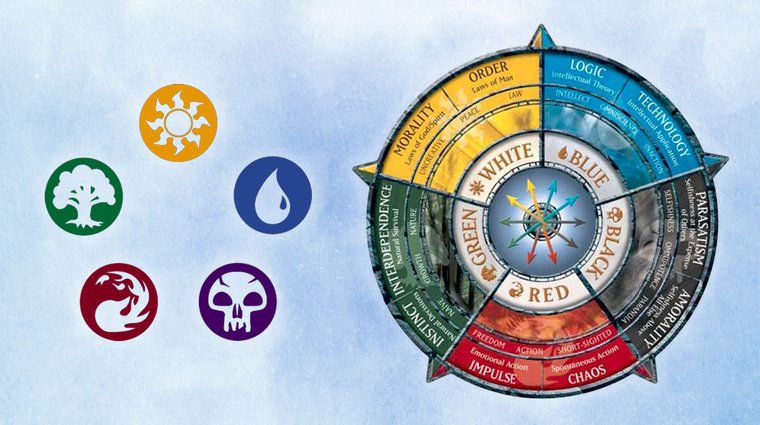
MTG color combinations stem from the five basic mana types in the game. Each color has a core philosophy and mechanical identity that influences how decks function. When you mix colors, you gain access to more tools but also face tougher mana requirements. The color pie, as players call it, represents one of the most elegant design choices in trading card game history.
Understanding what each color does helps you predict what opponents might play and guides your own deckbuilding decisions. Here’s a breakdown of each color and its strengths.
- White (W) focuses on order, protection, and small creatures working together. It excels at life gain, board wipes, and taxing opponents. White wants fairness and balance, which translates to effects that affect all players equally. You’ll find efficient small creatures, powerful enchantments, and effects that punish greedy strategies. White struggles with card draw and often runs out of resources in longer games.
- Blue (U) represents knowledge and control. It dominates in card draw, counterspells, and manipulation. Blue values intellect and planning, preferring to win through superior information rather than brute force. Expect bounce effects, library manipulation, and the ability to say “no” to almost anything. Blue’s weakness lies in dealing with threats that already hit the battlefield. Once something resolves, Blue has limited options.
- Black (B) embraces power at any cost. It offers strong removal, reanimation, and life-as-a-resource mechanics. Black believes that victory justifies any sacrifice, including your own life total, creatures, or cards. You’ll trade resources for advantages constantly. Black handles creatures better than any other color but struggles against artifacts and enchantments. It also tends to be selfish, making multiplayer formats tricky.
- Red (R) channels chaos and aggression. It delivers direct damage, fast creatures, and explosive plays. Red acts on impulse and emotion, translating to haste creatures, burn spells, and effects that sacrifice long-term value for immediate impact. Red wins fast or loses slowly. It lacks the tools to recover from bad board states and can’t answer certain permanent types efficiently.
- Green (G) embodies nature and growth. It ramps mana, plays big creatures, and strengthens what’s already on the board. Green trusts in natural order and survival of the fittest, meaning it plays the biggest threats and overwhelms opponents with raw stats. Green struggles with flying creatures and has almost no way to deal with opposing creatures directly outside of combat.
If you’re still learning the basics, our guide on how to play Magic: The Gathering covers everything you need to start.
Two-Color Guild Combinations
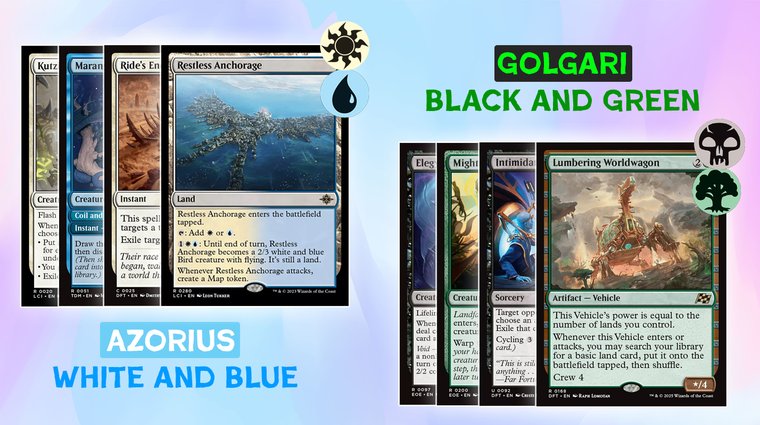
The ten two-color pairings are named after the guilds of Ravnica. These MTG color combos form the foundation of most constructed decks. Each guild has appeared in multiple Ravnica sets, giving them deep card pools and well-defined identities. Learning these names is essential for any serious player.
- Azorius (WU) blends White and Blue for a control-heavy playstyle. You’ll counter threats, draw cards, and lock down the board until you find your win condition. Azorius decks play the long game, using efficient removal and counterspells to survive the early turns. The guild struggles against fast aggro strategies that go under its defenses. Signature mechanics include detain, forecast, and various taxing effects. In Commander, Azorius often builds around stax or combo finishes.
- Dimir (UB) combines Blue and Black for sneaky, disruptive strategies. Mill, discard, and evasive creatures define this guild. Dimir operates in the shadows, attacking resources rather than life totals when possible. I’ve lost count of how many games I’ve won by slowly draining my opponent’s library or stripping their hand of answers. The guild excels at information warfare, knowing exactly what threats to counter. It can struggle against decks that don’t care about card advantage or that operate primarily from the graveyard.
- Rakdos (BR) pairs Black and Red for aggressive, reckless gameplay. It sacrifices resources for damage and thrives on chaos. Rakdos decks hit hard and fast, often dealing damage to themselves in the process. The guild philosophy embraces hedonism and destruction, which translates to powerful but costly effects. Fast and deadly, Rakdos runs out of gas quickly if it doesn’t close games early. Spectacle and unleash mechanics reward aggressive play. This combination works great in aggressive Standard decks and sacrifice-themed Commander builds.
- Gruul (RG) merges Red and Green into a straightforward beatdown strategy. Big creatures hit hard and fast, trampling over blockers without much thought. Gruul doesn’t do subtlety. It plays threats, turns them sideways, and hopes that’s enough. The guild connects with primal rage and the rejection of civilization. You’ll find efficient beaters, mana dorks, and effects that make your creatures even bigger. Gruul struggles against control decks that can remove threats efficiently and against combo decks that ignore the combat step entirely.
- Selesnya (GW) unites Green and White around tokens and going wide. You’ll flood the board with creatures and buff them together through anthem effects. The guild values community and harmony, which mechanically means lots of small creatures that support each other. Convoke lets you tap creatures for mana, and populate creates token copies. Great for overwhelming opponents through sheer numbers, Selesnya stumbles against board wipes that reset all its hard work. I’ve seen Selesnya decks rebuild impressively fast, though, thanks to token generators that keep producing value.
- Orzhov (WB) combines White and Black for a draining, attrition-based game. Life gain, removal, and gradual value define this pairing. Orzhov represents the church and banking systems of Ravnica, extracting value from every transaction. Extort lets you drain opponents whenever you cast spells. Afterlife creates tokens when creatures die. The guild grinds opponents down over time, often winning by inches rather than miles. Orzhov struggles with fast combo decks that ignore life totals and with opponents who can generate more value.
- Izzet (UR) fuses Blue and Red for spell-slinging action. Instants and sorceries trigger powerful effects while you burn and counter. The guild represents mad scientists and inventors, always experimenting with volatile magic. Prowess creatures grow when you cast non-creature spells. Jump-start lets you cast instants and sorceries from your graveyard. Izzet rewards creative, reactive play and punishes opponents who tap out. The combination struggles when it falls behind on board, lacking efficient ways to catch up against established threats.
- Golgari (BG) links Black and Green through graveyard synergies. Creatures die, come back, and generate value along the way. The guild views death as part of a natural cycle, recycling everything for new growth. Dredge, scavenge, and undergrowth mechanics all care about your graveyard. Golgari decks are resilient and hard to stop permanently because killing their creatures often helps them. The combination struggles against graveyard hate and exile effects that break the recursion loop. I’ve played Golgari in multiple formats, and nothing frustrates opponents more than threats that keep coming back.
- Boros (RW) brings Red and White together for aggressive combat. Small creatures attack fast with equipment and combat tricks, providing an edge. The guild represents the military and law enforcement of Ravnica, valuing honor and swift justice. Battalion rewards attacking with multiple creatures. Mentor lets bigger creatures train smaller ones. Boros hits hard early but can stall against bigger boards that outclass its small threats. The combination lacks card advantage, making it crucial to win before running out of resources.
- Simic (GU) pairs Green and Blue for growth and adaptation. Ramp into threats while drawing cards and adding counters. The guild focuses on biological experimentation and evolution, creating hybrid creatures that improve over time. Evolve makes creatures grow when bigger ones enter. Adapt adds counters to creatures that need them. Simic builds momentum that becomes unstoppable late game but can struggle with early aggression before its engines come online. The combination lacks efficient removal, relying on counterspells and combat to handle threats.
Three-Color Shard Combinations
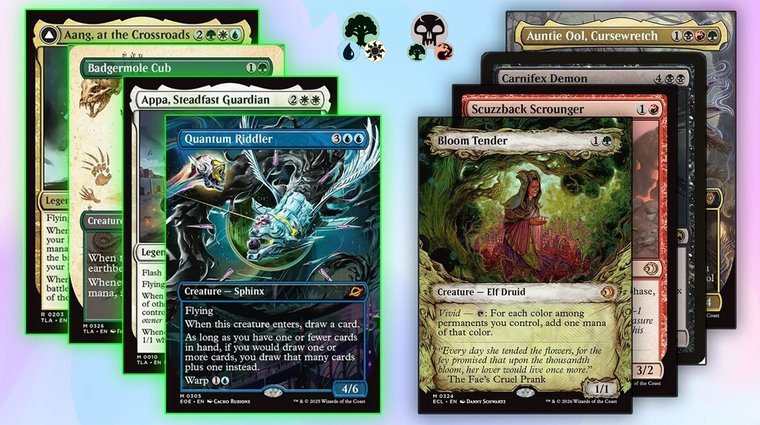
Shards feature one color and its two allies, creating cohesive strategies with natural synergy. These MTG color combination names come from the Alara block, which depicted five separate worlds that each lacked two colors of mana. When the shards reunited, these three-color combinations became staples of competitive play.
- Bant (GWU) centers on Green, supported by White and Blue. It plays midrange creatures with protection and card advantage. The shard values honor and community, fielding knights and noble beasts that fight with integrity. Exalted rewards attacking with a single creature, making it huge temporarily. Bant decks build boards of efficient threats while holding up interaction. Expect value-oriented gameplay with strong defensive options. The combination covers most bases but can feel slow against hyper-aggressive strategies. Mana requirements are forgiving since all three colors share allied relationships.
- Esper (WUB) builds around White, Blue, and Black for ultimate control. Artifacts, removal, and counterspells dominate. The shard represents a world obsessed with perfection through artifice, where even living beings replace their flesh with metal. Esper decks answer everything, eventually winning through superior card advantage and inevitability. It’s slow but incredibly powerful in the right hands. The combination struggles against resolved planeswalkers and decks that operate at instant speed. Building Esper mana bases requires careful attention to dual lands.
- Grixis (UBR) focuses on Blue, Black, and Red for aggressive control. It combines removal, counters, and direct damage to dominate games. The shard represents a dying world of necromancy and demons, where power comes through death magic. Unearth brings creatures back for one final attack. Grixis decks trade resources aggressively, using life as a resource and betting on efficiency. I ran Grixis in Commander for years because nothing feels better than answering every threat while slowly draining opponents. The combination lacks lifegain and efficient ways to deal with enchantments.
- Jund (BRG) emphasizes Black, Red, and Green through midrange value. Removal, efficient creatures, and resource denial define it. The shard depicts a savage world where dragons rule, and survival demands constant violence. Devour lets creatures eat others to grow larger. Jund decks trade efficiently and grind out wins through card advantage and threat density. The combination handles most board states well, but struggles against combo decks that ignore the battlefield. Jund has historically dominated Modern and other competitive formats through sheer consistency.
- Naya (RGW) highlights Red, Green, and White for big creature strategies. You’ll play large threats and attack relentlessly with creatures that have five or more power. The shard represents a world of vast jungles and enormous beasts, where size determines status. Naya decks overwhelm opponents with stats, using creatures that outclass anything else on the board. It lacks card draw but makes up for it with board presence and combat dominance. The combination struggles against sacrifice effects, mass removal, and decks that go over the top with even bigger threats.
Three-Color Wedge Combinations
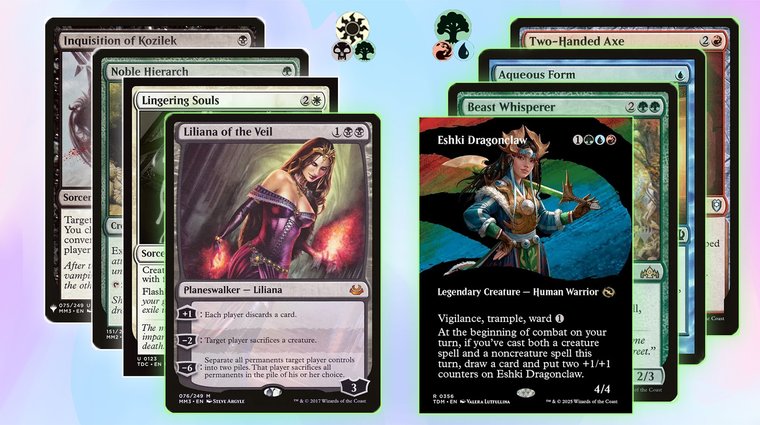
Wedges pair one color with its two enemies, creating tension and unique synergies. These names originate from the Khans of Tarkir block, which depicted five clans that each embraced a central color supported by its natural enemies. The enemy color relationships create interesting mechanical tensions.
- Abzan (WBG) combines White, Black, and Green for resilient midrange play. Graveyard synergies, lifegain, and efficient creatures shine here. The clan valued endurance and outlasting enemies rather than overpowering them. Outlast lets creatures grow slowly over time. Abzan decks build incremental advantages and win through superior board presence and resilience. It outlasts most opponents through steady value, but can struggle against combo decks that ignore the board entirely. The three colors together handle almost any threat type, giving Abzan excellent flexibility.
- Jeskai (URW) merges Blue, Red, and White around spell-based strategies. Prowess, burn, and tempo plays dominate. The clan focused on cunning and martial arts, striking precisely rather than overwhelmingly. Jeskai decks reward tight sequencing and smart resource management, chaining spells together for maximum effect. The combination excels at tempo, building small advantages that compound over time. It struggles against decks that can ignore its threats and against opponents with more card advantage. Jeskai requires practice to pilot optimally.
- Sultai (BGU) blends Black, Green, and Blue for graveyard and value strategies. Delve, recursion, and card advantage drive this wedge. The clan embraced ruthlessness and using every resource available, including the dead. Delve lets you exile cards from your graveyard to reduce spell costs. Sultai decks generate overwhelming card advantage and fill the graveyard for various payoffs. Commander players love Sultai for its flexibility and access to the game’s best card draw, ramp, and removal. The combination struggles against fast aggro before its engines stabilize.
- Mardu (RWB) unites Red, White, and Black in aggressive strategies. Warriors, tokens, and attack triggers define this wedge. The clan valued speed and overwhelming force, striking before enemies could prepare. Raid rewards you for attacking, providing bonuses on spells cast after combat. Mardu decks hit fast from multiple angles, using small creatures alongside removal to clear paths. It hits quickly but lacks card draw to sustain long games. The combination works well in aggressive Commander strategies focused on combat.
- Temur (GUR) fuses Green, Blue, and Red around big creatures and tempo. You’ll ramp into threats while holding up interaction. The clan respected ferocity and primal strength, valuing creatures with four or more power. Ferocious abilities trigger when you control such creatures. Temur decks balance aggression with protection, playing threats while keeping mana open for counterspells. It balances aggression with protection nicely, but can struggle with consistency since it wants to do multiple things simultaneously.
For building around these combinations, check out our list of the best MTG decks for proven strategies.
Four-Color Combinations
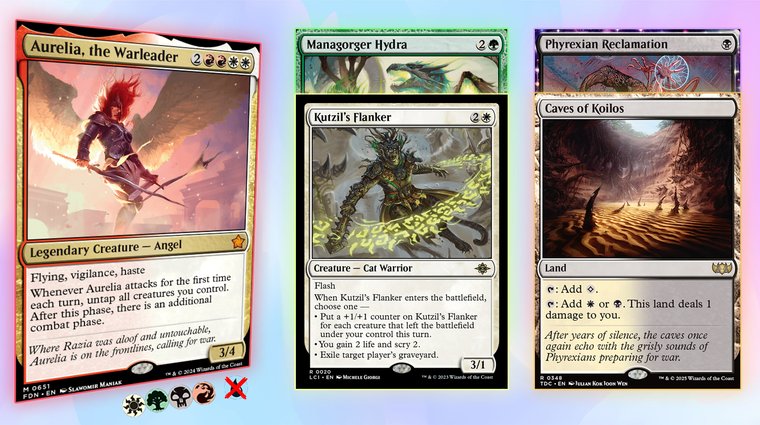
Four-color decks sacrifice one color entirely. These MTG color combos lack official names, so players identify them by the missing color. They offer broad card access but demand excellent mana bases. Most four-color strategies appear in Commander, where the singleton format and higher life totals allow for greedier mana.
The Nephilim creatures from the original Ravnica block gave these combinations creature representatives, but they never received proper guild or clan treatment. Players have adopted various nicknames over the years.
- Sans Green / Artifice (WUBR) drops Green for artifact and spell synergies. Without Green’s ramp, the combination relies on mana rocks to accelerate. It combines control elements with aggressive finishers, accessing the best removal and counterspells in the game. Heavy on removal but lacks the efficient ramp Green provides. Artifact synergies often fill the gap, with cards like Sol Ring and Arcane Signet providing acceleration. This combination excels at controlling the game while slowly assembling a winning position.
- Sans White / Chaos (UBRG) removes White for value and recursion strategies. Graveyard play and big threats dominate without White’s emphasis on order. The combination loses access to efficient board wipes and exile effects, making permanent-based strategies trickier to handle. It compensates with raw card advantage and resilience through recursion. Commanders like Yidris enable cascade strategies that overwhelm opponents with value. The combination struggles with lifegain, as White provides most of that effect.
- Sans Blue / Aggression (BRGW) cuts Blue for creature-heavy beatdown. Direct damage and efficient threats shine without Blue’s contemplative approach. The combination loses counterspells and card selection, making it more vulnerable to combo strategies. It compensates with aggressive creatures and excellent removal across the other four colors. Sans Blue decks tend to be proactive, forcing opponents to answer threats rather than setting up complex game plans. The lack of card draw can hurt in longer games.
- Sans Black / Altruism (RGWU) excludes Black for tempo and protection strategies. Combat tricks and value creatures lead the way without Black’s ruthless efficiency. The combination loses tutoring, sacrifice synergies, and the game’s best targeted removal. It compensates with combat prowess and a more resilient game plan that doesn’t rely on life as a resource. Sans Black decks tend to play fair, winning through superior board presence. The combination struggles to close games quickly against opponents with endless removal.
- Sans Red / Growth (GWUB) skips Red for controlling, value-oriented play. Lifegain, counters, and recursion define it without Red’s aggressive impulses. The combination loses direct damage and haste creatures, making it harder to close games quickly. It compensates with patient strategies that accumulate advantages over time. Sans Red decks often win through combo or overwhelming card advantage rather than combat damage. The lack of burn spells means opponents can plan around known combat math.
Four-color decks work best in Commander, where longer games justify the mana investment. Our guide to the best MTG Commander decks features several four-color options worth exploring.
Five-Color Strategies
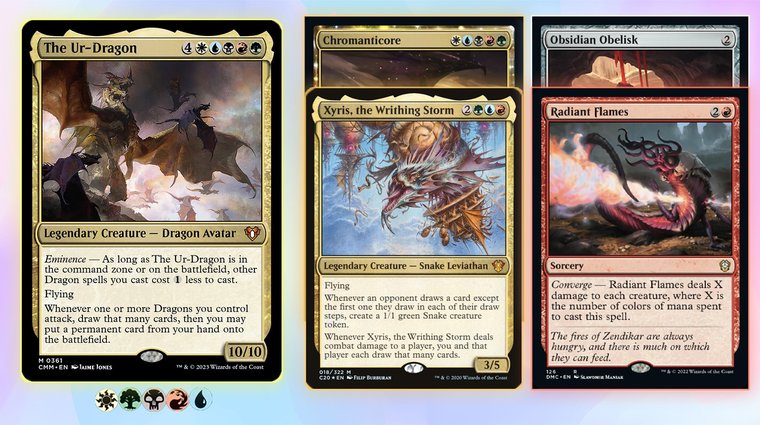
WUBRG (Five-Color) includes all five colors for maximum flexibility. You can play any card in the game, but your mana base needs serious work. Fetch lands, shock lands, triomes, and mana rocks become essential for consistent casting. Expect to invest heavily in your land base before anything else.
Five-color decks typically build around specific themes like Dragons, Slivers, or Elementals. The payoff cards are powerful, but inconsistent draws can hurt when you need specific colors. Tribal strategies work well because they provide natural synergy that justifies the mana demands. Value-based commanders like Jodah or Kenrith offer flexibility, allowing you to play whatever powerful cards you own.
I built a five-color Sliver deck once, and when it worked, nothing could stop it. Slivers share abilities with each other, creating exponential power as you deploy more creatures. When it didn’t work, I stared at uncastable cards in my hand, waiting for the right lands to show up.
This approach suits Commander best, where singleton formats reduce consistency concerns and longer games give you time to fix mana. Budget players should proceed with caution since proper five-color mana bases cost more than most entire decks.
Some players use five-color commanders but focus primarily on three or four colors, only splashing the remaining colors for specific, powerful cards. This approach reduces mana strain while maintaining access to key effects.
Choosing Your Colors in Magic
Picking the right MTG color combinations depends on your playstyle, format, and card collection. Start with two colors to learn how pairings work before expanding. Each combination rewards different skills and strategies, so experiment to find what clicks.
Consider what you enjoy most about Magic. Aggressive players gravitate toward Boros or Gruul, which reward fast starts and combat. Control lovers prefer Azorius or Esper, which offer tools to manage the game at every stage. Combo enthusiasts often land in Izzet or Sultai territory, where card selection and recursion support intricate game plans. Midrange fans usually settle into Golgari or Jund, which trade resources efficiently.
The format matters too. Standard and Pioneer favor streamlined two-color builds that can cast spells consistently on curve. Commander opens the door to ambitious three, four, and five-color decks that take advantage of longer games. Draft and sealed force you to work with whatever colors you open, teaching flexibility.
Whatever you choose, understanding all 26 MTG color combo names helps you navigate the game, build better decks, and communicate with the community. When someone mentions they’re on “Temur Midrange” or “Esper Control,” you’ll know exactly what to expect.
Check out our best MTG cards guide to find staples for any color combination you pursue.
FAQs
There are five colors in MTG: White, Blue, Black, Red, and Green. Each color has unique mechanics and philosophies that define deck strategies and playstyles across all formats.
There are 32 total MTG color combinations. This count includes colorless, all five mono-colors, ten two-color guilds, ten three-color shards and wedges, five four-color combinations, and one five-color option.
There are 10 two-color combinations in Magic: The Gathering. These pairings are named after the Ravnica guilds, including Azorius, Dimir, Rakdos, Gruul, Selesnya, Orzhov, Izzet, Golgari, Boros, and Simic.
There are 10 three-color combinations in Magic: The Gathering. Five are shards from the Alara block featuring allied colors, and five are wedges from Tarkir featuring enemy color pairings.
There are five four-color combinations in Magic: The Gathering. Each combination is identified by the single color it excludes, such as Sans Green or Sans White, and they appear most often in Commander.
There is one five-color combination in Magic: The Gathering, known as WUBRG. It includes all five colors and offers maximum card access, but requires a carefully built mana base to function.
The colors that work best together in MTG depend on your strategy. Allied pairs like Simic or Golgari share natural synergies, while enemy pairs like Orzhov or Izzet create unique tension and powerful effects.