


LG vs Samsung TV in 2026: Uncover the Best 4K OLED & QLED Models

Eneba Hub contains affiliate links, which means we may earn a small commission if you make a purchase through them—at no extra cost to you. Learn more

LG vs Samsung TV is easily one of the hottest rivalries in home entertainment right now. Both brands are dominating the scene with jaw-dropping displays, packed smart features, and next-gen gaming perks that actually make a difference.
But if you’re gearing up for an upgrade, choosing between them can be tricky. That’s exactly why I put this guide together: to help you figure out which screen makes the most sense for your daily life and viewing needs.
Jump to:
Which Is Better: LG or Samsung TV
When it comes to premium televisions, there’s more to compare than just logos and price tags.
To help you make the right call, this guide dives into the details that matter: picture quality, OLED technology & mini LED backlighting, smart features, gaming support, sound systems like Dolby Atmos, and real-world usability – screen size, brightness in bright rooms vs dark rooms, and how they fit your space.
We’ll also break down how each brand stacks up overall and what kind of user each one really caters to: PC gamers, streamers, movie fans, or everyday users. By the end, you’ll have a clear view of where you stand in the LG vs Samsung TV debate.
LG vs Samsung: Display Panels
When comparing display panels, LG and Samsung take very different routes, each with its own strengths.
LG’s WOLED with MLA (Micro Lens Array)
Panel type: LG’s OLED TVs use White OLEDs that push light through color filters. Many premium models now include MLA to increase peak brightness.
| Pros | Cons |
|---|---|
| ✅ Self-lit pixels = perfect deep blacks and rich contrast ✅ Near-infinite contrast ratio for intense movie nights ✅ Excellent viewing angles, even from the side ✅ Flawless light uniformity in a dark room | ❌ Slightly lower color volume than Samsung’s QD-OLED ❌ Static UI elements can cause burn-in over time ❌ Without MLA, they’re not as incredibly bright in well-lit rooms |
Samsung’s QD-OLED and QLED
QD-OLED: Fuses OLED technology with a quantum dot layer for better brightness and vibrant colors
- Delivers more accurate colors and better brightness than traditional OLED
- Maintains true black levels while reducing screen reflections
QLED (Mini LED + Quantum Dots):
- Uses mini LED backlighting for huge brightness gains
- Not pixel-level dimming, so contrast is slightly lower
- No risk of burn-in
Bottom line: LG’s panels are built for cinematic immersion in darker setups, while Samsung offers the upper hand in bright rooms or hybrid lighting.
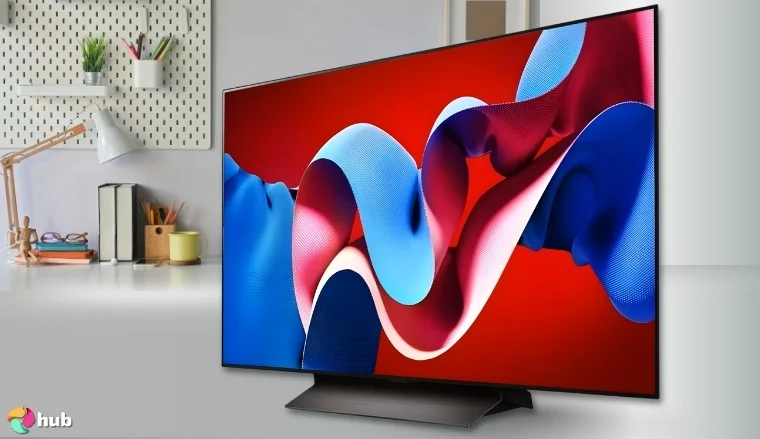
LG OLED evo C4 Series Smart TV [Best LG OLED TV]
| Specs | Details |
|---|---|
| Display Type | OLED evo |
| Brightness | 1300 nits (peak) |
| Processor | α9 AI Processor Gen7 |
| Refresh Rate | 144Hz |
| Gaming Features | NVIDIA G-SYNC, VRR, ALLM |
| Sound | Dolby Atmos, AI Sound Pro |
| HDR Support | Dolby Vision, HDR10+ |
| Connectivity | 4x HDMI 2.1, 3x USB, Wi-Fi 6, Bluetooth 5.0 |
| Smart Features | webOS, Google Assistant, Alexa, ThinQ AI |
| Size | 48″, 55″, 65″, 77″ |
The LG OLED evo C4 is the kind of TV that makes you go “holy sht, this looks amazing” the second it powers on. With OLED evo tech, 144Hz refresh rate, and the newest α9 AI Gen7 processor running the show, it balances breathtaking visuals and silky-smooth performance.
If you want a premium OLED TV that handles both cinematic scenes and fast-paced gaming with ease, the LG OLED evo C4 Series should be at the top of your wishlist. This is an ideal pick for those who are in search of the best gaming TV.
The self-lit OLED evo panel showcases deep contrast and inky blacks, while LG’s Brightness Booster Max tech pumps the peak brightness up to 1300 nits, so you’re not squinting in bright rooms.
It also brings a smooth 144Hz refresh rate, ideal for fast-paced scenes, from action flicks to FPS games. And that α9 AI Gen7 chip? It doesn’t just upscale content, it analyzes each scene in real time for more accurate color and sharper detail.
Audio-wise, Dolby Atmos adds that surround-sound oomph without needing extra speakers. Smart features? Covered. You get LG’s webOS with voice controls via Google Assistant or Alexa. Bottom line: this thing’s a cinematic beast with gamer reflexes.
| Pros | Cons |
|---|---|
| ✅ Stunning OLED picture quality with rich contrast and true blacks ✅ 144Hz refresh rate keeps gaming and fast content ultra-smooth ✅ α9 AI Processor Gen7 dynamically enhances every frame ✅ Dolby Vision + HDR10+ make visuals pop with vivid detail ✅ Dolby Atmos delivers immersive audio straight out of the box ✅ Smart OS (webOS) is clean, fast, and voice-enabled | ❌ Higher price compared to some LED TVs |
Final Verdict: For an ultra-responsive, cinema-worthy OLED with elite gaming performance, the C4 Series is your go-to. It handles everything from brightness to refresh rate with ease.
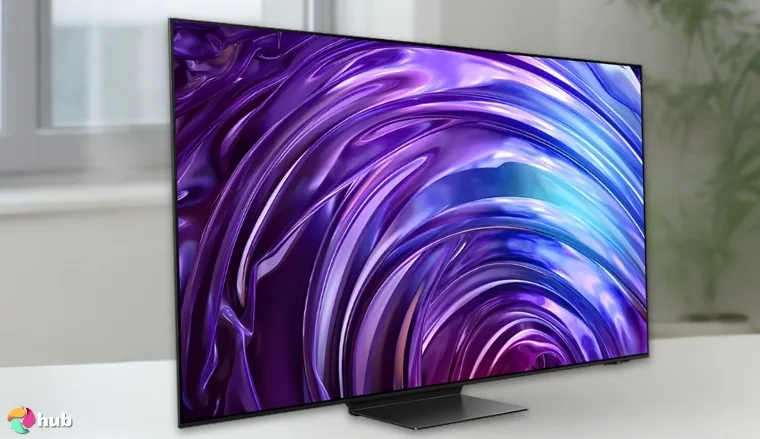
Samsung OLED S95F 4K Glare Free Smart TV [Best Samsung OLED TV]
| Specs | Details |
|---|---|
| Display Type | QD-OLED (Quantum Dot OLED) |
| Brightness | Up to 1,500 nits (peak) |
| Processor | Neural Quantum Processor |
| Refresh Rate | 165Hz |
| Gaming Features | VRR, ALLM, FreeSync Premium Pro, HDMI 2.1 |
| Sound | Object Tracking Sound+, Dolby Atmos |
| HDR Support | HDR10+, Dolby Vision, HLG |
| Connectivity | 4xHDMI 2.1, 2xUSB, Wi-Fi 6, Bluetooth 5.0 |
| Smart Features | Tizen OS, SmartThings, Google Assistant, Alexa |
| Size | 55″, 65″, 77″ |
The Samsung OLED S95F is built for those who want it all: mind-blowing picture quality, reliable brightness control in daylight, and gaming responsiveness that rivals a high-end monitor. It wraps up premium home entertainment and next-level gaming in one sleek setup.
With the OLED S95F, Samsung takes QD-OLED technology to its peak. You’ll get insanely rich colors and incredible contrast, especially in bright rooms.
The new glare-free coating minimizes reflections without sacrificing sharpness, which means you get a consistently vibrant picture whether it’s movie night or a daytime gaming marathon. Truly one of the best TVs for PS5.
Under the hood, the Neural Quantum Processor analyzes every scene in real time, tuning every detail to match the content’s needs and the room’s conditions.
Gamers get a serious upgrade here, too. A silky-smooth 165Hz refresh rate and FreeSync Premium Pro eliminate screen tearing and lag, while Auto Low Latency Mode (ALLM) kicks in automatically during gameplay.
Add in the dedicated Gaming Hub, and you’ve got instant access to your favorite titles and cloud gaming platforms, all from one interface.
Audio-wise, Object Tracking Sound+ and Dolby Atmos surround you with spatial detail that makes every action sequence or boss fight feel larger than life.
Plus, Tizen OS supports seamless smart home control and voice assistants like Alexa and Google Assistant for that hands-free ease.
| Pros | Cons |
|---|---|
| ✅ Stunning QD-OLED picture quality with true-to-life colors ✅ Glare-free screen ideal for bright rooms ✅ 165Hz refresh rate delivers ultra-smooth gaming ✅ Dolby Atmos and OTS+ create immersive audio ✅ Supports major VRR tech and ALLM for responsive gameplay ✅ SmartThings integration and Gaming Hub for added convenience | ❌ Pricier than typical OLEDs (but worth every cent for what you get) |
Final Verdict: The S95F packs stunning visuals and ultra-responsive gameplay into a glare-free, vibrant panel. It’s pretty much the dream screen for both gamers and movie lovers.
LG vs Samsung: Display Technology and Resolution
Panel types aside, what really levels up your viewing is the tech under the hood; the brains that clean up low-res streams and enhance sharpness.
Image Processing Engines
- LG: Uses its α9 Gen 7 AI Processor to scan each scene, sharpen edges, adjust color tone, and balance exposure. It’s especially good at adding detail in dim shots and low-res content.
- Samsung: Packs its TVs with Neural Quantum Processors, which rely on over 20 neural networks to upscale textures, pop depth, and maximize vivid colors.
Upscaling and Resolution
- LG: OLEDs handle upscaling well, especially in scenes with lots of detail or shadow.
- Samsung: Leads in 8K upscaling on higher-end models. It’s great at sharpening older shows or YouTube videos.
Both brands offer solid 4K support across mid-range and premium TVs.
HDR Support
- LG: Supports Dolby Vision, HDR10, and HLG; it’s ideal for streaming blockbuster movies in the best quality.
- Samsung: Skips Dolby Vision, opting instead for HDR10+ and HLG.
Takeaway: If you’re big on Dolby Vision and crave a cinema-level image, LG takes the win. Samsung pulls ahead with its smart AI tricks and killer upscaling, perfect for bright rooms and getting sharp visuals no matter the resolution.
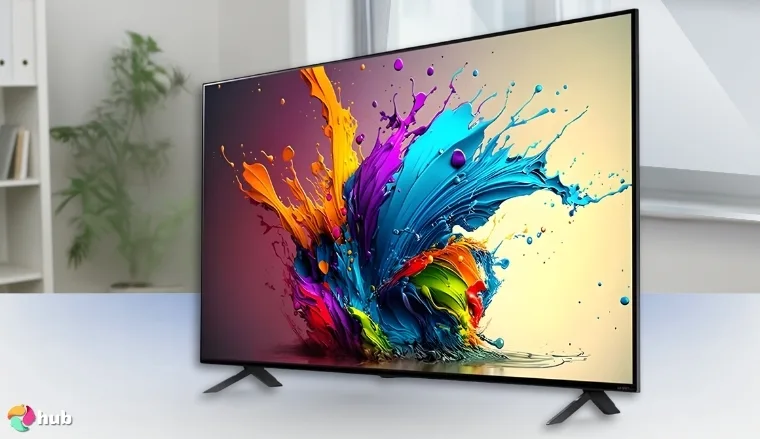
LG QNED90T Series Mini LED Smart TV [Best LG 4K TV]
| Specs | Details |
|---|---|
| Display Type | Mini LED with Quantum Dot and NanoCell |
| Brightness | Up to 1,000 nits (peak) |
| Processor | α8 AI Processor 4K |
| Refresh Rate | 120Hz |
| Gaming Features | HDMI 2.1, VRR, ALLM, G-SYNC, FreeSync Premium |
| Sound | Dolby Atmos, AI Sound Pro |
| HDR Support | Dolby Vision, HDR10, HLG |
| Connectivity | 4 x HDMI 2.1, 3 x USB, Bluetooth 5.0, Wi-Fi 6 |
| Smart Features | webOS 24, ThinQ AI, Google Assistant, Alexa |
| Size | 65″, 75″, 86″ |
The LG QNED90T Series blends Mini LED brilliance with Quantum Dot and NanoCell technologies: you’re getting intense brightness, punchy colors, and deep contrast. It’s an eye-catching 4K HDR display with a smooth 120Hz refresh rate, perfect for movies and gaming.
If you’re after a next-level 4K experience, the LG QNED90T delivers in spades. Backed by its Mini LED backlighting, this TV excels in precise lighting control for deeper blacks and boosted highlights that create an incredible contrast ratio.
LG’s Quantum Dot and NanoCell combo brings out stunningly vibrant colors with better accuracy across wide viewing angles, so it still looks great even if you’re watching from the side of the couch.
Under the hood, the α8 AI Processor 4K handles real-time adjustments to enhance everything from skin tones to fast motion. And if you’re someone who streams a lot of international content, pairing the TV with an ITV VPN can open up even more viewing options without compromising quality.
Gamers get plenty of love too: 120Hz refresh rate, plus full support for VRR, ALLM, FreeSync Premium, and NVIDIA G-SYNC.
On the sound front, Dolby Atmos helps fill the room with immersive audio, while Dolby Vision ensures cinematic visuals with nuanced lighting.
webOS 24 keeps things snappy and intuitive, and voice control via ThinQ AI, Alexa, or Google Assistant makes the experience even smoother. From binge-watching to just streaming cat videos, the QNED90T has the smarts and specs to impress.
| Pros | Cons |
|---|---|
| ✅ Stunning brightness and contrast from Mini LED backlighting ✅ Quantum Dot + NanoCell = vibrant, accurate colors ✅ α8 AI Processor 4K enhances visuals in real time ✅ 120Hz + VRR and G-SYNC support = smooth gaming ✅ Dolby Vision and Atmos offer an immersive cinematic feel ✅ webOS 24 + ThinQ AI = user-friendly and intuitive | ❌ Price may be steep for casual users |
Final Verdict: If OLED isn’t your thing but you still want top-tier 4K performance, the QNED90T packs a serious visual punch. Expect immersive picture quality and snappy gaming perks packed into one impressive display.
Samsung Neo QLED QN90D [Best Samsung 4K TV]
| Specs | Details |
|---|---|
| Display Type | Neo QLED with Quantum Mini LEDs |
| Brightness | Up to 2,100 nits (peak) |
| Processor | NQ4 AI Gen2 Processor |
| Refresh Rate | 144Hz |
| Gaming Features | HDMI 2.1, VRR, ALLM, FreeSync Premium Pro |
| Sound | Dolby Atmos, Object Tracking Sound+ |
| HDR Support | HDR10+, HDR10, HLG |
| Connectivity | 4 x HDMI 2.1, 2 x USB, Wi-Fi 6, Bluetooth 5.2 |
| Smart Features | Tizen OS, SmartThings, Google Assistant, Alexa |
| Size | 50″, 55″, 65″, 75″, 85″, 98″ |
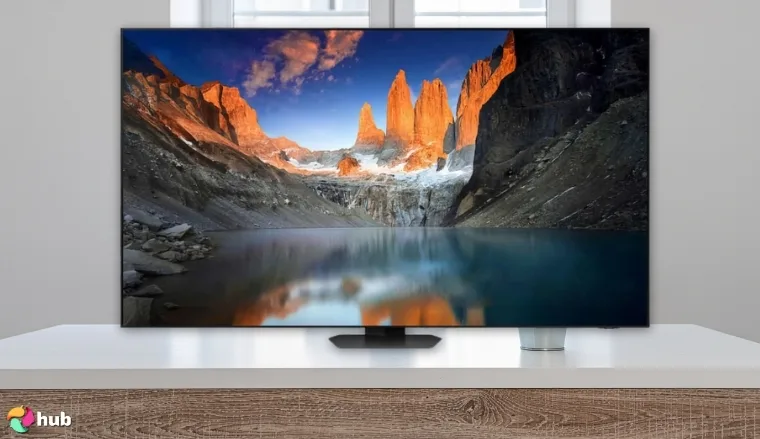
Samsung’s Neo QLED QN90D turns heads with a powerful combo: Quantum Mini LEDs and the NQ4 AI Gen2 Processor. It packs high brightness, top-tier contrast, anti-glare tech, and a 144Hz refresh rate. It’s a no-brainer go-to for gamers and bright-room setups.
If you’ve got a bright living room and big expectations, the Samsung QN90D won’t disappoint.
Its Quantum Mini LED panel offers ultra-precise control over backlight zones, so you get sharper contrast and beautifully bright highlights. The upgraded NQ4 AI Gen2 chip intelligently boosts picture quality scene by scene; it makes every detail pop, even in daylight.
With peak brightness reaching 2,100 nits and a low-reflection screen, this TV thrives in sunlit spaces without sacrificing quality.
Its 144Hz refresh rate is perfect for both competitive gamers and action movie junkies, so you can get smooth motion and low input lag.
It supports HDR10+, HDR10, and HLG formats for dynamic visuals with richer shadows and punchier highlights.
Samsung’s Object Tracking Sound+ adds directional audio that moves with the action, which boosts immersion without a soundbar.
The Tizen OS keeps everything running smoothly, while SmartThings integration and voice control with Alexa or Google Assistant make it feel futuristic from the get-go.
| Pros | Cons |
|---|---|
| ✅ Quantum Mini LEDs = precise brightness and contrast ✅ 2,100 nits peak brightness = ideal for bright rooms ✅ 144Hz refresh rate perfect for gaming & sports ✅ NQ4 AI Gen2 Processor enhances 4K detail ✅ Object Tracking Sound+ = spatial audio that follows action ✅ HDR10+ and HLG support = vibrant and punchy visuals | ❌ Tizen OS has fewer app options than some platforms |
Final Verdict: Samsung’s QN90D pushes 4K to another level with insane brightness and laser-sharp contrast. It’s built to dominate any lighting condition and keep up with even the most demanding use.
LG vs Samsung TV: Refresh Rate
A smooth picture isn’t just about resolution: refresh rate is what makes action movies feel fluid, and gaming feel real. Both LG and Samsung bring the heat, but each plays to its own strengths.
Standard Refresh Rates
- LG TVs: Most newer models support native 120Hz, and select OLED TVs or monitors even push to 144Hz.
- Samsung TVs: Goes even further: many Neo QLED TVs and monitors hit 144Hz, and a few stretch up to 240Hz.
Why It Matters
- Higher refresh rates = smoother motion during high-speed action
- Low input lag is key for serious PC games
- Better support for variable refresh rate = less screen tearing
Tech That Boosts Performance
- LG: Supports both G-SYNC and FreeSync Premium, a hit for PC users
- Samsung: Uses FreeSync Premium Pro and Game Motion Plus for better interpolation during fast scenes
Wrap-up: Samsung cranks up the refresh rate on its bigger screens, so you get smoother action where it counts. LG’s OLED panels still shine for those chasing ultra-smooth, responsive motion on a more compact or desk-friendly display.
LG OLED B4 Series Smart TV [Best High Refresh Rate]
| Specs | Details |
|---|---|
| Display Type | OLED |
| Brightness | Up to 800 nits (peak) |
| Processor | α8 AI Processor 4K |
| Refresh Rate | 120Hz Native |
| Gaming Features | VRR, ALLM, FreeSync Premium Pro |
| Sound | Dolby Atmos, AI Sound Pro |
| HDR Support | Dolby Vision, HDR10, HLG |
| Connectivity | 4 x HDMI 2.1, 2 x USB, Bluetooth 5.1, Wi-Fi 5 |
| Smart Features | webOS 24, ThinQ AI, Google Assistant, Alexa |
| Size | 48″, 55″, 65″, 77″ |
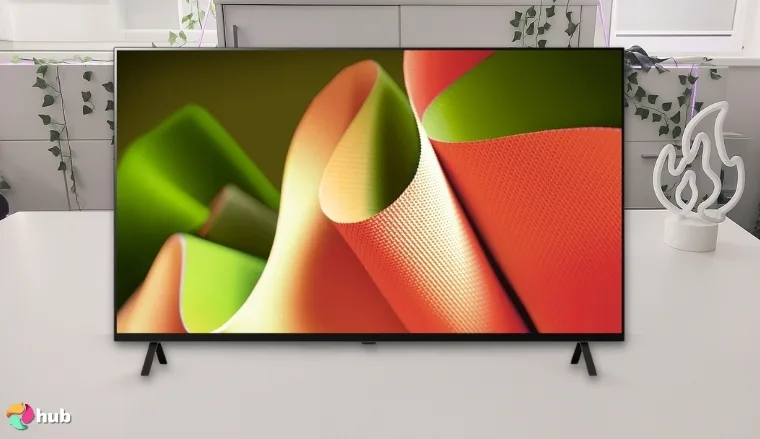
The LG OLED B4 Series balances top-tier visuals and affordability better than most in its class. You get cinematic OLED clarity and gaming-ready responsiveness, all packed into a setup that doesn’t push your budget into flagship territory.
The LG OLED B4 Series is what happens when you blend premium visuals with gamer-ready performance; and still keep it relatively budget-friendly for an OLED TV.
You’re getting perfect blacks, infinite contrast, and self-lit pixels that make every scene pop with realism.
From watching a blockbuster to chasing wins in a fast-paced shooter, this TV brings the kind of clarity and responsiveness that most displays can’t touch.
With a native 120Hz refresh rate, VRR, and FreeSync Premium Pro, it’s ready for anything from PlayStation 5 battles to Xbox Series X FPS games.
Not to mention the α8 AI Processor 4K that constantly analyzes what’s on screen and adjusts settings in real time to make sure it looks and sounds its best, no manual tweaking required.
It also shines on the smart front. You’ve got webOS 24 running things under the hood, complete with ThinQ AI, Google Assistant, and Alexa voice support. So yes, your OLED TV is smarter than you think.
| Pros | Cons |
|---|---|
| ✅ Gorgeous OLED panel with infinite contrast and perfect blacks ✅ 120Hz refresh rate with VRR and ALLM for fluid gaming ✅ Dolby Vision and Dolby Atmos support for immersive AV ✅ α8 AI Processor 4K optimizes visuals and audio dynamically ✅ webOS 24 with fast, intuitive UI ✅ Built-in support for all major voice assistants ✅ Excellent value for a premium OLED TV | ❌ No support for refresh rates above 120Hz (fine unless you’re a PC esports pro) |
Final Verdict: The B4 provides elite OLED picture quality and 120Hz fluidity into a more accessible package, perfect for gamers and movie lovers who want top-tier visuals without the flagship price.
Samsung Neo QLED QN70F 4K Mini LED Smart TV [Best High Refresh Rate TV]
| Specs | Details |
|---|---|
| Display Type | Neo QLED with Quantum Mini LEDs |
| Brightness | Up to 1,500 nits (peak) |
| Processor | NQ4 AI Gen2 Processor |
| Refresh Rate | 120Hz Native (up to 144Hz for PC gaming) |
| Gaming Features | VRR, ALLM, FreeSync Premium Pro, HDMI 2.1 |
| Sound | Dolby Atmos, Object Tracking Sound+ |
| HDR Support | HDR10+, HDR10, HLG |
| Connectivity | 4 x HDMI 2.1, 2 x USB, Wi-Fi 5, Bluetooth 5.3 |
| Smart Features | Tizen OS, SmartThings, Google Assistant, Alexa |
| Size | 55″, 65″, 75″, 85″ |
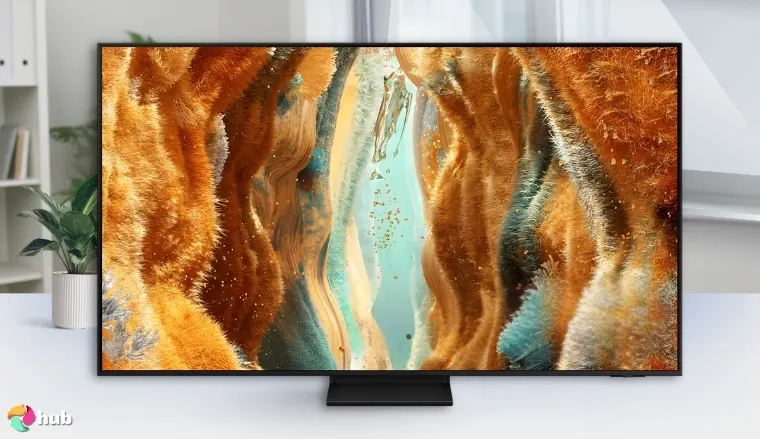
The Samsung QN70F ramps up the clarity and responsiveness you need for fast-paced gaming, while its Quantum Mini LED tech keeps visuals sharp in just about any lighting setup.
If you’re after a Samsung 4K TV that’s tailor-made for both high-frame-rate gaming and binge-worthy movies, the Samsung Neo QLED QN70F checks all the boxes.
Powered by Quantum Mini LED tech, this display gives you precise contrast and punchy colors that shine even in sunlit rooms, all thanks to its peak brightness of up to 1,500 nits.
For gamers, it’s a beast. The 120Hz refresh rate (which ramps up to 144Hz on PC) paired with Motion Xcelerator, VRR, and FreeSync Premium Pro, means zero tearing and ultra-smooth action. It’s optimized for PlayStation, Xbox, and even high-end rigs running top-tier GPUs.
Audio’s no slouch either: Object Tracking Sound+ moves with the action for that surround-feel without extra speakers.
And navigating it all? Samsung’s Tizen OS runs like Usain Bolt and plays nicely with Google Assistant, Alexa, and SmartThings for a seamless smart home setup.
| Pros | Cons |
|---|---|
| ✅ Quantum Mini LED panel with excellent brightness and contrast ✅ Native 120Hz (up to 144Hz for PC) for smooth motion ✅ Motion Xcelerator minimizes blur in fast-paced scenes ✅ FreeSync Premium Pro and VRR for lag-free gaming ✅ Object Tracking Sound+ boosts audio immersion ✅ Works flawlessly with smart assistants and SmartThings ✅ Excellent in well-lit rooms thanks to high peak brightness | ❌ No Dolby Vision (but HDR10+ support is solid) |
Final Verdict: The QN70F brings high-octane performance and bold visuals into one polished package. It’s built for people who want intense clarity and speed without sacrificing style or screen quality.
LG vs Samsung TV: Advanced Gaming Features
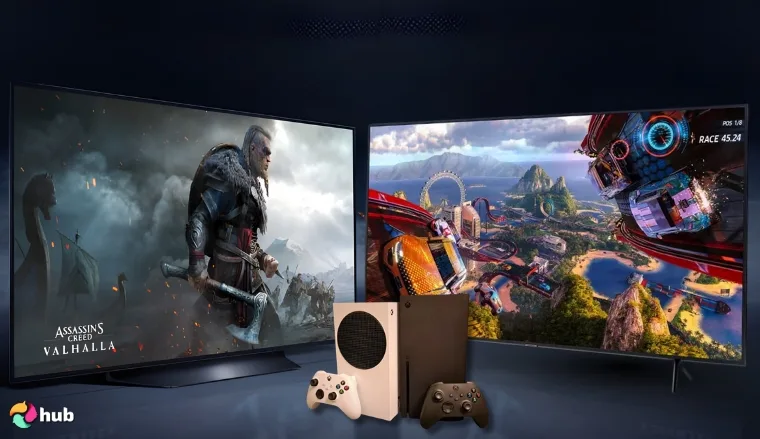
When you’re on the hunt for a display that goes beyond just pretty visuals, LG and Samsung both bring serious gaming muscle to the table. No matter if you’re looking for the top TV for Xbox or a PC, their advanced gaming features can seriously change how your setup performs and how good you feel pulling off that clutch headshot.
| Aspect | LG (OLED TVs & Gaming Monitors) | Samsung (QD-OLED & Neo QLED Models) |
|---|---|---|
| VRR Support | HDMI 2.1 VRR, G-SYNC Compatible, FreeSync Premium | HDMI 2.1 VRR, FreeSync Premium Pro |
| Auto Low Latency Mode (ALLM) | Supported across all gaming-ready models | Supported across all gaming-ready models |
| Game Mode/Game Bar | Game Optimizer: Adjust VRR, black levels, etc. | Gaming Hub: Input + streaming dashboard |
| Input Lag Reduction | Ultra-low input lag across OLED line | Comparable low latency in Game Mode |
| PC Gaming Optimization | Prioritizes latency and variable refresh rate | Prioritizes screen reflections, contrast |
LG’s Gaming Suite
LG’s OLED TVs and gaming monitors are all about ultra-fast response times and smooth, tear-free performance. Thanks to G-SYNC compatibility and FreeSync Premium, you get seamless gameplay no matter your GPU.
And with the Game Optimizer dashboard, tweaking black levels, motion handling, and game genre presets feels super intuitive. You can fine-tune your experience without pausing the action or digging through clunky settings.
Samsung’s Gaming Approach
Samsung goes big on ecosystem-level gaming with its Gaming Hub, which combines cloud gaming, console switching, and game streaming in one slick interface. It’s especially clutch if you’re already using other Samsung gear.
On the tech side, support for FreeSync Premium Pro, Auto Low Latency Mode (ALLM), and a dedicated Game Mode all help keep the gameplay smooth and responsive, especially on those stunning QD-OLED and Neo QLED screens. Gamers often explore the best projector options to achieve a massive field of view, yet the near-instant response times and dedicated features on these television panels provide a competitive advantage.
Final Take
If your top priority is pixel-perfect control and lightning response, LG’s OLED lineup is tough to beat. But if you’re into a more connected, do-it-all setup with built-in cloud access and smart features, Samsung’s the one for you.
LG vs Samsung TV: Smart Features and Operating System
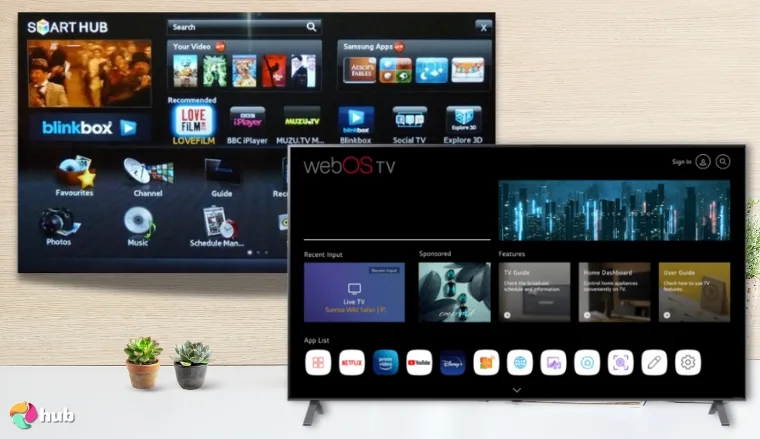
A smart TV shouldn’t make you feel like you’re solving a puzzle every time you turn it on. Luckily, both LG and Samsung offer intuitive systems, but the way they go about it is very different.
| Aspect | LG (webOS with ThinQ AI) | Samsung (Tizen OS + SmartThings) |
|---|---|---|
| Interface Design | Card-based, quick access to recent content | App dock layout, fast switching between inputs |
| Ease of Navigation | Smooth, minimalist layout | Fast, though more menu-heavy |
| App Availability | All major apps + LG Channels | All major apps + Samsung-exclusive content |
| Smart Home Integration | Works with ThinQ AI, supports Google Assistant and Alexa | Pairs with SmartThings, Bixby, Alexa, Google |
| Voice Control | Built-in mic on premium remotes | Wide voice assistant support, including Bixby |
LG’s webOS: Simple, Slick, and Smart
webOS goes for a clutter-free vibe. Its card-based interface gives you quick access to apps, inputs, and recently watched content without flooding your screen.
Plus, LG’s ThinQ AI ties in smoothly with smart devices and supports both Google Assistant and Alexa, so you can control lights and thermostats without leaving the couch. It’s minimal, but powerful. Perfect if you want less noise and more flow.
Samsung’s Tizen OS: Feature-Packed and Familiar
Tizen, on the other hand, is all about customization and tight ecosystem integration. The Smart Hub is loaded with shortcuts and suggestions, and if you’re already deep in the Samsung world (phone, fridge, etc.), SmartThings makes syncing devices very seamless.
Voice-wise, you’ve got options: Bixby (if you dare), Alexa, or Google Assistant. The layout can be a bit busy, but if you like flexibility and granular control, you’re gonna love this one.
Final Takeaway
Love a clean, straightforward UI? LG’s webOS has your back. But if you’re into tweaking settings and living that fully-connected life, Samsung’s Tizen gives you more knobs to turn.
LG vs Samsung TV: Audio Quality
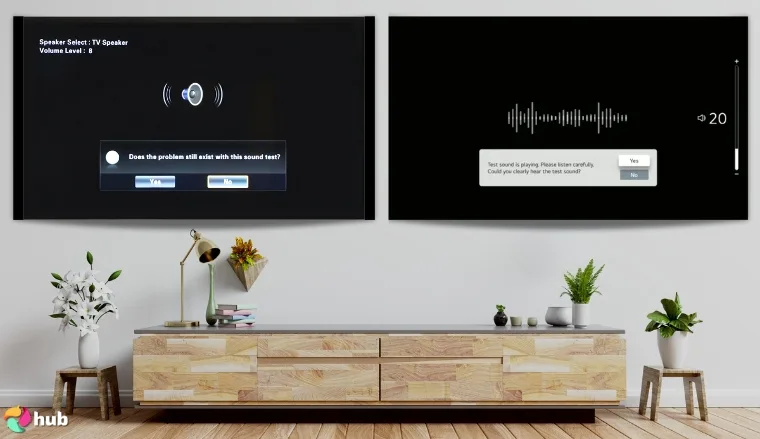
Let’s be real – most people slap on a soundbar eventually. But if you’re rolling with just the TV speakers, both LG and Samsung have stepped up their audio game big time.
| Aspect | LG (AI Sound Pro & LG Sound Sync) | Samsung (OTS & Q-Symphony) |
|---|---|---|
| AI Audio Processing | AI Sound Pro adjusts voice, music, and effects | Object Tracking Sound follows on-screen action |
| Speaker Output (Premium Models) | Up to 60W / 4.2 channel | Up to 70W / 4.2.2 channel |
| Soundbar Integration | LG Sound Sync, seamless pairing | Q-Symphony, plays TV + soundbar speakers together |
| Dolby Atmos Support | Yes | Yes |
LG’s AI Sound Pro: Smart and Balanced
LG’s premium TVs come with AI Sound Pro, which adapts audio based on what you’re watching. Explosions get punchy, dialogue stays clear, and you don’t need to keep riding the volume button.
It supports Dolby Atmos for spatial audio, and if you’re rocking an LG soundbar, LG Sound Sync makes setup a breeze. Everything just clicks, no fiddling required. Pairing the display with a top-tier soundbar for LG TV completes this ecosystem by delivering the deep bass and clarity necessary for a true home cinema feel.
Samsung’s Object Tracking Sound: Big and Bold
Samsung comes in loud, literally. Its OTS tech tracks objects on screen and moves the sound with them, so that fighter jet whooshing across the screen? You’ll hear it follow.
Combine it with a Q-series soundbar using Q-Symphony, and both the TV and soundbar speakers work together for a bigger, fuller soundstage. It’s wild in the best way.
Final Takeaway
LG brings clarity and smart balance: great for movies, music, and everyday binge-watching. But if you want blockbuster audio that follows the action, Samsung’s cinematic sound will hit harder straight out of the box.
LG vs Samsung TV: Design and Build Quality
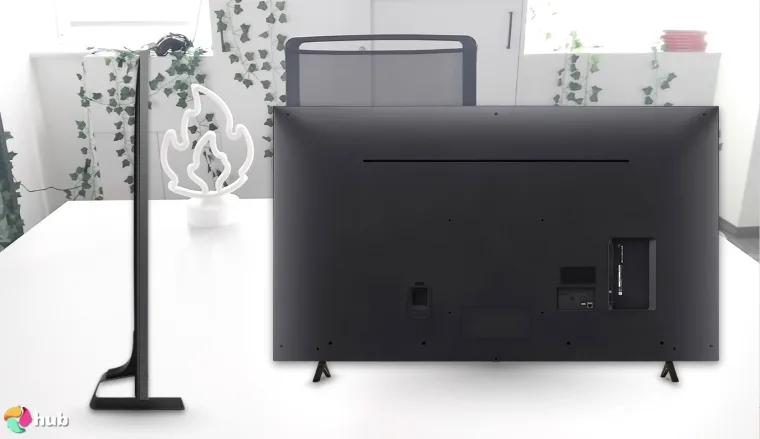
When you’re spending big on a new TV or gaming monitor, the design isn’t just cosmetics; it’s part of the experience. Both LG and Samsung treat aesthetics seriously, but their vibes are totally different.
| Aspect | LG (OLED & QNED TVs) | Samsung (QD-OLED & Neo QLED TVs) |
|---|---|---|
| Design Philosophy | Minimalist with a focus on Gallery Design | Infinity One Design for ultra-slim profile |
| Materials | Aluminum frames, glass, matte finish | Premium metal frames, high-gloss finishes |
| Bezel Thickness | Near-zero bezel | Thin bezels for an almost bezel-less feel |
| Stand Design | Central pedestal or minimalist feet | Sleek center stand or thin, single column |
| Wall Mounting Options | Easy wall-mounting for a flush look | Supports One Connect Box for cable management |
LG’s Aesthetic Design
LG’s design language leans heavily into minimalism. With the Gallery Design lineup, their TVs are built to look like actual wall art: crazy thin, barely-there bezels, and a flush-to-wall mount that practically disappears into your space.
The materials are premium, with central pedestal stands that keep attention locked on the screen, not the frame. It’s all about blending into your living room setup while still looking elite.
Samsung’s Signature Design
Samsung, on the other hand, wants your TV to stand out. Their Infinity One Design goes ultra-slim and almost bezel-free, offeromg a futuristic, high-end finish that screams “look at me.”
It also brings functional flair with the One Connect Box, a separate hub that hides all your cables that keeps your setup clean without compromising connectivity. The combo of metal finishes, ultra-thin profile, and hidden wiring makes it one of the sleekest setups out there.
LG vs Samsung TV: Pricing and Value for Money
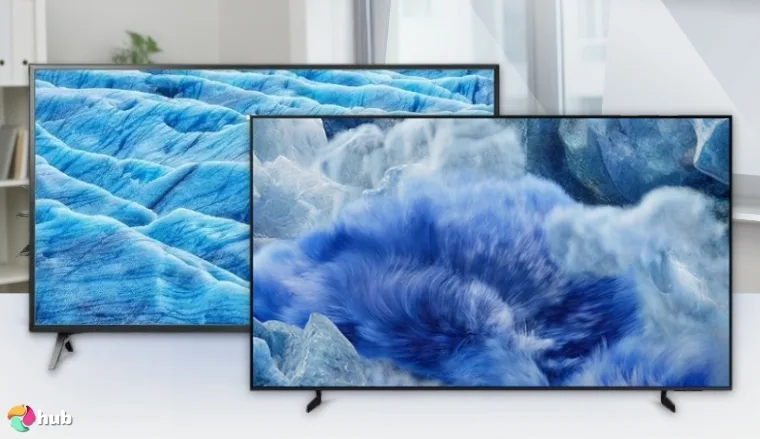
TV pricing can get wild fast, but both LG and Samsung give you a lot of range, from accessible mid-tier picks to top-tier home cinema beasts. Still, each brand plays the value game a bit differently.
| Aspect | LG (OLED & QNED) | Samsung Samsung (Neo QLED & QD-OLED) |
|---|---|---|
| Pricing Range | Premium pricing for OLED, mid-range for QNED | Higher prices for Neo QLED & QD-OLED |
| Value for Features | Best value in OLED for picture quality | Best value in bright rooms & HDR |
| Warranty and Software Updates | 2-year warranty, long software support | 1-year warranty, great longevity with Smart Hub |
| Long-term Ecosystem Value | Strong integration with ThinQ AI | Better integration with SmartThings |
LG’s Pricing Strategy
LG’s OLEDs sit on the premium end, and you’re paying for that pixel-perfect clarity. But it’s not just about visuals. LG backs it up with strong warranty terms and long-term software updates, which is a big deal if you want your TV to stay relevant for years.
If you’re looking for solid performance without going full OLED, the QNED lineup offers good visuals at a more manageable price point.
Samsung’s Pricing and Value
Samsung’s Neo QLED and QD-OLED models usually sit slightly above LG’s in price, especially if you’re going for top brightness and HDR punch. But the extra cost often pays off in bright rooms, where Samsung’s panels shine, literally.
Plus, the seamless integration with the SmartThings ecosystem means your TV becomes part of a larger smart home setup, especially if you’re already a Samsung user across devices.
Final Takeaway
LG brings unbeatable OLED value, especially for picture quality purists. But if you’re after eye-searing brightness and a smart home that just clicks, Samsung might offer better value in the long run.
Final Verdict
Choosing between LG and Samsung isn’t easy; they’re both titans in the display world, constantly pushing boundaries. But depending on what you prioritize, one might edge out the other for your specific setup.
Key Strengths
LG:
- Perfect OLED Blacks – Thanks to self-lit pixels, LG’s OLED displays provide unbeatable contrast and shadow detail, ideal for dark room viewing or late-night movie binges.
- Dolby Vision Support – LG supports Dolby Vision, which makes it a favorite among cinephiles who want the richest HDR experience.
- webOS Interface – Clean, intuitive, and lightning-fast. webOS is especially great if you want seamless integration with ThinQ smart devices.
Samsung:
- Vibrant QD-OLED Colors – Samsung’s QD-OLED tech adds extra brightness and saturation to standard OLED, so visuals pop with intense color volume.
- Blazing Mini-LED Brightness – Mini-LED backlighting helps Samsung dominate in bright environments. If you’ve got a sunny living room, this might be your go-to.
- Tizen OS with SmartThings – Samsung’s Tizen is a full smart home control center with deep integration across Samsung devices and major voice assistants.
- HDR10+ Optimization – Samsung doubles down on HDR10+, which still provides dynamic scene-by-scene adjustments for supported content.
Recommendations
- Best for Movie Enthusiasts: LG leads pitch-black OLED contrast and Dolby Vision for immersive storytelling.
- Best for Competitive Gamers: LG shines with ultra-low input lag and responsive OLED panels, but Samsung’s higher refresh rates on Neo QLEDs are great for fast-paced titles.
- Best for Bright Rooms: Samsung’s Mini-LED TVs handle glare better and push higher peak brightness levels.
- Best for Smart Home Integration: Samsung’s SmartThings ecosystem is more expansive, especially if you already use Samsung devices around the house.
FAQs
Which TV is better: LG vs Samsung?
Both LG and Samsung offer top-tier TVs, but the choice depends on your needs. LG excels in OLED picture quality with perfect blacks, while Samsung stands out with bright, vibrant displays, especially in QLED models. For gaming, both brands provide high refresh rates and excellent motion handling.
Why are LG TVs more expensive than Samsung?
LG TVs, particularly their OLED models, often cost more due to their superior display technology, offering perfect blacks and infinite contrast. While Samsung also offers excellent picture quality, LG’s OLED technology comes at a premium for a more cinematic viewing experience.
Is a Samsung TV better than an LG TV?
It depends on what you’re looking for. Samsung excels in brightness and color volume, especially with its Neo QLED and QD-OLED panels. However, LG leads with OLED technology, offering perfect blacks and exceptional contrast. Choose based on your preference for brightness or deep contrast.
Are Samsung TVs good for gaming?
Yes, Samsung TVs are great for gaming. With features like HDMI 2.1, VRR, and FreeSync Premium Pro, they provide smooth gameplay with low input lag, making them an excellent choice for competitive gamers.
Are LG TVs good for sports?
Yes, LG TVs are great for sports. The OLED panels offer perfect contrast and vibrant colors, making fast-motion scenes look clear and detailed. Their 120Hz refresh rate ensures smooth and fluid motion, enhancing your sports-watching experience.