


13 Best Gaming Monitors in 2026: Tested for Every Budget and Setup

Eneba Hub contains affiliate links, which means we may earn a small commission if you make a purchase through them—at no extra cost to you. Learn more


Recent update
This list is regularly updated to match what’s trending and in-demand among gamers.
If you’re searching for the best gaming monitor, you already know that not all displays are created equal. Choosing a new gaming monitor can mean the difference between smooth performance and frustrating lag.
I’ve analyzed specs and examined real gamer feedback to curate this list of top-tier monitors for every type of player.
If you’re looking for a high-priced, brilliant OLED panel or something that has a lower price but packs features and value, then stay right here. I’ll tell you about specs, pros/cons, and everything else you’ll need to know before buying it!
I’ve also included alternative options and key information for those who want to check out different monitors and who want their information straight up. This guide will help you pick the best monitor for gaming without second-guessing your purchase.
Jump to:
Our Top Picks for Best Gaming Monitors
Choosing the best gaming monitor depends on your needs: high refresh rates, OLED clarity, or affordability? Our top three contenders deliver across all those fields:
- ASUS ROG Swift 32” 4K Gaming Monitor – A premium 4K QD-OLED monitor with 144Hz refresh, HDR600, and HDMI 2.1 for next-gen gaming.
- LG 45GR65DC-B UltraGear 45” – An immersive 45-inch 32:9 ultrawide with 200Hz refresh, deep blacks, and low input lag.
- Sony 27” INZONE M9 – A 27-inch 4K IPS gaming monitor with full-array local dimming, HDR600, and 144Hz refresh for sharp, vibrant gameplay.
Scroll down for in-depth reviews of all gaming monitors that made it to this list.
Best Gaming Monitor by Budget: Under $300, $300–$800, and Premium
Not every best gaming monitor needs to break the bank. Whether you’re hunting for the best gaming monitor under $300 or ready to splurge on a premium OLED setup, there’s a perfect pick on this list for every budget.
| Budget Tier | Our Pick | Price | Best For |
|---|---|---|---|
| Under $300 | ASUS TUF 27″ | ~$220 | Best gaming monitor for 1440p on a budget |
| $300–$800 | Acer Predator XB283K 28″ | ~$400 | Best gaming monitor for budget 4K |
| $300–$800 | KTC G27P6 27″ OLED | ~$580 | Best gaming monitor for budget OLED |
| $300–$800 | ASUS ROG Strix 27″ | $549 | Best gaming monitor for competitive play |
| $300–$800 | AOC Agon PRO AG346UCD | ~$620 | Best gaming monitor for ultrawide |
| $300–$800 | LG 45GR65DC-B UltraGear | $649.99 | Best gaming monitor for curved ultrawide |
| $300–$800 | ViewSonic VX1655-4K-OLED | $734.70 | Best gaming monitor for portability |
| $300–$800 | Sony 27″ INZONE M9 | $795 | Best gaming monitor for PS5 |
| Premium | MSI MPG 321URX QD-OLED | ~$950 | Best gaming monitor for 32-inch 4K |
| Premium | LG UltraGear 32GS95UV | ~$900 | Best gaming monitor for OLED |
| Premium | ASUS ROG Swift 32″ 4K | ~$1,199 | Best gaming monitor for overall performance |
| Premium | Samsung 49″ Odyssey G9 | ~$1,200 | Best gaming monitor for super-ultrawide |
| Premium | LG 27MD5KL-B Ultrafine 5K | $2,657 | Best gaming monitor for 5K resolution |
No matter your budget, there’s a best gaming monitor on this list that guarantees exactly what you need, including budget-friendly 1440p and premium OLED powerhouses.
13 Best Gaming Monitors Reviews
I break down each model to help you find the perfect fit. You can expect information on:
- Specifications: Screen size, resolution, panel type, etc.
- Pros and Cons: I showcase standout pros and potential cons for each monitor.
- Thorough evaluation of monitor’s performance: I touch down on colors, visuals, performance, and more.
Let’s dive in.
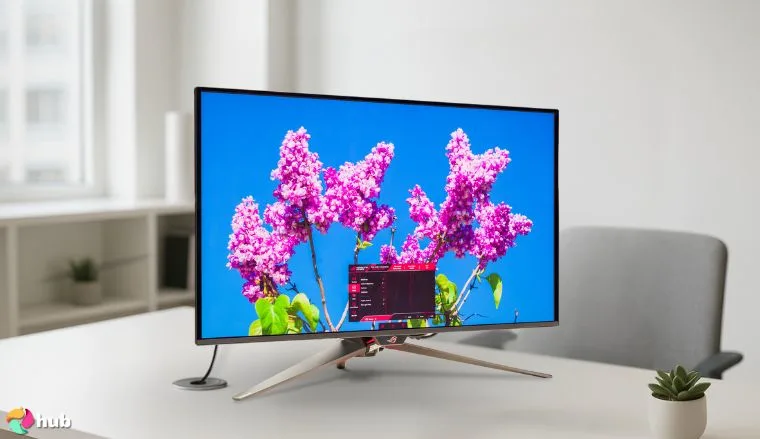
1. ASUS ROG Swift 32” 4K Gaming Monitor [Best Overall]
| Specs | Details |
|---|---|
| Screen Size | 32 inches |
| Aspect Ratio | 16:9 |
| Panel Type | QD-OLED panel |
| Response Time | 1ms (MPRT) / ~4ms GtG |
| Resolution | 3840 x 2160 (4K UHD) |
| Refresh Rate | 144Hz (OC up to 155Hz) |
| Brightness | 450 nits SDR, 600 nits Peak (HDR600) |
| Weight | 6.1 kg (13.45 lbs) |
The ASUS ROG Swift 32” 4K stands out as the best gaming monitor you can buy right now. Its specs impress right away. It has a 32-inch QD-OLED panel pushing a full 4K UHD image up to 144Hz means games look incredibly sharp yet fluid. In practice, the gaming monitor lives up to the promise.
Colors are universally praised as rich and accurate; one user measured essentially 99% Adobe RGB and 92% DCI-P3 coverage, noting the “wide gamut makes every game world look vibrant and lifelike”. Factory calibration is on point. HDR content particularly benefits. The DisplayHDR 400 True Black certification combined with per-pixel self-emission produces punchy highlights and absolute blacks – every pixel lights independently, so there’s no backlight bleed at all.
HDR games like Cyberpunk 2077 will treat you to eye-searing neon lights against inky night skies; the HDR contrast feels “excellent” for a monitor in this class. Where the ROG Swift really shines is its motion performance.
With a true 144Hz native refresh (and an optional 155Hz overclock), fast action feels buttery-smooth. Competitive FPS titles like Valorant or Apex Legends exhibit virtually no blur or ghosting. Input lag is nearly non-existent, and the panel’s 1ms MPRT response plus adaptive-sync support means no tearing or stutters either. When frame rates fluctuate, G-Sync Compatible mode keeps the experience fluid.
HDMI 2.1 support enables full 4K 120Hz gaming on PS5 and Xbox Series X, while DisplayPort 1.4 (with DSC) delivers top-tier PC performance. Console gaming benefits from VRR support, and PC gamers get extras like Shadow Boost for improved visibility in dark areas.
If you want games that show off a 4K display, browse top PC game keys on Eneba and pay less for more.
| Pros | Cons |
|---|---|
| ✅Stunning 4K image ✅Excellent HDR contrast ✅High 144Hz refresh ✅HDMI 2.1 support for 4K 120Hz gaming on PS5/XSX ✅Low input lag and adaptive sync | ❌Peak SDR brightness lower than mini-LED competitors – bright rooms can dull the image |
Final Verdict: ASUS ROG Swift 32” 4K Gaming Monitor is next-gen ready and has a premium build and features.If you want an alternative option, the Acer Predator XB283K is a fantastic, high-quality gaming monitor at a lower cost.
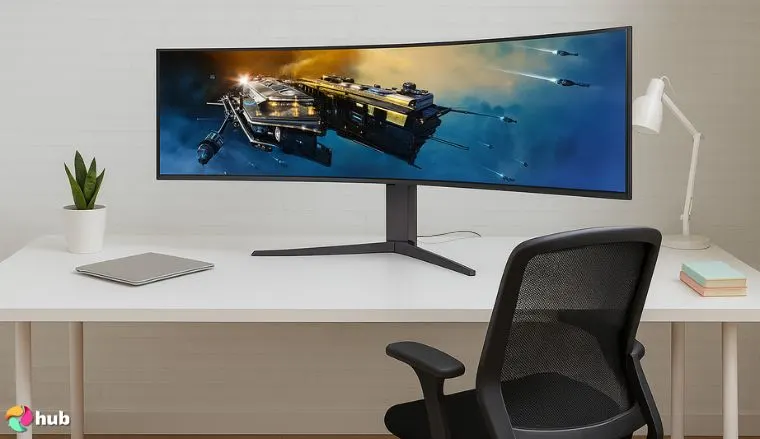
2. LG 45GR65DC-B UltraGear 45” [Best Curved Gaming Monitor]
| Specs | Details |
|---|---|
| Screen Size | 45 inches (curved, 1500R radius) |
| Aspect Ratio | 32:9 “Super Ultrawide” |
| Panel Type | VA (Vertical Alignment) panel |
| Response Time | 1ms GtG (VA panel) |
| Resolution | Dual-QHD 5120×1440 |
| Refresh Rate | 200Hz max (Adaptive-Sync, 48–200Hz VRR range) |
| Brightness | 400 nits SDR / 600 nits Peak (DisplayHDR 600) |
| Weight | 8.8 kg (19.4 lbs) |
I can confidently say that LG’s 45GR65DC-B beast is the best curved gaming monitor for ultra-wide aficionados. At 45 inches diagonal with a 32:9 aspect ratio, it’s equivalent to two 27” 1440p monitors fused. The result is utterly immersive. The 1500R curvature and sheer width fill your peripheral vision completely.
Any game that benefits from a wide-field view shines on this monitor. Games like flight sims, open-world games, and racing titles. Reddit users described it as “a total game-changer. Like going from a regular TV to a high-end cinema screen.” Based on extensive research and analysis, I wholeheartedly agree. Of course, immersion isn’t only about size. The monitor backs it up with serious performance.
It sports a high-contrast VA panel that delivers deep, inky blacks and a 3000:1 contrast ratio. Dark scenes in games look terrific; exploring caves or space in Star Citizen, the monitor’s near-OLED-level blacks make the experience incredibly atmospheric. You can take your display setup to the next level by checking out our detailed guide on the best OLED gaming monitor. Unlike most VA monitors, LG’s 45GR65DC-B one is fast. LG pushed it to a 200Hz refresh with a claimed 1ms response.
In practice, motion handling is excellent: fast-paced shooters and action games run smoothly with minimal blur or ghosting. Even in tricky dark transitions, the panel performed well; only a faint bit of VA pixel persistence (“black smear”) is present if you look for it on very dark backgrounds. Input lag is low and it supports FreeSync Premium Pro (and G-SYNC Compatible).
The gameplay feels snappy and tear-free at all times. Pushing 5120×1440 at 200 fps demands a beefy GPU. However, there’s no tearing or judder and just fluid motion across a mega screen thanks to VRR. Feature-wise, this curved gaming monitor features Picture-by-Picture and Picture-in-Picture. You can display two inputs at once (now you’ve got 2 screens in 1).
It’s great overall but you need desk space and a powerful PC to fully appreciate it.
| Pros | Cons |
|---|---|
| ✅ Incredibly immersive 32:9 curved screen ✅ Massive “dual QHD” resolution (5120×1440) ✅ 200Hz refresh + 1ms response ✅ Excellent contrast and HDR600 ✅ Adaptive-Sync + Low Input Lag = tear-free, responsive gameplay even at this huge size | ❌ Requires significant desk space; gigantic 45” width ❌ Limited availability of 32:9 content (not all games support ultrawide without tweaks) |
Final Verdict: The LG 45GR65DC-B UltraGear 45” has a curved VA panel with 32:9 ultrawide aspect ratio which also makes it the best ultrawide gaming monitor in this price range. It allows dual input use.
Another option would be the AOC Agon PRO AG346UCD, which offers a 34-inch ultrawide gaming experience at a lower price.
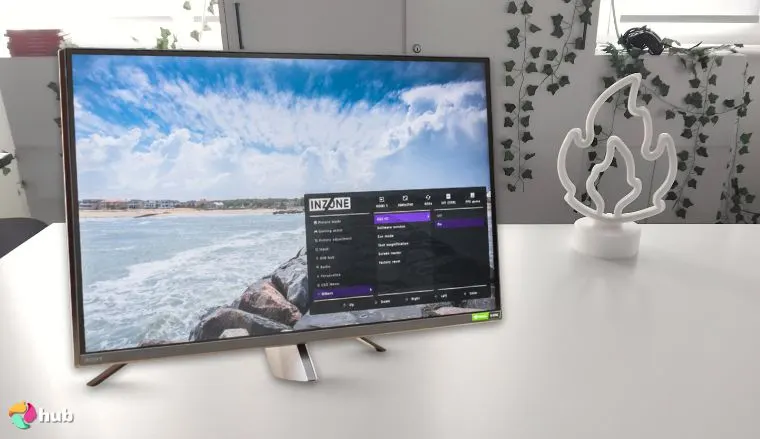
3. Sony 27” INZONE M9 [Best 4K Gaming Monitor]
| Specs | Details |
|---|---|
| Screen Size | 27 inches (IPS, Full-Array Local Dimming – 96 zones) |
| Aspect Ratio | 16:9 |
| Panel Type | IPS LCD panel |
| Response Time | 1ms GtG (Fast IPS) |
| Resolution | 3840 x 2160 (4K UHD) |
| Refresh Rate | 144Hz (120Hz PS5/XSX via HDMI 2.1) |
| Brightness | ~600 nits Peak (DisplayHDR 600 certified) |
| Weight | 6.8 kg (14.99 lbs) |
“Is it worth it?” That was my big question going into the Sony INZONE M9, given its higher price tag for a 27-inch monitor. The answer is a resounding yes. This monitor delivers an experience that justifies being crowned the best 4K gaming monitor in its class. The star of the show is the full-array local dimming (FALD) backlight. It can brighten and dim dynamically.
This feature gives HDR content a real punch: For example, Cyberpunk 2077’s neon signs glow intensely against truly dark city streets, something standard edge-lit IPS monitors just can’t do. One reviewer noted the M9’s HDR offers “an improved HDR experience” over other 4K IPS panels.
In normal gameplay and movies, the local dimming works wonders. It elevates contrast to an impressive degree. You’ll be struck by how much richer the image will look, almost like a pseudo HDR (but with better depth in shadows). This capability sets the INZONE M9 apart from competitors like the LG 27GP950 or Gigabyte M28U.
The INZONE M9 features a Fast IPS 4K panel that runs up to 144Hz. It’s razor-sharp and buttery-smooth. At 27 inches, 4K resolution yields a 163 PPI pixel density. Games and text look extremely crisp. Speaking of games, this monitor is made for the PS5. Sony equipped it with two HDMI 2.1 ports, so it handles 4K 120Hz from the PS5 and Xbox Series X easily.
Plus, it supports the PS5’s Auto HDR Tone Mapping. When you connect a PS5, the console automatically recognizes the M9 and optimizes HDR output for it.
| Pros | Cons |
|---|---|
| ✅ Exceptional 4K HDR picture for the size ✅ HDMI 2.1 ports for 4K 120Hz, Auto HDR Tone Mapping and genre picture modes for PS5 ✅ 144Hz + 1ms IPS for smooth motion and low input lag ✅ G-SYNC Compatible and FreeSync Premium ✅ Integrated KVM USB hub simplifies using one keyboard/mouse | ❌ Limited stand adjustment: tilt and height only, no swivel or pivot |
Final Verdict: The Sony 27” INZONE M9 is PS5-optimized with Auto HDR Tone Mapping and 4K 120Hz HDMI 2.1 support. It is considered as the best monitor for PS5 based on its specs, features and performance.
A good alternative is the Acer Predator XB283K, which offers 4K 144Hz and HDMI 2.1 support at a lower price.
4. AOC Agon PRO AG346UCD 34” [Best Ultrawide Gaming Monitor]
| Specs | Details |
|---|---|
| Screen Size | 34 inches QD-OLED (1800R curve) |
| Aspect Ratio | 21:9 Ultrawide |
| Panel Type | QD-OLED panel |
| Response Time | 0.03ms GtG |
| Resolution | 3440×1440 |
| Refresh Rate | 175Hz (Adaptive Sync, LFC support) |
| Brightness | ~250 nits fullscreen (HDR True Black 400) |
| Weight | 7.65 kg (16.87 lbs) |
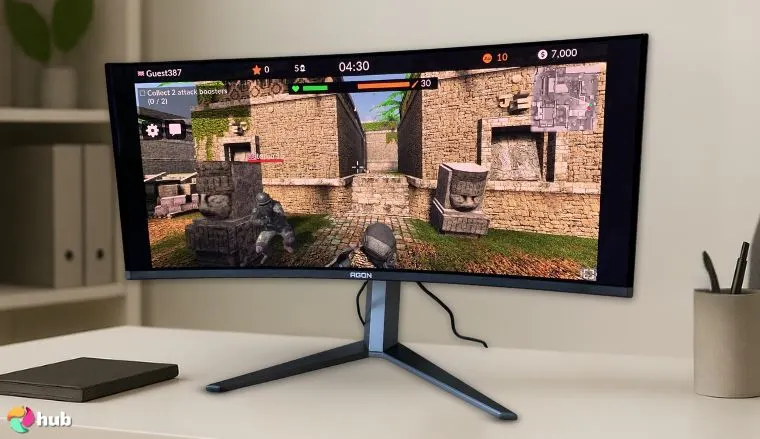
Gaming on the AOC Agon PRO AG346UCD is a joyful experience. It’s not a stretch to say it’s one of the most balanced ultrawide gaming monitors in the market right now. You get ultrawide immersion and insane image quality. You can thank the 34” curved screen and QD-OLED for that. The visuals are jaw-dropping.
The deep and infinite contrast makes every element on-screen illuminate dramatically. You won’t see any halo or blooming from bright lights or HUD elements against dark backgrounds. Each pixel shines independently. AOC’s implementation is using QD-OLED tech. It has quantum dot enhancement for color. In practical terms, this means that colors POP. Lush, saturated colors still retain their nuances. Overall, colors have depth and layers.
The 21:9 ultrawide format itself is a massive plus. You’ll experience true immersion with it. In supported games, the extended field of view is a real advantage. You can see more enemies in your periphery and the sense of scale in open-world games is quadrupled. The 3440×1440 resolution hits a sweet spot too.
It’s far less demanding than 4K, so reaching the 175Hz refresh is feasible with a decent GPU. Still, it remains looking plenty sharp at 34”. At the end of the day, the AOC Agon PRO AG346UCD is a top-tier ultrawide gaming monitor that lets you enjoy speed, performance, image quality, and immersion. You don’t need to compromise with this monitor because you get ALL of it. While it is an investment, it pays off.
| Pros | Cons |
|---|---|
| ✅ Stunning OLED visuals ✅ Quantum Dot OLED panel = bright, pure colors and high peak brightness ✅ Virtually zero motion blur ✅ 175Hz ultrawide experience with Adaptive-Sync eliminating tearing at all frame rates ✅ Ultra-wide 21:9 aspect at 3440×1440 | ❌ Lacks HDMI 2.1 bandwidth. Consoles run at 1440p 120Hz, not 4K |
Final Verdict: The AOC Agon PRO AG346UCD 34” monitor provides breathtaking QD-OLED visuals and 175Hz refresh for smooth gameplay.
If you want a cheaper option, the LG 45GR65DC-B offers a 45” VA panel and deep contrast for less money.
5. ASUS TUF 27” [Best Gaming Monitor for Competitive Play]
| Specs | Details |
|---|---|
| Screen Size | 27 inches IPS (non-glare) |
| Aspect Ratio | 16:9 |
| Panel Type | IPS (In-Plane Switching) |
| Response Time | ~4ms GtG (1ms MPRT via backlight strobe) |
| Resolution | 2560 x 1440 (QHD 1440p) |
| Refresh Rate | 280Hz (overclocked) |
| Brightness | 400 nits (DisplayHDR 400) |
| Weight | 5.6 kg (12.35 lbs) |
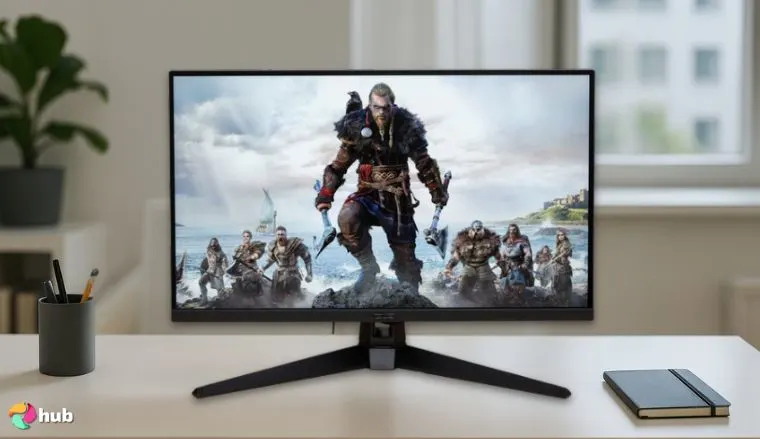
If you want an affordable 27-inch 1440p monitor that gives you silky-smooth motion and high refresh rates, then you’ve struck gold with the ASUS TUF Gaming VG27AQ. It consistently rises to the top of recommendations in this field. It’s because it gives you what you need for much less money. This affordable gaming monitor provides a big, sharp picture that’s easier on the GPU than 4K.
Plus, for what it delivers, its price truly makes buying it one of the best gaming monitor deals. The 2560×1440 resolution at 27 inches is the sweet spot. Everything looks appreciably sharper than 1080p without the need for insane hardware to drive it. You’ll be able to run games like The Witcher 3 at 1440p and push well over 100fps on a mid-to-high-tier graphics card. Players exploring vast digital landscapes often keep a secondary screen in portrait mode nearby. A top-tier vertical monitor enables you to view detailed maps and strategy wikis at a glance.
From extensive research and analysis, buyers noted that switching to this monitor increased resolution and refresh rate substantially. For gamers who enjoy fast-paced games, this means the motion clarity will be great. It delivers on visuals and smoothness, that’s for sure. Moreover, the VG27AQ’s IPS panel impresses with vibrant colors and wide viewing angles.
But, where this TUF monitor truly delivers is motion handling. It’s a 165Hz panel that can be overclocked to ~170Hz, and the response times are very good, especially with ASUS’s overdrive set appropriately. Lastly, this ASUS TUF model has earned a reputation for amazing value and reliability. It often comes in much cheaper than other 1440p high-end monitors, but it delivers 95% of the experience.
| Pros | Cons |
|---|---|
| ✅ Excellent 1440p visuals ✅ 165Hz refresh + low input lag ✅ Unique ELMB Sync tech allows simultaneous motion blur reduction and adaptive sync ✅ Adaptive-Sync works flawlessly ✅ Offers high-end features (165Hz, HDR, ELMB) at a mid-range price | ❌ IPS panel’s contrast and blacks are middling, dark scenes in a dark room appear grayish (common to IPS) ❌ No USB-C or KVM. Connectivity is basic, focusing on core HDMI/DP ports |
Final Verdict: The ASUS TUF VG27AQ gives you sharp visuals, fast refresh rates, and vibrant IPS colors.
Another option would be the ASUS ROG Strix 27”. It delivers even better HDR for a more refined experience.
6. ASUS ROG Strix 27” [Best 27 Inch Gaming Monitor]
| Specs | Details |
|---|---|
| Screen Size | 27 inches Fast IPS (Aura Sync lighting) |
| Aspect Ratio | 16:9 |
| Panel Type | IPS (In-Plane Switching) |
| Response Time | 0.5ms GtG (Fast IPS with overdrive) |
| Resolution | 2560 x 1440 (QHD) |
| Refresh Rate | 270Hz (OC) / 240Hz native – NVIDIA Reflex Latency Analyzer built-in |
| Brightness | 400 nits SDR / HDR400 (450+ nits peak) |
| Weight | 5.8 kg (12.8 lbs) |
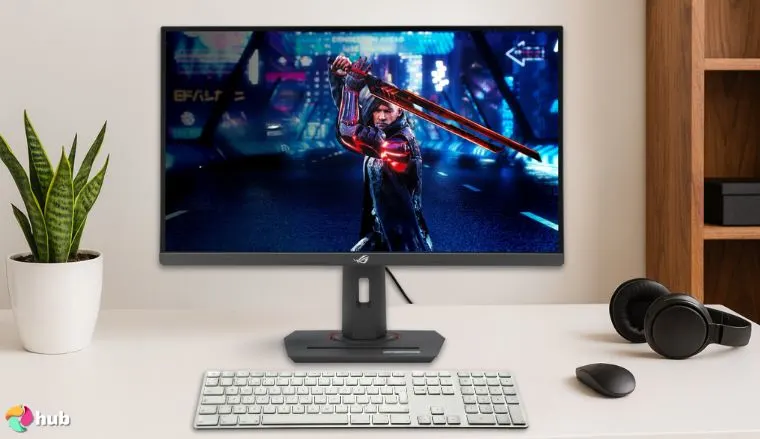
Meet one of the fastest gaming monitors available for casuals and pros. The ASUS ROG Strix 27” XG27AQM is THE 27-inch gaming monitor to beat, especially if you’re in competitive gaming. It leverages the already-excellent foundation of 27” 1440 IPS with an incredible 270Hz refresh rate. This results in a display that FEELS and IS incredibly fast and fluid.
So, jumping into matches of Valorant and CS:GO, the difference between 144Hz and 270Hz is noticeable in the tiniest of ways.
To a pro gamer, these small differences can cumulatively end in winning or losing. Input feels a hair more instant, and tracking targets during flick shots is just that much easier. Especially when the frame rate can match your reactions. Motion clarity at high refresh rate is outstanding.
The Fast IPS panel ASUS uses here is one of the quickest ever tested. I’ve found its response times to be around 4ms or better, which is excellent for 240Hz+. Plus, with overdrive tuning the visual response rating is superb. In practice, ghosting is basically a non-issue at 270Hz.
But what impressed me the most is that ASUS managed to achieve this speed without messing up color and resolution! The monitor truly delivers beautiful visuals with rich colors (it’s nearly 97% DCI-P3 gamut).
Overall, the ASUS ROG Strix XG27AQM exemplifies overkill in the best way. It’s one of the top 27-inch gaming monitors for those who want no-holds-barred performance. It gives you high resolution, high refresh, and high responsiveness all in one.
Pair your new monitor with the best FPS games around. Find Steam keys from $4 on Eneba.
| Pros | Cons |
|---|---|
| ✅ Blazing-fast 270Hz refresh, among the highest for 1440p ✅ Fast IPS with 0.5ms GtG, outstanding motion clarity with minimal ghosting ✅ Excellent color and accuracy for a high-refresh panel ✅ Supports ELMB Sync (backlight strobing + VRR) ✅ Premium ROG build: distinct Strix design, RGB backlighting and integrated latency analyzer for eSports tuning | ❌ Needs a powerful GPU to fully exploit 240–270Hz at 1440p ❌ Higher price than standard 144Hz 27″ monitors (you’re paying for speed) |
Final Verdict: The ASUS ROG Strix 27” XG27AQM is the ultimate 27-inch monitor for competitive players.
As an alternative, the Sony INZONE M9 is another high-end 27” 4K gaming monitor with full-array local dimming for superior HDR performance.
7. MSI MPG 321URX QD-OLED [Best 32 Inch Gaming Monitor]
| Specs | Details |
|---|---|
| Screen Size | 32 inches (Quantum Dot enhancement) |
| Aspect Ratio | 16:9 |
| Panel Type | QD-OLED panel |
| Response Time | 1ms GtG |
| Resolution | 3840 x 2160 (4K UHD) |
| Refresh Rate | 144Hz (120Hz via HDMI 2.1 for consoles) |
| Brightness | 400 nits SDR / 600 nits Peak (VESA DisplayHDR 600) |
| Weight | 7.5 kg (16.5 lbs) |
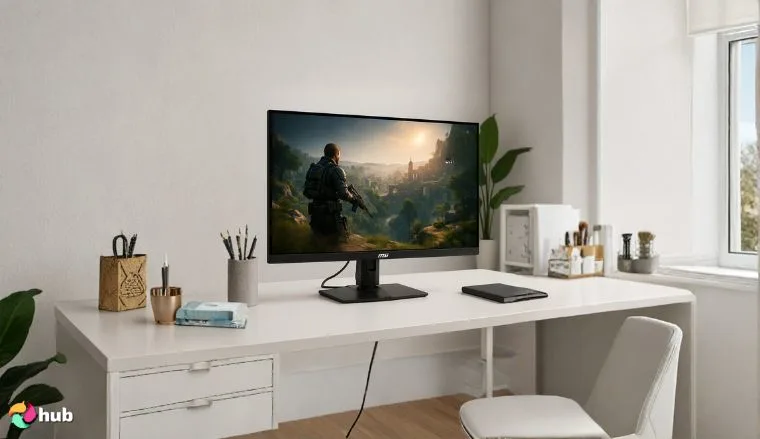
Enter the great OLED widescreen monitor that could be the new part you need for your gaming setup. The MSI MPG 321UR-QD monitor boasts size, color, and accessibility for multiple devices/consoles. The monitor’s system was designed to balance an impressive gaming monitor screen size with clarity. The pixel density (~140 PPI) is higher than a 27” 1440p, so games and text look very sharp.
4K content really shines on this monitor and you’ll be blown away by the fine details visible on such a large screen. Moreover, this model is actually dubbed the “Xbox Edition” because MSI tailored it heavily for console compatibility: two HDMI 2.1 ports let you run your PS5 or Series X at full 4K 120Hz with VRR.
The QD-OLED panel with Quantum Dot is one of the best I’ve seen in color performance. It’s extremely saturated (in a good way) and can cover wide gamuts. It’s full Adobe RGB and about 97% of DCI-P3. Color us impressed. Moving on to features, the monitor has a whopping 6 USB ports (3 upstream if you count the USB-B for KVM, and 3 downstream for devices).
It basically acts as a hub for everything. There are also gaming OSD features: crosshair overlays, a timer, a refresh rate counter, and even a “Night Vision” mode (MSI’s term for shadow boost to brighten dark areas). Many other top 32-inch gaming monitors with similar specs cost more and have fewer features than the MSI MPG 321UR-QD. Overall, The MSI MPG 321UR-QD gives you value for your money.
| Pros | Cons |
|---|---|
| ✅ Gorgeous 4K image at 32″, large screen with high pixel density yields ✅ Quantum Dot OLED panel produces tremendously rich color ✅ Fast 144Hz refresh & 1ms response ✅ Two HDMI 2.1 ports, designed for PS5/XSX at 4K 120Hz with VRR ✅ Low input lag and FreeSync Premium Pro | ❌ Large 32″ size means lower pixel density than smaller 4K monitors (still ~140 PPI, which is plenty detailed, but not “retina” like a 27″ 4K) ❌ OSD can be a bit complex due to the sheer amount of features |
Final Verdict: The MSI MPG 321UR-QD is a feature-packed 32-inch 4K gaming monitor ideal for multi-device gaming and workstation setups.
A cheaper alternative? Acer Predator XB283K gives you 4K 144Hz, HDMI 2.1, plus excellent color accuracy for less money.
8. SAMSUNG 49″ Odyssey QD-OLED [Best 49 Inch Gaming Monitor]
| Specs | Details |
|---|---|
| Screen Size | 49 inches QD-OLED (1800R curve, ultra-wide 32:9) |
| Aspect Ratio | 32:9 |
| Panel Type | QD-OLED |
| Response Time | ~0.03ms GtG (OLED instantaneous pixel response) |
| Resolution | 5120 x 1440 (Dual-QHD) |
| Refresh Rate | 240Hz |
| Brightness | 250 nits fullscreen / ~1000 nits peak |
| Weight | 14.1 kg (31.1 lbs) |
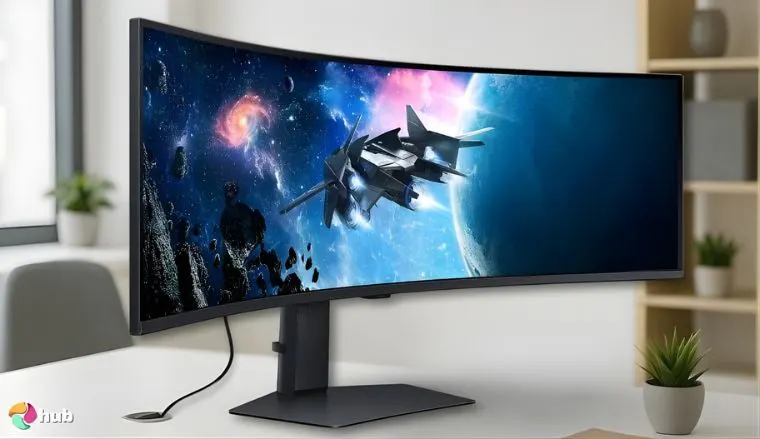
The Samsung Odyssey OLED G9 is awe-inspiring especially when it comes to image display and immersive qualities. This gigantic 49-inch display is essentially two 27-inch 1440p monitors fused together. This gaming monitor has a gentle 1800 curve. When you’re sitting in front of it, it’s ALL you can see. It immerses you on a next level.
Playing a game like Cyberpunk 2077 or Flight Simulator 2020 on this monitor is a transformative experience. The world wraps around you and thanks to the OLED’s perfect blacks and rich colors. It feels almost like looking through a window into another reality. The Samsung Odyssey OLED G9 brings the cinematic visuals of OLED TVs into a monitor form factor and adds the high refresh that gamers need.
Gaming performance is top-tier as well. The panel runs at 240Hz, which for a 49″ 5120×1440 OLED is mind-blowing. At 240Hz, you can expect that motion is on another level of fluidity. Combining that refresh rate with OLED’s instant pixel response, and you get motion clarity that’s free of blur. Fast-moving targets in Call of Duty: Warzone are easier to track and the overall feel is just unbelievably smooth.
All considered, the Odyssey OLED G9 delivers an unparalleled gaming experience. It is absolutely one of the best super-ultrawide monitors you can get right now.
Cyberpunk 2077 and Elden Ring were made for OLED. Grab them for less on Eneba.
| Pros | Cons |
|---|---|
| ✅ Enveloping 49″ curved OLED screen ✅ Perfect blacks and infinite contrast ✅ Ultra-fast 240Hz refresh + near-zero pixel response ✅ Quantum Dot OLED color ✅ HDR10+ Gaming support for dynamic HDR tone mapping | ❌ Hefty price tag ❌ Needs significant space |
Final Verdict: The Samsung Odyssey OLED G9 is a 49-inch QD-OLED ultrawide monitor with perfect blacks, vivid colors, and a 240Hz refresh rate.
An alternative choice is the AOC Agon PRO AG346UCD. It offers QD-OLED visuals and 175Hz refresh in a more compact 34-inch ultrawide format (and a lower price).
9. LG UltraGear 32GS95UV 32” OLED [Best OLED Gaming Monitor]
| Specs | Details |
|---|---|
| Screen Size | 32 inches WOLED (flat panel, anti-glare coating) |
| Aspect Ratio | 16:9 |
| Panel Type | WOLED |
| Response Time | ~0.03ms (OLED instantaneous) |
| Resolution | 3840 x 2160 (4K UHD) |
| Refresh Rate | 240Hz (native) |
| Brightness | ~250 nits fullscreen / 800+ nits peak (DisplayHDR True Black 400) |
| Weight | 6.9 kg (15.2 lbs) |
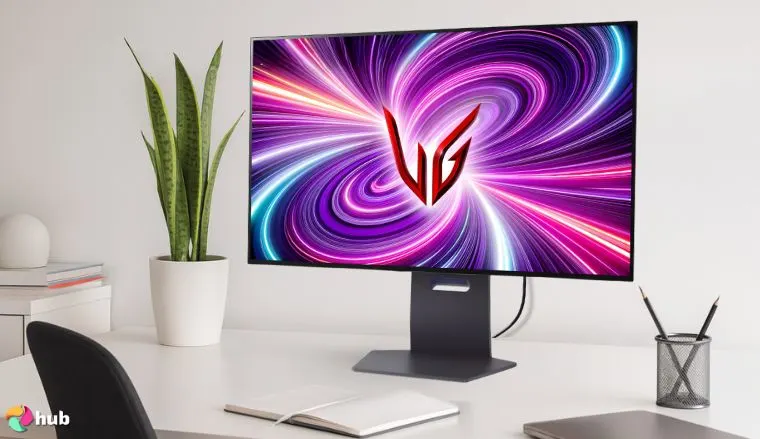
The LG UltraGear 32GS95UV packs a serious punch. This monitor takes LG’s renowned OLED technology (as seen in their TVs) and optimizes it for desktop gaming in a way that simply hasn’t been done before. First, the visuals: As expected from OLED, the picture is sublime. Every pixel emits its own light, so blacks are completely black.
The contrast and color fidelity are breathtaking; the monitor covers 133% of sRGB and ~95% DCI-P3, so colors are rich yet accurate. Now, what really sets the 32GS95UV apart is the performance and the Dual-Mode feature. This monitor’s native operation is 4K at 240Hz: an already groundbreaking spec as it’s the first of its kind. Playing at 240Hz in 4K is a joy (if your system can push high frames).
Even at lower fps in more demanding games, the combination of VRR and OLED fast response makes everything feel smooth. But LG didn’t stop there: they added a 480Hz mode at 1080p for the hardcore competitive gamers! With a quick hotkey or OSD toggle, you can have the monitor drop to 1920×1080 and refresh up to 480Hz.
It even has options to shrink the display area to 27” or 24” size (with black bars) at that 1080p resolution, which effectively mimics sitting further from a smaller screen. The idea is to let your eyes take in the whole screen easily for eSports like CS:GO or Valorant.
In conclusion, the LG 32GS95UV is hands-down the best OLED gaming monitor right now because it combines the strength of OLED (contrast, color, speed) with innovations tailored to gamers (Dual-Mode 480Hz, etc.) that no other monitor offers.
| Pros | Cons |
|---|---|
| ✅ Breathtaking OLED picture ✅ Dual-Mode 480Hz, unique feature lets competitive gamers switch to 1080p at an insane 480Hz with options to mimic a 27″ or 24″ screen size for focused play ✅ 240Hz at 4K ✅ Near-instant response times (0.03ms) = zero motion blur or ghosting ✅ HDMI 2.1 and VRR fully supported | ❌ Expensive flagship (priced akin to high-end TVs) ❌ Potential image retention/burn-in (inherent to OLED) |
Final Verdict: The LG UltraGear 32GS95UV is perfect for both immersive gaming and high-speed eSports because it’s a groundbreaking OLED gaming monitor with 4K 240Hz performance.
Alternative choice? The MSI MPG 321UR-QD offers 4K 144Hz and HDMI 2.1 support, giving you excellent performance at a lower cost.
10. Gigabyte AORUS FO27Q3 27″ [Best Gaming Monitor With Speakers]
| Specs | Details |
|---|---|
| Screen Size | 27 inches (flat, anti-reflection coating) |
| Aspect Ratio | 16:9 |
| Panel Type | QD-OLED (3rd gen Samsung Display panel) |
| Response Time | 0.03ms GtG |
| Resolution | 2560 x 1440 (QHD) |
| Refresh Rate | 360Hz |
| Brightness | 250 nits SDR / 1,000 nits Peak HDR (DisplayHDR True Black 400) |
| Weight | 7.2 kg (15.87 lbs) |
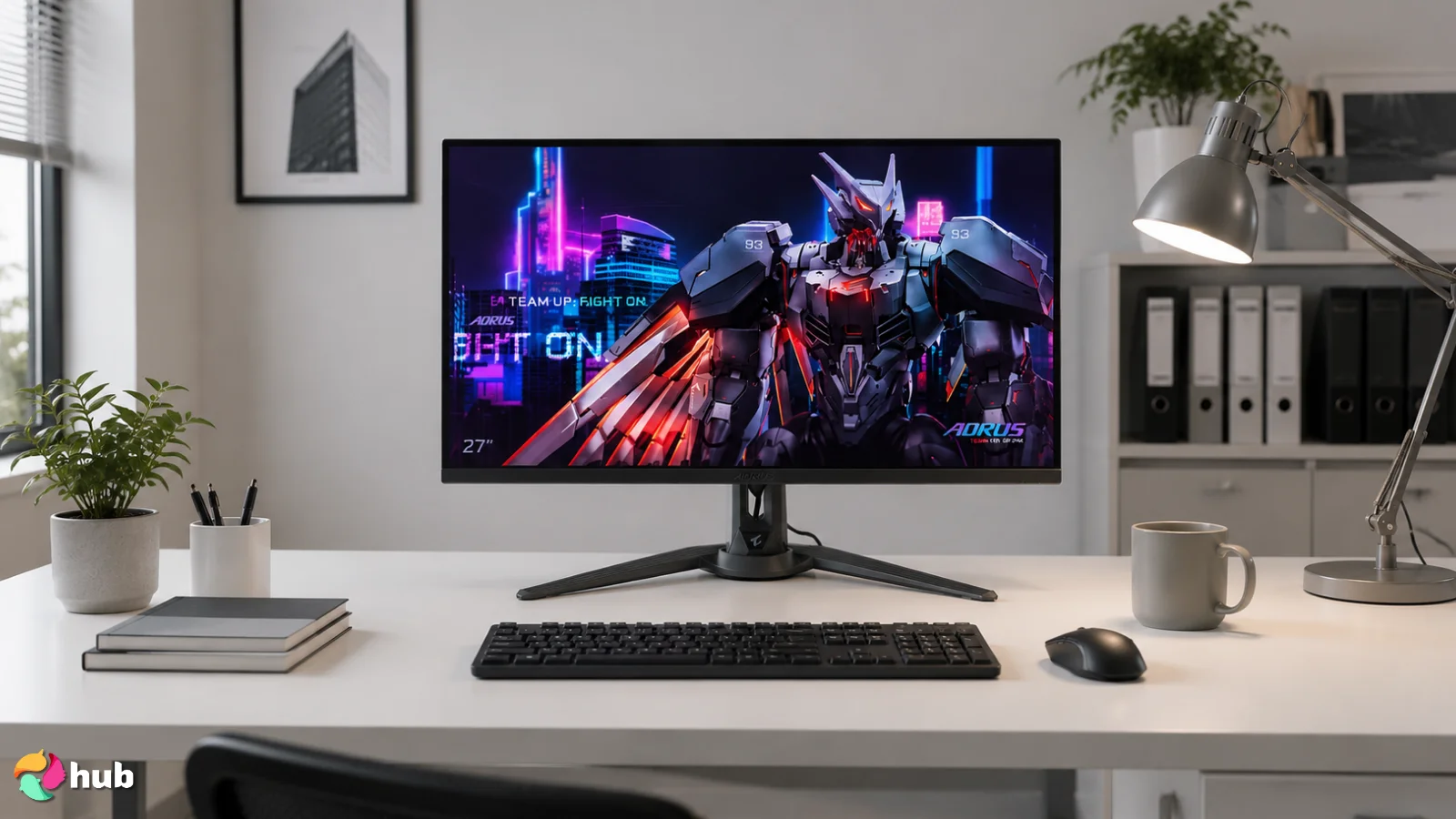
If you want a gaming monitor that actually takes audio seriously, the Gigabyte AORUS FO27Q3 is the one I’d point you toward. Most gaming monitors treat built-in speakers as a checkbox feature. Gigabyte went a different way here. You get dual 5W speakers that sound noticeably better than the usual tinny monitor audio, plus an ESS Sabre HiFi audio DAC built into the headphone jack for properly clean headphone output.
The panel itself is no slouch either. This is a third-gen QD-OLED running at 360Hz with 0.03ms response, putting it firmly in competitive territory. Loading up Valorant or Marvel Rivals, the motion feels effortless and ghosting is non-existent. Pair that with QD-OLED’s perfect blacks, and dark games like Elden Ring or Resident Evil 4 Remake look properly atmospheric instead of washing out to grey.
Where this monitor stretches its legs is in the variety of ways you can use it. The Tactical Switch shrinks the display to a 24-inch 1080p mode at 360Hz for CS2 or competitive shooters. A built-in KVM switch with USB-C lets you hop between a laptop and a gaming PC on one keyboard and mouse. Two HDMI 2.1 ports also handle PS5 and Xbox Series X at full 4K 120Hz.
The usual OLED burn-in caveat applies, but Gigabyte handles it well with AI-based OLED Care running pixel cleaning automatically in the background. HDR is also genuinely good: DisplayHDR True Black 400 plus peak brightness around 1,000 nits in small highlights means games like Cyberpunk 2077 show real punch. Neon signs glow against properly dark streets in a way cheaper HDR400 monitors just can’t match.
| Pros | Cons |
|---|---|
| ✅ Stunning QD-OLED visuals with perfect blacks and 99% DCI-P3 color coverage ✅ Blazing 360Hz refresh with 0.03ms response, no ghosting at any frame rate ✅ Dual 5W speakers plus ESS Sabre HiFi DAC, properly thought-out audio setup ✅ Tactical Switch + KVM + USB-C + dual HDMI 2.1, packed with quality-of-life features ✅ AI-based OLED Care for automated burn-in protection | ❌ Peak SDR brightness of 250 nits, bright rooms can wash out the image ❌ DSC is always on and can’t be disabled, may cause issues with some NVIDIA multi-monitor setups |
Final Verdict: The Gigabyte AORUS FO27Q3 is the best gaming monitor with speakers I’ve come across, combining genuine audio quality with a top-tier QD-OLED panel and a stack of competitive gaming features.
Another choice would be the KTC G27P6 27″ if you can find it back in stock. It offers a similar OLED-plus-speakers setup at a lower price point, just without the Tactical Switch or premium audio DAC.
11. ViewSonic VX1655-4K-OLED 15.6 Inch [Best Portable Gaming Monitor]
| Specs | Details |
|---|---|
| Screen Size | 15.6 inches OLED (portable, sleek design) |
| Aspect Ratio | 16:9 |
| Panel Type | OLED |
| Response Time | ~0.1ms (virtually instant, no ghosting) |
| Resolution | 3840 x 2160 (4K UHD) |
| Refresh Rate | 60Hz |
| Brightness | ~400 nits peak (HDR10 supported – vibrant contrast) |
| Weight | 1.8 kg (3.9 lbs) |
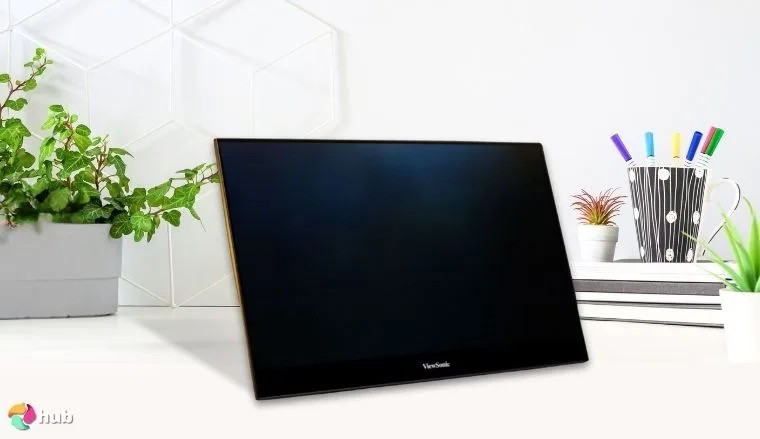
If you’re after a portable gaming monitor that combines top-tier performance with portability, the ViewSonic VX1655-4K-OLED is a great pick. It’s a 15.6-inch OLED with 4K resolution, giving you crystal-clear visuals and sharp detail while you’re on the go.
The OLED display offers deep blacks and bright, vibrant colors that will make your games pop. No matter if you’re playing action-packed games or exploring a new world, the contrast and colors are stunning, making everything look more realistic and immersive. The 4K resolution adds even more clarity, letting you see details you’d miss on smaller screens.
Performance is impressive, too. The response time is ultra-fast, meaning you won’t see any ghosting or motion blur, even when things get hectic in games like Fortnite or Call of Duty. The 60Hz refresh rate may seem low compared to some gaming monitors, but this display still provides smooth, responsive gaming.
As for sound, the ViewSonic VX1655 comes with built-in speakers that surprisingly do a great job for a portable monitor. The dual speakers provide decent sound, giving you a smooth audio experience without needing headphones or extra speakers. The monitor is compact and easy to carry, so whether you’re gaming at a café or a friend’s house, you’ve got everything you need.
| Pros | Cons |
|---|---|
| ✅ Beautiful OLED display with vibrant colors and deep blacks ✅ Ultra-fast response time for smooth gameplay ✅ Convenient built-in speakers for portable gaming ✅ Lightweight and easy to carry ✅ 4K resolution for sharp visuals | ❌ Slightly lower brightness, not ideal for extremely bright settings |
Final Verdict: The ViewSonic VX1655-4K-OLED is a fantastic portable gaming monitor with its sharp 4K OLED display, excellent color contrast, and fast response time. It’s perfect for those who want a premium experience without the bulk. For those looking for even bigger screens, the Acer Predator X27 offers a large 4K display with an even higher refresh rate and more features.
12. LG 27MD5KL-B Ultrafine 5K Display [Best 5K Gaming Monitor]
| Specs | Details |
|---|---|
| Screen Size | 27 inches IPS (high-quality, low-reflection coating) |
| Aspect Ratio | 16:9 |
| Panel Type | IPS |
| Response Time | ~5ms (fast and clear) |
| Resolution | 5120 x 2880 (5K UHD) |
| Refresh Rate | 60Hz |
| Brightness | 500 cd/m² (perfect for bright settings) |
| Weight | 6.8 kg (15 lbs) |
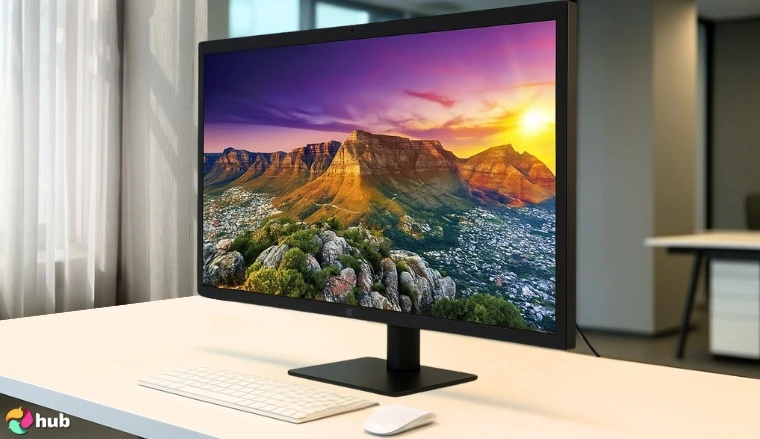
If you’re looking for a top-tier 5K gaming monitor, the LG 27MD5KL-B Ultrafine 5K is hard to beat. This 27-inch screen offers ultra-sharp 5K resolution that’s perfect for detailed graphics and immersive gaming experiences.
The 5K resolution brings every game to life with razor-sharp clarity. From vibrant landscapes to fine details in high-speed action, this monitor handles it all.
The IPS panel provides accurate colors and wide viewing angles, so you’ll always get a bright and clear picture, while you’re gaming or watching movies. Plus, the 500 cd/m² brightness makes it perfect for working or gaming in bright rooms, so you won’t miss any details even in daylight.
Performance is strong with a fast response time of around 5ms, making it responsive enough for casual gaming. However, with a 60Hz refresh rate, it’s best for players who enjoy games that are more relaxed in pace. For example, games like The Witcher 3 or Civilization VI will look stunning on this display, while faster games like Counter-Strike: Global Offensive might not be as smooth as with higher refresh rate monitors.
This monitor also comes with Thunderbolt 3 and USB Type-C inputs, giving you solid connectivity options, especially for MacOS users. And the bundle even includes a screen cleaning set, so you can keep your display looking fresh and spotless.
| Pros | Cons |
|---|---|
| ✅ 5K resolution for incredible sharpness and detail ✅ IPS panel with great color accuracy and wide viewing angles ✅ Excellent brightness for bright rooms ✅ Thunderbolt 3 / USB Type-C inputs for fast connections ✅ Comes with a screen cleaning set | ❌ A bit on the heavier side, making it less portable |
Final Verdict: The LG 27MD5KL-B Ultrafine the best 5K monitor for gamers and creators who need a sharp, high-quality display.
It offers excellent clarity, great color accuracy, and solid performance, especially for slower-paced games or creative work. If you need a more gaming-focused monitor with a higher refresh rate, you might want to look into the Acer Predator XB273K.
13. Acer Predator XB283K 28” [Best Budget Gaming Monitor]
| Specs | Details |
|---|---|
| Screen Size | 28 inches |
| Aspect Ratio | 16:9 |
| Panel Type | Agile-Splendor IPS Panel |
| Response Time | 1ms GtG (Fast IPS) |
| Resolution | 3840 x 2160 (4K UHD) |
| Refresh Rate | 144Hz (VRR FreeSync Premium) |
| Brightness | 400 nits PEAK (HDR400 Certified) |
| Weight | 4.8 kg (10.58 lbs) |
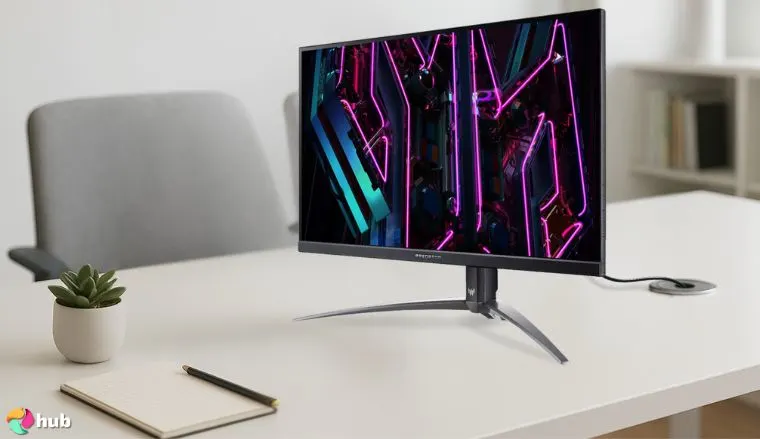
Finding an affordable 4K gaming monitor that doesn’t skimp on features can feel impossible, but the Acer Predator XB283K delivers true 4K 144Hz gaming performance at a budget-friendly price. For around a fair price of $400 (on sale), it gives you sharp details and vibrant colors. It has an impressive Agile-Splendor IPS panel, so you can thank the high-quality visuals for that.
You’ll immediately notice the extra clarity and the 90% DCI-P3 color gamut delivers rich eye candy. HDR support (DisplayHDR 400) adds a noticeable brightness boost. With a peak brightness of 400 nits, it combats glare well and provides decent contrast for an IPS panel. But the most important detail is where the Predator XB283K truly shines, and that would be in its gaming performance.
Fast-paced games like DOOM Eternal that demand a lot from your device feel incredibly smooth. This is all thanks to a 144Hz refresh rate, 1 ms response time, plus G-Sync/FreeSync specs. You can expect minimal blur and ghosting. Playing titles like Halo Infinite on Xbox Series X at 4K 120Hz should also be a seamless experience. You can thank HDMI 2.1 support for that.
All in all, this monitor is an excellent choice for competitive gaming. It offers low input lag and great motion handling. It doesn’t feel cheaply made at all, even if it’s a budget model. The stand is sturdy and well-adjusted. A USB-C port with 65W power delivery and a KVM switch make switching between a gaming PC and a laptop effortless. Plus, additional USB-A ports come as nice bonuses. Built-in speakers are basic but usable for casual tasks.
| Pros | Cons |
|---|---|
| ✅ Great value for 4K 144Hz ✅ Sharp and colorful IPS panel ✅ HDMI 2.1 ports enable 4K 120Hz gaming on PS5/XSX ✅ Smooth, low-blur motion ✅ Built-in KVM switch and USB hub simplify multi-device setups | ❌ DisplayHDR 400 yields only modest HDR impact ❌ Speakers are functional but lack bass |
Final Verdict: Acer Predator XB283K 28” is an affordable 4K 144Hz gaming monitor with HDMI 2.1 for next-gen consoles.
If you want a similar option, go for the ASUS TUF 27”. This is by far the best budget gaming monitor that offers great value with 1440p resolution and high refresh rates.
4K vs 1440p vs 1080p: Which Resolution Is Right for Your Setup?
Yes, 4K vs 2K is noticeable, especially on screens 27 inches and larger. For most gamers, 1440p hits the sweet spot between sharpness and performance, but the best gaming monitor for you depends on your GPU and how you play.
| Resolution | Best For | Min GPU | Price Premium |
|---|---|---|---|
| 1080p (FHD) | Budget gaming, high refresh rates | GTX 1660 / RX 5600 | Low |
| 1440p (QHD) | Most gamers, best value | RTX 3070 / RX 6700 XT | Medium |
| 4K (UHD) | Premium visuals, cinematic gaming | RTX 4080 / RX 7900 XTX | High |
1080p is still a solid choice if you’re chasing high refresh rates on a budget. The best gaming monitor at 1080p lets your GPU focus on frames rather than pixels, which is exactly what competitive players want.
1440p is where most gamers land today. It’s noticeably sharper than 1080p without demanding top-tier hardware. If you want the best gaming monitor without breaking the bank, 1440p is your answer.
4K is stunning, but demanding. It’s the go-to for single-player cinematic titles where visuals matter more than frame rate. Just make sure your GPU can keep up before committing to the best gaming monitor at this resolution.
How We Test Gaming Monitors at Eneba
At Eneba, our monitor recommendations aren’t pulled from thin air. Every pick on this list is backed by a combination of hands-on research, deep spec analysis, and real-world gamer feedback gathered from verified buyers and community forums.
We evaluate each monitor across five key areas: image quality (color accuracy, contrast, and HDR performance), motion performance (refresh rate, response time, and ghosting), connectivity (port selection, VRR support, and console compatibility), build quality (stand ergonomics, design, and durability), and value for money (how much performance you actually get for the price).
We also factor in how each monitor performs for different types of players. A 240Hz competitive monitor is judged differently from a 4K OLED cinematic display, because the best gaming monitor for a Valorant player looks very different from the best gaming monitor for someone playing Cyberpunk 2077 in all its glory. Our goal is simple: to give you the most honest, useful recommendation for your specific setup and budget.
Key Specs and Features To Consider Before Buying the Best Monitor For Gaming
Several KEY specs impact your monitor’s performance, visual clarity, immersive potential, and overall gaming experience. Let’s break down a few critical points so you remember it when purchasing a new monitor.
1. Screen Size Matters: Finding the Right Monitor Size for Gaming
The right screen size for gaming depends on your setup and preferred gaming experience.
- 24–27 inches: Ideal for competitive gaming; keeps everything within your field of view.
- 32 inches: Great for immersive single-player and console gaming.
- 34 inches+ (Ultrawide): Best for simulation games and multitasking.
2. Understanding Refresh Rates: Why 144Hz and 240Hz Matter for Gamers
Refresh rate correlates directly to how smooth motion from games appears on-screen. Higher refresh rate equals smoother motion and better gameplay. A higher refresh rate means better responsiveness and less screen tearing.
- 60Hz: Basic standard, but not ideal for fast-paced gaming.
- 120Hz–144Hz: Great for most gamers; smoother animations, reduced motion blur.
- 240Hz+: Perfect for esports and FPS games.
3. Resolution Choices: Comparing 1080p, 1440p, and 4K Monitors
A higher resolution improves image clarity, but it also demands more GPU power!
- 1080p (FHD): Best for budget gaming and high refresh rates.
- 1440p (QHD: A balance of performance and sharp visuals; ideal for most gamers.
- 4K (UHD): Offers rich detail but requires a powerful graphics card to be leveraged properly (and to run smoothly).
4. Panel Types Explained: IPS vs. TN vs. VA for Gaming
Panel types will affect your monitor’s color accuracy. It will also affect response times and viewing angles. For most gamers, IPS panels are ideal. They offer a balance of speed and visuals.
- IPS (In-Plane Switching): Best color accuracy and wide viewing angles which is great for RPGs and immersive gaming.
- TN (Twisted Nematic): Fastest response times but weaker colors. Ideal for competitive FPS gaming.
- VA (Vertical Alignment): Better contrast than IPS but slower response times might lead to ghosting.
5. OLED vs. Mini-LED vs. LCD: Which Display Technology Wins?
Display technologies affect and directly impact brightness, contrast, and color depth. OLED is usually the best for premium visuals. On the other hand, Mini-LED balances brightness and contrast without worrying about burn-in.
- OLED: Perfect blacks, near-instant response time, but expensive with burn-in risks.
- Mini-LED: Brighter than OLED, improved contrast, but not true per-pixel lighting.
- LCD (LED-backlit): Most affordable but lacks the deep blacks and contrast of OLED and Mini-LED.
6. The Importance of Response Time in Gaming
A monitor’s response time affects how quickly pixels change color, in turn, this impacts motion clarity. For competitive gaming, 1ms or lower response time is ideal.
- 1ms GtG: Ideal for fast-paced FPS and esports; eliminates motion blur.
- 4-5ms GtG: Still acceptable for most gamers, but may show minor ghosting.
- 8ms+: Not recommended for gaming, as noticeable motion blur can occur.
7. The Role of Bit Depth and Color Accuracy in Gaming Monitors
Bit depth and color accuracy both impact visual realism. 8-bit or higher color depth usually produces more vivid and lifelike visuals.
- 6-bit + FRC (Frame Rate Control): Basic color depth, but not true 8-bit quality.
- 8-bit native: Standard for most gaming monitors, offering 16.7 million colors.
- 10-bit: Best for HDR gaming and content creation, displaying over 1 billion colors.
8. HDR in Gaming Monitors: Is It Worth the Investment?
HDR is a worthy investment if you want a monitor to deliver peak visuals in terms of brightness, color depth, and contrast. For true HDR gaming, DisplayHDR 600 and higher is the best thing to look out for.
- HDR10: Entry-level HDR, better contrast than SDR, but limited true effect.
- DisplayHDR 600+: Significant brightness and depth improvements.
- HDR1000 / True Black: The best HDR quality, found in premium OLED and Mini-LED monitors.
9. Dual Monitor vs. Ultrawide vs. Curved Monitor: Which is the Best for Gamers?
The best setup ultimately depends on you and your gaming style.
- Dual Monitor: Great for multitasking but has bezels between screens.
- Ultrawide (21:9 or 32:9): Seamless experience for racing, flight sims, and RPGs.
- Curved Monitors: Enhance immersion and reduce eye strain.
Where to Buy a Gaming Monitor: What to Check Before You Purchase
Finding the best gaming monitor is only half the battle, knowing where to buy it and what to look for before hitting checkout is just as important. The safest bet is always an authorised retailer like Amazon, Best Buy, or the manufacturer’s own store. These give you reliable warranty support, clear return policies, and protection against counterfeit units, which are more common than you’d think in the monitor market.
Before purchasing, always double-check the connectivity ports. Make sure your chosen monitor has the right inputs for your setup: HDMI 2.1 for PS5 or Xbox Series X gaming, and DisplayPort 1.4 for high-refresh PC gaming. It sounds obvious but it’s easy to miss, especially on budget models that cut corners on connectivity.
Finally, don’t overlook the cost of the games themselves. A new monitor unlocks a whole new level of visual experience, but only if you have the titles to match. Eneba is one of the best places to grab PC game keys, PlayStation Store credit, and Xbox Gift Cards at competitive prices, so you can spend more on your display and less on your games.
60Hz vs 144Hz vs 240Hz: What Refresh Rate Do You Actually Need?
For competitive gaming, 240Hz is a measurable advantage over 60Hz; for casual play and single-player games, 144Hz is the sweet spot.
60Hz is the bare minimum and fine for slow-paced games like strategy or RPGs. But if you’re serious about gaming, the best gaming monitor worth considering today runs at 144Hz or higher.
144Hz is the sweet spot for most gamers. It’s smooth, widely supported, and doesn’t demand extreme hardware. Whether you’re playing shooters or open-world titles, the best gaming monitor at 144Hz will feel like a major upgrade over 60Hz.
240Hz is for competitive players where every millisecond counts. In fast-paced games like Valorant or CS2, the difference is real and felt. If you’re chasing the best gaming monitor for esports, 240Hz is worth the investment.
My Final Verdict on the Best Gaming Monitor
Choosing the best gaming monitor comes down to knowing what kind of gamer you are and what your setup can handle. Whether you prioritise raw speed, stunning visuals, or value for money, every pick on this list delivers in its own way.
- Best overall → ASUS ROG Swift 32″ 4K. Premium 4K QD-OLED with 144Hz, HDMI 2.1, and exceptional HDR – the complete package.
- Best budget pick → ASUS TUF 27″. Sharp 1440p at 165Hz for under $230; hard to beat at the price.
- Best OLED → LG UltraGear 32GS95UV. Breathtaking 4K OLED with a unique 480Hz dual-mode for competitive play.
- Best curved → LG 45GR65DC-B UltraGear. A jaw-dropping 45″ super-ultrawide that replaces two monitors in one.
No matter your budget or playstyle, the best gaming monitor on this list will transform how you play. Pick the one that fits your setup and never look back.
FAQs
The ASUS ROG Swift 32” 4K Gaming Monitor is the best overall gaming monitor, combining a sharp 4K UHD display, 144Hz refresh rate, and excellent HDR performance for both PC and console gamers. It delivers stunning visuals, low input lag, and HDMI 2.1 support for next-gen gaming at 4K 120Hz.
A good response time for a gaming monitor is 1ms to 5ms, as lower response times reduce ghosting and motion blur. OLED and QD-OLED panels have near-instantaneous response times. IPS and TN panels typically offer 1ms to 3ms response times.
Pro gamers typically use high-refresh-rate monitors, from 240Hz to 360Hz. They usually opt for monitors with low input lag and fast response times.
Most pro esports players use 24–25″ monitors at 1080p with 240Hz+ refresh rates, prioritising speed over screen real estate. For casual gaming and content creation, the best gaming monitor at 27″ and 1440p is the most popular all-round choice.
Yes, if you have the GPU to drive it. The best gaming monitor at 4K delivers stunning detail in single-player and cinematic titles, but competitive players are often better served by a lower resolution with a higher refresh rate.
For competitive gaming, 240Hz is a measurable advantage over 60Hz. For casual play and single-player games, 144Hz is the sweet spot, but any best gaming monitor running below 144Hz will feel noticeably behind in fast-paced gameplay.