

How to Make Side Money From Home in 2026

Eneba Hub contains affiliate links, which means we may earn a small commission if you make a purchase through them—at no extra cost to you. Learn more


Side Income Snapshot
Etsy lets creators sell digital downloads without inventory or a storefront lease. Listings cost $0.20 each, with additional transaction and payment-processing fees. Open an Etsy Shop.
Making side money from home starts with choosing a low-cost method and giving it enough time and effort to see whether it works for you. Digital downloads on Etsy and print-on-demand through Printify are relatively inexpensive ways to test an online business, although Etsy charges listing fees and may charge a shop setup fee.
A practical way to build side income from home is to start with one low-cost method, then add another once you know what works.
The ten methods below cover freelance services such as writing, design, voiceover, and translation, as well as digital products, print-on-demand, stock content, short-term rentals, online courses, and niche blogs. Each can generate legitimate income, but results and timelines vary, so there are no guaranteed earnings or first-payment dates.
Beyond the freelance gigs, there are dependable ways to learn how to make side money from home that do not require quitting a day job.
Jump to:
Is Making Side Money From Home Actually Realistic?
Yes, but the amount and timeline vary widely by method, skill level, and how much time you can commit. Some options can produce income relatively quickly, while others (especially digital products, content, and online courses) may take weeks or months to gain traction.
What you already have to work with matters. You might start with a sellable skill such as writing, design, translation, or voiceover, or with an asset such as a spare room, camera, or printable idea. Either route can help you learn how to make side money from home, but the time required to earn your first payment can be very different.
For beginners, Etsy digital downloads are one relatively low-cost way to test an online business. You don’t need inventory or a physical storefront, although Etsy charges listing, transaction, and payment-processing fees. A failed product idea can therefore be tested without committing to a large upfront investment.
If you need faster cash flow while a longer-term project develops, freelance services and other work-for-time options may be more suitable. Our guide on how to earn $200 fast covers options designed around quicker earnings.
A realistic approach is to give one method several weeks of consistent effort before deciding whether it works for you. There is no guaranteed income level or first-payment date, so anyone promising substantial earnings on a fixed schedule should be treated cautiously.
If you want a quick way to earn a little extra while building your main side-income stream, Snakzy is another option to consider.
Make extra money from quick tasks and games

How to Make Side Money From Home in 10 Real Ways
Each of the ten methods below gets the same treatment: what it actually pays, what it costs to start, and the exact first steps to take. Skim for the one that matches a skill or an asset you already have, then commit to it for at least a month before judging the results. Together, they cover most of the realistic ground on how to make side money from home right now.
1. Sell Digital Downloads on Etsy
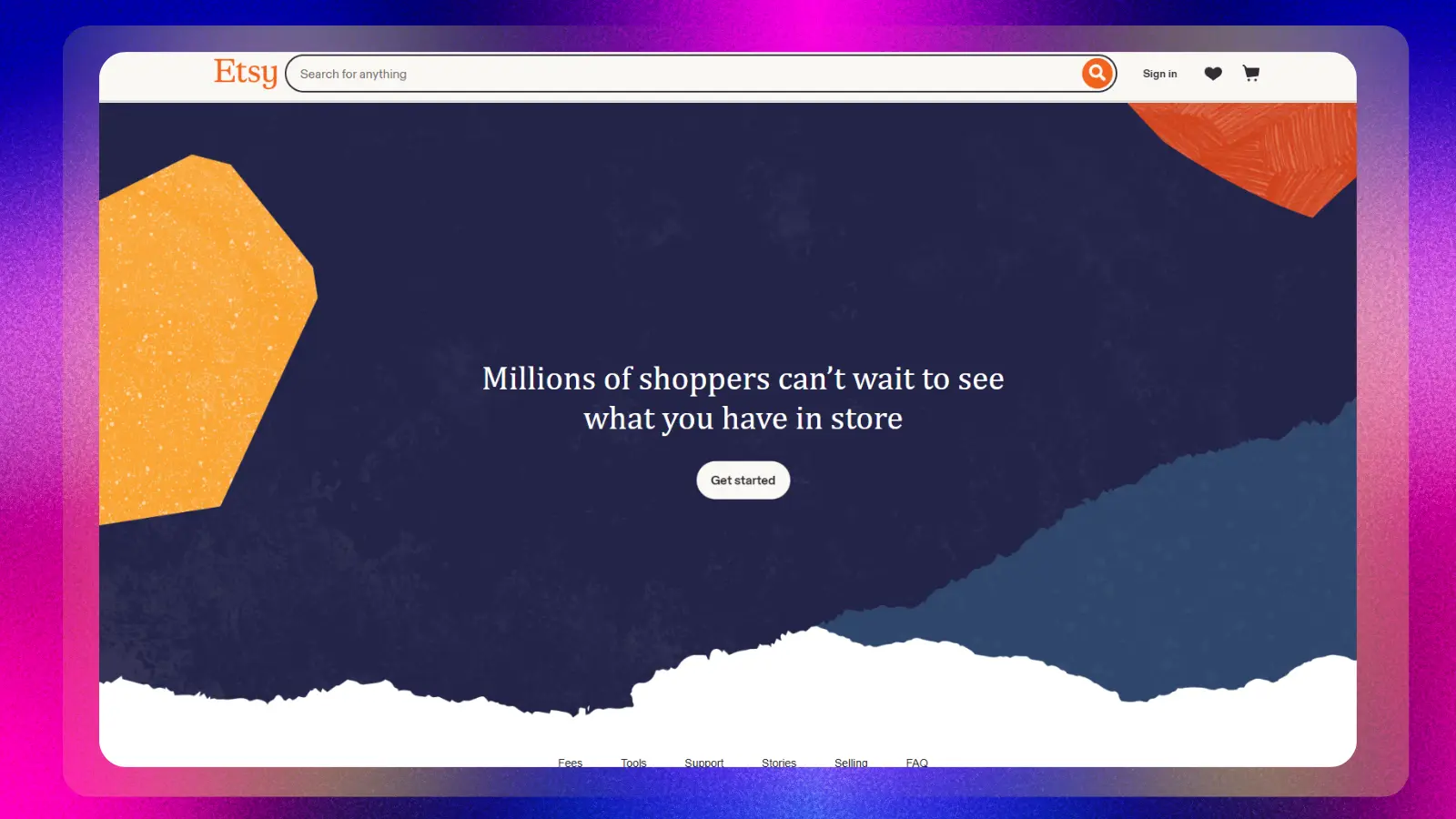
Selling digital downloads on Etsy is a relatively low-cost way to learn how to make side money from home. Products such as planners, templates, invitations, and wall art can be sold digitally without inventory, shipping, or restocking.
Much like players finding ways on how to sell their game items, an Etsy digital shop can earn from the same file repeatedly once it is live.
Etsy charges a $0.20 listing fee, a 6.5% transaction fee, and payment-processing fees that vary by country. A one-time shop setup fee may also apply depending on your location. Offsite Ads can add a 15% fee on attributed orders for eligible shops, while shops that reach the required sales threshold are charged 12% and must participate.
To get started:
- Open an Etsy seller account and choose a shop name.
- Create a useful digital product with a tool such as Canva.
- Research specific keywords your target customers search for.
- Publish the listing with clear images, descriptions, tags, and pricing.
- Track views and sales, then improve or expand your listings.
Digital products can generate repeat sales without physical fulfillment, but there is no guaranteed income or timeline for making your first sale. Success depends on demand, competition, pricing, and how effectively you reach potential buyers. For anyone exploring how to make side money from home, Etsy can be a practical way to test a digital-product idea with relatively low upfront costs.
2. Open a Print-on-Demand Store With Printify
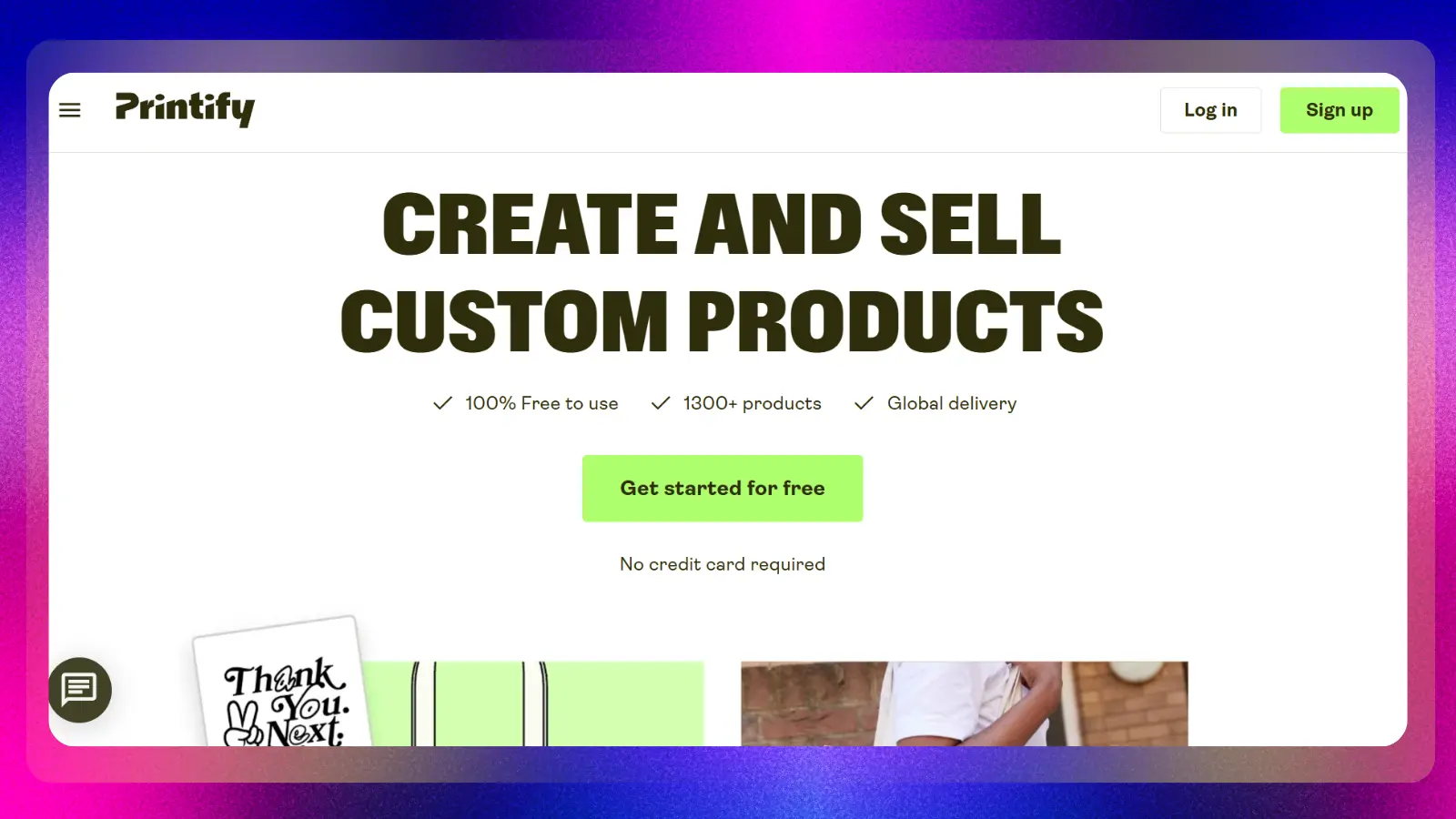
Print-on-demand is another practical way to learn how to make side money from home without buying inventory upfront. With Printify, products are made after a customer places an order, while your profit comes from the difference between your retail price and the product, shipping, and other applicable costs.
The Free plan costs $0 per month. You pay for production and shipping when an order is placed, with costs varying by product, print provider, and delivery destination.
Premium costs $39 per month or $299 per year and offers product discounts, including up to 20% off the catalog and up to 33% off new products. Whether Premium is worthwhile depends on your order volume and profit margins.
To get started with print-on-demand:
- Create a free Printify account and connect it to a sales channel such as Etsy or Shopify.
- Choose one product and create a simple design.
- Order a sample to check the product quality before promoting it.
- Track your sales and margins before considering Premium.
Printify handles printing and shipping, while your connected sales channel handles customer payments and payouts. That means you should account for both your storefront’s fees and Printify‘s production costs when setting your retail price.
Start with a small number of designs rather than uploading dozens at once. Testing a few products first can help you learn what sells before expanding your catalog, and build a more informed approach to how to make side money from home.
Our guide to the best ways to earn $1,000 a week is worth a look once you’re selling consistently.

3. Freelance Writing via ProBlogger
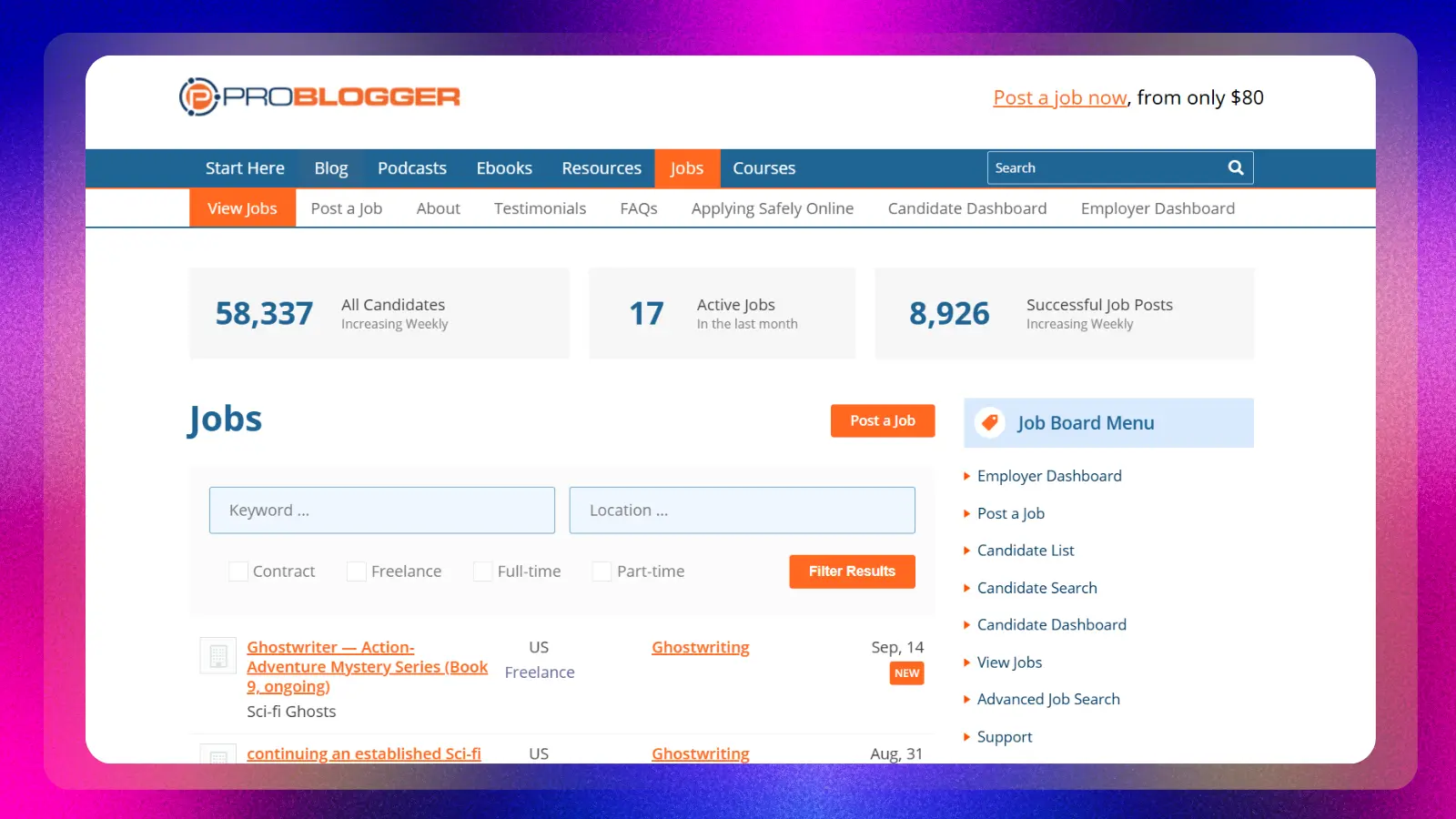
Freelance writing is another practical way to learn how to make side money from home. Unlike an hourly job, you typically agree on a rate or project fee with each client, so your income depends on the assignments you secure. You can also explore other freelance platforms to find additional writing opportunities.
The ProBlogger Jobs Board is free for writers to browse and apply. Employers currently pay from $80 for a standard 15-day listing, while the board also offers featured listings and packages.
You can also find writing work through direct pitches, referrals, or general freelance marketplaces such as Upwork. A ProBlogger candidate account is free and lets writers manage applications, create a resume, save jobs, and set up job alerts.
A simple way to get started:
- Create two or three writing samples in the niche you want to target.
- Browse the ProBlogger Jobs Board and set up relevant job alerts.
- Send a tailored application that addresses the specific job rather than using a generic pitch.
- Agree on the scope, rate, deadline, and payment terms with the client before starting.
Because ProBlogger connects writers with third-party advertisers rather than handling the work relationship itself, payment terms depend on the individual client. The board also advises applicants to research advertisers and use due diligence before accepting a job.
For anyone exploring how to make side money from home through writing, the main advantage is that you can start with a portfolio rather than inventory. The trade-off is that finding clients can take time, and there is no guaranteed number of assignments or income.
4. Enter Design Contests on 99designs
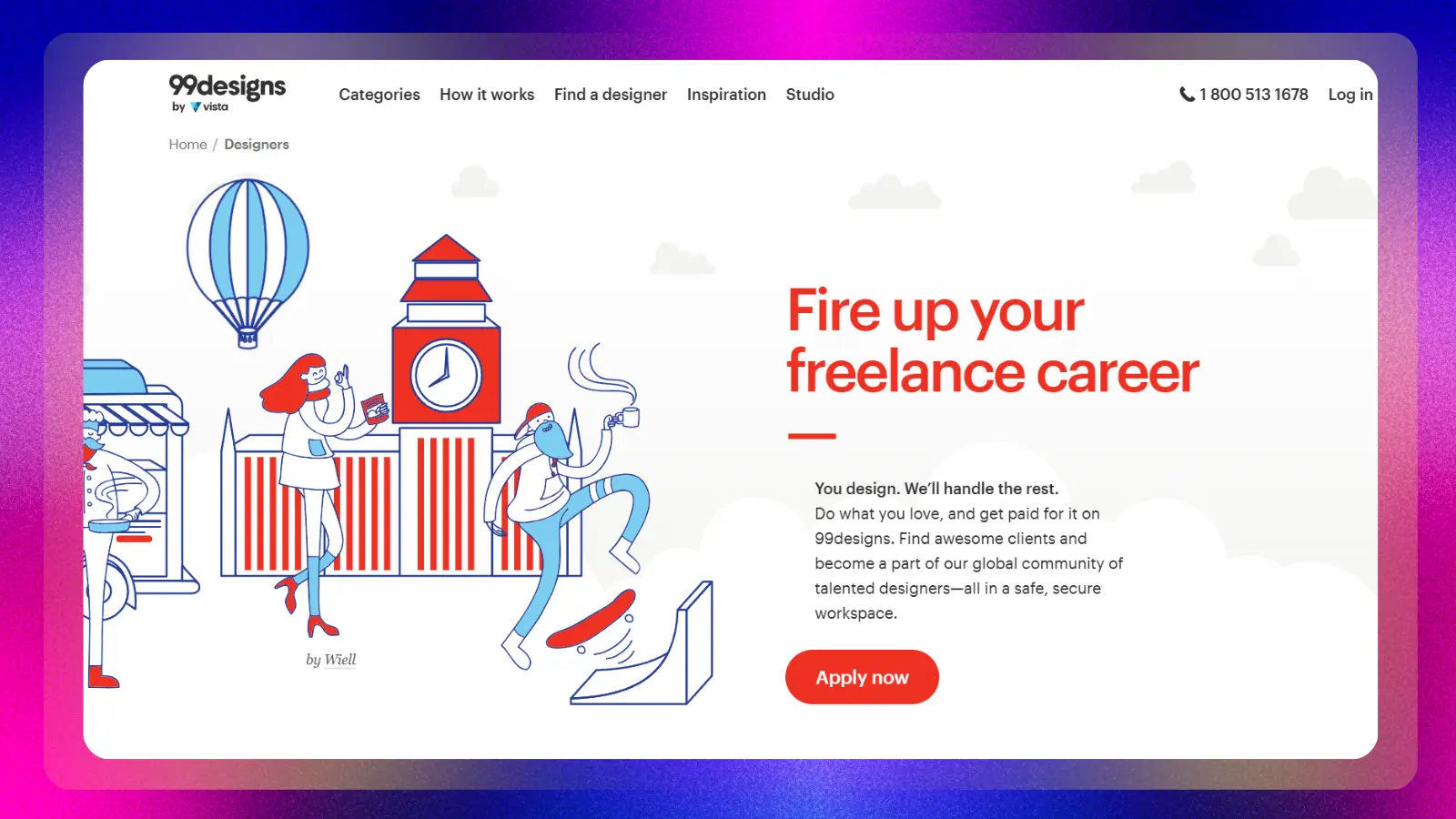
Design contests on 99designs let designers submit concepts for a client’s brief, with the selected winner receiving the stated contest prize. Income can be uneven because you may spend time creating concepts without winning. That makes contests different from freelance projects where you agree on a fee before starting.
Your earnings depend on the contest prize and whether your design is selected. 99designs also offers 1-to-1 projects, where designer platform fees currently range from 15% for Entry Level designers to 5% for Top Level designers.
For anyone exploring how to make side money from home through design, a practical approach is:
- Create a free designer profile and upload a portfolio that reflects the type of work you want to attract.
- Choose contests that match your strongest design skills and preferred categories.
- Submit polished concepts that follow the brief and respond to client feedback when you become a finalist.
- Track which categories generate interest and winning opportunities before committing more time to them.
If you win a contest, the prize is added to your earnings after the design handover is completed. 99designs currently uses Hyperwallet for designer payouts, with a 5-business-day review period before funds are transferred, followed by additional processing time depending on your payout method and location. A minimum payout threshold of $25 also applies.
The main trade-off is that contest participation does not guarantee payment for every design you submit. Choosing relevant briefs and producing strong, original work can help you use contests as one part of a broader strategy for how to make side money from home.
5. Freelance Voiceover Work via Voices.com
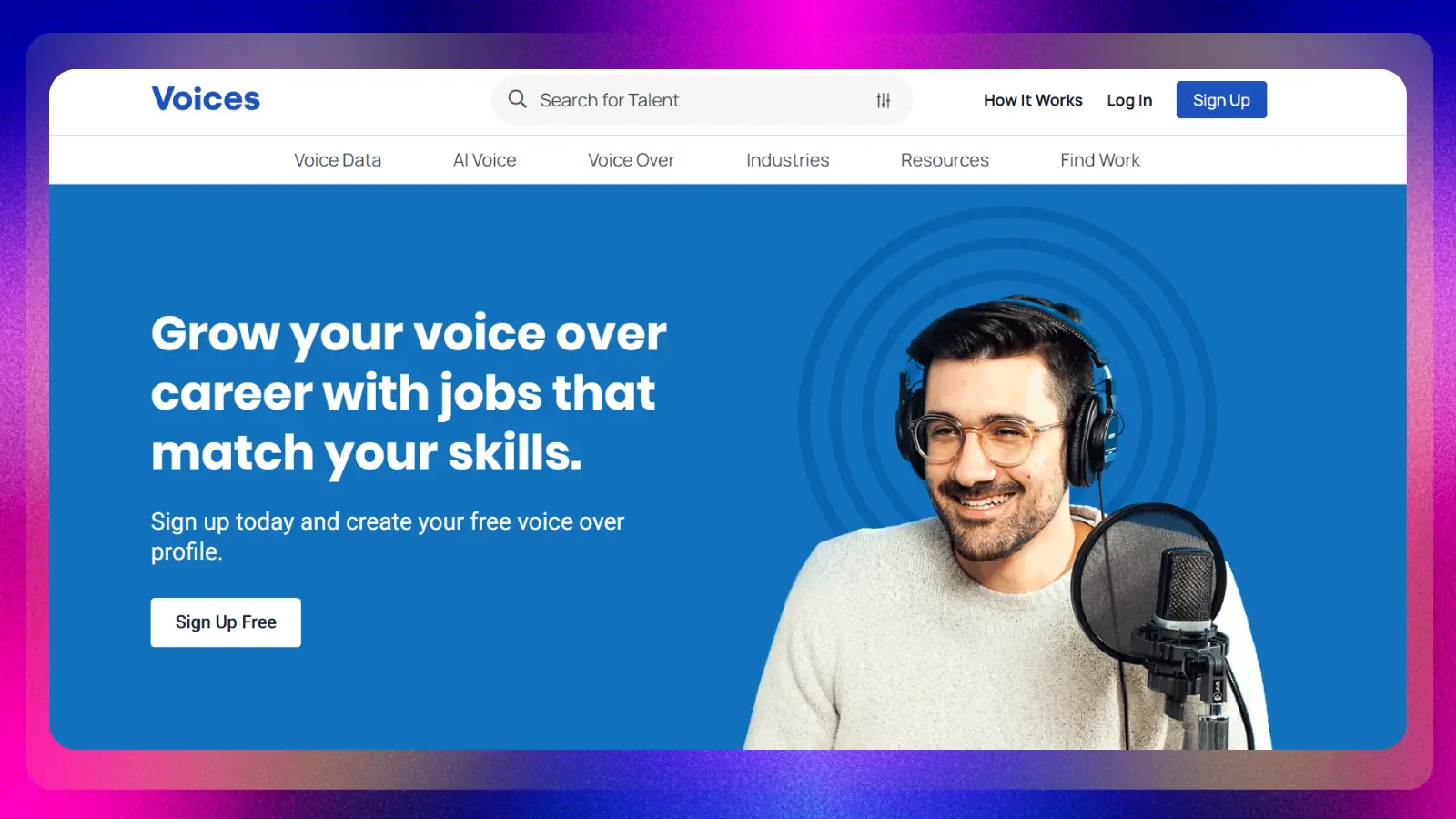
Voiceover work through Voices.com is another option if you’re researching how to make side money from home, with talent typically quoting a project fee based on the job’s requirements, usage, and scope. Your actual earnings depend on the projects you win and the rates you negotiate.
A free Guest membership lets you create a profile, upload demos, and receive private invitations. A Premium membership is required to audition for matched jobs and create packages that clients can purchase directly.
Voices.com applies a 20% platform fee to talent quotes when responding to jobs. The fee is reflected in the difference between the amount quoted to the client and the talent’s earnings.
To get started:
- Create a profile and upload strong voiceover demos.
- Choose the voiceover categories and styles you can perform confidently.
- Start with the free membership and build your profile before paying for Premium.
- When eligible jobs appear, submit a tailored audition and quote based on the project’s requirements.
Payments made through Voices.com are protected by its SurePay system. Clients pay upfront; the funds are held while the work is completed, and payment is released after the project is completed. If the client doesn’t release the funds, they are automatically released after the applicable 14-day period and paid out through PayPal on the following payment cycle.
A strong demo is important because clients use your samples to assess whether your voice fits their project. There is no guaranteed number of auditions, bookings, or income, so treat voiceover as a skill-based freelance option rather than a fixed source of monthly earnings. If you’re comparing different ways on how to make side money from home, voiceover is worth considering if you already have the equipment and a voice style clients are looking for.

6. Rent Out a Spare Room on Airbnb
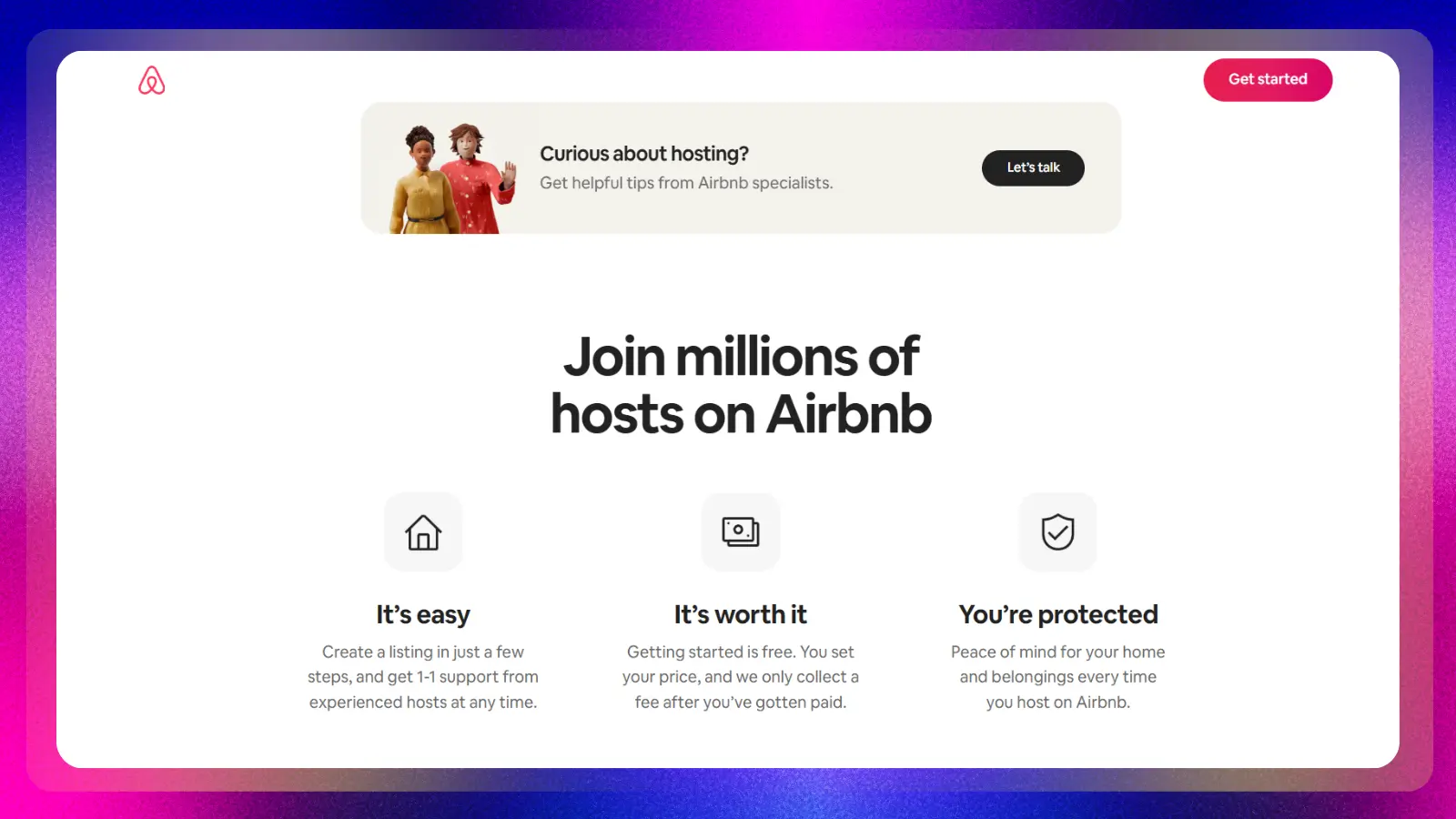
Listing a spare bedroom on Airbnb can turn unused space into side income and is one of the more direct ways to explore how to make side money from home. Your potential earnings depend on factors such as location, nightly rate, occupancy, room quality, and local demand.
Airbnb uses different service-fee structures depending on the host and listing. Under its single-fee structure, most hosts pay a 15.5% service fee deducted from their payout, while some hosts pay different rates. Listings in Brazil and Mexico are charged 16%.
For example, if the applicable host fee is 15.5%, a $100 host price would leave about $84.50 before other applicable taxes or costs. Your actual payout can vary depending on the fee structure and other charges.
Getting a room ready to book means working through a few practical steps:
- Check local short-term-rental rules, registration requirements, and taxes before listing.
- Photograph the room clearly and compare your price with similar listings nearby.
- Add appropriate locks, safety features, and clear house rules for shared spaces.
- Start with a manageable number of available dates and adjust your pricing based on demand and bookings.
For most home stays, Airbnb typically releases the payout about 24 hours after the guest’s scheduled check-in. However, new hosts and certain reservations can have different payout timing, and your bank or payment provider may take additional time to deliver the funds.
The biggest advantage is that you’re monetizing space you already have rather than selling another product or service. However, hosting also involves cleaning, guest communication, maintenance, local regulations, and ongoing costs, so it’s important to calculate your potential profit rather than looking only at the nightly rate. If you’re still weighing how to make side money from home, renting out a spare room is an option to consider if you have suitable space and are comfortable with the responsibilities that come with hosting.
7. Freelance Translation via Gengo
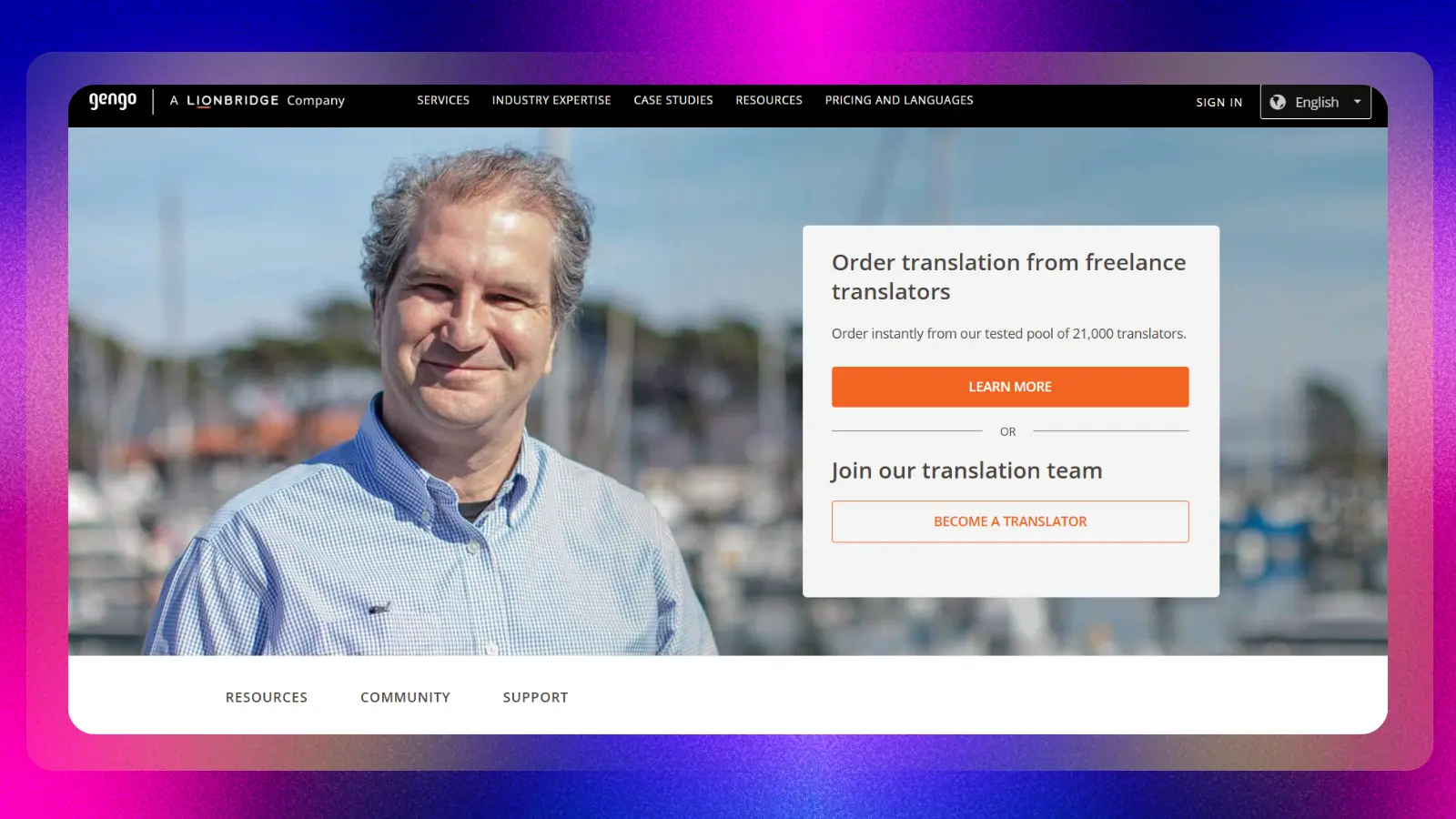
If you are fluent in two languages, Gengo offers a way to earn from translation work paid according to the language pair and job level. Current rates vary by language pair, with Gengo‘s public pricing showing different per-word rates for Standard and higher-level translation work.
Applying is free. You create an account and take Gengo‘s qualification test, which checks whether your translation meets its quality standards. The test is reviewed within 7 days, and approved translators can start accepting available jobs. Passing the Pro qualification test can unlock more challenging projects at higher reward rates.
Getting started is straightforward:
- Create a free Gengo translator account and select your available language pair.
- Take the qualification test for the level you want to work toward.
- Review Gengo‘s style guides and testing resources before submitting your work.
- Once approved, start with jobs that match your language skills and experience.
- Work toward Pro-level qualification if you want access to more challenging projects and higher reward rates.
Gengo automatically adds translation earnings to your account, rather than requiring traditional invoicing. Your available payout methods and processing terms can depend on your account and location, so check the current payment information before relying on a specific payout schedule.
For anyone researching how to make side money from home, translation can be a useful option if you already have strong language skills. The main limitation is that available work and rates vary by language pair, qualification level, and demand, so there is no guaranteed amount of income. If you’re comparing how to make side money from home options, consider whether your language skills and available time make translation a practical fit.
8. License Photos and Video on Adobe Stock
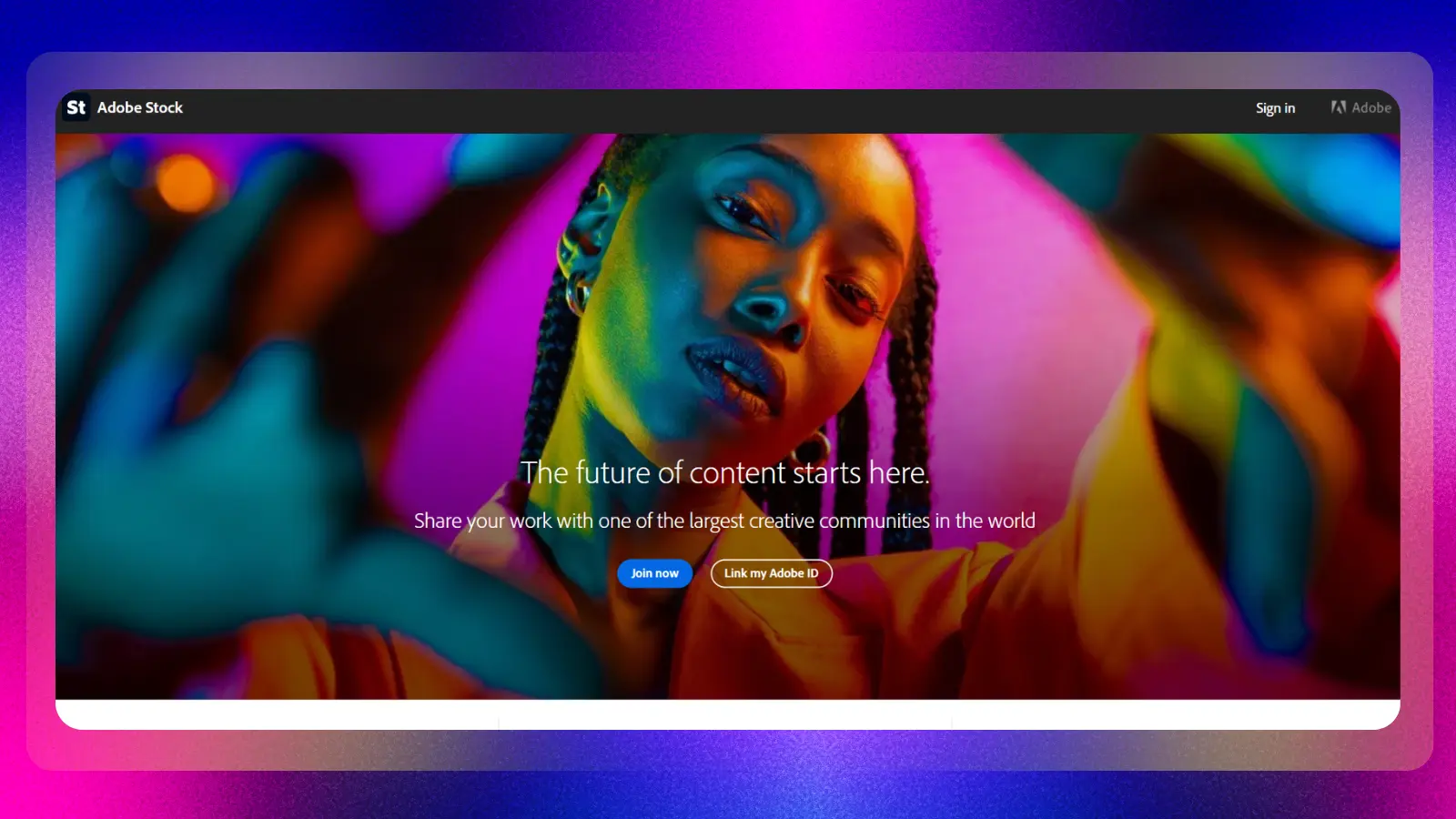
Adobe Stock pays contributors a royalty when their approved photos, vectors, illustrations, or videos are licensed. A single asset can therefore generate royalties more than once, although individual licensing amounts can be small and income depends on how often your content is licensed.
Contributors currently receive 33% of the net price for photos, vectors, and illustrations, and 35% for video under standard licensing plans. Adobe notes that the royalty is calculated from the applicable net price rather than simply the buyer’s listed subscription price. For example, Adobe gives a $29.99 monthly plan with 10 photo licenses as an example that produces about $0.99 per licensed photo.
You can request a payout after reaching $25 in royalties and waiting at least 45 days from your first sale. Available payout methods include PayPal, Payoneer, and Skrill, although availability can vary by region.
Building a portfolio worth licensing starts here. It’s the long-term version of how to make side money from home:
- Create a free contributor account and review Adobe Stock‘s technical, intellectual-property, and release requirements.
- Research subjects and commercial needs before deciding what to shoot or create.
- Submit high-quality work in manageable batches so you can learn from acceptance and rejection patterns.
- Keep expanding your portfolio with useful, original content rather than relying on a few uploads.
The common mistake is uploading a small collection of generic stock images without considering what buyers actually need. Building meaningful licensing income can take time because both content approval and customer demand affect your results. For anyone exploring how to make side money from home, Adobe Stock is better viewed as a portfolio-building strategy than a source of immediate cash.
9. Sell an Online Course on Teachable
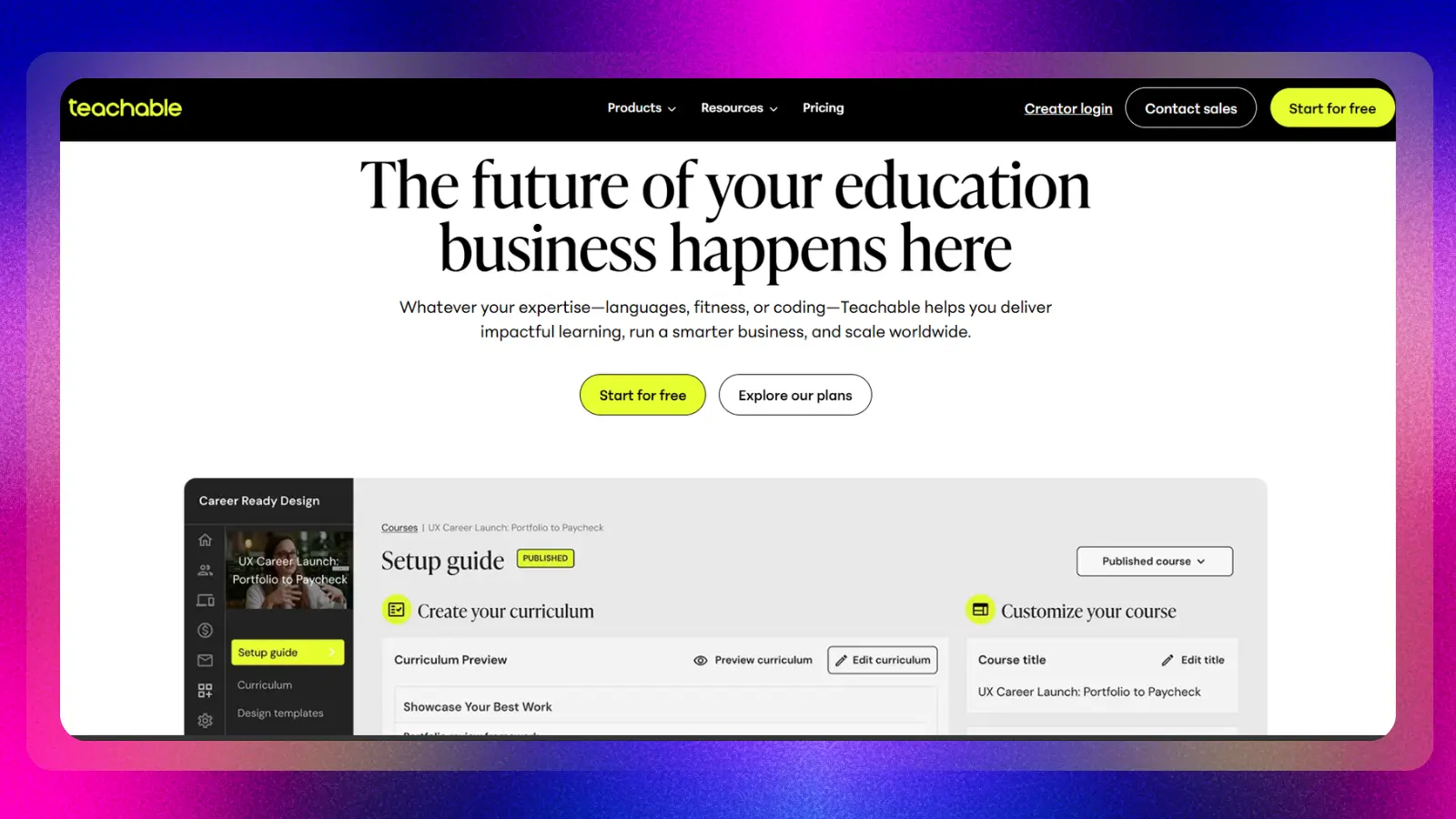
Selling an online course through Teachable lets you set your own course price and earn from each enrollment after applicable platform, payment-processing, and other fees. It works best when you already have a specific skill or knowledge people want to learn and a way to reach potential students.
Teachable‘s current Starter plan costs $39 per month when billed monthly or $29 per month when billed annually, with a 7.5% transaction fee. Builder costs $89 per month monthly or $69 per month annually and has a 0% base transaction fee when using supported payment processing. Standard payment-processing fees can still apply.
Before paying for a plan, consider whether your expected course sales justify the monthly subscription. For example, the annual price difference between Starter and Builder is $40 per month, while Builder removes the 7.5% base transaction fee. The exact break-even point can vary depending on taxes, payment-processing fees, and your payment gateway.
Testing a course idea before building the full product is a practical approach to how to make side money from home:
- Validate the topic with a paid workshop, consultation, or short introductory product.
- Start with the plan that fits your expected sales rather than paying for advanced features immediately.
- Record clear, useful lessons with basic equipment instead of waiting for a professional studio setup.
- Compare similar courses before setting your price and explain clearly what students will learn.
With Teachable Payments, creators can choose daily, weekly, or monthly payouts. Daily payouts generally arrive about two business days after a sale, while weekly and monthly schedules follow their respective payout cycles. New accounts may experience longer initial payouts during payment verification.
The biggest mistake is spending months producing a complete course before confirming that people actually want the topic. For anyone exploring how to make side money from home, validating demand first can reduce the time and money invested in a course that may struggle to attract students.

10. Start a Niche Blog and Join Journey by Mediavine
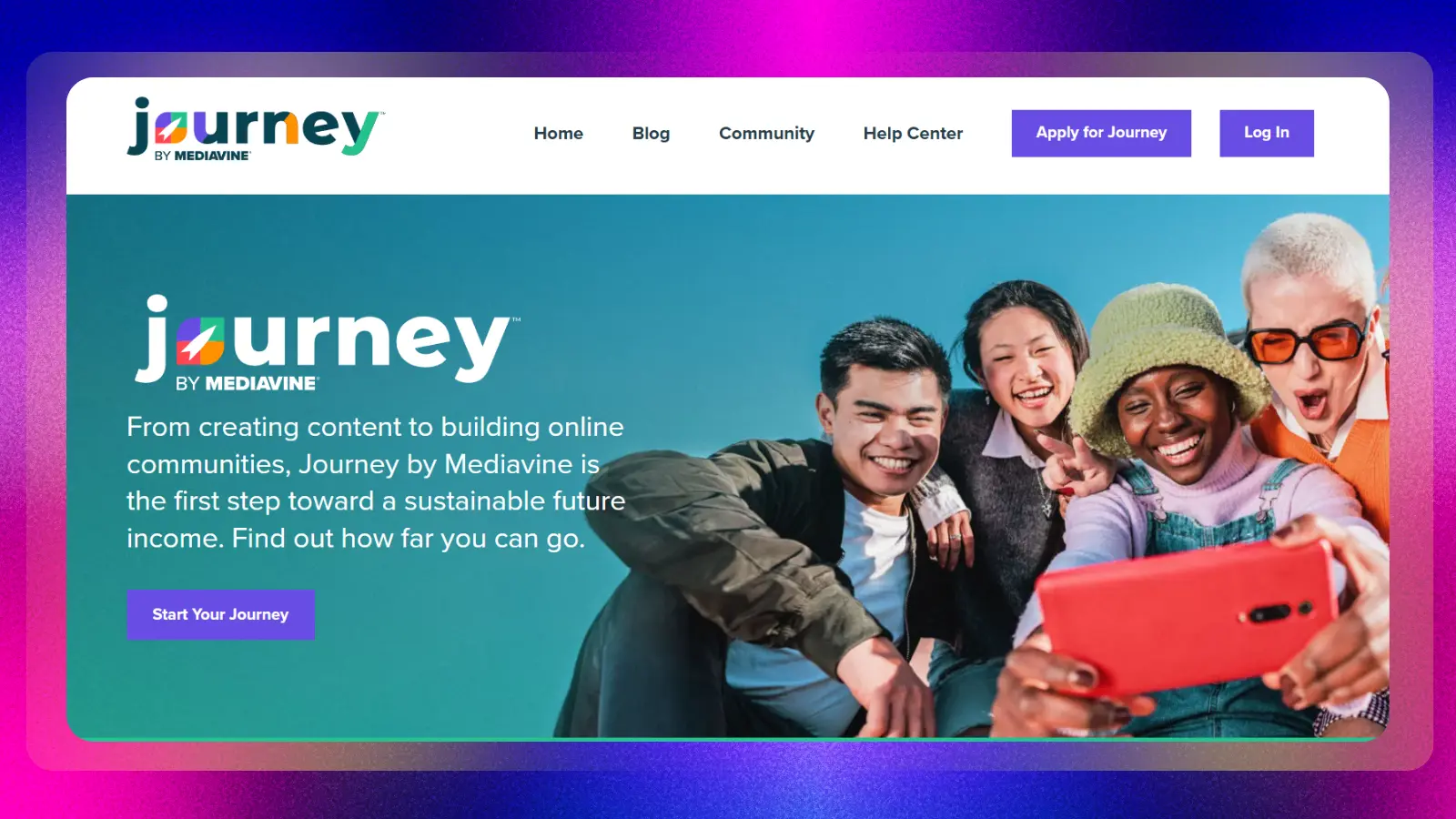
A niche blog can generate side income through display advertising once it attracts enough readers. Your earnings depend on factors such as traffic volume, visitor location, content topic, and ad performance, so there is no fixed RPM or guaranteed income level. For anyone learning how to make side money from home, blogging is generally a longer-term approach because building consistent traffic takes time.
Journey by Mediavine is designed for growing publishers. Sites currently need at least 1,000 sessions from Tier 1 countries (including the U.S., Canada, U.K., and Australia) within a 30-day period, along with original, audience-first content and clean, human traffic. The full Mediavine program currently requires at least $5,000 in annual ad revenue.
Getting a blog ready for monetization starts here:
- Pick a focused niche with a clear audience and enough useful topics to support long-term publishing.
- Create original, helpful content rather than writing primarily for search engines or advertising revenue.
- Install Mediavine‘s Grow tools and work on building consistent traffic from eligible countries.
- Apply to Journey once your site meets the current traffic and content requirements.
- Track traffic and ad revenue, then improve your content based on what readers actually use.
Journey currently operates on a 70% publisher revenue share and uses a Net 65 payment schedule.
The common mistake is treating ad revenue as immediate income. A blog needs an audience before display advertising can generate meaningful revenue, so building useful content and consistent traffic should come before expecting substantial earnings. That makes a niche blog a longer-term option for anyone exploring how to make side money from home.
How These Methods Compare
Every method on how to make side money from home can be started from home without a traditional storefront or warehouse, but the actual upfront cost varies. Some have low or free entry points, while others require a monthly subscription, listing fees, equipment, or an asset you already own.
The right option depends largely on what you’re starting with. A skill such as writing, design, translation, or voiceover points toward freelance work. An existing asset, such as a spare room, camera, or digital-product idea, can support an asset-based approach. The table below compares the main differences so you can decide which option fits your situation when learning how to make side money from home.
| Method | Startup Cost | Typical First-Month Pay | Time to First Payout | How Passive Is It |
|---|---|---|---|---|
| Etsy digital downloads | $0.20 per listing | $50 to $500/mo | Days to first sale | Semi-passive (build once, sell repeatedly) |
| Printify print-on-demand | $0 to start (Free plan); $5-$20 per order | Varies with design and traffic | Days to first sale | Semi-passive (build once, sell repeatedly) |
| ProBlogger freelance writing | $0 | $20 to $200+ per assignment | 15 to 30 days (client terms) | Active (trades hours for pay) |
| 99designs contests | $0 | $0 to $600/mo (uneven) | Days after contest closes | Active (trades hours for pay) |
| Voices.com voiceover | $0 (Guest) or $499/yr (Premium) | $185 to $1,140 per job | Per project, on approval | Active (trades hours for pay) |
| Airbnb spare room | $0 | ~$14,000/yr avg (part-time hosts) | ~24 hrs after check-in | Passive (asset-based) |
| Gengo translation | $0 | $0.03 to $0.12/word | 1st or 20th after approval | Active (trades hours for pay) |
| Adobe Stock licensing | $0 | Small per-license royalties | Weeks to months | Passive (asset-based) |
| Teachable online course | $29/mo annually | Varies with audience size | A few days per sale | Semi-passive (build once, sell repeatedly) |
| Journey by Mediavine | ~$50 to $150/yr hosting | $12 to $30 RPM once qualified | Months (Net 65 after qualifying) | Passive (asset-based, once built) |
For a faster path to a bigger number, our guide on how to earn $2,000 quickly lays out higher-effort options side by side.
Turn Everyday Apps Into Extra Cash While You Build the Real Thing
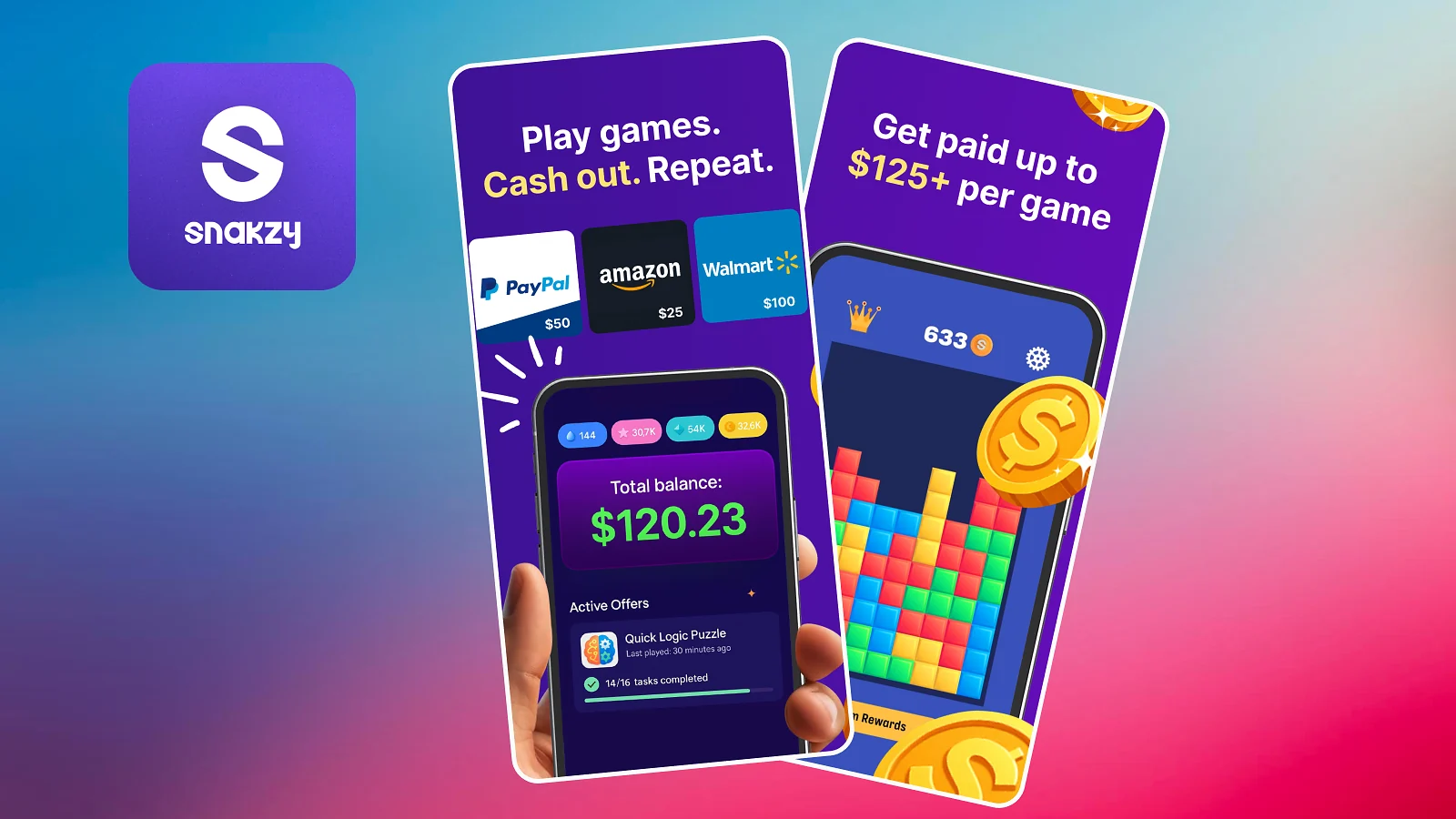
Reward apps will not replace a real side income, but they can add $10 to $50 a month in effectively free cash while one of the ten methods above ramps up. They work by paying out small, real amounts for simple actions, like games, surveys, and referrals, instead of a wage. Treat them as a bonus layer, not the plan itself, alongside whichever of the ten main methods you actually pick. They are not, on their own, how to make side money from home in any serious sense.
For readers who want to compare more of these, our roundup of the best game apps that pay real money covers the category in more depth. Snakzy, Eneba‘s own play-to-earn app, pays out from a $35 minimum and costs nothing to join. KashKick is a solid second option, with a simple $10 minimum across every payout method (KashKick‘s own payout support page, 2026), though it’s restricted to users 18 and over in the US or UK. Neither replaces a real plan for how to make side money from home, but both add a little free cash along the way.
If you want an easy way to earn a little extra while building your main side-income stream, Snakzy is worth considering for quick tasks and games.
Earn pocket cash from quick tasks and games
What Doesn’t Work
Most of the money-losing versions of side money from home share one trait: they ask you to pay for access to a system before you have proof it works. The specific traps below map directly onto the methods above, not unrelated scam categories, and knowing them is as much a part of how to make side money from home as picking a method.
- Paid “mentor” courses: promising a done-for-you print-on-demand or Etsy store. The FTC has repeatedly warned that business-opportunity sellers who promise guaranteed income from a templated store are required to back that claim with real earnings data, which most never provide, a red flag worth knowing before you trust anyone else’s version of how to make side money from home. [CONFIRM: link to Eneba Hub’s guide on spotting online scams] fits here on first mention of “guaranteed income.”
- Upfront “membership” job sites: writing or translation sites that charge hundreds of dollars before showing real, current job listings. A legitimate job board like ProBlogger charges the employer to post, never the writer to browse.
- Paid portfolio “boosting”: stock-photo or design services that promise faster approval for a fee. Adobe Stock and 99designs both review submissions on quality alone, and a paid shortcut service cannot change that review.
- Unlicensed short-term rentals: listings that skip local registration. The BBB and many city governments warn that unregistered short-term rentals risk fines that erase months of Airbnb income in one penalty.
None of these traps are complicated once you know the pattern: a legitimate platform makes money when you make money, not before. If an offer asks for payment upfront before you’ve proven the underlying method actually works, treat that as the clearest warning sign there is, no matter how professional the pitch looks. Avoiding that trap alone protects most of the progress you make figuring out how to make side money from home.
Final Verdict on How to Make Side Money From Home
The strongest starting point for most people is a digital download shop on Etsy or a free Printify store, since both can start free and produce a first sale within a week. The trade-off, true of nearly every real answer to how to make side money from home, is that neither pays much until you have several listings live.
Anyone who already has a marketable skill, like writing, design, a language, or a voice, should weigh a freelance method instead: it can pay a full client rate on the very first booking. Either path is legitimate, just on a different timeline.
If you are starting with zero budget, try the Etsy digital shop first, because a failed idea costs $0.20, not a monthly fee. A spare room on Airbnb needs an actual room to offer. A niche blog needs months of runway before it pays anything. Save both for later, once your first method is already earning consistently. Layer in a free reward app like Snakzy alongside whichever method you pick, since it costs nothing and adds a little extra cash while your main method ramps up.
Earn pocket cash from quick tasks and games
FAQs
Yes, you can find ways on how to make side money from home without spending anything: Freelance writing via ProBlogger, design contests on 99designs, and translation via Gengo can all be started with $0 upfront. Other options, such as Etsy, have small fees to get started.
Digital downloads on Etsy are one low-cost way to start. You can create products without inventory or shipping, although there is no guaranteed timeline for your first sale.
You can use an asset or simple product idea instead, such as a spare room on Airbnb, original content on Adobe Stock, or a digital product on Etsy. These still require some useful skills, but not necessarily professional credentials.
If you’re wondering how to make side money from home, there is no reliable first-month income figure for everyone. You could make $0 while testing a method, or earn more if you already have a skill, audience, or asset to monetize.
It depends on where you live and how much you earn when exploring how to make side money from home. In the U.S., self-employment income generally triggers filing and self-employment tax rules once net earnings reach $400 or more, while other countries have different rules.
The fastest way to see your first real payment is a single Etsy digital listing or a Printify product sale, often within days. That’s exactly how to make side money from home starting this week.