


14 Real Job-Finding Services to Find Paid Work in 2026

Eneba Hub contains affiliate links, which means we may earn a small commission if you make a purchase through them—at no extra cost to you. Learn more


Job-Finding Services Comparison
New for 2026: added real payout thresholds and fees for 14 job-finding services, led by Instawork, which you can book a paid shift through the same week you sign up.
Job-finding services can cut down the time you spend hunting for work, but the right platform depends on what you actually need: a flexible shift this week, remote contract work, local clients, or a longer-term job.
The best job-finding services aren’t all traditional job boards. Some match you with employers, others let you book shifts directly, and professional job-finding services like BELAY handle much of the client-matching process for experienced remote workers.
We’ve compared 14 job-finding services below, including their costs, earning potential, payment setup, restrictions, and biggest limitations, so you can quickly see which ones fit your situation.
| Quick Verdict |
| ● Need flexible shifts: Instawork and Indeed Flex ● Have a marketable professional skill: BELAY or Wyzant ● Want remote jobs: FlexJobs or We Work Remotely |
Jump to:
Is Using Job-Finding Services Actually Realistic?
Yes. Job-finding services can make the search easier, but they can’t guarantee that you’ll be hired quickly.
The biggest difference is what kind of service you’re using:
- Shift apps such as Instawork and Indeed Flex can let approved workers book individual shifts without going through a traditional weeks-long hiring process.
- Marketplaces such as Wyzant and Care.com connect you with clients, so your profile, pricing, location, and experience affect how quickly you get work.
- Professional job-finding services such as BELAY involve screening and matching, which can take longer but may lead to steadier remote work.
- Job boards such as FlexJobs, We Work Remotely, and Jobcase help you find vacancies but don’t control an employer’s interview or payroll timeline.
That’s why comparing job-finding services purely by “time to payout” doesn’t make much sense. A staffing app can process your wages, while a job board simply sends you to an employer.
If your immediate goal is a much higher weekly income target, Eneba’s guide to how to earn $1,000 a week covers additional options you can combine with a regular job search.
Among the best job-finding services, the most useful choice is usually the one that matches your actual type of work instead of promising the fastest result.
14 Real Job-Finding Services You Can Use Right Now
These job-finding services cover flexible shifts, remote work, tutoring, caregiving, early-career jobs, local services, and microtasks. The list isn’t ranked from “best” to “worst” because the platforms solve very different problems.
1. Wyzant [Best for Tutoring]
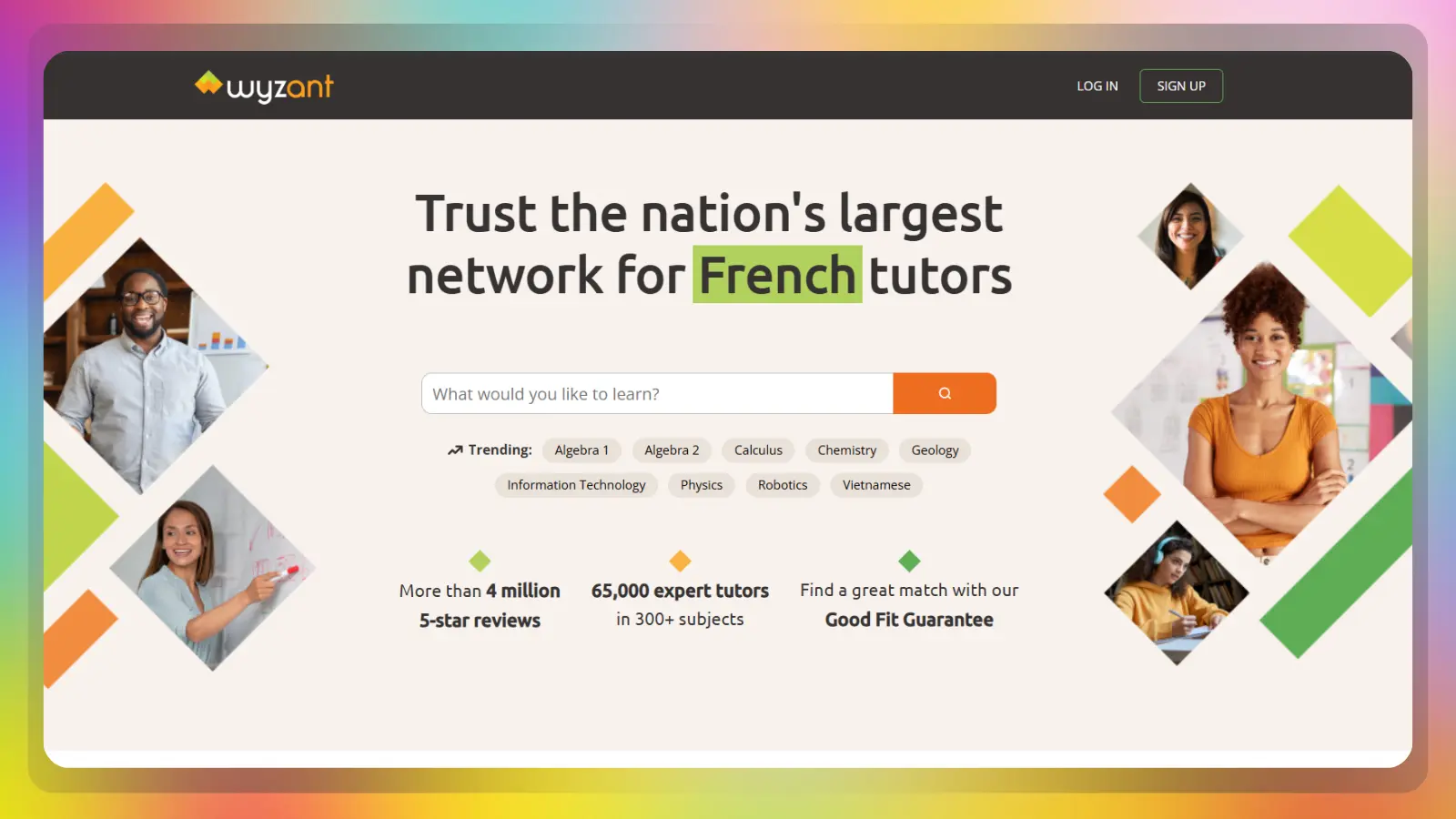
Wyzant is a tutoring marketplace where independent tutors create profiles, choose subjects, set their own hourly rates, and connect with students.
It’s one of the more specialized professional job-finding services here because you’re selling a specific skill rather than applying for a normal employee position. Tutors must be over 18, permanently live in the US, be physically located in the US, and be eligible to work there.
Tutors keep 75% of their listed hourly rate, while Wyzant keeps a 25% platform fee. Reported tutor rates vary widely by subject and experience, so what you actually earn depends heavily on the rate you set and how consistently you book students.
What stands out about Wyzant:
- Set your own rate: You’re not locked into one platform-wide hourly wage.
- Wide subject range: Academic subjects, test prep, languages, and professional skills can all attract students.
- Recurring students: A good match can turn into repeat weekly sessions rather than one-off work.
- Built-in marketplace: Wyzant handles discovery, lesson tracking, and payment processing in one place.
Payments are issued twice monthly, on the 1st and 15th, rather than through the discontinued Express Direct Deposit option.
Among job-finding services, Wyzant makes more sense if you want to build a recurring tutoring roster than if you need guaranteed money tomorrow.
| 💡Need to know |
| Fee: Wyzant keeps 25% of your listed lesson rate.Payout: Direct deposits are issued on the 1st and 15th.Eligibility: Tutors must live and work legally in the US.Best for: People who already have a teachable academic or professional skill. |
2. Clickworker [Best for Small Online Tasks]
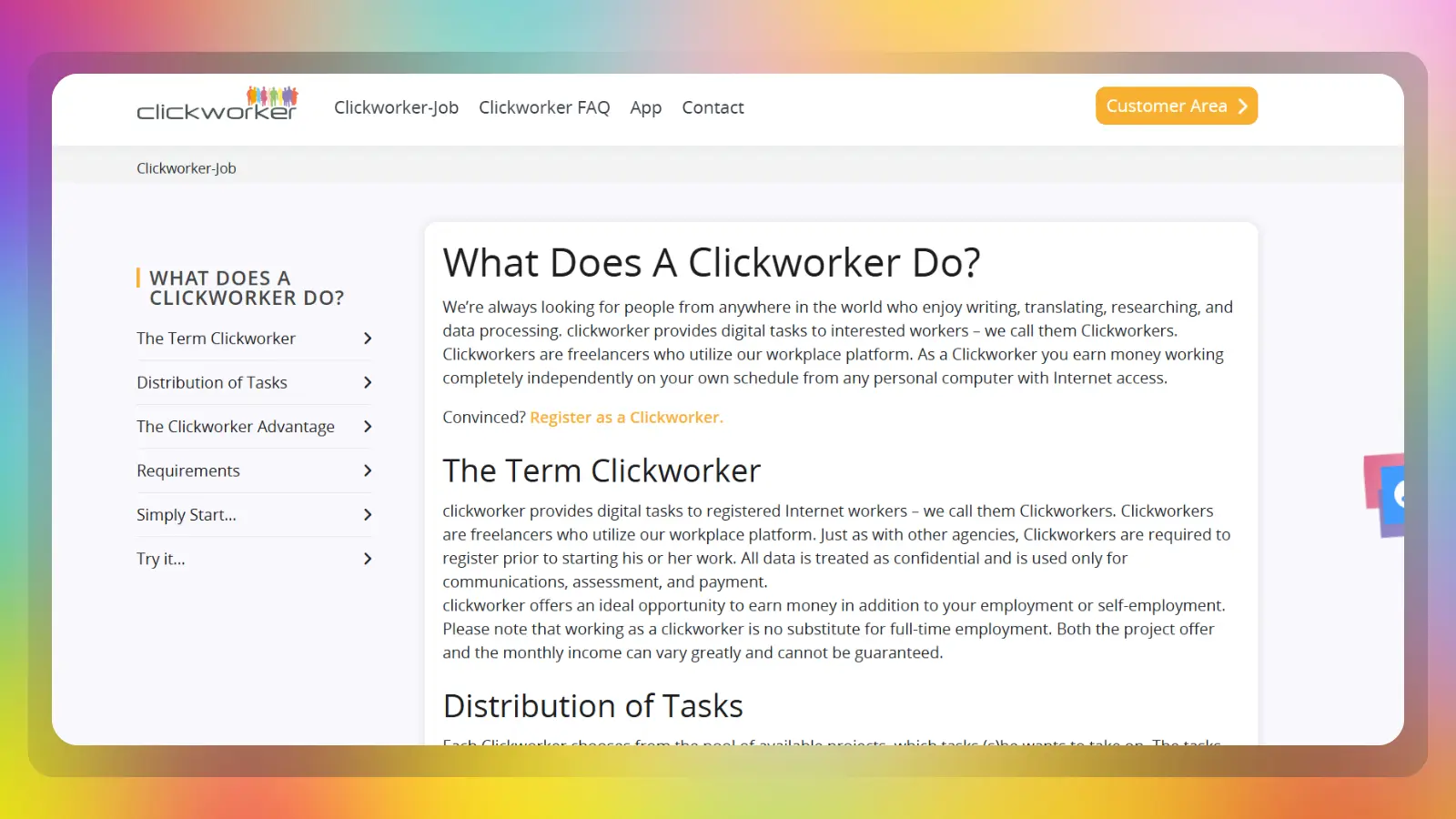
Clickworker isn’t a traditional job board. It’s a microtask platform where available work can include data categorization, AI-related tasks, surveys, research, writing, and other short online assignments.
That makes it one of the more unusual job-finding services on this list. You’re not applying to one employer or building a long-term client relationship; you’re completing individual tasks whenever suitable work appears.
There isn’t a reliable universal hourly rate because jobs are priced individually. Task rewards can range from cents to much larger amounts, and availability depends heavily on your country, qualifications, and current client demand.
What makes Clickworker useful:
- Flexible workload: You can pick tasks around your existing schedule.
- Different task types: Work can range from simple categorization to more specialized AI or research assignments.
- Multiple payment methods: Options can include PayPal, Payoneer, eWallet, Airtm, ACH, and SEPA depending on your region.
- Low commitment: You don’t need to commit to fixed shifts or long client projects.
PayPal currently has a €10 minimum, while Payoneer generally requires €/$20. Payments are processed through weekly billing once funds become payable.
I wouldn’t treat it like the best job-inding services for building a career. It’s much better as spare-time income while you’re waiting for interviews, shifts, or client work.
If quick side income is the bigger priority, Eneba’s guide to how to earn $200 fast covers options beyond microtasks.
| 💡Need to know |
| PayPal minimum: €10.Payoneer minimum: €/$20.Payments: Weekly billing runs once funds become payable.Availability: Registration and payment methods vary by country. |

3. BELAY [Best for Experienced Remote Professionals]
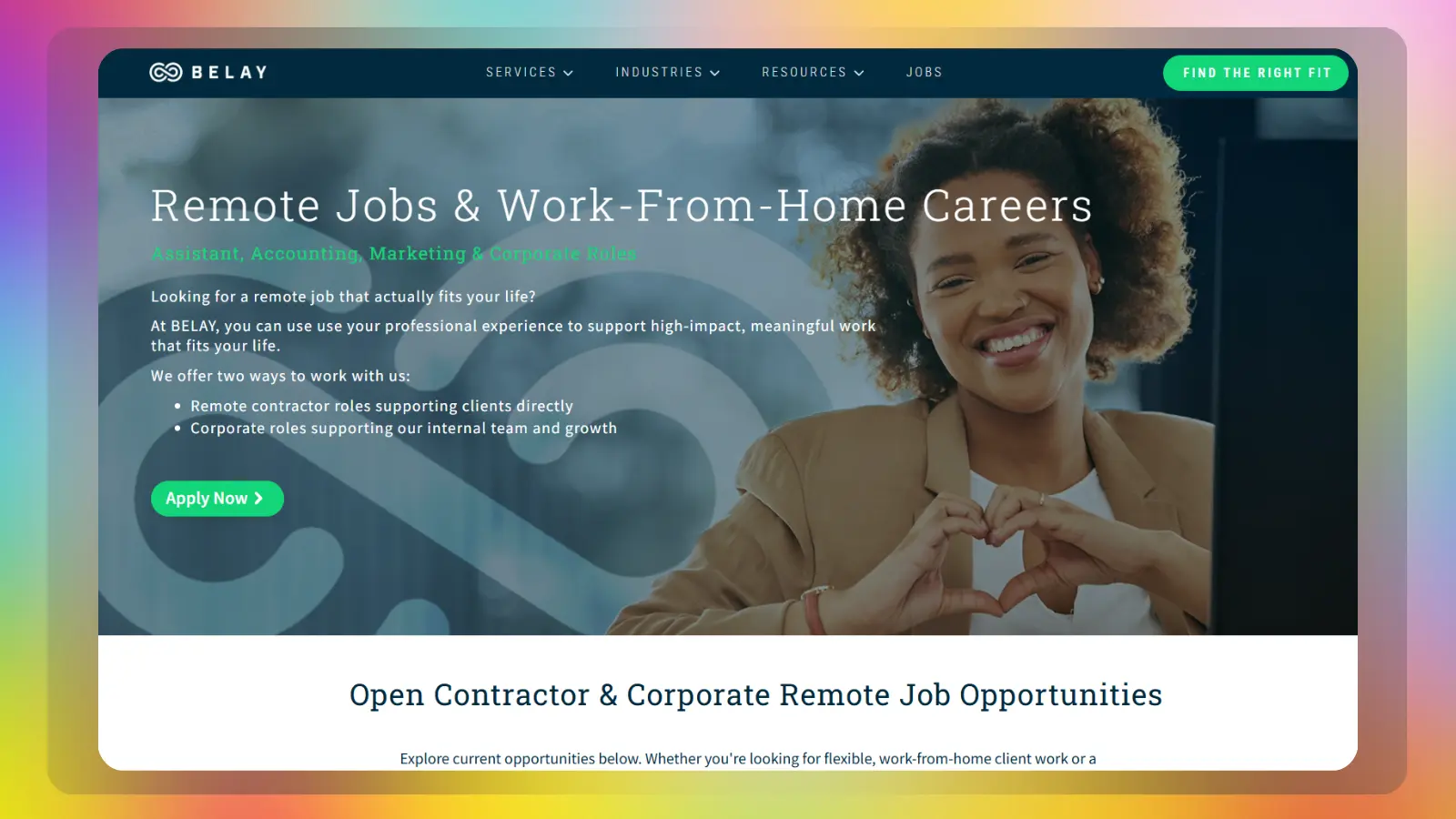
BELAY connects US-based professionals with clients looking for remote virtual assistants, bookkeepers, executive assistants, and marketing support.
Unlike normal job boards, these professional job-finding services screen candidates and match accepted contractors with clients. That’s useful if you’re already experienced and would rather spend less time finding clients yourself.
Current listings show many core contractor roles in roughly the $20$–$35/hour range, depending on the position. Executive assistant roles can sit near the lower end, while some marketing and senior support roles reach higher.
Why BELAY stands out:
- Client matching: You don’t have to source every client completely on your own.
- Remote-first work: Roles are designed around working from home.
- Professional niches: The platform focuses on admin, bookkeeping, executive support, and marketing rather than generic gig work.
- Ongoing client relationships: Successful matches can offer steadier work than one-off freelance jobs.
The tradeoff is that this isn’t an instant-work app. Applying doesn’t mean you’ll immediately receive a client, and there isn’t one universal payout schedule or rate that applies to every contract.
Among professional job-inding services, BELAY is one of the better fits for experienced remote workers who want matching support without operating a completely independent freelance business.
For more ideas around higher-value freelance and contract work, see Eneba’s guide to how to earn $2,000 quickly.
| 💡Need to know |
| Application: Free.Typical posted rates: Roughly $20$–$35/hour across current core contractor roles.Work type: Remote contract work.Best for: People with established admin, bookkeeping, or marketing experience. |
4. Instawork [Best for Flexible Local Shifts]
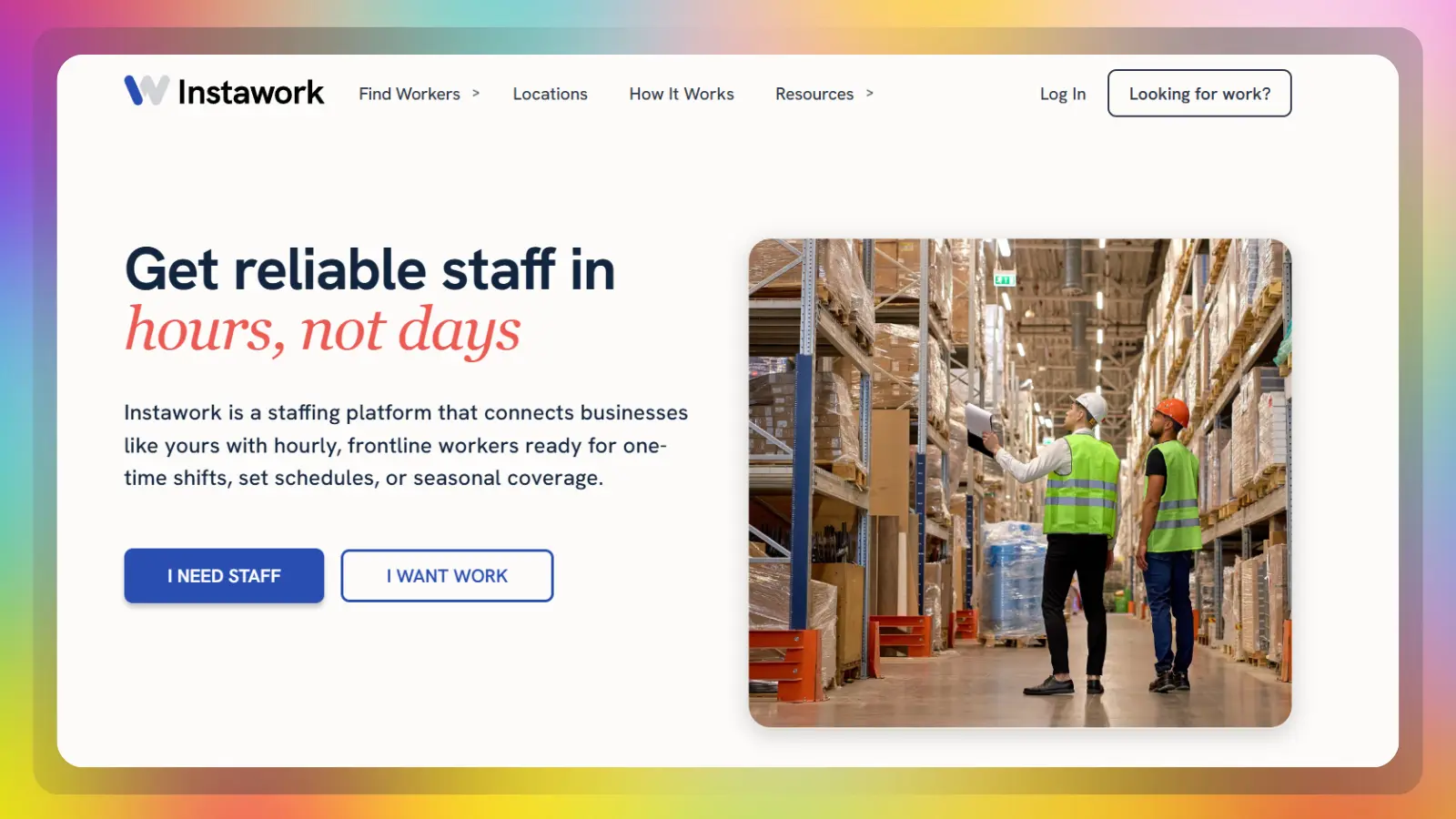
Instawork is one of the strongest job-finding services if you want individual local shifts rather than a conventional permanent job. Available work can include hospitality, warehouse, event, food-service, and general-labor roles.
Entry-level positions may be approved relatively quickly once your basic profile requirements are complete, while skilled positions such as bartending or line cooking can require additional experience, quizzes, certifications, or approval.
The rate is shown before you book, so there isn’t one meaningful platform-wide hourly number.
What makes Instawork useful:
- Visible shift rates: You can see what a shift pays before accepting it.
- Flexible scheduling: Pick individual shifts instead of committing to a permanent weekly timetable.
- Multiple job categories: Hospitality, warehouse, events, food service, and other local roles can appear.
- Optional faster pay: Eligible workers may be able to access earnings early through Instapay.
For eligible 1099 shifts, Instapay can send earnings soon after clock-out. W-2 Instapay works differently: eligible workers receive 60% of estimated gross earnings early, minus the applicable fee, while the remaining balance follows the normal payroll cycle.
That distinction matters. Instawork can get you into a shift quickly, but a brand-new account shouldn’t assume that every shift qualifies for instant payment.
Among the best job-finding services for flexible local work, its biggest advantage is simply seeing the job, schedule, and rate before committing.
| 💡Need to know |
| Weekly pay: Free.Instapay fee: 5% when available.W-2 Instapay: Pays 60% of estimated gross earnings early; the rest follows in payroll.Availability: Shift supply and Instapay eligibility vary by market. |
5. Snagajob [Best for Hourly Jobs]
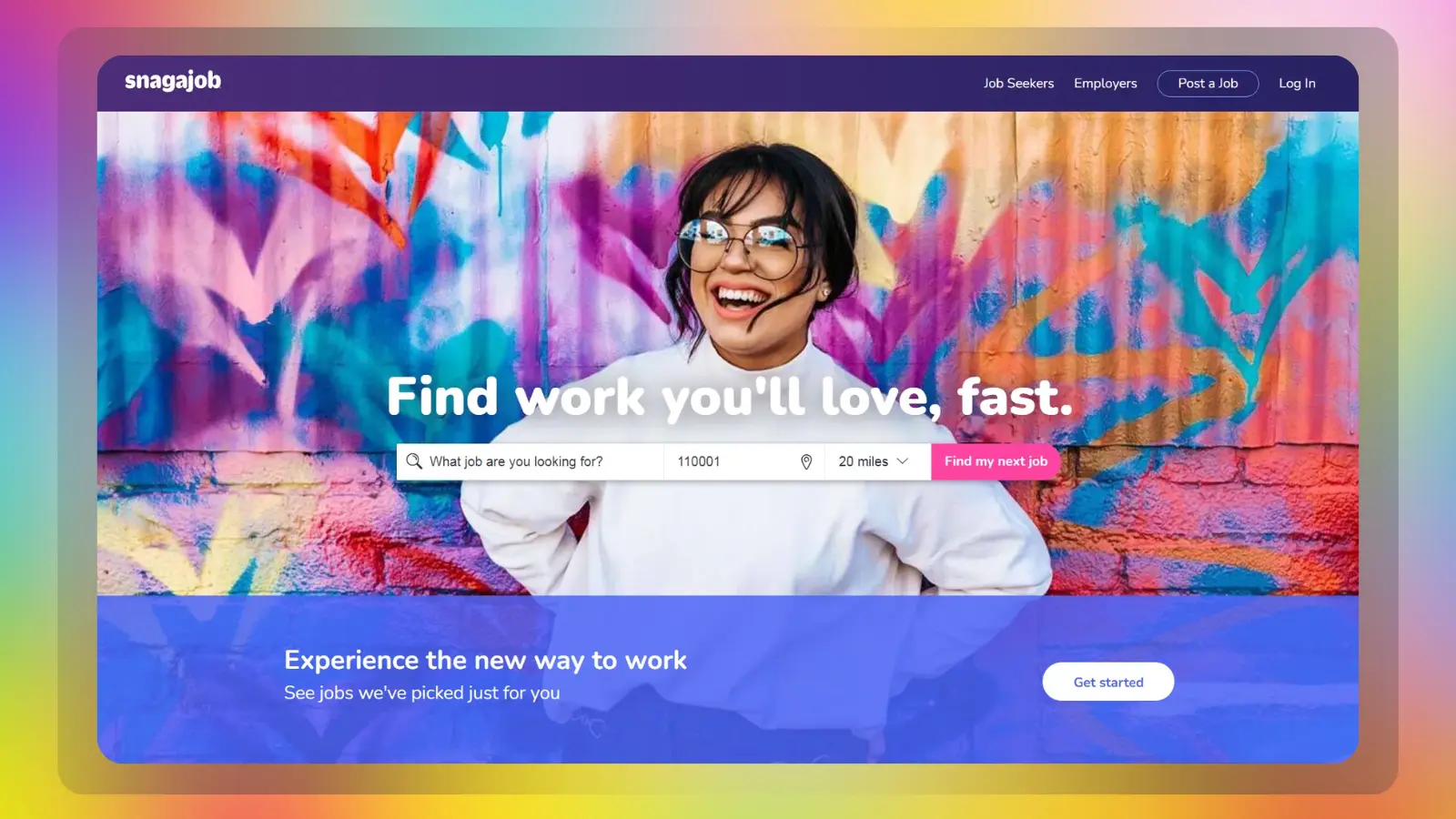
Snagajob focuses primarily on hourly and local employment in categories such as restaurants, retail, hospitality, logistics, and customer service.
It’s closer to traditional job-finding services than Instawork: Snagajob helps you find and apply for openings, but the employer generally handles interviewing, hiring, wages, and payroll.
That means there’s no single Snagajob pay range. The useful number is the wage attached to each individual listing.
What Snagajob does well:
- Hourly-job focus: Listings are built around the kind of work retail, restaurant, warehouse, and hospitality workers actually search for.
- Local filtering: It’s useful when commute distance matters as much as the role itself.
- Part-time and full-time options: You’re not limited to one employment format.
- Free job-seeker access: You don’t pay to browse or apply.
Because listings can change quickly, check the employer’s own website before sending sensitive information. A current job-board listing isn’t the same thing as a guaranteed vacancy.
Among job-finding services, Snagajob makes the most sense if you want a conventional employer relationship rather than freelance clients or one-off app shifts.
| 💡Need to know |
| Job-seeker cost: Free.Pay: Set by the employer.Payout: Employer payroll schedule.Best for: Local hourly and shift-based employment. |

6. Thumbtack [Best for Local Service Leads]
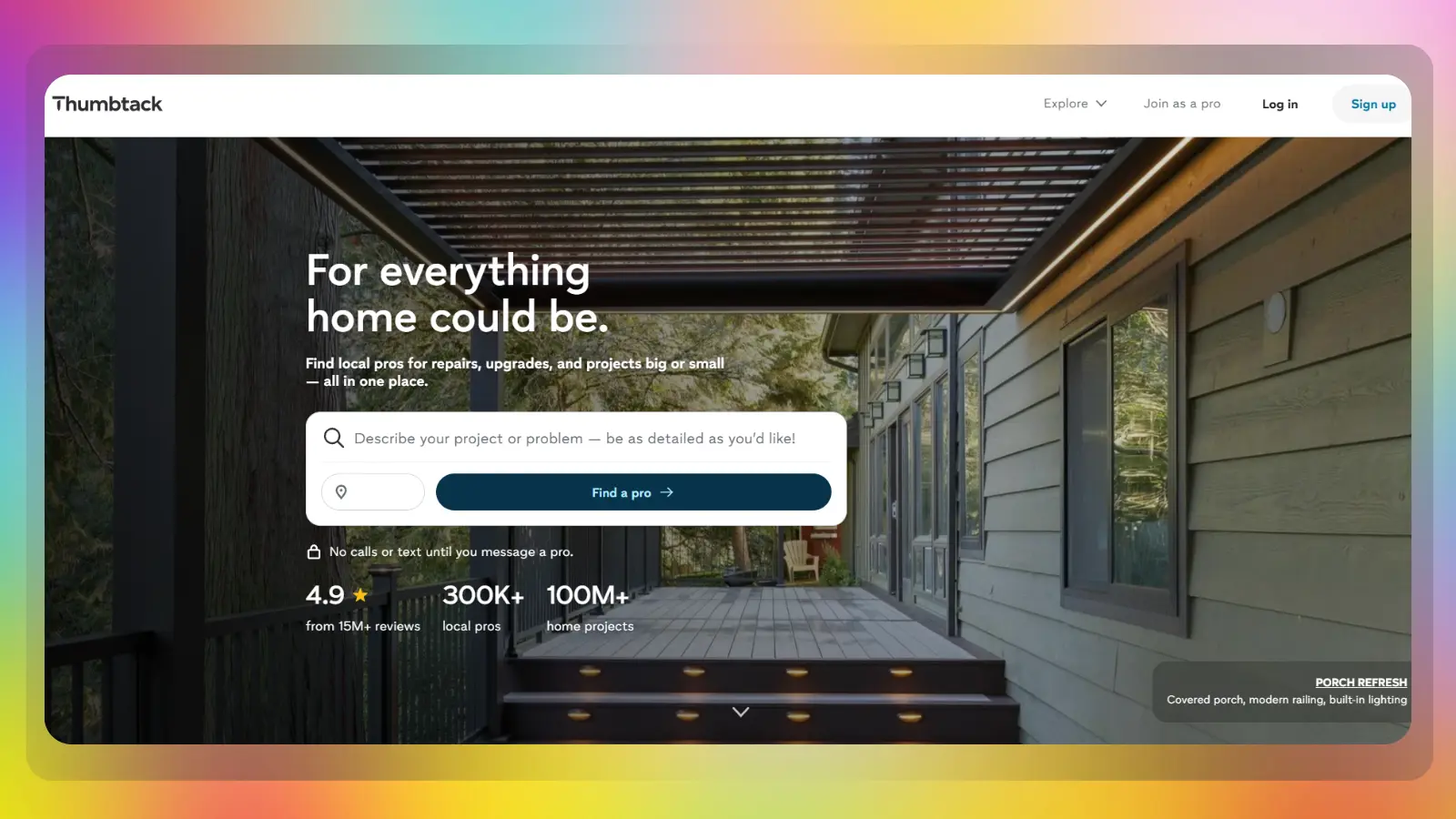
Thumbtack is built for service professionals rather than ordinary job applicants. You create a business profile, choose the services you offer, and pay for qualifying leads from potential customers.
There are no subscription, annual, or membership fees to join, but lead prices vary by service, location, competition, and the limits you set inside your account.
So avoid treating Thumbtack like a platform where every contractor pays the same amount. Your real cost depends on the type of work you’re chasing.
What makes Thumbtack different:
- Free business profile: You can build your presence before committing to a recurring subscription.
- Local customer leads: The platform is designed around people already searching for a service.
- Budget controls: Pros can manage what they’re willing to spend on leads.
- Broad service range: Cleaning, photography, home improvement, lessons, coaching, and event services can all fit.
Your earning potential comes down to the price of your jobs minus the cost of leads, supplies, travel, taxes, and other business expenses.
Among job-finding services for independent local professionals, Thumbtack can be useful if you already know what a profitable customer is worth to you. If you’re brand-new to a trade, paying for leads before understanding your margins is much riskier.
| 💡Need to know |
| Profile: Free.Lead cost: Variable.Client payment: Depends on how you invoice or collect payment.Best for: Established local professionals who know their profit margin. |

7. Care.com [Best for Caregiving Work]
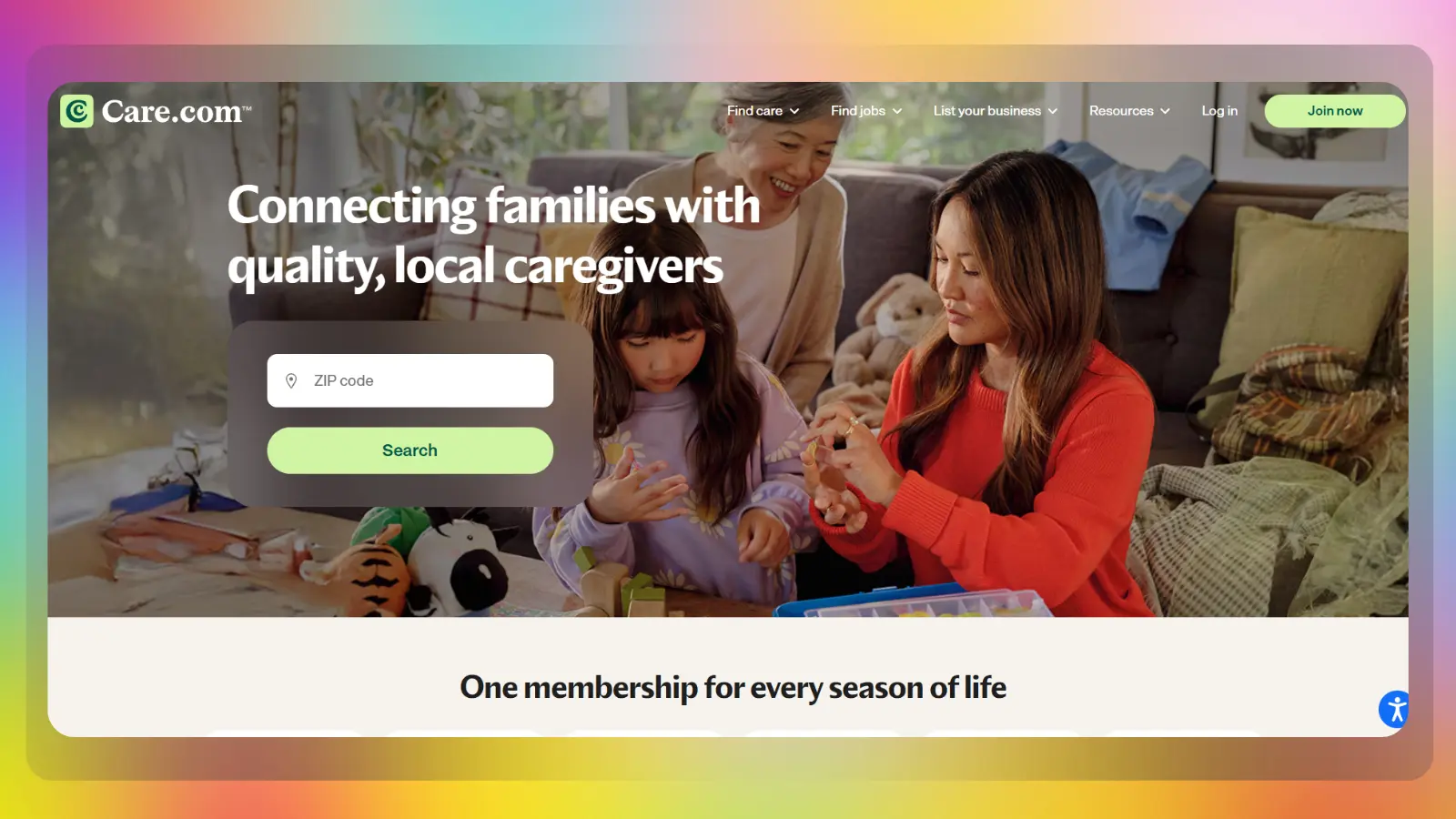
Care.com connects caregivers with families looking for childcare, senior care, housekeeping, pet care, and other household help.
Caregivers advertise their own rates rather than receiving one fixed platform wage. National averages for major care categories often sit around the $20–22/hour mark, although local rates can move much higher or lower depending on experience, responsibilities, and city.
What makes Care.com useful:
- Focused audience: Families are already looking specifically for care or household help.
- Multiple categories: Babysitting, senior care, pet care, housekeeping, and related work all sit under one platform.
- Rate flexibility: You can price your services around your experience and local market.
- Ongoing client potential: A successful match can become regular weekly work instead of a one-time booking.
Individual caregivers are subject to Care.com’s required baseline background screening before interacting with families, with additional ongoing screening for active caregivers.
Membership and feature access can vary between caregiver and family accounts, so check the current signup terms rather than assuming every feature is free.
Among professional job-finding services for care work, Care.com is useful because the platform is focused enough that families are already searching for the exact service you’re offering.
| 💡Need to know |
| Background check: Required for individual caregivers before they can interact with families.Rates: Set by caregivers and market demand.Average: Around $20–22/hour for major care categories nationally.Best for: Experienced childcare, senior-care, pet-care, and household workers. |

8. FlexJobs [Best for Screened Remote Listings]
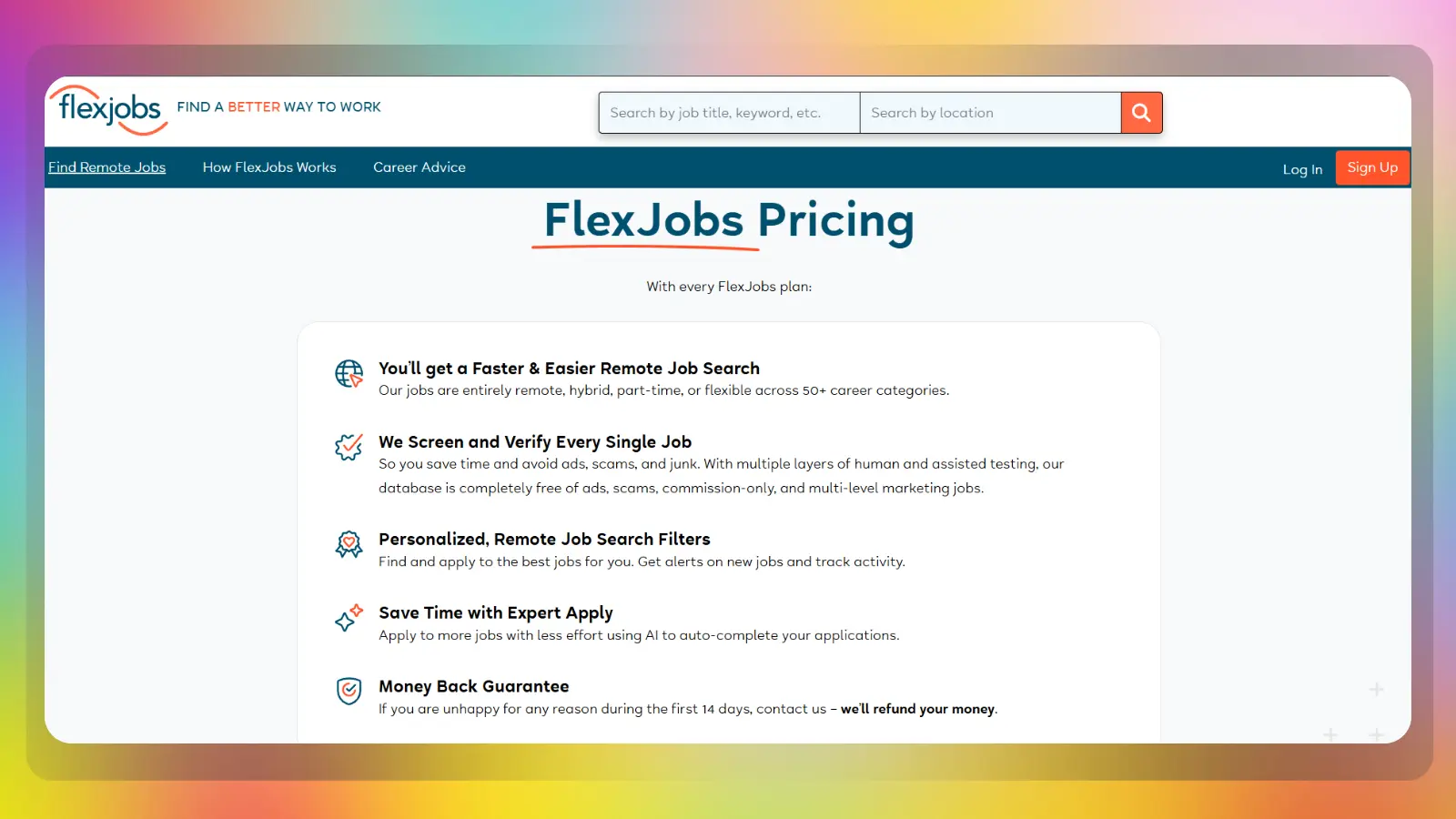
FlexJobs is one of the few paid job-finding services on this list. Instead of taking a cut of your eventual salary, it sells access to a screened database of remote, hybrid, part-time, and flexible jobs.
Current pricing starts at $2.95 for 14 days, after which the plan renews at $23.95 every four weeks unless canceled. Longer plans lower the effective monthly cost.
What you’re paying for with FlexJobs:
- Screened listings: The platform checks postings before adding them.
- Remote and flexible filters: Easier than sorting through office-heavy general job boards.
- Job alerts: Useful when you’re targeting a narrow role or schedule.
- Application tools: Extra resources are built into the membership.
Remember that FlexJobs doesn’t hire or pay you. Applications, interviews, offers, and payroll are controlled by the employer you eventually join.
Among the best job-inding services for remote work, the main selling point is time saved filtering listings, not faster guaranteed hiring.
| 💡Need to know |
| Trial: $2.95 for 14 days.Renewal: $23.95 every four weeks.Pay: Determined by the employer you eventually join.Best for: Remote-job seekers who value screening enough to pay for it. |

9. We Work Remotely [Best for Remote-Only Searches]
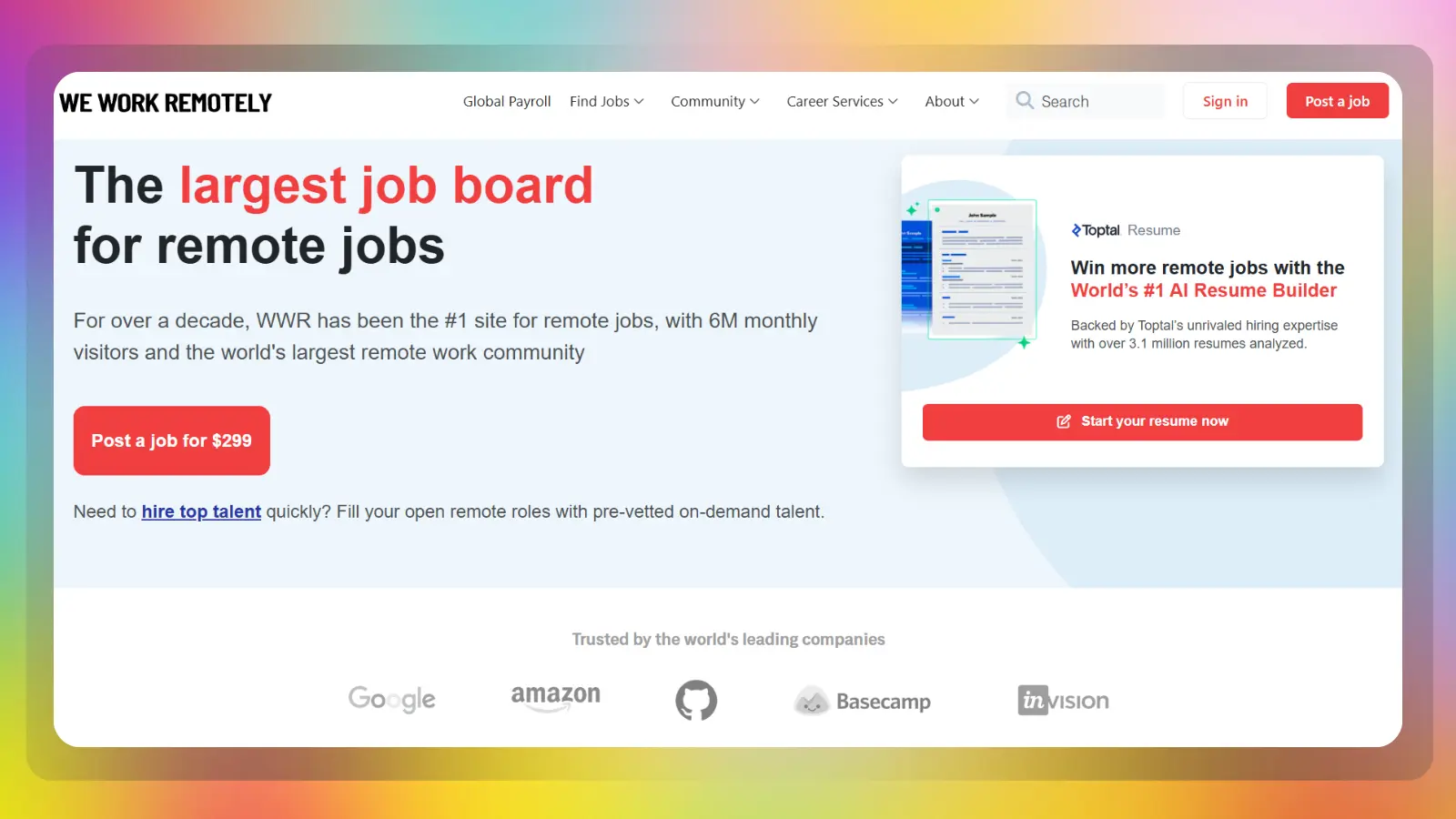
We Work Remotely focuses entirely on remote work, making it easier to skip local and office-only vacancies if that’s not what you’re after.
Its Basic membership is free and includes a tailored feed, resume upload, saved jobs, company follows, and a free ATS resume review. WWR Pro adds extra tools through a paid plan.
What stands out about We Work Remotely:
- Remote-only focus: You don’t have to filter through thousands of office-based listings.
- Free core search: Browsing and applying don’t require a paid membership.
- Strong professional categories: Programming, design, marketing, sales, support, product, and management jobs are common.
- Optional Pro tools: Paid features are there if you want more job-search assistance.
One limitation is geographic eligibility. “Remote” doesn’t always mean “work from anywhere.” Many listings restrict applicants to the US, Europe, a specific time zone, or countries where the employer can legally hire.
Compared with broader job-finding services, We Work Remotely saves time simply by keeping the search focused on remote roles.
| 💡Need to know |
| Basic: Free.Pro: $14.95/month on a 12-month commitment.Pay: Set by each employer.Best for: People only interested in remote work. |

10. Indeed Flex [Best for Seeing Shift Pay Upfront]
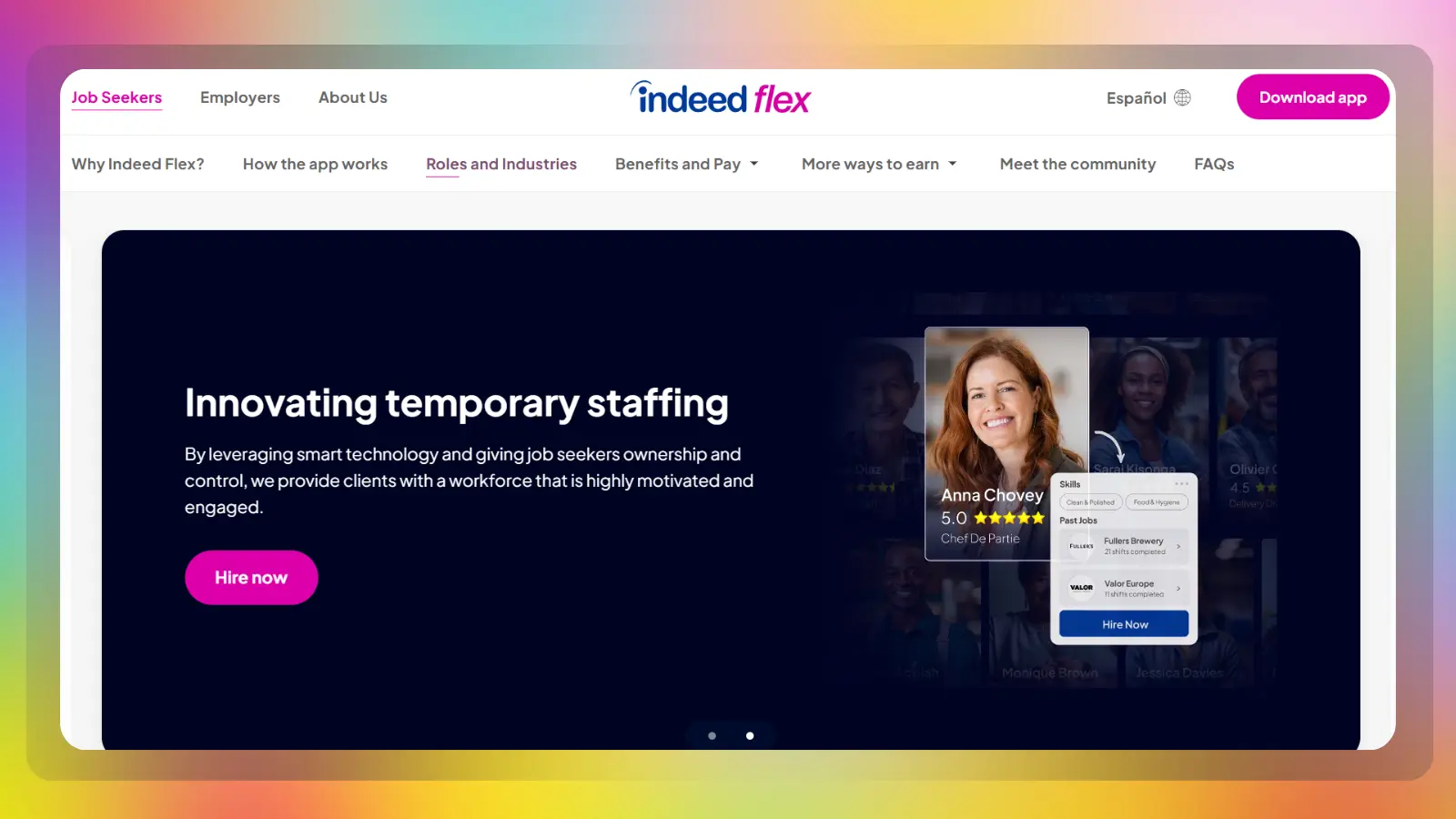
Indeed Flex is a flexible staffing platform where approved workers can browse temporary shifts and see the offered hourly rate before accepting them.
This puts it closer to Instawork than to traditional job-finding services such as Snagajob. You aren’t just browsing employer ads; you’re using a staffing platform that helps place workers into individual shifts.
Pay varies by city, employer, role, and shift, so checking the actual listing is more useful than relying on one national hourly average.
What makes Indeed Flex useful:
- Pay shown before booking: You know the shift rate before committing.
- Flexible scheduling: Pick shifts that fit around other work or responsibilities.
- Temporary staffing model: Good for people who don’t necessarily want one permanent employer.
- Same Day Pay: Eligible workers can access up to 50% of qualifying shift wages early.
The remaining eligible pay follows the platform’s normal payroll schedule.
The biggest limitation is availability. Even the best job-inding services can’t create shifts where there isn’t local employer demand, so the number and variety of openings depend heavily on your market.
| 💡Need to know |
| Sign-up: Free.Same Day Pay: Up to 50% of eligible shift wages.Remaining pay: Included in normal payroll.Best for: Workers who want flexible shifts with visible rates. |

11. Handshake [Best for Students and Recent Graduates]
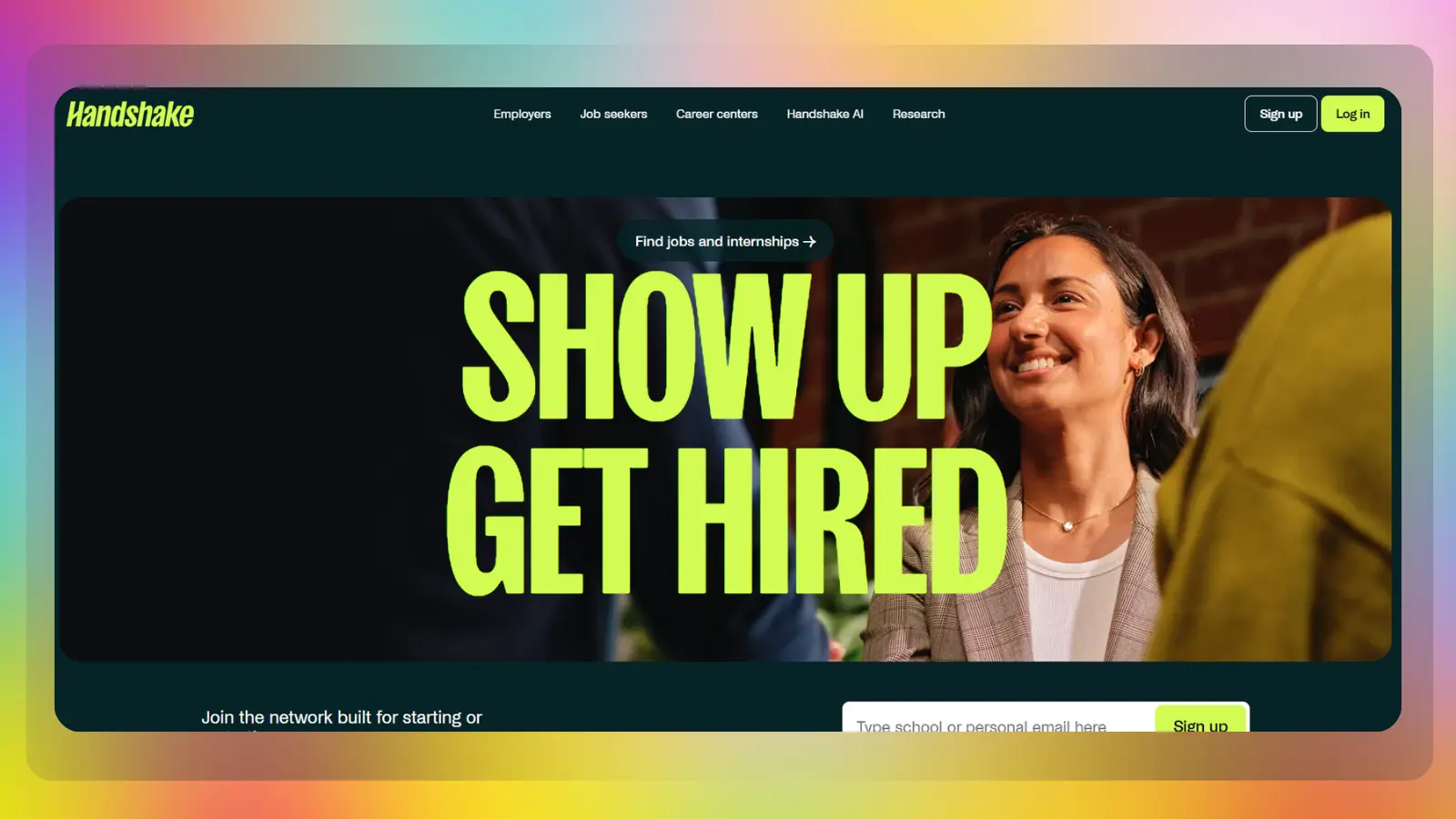
Handshake is built around early-career recruiting, making it one of the most relevant job-finding services for students, recent graduates, and people with limited professional experience.
Students can use it to discover jobs, internships, employer events, and career opportunities aimed specifically at people at the beginning of their careers.
Why Handshake stands out:
- Early-career focus: Employers are actively looking for students and recent graduates.
- Internships and graduate roles: These aren’t buried under thousands of mid-career vacancies.
- Career events: The platform also connects users with employer sessions and recruiting events.
- School-linked profiles: Eligible users can benefit from university or college connections.
Handshake doesn’t pay candidates directly. Once you get hired, compensation and payroll come from the employer.
Among job-finding services for early-career applicants, the biggest advantage is that having a short resume isn’t automatically a disadvantage because that’s exactly the audience many employers are targeting.
| 💡Need to know |
| Student access: Generally free.Pay: Set by the employer.Best for: Students, alumni, and recent graduates.Limitation: Available features can depend on school participation and account type. |

12. Jobcase [Best for Community-Based Job Searching]
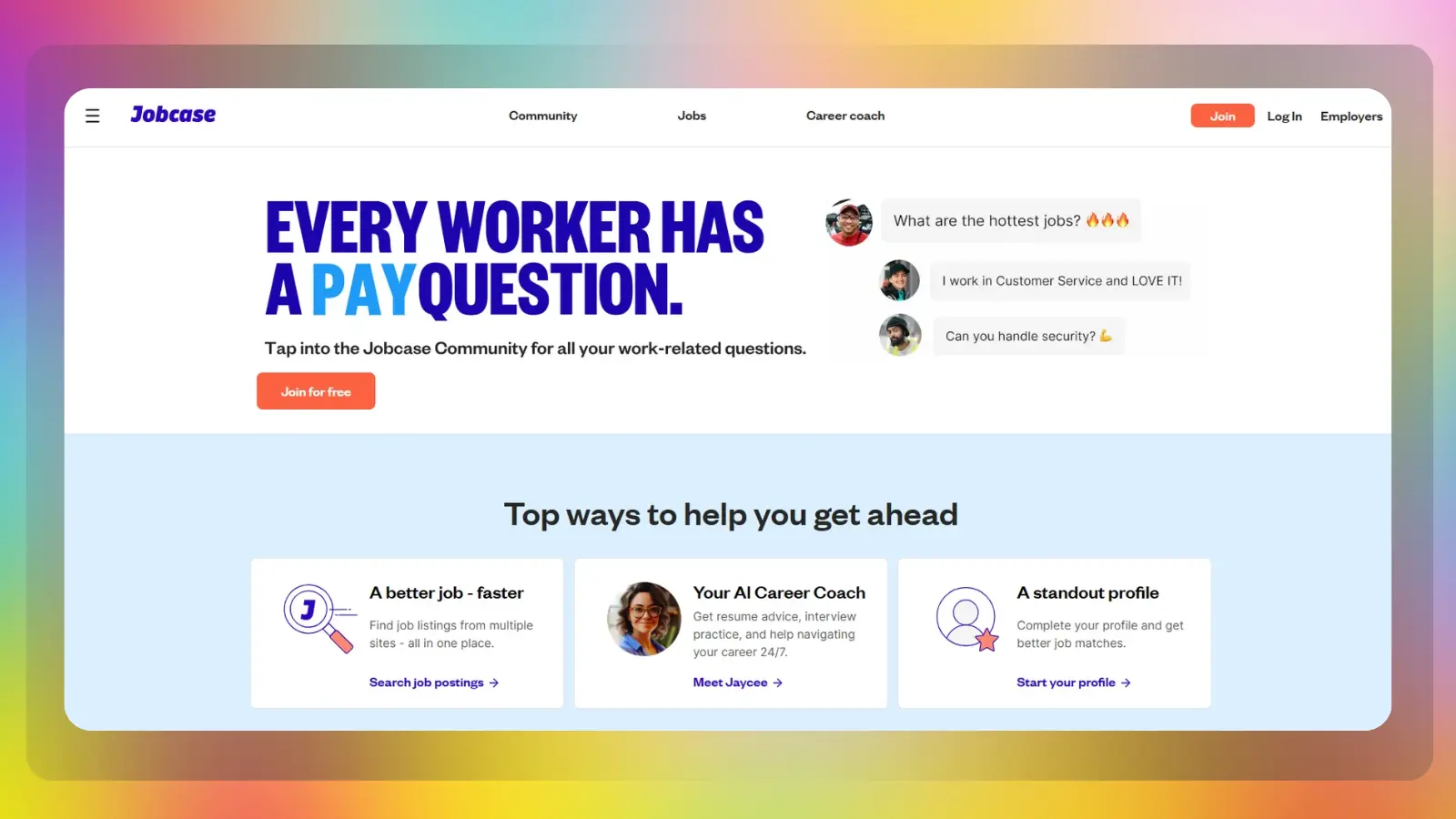
Jobcase combines regular job listings with a worker community where members can discuss employers, applications, interviews, and everyday workplace issues.
The service is free for job seekers. Like other board-style job-finding services, Jobcase isn’t your employer, so wages and payroll depend on the company you eventually join.
What Jobcase adds beyond listings:
- Free job search: There’s no subscription required for core job-seeker access.
- Worker community: Users can ask questions and compare workplace experiences.
- Career resources: Resume and job-search support sits alongside vacancies.
- Broad local coverage: It’s especially useful for hourly and everyday employment searches.
The community element is the main reason to use it over another generic listings site. Just remember that user posts are personal experiences, not verified guarantees about an employer.
Among free job-finding services, Jobcase works well as an extra search channel rather than something that needs to replace every other board you use.
| 💡Need to know |
| Cost: Free for job seekers.Pay: Set by employers.Payout: Employer payroll schedule.Best for: Workers who want listings plus peer discussion. |
13. Angi [Best for Established Home-Service Businesses]
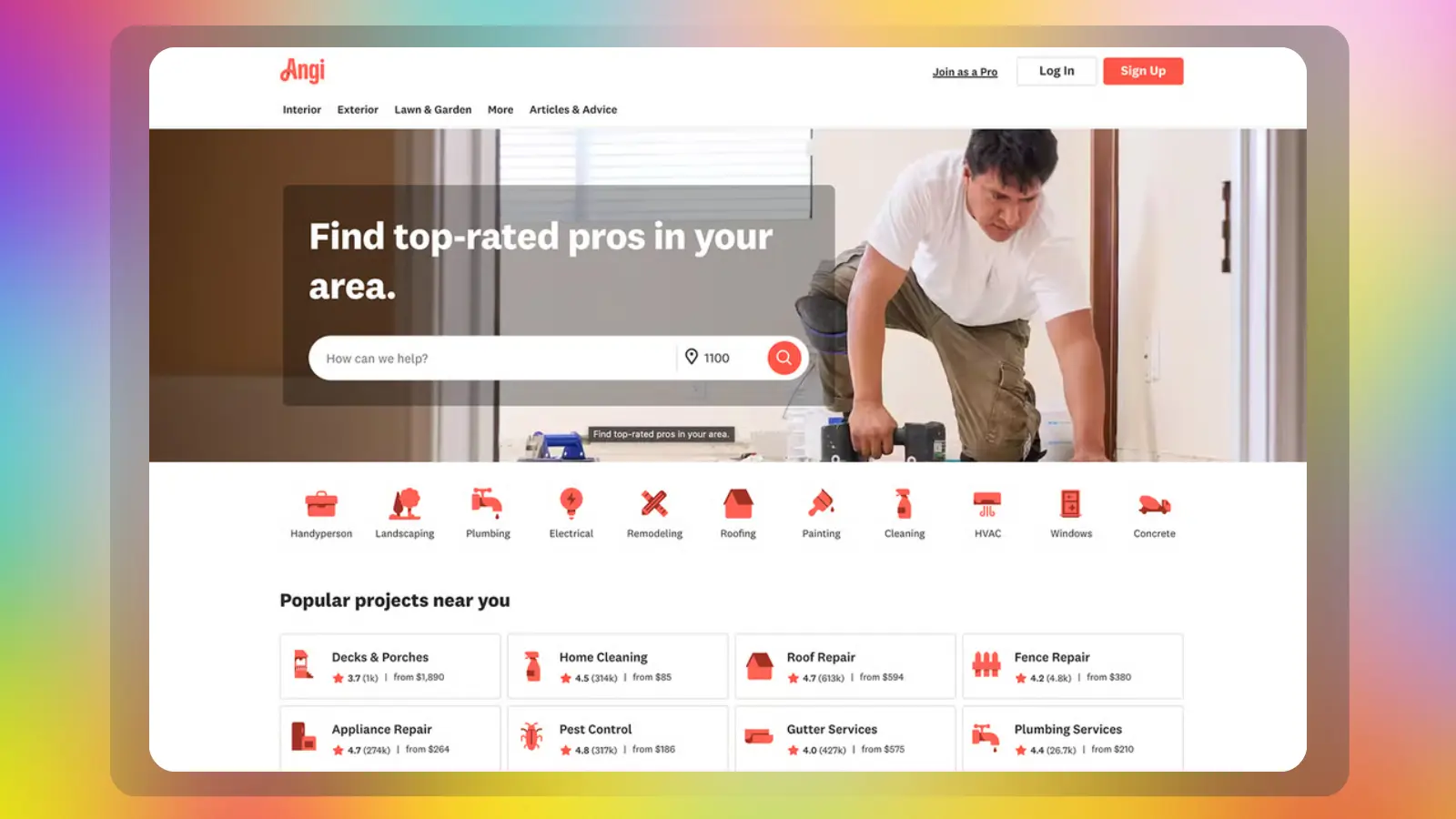
Angi connects homeowners with contractors and local home-service businesses. Like Thumbtack, it should be viewed as a lead source rather than a regular employment platform.
Creating a business profile is free, while Pros can pay for leads or advertising depending on the service, market, and plan. Angi doesn’t publish one universal lead price that applies to every contractor.
What Angi can offer established Pros:
- Home-service audience: Users are already searching for contractors and local businesses.
- Free business profile: You can establish a presence without paying a universal membership fee upfront.
- Lead and advertising options: Businesses can pay for additional customer acquisition where it makes financial sense.
- Wide trade coverage: Cleaning, remodeling, lawn care, painting, handyman work, plumbing, and other home services all fit.
For Angi Approved status and advertising access, businesses can face extra requirements, including relevant licensing and background screening.
Professional job-inding services like Angi only make financial sense when you understand your customer-acquisition costs. A $40 lead can be excellent for a $2,000 job and terrible for a $70 one.
| 💡Need to know |
| Profile: Free to create.Lead pricing: Varies by category and market.Licensing: Maintain any licenses required by your state or locality.Best for: Existing service businesses with room for more customers. |

14. GigSmart [Best for Short-Term Gigs]
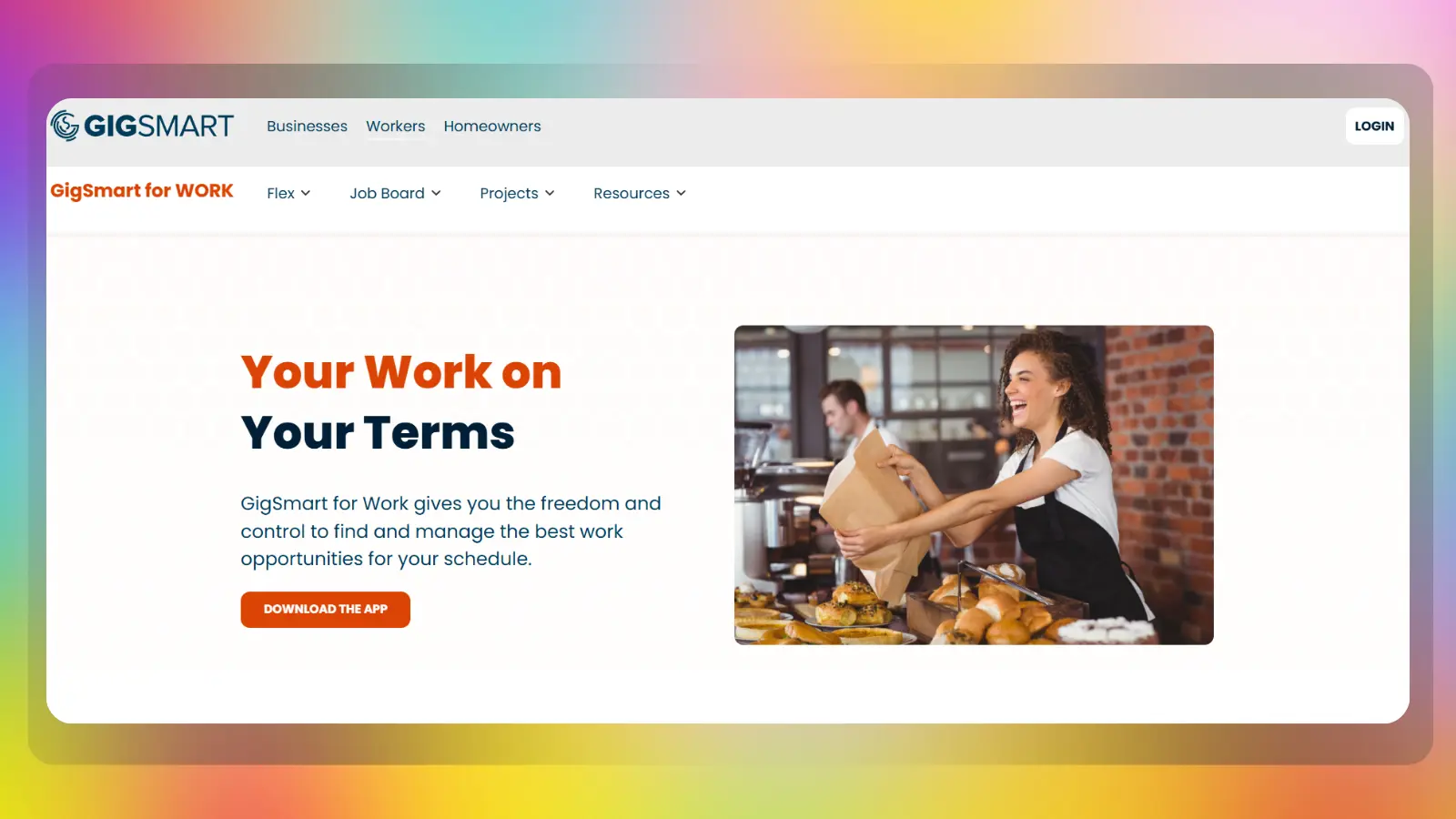
GigSmart‘s Get Gigs platform connects workers with short-term shifts and project-based work. It’s useful if you want another flexible-work app alongside Instawork or Indeed Flex rather than one permanent schedule.
Pay is shown by the hiring business and varies by assignment, so there isn’t a reliable platform-wide hourly rate.
For eligible 1099 shift earnings, money moves into the Worker Wallet. Standard cash-outs are free, while faster debit-card transfers cost 3% with a $1 minimum.
What makes GigSmart useful:
- Short-term flexibility: Pick individual shifts or projects instead of one fixed schedule.
- Visible gig details: Review the rate, location, and assignment before accepting.
- Multiple payout speeds: Choose free standard transfers or pay for faster access.
- Extra local shift source: It can complement other staffing apps when one platform has limited nearby work.
There’s also a $1 Trust and Support fee per gig hour, so compare your final earnings after fees rather than focusing only on the advertised hourly rate.
Among job-finding services for temporary work, GigSmart is worth checking when you want more local shift supply, especially if you don’t want to depend on one staffing app alone.
| 💡Need to know |
| Worker fee: $1 Trust and Support fee per gig hour.Standard cash-out: Free.Direct transfer: 3%, $1 minimum.Worker Wallet: Currently for 1099 shift earnings, not W-2 earnings. |

How We Chose These 14 job-inding Services
The best job-inding services shouldn’t all do the same thing. A list with 14 nearly identical job boards wouldn’t help much, so we kept different routes to paid work:
- Flexible shift staffing.
- Remote professional matching.
- Tutoring.
- Caregiving.
- Hourly employment.
- Remote job boards.
- Early-career recruiting.
- Local client leads.
- Microtasks and short projects.
We also prioritized job-finding services with clear information about how workers actually get opportunities, what the service costs, and who handles payment.
For professional job-inding services that don’t directly process wages, we’ve avoided inventing payout times. Your employer or client controls that part.
Likewise, exact earnings aren’t presented as guarantees. Rates change with your city, role, experience, hours, competition, and the individual employer or customer.
job-inding Services Compared at a Glance
The table below keeps the most useful differences visible without trying to squeeze every review into a mobile screen.
| Service | Cost | Typical Pay | Best For |
|---|---|---|---|
| Wyzant | 25% fee | Often $30-$60+/hr listed | Tutors |
| Clickworker | Free; payout fees vary | Task-based | Microtasks |
| BELAY | Free to apply | About $20-$35/hr for many current roles | Remote professionals |
| Instawork | Free; optional Instapay fee | Shift-specific | Flexible local shifts |
| Snagajob | Free | Employer-set | Hourly jobs |
| Thumbtack | Free profile; paid leads | Client-set | Local pros |
| Care.com | Membership/features vary | Around $20-$22/hr averages | Care work |
| FlexJobs | From $2.95 | Employer-set | Screened remote jobs |
| We Work Remotely | Free tier | Employer-set | Remote jobs |
| Indeed Flex | Free | Shift-specific | Temporary shifts |
| Handshake | Free for students | Employer-set | Early careers |
| Jobcase | Free | Employer-set | Local job search |
| Angi | Free profile; paid leads/ads | Client-set | Home-service businesses |
| GigSmart | $1/hr fee on gigs | Gig-specific | Short-term work |
No single option wins every category. The best job-finding services for quick shifts look very different from professional job-finding services designed for bookkeepers, assistants, contractors, or tutors.
A sensible strategy is to use one service for your main target and one secondary platform rather than creating half-finished profiles on all 14 job-finding services.
Play to Earn: Reward Apps to Stack Alongside a Job Search
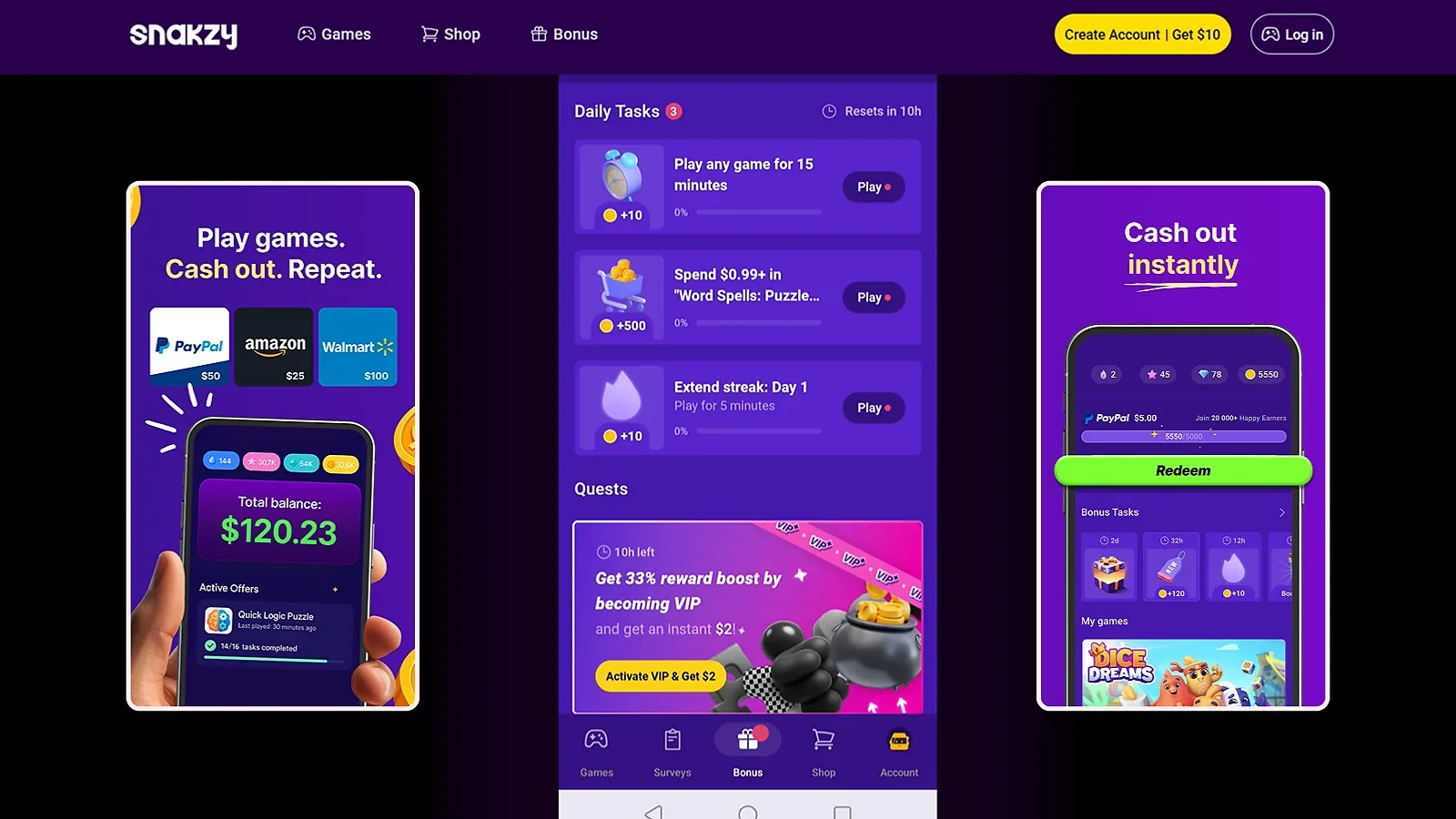
Reward apps aren’t replacements for job-finding services. They’re better treated as something you can use during spare time while applications, interviews, or client matching are still moving.
Snakzy is Eneba’s own play-to-earn option, while Bigcash and KashKick offer another route into reward-based tasks and offers.
If you’d rather explore reward gaming more broadly, Eneba’s roundup of the best game apps to win real money covers more options.
Already spend a lot of your free time gaming? Eneba also breaks down how to make money on Roblox and what those earning routes realistically involve.
Free play-to-earn rewards you can use alongside a regular job search.

What Doesn’t Work
Not every website calling itself one of the best job-finding services deserves your money or personal information.
A few warning signs are worth checking every time:
- Pay-to-get-hired schemes: Paying for optional tools or a curated board is different from paying someone who promises you a job. Legitimate employers don’t normally require an upfront payment just to employ you.
- Fake remote jobs: Be suspicious if an alleged employer immediately requests bank details, cryptocurrency, gift cards, or money for equipment.
- Guaranteed placement claims: Even legitimate professional job-inding services can’t guarantee that a specific employer or client will hire you.
- Unclear lead charges: Contractors should understand when a lead platform can charge them before turning on a large budget.
- Off-platform communication immediately: Moving straight to Telegram, WhatsApp, or another private channel can make it harder to verify who you’re dealing with.
- Pressure to act immediately: A real employer can explain the role, compensation, and hiring process without threatening that the opportunity disappears in five minutes.
Before sending sensitive information, search the company name independently and check that the job also appears on an official company domain where possible.
That extra minute matters even when you’re using established job-finding services. A legitimate platform can still contain individual listings that deserve additional checking.
Final Verdict on job-inding Services
The most realistic job-finding services depend on the kind of income you’re trying to build. Instawork and Indeed Flex fit flexible shift work, Wyzant and BELAY suit people with established skills, while FlexJobs and We Work Remotely make more sense for a conventional remote job search.
The best job-inding services won’t guarantee immediate work, and professional job-inding services still require a strong profile, relevant skills, and some patience. Use one or two platforms that match your goal, then treat Snakzy as a small additional option for spare-time rewards while your main income route ramps up.
Play for rewards alongside applications and shifts without replacing your main income plan.
FAQs
Yes, many job-finding services are free for job seekers, including Snagajob, Jobcase, and Handshake. Others charge differently: FlexJobs starts at $2.95 for 14 days, while marketplaces such as Wyzant take a percentage of earnings.
It depends on the platform. Staffing-based job-finding services may offer weekly or eligible accelerated pay, while job boards don’t pay you at all – your eventual employer does. Client marketplaces can also take longer because you first need to land a customer.
A job board lists openings and sends you to an employer. Staffing apps such as Instawork and Indeed Flex let approved workers book available shifts through the platform, so scheduling and payment are more directly integrated.
Yes, but start with a strict lead budget. Thumbtack is free to join, but qualifying leads cost money and don’t guarantee a booking. New contractors should know their average job value and profit margin before paying aggressively for leads.
Avoid job-finding services or listings that demand money for guaranteed placement, request sensitive banking details before legitimate onboarding, or pressure you to communicate off-platform immediately. Verify the company independently before sharing personal information.