

12 Best Games Like Spore 2026 – Top Picks for Creative Evolution Fans


Games like Spore turned gaming into a personal playground like no other. You designed a creature, watched it grow, and toyed with artificial life across strange planets – until suddenly you were shaping your own universe.
This list of games like Spore shows off that same sense of discovery. Some dive into the science of real evolution. Others let you shape your own planet. And some are great multiplayer games with cosmic-scale playgrounds.
Let’s dive in and check out the games that keep that creation magic alive.
Jump to:
Our Top Picks for Games Like Spore
It’s been years since Spore showed how a tiny spark could grow into a full-blown civilization. Watching your creations rise from microbes to spacefarers left a mark, and it’s no wonder fans are still chasing games with that same sense of scale.
I’ve rounded up a handful of favorites that echo what made Spore so addictive, each in its own unique way. These games give you the possibility to shape life, tweak the environment, and experiment on your home planet.
-
Buy nowThriveThis indie project captures Spore’s original dream. Start as a microbe and climb the ladder until you run civilizations. Real science gives every stage depth and challenge.
-
Buy nowAncestors: The Humankind OdysseySkip aliens and galaxies; focus on humanity’s roots. Guide an ape clan through survival and discovery. It’s tough, but progress feels earned.
-
Buy nowThe UniversimA modern god game that hits Spore’s later stages. Guide a planet from huts to futuristic cities. Disasters and scarce resources keep it lively, with humor tucked in.
Each of these picks brings something different to the table, but they all offer that same sense of curiosity Spore gave us.
Stick around – there’s even more to explore in games that take artificial life, creation, and space travel in unexpected directions.
12 Best Games Like Spore to Unleash Your Inner Creator
Exploring new worlds and creating custom species is always exciting. Building your own personal playground is part of the fun.
This list of 12 games like Spore dives into the thrill of sandbox evolution simulation. How many of these have you played?
1. Thrive [An Evolution Lab You Actually Play]
| Our Score | 10
☆
★
☆
★
☆
★
☆
★
☆
★
☆
★
☆
★
☆
★
☆
★
☆
★
|
| Platforms | Windows, MacOS, Linux |
| Year of Release | 2021 (Early Access) |
| Creator/s | Revolutionary Games Studio |
| Average Playtime | 20–50 hours (currently in development) |
| Unique Features | Stage-based evolution progression, real scientific accuracy |
| Metacritic Score | N/A |
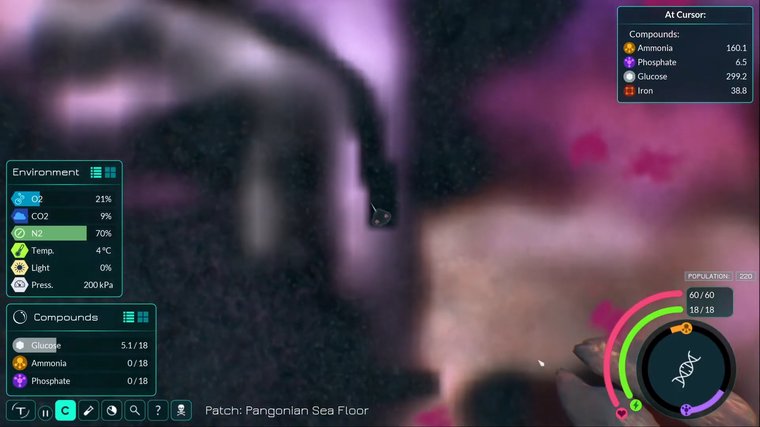
Ever wanted to play inside a science experiment? Thrive puts you there. You start as a single cell floating in a huge world. Here, you can tweak traits like movement, metabolism, and survival skills.
Every small choice matters. Before you know it, you’re guiding whole species through the creature stage, and eventually leading societies that fight for survival.
What makes it so cool is how grounded it feels. Thrive skips the flashy Spore creatures vibe and goes for a more scientific look. Watching cells divide and form teams feels like seeing biology unfold in real time. You can review lineage changes in the generation report and patch map after each reproduction.
In the Microbe Stage, equip a Vacuole once you unlock the Nucleus – it helps you store more compounds and stay alive in tricky biomes.
You start by tweaking how a microbe survives, and before long, you’re leading a tribe into the next stage of life. The slower rhythm pays off, and it captures the essence of evolution found in the coolest simulation games.
The game has this clean, almost educational style, but it never feels dry. It’s fascinating to watch behaviors emerge and creatures adapt to harsh environments. Every new skill changes the flow of play.
Thrive is often described as the version of Spore players always wanted: deeper, smarter, and with a stronger sense of progression.
Final Verdict: Thrive balances patience with rich, thoughtful gameplay. It’s a thoughtful ecosystem sandbox that encourages experimentation. If you’ve ever wanted Spore with more science, this is it.
2. Ancestors [Evolve Your Own World]
| Our Score | 10
☆
★
☆
★
☆
★
☆
★
☆
★
☆
★
☆
★
☆
★
☆
★
☆
★
|
| Platforms | PC, PS4, Xbox One |
| Year of Release | 2019 |
| Creator/s | Panache Digital Games, Private Division |
| Average Playtime | 40–50 hours |
| Unique Features | Generational evolution, neural skill progression, survival with no compass |
| Metacritic Score | 64/100 |
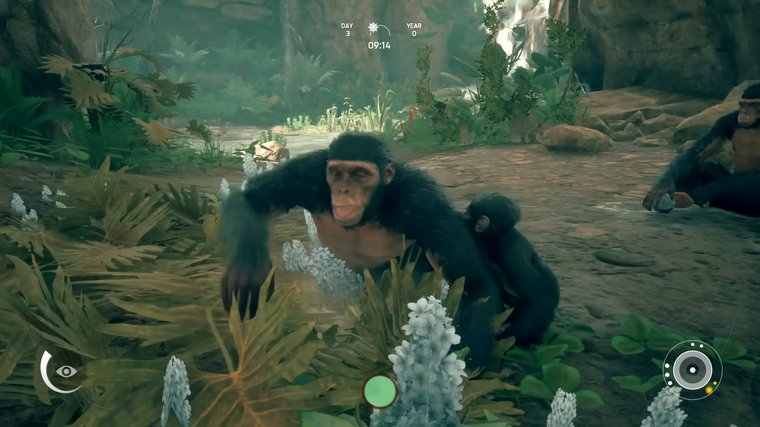
Ancestors: The Humankind Odyssey drops you into prehistoric Africa and says, “figure it out.” Here, you control a primate clan trying to survive one discovery at a time.
Every small breakthrough feels like a leap forward. Instead of rushing to the creature stage or space stage, the focus here is on early hominin survival and evolution in Neogene Africa – well before tribes or civilizations.
This game is tough, no sugarcoating it. Predators stalk the jungle, injuries stick, and your clan can collapse if you’re careless. But that’s the thrill, to feel the weight of survival in your bones.
Use “Memorize” when you find a hiding spot or resource area – it turns into a persistent HUD icon so you can always make your way back.
This game is known for how real the victories feel, because nothing comes easy. You really challenge the environment itself. In Ancestors, subsistence is the core challenge, making it stand out among the best survival games.
Visually, the game is raw and beautiful. Dense forests, detailed character models, and a soundscape full of danger make the world feel alive. It’s not about colorful Spore creatures; this is nature at its most unforgiving.
Progress isn’t handed to you; you have to earn it through curiosity, trial, and a lot of mistakes. You’ll find yourself protecting the young, forming bonds, and slowly guiding your species to new abilities.
Final Verdict: Ancestors hits hard on every front. It’s demanding, sometimes frustrating, but also deeply rewarding. If you’ve ever wondered how fragile survival can be at the roots of evolution, this game is a wild ride.
3. The Universim [Lead Your Own Civilization]
| Our Score | 9.8
☆
★
☆
★
☆
★
☆
★
☆
★
☆
★
☆
★
☆
★
☆
★
☆
★
|
| Platforms | Windows, MacOS, Linux |
| Year of Release | 2024 |
| Creator/s | Crytivo / Ignited Developers |
| Average Playtime | 30–60+ hours |
| Unique Features | Divine management, civilization evolution, and disaster handling |
| Metacritic Score | N/A |
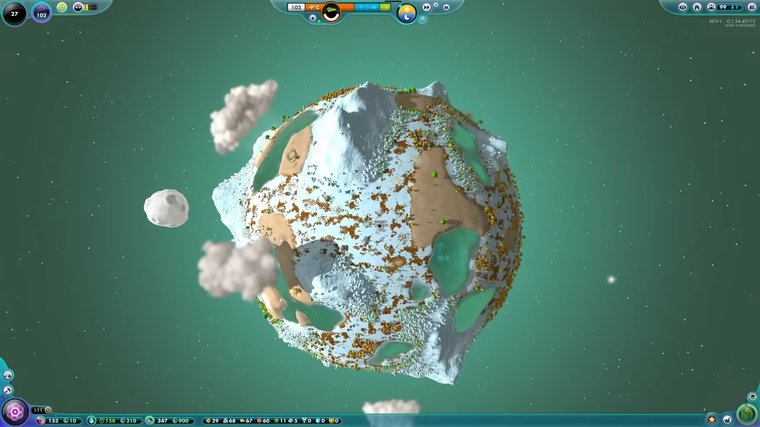
The Universim is what happens when you take creature creation and scale it up to entire worlds. Instead of tweaking body parts, you’re shaping societies.
You start small, almost like the cell stage of Spore, then guide civilizations toward greatness. The twist? You’re not just watching, you’re the god in charge.
You’ll set rules, unlock abilities, and push your people to build, explore, and survive. Your team faces all kinds of challenges: disasters, resource shortages, you name it.
Sometimes your choices help them thrive, sometimes they blow up in your face. Either way, you’re never detached. It feels like playing Sims on a global stage, where every click has consequences.
Place reservoirs near resource-rich zones to prevent Nuggets from walking long distances for water, reducing sickness and boosting productivity.
The style mixes humor with clever systems. You’ll laugh at your own creatures bungling tasks, then feel pride when a tribe evolves into a spacefaring society during the civilization stage.
Tracking progress almost feels like adding a ray ID to each generation, just to see how far they’ve come. It’s both lighthearted and surprisingly deep.
Final Verdict: The Universim is a civilization sandbox with heart. It blends god-game chaos with thoughtful strategy. Think Spore, but you’re in charge this time.
4. Stellaris [Grand Strategy Across the Stars]
| Our Score | 9.6
☆
★
☆
★
☆
★
☆
★
☆
★
☆
★
☆
★
☆
★
☆
★
☆
★
|
| Platforms | Windows, macOS, Linux, PlayStation 4, Xbox One |
| Year of Release | 2016 (console: 2019) |
| Creator/s | Paradox Development Studio / Paradox Interactive |
| Average Playtime | Typically 60–100+ hours for rich campaigns |
| Unique Features | Deep grand-strategy, emergent storytelling, empire customization |
| Metacritic Score | 78/100 |
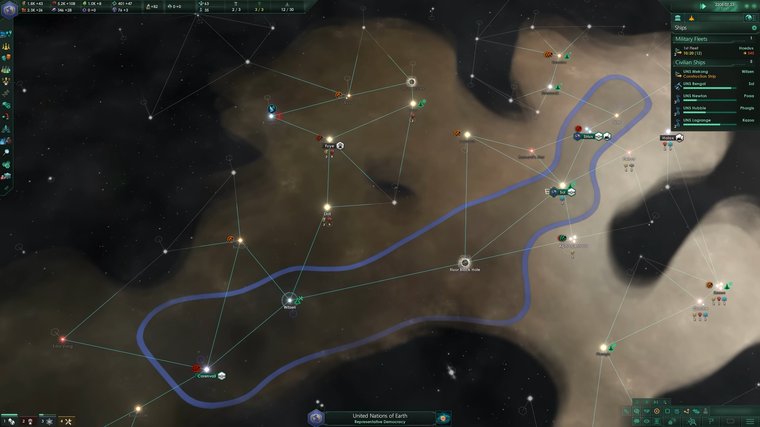
Stellaris takes the idea of evolution and blows it up to a galactic scale. Instead of crafting body parts, you’re building civilizations across star systems. Think of it as moving beyond the cell stage, past creature creation, and straight into ruling space empires.
The gameplay is pure strategy. You’ll design your own species, shape governments, and lead fleets to race for territory. It doesn’t really mirror Spore’s playful loop of tinkering with creatures, but it does share that same fascination with growth, change, and what comes next on the evolutionary ladder.
Do you ally with neighbors, or crush them? Every choice shifts your empire’s story. The scale is huge, with tech trees, politics, and wars all fighting for your attention. It’s one of the most ambitious strategy games in space.
Focus on early-game exploration and expansion; uncovering anomalies and establishing colonies sets a strong foundation for galactic dominance.
What makes Stellaris shine is how alive it feels. Each run tells a new story, with alien species reacting in ways you didn’t expect.
You can track empires like tagging them with ray IDs, just to see how they rise and fall. Sometimes you’re a peaceful explorer, other times a ruthless conqueror. Either way, no two games are the same.
Final Verdict: Stellaris promises an endless replay value. If you ever dreamed of taking Spore’s space stage and making it deeper, bigger, and bolder, this is the game to play.
GAMES LIKE STELLARIS
5. No Man’s Sky [Explore and Build Freely]
| Our Score | 9.4
☆
★
☆
★
☆
★
☆
★
☆
★
☆
★
☆
★
☆
★
☆
★
☆
★
|
| Platforms | PC, PlayStation 4/5, Xbox One/Series X|S, Nintendo Switch |
| Year of Release | 2016 |
| Creator/s | Hello Games / Hello Games |
| Average Playtime | Hundreds of hours reported by players (sandbox nature) |
| Unique Features | Procedural universe, exploration, base-building, continuous free post-launch updates |
| Metacritic Score | 71/100 |
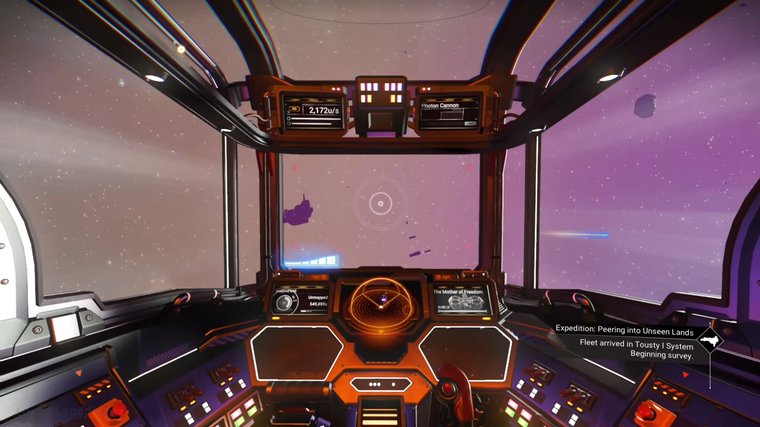
No Man’s Sky is a game about exploration and discovery. You start on a strange planet, repair your ship, and take off into space. From there, the rest is endless. Millions of planets wait, each with its own wildlife, weather, and secrets. While No Man’s Sky is only loosely related to Spore and barely resembles it in moment-to-moment gameplay, it scratches a similar itch for cosmic wonder and creation-by-discovery.
The strongest features are freedom and scale. You can mine, trade, fight, or just wander. The combat mode shifts into third-person, adding the thrill of the exciting TPS games. Customization plays a role too. You can upgrade ships and even improve your suit.
Upgrade your scanner early to find rare resources and exotic fauna. This will make crafting and exploration way smoother.
The connection comes in moments. Landing on a peaceful planet after hours of cruising through space, naming a discovery no one else has seen, watching the stars rise over alien terrain. It’s a mix of science fiction and quiet reflection.
Final Verdict: No Man’s Sky keeps blowing my mind. This review can’t cover everything, but the freedom is incredible, and the stunning visuals deserve a top-notch gaming monitor. Few games make exploring planets feel this alive.
GAMES LIKE NO MAN’S SKY
6. Elysian Eclipse [Create Amazing Creatures]
| Our Score | 9.2
☆
★
☆
★
☆
★
☆
★
☆
★
☆
★
☆
★
☆
★
☆
★
☆
★
|
| Platforms | Web Browser |
| Year of Release | In development (Web Demo) |
| Creator/s | Seven Ducks Studios |
| Average Playtime | Variable (sandbox-style) |
| Unique Features | Creative creature editor, simple mechanics, OG Spore vibes |
| Metacritic Score | N/A |
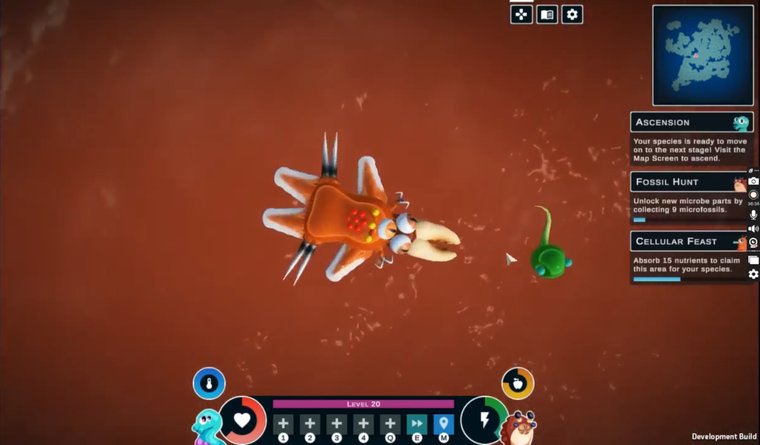
Elysian Eclipse is still in development, but it already feels like a personal playground for creativity. Here, you design species, drop them into living ecosystems, and watch how they adapt. Every decision you make shapes a story.
What makes it stand out is how much freedom you get. Want to tag a ray ID on your custom creation and see how it evolves? Done. Want to make a goofy alien that somehow survives the tribal stage? Also possible.
Teams of players are already sharing designs online, and the sheer variety shows how unpredictable this game can be. The devs even tease a future space stage where entire worlds collide, which is wild to imagine.
Use the UI scaling feature to view more items or creation cards at once, especially if you have a large monitor. This allows for better management of your creatures, buildings, and vehicles.
The art is colorful and playful, tidy but messy enough to stay fun. Sometimes your best ideas crash and burn. Sometimes they flourish in ways you never planned. That unpredictability is the hook.
Players compare it to Spore, but with fewer limits. It’s one of the best multiplayer games, letting you doodle life into existence and watch it surprise you.
Final Verdict: Elysian Eclipse offers all this in an ambitious, slightly messy package. It’s not finished, but it already captures the fun of building your own universe. If you loved Spore’s freedom, keep your eye on this one.
Steam Wallet Gift Cards
7. The Sapling [Grow Life in a Sandbox]
| Our Score | 9
☆
★
☆
★
☆
★
☆
★
☆
★
☆
★
☆
★
☆
★
☆
★
☆
★
|
| Platforms | Windows (Steam) |
| Year of Release | 2019 |
| Creator/s | Wessel Stoop |
| Average Playtime | Varies widely (sandbox) |
| Unique Features | Ecosystem crafting, creature and plant design, procedural evolution |
| Metacritic Score | N/A |
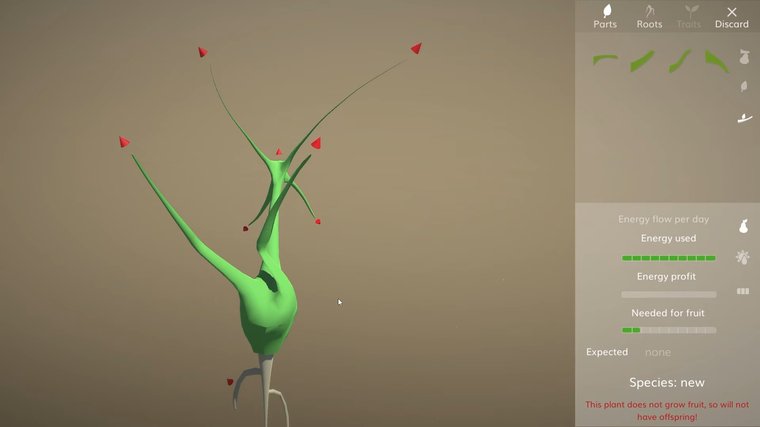
The Sapling is all about creature creation from the ground up. Forget flashy combat or big drama: this is a chill sandbox. Here you design plants, hack body parts, and watch ecosystems take shape.
You don’t just place objects and walk away; every tweak changes the balance. Over time, when you see forests spread and animals appear, you realize the whole world is alive because of your decisions.
Focus on pollination early – crossbreeding species with complementary traits can rapidly diversify your ecosystem.
The look is clean and colorful, almost like a scientific toy that you can’t put down. Seeing your creatures mess around in the sandbox is pure cell-stage curiosity in action. You can even tag and track species like using a ray ID.
Final Verdict: The Sapling is a slow burn, but it’s perfect if you want calm creativity. It’s not so much about action, but more about watching life unfold in ways you didn’t plan.
PlayStation Network Gift Cards
8. Ecosystem [Watch Sea Life Grow]
| Our Score | 8.8
☆
★
☆
★
☆
★
☆
★
☆
★
☆
★
☆
★
☆
★
☆
★
☆
★
|
| Platforms | PC |
| Year of Release | 2021 |
| Creator/s | Tom Johnson / Slug Disco Studios |
| Average Playtime | Not listed; likely sandbox-variable |
| Unique Features | AI-driven, natural-selection ecosystem simulation – no hand-designed creatures |
| Metacritic Score | Not available (indie/N/A) |
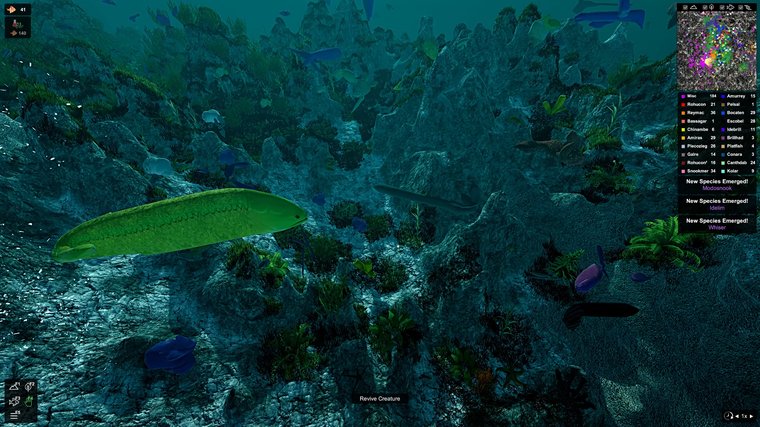
Ecosystem is a game about letting life forms grow without limits. You don’t control a single hero. Instead, you design creatures, drop them into the water, and watch what happens. The fun is seeing strange species develop on their own.
The gameplay is part science, part sandbox. A standout among epic indie games thanks to its original design.
Some creatures float peacefully, others fight for food, and whole food chains appear. From that point on, you’re a spectator as the ocean becomes its own world. You’re guiding real evolution without ever forcing it.
Balance your food chain; predators near herbivores create a dynamic system that can sustain itself longer.
The look is calm but fascinating. To me, watching fish dart around or evolve odd shapes was hypnotic. At one moment, a friend said it’s like discovering a new planet under the sea.
The connection you feel with your creations sneaks up on you. You check in, see who survived, and who adapted best. It’s relaxing, but it keeps you curious.
Final Verdict: Ecosystem is not about fast action. It’s about watching life develop in surprising and different ways. If you enjoy experiments that feel alive, this game is worth your time. That’s my review: calm, clever, and always changing.
Steam Wallet Gift Cards
9. Niche [Survive and Evolve Through Genetics]
| Our Score | 8.6
☆
★
☆
★
☆
★
☆
★
☆
★
☆
★
☆
★
☆
★
☆
★
☆
★
|
| Platforms | PC, Nintendo Switch, Xbox One, PlayStation 4 |
| Year of Release | 2016 |
| Creator/s | Stray Fawn Studio / Stray Fawn Publishing, WhisperGames |
| Average Playtime | Not specified (indie strategy/roguelike length varies) |
| Unique Features | Genetics-based turn-based survival – breeding, traits, mutations matter strategically |
| Metacritic Score | ~60 |
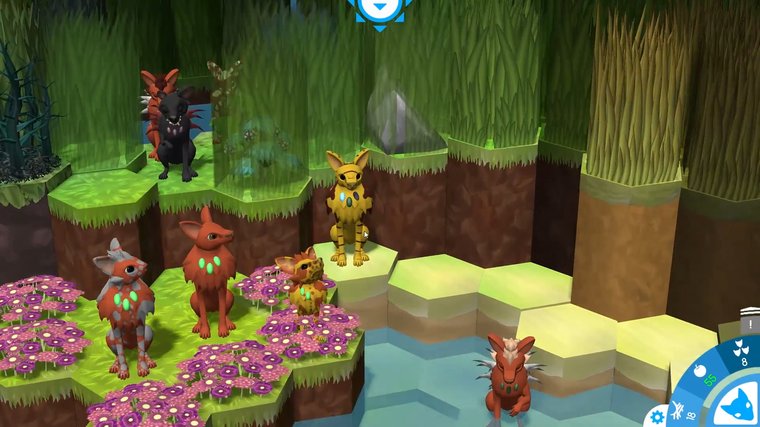
Niche is a survival game where genetics rule everything. Here, you create beings and manage traits to guide your tribe through harsh biomes. It’s basically natural selection dressed up as an awesome RPG game built in biology.
Gameplay is turn-based but full of tension. You place species on tiles, collect resources, and face predators. Every element matters: fur color, fertility, immunity. Ignore one trait, and your family line won’t make it to the civilization stage.
Breed for adaptability; traits that survive different climates help your species thrive across generations.
Eventually, the game shifts from strategy to a biology puzzle. Visually, it’s simple but charming. Niche’s world is bright, and each creature is unique. When you start naming them, you feel every loss. It’s like playing survival sims mixed with real genetics.
Final Verdict: Niche cleverly mixes fun and science. It’s about strategy and quick thinking. By the time you notice, you’re rooting for your creatures like crazy. This review can be summed up in one point: smart and addictive.
10. Cell Lab [Evolve Cells in Your Pocket]
| Our Score | 8.4
☆
★
☆
★
☆
★
☆
★
☆
★
☆
★
☆
★
☆
★
☆
★
☆
★
|
| Platforms | Android (mobile) |
| Year of Release | 2014 |
| Creator/s | Petter Säterskog |
| Average Playtime | Not specified; sandbox with puzzles and experimental mode |
| Unique Features | Cellular level evolution, genome editing, sandbox “lab puzzles” at micro-scale |
| Metacritic Score | Not available |
Cell Lab takes you to the tiniest scale. The game starts with simple life forms and asks you to build them up.
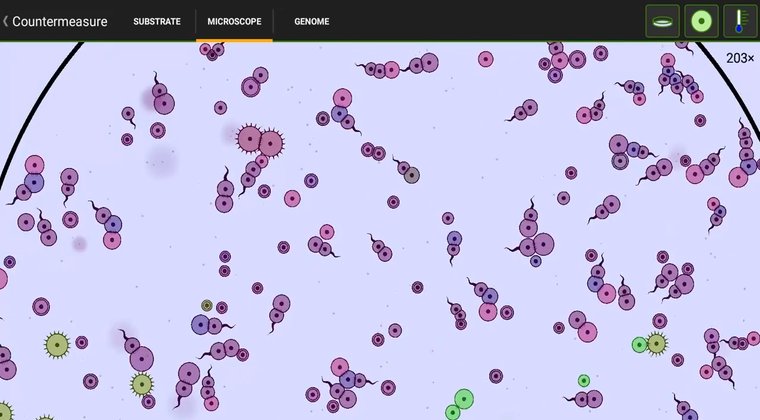
Instead of big civilizations, you’re dealing with cells, molecules, and survival rules. It’s the cell stage made into a serious challenge.
The gameplay is all about experimenting. You connect organelles, set behaviors, and watch the results. Your designs compete in scenarios that test how well they adapt, and you will want to start over until you find the perfect build.
Test different organelle combos; some cells perform better under stress or in new environments.
The style is stripped down and scientific. No flashy graphics, just clean lines and systems that make sense. That’s the point.
The unpredictability of creating something that can collapse at any time is what makes this game exciting. It makes me think of the kind of unforgettable sandbox games with deep mechanics.
Final Verdict: Cell Lab may look plain, but it’s endlessly satisfying. Experiment with mutations and watch your cells react. You’ll lose track of time figuring out what survives – and what explodes.
11. Osmos [Drift, Absorb, and Grow in Space]
| Our Score | 8.2
☆
★
☆
★
☆
★
☆
★
☆
★
☆
★
☆
★
☆
★
☆
★
☆
★
|
| Platforms | Windows, macOS, Linux, iOS, Android |
| Year of Release | 2009 |
| Creator/s | Hemisphere Games |
| Average Playtime | Typically several hours; peaceful drift physics gameplay |
| Unique Features | Absorb-and-grow mechanics, graceful visuals, peaceful yet tense gameplay experience |
| Metacritic Score | ~79 on PC |
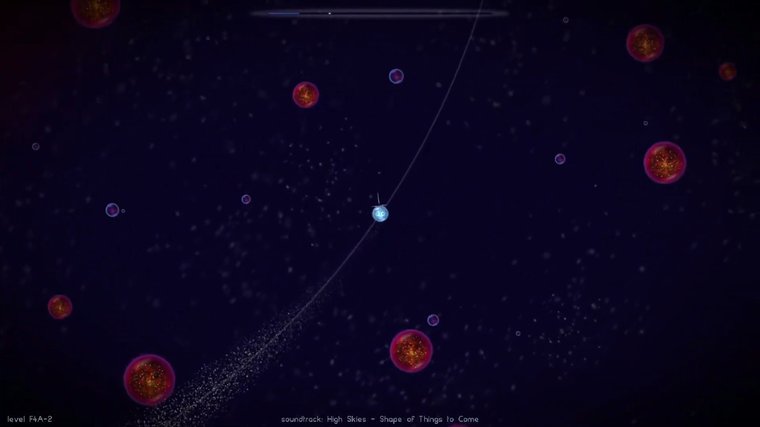
Osmos is a minimalist game about growth. You control a single mote, drifting in space-like levels. The goal is simple: absorb smaller motes, avoid bigger ones, and keep moving.
The gameplay is kind of meditative. You push yourself by ejecting mass, but that shrinks you. It’s a balance between patience and action.
Absorbing and growing cells here feels like one of the smartest puzzle games. The whole thing is simple but sharp. Strip away the glow, and you could swear it’s a lost SNES game.
Use gravity wells to sling around obstacles – saving mass and reaching distant motes faster.
The design is clean and glowing. Each level has its own rhythm. There’s little customization, but that’s not the point. The connection comes from how focused you become.
Final Verdict: Osmos is small but deep. It shows that even simple aspects can create a lasting experience. My review: calm, elegant, and worth trying if you like quiet games.
Steam Wallet Gift Cards
12. Impossible Creatures [RTS With Wild Animal Hybrids]
| Our Score | 8.0
☆
★
☆
★
☆
★
☆
★
☆
★
☆
★
☆
★
☆
★
☆
★
☆
★
|
| Platforms | Windows (remastered on Steam) |
| Year of Release | 2003, remastered 2015 |
| Creator/s | Relic Entertainment / Microsoft Studios |
| Average Playtime | ~10–20 hours (standard RTS campaign length) |
| Unique Features | Mix-and-match animal DNA to create hybrid units in RTS combat |
| Metacritic Score | 73 |
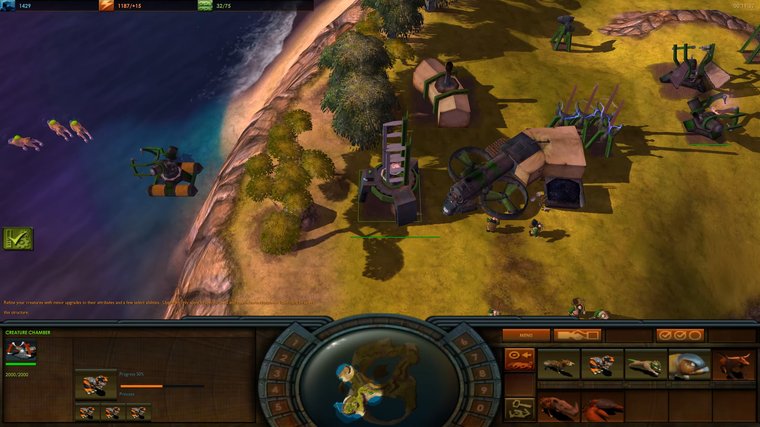
Impossible Creatures is about mixing DNA. You take two species and fuse them into one. The result is a unit for your army, ready to fight. Imagine a tiger with eagle wings or a shark that walks on land.
Gameplay follows classic strategy rules; the difference is the wild customization. Unit-building and tactical battles make it shine among classic real-time strategy games. That’s the hook.
The visuals are dated now, but the charm remains when you watch your creations battle. The human side of the story is light, but it gives context.
Combine animal traits wisely; hybrids with unique abilities can dominate both offense and defense in battles.
The rest is pure fun and experimentation. My favorite part is when one of your strange hybrids turns out to be the perfect fighter.
Final Verdict: Impossible Creatures is quirky and creative. This is what makes it unique as a strategy game with a twist. My review: a forgotten gem full of crazy aspects.
FAQs
What is the best game like Spore?
There’s no single winner, but Thrive comes closest to Spore’s original vision, while Stellaris and No Man’s Sky give you the galaxy-spanning thrill many players wanted.
What style of game is Spore?
Spore mixes many styles: life simulation, strategy, god game, and sandbox creation. It shifts genres as you progress through the stages of evolution.
Why is it called Spore?
The name comes from biology. A spore is a small reproductive unit that can grow into a new organism, echoing the game’s theme of birth and growth.
Why was Spore discontinued?
EA and Maxis moved on after mixed reviews and lower-than-expected sales. Servers for online sharing were shut down, though the game is still available offline.
Is there a new Spore?
No. There’s no official sequel. Fans look to indie projects like Thrive and The Sapling as spiritual successors.
Is Spore for kids?
Yes, mostly. It has a cartoony art style and light tone. Some stages involve survival and conflict, but overall, it’s suitable for younger players.