

LEGO Party! Review – A Well-Built Party Game That Rarely Overreaches



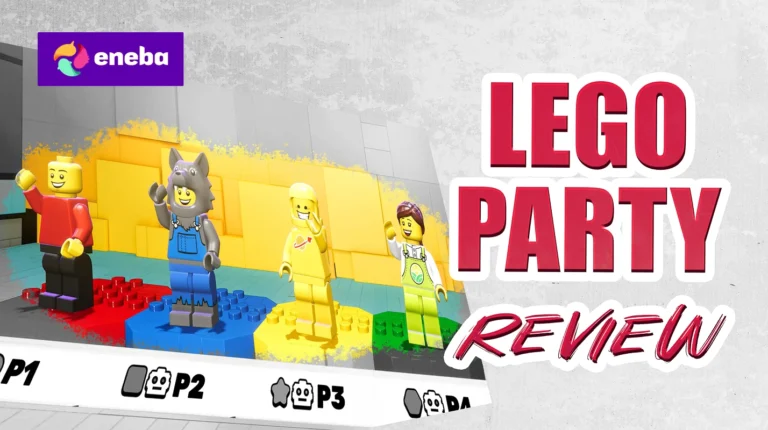
Every LEGO Party! review inevitably circles back to the same question – how close does it get to Mario Party?
That comparison is baked into the concept, and LEGO Party! doesn’t exactly try to dodge it. Instead, it steps confidently into the board-game-plus-minigames arena and plants its flag not only on Nintendo Switch, but also on PC, PlayStation, and Xbox. Notably, platforms that have long lacked a direct equivalent to Nintendo’s party juggernaut.
Developed by SMG Studio (the team behind Moving Out and Death Squared), and published by Fictions (the upcoming and hotly-anticipated Beast of Reincarnation), LEGO Party! arrives with solid multiplayer credentials and a clear understanding of how to structure chaos so that it feels intentional rather than random.
The good news is that, after spending significant time with it for this LEGO Party! review, what stands out most is how approachable the experience is, even when it occasionally feels reluctant to push beyond the boundaries of the formula it’s borrowing from.
For players browsing the best multiplayer games outside Nintendo hardware, this game might suit you. However, whether it becomes a must-own staple depends entirely on if you’re after robust dependability more than playful chaos; LEGO Party! excels at the latter but is on shaky ground with the former. Keep reading my LEGO Party! game review to find out why.
Jump to:
TL;DR – Lego Party! Review Overview
| Genre | Party board game |
| Core loop | Roll, move, earn studs, win minigames, buy gold bricks |
| Boards | Four at launch (Pirate, Ninjago, Space, Theme Park) |
| Minigames | 60 total |
| Multiplayer | Local + online crossplay with lobby codes |
| Customization | Unnlockable minifigs and cosmetics (no microtransactions) |
| Biggest strength | Accessibility and cross-platform flexibility |
| Biggest weakness | Few truly unforgettable moments |
Dice, Bricks, and Quirky Banter
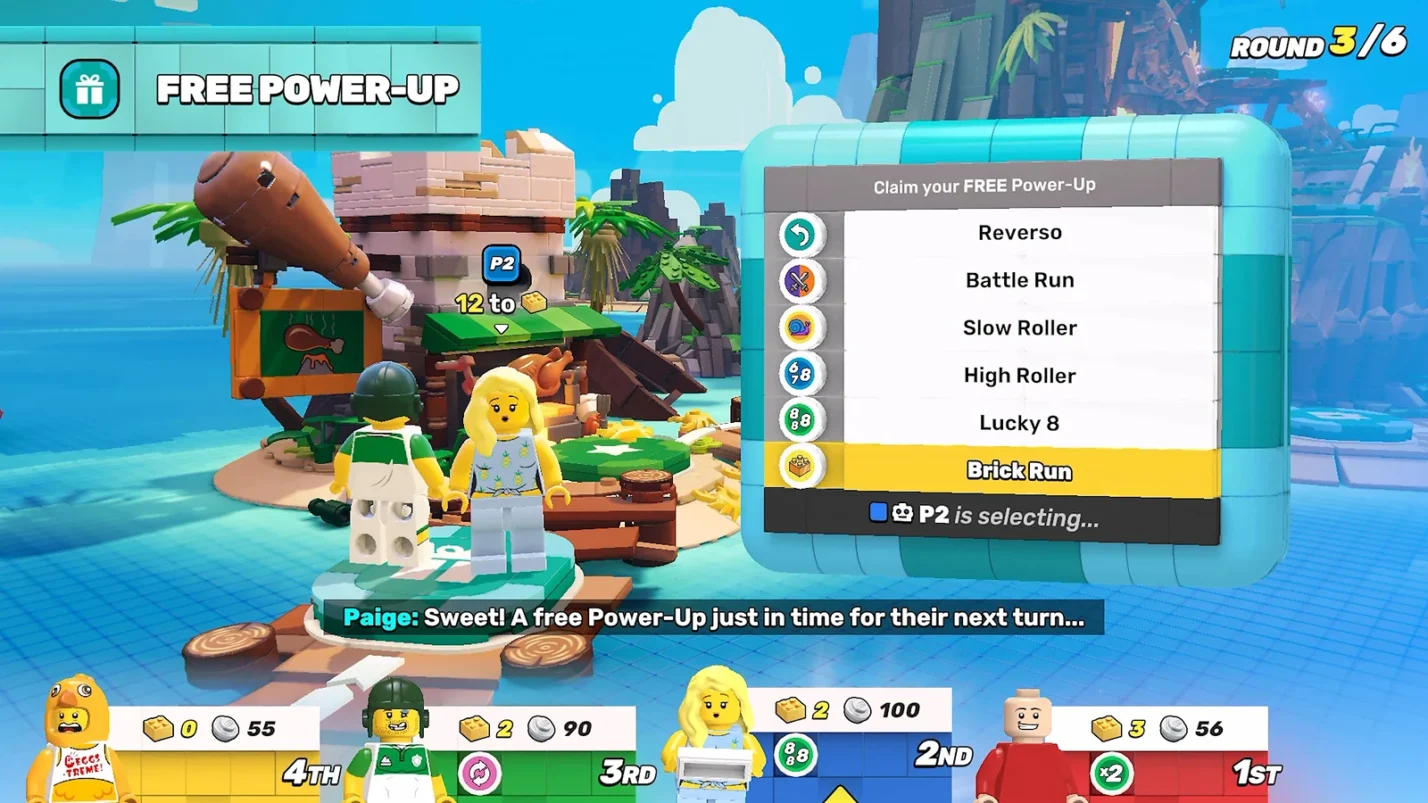
I will start my LEGO Party! review by saying that, at its core, the game follows a structure that will feel instantly recognizable, which isn’t necessarily a bad thing. Games take the form of either six or eight rounds, with plenty of choice for minigames.
Between each round, each player moves across a LEGO board and activates whatever space they land on, whether that’s a reward, a penalty, an item opportunity, or a special event that shakes up positioning for the next few turns.
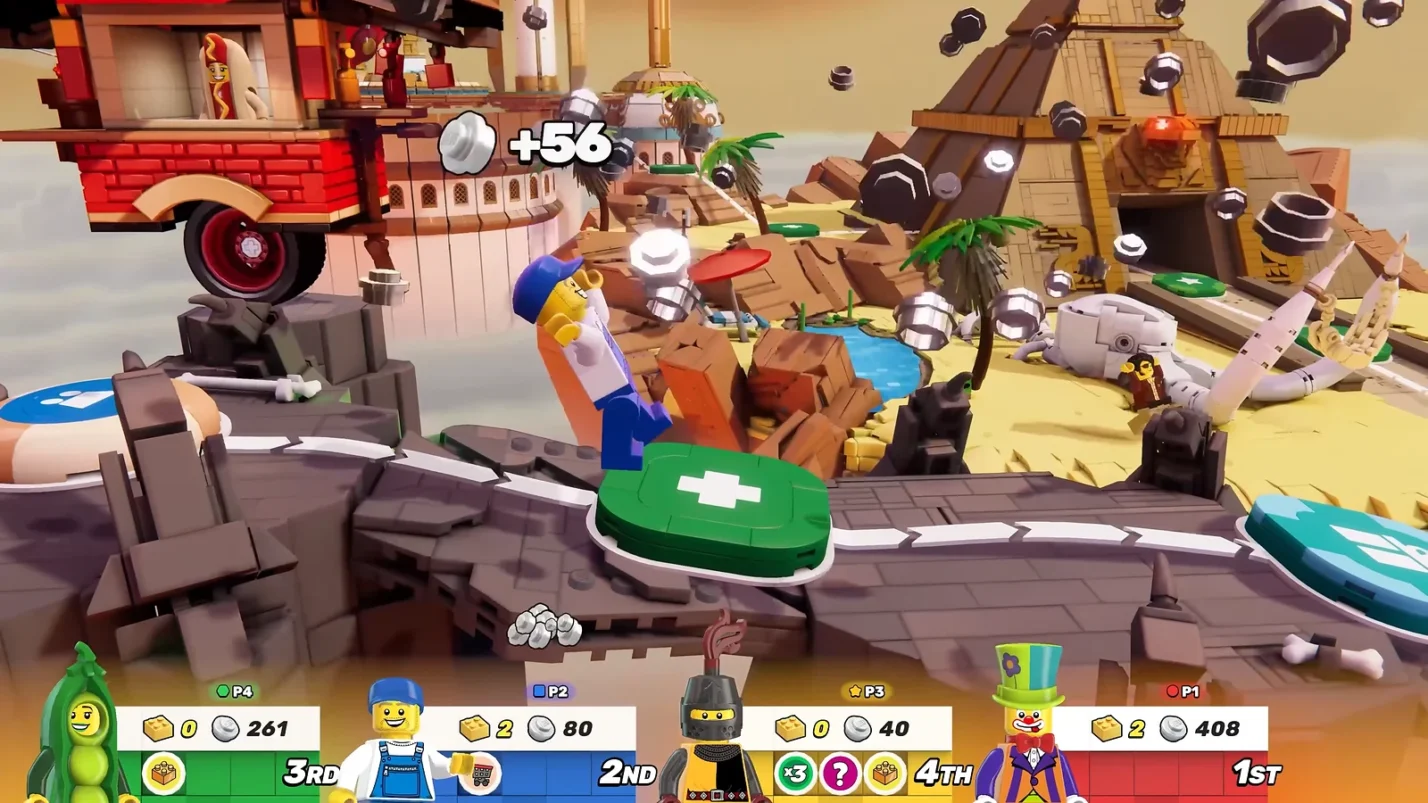
Studs serve as the central currency, tying everything together in a loop that’s easy to understand – you collect these through board interactions and minigames, then spend them on gold bricks, which are the main thing you should try to get. Whoever has the most gold bricks at the end of the match wins, simple as that.
That emphasis on performance gives the experience a welcome sense of fun, though, during my in-depth LEGO Party! game review, I found that matches often felt more controlled than chaotic, with fewer of the explosive reversals that define the most dramatic party sessions.
The game does try to beef up the fun with two commentators, Ted Talker and Paige Turner, but their jokes soon start to feel forced and quirky for the sake of it.
Four Boards, Subtle Differences
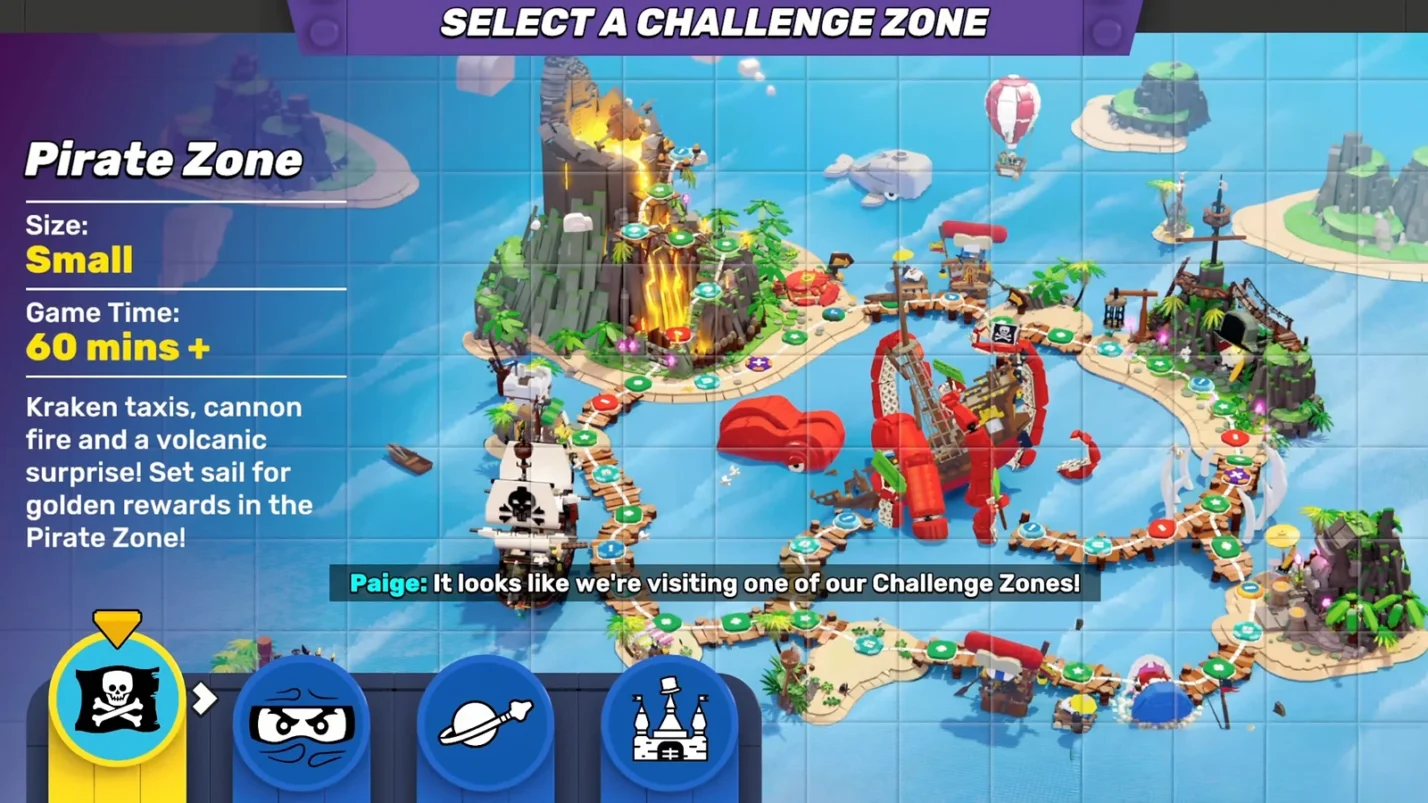
The four boards available by default (Pirate, Ninjago, Space, and Theme Park) introduce their own pacing quirks and environmental mechanics, even if they don’t radically reinvent how you approach the game. Pirate funnels players into conflict-heavy zones where steals are common and risk feels tangible, while Ninjago encourages early investment in building shortcuts that can pay off later.
Space, by contrast, tightens routes and introduces hazards that reward careful movement planning, and Theme Park plays with event chains that can shift momentum over several turns rather than all at once.
Build mechanics allow players to alter parts of the board mid-match, adding an extra layer of interaction that occasionally creates meaningful decisions about route control and resource timing. Still, across multiple sessions for my LEGO Party! game review, the boards often settled into familiar rhythms once everyone understood respective layouts, which makes them reliable but not particularly surprising.
For players researching the best multiplayer games or comparing options among the best co-op games, LEGO Party! holds its own, even if it rarely redefines the boardgame format.
Minigames, Carrots, and Customization
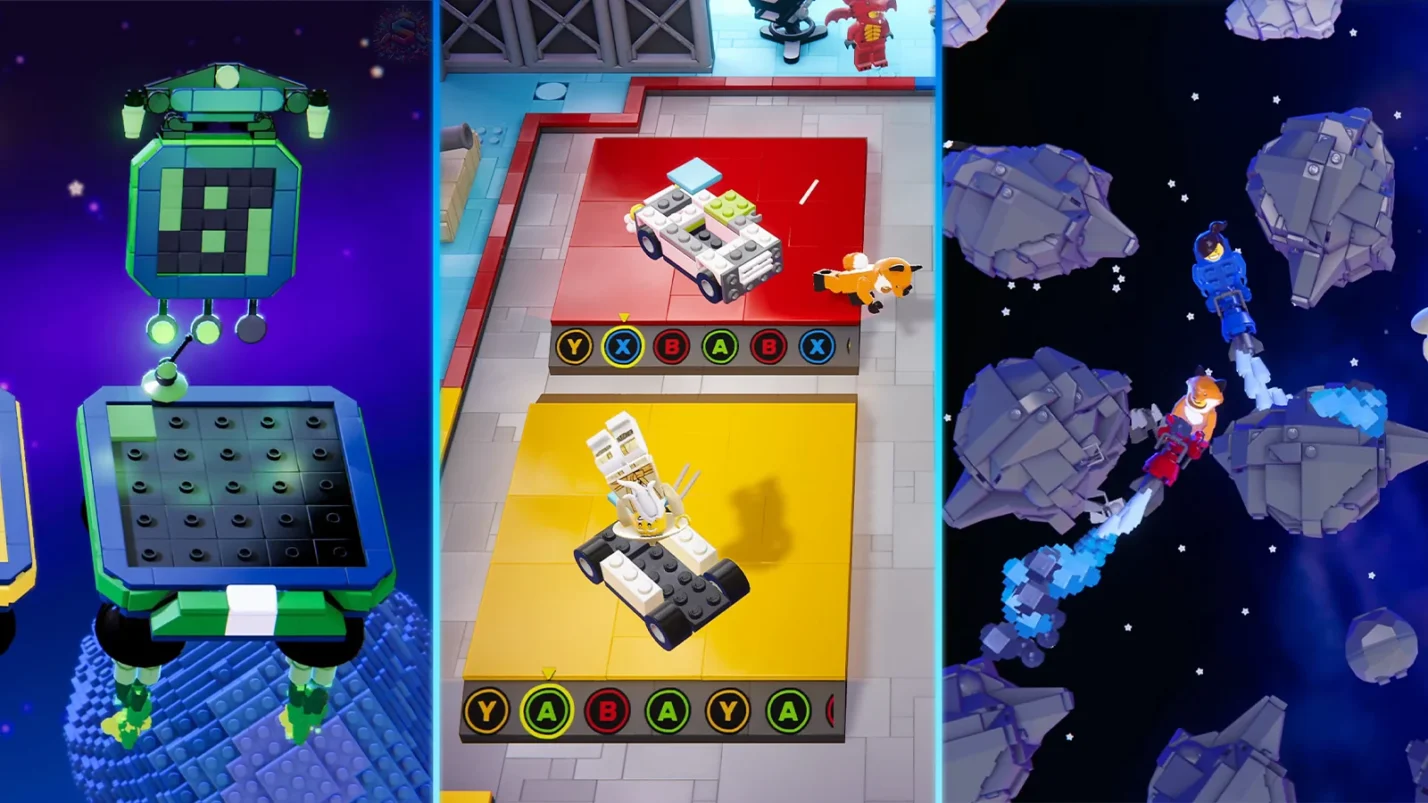
Any thorough LEGO Party! review has to spend time on the minigames, because 60 is not a small number, and this variety is one of the game’s biggest selling points. The selection ranges from racing and rhythm challenges to arena skirmishes and reflex-driven timing contests, most of which are responsive and easy to grasp within seconds.
Minigames vary wildly from skill-based ones to random luck (for an example of the latter, check out the game where you have to run around painting the ground). However, this does mean that there’s an overall randomness that helps keep players on their toes, whether battling friends in co-op, online, or AI opponents (you can have up to four of any of these). What makes this a top Switch party game also works in its favor on other platforms.
Performance directly influences stud payouts, which in turn affects your ability to purchase gold bricks. The rotation between four-player free-for-alls and 2v2 formats keeps things fresh, and crossplay works smoothly whether you’re hosting locally or using online lobby codes.
If you’re specifically searching for alternatives to the best couch co-op games on Switch, or browsing lists of the best LEGO games for family sessions, LEGO Party! fits comfortably into that conversation thanks to its accessibility and lack of microtransactions. Everything can be unlocked in this game through carrots.
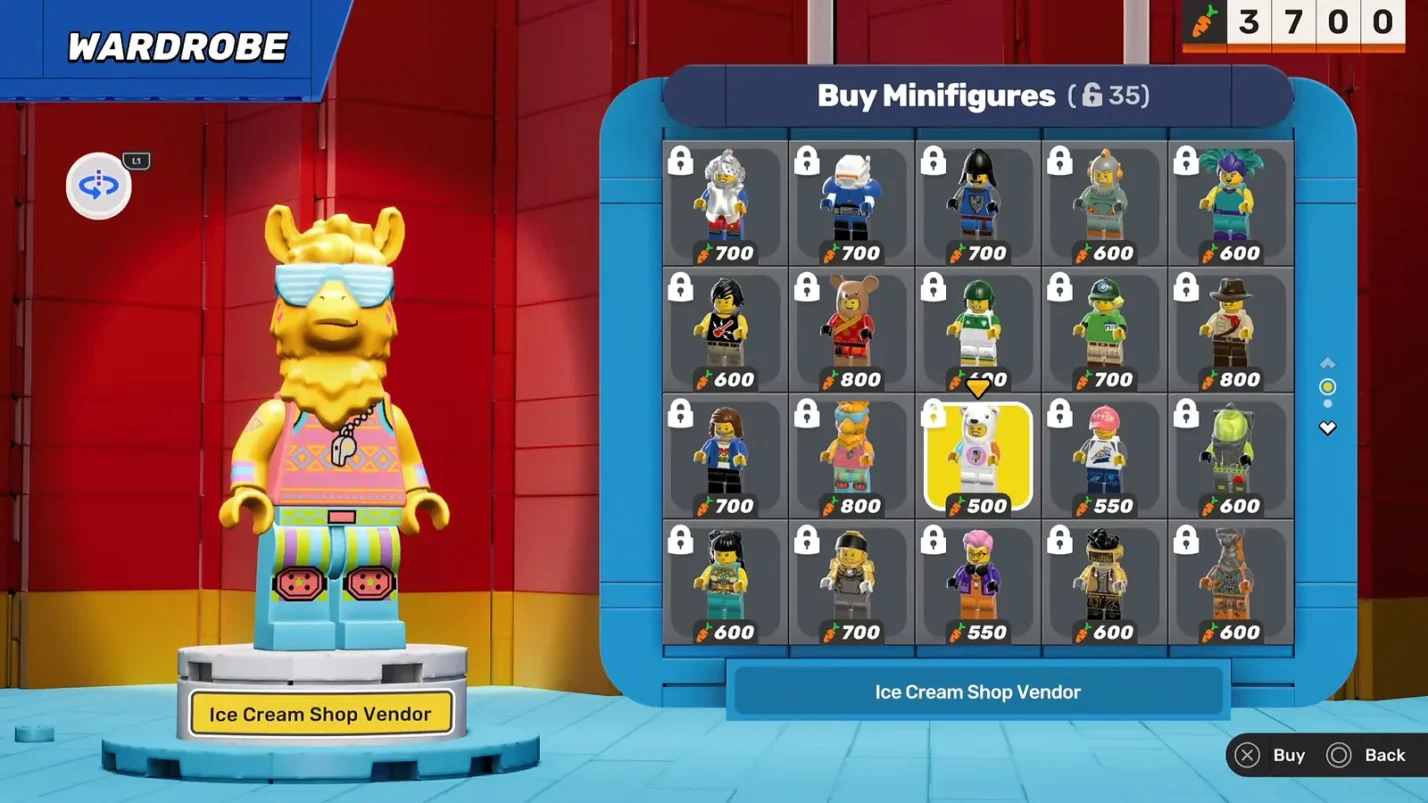
Yes, carrots. You earn these by winning minigames, collecting studs, and leveling up. Carrots are then used to buy new body parts and complete minifigs. The good news is that the game already has a nice range of parts unlocked by default, so you can easily craft your own goofy LEGO weirdo to take into matches.
It’s worth noting that while the minigames are mechanically distinct, some share similar visual language and pacing, which can make individual standouts harder to recall after longer play sessions. This is a small issue, but I couldn’t leave it out of my LEGO Party! review.
LEGO Party! Gives Players Exactly What They Want
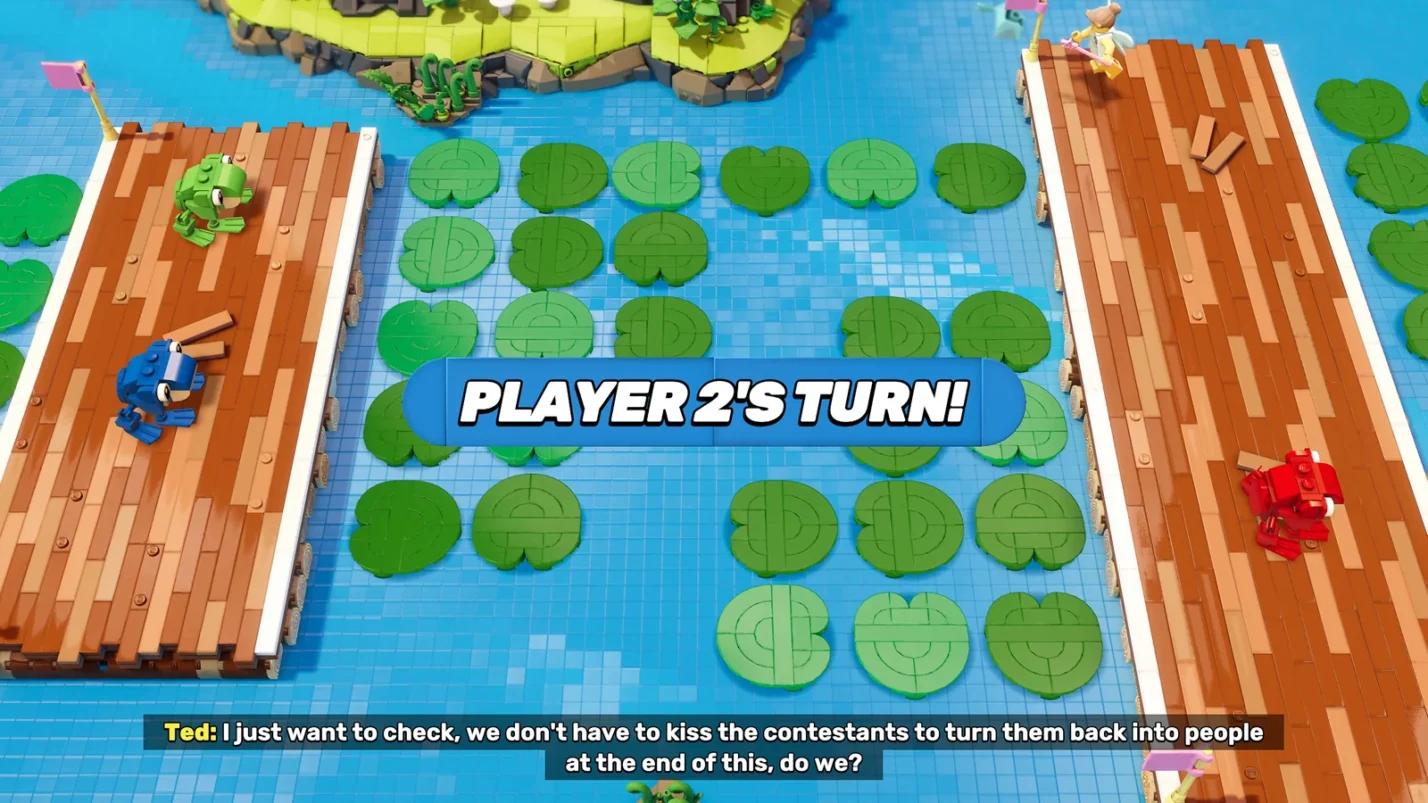
Visually, LEGO Party! delivers exactly what fans would hope for, with brick-built environments that look tactile and colorful without becoming visually overwhelming. Animations carry that slightly stiff, toy-like quality that reinforces the LEGO identity, and each board’s theme is communicated clearly through its props and background details. Build sections on boards include a pleasing jerky timelapse effect, which is also a nice touch.
The soundtrack stays energetic but rarely distracts, and the host commentary adds personality, even if repetition soon becomes unavoidable and, unfortunately, grating. The voiceover can be muted, alongside a ton of options to tweak the graphics and online connectivity. I was a little disappointed to see a lack of accessibility options, though, such as a colorblind mode.
From a performance standpoint, the PC version runs smoothly with stable frame pacing, and console versions hold up well during four-player chaos, which is reassuring for anyone planning regular game nights. In short, it’s polished and approachable, even if it plays things safe stylistically.
My Overall Verdict on LEGO Party! – Sturdy and Colorful But Little Else
LEGO Party! succeeds at being a dependable, cross-platform party boardgame experience that finally gives non-Nintendo players a real alternative to Mario Party. It’s thoughtfully structured, technically stable, and easy to recommend to families or casual groups who want something colorful, competitive. It really works as one of the best LEGO games you can play with others.
But, if you’re reading my LEGO Party! review hoping for news of bold innovation or a dramatic evolution of the genre, I’ll have to disappoint you – you’ll likely find the game a little restrained. It refines the formula of Mario Party rather than reinventing it, which makes it consistent but rarely surprising.
Like those LEGO kits that allow you to build impressive models, but don’t allow for those pieces to be used for anything else, LEGO Party! has one job, and it does it exactly as well as it needs to.
| Pros | Cons |
|---|---|
| ✅ Smooth crossplay and local multiplayer ✅ 60 skill-focused minigames ✅ No microtransactions ✅ Clear, beginner-friendly systems | ❌ Boards feel less distinct over time ❌ Few truly standout minigames ❌ Limited dramatic momentum swings |
Great for: Families, casual groups, and players looking for a cross-platform entry among the best multiplayer games.
Less ideal for: Highly competitive players who crave sharper strategic depth or wilder unpredictability.