
20 Rare Pokémon Cards in 2025 – Legendary Finds in 2025



Rare Pokémon cards are the ones that fuel real obsession; hard to find, harder to grade, and nearly impossible to give up. But for collectors, the real deal isn’t always about the ones with jaw-dropping prices (though some of them are worth a small fortune). I’m talking about the ones that are hard to find, hard to grade, and even harder to let go once you have it in your hands.
Rarity means more than just money. Some of the most rare cards were never even sold in stores. They might be handed out at a one-time only event, printed in limited batches, or created with errors that somehow slipped through the cracks. These rare cards carry stories – ones that make them valuable not just to the market, but to the culture and community around them.
In this article, I’ll walk you through the top 20 rare Pokémon cards. You’ll grasp a better idea of what makes a card truly rare and what kinds of mistakes to avoid when judging the rarity of it. No matter where you are in the Pokémon cards collecting level, I hope this guide helps you understand the hidden layers behind rarity, or even inspire you to dig through your own collection to see if you already have something extraordinary in your hands. Let’s dive in!
Jump to:
Rare Pokémon Cards You Can Get Your Hands On
Some of the rarest Pokémon cards include several iconic collectibles like the Pikachu Illustrator (1998), which once were sold for over $5 million, and the Blastoise WOTC Presentation Galaxy Holo (1998). Cards like the No. 1 Trainer Trophy and Pre-Release Raichu are also extremely hard to find, especially in mint condition.
If you’re wondering why these rare cards are so valuable and how to spot them, you’ve come to the right place. I’ve rounded up the top rare Pokémon cards, a must-read list for curious fans, enthusiasts, and collectors.
1. Pikachu Illustrator (1998)
Publication Date: 1998
Grading: PSA 10
Market Price: $5.275 million (record sale, July 2021)
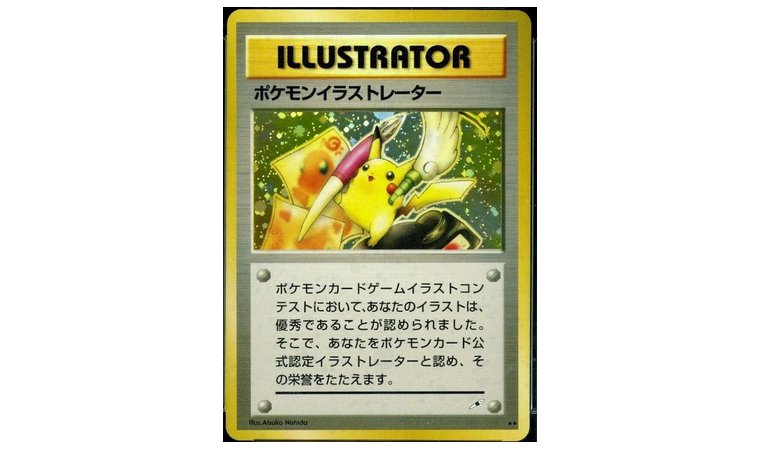
The Pikachu Illustrator is both rare and legendary. Originally awarded to the winners of the 1997-1998 CoroCoro Comic Illustration Contest in Japan, only 39 copies were ever distributed. These cards were never made available for public purchase, instantly setting them apart as one of the rarest cards in the Pokémon universe.
The Illustrator Pikachu was designed by Atsuko Nishida, the original illustrator of Pikachu. The card features the iconic character holding a paintbrush, surrounded by vibrant details; kind of like an early version of the full art cards we see today. Instead of the usual “Trainer” label, this card uniquely places the word “ILLUSTRATOR” at the top, and includes a distinctive pen symbol in the lower right corner, something that doesn’t exist on any other Pokémon card.
Beyond aesthetics, its historical value and cultural significance have made it a trophy piece for serious collectors. It’s a tangible piece of Pokémon history, connecting back to the franchise’s earliest days and its creative community. Its rarity has also made it a symbol of prestige, often discussed in high-end trading circles and spotlighted at major collector events.
Its most famous sale happened in July 2021, when Logan Paul purchased a PSA 10-graded copy for $5.275 million, setting a Guinness World Record for the most expensive Pokémon trading card sold at a private sale. Today, it stands as a card that defines the top of the market of Pokémon card collecting.
2. Blastoise WOTC Presentation Galaxy Holo (1998)
Publication Date: 1998
Grading: PSA 10
Market Price: $360,000 (most recent sale, 2021)
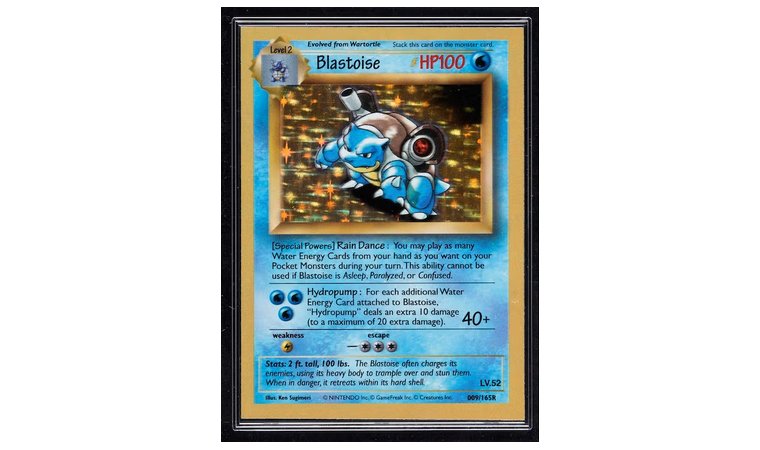
The Blastoise WOTC Presentation Galaxy Holo card is a true gem in Pokémon collecting. Produced in 1998 by Wizards of the Coast (WOTC), it was never meant for public release. Instead, this card was a presentation sample to demonstrate how Pokémon cards could be printed in English.
Only a few of these rare cards were ever made, presumably only fewer than 10, with just two known copies printed with the English card back. The design features Blastoise in a powerful and dynamic pose, printed on a Galaxy Holo foil that feels like a preview of what full art cards would later become. The artwork, created by Ken Sugimori, adds a historical value, as he was a key figure in Pokémon’s visual identity.
Unlike promo cards that reached tournaments or stores, this Blastoise was used behind the scenes, making it even more elusive. It played a key role in Pokémon’s Western expansion, marking a turning point where the franchise prepared to explode in the U.S. market.
Thanks to its rarity and backstory, collectors view it as a prototype holy grail. Its uniqueness as a pitch document turned collectible has made it highly sought after by serious buyers. In 2021, a PSA 10 copy was sold for $360,000, being the talk of the town across the trading card community. For anyone interested in Pokémon’s entry into the global mainstream, this card represents a critical piece of the puzzle.
3. No. 1 Trainer Trophy Cards (1997–2001)

Publication Date: 1997–2001
Grading: PSA 10
Market Price: $90,000–$200,000
The No. 1 Trainer Trophy Cards are one of the most prestigious and exclusive rare cards ever created. Issued between 1997 and 2001, these cards were awarded only to the top-ranking players at official Pokémon TCG tournaments in Japan. Unlike most cards that fans could collect or trade, the No. 1 Trainer had to be earned through skill, adding both emotional and prestige weight. This rarity and prestige put it in a different league compared to more commonly known rare cards like Pikachu Ex.
The card’s design is simple yet iconic – nothing like today’s full art – which showcases a trophy emblem, with the iconic “No. 1 Trainer” text and rich holographic detailing. Some versions include personalized information (like the winner’s name), making them truly one-of-a-kind. Only a few were printed for each tournament, depending on the event, which makes them incredibly difficult to find.
Over the years, prices of these cards have steadily increased. Depending on the year, condition, and version, the PSA 10-graded No. 1 Trainer cards have sold for anywhere between $90,000 and $200,000, with rising demand as high-end collections gain traction.
As the competitive scene continues to grow in prestige, these early-era trophies are likely to become even more hunted. They’re like historic artifacts of Pokémon’s tournament culture and proof that a player’s name once reigned supreme.
4. Tamamushi University Magikarp (1998)
Publication Date: 1998
Grading: PSA 10
Market Price: $66,000 (most recent sale, 2021)
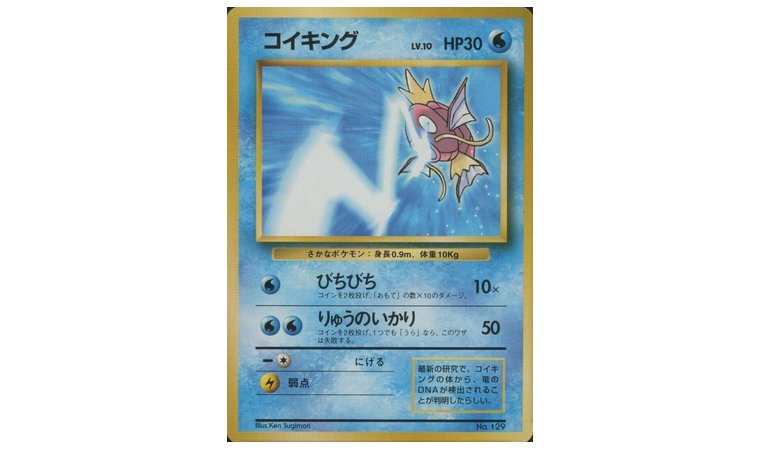
The Tamamushi University Magikarp is a perfect example of how even Pokémon’s most unlikely star can become a desired collector’s prize. Released in 1998 as a part of an exclusive educational promotion in Japan, this card was awarded to winners of a mail-in quiz competition organized by Shogakukan’s “Tamamushi University” campaign. Only one copy of this card was awarded to each winner, which makes it exceptionally rare.
To be considered, participants must pass a series of Pokémon knowledge tests printed in magazines. The winners were then selected to receive this special card, which features a playful illustration of Magikarp mid-jump, surrounded by a vibrant holographic foil effect from a modern full art card. The leaping pose gives the rare card a sense of energy that contrasts with Magikarp’s usual image as a weak, floundering fish.
The rarity of this card comes from the fact that only a handful of copies exist, with only a small number surviving in mint condition. Unlike promotional cards handed out at events or stores, this one required real effort and knowledge to obtain – which makes it an extremely valuable prize for Pokémon card collectors.
In 2021, the Tamamushi University Magikarp card was sold for $66,000, a huge price tag for a card featuring Magikarp. Its combination of rarity and story makes it a unique gem in high-end collections. It proves that even the underdog can rise to a legendary status, at least in a cardboard form.
5. Ishihara GX Promo (2017)

Publication Date: 2017
Grading: PSA 10
Market Price: $50,000 (most recent sale, 2020)
The Ishihara GX Promo served as a corporate Easter egg and a tribute to the legacy of Tsunekazu Ishihara, the president and face of The Pokémon Company. Created for the brand’s 20th anniversary in 2017, this rare card was never meant for public release. Instead, it was handed out at a private celebration event attended only by close staff and associates.
With only around 30 copies in existence, the card is a modern ultra-rarity. It features Ishihara himself in a full GX-style format – which is already close to the full art designs nowadays – complete with humorous stats like a whopping 350 HP and a fictional move called “Red Chanchanko GX”, referencing the traditional Japanese celebration clothing. A grinning Pikachu stands beside him, capturing the celebratory and lighthearted nature of the card.
This blend of humor and history makes the Ishihara GX Promo really appealing to collectors. It’s neither tied to gameplay nor tournaments, but to Pokémon’s internal culture and the people who helped develop it. That context gives the card sentimental and symbolic value, not just monetary.
In 2020, the Ishihara GX Promo sold for $50,000, holding its place among the most expensive modern Pokémon promos. But with such limited availability and deep connection to the franchise’s roots, it’s very likely that the prices will climb. For fans who value stories as much as scarcity, the Ishihara GX promo is the ultimate blend of both.
6. 1999 Super Secret Battle – Trainer Promo
Publication Date: 1999
Grading: PSA 10
Market Price: $90,000–$100,000 (depending on condition)
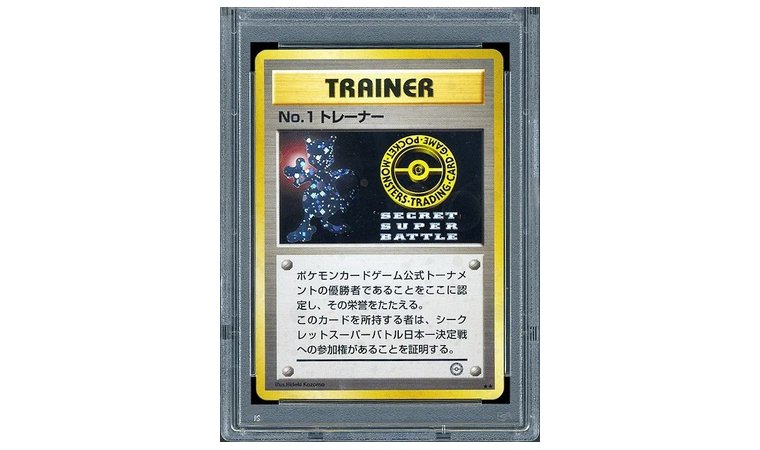
This card is the epitome of underground Pokémon lore; rare doesn’t even cover it. The Super Secret Battle No. 1 Trainer Promo was strictly for winners of the highly exclusive Pokémon tournament in Japan in 1999. It was held at private locations that weren’t advertised publicly, adding a layer of exclusivity and mystery.
Only seven copies are known to exist, handed out to the final champions for each qualifying bracket. That makes the card a direct representation of skill in an era before Pokémon esports blew up.
Design-wise, the card features the Pokémon Mewtwo in a powerful pose, covered by a striking holo foil with “Trainer” stamped across the top. Its layout and typography focus the attention on the competitive achievement, mirroring a trophy in physical form.
Since it was never made available for sale to the public, the rarity of this card led to some bidding wars, reportedly marked as high as $90,000 which could go higher through private deals. It has become a symbol of peak-1990s grassroots competition for Pokémon, the kind no one (except hardcore fans) heard about until years later.
Beyond rarity, it’s a time capsule of skill and scene. Modern Pokémon tournaments are global, but these were underground – and this rare card is the proof that they happened.
7. Snap Pokémon Cards (1999)
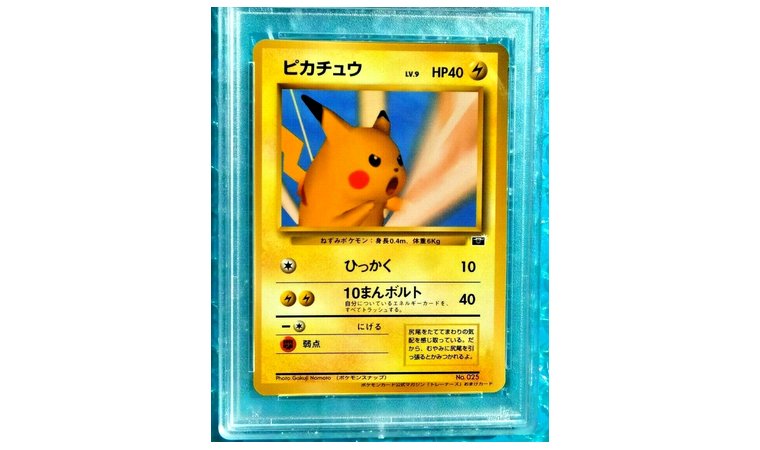
Publication Date: 1999
Grading: Varies (PSA 8–10)
Market Price: $100-$500+ (depending on rarity and condition)
The Snap Pokémon Cards are a gem that bridges video game culture, the Pokémon game experience, and the TGC world. Released in 1999 as a part of a contest for players of the Nintendo 64 game Pokémon Snap, these cards featured actual in-game photos submitted by players.
In Japan, Nintendo invited fans to submit their best Pokémon Snap screenshots for a chance to have their photo printed on an official trading card. Winning entries were turned into physical cards with very limited productions, usually only 20 to 50 copies each.
Each card featured dynamic in-game images of Pokémon, Jigglypuff, and Pikachu captured in poses rarely seen in regular Pokémon sets. Some even included overlay graphics from the game, making them instantly recognizable and incredibly nostalgic.
These cards were released as a part of a limited-time promotion which could only be obtained through specific events or competitions. Collectors love them not just for rarity, but also for their connection to the late-90s gaming era. These aren’t factory-staged poses – they’re raw, pixelated snapshots, frozen in cardboard.
Depending on the Pokémon, clarity of image, and card condition, Snap Cards can sell between $100 to over $500. For collectors and retro gamers who grew up with the original Pokémon game, Snap Cards are a blend of hobby and nostalgia culture that’s hard to match.
8. Test Print Blastoise Gold Border (1998) (aka Error Prototype)
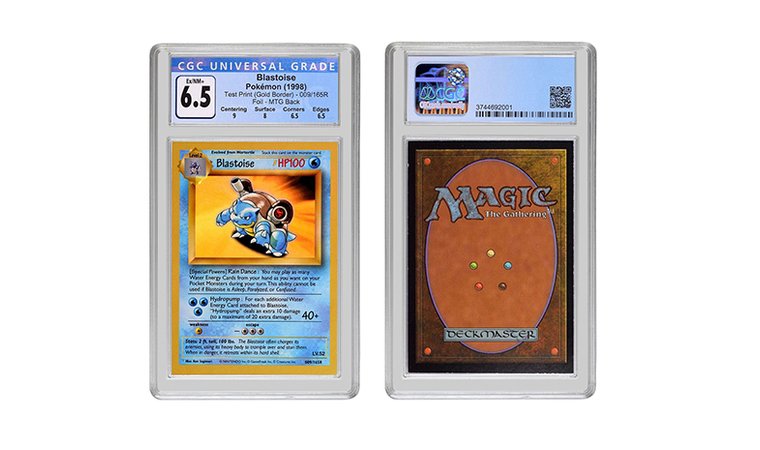
Publication Date: 1998
Grading: CGC 6.5
Market Price: $200,000 (most recent sale)
The Test Print Blastoise Gold Border is one of the rarest error prototypes in the Pokémon TGC universe. Produced by Wizards of the Coast during the initial development of the Pokémon Trading Card Game in 1998, it’s become one of the most legendary cards among collectors.
This card features Blastoise in a traditional stance, but with a gold border instead of the usual yellow. More surprising is what’s on the back: the iconic Magic: The Gathering card design. This card was part of a test run using MTG’s production templates to prototype Pokémon prints. That design mishmash makes it both a Pokémon and Magic crossover relic, even though unofficial.
Only a handful of copies of this test print were produced. The card was likely used to pitch the Pokémon TGC to retailers or internal stakeholders before the official release. Because of its limited print, crossover design, and deep production history, it’s a preceding artifact of when Pokémon was about to become a global sensation.
The CGC 6.5 copy was sold for $200,000, highlighting its status as one of the most expensive error cards ever. Despite not being part of any playable set, its prototype nature has made it a crown jewel for collectors who care about the behind-the-scenes evolution of the franchise.
Aside from the error, what makes this card special is the story it tells: a rare peek into the early days when the Pokémon TCG was still undergoing the experiment.
9. Trophy Pikachu (Gold/Silver/Bronze, 1997–1998)
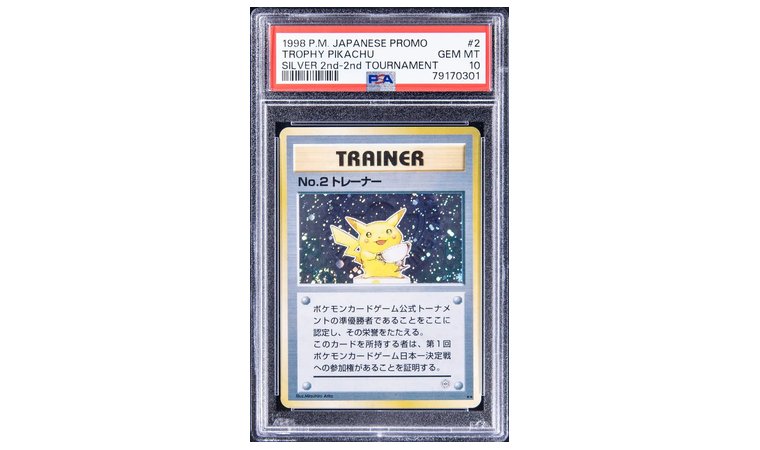
Publication Date: 1997-1998
Grading: PSA 9–10
Market Price: $50,000–$300,000 (depending on version and condition)
The Trophy Pikachu series is just like a Pokémon version of the Olympic medals. Awarded to the top three finalists in the 1997-1998 Japanese Pokémon TGC tournaments, these cards came in Gold for first place, Silver for second, and Bronze for third place.
The artwork is celebratory and symbolic, each featuring Pikachu holding a trophy, with holographic background and the “No. 1 Trainer” text at the top. Unlike mass-produced cards, Trophy Pikachu editions were custom-printed per event and never made available for purchase. This level of exclusivity would make them one of the rare cards, but the connection to the early competitive Pokémon pushes them into its legendary status.
Because of the high status and their limited release, only a small number of each version were produced. Condition and provenance (proof of who won it) can drastically change its market value. A Gold PSA 10 has been known to sell for $300,000+, while Silver and Bronze editions range from $50,000 to $150,000, depending on the grade.
These cards are like trophies that marked the earliest era of Pokémon as a tournament sport. For competitive players and collectors, owning one feels like winning a World Cup medal from the inaugural tournament.
10. University Magikarp (CoroCoro, 1998)

The University Magikarp may look quirky, but don’t be fooled – this is one of the most prestigious promo cards ever released in Japan. It was awarded to the winners of Tamamushi University Hyper Test, a special exam distributed via CoroCoro Comic in 1998. Only students who completed the test and scored highly received the card, making it a unique blend of academics and fandom.
The card’s artwork features Magikarp leaping energetically, surrounded by bold colors and a vivid foil pattern. Unlike its often-mocked in-game reputation, Magikarp is portrayed as powerful and vibrant here, a symbol of hidden potential. That thematic design makes it a fan favorite.
Estimates suggest only fewer than 100 copies were exclusively distributed as prizes for this particular event, and even fewer survive in mint condition, making them incredibly rare. The fact that it was tied to an academic challenge rather than a battle tournament also sets it apart from most promo cards, giving it a more personal and intellectual backstory.
In recent years, graded copies have sold for more than $60,000. For collectors looking for cards with unique origin stories, this is one of them; it represents one of the most creative ways Pokémon has engaged with its fanbase.
The University of Magikarp card also stands out for historical value, being one of the earliest promotional releases tied directly to Pokémon’s grassroots campaign in Japan. Between its rarity and striking design, this card is one of the most valuable Pokémon cards in the TCG universe.
11. Pre-Release Raichu (1999)
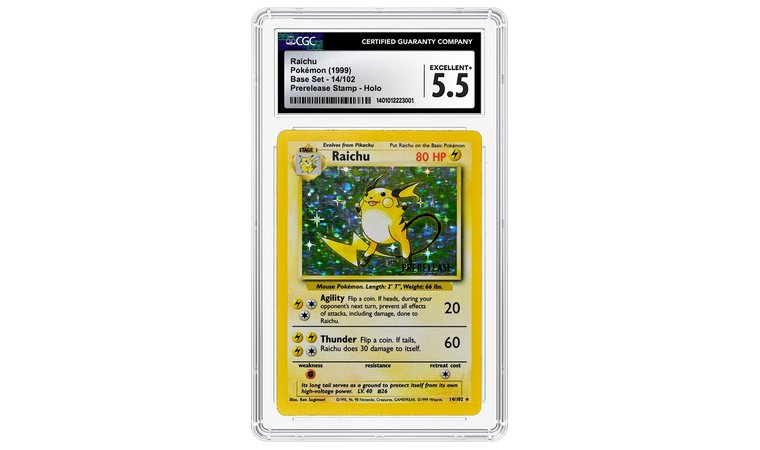
Publication Date: 1999
Grading: PSA 9
Market Price: Approximately $1,000 (depending on condition)
The Pre-Release Raichu is one of the most mysterious and hunted vintage Pokémon cards. It was never part of any official product line or promotional event – allegedly printed as an internal test card, it accidentally received the “Pre-Release” stamp, which was typically reserved for early promo editions. That printing quirk alone has turned this Raichu into a piece of Pokémon folklore.
The card itself features a vivid holographic image of Raichu mid-action, enhanced by a bold Pre-Release stamp that sets it apart from any other version of the card. Because it was never meant to reach collector’s hands, only very few copies exist today, most estimates suggest fewer than 10. That scarcity has shaped its reputation as one of the top Pokémon cards from the early days.
Despite its relatively high market value (hovering around $1,000 depending on condition) this card consistently ranks high in any Pokémon card gaming guide for its rarity, historical context, and the mystery surrounding its creation. It’s also a talk of the town in collector communities, often referred as an example of how production mishaps can evolve into legendary treasures.
The Pre-Release Raichu remains a nostalgic gem for collectors who value the unexpected oddities from the early Pokémon TGC era. For long-time fans, it represents a sweet mix of accident and legacy that no modern card can replicate.
12. No Rarity Base Set Cards (1996, Japan)

Publication Date: 1996
Grading: PSA 10
Market Price: Around $50,000 (depending on condition)
These No Rarity Base Set cards resemble the standard first-edition Pokémon cards, but with a critical difference: they lack the familiar rarity symbol at the bottom right corner. Printed during the earliest stages of the Pokémon TCG’s release in Japan, these cards kicked off the finalized rarity symbol system that makes them an important part of vintage Pokémon collecting.
The missing rarity symbol that was once considered an error is now seen as a sign of authenticity and legacy. Featuring original artwork of iconic Pokémon like Charizard and Blastoise, these cards serve as physical links to TCG’s humble beginnings.
Their appeal goes beyond just aesthetics; they are considered as one of the top Pokémon cards for collectors who value legacy and significance with the franchise’s timeline. As newer collectors explore vintage sets, the No Rarity cards continue to steal the spotlight.
Thanks to their place in history and extremely limited production, the PSA 10 graded copies are marked around $50,000, placing them among the most expensive Pokémon cards of the era.
Over time, demand for these cards has steadily increased, especially among international collectors who value them as a gateway into the roots of the Japanese TCG scene. Their historical importance has also been cited in documentaries and high-end auction catalogs, further validating their elite status in the collecting world.
13. Tropical Wind / Tropical Beach (2000–2012)
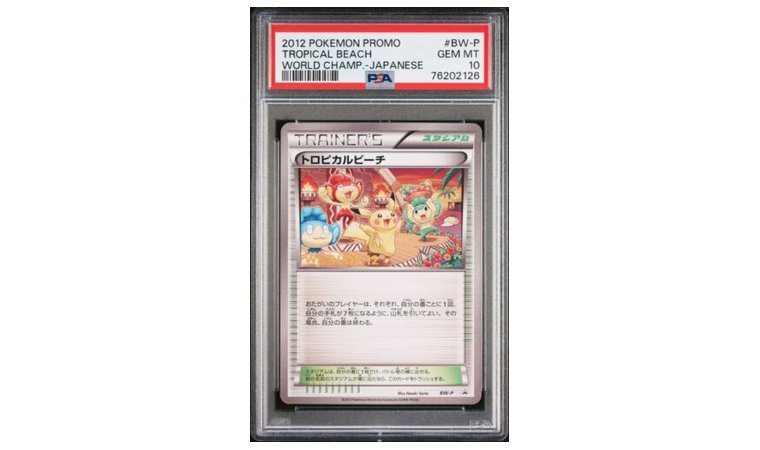
Publication Date: 2000–2012
Grading: PSA 10
Market Price: Around $10,000 (depending on condition)
The Tropical Wind and Tropical Beach cards are some of the most exclusive promotional cards in the Pokémon TCG, awarded only to top participants of the high-level Tropical Mega Battle tournaments held in Hawaii. These cards feature such cheerful, beach-themed artwork that captures a moment of celebration while also representing fierce international competition.
Tropical Wind (released in 2000) and Tropical Beach (in 2012) each highlight Pikachu enjoying a vacation-like setting; an intentional contrast to the intensity of the tournaments where these cards were awarded. They were never available for purchase and were handed out only to the top performing competitors.
Their tournament-exclusive nature and colorful designs have helped them maintain their high-demand status among collectors. Depending on the condition, PSA 10 copies of either card can sell for as much as $10,000.
These rare cards are also highly regarded for their artistic value, with many fans really loving the lighthearted and imaginative themes that contrast against the intensity of ranked play and tournaments. These emotional connections have helped these cards stay relevant and appreciated in the global collector scene.
These cards stand out in any premium collection and are consistently listed among the top Pokémon card sets associated with historical tournament achievements.
14. Victory Orb (2000–2002)

Publication Date: 2000–2002
Grading: PSA 10
Market Price: Around $5,000 (depending on condition)
The Victory Orb card stands as a mark of competitive achievement from the early 2000s Pokémon scene in Japan. Awarded during the Battle Road Summer tournaments between 2000 and 2002, this card carries a sense of prestige that goes way beyond its simple design.
With its stylized orb and elemental symbols like stars and lightning bolts, the card celebrates success in tough competitive settings. Only top players received it, so it’s always been hard to come by. That mix of clean design and event-specific background has helped it stay relevant among collectors.
Well-preserved copies, especially those graded PSA 10, can sell for around $5,000, securing Victory Orb’s reputation as one of the most respected cards linked to the tournament scene. It’s a clear statement that performance and skill have always played a central role in the world of Pokémon cards.
As a part of early competitive TCG history, Victory Orb often shows up in expert Pokémon card rankings; not just because it’s rare, but also because of what it represents. It’s seen as a trophy that captures the spirit of an era, where local matches started turning into national-level recognition.
That strong tie to player success gives it a story that few other promo cards can match. For those who don’t follow the game’s evolution, it’s a physical piece of the grassroots journey that helped shape the competitive community from the ground up.
15. 2005 Space World Promo Set

Publication Date: 2005
Grading: PSA 10
Market Price: Around $3,000 (depending on condition)
The 2005 Space World Promo was a special release handed out during the Space World event in Japan, a showcase for upcoming games and hardware. As part of the celebration, exclusive Pokémon cards were given to the attendees, each featuring artwork that captures the bold, colorful style of the early 2000s.
Unlike standard expansion cards, these weren’t part of any major Pokémon sets. Instead, they acted as souvenirs from the event, with designs that highlight popular Pokémon in dynamic, energetic poses, perfectly reflecting the vibe of that era’s design style. Since they were only distributed at a single event and never sold commercially, finding those high-grade copies today is a real challenge.
Prices for PSA 10 cards tend to sit around $3,000, which turns them into one of the most overlooked gems in the Pokémon TCG universe. It’s not associated with big-name releases, but its event-based origin makes it stand in the long run of the franchise.
What adds to its charm is the mystery around how many were actually handed out. That uncertainty, paired with its eye-catching artwork, has only made it more appealing over time. For fans interested in this quirkier side of Pokémon promos, this set still stands out.
16. Pokémon Fan Club Porygon (2000)

Publication Date: 2000
Grading: PSA 10
Market Price: Around $4,500 (depending on condition)
The Pokémon Fan Club Porygon was given to the dedicated fans in Japan who earned 700 points by joining club activities, such as writing letters or attending events. Since it was part of a limited promotion, it quickly became one of the most sought-after cards from the early 2000s.
The card showcases Porygon, a digital-era Pokémon that felt futuristic at that time. Its holographic design leans into that tech-inspired vibe, with geometric shapes and digital-style colors that tie in with the Porygon’s origin as a computer-generated creature.
Because it wasn’t available through stores or public giveaways, it has remained a tough card to find. Only a small number are believed to exist in mint condition today, and PSA 10 versions can go for as much as $4,500. Its exclusivity and strong association with Pokémon’s early fan community have kept it on the radar for serious collectors and TCG enthusiasts.
What also adds to its legacy is the way it reflects how Pokémon built a loyal community way long before social media even existed. The point system encouraged real fan engagement, and this card is like a badge of honor for those who were deeply invested.
It felt like a time capsule from when Pokémon fan culture was still growing from scratch. Many collectors view this card as a symbol of that early enthusiasm and the value of being part of something before it went fully viral.
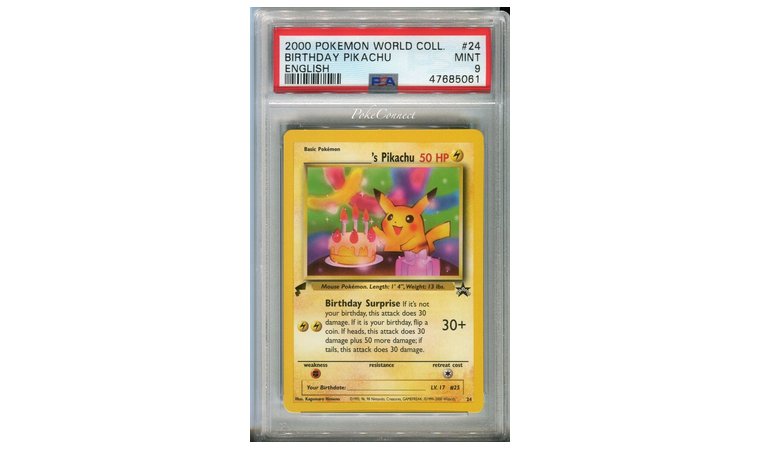
17. 2002 No. 2 World Championships Trainer Pokémon Center NY Birthday Pikachu (2000–2002)
Publication Date: 2002
Grading: PSA 10
Market Price: Around $20,000 (depending on condition)
This card was awarded to the second-place finisher at the 2002 Pokémon TCG World Championships in Seattle. It marks a major moment in competitive Pokémon history, combining tournament prestige with a nod to the Pokémon Center New York’s birthday celebration.
The card features Pikachu proudly holding a trophy and wearing a birthday hat in a layout that borders on full art style. It captures the spirit of competition while also celebrating a landmark store in Pokémon’s journey in the States.
Since only a few were handed to those second-place winners, it’s incredibly rare. That limited release, paired with the card’s World Championships origin, gives it lasting value in the eyes of competitive TCG fans. High-grade copies have sold for up to $20,000, securing its status as one of the most exclusive pieces from Pokémon’s tournament scene.
Beyond its scarcity, this card tells a unique story: one that bridges both the competitive and commercial side of Pokémon. It celebrates a key moment when organized play began reaching global audiences while also highlighting Pokémon’s franchise’s expansion into major retail spaces like the Pokémon Center NY. The combination of elite-level achievement and event-specific context gives this card an identity that’s hard to match. It remains a top-tier example of how special event cards can carry deep historical and emotional value for the long term.
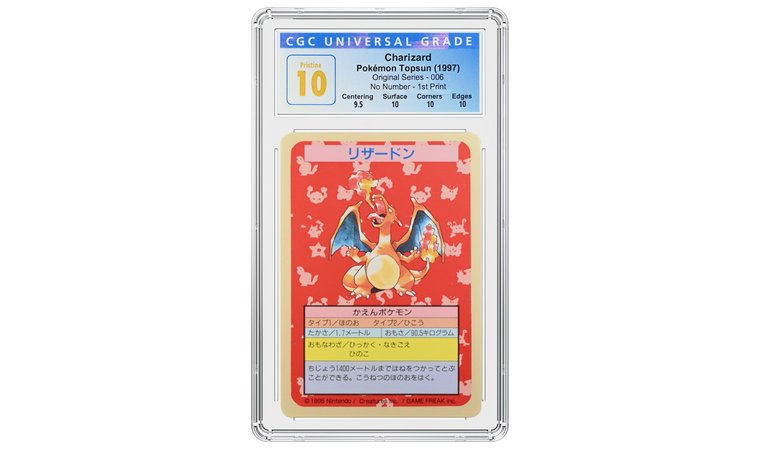
18. Charizard Topsun Blue Back (1997)
Publication Date: 1997
Grading: PSA 10
Market Price: Around $15,000 (depending on condition)
The Charizard Topsun Blue Back card is part of one of the earliest Pokémon card series ever released. Distributed in Japan as part of a candy promotion in 1997, the card initiates the official TCG and features a retro-style version of Charizard with a distinct blue back that sets it apart from later prints.
Unlike most modern Charizard cards, this one keeps things simple: minimalistic artwork and a classic pose that still manages to show off Charizard’s powerful personality. The blue back is what makes it really stand out, especially for collectors interested in the early days of Pokémon merchandise.
With only a limited number made and even fewer surviving in perfect condition, the card has grown in value over time – PSA 10 samples can go for around $15,000, and it’s often mentioned as one of the most important pieces from Pokémon’s pre-TCG era.
Its value also comes from its role in shaping what early Pokémon collecting looked like in Japan. Topsun cards weren’t part of any structured game, they were purely collectible. The rawness appeals to collectors who appreciate the “before it was a phenomenon” stage.
The card’s simplicity, rarity, and connection to Charizard (arguably one of the most iconic Pokémon in the franchise) make it an essential piece of hobby history. For those charting the evolution of the brand, this card is a bridge between Pokémon’s earliest merch days and the rise of TCG.
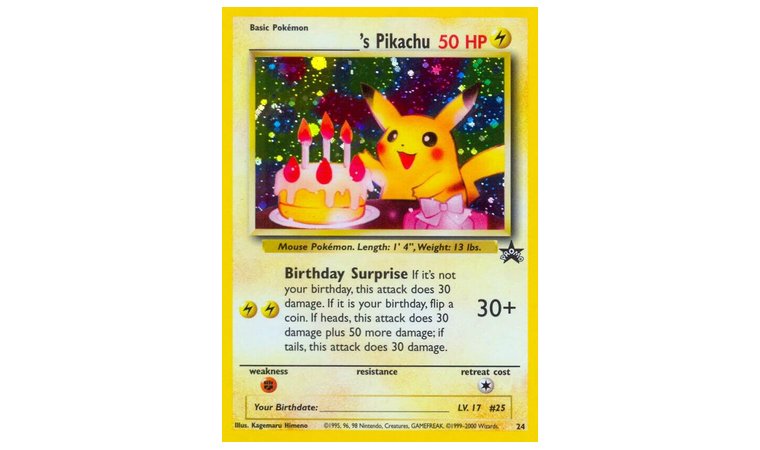
19. Pokémon Center NY Birthday Pikachu (2000–2002)
Publication Date: 2000–2002
Grading: PSA 10
Market Price: Around $5,000 (depending on condition)
This card was a special giveaway at the Pokémon Center New York between 2000 and 2002, where visitors received it as a part of Pikachu’s “birthday” celebration; an in-store event that turned into a memorable part of the Pokémon franchise’s history in the US.
This special Birthday Pikachu card, distributed by the Pokémon Company during in-store events, is often confused with Pikachu EX versions due to its rarity and distinct artwork. The design is festive and lighthearted, showing Pikachu with a birthday cake and party hat. The holographic shine adds to its charm that makes it a fun yet meaningful addition to any collection.
Today, this version of Birthday Pikachu is considered as one of the rarest finds. PSA 10 copies can even reach the price of up to $5,000, and its direct link to the now-closed Pokémon Center New York keeps it relevant for collectors who remember the era or appreciate the location-based promotion.
What also boosts this card’s appeal is the nostalgia tied to the Pokémon Center NY itself. For many fans, it was more than just a store; it was a destination filled with exclusive merch, events, and a sense of being a part of something bigger.
This card captures that experience in physical form. It’s a reminder of a time when the Pokémon presence in the U.S. felt fresh and special. That emotional layer makes it one of the most treasured promos from the early 2000s.
20. First Edition Shadowless Charizard (1999)
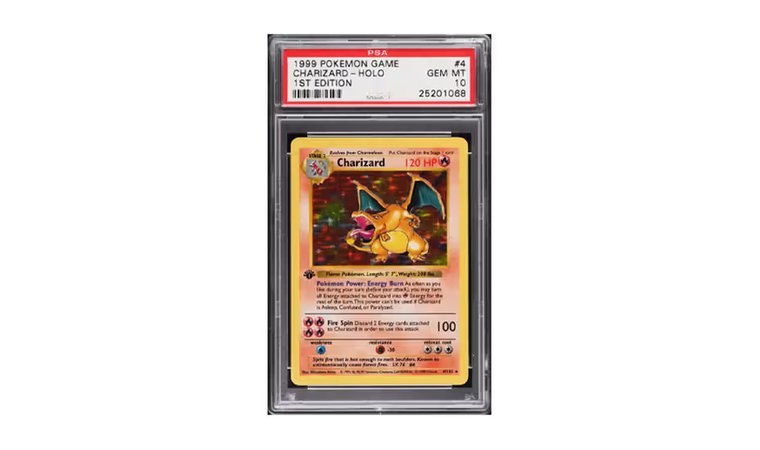
Publication Date: 1999
Grading: PSA 10
Market Price: Around $200,000 (depending on condition)
The First Edition Shadowless Charizard is one of the most recognized and talked-about cards in Pokémon history. Released as part of the Base Set in 1999, it’s known for its lack of the dark shadow around the character’s frame which was something that was added in later printings. That small detail makes a big difference for collectors.
This card also features the First Edition stamp, which marks it as one of the earliest versions of Charizard ever printed. Combined with its fiery artwork and iconic status, this version quickly became a centerpiece for many collections.
Because it was part of a limited early print run, PSA 10 versions are extremely hard to find. Prices for top-condition copies can hit $200,000 or more. Even after all these years, it remains as one of the most valued cards in the entire Pokémon TCG scene.
Its influence stretches far beyond collector circles. The card has become a cultural reference point – featured in documentaries, auctions, and viral videos – often symbolizing the peak of Pokémon card nostalgia.
For many, it’s about the emotional weight that it carries from childhood. For decades, this Charizard has stood as a symbol of how one card can leave a lasting mark on an entire community.
Best Pokemon Packs to Buy for Rare Cards
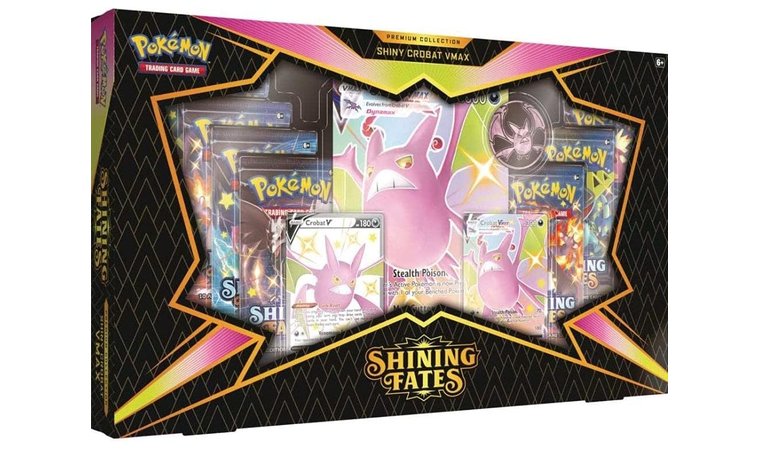
When diving into the world of Pokémon card collecting, booster packs remain one of the most exciting ways to explore new Pokémon sets and uncover rare cards that can take any collection into the next level. Each pack is built on random selections, usually a mix of common, uncommon, and rare cards, but some sets are known for delivering more than just the usual thrill.
Certain modern booster packs have become popular, thanks to the possibility of pulling some of the most expensive Pokémon cards out there. Sets like Shining Fates and Hidden Fates have earned their reputation for featuring standout pulls such as the Shiny Charizard VMAX, a card that consistently ranks among the most valuable in recent years.
Collectors often turn their attention to newer Pokémon sets like Crown Zenith or Silver Tempest, which include high-demand cards like Lugia V and Mewtwo VSTAR. They’re like investment-grade pulls that help define the appeal of the modern Pokémon trading card game era.
Another big name in the mix is cards from Scarlet and Violet, a set that shook things up with new rarity tiers and powerful pulls that keep showing up in competitive builds and collector hauls alike.
Pokemon 151 Rare Cards

As one of the most talked-about releases in recent times, the Pokémon 151 set brings a wave of nostalgia and fresh hype to collectors, old and new. With the franchise’s mascot, Pikachu, front and center (and classic favorites returning) this edition has quickly become one of the hottest Pokémon sets.
Demand for Pokémon 151 booster packs has been intense, with many selling out shortly after launch. The chase is real, and for good reason: this set contains several of the most expensive Pokémon cards currently on the market.
Mewtwo VSTAR leads the pack with a design that blends gameplay strength and collector appeal, followed closely by Shiny Charizard V; another entry in the long line of Charizard cards that dominate value charts.
Other standouts like the Gold Mew EX and Pikachu 151 add even more weight to this already stacked set. Unlike sets where high-value cards might linger on shelves, Pokémon 151 booster packs tend to disappear fast, and each one holds the potential for game-changing pulls.
Thanks to its iconic roster and limited availability, the Pokémon 151 set has become a modern classic. With every booster pack offering random selections and the chance at major hits, it’s no surprise that this release has earned its place among the most celebrated Pokémon sets in recent years.
For anyone building a top-tier collection or hunting for grail-tier cards, Pokémon 151 stands out for both its namesake nostalgia and delivering serious hits that rival the most expensive Pokémon cards on the market.
Not every set chases nostalgia, though. Some releases, like the iconic Lost Origin, focus more on gameplay mechanics and battle-ready staples that shaped ranked matches in 2024 and beyond.
FAQs
What are the rare Pokemon trainer cards?
Rare trainer cards are those super hard to find and often linked to special events or competitions. Examples include the No. 1 Trainer Trophy Cards given to top tournament players, the 1999 Super Secret Battle – Trainer Promo card awarded to exclusive winners, and the Ishihara GX Promo handed out at a private celebration. These cards are prized for their rarity and history.
What are secret rare Pokemon cards?
Secret rare cards are ultra-rare pulls usually found in modern booster packs but can also include special promo cards. Think of cards like the Blastoise WOTC Presentation Galaxy Holo – a limited English-print sample – or the Snap Pokémon Cards featuring real in-game photos. These cards stand out because of their unique art and limited availability.
What are hyper rare Pokemon cards?
Hyper rares often feature full-art designs with flashy holographic finishes and are among the toughest cards to pull. Examples from classic rare cards would be the First Edition Shadowless Charizard, known for its iconic art, or the Charizard Topsun Blue Back with its unique blue backside. These full-art styles make them collector favorites.
What are rainbow rare Pokemon cards?
Rainbow rares have a special rainbow foil treatment that makes the art really pop. While this term is more popular with modern sets, you can think of legendary cards like Trophy Pikachu editions (Gold/Silver/Bronze) or the Victory Orb promo as the vintage equivalent, prized for their flashy and exclusive designs.
What are holo rare Pokemon cards?
Holo rares feature shiny holographic foil highlighting the Pokémon, ranging from older to newer cards. Examples include the Pikachu Illustrator, which is legendary for its holo design and rarity, and the Pre-Release Raichu, a mysterious holo card with a rare stamp. These shine and rarity make holo rares highly collectible.