


Remaking Evil



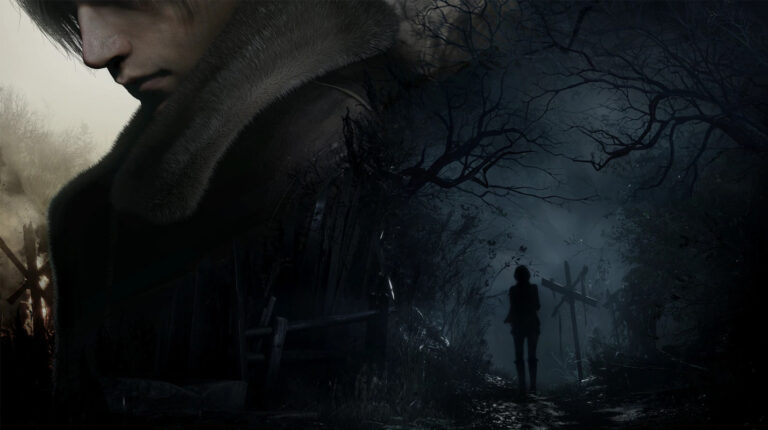
Today, as part of Resident Evil Week, I’m taking a look at remakes. The Resident Evil series has a long history of trying new things, with Resident Evil 4 on the GameCube revitalizing the franchise by turning it into a third-person action title. This was also Capcom’s most recent remake, released in 2023, and an interesting one in that it doesn’t stray too far from the original in terms of content and mechanics.
It’s fitting, then, that the preceding remakes (of parts two and three) were largely overhauled to match part four’s gameplay style. It’s not unreasonable to believe future remakes will also hew close to this.
As for those future remakes, current rumours are swirling around Capcom making new versions of Resident Evil Zero and Code Veronica, although Capcom are keeping quiet as to which of these (if either) are next on the remake block. Capcom did send a survey out in June 2023 asking which game players would next like to see get remade, although the results were never made public.
The last time the company did comment publicly on remakes was also back in 2023, when Resident Evil 4 remake director Yasuhiro Anpo spoke at a PlayStation event in Japan: “We’ve released three remakes so far and they have all been received very well. Since it allows a modern audience to play these games, it is something I am happy to do as someone that loves these older games, and we want to continue doing more.”
“We are very grateful to users that are vocal about their opinion,” he added. “It allows us to develop with the player’s opinion in mind. For example, if this is how the players feel, then maybe we can make it like this. I think this is one of the reasons why our remakes are so well received.”
Jump to:
Back to Racoon City
He’s not wrong. Although Capcom first dipped its toes into remake waters back in 2002 with a GameCube update of the first Resident Evil, it didn’t get nuts with updating older games until 2019 when it released the Resident Evil 2 remake. To date, this remains Capcom’s best-selling remake in the franchise, with 16.30 million units sold as of September 2025.
The 1998 original was already the series’ fourth best-selling title, so it’s easy to see why Capcom picked it for a redo. A Case Study conducted by Capcom in 2019 further highlights the kinds of things that go into a remake, from a business perspective at least.
Although it acknowledged the “high hurdles to overcome in terms of the fans’ expectations for the game and the weight of the brand” when remaking it, it also highlighted how its proprietary RE Engine (first used for Resident Evil 7 in 2017) “enables both the use of high-definition graphics to portray the terror of groping through the dark while gruesomely real zombies hunt for flesh, as well as the use of real-time binaural technology for the first time to reproduce sound in sync with the player’s perspective.”
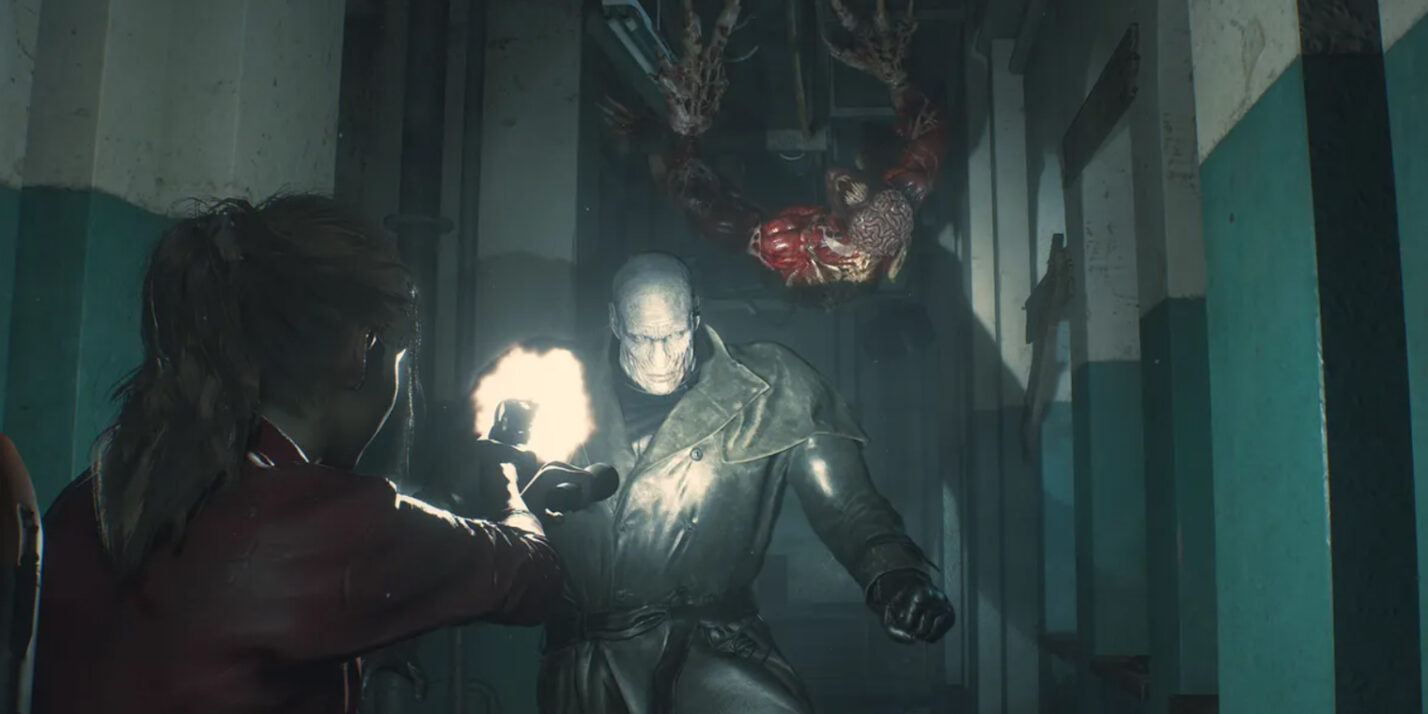
Of course, “making more money” and “using a modern game engine” aren’t exactly mind-blowing reasons for a company to want to remake something. So it’s heartening to know that the sequel’s original director, Hideki Kamiya, revealed at E3 in 2016 that he’d been insisting on a remake for a long time.
He left Capcom in 2006 and co-founded PlatinumGames (Bayonetta), but kept in touch with a lot of the people involved in the Resident Evil franchise, including developer Jun Takeuchi (who worked on the first game and Resident Evil 5).
“Behind the scenes, I go drinking with Jun Takeuchi quite often,” Kamiya said. “Every time I would go drinking with him I would pester him: ‘You’re going to remake that, right? You’re going to remake that, right? You’re going to remake that, right?’.”
“Just from a creator’s perspective, to know that something that you made still resonates, and people still want to play it, and that Capcom is going to invest all that time and energy into remaking it, is really an honor,” Kamiya added.
For Better or Worse
A common refrain in the video game industry is that a remake should play how you remember the original felt, not literally how it actually played (if the tank controls of the first Resident Evil game don’t seriously annoy you today, then you’re a more forgiving gamer than I). This idea was echoed by the series’ original creative director, Shinji Mikami, in relation to the remake of part four.
“I think the comprehensive and fundamental understanding of what it was that made the original work in the first place is probably the most important point of a good remake,” he said in an interview in 2024.
The part two remake is also often held up as a stellar example of how to literally rebuild a game but keep the feeling of the original intact, in a similar way to how the Silent Hill 2 remake is praised. Ironically, the 2020 remake of Resident Evil 3: Nemesis suffered a similar critical fate as the original, in that while many praised it for its strengths, many lamented how the shift to an action-focused game robbed it of some of the tension inherent in a classic Resident Evil experience.
Gamespot was especially harsh with “As a remake, Resident Evil 3 not only falls short of honoring its source, but it also doesn’t quite stick the landing as a standalone horror experience,” whereas Edge was somewhat more even-handed with “All we can say is that six hours of Resident Evil 3 is just enough – and we’re aware that’s both compliment and curse.”
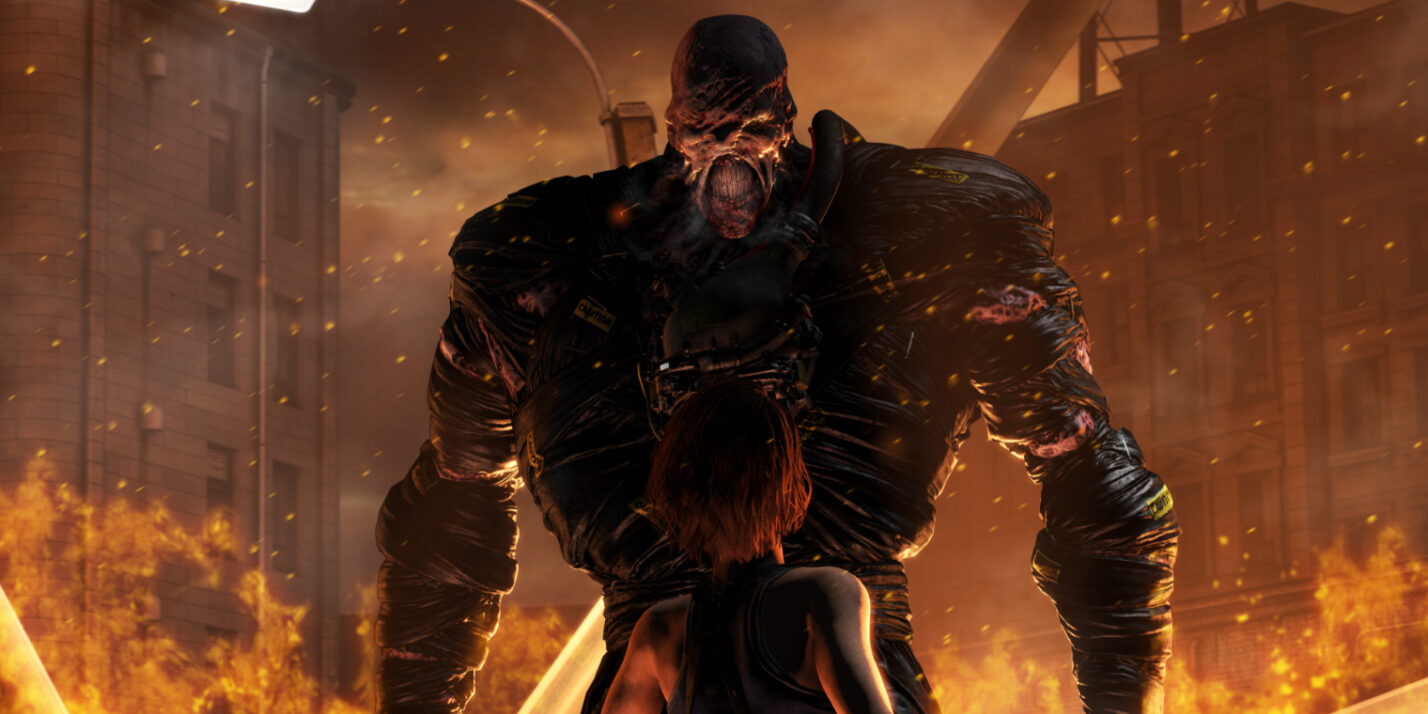
Capcom looked to try and instill tension and fear by remaking Nemesis itself. The lumbering mutant programmed to track down and kill S.T.A.R.S. members would appear every so often in the 1999 version, but the 2020 version has it after you (playing as Jill Valentine) from the jump. Whether this scares you or annoys you is a pretty good barometer of what you as a gamer want from a remake.
It’s Evolving into a New Species
It’s not just literal remakes that the Resident Evil franchise has become known for: it’s also developed a reputation as not being afraid to try new things. The most recent example can be seen in Resident Evil Survival Unit, a mobile game that remakes Resident Evil (the franchise overall, not the original game) into a base-building gacha title.
The series hasn’t historically performed well on mobile, with Resident Evil 7 and the part two remake selling poorly on iOS, for example. Survival Unit is the first title specially developed for mobile, and it falls into a category popular with casual gamers (strategy) so this might prove a winning formula…although recent player reviews tend to be lukewarm at best, so it might end up being yet another failed experiment.
One example where Capcom swung for the fences and actually succeeded is Resident Evil 7: Biohazard. When this was revealed in 2016 it caused quite a stir as, for one thing, it used a first-person perspective. It also didn’t look anything like what gamers had come to expect, which is something one of the producers, Masachika Kawata, talked about in a developer interview at the time.
“It’s sort of a powerless, ordinary person you’re playing as,” he said. “We’re not really talking in too much detail about who they are right now, but they’re an ordinary person stuck in an extraordinary situation. I think that really brings the horror right to the fore. You wonder if this person you’re playing as – or you – will be able to cope with this situation. That’s a real feeling of helplessness that helps the horror stand out.”
“I hope that fans will enjoy this ‘bringing it back to basics’ feeling we have where it’s just one person in one location with a lot of fear,” he added. “By not having a huge, broad scale of environments it also lets us focus on the details. [The mansion] is this one place you are [exploring], so I think Capcom has some expertise in our DNA over the years of bringing one area to life, like in the original Resident Evil.”
Resident Evil 7 wasn’t actually the first time Capcom shifted the franchise to a first-person perspective, and the reveal that Requiem is split between two protagonists (Grace Ashcroft and returning fan favorite Leon S. Kennedy) also isn’t the first time the series tried this, all of which I’ve covered in Resident Experiments.
However, while previous attempts at these mechanics were hit and miss, part seven proved popular enough that its follow-up, Village, brought back not just main character Ethan Winters and the first-person view (which the devs refer to as “Isolated View”), but made a concerted effort to tie events into established game canon. Requiem promises to also build on and reference previous games, so next time I’ll be looking at the series’ often-convulted lore, and how well it’s translated to other media.
Other Hits and Misses
To close, I’ll go back to the Resident Evil remake on GameCube. As with pretty much anything related to this franchise, memory has been kinder to it than time has; gamers these days are either more forgiving of flaws or can find something in it to appreciate. Or, they’re unaware of the actual impact a game had at release.
General consensus is that the first RE remake was very well received, because people these days receive it well. But, it was a massive flop: it sold just over 1.35 million copies on the GameCube, compared to the previous mainline entry, Nemesis, which sold 3.5 million copies. This is what led to Resident Evil 4 taking a more action-orientated approach, which we’ve all now seen cycle back to Village being more action-focused than the horror-centric Biohazard.
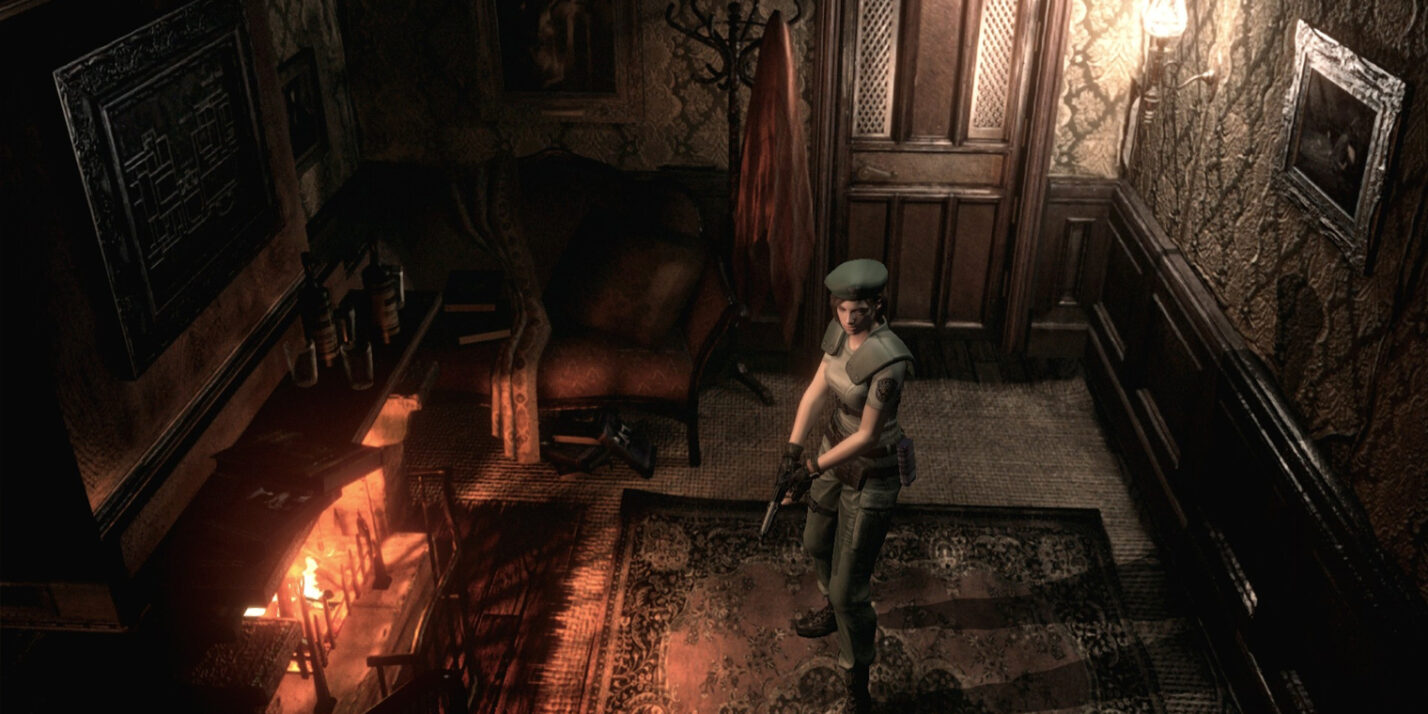
In a 2013 interview, Shinji Mikami spoke about the remake’s impact on part four’s development: “The Resident Evil remake is actually one of my favorites of the series too. But it didn’t sell very well. Maybe there weren’t many people ready to accept that. Because of the reaction to the Resident Evil remake, I decided to work more action into Resident Evil 4. Resident Evil 4 would have been a more scary, horror-focused game if the remake had sold well.”
“With Resident Evil 1, 2, 3, and all the rest of the series before Resident Evil 4, I was always saying to the staff, ‘Scaring the player is the number one thing.’ But for the first time, in Resident Evil 4, I told the team that fun gameplay is the most important thing,” Mikami added.
“That’s what I said. Then the second thing [would be ] nothing. And then the third thing is to be scary. That’s what I said to the team. That all came out of the commercial failure of the Resident Evil remake. And then of course Resident Evil 4 sold really well.”
It looks like Resident Evil Requiem is set to split the difference, as Requiem’s director Koshi Nakanishi and producer Masato Kumazawa have said in various recent interviews that the game will alternate between Leon Kennedy and Grace Ashcroft so that the game can then alternate between action and horror – both of which can also be played in first or third person perspectives. Whether this is a case of Capcom trying to have its cake and eat it remains to be seen, however.