


Best Credit Cards for Travel in 2026




The best credit cards for travel in 2026 combine useful rewards with fees you can realistically earn back. Chase Sapphire Preferred is our top pick and the best travel rewards credit card for most travelers, with a $95 annual fee, a 75,000-point welcome bonus, no foreign transaction fee, and flexible rewards. That transfer flexibility also makes it our pick for the best credit card for travel points among the five.
This travel credit card comparison also covers Capital One Venture X for lounge access, American Express Platinum for premium perks, Citi Strata Premier for everyday rewards, and Bank of America Travel Rewards as the best no annual fee travel credit card here. If you want a flexible travel rewards credit card without a premium price, Chase leads our best travel credit card 2026 ranking.
Jump to:
What Is a Travel Credit Card?
A travel credit card is a rewards card designed to help you earn points or miles that can be used for flights, hotels, and other travel expenses. The best credit cards for travel often add perks like higher rewards on travel or dining, no foreign transaction fees, airport lounge access, or annual travel credits.
Some travel rewards credit card programs also let you transfer points to airline and hotel partners, which can sometimes give you more value than a standard redemption. When choosing the best travel rewards credit card, compare the rewards and perks you’ll actually use against any annual fee.
Best Credit Cards for Travel: The Top 5 Compared

Here is how the top five credit cards for travel compare at a glance, including which one is the best credit card for travel points if flexible transfers matter most to you. Each row shows the annual fee, the current welcome bonus, and who the card suits best, so you can shortlist fast and jump to the full review below.
| Rank | Card | Best For | Annual Fee | Welcome Bonus |
|---|---|---|---|---|
| 1 | Chase Sapphire Preferred | Best overall value | $95 | 75,000 points |
| 2 | Capital One Venture X | Lounge access, travel credits | $395 | 75,000 miles |
| 3 | American Express Platinum | Richest perk stack | $895 | Up to 175,000 points |
| 4 | Citi Strata Premier | Everyday multipliers | $95 | 60,000 points |
| 5 | Bank of America Travel Rewards | Best no annual fee travel credit card | $0 | 25,000 points |
[IMAGE: Summary comparison graphic with card art (own design)]
One bonus needs a caveat: the Amex figure is a variable, targeted offer worth up to 175,000 points, not a guaranteed amount, so confirm it before applying. Chase‘s 75,000-point bonus was confirmed live on Chase‘s official page on August 24, 2026.
The Best Credit Cards for Travel, Reviewed
Below is the full breakdown of each card, with the verified fee, APR, welcome bonus, and who it fits. The order runs from the best overall value down to the no-fee starter card. Start with our top pick, Chase Sapphire Preferred.
1. Chase Sapphire Preferred: Best Overall
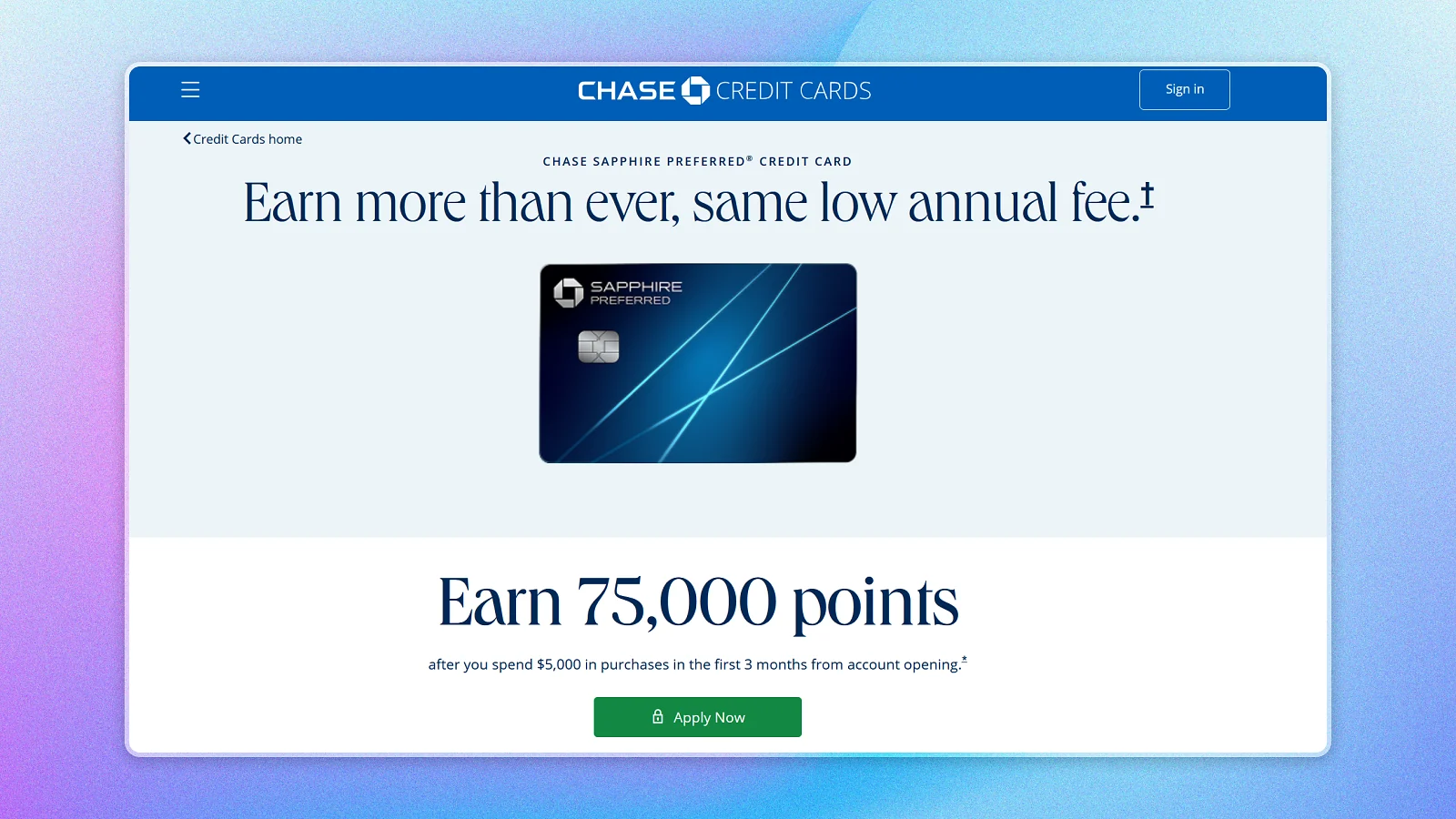
Chase Sapphire Preferred leads our best credit cards for travel ranking with a $95 annual fee, a strong 75,000-point welcome bonus, and flexible travel rewards. For points-focused travelers, it’s also our best credit card for travel points.
| Account detail | Information |
|---|---|
| Annual fee | $95 |
| APR | 19.24% to 27.49% variable |
| Welcome bonus | 75,000 points after $5,000 spend in 3 months |
| Foreign transaction fee | None |
| Credit needed | Good to excellent |
| Best for | Best value-to-fee ratio |
The bonus requires $5,000 in purchases within the first three months, and the card charges no foreign transaction fee. As a travel rewards credit card, it gives you plenty of ways to use your points through Chase Travel or participating airline and hotel programs. Most transfer partners use a 1:1 ratio, though World of Hyatt transfers at 4:3 for accounts opened from June 15, 2026. Even with that limitation, the combination of transferable points and a relatively low fee makes this one of the best travel rewards credit card picks for everyday travelers.
You also get up to $100 in annual Chase Travel hotel credits and up to $120 toward Global Entry, TSA PreCheck, or NEXUS every four years, plus a free year of Apple TV if activated by December 31, 2026. Rewards include 5X points on Chase Travel, 3X on dining and select everyday categories, and 2X on other travel. Points Boost can increase the value of eligible Chase Travel bookings to as much as 1.5X, helping Sapphire Preferred remain a strong best travel credit card 2026 choice without a premium-level fee.

Compare two of the best credit cards for travel: Chase Sapphire Preferred vs. Capital One Venture X below.
2. Capital One Venture X: Best for Lounge Access
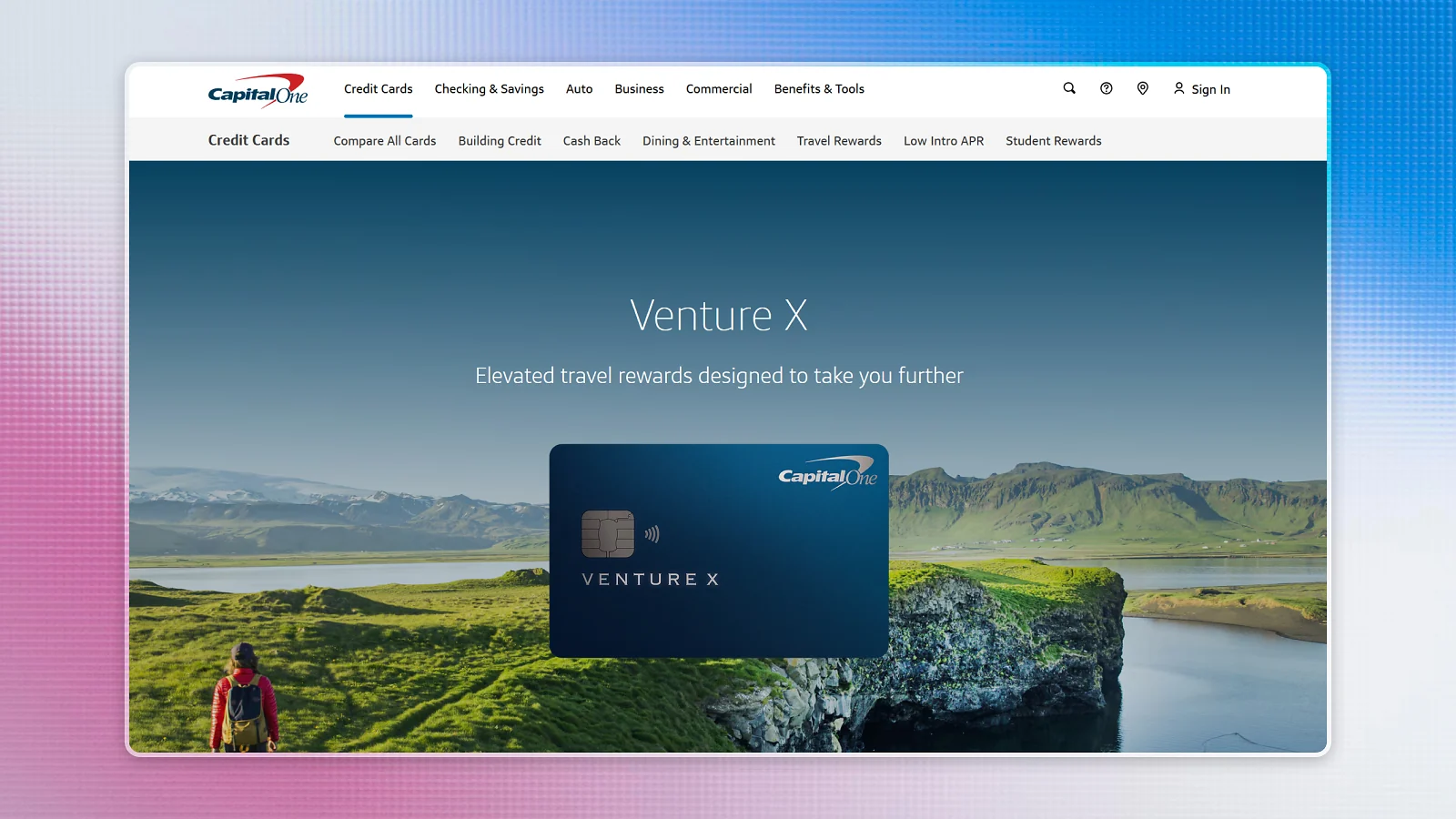
Among the best credit cards for travel, Capital One Venture X is our premium pick for frequent flyers. This travel rewards credit card costs $395 a year, but its $300 annual Capital One Travel credit can offset much of the fee.
| Account detail | Information |
|---|---|
| Annual fee | $395 |
| APR | 19.49% to 28.49% variable |
| Welcome bonus | 75,000 miles after $4,000 spend in 3 months |
| Foreign transaction fee | None |
| Credit needed | Excellent |
| Best for | Lounge access and travel credits |
The card currently offers 75,000 bonus miles after $4,000 in purchases within three months, plus 10,000 anniversary miles each year. It also has no foreign transaction fee and earns 2X miles on everyday purchases, making it a strong option in this travel credit card comparison. Capital One requires Excellent credit, so it is less accessible than some picks in our best travel credit card lineup.
Reviews on Capital One’s own product page are generally positive: Venture X currently holds a 4.2/5 rating from 1,292 reviews, with 79% of reviewers recommending it. Some recent reviews do criticize the tighter lounge guest rules, which is worth considering if lounge access is a major reason you want the card. Capital One also highlights awards from NerdWallet, The Points Guy, and Fortune, while disclosing affiliate relationships with those publications outside the awards.

See how Capital One Venture X stacks up against Chase Sapphire Preferred among the best credit cards for travel.
3. American Express Platinum: Best Perk Stack
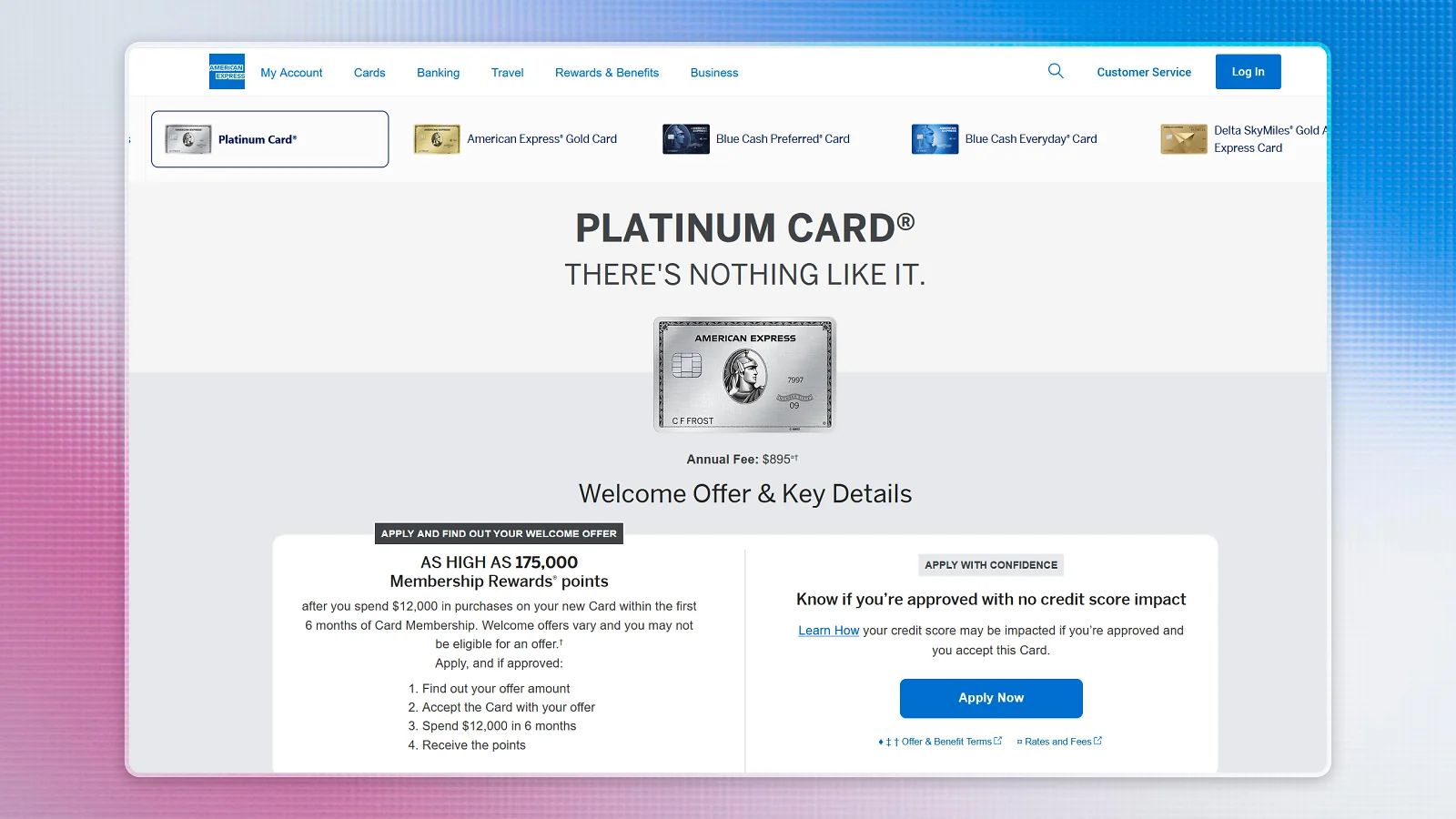
American Express Platinum is the best pick for travelers who want the largest airport lounge network and the richest perk stack, if you can justify its $895 annual fee.
| Account detail | Information |
|---|---|
| Annual fee | $895 (raised from $695 in Sept 2025) |
| Pay Over Time APR | 19.49% to 28.49% variable on eligible charges |
| Welcome bonus | Up to 175,000 points (variable, not guaranteed) |
| Foreign transaction fee | None |
| Credit needed | Good to excellent |
| Best for | Largest lounge network, premium perks |
The Platinum is the most expensive card here by far, at an $895 annual fee that Amex raised from $695 in September 2025, so ignore the older figure still floating around. In return, it offers the widest lounge access of any card in this group, through the Centurion Lounge network, Priority Pass, and partner lounges, plus a stack of annual statement credits across travel, dining, and retail that can offset much of the fee if you use them. There is no foreign transaction fee.
Read the welcome offer carefully. Amex advertises a bonus as high as 175,000 Membership Rewards points after $12,000 of spend in six months, but its own page states offers vary by applicant and are not guaranteed, so some people will see less or no bonus. The card has no public card-level rating, and American Express‘s company-wide Trustpilot score is 1.3 out of 5 across 5,335 reviews, driven largely by fee and service complaints rather than this specific card.

4. Citi Strata Premier: Best Everyday Multipliers
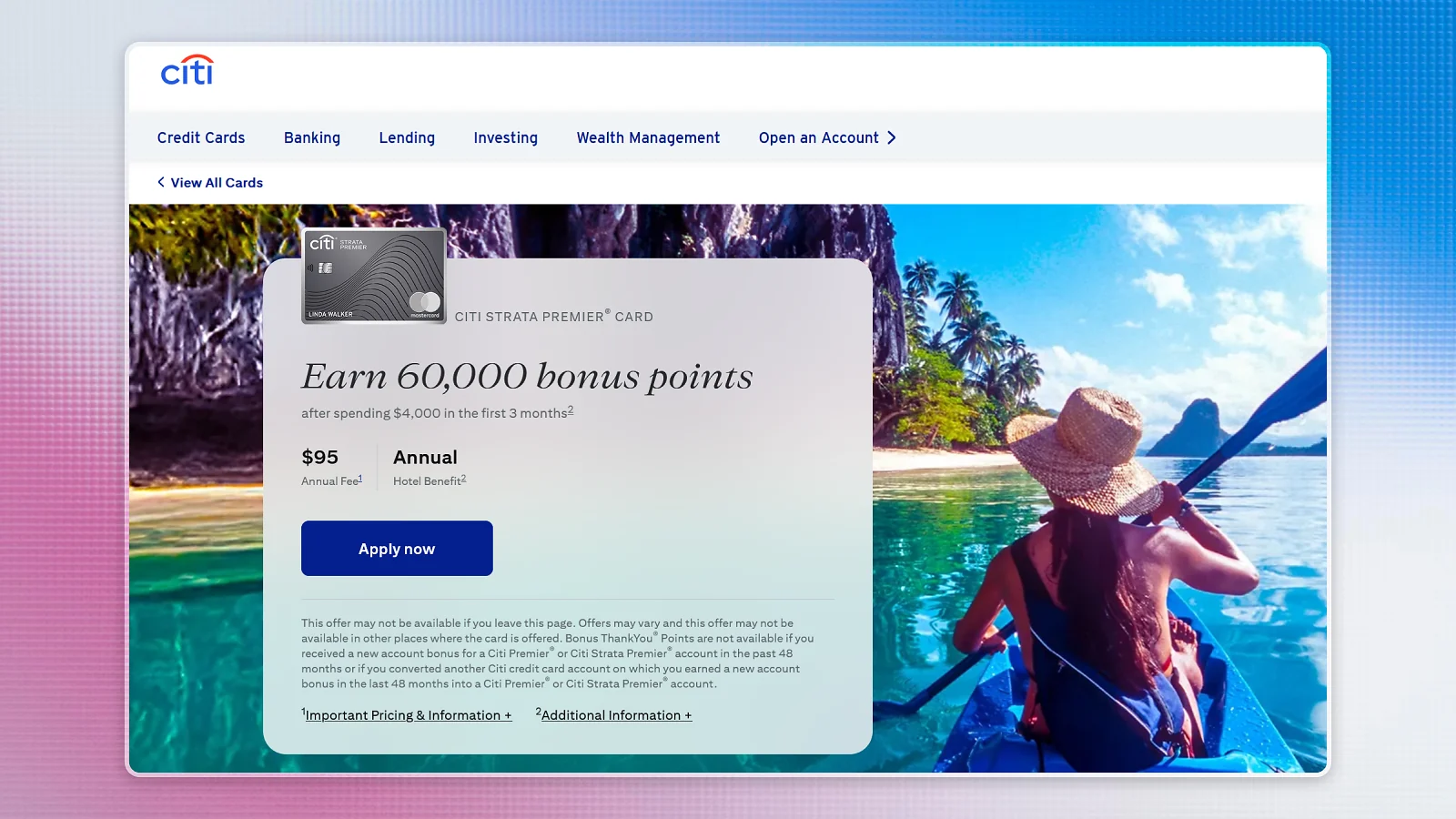
Citi Strata Premier is the best pick for strong everyday earning on hotels, dining, and gas at a modest $95 fee.
| Account detail | Information |
|---|---|
| Annual fee | $95 |
| APR | 20.24% to 28.24% variable |
| Welcome bonus | 60,000 points after $4,000 spend in 3 months |
| Foreign transaction fee | None |
| Credit needed | Good to excellent |
| Best for | Everyday category multipliers |
The Strata Premier matches the Sapphire Preferred‘s $95 fee but leans into everyday spending, with elevated points on hotels, dining, gas, and supermarkets. The welcome bonus is 60,000 points after $4,000 of spend in three months, and there is no foreign transaction fee. Points transfer to Citi‘s airline partners, which adds flexibility beyond a straight travel-portal redemption.
Citi currently lists a 20.24% to 28.24% variable APR, along with a 60,000-point welcome bonus after $4,000 in purchases within three months. The card also earns 10X points on hotels, car rentals, and attractions booked through Citi Travel, plus 3X on air travel, other hotels, restaurants, supermarkets, gas stations, and EV charging. Another useful perk is the $100 annual hotel benefit on a single $500+ stay booked through Citi Travel.
Citi Strata Premier does not have its own Trustpilot profile, so Citi’s company-wide score is better treated as a general customer-service signal than a review of the card itself.

5. Bank of America Travel Rewards: Best No-Annual-Fee Card
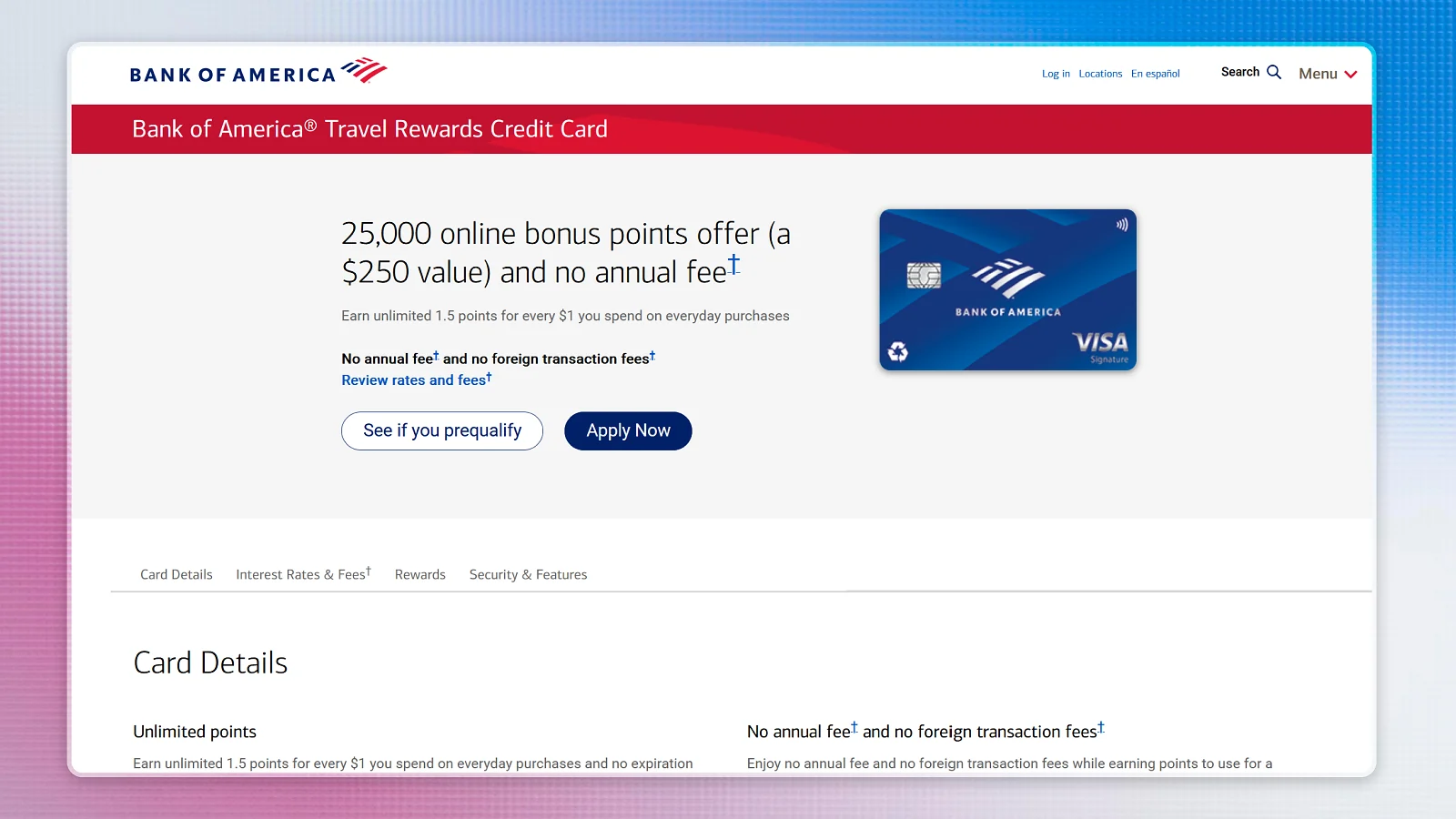
Bank of America Travel Rewards is the best pick for first-time travel-card applicants, as the only $0-annual-fee card here and the only one with an intro 0% APR period.
| Account detail | Information |
|---|---|
| Annual fee | $0 |
| APR | 0% intro for 15 cycles, then 17.49% to 27.49% variable |
| Welcome bonus | 25,000 points ($250) after $1,000 spend in 90 days |
| Foreign transaction fee | None |
| Credit needed | Good to excellent |
| Best for | First-time applicants, no annual fee |
For a first travel card, this is the low-risk way in. There is no annual fee, no foreign transaction fee, and a 0% intro APR for the first 15 billing cycles before the standard 17.49% to 27.49% variable rate kicks in, the only intro-APR offer in this group. The welcome bonus is 25,000 points, worth about $250 in travel, after $1,000 of spend in 90 days, an easy target for most applicants.
The trade-off is earning power outside BofA Travel. The card earns unlimited 1.5 points per $1 on everyday purchases and 3 points per $1 on travel booked through BofA Travel. Its 25,000-point bonus is still the smallest here, so frequent travelers chasing higher rewards may get more value from the fee-charging cards above. Still, as the best no annual fee travel credit card in this comparison, it’s a simple way to earn travel rewards without committing to an annual fee.

Chase Sapphire Preferred vs. Capital One Venture X
The Sapphire Preferred and Venture X are the two most useful cards to weigh against each other, a $95 mid-tier card versus a $395 premium one.
Chase Sapphire Preferred beats Capital One Venture X for most travelers on value, mainly on annual fee ($95 versus $395) and welcome-bonus-to-spend ratio (75,000 points for $5,000 spent versus 75,000 miles for $4,000).
Venture X still wins on premium travel perks, with Capital One Lounge and Priority Pass access plus a $300 annual travel credit, so it is the better pick if you fly often enough to use lounge access and let those credits offset the higher fee.
| Feature | Chase Sapphire Preferred | Capital One Venture X |
|---|---|---|
| Annual fee | $95 | $395 |
| Welcome bonus | 75,000 points ($5,000 spend) | 75,000 miles ($4,000 spend) |
| Lounge access | No | Capital One Lounge plus Priority Pass |
| Travel credit | $100 hotel credit | $300 annual travel credit |
| Foreign transaction fee | None | None |
| Credit needed | Good to excellent | Excellent |
Pick Venture X if you fly enough to use lounges and the $300 credit, and Sapphire Preferred if you want the best rewards without a premium fee.
Editor’s Pick
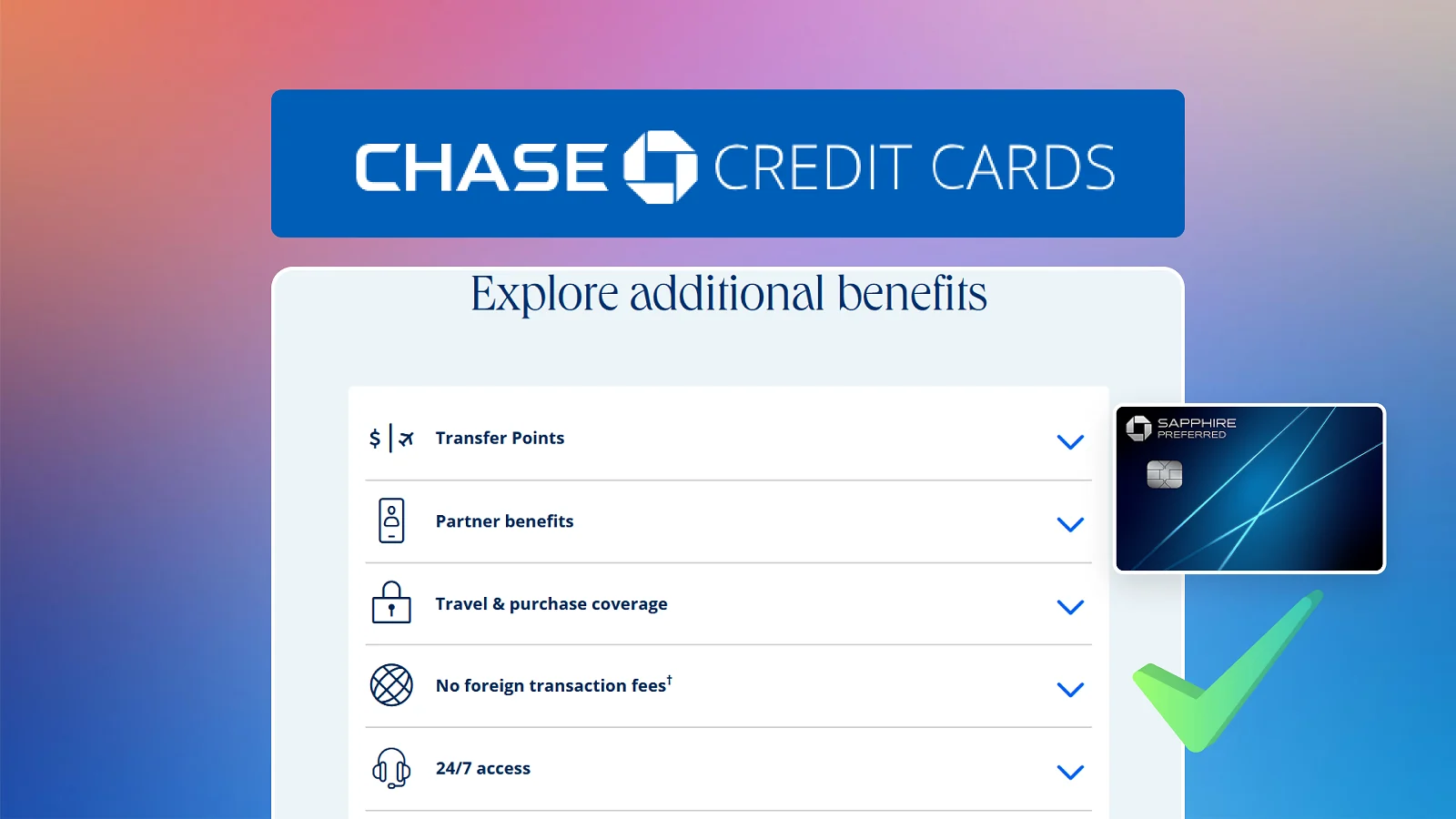
Editor’s Pick: Chase Sapphire Preferred. Chosen for the best value-to-fee ratio in this comparison: a $95 annual fee against a 75,000-point welcome bonus and flexible, transferable points. Skip it if you fly often enough to want airport lounge access, where Capital One Venture X or American Express Platinum are the better fit.
How Much Can Travel Rewards Be Worth?
Here is what the winner’s rewards look like in real numbers, with the math shown step by step rather than just asserted.
Chase Sapphire Preferred‘s 75,000-point welcome bonus is worth $750 in travel when redeemed through Chase Travel at the baseline 1 cent per point for new cardholders: 75,000 points x $0.01 = $750.
Everyday spend adds more on top of that. Say you put $2,000 a month on the card, split across categories: $500 on dining at 3 points per dollar earns 1,500 points, $500 on travel outside the Chase Travel portal at 2 points per dollar earns 1,000 points, and the remaining $1,000 on everything else at 1 point per dollar earns 1,000 points. That is 3,500 points a month, or 42,000 points over a year (3,500 x 12 = 42,000), worth about $420 in travel at the same 1-cent baseline: 42,000 points x $0.01 = $420.
| Source | How it’s calculated | Approx. travel value |
|---|---|---|
| 75,000-point welcome bonus | 75,000 x $0.01 | ~$750 |
| ~42,000 points from a year of spend | 42,000 x $0.01 | ~$420 |
| Gross first-year rewards value, before annual fee | $750 + $420 | ~$1,170 |
These figures use Chase‘s 1-cent-per-point baseline for new cardholders, confirmed on Chase‘s official page on August 24, 2026. Value can climb higher on Chase Travel bookings with an active Points Boost offer, up to 1.5 cents per point for this card.
Chase Sapphire Reserve caps higher, at 2 cents per point, but that is a different card. At the full 1.5-cent Points Boost rate, the same welcome bonus and annual spend would be worth about $1,125 and $630, for a first-year total near $1,755, though that requires booking Points Boost-eligible travel and is not guaranteed. Redemption programs change, so reconfirm the current value before you count on it.
How to Apply for a Travel Credit Card
Whichever of the best credit cards for travel you choose from this list, the application steps below are nearly identical. Applying for a travel credit card like Chase Sapphire Preferred takes about 5 to 10 minutes online, often with an instant decision.
- Complete the online application with your basic ID and SSN or ITIN.
- Get an instant decision, or wait a few business days if the issuer needs a manual review.
- Activate the card online or by phone once it arrives.
- Meet the minimum-spend requirement within the bonus window to earn the welcome bonus.
Choosing the Best Travel Credit Card for You
The single biggest factor in choosing a travel rewards credit card is the annual fee, weighed against how much of it you will actually use in perks and rewards.
- If you want the best overall value with no strings: Chase Sapphire Preferred, a $95 fee against a 75,000-point bonus.
- If you fly often enough to use lounges and travel credits: Capital One Venture X, despite its $395 fee.
- If money is no object and you want the biggest lounge network and perk stack: American Express Platinum, at $895 a year.
- If you spend heavily on hotels, dining, and gas: Citi Strata Premier, at a modest $95 fee.
- If you want to start with zero annual-fee risk: Bank of America Travel Rewards, at $0 a year.
Minimum eligibility: all five require you to be 18 or older with a US mailing address and a valid SSN or ITIN. Capital One Venture X specifically requires Excellent credit, and the other premium cards favor good-to-excellent files, so a thin or damaged credit history is the main thing that will hold an application back.
How We Rate Credit Cards
We apply the same four-part scorecard across every one of our best credit cards for travel roundups, and fee-to-rewards value carries the most weight. This travel credit card comparison is not arbitrary: we pull each fee, APR, and bonus directly from the issuer’s official page, then weight the cards on the criteria below.
- Fee-to-rewards value (40%): what the annual fee buys back in points, perks, and credits.
- Fees and transparency (25%): APR range, foreign transaction fees, and how clearly terms are disclosed.
- Eligibility (20%): the credit profile needed to qualify.
- Support and reviews (15%): issuer support and independent ratings like Trustpilot.
We re-verify every fee, APR, and welcome offer quarterly, and sooner whenever an issuer flags a change, as Chase did with the Sapphire Preferred‘s welcome bonus.
Final Verdict
For most travelers, Chase Sapphire Preferred is the best credit card for travel right now, and it is our pick for the best travel credit card 2026 has to offer at this price point. Its $95 annual fee, 75,000-point welcome bonus, and flexible transferable points give it the strongest value-to-fee ratio in this comparison, without demanding a premium price.
Capital One Venture X is the runner-up for frequent flyers who will use its lounges and $300 travel credit, American Express Platinum is the maximalist pick for the richest perks at $895, Citi Strata Premier rewards everyday spending at a low fee, and Bank of America Travel Rewards is the no-fee way to start. Welcome offers and APRs move often, so confirm the live terms before you apply.
Ready to earn your next trip? Apply today.
FAQs
Chase Sapphire Preferred is our best credit card for travel right now, with a 75,000-point bonus after $5,000 in purchases within three months and a $95 annual fee. It’s also our best travel rewards credit card for flexible points, while Capital One Venture X is the premium runner-up.
Chase Sapphire Preferred’s 75,000-point bonus is worth about $750 at the standard 1-cent-per-point redemption rate, or up to $1,125 on eligible Points Boost bookings. Transfers to airline and hotel partners can offer different value, making it a strong travel rewards credit card for flexible redemptions.
It varies by card. Capital One Venture X explicitly requires Excellent credit, while the other four here do not publish an exact threshold but generally favor good-to-excellent credit, with the premium cards being the least forgiving of a thin or damaged file.
No, not the ones built for travel. None of the five cards compared here charges a foreign transaction fee, which is a standard baseline for travel cards, unlike many everyday or store cards that add roughly 3% abroad.
Yes, but options can be more limited. Bank of America Travel Rewards is the best no annual fee travel credit card in this comparison, with a $0 annual fee and no foreign transaction fee. Premium options, such as Capital One Venture X, are generally better suited to applicants with stronger credit profiles.