


20 Best Dual Lands in MTG in 2026: Master Power, Value, and Mana Base Consistency


The best dual lands in MTG help decks consistently access the colors they need, which ultimately reduces stalled openings and smooths out gameplay across every stage of the match. Also, building a solid mana base doesn’t have to be complicated. We’ll cover premium staples and practical alternatives to match any strategy and budget.
This guide will also offer a breakdown of how each major land cycle functions, what makes it strong, and when it belongs in a deck.
Jump to:
20 Best Dual Lands in MTG: Expert Rankings From Fetch Lands to Perfect Alternatives
Picking up the best dual lands in MTG comes down to understanding what each land cycle is designed to do. For players building multiplayer decks, the best dual lands for commander are those that balance consistency, speed, and reliability across longer games.
The sections below break down the strongest options and explain where each type of dual land performs best.
1. The Fetch Lands [Best Dual Lands in MTG for Mana Consistency and Deck Thinning]
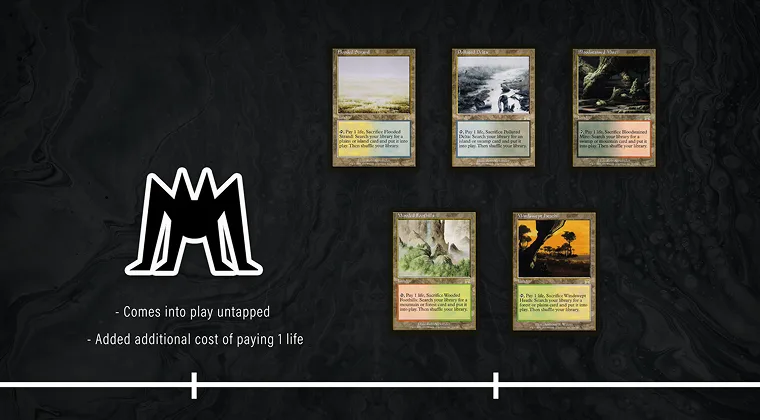
Primary strength: Perfect mana fixing
| Enters untapped | Yes |
| Fetchable | No |
| Life cost | 1 life |
| Color fixing reliability | Excellent |
| Late-game value | High |
| Best formats | Commander, Modern, Legacy |
I consider Fetch Lands to be the best, or at least one of the best dual lands in MTG, and they’re really a gold standard for mana bases because they provide the most precise color access possible. They search for lands with basic land types, which means you always have access to the right colors when you need them, even in three- or five-color builds.
Fetch Lands are strongest when paired with shock lands or typed duals to maximize color access.
Their power scales with deck quality, which enables landfall triggers, graveyard synergies, and smoother draws throughout the game, especially in decks built around the best white cards in MTG, where flexible early color access is critical.
Cards like Scalding Tarn and Verdant Catacombs remain staples wherever consistency matters most.
2. The Original Dual Lands [Most Powerful Zero-Downside Option]
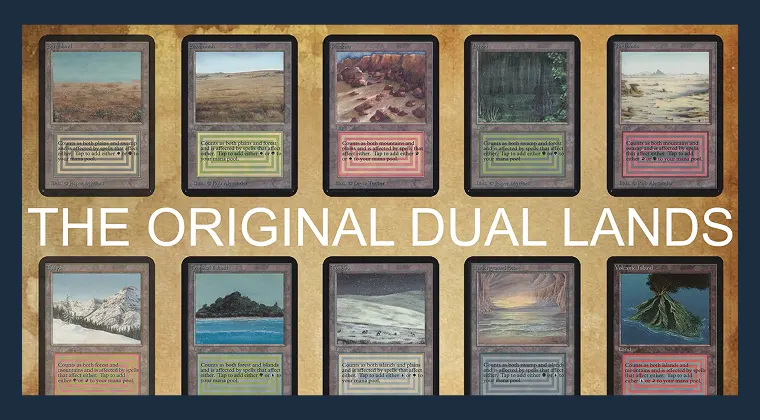
Primary strength: Flawless mana fixing
| Enters untapped | Yes |
| Fetchable | Yes |
| Life cost | None |
| Color fixing reliability | Perfect |
| Late-game value | Medium |
| Best formats | Commander, Legacy |
The Original Dual Lands are unmatched in efficiency, and they offer perfect color access with no tempo loss or life cost. Because they always enter untapped and count as two basic land types, they work seamlessly with fetch lands and typed-land synergies.
Original duals are at their best when fetched early, securing both colors without sacrificing speed or life.
Icons like Underground Sea and Tropical Island remain the benchmark for multicolor mana bases, especially in high-powered Commander environments that support the best angel commanders in MTG, where consistent access to white mana is essential.
Budget constraints often exclude these from most builds, but understanding their power helps players evaluate more accessible alternatives among the best dual lands for Commander.
3. The Shock Lands [Best Fetchable Lands for Competitive Play]
Primary strength: Fetchable dual lands with minimal cost
| Enters untapped | Yes (2 life) |
| Fetchable | Yes |
| Life cost | Optional – 2 life |
| Color fixing reliability | Excellent |
| Late-game value | Medium |
| Best formats | Commander, Modern, Pioneer |
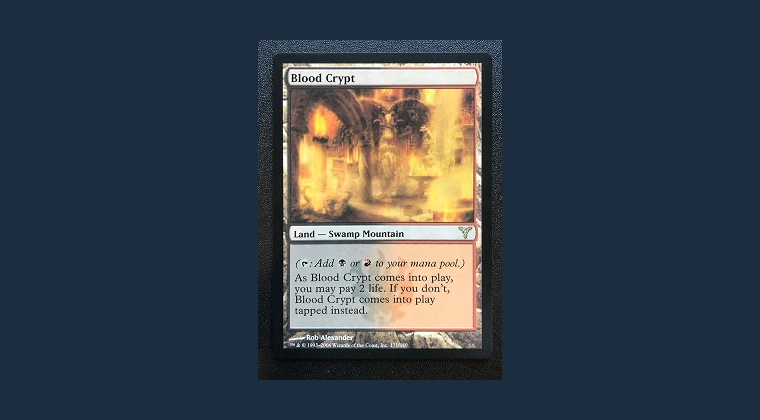
Shock Lands offer near-perfect mana fixing by combining basic land types with flexible entry options. They can enter untapped for the cost of 2 life, which makes them reliable at every stage of the game while remaining fully compatible with fetch lands. This flexibility is especially important for decks featuring the best black cards in MTG, where access to multiple colors can outweigh the cost of a small life payment.
Shock Lands shine in Commander when fetched untapped early and played tapped later to preserve life.
Staples like Hallowed Fountain and Blood Crypt are cornerstones of modern mana bases because they deliver high consistency without the premium price of original duals. If you are someone who seeks premium versions, you may find these in some of the collector booster packs that come with alternate art and special treatments.
4. The Battlebond Lands [Best Untapped Fixing for Commander Multiplayer]
Primary strength: Multiplayer reliability
| Enters untapped | Yes (multiplayer) |
| Fetchable | No |
| Life cost | None |
| Color fixing reliability | Very high |
| Late-game value | Medium |
| Best formats | Commander |
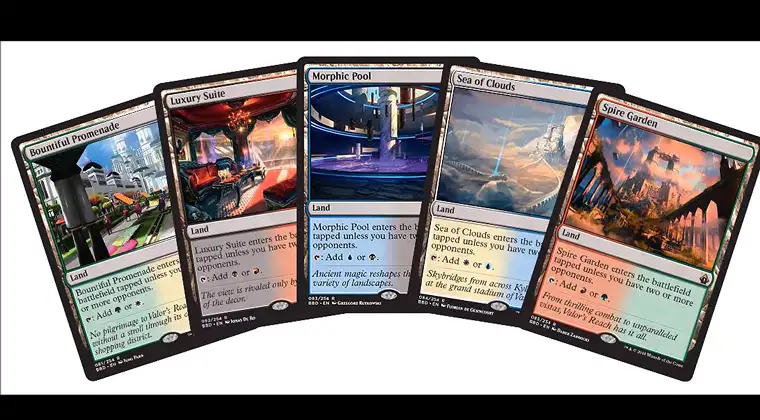
Battlebond Lands are tailored for multiplayer formats, which makes them exceptionally reliable in Commander. This reliability makes them especially valuable in Commander preconstructed decks and builds led by the top partner commanders in MTG, where stable mana across multiple colors matters more than early-game optimization.
Battlebond Lands lose value in one-on-one formats, but are near-auto-includes in most Commander mana bases.
These lands represent some of the best dual lands in MTG specifically for Commander pods, where their reliability justifies their inclusion over faster alternatives that falter in multiplayer settings.
Cards such as Luxury Suite and Sea of Clouds provide consistent fixing where it matters most, especially in three- and four-player pods.
5. The Fast Lands [Best Early-Game Tempo Without Life Loss]
Primary strength: Early-game tempo
| Enters untapped | Yes (early turns) |
| Fetchable | No |
| Life cost | None |
| Color fixing reliability | High (early) |
| Late-game value | Low |
| Best formats | Modern, Pioneer, Commander |
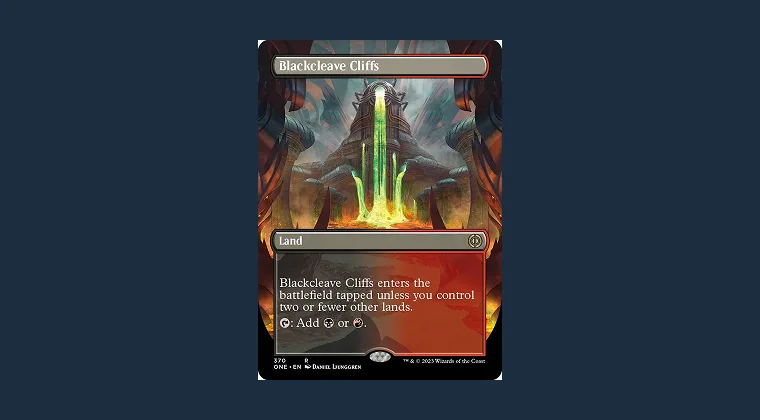
Fast Lands excel at delivering untapped mana in the opening turns, which makes them ideal for aggressive and low-curve strategies. By entering untapped while players control two or fewer other lands, they enable explosive starts without life loss or setup requirements.
Fast Lands perform best in low-average mana value decks that prioritize early plays over late-game scaling.
Among the best dual lands in MTG for aggressive strategies, they trade late-game reliability for explosive early turns.
Lands like Blackcleave Cliffs and Seachrome Coast are especially valuable in decks that want to establish pressure early and capitalize on fast openings, which is critical for strategies built around the top red cards in MTG.
6. The Horizon Lands [Best Late-Game Card Advantage Engine]
Primary strength: Late-game utility
| Enters untapped | Yes |
| Fetchable | No |
| Life cost | 1 life per tap |
| Color fixing reliability | High |
| Late-game value | High |
| Best formats | Modern, Commander |
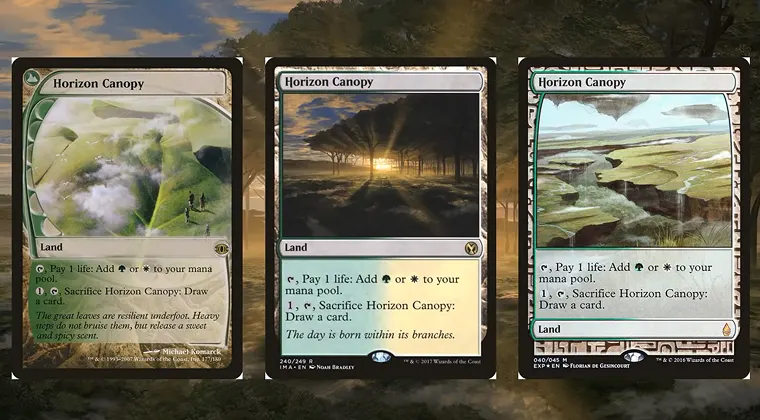
Horizon Lands stand out by turning excess mana sources into real card advantage. They enter untapped for immediate access to both colors, then can be sacrificed later to trigger a card draw ability when mana is no longer needed.
Horizon Lands are best in decks that value card flow and expect games to go beyond the early turns.
They’re some of the best dual lands in MTG for formats where games extend beyond turn six. Lands like Sunbaked Canyon and Waterlogged Grove are especially strong in longer games, where flooding is a real risk.
7. The Pain Lands [Most Flexible Untapped Access Across All Turns]
Primary strength: Flexible untapped mana
| Enters untapped | Yes |
| Fetchable | No |
| Life cost | 1 life for colored mana |
| Color fixing reliability | High |
| Late-game value | Medium |
| Best formats | Commander, Pioneer, Modern |
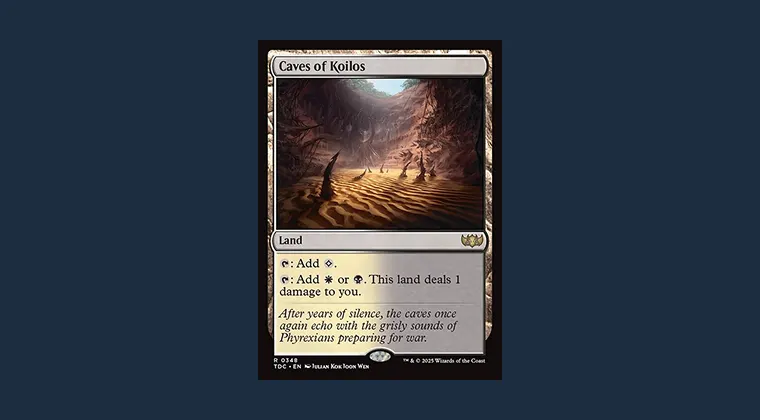
Pain Lands provide immediate, reliable access to both colors without any entry conditions. They always enter untapped and only cost life when colored mana is needed, which makes them dependable across all stages of the game.
Pain Lands are most effective in Commander decks that can absorb small, incremental life loss over longer games.
Lands like Yavimaya Coast and Sulfurous Springs are especially valuable in multicolor decks that need consistency without complex setup, including those led by the top vampire commanders in MTG, where life is often treated as a resource.
Their consistent performance across all game stages makes them some of the best dual lands in MTG for decks that value flexibility more than specialized conditions.
8. The Slow Lands [Best Mid-Game Reliability Without Conditions]
Primary strength: Mid- to late-game consistency
| Enters untapped | Yes (from turn three) |
| Fetchable | No |
| Life cost | None |
| Color fixing reliability | High |
| Late-game value | Medium |
| Best formats | Commander, Standard, Pioneer |
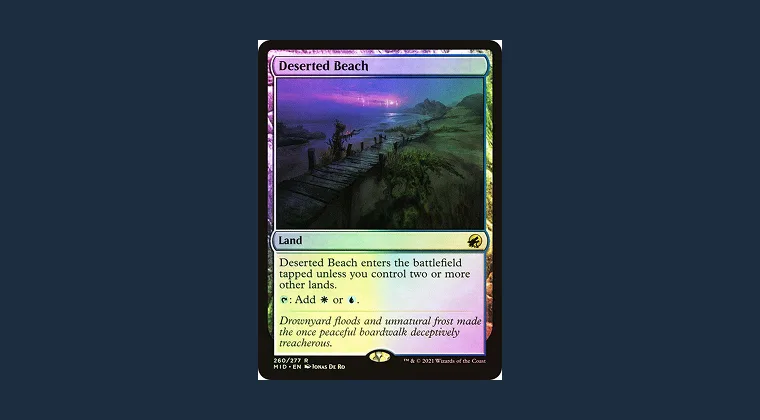
Slow Lands are built for stable mana development after the early turns. They enter the battlefield untapped once a player controls two or more other lands, making them highly reliable from turn three onward without costing life.
Slow Lands pair well with faster duals that cover early turns, which results in a smooth curve across the game.
For decks that don’t need immediate turn-one or turn-two fixing, these rank among the best dual lands in MTG that balance reliability with zero life cost. Cards like Deserted Beach and Haunted Ridge fit naturally into decks that value steady progression over explosive starts.
9. The Pathways [Simplest Two-Color Fixing for Streamlined Decks]
Primary strength: On-demand color choice
| Enters untapped | Yes |
| Fetchable | No |
| Life cost | None |
| Color fixing reliability | Medium |
| Late-game value | Low |
| Best formats | Commander, Standard, Pioneer |
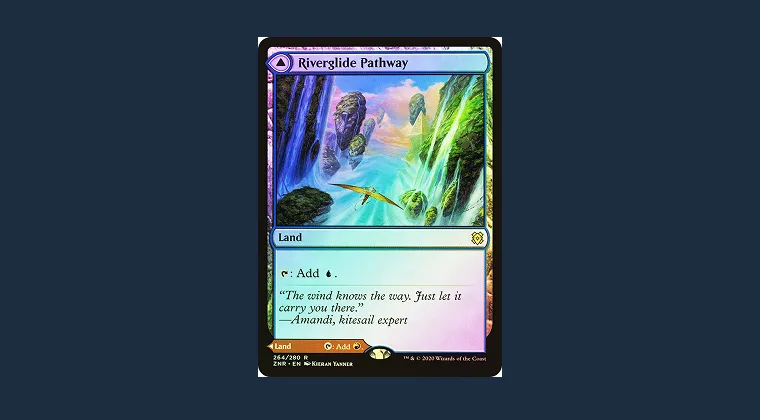
Pathway Lands offer immediate control over color access by letting players choose which color the land produces as it enters the battlefield. With no life loss and no tapped condition, they provide clean, efficient fixing for two-color decks that value simplicity and speed.
Pathways perform best in two-color decks that do not rely on fetch lands or typed land synergies.
Cards like Riverglide Pathway and Brightclimb Pathway excel in streamlined mana bases where flexibility on turn one matters most. While not universally the best dual lands in MTG, they excel in straightforward two-color builds that prioritize clean, uncomplicated mana bases.
Their low entry price and zero-setup requirements make Pathways solid budget picks in case you want to assemble the best dual lands for Commander without breaking the bank.
10. The Filter Lands [Best for Color-Intensive Mana Requirements]
Primary strength: Color-intensive mana smoothing
| Enters untapped | Yes |
| Fetchable | No |
| Life cost | None |
| Color fixing reliability | High |
| Late-game value | Medium |
| Best formats | Commander, Modern |
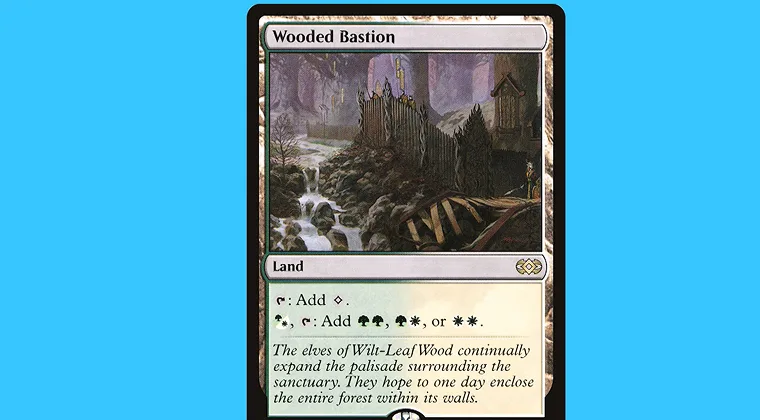
Filter Lands excel at converting generic mana into exact color combinations, which makes them invaluable for decks with demanding color requirements.
Filter Lands are strongest in decks that already produce consistent colors and need help meeting strict mana costs.
In color-intensive strategies, these often outperform more popular options and deserve consideration as some of the best dual lands in MTG for specific builds.
Mystic Gate and Graven Cairns turn one mana into two specific colors. This helps cast double- or triple-piped spells consistently, which is especially important for decks built around the top blue cards in MTG that demand precise color access. They come in handy most when supported by a strong base of colored sources.
11. The Triomes [Best Three-Color Fixing With Fetchable Versatility]
Primary strength: Three-color mana fixing
| Enters untapped | No |
| Fetchable | Yes |
| Life cost | None |
| Color fixing reliability | Excellent |
| Late-game value | Medium |
| Best formats | Commander, Pioneer |
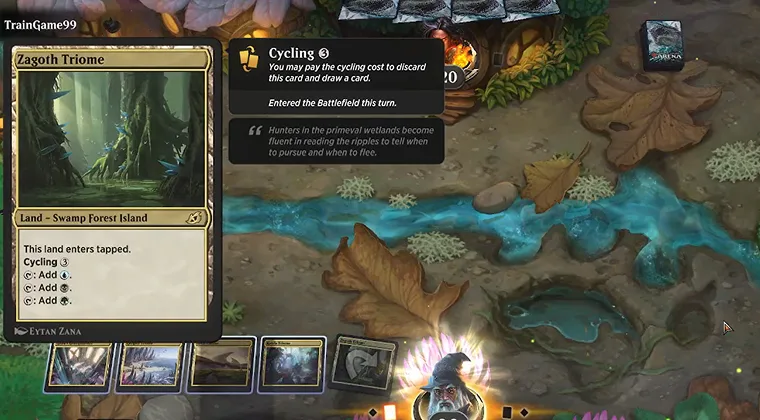
Triomes provide exceptional fixing for three-color decks by offering access to three colors and carrying three basic land types. Originally introduced in premier MTG sets, they’re fetchable and highly synergistic with land-based strategies, which allows early access to all required colors in a single land drop.
Fetching a Triome early can stabilize all three colors at once, even if it enters tapped.
For three-color Commander decks, Triomes consistently rank among the best dual lands in MTG due to their fetchability and comprehensive color coverage.
Cards like Zagoth Triome and Jetmir’s Garden are foundational pieces for multicolor Commander decks, particularly those built around the top dragon commanders in MTG, where fixing three or more colors early is essential.
12. The Check Lands [Best Performance With Typed Land Synergies]
Primary strength: Conditional untapped consistency
| Enters untapped | Yes (with conditions) |
| Fetchable | No |
| Life cost | None |
| Color fixing reliability | Medium |
| Late-game value | Medium |
| Best formats | Commander, Pioneer |
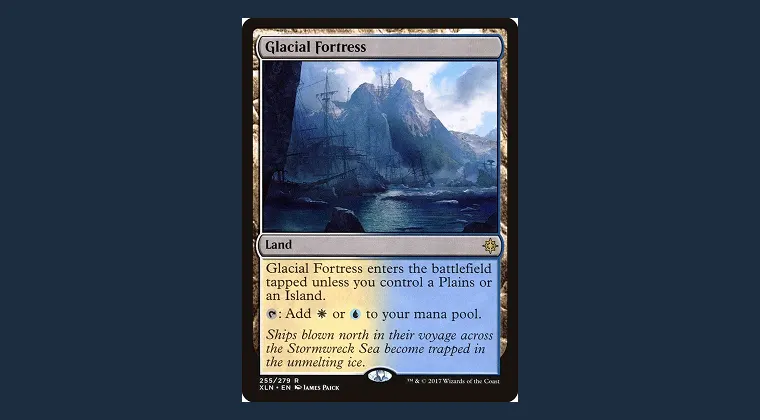
Check Lands reward decks with properly structured mana bases by entering untapped when the right basic land types are already in play. When paired with shock lands, triomes, or original duals, they provide reliable fixing without life loss.
Check Lands improve dramatically as more typed duals are added to the mana base.
When properly supported, Check Lands function as some of the best dual lands in MTG for decks already running typed duals like shocks or triomes.
Lands like Glacial Fortress and Dragonskull Summit are solid options in decks built around typed lands.
13. The Surveil Lands [Best Deck Filtering and Graveyard Setup]
Primary strength: Deck filtering and graveyard setup
| Enters untapped | No |
| Fetchable | Yes |
| Life cost | None |
| Color fixing reliability | Medium |
| Late-game value | Medium |
| Best formats | Commander |
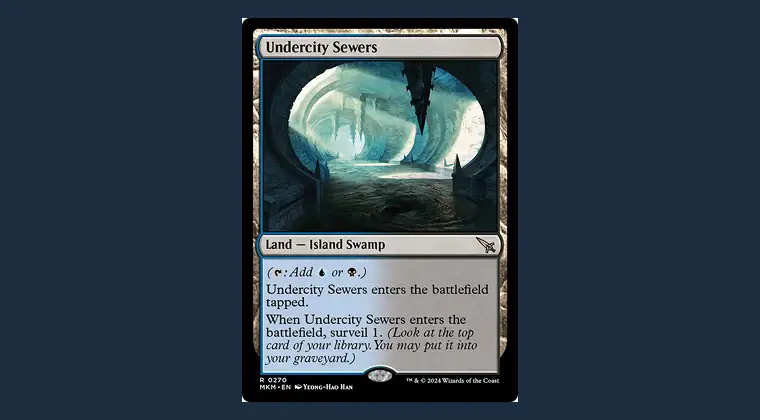
Surveil Lands offer value by improving card quality the moment they enter the battlefield. While they always enter tapped, being fetchable makes them easy to include in slower or synergy-driven decks.
Surveil Lands are best fetched early, when filtering future draws has the greatest impact.
The surveil trigger helps smooth draws and fuels graveyard strategies, which results in lands like Undercity Sewers being especially appealing in Commander builds led by the top zombie commanders in MTG, where recursion and graveyard value are central.
The filtering value positions Surveil Lands among the best dual lands in MTG for graveyard-focused Commander strategies that can afford the tapped entry.
14. The Bounce Lands [Highest Mana Multiplication for Value Decks]
Primary strength: Mana efficiency
| Enters untapped | No |
| Fetchable | No |
| Life cost | None |
| Color fixing reliability | Medium |
| Late-game value | High |
| Best formats | Commander |
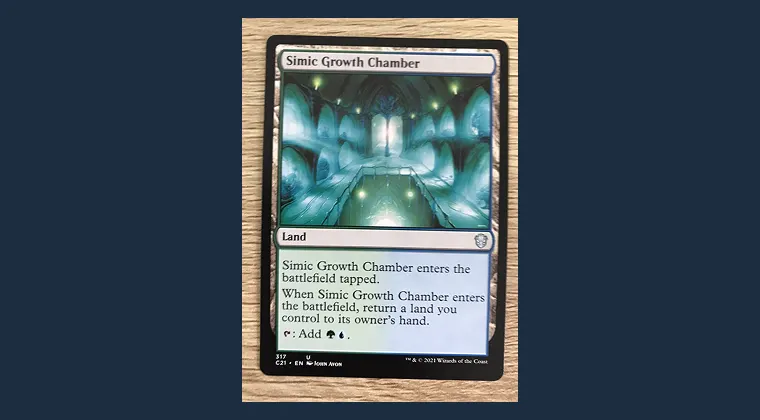
Bounce Lands generate value by producing two mana from a single land drop, effectively acting as both a land and a resource multiplier. By returning a land to hand, they enable extra landfall triggers and synergize well with utility lands.
Bounce Lands are strongest when paired with lands that have enter-the-battlefield effects or landfall synergies.
In landfall-heavy strategies, Bounce Lands can function as some of the best dual lands in MTG despite their tempo cost, and that’s simply because they generate repeatable value throughout longer games.
Cards like Simic Growth Chamber and Rakdos Carnarium are common in slower Commander decks that prioritize long-term value over early speed, especially those led by the best token commanders in MTG, where repeated land drops and resource scaling matter more than ever. For players building extensive land collections, proper MTG storage solutions help organize and protect valuable dual land investments.
15. The Verge Lands [Best Turn-One Color Guarantee]
Primary strength: Guaranteed early access
| Enters untapped | Yes |
| Fetchable | No |
| Life cost | None |
| Color fixing reliability | Medium |
| Late-game value | Low |
| Best formats | Commander, Standard |
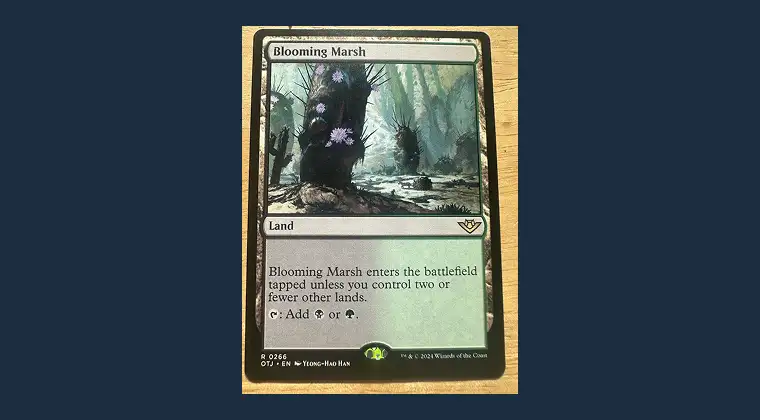
Verge Lands ensure reliable access to at least one color from turn one, while offering conditional access to a second color as the game progresses. This makes them dependable inclusions in two-color decks that value early stability without sacrificing flexibility later.
Verge Lands work best in decks where one color is more critical in the early turns than the other.
Lands like Blooming Marsh and Inspiring Vantage fit naturally into mana bases that prioritize consistency over complexity.
While not the best dual lands in MTG for all situations, they provide exceptional turn-one consistency for decks with asymmetric color requirements.
Newer Commander players building their first multicolor decks often overlook Verge Lands, but they deserve attention because they are some of the best dual lands for Commander when paired with the thoughtful sequencing of colors.
16. The Creature Lands (Worldwake) [Best Built-In Late-Game Win Condition]
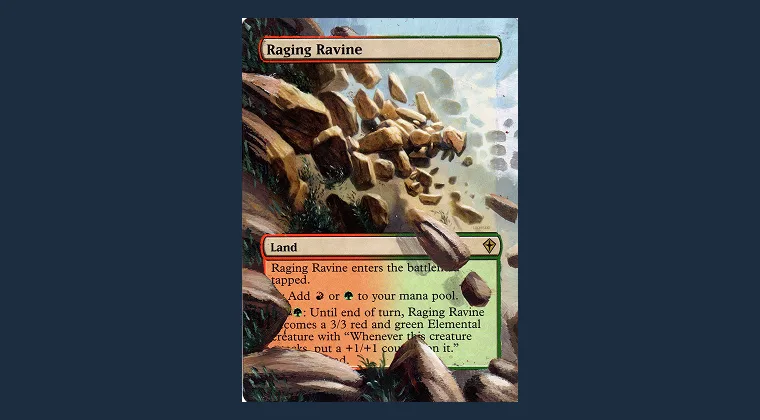
Primary strength: Late-game board presence
| Enters untapped | No |
| Fetchable | No |
| Life cost | None |
| Color fixing reliability | Medium |
| Late-game value | High |
| Best formats | Commander, Modern |
Worldwake creature lands provide value by turning mana sources into legitimate threats once the game goes long. While they enter tapped, their ability to become creatures gives decks extra pressure without dedicating spell slots.
Creature lands are most effective in control or midrange decks that expect games to reach the late stages.
Control and midrange pilots often consider these to be some of the best dual lands in MTG for their ability to convert mana into threats without diluting spell density.
Lands like Celestial Colonnade and Raging Ravine are especially effective in slower strategies that want resilient win conditions built into the mana base, complementing decks that rely on the best colorless cards in MTG for flexible, non-colored impact.
17. The Tango Lands [Best Budget Option for Basic-Heavy Decks]
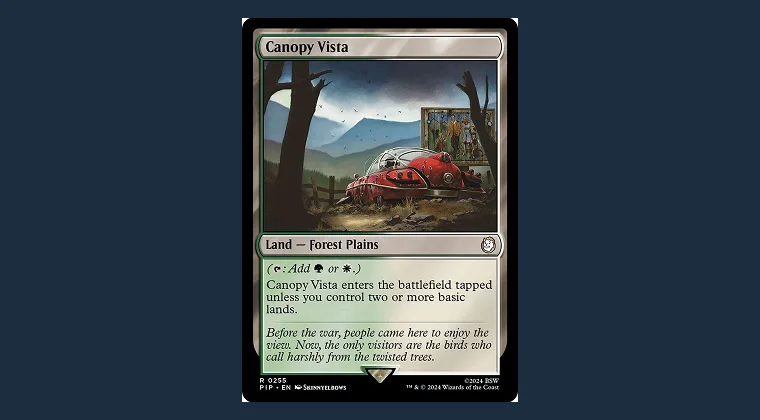
Primary strength: Basic-heavy deck synergy
| Enters untapped | Yes (with basics) |
| Fetchable | Yes |
| Life cost | None |
| Color fixing reliability | Medium |
| Late-game value | Medium |
| Best formats | Commander |
Tango Lands reward decks that commit to running a healthy number of basic lands. They offer strong fixing without life loss in well-structured mana bases by entering untapped once two or more basics are in play.
Tango Lands perform best in decks with at least eight to ten basic lands to ensure consistent untapped entry.
For budget-conscious players running basic-heavy lists, Tango Lands qualify as some of the best dual lands in MTG that balance cost with performance.
Lands like Canopy Vista and Prairie Stream are reliable options for Commander decks that balance efficiency with budget considerations, particularly those built around the top green cards in MTG, where basics and ramp-heavy mana bases are common.
18. The Cycling Dual Lands [Best Flood Protection for Long Games]
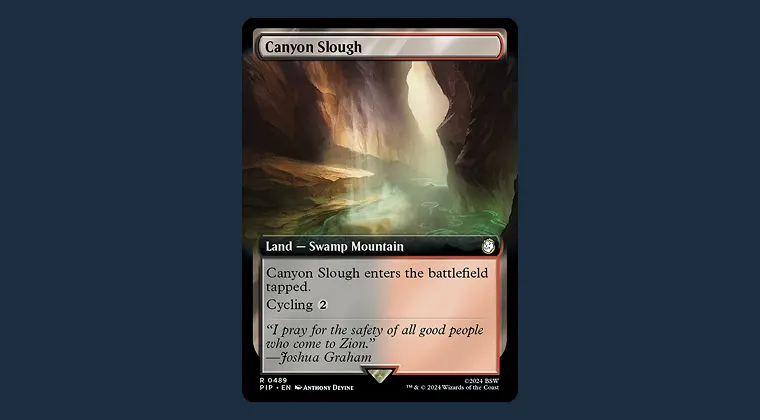
Primary strength: Flood protection
| Enters untapped | No |
| Fetchable | Yes |
| Life cost | None |
| Color fixing reliability | Medium |
| Late-game value | High |
| Best formats | Commander |
Cycling Dual Lands helps mitigate one of Magic’s biggest issues by turning excess lands into new cards. While they always enter tapped, their ability to be cycled later keeps draws relevant in longer games.
Cycling Duals are strongest in decks that expect long games and can afford tapped lands early.
Also, the built-in flood protection makes these some of the best dual lands in MTG for slower Commander decks that prioritize card flow over speed. Lands like Irrigated Farmland and Canyon Slough are especially useful in slower Commander decks that value flexibility over speed.
19. The Snow Dual Lands [Best for Snow-Synergy Strategies]
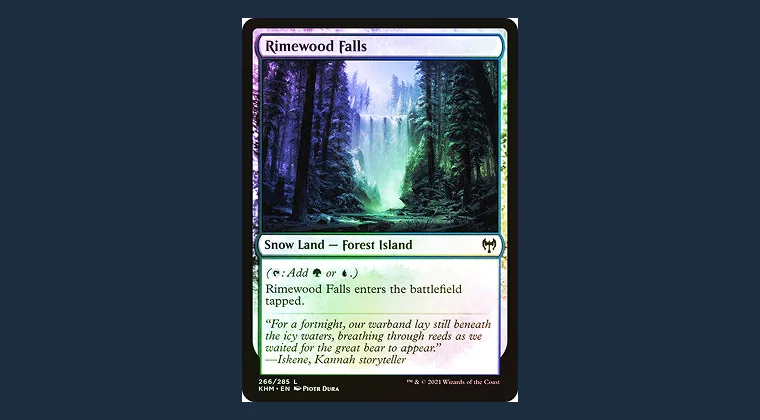
Primary strength: Snow synergy
| Enters untapped | No |
| Fetchable | Yes |
| Life cost | None |
| Color fixing reliability | Medium |
| Late-game value | Low |
| Best formats | Commander |
Snow Dual Lands are purpose-built for decks that actively leverage snow mechanics and payoffs. While they always enter tapped, they provide stable dual-color fixing and count as snow permanents, enabling effects that scale with the number of snow sources in play.
Snow Dual Lands are only worth prioritizing when the deck includes cards that explicitly reward snow permanents.
They’re only the best dual lands in MTG when snow synergies are actively leveraged. Otherwise, I would say that other tapped duals offer superior utility.
Also, lands like Rimewood Falls and Volatile Fjord are reliable inclusions for snow-focused Commander strategies that care more about synergy than raw speed.
20. The Temple Lands [Best Draw Smoothing With Scry Value]
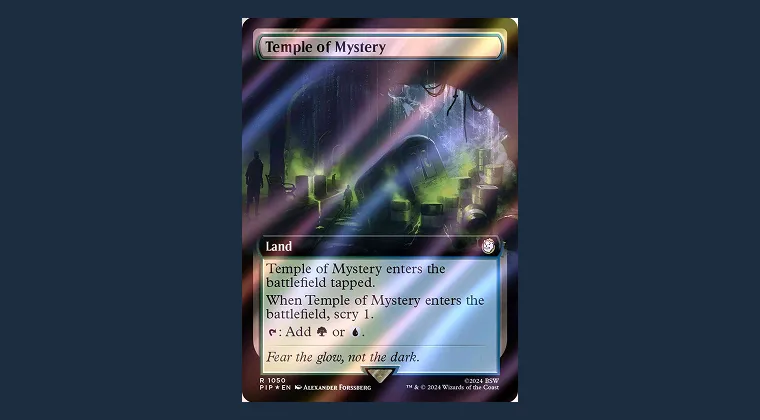
Primary strength: Draw smoothing
| Enters untapped | No |
| Fetchable | No |
| Life cost | None |
| Color fixing reliability | Medium |
| Late-game value | Medium |
| Best formats | Commander, Standard |
Temple Lands focus on improving draw quality rather than speed. Although they always enter tapped, the built-in scry helps filter upcoming draws, which makes them valuable in slower decks that prioritize consistency and setup.
Temple Lands are best in decks that can afford a slower opening and benefit from incremental card selection.
For control-oriented Commander decks that value setup, Temple Lands can serve as some of the best dual lands in MTG by smoothing draws over multiple turns. Lands like Temple of Mystery and Temple of Silence fit naturally into Commander builds where early tempo is less important than the overall long-term stability.
How to Choose the Best Dual Lands in MTG
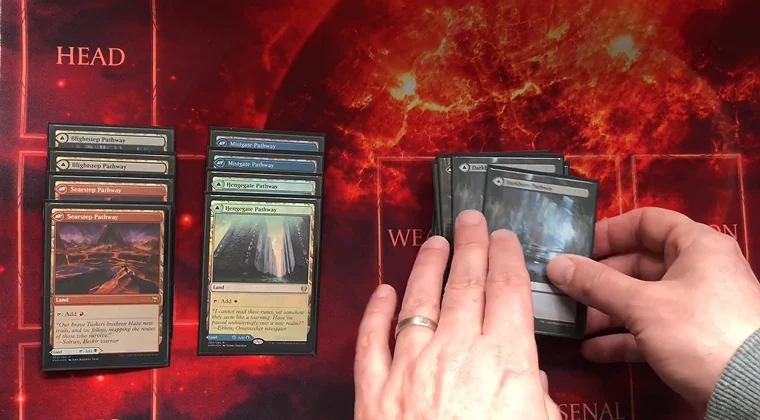
Your deck’s speed, color count, and budget all determine which dual lands work best. The right combination of the best dual lands in MTG is the one that manages to deliver consistent mana while also aligning with your strategy and unavoidable financial constraints.
| Factor | Why It Matters | Best Options | Budget Alternatives |
|---|---|---|---|
| Entry Speed | Untapped lands maintain tempo and enable faster plays | Fetch Lands, Shock Lands, Original Duals | Pain Lands, Pathways, Battlebond Lands |
| Budget | Prices range from $0.25 to $400+ per land | Pain Lands ($1-3), Check Lands ($2-5) | Temple Lands ($0.25), Slow Lands ($1-2) |
| Format Legality | Some cycles are banned in certain formats | Modern: Shocks/Fetches; Commander: All | Standard: Slow Lands, Pathways |
| Deck Speed | Aggressive decks need untapped, control can afford tapped | Fast Lands, Pain Lands, Shocks | Slow Lands, Cycling Duals, Temples |
| Color Count | 3+ colors need different fixing than 2-color decks | Triomes, Fetch Lands, Original Duals | Check Lands with typed duals, Pathways |
| Fetchability | Basic land types enable fetch land synergies | Original Duals, Shocks, Triomes, Surveil Lands | Non-typed duals with other benefits |
Deck Speed and Strategy Alignment
Your deck’s speed determines which dual land cycles perform best. Aggressive strategies need immediate access to mana, while control and midrange builds can afford to wait a turn.
For aggressive and tempo decks:
- Prioritize lands that enter untapped consistently (Fetch Lands, Fast Lands, Pain Lands)
- Avoid tapped entries that slow down early pressure
- Accept minor life loss as a reasonable trade-off for speed
For control and value-oriented decks:
- Tapped entries matter less when casting expensive spells turn 4+
- Extra utility like scry, cycling, or card draw provides long-term value
- Lands like Temples, Slow Lands, and Cycling Duals become viable options
Budget Considerations Without Sacrificing Performance
The best dual lands in MTG span an enormous price range, but strong mana bases exist at every budget level. Smart choices at lower price points often deliver 80-90% of premium performance.
Budget-friendly options that deliver strong performance:
- Pain Lands ($1-3): Reliable untapped fixing with minimal life cost in Commander’s 40-life format
- Check Lands ($2-5): Enter untapped consistently when paired with typed duals or basics
- Pathways ($1-4): Zero conditions, zero life loss, clean fixing for two-color decks
- Slow Lands ($1-2): Untapped from turn 3 onward, perfect for mid-range strategies
- Battlebond Lands ($3-8): Unconditional untapped fixing in multiplayer Commander games
When to invest in premium options:
- Building competitive or high-power decks where consistency determines wins
- Running 3+ colors where typed duals and fetch synergies matter most
- Long-term collection building where premium lands hold value across multiple decks
Format Restrictions and Legal Options
Format legality directly impacts which cycles are available. The best dual lands for Commander differ significantly from Modern or Standard options due to card pool restrictions.
Commander:
- Access to the largest card pool, including Reserved List originals
- Games typically last longer, making reliability more important than explosive speed
- Higher starting life total (40) makes life payments less painful
- The multiplayer nature makes Battlebond Lands a premium option
Modern:
- Fetch/Shock synergy defines optimal mana bases
- Triomes provide three-color fixing with cycling flexibility
- Fast Lands excel in aggressive strategies
- Original Duals are banned
Standard:
- Limited to recent sets, rotating card pool
- Currently includes Slow Lands and Pathways
- Triomes rotate in and out based on the current sets
- Budget-friendly due to higher availability
Color Requirements and Mana Base Composition
The number of colors in your deck determines how many dual lands you need and which types perform best. Two-color decks have different requirements than three-color or five-color builds.
For two-color decks:
- Run 8-12 dual lands for consistent color access
- Pathways, Pain Lands, and Check Lands provide clean fixing
- Can afford more basics, enabling Battle Lands and Tango Lands
- Simpler mana bases reduce need for fetch land investment
For three or more colors:
- Increase dual land count to 12-16 for reliable fixing
- Triomes become essential for comprehensive color coverage
- Fetch Lands gain significant value through typed dual synergies
- Basic land counts drop, which makes typed dual requirements critical
Understanding these factors can help you to identify the best dual lands in MTG for specific deck requirements rather than defaulting to expensive staples that may not match your strategy.
How Do Dual Lands Work in MTG?
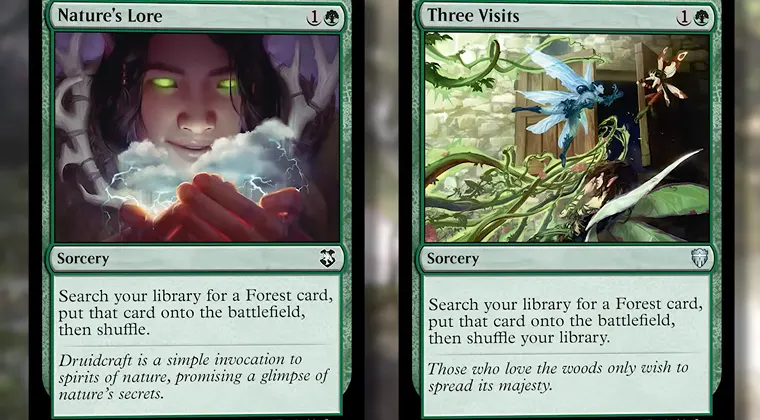
Dual lands are lands that can produce two different colors of mana through their mana abilities, which makes them a core part of multicolor deckbuilding.
Instead of relying solely on basic lands, dual lands help decks access the colors they need more consistently, which reduces the chances of stalled turns or uncastable spells. Understanding these mechanics is paramount because it helps you to easily identify the best dual lands in MTG for their specific deck archetype and format requirements. In formats like Commander, where decks often run three or more colors, this consistency is critical, especially when trying to reliably cast the best MTG cards on curve.
The main way dual lands differ from one another is how they enter the battlefield:
| Entry Type | Condition | Examples |
|---|---|---|
| Always Untapped | No requirements | Original Duals, Pain Lands, Horizon Lands |
| Conditional Untapped | Control 2+ other lands | Slow Lands |
| Conditional Untapped | Control basic land types | Check Lands |
| Conditional Untapped | 2+ opponents | Battlebond Lands |
| Conditional Untapped | Pay life | Shock Lands |
| Conditional Untapped | Control 2 or fewer lands | Fast Lands |
| Always Tapped | Cannot enter untapped | Temple Lands, Cycling Duals, Triomes |
Another key distinction is whether a dual land has basic land types. Typed dual lands, such as shock lands and triomes, count as basic land types like Plains or Island. This matters because fetch lands and many spells specifically search for lands with those types. Non-typed duals cannot be fetched this way, but often compensate with speed, flexibility, or additional utility.
Every dual land comes with a cost or trade-off:
- Life payments — Shock Lands cost 2 life, Pain Lands cost 1 life per colored mana
- Tempo loss — Tapped entries delay plays by one turn
- Deck construction requirements — Check Lands need typed lands, Tango Lands need basics
- Conditional reliability — Fast Lands fail late game, Battlebond Lands fail in 1v1
To choose the right balance, make sure to consider the format, deck speed, and overall strategy.
I also believe that players should prioritize the best dual lands in MTG when building multicolor decks that need reliable early access to colors, smooth mid-game development, or specific land synergies. The best dual lands for Commander focus more on reliability than speed because multiplayer games typically last longer.
My Overall Verdict
After reviewing every major dual land cycle, three options stand above the rest for delivering consistent, powerful mana bases across formats:
- Fetch Lands remain the gold standard, providing perfect color access while enabling landfall triggers and deck thinning that smooth draws throughout the game.
- Original Dual Lands offer flawless efficiency with zero downside, combining untapped entry with fetchable basic land types.
- Shock Lands deliver near-perfect performance at accessible price points, and it functions as fetchable typed duals with minimal life cost.
These three cycles form the foundation of optimized mana bases in Commander, Modern, and Legacy. For budget-conscious players, Pain Lands and Battlebond Lands provide excellent alternatives that maintain competitive performance without premium pricing.
FAQs
The best dual land in MTG is The Fetch Lands. They provide the highest level of mana consistency, especially in multicolor decks. The best choice always depends on format, budget, and deck speed. Evaluating the best dual lands in MTG requires matching land performance to specific deck needs rather than assuming universal superiority.
Dual lands are expensive due to high demand, limited supply, and power level. Original dual lands are on the Reserved List, meaning they will never be reprinted. Other premium duals are costly because they significantly improve consistency in competitive and Commander formats.
Rarity varies by cycle. Original dual lands are extremely rare due to age and lack of reprints. Modern dual land cycles like shock lands or fetch lands are more available, but still valuable because they are heavily played across multiple formats.
Yes, dual lands are legal, but legality depends on the format. Original dual lands are legal in Commander and Legacy but not in Modern or Standard. Other dual land cycles rotate or remain legal based on the format’s card pool rules.