


Best VPN for Dark Web: Secure Tor Access Without Compromises

Eneba Hub contains affiliate links, which means we may earn a small commission if you make a purchase through them—at no extra cost to you. Learn more


Disclaimer: This guide is for informational purposes only. Eneba Hub does not endorse or support any illegal activities. Accessing the dark web carries inherent risks, and no VPN can guarantee absolute anonymity. Users are solely responsible for properly configuring their security tools and complying with all applicable laws in their jurisdiction.
The best VPN for dark web browsing needs a lot more than basic encryption. You want a provider with verified no-logs policies, leak-proof infrastructure, and ideally native Tor integration. I’ve spent 10+ years testing VPNs specifically for Tor compatibility, running traffic analysis, checking for DNS and WebRTC leaks during onion routing, and verifying that kill switches actually function under real disconnect scenarios.
The dark web isn’t inherently dangerous, but the lack of surface-level safety guardrails means your choice of VPN directly impacts whether your real identity stays protected. One misconfigured setting or a single DNS leak can expose your IP address to malicious exit nodes or compromised .onion sites.
These seven VPNs passed my security reqs for dark web use. Each offers different strengths depending on whether you prioritize built-in Tor servers, maximum audit verification, or budget-friendly protection.
Jump to:
Dark Web VPN Comparison
| VPN | Tor Integration | Multi-Hop | No-Logs Audits | RAM-Only Servers | Jurisdiction | Starting Price |
|---|---|---|---|---|---|---|
| NordVPN | Onion over VPN | Double VPN | Deloitte (2024) | Yes | Panama | $2.99/month (2-year plan) |
| ExpressVPN | Tor-compatible | No | KPMG (2024), Cure53 | Yes | British Virgin Islands | $3.49/month (2-year plan) |
| Proton VPN | Tor over VPN | Secure Core | Securitum (2024), Schellman SOC II (2025) | No | Switzerland | $2.99/month (2-year plan) |
| CyberGhost | Tor-compatible | No | Deloitte (2022–ongoing verification reports) | No | Romania | $2.03/mo (2-year plan) |
| Private Internet Access | Tor compatible (manual setup) | Multi-Hop (VPN + proxy) | Deloitte (2022) + court-proven no-logs | Yes | United States | $2.03/mo (2-year + 3 months plan) |
| Surfshark | Tor-compatible | Dynamic MultiHop | Deloitte (2023, 2025) | Yes | Netherlands | $1.99/month (2-year plan) |
| VeePN | Tor-compatible | Double VPN | None | Yes | Panama | $1.99/month (2-year plan) |
Understanding Dark Web Security Requirements
Before diving into specific VPNs, understanding why the dark web demands heightened security helps contextualize these recommendations.
What Is the Dark Web?
The dark web refers to websites accessible only through specialized software like the Tor browser. These .onion sites don’t appear in standard search engines and require onion routing to access. The Tor network bounces your traffic through multiple volunteer-operated relays, encrypting data at each hop to obscure your origin.
Legitimate uses include accessing censorship-resistant news sources, secure communication for journalists and whistleblowers, privacy-focused services, and content that governments have blocked. The dark web also hosts illegal marketplaces and malicious actors, which is precisely why security matters regardless of your intentions.
Why Tor Alone Isn’t Enough
Tor provides anonymity through onion routing, but it has structural vulnerabilities that a VPN addresses:
- Entry node exposure: The first Tor relay (guard node) sees your real IP address. While it can’t see your destination, a malicious or compromised guard node can log connection attempts from your IP. A VPN masks your real IP from the entry node entirely.
- Exit node risks: Traffic leaving the Tor network through exit nodes is decrypted. Malicious exit node operators can potentially intercept unencrypted data or inject malicious code. While HTTPS protects against content interception, a VPN adds defense-in-depth. So, using a good VPN for network security is a must on the dark web.
- ISP visibility: Your internet service provider can see that you’re connecting to Tor, even though it can’t see what you’re accessing. In some jurisdictions, Tor usage itself draws scrutiny. A VPN hides Tor usage from your ISP completely.
- DNS leaks: Misconfigured Tor setups can leak DNS requests outside the onion network, revealing which sites you’re attempting to access. Quality VPNs handle DNS resolution internally, eliminating this leak vector.
VPN + Tor: The Correct Configuration
The standard approach for dark web access is VPN → Tor (connecting to VPN first, then launching Tor). This configuration:
- Hides your real IP from Tor entry nodes
- Prevents your ISP from seeing Tor usage
- Adds encryption before traffic enters the Tor network
- Provides kill switch protection if the VPN drops
Some VPNs offer dedicated Onion over VPN servers that handle Tor routing automatically, letting you access .onion sites without the Tor browser. I’ll note which providers offer this feature in the reviews below.
Best VPNs for Dark Web Access
After extensive testing, it all came down to my top 7 picks. These VPNs won out because they offer ironclad security, solid privacy policies, and premium functionality that’ll keep you safe in the jungle that is the dark web.
1. NordVPN [Overall Best VPN for Dark Web]

| Feature | Details |
|---|---|
| Onion over VPN | Dedicated specialty servers |
| Multi-Hop | Double VPN servers in 10+ countries |
| Servers | 9,000+ servers in 100+ countries |
| Encryption | AES-256, post-quantum encryption (NordLynx) |
| No-Logs Audit | 5x verified: PwC (2018, 2020), Deloitte (2022, 2023, 2024) |
| Security Audits | Cure53 (2025 apps/infrastructure) |
| Server Infrastructure | RAM-only (diskless) |
| Kill Switch | App-level and system-level options |
| Dark Web Monitor | Scans for leaked credentials |
| Jurisdiction | Panama |
| Simultaneous Connections | Up to 10 devices |
| Starting Price | $2.99/month (2-year plan) |
NordVPN remains the best VPN for dark web access because of its dedicated Onion over VPN servers. These specialty servers route your traffic through NordVPN‘s infrastructure and then through the Tor network automatically. You can access .onion sites using any browser without installing the Tor browser separately.
This matters for operational security. The Tor browser has a distinctive fingerprint, and some threat models benefit from avoiding it entirely. NordVPN‘s Onion over VPN servers let you access dark web resources through a standard browser while maintaining onion routing protection.
The Double VPN feature routes traffic through two separate server locations, encrypting data twice. For dark web use, I typically chain a Double VPN connection with the Tor browser for maximum anonymity. The speed penalty is noticeable but acceptable for security-critical browsing.
Dark Web Monitor actively scans underground databases and marketplaces for credentials associated with your email address. When compromised data appears, NordVPN alerts you immediately. This isn’t protection per se, but early warning lets you respond to breaches before attackers exploit them.
Post-quantum encryption arrived in 2024-2025, future-proofing connections against theoretical quantum computing attacks. While quantum threats remain theoretical, the “harvest now, decrypt later” attack model makes this relevant for anyone whose dark web activities might interest sophisticated adversaries years from now.
The no-logs policy has been verified five times by independent auditors. The 2025 Cure53 audit went even deeper, conducting penetration testing across all apps, browser extensions, Threat Protection Pro, and Meshnet. No critical vulnerabilities found. Panama jurisdiction means no mandatory data retention laws and limited cooperation with foreign intelligence requests. When Turkish authorities seized a NordVPN server in 2017, they found nothing because RAM-only infrastructure leaves nothing to find.
| Pros | Cons |
|---|---|
| ✅ Dedicated Onion over VPN servers for browser-free .onion access ✅ Double VPN for layered encryption ✅ Dark Web Monitor scans for credential leaks ✅ Post-quantum encryption future-proofs connections ✅ Multiple independent no-logs audits | ❌ Premium pricing compared to ultra-budget options |
Final Verdict: Native Onion over VPN servers eliminate the need for separate Tor browser installation while maintaining onion routing. Combined with verified no-logs infrastructure and post-quantum encryption, it offers the most complete dark web security package available.
2. ExpressVPN [User-Friendly VPN for the Dark Web]

| Feature | Details |
|---|---|
| Tor Integration | Compatible (no dedicated servers) |
| Multi-Hop | Not available |
| Servers | 3,000+ servers in 100+ countries |
| Encryption | AES-256, Lightway protocol |
| No-Logs Audit | KPMG (2022, 2023, 2025), PwC Switzerland (2019) |
| Security Audits | 23+ total: Cure53 (apps, Lightway, Aircove, browser extensions), F-Secure, Praetorian |
| Server Infrastructure | TrustedServer (RAM-only) |
| Kill Switch | Network Lock |
| Jurisdiction | British Virgin Islands |
| Simultaneous Connections | Up to 14 devices |
| Starting Price | $3.49/month (2-year plan) |
ExpressVPN doesn’t offer dedicated Onion over VPN servers, but its security implementation makes it excellent for traditional VPN + Tor configurations. TrustedServer technology pioneered RAM-only infrastructure in the VPN industry. Every server runs from volatile memory with no hard drives installed. Reboot wipes everything, and server seizure recovers nothing.
This architecture proved itself when Turkish authorities seized an ExpressVPN server in 2017 investigating an assassination. They found no user data because none existed to find. That real-world validation matters more than marketing claims.
Lightway protocol delivers some of the fastest connection speeds I’ve tested while maintaining strong encryption. This also makes it one of the fastest VPNs for gaming. Dark web browsing through Tor is already slow; adding VPN overhead compounds the problem. Lightway minimizes that overhead while providing AES-256 or ChaCha20 encryption, depending on configuration.
Network Lock is ExpressVPN‘s kill switch, and it works flawlessly. Forced disconnections during testing immediately halted all traffic. For dark web use, reliable kill switch behavior is non-negotiable. A single leak during Tor browsing can expose your real IP to malicious actors.
The British Virgin Islands jurisdiction offers strong privacy protections outside surveillance alliance territories. No mandatory data retention, limited cooperation requirements, and a legal system that favors privacy. Multiple KPMG audits have verified the no-logs policy.
What ExpressVPN lacks is multi-hop routing and dedicated Tor servers. If you need Double VPN or browser-free .onion access, NordVPN or Proton VPN serve better. For straightforward VPN + Tor browser configurations with maximum speed and verified security, ExpressVPN excels.
| Pros | Cons |
|---|---|
| ✅ TrustedServer technology proven under server seizure ✅ Lightway protocol minimizes speed drops ✅ Multiple independent audits (KPMG, Cure53) ✅ 14 simultaneous connections ✅ Network Lock kill switch works reliably | ❌ No dedicated Onion over VPN servers |
Final Verdict: Proven security under real-world conditions. When a government actually seized a server and found nothing, that validated every no-logs claim. For users who want verified security without complexity, ExpressVPN delivers reliable dark web protection.
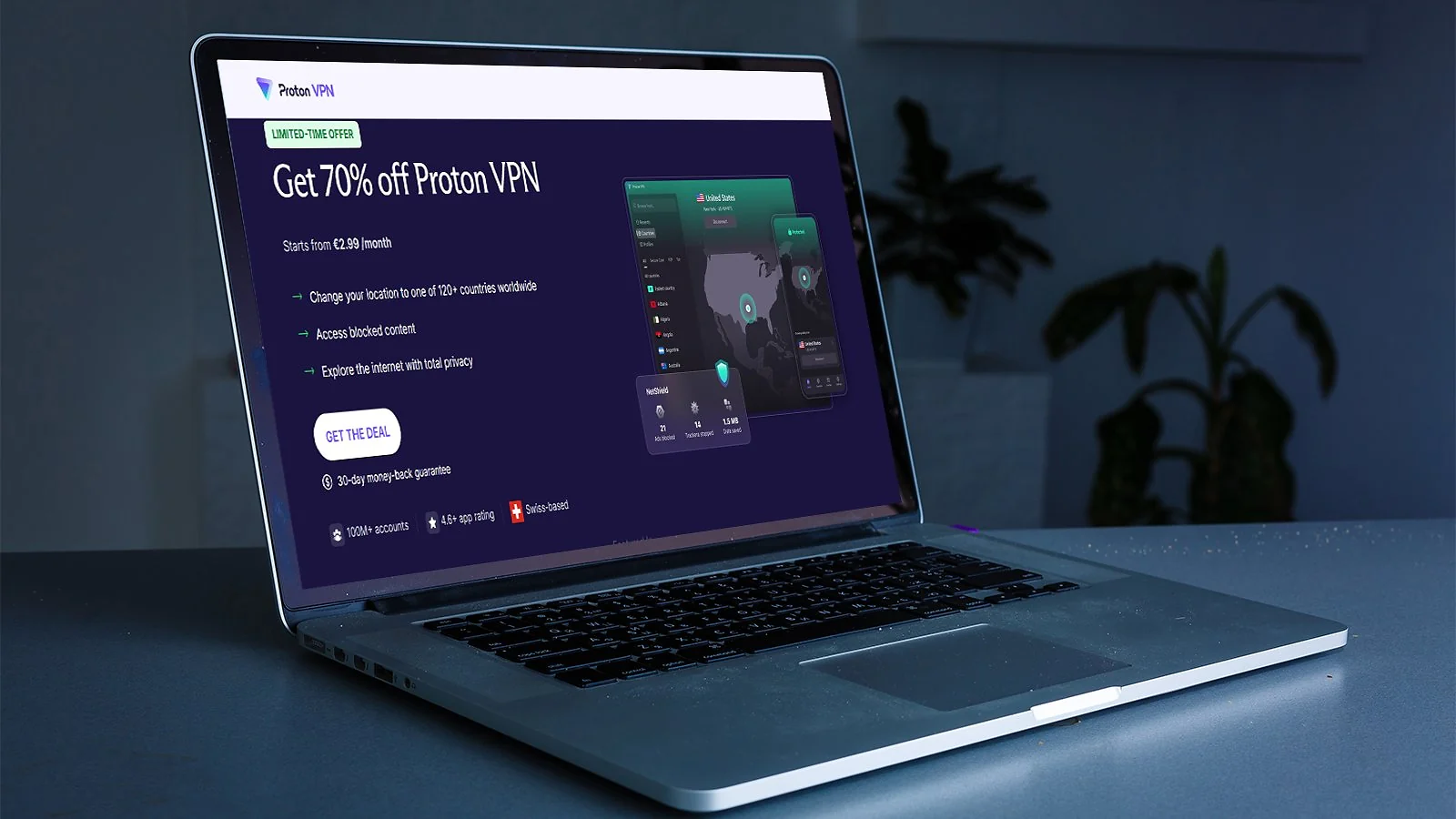
3. Proton VPN [Best Dark Web VPN for Privacy Purists]
| Feature | Details |
|---|---|
| Tor over VPN | Dedicated servers in France, Germany, Hong Kong, Iceland, Sweden, Switzerland, and the US |
| Multi-Hop | 130+ Secure Core servers in 60+ countries with 3 entries (Switzerland, Iceland, Sweden) |
| Servers | 15,000+ servers in 100+ countries |
| Encryption | AES-256, ChaCha20 (WireGuard) |
| No-Logs Audit | 4 Securitum audits, Schellman SOC II (2025) |
| Open Source | All apps publicly auditable |
| Kill Switch | Standard and Permanent modes |
| Jurisdiction | Switzerland |
| Simultaneous Connections | 10 devices |
| Starting Price | $2.99/month (2-year plan) |
Proton VPN offers the most verifiable privacy credentials in the industry. Open-source applications mean anyone can audit the code for backdoors or vulnerabilities. Annual security audits by Securitum plus SOC II certification by Schellman in 2025 provide independent verification that the no-logs policy holds up under scrutiny.
Tor over VPN servers work similarly to NordVPN‘s Onion over VPN. Connect to a Tor-enabled server (marked with an onion icon), and your traffic routes through both Proton‘s infrastructure and the Tor network. You can access .onion sites without the Tor browser, though I still recommend using Tor browser for its additional fingerprinting protections.
Secure Core is Proton‘s multi-hop implementation, routing traffic through privacy-friendly countries (Switzerland, Iceland, Sweden) before reaching exit servers. These servers are owned and operated directly by Proton, not rented from third parties. For dark web access, Secure Core adds protection against compromised exit servers in less trustworthy jurisdictions.
Switzerland provides arguably the strongest privacy jurisdiction available. Swiss law requires specific court orders for any data requests, and Proton has historically challenged overreaching requests. Recent changes to Swiss surveillance laws have prompted Proton to consider jurisdictional options, but current protections remain robust.
The Permanent kill switch mode only allows internet access when the VPN is connected. For dark web users, this eliminates any possibility of accidental unprotected browsing. Standard kill switch mode provides the same protection but allows manual override.
For users learning VPN fundamentals, our guide on how to set up a VPN covers essential setup steps.
| Pros | Cons |
|---|---|
| ✅ Open-source apps allow independent code verification ✅ Tor over VPN servers in 7+ countries ✅ Secure Core routes through Proton-owned servers only ✅ Switzerland jurisdiction with strong privacy laws ✅ SOC II certification (2025) plus annual audits | ❌ Secure Core adds significant latency, which is normal and expected |
Final Verdict: Maximum verifiability. Open-source apps, multiple audit types, and Proton-owned Secure Core servers provide assurance that no other provider matches. If your threat model requires provable privacy rather than trust-based claims, Proton delivers.
4. CyberGhost VPN [User-Friendly VPN with Specialized Servers]

| Feature | Details |
|---|---|
| Tor over VPN | Not supported |
| Multi-Hop | No true multi-hop; limited manual chaining via external setups |
| Servers | 11,000+ servers in 100 countries |
| Encryption | AES-256 (OpenVPN, IKEv2), ChaCha20 (WireGuard) |
| No-Logs Audit | Audited by Deloitte |
| Open Source | No (proprietary apps) |
| Kill Switch | Automatic kill switch (always-on) |
| Jurisdiction | Romania |
| Simultaneous Connections | Up to 7 devices |
| Starting Price | $2.03/mo (2-year plan) |
CyberGhost VPN focuses on ease of use while still offering a solid privacy foundation. Its apps are designed for beginners, with clearly labeled servers for streaming, torrenting, and gaming. While it lacks advanced features like Tor over VPN or true multi-hop routing, it compensates with a large server network and consistent performance.
The provider publishes regular transparency reports and has undergone independent no-logs audits by Deloitte, helping verify that it does not store identifiable user activity. While its apps are not open source, CyberGhost has made efforts to improve trust through these third-party assessments and public reporting.
CyberGhost’s Romanian jurisdiction is a meaningful advantage. Romania is outside the 5/9/14 Eyes intelligence-sharing alliances and has ruled against mandatory data retention laws in the past. This gives CyberGhost a more privacy-friendly legal environment compared to providers based in surveillance-heavy regions.
Its always-on kill switch ensures that traffic is never exposed if the VPN connection drops. Unlike customizable kill switches, this one cannot be disabled, which is beneficial for users who want guaranteed protection without needing to manage settings.
For dark web use specifically, CyberGhost is more of a basic option rather than a specialized tool. You’ll still need the Tor Browser for .onion access, and the lack of multi-hop or Tor integration means fewer layers of anonymity compared to privacy-focused competitors.
| Pros | Cons |
|---|---|
| ✅ Beginner-friendly apps with clearly labeled servers ✅ Large global server network ✅ Independently audited no-logs policy (Deloitte) ✅ Romania jurisdiction outside intelligence alliances ✅ Automatic kill switch prevents accidental leaks | ❌ No Tor over VPN or native multi-hop support ❌ Apps are not open source ❌ Fewer advanced privacy features for high-risk users |
Final Verdict: Simple and reliable. CyberGhost is a strong choice for users who want an easy-to-use VPN with verified no-logs practices, but it lacks the advanced anonymity tools needed for maximum dark web privacy.
5. Private Internet Access [Best Customizable VPN for Advanced Users]
| Feature | Details |
|---|---|
| Tor over VPN | Supported (via SOCKS5 proxy + Tor Browser configuration) |
| Multi-Hop | Yes (Multi-Hop with Shadowsocks or VPN chaining) |
| Servers | 35,000+ servers in 90+ countries |
| Encryption | AES-256, AES-128, ChaCha20 (WireGuard) |
| No-Logs Audit | Deloitte audit (2022) |
| Open Source | Yes (all major apps) |
| Kill Switch | Advanced kill switch + configurable firewall mode |
| Jurisdiction | United States |
| Simultaneous Connections | Unlimited devices |
| Starting Price | $2.03/mo (2-year + 3 months plan) |
Private Internet Access (PIA) is one of the most configurable VPNs available, making it especially appealing for users who want fine-grained control over their privacy setup. Its open-source apps allow anyone to inspect the code, and its long track record of court-tested no-logs claims gives it a level of real-world credibility few providers can match.
While PIA does not offer built-in “Tor over VPN” servers like some competitors, it supports Tor usage through manual configuration. You can connect to PIA and then route traffic through the Tor Browser, or configure its SOCKS5 proxy for additional flexibility. This achieves a similar effect, though it requires more setup and technical understanding.
PIA’s multi-hop feature allows you to route traffic through a VPN server and a proxy (such as Shadowsocks), adding an extra layer of obfuscation. While not as robust as fully independent VPN-to-VPN multi-hop chains, it still provides meaningful protection against traffic correlation and censorship.
Despite being based in the United States (a Five Eyes country), PIA has repeatedly demonstrated its no-logs policy in court cases where it was unable to provide user data because none existed. Combined with its Deloitte audit, this helps offset concerns about jurisdiction.
The advanced kill switch goes beyond standard implementations by acting as a firewall that blocks all non-VPN traffic at the system level. This is particularly valuable for dark web use, where even a brief IP leak could compromise anonymity.
| Pros | Cons |
|---|---|
| ✅ Fully open-source apps for transparency ✅ Proven no-logs policy in real-world court cases ✅ Highly customizable encryption and network settings ✅ Multi-hop and proxy support for added flexibility ✅ Unlimited simultaneous connections | ❌ No native Tor over VPN servers ❌ US jurisdiction (Five Eyes alliance) ❌ Advanced features may overwhelm beginners |
Final Verdict: PIA combines open-source transparency, court-proven no-logs claims, and deep customization options. It’s ideal for advanced users who want to fine-tune their setup, but less suited for those seeking simple, built-in anonymity features like native Tor over VPN servers.
6. Surfshark [Best Budget Dark Web VPN]

| Feature | Details |
|---|---|
| Tor Integration | Compatible (no dedicated servers) |
| Multi-Hop | Dynamic MultiHop (customizable entry/exit) |
| Servers | 4,500+ servers in 100 countries |
| Encryption | AES-256-GCM, WireGuard |
| No-Logs Audit | Deloitte (2023, 2025) |
| Server Infrastructure | RAM-only (diskless) |
| Kill Switch | Standard plus Everlink auto-reconnect |
| Jurisdiction | The Netherlands |
| Simultaneous Connections | Unlimited |
| Starting Price | $1.99/month (2-year plan) |
Surfshark provides solid dark web protection at the lowest price point among premium providers. The unlimited simultaneous connections support means you can protect every device in your household under one subscription, which is valuable if you’re running dedicated dark web research setups alongside regular devices.
Dynamic MultiHop lets you create custom double VPN routes through any two server locations. Unlike preset multi-hop options, you choose both entry and exit servers. For dark web access, this flexibility lets you optimize routes for your specific threat model, perhaps entering through a privacy-friendly jurisdiction and exiting near your target region.
Camouflage Mode (obfuscation) disguises VPN traffic as regular HTTPS. If your threat model includes ISPs or network administrators who block VPN protocols, Camouflage Mode maintains connectivity. This also helps in jurisdictions where VPN usage itself attracts scrutiny. For example, Surfshark is one of the best VPNs for China since it lets you bypass the Great Firewall and access blocked platforms and services.
The Netherlands jurisdiction sits within the 14 Eyes intelligence alliance, which is a legitimate concern for privacy-focused users. Surfshark addresses this with verified no-logs infrastructure (two Deloitte audits) and RAM-only servers that retain nothing to share.
| Pros | Cons |
|---|---|
| ✅ Unlimited simultaneous connections ✅ Dynamic MultiHop with customizable routing ✅ Lowest price among premium providers ✅ Two independent Deloitte audits ✅ Camouflage Mode bypasses VPN blocking | ❌ No dedicated Onion over VPN servers |
Final Verdict: Best value for dark web protection. Dynamic MultiHop provides flexible multi-hop routing, support for unlimited devices covers complex setups, and verified no-logs infrastructure addresses jurisdictional concerns. Its low price point also means you’re getting a ton of value for your money.
7. VeePN [Budget Dark Web VPN]
| Feature | Details |
|---|---|
| Tor Integration | Compatible with Tor Browser (no Tor-specific servers) |
| Multi-Hop | Double VPN |
| Servers | 2,600+ servers in 80+ countries |
| Encryption | AES-256 |
| No-Logs Audit | None published |
| Server Infrastructure | RAM-only |
| Kill Switch | Available |
| Jurisdiction | Panama |
| Simultaneous Connections | 10 devices |
| Starting Price | $1.99/month (2-year plan) |
VeePN offers dark web compatible features at budget pricing, but with important caveats that require disclosure. The provider claims RAM-only servers and a no-logs policy, but unlike competitors, these claims haven’t been verified by independent audits.
For casual dark web exploration, this may be acceptable. For high-stakes anonymity requirements, the lack of verification is a significant gap. So, I’d recommend one of my top VPNs for privacy and speed in these scenarios.
Double VPN servers route traffic through two locations for layered encryption. I tested the feature and found it working correctly, though speeds dropped noticeably compared to single-server connections.
Panama jurisdiction is genuinely privacy-friendly, outside surveillance alliances with no mandatory data retention. This matches NordVPN‘s jurisdictional advantage, though without the audit verification to prove the no-logs policy holds.
Split tunneling lets you route only specific applications through the VPN. For dark web setups, you might route Tor browser through VeePN while keeping other traffic on your regular connection. This reduces bandwidth overhead on non-sensitive activities.
| Pros | Cons |
|---|---|
| ✅ Very affordable long-term pricing ✅ Double VPN servers for multi-hop routing ✅ Panama jurisdiction (privacy-friendly) ✅ NetGuard blocks ads and malicious sites ✅ 10 simultaneous device connections | ❌ No independent security audits ❌ Smaller server network than competitors |
Final Verdict: Budget entry point for dark web protection with functional features. Double VPN works, Panama jurisdiction is genuinely good, and the price is hard to beat. Just understand the verification gaps before relying on it for high-stakes anonymity.
Technical Considerations for Dark Web VPN Use
With my top picks out of the way, we can talk about some finer technical points. Here are my VPN setup steps you should take before going to the dark web.
Kill Switch Configuration
A functioning kill switch is non-negotiable for dark web access. If your VPN connection drops while browsing .onion sites, your traffic briefly routes through your regular connection, potentially exposing your real IP to malicious exit nodes or the sites themselves.
Test your kill switch before dark web use:
- Connect to VPN and verify your IP has changed
- Start a continuous ping to an external server
- Force-quit your VPN application (not graceful disconnect)
- Verify ping stops immediately
- Restart VPN and verify ping resumes only after reconnection
If traffic continues during VPN disconnection, your kill switch isn’t working properly. Check settings, try system-level kill switch options if available, or consider a different provider.
DNS Leak Prevention
DNS leaks expose which domains you’re attempting to access, even when VPN encryption protects the traffic itself. For dark web use, DNS leaks could reveal your interest in .onion sites to your ISP or network administrator.
Quality VPNs handle DNS internally, routing all lookups through encrypted tunnels to private DNS servers. Verify this using leak testing sites like ipleak.net or dnsleaktest.com while connected to your VPN.
If you see your ISP’s DNS servers listed while the VPN is active, you have a leak. Check VPN settings for DNS leak protection options, disable IPv6 if necessary, and consider manual DNS configuration pointing to your VPN provider’s servers. If nothing works, check my list of the best VPNs for encrypted internet connection for some reliable picks.
Protocol Selection for Dark Web Use

For Tor over VPN configurations, protocol choice affects both security and usability:
- WireGuard variants (NordLynx, etc.) offer the best speed-to-security ratio. Modern cryptography, minimal overhead, fast connections. Recommended for most dark web use unless you have specific requirements.
- OpenVPN provides maximum compatibility and decades of security auditing. Slower than WireGuard but extremely reliable. Good fallback if WireGuard has issues on your network.
- Obfuscated protocols (NordWhisper, Surfshark Camouflage, etc.) disguise VPN traffic as regular HTTPS. Use these if your network blocks VPN protocols or if VPN usage itself creates risk in your jurisdiction.
For detailed protocol comparisons, see our guide on the best VPN protocols for gaming, which applies equally to security-focused use cases.
Browser Fingerprinting Considerations
Even with VPN and Tor protection, browser fingerprinting can identify you across sessions. The Tor browser specifically addresses this with standardized configurations that make all users appear identical.
If you’re using Onion over VPN servers (accessing .onion sites through regular browsers), you lose this fingerprinting protection. Your browser configuration, fonts, screen resolution, and other attributes create a unique fingerprint that could theoretically track you across dark web sessions.
For maximum anonymity, use VPN + Tor browser rather than Onion over VPN servers. Reserve the server-based Tor access for convenience scenarios where fingerprinting risk is acceptable.
Multi-Hop vs Single Server
Double VPN/MultiHop/Secure Core features route traffic through two servers instead of one. For dark web use, this provides:
- Additional encryption layer
- Geographic separation between entry and exit points
- Protection against compromised single servers
- Increased difficulty for traffic correlation attacks
The tradeoff is speed. Multi-hop connections typically run 30-50% slower than single-server connections. Combined with Tor’s inherent latency, this creates noticeable browsing delays.
My recommendation: use multi-hop for dark web sessions where security matters more than speed. Single-server connections suffice for general privacy browsing where dark web-specific threats don’t apply.
My Overall Verdict
Still not sure which is the best VPN for dark web access? Don’t overthink it – here’s where to start based on what actually matters to you.
- Best for all-in-one protection → NordVPN. Dedicated Onion over VPN servers, five audits, post-quantum encryption. The most complete package on the list.
- Best for speed without sacrificing security → ExpressVPN. Lightway keeps things fast when Tor is already slowing you down, and its server seizure track record speaks for itself.
- Best for maximum verifiability → Proton VPN. Open-source apps, Proton-owned servers, Swiss jurisdiction. Verify everything yourself rather than taking anyone’s word for it.
- Best for beginners → CyberGhost. The most approachable interface here, with an always-on kill switch that needs zero configuration.
- Best for power users → PIA. Deep customisation, unlimited connections, and a no-logs policy that’s held up in actual court cases.
Honestly, you can’t go wrong with any of these as your best VPN for dark web sessions – as long as you pick the one built for how you actually use it.
FAQs
No, using Tor and VPNs is completely legal in most countries. Accessing the dark web itself is legal. Illegal activities remain illegal regardless of how you access them. The tools are neutral.
VPN first, then Tor (VPN > Tor) is the standard recommendation. This hides your real IP from Tor entry nodes and prevents your ISP from seeing Tor usage.
For maximum security, yes. VPN protects you from Tor’s structural vulnerabilities (entry node exposure, ISP visibility). Tor provides multi-hop onion routing. Together they provide layered protection.
No. Your ISP sees only encrypted VPN traffic to the VPN server. They can’t determine you’re accessing Tor within that tunnel.
No! Free VPNs typically lack the security infrastructure (RAM-only servers, independent audits, reliable kill switches) that dark web access requires. Many free VPNs log data to monetize users, defeating the purpose entirely.
WireGuard-based protocols (NordLynx, standard WireGuard) provide the best balance of speed and security. OpenVPN remains reliable if WireGuard isn’t available.