


8 U.S. Companies Hiring No Experience Workers in 2026

Eneba Hub contains affiliate links, which means we may earn a small commission if you make a purchase through them—at no extra cost to you. Learn more



QUICK VERDICT
Among employers that hire beginners, Allied Universal stands out for structured security training, Schneider for paid CDL training, and Walgreens for a less physically demanding route into pharmacy work. Each still has its own eligibility requirements before you can start.
If you’re looking for companies hiring no experience workers in the U.S., there are real options that will train you after you get hired. The catch is that entry-level does not always mean easy to qualify for.
You may still need a clean driving record, background check, high school diploma or GED, physical screening, or state license depending on the role. What you usually do not need is previous professional experience doing the job itself. This guide compares eight companies hiring no experience workers by starting pay, training, requirements, and how quickly you can realistically begin earning.
Jump to:
Is Getting Hired With No Experience Actually Realistic?
Yes. Getting hired by companies hiring no experience workers is realistic, but you still need to meet the basic requirements for the role. A company may be willing to train you from zero and still ask for a background check, physical screening, diploma or GED, or clean driving record.
How quickly you can start also depends on the job. Entry-level security work can move relatively fast once a background check and any required guard-card paperwork are cleared. CDL training, electrical apprenticeships, and other skilled roles usually take longer because training starts before you can work independently.
Starting pay is usually lower than the long-term figures advertised for experienced workers. The higher long-term salaries usually come after training, licensing, or time on the job. A beginner should plan around starting pay, not the wage of someone who has already spent several years in the field.
These jobs make the most sense when you are willing to learn on the job and can meet the other requirements. Check those first. A job can require zero previous experience and still be a poor fit if the schedule, physical demands, licensing rules, or training period do not work for you.
8 Companies Hiring No Experience Workers in the U.S.
If you’re comparing companies hiring no experience workers across the U.S., the biggest differences are what they train you to do, what they pay at the start, and what you still need to qualify. The eight employers below cover very different jobs, so the right fit depends on your schedule, physical demands, and long-term goals.
1. Schneider [Trucking Companies Hiring No Experience Drivers]
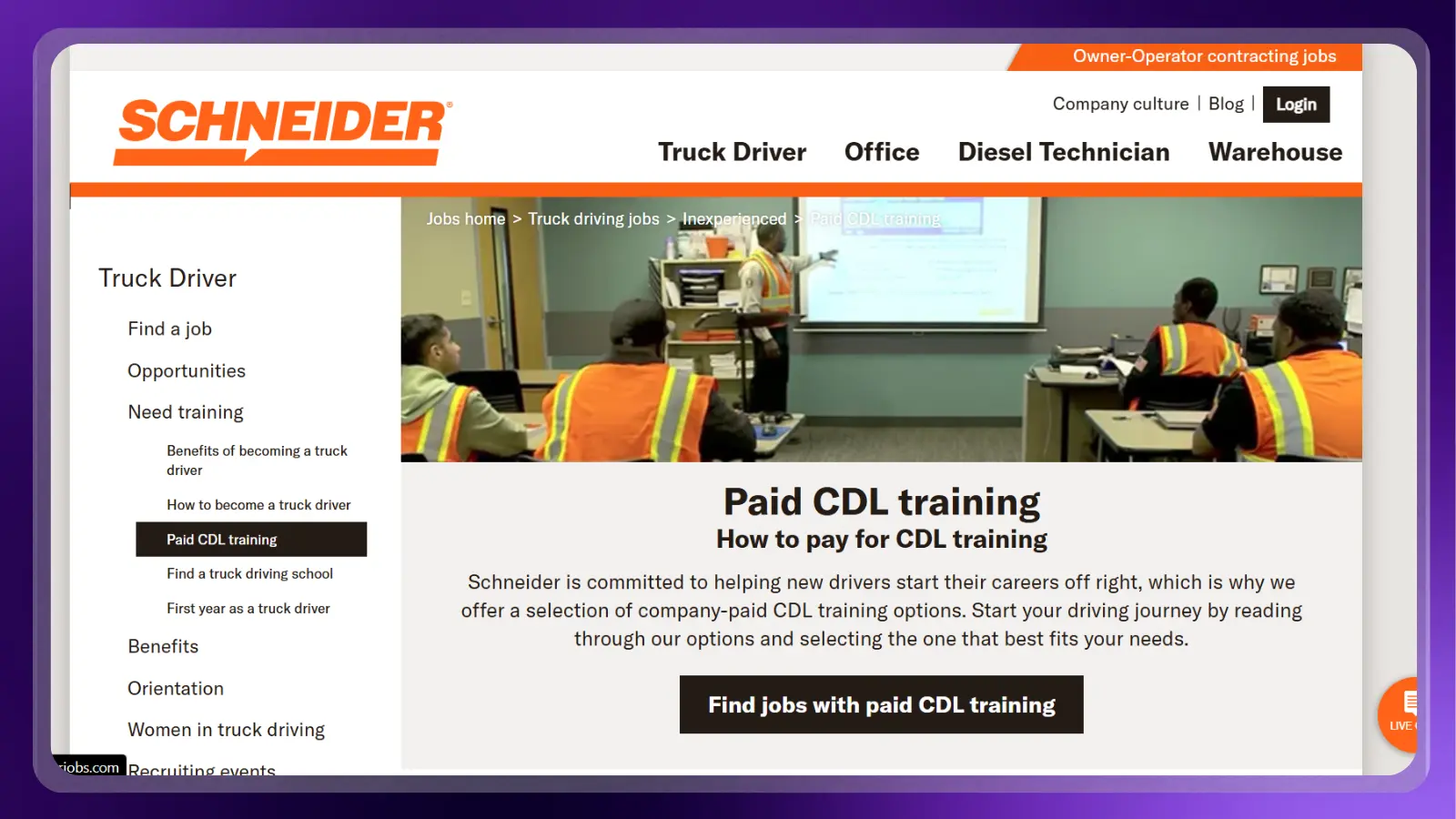
Schneider hires new truck drivers and offers a paid path toward a Class A CDL. If you’re looking at trucking companies hiring no experience drivers, its CDL Apprenticeship Training program lets you learn the job while getting paid.
The program lasts about five to seven-and-a-half weeks, depending on the location and role. Training combines classroom instruction with hands-on driving practice at a Schneider facility. Current openings advertise $10 an hour during five-to-six-week CDL training, and Schneider may also cover transportation, lodging, and meals when applicable.
Before training starts, you need a Commercial Learner’s Permit from your home state and a valid U.S. driver’s license held for at least 12 months. Candidates also complete a DOT physical, drug screening, and other employment checks. CAT is only available in certain areas.
Here’s how to get started.
- Find an eligible opening. Search Schneider jobs that specifically offer company-paid CDL training.
- Get your learner’s permit. You need a Class A Commercial Learner’s Permit before CAT begins.
- Complete the pre-employment checks. This includes the required physical, drug screening, and background process.
- Finish the paid training. You will learn driving fundamentals before spending more time behind the wheel with an instructor.
- Pass your CDL tests. Once licensed, you move into paid orientation and then your assigned driving role.
Pay increases once you move into a regular driving job. One current over-the-road opening lists $1,060 to $1,300 in average weekly pay, with at least $1,000 a week guaranteed during the first 90 days. Actual pay depends on the route and position you qualify for.
The main thing to check is the commitment attached to training. Schneider says certain CAT locations require drivers to agree to train and work with the company for nine months. Read that agreement before starting so you understand what leaving early could involve.

2. WM [Waste Companies Hiring No Experience Drivers]
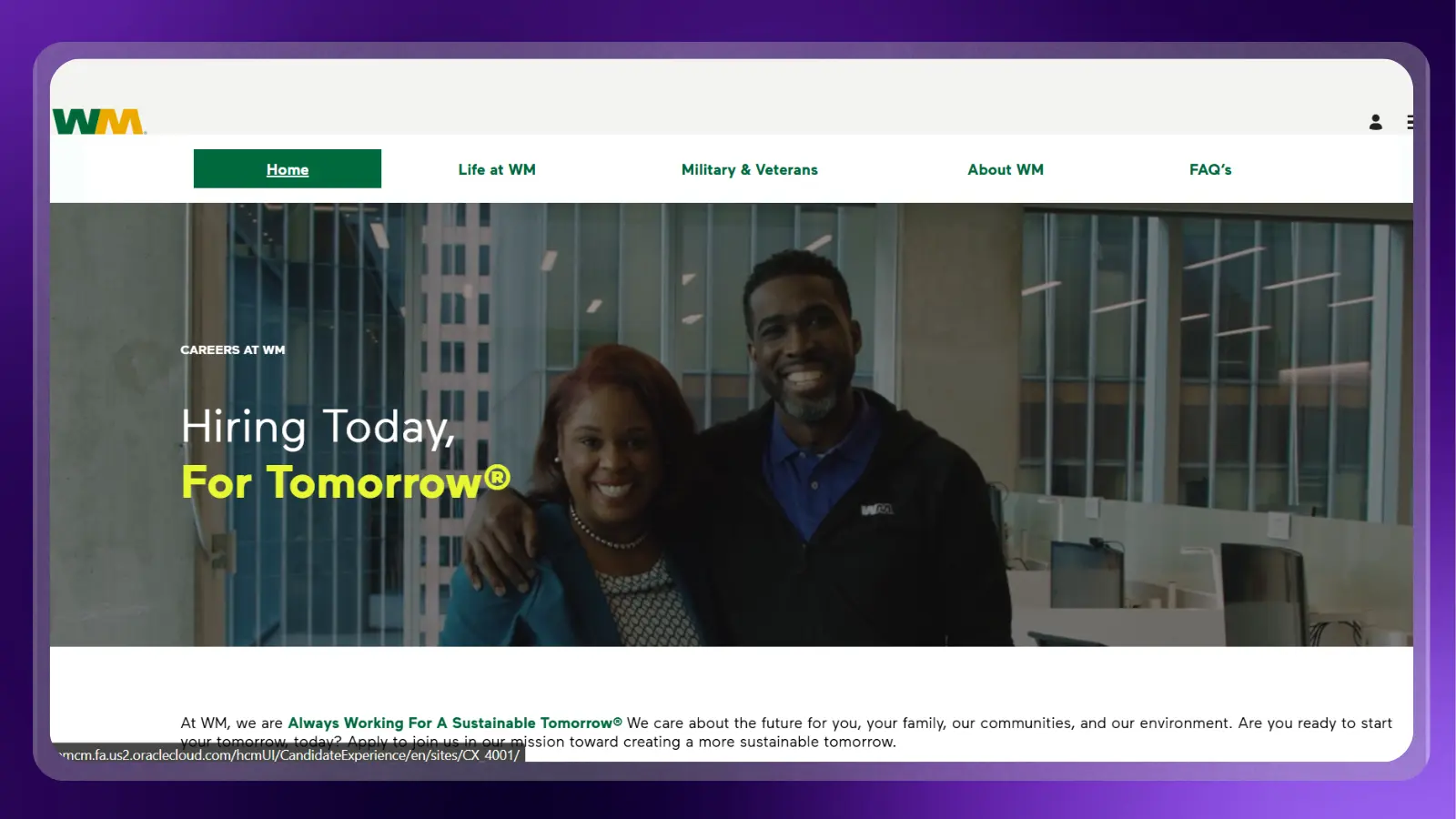
WM is a waste and recycling company that hires Driver Apprentices to train alongside experienced commercial drivers. If you’re comparing waste companies hiring no experience drivers, this is one of the clearer routes because previous truck-driving experience is not required.
Current apprentice roles can pay around $22 an hour, although rates vary by location. You train with a WM Driver or Driver Trainer, learn to operate refuse and recycling vehicles, complete inspections, and work routes before moving into a regular driver position.
You still need to meet basic driving requirements. Current postings ask for a state-issued driver’s license, legal authorization to work in the U.S., and the ability to pass pre-employment screening. Depending on the opening, you may also need or work toward a Commercial Driver’s Permit before completing the driver training.
The Driver Apprentice route works like this.
- Find a Driver Apprentice opening. Check WM’s careers portal for apprentice roles near you.
- Complete the screening process. Expect a drug screen, physical requirements check, and driving-related eligibility review.
- Get your commercial permit. Some roles have you work as an on-route helper while completing this step.
- Train with an experienced driver. You learn vehicle operation, route procedures, inspections, and safety requirements.
- Move into a driver role. Once you complete the required training and licensing steps, you can progress into regular commercial driving work.
The main mistake is assuming every WM driver opening accepts beginners. Look specifically for Driver Apprentice roles, because standard CDL positions may require a license or previous commercial-driving experience.

3. Allied Universal [Security Companies Hiring No Experience Guards]
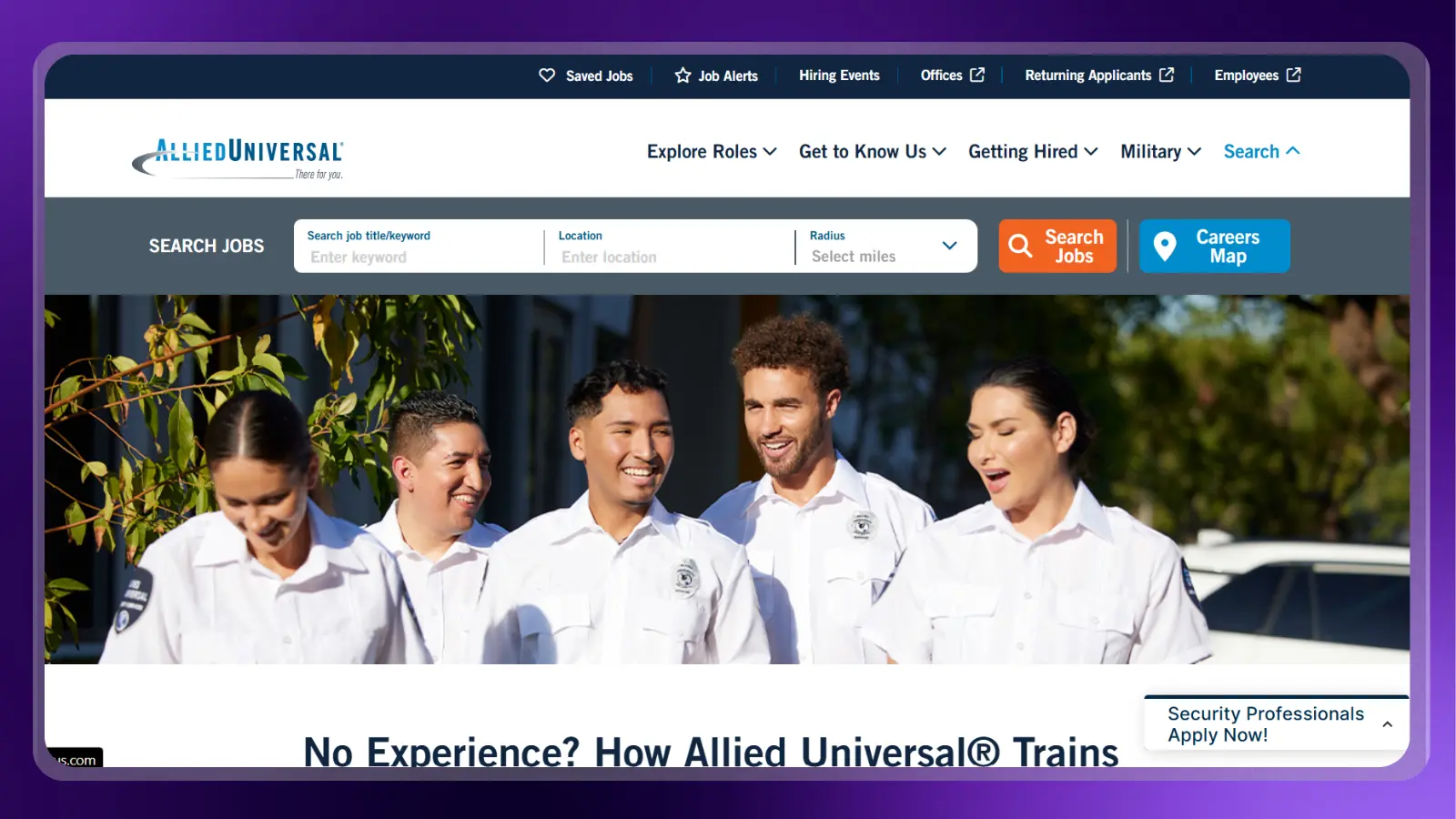
Allied Universal hires security officers for workplaces such as offices, hospitals, schools, and retail sites. If you’re looking at security companies hiring no experience guards, many of its entry-level roles are open to people coming into the industry for the first time.
Pay depends heavily on the location and assignment. One current no-experience-required opening in Virginia pays $19 an hour, while a flexible officer position in Illinois pays $21 an hour and explicitly says the company will train new hires and help them obtain a security license.
The basic requirements are fairly accessible. Unarmed positions generally start at age 18, while armed roles typically require you to be at least 21. You also need a high school diploma or equivalent, or five years of verifiable experience, plus a background check and any screening required for the position. State or local security licensing rules may apply before you can work independently.
Allied Universal provides structured training after hire. Its five-phase program can include new-employee orientation, security guard training, site-specific instruction, and ongoing training tied to the assignment.
The application path is straightforward.
- Search entry-level roles. Look for Security Officer or Security Professional openings that do not require prior experience.
- Check the site requirements. Licensing, driving, and schedule requirements can change by location.
- Complete screening. Expect a background investigation and any legally permitted drug screening.
- Finish training and licensing. Complete orientation, required guard training, and any state licensing steps before working independently.
One thing beginners can easily miss is that not every Allied Universal security job is entry-level. Armed, supervisory, and specialized positions may require previous security, military, or law-enforcement experience, so read the individual posting before applying.

4. McAninch Corporation [Construction Companies Hiring No Experience Workers]
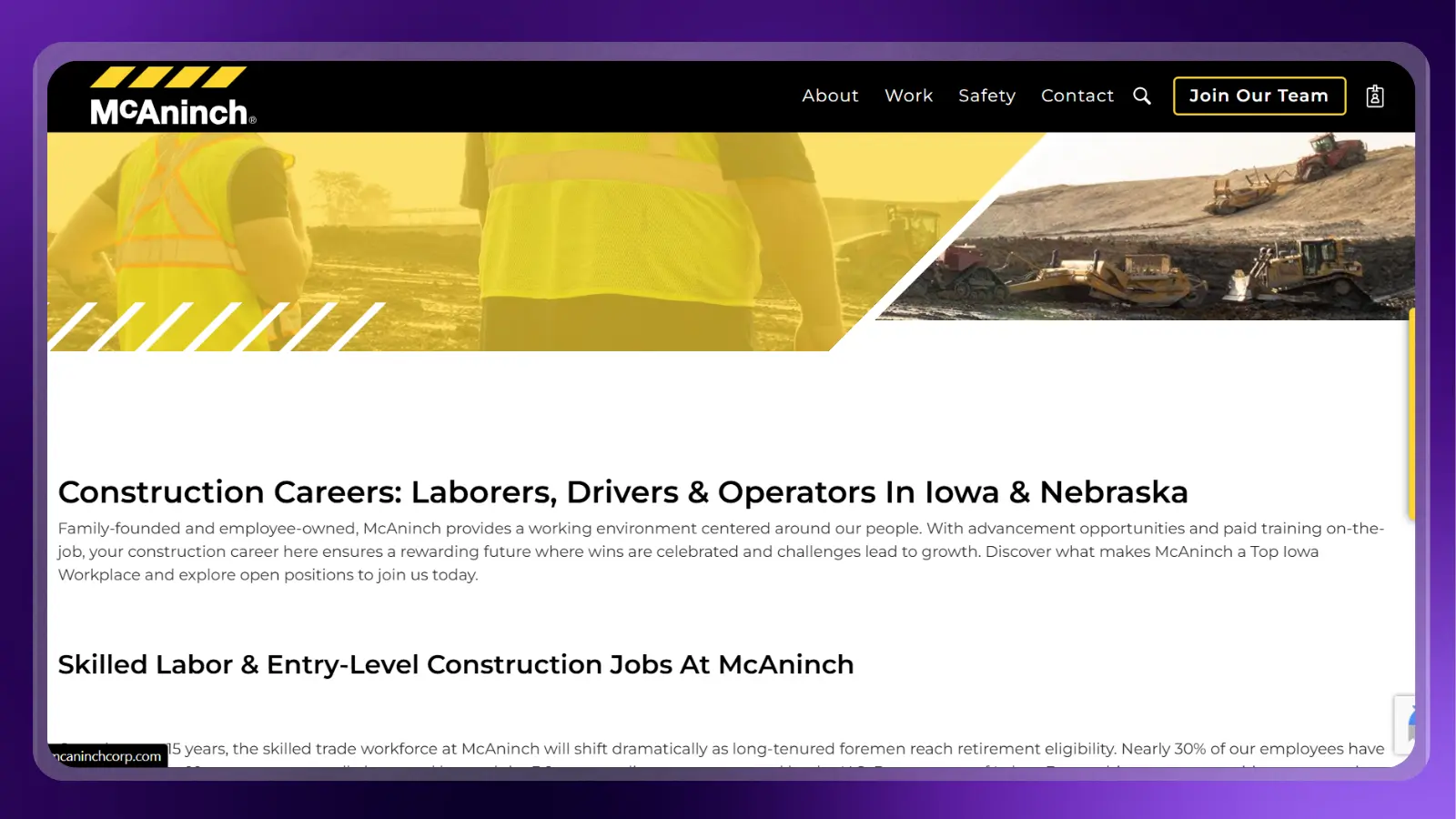
McAninch Corporation hires beginners for construction laborer and heavy-equipment apprentice roles across Iowa and eastern Nebraska. If you’re searching for construction companies hiring no experience workers, both paths come with paid on-the-job training and do not require a previous construction background.
Laborers work on excavation and underground utility projects, with starting wages from $25.43 an hour. The job can involve laying pipe, using construction tools, lifting up to 50 pounds, and spending long days outdoors. Heavy-equipment apprentices can start between $21.81 and $39.36 an hour while learning to operate equipment such as bulldozers, excavators, skid loaders, and scrapers.
New hires also receive safety training before working alongside experienced crew members. Operator apprentices train in partnership with Local 234 Operating Engineers and complete 6,000 hours of apprenticeship work, with additional classroom training covering areas such as OSHA safety, HAZMAT, rigging, and equipment systems.
Your path into the company is fairly direct.
- Choose the right opening. Apply for a laborer role or heavy-equipment apprenticeship based on the work you want to learn.
- Complete pre-employment screening. McAninch uses drug screening and fit-for-duty exams.
- Finish initial safety training. New field employees learn the basic jobsite rules before starting hands-on work.
- Train with experienced crews. You build skills on active projects while getting paid.
For companies hiring no experience workers in construction, the physical demands matter as much as the entry requirements. McAninch does not require a previous construction background, but the work can still involve long hours on your feet, outdoor conditions, lifting, and travel to project sites.
5. Spectrum [Telecom Companies Hiring No Experience Technicians]
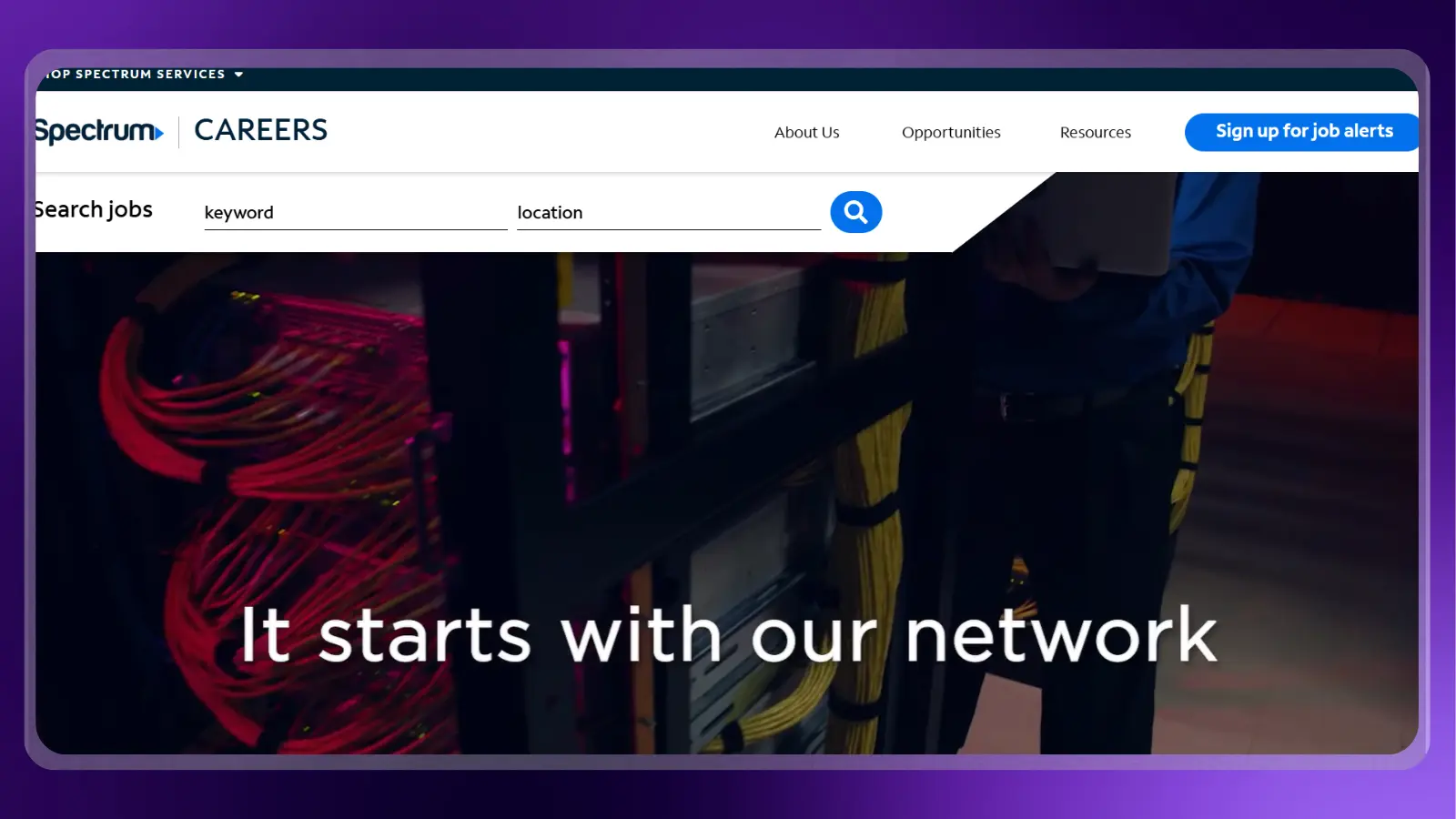
Spectrum hires entry-level Field Technicians to install and repair internet, TV, and other connectivity services at customer locations. If you’re looking at telecom companies hiring no experience technicians, Spectrum explicitly says it will train you, with paid classroom and field instruction after hire.
A 2026 Field Technician opening in Idaho starts at $20.50 an hour. Spectrum also states that most employees earn at least $20 an hour, although the exact rate varies by role and location. Field Technicians receive a company vehicle, tools, safety equipment, and uniforms for the job.
The entry requirements are fairly accessible. Current postings ask for a high school diploma, GED, or equivalent work experience, plus basic computer and hand-tool skills. You also need to be comfortable working outdoors, climbing ladders, visiting customer properties, and working evenings or weekends when scheduled.
The path after applying looks like this.
- Find an entry-level Field Technician opening. Search Spectrum’s Field Operations jobs in your area.
- Complete the hiring process. Check the schedule and physical requirements before accepting.
- Finish paid training. Training combines classroom learning with field work and ride-alongs.
- Build toward higher technician levels. Each completed progression level can bring a $500 bonus and a 10% wage increase.
Among companies hiring no experience workers for technician roles, Spectrum is still a hands-on field job. Technicians work outdoors, climb ladders, use tools, and visit customer properties throughout the day.

6. JMEG Electrical Contractors [Electrical Companies Hiring No Experience Apprentices]
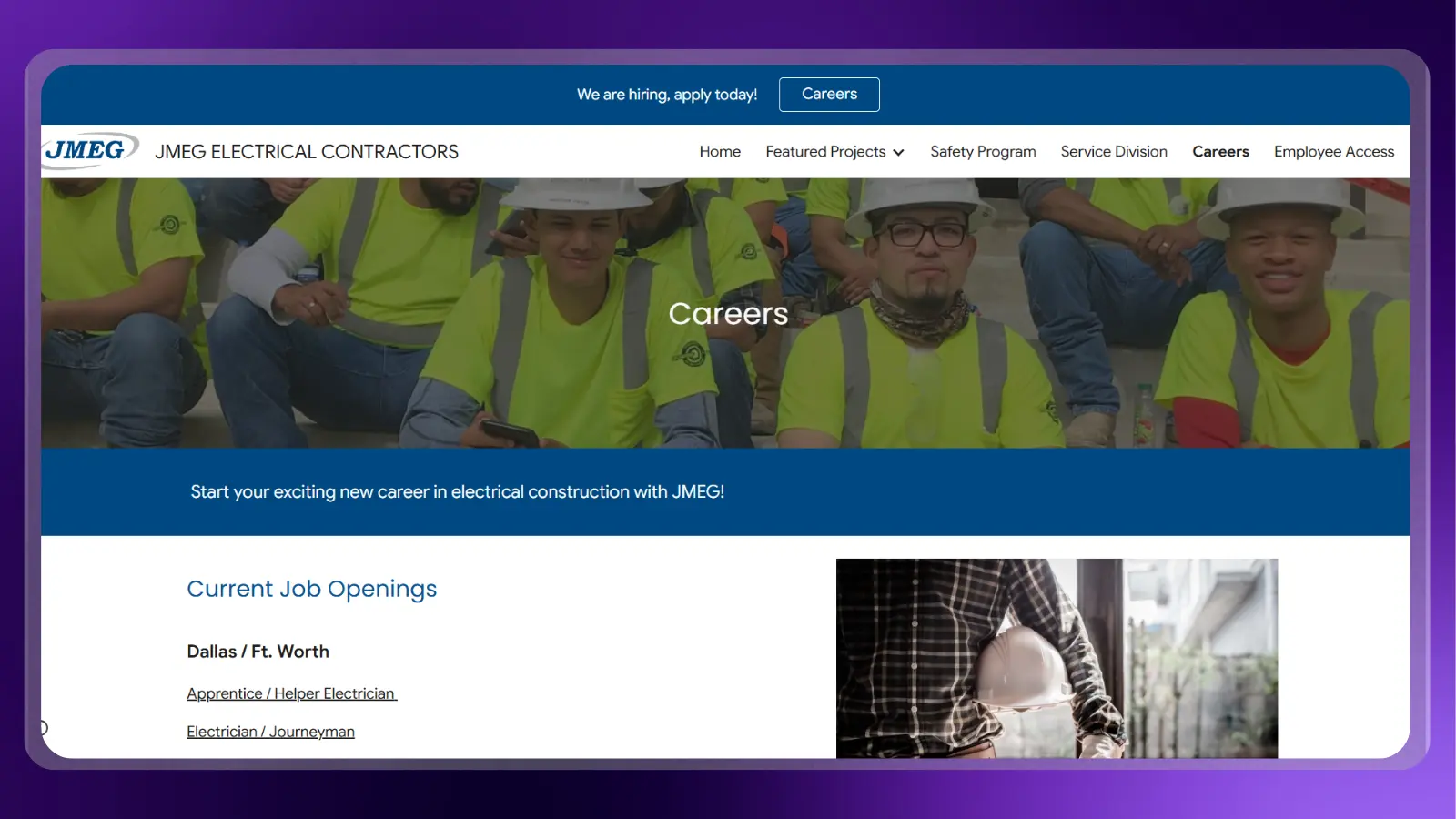
JMEG Electrical Contractors hires Apprentice and Helper Electricians across several Texas markets. For anyone comparing electrical companies hiring no experience apprentices, JMEG states directly that no experience is necessary and provides training for people who want to become licensed electricians.
Current Apprentice and Helper Electrician listings show pay around $17 to $25 an hour. That figure comes from current job postings linked through JMEG’s careers page, since the company does not publish one fixed apprentice rate on its own site.
The company offers an apprenticeship program, continuing education, safety training, and tool assistance. It also provides benefits such as medical coverage, paid vacation, and an employer-matched 401(k). JMEG notes that several current leaders began their careers through its apprenticeship program.
The path into the trade through JMEG is straightforward.
- Choose an Apprentice or Helper Electrician opening. Current locations include Dallas-Fort Worth, Austin, and San Antonio.
- Apply through the careers page. The company links directly to its current openings.
- Learn on active electrical projects. Training builds the practical skills needed to progress in the trade.
- Continue through the apprenticeship path. The goal is to develop toward licensed electrician work and higher-responsibility positions.
I would pay particular attention to location here. The main limitation is that JMEG’s current apprentice opportunities are concentrated in Texas, so it is much less nationally accessible than Spectrum.

7. Patterson-UTI [Oil Field Companies Hiring No Experience Workers]
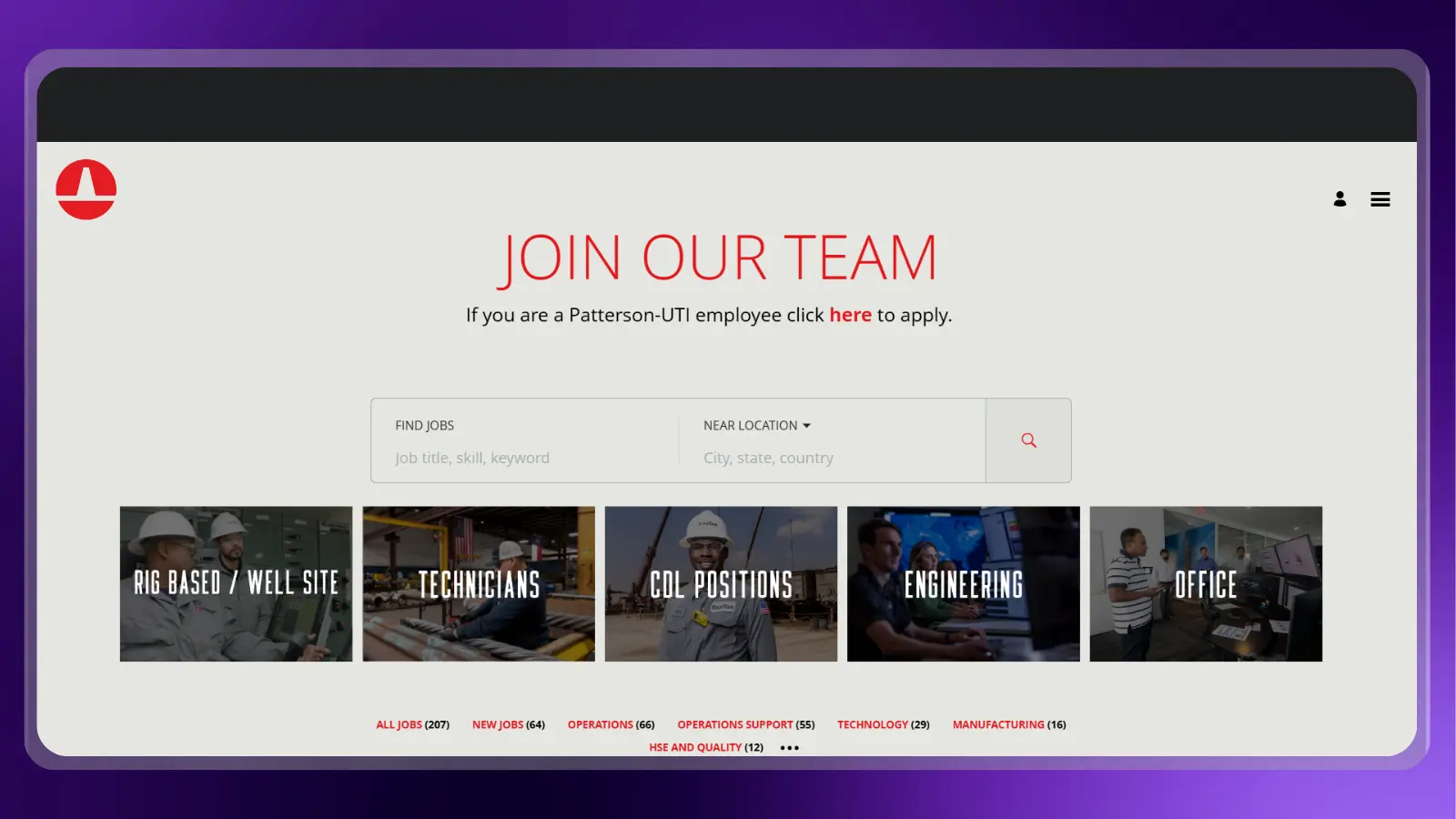
Patterson-UTI hires floorhands to support drilling crews by maintaining the rig floor, handling drilling equipment, and helping during rig moves. For job seekers comparing oil field companies hiring no experience workers, its current Permian opening is specifically labeled “New to Industry.”
This is one of the most physically demanding jobs in the article. Floorhands clean and maintain the rig, connect and break drill pipe, and regularly handle heavy equipment. Patterson-UTI says the role comes with classroom, online, and on-the-job training, while its floorhand page highlights opportunities for further training and advancement.
The New to Industry route does not require previous oilfield experience, but it does ask for at least one year of stable work history. Related construction, farming, heavy-equipment, or military experience can help, but it is listed as preferred rather than required. Candidates also need to pass the company’s pre-employment screening process.
Getting onto a rig usually follows this path.
- Find a New to Industry opening. Look specifically for floorhand jobs aimed at first-time oilfield workers.
- Complete the hiring checks. Patterson-UTI uses pre-employment screening before your start date.
- Finish classroom training. New floorhands must complete required training and testing before receiving a rig assignment.
- Learn under an experienced crew. The rest of the job develops through substantial hands-on training on the rig.
Patterson-UTI does not publish one national starting rate for its New to Industry openings. Indeed currently estimates average companywide floorhand pay at about $25.98 an hour, so treat that as context rather than a guaranteed beginner rate.
For companies hiring no experience workers in oil fields, the lifestyle matters just as much as the entry requirements. Patterson-UTI floorhands may work mandatory hours and handle heavy physical labor. Rotational schedules can also keep you away from home, so the working conditions need to make sense for you before the pay does.

8. Walgreens [Retail Companies Hiring No Experience Pharmacy Technicians]
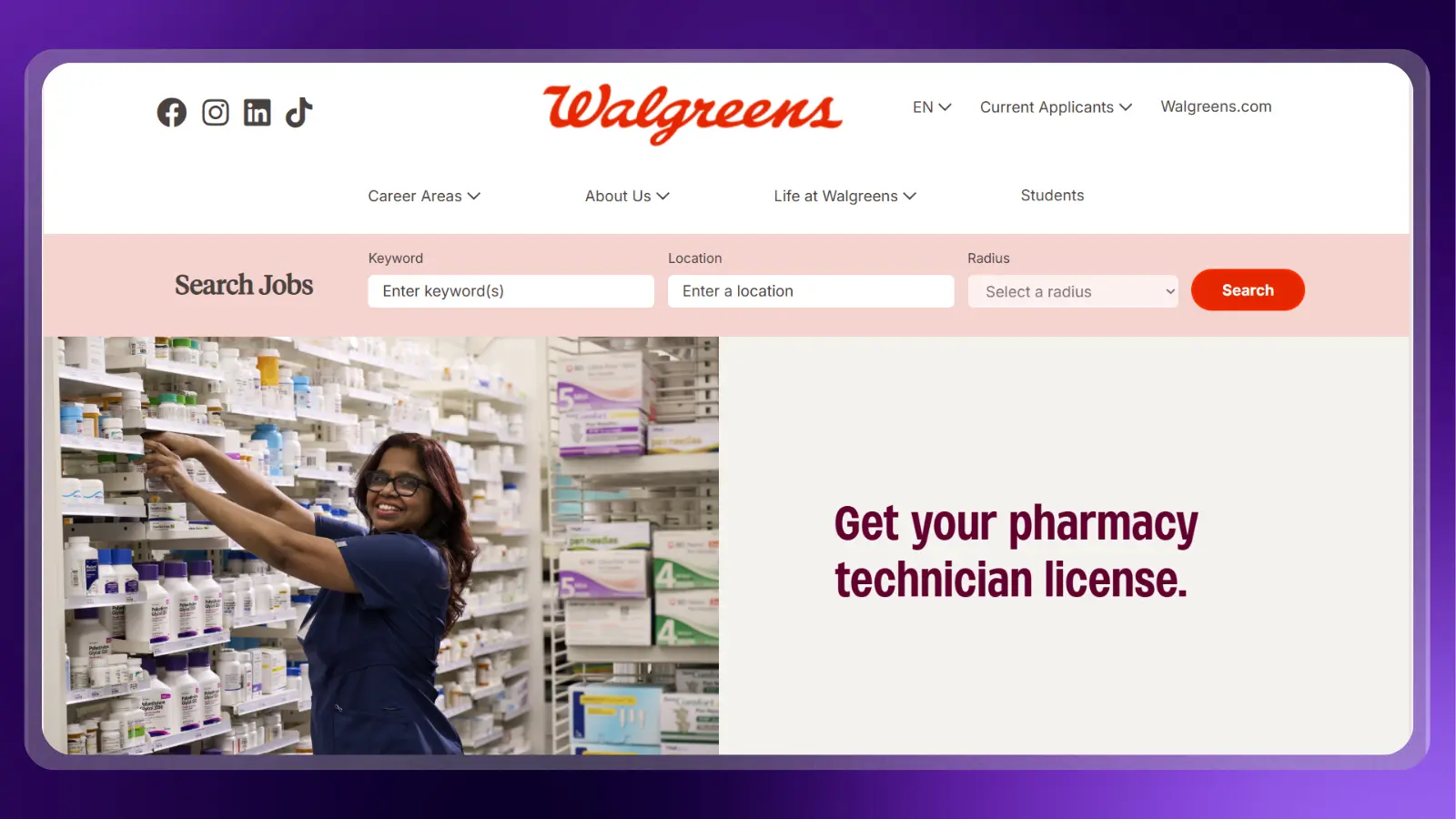
Walgreens hires Pharmacy Technician Apprentices to help pharmacists process prescriptions and support customers while learning the job. If you’re looking at retail companies hiring no experience workers, you can enter this program with no previous pharmacy background.
A current apprenticeship opening lists $16.50 to $20 an hour, with full-time and part-time schedules available. Pay varies by location and your qualifications. The role involves learning pharmacy systems, processing prescription information, and assisting the pharmacist under direct supervision.
The main advantage is that training leads toward a recognized credential. Walgreens runs an “earn while you learn” program recognized by the Department of Labor and ASHP. The company pays for trainees to complete PTCB training and take the Pharmacy Technician Certification Exam. Its own program reports an 81% PTCE pass rate.
You can start with a fairly simple application path.
- Find a Pharmacy Technician Apprenticeship. Walgreens currently lists these openings across many U.S. states.
- Check your state requirements. Pharmacy technician registration and licensing rules differ by state.
- Complete paid training on the job. You learn pharmacy systems and patient-service tasks under supervision.
- Work toward certification. The program prepares you for the PTCB exam and a nationally recognized credential.
The basic qualifications are lighter than many healthcare jobs. You need to read, write, and speak English fluently and be willing to work a flexible schedule. Previous retail experience, computer skills, and existing PTCB certification are preferred rather than required.
I’d pay attention to the detail-heavy nature of the work before applying. Pharmacy technicians handle prescription information where accuracy matters every day, so this suits someone comfortable with customer service and careful, repetitive tasks.

How the 8 Companies Compare
When you compare companies hiring no experience workers, starting pay, training, and entry requirements are the biggest differences. The table below puts those details side by side so you can narrow down which employer fits your location and schedule, including how much physical work you are comfortable with.
These are employer-based jobs. If you would rather earn through independent client work, our guide to the best freelance platforms covers that route separately.
| Company | Beginner role | Pay snapshot | Training provided | Main requirement or limitation |
|---|---|---|---|---|
| Schneider | Truck driver trainee | $10/hour during CDL training | Paid CDL apprenticeship | Commercial Learner’s Permit before training and valid driver’s license |
| WM | Driver Apprentice | Varies by location | Commercial driver training | Driver’s license and required employment screening |
| Allied Universal | Security Officer | Varies by site and location | Onboarding, site training, and licensing guidance | Background check and any state security license requirements |
| McAninch Corporation | Laborer or operator apprentice | $25.43/hour for laborers, $21.81–$39.36 for operator apprentices | Jobsite safety and apprenticeship training | Physically demanding work and limited regional availability |
| Spectrum | Field Technician | $20+/hour in current openings | Paid field training and technician progression | Outdoor work, ladders, customer visits, and flexible scheduling |
| JMEG Electrical Contractors | Apprentice or Helper Electrician | Around $17–$25/hour in current listings | Electrical apprenticeship and continuing education | Opportunities are concentrated in Texas |
| Patterson-UTI | New-to-Industry Floorhand | No fixed beginner rate published | Classroom and on-the-rig training | Heavy physical work, rotational schedules, and stable work history |
| Walgreens | Pharmacy Technician Apprentice | $16.50–$20/hour in current openings | Paid pharmacy apprenticeship and PTCB preparation | State pharmacy rules and flexible scheduling requirements |
What “No Experience” Still Requires
When companies hiring no experience workers describe a role as entry-level, that does not remove the other requirements. You may still need a license or diploma. Regulated and field-based jobs can also require background checks, driving-record checks, or physical screening.
Age and Licensing Requirements
Regulated jobs have stricter rules. Allied Universal generally requires guards to be at least 18, while armed roles start at 21. Schneider trainees need a Commercial Learner’s Permit before training, and Walgreens pharmacy technicians must meet their state’s registration or licensing rules.
Background and Driving Checks
Security, trucking, telecom, and other field roles may include background, drug, or driving-record checks. The exact standard depends on the employer and position.
Education and Physical Requirements
Some jobs require a diploma or GED. Construction, oil field, telecom, and driving roles can also involve lifting, climbing, outdoor work, or long shifts. Check the individual posting before applying because requirements can change by role and location.
If field work is the main barrier, there are less physical routes to compare. Our guide to the best work from home jobs covers broader remote options, while remote customer service jobs are worth checking if you prefer customer-facing work you can do from home.
Earn a Little While You Wait to Start

Even with companies hiring no experience workers, screening or licensing can delay your first paycheck, and some roles also have a fixed training start date. Reward apps can give you a small way to earn during that gap, but they should not be treated as regular employment.
Snakzy is free to start, with 35,000 coins generally required to unlock the Shop for the first time. KashKick lets eligible users cash out once they reach $10, while Freecash sets its first-withdrawal threshold between $5 and $20 depending on the region.
Product testing gives you another flexible option while applications are moving. Our guide to companies looking for product testers covers programs you can compare alongside reward apps.
The main thing to compare is how long it will realistically take you to reach the first payout. These apps work better for spare-time earnings while you wait to start a job, not as dependable paycheck replacements.
Play game offers while you wait for applications, screening, or training to move forward.

What Doesn’t Work
People applying to companies hiring no experience workers can still run into bad training offers, unnecessary middlemen, or misleading job ads. Filter those out before you spend time or money on an application.
- Paying a recruiter for access to a job. Legitimate employers do not charge you to submit an application or secure an interview.
- Paying for training the employer already provides. Several companies on this list train eligible new hires as part of the job.
- Trusting guaranteed-placement claims. A course or recruiter cannot promise that an employer will hire you after training.
- Ignoring the actual requirements. “No experience” can still come with licensing, driving, background, education, or physical requirements.
The safest approach is to apply through the employer’s official careers page and verify the requirements before committing to anything. If you want to search across multiple employers, our guide to the best sites to find a job can help you compare broader job-search options before checking the final opening against the employer’s own careers page. Once you rule out the bad paths, focus on roles that fit your qualifications and location.
Final Verdict on Companies Hiring No Experience
Among companies hiring no experience workers, Schneider stands out for its clear route into commercial driving. You can enter its CDL apprenticeship before holding a CDL, get paid during training, then move into a regular driving role once you qualify.
Walgreens stands out for a different reason. Its pharmacy technician apprenticeship gives beginners a less physically demanding path with a recognized certification goal, while letting them earn as they learn.
Your best option depends on the work you can realistically do and where you want it to lead. Compare the requirements, schedule, location, and training commitment, then apply for the role that fits what you can do now and what you want to build toward.
Take a break from the job hunt with quick games that can earn you rewards.
FAQs
Companies in trucking, security, construction, telecom, retail, and oil field work may hire beginners. Look for employers that clearly state training is provided or that previous experience is not required.
Yes, depending on the role. Some jobs only require basic eligibility checks, while others may ask for a high school diploma, GED, license, or certification before you can start.
If you’re looking at companies hiring no experience workers, many offer paid or on-the-job training that covers the skills or credentials needed for the role.
Yes. Some employers hire beginners before they hold the final license or certification, then train them toward it. You may still need a learner’s permit, state registration, or other entry requirement first.
It depends on the job. Roles with fewer licensing requirements can move faster, while CDL training, apprenticeships, and regulated positions usually take longer before you can work independently.
Yes. Many apprenticeships are designed for beginners and combine paid work with structured training. You still need to meet the employer’s age, education, physical, or licensing requirements.