



Freelancing Tips That Actually Work, Backed by Real Numbers in 2026

Eneba Hub contains affiliate links, which means we may earn a small commission if you make a purchase through them—at no extra cost to you. Learn more



To succeed as a freelancer, prioritize building a strong portfolio, establish firm boundaries with clients, and manage your work as a professional business. Master your pricing strategy, maintain clear communication, and always secure a signed contract before beginning any project.
Jump to:
What Actually Determines Whether a Freelancer Succeeds?
Freelance success usually comes down to three things: charging properly, protecting your cash flow, and consistently finding new clients. Talent helps, of course, but these are all skills you can learn and turn into reliable habits.
Pricing discipline means charging enough from the start and raising rates on a schedule, regardless of how confident you feel about the conversation. Cash flow protection means contracts with deposit clauses, automated invoice follow-ups, and a written plan for when a client pays late. Consistent client acquisition means outreach, content, or referrals that refill your pipeline continuously – not only when the current work dries up.
This guide deliberately skips the generic “believe in yourself” advice that every other freelancing tips list repeats. Every tip below has earned its place with a number or a tool. Freelancers who want to diversify their earnings can also explore other ways to make money online, including both active and passive options.
Freelancing Tips at a Glance for Every Freelancer
Finding Work and Building a Portfolio
- Show your results: Build a comprehensive portfolio highlighting the problems you solve rather than just the tasks or projects you did.
- Create sample projects: If you lack experience, make “ghost projects” to display your true capabilities.
- Use social media marketing: Share your work and document your journey on social platforms like LinkedIn to attract possible clients.
Managing Clients and Boundaries
- Always sign contracts: Protect your intellectual property, scope, and deadlines with a signed agreement before you start any job.
- Set clear work hours: Define your availability so clients do not expect round-the-clock responses.
- Communicate: Update clients often and aim to be a trusted partner rather than just a pair of hands.
Finances and Pricing
- Keep taxes in mind: Put a fixed percentage (such as 25%) of every single payout into a separate account.
- Know your worth: Avoid underpricing, and raise your rates as your experience and social proof grow.
- Learn to say no: Walk away from unreasonable clients or projects that take a lot of your time or energy without fair compensation.
Freelancing Tips: The Numbers Behind Good Advice
Good freelancing tips and tricks share one defining trait: they’re specific enough to act on immediately. The table below pairs every major tip in this guide with its real number and the tool that makes it actionable.
| Tip | Real Number Behind It | Tool to Use | Category |
|---|---|---|---|
| Set your rate from your income goal, not from guessing | Income goal ÷ realistic billable hours, then +25–50% | Calculator, then peer benchmarking as sanity check only | Pricing |
| Raise rates on a schedule | 5–10% annually; 20%/year compounding for 5 years takes a starting rate to ~2.5x | Calendar reminder or project milestone tracker | Pricing |
| Always use a written contract | Require 50% upfront from new clients; add a late-payment fee clause | Bonsai, HoneyBook, or a Google Docs template | Client |
| Follow up on late invoices with automation | 29% of freelance invoices are paid late; 75% resolved within 14 days of follow-up | HoneyBook, Bonsai, or FreshBooks | Client |
| Track your time, even on flat-rate projects | Without a time log, flat rates quietly undercount real hours on similar future work | Toggl Track (free) or Harvest (paid) | Tools |
| Invoice internationally via low-fee platforms | Wise fees start at 0.33–0.57%; standard bank wire transfers average 3–5% | Wise or Payoneer | Tools |
| Set aside taxes from every payment | US: 25–30% of net income; UK: 25–30% of net income as a starting point; confirm against your actual band | IRS.gov or gov.uk | Tax |
Pricing and Money Freelancing Tips
Pricing mistakes are the highest-leverage mistakes a freelancer can make – they compound across every project and every year of your career. The freelancing tips for beginners that matter most, before client acquisition or tool selection, are almost always about money: what to charge in the first place, and how to stop undercharging as experience and skill grow.
How to Set Your Freelance Rate Without Underselling Yourself

One of the most practical freelancing tips for beginners is to calculate your freelance rate from your income goal divided by realistic billable hours, then adjust it upward by 25–50%. That premium covers what an employer would normally pay on your behalf: self-employment tax, health insurance, paid time off, and employer retirement contributions – costs that become your responsibility the moment you work for yourself.
Here’s why the math differs from naive calculation. A freelancer targeting $70,000 per year using a full 40-hour week would land at roughly $34/hour ($70,000 ÷ 2,080 hours). But 40 billable hours per week ignores reality: admin work, client pitching, invoicing, and professional development all eat into the total.
At 25 realistic billable hours per week – 1,300 hours per year – that same income goal requires $54/hour before the self-employment premium, pushing the actual target rate to $67–$81/hour depending on your benefits situation.
Among the most useful freelancing tips for beginners is to treat competitor rates as a sanity check, not the starting point for setting your own price. Copying someone else’s rate ignores your own costs, income goal, and risk tolerance. Use peer benchmarks to confirm you’re in the right ballpark after you’ve calculated from your own numbers.
How and When to Raise Your Rates

Raise your freelance rates by 5–10% annually as a minimum to keep pace with inflation and real skill growth. Some freelancers prefer to raise rates after every 5–10 completed projects rather than waiting for a calendar year, since volume milestones track actual experience more accurately than time alone. Building scheduled increases into your plan from the start is one of the freelancing tips for beginners that prevents long-term undercharging.
Two audiences need different approaches. New clients get your current rate immediately – test the new number on inbound inquiries first, before rolling it out more broadly. Existing clients need 60–90 days’ notice, framed as a scheduled increase rather than a negotiation. Some freelancers offer the option to lock in the current rate with a longer project commitment, which converts nervous long-term clients into multi-month contracts.
Small, consistent increases compound significantly. A 20% annual raise – ambitious but achievable for a freelancer improving measurably year over year – takes a $50/hour starting rate to roughly $124/hour in five years ($50 × 1.2⁵ = $124.42). That’s not a projection; it’s arithmetic.
Staying at your starting rate out of fear of losing a client is one of the most expensive habits in freelancing, and this guide on 17 best game apps that pay real money instantly covers supplemental income strategies that work well during the transition periods between rate increases.
Client and Contract Freelancing Tips
Winning work and protecting income once it’s earned are two separate skills – and most freelancing tips pages go vague on both. This section covers both sides of the client relationship with specific numbers, required contract clauses, and the tools that manage the workflow.
How to Get Your First Freelance Clients
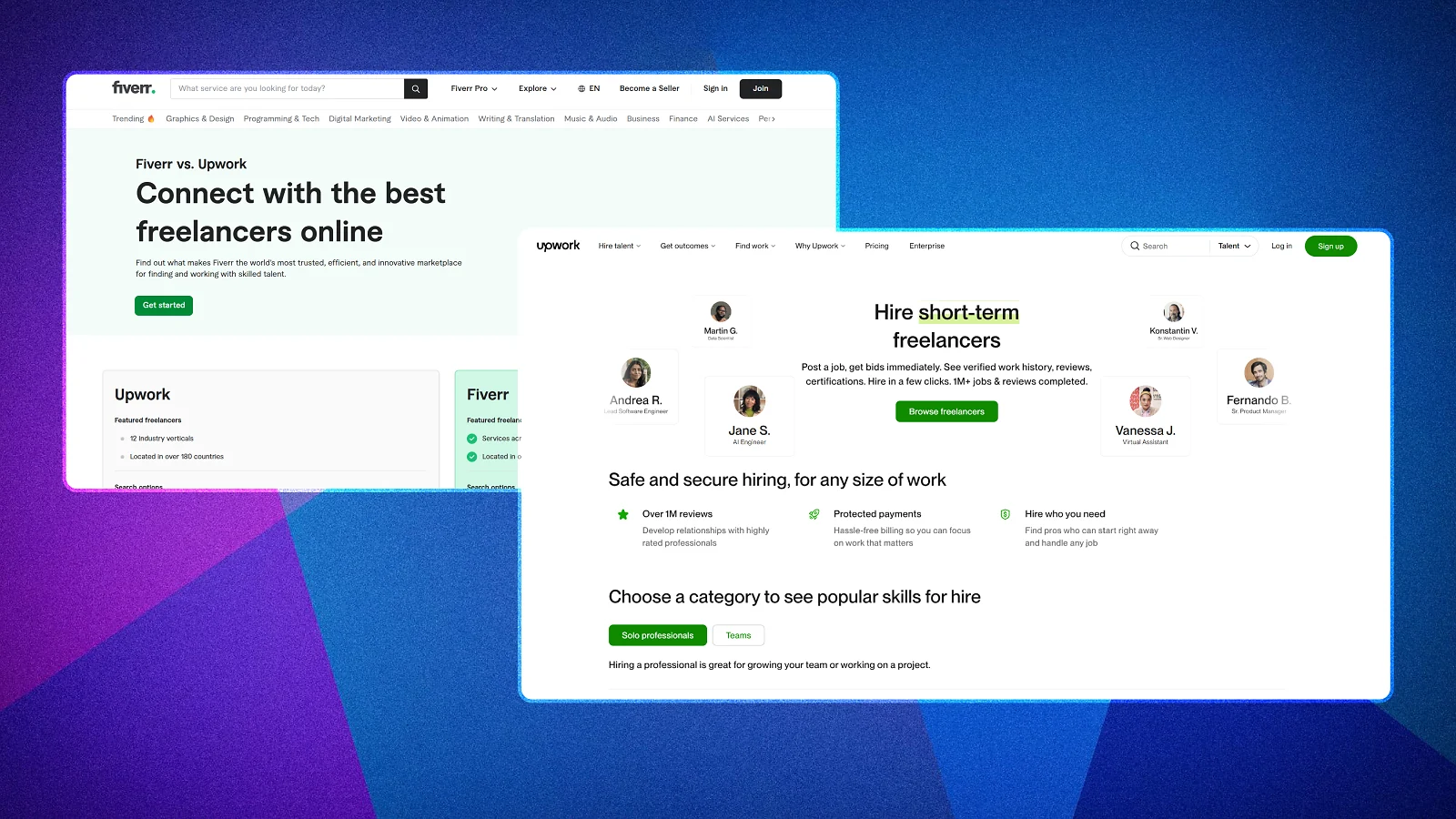
For anyone seeking practical freelancing tips for beginners, the fastest path to a first paid freelance project is usually a warm lea – someone who already knows your work or was referred by someone who does. Cold pitching alone feels discouraging because it is: popular listings on Upwork and Fiverr attract 15–40 competing proposals, and a generic pitch rarely stands out in a field that size.
There are two realistic ways to get started: apply through platforms like Upwork and Fiverr or create a focused portfolio. One of the simplest freelancing tips and tricks is to spend less time polishing a long bio and more time writing a proposal that clearly fits the client’s needs. A good portfolio can also do a lot of the selling for you by justifying your rate and filtering out low-intent prospects.
Give it time. Consistent outreach and sharing your work matter much more than one big push. Building enough visibility to start getting inbound leads usually takes several months, so don’t panic if your first dozen cold pitches go nowhere. Most freelancing tips understate this timeline, which leaves early-stage freelancers thinking something is wrong when the first dozen cold pitches go unanswered.
Always Use a Written Contract (Here’s Why It Matters)

Among the most important freelancing tips for beginners is to use a written contract for every project, regardless of its size or how much you trust the client. A verbal agreement protects no one when a client expands the scope without paying for extra work, or disputes what was originally agreed. Both scenarios are dramatically harder to resolve without a document that defines deliverables, timeline, payment terms, and cancellation terms upfront.
One of the most useful freelancing tips and tricks is to make sure your contract clearly covers the scope of work, what is and isn’t included, the payment schedule, and what happens if the client pays late. For new clients, a deposit of around 50% is common, but the exact amount depends on the project. It should also include a cancellation clause covering payment for work already completed, plus any agreed kill fee if the client ends the project early.
Bonsai and HoneyBook both offer contract templates built for freelancers, with e-signature tools so clients can sign without printing. A lawyer-reviewed Google Docs template works for early-stage freelancers who need a free option. The point is not the tool – it’s having a signed document before any work begins. This single freelancing tip for beginners prevents more income loss than any other.
How To Get Paid Faster and Avoid Late Payments

Require a deposit upfront and automate your invoice follow-ups – those two changes resolve most late payments before they escalate. The scale of the problem is larger than most new freelancers realize: 29% of freelance invoices are paid late, and 85% of freelancers report being paid late at some point. The good news is that 75% of late invoices are resolved within 14 days of follow-up, and 90% recover within a month.
Manual chasing is the slowest and most relationship-draining approach. Most invoicing tools – HoneyBook, Bonsai, and FreshBooks among them – automate reminder emails on intervals you define: three days before the due date, on the due date, and three, seven, and fourteen days after. Automation costs no relationship capital and converts faster than a personal follow-up in most cases.
One of the most practical freelancing tips for beginners is to add a late-payment fee clause before sending the first invoice, not after a payment is already overdue. Clients who know overdue balances accrue a 1.5% monthly fee pay faster than clients who don’t.
One tool to avoid for international freelancers is Wave. The platform has focused exclusively on the US and Canada since November 2020 and is no longer available to businesses based elsewhere, making it unsuitable for most cross-border freelancers.
A useful addition to your list of freelancing tips and tricks is having a simple way to earn extra money when clients pay late. Survey sites that pay real money can provide a small additional income stream while you wait for outstanding invoices.

Tools and Productivity Freelancing Tips
When it comes to tools, the best freelancing tips for beginners focus on two or three essentials, not a full software stack. Skipping the ones that matter most – time tracking and invoicing – costs real money through underbilled hours and uncollected payments, regardless of how many freelancing tips you’ve read on the subject.
Track Your Time Even If You Charge Flat Rates
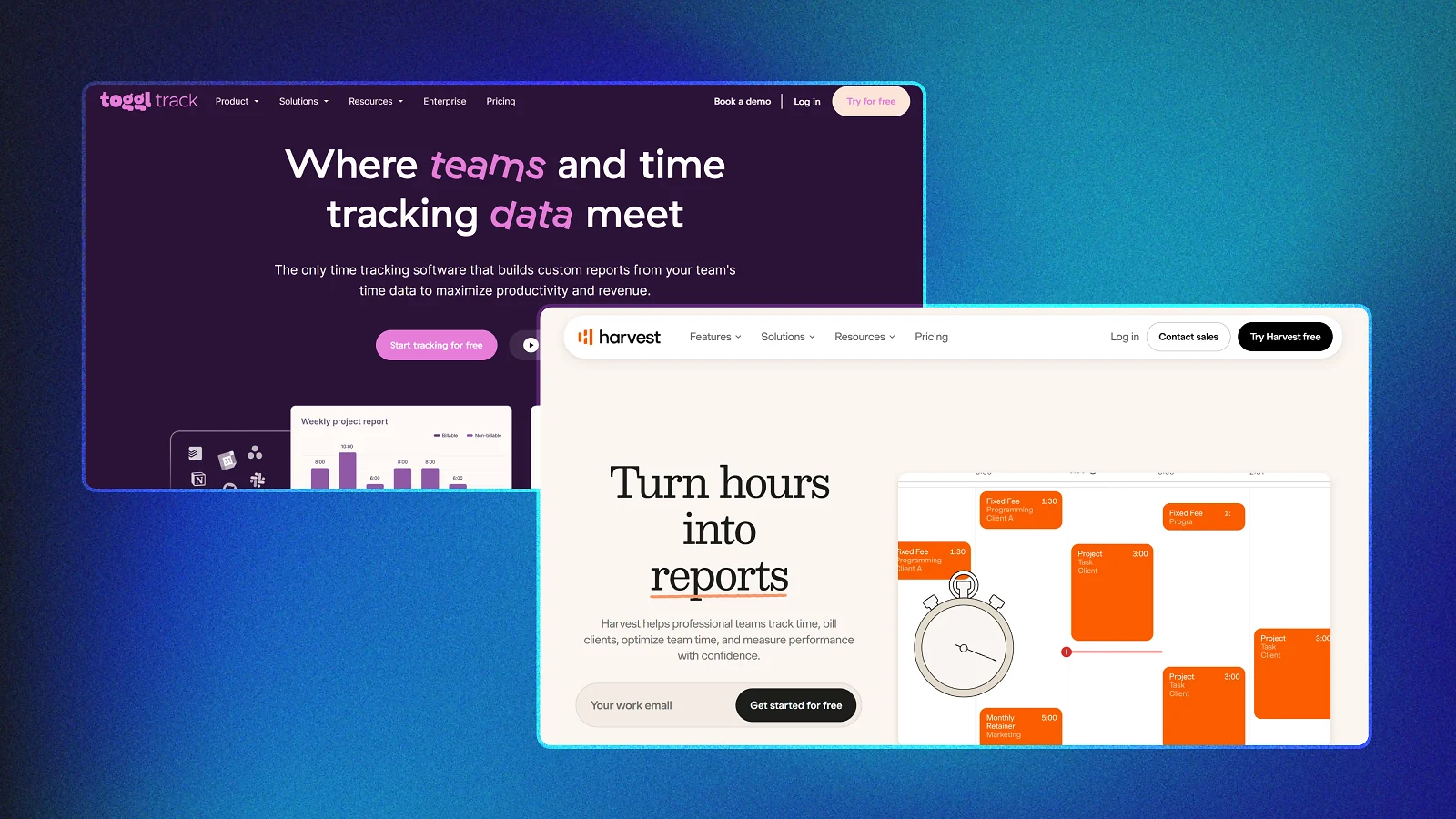
Tracking your hours is one of those freelancing tips and tricks that can save you real money. Even on flat-rate projects, a time log shows whether your price actually covers the work and helps you quote similar jobs more accurately.
Toggl Track offers a genuinely usable free plan for up to five users, automatic background tracking, and a browser extension that starts the timer from whatever tool you’re already in. Its limitation: only basic flat-rate invoicing, with no built-in payment collection.
Harvest combines time tracking and invoicing in one platform. Its free plan supports one user and two projects, while the Teams plan starts at $9 per seat per month when billed annually or $11 on monthly billing. Clients can pay web invoices through connected Stripe or PayPal accounts, although payment-processing fees still apply.
Among the most actionable freelancing tips for beginners is to start with Toggl Track’s free tier, which provides the time data you need without adding a monthly expense before your income is consistent. Upgrade to Harvest once invoicing volume justifies the cost.
Get Paid Internationally Without Losing Money to Fees
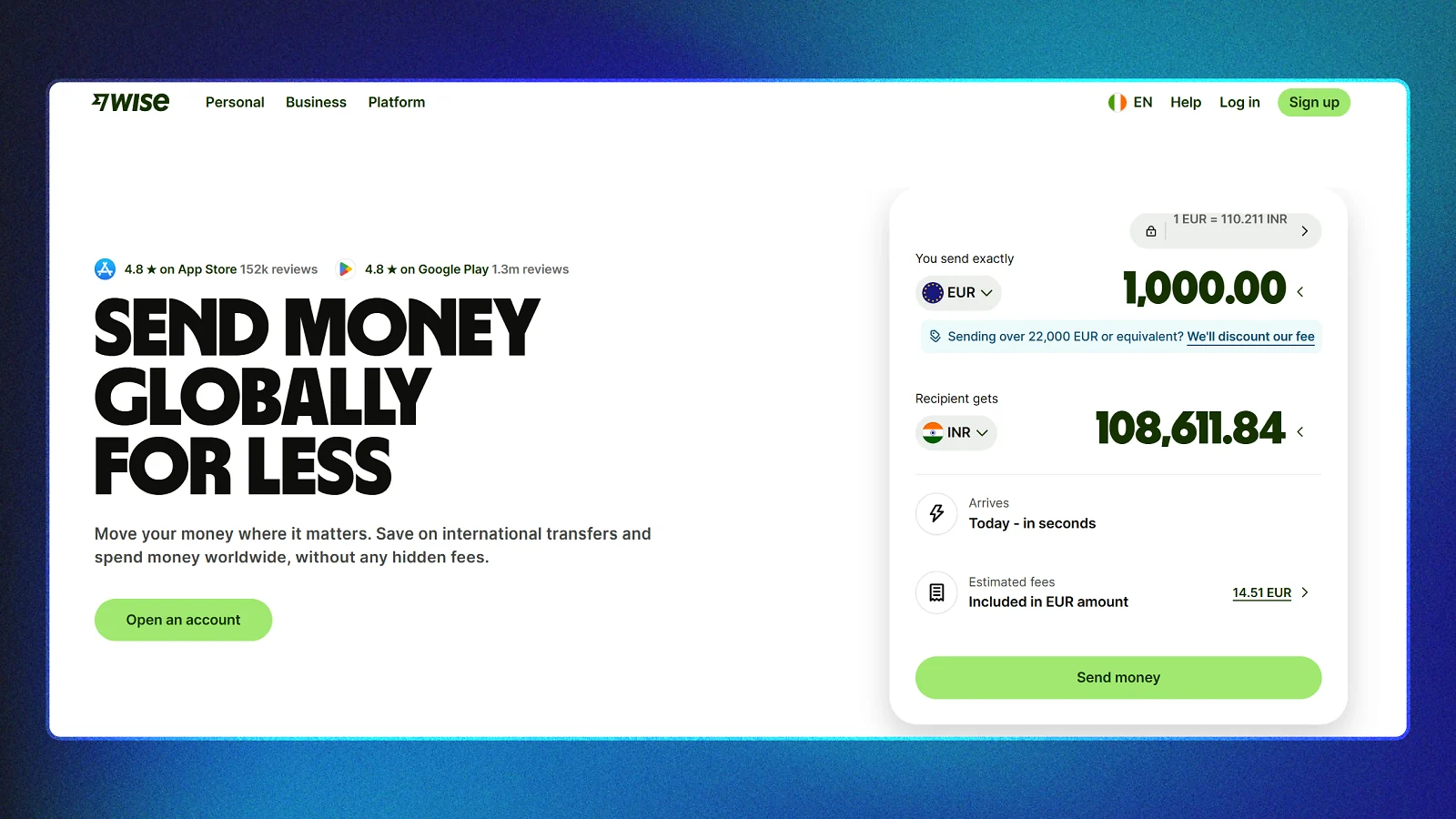
Standard bank wire transfers for international invoices typically cost 3–5% of the transfer in fees and exchange-rate markups – tools like Wise cut that to under 1%. This is one of the most underused freelancing tips and tricks in the entire category, despite freelancing being inherently borderless work.
Wise uses the real mid-market exchange rate with fees starting around 0.33–0.57% for bank-to-bank transfers. Payoneer runs roughly 0.5–1% for bank transfers (up to ~4% for card payments), but integrates directly with marketplaces like Upwork and Fiverr, so payments from those platforms arrive faster with less friction.
When it comes to international payments, one of the easiest freelancing tips and tricks is to match the tool to the income source. Use Wise for direct client invoicing across borders (better rates), and Payoneer for income earned primarily through marketplace platforms (better integration). On a $5,000 international invoice, the difference between a standard wire (3–5%) and Wise (0.5%) is $125–$225 staying in your pocket per transaction – a difference worth the five minutes it takes to set up an account.

Tax and Legal Freelancing Tips for US and UK Contractors
None of the pricing or client-management freelancing tips above matter if a tax bill you didn’t save for wipes out three months of profit. This section covers the key tax considerations for US and UK freelancers side by side.
How Much to Set Aside for Taxes as a Freelancer
US freelancers should set aside 25–30% of net income for taxes; UK freelancers should aim for the same range and then adjust once they know their actual tax band. Both figures are starting points, not guarantees – confirm current rates and thresholds with a local accountant or an official source before making financial decisions.
US: Self-employment tax is generally 15.3% on 92.35% of net earnings, subject to annual limits and additional Medicare rules. Federal, state, and local income taxes are separate. Estimated payments are generally required if you expect to owe at least $1,000 after withholding and refundable credits and do not meet a safe harbor threshold. The standard 2026 deadlines are April 15, June 15, September 15, and January 15, 2027. Setting aside 25–30% can be a useful starting point, but it is not an official rate.
UK: For 2026/27, the Personal Allowance is £12,570. Income Tax rates are 20%, 40%, and 45% in England, Wales, and Northern Ireland, while Scotland uses bands from 19% to 48%. Class 4 National Insurance is 6% on profits between £12,570 and £50,270 and 2% above that. Online Self Assessment is due by January 31 and paper returns by October 31; some taxpayers also make payments on account on January 31 and July 31. Since April 6, 2026, sole traders whose gross self-employment and property income for 2024/25 was above £50,000 must keep digital records and submit quarterly updates. The threshold drops to £30,000 in April 2027.
Sole Proprietor vs. LLC (US) / Sole Trader vs. Limited Company (UK)
Most freelancers start as a sole proprietor (US) or sole trader (UK) by default, and that’s the correct choice for the early stages – both are the simplest structures available, require minimal paperwork, and let you start earning immediately. The switch to an LLC or limited company is a financial calculation, not a prestige move, and should involve an accountant.
US: a sole proprietor requires no paperwork and starts the moment you have a first client. An LLC adds liability protection and a more professional client-facing structure, with state filing fees typically ranging from $50–$500. Most freelancers consider the switch once income is consistent and they want to separate personal and business finances clearly.
UK: a sole trader is the simplest setup – register with HMRC and begin. A limited company becomes more efficient once profits are high enough that paying yourself via a salary-plus-dividend combination results in less tax than sole trader income tax.
That threshold varies by income level and business expenses. Run the numbers with an accountant before switching, not after – the administrative overhead of a limited company is real, and the tax benefit only kicks in at specific income levels.
Common Freelancing Mistakes That Cost Real Money

The same four mistakes drain more freelance income than any skills gap. None of them take talent to fix, and every one has a remedy already covered in the freelancing tips above.
Underpricing out of fear
Of all the freelancing tips for beginners in this guide, avoiding fear-based underpricing has one of the largest long-term financial impacts. If you’ve never raised your rates because you were scared a client would walk, go back to the compounding math in the Pricing section. One year at $10/hour below target costs you more in lost income than you’d ever save by dodging a single uncomfortable conversation. It’s not a close call.
Skipping a contract “to keep things simple”
You trade one awkward step for open-ended risk. Scope creep hits small projects too. And a client who won’t sign a basic agreement before work starts has already told you how a dispute will go.
Not tracking time on flat-rate work
This is how freelancers quietly end up below minimum wage without noticing. Log one month of your current workload and you’ll have enough data to reprice every repeating project type.
Saving nothing for taxes
A bill you didn’t budget for can wipe out a quarter of good work. Set the money aside per payment, not per season.
Two red flags show up again and again in freelance work:
- Free samples that aren’t a test task. A reasonable test task is fine. Pages of unpaid “samples” are not.
- Weird payment methods. Checks you’re asked to deposit and partially wire back, or crypto from a sender with no professional history.
A legitimate client with real work to commission will pay for a test task. They won’t ask for speculative unpaid work. That single filter is one of the most useful freelancing tips and tricks for beginners fielding cold inquiries.
Freelance income also swings when projects end or clients pay late, so it’s worth having a backup that doesn’t mean managing more clients. Exploring legitimate ways to make money playing games can cover the slower stretches.
Which Freelancing Tips Matter Most in Your Situation?
Not every freelancing tip is equally relevant at every stage. Here’s a quick comparison table so you can find the most actionable section without reading every paragraph:
| Your Situation | Best Freelancing Tip |
|---|---|
| You’re new to freelancing | Learn how to price your services and use contracts from day one |
| You have clients but earn too little | Raise your rates strategically instead of taking on more work |
| Clients pay late | Automate invoicing and protect yourself with contracts |
| Tax season is stressful | Prepare for taxes throughout the year instead of at the deadline |
| Client work has slowed down | Diversify your income while searching for new projects |
Final Thoughts
The best freelancing tips all focus on the same goal: become easier to hire. Pick one niche, create proof of your skills, write personalized proposals, communicate professionally, and prioritize repeat clients over one-off projects. Following these fundamentals consistently will have a bigger impact than chasing shortcuts or viral strategies.
Freelancers looking to diversify their income can also explore easy ways to make cash online that fit around client work.
FAQs
The most important freelancing tip for beginners is to set your rate correctly from the start – underpricing is easier to do and harder to undo than most new freelancers expect. Use an income goal divided by realistic billable hours, then add a 25–50% premium.
Calculate your rate from your income goal and realistic billable hours, then add a 25–50% premium to cover self-employment costs. If your current rate falls below that result, you are likely undercharging.
Yes – every freelance project needs a written contract regardless of size. Scope creep and payment disputes happen on small projects too, and they are significantly harder to resolve without a signed agreement defining deliverables and payment terms.
US freelancers should set aside 25–30% of net income; UK freelancers should aim for the same range and confirm exact current thresholds with HMRC or a local accountant, since rates change annually.
Toggl Track is the best free starting tool for freelancers – it tracks time automatically with no cost, giving you the data to price future projects accurately and avoid the undercharging trap. It’s the most immediately actionable recommendation across all the freelancing tips in this guide.