


How To Become an Animator: Tools and Steps for 2026

Eneba Hub contains affiliate links, which means we may earn a small commission if you make a purchase through them—at no extra cost to you. Learn more


Recent update
Start with Coursera for beginner animation training that includes Blender, then turn the exercises into independent practice projects.
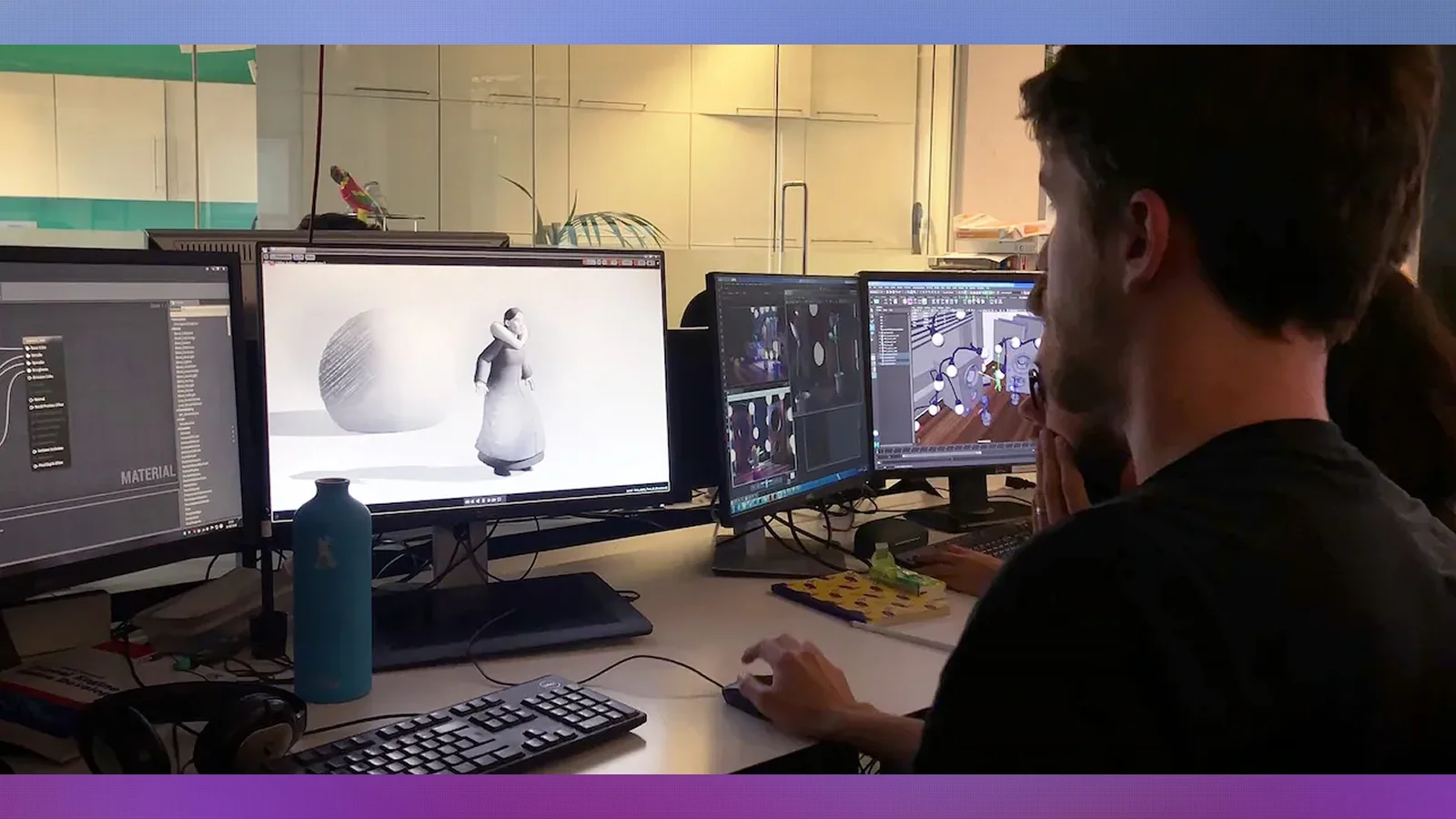
Learning how to become an animator means developing motion fundamentals, learning animation software, building a focused portfolio, and applying for entry-level work. The U.S. Bureau of Labor Statistics puts median annual pay for special effects artists and animators at $102,030 in May 2025. That animator salary figure also covers special effects artists, so it works as a broad benchmark. Readiness depends on your route: a degree takes two to four years, while self-taught learners are ready once their reel shows independent animation skills..
If you want to know how to become an animator, start today with Blender‘s free software and a beginner bouncing-ball tutorial. A small finished exercise is a better first test of your interest than an expensive subscription or an ambitious short film.
This guide covers qualifications, software, pay, courses, and a practical roadmap for students and career changers considering becoming an animator.
Jump to:
What an Animator Does for a Living
An animator creates sequenced images that suggest movement, through drawing, computer-generated imagery, or a combination of techniques. Animators work in game studios, film production, advertising, and freelance settings.
This guide covers 2D, 3D, and visual effects work broadly. Each track uses different production methods, and motion principles carry across all of them, so you can start with one.
Animator Responsibilities and Daily Tasks
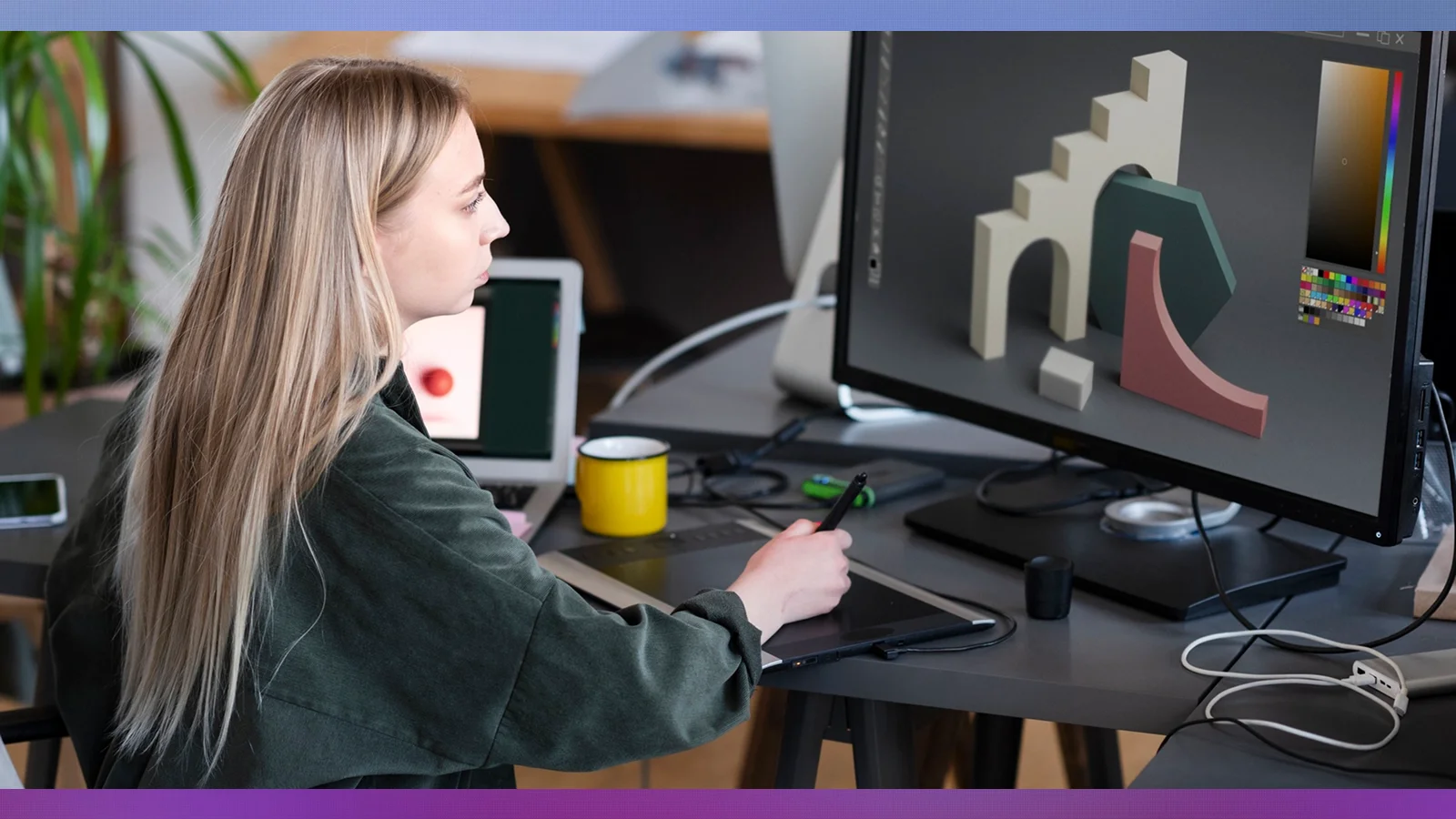
Understanding how to become an animator starts with knowing what the day-to-day work actually demands: making movement readable and convincing within a director’s brief. Every shot moves through systematic planning, posing, and revision.
These tasks form the core of production work:
- Plan the performance: Read the brief and storyboard, which is a sequence of drawings that maps out a scene. Identify the action, emotional intent, and camera framing before committing to detailed animation.
- Build keyframes: Establish the important poses or moments in a movement. For a game character’s jump, these might include preparation, takeoff, and landing. The poses must communicate weight and intent.
- Create in-between motion: Draw or adjust the frames between key poses. Computer interpolation can generate transitions, but animators still refine spacing and timing so the movement doesn’t look mechanical.
- Collaborate across departments: Discuss changes with directors, writers, artists, and technical staff. In games, an animation must also work with gameplay systems, so a visually appealing movement may need revision for responsiveness.
- Revise and specialize: Respond to feedback and maintain consistency across shots. Larger teams may separate character performance, background movement, and effects animation into specialist assignments.
Hands-on animation shares the working day with reviews and revisions. Freelancers also handle client communication and scheduling, and the BLS reports that 63% of special effects artists and animators were self-employed in 2025, so becoming an animator requires comfort with feedback as well as creative practice.
Animation Roles and Where Beginners Fit Best
The main tracks include 2D animation, 3D animation, motion graphics and VFX, and character animation. Character performance can sit within either 2D or 3D production.
Compare the work before choosing animator software:
|
Role |
What you’d do |
Technical depth |
First portfolio piece |
|---|---|---|---|
|
2D animator |
Sequence drawings or vector artwork |
Moderate: drawing, timing, and timeline control |
Looping character cycle |
|
3D animator |
Pose and animate digital models |
High: rig controls and spatial movement |
Character walk cycle |
|
Motion graphics or VFX animator |
Animate graphics or combine effects with footage |
Moderate to high: compositing and effects workflows |
Logo animation |
|
Character animator |
Create expressive character performances |
High: strong posing and acting choices |
Dialogue performance clip |
A simple 2D loop or motion graphics exercise can make an accessible starting project. Beginners interested in games can start directly with 3D.
A Masterclass in Animation Specialization on Coursera offers a broad introduction before you commit to a particular animator job track.

Pros and Cons of Becoming an Animator
Learning how to become an animator combines creative work with substantial technical demands. Weigh the daily production work alongside any animator salary headline.
The main trade-offs are:
| Pros | Cons |
|---|---|
| ✅ Visible creative output – create movement for games, film, and advertising. ✅ Different work settings – pursue studio or freelance assignments. ✅ Accessible practice tools – Blender and Krita support free practice. ✅ Transferable skills – timing and visual communication apply across media. | ❌ Flat job growth – most openings replace workers who leave the field. ❌ Revision-heavy work – creative choices must fit briefs and production feedback. |
The U.S. Bureau of Labor Statistics projects 0% employment growth for special effects artists and animators over 2025–35, and it notes that AI can complete some animation and special effects tasks faster, which may dampen demand. That makes a focused portfolio and targeted applications more useful than collecting unrelated course certificates.
What It Takes To Qualify as an Animator
In the US, the BLS lists a bachelor’s degree as the typical entry-level education, but it isn’t a universal requirement to become an animator. BLS adds that employers usually prefer candidates with a good portfolio and strong technical skills.
Your target animator job should guide your preparation in learning how to become an animator. A studio hiring for character performance needs different evidence from a company seeking animated marketing graphics.
Build your qualifications around these areas:
- Formal education: Relevant paths include computer animation, fine arts, and visual design. A degree can provide structured practice and critique. Compare a program’s student work and curriculum, since titles vary.
- Alternative training: Self-directed study and structured courses offer another route. BLS notes that self-study can build graphics and animation skills. Anyone investigating how to become an animator without a degree still needs fundamentals, independent projects, and useful feedback. Following tutorials without applying the techniques elsewhere leaves a gap.
- Portfolio and demo reel: A demo reel is an edited selection of animation work. Choose pieces relevant to the role, identify your contribution to collaborative projects, and remove weaker material. A game-focused reel might emphasize movement cycles and responsive actions.
- Vendor certification: An exam-based software credential is separate from a course completion certificate. For example, Adobe offers an Adobe Certified Professional exam in Adobe Animate, and Noble Desktop suggests at least 150 hours of training with the application before the exam. Check the vendor’s exam requirements before choosing certification training.
- Communication and adaptability: Explain your animation choices, accept specific notes, and revise without losing the brief’s purpose. Becoming an animator also means recognizing whether feedback points to a technical problem or a difference in taste.
A strong demo reel usually matters more than any credential, and it works best as work you can explain and revise. Credentials can support an application, but they cannot demonstrate timing or character performance by themselves.
Before paying for training on how to become an animator, compare its assignments with relevant animator job listings. Look for courses that offer critique and independent projects.
Animator Software Beginners Should Learn First
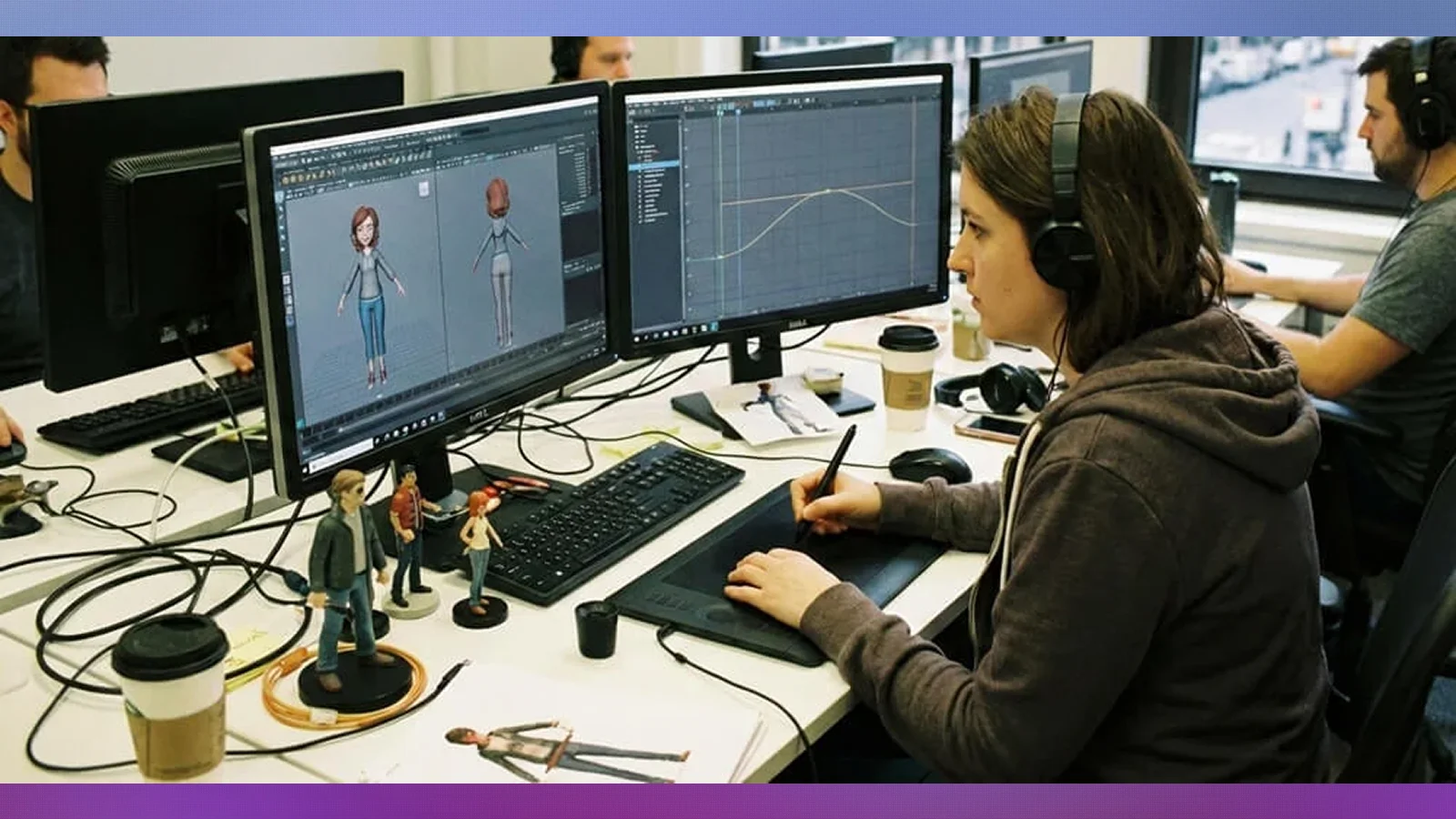
Start with one tool matched to your target work: Blender for 3D, Adobe Animate for frame-by-frame 2D, or Adobe After Effects for motion graphics. Animator software supports the craft, and motion fundamentals carry across every tool.
Adobe lists Creative Cloud Pro at $69.99/month on an annual plan billed monthly, and a student and teacher offer at $19.99/month, subject to eligibility and offer terms. The table separates the main uses:
|
Tool |
Best for |
Free trial |
Price |
|---|---|---|---|
 |
2D and 3D animation practice |
Free software, no trial needed |
Free |
 |
Motion graphics and visual effects |
Free trial offered |
Creative Cloud Pro $69.99/month |
 |
Frame-by-frame and puppet-style 2D animation |
Free trial offered |
Creative Cloud Pro $69.99/month |
 |
Hand-drawn animation practice |
Free software, no trial needed |
Free |
 |
Beginner motion graphics |
Free plan with usage limits |
Pro from $8/month, billed annually |
Learn how to become an animator by knowing how to use free animator software first unless a particular course or target role requires a paid application. The courses below teach Blender, After Effects, or Adobe Animate.
Animator Salary and Career Growth
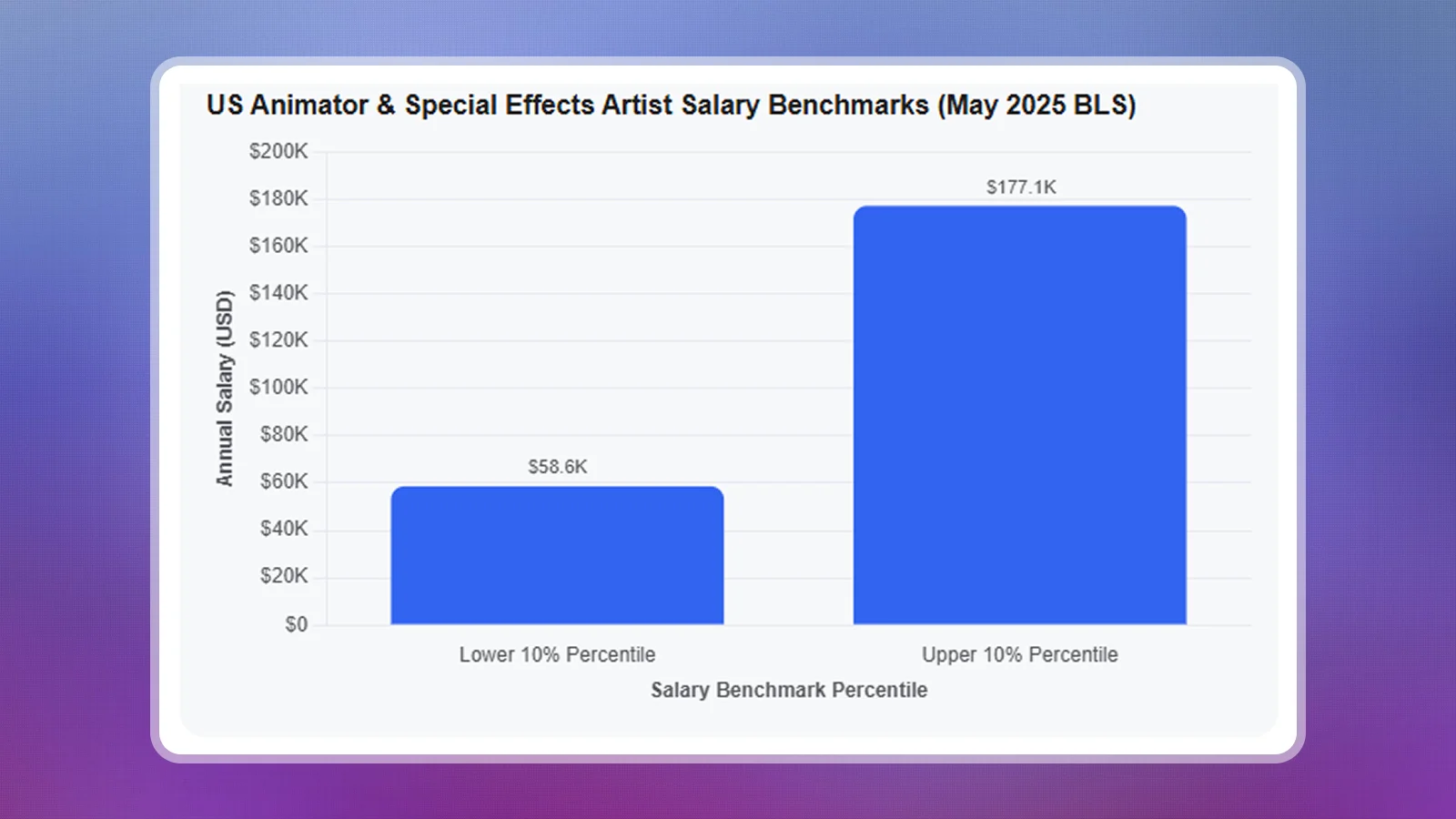
The US animator salary baseline comes from the U.S. Bureau of Labor Statistics, using May 2025 data. Its category includes special effects artists and animators, so it is broader than a single job title.
The source reports these wage benchmarks:
- Lower wage benchmark: BLS reports that 10% earned less than $58,600.
- Median wage: BLS reports $102,030, the point where half of workers earned more and half earned less.
- Upper wage benchmark: BLS reports that 10% earned more than $177,110.
BLS publishes wage percentiles for the whole occupation and does not break pay out by experience level, so none of these figures predicts a first animator salary offer. By industry, BLS lists median pay of $127,670 at software publishers and $100,990 in motion picture and video industries.
Career progression can move from junior shot work toward more complex assignments, senior animation, and supervision. BLS says artists and animators who show strong teamwork and time-management skills can advance to supervisory positions, and some move into roles such as art director. Advancement depends on performance and responsibility, and BLS publishes no fixed timeline. Compare an animator salary offer alongside contract stability, location, and the actual work.
How To Become an Animator: A Step-by-Step Guide
The time it takes to become an animator depends on your route: a self-taught, portfolio-first path has no fixed end date, while a degree path typically takes two to four years. Either route works best when you build independent animation ability before judging job readiness.
Step 1: Learn the Fundamentals of Motion
Study the 12 principles of animation before attempting a complex scene. The framework covers squash and stretch, anticipation, staging, follow-through, timing, arcs, secondary action, and exaggeration. Keyframes mark important moments; in-between frames connect them. Frame rate describes how many frames appear each second.
Watch reference footage and identify the poses that make an action readable. To become an animator, you need to understand why movement works, along with which software buttons create it. Practice changing the timing of a simple action and compare the result.
Step 2: Choose and Learn a Core Animation Tool
Choose Blender for a free 3D starting point or Adobe Animate for a drawing-based 2D route. Learn the timeline, keyframe controls, playback, and export process before adding more applications.
When learning how to become an animator, using animator software becomes useful through repetition. Rebuild a small exercise without copying each tutorial action, then change the motion yourself. Keep the tool you chose through the next projects so that unfamiliar controls don’t interrupt every creative decision.
Step 3: Build a Short Practice Animation
Animate a bouncing ball or pendulum with a clear sense of weight. Concentrate on the movement and skip detailed scenery or polished materials.
For a gaming angle, try a simple collectible pickup loop or a character’s landing action. Becoming an animator requires practice with readable movement, and small exercises expose timing problems clearly. Save an early version, revise after critique, and compare the versions to identify what improved.
Step 4: Put Together a Portfolio Piece
Develop a focused piece that fits your chosen track. A walk cycle suits character work, while an animated logo suits motion graphics. Use the animator software you already learned.
Present the finished animation with a brief explanation of your role and choices. Include a breakdown if it clarifies your contribution. A portfolio should demonstrate independent judgment, so avoid presenting an unchanged tutorial result as original work when you apply to become an animator.
Step 5: Take a Structured Course
Choose a course on how to become an animator that addresses a specific weakness in your current work. Use the Recommended Courses section below to compare broad introductory training with focused Blender or After Effects options.
Treat assignments as a starting point for independent practice. A course can help organize how to become an animator, but finishing videos doesn’t establish readiness for paid production. Apply a technique to a different subject before adding the result to your reel.
Step 6: Apply for Entry-Level or Freelance Animator Roles
Apply with a reel matched to the advertised work. Read each animator job description for required software and production responsibilities, then make your relevant work easy to find.
For freelance assignments, agree on scope, revision terms, and usage rights before starting. Keep practicing while applications are in progress, and use specific portfolio feedback to choose your next exercise. Becoming an animator is an ongoing production skill that grows with every project.
Blender gives you a free place to start the practice exercises in Steps 2 through 4.
Recommended Courses
Choose training that matches your next project over another general certificate. These options teach the animator software named above and the motion principles you can apply in it.
Coursera lists its masterclass at 2 months with 10 hours of weekly study. Udemy lists 12.5 hours of video for its introduction, while CourseHorse lists a 6-hour live, 1-on-1 Blender class at $800 per person.
|
Course |
Provider |
What it covers |
Price or duration |
|---|---|---|---|
|
Beginner training across Blender, Nomad Sculpt, Procreate Dreams, After Effects, and Unreal Engine |
2 months at 10 hours/week |
||
|
The 12 principles of animation, with exercises in Adobe Animate (last updated 4/2017) |
12.5 hours of video |
||
|
Live 1-on-1 Blender modeling and keyframe animation, online or in Brooklyn |
6 hours, $800/person |
||
|
Blender modeling and rendering |
1–3 months |
||
|
After Effects logo animation |
4 weeks at 10 hours/week |


A course completion certificate shows that you finished training and differs from an exam-based vendor certification. Use the assignments to develop independent portfolio pieces. Course duration doesn’t predict how quickly you can become an animator.
Careers Close to Animation Worth Considering
Consider adjacent visual careers if the daily animator job doesn’t suit you. These paths use related skills but change the main task:
- Graphic designer: Median pay is $62,960. The work centers on layouts, visual identity, typography, and composition. The trade-off is less work with motion.
- Film and video editor: Median pay is $75,100, and BLS groups editors with camera operators. Shape existing footage through selection and pacing. The trade-off is less control over the original imagery.
- Art director: Median pay is $114,850. Guide visual decisions and review other people’s work. BLS lists art director as an advancement path for animators, so it suits later in a career.
Animation practice builds timing, visual judgment, and feedback skills that can support these paths. Becoming an animator isn’t the only way to use them professionally.
Final Verdict on How To Become an Animator
Animation is worth considering if you enjoy repeated refinement of movement and can work within someone else’s brief. Start with free software, complete small projects, and buy focused training when you can identify the skill gap it addresses.
It is less suitable for someone seeking quick high pay or uninterrupted creative freedom. An animator salary benchmark comes with flat projected job growth, so applications stay competitive. Choose graphic design if static visual communication interests you more, or editing if shaping existing footage is the stronger draw.
The practical answer to how to become an animator is to build work that demonstrates the job you want. A focused reel gives a reviewer something concrete to assess.
FAQs
Difficulty depends on your track. 2D loops and motion graphics suit first projects, while 3D character work adds rigging and spatial challenges. Short daily exercises make learning how to become an animator manageable for beginners.
Yes, short and consistent sessions for learning how to become an animator work well. Practice a few times a week on small exercises such as a bouncing ball or a logo animation, and build toward one portfolio piece at a time.
No, not to start. A mid-range computer can handle 2D work and beginner 3D exercises in free tools like Blender and Krita. Complex 3D scenes and rendering benefit from a stronger graphics card and more memory, so upgrade when your projects demand it.
No, most entry-level animation roles do not require coding. Game and technical animators may script or work inside engines like Unity or Unreal, so basic scripting can open more game-focused roles.
No, adults and career changers can start at any age. Employers review your reel and technical skills, so a focused portfolio built through consistent practice carries the most weight.
Common mistakes include following tutorials without changing the result, starting with an overly ambitious short film, and adding weak pieces to a reel. Small finished projects and regular critique keep you on track as you learn how to become an animator.