


How To Become a Concept Artist: Tools and Steps for 2026

Eneba Hub contains affiliate links, which means we may earn a small commission if you make a purchase through them—at no extra cost to you. Learn more


Recent update
Start with Clip Studio Paint and practice turning rough sketches into readable designs before adding more software. It offers a free trial, while Adobe Photoshop costs more per month but is the app several concept art courses teach.
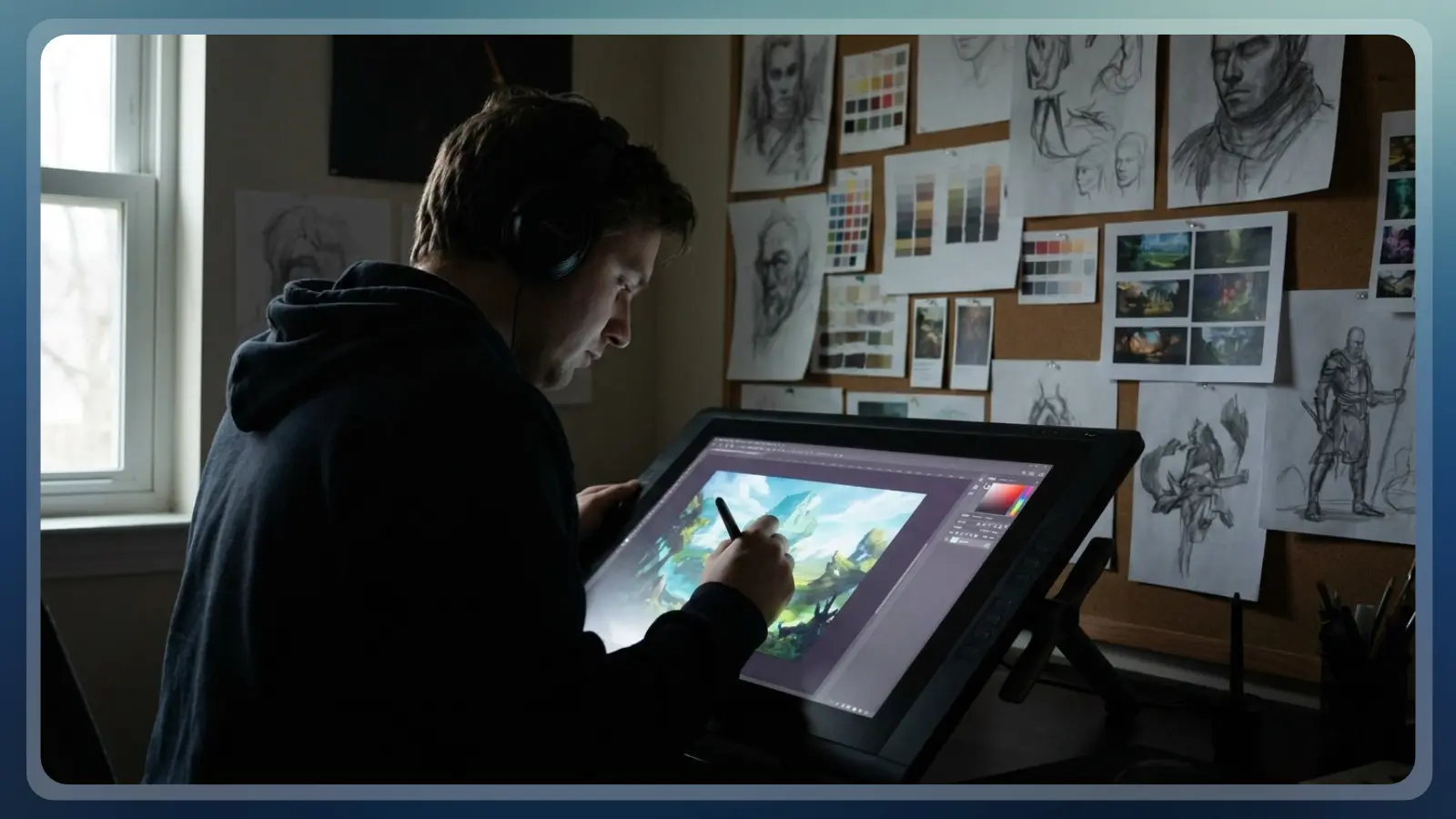
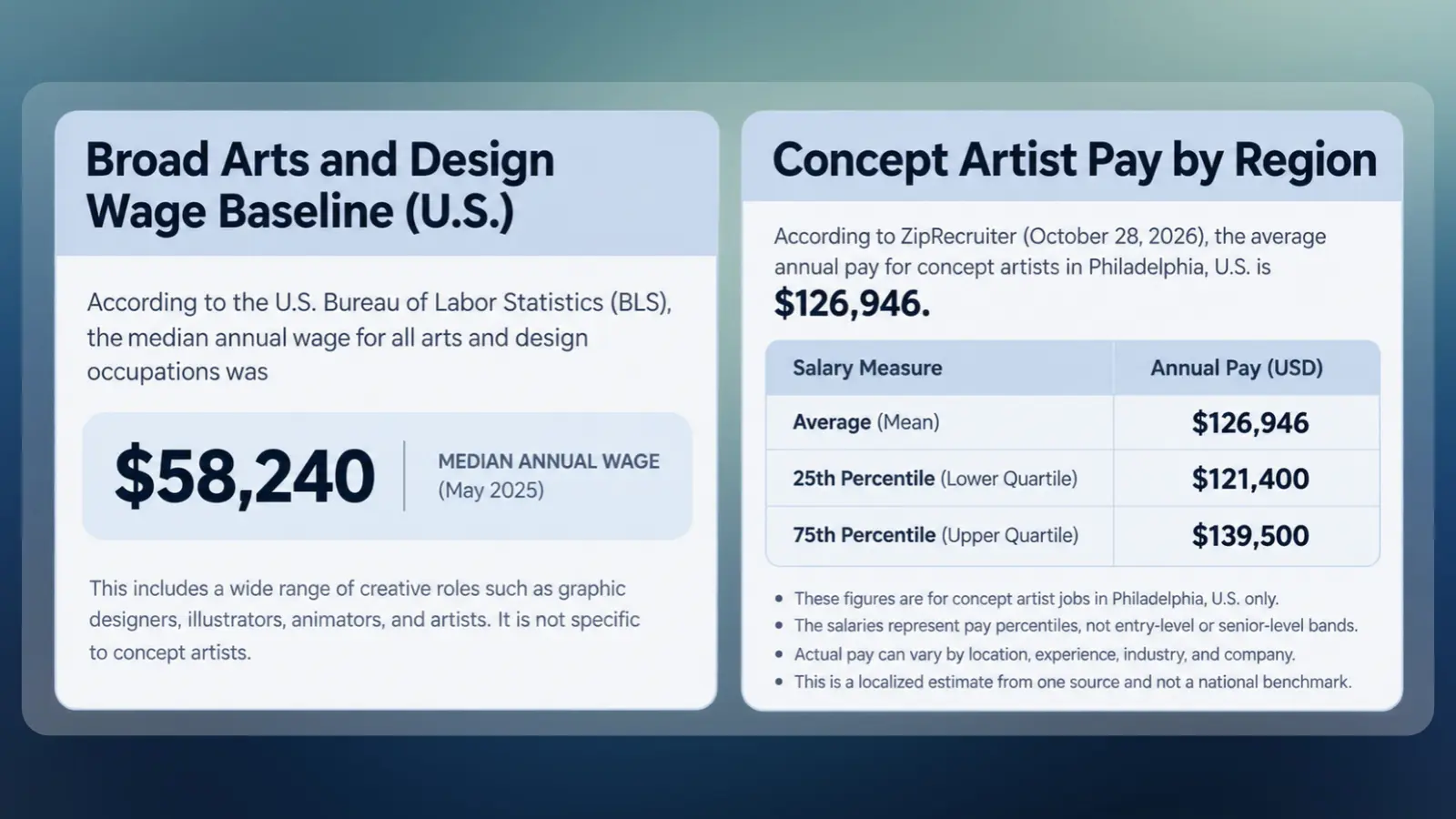
Learning how to become a concept artist means building drawing fundamentals, learning a painting app, and creating a portfolio that shows how you solve visual design problems. The U.S. Bureau of Labor Statistics (BLS) reports a $58,240 median annual wage for all arts and design occupations in May 2025, which sets a broad pay baseline for concept art careers. CG Spectrum‘s mentored programs run 9 to 12 months, and a self-taught timeline depends on how often you practice.
Start today by opening a free trial of a painting app, such as Clip Studio Paint or Adobe Photoshop, and following a beginner brush tutorial. Use it to paint one simple game prop, and keep your rough sketches next to the finished piece.
This guide on how to become a concept artist covers qualifications, software, salary context, a step-by-step path, and recommended courses for students, hobbyist artists, and career changers.
Jump to:
What Is a Concept Artist?
A concept artist develops visual ideas that a production team can build from. The work establishes the appearance of characters, environments, creatures, and objects before those assets reach final production.
Concept artist jobs span games, film, animation, and publishing. This guide focuses on games and entertainment: to become a concept artist in these fields, you need to communicate a design’s function as clearly as its mood. Concept art explores possibilities. A finished illustration usually presents an already resolved image.
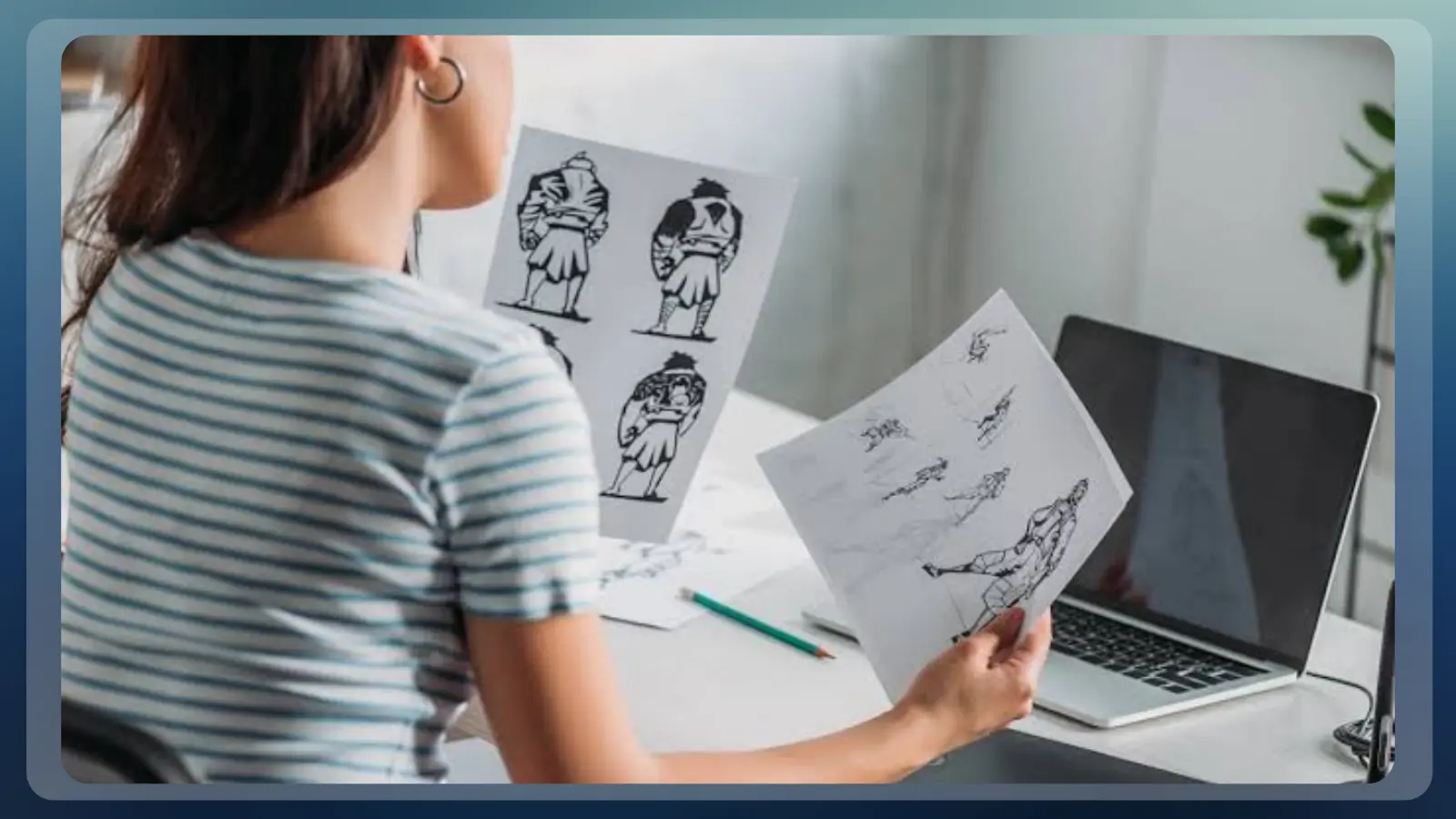
What Does a Concept Artist Do?
Concept artist jobs involve translating a brief into visual options, then revising those options with the team. A brief describes the project’s needs and constraints, including its audience, setting, and intended style.
The work can include these tasks:
- Sketch compositional thumbnails: Make small studies that test shape placement and lighting before a detailed painting. Film frames and game references can help you study how an image directs attention.
- Develop characters and creatures: Explore anatomy, costume, proportions, and silhouettes. A game enemy should communicate its role through its appearance, even before animation or dialogue explains it.
- Design props: Work out how equipment looks and functions within the fictional world. A weapon or vehicle needs materials and believable construction.
- Paint environment concepts: Establish the mood and layout of locations. These images help teams discuss architecture, atmosphere, and the relationship between spaces.
- Paint over rough 3D scenes: Use a simple three-dimensional layout as a perspective foundation, then develop the image with paint. Free software such as Blender can produce that layout. A paintover is a painted revision of an existing image or render.
- Apply production feedback: Revise designs when an art director changes the brief or another department identifies a practical constraint. Keep rejected alternatives organized so the team can follow the decisions.
A core part of how to become a concept artist is understanding that the role goes beyond final paintings. Sketch exploration, reference gathering, and revision sit alongside polished work, and the balance changes with the assignment.
Roles in Concept Art
The main tracks are character, environment, and prop or creature design. Concept artist jobs may combine these responsibilities at a smaller studio or separate them within a larger art team.
Use this comparison to choose a focused concept artist portfolio project:
|
Role |
What You’d Do |
Technical Depth |
First Portfolio Piece |
|---|---|---|---|
|
Character concept artist |
Develop heroes, villains, and costumes |
Anatomy, posing, and clothing construction |
Character design sheet |
|
Environment concept artist |
Establish locations and world atmosphere |
Perspective, architecture, spatial design, and 3D paintover tools such as Blender |
Environment mood painting |
|
Prop and creature designer |
Explore equipment or fictional organisms |
Materials, function, and silhouette design |
Prop or creature design sheet |
Start with a contained subject if full scenes overwhelm you. A prop lets you practice design decisions without resolving an entire environment.
An introductory, game-focused concept artist course can help you connect those exercises to production needs:
Pros and Cons of Becoming a Concept Artist
If you want to know how to become a concept artist, you must first understand that this career offers creative variety with a portfolio-first entry barrier. Choose it for the design process, including revisions, expect to draw to someone else’s brief most of the time.
These trade-offs affect both training and working life:
| Pros | Cons |
|---|---|
| ✅ Varied subjects – projects can involve characters, environments, and props. ✅ Visible progress – studies and revisions make your development easy to review. ✅ Transferable foundations – drawing and composition support adjacent visual careers. ✅ Multiple learning routes – independent study, courses, and mentorship offer different structures. ✅ Mentor access – programs such as CG Spectrum pair you with a working professional who reviews your work weekly. | ❌ Competitive entry – applicants need convincing work before a studio can assess their fit. ❌ Uncertain early income – course completion does not guarantee assignments or employment. |
An important distinction in concept artist jobs is between enjoying art and enjoying production design. Becoming a concept artist requires comfort with other people’s constraints, while early income remains uncertain until paid work is secured. The next section explains how portfolio work gives studios something concrete to evaluate.
Concept Artist Qualifications
There is no single mandatory degree or course certificate that grants entry to concept art. The BLS lists a bachelor’s degree as the typical entry-level education for special effects artists and animators, the closest official category. You can become a concept artist without a degree, but a strong portfolio is typically the employer’s main focus. To become a concept artist, you need evidence of visual problem-solving and the ability to revise work against a brief.
There is no single formula for how to become a concept artist. A formal degree offers built-in structure and direct feedback, while self-directed study requires you to create your own assignments and pursue tough critiques. In the end, neither path exempts you from demonstrating your thinking through a focused portfolio.
Build your preparation around these areas:
- Education: Study drawing, composition, anatomy, perspective, and color. Compare programs by the work students produce and the feedback they receive. The credential’s title tells you little.
- Alternative paths: Combine independent practice with a focused concept artist course or mentorship. CG Spectrum‘s Concept Artist Specialization pairs you with a working professional who reviews your work every week, so it suits artists who already draw and want targeted feedback. Foundational drawing practice still comes first.
- Portfolio and experience: Build a concept artist portfolio around the work you want to do. Include the brief, exploratory sketches, selected direction, and finished presentation so reviewers can understand your process.
- Certificates: A course completion certificate documents study. It differs from an exam-based vendor certification and does not establish professional competence by itself.
- Soft skills: Practice receiving feedback without defending every mark. Clarify the requested change, explain any practical concern, and show how your revision addresses the brief.
The strongest concept artist portfolio demonstrates your decisions as well as your rendering ability. For a game character, show how costume and proportions communicate its role. For a prop, explain the function and materials. For an environment, make the location readable before adding surface detail.
You do not need paid credits to write a useful practice brief. Invent a game setting, define its visual rules, and label the project as personal work. Never present an imagined client assignment as commissioned experience.
Learning how to become a concept artist also means evaluating feedback. A useful reviewer identifies a specific problem and explains its effect on the design; general praise cannot guide your next revision.
If you also enjoy layout or game systems, compare this path with our guides on how to become a graphic designer and how to become a game designer.
Your portfolio matters more than any credential. Before applying to concept artist jobs, compare your presentation with the actual responsibilities in the listing. Keep unrelated studies separate from the work that supports your application.
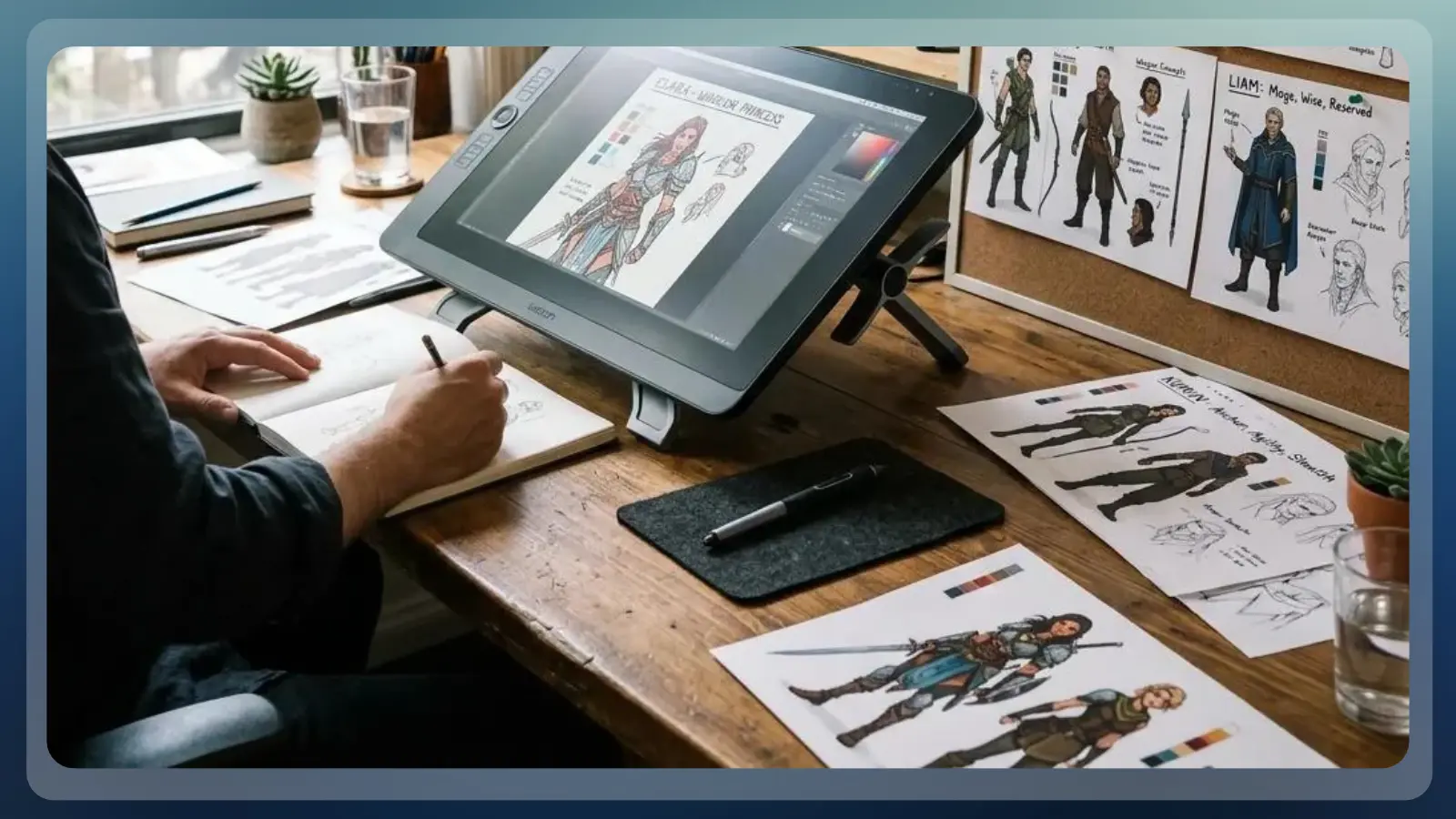
Software Every Concept Artist Should Learn
Learn one painting app thoroughly before expanding your toolkit. The core of how to become a concept artist rests on strong drawing and design decisions, so extra software should solve a specific problem and never replace fundamental practice.
This table compares the main options, including two free tools:
|
Tool |
Best for |
Free trial |
Price |
|---|---|---|---|
|
[FILENAME: clip-studio-paint-logo] |
Low-cost painting on desktop, tablet, or phone |
Yes |
From $0.99/month, or a $63 perpetual license (Windows and macOS) |
|
[FILENAME: adobe-logo] |
Layered painting, masking, and the courses below that teach it |
Yes (7 days) |
Paid$22.99/month on the annual plan, billed monthly |
|
[FILENAME: procreate-logo] |
Quick sketches and portfolio work on iPad |
None listed |
$12.99 one-time purchase (iPad only) |
|
[FILENAME: krita-logo] |
Free painting practice on a budget |
Free to use |
Free |
|
[FILENAME: blender-logo] |
3D blockouts to paint over |
Free to use |
Free |
Start with Clip Studio Paint if you want a lower-cost option with a dedicated concept art plan. Pick Photoshop if you plan to follow a concept artist course that teaches it, since several courses below do. Add Blender only when you start 3D paintovers.
Concept Artist Salary and Career Progression
A concept artist salary needs occupation and location context. No official category reports a concept artist salary, so the closest match works as a proxy. The BLS reports a $102,030 median annual wage for special effects artists and animators in May 2025 and projects little or no change in employment from 2025 to 2035. Expect competition for concept artist jobs.
For loose regional context, ZipRecruiter estimated the average concept artist salary in Philadelphia at about $127,000 in late 2026, with most salaries between $121,400 and $139,500. That figure comes from one site’s local estimate and does not set a national benchmark.
Neither source publishes separate entry, mid, and senior bands for a concept artist salary, so avoid reading percentiles as career stages. Career progression can involve larger assignments, deeper specialization, or responsibility for reviewing other artists’ work. Some artists move toward art director roles that set a project’s visual style. Compare concept artist jobs by duties and employment terms. A staff salary says little about freelance income.
How To Become a Concept Artist: A Step-by-Step Guide
Learning how to become a concept artist takes sustained practice and revision. A self-taught route has no fixed length, so measure progress by finished portfolio pieces. A mentored program supplies a schedule, but your finished work determines when you are ready to apply.
Step 1: Build Foundational Drawing Skills
Practice perspective, anatomy, value, color theory, and composition through focused studies. Value means the relative lightness or darkness of an area, and it helps an image remain readable without color.
Use game-related subjects to connect studies with design: draw a room in perspective or explore a creature’s anatomy. Keep observational studies separate from original designs. To become a concept artist, you need to apply what you study to unfamiliar problems, and avoid copying references.
Step 2: Learn Your Primary Painting App
Choose Clip Studio Paint, Adobe Photoshop, or the app your chosen training requires, then practice its brush and layer workflow. Layers separate parts of an image so you can revise them independently.
Complete a modest painting before exploring extra software. Practice changing proportions and repainting materials, since production work needs editable images. Becoming a concept artist is easier to organize when software practice supports a project instead of becoming an endless tour of features.
Step 3: Build a Focused Portfolio
Create a concept artist portfolio that demonstrates your intended track. Explore a character, an environment, and a prop or creature during practice, then select the strongest relevant work for applications.
Write a short brief for each project and retain meaningful alternatives. Show why the final direction fits the fictional game’s needs. Becoming a concept artist requires evidence that you can make choices under constraints, so build a portfolio around connected projects instead of a gallery of unrelated finished paintings.
Step 4: Take a Structured Concept Artist Course
Choose a concept artist course that addresses a weakness you can name. A digital-painting introduction suits an artist struggling with workflow; targeted mentorship may suit someone who needs detailed criticism of existing work.
Use the Recommended Courses section below to compare options. Finish the assignments, then apply the same methods to an independent brief. That second project helps reveal which decisions you understand without an instructor’s demonstration beside you.
Step 5: Apply With Relevant Work
Target junior and freelance concept artist jobs whose responsibilities match your portfolio. Read the submission instructions, present your most relevant project first, and describe your contribution clearly.
Include the brief and selected development work without overwhelming the reviewer. Becoming a concept artist also requires professional communication: ask about scope, revision responsibilities, and usage terms before accepting freelance work. Track feedback from applications, and change your portfolio only when the feedback is specific.
Step 6: Revise Under Feedback
To master how to become a concept artist, you need actionable feedback. Consult an experienced peer, instructor, or mentor, and ask them to break down where your visual communication fails instead of giving vague praise or ratings.
Revise your concept artist portfolio work, then compare it with the original brief. Keep a short record of recurring problems so your next studies have a purpose. To become a concept artist, make this review cycle part of normal practice. Your next project should demonstrate what the previous critique taught you.
Recommended Courses
Choose a concept artist course by the practice and feedback you need. These five named options teach the tools above, from a six-hour introduction to a mentored program.
Pick the one that matches the weakness you named in Step 4 if you want to learn how to become a concept artist.
|
Course |
Provider |
What It Covers |
Price or Duration |
|---|---|---|---|
|
[FILENAME: coursera-logo] |
Composition studies, Photoshop painting, and a finished environment concept |
6 hours; free to enroll |
|
|
[FILENAME: udemy-logo] |
Photoshop painting workflow, custom brushes, and one full artwork |
4 hours of video |
|
|
[FILENAME: udemy-logo] |
Creature and character design methods that work in any painting app |
9.5 hours of video |
|
|
Concept Art Masterclass | Create Conceptual Art from Scratch |
[FILENAME: udemy-logo] |
Blender 3D blockouts combined with Photoshop painting |
8.5 hours of video |
|
[FILENAME: cg-spectrum-logo] |
Mentored character, environment, and prop work in Photoshop, ZBrush, and Blender |
9 months (1:1) or 12 months (group) |
A concept artist course can organize practice, but it cannot replace independent work. Completion certificates document study and do not count as a vendor certification or proof of job readiness. Apply the learning to your concept artist portfolio, and browse our guide to the best online art courses for more options. Prices change with promotions, so check each course page before you buy.
For an introduction to digital painting, consider this course:

Alternate Careers in Concept Art
Consider adjacent visual careers if concept artist jobs do not match the work you enjoy. Becoming a concept artist is only one use for drawing and composition skills.
These alternatives change the day-to-day emphasis:
- Graphic designer: Develop layouts and commercial visuals. The BLS median is $62,960 (May 2025). The trade-off is less character and world-building work.
- Special effects artist or animator: Focus more on motion and production assets. This route adds technical demands beyond static design.
- Art director: Guide a project’s visual style and review others’ work. The BLS median is $114,850 (May 2025). It is a leadership direction, so expect to build production experience first.
The same foundations remain useful, but each path needs its own relevant work samples. Compare the tasks before comparing an adjacent career’s pay with a concept artist salary.
Final Verdict on How To Become a Concept Artist
Becoming a concept artist fits someone who enjoys solving visual problems under constraints and will build work before receiving paid assignments. Expect to design someone else’s brief and revise often. Digital painting is the medium; the central skill is proposing designs that another person can understand and use.
It fits less well if you want a credential to establish readiness automatically or need steady income while seeking your first assignments. A concept artist portfolio takes sustained revision, and course completion does not remove the uncertainty of applications.
Choose an adjacent path if you prefer layout, motion, or visual leadership over exploratory design. The practical answer to how to become a concept artist is to build relevant work, seek specific criticism, and improve your decisions before expanding your toolkit.
FAQs
No official figure covers concept artists, so the BLS median for special effects artists and animators serves as a proxy. Compare local listings while you research how to become a concept artist, since pay varies by role, employer, and location.
The timeline depends on your drawing foundation, weekly practice, and access to useful feedback. A program gives you a schedule, but your finished portfolio pieces show when you can start applying to concept artist jobs.
Yes, if you enjoy visual problem-solving and repeated revision. Weigh the work against the concept artist salary picture, the flat BLS outlook for the closest category, competition for openings, and uncertain early income.
Drawing, anatomy, perspective, composition, and digital painting form the foundation. Your concept artist portfolio should also show that you can interpret a brief and apply feedback.
Relevant work samples, a usable painting workflow, and the ability to revise designs are central. A concept artist course can structure your learning, but its certificate does not replace a portfolio.
Concept Art Essentials | Digital Painting From Scratch on Udemy suits artists who know basic Photoshop. Use that concept artist course alongside independent projects as you learn how to become a concept artist.