




Life is Strange Review – An Emotional Ride Through Time, Love, and Loss



My Life is Strange review begins with a simple truth – few narrative games have managed to leave the same emotional mark as Life Is Strange. Released in 2015 by Dontnod Entertainment and published by Square Enix, the game quickly became known for its emotional storytelling, memorable characters, and choice-driven gameplay.
Set in the quiet coastal town of Arcadia Bay, the story follows photography student Max Caulfield after she suddenly discovers she can rewind time. What starts as a supernatural mystery slowly evolves into something far more personal, exploring friendship, identity, love, grief, and the consequences that come with every decision you make.
What makes Life Is Strange stand out even years later is how human it feels. Your choices don’t just change dialogue options or minor events. They shape relationships, alter key moments, and influence how the story unfolds around Max and the people closest to her. Combined with its atmospheric world, emotional writing, and unforgettable indie soundtrack, the game delivers an experience that feels deeply personal from beginning to end.
But emotional storytelling alone isn’t what made Life Is Strange resonate with so many players. The way rewind mechanics shape gameplay, the impact of your choices, the pacing of each episode, and the relationships at the center of the story all play a huge role in why the experience still stands out today.
So before deciding whether Life Is Strange deserves its reputation, let’s take a closer look at the gameplay systems, decision-making, characters, and moments that define the journey through Arcadia Bay.

Jump to:
GAMES LIKE LIFE IS STRANGE
TL;DR – Life is Strange Review Overview
| Genre | Narrative-Driven Adventure, Supernatural Fiction, Episodic Adventure |
| Core loop | Explore environments, interact with characters, make choices, and use time-rewind powers to alter outcomes and uncover story consequences. |
| Biggest strength | Emotional Storytelling, Memorable Characters, Atmosphere, and Soundtrack |
| Biggest weakness | Illusion of Choice, Limited Gameplay Depth |
| Clear verdict | Life is Strange is one of the best narrative-driven adventures ever made, a masterclass in emotional connection, the consequences of choice, and loss.It’s a fantastic choice for anyone looking for a change of pace from the ever-more-chaotic action games, a fantastic title to introduce adults to gaming, and a great title to play as a couple. |
Life is Strange Story & Narrative
Life is Strange starts in a classroom. You take the seat of Max Caufield, a photography student at the Blackwell Academy, a prestigious institute in the small coastal town of Arcadia Bay.
The game right away presents you with a question: “Can you give me an example of a photographer who perfectly captured the human condition in black and white?” If you are like me, you will have no idea what the teacher is talking about. That may seem frustrating at first, but any Life is Strange review will tell you that soon it will all make sense.
After a few explanations and some personality-defining interactions with a few of the characters, like the teacher Mark Jefferson, and the social antagonist, Victoria Chase, Max has to leave the class to wash her face and calm down. And this is where the game actually begins.
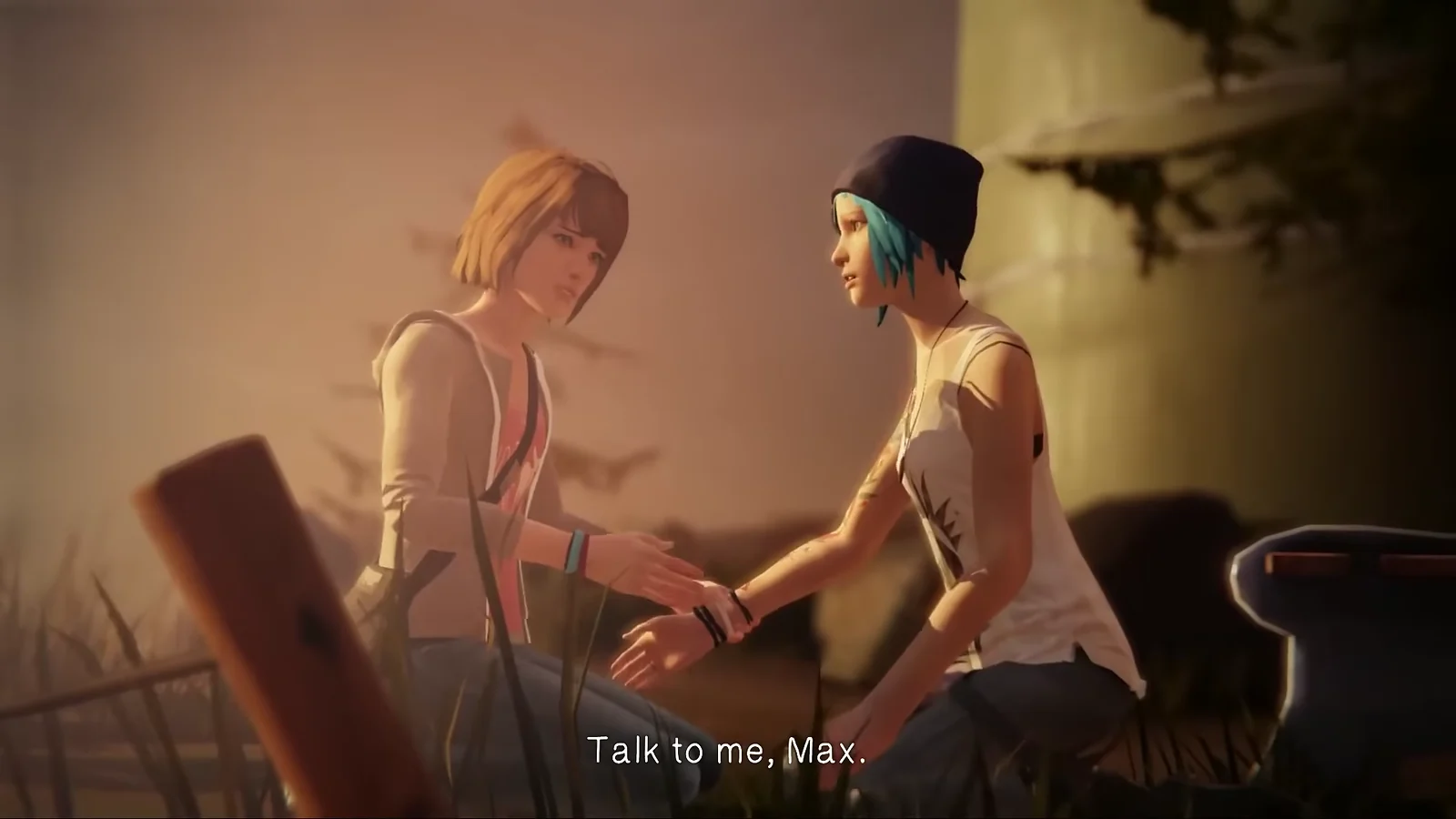
Max witnesses a traumatic scene, an argument that quickly escalates into a murder. Desperate and not knowing what to do, Max spots a blue butterfly, starts to get dizzy, and all of a sudden finds herself back in the classroom. The teacher asks, “Can you give me an example of a photographer who perfectly captured the human condition in black and white?”
Right from the start, Life is Strange sets the tone for the entire playthrough, and my Life is Strange review – it’s an emotional journey through Max’s introspective mind, filled with traumatic experiences, life-defining moments, and the very useful ability to rewind time.
Gameplay & Choice-Driven Mechanics
At its core, Life is Strange is a narrative-driven adventure game built around exploration, conversation, and choice. Players wander through the quiet halls of Blackwell Academy and the melancholic streets of Arcadia Bay, interacting with objects, uncovering personal details about characters, and slowly piecing together the emotional weight carried by the town.
What elevates the experience is Max Caulfield’s ability to rewind time. More than a clever gameplay mechanic, it becomes an emotional tool. As Max, you can replay conversations, reconsider painful choices, prevent mistakes, and solve environmental puzzles by altering events moments before they happen.
An important thing to highlight in my Life is Strange game review is that the rewind system encourages experimentation, but it also creates the illusion that every problem can be fixed – Something that reality will eventually prove otherwise.

At the center of the story is Max’s relationship with Chloe Price, the emotional heart of the game. Chloe carries layers of grief, anger, abandonment, and unresolved trauma tied to her family and the loss that shaped her life. Whether you choose to see their bond as a deep friendship or something more romantic, their connection feels raw, intimate, and painfully human.
Together, Max and Chloe investigate the mysterious disappearance of Rachel Amber, uncovering secrets hidden beneath the quiet surface of Arcadia Bay. The investigative aspect gives the story constant tension, blending emotional drama with mystery and suspense.
During my Life is Strange review, one thing that really stood out is how Max slowly evolves from an insecure, withdrawn teenager into someone more confident, compassionate, and emotionally mature. As her story unfolds, both she and you, guiding her choices, are pushed into difficult life-or-death situations where she has to support, protect, and guide others through moments of pain, fear, and vulnerability.
Photography also plays an important role in her development. Max’s passion for capturing moments reflects the game’s themes of memory, perspective, and the desire to hold onto time before it disappears.
Every choice shapes relationships, dialogue, and key story moments, with consequences unfolding gradually across episodes. A looming storm hangs over Arcadia Bay throughout the game, creating the constant feeling that tragedy is inevitable, no matter how desperately you try to rewind the clock.
Episodic Structure of Life is Strange
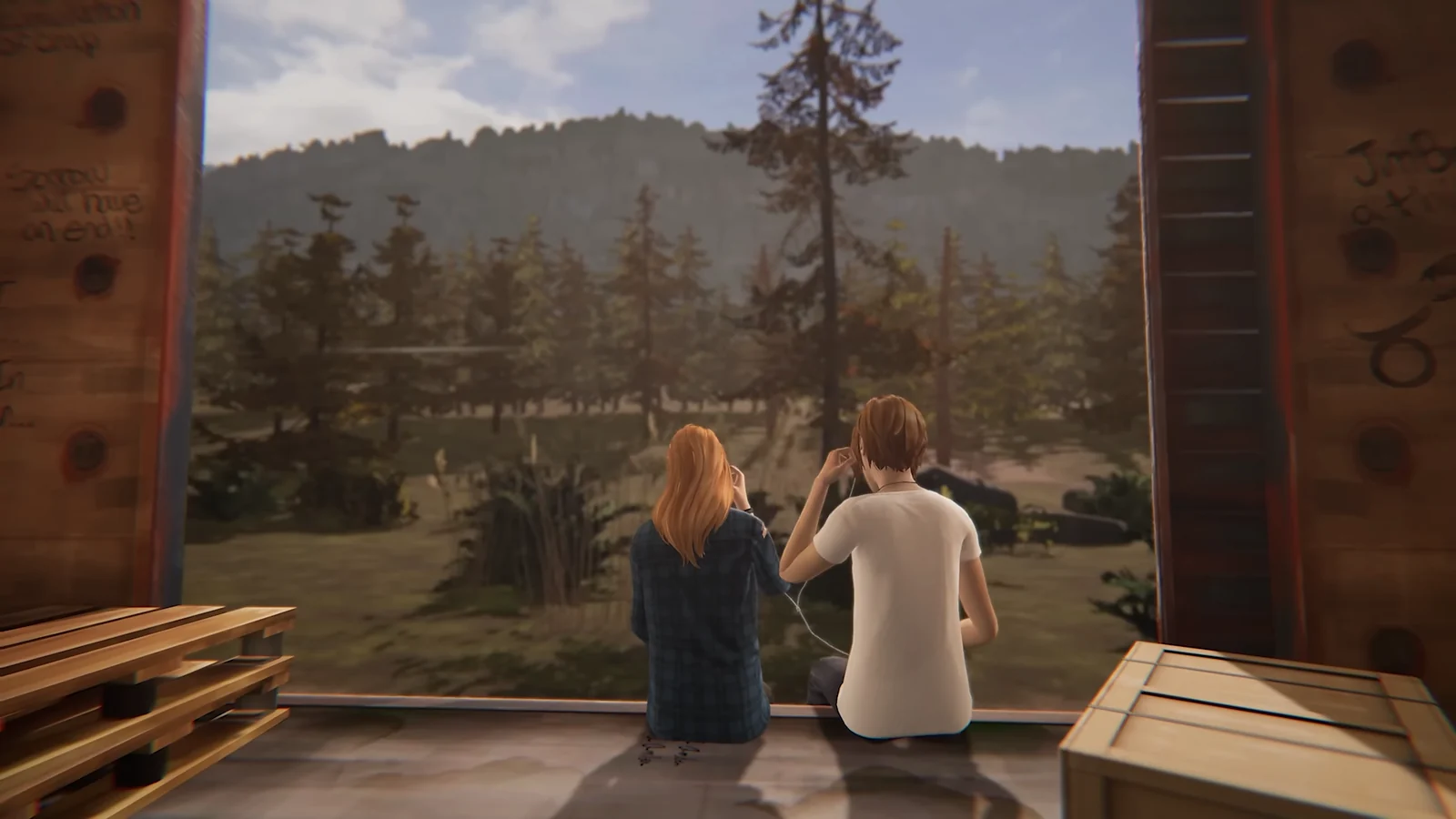
Life is Strange is divided into five episodic chapters, each lasting roughly two to three hours, depending on how much time players spend exploring Arcadia Bay and interacting with characters.
Since this is a Life is Strange review, I need to mention that the episodic structure works really well for the game’s emotional storytelling, allowing relationships, mysteries, and consequences to develop gradually over time.
Episode 1 delivers one of the strongest openings in the genre and is easily comparable to the fantastic first episode from The Walking Dead: The Telltale series, immediately establishing the game’s emotional tone, supernatural mystery, and the powerful bond between Max and Chloe. It quickly hooks us with its atmosphere, relatable characters, and the looming sense that something terrible is approaching.
The pacing slows down in Episode 2, which is sometimes viewed as the weakest chapter due to its heavier focus on setup and quieter character moments. However, those slower sections help deepen the emotional connections and personal stakes that become essential later on.
Episode 3 marks a major rebound, significantly escalating both the mystery and emotional tension while delivering some of the game’s most memorable moments.
While the episodic release schedule created excitement at launch just like Dispatch, Life is Strange is best experienced today as a complete season, allowing its emotional momentum and narrative payoff to flow naturally from beginning to end.
Moving Visual Style & Soundtrack
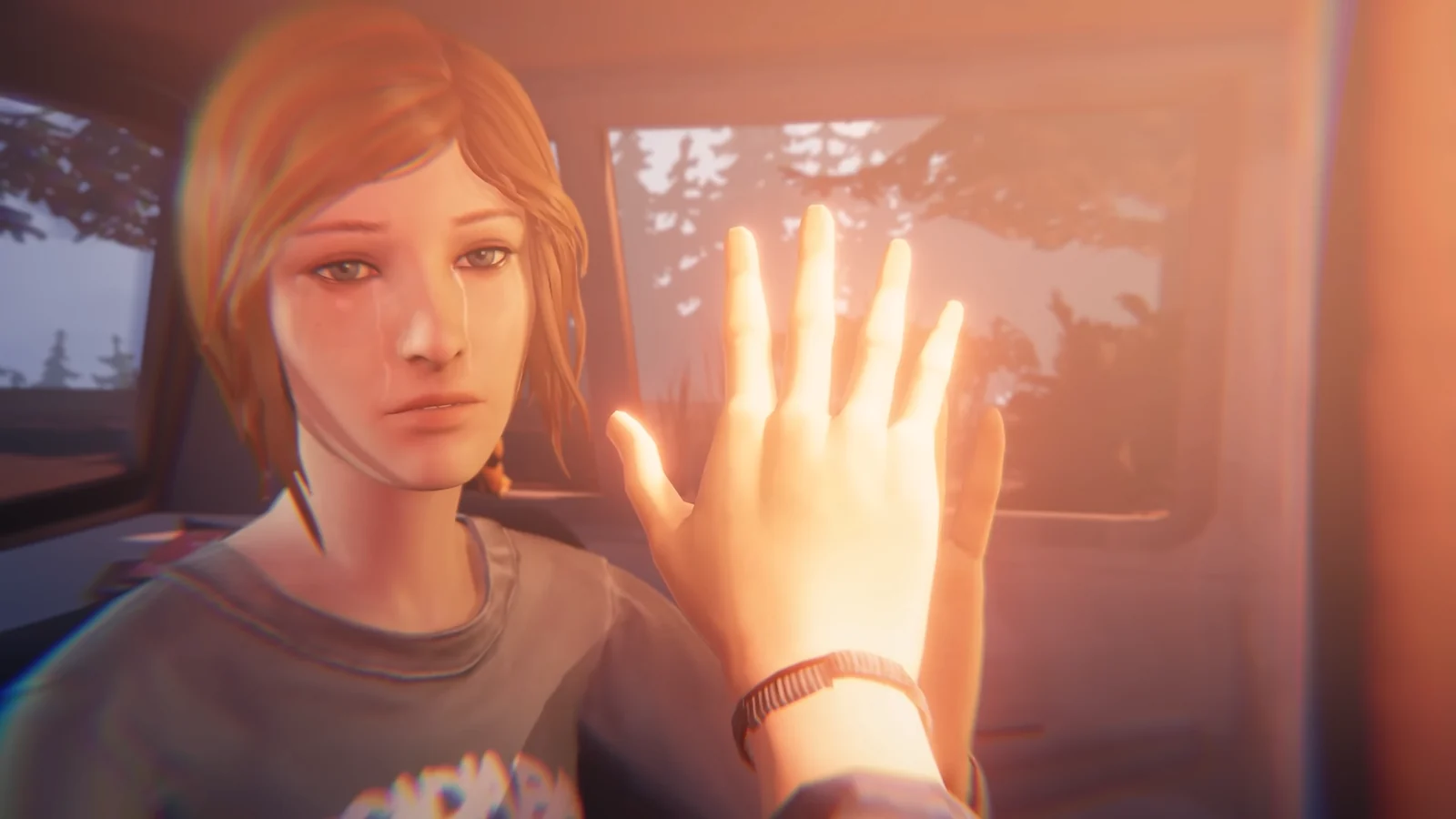
I can’t stress enough in this Life is Strange review just how much the music and art style come together to make it one of the most beautiful contemplative games ever made.
Life is Strange uses a stylized, painterly art direction that gives the game a dreamlike and nostalgic atmosphere. Rather than aiming for photorealism, the visuals resemble a watercolor painting in motion, with soft lighting, warm color palettes, and slightly imperfect textures that make Arcadia Bay feel both intimate and melancholic.
Much of the game’s emotional impact comes from the great video game soundtrack, which is easily one of its greatest strengths. Licensed indie and folk tracks from artists like Syd Matters, Alt-J, and Angus & Julia Stone are carefully woven into major story moments, giving scenes a deeply personal and cinematic quality.
The music is especially effective during the game’s quieter reflective moments. At various points, you can simply sit down, listen to music, and absorb the environment while Max reflects on her thoughts and emotions. These scenes rank into some of my favorite moments, slowing the pacing intentionally, allowing the soundtrack, visuals, and atmosphere to work together in creating a sense of calm, loneliness, and bittersweet beauty that defines Life is Strange.
My Overall Verdict on Life is Strange: A Deeply Emotional Journey
In many Life is Strange reviews, one thing becomes clear very quickly – this is not just another narrative game, but an experience that tends to stay with you long after you finish it. For me, Life is Strange was one of those rare moments where you stumble upon something that genuinely feels like a masterpiece.
I found it completely by accident, after seeing a short ad in a random video, and as a fan of point-and-click and choice-driven games, I immediately knew I had to check it out.
I bought it right when the last episode was released, and got to play the entire game in one go. And I do mean in one go. Once I started playing, I couldn’t stop until I finished it. From the very first minutes, especially the moment you first rewind time, I knew this was going to be a game I’d enjoy. What I didn’t expect was to be hit by its dense, deeply emotional, and human story, which completely pulled me in and made me fall in love with one of the best games I’ve ever played.
Life is Strange has several sequels, some continuing the story of Max and Chloe, others present entirely new characters and settings. What I want to make clear in this Life is Strange review is that all of them are worth playing, and many score very highly on my personal favorites list, but the first Life is Strange will always be the one that touched my life forever.
Great for: Players looking for slow-paced, emotional, dense, and story-driven games. Perfect to introduce new adult gamers to the hobby. Excellent to play as a couple.
Less ideal for: Gamers who demand fast-paced gameplay, complex puzzles, or dislike emotionally driven narratives.