



Slay the Spire Review in 2026: Cardcrafting Mayhem with Deliciously Unruly Results



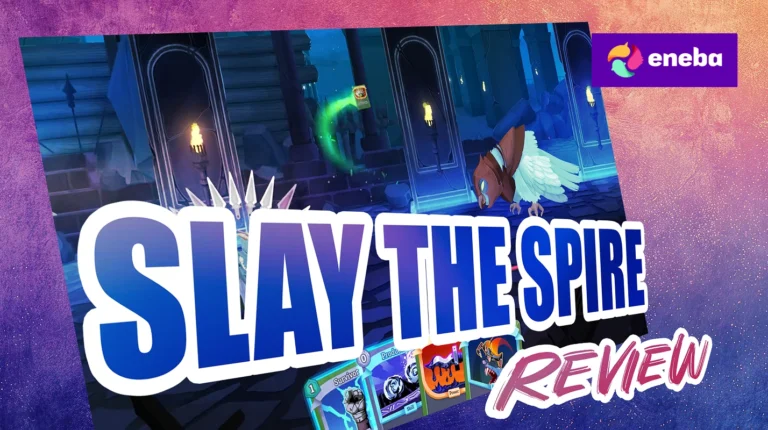
Slay the Spire did not invent the blend of roguelite progression and deckbuilding, but it is the game that defined it. Over time, it has become the benchmark for the genre, inspiring countless titles that followed, which is why I wanted to write a Slay the Spire review.
What makes this game so enduring, and is it still worth playing today?
In this review, I will take a close look at its core gameplay loop, strategic depth, replayability, difficulty, and overall design. By the end, you will have a clear idea of whether Slay the Spire still lives up to its reputation or if newer games have taken its place.
At its core, the game combines card-based strategy with dungeon-crawling progression, creating a constantly evolving challenge where smart decisions matter just as much as the luck of the draw.

Jump to:
TL;DR – Slay the Spire Overview
| Genre | Roguelite – Deckbuilding |
| Core loop | Manage resources, beat enemies, improve your deck, and fight your way up The Spire |
| Biggest strength | Simple mechanics, deep strategic value, endless replay value, strong community support, and many interesting mods. |
| Biggest weakness | Very basic storyline, no multiplayer, simple 2d graphics. |
| Clear verdict | Slay The Spire is a must-play game for any fans of deckbuilding or strategy games, and a very high recommendation for anyone who wants to get to know the genre. |
Slay the Spire Review: Why You’ll Keep Climbing
I will start my Slay the Spire review by stating that it ranks high among the best deckbuilding games and top roguelite games. But why is that? What is the fuss all about? What really is Slay the Spire, and how does it play?
Each “Climb” of the game has the same premise – you start with a basic deck of cards and select one of the paths on the procedurally generated map. The strategy already starts here. Each path of the map has its own challenges and rewards, which, for the most part, you can see from the very beginning, and start planning your best route to the top.
The game has 4 unique characters for you to choose from, each with unique deck styles, cards, and mechanics.
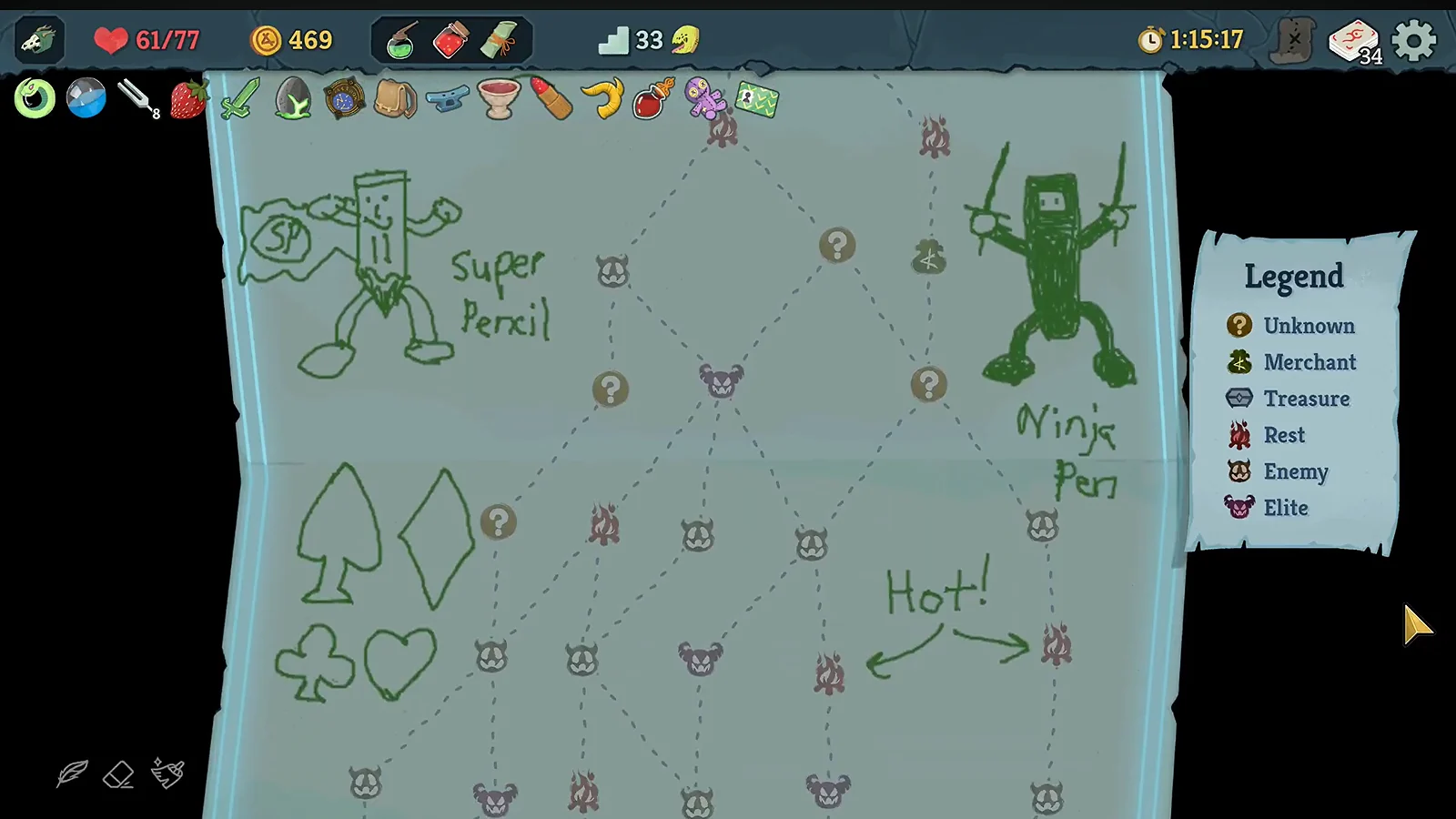
The mixture of procedurally generated maps with the random nature of the card game is perfectly balanced by the strategy of the deck building and the clever combat mechanics.
On top of all, even when you succeed, you get instantly shown that it takes more than a single climb to actually “Slay the Spire”, making you always want to come back for the next challenge.
With endless replayability and immense tactical depth, I want to make it clear in this Slay the Spire review that this is a game that paved the way for countless others in the genre.
In the following sections, I will take a closer look at how its gameplay systems work together, how each character changes your approach, and whether its balance of skill and randomness still holds up today.
Gameplay & Combat System
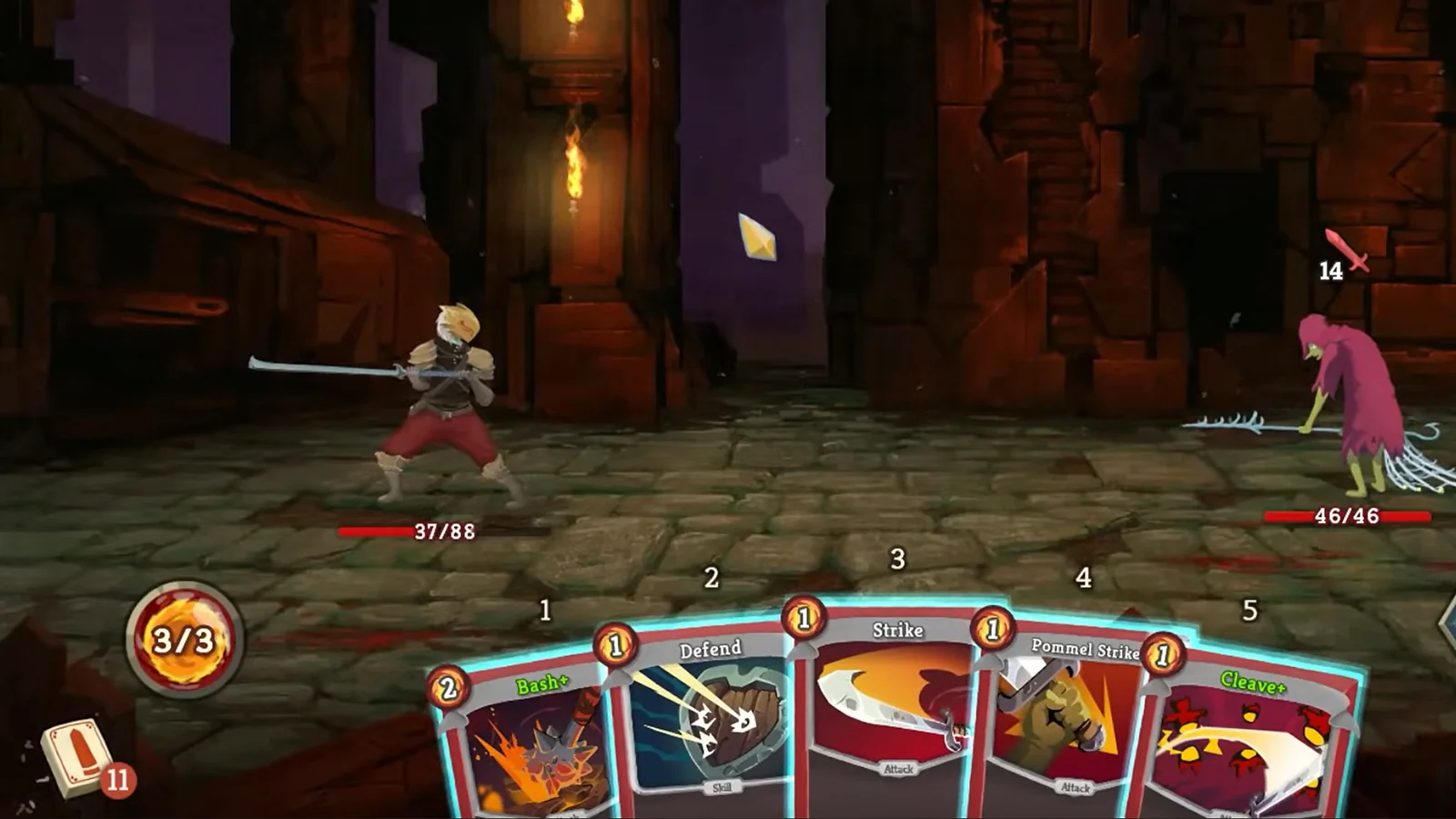
My Slay the Spire review of the gameplay and combat system starts with the fact that each floor can be a normal enemy, an elite enemy, a random event, a merchant, a relic chest, or a rest site, with the very last floor of each chapter being the Boss.
The combat is a turn-based card game. You draw a hand of 5 cards, spend energy points to use them, and end your turn, allowing enemies to make their action. Any cards you didn`t use are discarded, so you`ll always have a fresh hand of 5 cards every turn.
The secret here lies in which action enemies will take, which you get to know in advance, at the beginning of your turn, allowing you to plan if you prefer to attack, defend, or take other actions (with your cards), knowing exactly what will be the consequences of your choice this turn.
After winning a combat, you get to choose a card reward to improve your deck and be better prepared for the ever-increasing challenges ahead.
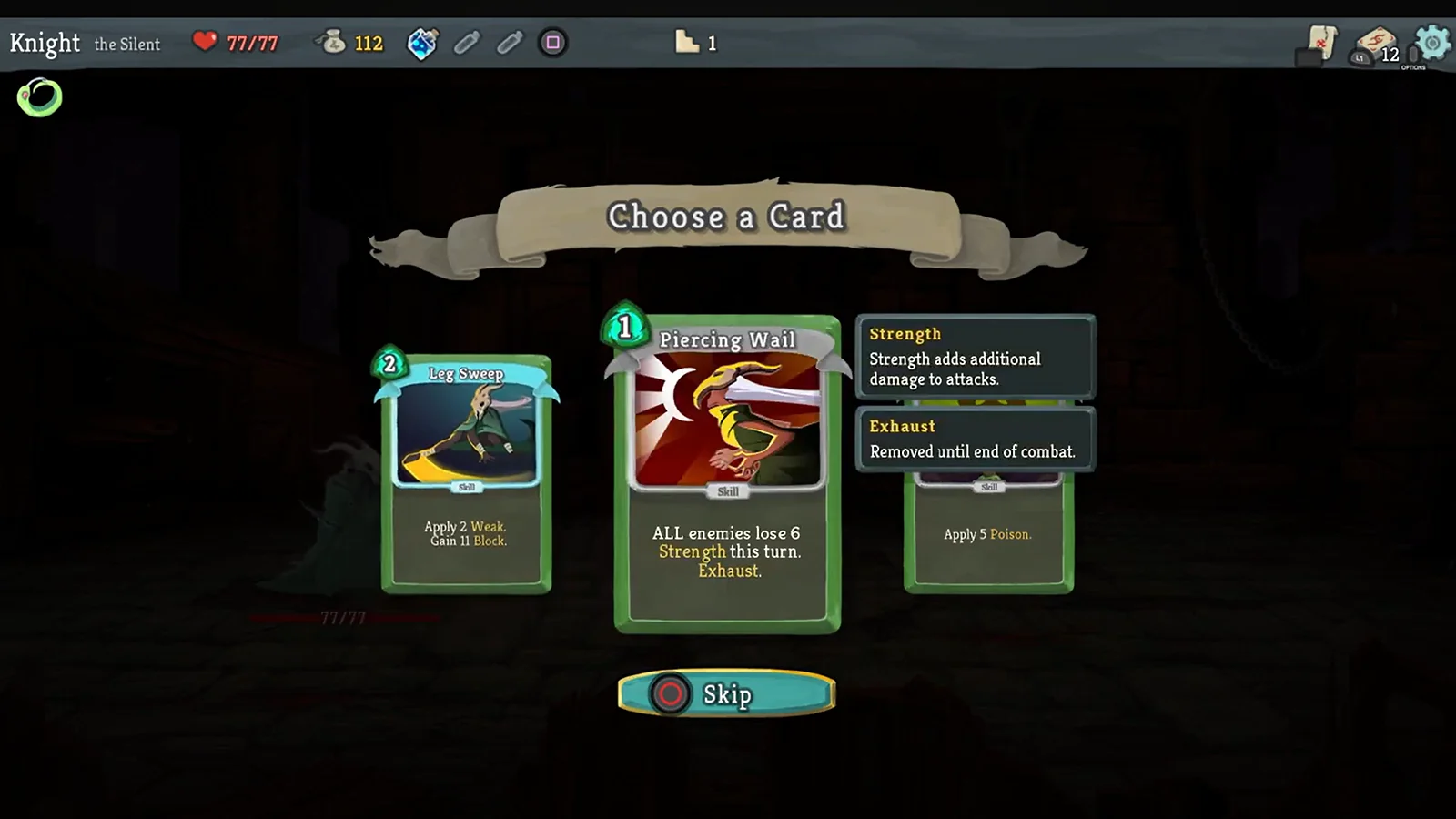
The cards are split into Attack cards, which damage the enemies directly. Skill cards, which increase your own defense or activate an instant effect, such as drawing extra cards. And Power cards, which will give you a permanent buff for the duration of the combat.
A good deck-building strategy is vital to achieving victory, and sometimes, not picking a card reward to keep your deck smaller and increase your chances of drawing your best cards can be a valid strategy.
Your deck is complemented by the relics you find along the way, items that give you permanent bonuses throughout the entire climb.
Even though the game starts relatively easy, compared to the greater difficulty modes you unlock whenever you win a run, for a beginner, it may still feel very challenging while you learn enemy mechanics and the deck synergies of your character. If you are struggling to find your ground on these first steps, check our deck‑building, path planning & character synergy tips!
Characters and Playstyles
Next in my Slay the Spire review, I want to speak about characters. Each one of them has a unique set of cards that are exclusive to them, and a unique starter relic, making each character require a completely different strategy to deal with the same challenges.
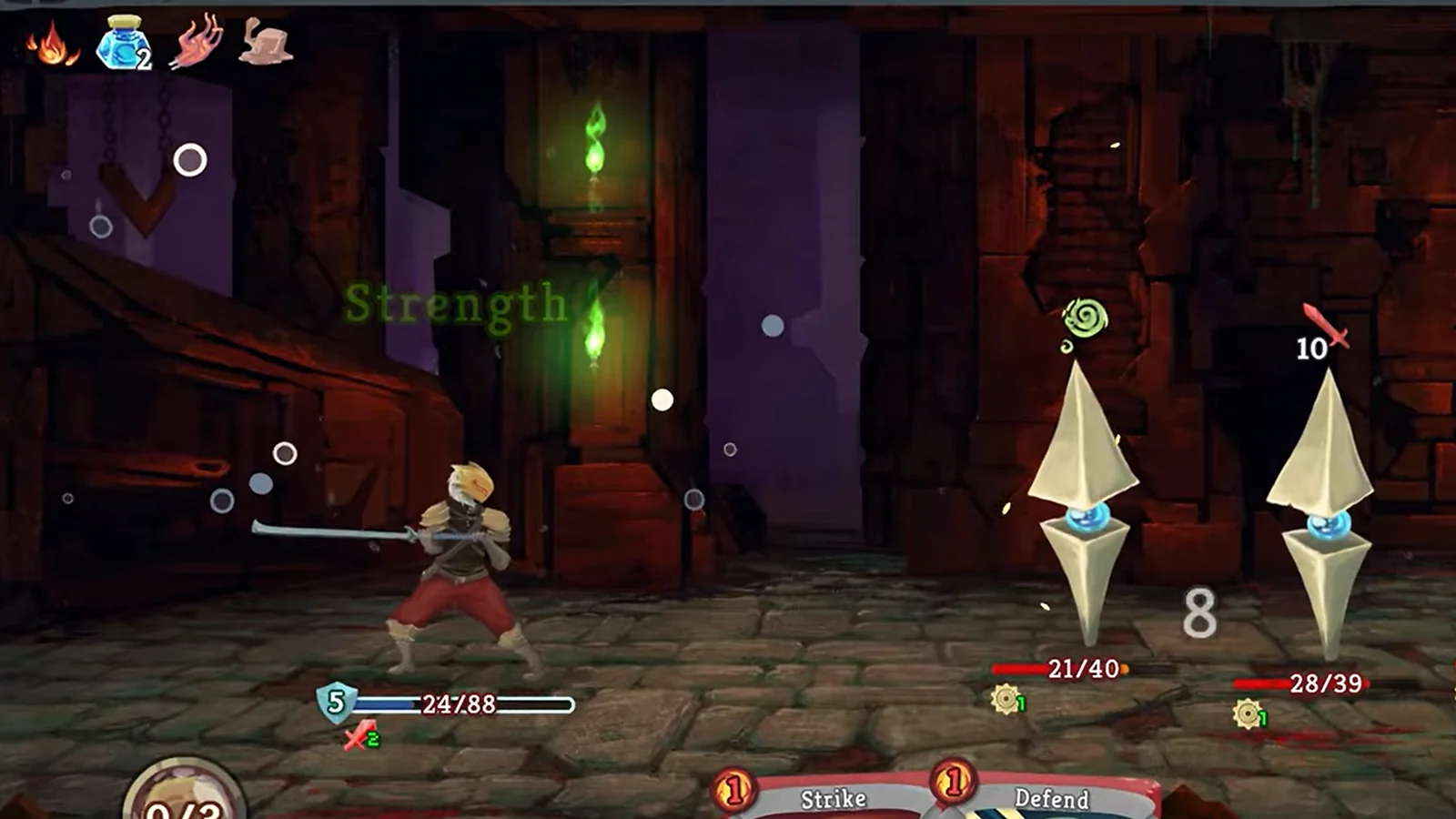
The Ironclad is a soldier-like character; his cards and playstyle mainly focus on strong attacks, relying on his self-healing relic to sustain him through the climb without having to defend himself as much.
As the first character you start the game with, and by my personal recommendation, Ironclad is a great starting character for beginners.
![Slay the Spire the silent]](https://blog-uploads.eneba.games/uploads/2026/03/the-silent.webp)
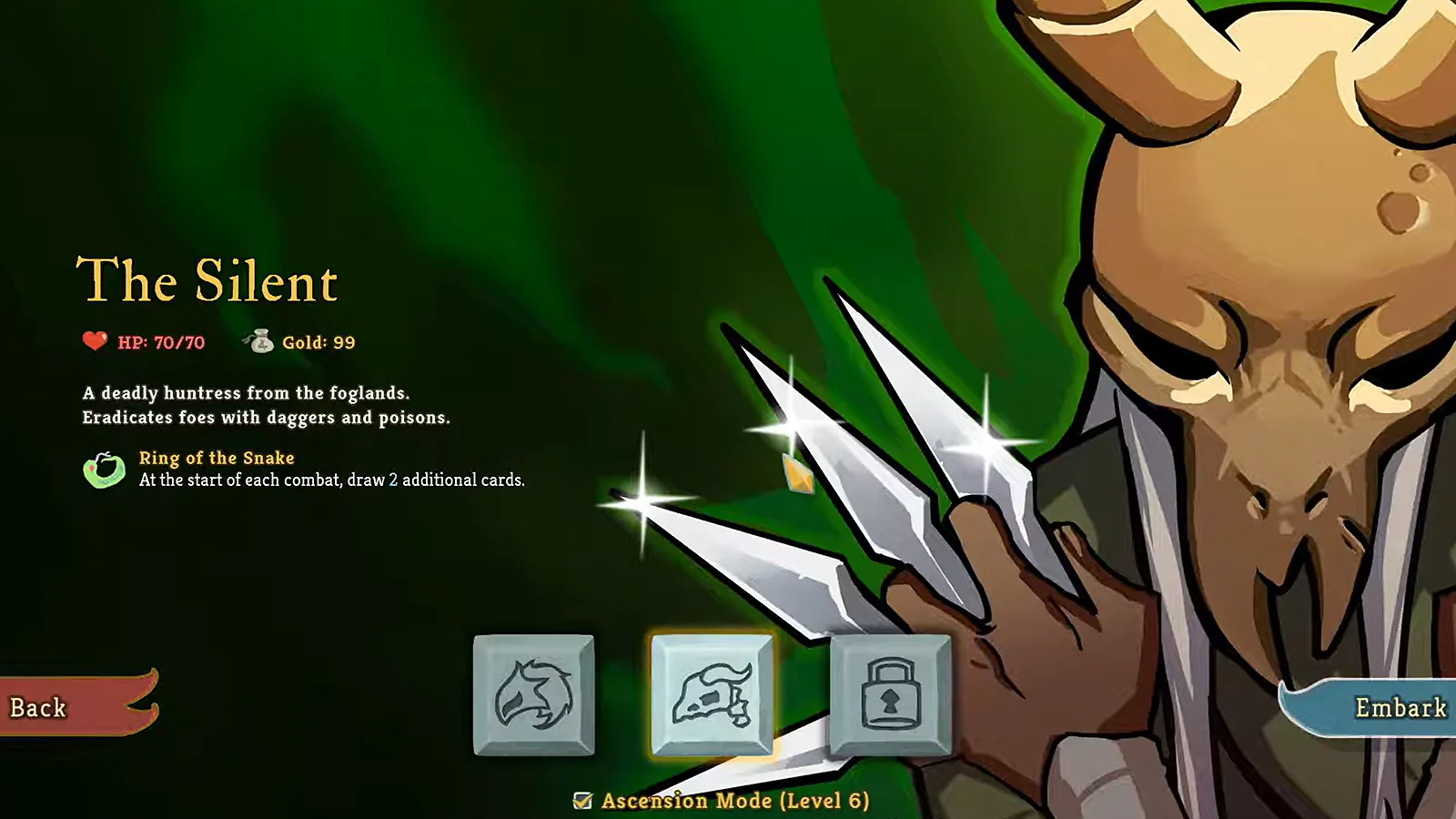
The Silent can be compared to a huntress or an assassin, making use of poison and shivs to dominate the battlefield. She relies on a careful setup, defending herself and waiting for the right moment to strike, while at the same time controlling her hand by drawing additional cards and discarding the ones she doesn`t need.
Her playstyle is more tactical and requires a bit more patience and foresight compared to the Ironclad, making her an excellent choice for players who enjoy combo-based strategies and setting up multi-turn synergies.
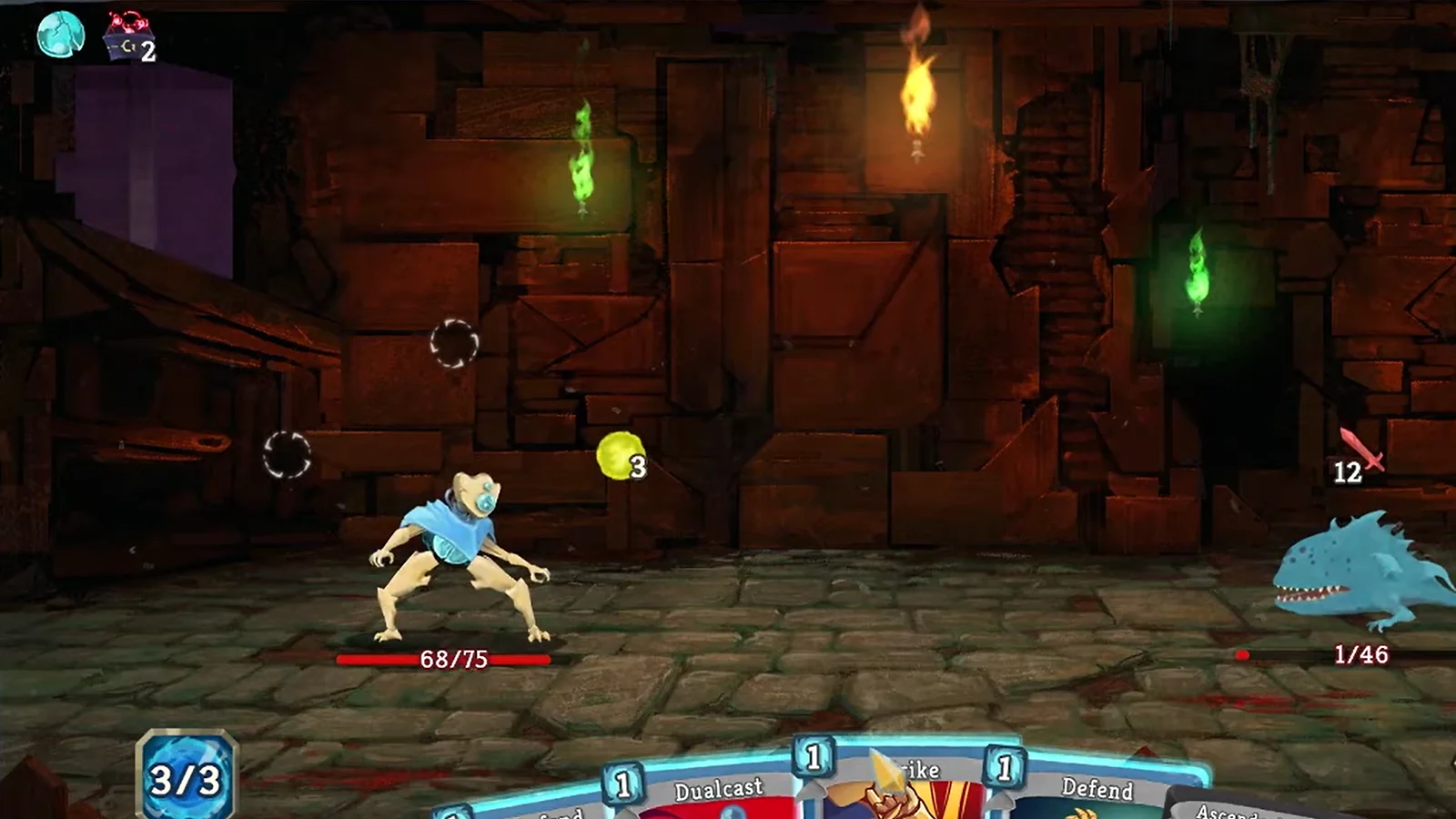
The Defect is a robot, it uses orbs (lightning, frost, dark, plasma) that trigger each turn passively. This gives the character a dynamic toolkit that rewards careful planning and long-term thinking.
What makes the Defect especially satisfying is how the orbs interact with cards, relics, and your hand. It is a character that truly rewards experimentation, adaptability, and precise timing, making it a favorite for players who enjoy deep tactical gameplay.
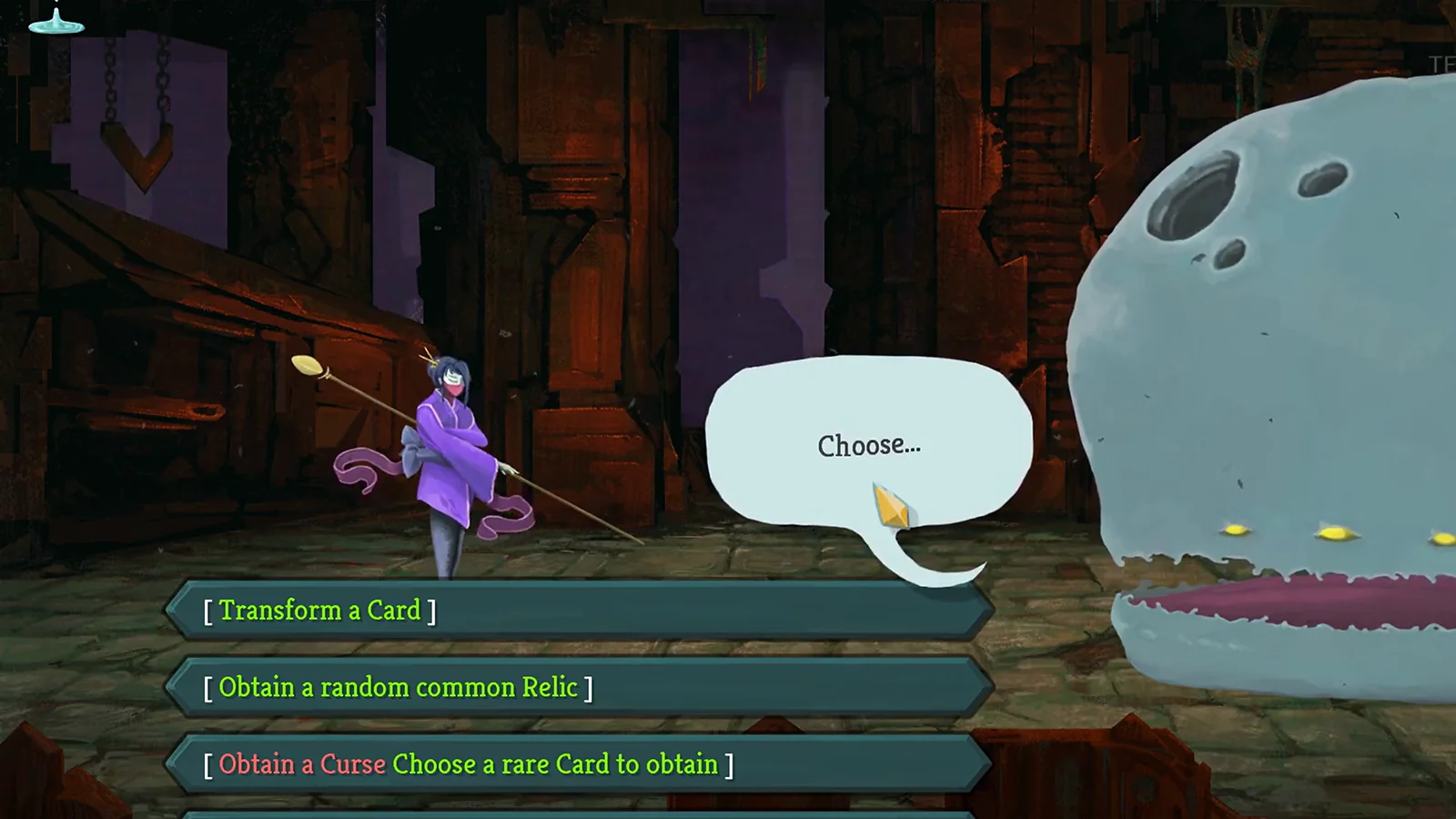
The Watcher is a monk-like character who changes battle stances that affect how her cards work. She can shift between Calm to build energy for bigger combos, Wrath to deal massive damage at the cost of taking more hits, or Divinity for powerful one-turn effects.
Her playstyle is all about timing and planning, making her ideal for players who enjoy strategic decision-making and high-risk, high-reward gameplay. Mastering the Watcher means learning when to switch stances and how to chain her attacks for maximum effect, adding a unique rhythm-based challenge to the Spire.
Roguelite Progression & Replayability
As I’ve been saying in this Slay The Spire review, the game has endless replayability, ensured by its roguelite elements working in sync with the deckbuilding part of the game.
Every run feels unique, shaped by the order of challenges on the map, the random card rewards you choose from, and the unpredictable relics you discover along the way.
At the same time, each game generates its own “seed,” which makes Daily Climbs possible. In this mode, every player faces the exact same challenges and can earn the same rewards. The goal is to find the most efficient strategy to reach the top and prove on the leaderboards that you are the ultimate strategist!
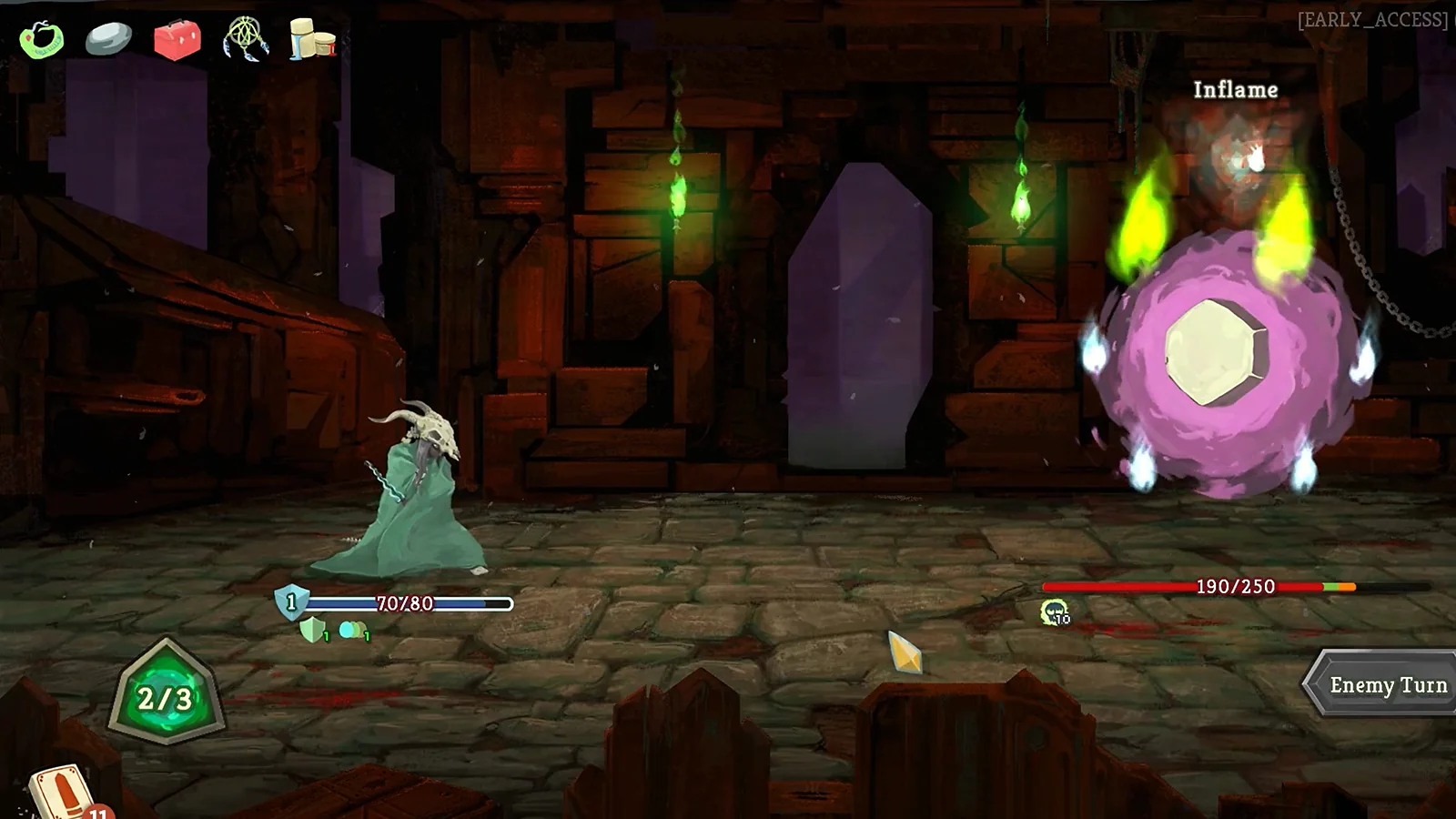
One common issue with endlessly replayable games, which I need to highlight in my Slay the Spire review, is that it eventually starts to feel too easy. You learn all their challenges and master the best strategies, and you’re good. Slay the Spire accounts for that with an ascension system.
Each time you complete a run, you unlock the next Ascension level, which introduces a new layer of challenge to your climb. Every Ascension level adds a specific twist like stronger enemies, more elites, fewer potion slots, and pricier merchants.
These challenges are cumulative, meaning that as you progress, you must contend not only with the new hurdle but also with all the difficulties from the previous levels, making each ascent progressively tougher and more rewarding.
This system lets you learn more, experiment with new tactics, and push yourself on every single run, giving you literally hundreds of hours of fun.
Visual Style & Presentation
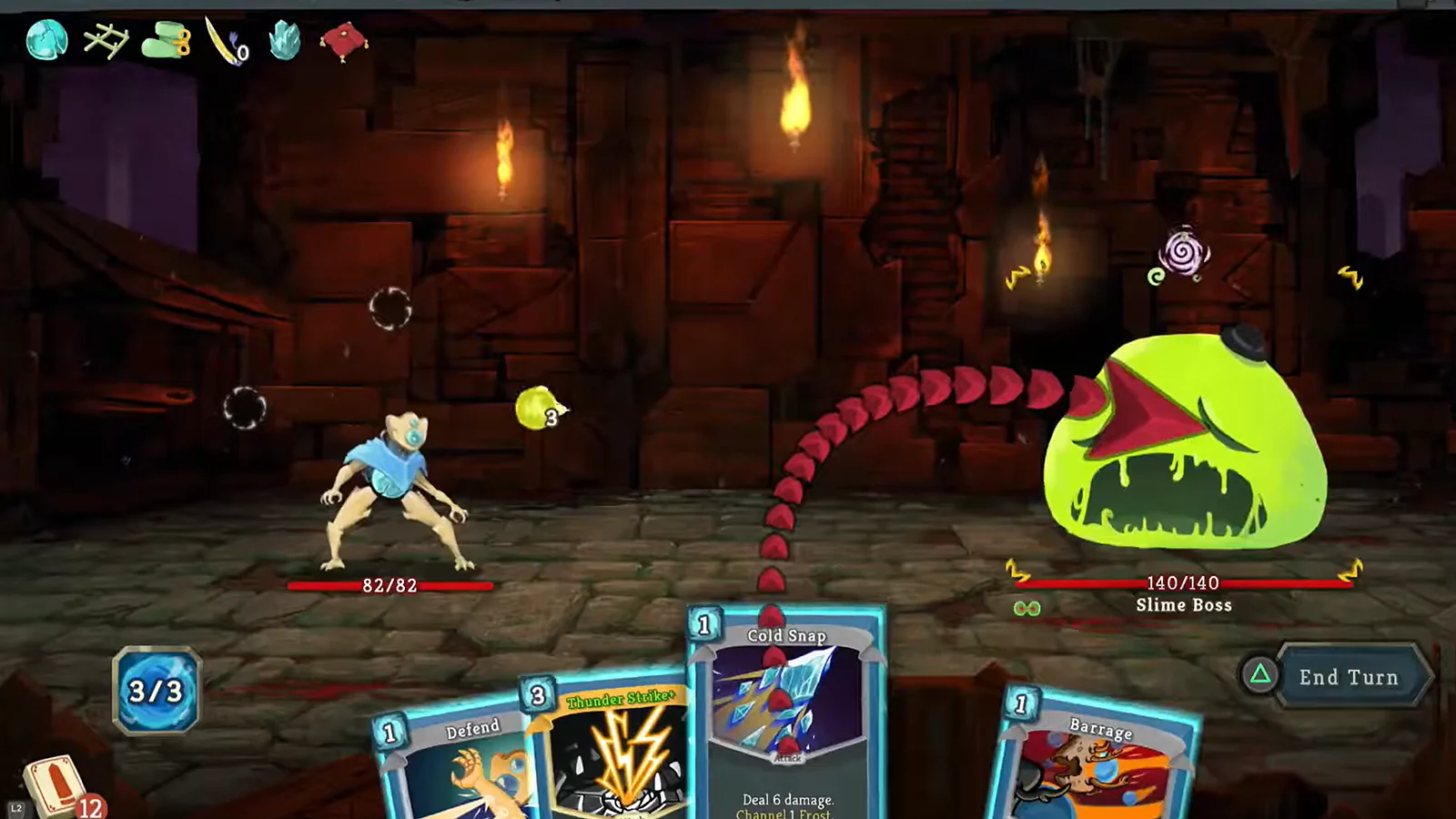
In my Slay the Spire review, it’s worth noting that the game features a simple 2D art style with hand-drawn characters, environments, and cards. This design creates a clear and intuitive UI, allowing you to read your cards and anticipate enemy intents quickly and effortlessly.
The enemies are also distinct and easily recognizable once you’ve spent some time playing, which helps keep each encounter clear and engaging.
All in all, Slay the Spire was never designed to wow you with flashy visuals. It isn’t ugly by any means, but its style is simple, clean, and highly effective, keeping the focus on gameplay and readability.
On the other hand, the soundtrack is often seen as one of the game’s weaker points. The music can feel repetitive and may become monotonous during long play sessions, especially compared to the depth and variety of the gameplay itself.
Board Game Adaptation – Same Spire, different media!
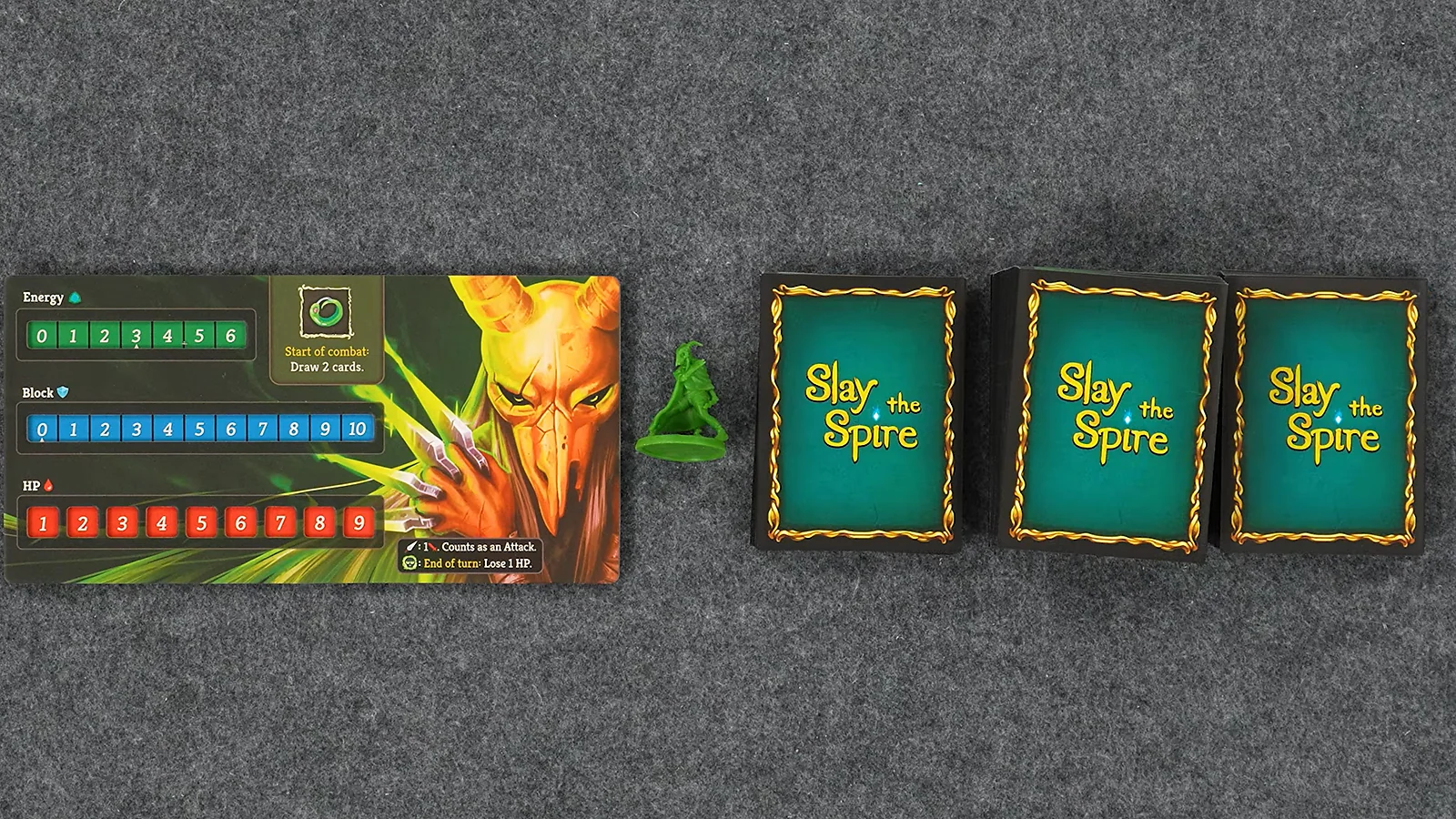
Back in 2022, a Kickstarter campaign was launched with a modest goal of $50,000, an amount that was completely blown past in less than 24 hours. By the end of the campaign, pledges had soared to over $3.9 million, making it safe to say that calling it a success would be a massive understatement.
The Slay the Spire board game brought to the tabletop the same mechanics that made the digital game such an instant success – deckbuilding and roguelite elements mixed in nicely.
It has all the same characters, each still with the same base characteristics, even if with some adaptations to make the transition from digital to physical feel more natural.
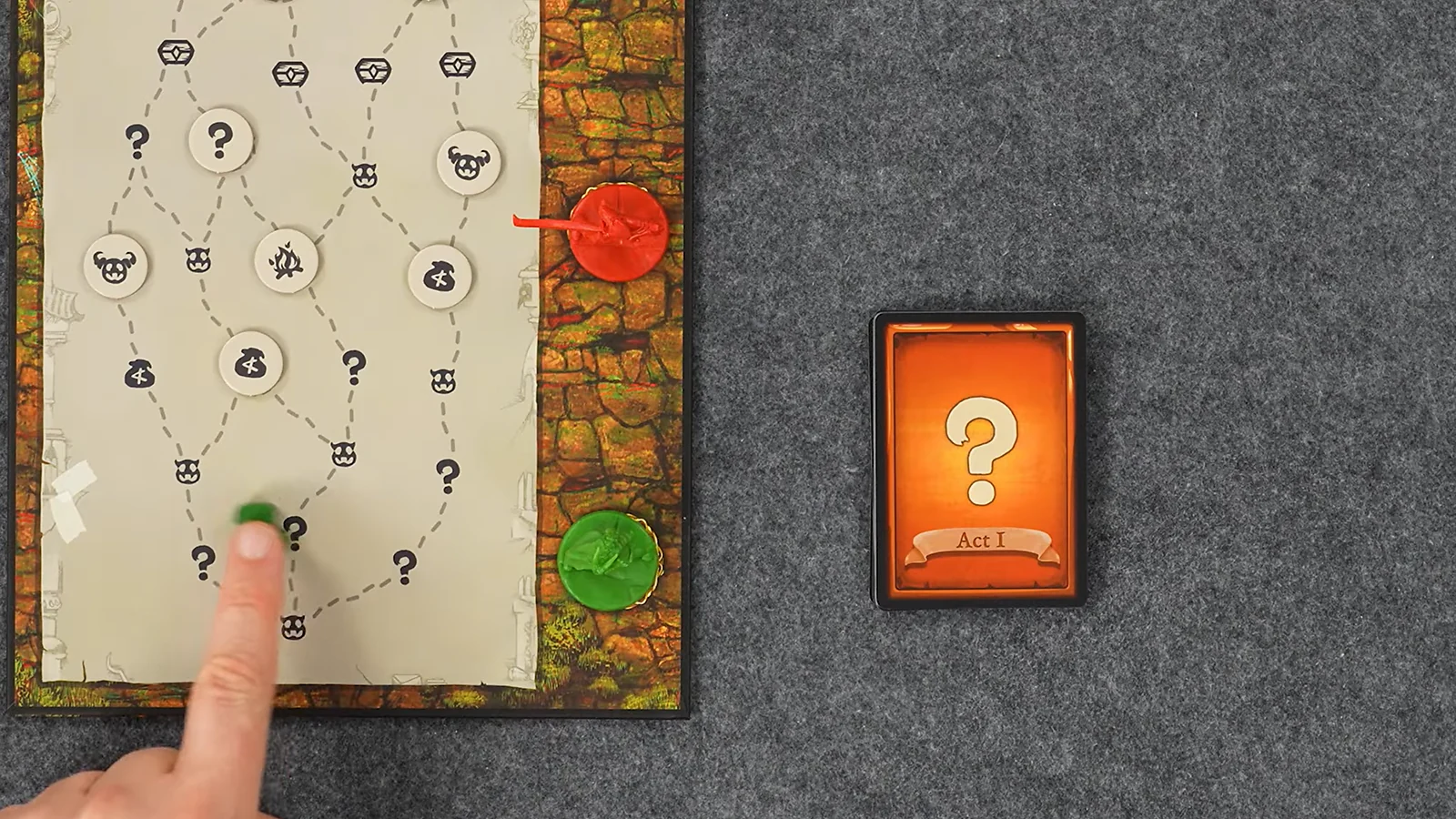
It also has the same cards, the same enemies, and a brilliantly randomizable map. The card effects are simplified, the enemies have slightly different mechanics, using dice to randomize their actions, and there are a few constants on the map that never change, but it is still a very good adaptation, maintaining all the spirit of the original game.
However, there is one aspect of the board game that surpasses the original, which I need to mention in my Slay the Spire review – it is multiplayer, just like Slay the Spire 2.
If you want to find out how Slay the Spire 2 builds on the original, from its new characters to its multiplayer and replayability, check out the full review of the long-awaited sequel.
My Overall Verdict on Slay the Spire: The Roguelite Deck-Builder Every Gamer Should Experience
To close off my Slay the Spire review, I want to highlight that it is an extremely fun game that can challenge everyone, regardless of their experience level with the genre.
Its strongest suit is certainly the endless replayability, something really rare for a single-player game. Its biggest weaknesses are the simple graphics, meek music, and lack of a native multiplayer mode.
I played many great games like Slay the Spire since its release – some good ones, some bad ones, and the eventual great ones. But none of them ever really captured my attention for as long as the good old Slay the Spire.
Even though I played for hundreds of hours and cleared Ascension 20 with all 4 characters, I always find myself coming back for another run.
| Pros | Cons |
|---|---|
| ✅ Endless replay value ✅ Enticing strategic experience ✅ Each run feels unique ✅ Huge amount of viable builds, even for the highest difficulty levels ✅ Available on most platforms | ❌ Basic 2D graphics ❌ Bland monotonous music ❌ Lack of native multiplayer |
Great for: Fans of card games, deckbuilders, roguelites, games like Balatro, or strategy games in general
Less ideal for: Gamers who demand fast-paced gameplay, flashy graphics, or epic storylines.