

Slay the Spire 2 Review: A Towering Deckbuilder Caught in Its Own Shadow

Eneba Hub contains affiliate links, which means we may earn a small commission if you make a purchase through them—at no extra cost to you. Learn more



The first Slay the Spire, released in 2019 by Mega Crit, didn’t kickstart the roguelike deckbuilder genre but it certainly gave it a swift kick up the backside. It introduced the frankly ingenious idea of letting the player see an enemy’s next attack, adding a welcome layer of strategy to a genre that had largely relied on RNG and blind luck.
Loading up Slay the Spire 2, which hit Early Access at the start of March 2026, immediately invites deja vu – the starting hero is the Ironclad, as with the first game. Their initial cards are almost identical, the UI has a very similar layout to the original, and the art style, though refined, is also effectively an echo of the first Slay the Spire. If Mega Crit are banking on nostalgia to sell the sequel, they’re going the right way about it.
My Slay the Spire 2 review takes a good, hard look at whether nostalgia is all the sequel has to offer or whether it manages to innovate as the original did.

Jump to:
TL;DR – Slay the Spire 2 Review Overview
Before we dive into the weeds of deck-building and relic hunting, here’s a quick breakdown of what you’re getting into with this Slay the Spire 2 review.
| Feature | Detail |
|---|---|
| Genre | Roguelike Deckbuilder |
| Core Loop | Climb, fight, die, and upgrade |
| Biggest Strength | Refined mechanics and improved visuals |
| Biggest Weakness | Early Access balance and overly-familiar feel |
| Clear Verdict | A potential evolution of a winning formula |
| Best For | Strategy fans and card-game veterans |
Slay the Spire 2 Review: One Step at a Time
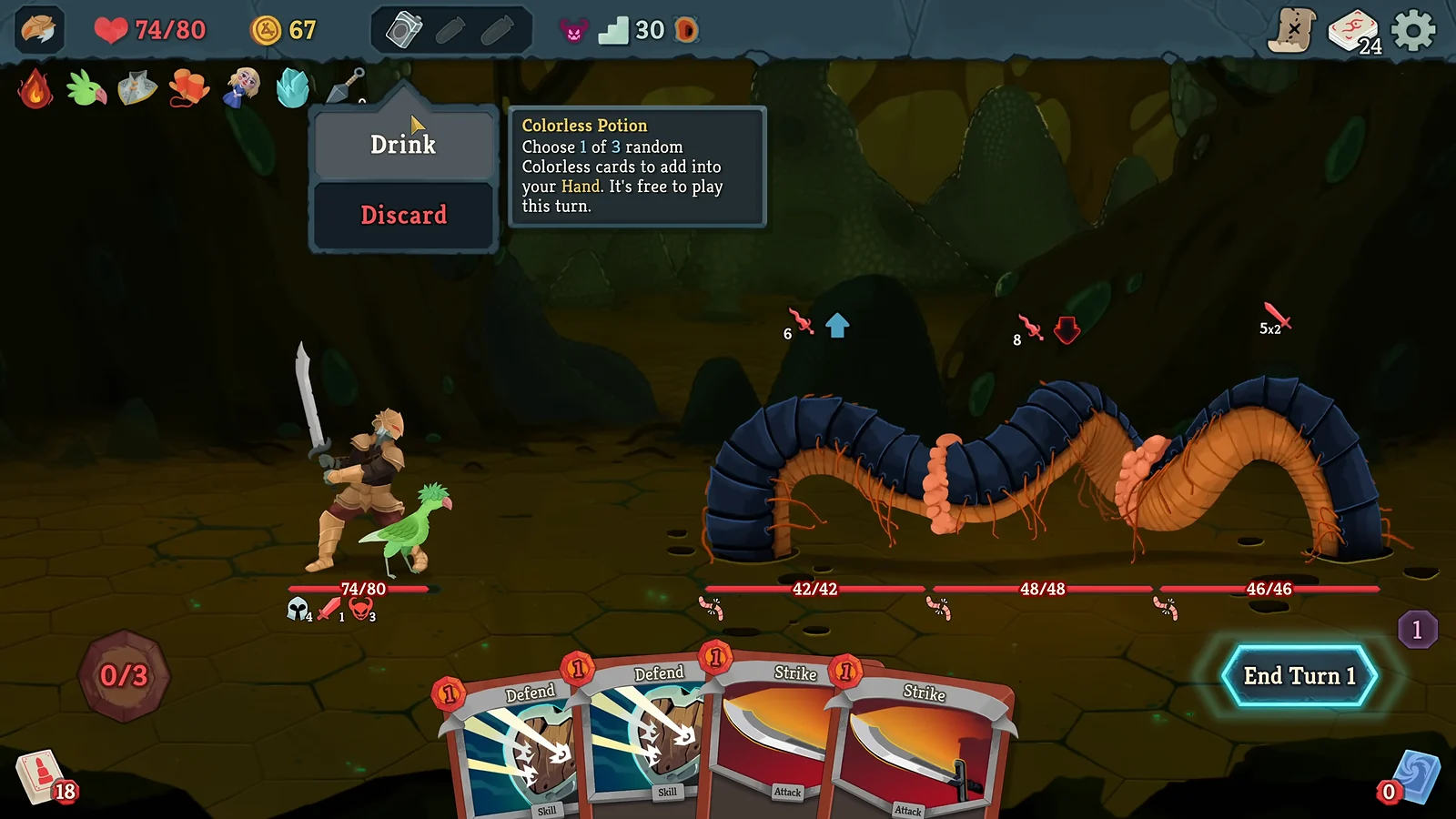
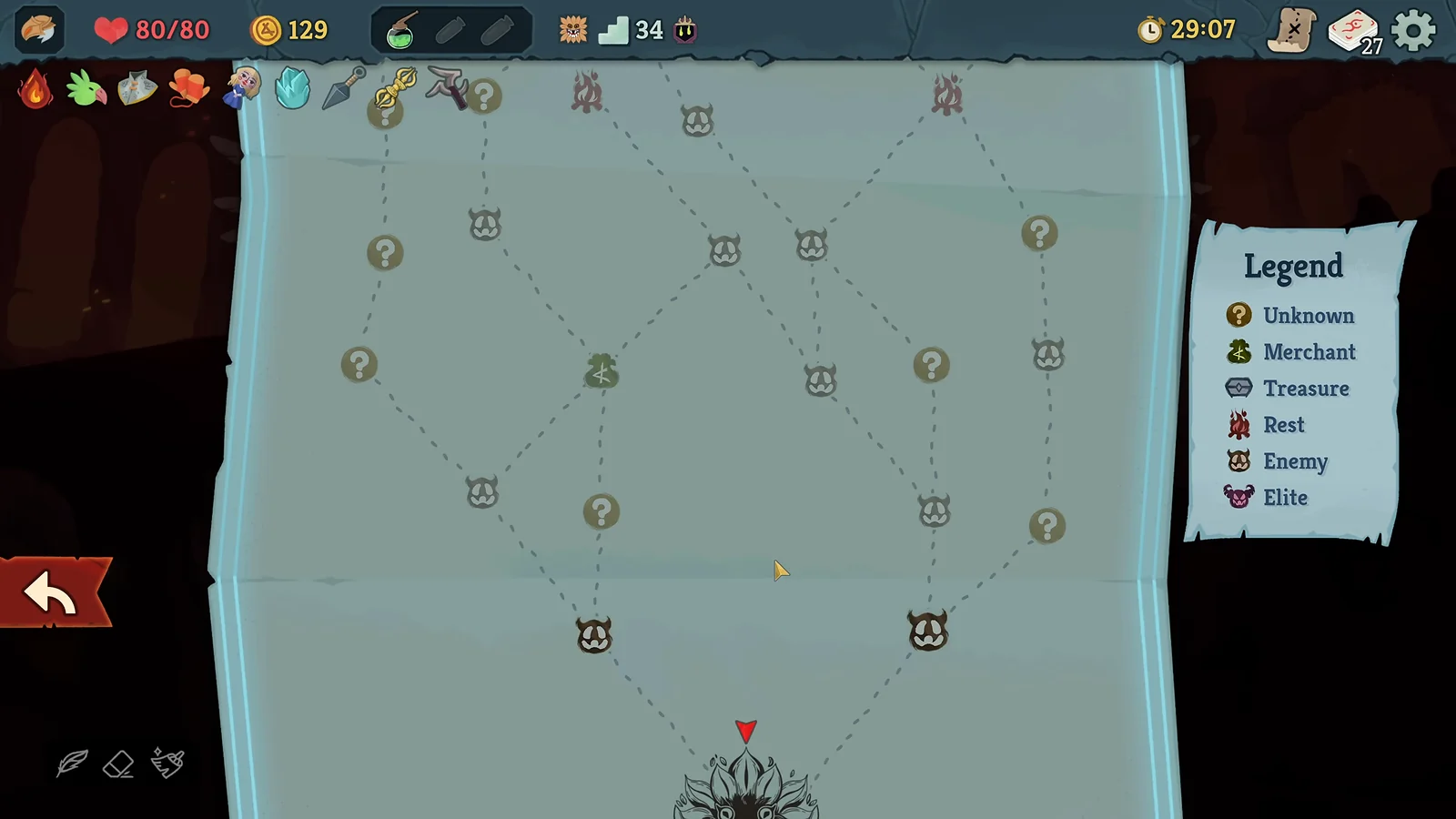
The core gameplay loop is the same as it ever was: you start each run at the bottom of the Spire, with each Act consisting of a branching map that promises treasure, unknown events, Elite monsters, and possible death. The card-based combat still requires you to balance offense and defense against incoming telegraphed attacks, with cards costing Energy (you start each round with 3 Energy but this can be boosted with cards and relics). After every fight, you can collect gold, potions, and expand your deck with new cards.
This is all fine because nothing about this set-up needed fixing. Between the best strategy games on the market, Slay the Spire 2 still manages to stand out thanks to its “just one more go” feeling; you’ll collect relics that can completely change your strategy on the fly, and eventually, you’ll have to face bosses that test everything you’ve learned to advance to the next Act.
Old Gameplay, New Ideas
So far, so similar, so what’s genuinely new here? While the Ironclad, Silent, and Defect playable characters return, there are two newcomers: the Regent and the Necrobinder. The Slay the Spire 2 Necrobinder is a particular standout, introducing complex minion summon mechanics and a new resource system (Exhaustion) that forces you to rethink how you manage your cards.
The Regent offers a different flavor of archetype, utilizing a Stars resource and new Forge keyword to manipulate card management in ways the original game only hinted at. The only real complaint I have about these new characters is that Slay the Spire 2 hides them behind progression rather than leading with them straight out of the gate.
Speaking of unlocks, there’s an Epochs progression system that does things like ensure you start a run by meeting a specific character (like Neow), or unlock new playable characters and cards. They also offer lore and something closer to an overarching story about the Spire and its denizens.
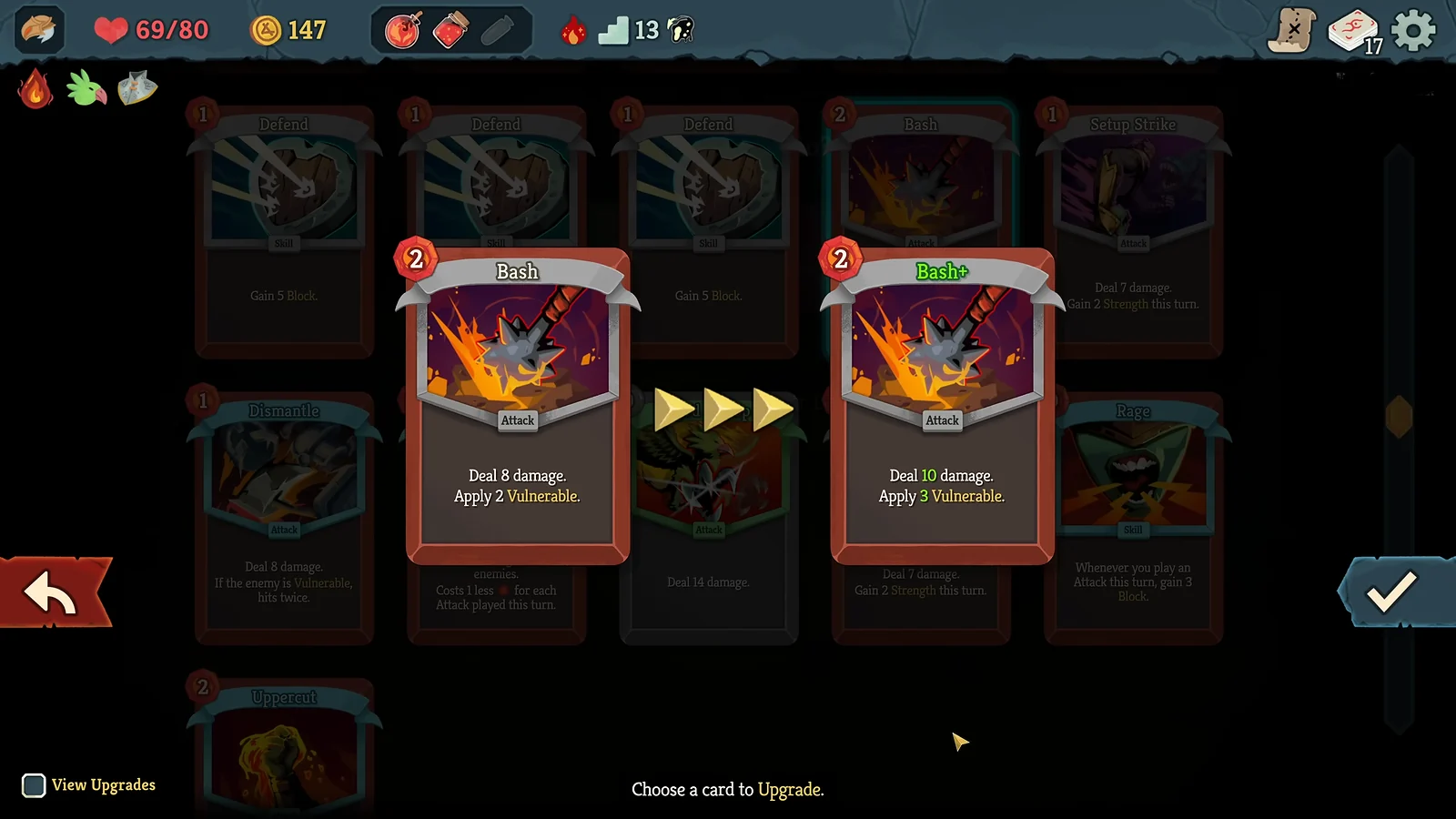
As with the original, new cards and relics reshape strategies, making this one of the top deck-building games currently available (for example, I started Act 2 with a “dragon tears” relic that gave me two extra Energy if I ended a previous round with unspent Energy). I also like the new Sly keyword for the Silent character as this allows her to play cards for free when they’re discarded.
The main good news is that it doesn’t take long for brand new cards to appear in a run, with a personal favorite being an egg (found during one the mystery events) that could be eaten for HP or hatched later. I chose the latter and ended up with a pet bird that could attack enemies without costing Energy.
A Subtle Improvement
During my Slay the Spire 2 review, I couldn’t shake the feeling that it felt an awful lot like a remastered version of the original. While it’s a little disappointing at first, subtle differences do start to become apparent. Progress, for example, feels quicker than before and, whether it was by luck or design, I got hold of more powerful cards quicker than in the first Slay the Spire.
The visuals are generally more refined too, although they still have a familiar rough brushstroke style. It’s also worth noting that, as an Early Access release (I tested version 0.98.2) you’ll likely encounter some rough visual edges, like placeholder art. For those who value aesthetics in their top indie games, it’s not a massive step up from the first Slay the Spire, but it is noticeable.
Climb the Spire with Friends
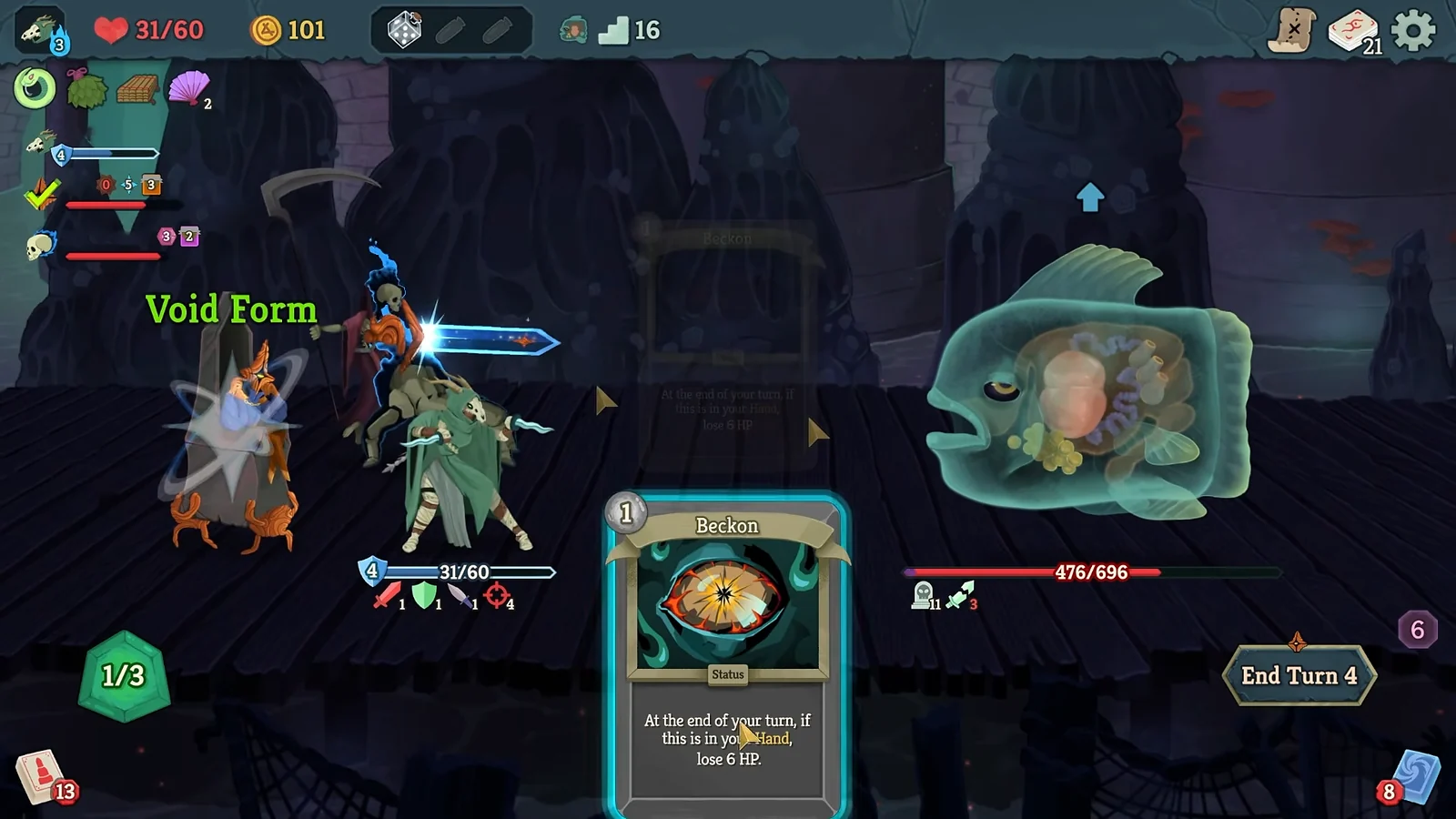
This wouldn’t be much of a Slay the Spire 2 review if I didn’t talk about one of the few obvious innovations: Slay the Spire 2 player count is up to four players. This mode features shared combat encounters and requires intense teamwork and strategic coordination to survive, although right now card synergies between character classes are tough to come by (plus there are only a few generic multiplayer-only cards at the moment).
There are some nice touches though, like how chests give one relic per person and you can click which one you want. This puts your character’s icon on it and as soon as everyone has marked one, they’re distributed. Conflicts are resolved by a really cute rock paper scissors animation.
Even so, it’s worth noting that in this Early Access stage the coordination can feel a bit clunky, and there are clear limitations to how the multiplayer flows (such as player drop-outs and some cards getting struck in short feedback loops). It’s a meaningful addition, but it definitely needs more time in the oven to rival the top co-op games on the market.
The Eternal Replayability Loop
Replayability is Slay the Spire 2’s bread and butter. Even as an Early Access release, between randomized runs, procedural encounters, and the sheer number of card combinations, you could play this for years and still find a new build. Mega Crit has said that it doesn’t have a specific Slay the Spire 2 roadmap, primarily because it’s relying on players to help shape development.
Like any good roguelike game, Slay the Spire 2 relies on experimentation and repeated attempts. Discovering optimal builds is part of the fun, and the evolving difficulty ensures you never get too comfortable.
If you need a hand, check out some Slay the Spire tips from the community to help you survive the early Acts. This level of depth is why people often compare it to physical board games based on video games (incidentally, the first Slay the Spire is also available as a co-op board game).
Sequel or Glorified DLC?
There is a growing debate among gamers I uncovered during the course of my Slay the Spire 2 review: is this a true sequel or just an expansion? Some critics and players have noted that the sequel feels like a polished refinement rather than a ground-up reinvention. Which I can’t argue with…but at the same time, neither can I fully agree with it.
- Pros: Significantly improved systems, exciting new mechanics and characters like the Necrobinder, and a much better presentation.
- Cons: The gameplay loop is very familiar, and some design changes are notably conservative.
Instead, Slay the Spire 2 sits somewhere in the middle. It’s a polished refinement that expands the world without breaking the foundation that made it great. I must also mention how it feels like there’s more of a sense of humor this time around: one event has you find a book on Top 3 Ways to Beat the Spire, which includes advice like “Blocking is for cowards.”
Early Access Growing Pains
It’s important to remember that Slay the Spire 2 is currently in Early Access. It’s not a finished product, and Mega Crit doesn’t know when the 1.0 release will be ready. As such, you’ll encounter balancing issues, placeholder elements, or content that feels rough around the edges. You’re buying into the development journey, so set your expectations accordingly.
My Overall Verdict on Slay the Spire 2: The Spire Needs Further Renovation
Ultimately, Slay the Spire 2 doesn’t do a lot to differentiate itself from its predecessor. The good news is that the first game is an excellent and solid foundation to build upon, and the sequel is still very much under construction. While it’s worth playing now, it’ll certainly be in better shape in a few months.
As for my Slay the Spire 2 review final word, I will say that it’s surprisingly polished for an Early Access release and, going by the current content additions, looks to be a thoughtful evolution of the deckbuilder genre.
| Pros | Cons |
|---|---|
| ✅Innovative new characters like the Necrobinder ✅Improved visuals and animations ✅Fun and challenging co-op mode | ❌Early Access balance still needs work ❌Core gameplay almost identical to the first game |
- Great for: Strategy veterans who want deeper mechanics and higher production value.
- Less ideal for: Players who were hoping for a radical departure from the original’s gameplay.