


How to Upgrade Camp RDR2: 2026 Guide to the Ledger System


After running this game multiple times for our guides here at Eneba Hub, I’ve figured how to upgrade camp RDR2, from finding the ledger to prioritizing the investments that actually improve your experience.
I spent my first playthrough of Red Dead Redemption 2 completely ignoring the camp ledger until Chapter 4, and honestly, it was a mistake I still regret. Missing out on fast travel and better satchels made everything unnecessarily tedious. I’ve finally figured out exactly which upgrades matter and which ones you can skip entirely. This guide breaks down
Red Dead Redemption 2 stands among the best single player games for its attention to detail, and the camp upgrade system exemplifies this depth.
Jump to:
How to Access the Camp Ledger in RDR2
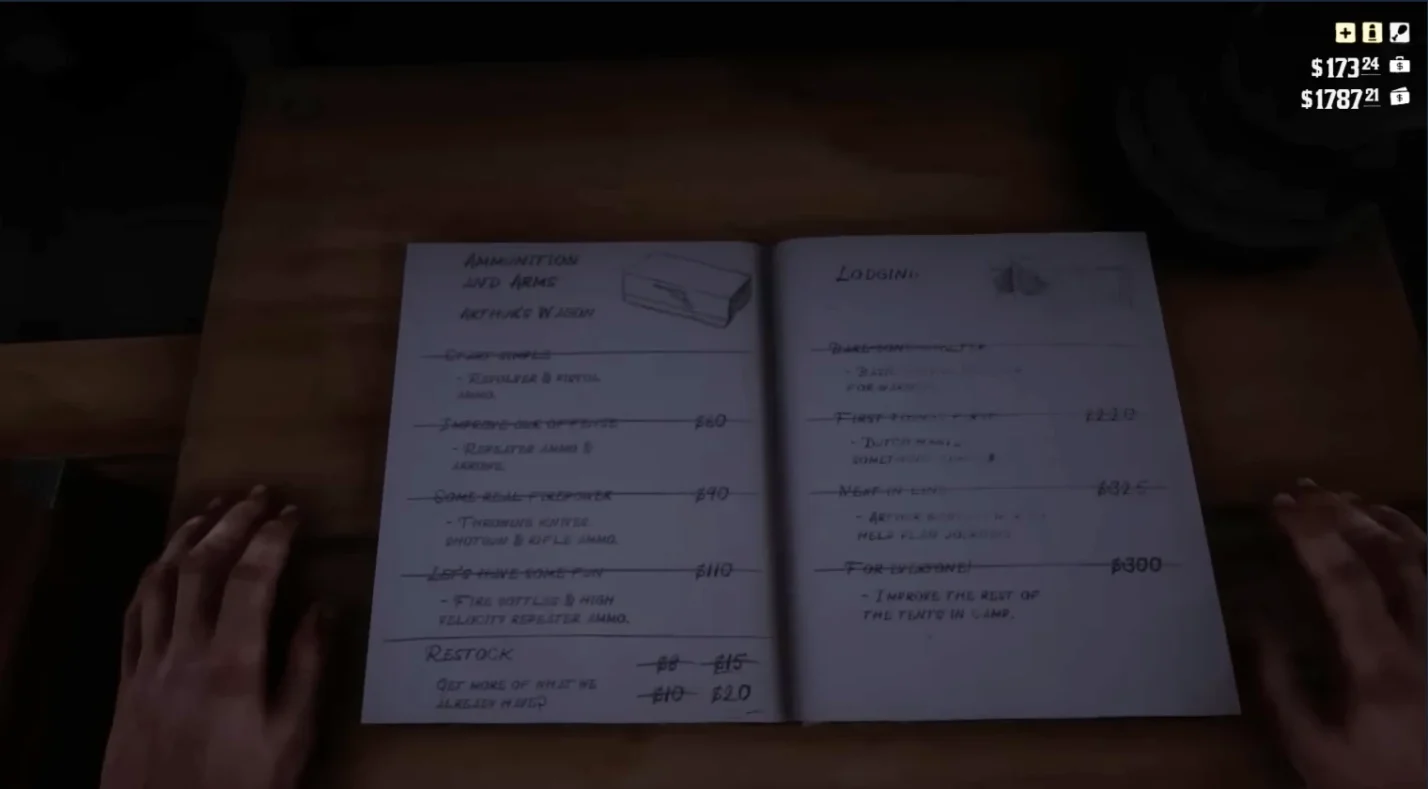
The camp ledger becomes available after you complete the “Money Lending and Other Sins” missions in Chapter 2. Head to Dutch’s tent at your current camp location. It’s usually the largest tent with the most decorations, positioned near the center of camp.
Walk inside and look for a thick leather-bound book sitting on a small table or crate. This is your ledger. Interact with it to open the upgrade menu.
Understanding the Ledger Interface
The ledger organizes upgrades into several categories: Dutch’s Lodging, Arthur’s Lodging, Provisions, Ammunition, Crafting, and Crew improvements. Each category shows available upgrades with their costs displayed clearly.
The interface shows two numbers for each upgrade. The top number represents your camp fund balance, while the bottom shows Arthur’s personal cash. The game automatically deducts from camp funds first, then pulls from your personal money if needed.
Some upgrades appear locked with a chain icon. These unlock as you progress through story chapters, so don’t stress if you can’t buy everything immediately.
Making Your First Purchase
Select any available upgrade and confirm the purchase. The game deducts the cost and immediately applies the improvement to your camp. Most upgrades take effect instantly, though some aesthetic changes might require a brief loading period.
I recommend starting with the Leather Working Tools upgrade. It costs $225 and unlocks the ability to craft better satchels, which dramatically increases your carrying capacity for everything from ammo to provisions.
Understanding Camp Funds vs Personal Money
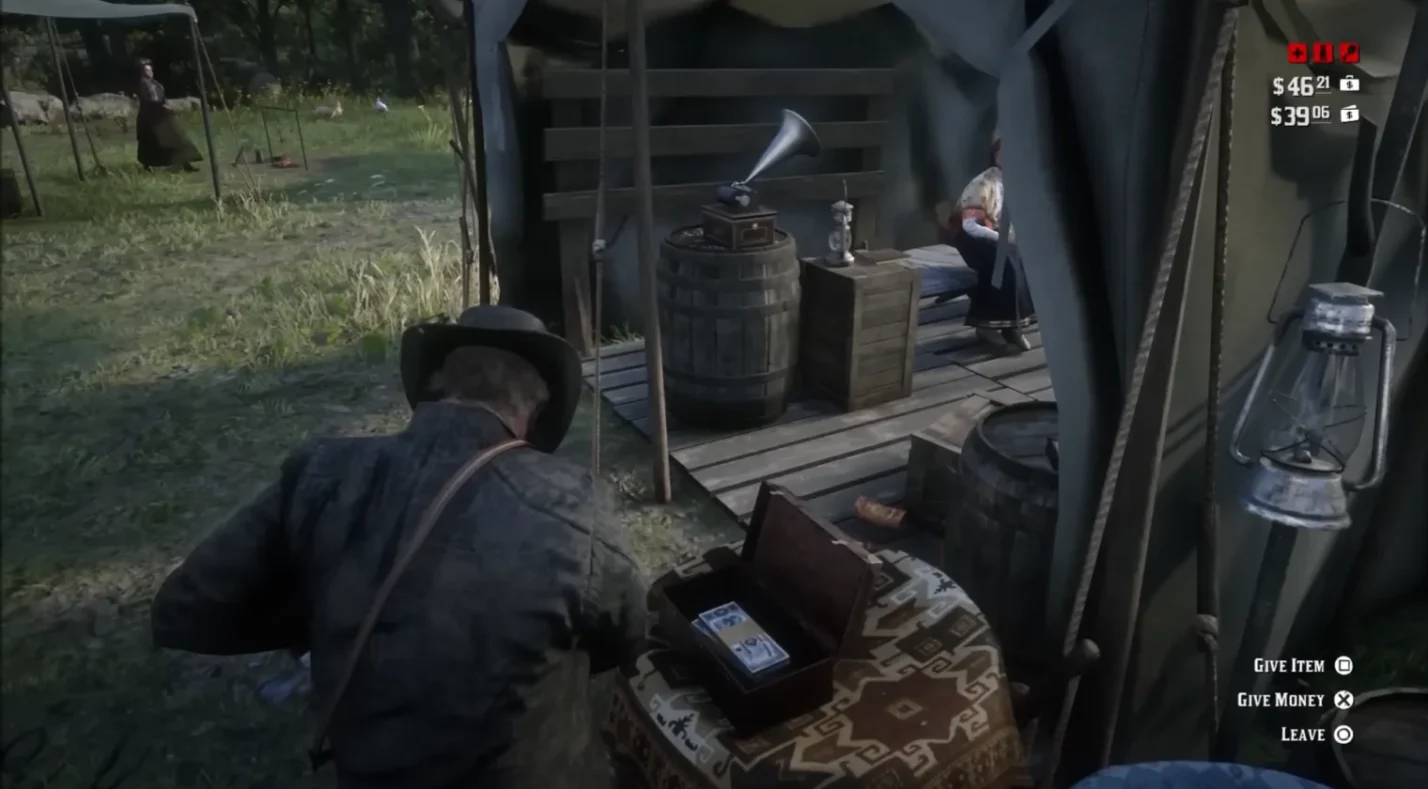
Many players get confused about whether they’re spending their own cash or the gang’s collective funds. The system is actually straightforward once you understand the priority order.
How the Dual-Funding System Works
When you purchase an upgrade, the ledger first checks the camp fund balance. If sufficient money exists there, it deducts the full cost from camp funds. Your personal cash remains untouched.
If camp funds fall short, the game automatically pulls the remaining amount from Arthur’s personal money. For example, if an upgrade costs $300 and camp funds contain $150, you’ll pay $150 from camp funds and $150 from your pocket.
The ledger displays both balances clearly before you confirm any purchase. The yellow number shows camp funds, while the white number shows your personal cash.
Contributing to Camp Funds
The donation box sits near Dutch’s tent, usually positioned against a wagon or crate. Walk up and interact with it to donate cash, items, or provisions.
You can donate:
- Cash in any amount
- Food items like meat or canned goods
- Crafting materials
- Valuables like jewelry or pocket watches
Donating improves camp morale and increases your honor rating slightly. However, you don’t need to donate constantly. The game suggests contributing $20-50 per chapter, but this is completely optional.
I rarely donate more than $100 total across an entire playthrough. Your personal money is better spent on weapons, horses, and essential gear early on. Camp funds accumulate naturally from story missions and other gang members’ contributions.
Complete RDR2 Camp Upgrade Categories
The ledger organizes upgrades into six main categories, each serving different purposes. Understanding what each category offers helps you prioritize spending effectively.
Dutch’s Lodging Upgrades
These upgrades improve the aesthetic quality of Dutch’s tent and surrounding camp areas. The first upgrade costs $200 and adds better furnishings, rugs, and decorations. The second upgrade runs $325 and further enhances the visual appeal.
Honestly, these are the lowest priority upgrades. They look nice but provide zero functional benefits. Save these for the late game when you’ve got money to burn.
Arthur’s Lodging and Fast Travel
This category contains the single most valuable upgrade in the entire system. The Fast Travel Map costs $325 and unlocks instant travel to any previously discovered location.
After installing this upgrade, interact with the map on the side of Arthur’s wagon. Select your destination and you’ll instantly arrive there. This saves massive amounts of time, especially when you need to cross the entire map for missions or collectibles.
I cannot stress enough how much this upgrade improves the game. Those 10-minute horse rides between Valentine and Saint Denis become instant teleports. It’s worth every penny.
Provisions and Medicine
These upgrades stock your camp with free consumables. The basic provisions upgrade costs $175 and provides regular food supplies. The medicine upgrade runs $120 and stocks tonics and health items.
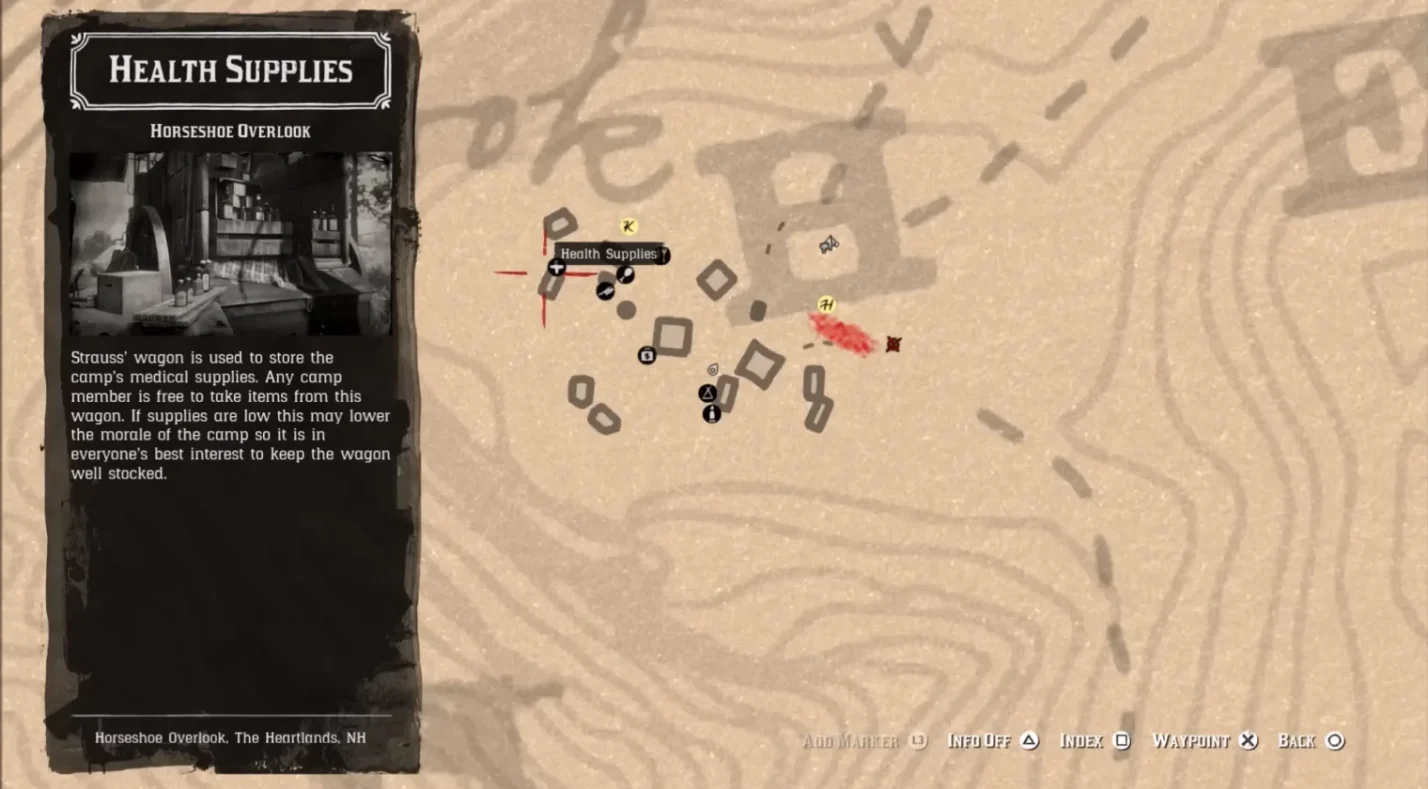
After purchasing these, visit the supply wagon at camp to grab free items. The stock refreshes periodically, giving you a steady stream of health tonics, stamina items, and food.
These upgrades pay for themselves quickly if you regularly use consumables. I grab provisions early in Chapter 3 once I’ve secured the essential upgrades.
Ammunition Supplies
The ammunition upgrade costs $225 and stocks your camp with free ammo. Visit the ammunition wagon to collect various bullet types, arrows, and throwables.
The value here depends on your playstyle. If you’re constantly getting into shootouts, this upgrade saves significant money over time. If you prefer stealth and avoid combat, you can skip it entirely.
Crafting and Hunting Upgrades
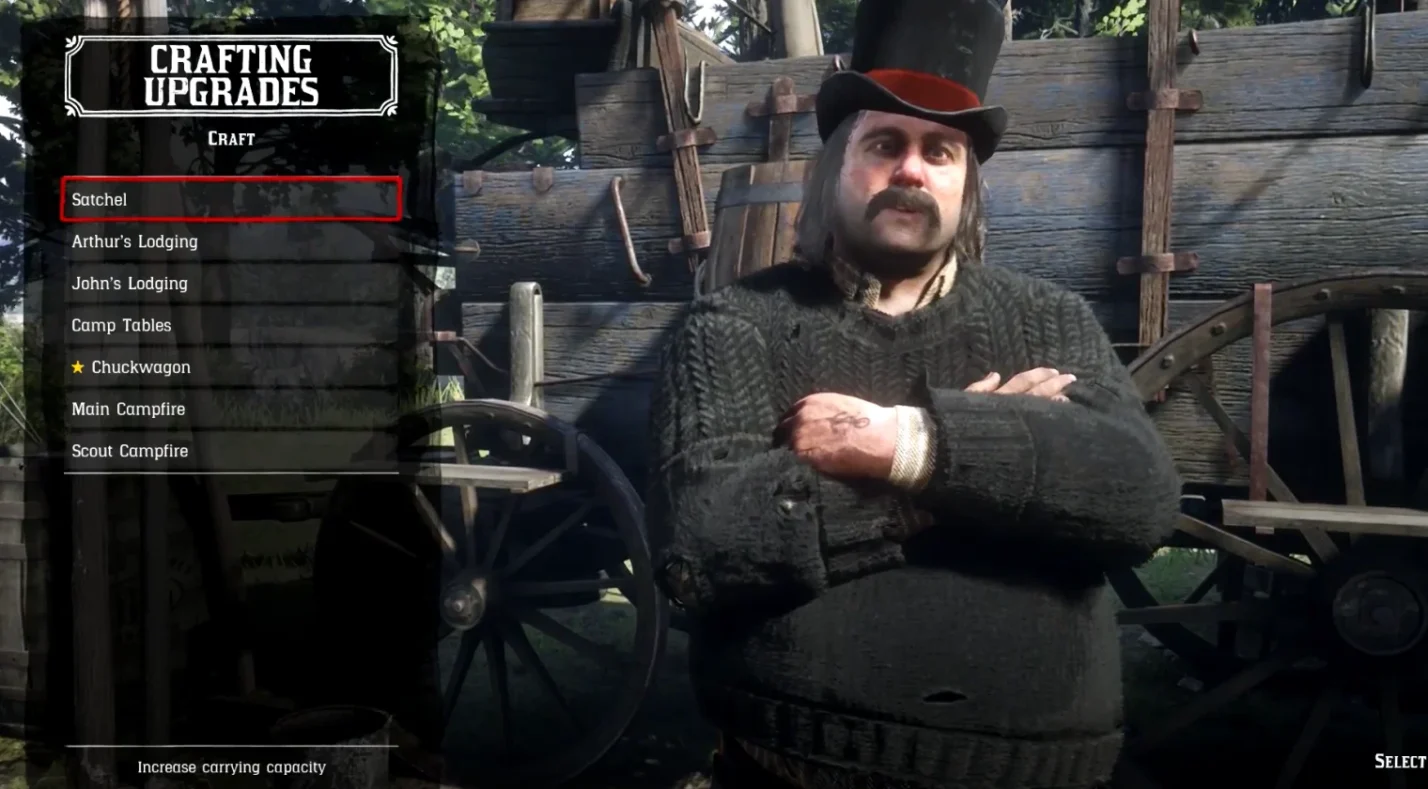
The Leather Working Tools upgrade costs $225 and is absolutely essential. This unlocks the ability to craft improved satchels at the crafting station.
Better satchels increase your carrying capacity for every item category. The Legend of the East Satchel, which requires crafting all other satchels first, lets you carry 99 of every item type. This is a game-changer for inventory management.
Upgrading your leather working tools enables crafting improved satchels, which dramatically increase carrying capacity. Learn more about managing your inventory in our guide on how to open satchel RDR2.
Crew and Aesthetic Upgrades
These upgrades improve living conditions for gang members. Costs range from $150 to $325 depending on which crew member’s quarters you’re upgrading.
These provide minor morale boosts and unlock some unique dialogue options. They’re purely optional and should be your last priority unless you’re going for 100% completion.
Smart Strategies for Funding Camp Upgrades
Camp upgrades require substantial cash investment. The essential upgrades alone cost around $1,000, and completing everything runs close to $2,500.
Efficient Money-Making Methods
Story missions provide decent payouts, but you’ll need additional income sources to fund upgrades quickly. Focus on these high-value activities:
Treasure Hunting: Treasure maps reward $1,000+ per completion. The Jack Hall Gang treasure map sequence alone provides over $2,000 in gold bars.
Looting Bodies: Every enemy you kill carries cash and valuables. Always loot after combat encounters.
Selling Valuables: Jewelry, pocket watches, and other valuables sell for significant amounts. To quickly accumulate the $1,000+ needed for all essential upgrades, focus on high-value loot. Check out our guide on where to sell jewelry in RDR2 to maximize your earnings from valuable items.
Hunting Legendary Animals: Perfect pelts and legendary animal parts sell for premium prices at trappers and butchers.
I typically focus on treasure hunting in Chapter 2 and 3. Finding just two treasure locations provides enough cash for all essential camp upgrades plus money left over for weapons.
Balancing Personal vs Camp Investment
Don’t rush to dump all your money into camp upgrades immediately. Prioritize these personal investments first:
- Weapons: A good rifle and sidearm matter more than camp aesthetics
- Horse: A quality horse with good stamina makes travel less tedious
- Gun Upgrades: Improved sights, barrels, and grips significantly improve combat effectiveness
Once you’ve secured solid personal gear, start investing in camp upgrades. I usually begin upgrading camp around $800-1,000 in personal savings, ensuring I have backup funds for emergencies.
Best Camp Upgrades to Prioritize
Not all upgrades provide equal value. This priority list focuses on practical benefits over aesthetics.
Essential Upgrades First
1. Leather Working Tools ($225): Unlocks better satchel crafting. This should be your first purchase after establishing basic gear. The inventory space improvements affect every aspect of gameplay.
2. Fast Travel Map ($325): Saves hours of travel time across your playthrough. Install this as soon as you can afford it in Chapter 2 or 3.
3. Basic Provisions ($175): Free healing items and food. This pays for itself within a few game hours through saved purchases.
Quality of Life Upgrades
4. Ammunition Supplies ($225): Valuable if you engage in frequent combat. Skip if you prefer stealth approaches.
5. Medicine Upgrade ($120): Supplements the basic provisions upgrade with better tonics and medicines.
6. Advanced Provisions: Additional food variety and better quality items. Nice to have but not essential.
Optional Aesthetic Upgrades
7. Dutch’s Lodging Upgrades ($200-325 each): Purely visual improvements. Only purchase after completing all functional upgrades.
8. Crew Improvements ($150-325 each): Minor morale boosts and dialogue. Completionist content only.
9. Boat and Dock ($450 total): Completely aesthetic with zero practical value. This is the absolute last thing you should buy.
The total cost for essential upgrades runs about $800-900. Everything beyond that provides diminishing returns unless you care deeply about camp aesthetics.
| Upgrade Category | Specific Upgrade | Cost | Priority Level | Key Benefit |
| Crafting | Leather Working Tools | $225 | High | Craft improved satchels |
| Arthur’s Lodging | Fast Travel Map | $325 | High | Instant travel to discovered locations |
| Provisions | Camp Supplies | $175 | Medium | Free health/stamina items |
| Provisions | Medicine | $120 | Medium | Free tonics and medicine |
| Ammunition | Ammunition Supplies | $225 | Medium | Regular ammo restocking |
| Dutch’s Lodging | First Upgrade | $200 | Low | Aesthetic improvements |
| Dutch’s Lodging | Second Upgrade | $325 | Low | Enhanced camp appearance |
| Crew | Crew Lodging | $150-$325 | Low | Better morale, dialogue |
| Misc | Boat & Dock | $450 total | Very Low | Purely aesthetic |
Common Camp Upgrade Mistakes to Avoid
I’ve watched dozens of players make the same errors when approaching camp upgrades. Here’s what to avoid.
Buying Aesthetics First: Dutch’s lodging upgrades look nice but provide zero functional benefit. Prioritize practical upgrades before worrying about camp appearance.
Over-Donating to Camp Fund: The game pressures you to donate regularly, but it’s unnecessary. Other gang members contribute automatically through story progression. Keep your money for personal investments.
Ignoring the System Entirely: Some players skip camp upgrades completely. This is a mistake. Fast travel alone saves hours of gameplay time, and better satchels dramatically improve inventory management.
Waiting Too Long: Don’t hoard money waiting for the “perfect time” to upgrade. Install essential upgrades as soon as you can afford them in Chapter 2 or 3. The benefits compound over your entire playthrough.
Buying Everything Immediately: You don’t need every upgrade. Focus on essentials first, then add quality-of-life improvements as funds allow. Skip purely aesthetic upgrades unless you’re going for 100% completion.
| Story Chapter | Available Cash (Typical) | Recommended Upgrades | Total Cost | Remaining for Personal Gear |
| Chapter 2 | $300-$500 | Leather Working Tools | $225 | $75-$275 |
| Chapter 3 | $800-$1,200 | Fast Travel + Provisions | $500 | $300-$700 |
| Chapter 4 | $1,500-$2,500 | Ammunition + Dutch’s Lodging | $425 | $1,075-$2,075 |
| Chapter 5+ | $3,000+ | Remaining aesthetic upgrades | $600+ | Plenty |
Building Your Perfect Frontier Camp
The camp upgrade system exemplifies Red Dead Redemption 2’s attention to detail and player choice. Your investment decisions shape both your gameplay experience and your gang’s quality of life throughout the story. RDR2’s camp system captures authentic frontier life better than most titles. Discover more in our roundup of the best Western games.
Camp upgrades transform your gang’s hideout from a collection of worn tents into a proper frontier home. The system rewards strategic investment over completionist spending.
Focus on the essentials first. Leather Working Tools and Fast Travel Map provide the most significant gameplay improvements for around $550 total. Add provisions and ammunition upgrades as your budget allows, bringing total essential spending to roughly $900.
Everything beyond that falls into optional territory. Aesthetic upgrades enhance immersion but don’t affect gameplay mechanics. Purchase these only after securing all functional improvements and establishing solid personal gear.
If you enjoy RDR2’s immersive base-building mechanics, explore our list of games like Red Dead Redemption 2 for similar experiences. Camp upgrades include beautiful visual enhancements best appreciated with quality hardware.
FAQs
Is upgrading camp worth it in RDR2?
Upgrading camp in RDR2 is absolutely worth it if you prioritize strategically, focusing on functional improvements over aesthetics. The Fast Travel Map and Leather Working Tools provide the most practical value for around $550 total, while aesthetic upgrades are optional and best saved for late game when you have excess funds.
Do camp upgrades use my personal money or camp funds first?
Camp upgrades in RDR2 automatically use camp fund money first, then deduct from Arthur’s personal cash if camp funds are insufficient. Both funding sources are clearly displayed in the ledger interface before you confirm any purchase, with camp funds shown in yellow and personal money in white.
What happens if I don’t upgrade the camp at all?
You can complete the entire RDR2 story without upgrading camp, as no missions or core gameplay mechanics are locked behind upgrades. However, you’ll miss convenience features like fast travel and free supplies, plus aesthetic improvements that enhance immersion and gang morale throughout your playthrough.
How much money should I donate to the camp fund?
You should donate to the camp fund when convenient rather than following the game’s suggested $20-50 per chapter, as donations are completely optional. Camp funds accumulate automatically from story missions and other gang members’ contributions, so your personal money is better spent on weapons and essential gear early in the game.
Should I buy the boat upgrade for camp?
The boat upgrade for camp, which costs $450 total for the dock and boat combined, is purely aesthetic and provides minimal practical value. You should only purchase this upgrade after completing all essential functional upgrades if you want the visual enhancement for camp ambiance or are pursuing 100% completion.