


How to Open Satchel RDR2: Control Guide, Upgrades & Tips


Learning how to open satchel RDR2 is one of the first things every player needs to master. The satchel holds your provisions, ammo, crafting materials, and valuables – basically everything that keeps Arthur alive out in the wild.
It’s easy to overlook when the game throws a dozen mechanics at you early on, but knowing your way around it saves time and keeps you prepared. In this guide, I’ll show you how to open the satchel on every platform, manage its categories, upgrade its capacity, and craft the ultimate Legend of the East satchel.
Jump to:
How to Open Satchel RDR2 on All Platforms
The most important step is knowing which button opens your bag. Rockstar’s control scheme changes slightly depending on your platform, but the process always involves holding a dedicated key or button:
| Platform | Action | Input |
| PC (Keyboard) | Open satchel | Hold B on the keyboard |
| PlayStation 4/5 | Open satchel or horse cargo | Hold Right on the D‑Pad |
| Xbox One/Series X/S | Open satchel or horse cargo | Hold Right on the D‑Pad |
On PC, pressing B opens a circular menu. Hold the key and use your mouse to select items; release to close. If you’ve remapped your controls, check the Story Menu > Keyboard Mapping to confirm the current key.
On PlayStation and Xbox, holding the right D‑Pad button causes Arthur or John to reach into the satchel and display the inventory wheel. Use the right stick to highlight an item and release the D‑Pad to use it.
During combat or high‑stress moments, a quicker way to access consumables is through the item wheel. Hold L1 (PS) or LB (Xbox) to bring up the weapon wheel, then tap R1/RB to switch to the items wheel. On PC, hold Tab to open the weapon wheel and press F4 to switch to items. Highlight the needed tonic or provision and release to consume it without fully opening the satchel.
While exploring, you can also access your horse’s cargo by holding the right D‑Pad button when near your mount. This allows you to store extra weapons, pelts, and outfits. Just remember to transfer valuable pelts to Pearson or the trapper before they spoil.
Navigating and Using the Satchel – Categories and Quick Access
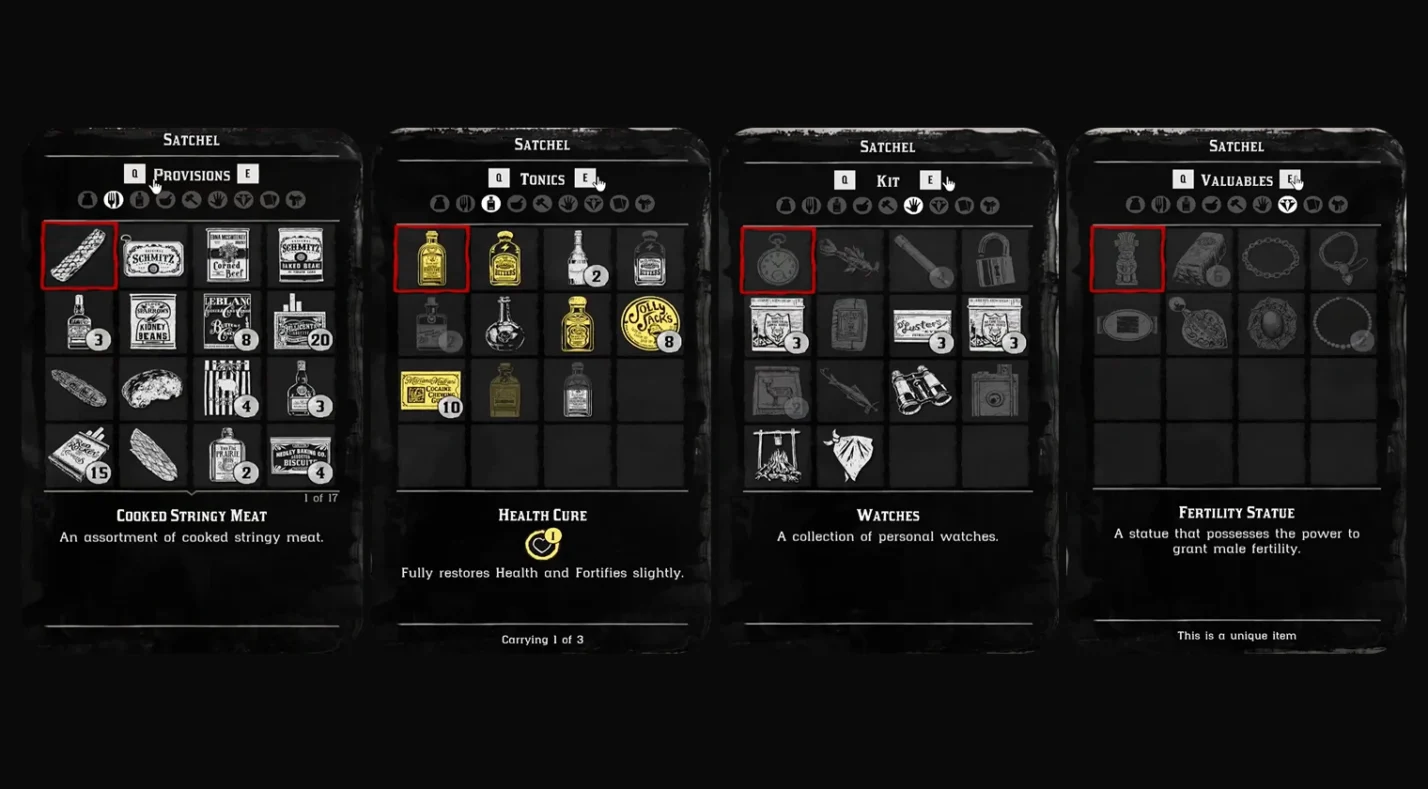
Once you’ve opened the satchel, six main tabs help you organize everything you’ve collected. Use the right stick (controllers) or mouse scroll wheel (PC) to move between them. Each tab serves a different purpose:
| Category | Description & examples |
| Provisions | Food items like cooked meat, canned vegetables, biscuits, and berries that restore health, stamina, and Dead Eye cores. |
| Tonics | Items that restore or fortify cores and bars, such as health tonics, bitters, miracle tonics, and special elixirs. |
| Ingredients | Plants, herbs, and animal parts used for crafting at campfires or for cooking special recipes. |
| Materials | Animal hides, feathers, and other resources used for crafting satchels and crafting camp upgrades. |
| Kit | Utility items such as binoculars, fishing equipment, masks, lures, horse stimulants, and gun oil. |
| Valuables | Jewelry, pocket watches, gold bars, and other loot that can be sold to fences or used for crafting trinkets. |
Navigating between tabs becomes second nature with practice. Highlighting an item often reveals context‑sensitive options, such as Use, Craft, Discard, or Sell (when visiting a merchant). You can also pin frequently used items to your quick item wheel: on consoles, hold L1/LB and highlight an item; on PC, hold Tab and use the mouse scroll wheel to select the slot, then press Q/E to cycle items. Pinning a potent health cure or potent miracle tonic saved me more than once during desperate firefights.
When your satchel fills with jewelry and trinkets, it’s time to make a trip to the fence. Selling these items clears space and provides much‑needed cash early in the game. Our guide on where to sell jewelry in RDR2 covers every fence location and offers tips for getting the best price.
Upgrading the Satchel and Unlocking the Legend of the East
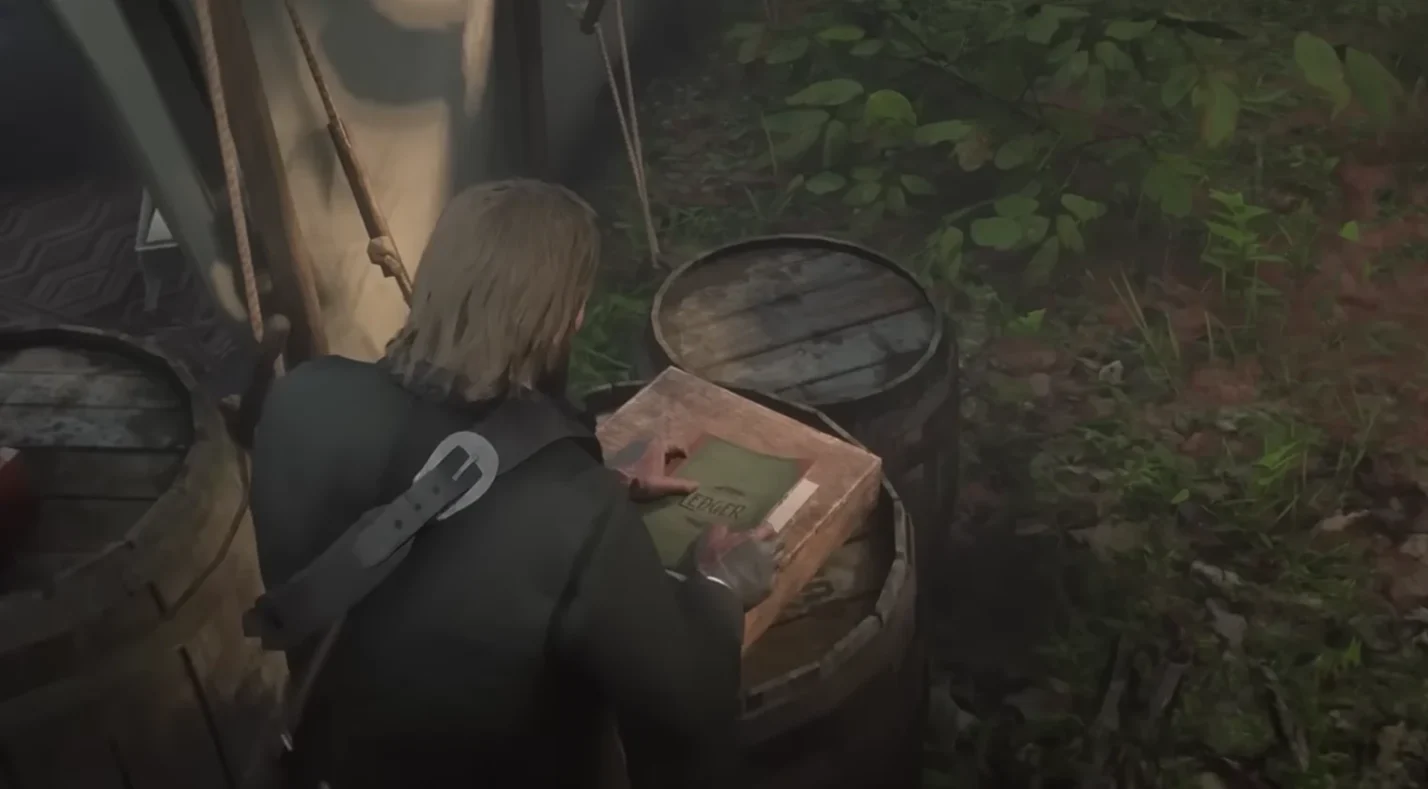
The base satchel only holds a handful of each item, which quickly becomes a limitation. Visiting the camp cook, Simon Pearson, allows you to craft upgraded satchels that double your carrying capacity for specific categories.
Before Pearson can work, you must purchase leather working tools from the camp ledger (unlocked by completing the early “Money Lending and Other Sins” missions). Each satchel also requires perfect pelts and certain camp upgrades.
Here’s a summary of the six satchel upgrades and their benefits:
| Satchel | Pelts & requirements | Benefit |
| Provisions Satchel | Perfect deer, bison, and raccoon pelts; upgrade the camp’s provisions wagon twice | Doubles capacity for food items |
| Tonics Satchel | Perfect deer, elk, and buck pelts; upgrade the medicine wagon twice | Doubles tonics capacity |
| Ingredients Satchel | Perfect deer, badger, and squirrel pelts; donate five animal carcasses | Doubles ingredient storage |
| Materials Satchel | Perfect deer, boar, and iguana pelts; craft three recipes at the scout fire | Doubles material limits |
| Kit Satchel | Perfect deer, elk, and panther pelts; donate three valuables | Doubles kit items |
| Valuables Satchel | Perfect deer, beaver, and rabbit pelts; donate $50 to the camp | Doubles valuables and allows you to carry more watches, rings, and gold bars |
After crafting all six satchels, Pearson offers the Legend of the East Satchel. This ultimate upgrade requires perfect deer, cougar, and wolf pelts plus a $150 fee. Unlike other satchels, the Legend of the East sets most item limits to 99, making it virtually impossible to run out of space. Its perks stack with all previously crafted satchels, so you retain the doubled capacities while gaining the huge overall increase.
Unlocking the final satchel takes patience. Hunting the required animals may be the most time‑consuming part of the process, but the payoff is worth it. Once I finally made the Legend of the East, I never had to worry about discarding a single herb or tonic again. If you love the Wild West setting, our round‑up of the best Western games features several titles that capture the same frontier spirit when you need a break from RDR2.
Hunting for Perfect Pelts and Materials
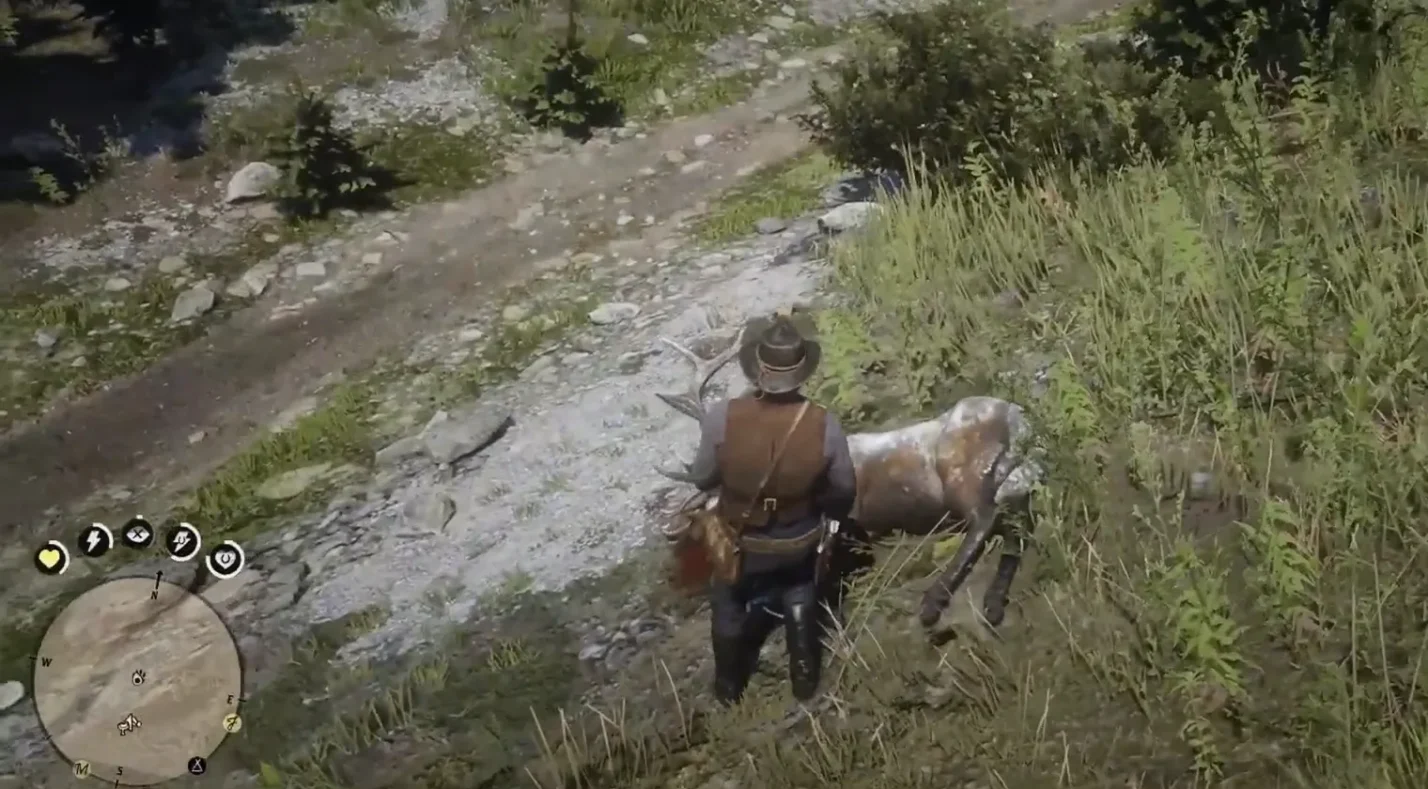
Upgrading your bag hinges on collecting perfect pelts. A three‑star pelt only drops when you kill a pristine animal with the appropriate weapon and aim for a vital area. Use the binoculars to study animals and check their quality. Here are some hunting tips I’ve learned over dozens of hours in the wilderness:
- Choose the right weapon: For small animals like rabbits and squirrels, use the Varmint Rifle or Small Game Arrows. Medium creatures such as deer and boar should be taken down with a bow using improved arrows or a rifle. Large predators like cougars and wolves fall quickly to high‑powered rifles.
- Aim for clean kills: Activate Dead Eye to slow time and target the head or heart. A single fatal shot preserves the animal’s quality.
- Stay unseen: Approach quietly with cover scent lotion and crouch. Spooked animals often flee, leading to poor shots and damaged pelts.
- Track specific animals: Cougars roam in New Austin and the Big Valley, wolves pack in the Grizzlies, and panthers prowl in Lemoyne’s swamps. If you’re struggling to find them, use bait to lure predators.
- Use your horse wisely: Store harvested pelts on your horse immediately. A pelt can rot if you carry it too long or if your horse dies. Ride back to camp and donate pelts to Pearson before embarking on new quests.
Hunting teaches patience. I once spent an afternoon tracking a panther through Bluewater Marsh, only to scare it away with a misfired shot. The next attempt, I moved slowly, used cover scent, and waited for a clear headshot. The payoff was a perfect pelt that unlocked my Kit Satchel upgrade. For more open‑world adventures that encourage exploration, check out our guide on the best open‑world games for PS5.
Managing Inventory and Survival Tips
Even with a bigger bag, smart inventory management keeps you prepared for any situation. Here are a few strategies I’ve adopted:
- Prioritize essentials: Always carry enough food and tonics to restore your cores. A stack of cooked venison, potent miracle tonics, and stamina tonics will see you through extended hunts and missions.
- Craft frequently: Don’t let herbs sit unused. Craft potent tonics at campfires and cook meat instead of hoarding ingredients. Crafting frees up space and results in more effective consumables.
- Sell valuables regularly: Visit fences to offload jewellery, watches, and gold bars. This not only clears space but also boosts your cash reserves for camp upgrades and supplies. Avoid carrying too many cigarette cards and cigars, as they add weight with little benefit.
- Use horse cargo: Store extra weapons, outfits, and pelts on your horse. Before a long mission, stock your saddlebags with health items and ammo so you’re not scrambling during a shootout.
- Stay organized: Periodically open your satchel and discard unnecessary items. Over time, you’ll collect pamphlets, duplicate maps, and crafting notes you no longer need. Keeping the bag tidy makes it easier to find what you’re looking for under pressure.
If story‑driven adventures are your thing, our list of the best single‑player Xbox games highlights other titles with deep narratives that make clever use of inventory systems.
Conclusion: Mastering the Satchel on Your Western Adventure
Learning how to open satchel RDR2 is more than a basic control tip; it’s the first step toward thriving in Rockstar’s sprawling frontier. The satchel houses every meal, tonic, material, and trinket you need.
By understanding the control scheme on your chosen platform, navigating the inventory wheel, upgrading each satchel at Pearson’s table, and hunting for perfect pelts, you transform a humble bag into an almost bottomless cache. Managing what you carry, crafting useful items, and selling valuables keeps you ready for any showdown, treasure hunt, or campfire tale the game throws at you.
Red Dead Redemption 2 remains a landmark in open‑world storytelling, and mastering its systems enhances that experience. If you haven’t saddled up yet or want to revisit the adventure on a new platform, pick up a Red Dead Redemption 2 PC key from our store. A fresh start might be the perfect excuse to craft the Legend of the East satchel all over again.
FAQs
How do you open your satchel in RDR2 on Xbox?
To open your satchel in RDR2 on Xbox, hold the right D‑Pad button until the circular inventory wheel appears. From there, you can use the right stick to navigate between categories and select items. Holding the button while near your horse also lets you access the horse’s cargo.
What button opens the satchel on PS4?
On PS4, the button that opens the satchel is the right D‑Pad. Hold it down to bring up Arthur’s or John’s inventory, then use the left stick to highlight items. You can also hold L1 to open the weapon wheel and tap R1 to switch to the items wheel for quick access during combat.
How do you open your satchel in RDR2 on PC?
To open your satchel on PC, hold the B key on your keyboard. The inventory wheel pops up around your character; use the mouse to choose a category and release B to select the item. If you’ve remapped your keys, check the Story Menu for the current satchel command.
How do you upgrade your satchel in Red Dead Redemption 2?
To upgrade your satchel in Red Dead Redemption 2, visit Simon Pearson at your camp after purchasing the leather working tools from the camp ledger. Donate perfect pelts and meet specific camp milestones to craft satchels that double the carrying capacity for provisions, tonics, ingredients, materials, kit items, and valuables.
How do you get the Legend of the East satchel?
You get the Legend of the East satchel by crafting all six other satchels first and then bringing perfect deer, cougar, and wolf pelts plus $150 to Pearson. This final upgrade sets most item limits to 99, turning your satchel into a near‑bottomless bag that carries enough supplies for every adventure.