

Side Hustle for Teachers: 7 Flexible Options Ranked

Eneba Hub contains affiliate links, which means we may earn a small commission if you make a purchase through them—at no extra cost to you. Learn more



Quick Verdict
Wyzant is the quickest option to start, with new tutor profiles typically reviewed within days. Selling on Teachers Pay Teachers and proctoring exams through Meazure Learning give teachers two more flexible ways to earn around their school schedule.
A side hustle for teachers can start paying within days, especially through tutoring platforms and resource marketplaces that approve new tutors or sellers quickly. For a few hours a week, $100 to $300 a month is a realistic range for extra income for teachers. More hours or a growing resource catalog can push that income higher.
The fastest realistic combination among side hustles for educators is one paid tutoring platform plus resource sales. Together, they can bring in around $300 to $600 a month while fitting around your grading workload. Below you will find seven real ways to build a side hustle for teachers, what each one actually pays after fees, and how to keep any of them from causing a problem with your district.
Jump to:
Is a Side Hustle for Teachers Actually Realistic?
A side hustle for teachers is realistic for a few hundred extra dollars a month, not for replacing your salary. Most methods below pay $15 to $50 an hour after fees, making them realistic sources of extra income for teachers who can spare time after grading.
The bigger question with teacher side hustles that pay well is how each method fits your schedule. Tutoring and live classes pay the most per hour, but they need you at a set time. Selling resources on Teachers Pay Teachers pays less per item, but it keeps earning while you sleep.
When it comes to finding the right side hustle for teachers, timing matters just as much as the hourly rate. An Outschool class after 3 p.m. competes with the other activities families already have booked. During the school year, tutoring and live classes also compete with your own evenings, while resource sales can keep earning between sessions.
7 Real Ways to Build a Side Hustle for Teachers
These side hustles for educators start with what you actually keep after fees, then explain what it takes to get started. The ranking weighs these teacher side jobs by earning potential, how quickly you can begin, and whether the work fits around a teacher’s week. That makes it easier to see which side hustle for teachers fits your schedule.
1. Private Tutoring on Wyzant
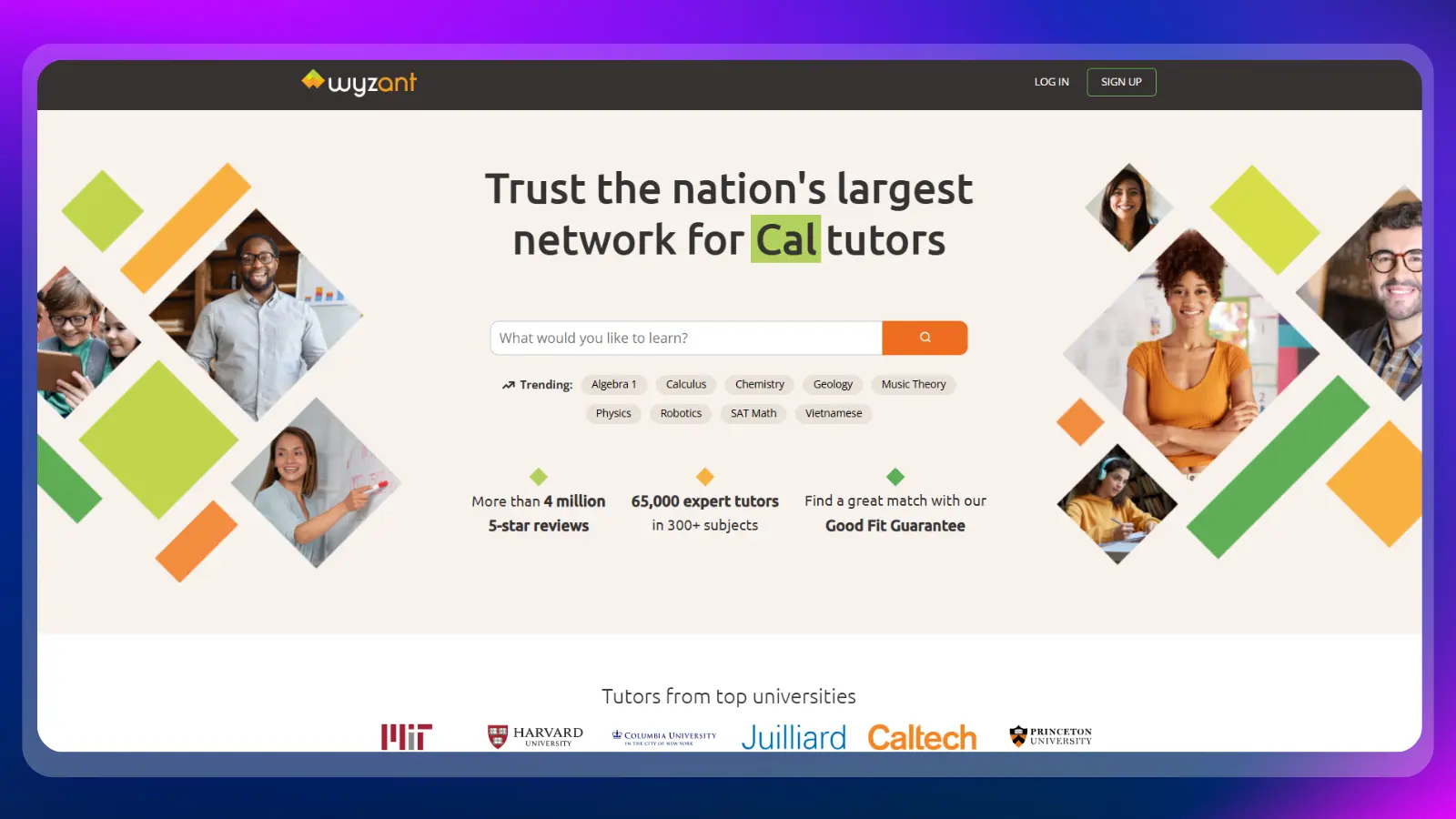
Wyzant is one of the more flexible tutoring jobs for teachers, with tutors keeping 75 percent of the rate they set while the platform takes 25 percent from every lesson. Set a $60 hourly rate, and the deposit that lands in your account is $45.
Tutors on the platform average around $26.74 an hour after that fee. That sits well above the $19.03 median the Bureau of Labor Statistics reports for tutors generally. You do need to be a U.S. resident with a valid Social Security number, since Wyzant pays by direct deposit rather than an app wallet.
Getting listed starts with a short application:
- Create a profile naming your subjects, grade levels, and teaching background.
- Set your starting rate a few dollars above your real target to absorb the fee.
- Add a short intro video, since profiles with one get picked far more often.
- Reply to your first few student messages fast, since response time affects how often you get shown.
If you plan to tutor by video several evenings a week, our guide to the best laptop for teachers can help you compare hardware for online teaching and lesson prep.
Keep your profile focused on the two or three subjects you know best. Listing ten subjects can make you look generic when a parent is searching for help with one specific problem. Compared with other teacher side jobs, that flexibility makes Wyzant a practical side hustle for teachers who only have a few evenings free.
2. Online Tutoring on Preply
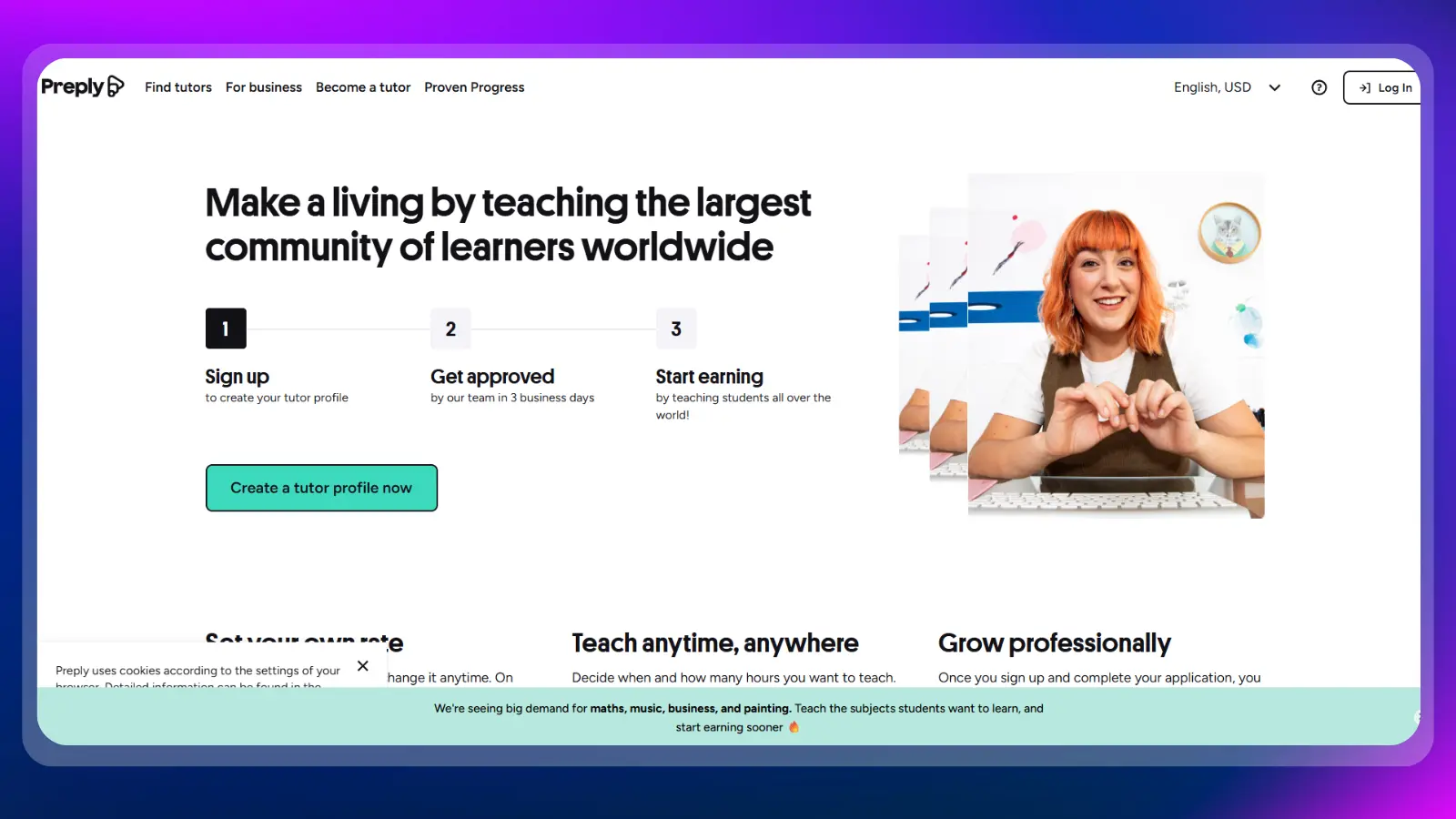
Preply starts new tutors on a 33 percent commission, then lowers that cut as they teach more hours. That commission slides from 33 percent in your first 20 hours down to 18 percent past 400 hours. A tutor charging $10 an hour keeps $6.70 a lesson at the start.
Every trial lesson with a new student carries a 100 percent commission, so that first session is unpaid by design. Once repeat students make up more of your schedule, your take-home pay improves. Preply’s own numbers put take-home pay for English tutors at $15 to $25 an hour after fees. Approval after signing up takes about three business days.
Building a profile follows a short sequence:
- Create a tutor profile with your subject, availability, and a short video introduction.
- Wait for approval, usually within three business days.
- Price trial lessons the same as regular ones, since the platform keeps the whole fee either way.
Among tutoring jobs for teachers, Preply can look weak in a trial-heavy first month. Your commission falls as your teaching hours build, so early take-home pay can look worse than it does once repeat students start booking.

3. Live Classes on Outschool
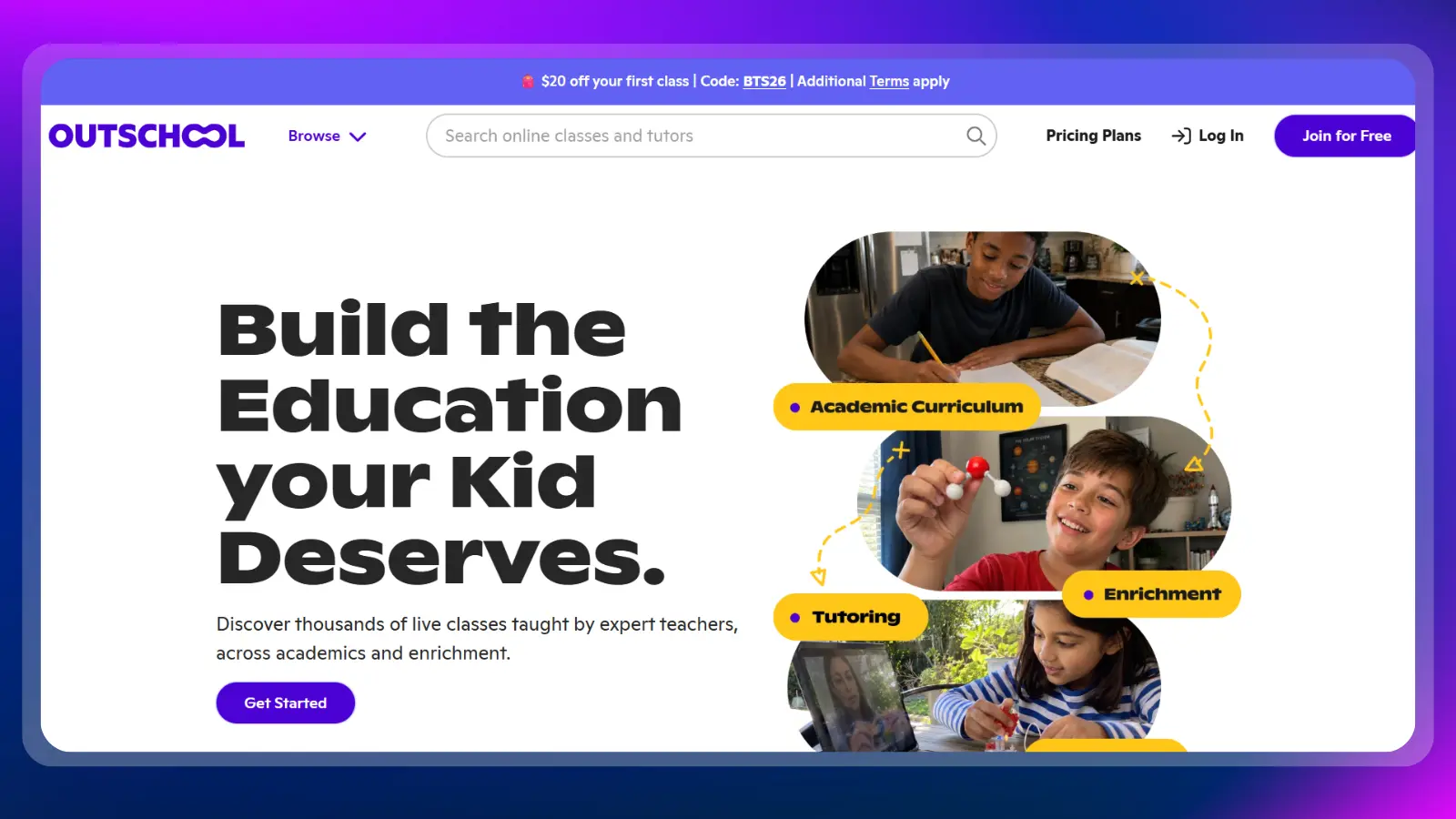
Outschool keeps 30 percent of every enrollment as its Teacher Fee and pays out the rest. A $20 class with five learners pays you $70 before you count your own prep time. Pay varies by subject, with estimates averaging around $40 an hour, which can make live classes a practical source of extra income for teachers.
As one of the side hustles for educators built around live instruction, you do not need a formal teaching credential to apply, although your classroom experience can still strengthen your profile. Outschool does require a criminal background check before your first class. It also limits teachers to a short list of countries, including the United States, Canada, and the United Kingdom. Payment arrives by PayPal about a week after a class starts.
The listing process runs through one application:
- Sign up to teach and pass the background check.
- List a class on a subject you already know well, with a clear age range and price.
- Offer a short introductory class alongside a longer one, since the two attract different buyers.
Price your first class carefully. Starting too low can make later increases harder once families are used to the original price. Outschool works best as a side hustle for teachers who can protect a regular after-school or weekend time slot.

4. Selling Resources on Teachers Pay Teachers
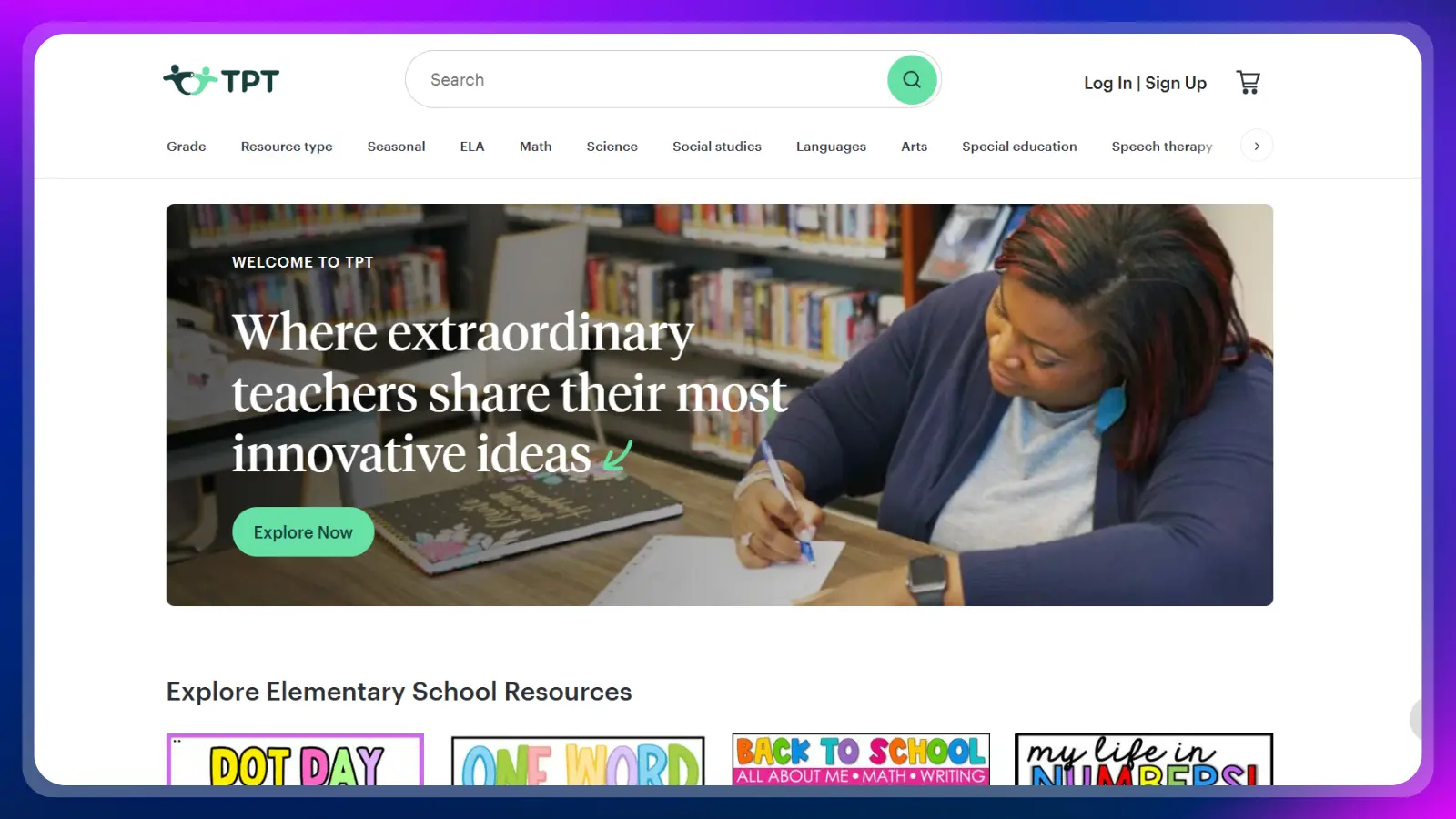
If you want to sell teaching resources online, a Basic seller on Teachers Pay Teachers pays a one-time $29 fee and keeps 55 percent of every sale. A Premium seller pays $59.95 a year instead and keeps 80 percent. Premium’s smaller per-item fee pays for itself once your store sells more than a handful of resources a month.
Teachers Pay Teachers comes closest to passive income here because you can sell teaching resources online and keep earning after you publish. The typical active seller earns around $27 a month, while the top 1 percent average roughly $6,300 a month. Only about 431 of 233,358 sellers reached six figures in 2024, so treat that as a rare outcome.
If you like the idea of earning from work after it has already been created, our guide to ideas for passive income covers more options built around the same principle.
A first listing takes a specific sequence:
- Choose the Basic or Premium account based on how many resources you plan to list this year.
- Upload a resource with a clear cover image and a free preview, since buyers rarely buy blind.
- Price it in line with similar listings, then adjust once you see your first few sales.
- List again within weeks, since one resource almost never carries a store on its own.
A small batch of uploads rarely carries a store for long. Sellers who want this side hustle for teachers to grow need to treat it like a catalog and keep adding useful resources over time.
5. Freelance Curriculum Writing on Upwork
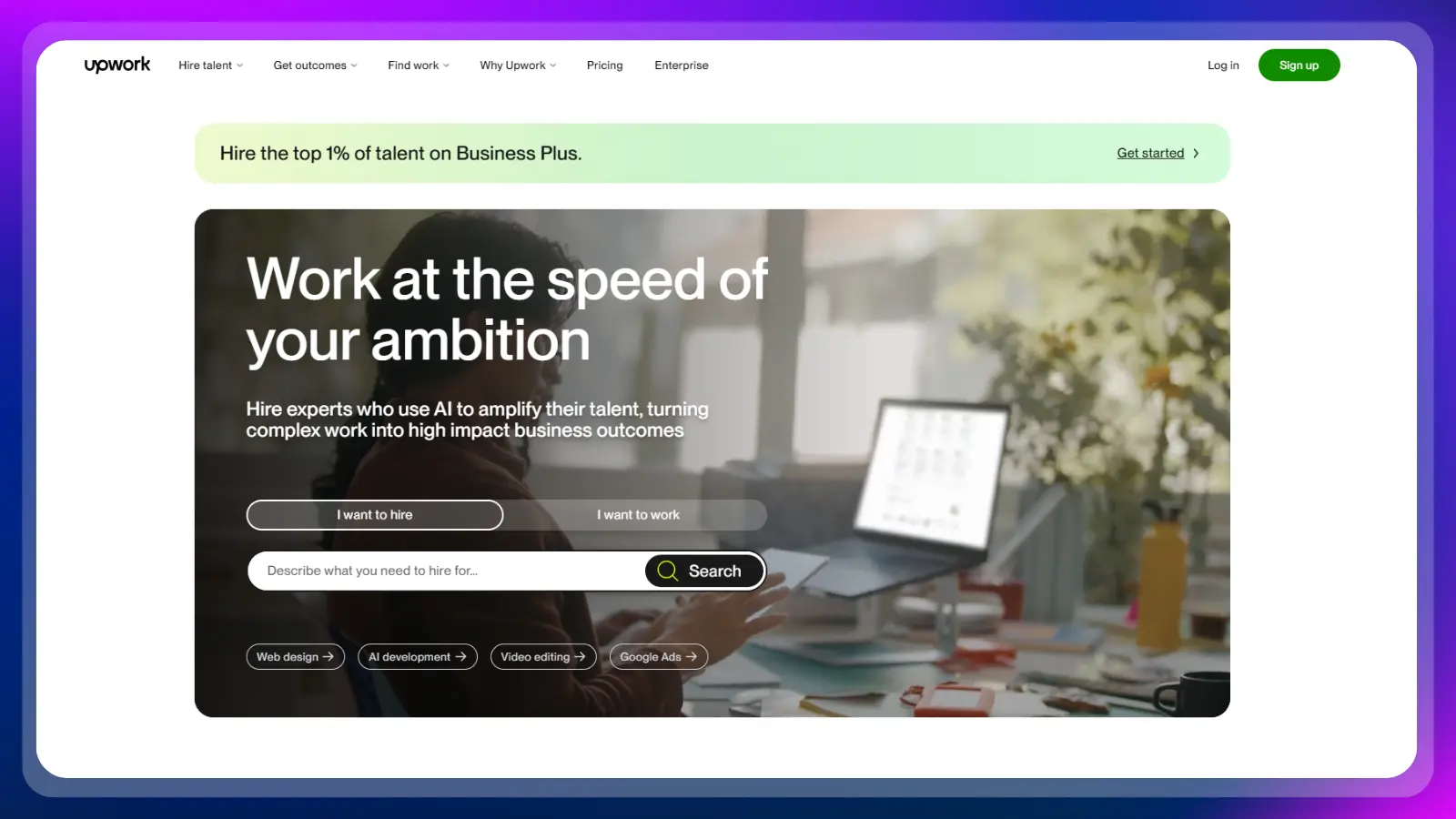
Curriculum developers on Upwork charge a median of $50 an hour, with most rates falling between $35 and $65 according to the platform’s own data. General freelance curriculum writing pays less, closer to $23 an hour on average. That still puts curriculum work among the teacher side hustles that pay well once you have a strong portfolio.
This work pays for your curriculum expertise. Education publishers, ed-tech companies, and schools hire freelancers to build lesson sequences, assessment items, and standards-aligned units from a brief. Among side hustles for educators, it has the advantage of turning work you already know into a service clients actively hire for.
A strong portfolio matters more than a polished profile when you are trying to land your first contract:
- Build a short portfolio from lesson plans or units you already wrote for your own classroom.
- Bid on smaller, clearly scoped jobs first to build reviews before chasing large contracts.
- Quote a day rate or a per-unit price instead of an open hourly rate, since schools often prefer a fixed number.
Avoid setting your first rates too low just to win work. Cheap early contracts can anchor future clients to the same pricing. Freelance curriculum work can become a higher-paying side hustle for teachers once you have a few strong samples.
If curriculum writing feels too close to your regular teaching workload, our guide to ideas for a side hustle covers broader options outside education-focused freelance work.

6. Remote Exam Proctoring for Meazure Learning
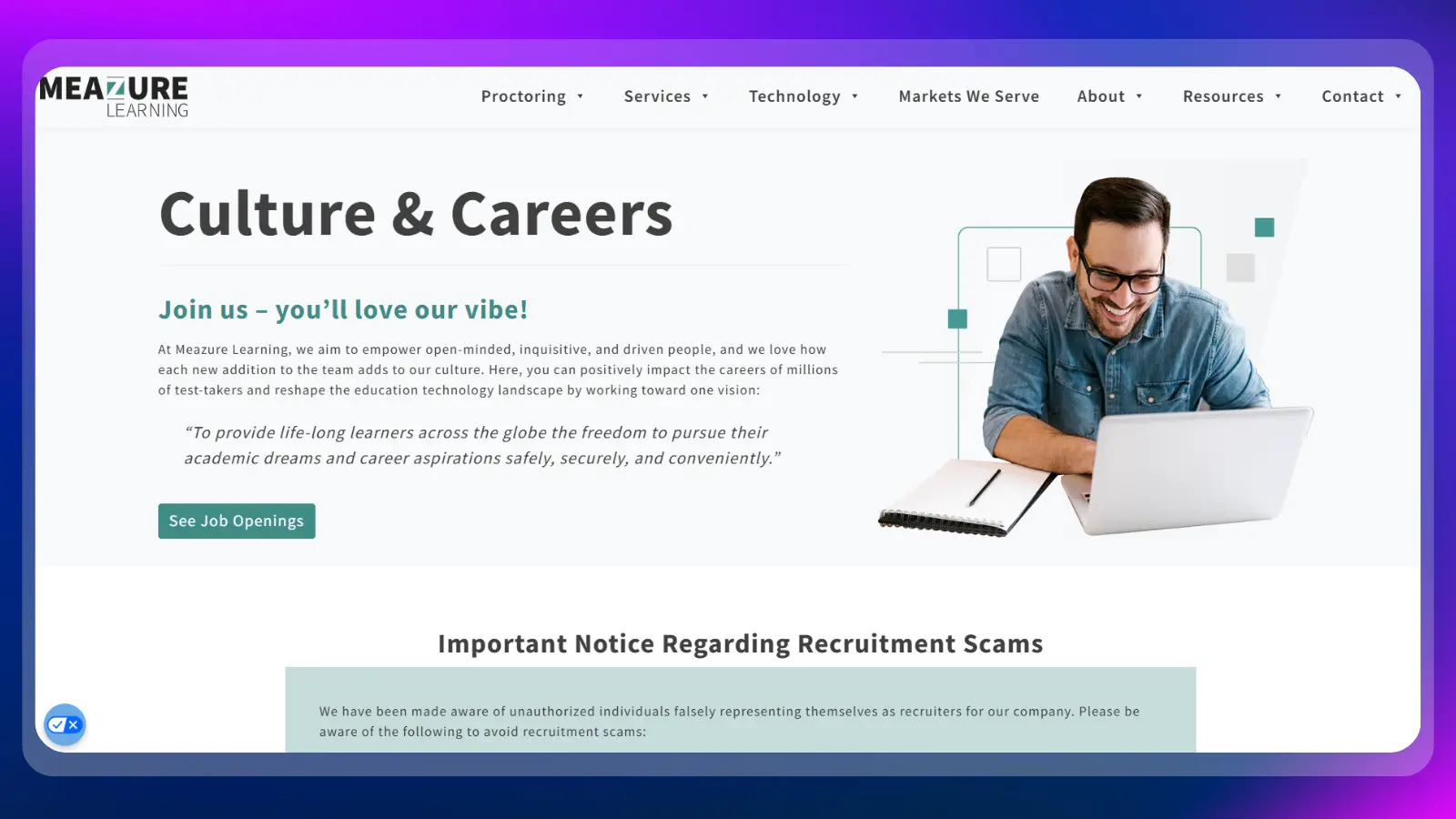
ProctorU is a service brand under Meazure Learning, so job applications go through the parent company’s careers page. Pay estimates vary widely across job boards, but Indeed puts the role closer to $22.77 an hour. Higher figures above $49 may include other job titles.
Among teacher side jobs, remote proctoring has a fairly direct fit with classroom experience. The job involves monitoring test takers by webcam and screen share, checking photo ID, and flagging possible cheating. Training runs a few weeks before you pick up live shifts. Most listings ask for a high school diploma plus a reliable connection.
Applying goes through the parent company’s own portal:
- Visit Meazure Learning’s official careers page and look for proctor or exam-monitor listings.
- Apply through the listed applicant portal, not a third-party job board link.
- Complete the paid training period before picking up evening or weekend exam shifts.
Check the employer’s own listing before trusting the highest salary estimate. Job aggregators can mix several roles into one pay figure.
7. Substitute Teaching Through Kelly Education
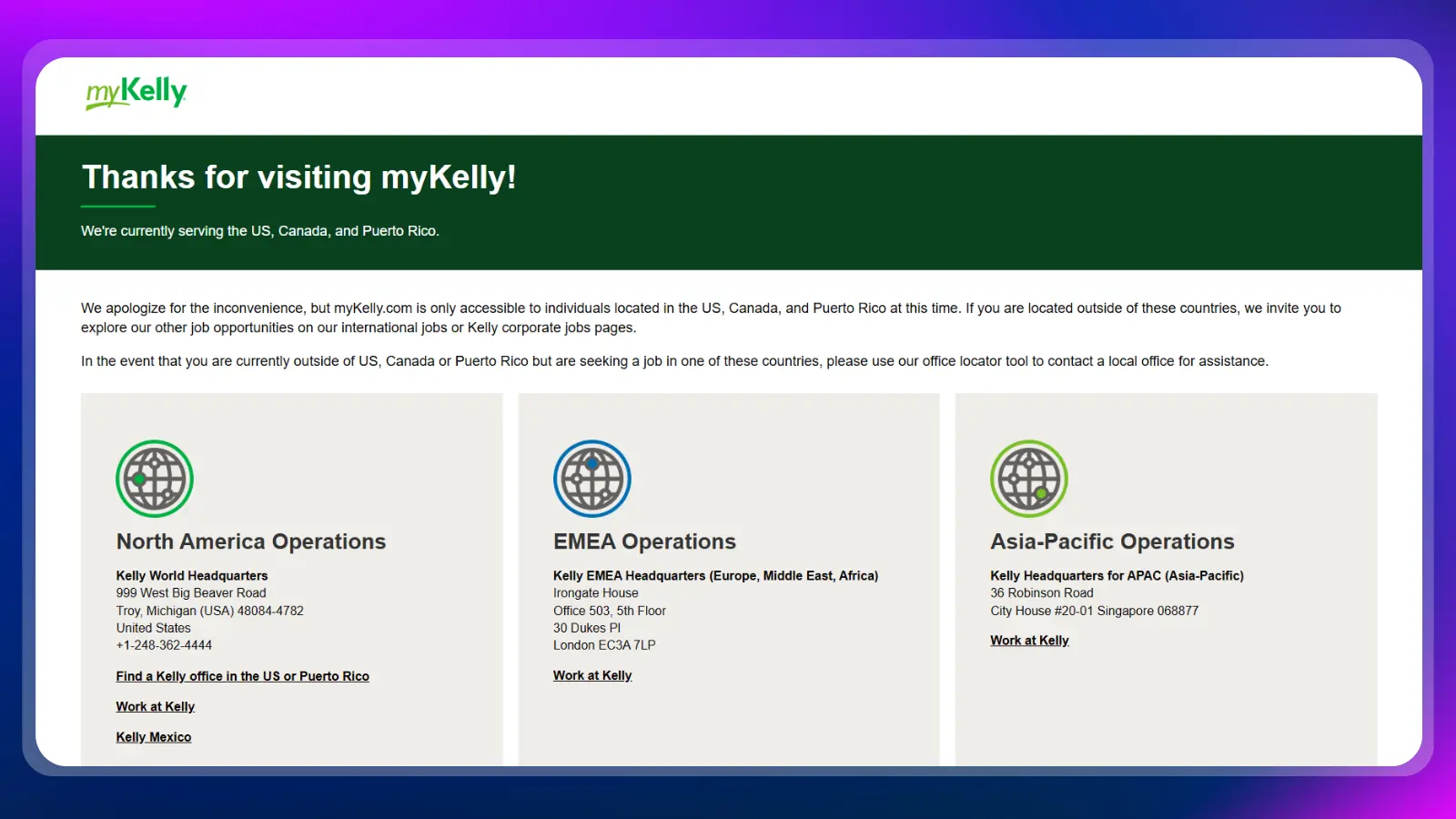
Substitute teaching typically pays $115 to $150 a day for standard assignments and $175 to $220 a day for certified substitutes in higher-demand districts. A long-term assignment covering an extended leave pays more still, and a licensed teacher subbing outside their own district usually qualifies for the certified rate right away.
Kelly Education, whose job portal is branded MyKelly, is the largest national staffing provider for K-12 schools. It supports more than 10,000 schools with substitute teachers and other staff. Working through an agency can give you access to shifts across several nearby districts.
Among teacher side jobs, substitute teaching benefits from that wider pool when absences rise during exam weeks or flu season.
- Apply through the staffing agency’s job portal for your state and county.
- Complete the background check and any state substitute permit paperwork.
- Set your available days in the scheduling app so shift alerts match your calendar.
Compare rates outside your home district before settling on one roster. Nearby districts and staffing agencies may pay more for the same certified role. Substitute teaching is also a natural side hustle for teachers who want to use their classroom experience without building a separate freelance business.
Side Hustle for Teachers at a Glance
These seven methods differ in cost, effort, and payout speed, so the ranking only tells part of the story. Teacher side hustles that pay well also differ in how predictable that income is. The table below makes it easier to compare where extra income for teachers can come from and how much work each option needs.
| Method | Typical Pay | Cost to Start | Hands-On Level |
|---|---|---|---|
| Wyzant tutoring | $15 to $35/hr net | Free | High |
| Preply tutoring | $15 to $25/hr net | Free | High |
| Outschool classes | Around $40/hr average | Free | High |
| Teachers Pay Teachers sales | $27/month typical; $6,300/month top 1 percent | $29 one-time | Low once listed |
| Freelance curriculum writing | $23 to $50/hr | Free | Medium |
| Exam proctoring | Around $22.77/hr | Free | Medium |
| Substitute teaching | $115 to $220/day | Free | High |
How This List Was Built
Every method here had to meet a few basic standards. To keep these side hustles for educators practical, we needed a published pay figure, a realistic way to start within a few weeks, and no separate professional license beyond what the role normally requires.
We left out unpaid content gigs and platforms with no payout history we could verify. That kept the list short and checkable.
Where possible, pay and fee figures come from the platform itself. When a company does not publish them, we use an independent wage source such as the Bureau of Labor Statistics or a major job board. For two entries, we also used live job listings because they show what an employer is actually offering for the role.
Balancing a Side Hustle for Teachers With Your Teaching Contract
Teacher side jobs usually become a problem when they create a conflict with your teaching role. The clearest rule is to avoid paid tutoring for students currently in your own class.
Massachusetts’ state ethics guidance for public school teachers spells this out clearly for tutoring. Similar restrictions may appear in state ethics rules or your district’s collective bargaining agreement. Paid work tied directly to your school, such as coaching, may need to go through the district’s normal payroll process. Check your staff handbook before assuming after-hours work is allowed.
Your school calendar also changes which side hustles for educators make sense during the year. Tutoring jobs for teachers and live classes compete directly with your evenings during the school year, while summer jobs for teachers need a different setup once regular classes stop.
Substitute work usually becomes less consistent over summer, while tutoring and proctoring can continue. Teachers who sell teaching resources online can also keep a catalog active through the break. That keeps those options viable as summer jobs for teachers once regular classes stop. They can also provide extra income for teachers outside the normal school calendar.
If you need more ideas once the school year ends, our guide on how to make money this summer covers more options for the break. For teacher side hustles that pay well across the full year, mixing school-term work with summer jobs for teachers can keep your income more consistent.
Taxes are easy to underestimate too. The article’s IRS guidance puts self-employment tax at 15.3 percent once net earnings pass $400 a year, on top of regular income tax. Setting aside 25 to 30 percent of every payment can make the eventual bill easier to manage.
Do Reward Apps Add Anything to a Side Hustle for Teachers?
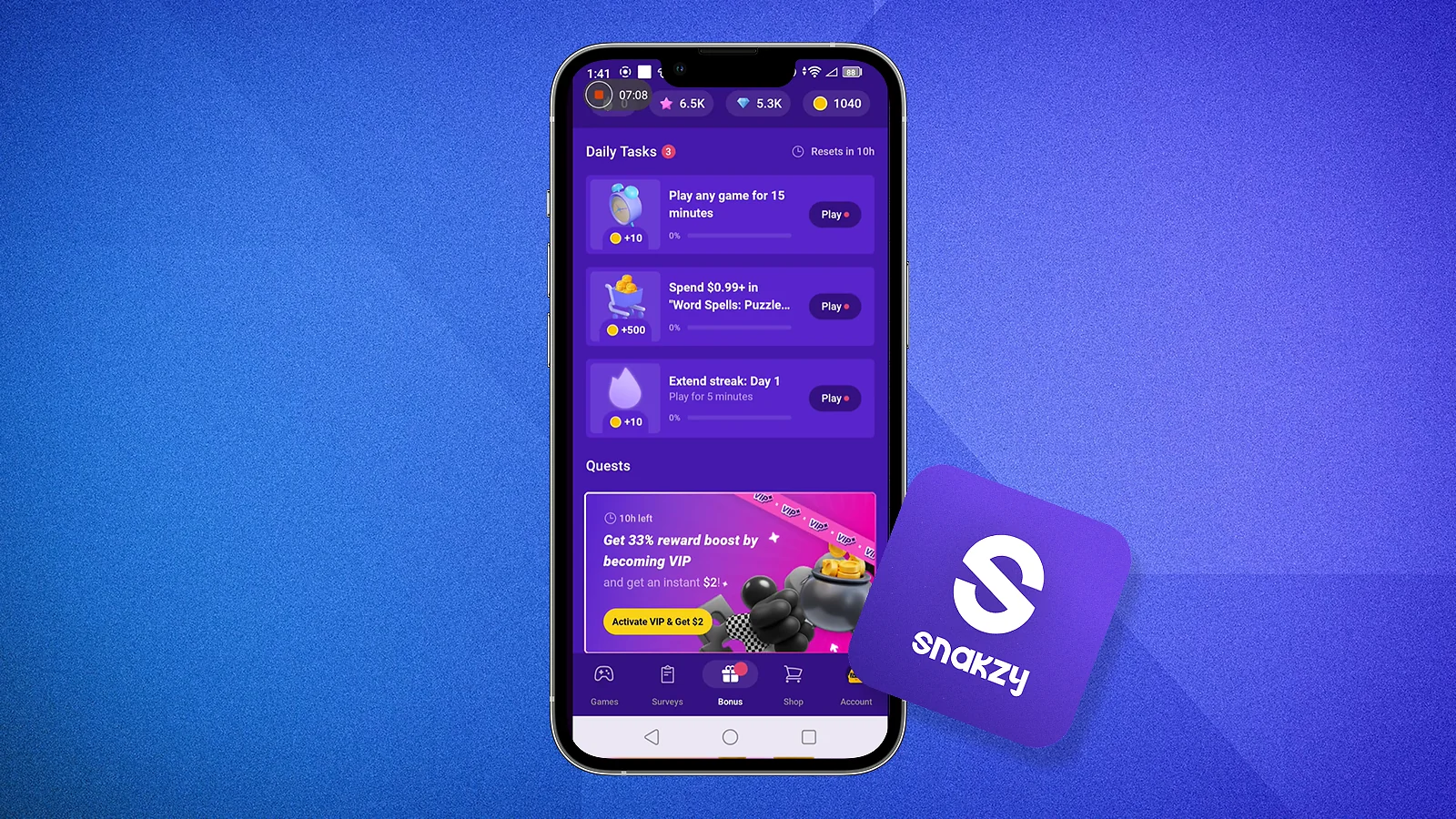
Reward apps can add $5 to $40 a month on top of a side hustle for teachers. They do not replace the seven main options above, but they can add a small amount of extra income for teachers during quieter periods.
If those minimums feel high for the time you have between classes, our roundup of the best game apps for real money covers more of these micro-earning options.
Use spare minutes between lessons or grading sessions to complete game offers and build toward your next Snakzy reward.

What Doesn’t Work
A few bad patterns keep showing up in teacher side jobs. Spotting them early can save you money and wasted time.
- Upfront fees before you are hired. Be cautious when a listing asks you to pay for a starter kit, certification, or background check before offering you a job. The FTC warns against employers that charge applicants just to get hired.
- Unpaid trials with no clear path to paid work. If a tutoring platform cannot explain when paid sessions begin or how payouts work, treat that as a warning sign.
- Courses promising a fixed income. No course can guarantee what you will earn on Teachers Pay Teachers or a tutoring platform. The earnings data above show how widely results can vary.
None of these show up in the seven methods above because each one was checked against a real fee page or wage source before making the list.
Final Verdict on Side Hustle for Teachers
The best side hustle for teachers balances pay with the time you can actually give it. Among teacher side hustles that pay well, tutoring and live classes can produce stronger hourly rates, but they lock you into set hours.
Resource sales and exam proctoring offer more flexibility. Wyzant or Preply make sense if you have free evenings, while Teachers Pay Teachers can suit a tighter schedule. That mix gives side hustles for educators more room to fit around grading and school commitments.
If your main goal is extra income for teachers, start with one method and give it a full month before adding another. Once you know what it pays and how much time it takes, you can decide whether a second stream is worth adding.
Play during quieter moments, complete milestones, and build a small Snakzy reward alongside your main side income.
FAQs
Yes. A side hustle for teachers can be allowed as long as it does not conflict with your school role. Avoid paid tutoring for students in your own class, and check your contract or staff handbook for local rules.
A side hustle for teachers can bring in $100 to $300 a month for a few hours a week. Tutoring jobs for teachers and resource sales can earn more as your schedule or catalog grows.
No. Ordinary freelance work may not require disclosure, but district rules vary. Check your staff handbook if teacher side jobs overlap with school duties or involve students connected to your employer.
Several options cost $0 to start, including Wyzant, Preply, Upwork, Meazure Learning, and Kelly Education. Teachers Pay Teachers charges $29 for a Basic seller account.
No. Tutoring a student currently enrolled in your own class for pay can create a conflict of interest. Use tutoring jobs for teachers that connect you with students outside your class and follow your district’s rules.
Self-employment tax is 15.3 percent once net earnings pass $400 a year, on top of regular income tax. Setting aside 25 to 30 percent of each payment can help cover the eventual bill.