

App Investing: A Complete Guide for 2026

Eneba Hub contains affiliate links, which means we may earn a small commission if you make a purchase through them—at no extra cost to you. Learn more


QUICK VERDICT
Fidelity remains the easiest place to start app investing today, with $0 commissions, no account minimum and fractional shares from $1. Open a Fidelity account and buy your first ETF the same day you fund it.
App investing is a realistic way to grow money slowly through a phone, not a way to get rich by next month, and the fastest way in is a $0 minimum account at Fidelity or Schwab. It works best for anyone who can leave the money alone for years, not weeks.
Nine out of ten investing apps look the same until you line up their real fees. This guide compares exactly what Fidelity, Schwab, Robinhood, Acorns, Stash, SoFi, Betterment and Public actually cost before you download any of them.
Every app covered below is a registered, regulated broker dealer, not a place to gamble spare change, and each one differs mainly in minimum deposit, ongoing fees and how much decision making it automates for you.
Jump to:
Is App Investing Actually Realistic?
App investing is realistic as a way to build wealth slowly, not as a way to get rich by next month. The fastest realistic path is opening a $0 minimum account at Fidelity or Schwab and buying a broad market ETF the same day.
The S&P 500 has averaged close to 10% a year in nominal terms since the 1920s. Only a handful of individual years actually land near that average, and inflation-adjusted returns run closer to 7%, which is exactly why app investing pays off over years, not weeks.
It is realistic for anyone with money they will not need for at least three to five years, since every app on this list can lose value in a downturn with no guaranteed recovery date. If you built that money through a $1,000-a-week side hustle, treating it as long-term capital rather than spending money is what actually makes app investing work.
Before funding any account, it is worth checking a firm’s registration on FINRA’s BrokerCheck and reading through the SEC’s own investor education pages, since none of that protection insures against a stock simply losing value.
8 Real Investing Apps to Start With
Each entry below covers the real minimum, the real fee, and the exact steps to open app investing account, starting with the two apps that charge nothing at all.
1. Fidelity
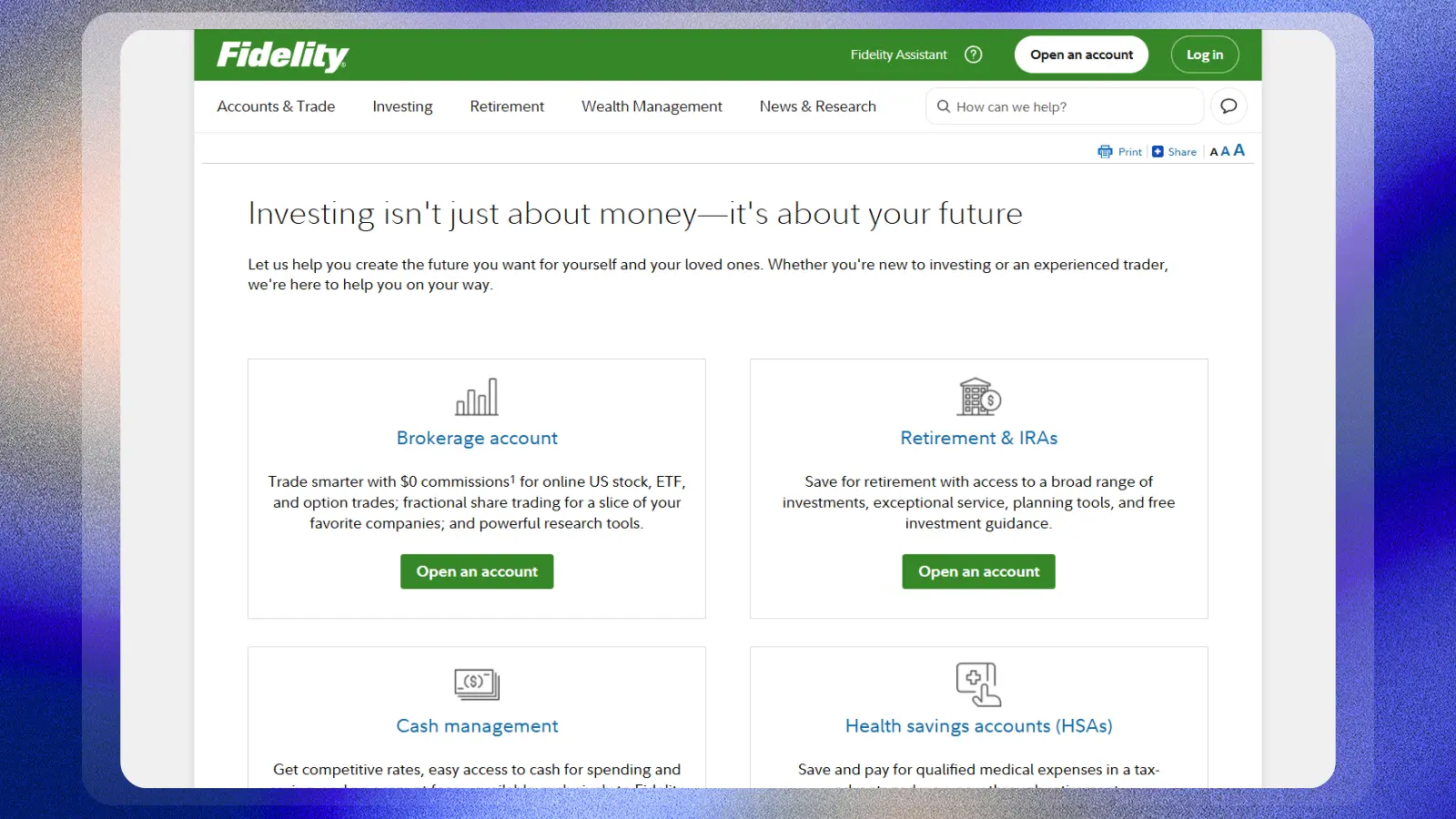
Fidelity charges $0 for online US stock and ETF trades and sets no minimum balance to open an account, which makes it one of the cheapest ways to start app investing today. That combination of zero commissions and zero account minimums is rare among full-service brokers, and it is why Fidelity routinely tops beginner-focused broker rankings. t’s consistently ranked as a good app for investing for that exact reason.
Fractional shares start at $1, so a $20 deposit can still spread across several large companies instead of sitting in one whole share. Fidelity also carries supplemental coverage on top of standard SIPC protection, insuring securities beyond the usual $500,000 per account limit up to a combined $1 billion, according to Fidelity’s own account protection page. The one real cost to watch is a $32.95 fee if you ever need a broker to place a trade by phone instead of the app.
Opening an account and buying your first ETF takes a handful of steps:
- Download the Fidelity app and choose a brokerage or Roth IRA account.
- Verify your identity and link a bank account for the initial deposit.
- Search for a broad market ETF or the stock you want and pick a dollar amount.
- Turn on automatic transfers so the account keeps growing without a repeat decision.
Beginners with no clear plan yet tend to do well starting here, since there is no minimum to clear and nothing to lose by testing the app with $20. For a first-timer with no strategy yet, it’s a reasonable pick among the best app investing options out there.

2. Charles Schwab
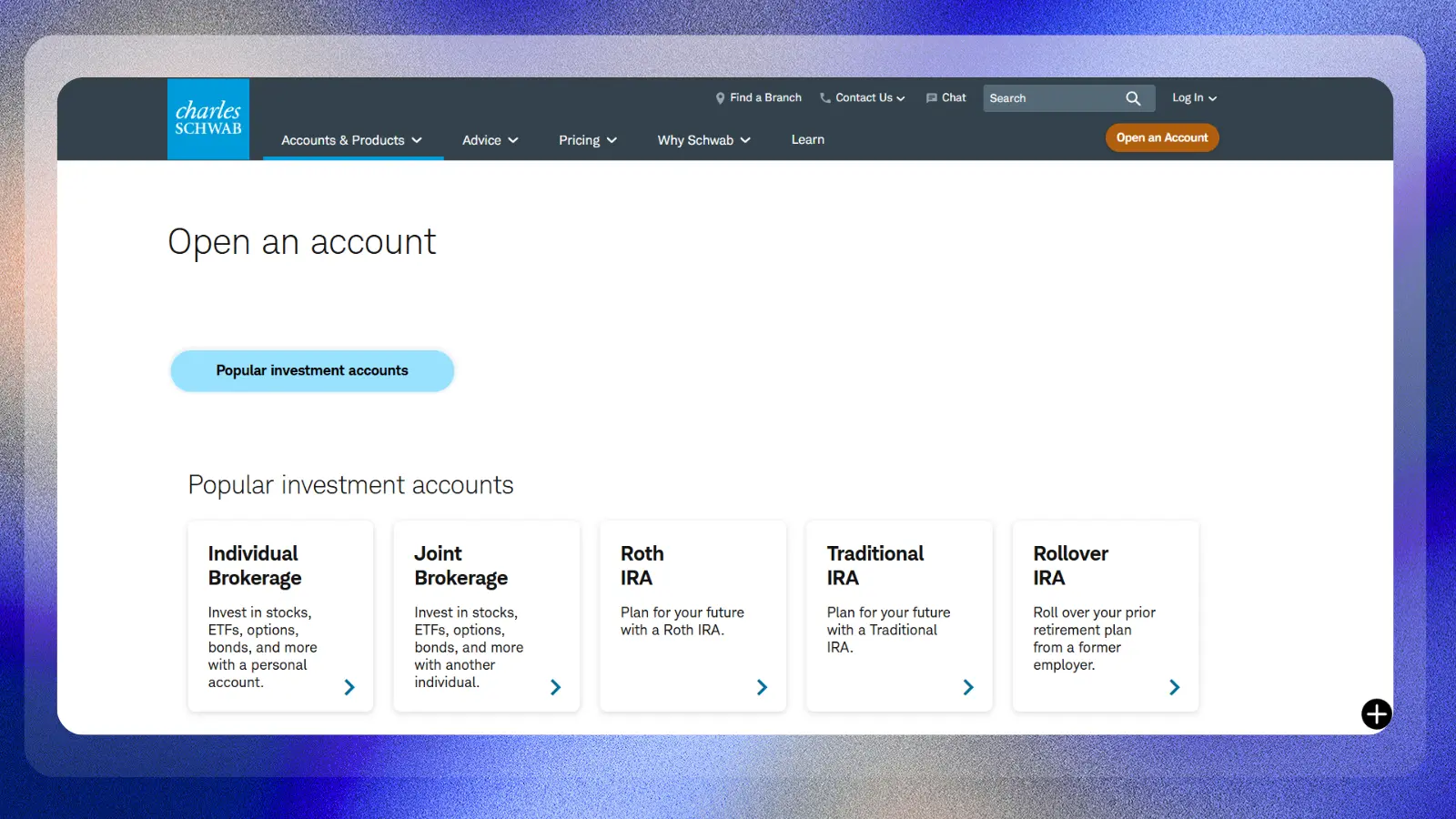
Charles Schwab matches Fidelity almost exactly: $0 commissions on online US stock and ETF trades, and no minimum deposit to open a standard brokerage account. That makes it the other realistic zero-cost starting point for app investing, especially for anyone who wants Schwab’s thinkorswim platform later.
Options trades cost $0.65 per contract, and a broker-assisted trade adds $25 on top of whatever the trade itself costs, according to Schwab’s own fee schedule. Schwab is a FINRA member and SIPC-protected, and you can look up its registration on FINRA’s BrokerCheck before funding an account. That combination of protections and zero fees makes it a genuinely good app for investing from day one.
Getting started looks almost identical to Fidelity:
- Open a brokerage or IRA account in the Schwab app with no funding requirement.
- Confirm your identity and connect the bank account you plan to fund from.
- Set up recurring transfers so buying stays automatic instead of a monthly decision.
- Use the built-in screeners to pick a low-cost index ETF for the core of the account.
Schwab suits someone who wants the zero-fee basics now but expects to want more advanced charting or research tools within a year or two. It’s a solid app for investing that can grow alongside a user’s needs instead of requiring a switch later.

3. Robinhood
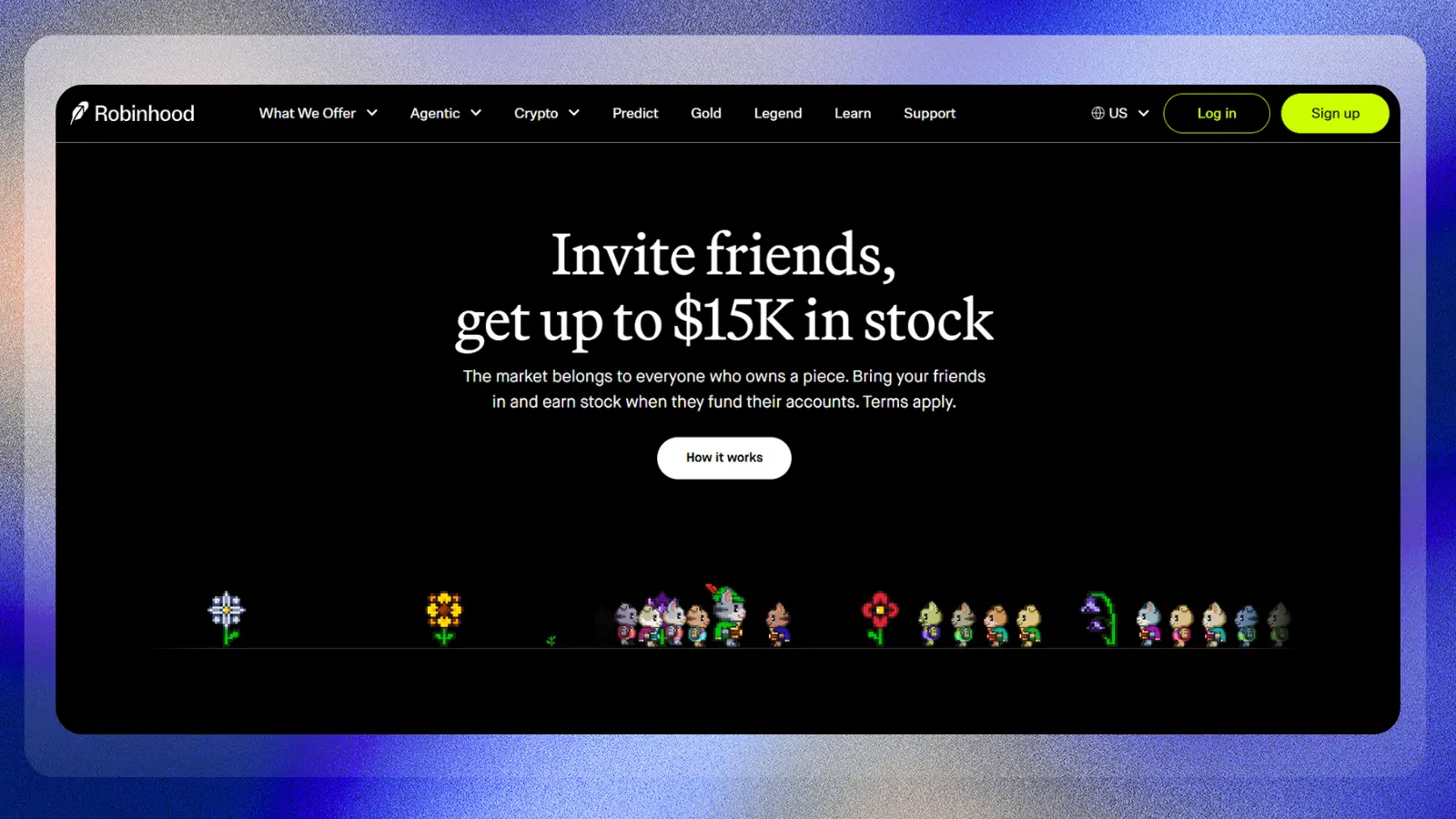
Robinhood charges $0 for stock, ETF, and options trades with no account minimum, and its Gold tier adds a 4.5% APY on uninvested cash for $5 a month or $50 a year. That upgrade pays for itself once a balance holds around $1,500 in cash, so weigh it against your own cash balance instead of adding it by default.
Standard accounts pay $0.65 per options contract, while Gold members pay $0 per contract and get an instant deposit limit up to $50,000, per Robinhood’s own fee schedule. Robinhood Markets is a publicly traded company, and its brokerage arms are FINRA members and SIPC-protected, which you can confirm on BrokerCheck the same way as any other broker.
The signup flow is built entirely around the phone:
- Download the app and open an individual or retirement account.
- Verify your identity and link a debit card or bank account.
- Buy a fractional share of any stock or ETF for as little as $1.
- Decide upfront whether Gold’s cash APY and margin access are worth the monthly fee for your balance.
Robinhood works best for someone who already knows they want to trade individual stocks on a phone rather than build a hands-off portfolio. For that specific use case, it’s arguably one of the best app investing picks for phone-first, self-directed trading.

4. Acorns
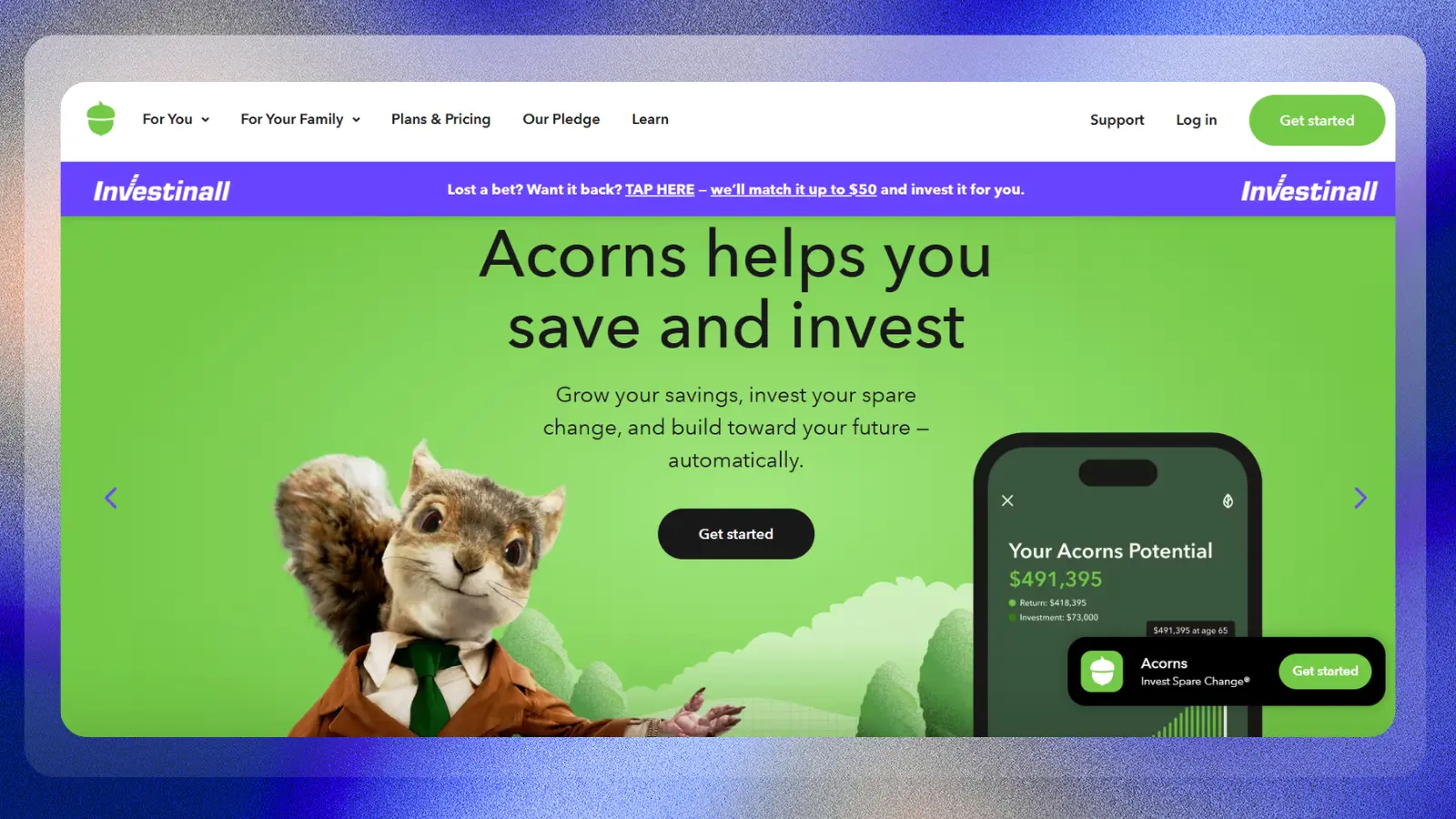
Acorns turns spare change from everyday purchases into an investment account for $3 a month on its Bronze plan, rising to $6 for Silver and $12 for Gold. Round ups alone rarely build real wealth, but they remove the decision to invest entirely, which matters most for someone who has never opened a brokerage account before. As an app for investing spare change specifically, it removes that first decision almost entirely.
Silver adds an Emergency Fund paying 3.35% APY and a 1% match on new IRA contributions, while Gold bumps that IRA match to 3% in the first year. If a small windfall is looking for somewhere to land, dropping it straight into an Acorns account is a realistic way to turn a one-time payout into an ongoing habit, and one of the more approachable passive income ideas for someone who hasn’t tried investing before.
Setup takes only a few minutes:
- Link a debit card or bank account so purchases can round up automatically.
- Choose a pre-built ETF portfolio matched to your risk tolerance.
- Turn on recurring deposits on top of round-ups if your budget allows it.
- Add the Acorns Later IRA once the core account has a few months of history.
Acorns fits someone who has tried and failed to invest manually before and needs the process automated instead of relying on willpower. That automation is what makes it a good app for investing for anyone who wants a habit, not another decision to make.
5. Stash
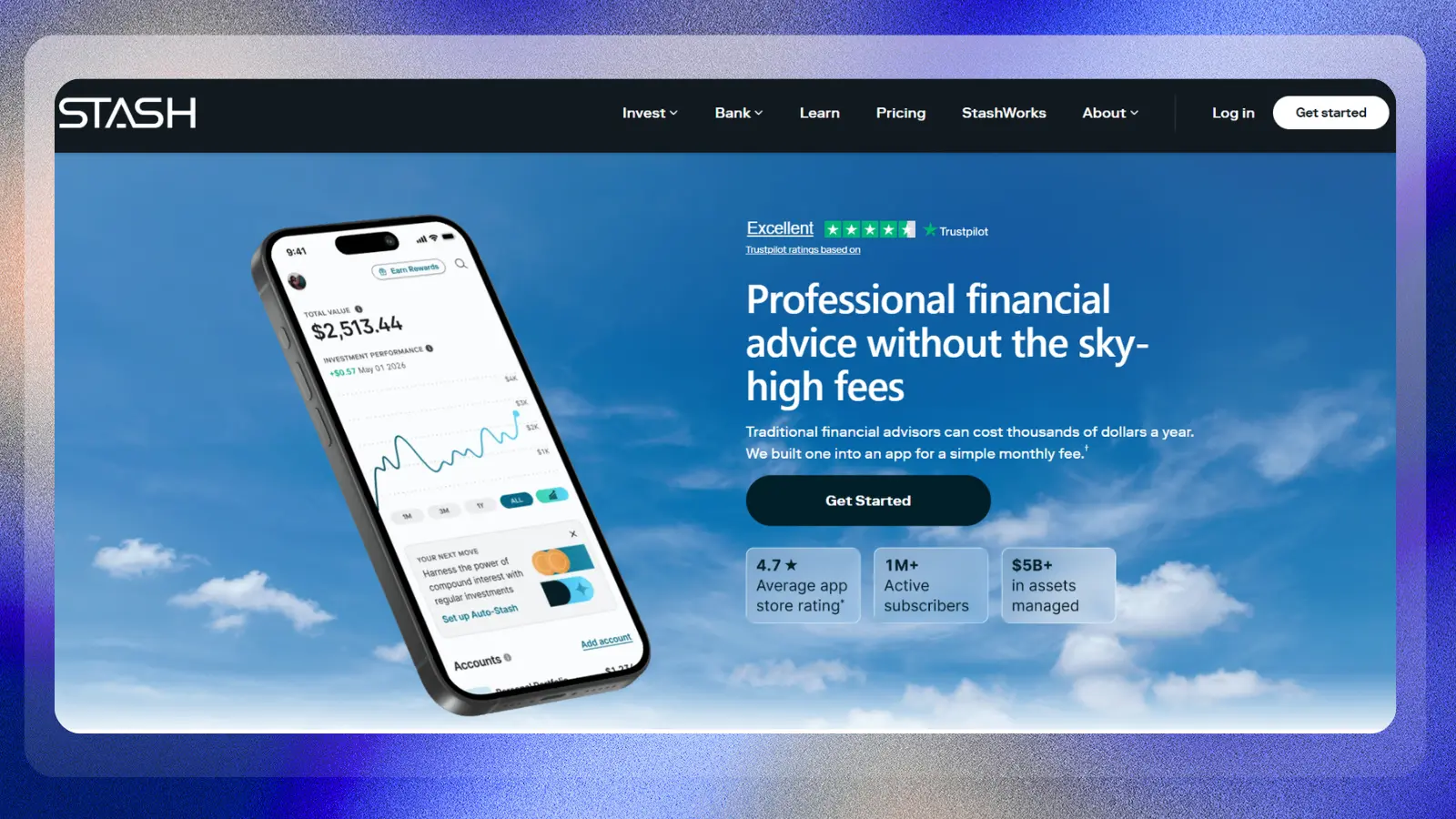
Stash lets you start investing with as little as $5 and now bills through a single Stash+ plan priced at $12 a month, or $108 billed yearly, according to Stash’s own current pricing page. That is a step up from the $3 and $9 tiers Stash ran in past years, so check the in-app pricing screen before you commit.
The subscription includes a taxable investment account, a retirement account, and access to theme-based stock lists that group companies by industry or trend instead of making you screen the whole market yourself. Stash is a FINRA member and SIPC-protected broker-dealer, the same baseline protection every app on this list carries. Theme-based investing also makes it one of the best app for investing choices around a specific industry or cause.
The onboarding flow walks you through a short risk questionnaire before you fund anything:
- Answer a short set of questions about your goals and comfort with risk.
- Fund the account and choose a themed list or a single stock or ETF.
- Set a recurring deposit so the account keeps growing between paydays.
- Review the subscription cost every few months against how much you are actually investing.
A flat monthly fee only makes sense once your balance is large enough that $12 a month is a small share of it, so Stash suits someone past the very first few hundred dollars. Anyone asking what is the best app for investing around a theme rather than the broad market will likely land here first.
6. SoFi Invest
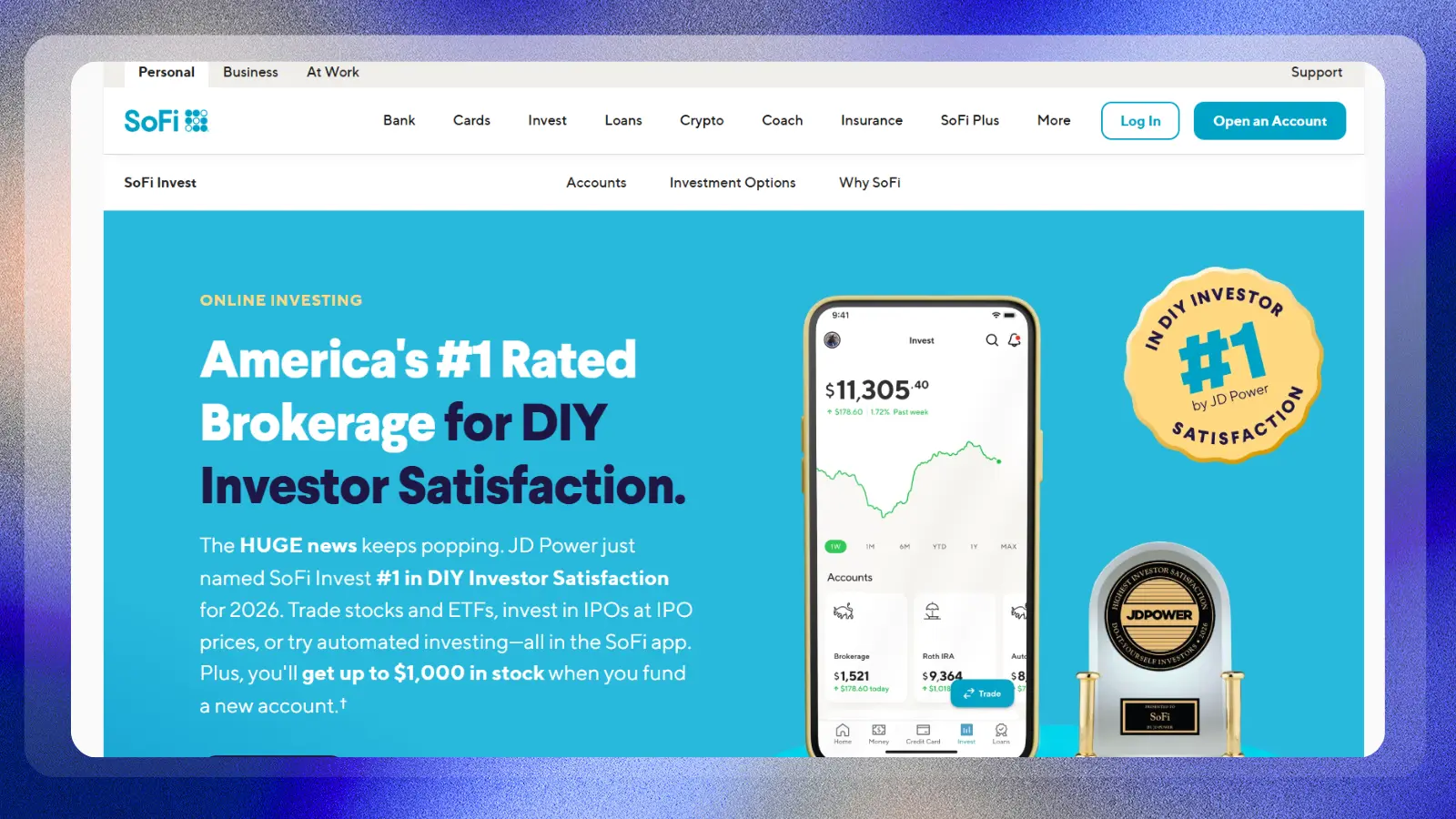
SoFi splits into two products: Active Invest charges $0 in commissions with no account minimum, while Automated Investing needs $50 to start and charges a 0.25% annual fee for a professionally built portfolio. Which one fits depends entirely on whether you want to pick your own stocks or hand that decision to SoFi’s algorithm.
Active Invest carries a $25 inactivity fee if you do not log in for six months, and Automated Investing includes a complimentary 30-minute session with a certified financial planner, according to SoFi’s own product pages. If a payout from one of the best online side hustles is funding your first deposit, that comfortably clears the $50 minimum Automated Investing asks for. Having both a self-directed and managed option under one roof makes SoFi a flexible app for investing either way.
Opening either product follows the same first few steps:
- Choose Active Invest for self-directed trades or Automated Investing for a managed portfolio.
- Verify your identity and connect a funding source.
- Fund the account, meeting the $50 minimum if you picked Automated Investing.
- Book the free CFP session if you are unsure how to allocate the deposit.
SoFi works well for someone who already banks or has a loan with SoFi and wants everything under one login. For an existing SoFi customer specifically, it’s a good app for investing purely for convenience alone.

7. Betterment
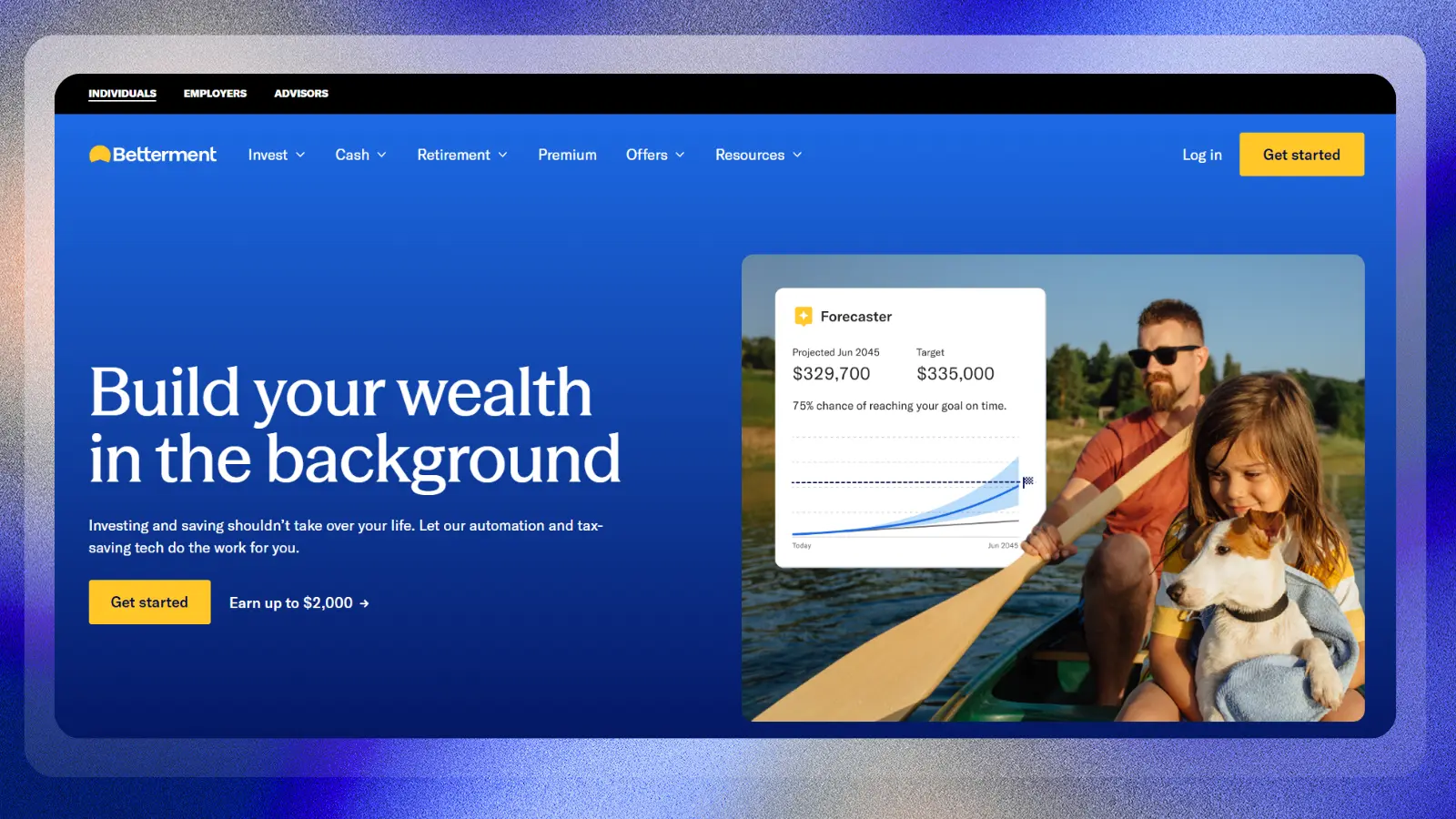
Ten dollars is all Betterment needs to put a diversified, hands-off portfolio to work, through a Digital plan priced at 0.25% a year. The catch is a $5 monthly fee if your household balance stays under $24,000 and you are not adding at least $200 a month across your accounts.
The Premium plan unlocks unlimited access to certified financial planners but needs a $100,000 balance and charges 0.65% a year instead, and balances above $1 million get a discounted 0.15% or 0.10% rate at higher tiers, per Betterment’s own fee page. Betterment is SEC-registered and SIPC-protected like every broker-dealer on this list. That combination of automation and oversight puts it among the best app investing picks for a goal-driven saver.
Setting the account up is entirely goal-driven:
- Answer a few questions about your timeline and goal, such as retirement or a house deposit.
- Fund the account, even with the $10 minimum if that is all you have right now.
- Turn on automatic deposits so the recurring contribution habit forms without a monthly reminder.
- Revisit the $5 monthly fee once your balance nears $24,000 to see if it drops off.
Betterment suits someone who wants their money invested correctly without ever opening the app to make a decision. Anyone asking what is the best app for investing without managing anything themselves should start the comparison here.

8. Public
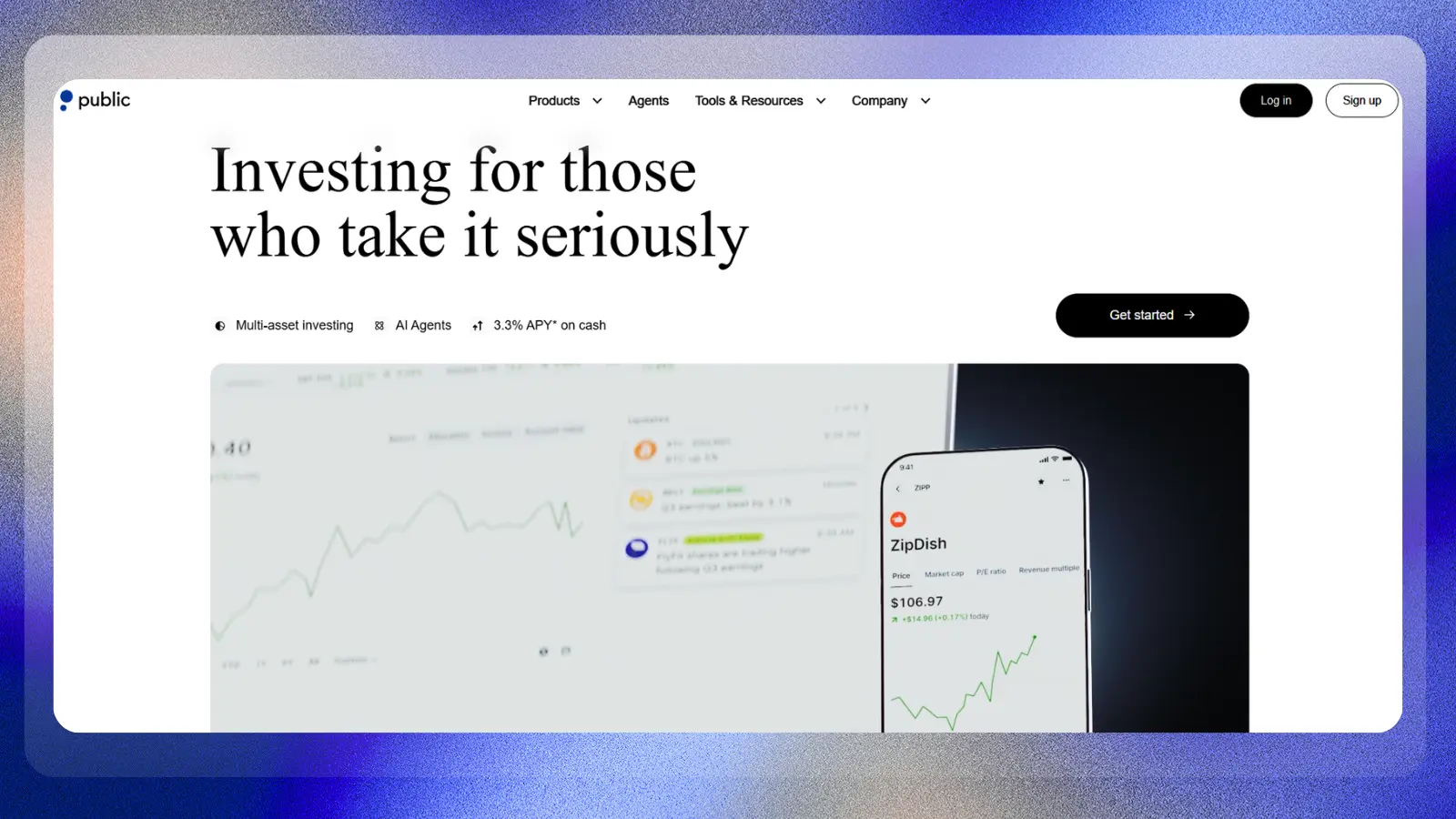
Public lets you buy fractional shares for as little as $1 with $0 commissions on stocks and ETFs, and it pays out up to $0.18 per options contract traded instead of charging you one. Uninvested cash earns 3.3% APY with no minimum balance and no holding period, according to Public’s own account pages.
Public also offers a Bond Account holding a mix of investment-grade and high-yield corporate bonds, currently targeting around a 5.5% yield, though that target moves with the bond market and is never a guaranteed return. Like every platform here, Public is a FINRA member and SIPC protected, and its registration is checkable on BrokerCheck. The social feed layered on top of real trading tools makes it one of the best app for investing choices for someone who learns by watching others first.
The app leans on its social feed as much as its trading tools:
- Open an account and fund it with any amount starting at $1.
- Buy a fractional share of a stock or ETF you already recognize.
- Explore the Bond Account once you have a core stock or ETF position.
- Follow other investors in app if the social feed helps you stay engaged, but treat it as entertainment, not advice.
Public fits someone who wants a lower-pressure, more social feeling introduction to app investing than a traditional brokerage provides. It’s a fair answer to what is the best app for investing for someone who wants a gentler entry point.

How the Investing Apps Compare
The eight apps above split cleanly into three groups: zero-fee brokers, subscription micro-investing apps, and flat-fee robo-advisors. The table below lines up what each one actually costs to start and to keep using, side by side. Lined up this way, it’s easier to see which platform counts as the best app for investing for a specific priority, whether that’s cost, automation, or control.
| App | Minimum to Start | Core Fee | Hands-On or Hands-Off |
|---|---|---|---|
| Fidelity | $0 | $0 commissions | Hands-On |
| Charles Schwab | $0 | $0 commissions | Hands-On |
| Robinhood | $0 | $0 commissions, Gold optional at $5/mo | Hands-On |
| Acorns | $0 | $3 to $12 a month | Hands-Off |
| Stash | $5 | $12 a month | Mostly Hands-On |
| SoFi Invest | $0 Active, $50 Automated | $0 commissions or 0.25% a year | Mixed |
| Betterment | $10 | 0.25% a year | Hands-Off |
| Public | $1 | $0 commissions | Hands-On |
If you just want the fastest way in, opening a Schwab account takes about five minutes and costs nothing to try, which makes it a reasonable default when the choice above feels overwhelming.
How We Picked These Apps
Every app in this guide had to clear three bars. It needed a real, checkable fee schedule, SIPC- or FSCS-backed investor protection, and no account minimum steep enough to lock out a first time investor, and anything that failed even one test did not make the list.
That is why day trading-only platforms and unregulated crypto exchanges are absent here: this guide covers app investing in stocks, ETFs, bonds, and managed portfolios, not speculative assets with no broker-dealer protection behind them.
Ranking then followed cost and access first, from the two zero-fee, zero-minimum brokers down through subscription-based micro-investing apps and flat-fee robo-advisors. Every platform here still had to function as a genuine app for investing before cost or automation even entered the ranking.
Do Reward Apps Help Fund App Investing?
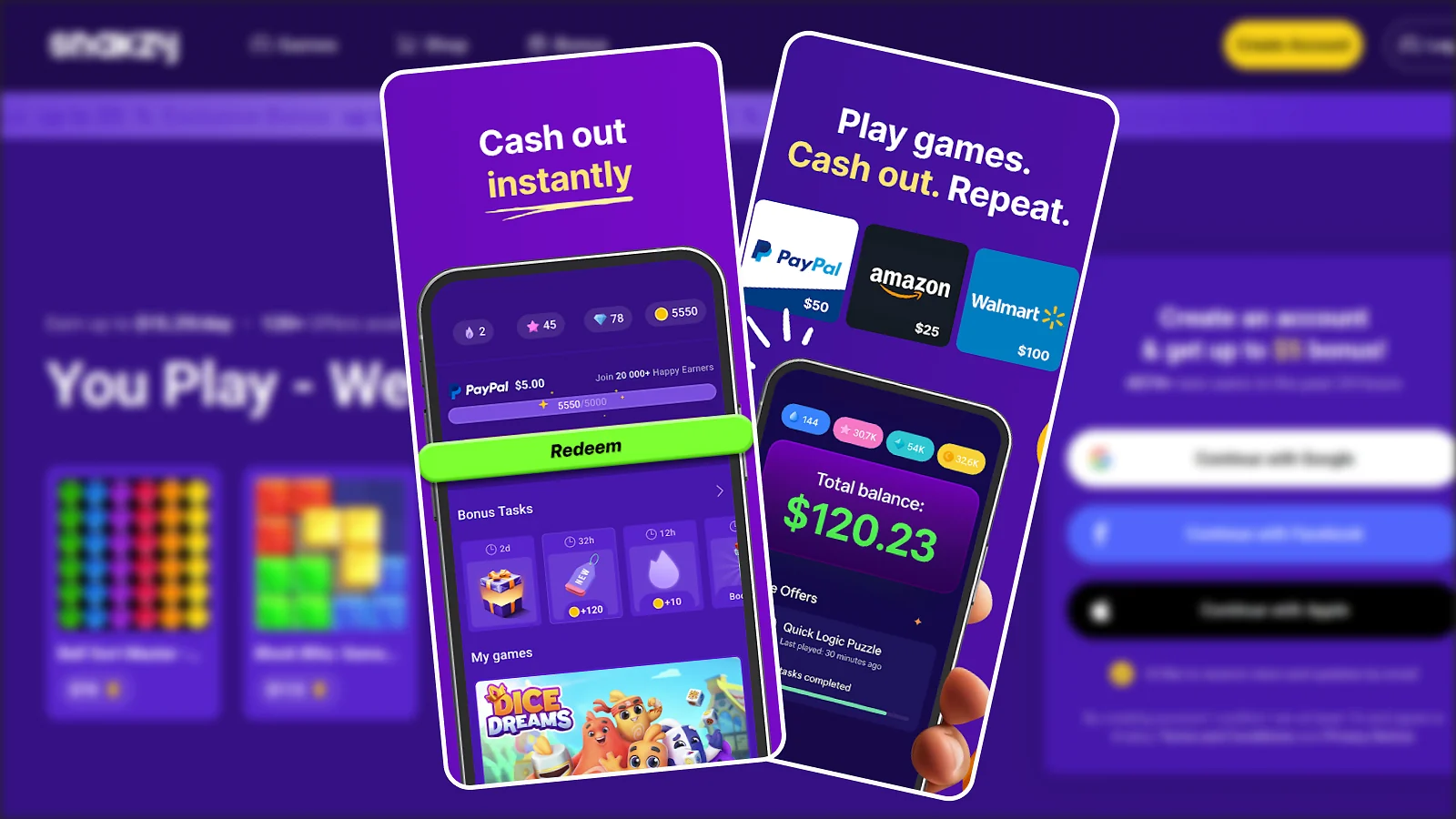
Reward apps like Snakzy and Bigcash will not replace a paycheck, but they can turn spare time into the first $20 or $50 that starts an app investing account. Snakzy pays out from $35 and costs nothing to join, while Bigcash pays out from $1, so either one can realistically fund a first deposit within a few weeks.
Both apps need nothing beyond a phone and some free time, and neither charges anything to sign up. Turning spare time into that first deposit is arguably one of the best app investing on-ramps for someone starting from exactly $0.
You must be 18 or older to open a US brokerage account on your own, and reward apps generally aim at that same 18+ audience. For a wider set of starting points, a roundup of apps that pay covers a few more options for app investing seed money.
Once you have picked one, the payout math is simple to compare:
Whichever one you try first, joining Snakzy costs nothing and gives you a real number to aim for before your first transfer into an investing app. That’s really one honest answer to what is the best app for investing when starting from nothing at all.
Play to earn cash today

What Doesn’t Work
Chasing whatever stock is trending inside an app’s own feed rarely beats a plain index fund, and it is a common way new app investors lose money faster than they would have otherwise. Push notifications, streaks and confetti animations are the textbook example regulators point to.
The SEC opened a public comment period on exactly this kind of feature in 2021 after that year’s meme stock trading frenzy, and FINRA has since said its exams are increasingly focused on app-based platforms with game-like design. None of that makes the apps illegal, but it is a real reason to treat in-app prompts as marketing, not advice. That’s the real case for treating any of these as the best app for investing: the habits around it matter more than the platform itself.
A few specific habits do more damage than any single fee ever could:
- Skipping an emergency fund first. Most financial planners, and the FTC in its own consumer guidance, agree that investing money you might need next month, before you have three to six months of expenses saved separately, turns a market dip into a forced loss.
- Treating round-ups as a full retirement plan. Spare change from Acorns or similar apps builds a habit, not a substitute for consistent monthly contributions.
- Confusing FDIC and SIPC coverage. FDIC insures bank deposits; SIPC protects securities and cash up to $500,000 if a brokerage itself fails, and neither one covers a stock that simply drops in price.
- Day trading options inside a robo-advisor account. Betterment and SoFi’s Automated Investing exist to remove decisions, not to become a platform for short-term bets.
- Treating collectible flipping as equivalent to app investing. Skin trading and resale markets can move fast in either direction and carry none of the SIPC- or FCA-backed protection a regulated brokerage account does.
None of these mistakes depend on which app you pick, since every platform in this guide carries the same risk if the habit around it is bad.
Final Verdict on App Investing
The right app investing choice comes down to how much attention you want to give it. Fidelity and Schwab suit anyone who wants zero fees and full control, Acorns and Stash suit anyone who wants the decision automated, and Betterment or SoFi’s Automated Investing suit anyone who wants a professionally built portfolio for a small annual fee.
If you are starting from $0 and want to build the seed money first, apps like Snakzy can turn spare time into a first deposit before you ever open a brokerage account. Open a $0 minimum account at Fidelity today, and app investing stops being a someday plan and starts being the first $20 sitting in an ETF.
Play to earn cash today
FAQs
There is no single best app for investing money, since Fidelity and Schwab fit different needs than Acorns or Betterment. Pick based on whether you want $0 fees and full control or an automated, subscription-based portfolio.
Most investing apps need only a small amount of money to start, often as little as $1 to $5, though Betterment’s automated portfolios ask for $10 and SoFi’s Automated Investing needs $50. The amount you need depends entirely on which app you pick, not on investing itself.
Yes, investing through an app is as safe as the broker behind it, since every platform in this guide is FINRA-registered and SIPC or FSCS protected. That protection covers a firm going out of business, not a stock losing value, so safety and risk are two separate questions.
Yes, you can lose money with an investing app, because SIPC and FSCS protection covers broker failure, not market losses. Every stock, ETF or fund on any of these platforms can drop in value, sometimes for years at a stretch.
Yes, most investing apps charge some kind of fee, whether that’s a flat monthly subscription like Acorns and Stash or a percentage of assets like Betterment’s 0.25% a year. Fidelity, Schwab, and Robinhood charge $0 in commissions but still profit from other services, so read the fee schedule first.
Yes, app investing is worth it for beginners willing to start small and stay invested for years rather than weeks. A $20 deposit in a zero-fee account teaches more about app investing than reading about it ever will.