

6 Best Ways to Get Paid for Reviews in 2026

Eneba Hub contains affiliate links, which means we may earn a small commission if you make a purchase through them—at no extra cost to you. Learn more


Get Paid for Reviews in [current-year]
Respondent currently advertises a $75 average payout, most paid sessions at $50 to $250, and 1 to 3 typical study invitations per month.
UserTesting now shows each reward in the test feed instead of publishing one universal pay range. If you're deciding how to get paid for reviews, those two are the clearest cash-first places to start.
Learning how to get paid for reviews is mostly about finding platforms that reward genuine feedback, not five-star praise. Some pay cash for research interviews or usability tests, while others offer gift cards or free products.
If you’re also curious about how to get paid for reviews on products, the options vary a lot in what they actually give you and how often opportunities appear. This guide breaks down six legitimate platforms, realistic earnings, payout rules, and the main catches to know before signing up.
Jump to:
Is Getting Paid for Reviews Actually Realistic?
Yes, but learning how to get paid for reviews realistically is less about finding one magic platform and more about matching the right kind of review work to your time and experience.
Here’s what to expect:
- Research studies pay the most per session. Respondent says most sessions pay $50 to $250, with a $75 average payout and some senior B2B studies paying $400 or more.
- Usability testing is easier to start but inconsistent. UserTesting shows the reward before you accept a test, and completed tests are paid through PayPal 14 days later.
- Software-review rewards depend on active campaigns. G2 only pays when a review qualifies for an incentive, so writing an ordinary review doesn’t automatically earn anything.
- Product-testing panels can be slow. Influenster and Amazon Vine may send products instead of cash, and neither guarantees a steady stream of items.
That means there is no honest “average monthly salary” for someone learning how to get paid for reviews. Respondent says most participants receive 1 to 3 invitations a month, but an invitation isn’t the same as a completed paid study. Your location, demographics, work experience, devices, software use, and response speed all affect how many opportunities you actually get.
So, how to get paid for reviews on products? Expect a mix of cash-paying research and product-only testing. And how to get paid for reviews on Amazon? The key limitation is simple: Amazon Vine gives invited reviewers products, not cash.
The question “How to get paid for reviews on Google?” needs a different answer because Google Maps Local Guides offers points and badges rather than standard cash payments. The same applies if you’re asking “How to get paid for reviews on Netflix?” because Netflix has no official paid-review program.
And how to get paid for reviews on YouTube? Review creators earn through creator monetization rather than receiving a fixed payment for every review they upload.
For a broader income stack, our guide to earning $1,000 a week covers other active earning methods you can combine with review work.
6 Best Ways to Get Paid for Reviews
The six options below show the main legitimate ways to learn how to get paid for reviews: paid research, usability testing, incentivized software reviews, product testing, and invite-only product programs.
1. Respondent.io: Paid Research and Product Feedback
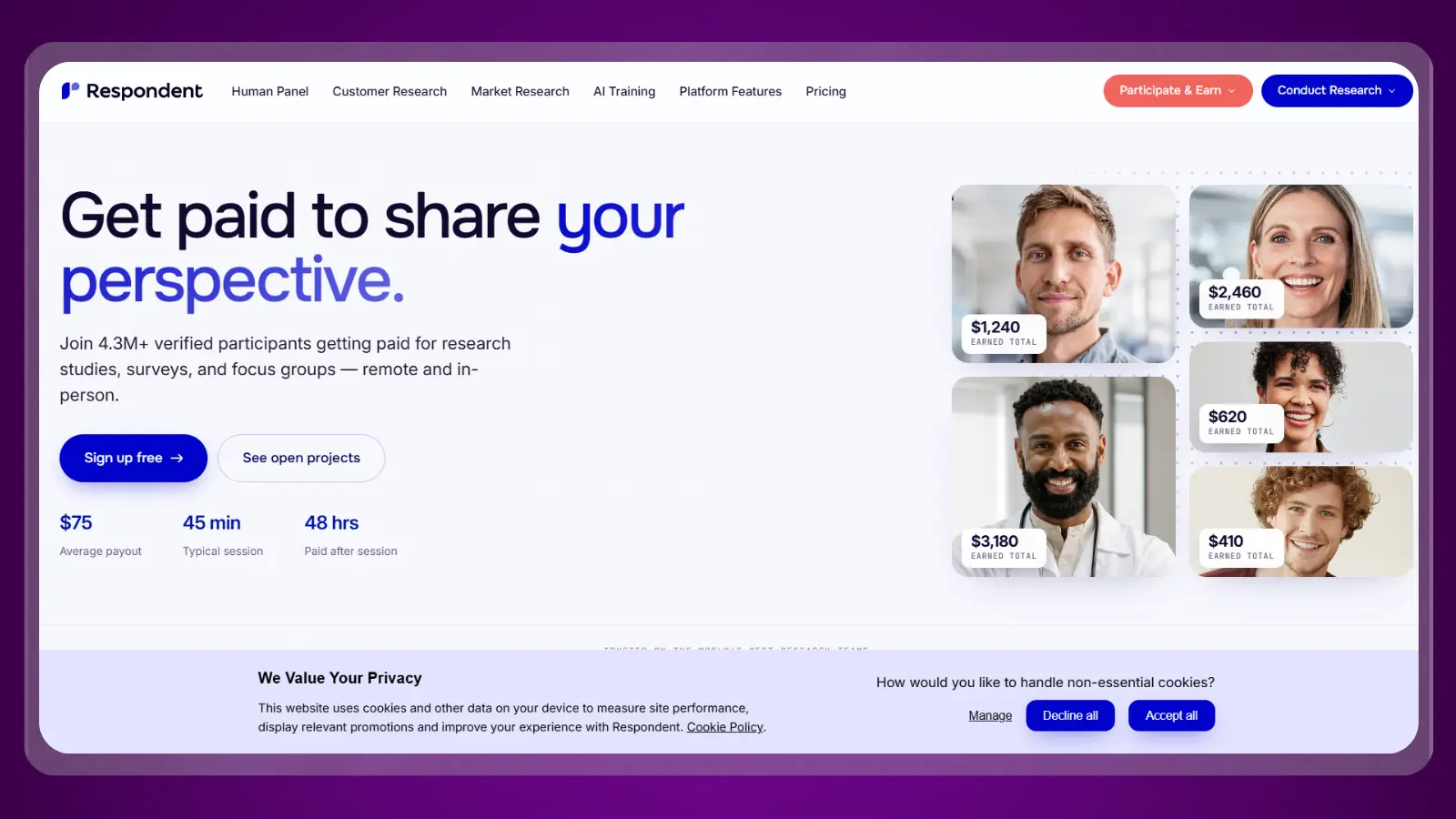
Respondent.io is the highest-paying option here for people learning how to get paid for reviews through structured research. It connects participants with interviews, focus groups, surveys, diary studies, and usability tests for brands and research teams.
The platform currently advertises a $75 average payout. Most sessions pay $50 to $250, while senior B2B studies can reach $400+. A typical session lasts about 45 minutes, although actual pay depends on the study.
How it works:
- Create a free profile and verify your identity.
- Add your work history, products, services, and tools you actually use.
- Apply to matching studies or wait for relevant invitations.
- Complete the interview, test, survey, or diary task.
- Receive the incentive through Tremendous after the session is verified.
Wondering how to get paid for reviews on products you already use at work? Respondent.io can be a good fit because professional software, finance tools, healthcare systems, travel products, and consumer services all appear in research studies.
The catch is volume. Respondent says most participants receive 1 to 3 invitations a month, and not every invitation turns into a paid session. A detailed profile gives you more chances, but there is no guaranteed monthly income.
| 💡Need to know |
| Typical pay: $50-$250 per session Average payout: $75 Payment: Tremendous after verification Cost: Free to join |

2. UserTesting: Website and App Testing
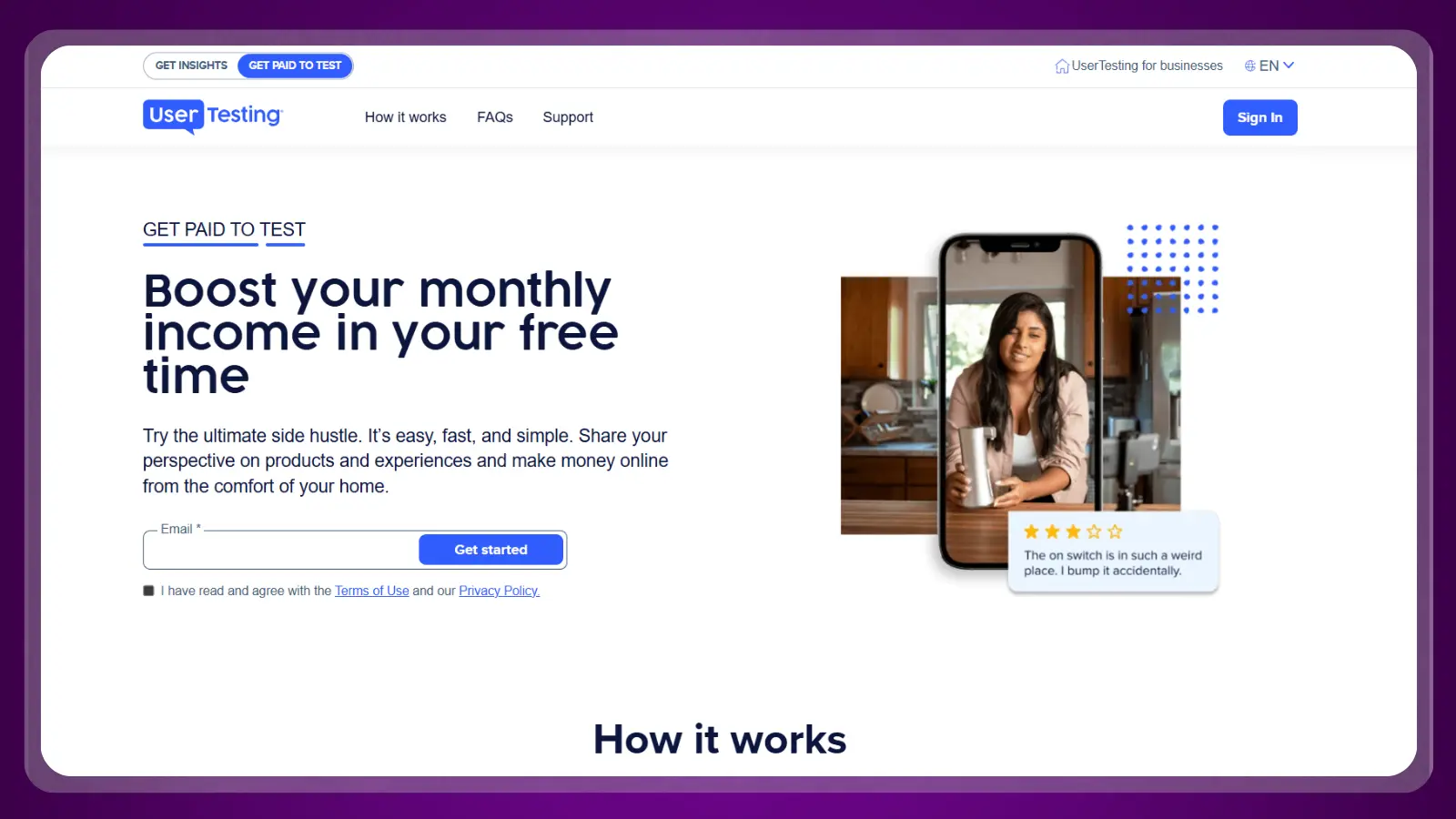
If you want a simpler way to learn how to get paid for reviews, UserTesting pays for spoken feedback on websites, apps, prototypes, and digital experiences. You usually complete tasks while recording your screen and explaining what you think.
There is no reliable universal dollar range anymore. UserTesting says compensation varies by customer demand, test type, and task complexity, and the exact reward appears in your test feed before you accept an opportunity. Live Conversation tests pay more because they take more time and effort.
What you need:
- Be at least 18 years old for the standard Contributor Network.
- Use a compatible Windows or macOS computer plus an iOS or Android device.
- Have a reliable internet connection and microphone.
- Complete the application and practice test.
- Pass screeners for individual tests.
Standard contributor pools are strongest in the US, UK, Germany, France, Canada, India, and Australia, with smaller pools in additional countries. Availability depends heavily on location and client demand.
Once you complete a paid test, UserTesting sends the payment through PayPal 14 days after completion. There is no minimum cashout because each completed test is paid separately.
If you’re asking “How to get paid for reviews on products?”, UserTesting works best when the “product” is digital. You’re not usually reviewing a shampoo or kitchen gadget; you’re telling a company what works and what confuses you in its app, site, checkout flow, or prototype.
| 💡Need to know |
| Age: 18+ Pay: Shown before each test Payment: PayPal after 14 days Best for: Website and app feedback |

3. G2: Incentivized Software Reviews
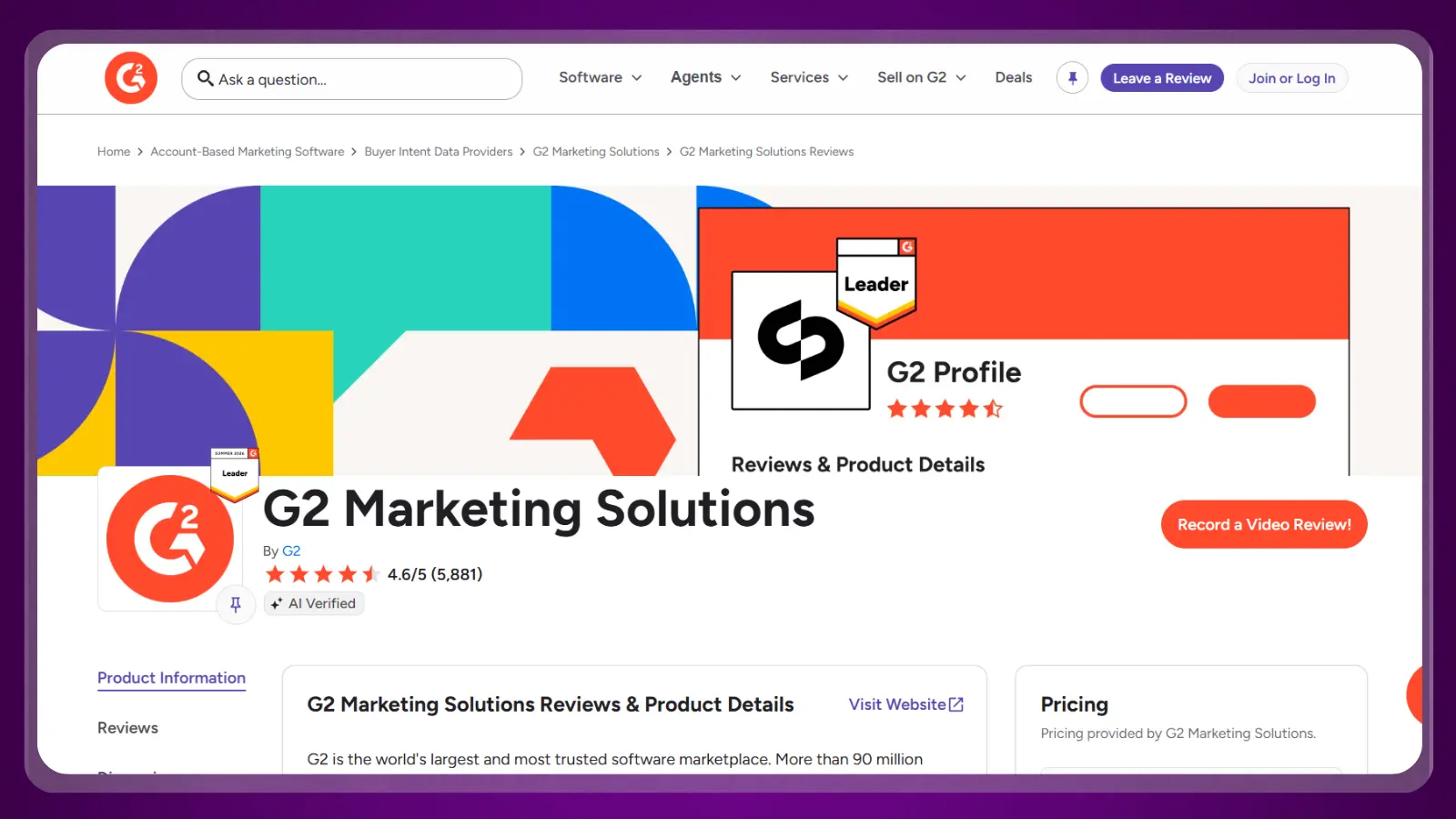
G2 offers a more specific answer to “How to get paid for reviews?” You review business software you genuinely use, and some active campaigns offer gift-card rewards.
The important word is some. G2 doesn’t pay for every review. A review must be submitted through a qualifying incentive campaign, meet eligibility rules, and pass moderation. Reward amounts vary by campaign, so there is no trustworthy fixed “G2 pays $X per review” figure to promise.
How to improve your chances of approval:
- Be at least 18 years old.
- Review software you have real professional experience using.
- Use accurate work and identity information.
- Explain specific use cases, strengths, and limitations.
- Check that the invitation or campaign actually includes an incentive before spending time on the review.
Moderation can take up to 3 business days. If your approved review qualifies for a gift card, G2 says rewards are generally issued within 3 to 5 business days after approval. Available reward options depend on your country or region.
Want to know how to get paid for reviews on products you use at work? G2 can fit if those products are business software, SaaS tools, or workplace apps. It’s less useful if you mainly want to test physical products.
One limitation is worth knowing before you start: an approved review doesn’t automatically mean an incentive was attached to it. Always check the campaign terms first.
| 💡Need to know |
| Age: 18+ Reward: Varies by campaign Moderation: Up to 3 business days Payout: Usually 3-5 business days after approval |
4. Pinecone Research: Product Testing and Surveys
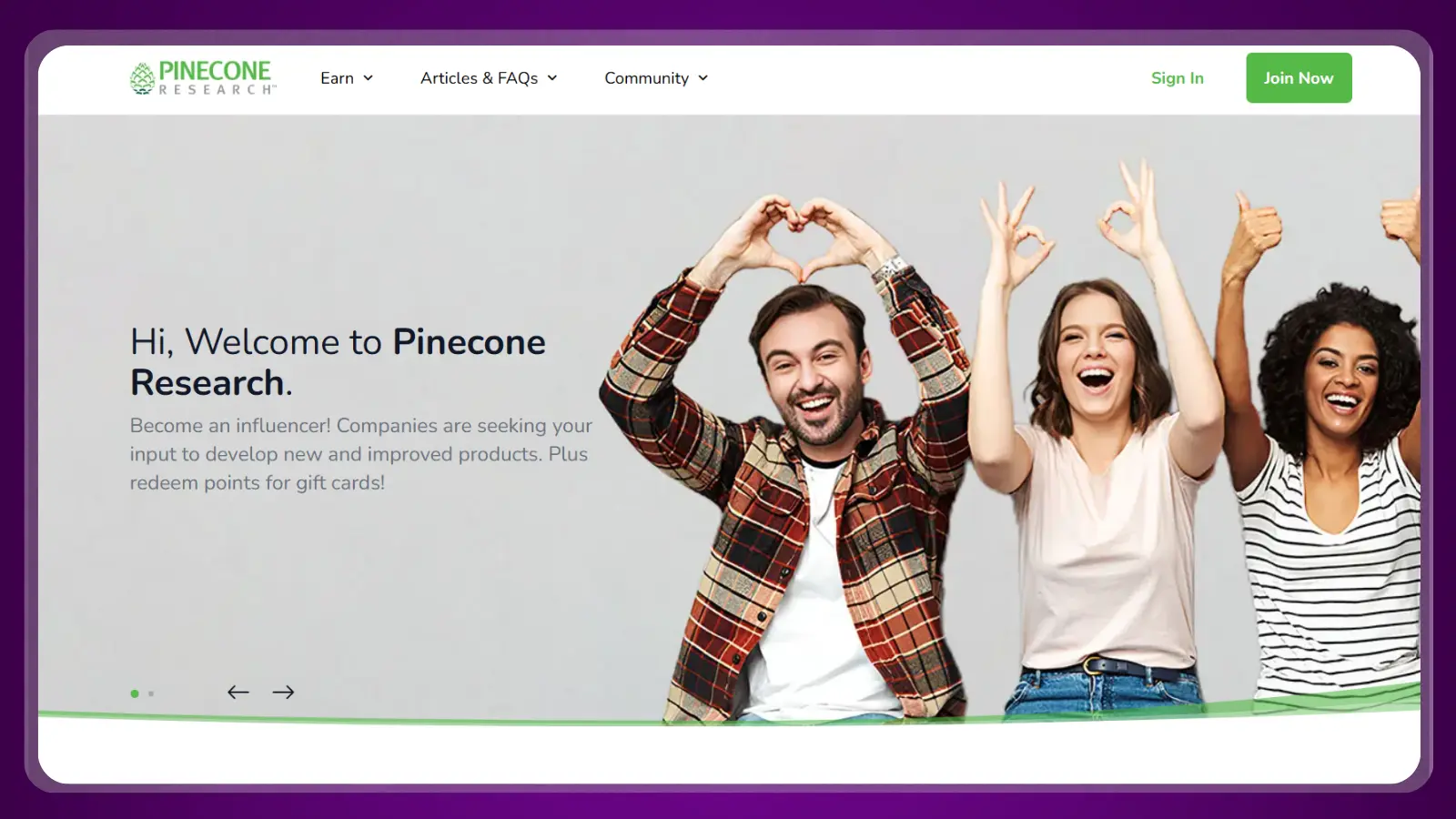
Pinecone Research offers surveys and occasional in-home product tests, so it still belongs in a guide explaining how to get paid for reviews. The problem is that its reward system is less transparent than the options above.
The platform now uses a points-based system, and exact rewards vary by study. Recent members have reported much lower rewards than in previous years, including surveys worth 100 or 200 points and a 1,000-point redemption threshold. Because Pinecone doesn’t publish a clear current rate card, I wouldn’t plan around an exact dollar amount per survey.
What participation usually looks like:
- Join when recruitment is open for your demographic and location.
- Complete profile questions so Pinecone can match studies.
- Respond quickly when a survey or product test appears.
- Follow all testing instructions if a physical item is sent.
- Complete the follow-up questionnaire to qualify for the reward.
Note that access can be patchy and survey volume isn’t predictable. You may go through stretches with very few matching studies, and even when surveys appear, you won’t necessarily qualify for every one.
Still wondering how to get paid for reviews on products without recording videos or joining live interviews? Pinecone can fit that use case, but I’d treat it as an occasional extra rather than the foundation of a review-income plan. For more flexible small-task ideas, the guide to earning $200 fast gives you more options to compare.
| 💡Need to know |
| Rewards: Points vary by study Cashout: Reports indicate 1,000 points Access: Recruitment can be limited |

5. Influenster: Free Product Testing
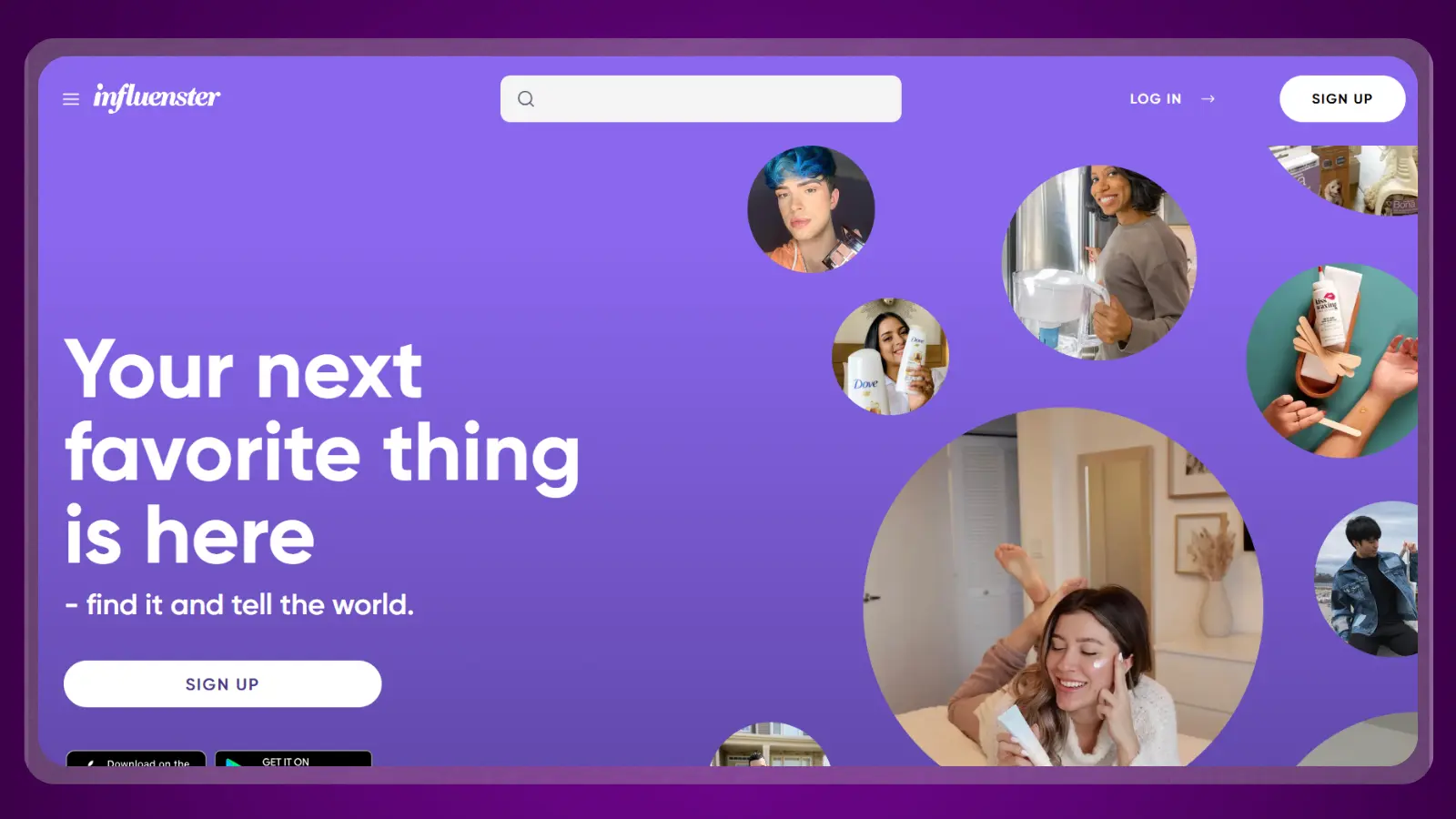
So, how to get paid for reviews on products if you’re more interested in trying physical items than earning cash? Influenster comes close: selected members receive products to try and review.
You do not get a normal cash payment for completing a campaign. The value comes from keeping the product you receive. That can still be worthwhile if you genuinely enjoy testing beauty, household, food, or lifestyle products, but it shouldn’t be counted as monthly income.
To improve your chances of getting campaigns:
- Create a complete profile with accurate interests and demographics.
- Review products you already use so the platform learns what fits you.
- Complete campaign tasks on time when selected.
- Follow the required disclosure instructions for incentivized content.
The platform’s terms say users must be at least 16 years old, although individual campaigns can have additional eligibility requirements. Product availability also varies by country, demographics, and what brands are currently testing.
For someone learning how to get paid for reviews on products, Influenster fits best if receiving free things to test is useful to you. If you need actual spendable cash, Respondent.io, UserTesting, or an eligible G2 campaign is a better match.
It’s still a legitimate part of how to get paid for reviews, as long as you’re clear that the “payment” comes as products rather than money.
| 💡Need to know |
| Compensation: Free products, not cash Age: 16+ Selection: Not guaranteed |

6. Amazon Vine: Invite-Only Amazon Reviews
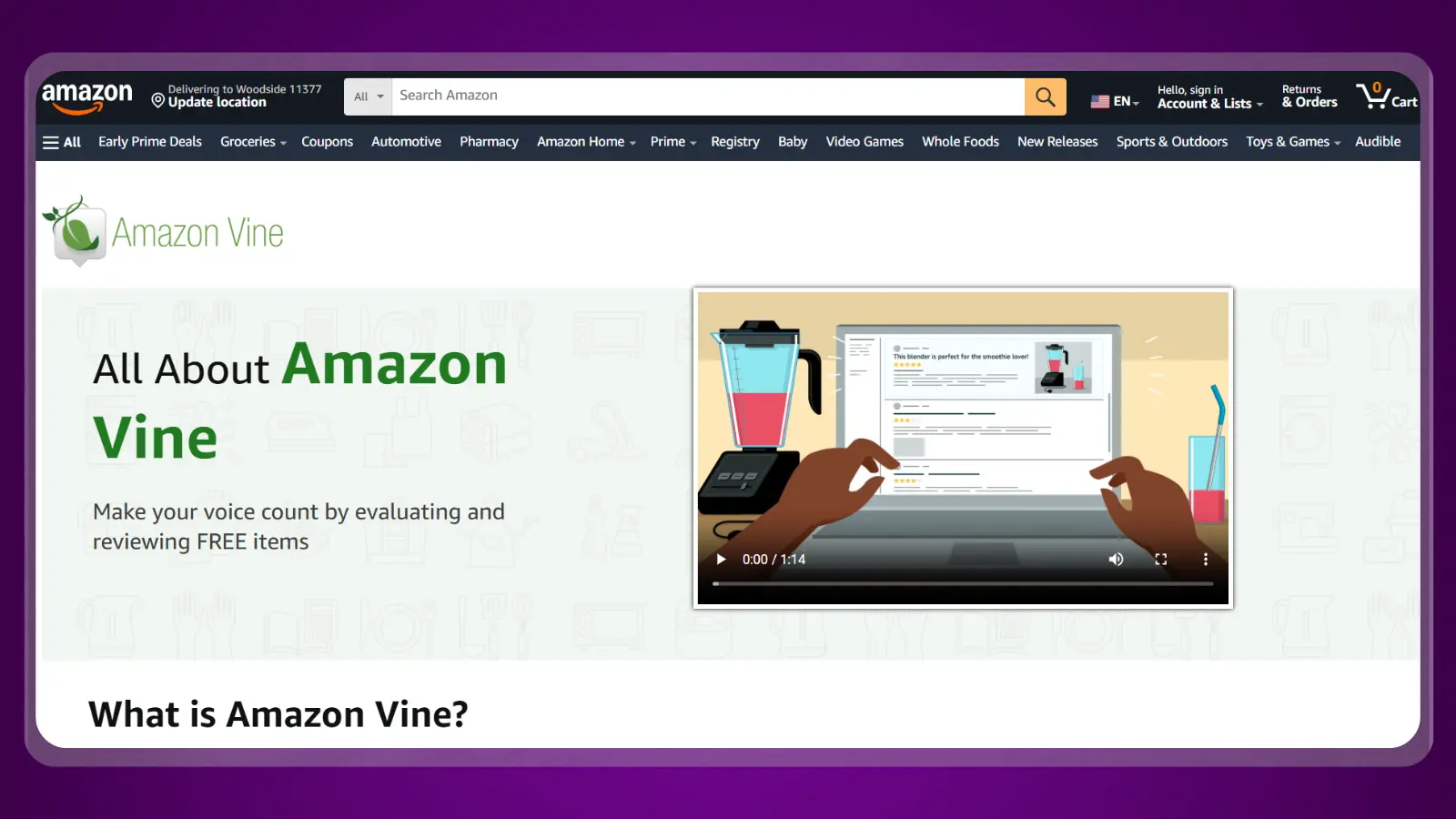
Wondering how to get paid for reviews on Amazon? Amazon Vine is the legitimate program to know, but Vine reviewers aren’t paid cash.
Amazon invites selected “Vine Voices” based on the quality and helpfulness of their existing reviews. There is no public reviewer application. Once invited, members can request eligible products, receive them at no purchase cost, and publish honest reviews marked as Vine reviews.
For reviewers, the practical rules are simple:
- You can’t apply directly to become a Vine Voice.
- Amazon chooses reviewers based on their review history.
- Products are provided for review, but cash isn’t.
- Reviews must reflect your honest experience with the item.
There is also a financial catch in the US: Amazon states that Vine Voices are responsible for income tax on the products they receive. So while the item may arrive without a purchase price, it isn’t always financially “free.”
If you’re researching how to get paid for reviews on Amazon, this distinction matters because outside payment offers aren’t a workaround. Amazon prohibits sellers from compensating customers with money, gift cards, refunds, discounts, or free products in exchange for reviews outside permitted programs such as Vine.
So, how to get paid for reviews on Amazon in actual cash? Amazon itself doesn’t offer that reviewer model. You’d need a separate business, such as creating product-review content on your own site or channel, rather than selling Amazon reviews.
That makes Vine a legitimate but very specific version of how to get paid for reviews: the reward is product access, not a paycheck.
| 💡Need to know |
| Payment: Free products, no cash Access: Invite-only Application: None US taxes: Product value may be taxable |
Comparison: How the 6 Methods Stack Up
There is no single best answer to “How to get paid for reviews?” because these platforms reward different kinds of feedback. Use this quick comparison to match the method to what you actually want: cash, gift cards, or products.
| Platform | Reward | Typical Timing | Best For |
|---|---|---|---|
| Respondent.io | $50-$250 typical session | After verification | Higher-pay research |
| UserTesting | Varies by test | 14 days | Website/app feedback |
| G2 | Campaign reward | 3-5 business days after approval | Software users |
| Pinecone Research | Points vary | Varies | Surveys/product tests |
| Influenster | Free products | Campaign-dependent | Physical products |
| Amazon Vine | Free products | Invite-only | Amazon reviewers |
If you want to learn how to get paid for reviews with actual cash, start with research or usability testing rather than product-only programs. Asking “How to get paid for reviews on products?” leads to options such as Influenster and Vine, but they’re more product-focused and don’t provide dependable cash income.
Asking “How to get paid for reviews on Google?” won’t lead you to an equivalent paid-review platform because Google Local Guides isn’t a paid-review service.
Likewise, if you’re wondering how to get paid for reviews on Netflix, you’ll need to monetize reviews independently rather than expect Netflix to pay you per review.
How This List Was Built
To make the cut, each platform needed to offer a real answer to “How to get paid for reviews?” That could mean cash, gift cards, or products, but the reward had to be clear enough for you to understand what you’re actually getting before putting in the work.
We compared the options based on a few practical things:
- Reward clarity: Is it obvious what you can earn?
- Accessibility: Can regular users realistically join or qualify?
- Consistency: Are opportunities reasonably available, or mostly luck-based?
- Actual review work: Does the task genuinely involve testing or reviewing something?
That’s why Respondent.io and UserTesting sit higher than programs where invitations are unpredictable or compensation comes only as products.
We also checked the legal side. The FTC doesn’t ban honest incentivized reviews across the board, but fake reviews and rewards tied to a required positive or negative opinion are another story. Payments, free products, or brand relationships may also need to be disclosed.
That matters even more if you’re asking “How to get paid for reviews on Amazon?” Amazon has stricter platform rules and doesn’t allow sellers to compensate customers for reviews outside approved programs such as Vine.
Get Paid to Play: Reward Apps Worth Trying Alongside Reviews
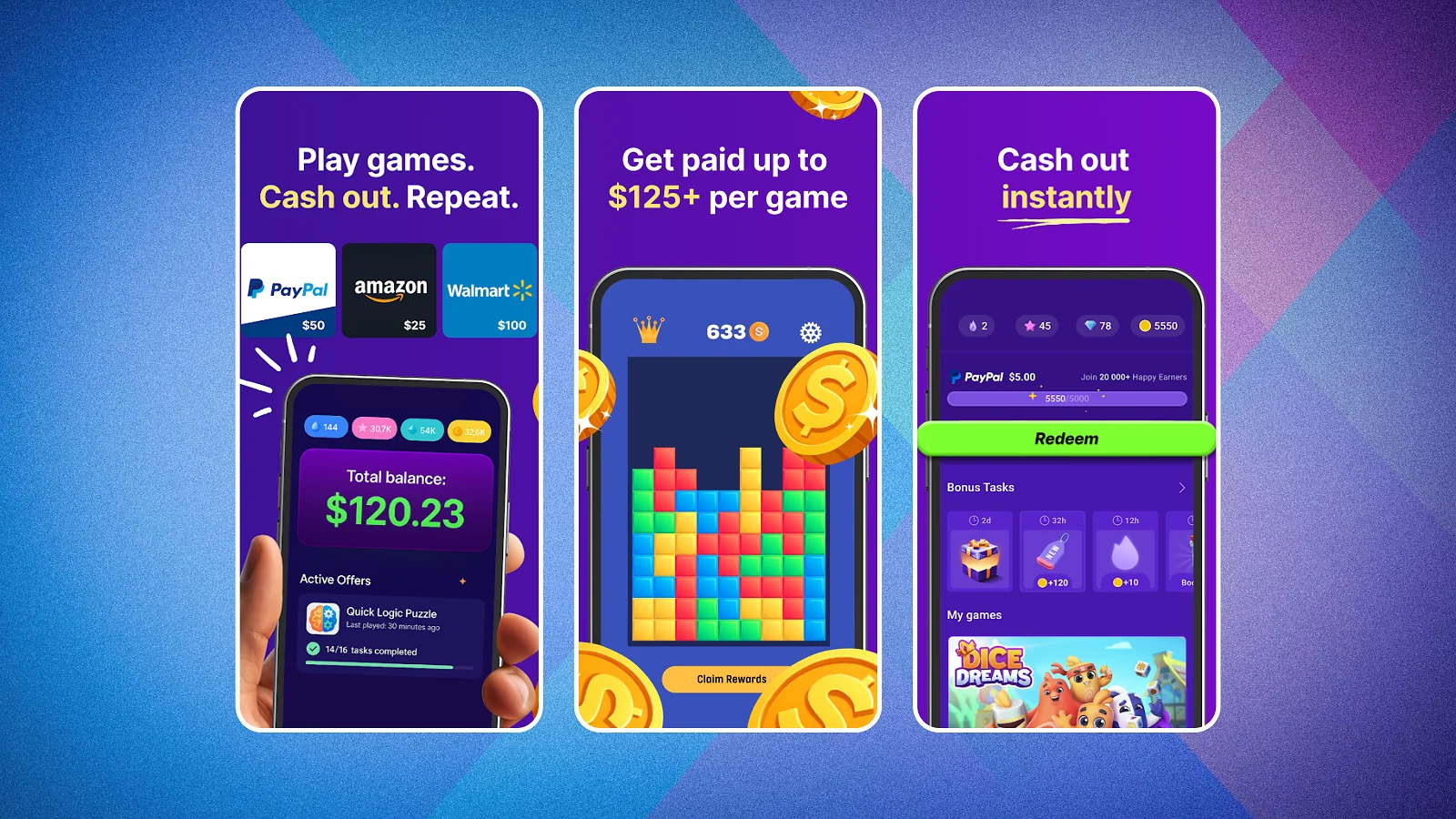
Reward apps aren’t another answer to “How to get paid for reviews?” because they pay for different activities. They can still make sense as a side option when review invitations are slow.
If you’re waiting for a research screener or product campaign, a reward app gives you another way to use spare time without pretending the income comes from reviews. Our game apps that pay real money guide covers more options in that category.
Snakzy is the more natural add-on here if you want something separate from review work. It’s free to join, and you can use it alongside platforms where research invitations are unpredictable rather than waiting around for the next study.
Free to join with a $35 minimum payout, Snakzy gives you another option when review invitations are quiet.

What Doesn’t Work
Learning how to get paid for reviews also means knowing which offers to avoid. The biggest red flag is any platform or person paying specifically for a positive rating instead of honest feedback.
- Pay-for-five-stars schemes: A reward should be for honest feedback, not for saying something positive. The FTC prohibits incentives that are tied to a required positive or negative opinion.
- Paid Amazon review offers: Be wary of sellers offering money, refunds, discounts, or free products in exchange for a customer review. Amazon prohibits compensated reviews outside approved programs such as Vine.
- Fake Google review jobs: Google Local Guides rewards contributions with points, levels, badges, and occasional perks, not a standard cash payment for each review. Third-party “paid Google reviewer” offers should be treated with caution.
- “Netflix reviewer” job ads: Netflix doesn’t run an official consumer program that pays people simply for reviewing shows or movies. Listings promising easy money for doing exactly that are a red flag.
- Guaranteed YouTube review payouts: YouTube doesn’t pay creators a flat fee for every review video they upload. Review channels make money through the YouTube Partner Program, sponsorships, affiliate links, and other creator revenue.
- Sites with vague reward terms: If a platform doesn’t clearly explain what earns a reward, how much it pays, or how the reward is delivered, don’t assume you’ll be compensated.
If you need a broader backup plan than review work, the guide to earning $2,000 quickly covers other active earning routes.
Final Verdict on How to Get Paid for Reviews
- If you’re learning how to get paid for reviews, the best option depends on what kind of work you actually want to do:
- For higher-paying research: Respondent.io has the strongest published per-session rates.
- For easier digital testing: UserTesting is more straightforward and shows the reward before each test.
- For software reviews: G2 can pay when an eligible incentive campaign is active.
- For free products: Influenster and Amazon Vine are legitimate, but don’t treat them as regular cash income.
The most realistic approach is to combine one or two cash-paying platforms instead of relying on a single source. Snakzy also works well as an extra option when review invitations are slow.
Free to join with a $35 minimum payout, Snakzy gives you another option when review invitations are quiet.
FAQs
No. If you’re learning how to get paid for reviews, Amazon Vine is the legitimate Amazon option, but Vine gives invited reviewers products rather than cash. So, how to get paid for reviews on Amazon? There is no public cash-paying reviewer application.
You can expect $50 to $400 a month combining two or three platforms. Research sessions on Respondent.io and quick tests on UserTesting cover most of that range, while free-product panels add value but no cash.
No. If you are looking into how to get paid for reviews on Google specifically, know that Google‘s Local Guides program awards points and badges, not cash. A site charging for “verified Google reviewer” status is not an official Google program.
No, there is no official direct-review program. People who earn from Netflix reviews usually monetize their own blogs, newsletters, social accounts, or video channels instead.
There is no direct payout for reviews on YouTube the way a research panel pays. A review channel earns instead through the YouTube Partner Program‘s ad revenue share and brand sponsorships once it has a real audience, which can take months to build.
Yes. Learning how to get paid for reviews legally means keeping the feedback honest and disclosing material relationships where required. The FTC prohibits incentives conditioned on a specific positive or negative sentiment.
UserTesting has a short application process and shows the reward before each available test. Repsondent can pay more, but matching depends heavily on your profile.