


Samsung Odyssey G9 Review 2026

Eneba Hub contains affiliate links, which means we may earn a small commission if you make a purchase through them—at no extra cost to you. Learn more


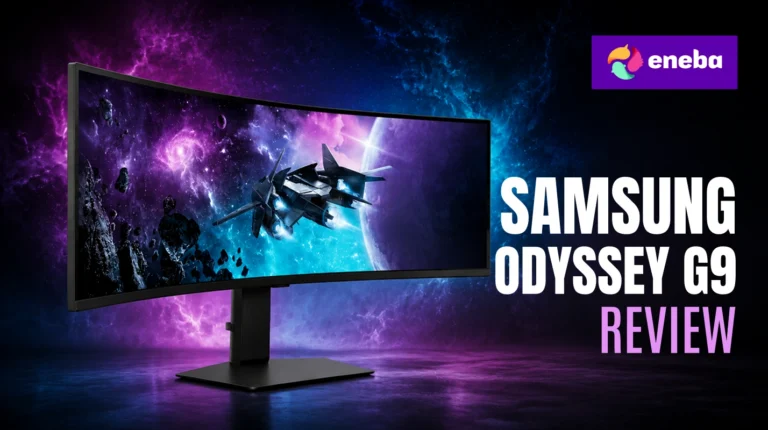
This Samsung Odyssey G9 review covers the G95C – the 49-inch ultrawide that answers a real question: is spending $664.99 on a single monitor worth it, or is this the move that ends the dual-monitor juggle for good? I looked at this Samsung 49 inch ultrawide monitor after growing tired of a bezel gap splitting my game world down the middle.
The combination of 1000R curvature, 240Hz refresh rate, and DisplayHDR 1000 certification at $664.99 puts the G9 G95C in a category most gaming monitors simply can’t reach. That 1000R curve wraps the screen edges into your peripheral vision – steep enough to feel immediately different from any 1800R panel. At 240Hz and DQHD, you’re not choosing between screen space and performance.
This assessment covers everyday gaming performance across fast-paced and cinematic titles, productivity use with wide desktop layouts, and long-session comfort. The main trade-offs are GPU demand, desk footprint, and weight. This is the right monitor for those who want total immersion and have the rig to push it.
Jump to:
Odyssey G9 (G95C) at a Glance
Here is what you get before we get into the details.
| Specs | Details |
|---|---|
| Screen Size | 49 Inches |
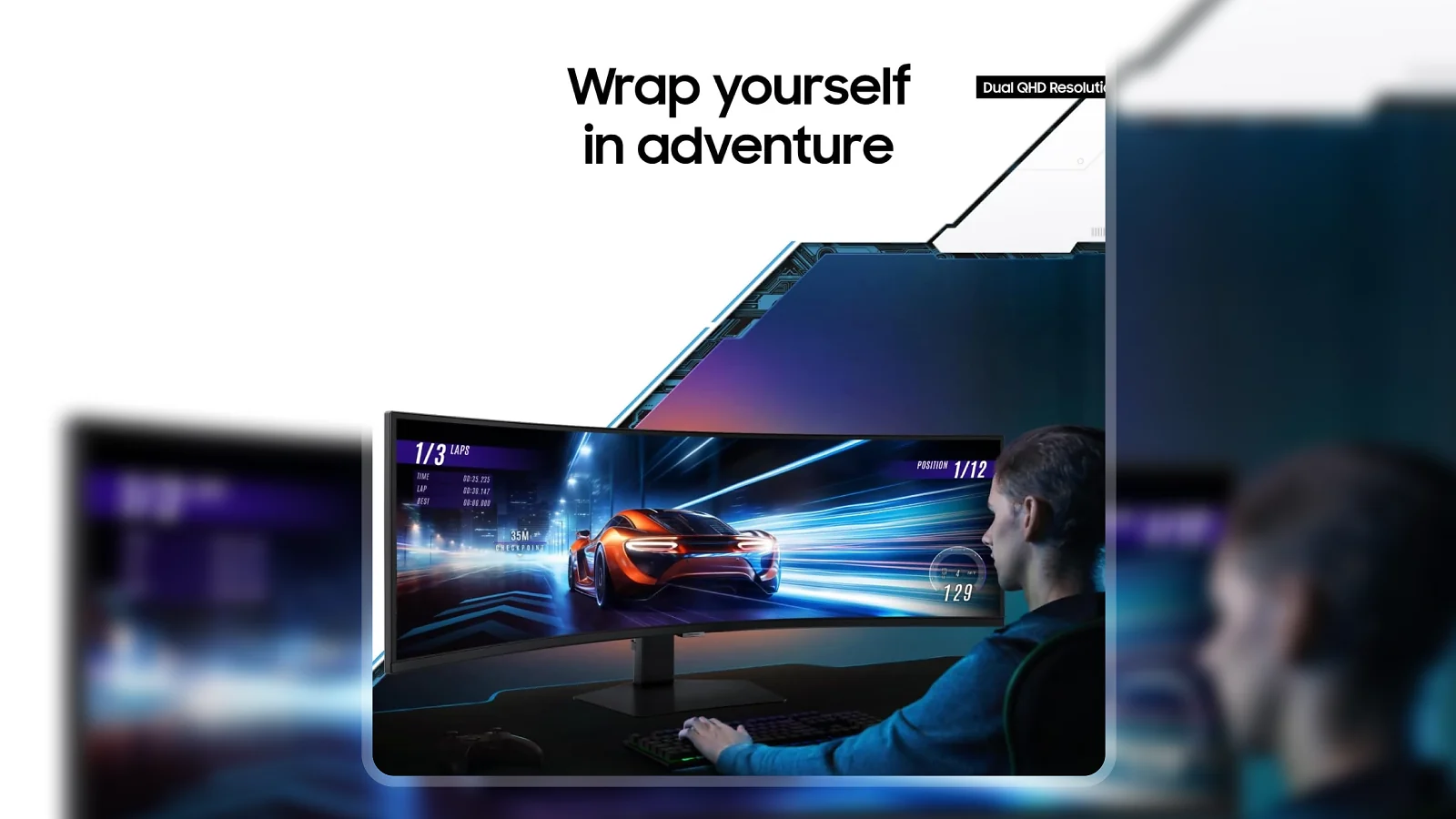
| Resolution | 5120×1440 (DQHD / Dual QHD) |
| Aspect Ratio | 32:9 |
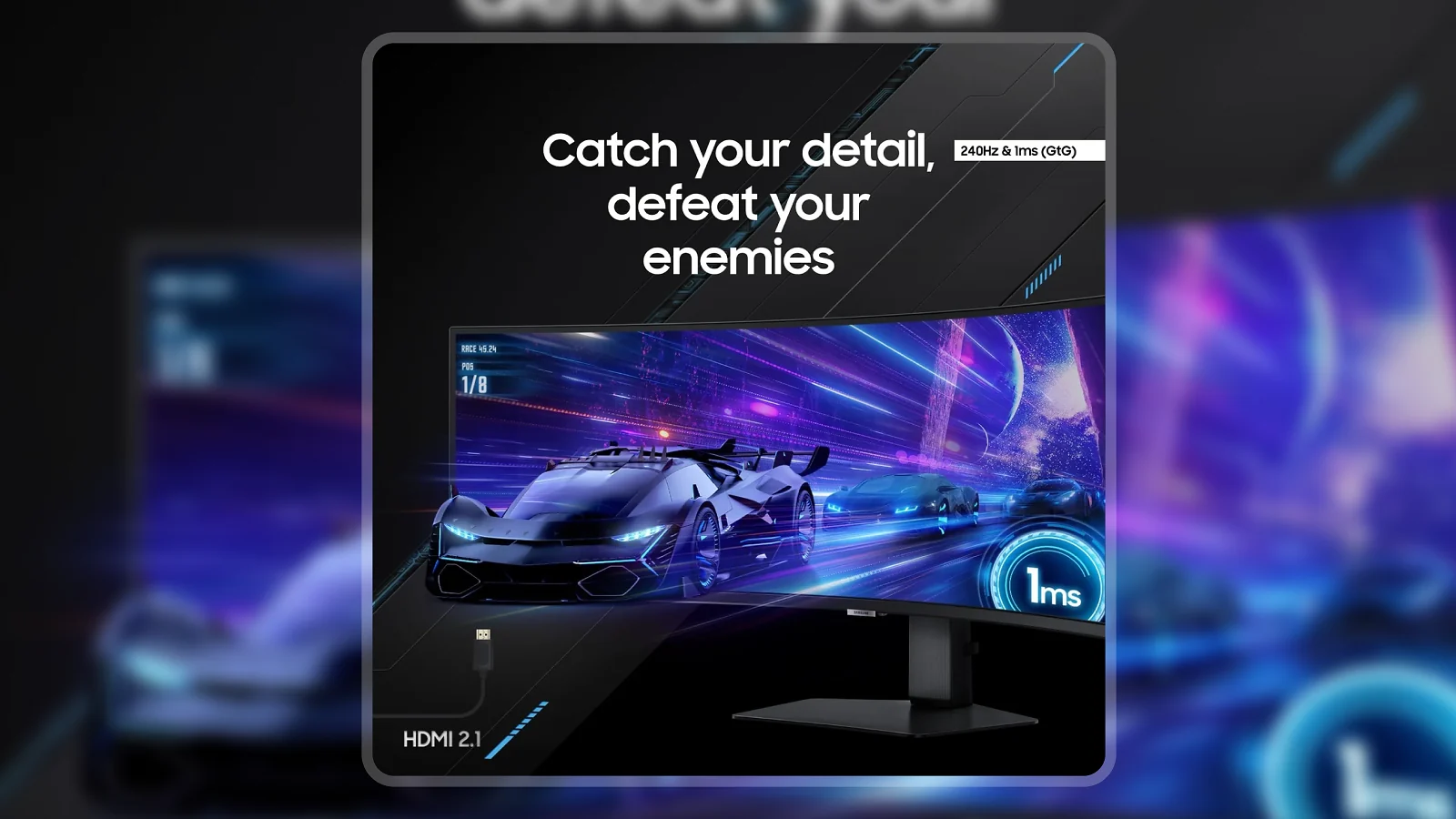
| Refresh Rate | 240 Hz |
| Response Time | 1ms (GtG) |
| Panel Type | VA QLED |
| Curve Radius | 1000R |
| Brightness | 1000 nits (DisplayHDR 1000) |
| Contrast Ratio | 1,000,000:1 |
| Adaptive Sync | AMD FreeSync Premium Pro |
| Connectivity | 2x HDMI, 1x DisplayPort, 2x USB 3.0 |
| Dimensions | 45.2″W x 22.4″H x 16.6″D |
| Weight | 23.4 lbs |
| VESA Mount | Yes |
| Price | $664.99 |
Key Features and Benefits
The G9 G95C is built around one idea: total immersion. Here is what each major feature actually means for how you game and work.
- 49-Inch 1000R Curved Screen – At 49 inches, the 1000R curvature wraps screen edges into peripheral vision so your eyes see more of the game world naturally.
- DQHD 5120×1440 Resolution – Two 2560×1440 panels fused into one: the horizontal space of a 32:9 ultrawide without sacrificing 1440p vertical sharpness.
- 240Hz Refresh Rate – Motion blur disappears at 240fps and input response feels near-instant. There’s no going back to 60Hz after this.
- 1ms (GtG) Response Time – Eliminates ghosting – the blurring trail behind fast-moving objects – so pixels keep up with every frame at 240Hz.
- DisplayHDR 1000 Certification – Where most gaming monitors cap at DisplayHDR 400, the G9 delivers 1000 nits peak brightness and 1,000,000:1 contrast, making HDR highlights look like actual highlights.
- AMD FreeSync Premium Pro – FreeSync Premium Pro syncs refresh rate to GPU output, removing screen tearing and stutter – including low-frame-rate compensation below 48fps.
- CoreSync and Core Lighting+ – CoreSync extends on-screen colors to the monitor’s edge lighting in real time; Core Lighting+ adds rear RGB. Aesthetic, but they change the feel of a dark-room setup.
Performance and Real-World Experience
The 240Hz ceiling at 5120×1440 requires hardware to match. For the full refresh rate in competitive games, plan on at least an RTX 4070 or the AMD equivalent – mid-tier cards cap out below that in demanding titles.
The 1000R curve is what separates the G9 from every 1800R panel in this price class. At 49 inches, the curve is immediately obvious – the edges angle toward you, creating a genuine wrap-around field of view in fast-paced titles.
| Pros | Cons |
|---|---|
| ✅ 240Hz at 5120×1440 gives the full competitive and cinematic experience in one panel ✅ DisplayHDR 1000 certification puts real HDR contrast and 1000-nit brightness in reach ✅ 1,000,000:1 contrast ratio produces genuine black levels that IPS monitors cannot match ✅ 1000R curve wraps the edges into peripheral view, eliminating the “looking at a flat wall” problem on large screens ✅ AMD FreeSync Premium Pro eliminates tearing without a frame rate tax, across the full VRR range ✅ Replaces a dual-monitor setup with zero bezel gap and a unified 32:9 canvas ✅ Fully adjustable stand plus VESA compatibility means you can mount it exactly where you want it | ❌ The 23.4-pound weight and 45-inch width require a dedicated setup – a monitor arm or a very deep desk is strongly recommended |
The Samsung Odyssey G9 G95C hits a combination of size, refresh rate, and HDR certification that almost nothing else matches at this price. It’s the monitor for those who are done compromising between screen space and performance.
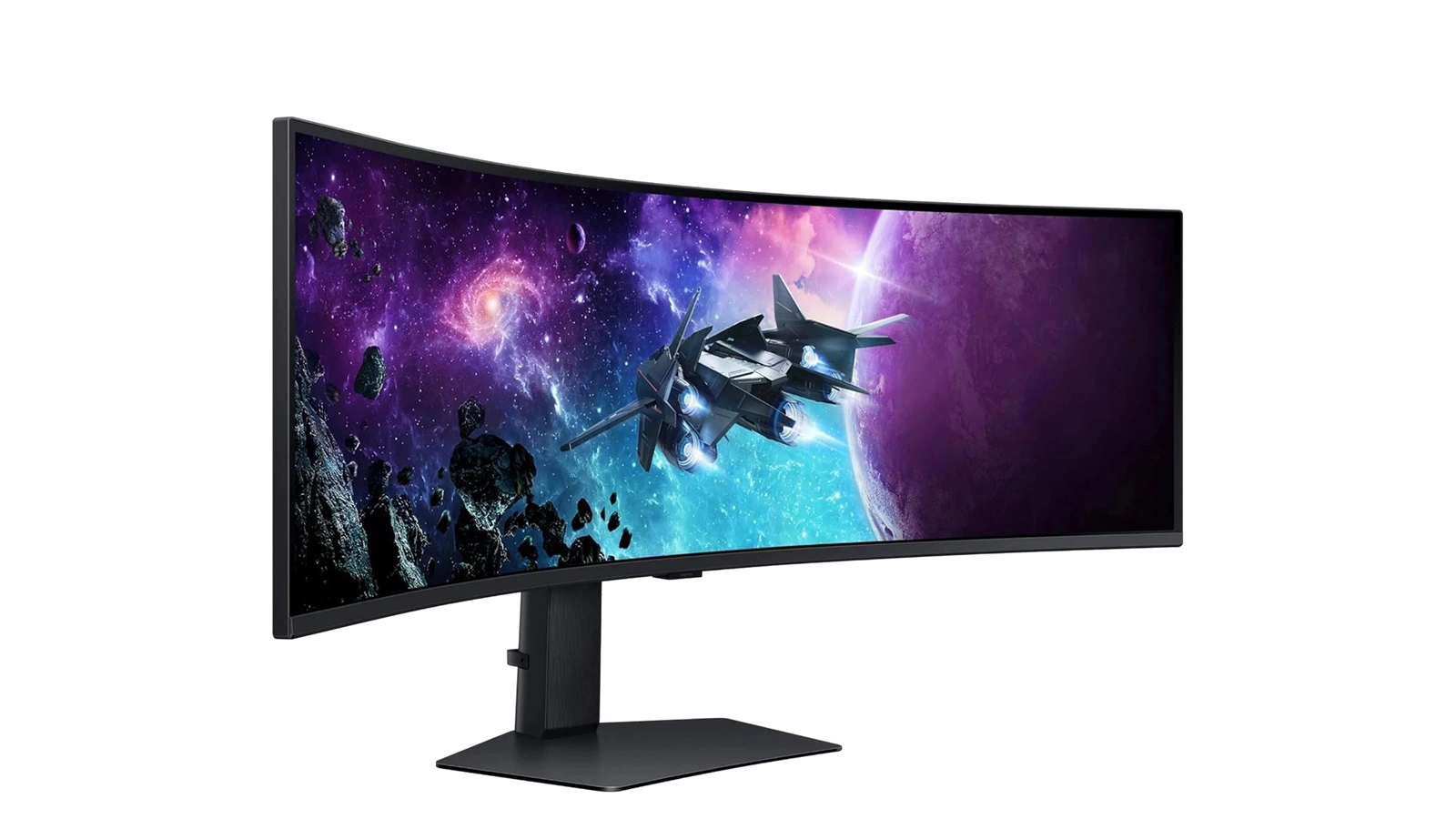
The G9 G95C earns its position as a top ultrawide pick not because it does everything perfectly, but because it does the most important things at a level the competition hasn’t caught up to yet. The 1000R curve at 49 inches creates a physical sense of immersion that flat monitors – even large ones – simply don’t produce. Paired with 240Hz and DisplayHDR 1000, the gap between this monitor and a standard curved gaming screen becomes obvious within a few minutes of use.
“Upgrading from a 32-inch curved and a 27-inch regular to this single screen changed everything for me. My eyes and neck thank me daily – and for productivity, the amount of real estate you get is genuinely hard to give back.” – Buy It For Life
The real estate upgrade this monitor delivers isn’t just about gaming – it’s about the way your entire desktop changes. A single 32:9 canvas at 5120×1440 fits more content than two 1080p monitors side-by-side, and the absence of a bezel gap makes multitasking feel more natural. That productivity dividend is something a lot of purely gaming-focused specs don’t communicate
“I went back and forth between ultrawide and 4K before choosing the G9. The extra horizontal width in games won me over immediately – with a 4070 Ti behind it, you genuinely feel the difference every session.” – dinoturkey
The GPU pairing note here matters. The G9 G95C rewards a capable card – not because it requires one to function, but because the 240Hz ceiling is only reachable at high frame rates. For those running older hardware, the monitor still delivers at lower refresh rates, but planning your next upgrade around it is the better long-term approach.
Color Accuracy and HDR Performance
The G9 G95C’s VA QLED panel is one of the main reasons this monitor punches above its price class in HDR.
The 1,000,000:1 static contrast ratio is a VA advantage that, short of OLED, nothing else in this price range touches – blacks are deep and dark, not the “dark gray” IPS panels produce. DisplayHDR 1000 certification means 1000 nits of peak brightness – a meaningful step above the DisplayHDR 400 or 600 that most gaming monitors carry. The difference in highlight rendering – sun glare, explosions, bright sky reflections – is visible without a side-by-side once you’ve seen it at full output.
The QLED quantum dot layer adds wide color volume on top of that contrast foundation. Saturated greens and reds look more vivid than on a standard VA panel. The HDR performance-to-price ratio on the G9 G95C is genuinely hard to beat at under $700. For color-critical work, note that VA panels have weaker factory accuracy than IPS – the G9 calibrates well, but it’s a gaming and entertainment panel first. If you’re weighing panel options, top-rated OLED gaming monitors offer a different contrast trade-off at a higher price.
Gaming Performance and Input Lag
The 240Hz refresh rate is the headline, but frame pacing and input response are what determine how this monitor feels in a real competitive session.
At 240Hz, the G9 G95C produces a new frame every 4.2 milliseconds. The 1ms GtG response keeps each pixel within the frame window, so fast-moving objects stay sharp rather than ghosting. The 32:9 aspect ratio adds a real strategic advantage in games with wide FOV support – racing sims, space games, open-world titles give you peripheral coverage no 16:9 or 21:9 screen matches. In games without native 32:9 support, black bars appear on the sides – check compatibility before purchase. This is what any honest Samsung 32:9 monitor review should flag upfront.
FreeSync Premium Pro with Low Framerate Compensation prevents stutter when the GPU dips below the minimum threshold – critical for mid-range hardware pushing demanding ultrawide titles. Compared to top-rated gaming monitors in the 16:9 format, the G9 trades ergonomic flexibility for an experience most 32:9 owners find impossible to walk back from. If the footprint is too large, highly rated curved gaming monitors in the 27-34 inch range offer a lower-commitment entry point.
My Overall Verdict on Samsung Odyssey G9
This Samsung Odyssey G9 review comes down to a clear verdict: this is the best ultrawide gaming monitor under $700, and it’s not particularly close.
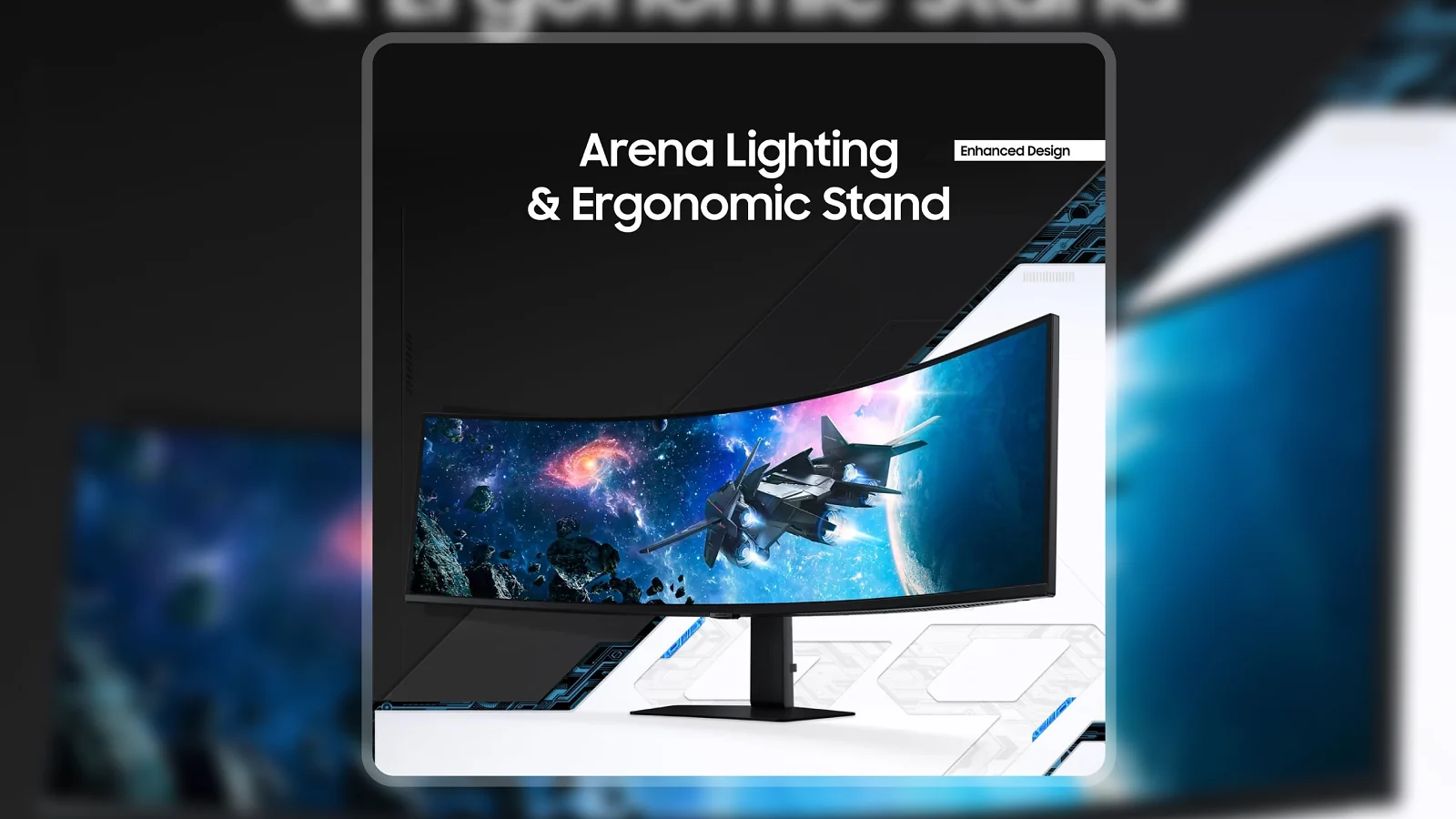
The G9 G95C gets the most important things right: 49-inch 1000R curvature, 240Hz, DisplayHDR 1000, and a VA contrast ratio that IPS alternatives in this size class can’t touch – all at $664.99. The build quality holds up to the weight, the stand is fully adjustable, and the USB hub and Auto Source Switch+ make it a practical multi-device centerpiece rather than just a showpiece.
The trade-offs are real: the weight and size demand a proper desk setup, the GPU requirements are high to reach 240Hz maximum, and 32:9 game support is still uneven. These are known quantities, not surprises.
For those who want total immersion, are tired of the bezel gap between two monitors, and have the hardware to push it – this Samsung Odyssey G9 review lands firmly as a recommendation worth acting on.
Budget Alternative
Not everyone needs 49 inches or the $665 price tag. The Z-EDGE AG27QS is the right call for those who want high-refresh gaming without the ultrawide footprint or the GPU demand.
At 27 inches and 2560×1440 (QHD), the AG27QS pairs a Fast IPS panel with a 275Hz refresh rate on a much smaller and lighter display. The trade-off is obvious: no 32:9 canvas, no 1000R curve, no HDR 1000 certification. For competitive gaming on a standard desk with a mid-tier GPU, the AG27QS is a well-priced performance pick.
Complete Your Setup
The G9 G95C is the centerpiece of a serious gaming setup. The right peripherals at your fingertips make the whole experience land.
CHERRY XTRFY K5 Pro TMR Compact Keyboard
The CHERRY XTRFY K5 Pro TMR uses a compact layout with magnetic Hall Effect switches – consistent actuation with no contact wear over time. For fast-paced titles, Hall Effect technology is a genuine upgrade over standard mechanical switches, and the compact footprint keeps the G9’s wide desk clean.
MO1 Wireless Gaming Mouse
The MO1 Wireless Gaming Mouse connects via 2.4GHz and keeps the wide desk space the G9 demands clear of cord drag. It’s a practical complement for tracking across a 49-inch canvas in a productivity session and for precise aiming in a competitive title.
FAQs
Yes, the Samsung Odyssey G9 G95C delivers 49-inch 1000R immersion, 240Hz refresh, and DisplayHDR 1000 at $664.99 – a combination no rival at this price can match. For those upgrading from dual monitors or a standard gaming screen, the performance and immersion upgrade is immediate.
Yes, it carries DisplayHDR 1000 certification with 1000 nits peak brightness and a 1,000,000:1 contrast ratio from the VA panel. That combination makes dark game scenes look genuinely dark and bright highlights look like highlights, not just a lighter version of the same image.
For the full 240Hz output at 5120×1440 in demanding titles, plan on an RTX 4070 or equivalent AMD GPU at minimum. Mid-range cards run fine at lower frame rates, and esports titles reach higher fps on almost any modern GPU.
The G9 replaces two QHD monitors with a single 32:9 canvas at 5120×1440, eliminating the center bezel gap entirely and giving you a unified field of view that two flat screens cannot produce. Productivity tasks, video editing, and gaming all feel different when the workspace has no seam down the middle.
This is the full Samsung Odyssey G9 review, covering HDR performance, 240Hz gaming, GPU requirements, and real-world usability at $664.99. The verdict: this is the top 49-inch ultrawide for those who want DisplayHDR 1000, a 1000R curve, and 240Hz without compromise.