


EA Sports UFC 5 Game Review: Brutal Yet Therapeutic



I’ve been around these games for a long time, long enough to know exactly what kind of mood makes me boot one up and write an EA Sports UFC 5 review. I open it when my head feels loud or when I just want a game that actually pushes back.
Some days, I just want to pick a fighter and feel every exchange. The pressure on the block, the stamina drop after bad combos, that moment when one clean shot suddenly flips the whole fight. UFC 5 hits hard in those situations where fights stay tense in a way most fighting games never really reach.
Outside the octagon, things get less consistent. Some modes click way more than others, and career mode never pulled me in the way I initially hoped. The whole “becoming a UFC fighter” fantasy feels thin, and I ended up bouncing between modes instead of settling into one clear path.
Even with all that, I keep reopening this game. Not because everything works the way I expect, because, honestly, it doesn’t. There are gaps and design choices that still confuse me. But when I want a game where I can dump energy into a fight and actually feel it, UFC 5 always ends up on my screen.
This review comes from that place. From hours spent in career mode, random matchups, practice sessions, and a lot of salty rematches. I’m breaking down when UFC 5 feels great, where it falls apart, and why it still sits in my library as my go-to fighting game when I need to let something out.
Jump to:
My First Impressions: This Game Wants To Hurt You
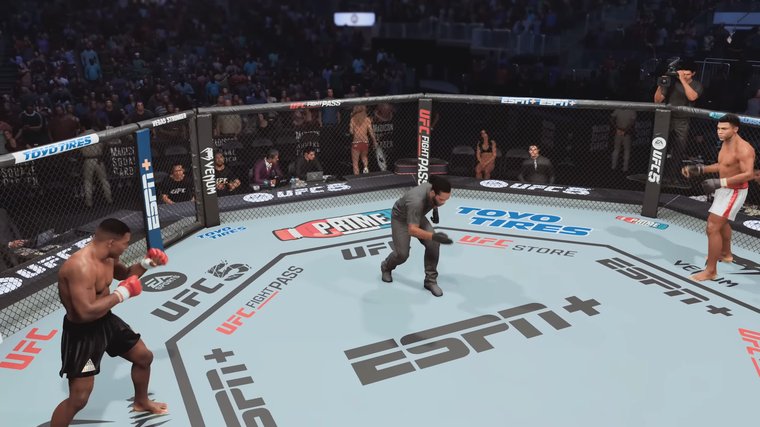
I want to start my EA Sports UFC 5 review with a sentiment that first I booted up the game, it already felt different before I even threw a punch. Everything leans darker and more serious, and it sets a tone that makes the game feel closer to a fight night broadcast than a typical sports title.
Once you step into the octagon, that feeling gets even clearer. Movement feels heavier, fighters don’t glide around the way they used to, and every step or missed swing carries weight. You feel more aware of your spacing and way more aware that one bad decision can flip a whole round on you.
The change in speed stands out a lot too. Exchanges don’t turn into random button-smashing as often, and pressure starts to feel dangerous instead of just loud. When someone walks you down, you feel it, and when you panic, the game punishes you for it.
What really sold me early on is how fast UFC 5 shows its teeth – it doesn’t ease you in or try to make you feel comfortable. Within your first few fights, you already see how unforgiving it can be; where bad habits get exposed quickly and sloppy rounds spiral out of control.
Right from the jump, UFC 5 makes its direction clear. It’s slower and heavier than previous titles, and it wants every exchange to matter, because the second you stop respecting what’s happening in front of you, the game reminds you.
Combat Is the Real Star of UFC 5
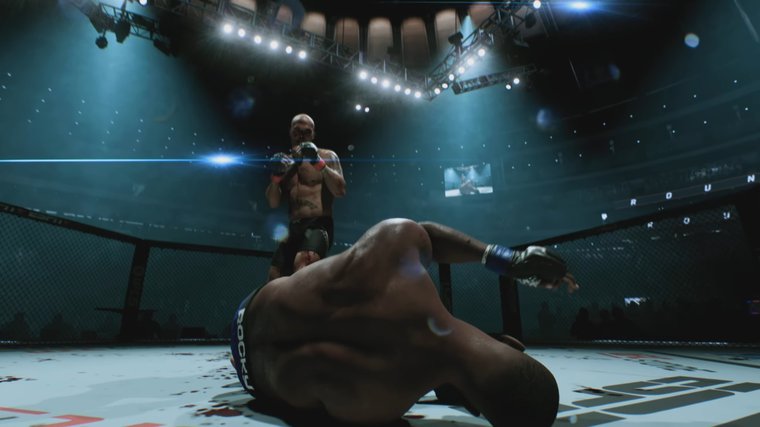
Everything I enjoy most about UFC 5 always leads back to the same place – the actual fighting. No matter which mode I’m in, the moment the referee asks, “Ready to fight?” I’m locked in. This is where UFC 5 makes sense and where most of its best moments live.
Striking Feels Heavy, Dangerous, and Incredibly Satisfying
Stand-up is where UFC 5 feels the most alive to me. The first thing you notice is the impact – every punch feels like it actually lands on something. Jabs don’t feel like light taps, and clean shots carry a weight that you can see and feel right away.
Speed plays a big role here, too. Lighter fighters move and strike way faster, and heavier ones feel slower but scarier, so that difference changes how you approach every matchup. You can’t box a heavyweight the same way you pressure a flyweight, and the game does a good job forcing you to respect that.
Stamina matters a lot more than people expect. If you start swinging like it’s round one for the whole fight, UFC 5 will humble you fast. Combos and missed shots drain you, and once your bar starts dropping, everything else follows. Hands slow down, defense opens up, and suddenly you’re one bad read away from getting dropped.
That’s also why knockouts feel so good in this game where they don’t always come from ten-hit strings. A lot of them come from one clean counter or mistimed entry. Those flash knockouts are some of my UFC 5’s best moments, because they feel sudden and real.
All of that is why stand-up is where UFC 5 really clicks for me. When you’re trading on the feet, managing space, watching stamina, and hunting that one opening, the game hits a flow that few sports titles ever reach. This is the side of UFC 5 that keeps pulling me back.
Grappling and Ground Game – Realistic Yet Draining
This is where UFC 5 and I start fighting each other.
Any time a match hits the mat, the whole vibe changes for me. Takedowns come fast, and once someone with strong grappling gets on top of you, the fight can slow down real quick. Not in a tactical chess match way, but in a please let me stand up way.
Get-ups are the hardest part for me. When a grappler decides to sit on my fighter, it can feel like I’m stuck there forever. I’m watching meters, guessing transitions, burning stamina, and hoping I read something right. A a few bad guesses later, half the round is gone and nothing exciting has happened except my mood dropping.
I think part of why this hits me so hard is because my comfort zone has always been stand-up. I’ve trained boxing in real life, and that shows in how I play. I look for timing, spacing, and clean exchanges. On the ground, that flow disappears. The game turns into bars and small inputs, and, for me, that’s where UFC 5 feels the least fun.
To be fair, the ground game does feel closer to real MMA than it used to – top pressure is scary and bad positions actually matter. Getting stuck under someone strong feels awful, which, to be fair, is probably the point. UFC 5 clearly wants the mat to feel exhausting and even dangerous.
The problem is that realism doesn’t always line up with enjoyment. For players who love grappling, this might be one of the strongest parts of the game. For players like me, it’s easily the most draining. Not broken, but very divisive, and often the part of a fight I’m just trying to survive so I can get back to what UFC 5 does best.
Controls and Learning Curve – Easy to Pick Up, Hard to Stay Sharp
On the surface of this EA Sports UFC 5 review, you can see pretty clearly that UFC 5 is easy to get into. You can hand the controller to someone and tell them how to jab and block, and they’ll survive a round.
But staying sharp in this game is a whole different thing. Once you start caring about combos and stamina, UFC 5 turns into a game that really tests your muscle memory.
A lot of how well you play comes down to how clean your inputs are. Rush a combo or hit the wrong follow-up, and the game doesn’t hide it. You either whiff or walk straight into something. When things go wrong, you feel it immediately, which makes every habit – good or bad – show up in your fights.
That’s why I actually spend time in practice mode. I go there to build combos, test ranges, and get used to how fighters move. The option to switch between basic and skilled AI sounds small, but it helps a lot. One lets you focus on execution, the other forces you to react and clean things up.
Over time, you start to notice how much lab time matters. Fighters you didn’t touch for weeks suddenly feel off. Timing slips, reads come late. But when you do stay consistent, everything flows better. You stop panicking in bad spots.
UFC 5 really appreciates that kind of repetition. The more time you spend learning how the game actually feels, the less it becomes about button-mashing and more about control. And when that control clicks, the fights feel completely different.
Career Mode, What a Missed Fantasy
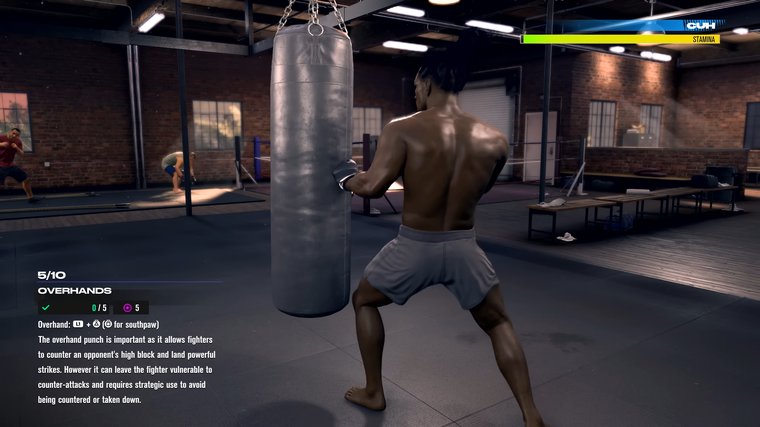
The Career mode was the mode I wanted to love the most. On paper, it should be the heart of UFC 5. I was expecting to create a fighter, build him up, take fights, and work my way toward the biggest stage. In practice, the loop gets old way faster than I expected.
Most of my time is spent stuck in the same rhythm. Accept a fight → train → sim → fight. Then do it again. There’s nothing wrong with that structure, but UFC 5 doesn’t do much around it to make it feel like a real journey. There’s barely any story, no moments that make me feel like my fighter is becoming someone.
Because of that, progression starts to feel flat. Sure, I’m getting better on paper, but it rarely feels like anything changes. Even wins don’t carry much weight outside of numbers going up.
The contract side didn’t help either. Breaking into the UFC felt way harder than it should, and not in a satisfying way. I spent a long time stuck fighting in WFA, taking bout after bout, waiting for something to click. Instead of feeling hungry to prove myself, I mostly felt like I was grinding the same stage without a clear sense of direction.
I need to make it clear in this EA Sports UFC 5 review that the biggest issue with career mode is that it doesn’t feel motivating. Yeah, the fighting itself is still strong, but the fantasy around it never really pulled me in. I was clearing menus so I could get back into the octagon instead of chasing belts and building a name.
Fight Contracts Is Where I Actually Have Fun

Fight Contracts is the mode I keep coming back to, and it wasn’t even something I planned. I started it out of curiosity, then slowly realized I was spending more time there than anywhere else. It strips a lot of the noise away and puts the focus back where I want it: on the octagon.
The biggest reason this mode works for me is the vibe. I’m fighting on real UFC cards, with real fighters and in real arenas. The presentation feels closer to a proper fight night, and that alone already makes every match feel more meaningful than bouncing between menus in career mode.
I also like the randomness of it. I don’t fully control who I get or what kind of matchup I walk into, and that unpredictability keeps things fresh. Some fights feel perfect for my style and some feel horrible. Either way, I’m pushed to adapt instead of building one comfort setup and farming it.
Another big plus I want to highlight in my EA Sports UFC 5 game review is how clean the focus is. Fight Contracts doesn’t try to sell me a long-term fantasy. I just pick a contract, I fight, and I deal with what’s in front of me. For someone like me – who plays UFC 5 for the combat – this mode fits perfectly.
The way difficulty works here is also a huge part of the experience. You literally can’t choose difficulty yourself; each contract comes with its own, and that changes the whole mood of a fight.
| Difficulty | Experience / Feel | Typical Outcome | Overall Impression |
|---|---|---|---|
| Easy | Feels more like a warm-up than a real test | Clean rounds, sometimes first-round finishes | Very manageable, low challenge |
| Normal | Steps things up slightly, mistakes begin to matter | Mostly in control, mistakes start to cost | Moderate challenge |
| Hard | Fighters fight back, requires real thought and strategy | Wins feel rewarding, losses make sense | Feels right in terms of difficulty |
| Pro | Strong resistance from opponents, you have to think about what you’re doing | Victories are satisfying, defeats feel fair | Balanced and engaging |
| Legendary | Fighters are insanely sharp with fast punches and nonstop pressure, one small mistake can end the fight | Extremely challenging fights, even small mistakes are costly | Brutal difficulty but not unfair |
On easy contracts, I’m usually done fast. A clean round, maybe even a first-round finish, and it feels more like a warm-up than a real test. Normal steps things up a bit. I still control most fights, but mistakes start to cost me.
Hard and pro are where it starts to feel right for me. Fighters fight back, and I actually have to think about what I’m doing. Wins feel good here, and losses usually make sense.
Legendary is a different story.
Every time a legendary contract pops up, I already know I’m about to suffer; fighters feel insanely sharp. Punches come out fast, pressure never stops. I still haven’t won a legendary fight, and a few of them genuinely made me want to punch my TV screen. Not because they felt broken, but because the gap is brutal. One small mistake and the fight is basically over.
Because of that, Fight Contracts ends up being the mode I’d recommend the most, with one condition. If you enjoy pure fighting and testing yourself across different levels, this is easily the strongest mode in UFC 5. But if you’re here mainly for long-term progression or storytelling, this probably won’t be enough on its own.
Modes I Barely Touched (And Why)
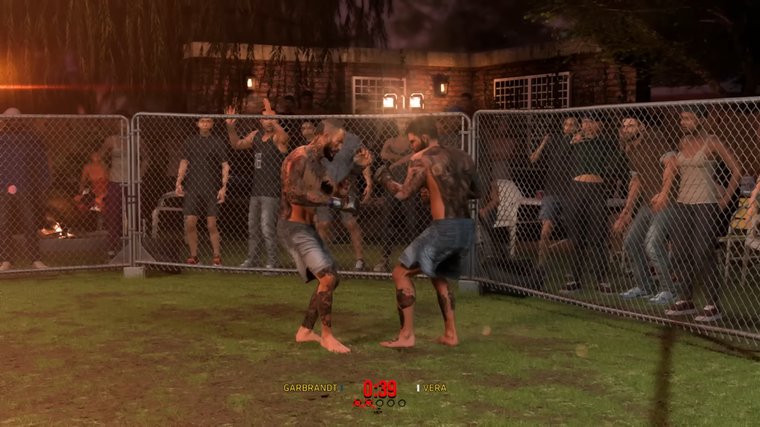
There are a few modes in UFC 5 that I barely spent time with, and most of that comes down to how I play games.
The biggest one is Fight Now. I tried it, but it never stuck. For some reason, the controls there felt off to me. Inputs on a good PS5 controller I was used to suddenly didn’t come out the way I expected, and it kept breaking my rhythm. When a fighting game messes with my muscle memory, it’s hard to enjoy anything else it’s trying to do.
Online modes are also not where I live. They’re clearly a big part of UFC 5’s ecosystem, and I get why. Competitive fights, ranked play, online progression, that whole side of the game is there for players who want constant human opponents and long-term ladders to climb. That just isn’t what pulls me in.
Most of my time with UFC 5 stays offline. Career mode, Fight Contracts, practice sessions, quick experiments with fighters I don’t usually touch. That’s where the game fits my habits. It’s something I boot up for intense fights, not something I log into every day to maintain a streak.
Because of that, UFC 5 feels very offline-first to me. At its best, my EA Sports UFC 5 review is that it’s a very personal fighting game.
One where the main battle is between me, the AI, and how well I actually understand the systems. And that’s the side of it that kept me around.
Presentation and Authenticity, UFC 5 Looks the Part
To me, UFC 5 is easily the best this series has ever looked. The switch to the Frostbite engine shows up everywhere, especially once the fight actually starts. Skin textures look better and fighters finally move in a way that feels closer to real broadcasts than game animations.
Fighter models are strong across the board. Faces are sharper, bodies look more natural, and size differences stand out more clearly. You can feel the weight classes just from how fighters fill the screen, where lighter divisions look quick and lean and heavier ones look dense and intimidating.
The damage system is where a lot of this comes together; cuts open and blood sticks around. By the later rounds, fighters don’t look clean anymore. Their faces change and the visual state of a fight tells a story without a single menu popping up.
Replays hit harder because of that. Slow-motion knockdowns, wobbly recoveries, and late-round exchanges look rough in a good way. It adds to the sense that you’re watching something physical.
Walkouts and pre-fight presentations also do a lot of work. The camera work, the pacing, the way fighters are framed, it all builds tension. Add in the sound design, think crowd noise and punch impact to corner audio, the game does a solid job pulling you into that fight night space.
UFC 5 might stumble in some of its modes, but when it comes to how a fight looks and sounds, it sells the experience better than any top UFC game before it.
How to Enjoy EA Sports UFC 5 More?

The biggest takeaway from my EA Sports UFC 5 review is this: don’t treat it like a power trip. This game feels way better when you treat every fight like a problem you have to solve.
Seriously, spend time in practice mode. Build a few simple combos, learn your ranges, and get used to how stamina actually drains. Switching between basic and skilled AI helps a lot, especially if you want to clean up bad habits before they show up in real fights.
It’s also important for you to be honest with yourself about difficulty. Fight Contracts is a good way to feel this out, since each contract locks the level for you. If hard or pro feels tense but fair, sit there. If legendary keeps turning every match into pain, there’s no shame in stepping back. UFC 5 feels its best when fights are stressful, not hopeless.
If you hate grappling like I do, build around it. Pick fighters with strong stand-up and don’t gas yourself out chasing finishes. The longer you stay calm on the feet, the more control you keep over how a fight plays out.
Most of all, play UFC 5 for what it’s good at. If you go in looking for a deep story or a career journey that carries you, you might burn out fast. If you go in looking for intense fights that actually make your hands sweat, the game starts to make a lot more sense.
My Overall Verdict on UFC 5 – Great Place to Fight, Weak Place to Live
After all my time with UFC 5, that’s the sentence that keeps sticking with me. This is a great place to fight, but a rough place to live. Inside the octagon, the combat is the best the series has felt – striking is tense, damage matters, and fights are easy to get lost in. It’s also a perfect emotional outlet; a few hard rounds can genuinely clear my head.
Outside the cage, things weaken. Career mode lacks motivation, the overall structure feels thin, and some modes seem half-baked with uneven difficulty spikes. What you get from my EA Sports UFC 5 review is that this title isn’t for everyone, but if you love intense, skill-based fights, it’s easy to recommend.
Just don’t expect deep progression or storytelling. It stays installed for me because when I need to unload and walk away calmer, this is the game I open.
| Pros | Cons |
|---|---|
| ✅ Brutal, satisfying combat ✅ Realistic fight mechanics ✅ Strong visuals & presentation ✅ Skill-based gameplay ✅ Immersive atmosphere | ❌ Weak career mode ❌ Repetitive progression ❌ Harsh difficulty spikes |
Great for: Players who love intense, skill-based combat and want a unique sports game that feels physical, challenging, and immersive.
Less ideal for: Gamers looking for deep career progression, strong storytelling, or a consistently polished set of modes.