10 Best Retro Games: Exciting Blasts from the Past in 2026


Even with how many video games we have to choose from today, it’s always a good idea to go back and sample the best retro games.
Whether we’re talking about classic retro games from the 80s and 90s to modern takes on the genre. These games offer a fantastic glimpse into how the video game industry blossomed into what it is today.
If you’re looking to dive into gaming history or just want a game for some good, clean fun, I’ve got you covered. In this list, we’ll go through 10 great retro games (as well as their modern remakes) that are sure to delight gamers both old and new.
Jump to:
Our Top Picks for Retro Games
While each of the retro games on this list made huge names for themselves by creating video game history, some deserve special mention:
- Pac-Man (1980) – Eating pellets in a maze while running from ghosts makes for easy, addictive fun for literally everyone.
- The Legend of Zelda: A Link to the Past (1991) – This Zelda game is a shining example of what makes the franchise so great.
- Super Mario World (1991) – This SNES launch title elevated everything the NES Mario games did, and redefined platforming perfection.
And while these are the best of the best on this list, keep scrolling to see the full list of retro games here, as well as some more historical tidbits and great deals.
10 Best Retro Games That Still Hold Up Today
To narrow the massive list of retro games down to just 10 wasn’t an easy task. I accounted not just for modern remakes, age, and audience reception, but also historicity. And while this list does contain all-time greats, it doesn’t encompass all of the best retro games ever.
Now, let’s get right to the list of old but gold titles. How many of these classics have you experienced yourself?
1. Pac-Man [The Arcade Icon That Started It All]
| Our Score | 10
☆
★
☆
★
☆
★
☆
★
☆
★
☆
★
☆
★
☆
★
☆
★
☆
★
|
| Platforms | Arcade (original), too many to list |
| Year of Release | 1980 |
| Creator/s | Namco |
| Average Playtime | Variable |
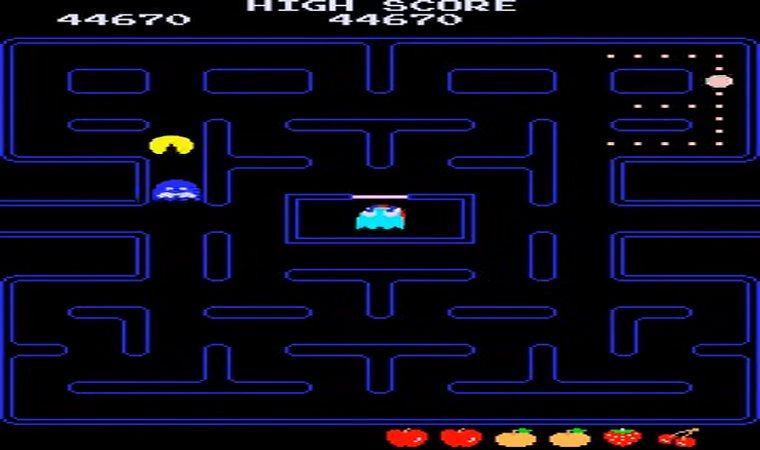
First up on this list is a game that predated even Mario’s debut: Pac-Man. This game was a massive commercial success (with over $14 billion made in 2016), and the eponymous yellow ball is now one of Bandai Namco’s faces and is frequently on the list of greatest games of all time.
You control Pac-Man, who must navigate a maze and eat all the pellets. Along the way, you’ll be chased by 4 ghosts (Blinky, Pinky, Inky, and Clyde), each of whom will move randomly, but at higher difficulties, they become much faster and attempt to cut off or preempt your moves.
Short, sweet, and always challenging, the original PAC-MAN manages to take a basic task and turn it into an amazingly addictive gameplay loop, turning it into a global phenomenon.
Pac-Man’s success came both from how addictive its gameplay was as well as how it was made to cater to as many gamers as possible. Lead designer Toru Iwatani wanted to make a game that would appeal to women and children, in contrast to the more masculine appeal of other games at the time. The rest, as they say, is history.
Even today, Pac-Man’s legacy is still strong. While Namco tried their hand at different genres such as platforming and action Pac-Man games, nothing beats the original. This gameplay is still incredibly strong today, as can be seen in 2016’s PAC-MAN 256, an endless take on the classic Pac-Man.
My Verdict: The original PAC-MAN epitomizes the simple yet highly addictive game design that dominated the early 80s, and it’s still very much worth playing today.
2. The Legend of Zelda: A Link to the Past [The Blueprint for Adventure Games]
| Our Score | 10
☆
★
☆
★
☆
★
☆
★
☆
★
☆
★
☆
★
☆
★
☆
★
☆
★
|
| Platforms | SNES |
| Year of Release | 1991 |
| Creator/s | Nintendo |
| Average Playtime | ~15 hours |
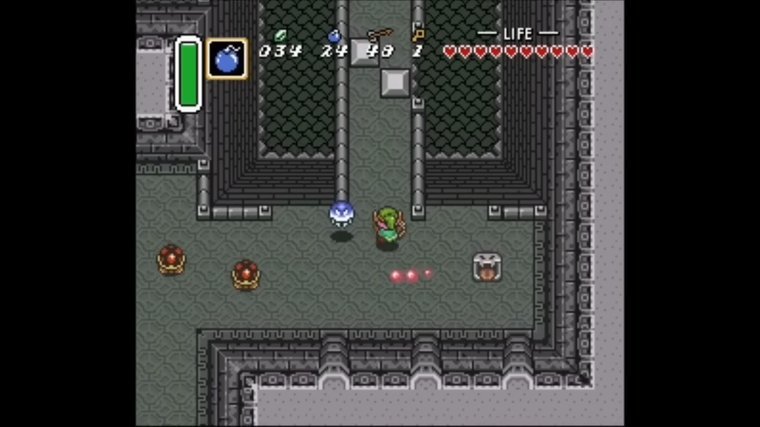
The Legend of Zelda: A Link to the Past is a title I have a lot of history with, but in a nutshell, it utterly dominated my 8-year old gaming time. Mostly because my puzzle solving process involved banging my head against the metaphorical wall until something worked. I just couldn’t wrap my kid mind around how the parallel worlds mechanic worked.
This genre-defining action-adventure video game has Link once again embarking on a quest to save Hyrule from the evil Ganon. To do that, you’ll need to jump between two worlds: the bright and cheery Light World, and the gloomy, demented Dark World. On top of that, the addition of layered dungeons and a stronger story made this game truly remarkable.
A Link to the Past is a title that deserves the accolade of one of the greatest games of all time. With an engaging story, stellar gameplay, and an immersive world that invites you to explore just a little more, it was (and still is) hard to put down this game.
Being just the third game in the series, A Link to the Past ran on the then cutting-edge SNES, meaning it was the first time that gamers could see Link’s adventures in 16-bit. Sure, it might not look like much now, but at the time, seeing Link’s non-pixelated sprite was mind-blowing.
My Verdict: A Link to the Past remains an incredible game, even today. If you’re looking for a starting point to play retro games, this is one title I would definitely recommend.
3. Super Mario World [Platforming Perfection on the SNES]
| Our Score | 10
☆
★
☆
★
☆
★
☆
★
☆
★
☆
★
☆
★
☆
★
☆
★
☆
★
|
| Platforms | SNES, Game Boy Advance |
| Year of Release | 1991 |
| Creator/s | Nintendo |
| Average Playtime | ~7 hours |
We can’t talk about retro games without talking about the Super Mario series. Regardless of what your stance on Nintendo is nowadays, the fact remains that Mario almost single-handedly saved the video game industry after the catastrophic crash of 1983.
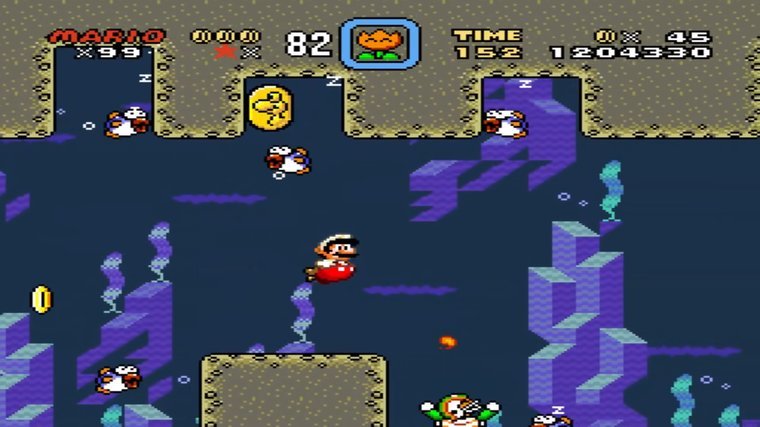
Super Mario World was the series’ first foray onto the SNES, as well as a launch title, meaning the pressure was on to deliver a strong impression. And what an impression it was with its massive creative leap, combining fluid colors, colorful design, the introduction of Yoshi, and an utterly massive world bursting at the seams with secrets.
While each Mario game is pretty much the same: platform across levels and get to Bowser or Princess Peach’s castle, Super Mario World took all of that a notch higher with its graphics, new gameplay mechanics, and memorable level design.
As with A Link to the Past, Super Mario World wasn’t just a smash game, but also set precedents for the franchise moving forward. While it’s still largely the same game today as it was back then (even on modern consoles), every Mario game builds upon its predecessors, and its tight design means that it doesn’t get old.
My Verdict: Super Mario World’s same-yet-fresh gameplay and memorable levels make it an excellent choice for anyone looking to play retro games.
4. Tetris [The Ultimate Puzzle Game]
| Our Score | 10
☆
★
☆
★
☆
★
☆
★
☆
★
☆
★
☆
★
☆
★
☆
★
☆
★
|
| Platforms | DOS, too many to list |
| Year of Release | 1985 |
| Creator/s | Alexey Pajitnov |
| Average Playtime | Variable |
Next up is Tetris, a game that by all rights should have failed. Remember: this was released in 1985 at the height of the Cold War by Russian developer Alexey Pajitnov. Despite this, Tetris was just so dang good that it transcended geopolitical barriers and became one of the biggest names in the gaming world.
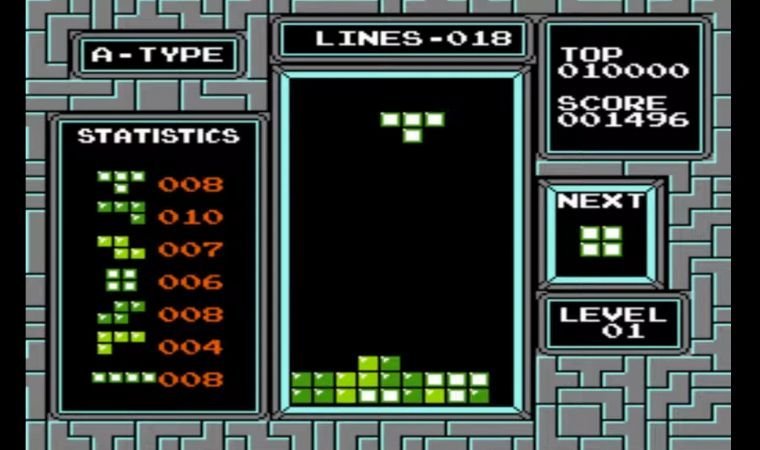
On paper, Tetris is a neat little puzzle game about stacking blocks that fall from the sky. Arrange them in a line and they vanish, but reach a certain height and you lose. It’s very zen and kind of hypnotic, really…until you start hitting the higher levels, at which point you’ll need to perform lightning-fast calculations and do tons of improvisation.
Tetris’ beauty lies in its perfect blend of challenge and gameplay, creating a game that’s easy to learn but insanely difficult to master.
While most games on this list had a clear path to modernization, it’s hard to improve on perfection. Thus, modern games in the franchise focus on adding new QOL, such as multiplayer with friends or randoms or difficulty options.
My Verdict: Tetris is a timeless classic that’s sure to entertain even modern gamers with its deceptively straightforward gameplay.
5. Sonic The Hedgehog 2 [Speed, Style, and 16-Bit Attitude]
| Our Score | 9.5
☆
★
☆
★
☆
★
☆
★
☆
★
☆
★
☆
★
☆
★
☆
★
☆
★
|
| Platforms | Sega Genesis |
| Year of Release | 1992 |
| Creator/s | Sega |
| Average Playtime | ~3 hours |
Mario was undoubtedly a big hit, but some designers realized something important: Mario was too family-friendly. To capitalize on this, game designers Yuji Naka and Naoto Ohshima created Sonic, a spunky blue hedgehog who was cooler than Mario in every way one could think of.
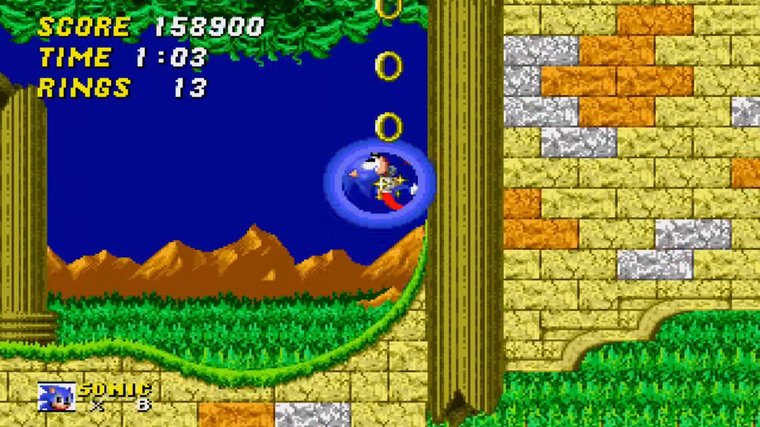
As a direct competitor to Mario,Sonic the Hedgehog sought to outdo its rival not only in attitude, but also in gameplay. While both franchises are platformers, each of the great Sonic games distinguishes itself via blindingly fast and tremendously punchy gameplay, which I believe really matured starting from Sonic the Hedgehog 2.
Sonic the Hedgehog was perhaps THE defining Genesis title that cemented a character as a very real threat to Mario’s dominance. But despite directly challenging Mario for that crown, Sonic games offered a new and fun approach to the platformer genre.
While the technological advantage was bridged by the release of the SNES in 1991, Sonic successfully carved out his own niche and was largely to thank for Sega’s survival in the 16-bit console wars. These days, he’s more of a guest star in other games, but few will debate just how different he and his games were from the usual crowd back then.
One more thing I should point out: while a lot of Sonic games are available via the Sonic Origins collection, it is possible to buy single Sonic titles. These titles have also all been delisted, meaning that a single Sonic the Hedgehog 2 key is a very rare item indeed.
My Verdict: With its high-speed, dynamic gameplay as a perfect counterpoint to other games, Sonic the Hedgehog was a milestone in gaming and showed players just how the industry could evolve.
6. GoldenEye 007 [The Birth of Console FPS Multiplayer]
| Our Score | 9.5
☆
★
☆
★
☆
★
☆
★
☆
★
☆
★
☆
★
☆
★
☆
★
☆
★
|
| Platforms | N64 |
| Year of Release | 1997 |
| Creator/s | Rare, Nintendo |
| Average Playtime | Variable |
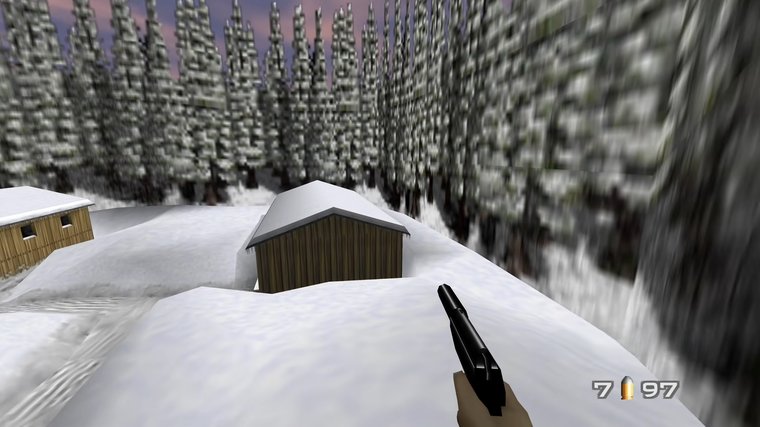
If you’ve never held an N64 controller, go ahead and look one up. Now, imagine using that clunky thing to play an FPS game. And yet people would willingly subject themselves to using it. That’s just how good GoldenEye 007 was.
GoldenEye follows the storyline of the James Bond movie of the same name. This first-person shooter incorporated both action and stealth to deliver the ultimate spy movie experience. While this was fun, it was GoldenEye’s multiplayer deathmatch mode that elevated it to legendary status and made it a social and technical landmark.
GoldenEye isn’t just very fun, but it also upturned the industry by showing that shooters were viable on consoles, not just PC. This paved the way for console developers to push the boundaries and not just stick to doing stuff like platformers or kart racing games.
While the original GoldenEye was not without its faults, its success cannot be understated. And yes, FPS combat evolved outside of GoldenEye, but one can’t deny GoldenEye’s importance in pushing for cross-platform shooters, as well as just how enjoyable it is.
My Verdict: GoldenEye 007 revolutionized FPS games by its slick action and incredibly fun multiplayer mode.
7. Final Fantasy VI [Epic Storytelling in Pixel Form]
| Our Score | 9
☆
★
☆
★
☆
★
☆
★
☆
★
☆
★
☆
★
☆
★
☆
★
☆
★
|
| Platforms | (Original) SNES, (Modern) PC, Nintendo Switch, PlayStation 4, Xbox Series X/S, Android, iOS |
| Year of Release | 1994 |
| Creator/s | Square |
| Average Playtime | ~25 hours |
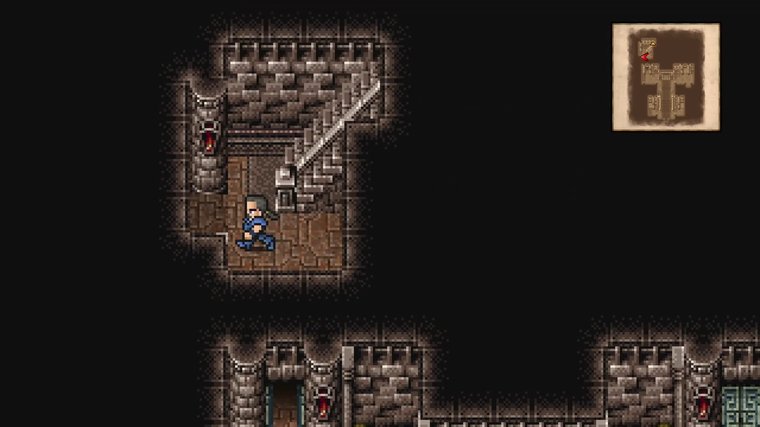
Trust me: it was hard just picking out one Final Fantasy title for this list. But I decided that, since we’re going with retro, to take one step back from the ever-popular Final Fantasy VII and shed some light on the last 2D title: Final Fantasy VI. Yes, Kefka was a big part of this decision.
Unlike other Final Fantasy titles, this one stands out in the series for its much darker setting and more mature themes (such as tyranny, rebellion, arms races, and potentially world-ending weapons) compared to earlier games in the franchise.
Final Fantasy VI’s darker world gave it that much more emotional punch. On top of that, it never lacks for anything in presentation: its ensemble cast, operatic score, and incredibly memorable villain make for a truly unforgettable JRPG.
This major paradigm shift in tone and story paid off immensely, and many agree that VI is one of the greatest Final Fantasy games of all time, a sentiment I fully agree with. While every Final Fantasy title is a great JRPG, there’s just something special about VI, with its grim setting, epic storytelling, and impeccable presentation.
My Verdict: Anyone looking to play retro games should take a deep dive into the Final Fantasy series, and Final Fantasy VI is a fantastic starting point.
8. DOOM [The Game That Defined a Genre]
| Our Score | 9
☆
★
☆
★
☆
★
☆
★
☆
★
☆
★
☆
★
☆
★
☆
★
☆
★
|
| Platforms | (Reboot) PC, Nintendo Switch, PlayStation 4, Xbox Series One |
| Year of Release | (Original) 1993, (Reboot) 2016 |
| Creator/s | (Original) id Software, (Reboot) id Software, Bethesda |
| Average Playtime | (Original) ~5 hours, (Reboot) ~12 hours |
Now for another genre-defining FPS: DOOM. Few will debate just how big of a splash this classic FPS game had, and while the 2016 reboot which we’ll be talking about wasn’t as influential, it’s still every bit as hardcore as the original.
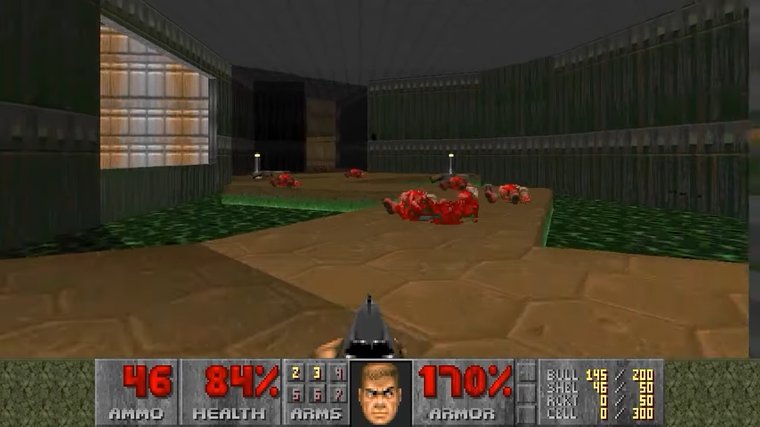
As with pretty much every retro game, DOOM doesn’t need much of a story. You play as Doomguy, a demon-killing space marine who’ll march from Mars to the bowels of Hell itself. All the while, you’ll shoot, blast, and gib demons of every sort in visceral, bloody combat. Simple, manly, and super badass. And yes, that describes both the 1993 and 2016 versions.
The original DOOM paved the way for the modern FPS genre with its punchy gameplay and atmospheric design. This legacy endures up to this day, with shooters like Call of Duty, Halo, and yes, DOOM (2016).
Even though DOOM itself would reboot the franchise in 2016, not much has changed. It’s still the same enjoyable demon-killing romp, this time utilizing modern hardware for an even more immersive experience. And while it’s not as influential as the original (it’s hard to make history twice), DOOM 2016 is still very much worth a look for those looking to play retro games.
My Verdict: The original DOOM was a true milestone for video games, and even in its modern incarnation, it’s still very entertaining.
9. Street Fighter II [The Fighting Game Revolution]
| Our Score | 8.5
☆
★
☆
★
☆
★
☆
★
☆
★
☆
★
☆
★
☆
★
☆
★
☆
★
|
| Platforms | Too many to list |
| Year of Release | 1991 |
| Creator/s | Capcom |
| Average Playtime | Variable |
Street Fighter II is a game that I believe requires no introduction. Despite the meager performance of the original Street Fighter, Street Fighter II was and still is an incredibly influential title; I don’t think it’s a stretch to say that it’s a cornerstone of the fighting video game genre.
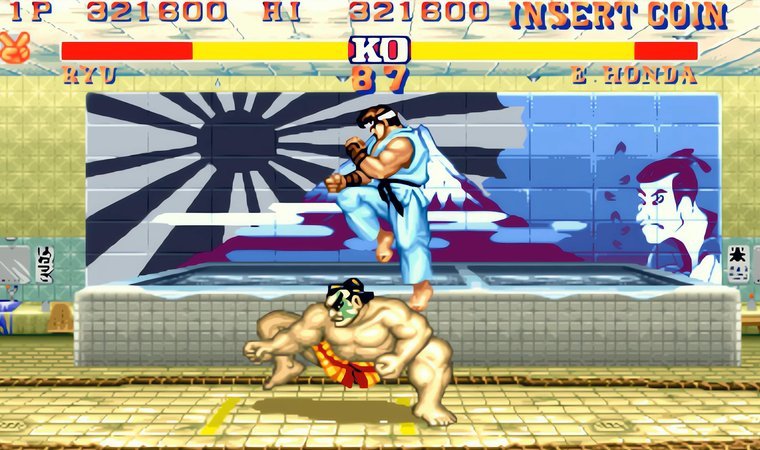
Street Fighter II does have a token story, but it just gets in the way of gameplay. Besides, it’s much more fun to pick your favorite from 8 characters and beat the crap out of the AI or other people in strategic, tense 1v1 combat, all of which makes for some pretty wild fun.
Street Fighter II isn’t just incredible fun. It also single-handedly codified many of the genre’s mechanics, such as combos (which were a bug, btw), cancels, and movesets unique to each character.
Today, we’ve got stuff like Tekken and Mortal Kombat on consoles ranging from PC to Xbox. But without Street Fighter II laying the foundations, these fighting games (and heck, the entire genre) would not exist as we know them.
My Verdict: Street Fighter II’s fast and furious battles make it a title worth your time, even with the advent of more modern video games.
10. Streets of Rage 2 [Beat ’Em Up Excellence]
| Our Score | 8.5
☆
★
☆
★
☆
★
☆
★
☆
★
☆
★
☆
★
☆
★
☆
★
☆
★
|
| Platforms | Sega Genesis, Sega Megadrive, Game Gear, Nintendo 3DS |
| Year of Release | 1992 |
| Creator/s | Sega |
| Average Playtime | ~3 hours |
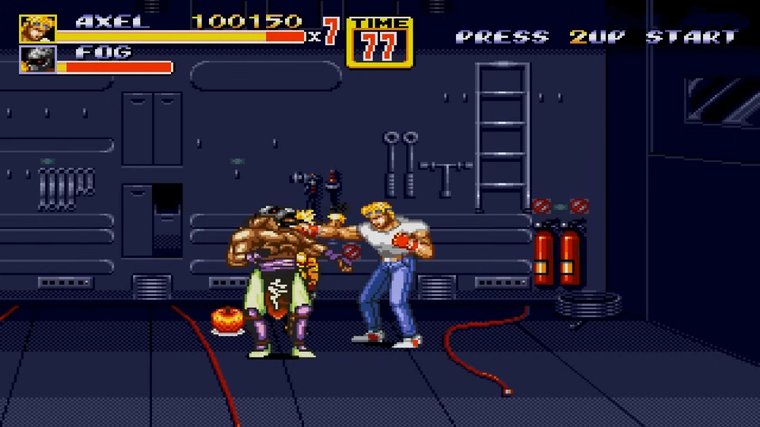
Last, but definitely not least on this list is the formidable Streets of Rage 2. While Sonic was Sega’s flagship series, they had other excellent games as well, such as this perfect mix of action, rhythm, and co-op fun.
In this game, you and up to one other friend pick from one of 4 characters (Axel, Blaze, Max, and Skate), each of whom have their own fighting styles. Story-wise, you’re supposed to be fighting against the Syndicate, a crime organization that’s utterly infested their city. This translates to walking around and taking down bad guys with punches, kicks, throws, and more.
There are a lot of memorable arcade brawlers, yes, but Streets of Rage 2 is the gold standard against which others in the genre are judged.
While there were a ton of side-scrolling beat-em-ups in the 80s and 90s (especially in arcades), none of them could quite reach the quality that Streets of Rage 2 had. Sure, the beat-em-up genre was nothing new, but Streets of Rage 2’s superb presentation and refinements to gameplay makes it a video game that’s still worth diving into today.
Lastly, I should point out that Streets of Rage 2 is part of the Sega Genesis Collection, which as of writing can only be redeemed via key, making it a true collector’s item.
My Verdict: Streets of Rage 2 is a short and sweet game that’s a great pick not just for retro players, but those looking for some uncomplicated fun.
My Overall Verdict on the Best Retro Games
Even just 10 titles presents a lot of choice; after all, each of these video games offers a very different experience. So, let’s break things down even further to help you pick what to play next.
Best starting point for retro games today?
- For Endless, Challenging Puzzle Gameplay → Tetris
Simple it may be, but few can deny just how addictive stacking blocks is. - For Platformers → Super Mario World
Mario’s first foray into the 16-bit world was met with smashing success, and the game’s level design and platforming action still hold up today. - For Adventure Games → The Legend of Zelda: A Link to the Past
Modern Zelda games might lean towards open-world designs, but the adventure offered by A Link to the Past is still unlike any other. - For Classic FPS → DOOM
Retro-style gameplay combines with modern graphics and audio for a thoroughly immersive and action-packed demon-slaying adventure.
FAQs
The best retro game depends on what experience you’re looking for. Arcade players might enjoy Pac-Man or Tetris, while platformer players might enjoy Super Mario World or any Sonic the Hedgehog games.
A video game is typically “retro” because it’s either from the 70s to 90s, or it uses an art style and/or game design that harkens back to that era. Aside from “classic” retro titles like Super Mario Bros or Super Mario World, we also have new games that use the retro aesthetic, such as Shovel Knight.
Yes, retro gaming is still popular. “Classic” retro games allow younger audiences a glimpse into gaming history, while “modern” retro games use older (or stylized) graphics and audio.
The best retro game console will depend on what games you’re trying to play. My personal vote is the original NES, as a lot of games were released on it due to its popularity. If we’re talking about modern consoles, the Nintendo Switch line also offers access to a lot of older titles.
Some of the retro games improved by their remakes include remasters of the Legend of Zelda series, the Pokemon series (such as FireRed and LeafGreen), and the Resident Evil remakes.