

2026 Guide to All Pokémon TCG Sets in 2026


Pokémon TCG sets have come a long way since Base Set Charizard melted binders in the ‘90s. What started as a side hustle to the video games has become a full-blown obsession, with new mechanics, rarities, and collector-bait every year. And 2025 is already looking wild.
In this guide, I’m breaking down all major English-language Pokémon TCG sets, not just a boring checklist, but a look at what made each one tick. You’ll find key cards, gimmicks (hello, Terastallization), standout designs, and the stuff that makes collectors foam at the mouth.
We’re covering Pokémon TCG sets in order, from the latest 2026 releases all the way back to the early Sword & Shield days, with a few curveballs from the Sun & Moon era for context.
No promo sets, no Japanese exclusives – just the core expansions that shaped the modern game. If you’re here to build, collect, or invest (or just chase another Gardevoir alt art), this list is for you.
Ok, let’s start ripping packs.
Jump to:
Base Set Era (1999–2000)
Even decades later, the Pokémon TCG holds its own against the best trading card games out there, and this is the original series. It exploded with Base Set back when Nintendo was still warming up to the card game.
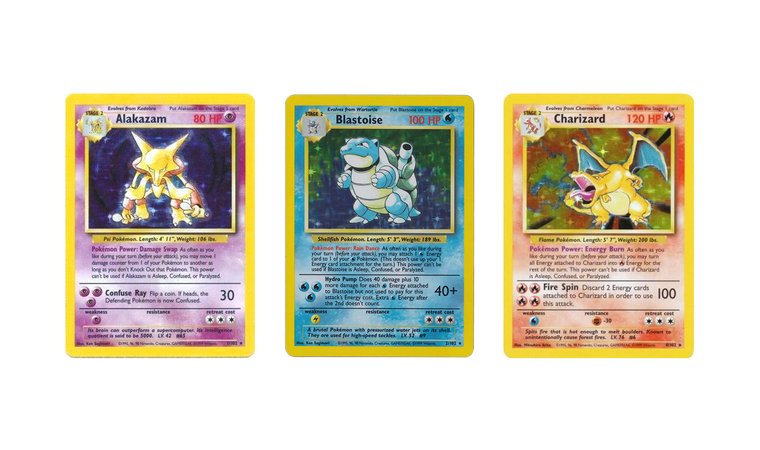
Chunky fonts, thick borders, and that iconic yellow frame. The Base Set era focused on Gen 1 Pokémon, pulling directly from Red and Blue with no gimmicks, just raw nostalgia. No EXs, Vs, or full arts here (the biggest flex was a holo Charizard)
Mechanics were simple, with minimal Trainer support and slower pacing overall. Power creep wasn’t a thing yet, so a 100-damage attack felt insane. The card design was clean, the strategy basic, and the vibe? Pure playground chaos. This era laid the groundwork for everything that followed.
1. Base Set (1999)
Base Set was pure Gen 1 energy. It’s stacked with starters, evolutions, and Kanto favorites like Blastoise, Alakazam, and, of course, THAT Charizard, one of the most iconic Pokémon cards ever. Just clean, bold layouts and thick yellow borders burned into every ’90s kid’s memory. The art was simple but iconic, with watercolor-style backgrounds and hard shadows that gave each card real weight.
Trainer cards were minimal and a bit weird, and Energy cards looked like something from a science textbook. This set didn’t just launch the game. It also defined the look and feel of the entire TCG for years. It turned childhood binders into treasure troves and featured some of the most expensive Pokémon cards ever sold.
2. Jungle (1999)
Jungle was the first expansion and brought the forest with it – literally. It doubled down on Gen 1 favorites with Eeveelutions, Scyther, and Snorlax stepping into the spotlight. The set added more Holo rares and a healthy boost to the TCG’s evolving strategy.
Visually, cards had more vibrant, detailed art, with richer colors and nature-themed backgrounds. Nothing game-breaking here, but Jungle proved the TCG wasn’t a one-hit wonder.It was just getting started.
3. Fossil (1999)
Fossil took a darker turn. It added ancient Pokémon like Kabutops, Aerodactyl, and Omastar, along with ghost types like Gengar and Haunter. The art felt moodier, with murky backdrops and eerie expressions.
Compared to Base and Jungle, this set leaned harder into mystery and atmosphere. Fossil didn’t shake up mechanics, but it added more personality to the roster. It felt like the TCG’s moody younger sibling, still Gen 1, just with extra shadow.
4. Base Set 2 (2000)
Base Set 2 is basically a greatest hits remix of the original Base Set and Jungle/Fossil cards. You get Charizard, Pikachu, Gengar, all the OG crowd-pleasers. The art sticks close to the classics, no wild changes here. It’s the perfect set if you want to relive the early days without digging through three separate decks. A neat shortcut for collectors who want the essentials in one place.
5. Team Rocket (2000)
Team Rocket brings the villains front and center, with the mischievous Rocket grunts stealing the spotlight. Dark Charizard and Dark Blastoise show up looking rougher and meaner than usual. The art gets moodier (no more happy-go-lucky vibes here). This set flips the usual Pokémon script and throws in some serious edge. If you want your cards with attitude, Team Rocket delivers hard.
6. Gym Heroes (2000)
Gym Heroes is where trainers stepped into the spotlight. You get their personal teams, including Misty’s Starmie, Brock’s Onix, Surge’s Electabuzz, all labeled and loyal. Every Pokémon shows allegiance to a gym leader, which meant you had to build your deck around more than just type – now you were playing favorites. The vibe is straight out of the anime: bold, character-driven art and decks built around identity. It’s a flex set for trainer loyalists.
7. Gym Challenge (2000)
Gym Challenge picks up where Heroes left off, but ups the stakes. Blaine, Sabrina, Giovanni, and Koga take center stage, bringing stronger Pokémon and trickier effects. It’s where the Gym Leader concept really clicks. It all became more thematic, and the power level jumped. Sabrina’s Alakazam, Blaine’s Arcanine, Rocket’s Mewtwo – yeah, the set doesn’t mess around.
Neo Era (2000–2002)
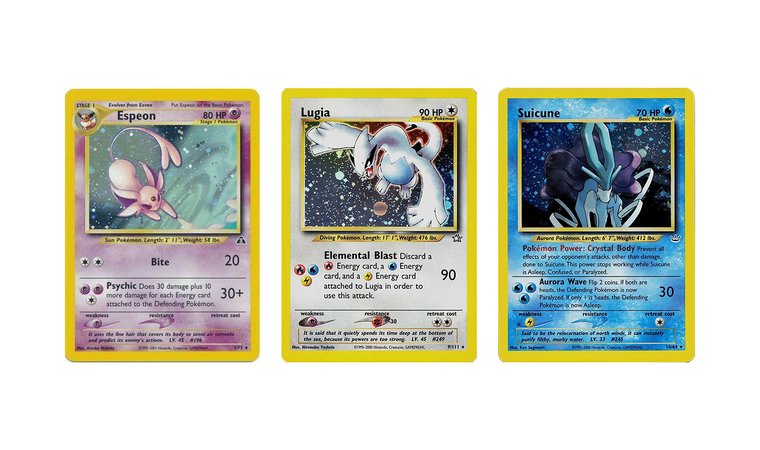
Neo Era marks the jump to Generation II, introducing Johto Pokémon and fresh mechanics that reshaped the game. Baby Pokémon showed up with weird rules, Dark and Light Pokémon split alignments, and the Pokémon Powers of old gave way to more balanced abilities.
Card design got sleeker, with updated layouts and cleaner fonts. Sets like Neo Genesis and Neo Revelation leaned into mystery and mythology, spotlighting Legendary Beasts and Unown. Compared to the chaos of Rocket and Challenge, Neo felt more mature, which means less edge and more strategy. It was the era where Pokémon TCG truly started growing up.
1. Neo Genesis (2000)
Neo Genesis kicks off Gen II in style and brings Johto Pokémon to the TCG for the first time. It adds Baby Pokémon, new Evolution rules, and introduces the Metal and Darkness types. Big names like Lugia, Feraligatr, and Typhlosion headline the set, with a fresh card layout that looks way more modern. It’s a foundational set for competitive decks and a fan favorite for good reason. If you’re just getting into the TCG or want a deeper breakdown of how battles work, check out our complete Pokémon card gaming guide.
2. Neo Discovery (2001)
Neo Discovery expands on Johto with a weirder, more defensive lineup. Think Unown swarms, Espeon, Umbreon, and fossil-themed oddities. It builds on Baby Pokémon and continues pushing status effects and tricky stall tactics. The art gets more stylized, and deck diversity really opens up. It’s not as flashy as Genesis, but it rewards smart play and creative team-building. A sleeper set with plenty of hidden depth.
3. Neo Revelation (2001)
Neo Revelation introduces the legendary beasts, such as Raikou, Entei, and Suicune, plus Ho-Oh and the game’s first Shining Pokémon. The set takes a moodier turn, with art that’s darker and more atmospheric. Themes shift toward ancient myths and powerful forces, which gives Johto’s lore a stronger spotlight. Card effects start getting bolder, with stronger basics and a shift toward big swings over long stalls. It’s where the Johto era really starts flexing its mythic muscle.
4. Neo Destiny (2002)
Neo Destiny shines the spotlight on Shining Pokémon, rare variants that stole the show with their unique holo effects. It mixes fan favorites from Johto and Kanto, boosting the set’s star power. New card designs add flair, and gameplay steps up with powerful attacks and tricky abilities. This set is all about rarity and style, which makes collectors and competitive players equally happy.
Expedition Era (2002–2003)
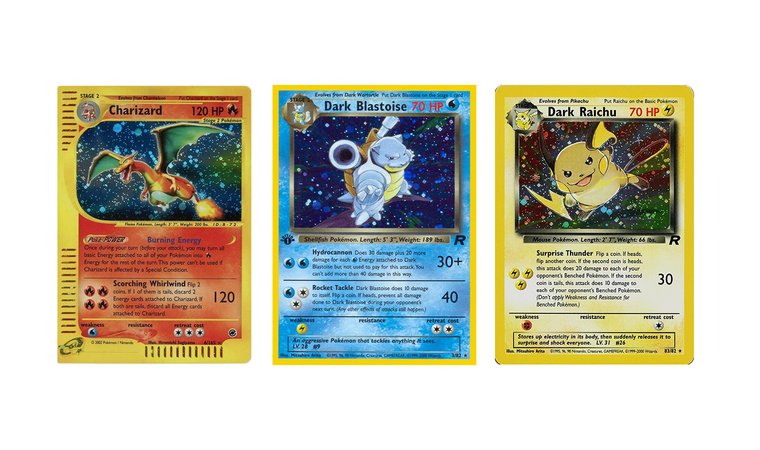
The Expedition Era marked the TCG’s leap onto the Game Boy Advance with the launch of the e-Reader series. These sets introduced scannable dot codes on cards, adding digital bonuses and mini-games.
Gen 1 and Gen 2 Pokémon still took center stage, but the format was shifting. Card layouts were overhauled, text spacing widened, and power creep slowed. It was a transitional phase: experimental, tech-forward, and visually distinct.
1. Legendary Collection (2002)
Legendary Collection is a greatest-hits remix of Base Set through Team Rocket, bundling iconic cards like Charizard and Dark Blastoise into one flashy reprint set. Its big hook? Reverse Holo cards with explosive firework-style foil, some of the loudest in the game’s history. Although not among the rarest Pokémon cards by any means, Reverse Holos like Dark Raichu marked the beginning of secret rares. No new mechanics, just pure collector bait and nostalgia overload. Distinguishing between these variants is a key skill for any collector. A straightforward Holo vs Reverse Holo comparison explains the fundamental difference in where the foil is applied on the card. This ensures you can always identify exactly which version you have.
2. Expedition Base Set (2002)
Expedition Base Set kicked off the e-Card era and brought the TCG into Gen 2’s post-Gym world. It introduced Supporters, Stadiums as their own card type, and barcode strips for scanning into the e-Reader. The layout changed too. New borders, fonts, and placement tweaks made cards feel sleeker and more modern. A big, bold reset that bridged the old game with the new tech.
3. Aquapolis (2003)
Aquapolis is one of the most ambitious and complex sets in the Pokémon TCG’s history. It introduced Crystal Pokémon, color-shifting, high-energy cards with wild flexibility, and pushed art boundaries with bold layouts, experimental angles, and watercolor-style pieces. With 186 cards, it’s massive, and thanks to e-Reader support, it packed mini-games and Pokédex entries. A collector’s dream and a competitive curveball all in one.
4. Skyridge (2003)
Skyridge closed out the e-Reader era with a bang. It kept Crystal Pokémon going and doubled down on experimental art (wide-angle shots, hand-drawn textures, and bold color choices). It also introduced Supporter cards, shifting how Trainers worked mid-game. With low print runs and gorgeous holo patterns, Skyridge became a grail for collectors and a turning point for competitive decks.
EX Era (2003–2007)
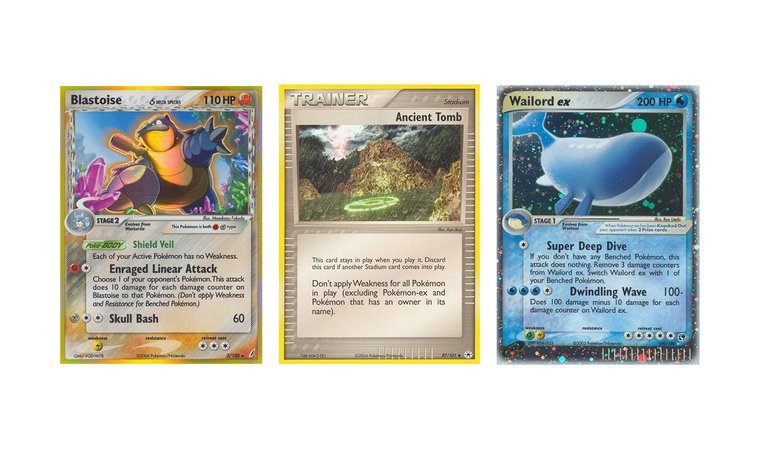
The EX Era marked a major power shift. Third-gen Pokémon took center stage, and new EX cards shook up the meta – powerful evolutions with a catch: give up two Prize cards if they’re knocked out.
Special Energy saw wider use, and card art got sharper and more dynamic. The era felt faster, riskier, and more competitive overall. It also laid the groundwork for how high-stakes play would evolve in years to come.
1. EX Ruby & Sapphire (2003)
The start of the EX Era brings Gen III Pokémon to the TCG, plus two big shifts: Supporters and the new EX mechanic. Pokémon-ex hit harder but give up two prizes, which was game-changing at the time. It’s a pretty stripped-down set otherwise, but as the first to break from Wizards’ design, it set the stage for a more aggressive meta.
2. EX Sandstorm (2003)
Sandstorm feels like a filler set, but it quietly introduces Fossils into the EX format and adds some genuinely weird art. Notable EXs like Wailord and Gardevoir make appearances, but the set lacks strong synergy. Still, it expands Gen III representation and starts to build toward a more strategic format with tanky setups and harder-hitting basics.
3. EX Dragon (2003)
Despite the name, there are zero Dragon-type cards, just Dragon-themed Pokémon like Salamence and Flygon. This set adds Colorless-cost attacks that scale better with multi-type decks, shaking up mono-type play. It’s an oddball release with strong Gen III evolution lines and a focus on energy flexibility, making it more experimental than powerful.
4. EX Team Magma vs. Team Aqua (2004)
The first villain-themed set, and still one of the boldest. Magma and Aqua Pokémon play by their own rules, with dual typing and deckbuilding restrictions that reward commitment. This was the Pokémon TCG leaning hard into Ruby & Sapphire lore, and it pulled it off. Team mechanics, synergy bonuses, and new Stadiums gave decks a real identity.
5. EX Hidden Legends (2004)
A mid-tier set that introduces Regice, Registeel, and Regirock, plus ancient-themed Trainers like Ancient Tomb. The hidden Legends series adds flavor but doesn’t shift the meta too much. Weak Pokémon-ex and a focus on theme over raw power leave it underwhelming, though Jirachi and Metagross bring some value. Not a showstopper, but it fleshes out Gen III’s mystical side.
6. EX FireRed & LeafGreen (2004)
This is where nostalgia kicks in – classic Kanto Pokémon return, redrawn and repackaged with EX rules. Charmander, Squirtle, Bulbasaur, and friends make a strong comeback, with crowd-pleasing EXs like Zapdos and Articuno. The set also debuts dual-type evolutions and more aggressive Trainers, balancing old-school vibes with a faster playstyle.
7. EX Team Rocket Returns (2004)
A spiritual sequel to the original Rocket set, but more complex and brutal. Dark Pokémon return, this time with a sleek EX twist, and a heavier focus on hand control, disruption, and prize denial. This is one of the most competitive sets in the EX Era (slow, methodical, and vicious when piloted well).
8. EX Deoxys (2005)
This one’s all about Deoxys and its multiple forms, each with unique abilities and stats. The set introduces the Delta symbol, though not fully explored until later. Rayquaza-ex steals the spotlight, and the set adds versatility with Stadiums and Special Energies. It’s solid, but mostly a stepping stone to bigger innovations.
9. EX Emerald (2005)
Emerald plays clean-up for the Gen III era, bringing in Pokémon that were skipped in earlier sets. It’s also the first time Stadiums are printed as a separate card type, affecting both players at once. Battle Frontier and Scott support new control strategies. A quiet release, but one that deepened the format’s options.
10. EX Unseen Forces (2005)
One of the strongest EX sets ever printed. Johto gets its turn, with heavyweights like Lugia-ex, Typhlosion, and Blissey leading the charge. This set also introduced a powerful cycle of Pokémon-ex with healing and energy acceleration. Solid synergy, great Trainer cards, and a sharp meta presence. It’s flashy and functional in equal measure.
11. EX Delta Species (2005)
Now we get the twist: Pokémon with off-type elements. A Metal-type Charizard? Sure. A Fire-type Jolteon? Why not. Delta Species flips typing on its head, forcing players to rethink synergy and energy builds. Set in the Holon region, it kicks off a mini-lore arc and delivers some of the most creative cards in the EX Era.
12. EX Legend Maker (2006)
More Fossil support, finally. Aerodactyl, Kabutops, and Omastar return in better form, and the set experiments with reactive abilities, such as cards that trigger from being knocked out or damaged. Mew and Gengar lead the charge thematically, and the set quietly supports tech-heavy decks with a darker, experimental tone.
13. EX Holon Phantoms (2006)
Holon Phantoms is all about altered Pokémon biology. Delta Species rule here. Psychic and Lightning Pokémon in strange types, more Metal and Darkness support, and another batch of dual-typed basics. It’s weird and intriguing, and gives control players a field day with cards like Holon Transceiver and Curse Powder.
14. EX Crystal Guardians (2006)
Another Holon-based set, this one dives deeper into energy manipulation. Crystal Guardians introduces powerful Tools and Special Energies that reward type-matching and support Delta mechanics. Notable pulls include Blastoise δ and Charizard δ, both great for rogue decks. The theme is more elemental and less spooky, but still clever and competitive.
15. EX Dragon Frontiers (2006)
The Delta experiment peaks here, nearly every card is off-type. Dragon Frontiers goes big on power with Stage 2 Pokémon that hit fast and hard. Feraligatr δ and Flygon δ dominate, and the gold-star Dragonite and Rayquaza are grail-tier cards. It’s high-stakes, high-flavor, and marked the start of a more aggressive EX metagame.
16. EX Power Keepers (2007)
The swan song for the EX Era. Power Keepers is a mashup of reprints and unreleased Japanese promos, but it’s far from forgettable. It features Hoenn’s Elite Four, brings back energy acceleration staples, and closes the era with a mix of fan favorites and competitive options. A solid finale before the DP shift.
Diamond & Pearl Era (2007–2009)
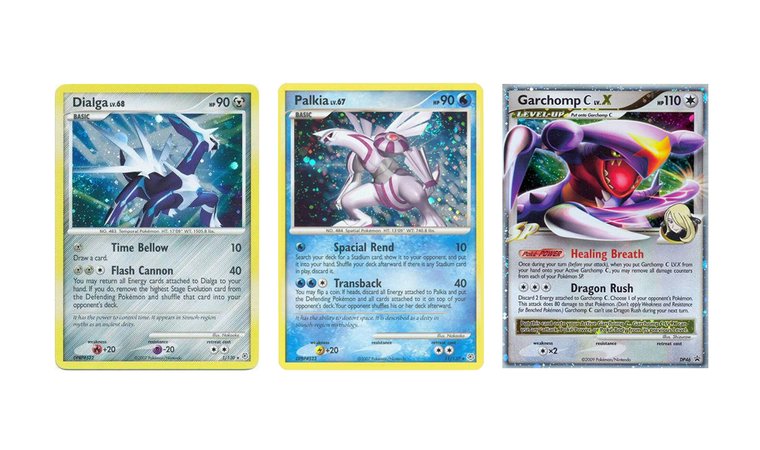
Diamond Pearl series kicked off a new chapter with the arrival of Gen 4 and major gameplay updates. Stage 2 Pokémon got stronger, Weakness/Resistance values changed, and Supporter/Trainer rules were reworked.
It also introduced Level-Up mechanics through Pokémon LV.X cards, early powerhouses with extra abilities. The era had a clean, modernized look and pushed toward more strategic, competitive decks while spotlighting Sinnoh’s legendaries and evolved starters throughout its run.
1. Diamond & Pearl (2007)
The first Gen 4 set reboots the TCG with a cleaner card design and mechanical shifts. Supporters now play like Trainers, and Weakness/Resistance gets a math overhaul. It introduces LV.X cards, a new way to power up evolved Pokémon. The lineup features Sinnoh starters, legendaries like Dialga and Palkia, and a focus on evolution chains. A solid foundation, if a little safe.
2. Mysterious Treasures (2007)
This set builds momentum with more LV.X cards and the debut of Fossil Pokémon from Sinnoh. Garchomp and Magmortar step into the spotlight, while new mechanics like the “Technical Machine” cards add tactical depth. Mysterious Treasures mixes filler with real meta pieces and adds to the evolving power curve without breaking it, very much a supporting act that knows its role.
3. Secret Wonders (2007)
Secret Wonders experiments with status effects, disruptive trainers, and energy denial. It introduces key cards like Gardevoir LV.X and Gallade, which quickly shape competitive decks. You’ll also find region-spanning Pokémon beyond Sinnoh, which gives the set a more eclectic feel. It’s a sleeper favorite, less flashy than later sets but full of tactical pieces that saw heavy play.
4. Great Encounters (2008)
Great Encounters continues the LV.X theme with powerhouses like Garchomp and Palkia, but it’s best remembered for Swampert and the versatile Claydol, one of the strongest draw engines of its time. The set balances tech cards and heavy hitters, expanding on themes without going off-course. It’s not groundbreaking, but it’s deeply playable and left a real mark on the meta.
5. Majestic Dawn (2008)
Majestic Dawn breaks the pattern by excluding a titular legendary, but it still lands strong with Eeveelutions and powerful LV.X cards like Glaceon and Leafeon. Fossils return, but the set’s real charm lies in its flexible deck skeletons and combos. It’s a toolkit set (modular, slightly odd, and full of potential if you know how to build with it).
6. Legends Awakened (2008)
Legends Awakened goes big: more legendaries, more LV.X cards, and more experimental mechanics. Regigigas, Heatran, and Mesprit shine, while staples like Uxie offer serious draw power. The art and tone shift toward the dramatic, which gives the set a larger-than-life feel. It’s mechanically rich, visually bold, and arguably the most impactful set of the era.
7. Stormfront (2008)
Stormfront taps into nostalgia by reviving classic Pokémon with reworked “base set” art and movesets, including a new Charizard. It adds powerful cards like Gyarados and Dusknoir LV.X, along with efficient trainers and SP-counters that shaped the meta. There’s a retro-modern balance here that’s hard to pull off, but Stormfront nails it. A fan favorite for good reason.
8. Platinum (2009)
The Platinum series kicks off a mini-arc centered on Team Galactic, introducing SP Pokémon and the game-changing Trainer engine that follows. These Basics often rival Stage 2s, making decks faster and more aggressive. It also brings in the shiny “reverse holo” style and introduces cards like Dialga G LV.X. This is the start of a new pace and power level for the Pokémon TCG.
9. Rising Rivals (2009)
Rising Rivals shifts the spotlight to Gym Leaders and Elite Four, bringing themed SP Pokémon tied to named trainers. The result? Tons of flavor and several strange, but interesting builds. Cards like Luxray GL LV.X quickly dominated competitive play. While some SPs feel gimmicky, the set’s support cards are strong, and its character-driven theme gives it a real personality.
10. Supreme Victors (2009)
Supreme Victors expands the SP lineup with Cynthia’s, Palmer’s, and Frontier Brain Pokémon. It’s flashier and more aggressive than Rising Rivals, with power cards like Garchomp C LV.X and Blaziken FB. The design leans hard into synergy between named trainers and their Pokémon, creating fast decks with brutal tempo. Not the most balanced set, but definitely one of the most memorable.
11. Arceus (2009)
Arceus is a self-contained set with a clear focus: the Mythical Pokémon and its many types. You get a full lineup of Arceus forms, plus the new “Alpha” mechanic. Outside that, it’s a bit light – most cards feel thematically cool but mechanically narrow. Still, as a swan song for the era, it’s charming, experimental, and just odd enough to work.
HeartGold & SoulSilver Era (2009–2010)
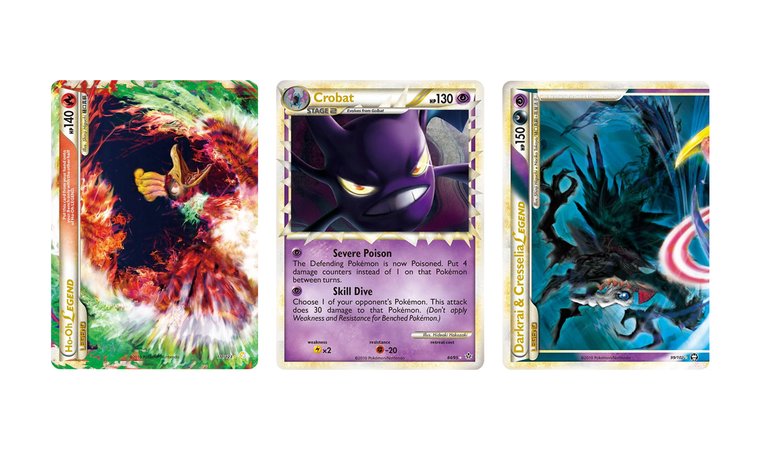
The HeartGold & SoulSilver era brought a nostalgic reset with updated takes on Gen II favorites and Johto-themed design. This period introduced Legend cards, which are oversized two-part Pokémons that stood out both visually and mechanically. It also reintroduced Trainer-classified cards (Trainer, Supporter, Stadium).
Card design shifted toward brighter, more uniform templates. While the power level remained modest, the sets focused on thematic cohesion, collector appeal, and a more structured, elegant presentation across the board.
1. HeartGold & SoulSilver (2010)
As a refined reintroduction to Johto, this set digs into Gen II nostalgia with clean, golden-bordered cards and a return of classic mechanics like Double Colorless Energy. The debut of Legend cards (Lugia & Ho-Oh) offered something bold and collectible, while Prime Pokémon introduced a new kind of power creep. It set the tone for a more polished, thematically consistent TCG experience.
2. HS – Unleashed (2010)
Unleashed focused on raw elemental power, with Primes like Kingdra, Crobat, and Steelix leading the charge. The set also doubled down on Legend duos, including Raikou, Entei, and Suicune, all with standout art. While not the most competitive set, it gave support to Water and Lightning decks and boosted tanky evolution lines. A sleeper hit for collectors thanks to consistent artwork and thematic synergy.
3. HS – Undaunted (2010)
Undaunted had a darker, edgier vibe, spotlighting Eeveelutions, Scizor, and Umbreon in standout Prime forms. While it lacked headline Legends, it introduced solid staples like Energy Exchanger and Defender. The set emphasized versatility and subtle combos over brute strength. It’s often remembered more for its art direction and balance than for game-breaking plays. It’s a favorite among casual and mid-tier competitive players.
4. HS – Triumphant (2010)
Triumphant closed the era with a bang, featuring six Prime Pokémon and two Legendary duos (Darkrai/Cresselia and Palkia/Dialga). It was also home to some of the most playable cards in the format, including Junk Arm and Twins. The balance between power and strategy made it one of the strongest HS sets, and its high-value cards kept it relevant in both competitive circles and collector markets.
Black & White Era (2011–2013)

The Black White series marked a hard reset, spotlighting Gen V’s Unova Pokémon with a cleaner, digital-era card style. Major changes included the debut of EX Pokémon (distinct from older “ex” cards) and full-art foils, both boosting the power ceiling and collector appeal.
The new rule allowing turn-one Supporter use led to faster games. Themes leaned into high-impact battles, legendaries, and flashy mechanics over slower evolution strategies.
1. Black & White (2011)
This set kicks off the fifth gen with a full Unova roster, the return of full arts, and the new BW-era card aesthetic. Abilities replace Poké-Powers/Bodies, which also creates cleaner mechanics. Reshiram and Zekrom anchor powerful new archetypes, while Professor Juniper sets the tone for aggressive draw. A solid reset with strong theming and cards that still feel modern.
2. Emerging Powers (2011)
Infamously underwhelming, Emerging Powers is heavy on filler and light on impact. It introduces Catcher, sure, but the rest is mostly generic fifth-gen Pokémon and unimpressive Trainers. No EXs, no real archetypes, and very little excitement. It’s a useful draft set, but one of the weakest constructed releases in modern TCG history.
3. Noble Victories (2011)
Finally, real threats arrive. Noble Victories introduces N and Eelektrik, forming the core of multiple top decks. Kyurem starts the spread wars, and the set adds interesting support for Fossils. With better balance and stronger Trainers, it’s the first BW set that felt tournament-ready. It’s not flashy, but it’s foundational for the format.
4. Next Destinies (2012)
EXs are back in force. This set debuts Mewtwo-EX, one of the most format-defining cards in TCG history. Next Destinies ramps up power levels significantly with huge Basics, massive damage, and Energy acceleration. It’s a turning point that helped define the modern pace of play, with enough threats to reshape the meta overnight.
5. Dark Explorers (2012)
Dark Explorers pushes Darkness-types hard, with Dark Patch, Darkrai-EX, and Sableye combining into one of the strongest engines ever. Catcher becomes oppressive, and the format speeds up even more. Support for Eviolite and Random Receiver also helps turbo decks shine. Dark Explorers warps the game around its biggest cards.
6. Dragons Exalted (2012)
Colorful but awkward, Dragons Exalted brings Dragon-types to the TCG with a multi-Energy requirement twist. Hydreigon and Rayquaza-EX headline competing strategies, while Garbodor introduces Item-locking via Abilities. It’s a creative set with bold ideas, though many cards are a step behind the Darkrai-dominated meta. Still, it carved out space for toolbox decks.
7. Boundaries Crossed (2012)
This set adapts Black 2/White 2 with a wide, if unfocused, card pool. Keldeo-EX and Blastoise form a top-tier combo, while Landorus-EX punishes slower decks. It also introduces ACE SPECs, one-per-deck powerful Items like Computer Search. While not the flashiest release, it brought balance back to the meta with flexible builds.
8. Plasma Storm (2013)
Plasma Storm dials up the evil. Team Plasma gets their own branding, along with Hypnotoxic Laser and Virbank to enable brutal poison damage. Lugia-EX and DCE shenanigans make Prize-taking faster than ever. With flashy effects, bold mechanics, and oppressive combos, it’s one of the most memorable and cutthroat sets of the era.
9. Plasma Freeze (2013)
Freeze builds on Plasma’s momentum with Deoxys-EX, Thundurus-EX, and support that makes the deck scarily consistent. It turns Plasma from fun to dominant, with Energy acceleration, damage buffs, and disruption. Scramble Switch and Rock Guard spice up ACE SPECs too. If Plasma Storm introduced a villain deck, Freeze perfected it.
10. Plasma Blast (2013)
Plasma Blast tries to pivot with Genesect-EX and Virizion-EX, starting the “Grass Machine” archetype. While less oppressive than its predecessors, it adds depth with Silver Bangle, Jirachi-EX, and Tool support. It’s Plasma’s last hurrah before fatigue sets in, but it still found a niche in creative toolbox and support-focused decks.
11. Legendary Treasures (2013)
A farewell party for Black & White, this set mashes together reprints, Radiant Collection bling, and chase cards galore. While it’s not tournament-defining, it’s pure fun (EXs everywhere, flashy pulls in every pack, and an over-the-top vibe that still feels unique). Not a balanced set, but a brilliant, chaotic sendoff for the era.
XY Era (2014–2016)
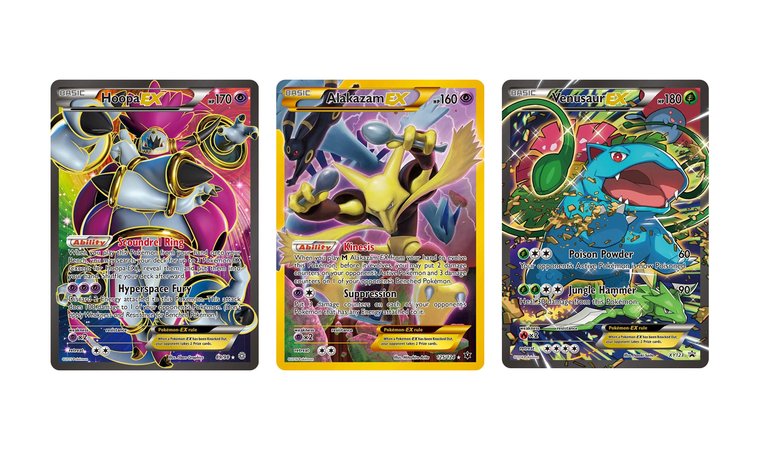
The XY series brings sixth-gen Pokémon into the mix. It introduces Mega Evolutions, Fairy-types, and Spirit Links to keep evolving without losing a turn. Cards like Mega Gardevoir EX and Mega Charizard EX brought that Mega Dream energy with big attacks and risky plays.
The art takes a big leap forward, full arts get flashier, and secret rares go all out. EX cards dominate the meta, but so do clever techs and support Trainers. It’s a bold, chaotic era where speed and spectacle take center stage. This focus on spectacle resulted in some of the most visually stunning cards the game has ever seen. Collectors prize these powerful mechanics for their intricate designs and scarcity. A most expensive Mega Evolution cards guide highlights the standout cards that define the value of this entire generation.
1. XY (2014)
The debut XY set brought Kalos starters, Fairy-types, and a fresh energy to the game. It introduced Mega Evolutions and sleek new card frames that felt fast and modern. Xerneas and Yveltal EX led the charge, and staples like Muscle Band and Professor’s Letter helped shape competitive play. A solid base for what would become one of the flashiest eras in TCG history.
2. Flashfire (2014)
Charizard fans got a full buffet in Flashfire, with multiple versions of the fire dragon, including Mega forms and secret rares. Fire-types ruled the set, and Battle Compressor quickly became a competitive staple. The whole thing burns hot and fast, which is perfect for aggro decks and collectors chasing shiny Zards. Not balanced, not subtle, but unforgettable.
3. Furious Fists (2014)
Lucario gets the spotlight, alongside Fighting-type support like Strong Energy and Focus Sash that gave decks a real edge. Mega Heracross joins the lineup, and Seismitoad-EX made its disruptive debut. Furious Fists delivered some punchy mechanics and laid the groundwork for a more control-heavy metagame. Not the flashiest set, but a strategic one.
4. Phantom Forces (2014)
Phantom Forces went spooky and meta-defining. Night March blew up the format, Battle Compressor sped things up, and VS Seeker made comebacks too easy. Gengar-EX, Manectric-EX, and some eerie, shadowy art gave this set serious personality. Add in Full Art Lysandre’s Trump Card (banned later), and you’ve got one of the wildest, most impactful sets of the era.
5. Primal Clash (2015)
This one went prehistoric, featuring Primal Kyogre and Groudon alongside mega evolutions like Mega Gardevoir and Aggron. Ancient Traits debuted here, adding fun passive effects to Pokémon, and the card pool felt huge. Trainers like Professor Birch’s Observations and Teammates brought control options to the forefront. A bulky, dense set with a lot to explore.
6. Double Crisis (2015)
A small set with big flavor. Double Crisis focused on Team Aqua vs. Team Magma, which gives each side unique versions of classic Pokémon. It’s short (just 34 cards) but the thematic design and full-art Trainers make it a fun side piece for collectors. Not meta-relevant, but a quirky collectible gem with cool alt artwork.
7. Roaring Skies (2015)
Sky Field. Shaymin-EX. Mega Rayquaza. Roaring Skies didn’t just shake up the format. It also turbo-charged it. This set was all about speed, consistency, and explosive combos. Dragon-types and Flying-types dominated, and cards like VS Seeker and Trainers’ Mail became staples. A must-have for competitive players and one of the most powerful XY sets overall.
8. Ancient Origins (2015)
Ancient Origins was a lore-heavy beast with Hoopa-EX, Mega Tyranitar, and shiny Legendaries like Primal Kyogre and Groudon. It pushed the “Ancient Trait” mechanic further and delivered tons of Full Art bling. The set also introduced Hex Maniac and Vespiquen, both huge in competitive circles. A gorgeous, stacked set that hit both play and collector markets hard.
9. BREAKthrough (2015)
Time to meet BREAK cards, gold horizontal evolutions that added HP and extra moves without resetting the Pokémon. Mewtwo-EX takes the lead here, with Psychic-types getting a big push. Parallel City added a clever twist to the stadium game. BREAKthrough tried new mechanics while keeping solid Trainer support, which makes it an experimental but balanced entry.
10. BREAKpoint (2016)
BREAKpoint expanded on the new gold BREAK mechanic while throwing in heavy-hitters like Greninja BREAK and Mega Gyarados-EX. Puzzle of Time, Max Elixir, and Fighting Fury Belt quickly defined the meta. The art hit moody and sharp, with a stormy vibe across many cards. Less balanced than BREAKthrough, but more exciting if you liked high-stakes plays.
11. Generations (2016)
A celebration set for Pokémon’s 20th anniversary, Generations had reprints, alternate arts, and fan-favorite cards like Jolteon-EX and Flareon-EX. The Radiant Collection added glittery, full-art style cards with cute themes. Not legal for tournament play, but great for collectors. Think of it as a nostalgia capsule with more sparkle than competitive edge.
12. Fates Collide (2016)
Fates Collide brought back Alakazam, supported by Zygarde forms and other strong Psychic and Fighting-types. It introduced Carbink BREAK and gave the meta a slower, trickier angle. Delphox, Mew, and Lugia all got nice cards, and the Trainer pool offered new options like N. Not flashy, but well-rounded with strong control potential.
13. Steam Siege (2016)
Steam Siege tried to hype Dual-Types and Volcanion-EX, but most players weren’t buying it. Talonflame and Ninja Boy stood out, but the set was wildly unbalanced and had little competitive impact. Still, the dual-type card frames were a fun experiment, and the steampunk aesthetic gave the set some collector charm, even if it fizzled fast.
14. Evolutions (2016)
Evolutions brought back Base Set vibes with modern tweaks. Think Charizard, Blastoise, and Venusaur with rebalanced stats and XY-era polish. Nostalgia sold this set hard, and full art versions of classic Trainers like Misty and Brock were a huge draw. It’s not a competitive powerhouse, but it’s one of the most beloved collector sets of the decade.
Sun & Moon Era (2017–2019)
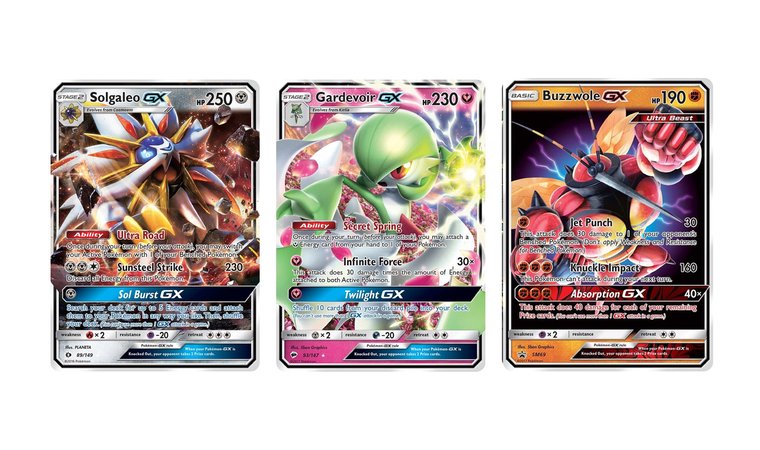
The Sun & Moon era kicked off with a tropical twist and big mechanical shake-ups. Alolan Pokémon took the spotlight, along with Gen 7 starters and legendaries like Solgaleo and Lunala. This era introduced GX cards, which hit harder but gave up two Prize cards when KO’d.
Supporters got stronger, Item lock crept back in, and alternate art promos exploded. The visual design sharpened, with colorful, island-inspired backdrops and glossier card finishes. Sun & Moon also began teasing larger story arcs across multiple sets, laying the groundwork for Ultra Beasts, Tag Teams, and eventually, some wild power creep.
1. Sun & Moon (2017)
The first Gen 7 set brought Alolan forms, GX cards, and a slick new look. Solgaleo-GX and Lunala-GX led the charge, while Supporters like Lillie and Professor Kukui made early waves. The set introduced powerful Abilities and kicked off the Prism Star card frame updates. Not the strongest start for competitive players, but a clean reset for the era.
2. Guardians Rising (2017)
Competitive gold. Tapu Lele-GX ruled tournaments, and staples like Field Blower and Choice Band became must-haves. Alolan Ninetales and Garbodor decks saw serious play. The set leaned on consistency, strong Supporters, and tempo control. Even casual players could feel the boost. Guardians Rising stabilized the meta and defined it for months.
3. Burning Shadows (2017)
Rainbow Rare Charizard-GX stole the spotlight, but Guzma made the set a competitive standout. Gardevoir-GX and Ho-Oh-GX added power, while Acerola and Kiawe fueled strategy. Burning Shadows had strong fire and fairy support, but suffered from poor print quality. Still, its top-tier Trainers and collector bait made it one of the more memorable releases in the Sun Moon series.
4. Shining Legends (2017)
A special mini set focused on Mythical Pokémon, including shiny versions of Mew, Rayquaza, and Jirachi. Shining Legends wasn’t Standard-legal, but it gave us Zoroark-GX, one of the strongest draw engines of the era. It also featured the return of Shining Pokémon, complete with retro-inspired sparkle. Small set, big impact.
5. Crimson Invasion (2017)
Crimson Invasion introduced Ultra Beasts and… not much else. Buzzwole-GX was strong, but the rest of the set fell flat competitively. Thematically, it pushed darker, more aggressive designs, but its Trainers and item pool couldn’t keep up. Collectors might enjoy it for niche cards, but it’s widely seen as one of the weaker Sun & Moon entries.
6. Ultra Prism (2018)
Ultra Prism changed the game. It introduced Prism Star cards, one-per-deck power plays, and brought Cynthia back into the spotlight. Dusk Mane Necrozma-GX and Glaceon-GX added pressure, while Metal support saw a real resurgence. The set mixed strong Trainers with stunning alternate arts. Easily one of the top-tier Sun & Moon sets.
7. Forbidden Light (2018)
Ultra Necrozma-GX took center stage, and Malamar’s Psychic acceleration defined the meta. The set supported both Ultra Beast strategies and standard archetypes. Beast Ring, Bonnie, and Beast Energy added versatility, and Greninja-GX was a fan favorite. Forbidden Light felt experimental but polished, with great synergy across Psychic and Dragon types.
8. Celestial Storm (2018)
Rayquaza-GX roared in with crazy acceleration, and reprints like Acro Bike and TV Reporter brought welcome nostalgia. Jirachi Prism Star, Latios Prism Star, and classic support cards added utility. Celestial Storm balanced old and new, offering a fun mix of speed and tech. Not game-breaking, but a favorite for its card variety and Gen 3 throwbacks.
9. Dragon Majesty (2018)
A special set focused entirely on Dragon-types. Think Salamence, Dragonite, Reshiram-GX. Fiery Flint and Dragon Talon added support, and Altaria helped turbocharge certain decks. Like Shining Legends, it wasn’t tournament-legal but had great art and strong pull rates. A compact set, but a fan-pleaser if you liked dragons and flashy finishes.
10. Lost Thunder (2018)
The biggest Sun & Moon set, Lost Thunder, brought back the Lost Zone mechanic and added heavy-hitters like Zeraora-GX and Blacephalon-GX. Thunder Mountain Prism Star and Custom Catcher gave players serious tempo tools. It also featured some of the best art of the era. Competitive players and collectors both had plenty to chase here.
11. Team Up (2019)
Tag Team GX cards made their debut with big HP, massive attacks, and high-risk rewards. Pikachu & Zekrom-GX stole the meta, and Erika’s Hospitality became a staple draw Supporter. The art hit hard, with dynamic duo pairings all over. Team Up pushed power creep forward and made a huge impact on both the game and the collector market.
12. Detective Pikachu (2019)
A movie tie-in mini set with hyper-realistic art and a super short card list. Most cards were bulk, but the novelty factor was high. You got CGI Mr. Mime and Psyduck with confused vibes, which is more than most sets can say. It wasn’t built for competitive play, but it’s a fun side collectible for movie fans.
13. Unbroken Bonds (2019)
Tag Teams went even harder here. Reshiram & Charizard-GX became the set’s fiery face, backed by Welder, Power Plant, and other format-shaping cards. The set was fast, aggressive, and relentless, fitting the fiery theme. It helped define the Sun & Moon endgame and gave Fire decks a serious meta stranglehold.
14. Unified Minds (2019)
Mewtwo & Mew-GX was the set’s wild card, able to copy any other GX’s attacks. It redefined deckbuilding with flexibility and tech options. Unified Minds also offered staple Trainers like Reset Stamp and Great Potion. Psychic, Dragon, and Tag Team strategies all got boosts here. Big brains and big swings defined this one.
15. Hidden Fates (2019)
The crown jewel of Sun & Moon for collectors. Hidden Fates introduced the Shiny Vault – an alternate-art sub-set full of shiny Pokémon, including Shiny Charizard-GX. The pull rates were strong, the art was jaw-dropping, and the set felt like opening treasure chests. Not legal for Standard play, but easily one of the top Pokémon sets from a collector’s standpoint (it was all about that Shiny Vault lineup).
16. Cosmic Eclipse (2019)
The swan song of Sun & Moon. Cosmic Eclipse expanded Tag Teams with trio combos like Arceus & Dialga & Palkia-GX, and introduced Tag Team Supporters. The set was massive and chaotic, with high highs (Great Catcher, Rosa) and plenty of alt arts. Thematically rich and visually overloaded, Cosmic Eclipse went out with a bang.
Sword & Shield Era (2020–2022)
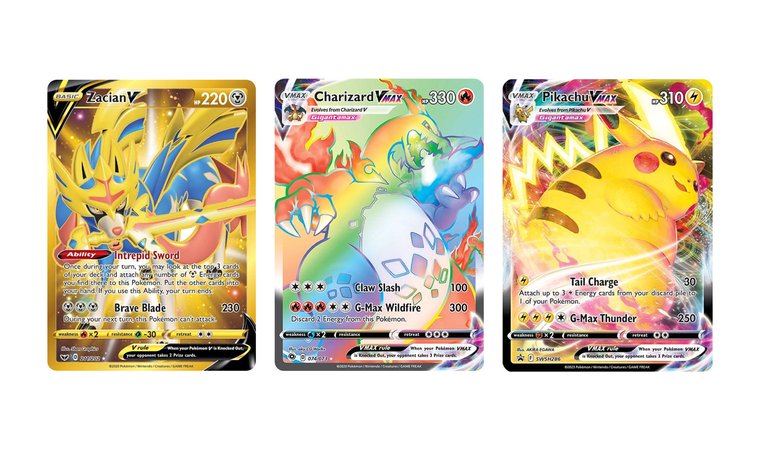
The Sword & Shield series Sun closed the door on Tag Team and GX dominance and kicked off Gen 8 in the TCG. It introduced V, VMAX, and later VSTAR cards, massive evolutions with game-changing power. This period leaned hard into dynamic artwork, alternate arts, and higher pull rates for rare cards.
Trainer cards saw stronger effects, and competitive decks got faster and riskier. Galar region ‘mon like Zacian and Dragapult led the charge. Thematically, Sword & Shield balanced heavy hitters with bold new mechanics and some of the most collectible cards in years.
1. Sword & Shield (2020)
The base set launched Gen 8 with a new look and the debut of V and VMAX cards. Zacian V immediately dominated the meta, offering deadly speed and power. Trainers and energy acceleration kept things competitive. It didn’t bring crazy flair, but it laid the groundwork for the entire era and gave collectors a strong starting point.
2. Rebel Clash (2020)
Rebel Clash gave us Dragapult VMAX and more support for V-focused strategies. The set had a few standout Trainers and decent rogue potential, but it never stole the spotlight. It’s a solid expansion that helped flesh out the format, even if it didn’t break new ground. Not essential, but definitely helpful if you were building up Gen 8 decks.
3. Darkness Ablaze (2020)
This was Charizard VMAX’s big moment (massive damage, amazing art, and instant collector hype). Eternatus and Centiskorch also brought the heat, and the set added some fresh firepower to competitive play. Not every card landed, but the hits were big enough to keep this one in rotation. Great for collectors, with just enough meta relevance to matter.
4. Champion’s Path (2020)
Built as a collector-first set, Champion’s Path revolved around two things: rainbow Charizard VMAX and shiny Charizard V. The rest of the set? Mostly forgettable for competitive players. But if you love Gym Leader themes and chase cards, this one’s pure dopamine. Packs felt like scratch cards, either thrilling or empty. Worth it for the thrill alone.
5. Vivid Voltage (2020)
Introduced Amazing Rares, which are stunning, multicolored cards with tricky energy costs. Pikachu VMAX took the spotlight with its chunked-out art and meme appeal. The set offered good type variety and balanced pulls. It wasn’t top-tier competitively, but it felt fresh and full of personality. One of the more colorful and collectible sets in the Sword & Shield series.
6. Shining Fates (2021)
Shining Fates brought back the shiny vault concept, packing in alternate-color Pokémon galore, including the ever-chased shiny Charizard VMAX. It was clearly aimed at collectors, not tournament players, but the Trainer Gallery-style hits made nearly every pack feel rewarding. Easy to like, hard to ignore. Less depth, more sparkle, and still one of the most opened sets of the era.
7. Battle Styles (2021)
Introduced the Rapid Strike and Single Strike mechanics, giving players two distinct playstyles to build around. Urshifu VMAX was the face of both strategies and made an instant impact. It wasn’t the most glamorous set, but it shook up deckbuilding in a major way. Competitive players appreciated the flexibility; casuals mostly chased the new art and Trainer cards.
8. Chilling Reign (2021)
Added more Strike cards and showcased the Galarian legendary birds in fresh new forms. The Trainer support was solid, with staples like Path to the Peak helping shape future decks. Pull rates were rough, but there was a ton of competitive value under the surface. It’s one of those sets where you either struck gold or got wrecked.
9. Evolving Skies (2021)
The holy grail for modern collectors. Alt-art Eeveelutions and Rayquaza VMAX turned this into the Sword & Shield era’s most expensive set overnight. Dragon-types returned, card art hit new highs, and the set delivered big on both playability and collectability. Pulls were brutal, but the chase kept players coming back. This one will be a fan favorite for years.
10. Celebrations (2021)
Pokémon’s 25th-anniversary party set. Celebrations was tiny, nostalgic, and packed with reprints like Base Set Charizard and iconic Legendaries. Pull rates were generous, the cards looked sharp, and every pack felt like a tribute to history. Not made for meta decks, but as a love letter to longtime fans, it hit every note. Great display value, too.
11. Fusion Strike (2021)
The largest set in Pokémon history introduced a third battle style: Fusion Strike. Mew VMAX led the charge with synergy-focused gameplay. While competitive impact was mixed, the card variety and artwork helped it stand out. Solid Trainer support, a few sleeper hits, and lots of flexible options made this a quietly important addition to the format.
12. Brilliant Stars (2022)
Debuted VSTAR mechanics, blending the power of VMAX with unique abilities. Arceus and Charizard VSTAR stole the show, while the return of Trainer Gallery cards added depth to booster pulls. It struck a clean balance between gorgeous alt arts and playable staples. Packs felt generous, and decks got creative. A well-rounded, high-impact set that pleased both camps.
13. Astral Radiance (2022)
Brought the Hisui region into the game with regional variants and Legends: Arceus tie-ins. Dialga and Palkia VSTAR showed up with unique effects, while Radiant Pokémon made their debut as powerful single-prizers. The art was rustic and bold. It wasn’t a meta-breaker, but it had strong synergy and some excellent support for slower, more technical decks.
14. Pokémon GO (2022)
A novelty crossover set with GO-themed mechanics, peelable Ditto cards, and compact card lists. Mewtwo VSTAR and Radiant starters led the lineup. It’s not deep or meta-defining, but it’s fun and accessible. Great art, simple gameplay, and tons of flavor. A quick hit for collectors and casuals, more about vibes than victories, and that’s fine.
15. Lost Origin (2022)
This set reintroduced the Lost Zone, which adds a fresh layer of deck disruption and combo potential. Giratina VSTAR quickly emerged as one of the best Lost Origin cards, and the artwork took a darker turn across the board. With smart synergy, strong Trainer tools, and Radiant support, this one appealed to serious players and lore fans alike. Tough pulls, but plenty of rewards.
16. Silver Tempest (2022)
Sword & Shield’s final main set went out with a bang. Lugia VSTAR led the charge, with clean support cards and beautiful full arts. Radiant Alakazam and friends added punchy one-prizers, and overall pull quality felt fair. While not the most groundbreaking set, it was satisfying and polished, a solid sendoff for a pretty stellar era.
Scarlet & Violet Era (2023–2024)
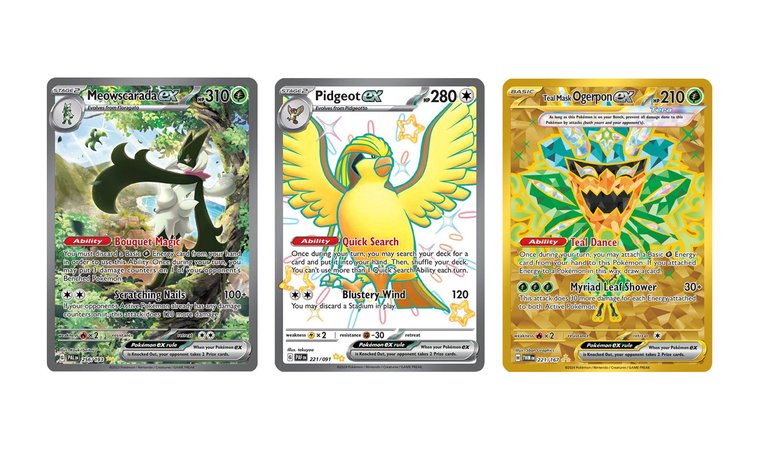
The Scarlet & Violet series Sword and Scarlet cards kicked off the Gen 9 with a full design overhaul: gray borders, repositioned text boxes, and a slicker, more modern look. The return of lowercase ex Pokémon brought back evolution-based powerhouses with massive HP and neat abilities.
Terastallization added a new twist, changing types mid-game. The era focused heavily on Paldean Pokémon, Trainer lore, and experimental mechanics like Ancient/Future cards and ACE SPECs.
Art rares and special illustration rares became more prominent, turning booster packs into mini art galleries. Sets like 151 catered to nostalgia, while Paradox Rift and Twilight Masquerade pushed competitive mechanics. The sheer density of illustration rares and parallel variants makes it a challenge for collectors to calculate exactly how many Pokémon cards exist across these expansive sets.
1. Scarlet & Violet – Base Set (2023)
The Scarlet & Violet series rebooted the game. Gen 9 Pokémon like Miraidon ex and Koraidon ex headline the shift to silver borders, and the return of ex cards shakes up pacing and power scaling. Early on, Gardevoir ex was one of the best Scarlet and Violet cards for tournaments. It’s a clean reset that blends nostalgia and meta innovation, with Trainer art so sharp it could cut through a steel-type.
2. Paldea Evolved (2023)
This set hits harder than you’d expect. It expands on evolution lines for starters like Meowscarada ex, Skeledirge ex, and Quaquaval ex, and adds Tera Pokémon to the mix. Baxcalibur and Chi-Yu ex add serious versatility. It’s a trainer-heavy set that rewards creative deckbuilding. If you’re into snowballing tempo and sneaky KOs, this one gives you the tools.
3. Obsidian Flames (2023)
Charizard ex returns with a twist. It’s a dark-type with massive attack potential. Add Pidgeot ex for consistency and Tyranitar ex for raw damage, and you’ve got a toolbox deck in the making. Tera-type cards shift typings and upend matchup expectations. Not a filler set, Obsidian Flames plays fast and aggressive, with some of the most flamboyant cards of the year.
4. 151 (2023)
This is pure Kanto fanservice done right. Mew ex dominates the meta here, and Alakazam ex brings back classic disruption. The entire original Pokédex is reimagined with top-tier art and new mechanics. Snorlax, Zapdos, and Blastoise ex all show up swinging. It’s nostalgic without being soft – a competitive set wrapped in a collector’s dream.
5. Paradox Rift (2023)
Ancient and Future Pokémon change how you build decks. Roaring Moon ex and Iron Valiant ex lead aggressive archetypes, while Iron Hands ex quickly became a meta staple. The sci-fi theme is backed by striking holo patterns and one of the wildest Trainer card designs we’ve seen. If you like big swings and high stakes, Paradox Rift delivers.
6. Temporal Forces (2024)
Walking Wake ex and Raging Bolt ex headline this one with power moves that punish slow starts. The return of ACE SPECs adds tension, only one per deck, but they’re game-changers. Bloodmoon Ursaluna ex shows off the set’s high-risk, high-reward vibe. Temporal Forces plays like a sprint and a chess match at once with no room for hesitation.
7. Twilight Masquerade (2024)
Ogerpon steals the spotlight with multiple masks, each tied to a different type, and each with its special strategy. Teal Mask Ogerpon ex is already a fan favorite. The set leans into status effects, clever disruptions, and a dark fairy tale aesthetic that makes every pull feel cursed in the best way. Tricksy, stylish, and dangerous, just how we like it.
FAQs
How many Pokémon TCG sets are there?
There are over 100 mainline Pokémon TCG sets in English, not counting promos, mini sets, or special editions. That includes everything from Base Set to the latest Scarlet & Violet expansions. If you’re chasing them all, be ready for a serious binder situation. The number keeps growing, too. Expect new sets every few months with fresh mechanics, Pokémon, and collector hype.
How many Pokémon are there in the Base Set?
The original Base Set (1999) featured 102 cards with 69 different Pokémon, including Charizard, Blastoise, and Venusaur. It set the tone for everything that followed. No Dark types, no Steel, just classic 1st-gen monsters, simple Trainer cards, and nostalgia in cardboard form. If you’ve ever opened one of these packs, you know the thrill of flipping to that last holo slot.
How many Pokémon cards are in the Neo Era set?
The Neo Era (2000–2002) introduced Johto Pokémon with four sets: Neo Genesis, Neo Discovery, Neo Revelation, and Neo Destiny. Across those sets, there are 440+ cards total, with about 300+ unique Pokémon cards. This era brought in Dark and Light Pokémon, Shining cards, and a noticeable jump in card art complexity. It was the first true expansion beyond Kanto, and a major step forward.
How many Pokémon cards are in the Expedition Era set?
The Expedition Era (2002–2003) includes Expedition Base Set, Aquapolis, and Skyridge, totaling just over 400 cards, with around 270 unique Pokémon. These were the final sets from Wizards of the Coast and introduced the e-Reader barcode tech. Skyridge alone has 144 cards, and some of the most collectible art in the game. For many fans, this era marked the golden age of card aesthetics.
How many Pokémon are there in the EX Era set?
The EX Era (2003–2007) features 16 sets with more than 1,200 cards total, including roughly 600 Pokémon cards. It introduced dual-types, Pokémon-ex, and Delta Species cards – all game-changers at the time. You’ll find big names like Rayquaza ex, Deoxys, and the first versions of many Gen 3 favorites. This was where competitive decks got deeper, and collectors had way more chase cards to hunt.
How many Pokémon are there in the Diamond & Pearl Era set?
The Diamond Pearl Series (2007–2009) consists of 11 sets and around 1,100 cards, featuring over 500 Pokémon cards. It brought in Gen 4 Pokémon like Lucario, Garchomp, and Dialga, and debuted LV.X mechanics. Power levels rose fast, and art took a more dramatic turn. This era felt like the TCG leveling up, and for longtime players, it was a turning point in both gameplay and style.
How many Pokémon are there in the HeartGold & SoulSilver Era set?
The HeartGold SoulSilver series (2010) includes four sets and over 500 total cards, with around 250 Pokémon cards. It revisited Johto with updated Gen 2 favorites and introduced shiny new mechanics like Pokémon Prime and LEGEND cards. These oversized LEGEND cards required two halves to form a full Pokémon, and they looked amazing in a binder. The whole era was a love letter to Gold and Silver fans.
How many Pokémon are there in the Black & White Era set?
Across 11 main sets (2011–2013), the Black & White Era includes over 1,200 cards, with roughly 600 Pokémon cards. Gen 5 Pokémon like Zekrom, Reshiram, and Hydreigon took center stage, and game mechanics leaned hard into EX cards and abilities. You’ll find multiple Plasma sets, each with a unique spin. Art quality surged, too – some Full Arts from this era still hold up as fan favorites.
How many Pokémon are there in the XY Era set?
The XY Era (2014–2016) spans 14 main sets and includes more than 1,300 cards, with about 650 Pokémon cards. It featured Mega Evolutions, introduced BREAK cards, and brought back EX mechanics in new forms. From the Kanto throwback of Evolutions to the Kalos newcomers, this era had something for every collector. Plus, the art started experimenting more, from flashy Full Arts to stylized commons.
How many Pokémon are there in the Sun & Moon Era set?
With 16 sets (2017–2019), the Sun & Moon Era delivered around 1,800 cards, featuring roughly 850 Pokémon cards. Gen 7 Pokémon took the spotlight, alongside the debut of GX cards, Prism Stars, and Tag Team mechanics. The Alola region’s influence was everywhere, from regional forms to tropical art direction. It also marked the start of the modern collector boom, especially with shiny Vault cards.
How many Pokémon are there in the Sword & Shield Era set?
The Sword & Shield Era (2020–2022) features 16 main sets, adding more than 2,000 cards and roughly 1,000 Pokémon cards. Gen 8 Pokémon like Zacian, Eternatus, and Calyrex took over, while V, VMAX, and VSTAR mechanics dominated the meta. The power level spiked fast. Big hits like the alt-art Umbreon VMAX sent collectors scrambling, and the competitive scene saw endless deck shakeups every few months.
How many Pokémon are there in the Scarlet & Violet Era set?
As of mid-2025, the Scarlet & Violet Era includes 7 sets and around 1,100 total cards, with about 500 Pokémon cards. Gen 9 Pokémon like Miraidon, Koraidon, and the Ruinous Quartet headline this era, which reintroduced classic ex cards and gave us silver borders across the board. The art is sharper than ever, the meta’s wild, and the sets feel more balanced than any generation before.