


Best Black Cards in MTG for 2026: Control the Board, Own the Graveyard

Eneba Hub contains affiliate links, which means we may earn a small commission if you make a purchase through them—at no extra cost to you. Learn more


The best black cards in MTG don’t win fair – they win by trading resources and squeezing every ounce of value out of the graveyard. Black kills what matters, strips hands apart, and tutors exactly what it needs when the game tightens up.
Life is just another resource here. You pay it for cards, reanimation, or pure tempo. In the right hands, that exchange turns into inevitability.
Below, I’m looking at the black spells and staples that control boards, fuel engines, and close games in Commander and other non-rotating formats.
Jump to:
Best Black Cards in MTG: My 15 Picks That Grind Games Into Dust
The best black cards in MTG are the ones you’re always happy to draw. These 15 picks include some of the top MTG cards for removal, recursion, and raw efficiency – the kind of spells that swing games the moment they resolve.
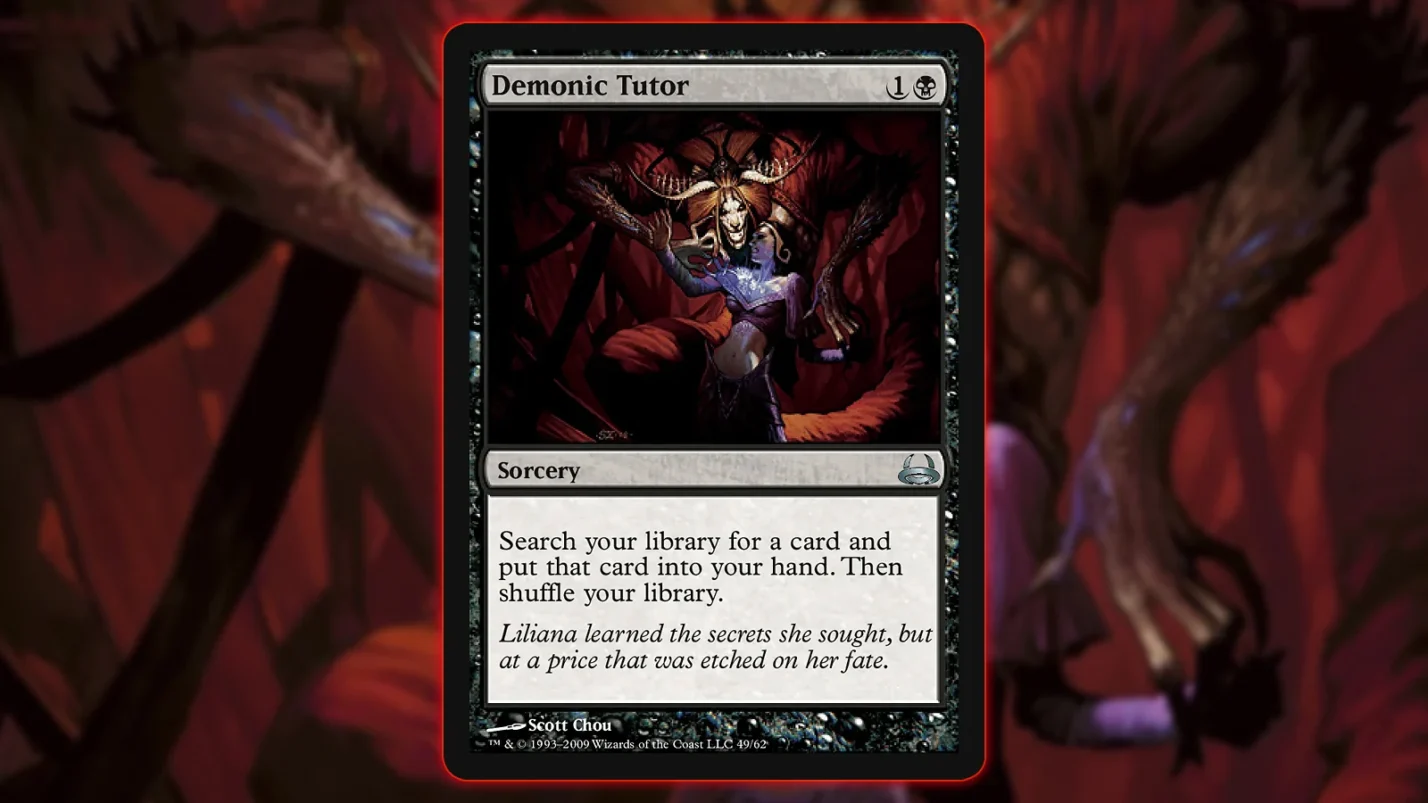
1. Demonic Tutor [The Most Iconic Tutor Ever Printed]
| Element | Details |
|---|---|
| Mana Cost | 1B |
| Card Type | Sorcery |
| Primary Role | Tutor |
Demonic Tutor is the cleanest two-mana answer to “what do I need right now?” It finds anything. Combo piece, board wipe, land drop, finisher – no life payment, delay, or hoops. It’s one of the top Commander staples for a good reason.
Every time I’ve cast this, the game shifted. Missing removal? Fixed. Need a win condition? Found. It removes variance in a way few black spells MTG has printed ever have. That efficiency is exactly why it remains one of the best black cards in MTG.
Wizards learned fast. Modern tutors cost more, add restrictions, or make you wait a turn. Demonic Tutor doesn’t. It just gets the card and lets you take over from there. To this day, it’s one of my favorite black spells in MTG.
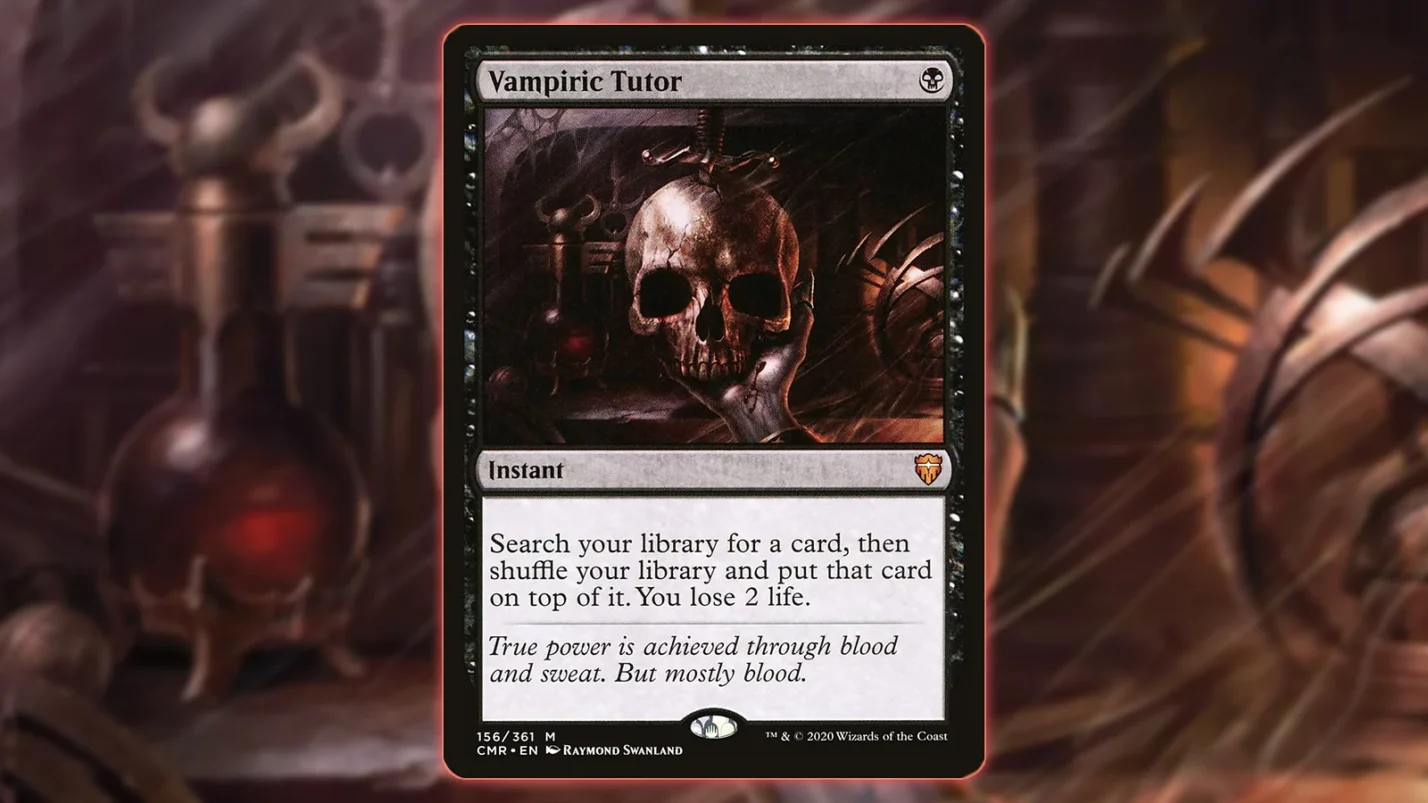
2. Vampiric Tutor [Instant-Speed Tutor at One Mana]
| Element | Details |
|---|---|
| Mana Cost | B |
| Card Type | Instant |
| Primary Role | Instant Tutor |
Vampiric Tutor is what efficiency looks like in black spells in MTG. One mana, instant speed, any card. You lose two life, put it on top, and draw exactly what you need on your turn. In singleton formats, that kind of precision is why you play it, no matter what MTG color combinations you’re running (as long as it includes black).
End step tutor into your turn is brutal. You stay untapped, react if needed, then move into your draw step already holding the answer. It doesn’t hand you the card immediately like Demonic Tutor, but the timing often makes it stronger.
It gets even stronger with top-deck control. Sensei’s Divining Top lets you draw the tutored card immediately, while Necropotence turns that precision into raw inevitability. That synergy is a big reason this remains one of the best black cards in MTG for decks built around tight sequencing and resource control.
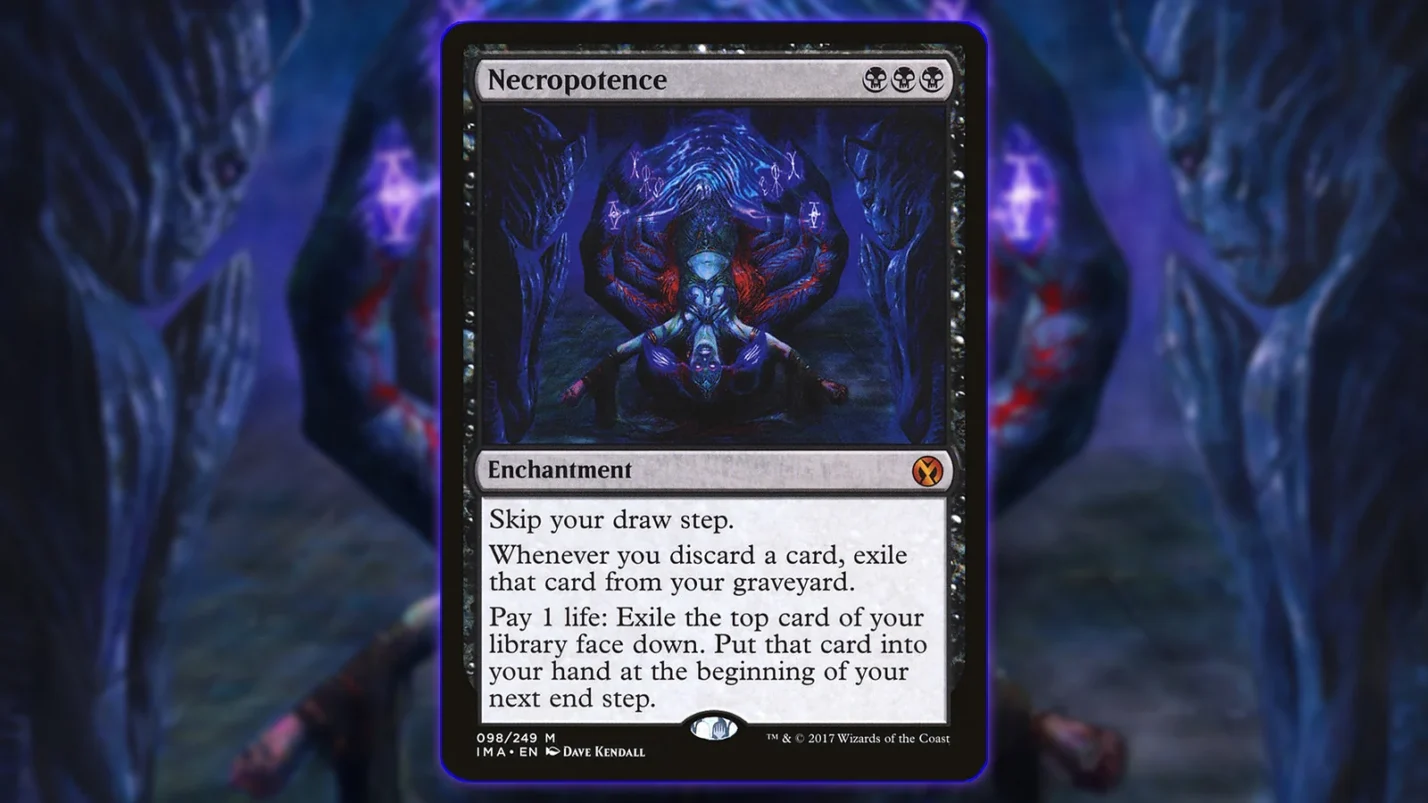
3. Necropotence [The Strongest Card Advantage Engine in Black]
| Element | Details |
|---|---|
| Mana Cost | BBB |
| Card Type | Enchantment |
| Primary Role | Card Advantage Engine |
Necropotence replaces your draw step and lets you trigger an ability that pays life to set aside cards for your end step. That exchange turns life into raw velocity. In decks that can stabilize or gain life back, this becomes one of the most efficient engines ever printed among MTG black cards.
Resolve this early, and the texture of the game changes. You stop top-decking and start planning. Five extra cards is normal. Ten isn’t unusual. Combo decks assemble wins faster, and grindy shells overwhelm opponents through sheer volume.
Few black spells in MTG reward disciplined sequencing like this. It demands careful life management, but if you build around it properly, Necropotence does what black does best: convert risk into control.
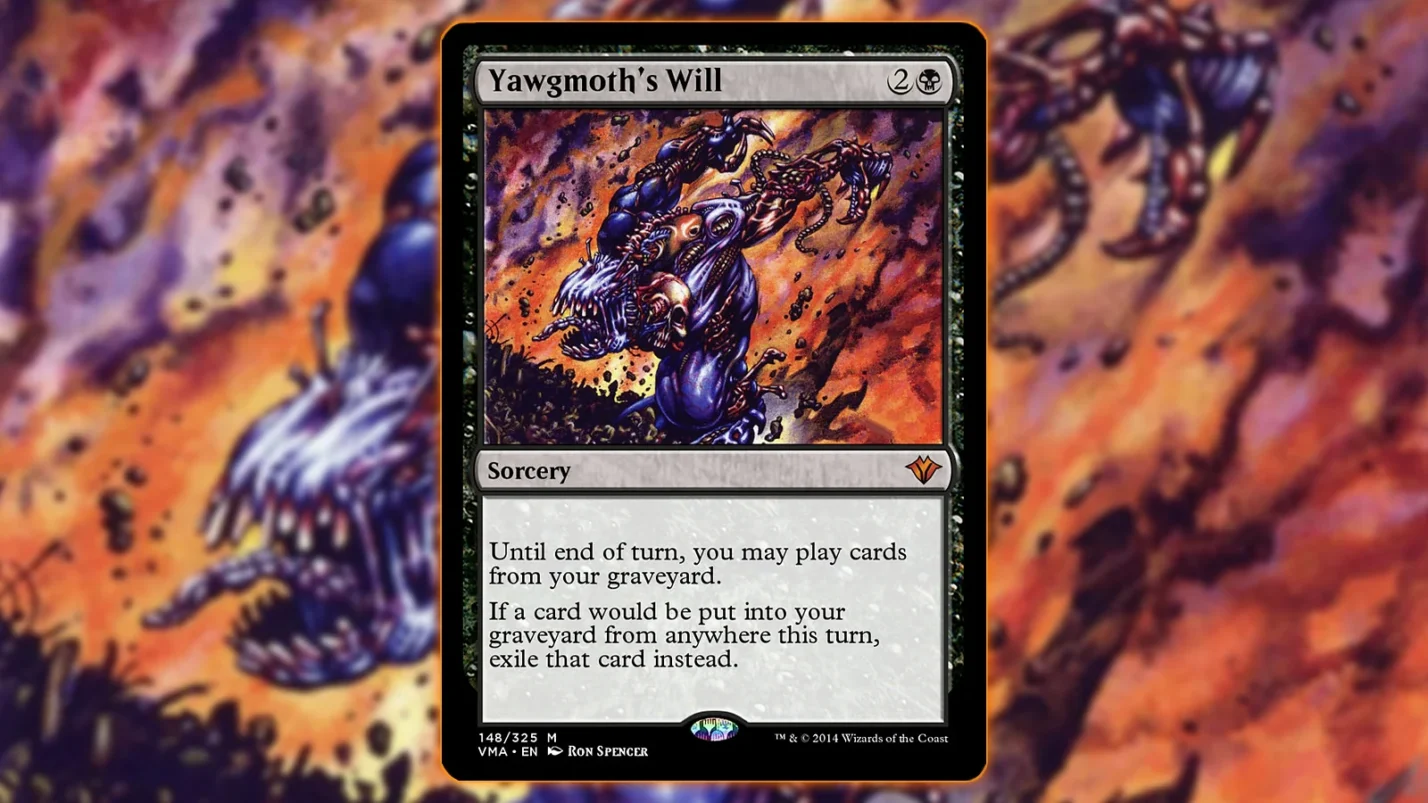
4. Yawgmoth’s Will [The Graveyard-as-a-Second-Hand Card]
| Element | Details |
|---|---|
| Mana Cost | 2B |
| Card Type | Sorcery |
| Primary Role | Graveyard Recursion/Combo |
Yawgmoth’s Will gives you one turn to cast everything in your graveyard. Lands, rituals, tutors, draw spells – all live again, then get exiled. Yes, you can replay lands and use their mana abilities again. Yawgmoth’s Will is a controlled detonation that helps you storm off in one turn.
This card doesn’t grind. It’s one of those MTG black cards that just end the game. You chain rituals, recast tutors, rebuild your resources, and convert that storm of spells into a win before anyone untaps.
Few black spells in MTG create turns this explosive. It demands setup and sequencing, but when you cast it with a stocked graveyard, you’re not hoping to stabilize – you’re closing.
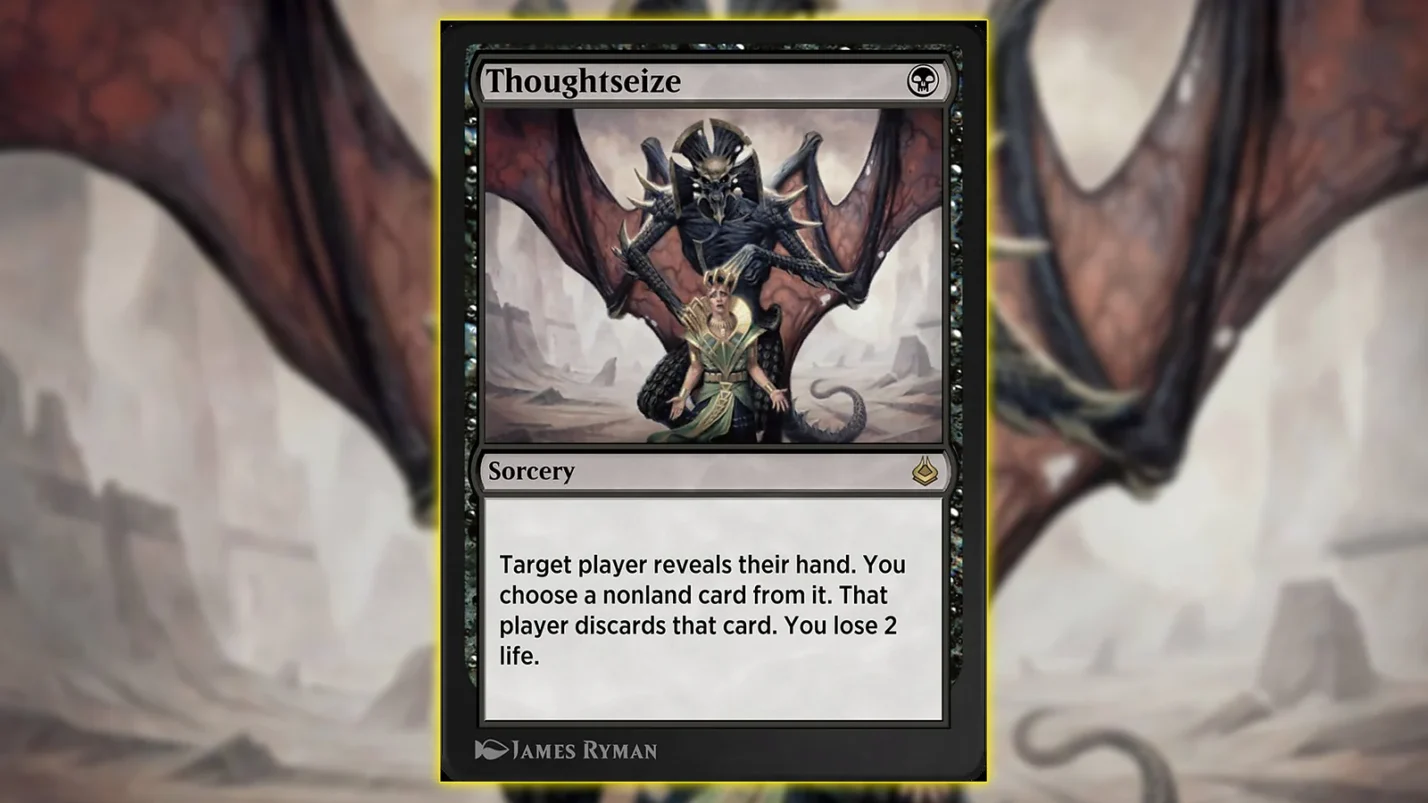
5. Thoughtseize [The Gold Standard of Hand Disruption]
| Element | Details |
|---|---|
| Mana Cost | B |
| Card Type | Sorcery |
| Primary Role | Hand Disruption |
Thoughtseize is the cleanest form of proactive interaction black has. One mana, full hand information, and the ability to strip any nonland card before it ever hits the stack. It’s the kind of protection you want in decks led by the best zombie commanders or grindy black shells that need their engine to stick.
This card changes how the next few turns unfold. You remove a threat, sure, but you also see their entire plan. That information lets you sequence correctly, hold up the right answers, or commit safely without walking into a disaster.
The two life is negligible. Trading it for certainty is exactly the kind of exchange I’m in the market for, and few black spells in MTG generate this much early leverage.
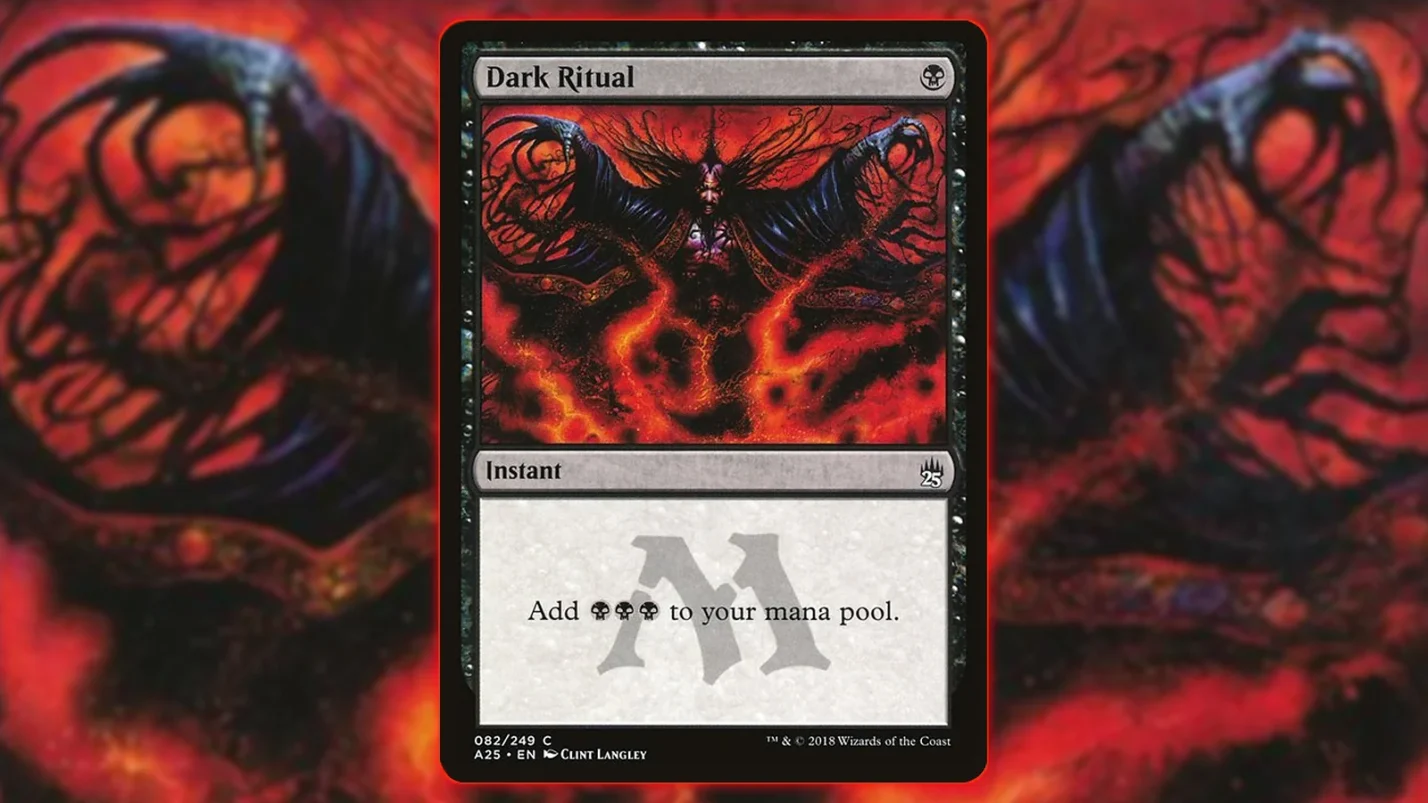
6. Dark Ritual [Explosive Mana Acceleration]
| Element | Details |
|---|---|
| Mana Cost | B |
| Card Type | Instant |
| Primary Role | Burst Mana |
Dark Ritual is the purest example of black trading stability for speed. One mana becomes three immediately, letting you jump turns ahead. It’s the kind of acceleration that aggressive shells and decks built around the best vampire commanders use to land engines or pressure before the table is ready.
Turning one Ritual into a three-drop changes the entire pace of the game. Whether it’s an early Necropotence, a fast combo setup, or Entomb into Reanimate, that mana spike forces opponents to react immediately. Many players compare these bursts of speed to how top red cards MTG provide similar early game momentum through fast mana and aggressive rituals.
Although one of the best black cards in MTG, Dark Ritual doesn’t build long-term advantage. It compresses time. In combo and storm builds, that single burst often becomes the turn where everything happens.
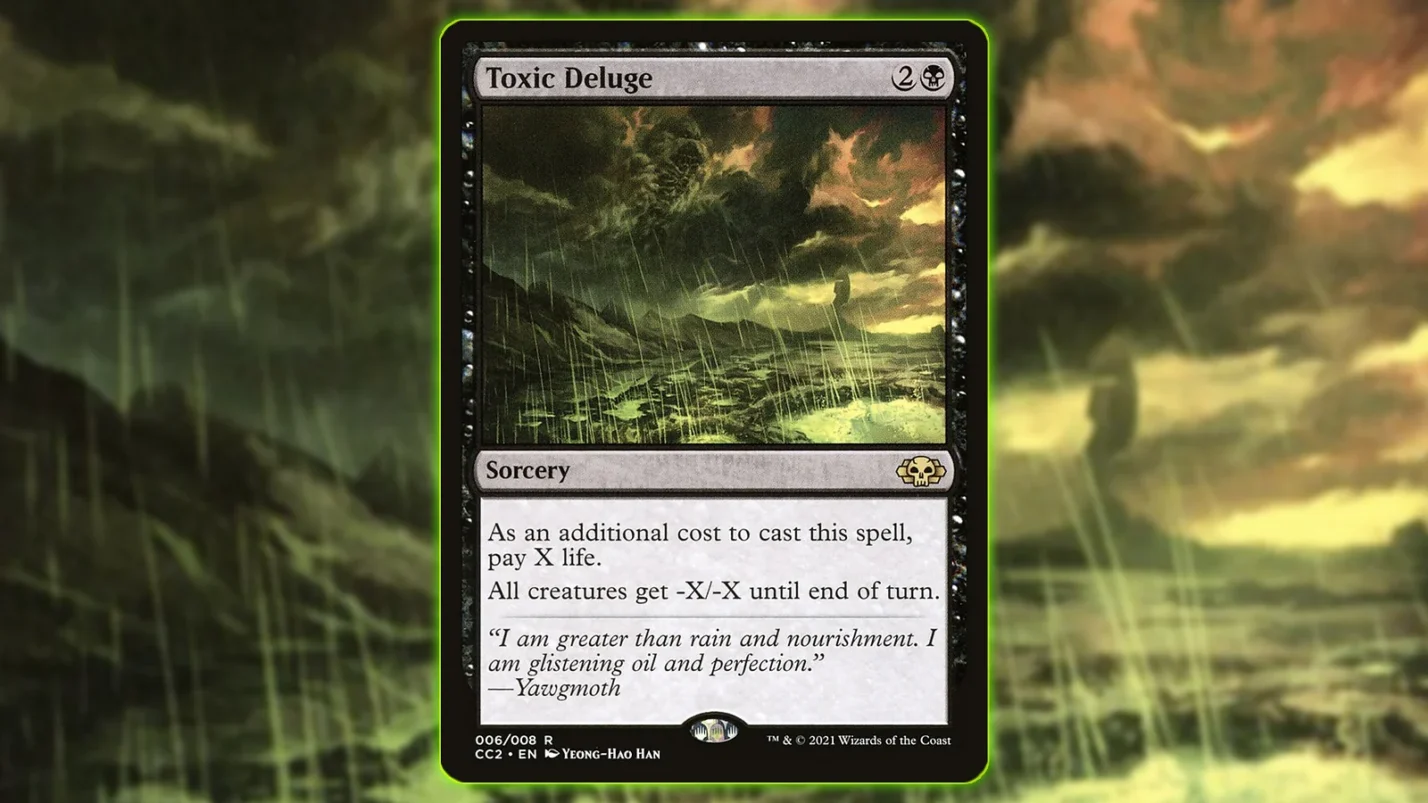
7. Toxic Deluge [The Best Scalable Board Wipe in Black]
| Element | Details |
|---|---|
| Mana Cost | 2B |
| Card Type | Sorcery |
| Primary Role | Scalable Sweeper |
Toxic Deluge gives black precise control over the board. For three mana, you decide how much life to pay and shrink every creature accordingly. That flexibility makes it one of the most reliable MTG black cards for cleaning up crowded boards, especially against decks led by popular token commanders.
Understanding the explosive strategies behind the best token commanders MTG has to offer will quickly show you why running this scalable sweeper is mandatory for survival.
Some wipes destroy. This one recalculates the board. Indestructible or protection don’t matter. Huge stat lines don’t matter. If you’re willing to pay the life, everything dies.
Few black spells in MTG handle both early swarm boards and late-game monsters this cleanly. It rewards good life management and smart timing, and it’s rarely a dead card when creatures dominate the table.
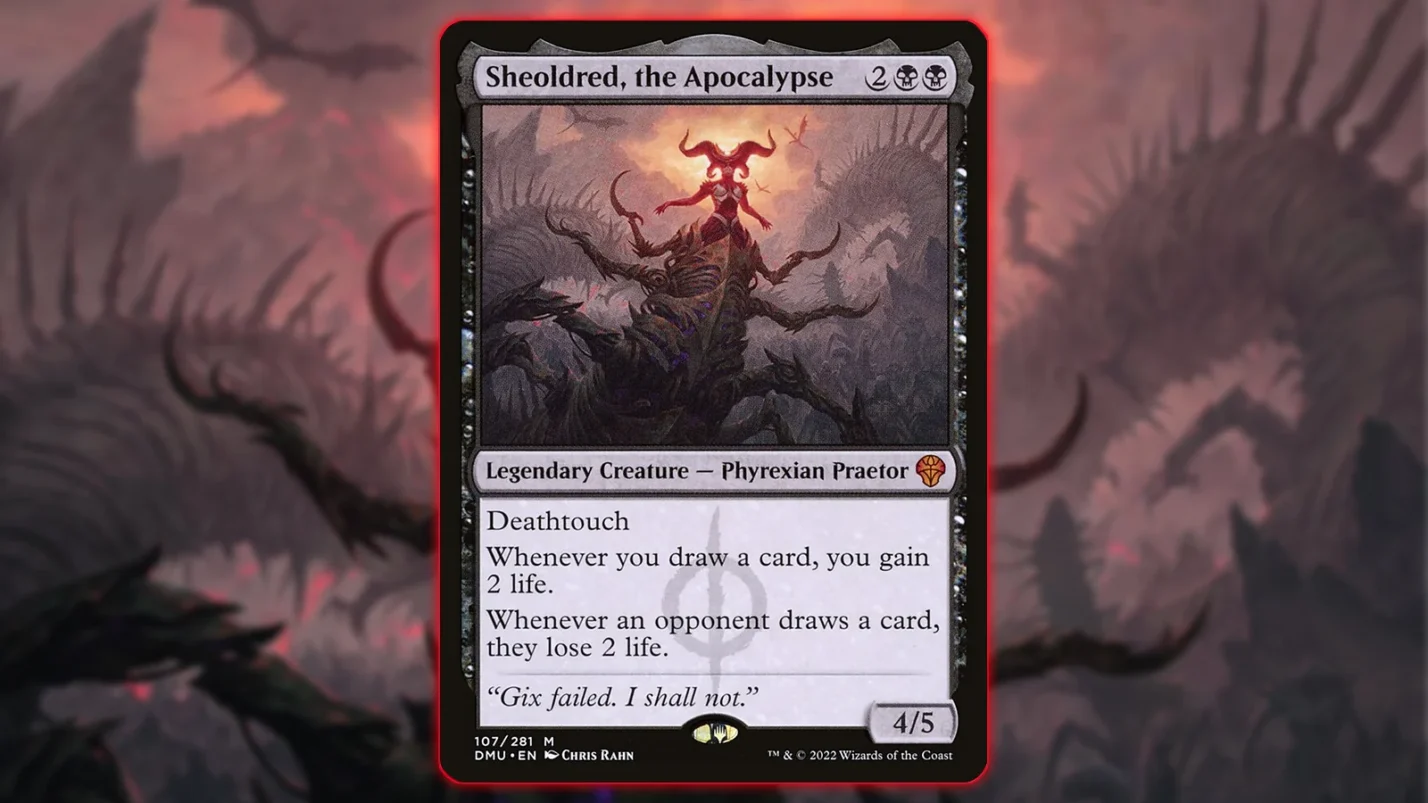
8. Sheoldred, the Apocalypse [Punishing Card Draw With Total Control]
| Element | Details |
|---|---|
| Mana Cost | 2BB |
| Card Type | Legendary Creature – Phyrexian Praetor |
| Primary Role | Card-Draw Punisher/Finisher |
Sheoldred turns every draw step into pressure. Opponents lose life for each card they draw, while you gain life for yours. That triggered ability adds up fast, especially against decks that rely on extra draw. Two black pips isn’t a problem with so many great dual lands running around.
She doesn’t need to attack to take over a game. Drop her on curve, and suddenly every cantrip, wheel, or engine piece hurts. Meanwhile, your life total climbs out of reach.
Among recent MTG black cards, few close games this cleanly without committing to combat. Sheoldred stabilizes, punishes greed, and forces answers immediately – which is exactly what the best black creatures MTG players rely on are supposed to do.
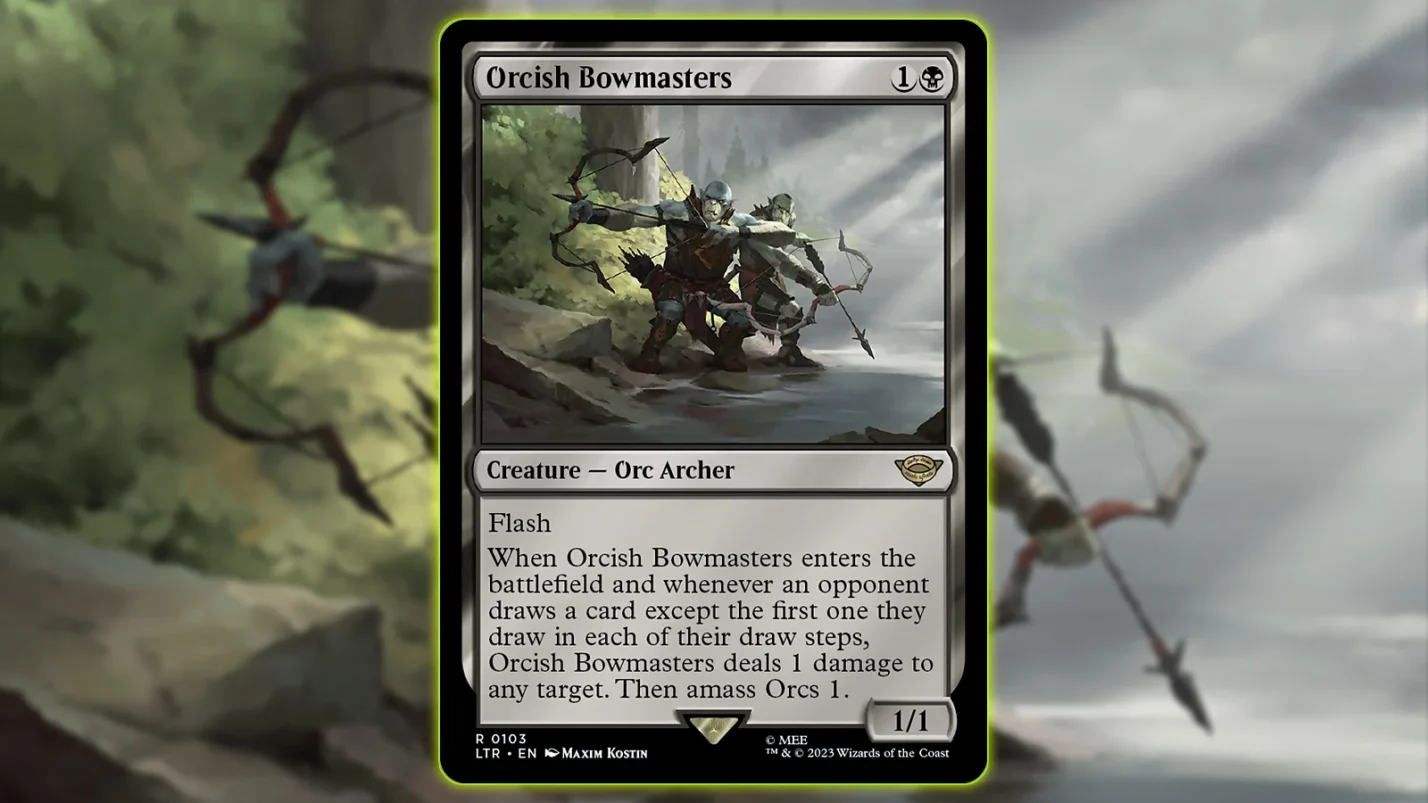
9. Orcish Bowmasters [The Ultimate Card-Draw Punisher]
| Element | Details |
|---|---|
| Mana Cost | 1B |
| Card Type | Creature – Orc Archer |
| Primary Role | Draw Punisher/Board Control |
Orcish Bowmasters punishes extra draw with immediate damage and board presence. Every time an opponent draws beyond their normal draw step, you deal damage to any target and grow an Orc Army. In a format full of cantrips, wheels, and value engines, that makes it one of the most disruptive MTG black cards printed in years.
Flash is what pushes it over the top for me. You wait for the big draw spell, deploy it mid-resolution, and let the triggers stack. Suddenly, small creatures disappear, planeswalkers lose loyalty, and life totals drop.
Among modern black spells in MTG, few cards swing tempo this efficiently for two mana. It punishes greed, scales with the table’s draw habits, and quickly earns its place among the best black creatures MTG players rely on for proactive control.
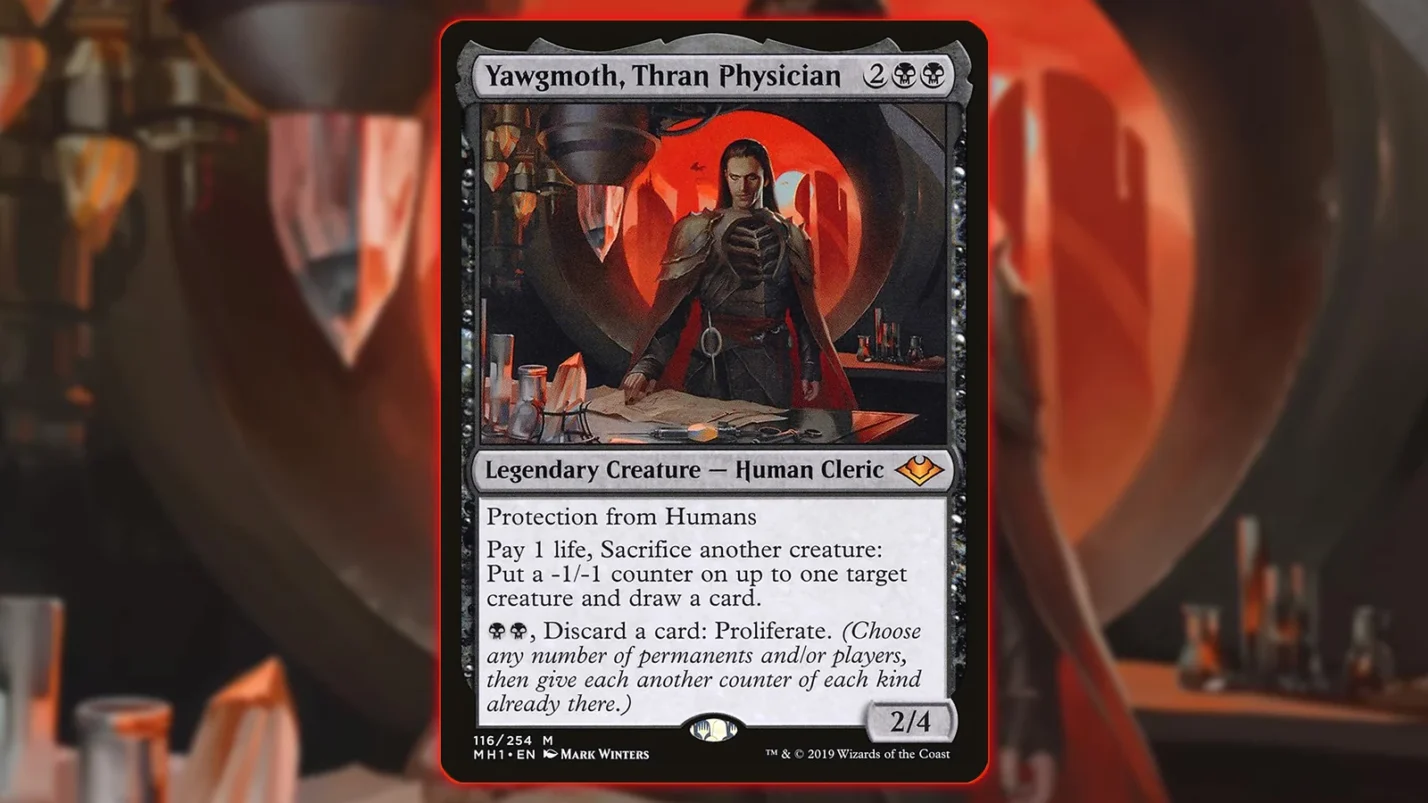
10. Yawgmoth, Thran Physician [Sacrifice Engine, Removal & Card Draw]
| Element | Details |
|---|---|
| Mana Cost | 2BB |
| Card Type | Legendary Creature – Human Cleric |
| Primary Role | Sacrifice Engine/Card Advantage |
Yawgmoth, Thran Physician turns creatures into cards, removal, and combo fuel. For one life and a sacrifice, you draw a card and place a -1/-1 counter anywhere. That interaction alone reshapes boards, but the real power comes from how it layers with aristocrat shells and undying creatures.
Yawgmoth doesn’t play fair. He’s a sacrifice outlet, a removal engine, and a draw spell in one slot. With undying creatures, the -1/-1 counter cancels the +1/+1 counter on return, creating repeatable loops. Add pieces like Agatha’s Soul Cauldron or Grist, the Hunger Tide, and those loops turn into lethal engines.
Among modern MTG black cards, few creatures generate this much value without attacking. In token-heavy builds, every body becomes a resource. In combo shells, every sacrifice moves you closer to a deterministic win. That flexibility is why he remains one of the best black creatures MTG players build around in Commander and beyond.
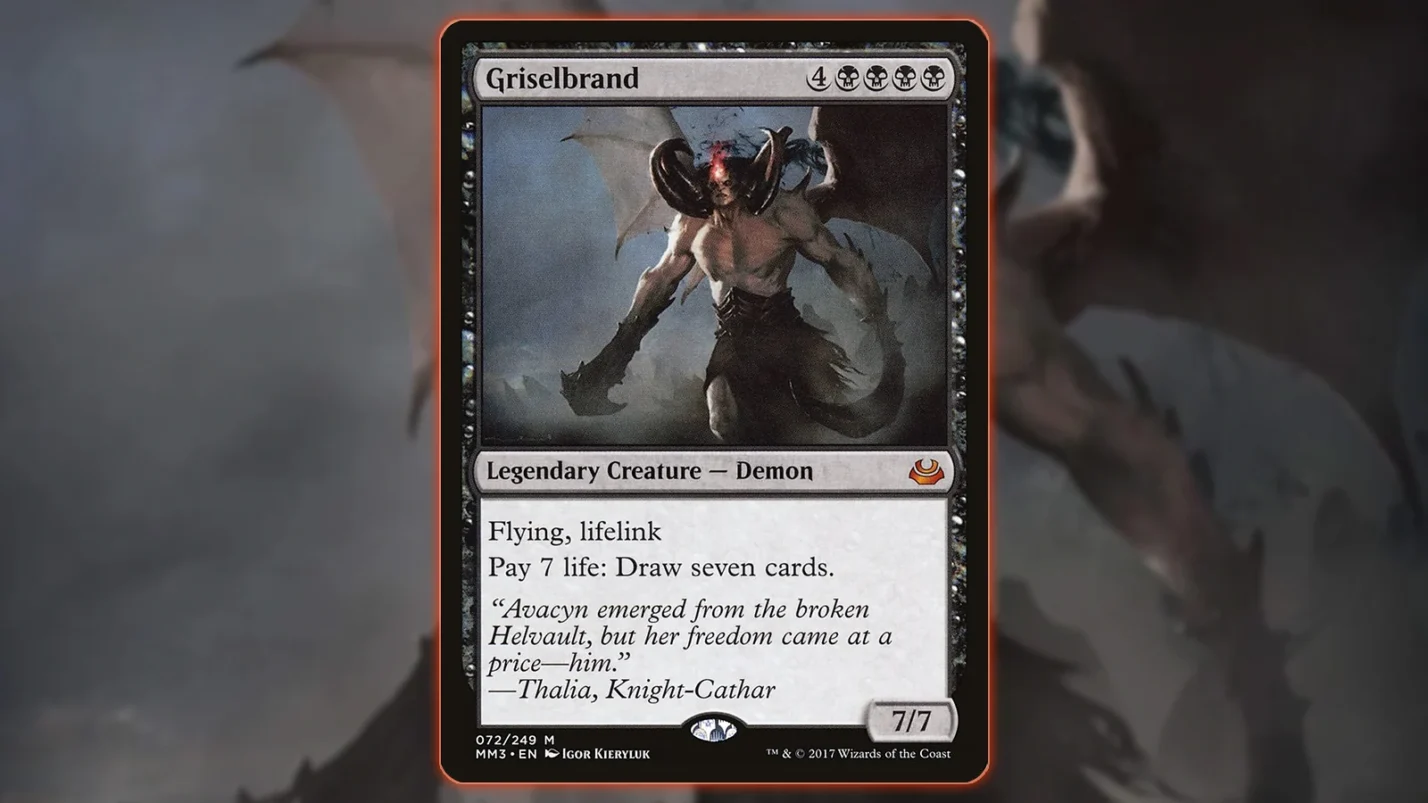
11. Griselbrand [Absurd Card Draw on a Legendary Body]
| Element | Details |
|---|---|
| Mana Cost | 4BBBB |
| Card Type | Legendary Creature – Demon |
| Primary Role | Card Draw/Reanimation Finisher |
Griselbrand turns life into raw velocity at instant speed. Pay seven life, draw seven cards – and lifelink makes that exchange sustainable the moment it connects. In reanimation shells, resolving this early usually means drawing 7 to 14 cards immediately and assembling whatever black spells in MTG you need to close the game.
Reanimate it, activate once, and you’re already ahead. Activate twice, and the game is likely over. That flood of cards finds protection, tutors, fast mana, or another reanimation spell to keep the chain going.
While black specializes in trading life for cards, blue dominates the stack with countermagic and traditional draw spells. Players often look to top-tier blue cards in MTG to find the perfect protective shell for these massive legendary threats.
Few MTG black cards generate this much momentum on resolution. Its bans and restrictions across formats aren’t historical trivia – they’re a reflection of how quickly it converts a stocked graveyard into inevitability. Among the best black creatures MTG has produced for graveyard decks, Griselbrand remains the gold standard.
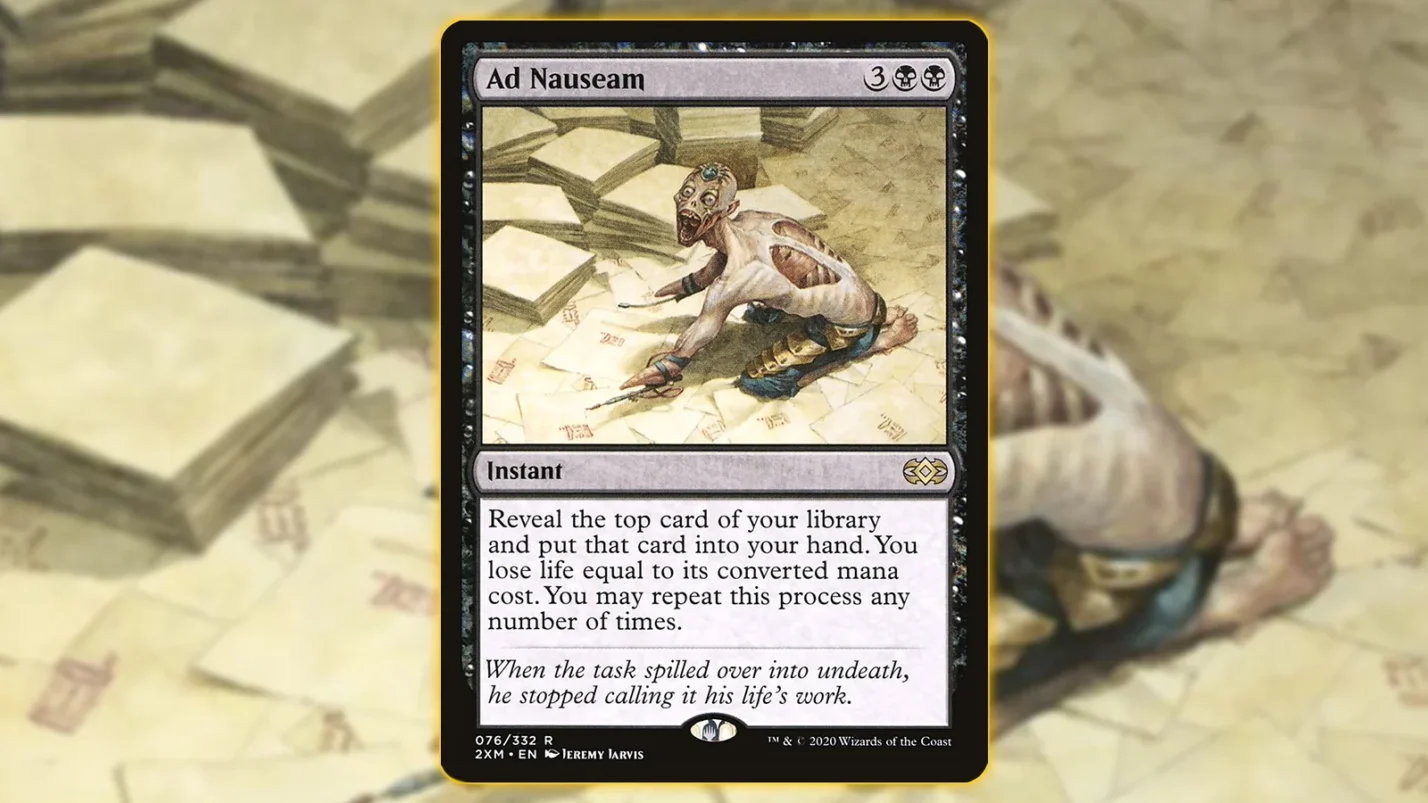
12. Ad Nauseam [Game-Ending Combo Enabler]
| Element | Details |
|---|---|
| Mana Cost | 3BB |
| Card Type | Instant |
| Primary Role | Combo Engine |
Ad Nauseam trades life for raw access at instant speed. You reveal cards one at a time and keep going until you stop, which means low-curve decks can safely flip a massive portion of their library. In optimized shells, this is one of the most explosive MTG black cards ever printed.
End step Ad Nauseam into your turn often means the game doesn’t continue much longer. With the right build, you draw enough fast mana, tutors, and protection to assemble a deterministic win immediately.
Few black spells in MTG reward disciplined deck construction this aggressively. If your curve is tight and your life total is managed properly, Ad Nauseam hands you the entire turn with sheer value.
13. Damnation [Clean and Unconditional Board Wipe]

| Element | Details |
|---|---|
| Mana Cost | 2BB |
| Card Type | Sorcery |
| Primary Role | Board Control/Sweeper |
Damnation is black’s clean answer to creature-heavy boards. Four mana, destroy all creatures, no scaling, life payment, or negotiation. Among MTG black cards, it remains one of the most reliable reset buttons when creature density gets out of control.
Sometimes you don’t want math. You don’t want to choose X. You just want everything gone. Damnation does that efficiently and on curve, which matters in formats where turn-four wipes stabilize games.
Unlike toughness-based sweepers, it doesn’t ask for life or guesswork. Few black spells in MTG offer this level of unconditional control in a single card. In black-based control shells, that reliability buys the time your engines need. Clear the board, untap, and start pulling ahead.
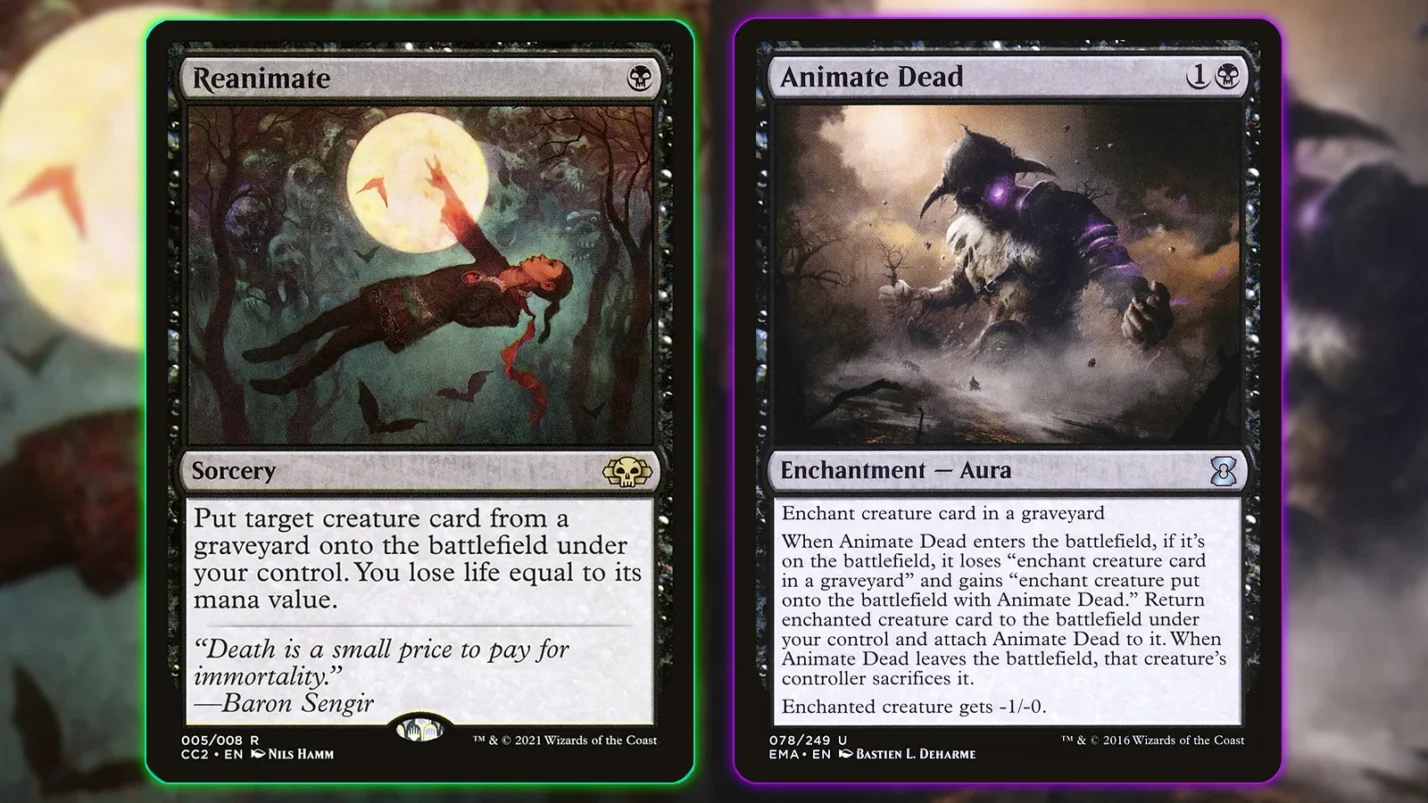
14. Reanimate / Animate Dead [The Foundation of Reanimation Strategies]
| Element | Details |
|---|---|
| Mana Cost | B/1B |
| Card Type | Sorcery/Enchantment |
| Primary Role | Reanimation/Graveyard Value |
Reanimate and Animate Dead turn your graveyard into a shortcut. One or two mana for a creature that should cost seven or eight is a massive tempo swing. Classic lines like Dark Ritual into Entomb into Reanimate bring back Griselbrand on turn one, often backed by Force of Will to protect it from Swords to Plowshares or graveyard hate.
While these spells typically target massive creatures, savvy players also use them to bring back utility pieces that enhance their board state. Finding the best Auras MTG to attach to these reanimated threats can turn a simple recovery into an overwhelming lead.
These spells are the backbone of every serious reanimator list. The rate is absurd. You trade a small life payment or minor enchantment risk for immediate access to the best black creatures MTG graveyard decks can abuse.
Modern black spells in MTG rarely get this kind of efficiency. Paying one mana to bypass an entire casting cost is why reanimation remains one of the most feared strategies in the game.
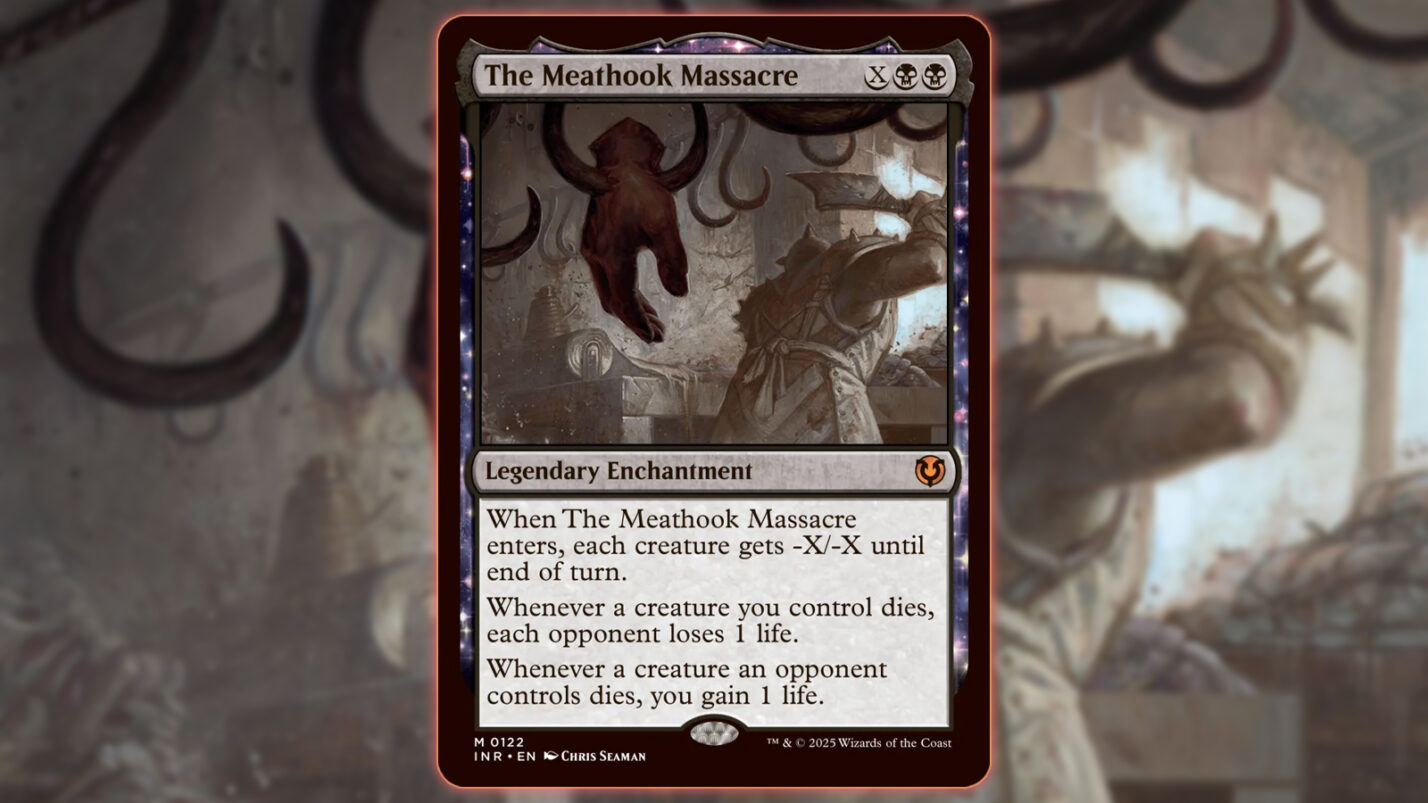
15. The Meathook Massacre [Scalable Wipe and Life-Pressure Engine]
| Element | Details |
|---|---|
| Mana Cost | XBB |
| Card Type | Legendary Enchantment |
| Primary Role | Scalable Sweeper/Death-Trigger Engine |
The Meathook Massacre scales with the board. When it enters, creatures get -X/-X, which can wipe tokens or shrink larger threats into range. After that, it stays in play and turns every creature death into incremental life loss for opponents and life gain for you. In sacrifice shells like Cauldron Familiar builds, those triggers stack quickly and convert routine loops into real pressure.
It stabilizes first, then starts squeezing the table. The ETB clears small boards, and the enchantment ability rewards every trade, sacrifice, or wipe that follows.
Among modern MTG black cards, few combine removal and long-term inevitability this cleanly. In grind-heavy Commander games, each death shifts life totals in your favor, and over multiple turns, that pressure becomes impossible to ignore.
How Do Black Cards Work in MTG?
Black cards revolve around turning risky resources into powerful advantages. Instead of playing it safe, black decks trade life, sacrifice creatures, and treat the graveyard like a second hand.
When an opponent leads on a Swamp, you expect something disruptive, maybe a Thoughtseize, maybe a fast reanimation setup, but rarely something harmless.
Here’s what black typically brings to a deck:
- Efficient removal – Black has some of the best creature answers in Magic, from destroy spells and -X/-X effects to classic edict throwbacks. These tools let black handle almost any creature efficiently.
- Tutors and consistency tools – Black is famous for searching its library for exactly what it needs. Cards like Demonic Tutor or Vampiric Tutor let decks find combo pieces, answers, or win conditions on demand.
- Discard and disruption – By attacking the opponent’s hand early, black can slow combo decks and remove key answers before they matter. This is strongest in one-on-one games, where stripping a single card can shape the entire match.
- Graveyard recursion – Black treats the graveyard like a resource. Reanimation spells and sacrifice engines allow creatures to return far earlier than intended, turning death into value instead of a setback.
- Life as a resource – Many black spells trade life for cards, mana, or board control. That cost can be risky, but it’s also what allows black decks to generate huge bursts of value and momentum.
- Weaknesses to plan around – Black still struggles with enchantments, though Feed the Swarm gives it a situational answer. Artifacts can be even harder to remove, and aggressive decks can punish black quickly, especially when it’s spending life to fuel its game plan.
FAQs
The best black card in MTG is Demonic Tutor. For only two mana, it lets you search your deck for any card and put it directly into your hand, giving unmatched consistency in Commander and other formats.
Yes, black has some of the strongest card draw in Magic. It trades life for cards through effects like Necropotence, Ad Nauseam, and Griselbrand, allowing massive card advantage when life totals are managed carefully.
Yes, black is one of the strongest Commander colors thanks to tutors, reanimation, sacrifice engines, and powerful removal. It scales extremely well in long multiplayer games and supports many popular archetypes.
Black struggles most with artifacts and enchantments, as it has very limited ways to remove them. It can also be vulnerable to aggressive decks, since many of its strongest effects require paying life as a cost.