



15 Best Partner Commanders in MTG: Top Pairings for 2026

Eneba Hub contains affiliate links, which means we may earn a small commission if you make a purchase through them—at no extra cost to you. Learn more


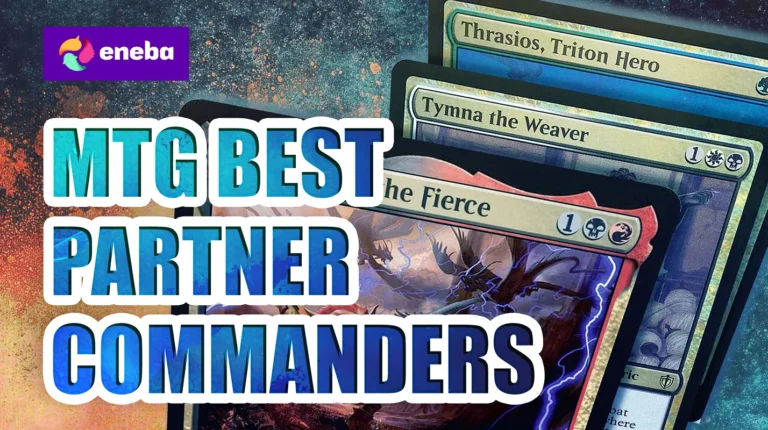
The first time I built one of the best Partner Commanders MTG, it changed how I approached Commander deckbuilding. Having two Commanders in the command zone opened up more lines of play, stronger color access, and better answers across longer games. That experience explains why so many players now search for the best Partner Commanders in MTG instead of sticking to single-command options.
This article covers the strongest Partner Commanders and pairings to consider, with a clear focus on synergy, power level, and color identity. Each selection shows how the Partner mechanic supports flexible strategies, smoother mana bases, and adaptable gameplay for both casual and high-power Commander tables.
Jump to:
15 Best Partner Commanders MTG for Flexible Deck Building
The best Partner Commanders MTG stand out for their flexibility, strong color access, and ability to scale across different power levels. The commanders below highlight how the Partner mechanic supports varied playstyles and deck goals.
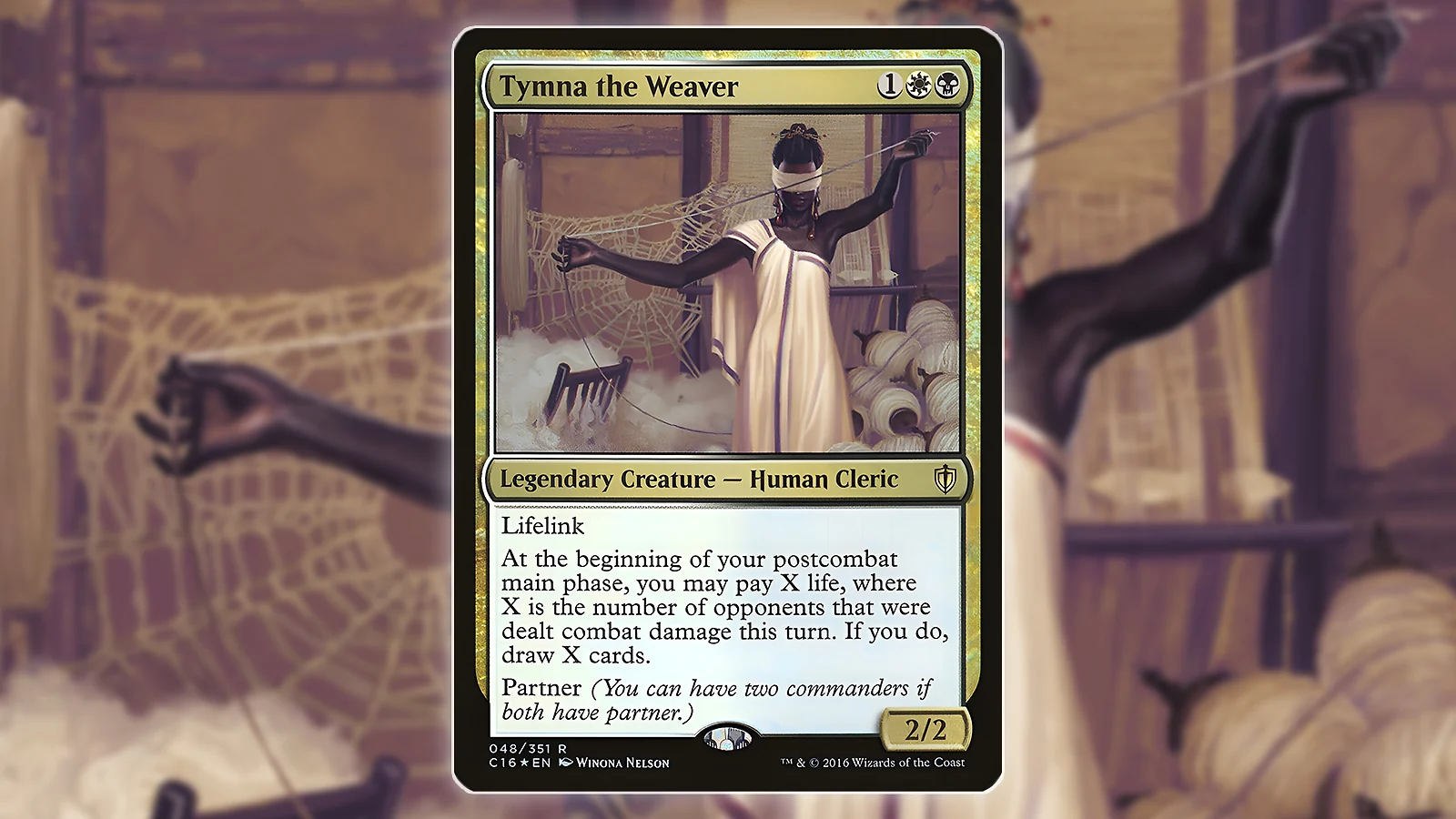
1. Tymna the Weaver [Best Combat Card Draw Partner]
| Color identity | Orzhov (White-Black) |
| Primary role | Card advantage engine |
| Primary strength | Combat-based card draw |
| Synergy reliance | Low |
| Power level | High |
| Best pairing type | Tempo or value-focused Partner |
Tymna the Weaver sits among the best Partner Commanders MTG because she turns early combat pressure into steady card access. She rewards decks that attack multiple opponents, which keeps the table under pressure while maintaining card flow.
Use low-cost or evasive creatures that can connect each turn safely. This keeps Tymna active without exposing key threats to removal.
Her standout strength is reliable card advantage through small combat interactions. By converting early damage into cards, Tymna keeps hands full and decisions flexible across longer games.
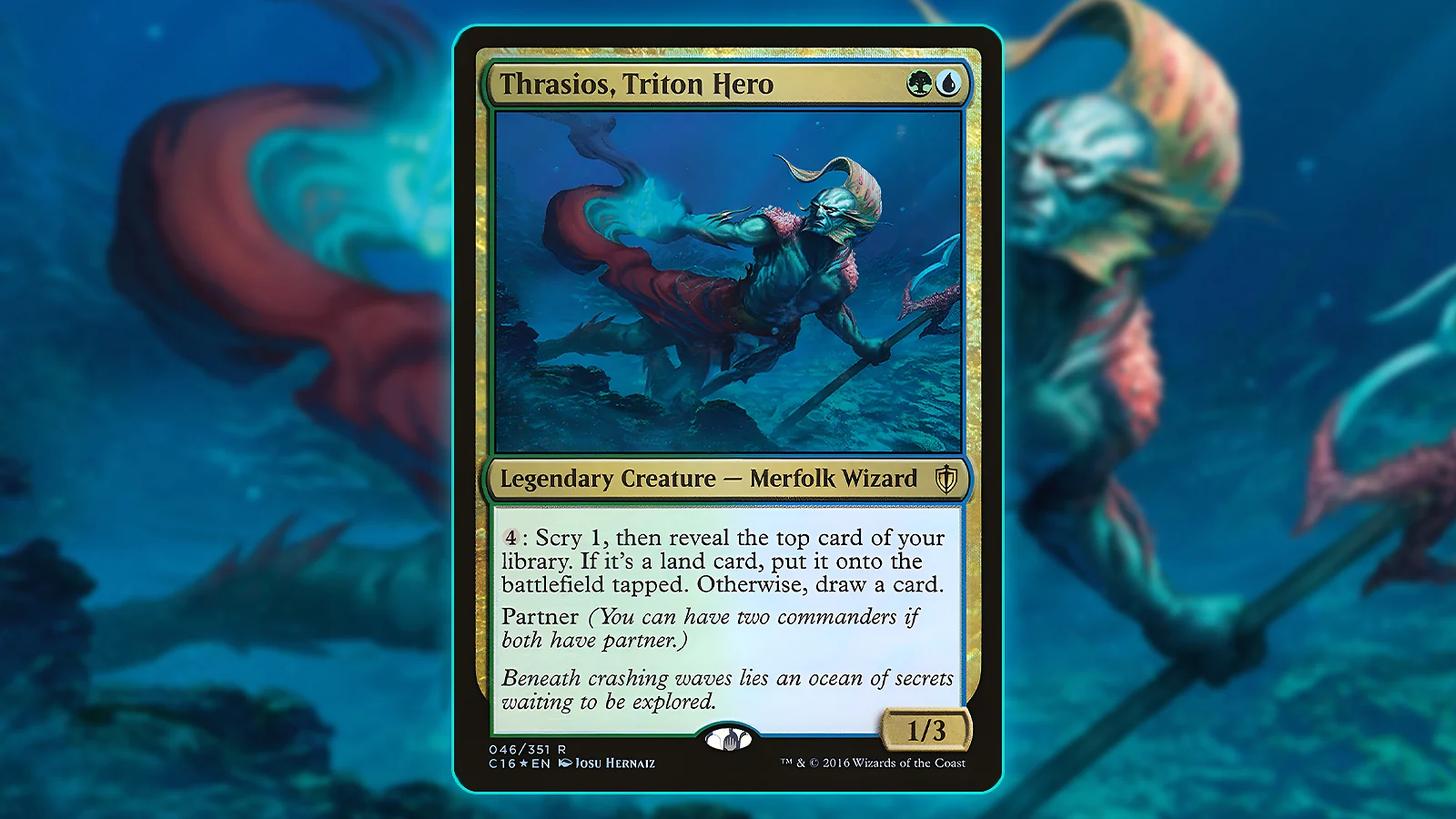
2. Thrasios, Triton Hero [Best Mana-to-Value Engine]
| Color identity | Simic (Green-Blue) |
| Primary role | Late-game value engine |
| Primary strength | Mana conversion into advantage |
| Synergy reliance | Low |
| Power level | Very high |
| Best pairing type | Control or combo-oriented Partner |
Thrasios, Triton Hero provides long-term consistency by turning unused mana into incremental value. He fits naturally into Partner decks that plan for extended games, where efficient resource use shapes the outcome. His ability guarantees that excess mana never goes to waste, even when the board stalls.
Increase activation frequency with mana acceleration or untap effects to turn Thrasios into a primary engine rather than a secondary outlet.
The standout strength here is mana-to-value conversion. Each activation improves card quality or advances mana development, which gradually pulls the deck ahead without forcing risky plays. Over time, this repeatable advantage allows Thrasios to scale smoothly into the late game and support a wide range of Partner pairings.
3. Kraum, Ludevic’s Opus [Best Anti-Spellslinger Threat]
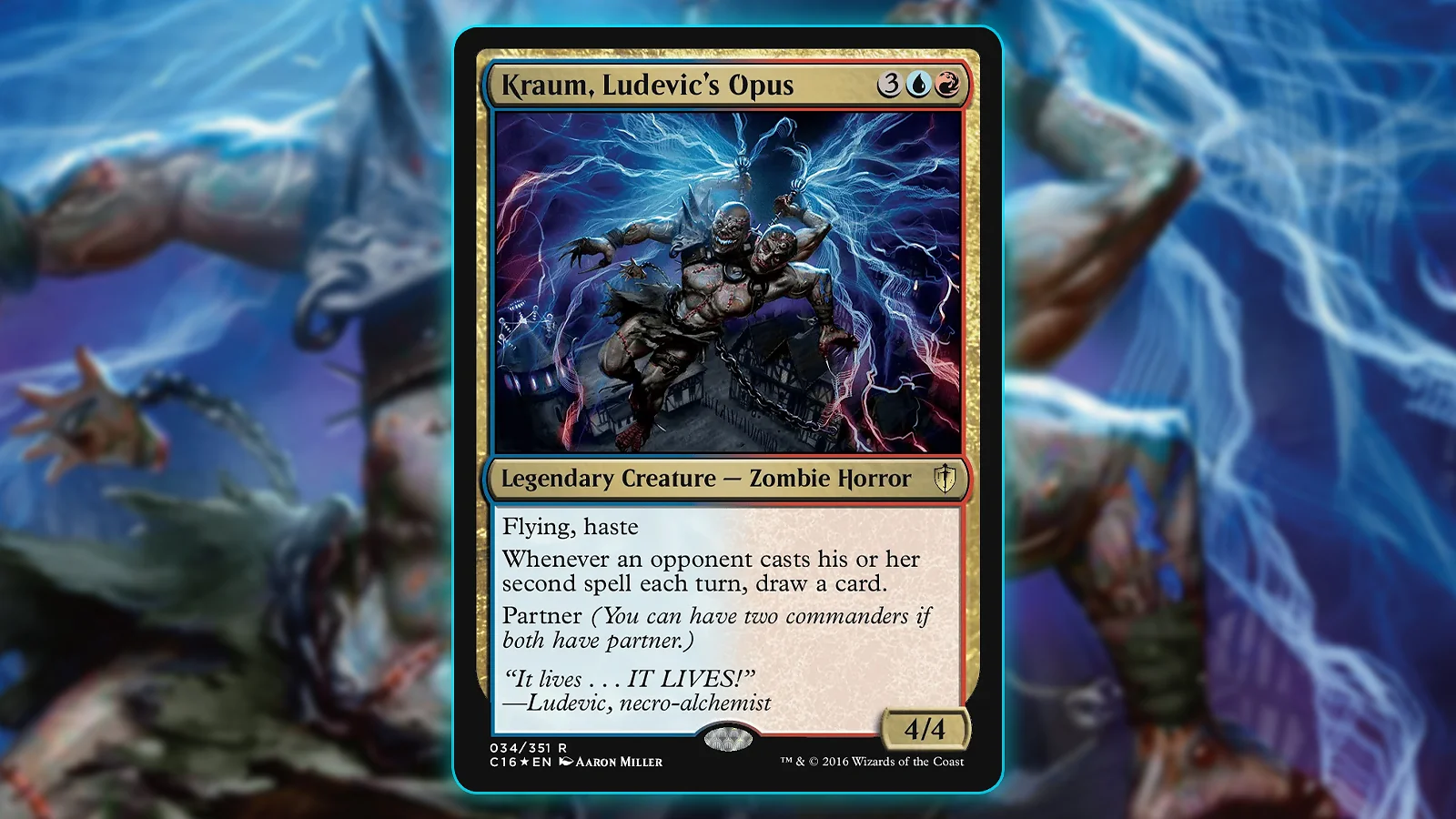
| Color identity | Izzet (Blue-Red) |
| Primary role | Card advantage threat |
| Primary strength | Punishing spell-heavy play |
| Synergy reliance | Low |
| Power level | High |
| Best pairing type | Tempo or pressure-based Partner |
Kraum, Ludevic’s Opus applies steady pressure while quietly generating value. He capitalizes on tables that rely on multiple spells each turn, which makes him effective against control and combo-heavy opponents. As the game progresses, Kraum forces interaction while maintaining forward momentum, even without a traditional mana ability in MTG tied to acceleration.
Pair Kraum with disruption that encourages opponents to play reactively. This increases trigger frequency while keeping combat lanes open.
His core strength lies in repeatable card draw tied to opponent behavior. Each extra spell played by an opponent turns into an advantage, which rewards patience and good threat timing. In Partner builds, this balance of pressure and value places Kraum among the best Partner Commanders MTG for proactive strategies.
4. Vial Smasher the Fierce [Best Spell Damage Partner]
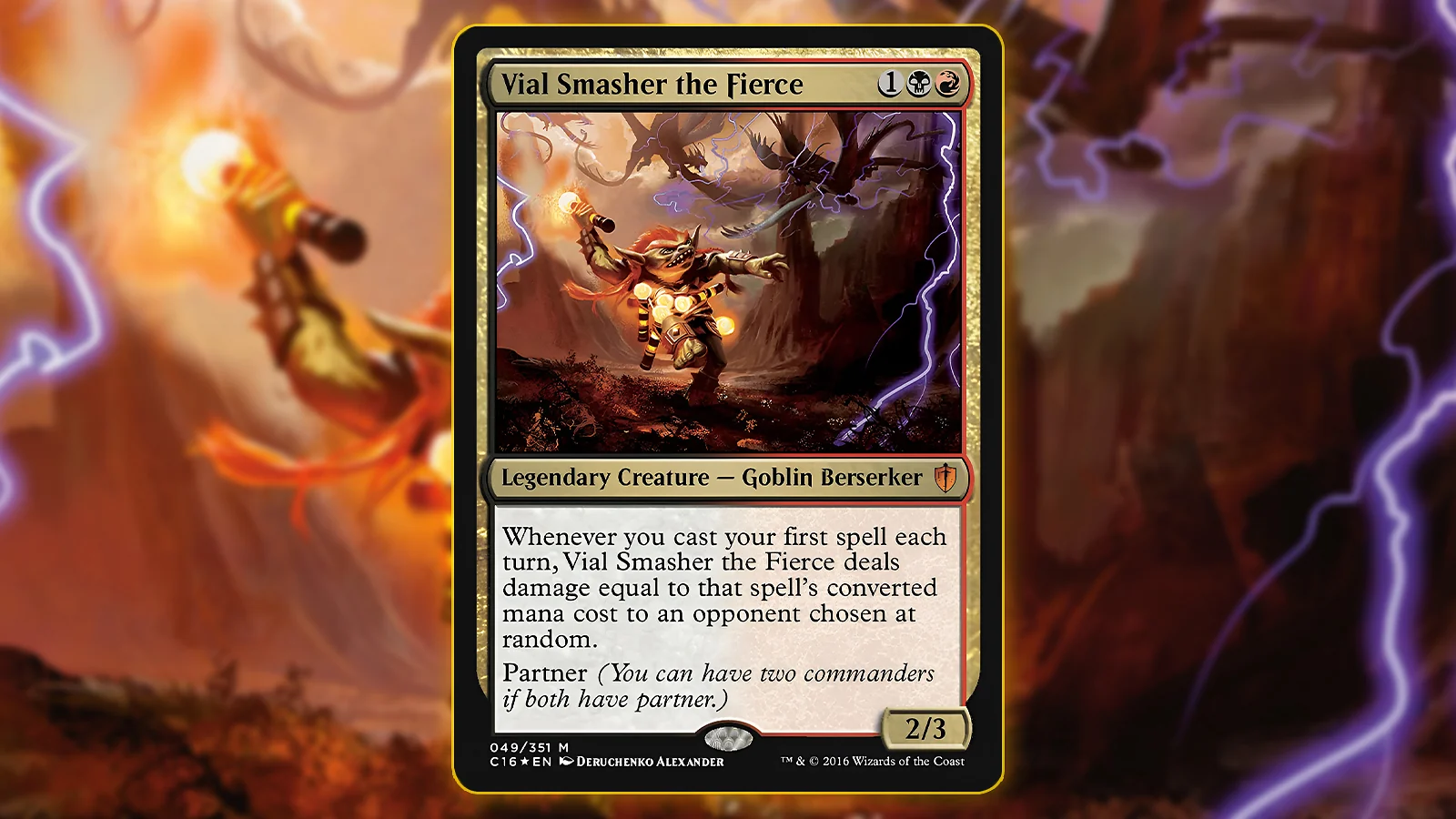
| Color identity | Rakdos (Black-Red) |
| Primary role | Damage engine |
| Primary strength | Spell-based damage output |
| Synergy reliance | Medium |
| Power level | High |
| Best pairing type | Big-spell or value Partner |
Vial Smasher the Fierce shifts the focus from combat to spell impact. Each high-cost spell creates immediate pressure by dealing damage without requiring board presence, which explains why she often comes up when players discuss the best red cards in MTG for high-impact Commander builds.
Focus on spells that remain useful even when damage lands on the wrong target. This keeps progress steady regardless of randomness.
Her defining strength is turning spell costs into direct damage. Large spells advance the game plan while also threatening opponents at random, which creates tension at the table. Over time, this pressure adds up and opens windows for decisive turns.
5. Jeska, Thrice Reborn [Best Damage Multiplier Commander]
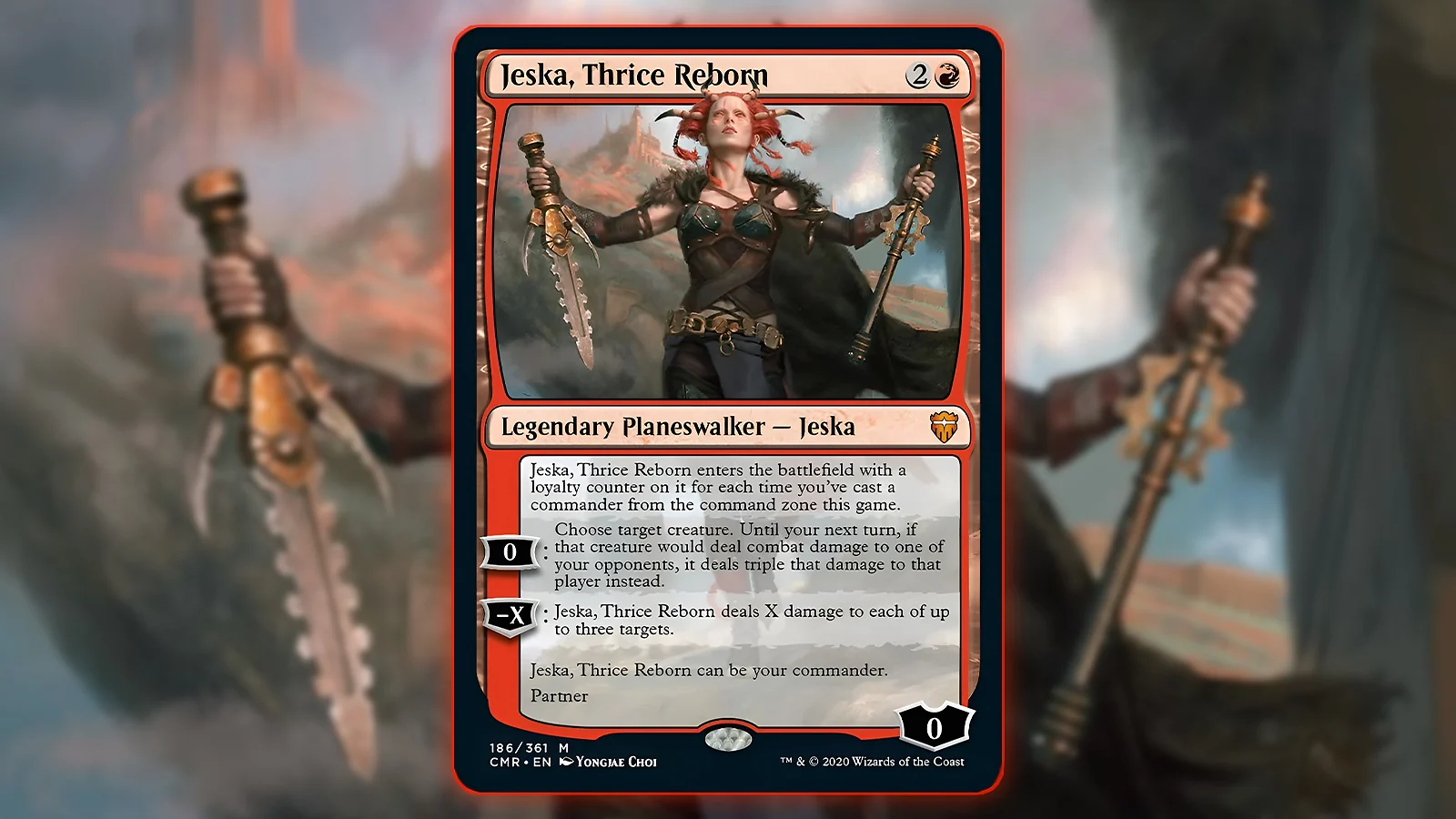
| Color identity | Mono-Red |
| Primary role | Damage amplifier |
| Primary strength | Single-target damage scaling |
| Synergy reliance | Medium |
| Power level | High |
| Best pairing type | Combat-focused Partner |
Jeska, Thrice Reborn pushes games toward fast conclusions by amplifying damage from a single source. She works best in decks that already apply pressure through combat or direct damage.
Protect the chosen damage source before committing Jeska’s ability. Timing matters more than speed when opponents hold instant-speed answers.
Her standout strength is tripling damage from one creature. That effect turns even modest attackers into serious threats and shortens the clock significantly. In Partner decks, Jeska often acts as the finisher that converts board presence into a win.
6. Tevesh Szat, Doom of Fools [Best Sacrifice Value Engine]
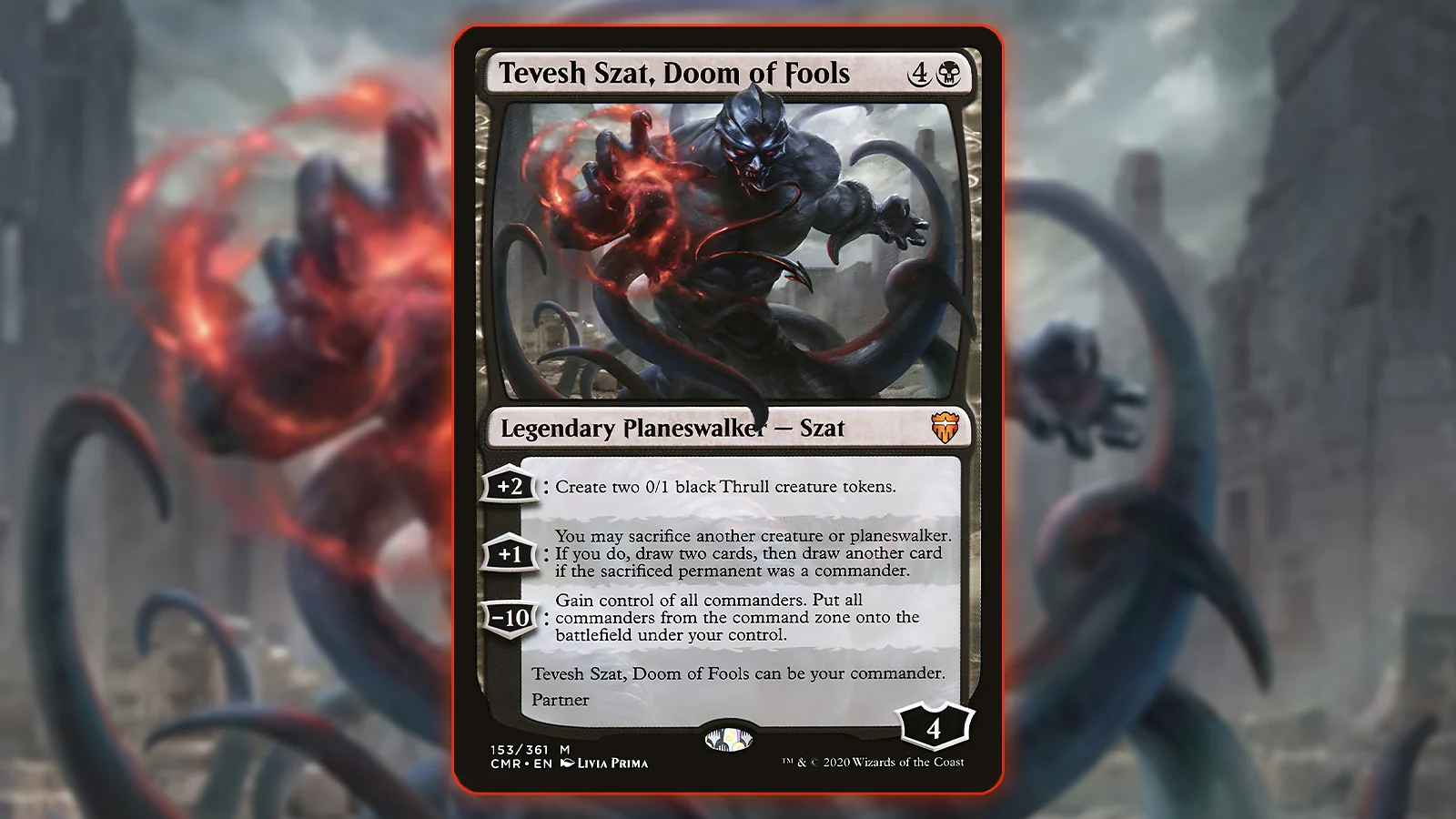
| Color identity | Mono-Black |
| Primary role | Value engine |
| Primary strength | Card advantage |
| Synergy reliance | Medium |
| Power level | High |
| Best pairing type | Sacrifice or value Partner |
Tevesh Szat, Doom of Fools establishes control by turning expendable resources into cards. He creates fodder on demand, which supports sacrifice plans while keeping the hand stocked and places him among the top token commanders in MTG for value-driven Partner strategies. Over several turns, this steady output shapes the pace of the table and limits opponents’ ability to recover.
Pair Tevesh with commanders that benefit from creatures leaving the battlefield. This keeps every sacrifice productive rather than reactive.
The defining strength here is repeatable card advantage from the command zone. By sacrificing tokens or surplus creatures, Tevesh converts board presence into resources without needing to attack.
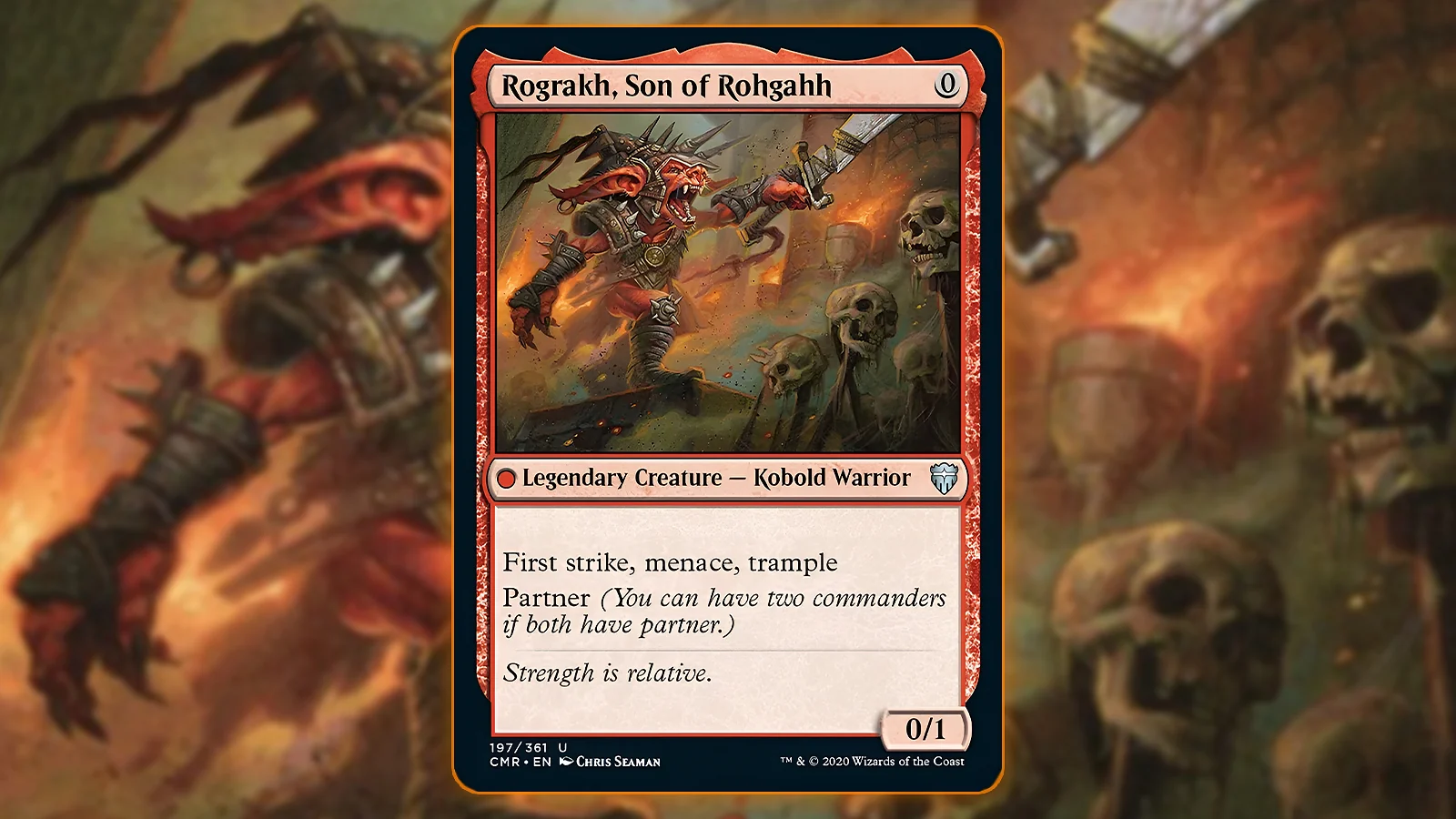
7. Rograkh, Son of Rohgahh [Best Zero-Cost Commander]
| Color identity | Mono-Red |
| Primary role | Early-game enabler |
| Primary strength | Cost efficiency |
| Synergy reliance | Medium |
| Power level | Medium to High |
| Best pairing type | Aggressive or combo Partner |
Rograkh, Son of Rohgahh reshapes early turns through pure efficiency. His zero mana cost allows immediate board presence, which accelerates Partner strategies that rely on fast sequencing.
Use Rograkh to trigger effects or carry equipment rather than as a damage source. His value comes from timing and interaction, not raw power.
His standout strength is cost-free deployment. Rograkh enables explosive openings by supporting equipment, sacrifice effects, or damage triggers without taxing mana. In the right shell, this early momentum defines the entire game.
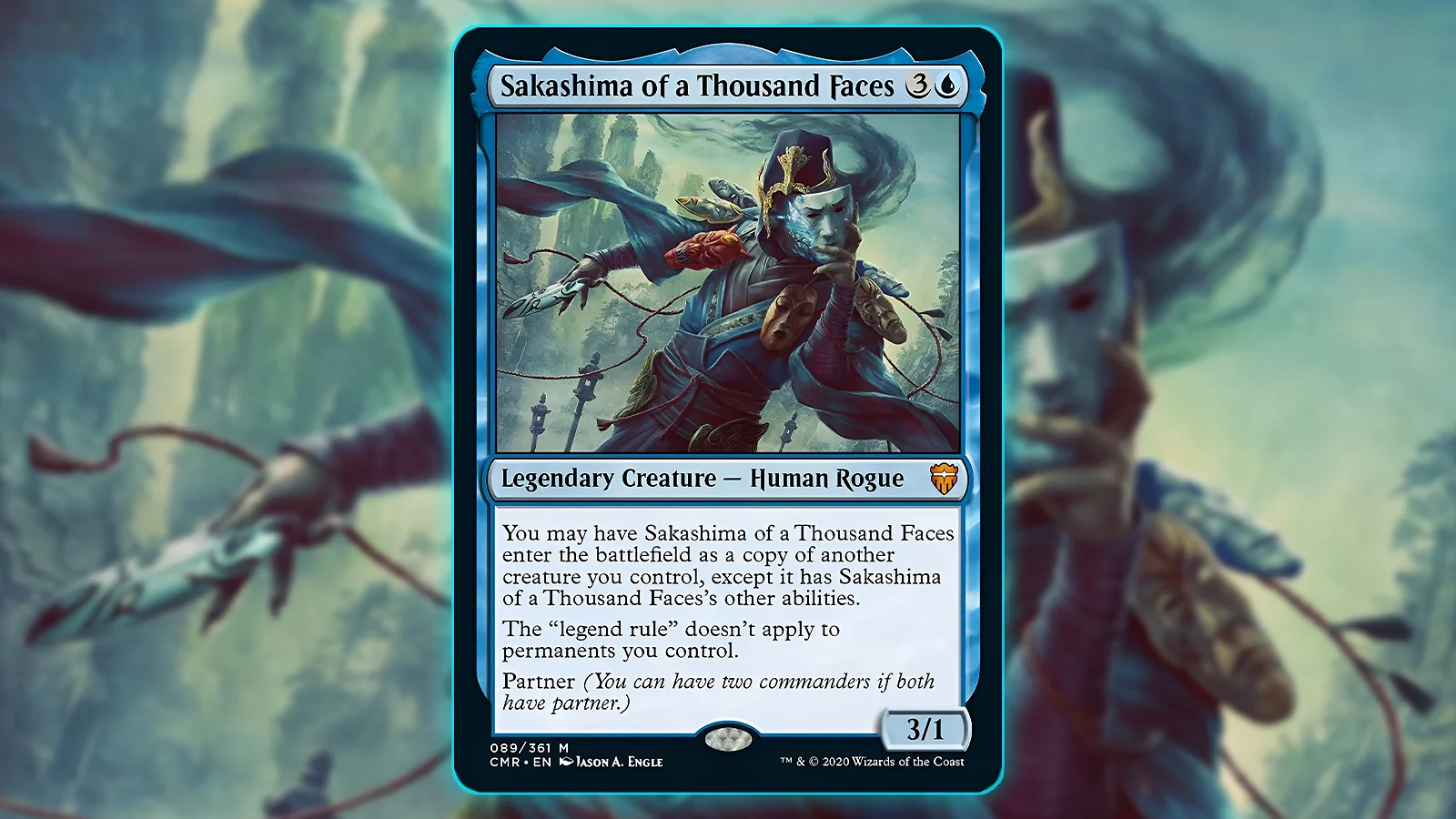
8. Sakashima of a Thousand Faces [Best Commander Copy Effect]
| Color identity | Blue |
| Primary role | Value multiplier |
| Primary strength | Commander duplication |
| Synergy reliance | Medium |
| Power level | High |
| Best pairing type | Synergy-driven Partner |
Sakashima of a Thousand Faces amplifies board impact by copying the most important creature in play. In Partner decks, this usually means duplicating a commander that already provides value, which is why Sakashima is often mentioned among the top blue cards in MTG for synergy-driven Commander builds. The absence of the legend restriction allows both copies to operate at full strength.
Choose a Partner whose effect scales with repetition. Static or triggered abilities benefit far more than one-time effects.
The key strength is doubling commander-based effects. By mirroring the best ability on the battlefield, Sakashima increases consistency and ceiling without adding complexity.
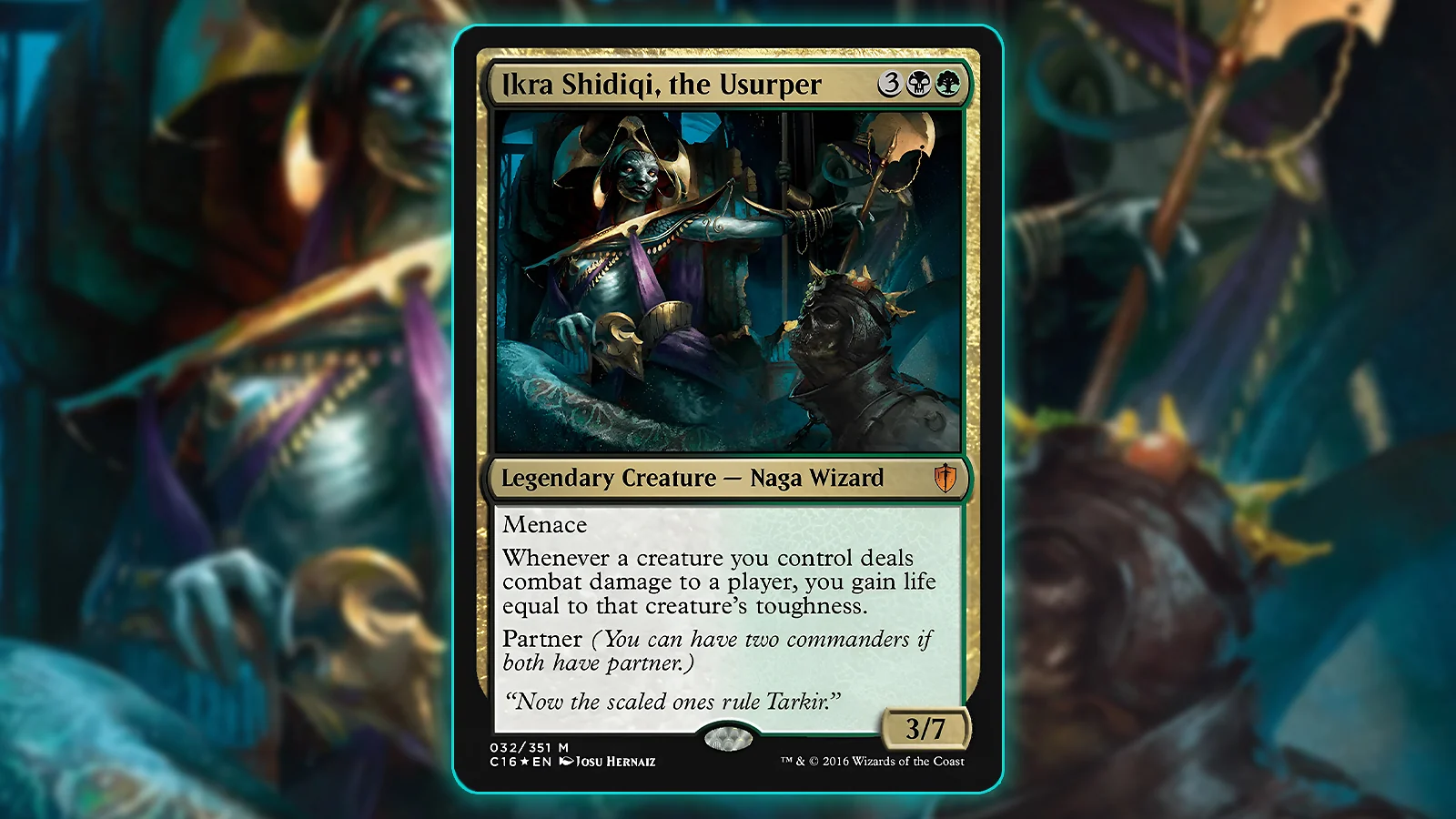
9. Ikra Shidiqi, the Usurper [Best Lifegain Combat Engine]
| Color identity | Golgari (Black-Green) |
| Primary role | Sustain engine |
| Primary strength | Lifegain payoff |
| Synergy reliance | Medium |
| Power level | Medium to High |
| Best pairing type | Midrange or grind-focused Partner |
Ikra Shidiqi, the Usurper stabilizes slower games by turning combat damage into life. She rewards decks that attack with multiple creatures, which naturally fits Partner strategies that want to stay present on the board. Over time, this life buffer allows riskier lines without exposing the deck to sudden losses.
Focus on creatures with high toughness rather than raw power. This maximizes life gain while keeping attackers resilient.
Her standout strength is scaling Lifegain tied directly to combat damage. As creatures grow larger, the life swing increases
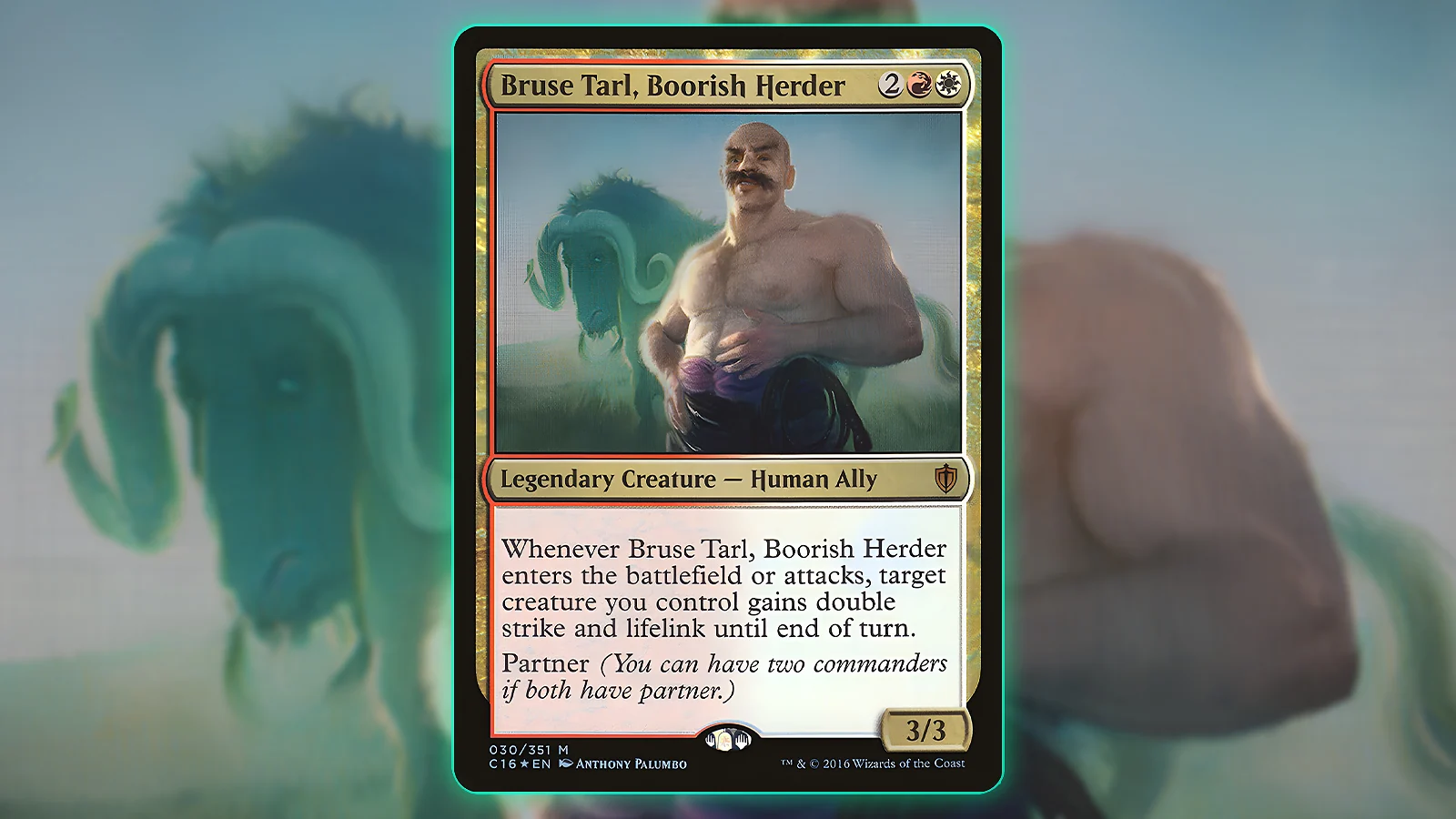
10. Bruse Tarl, Boorish Herder [Best Double Strike Partner]
| Color identity | Boros (Red-White) |
| Primary role | Combat enhancer |
| Primary strength | Damage amplification |
| Synergy reliance | Medium |
| Power level | High |
| Best pairing type | Aggressive or pressure-based Partner |
Bruse Tarl, Boorish Herder shifts combat math the moment he enters play. He turns any attacker into a serious threat by granting double strike and lifelink, which forces immediate answers and highlights why he often appears in discussions around the best white cards in MTG for aggressive Commander strategies.
Time Bruse’s trigger on creatures that already threaten damage. This reduces reliance on combat tricks and limits counterplay.
The key strength here is on-demand combat damage amplification. Bruse does not need to stay on the battlefield to matter, since one attack can swing life totals dramatically.
11. Ishai, Ojutai Dragonspeaker [Best Passive Scaling Threat]
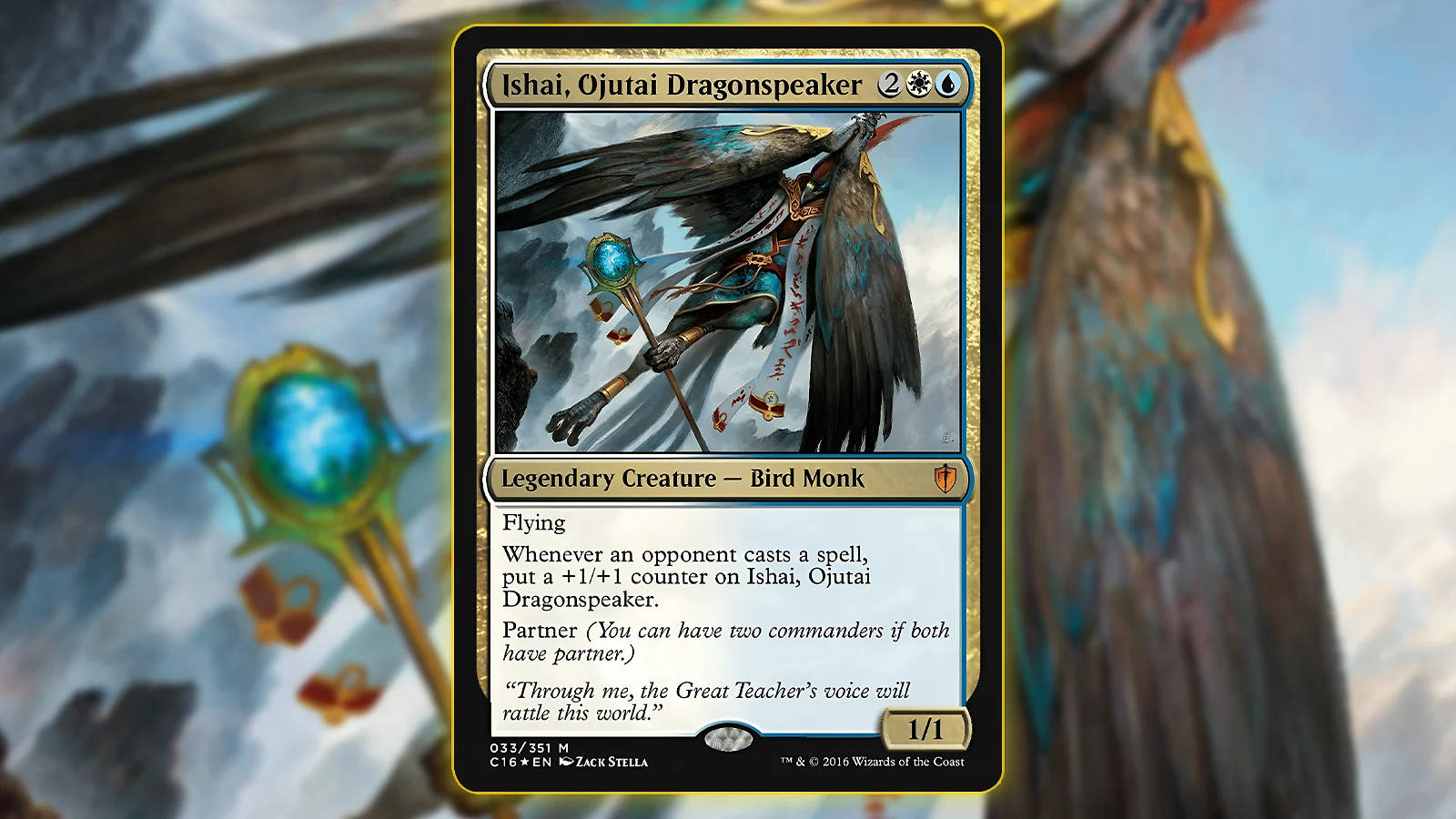
| Color identity | Azorius (White-Blue) |
| Primary role | Scalable threat |
| Primary strength | Passive power growth |
| Synergy reliance | Low |
| Power level | High |
| Best pairing type | Control or tempo Partner |
Ishai, Ojutai Dragonspeaker grows through opponent actions rather than direct investment. Each spell cast across the table increases her threat level, which allows the deck to play defensively while pressure builds naturally and earns the title of one of the top dragon commanders in MTG for scalable Partner strategies.
Protect Ishai early instead of rushing attacks. Her value increases fastest when opponents continue to develop their boards.
Her defining strength is passive power scaling without mana input. Ishai becomes a dominant flying presence simply by staying in play, which frees resources for interaction and protection.
12. Silas Renn, Seeker Adept [Best Artifact Recursion Partner]
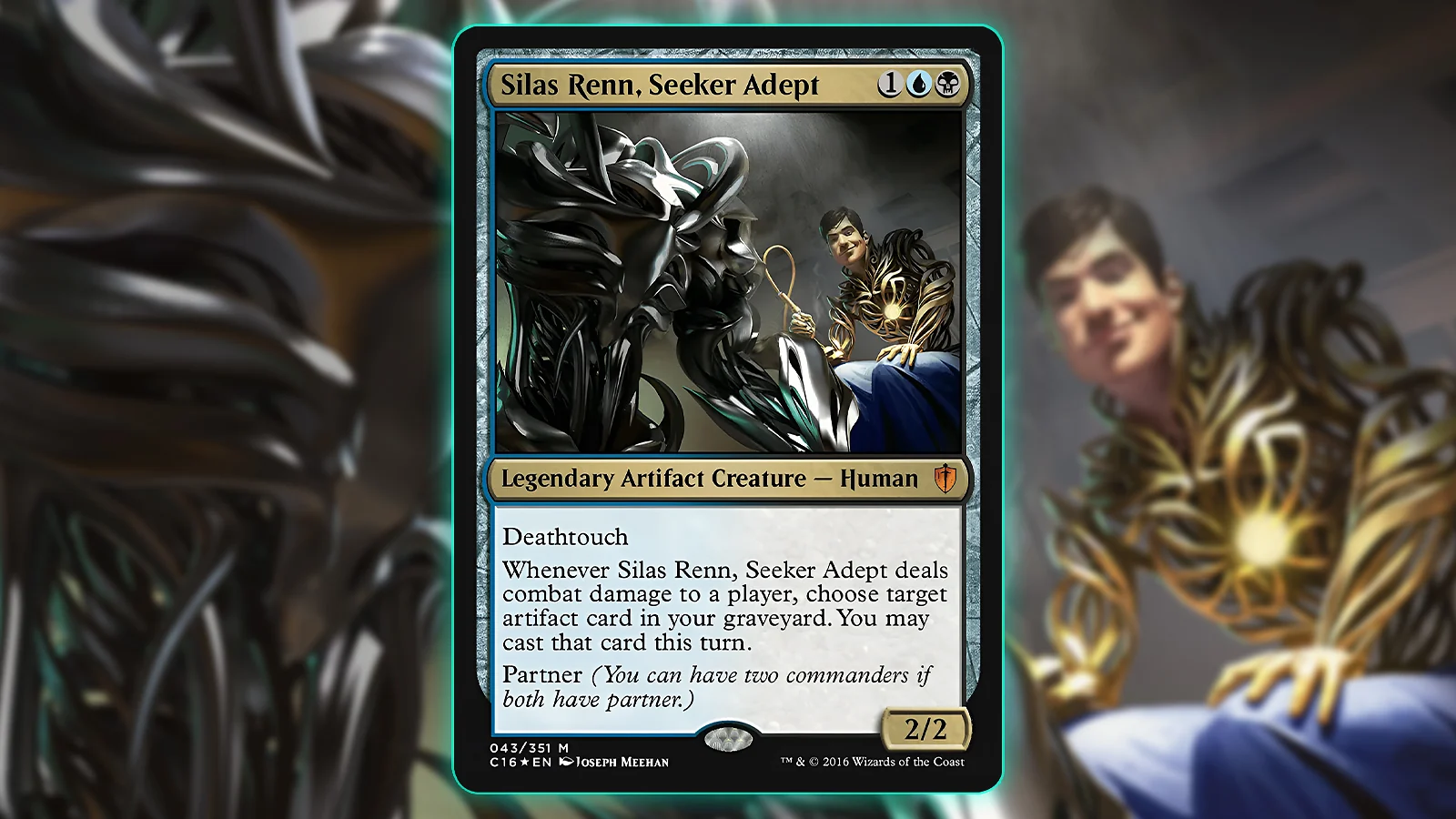
| Color identity | Dimir (Blue-Black) |
| Primary role | Artifact recursion |
| Primary strength | Graveyard-based card access |
| Synergy reliance | Medium |
| Power level | Medium to High |
| Best pairing type | Artifact-focused Partner |
Silas Renn, Seeker Adept supports artifact strategies by turning combat damage into long-term resource access. He encourages steady attacks rather than burst damage, which aligns well with slower artifact shells. Building a deck around him often involves searching for the best colorless cards MTG to ensure every recursion trigger provides maximum utility.
Prioritize low-cost artifacts with strong enters-the-battlefield effects. This maximizes value each time Silas enables recursion.
His defining strength is recurring key artifacts from the graveyard. Once Silas connects, destroyed or sacrificed pieces regain value and re-enter the game plan. In an artifact-heavy shell, this makes Silas a dependable Partner Commander for sustained pressure.
13. Malcolm, Keen-Eyed Navigator [Best Treasure Ramp Commander]
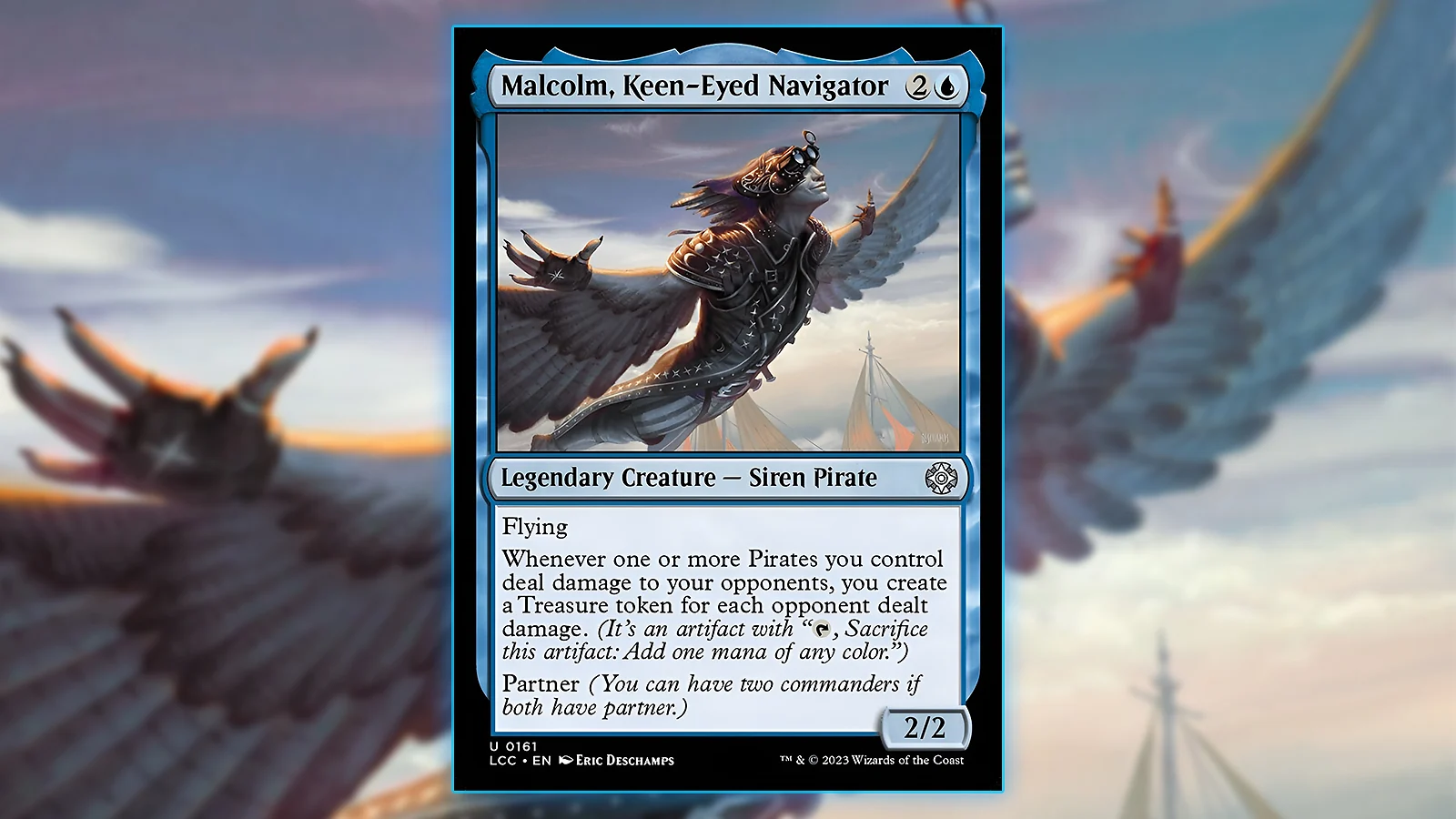
| Color identity | Blue |
| Primary role | Mana engine |
| Primary strength | Treasure-based ramp |
| Synergy reliance | Medium |
| Power level | High |
| Best pairing type | Tempo or combo Partner |
Malcolm, Keen-Eyed Navigator rewards consistent combat damage with mana acceleration. He performs best in decks that apply pressure through evasive creatures, which keeps Treasure production steady.
Use evasive creatures to guarantee Treasure triggers. Consistent hits matter more than raw damage output.
The standout strength is reliable mana generation through combat. Each hit translates directly into ramp, which scales naturally in multiplayer games. Over several turns, Malcolm creates both tempo and flexibility without demanding a heavy setup.
14. Tana, the Bloodsower [Best Token Generation Partner]
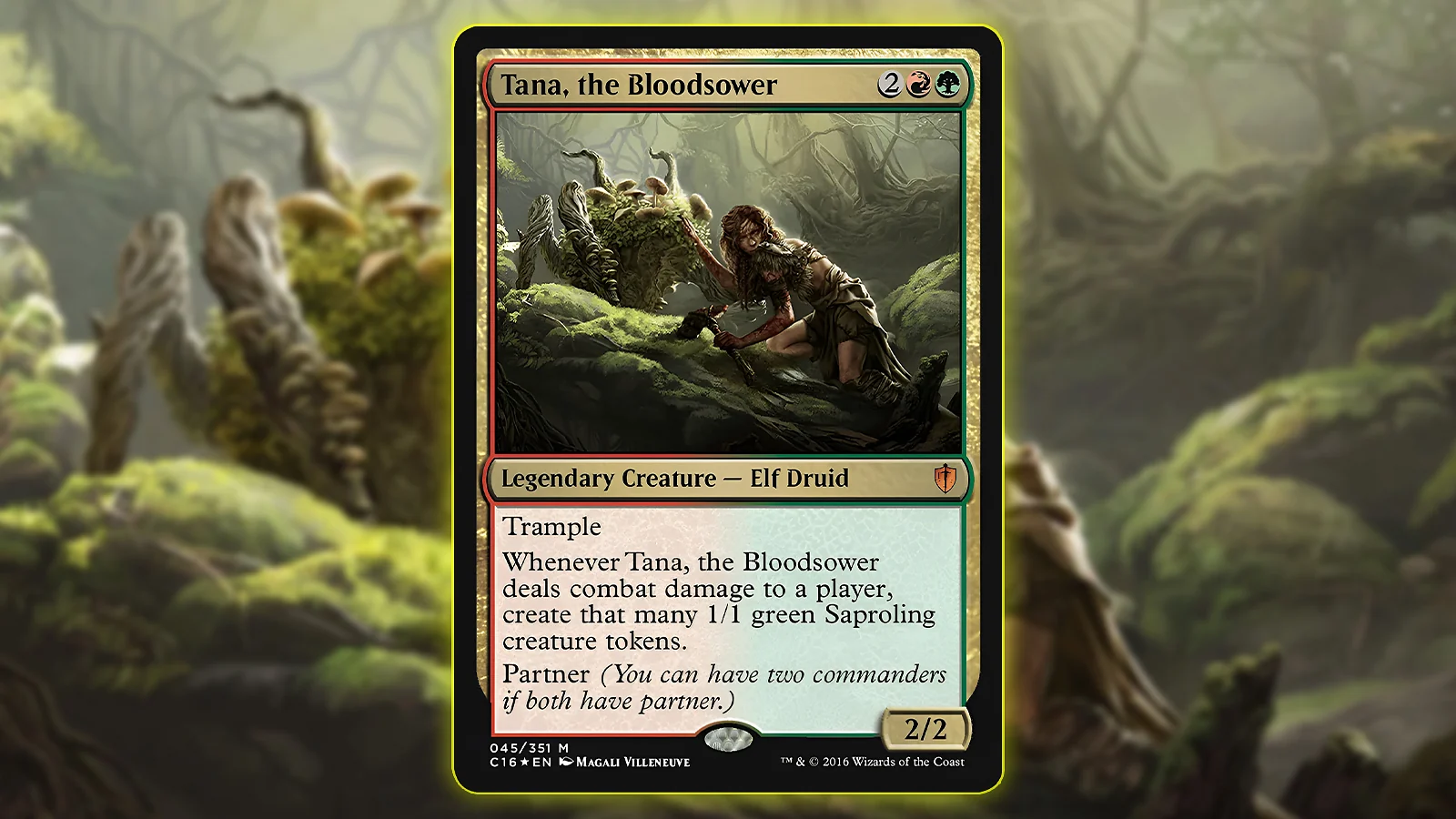
| Color identity | Gruul (Red-Green) |
| Primary role | Token producer |
| Primary strength | Combat-based token generation |
| Synergy reliance | Medium |
| Power level | Medium to High |
| Best pairing type | Go-wide or sacrifice Partner |
Tana, the Bloodsower turns combat damage into board presence. Each successful attack increases creature count, which supports wide strategies and sacrifice engines and places her among the top green cards in MTG for token-focused Commander builds.
Increase Tana’s power before attacking. Even small boosts translate into meaningful token swings.
Her core strength is scalable token creation tied to combat damage. As Tana’s power increases, token output rises as well, which compounds value over time in the best Partner Commanders MTG.
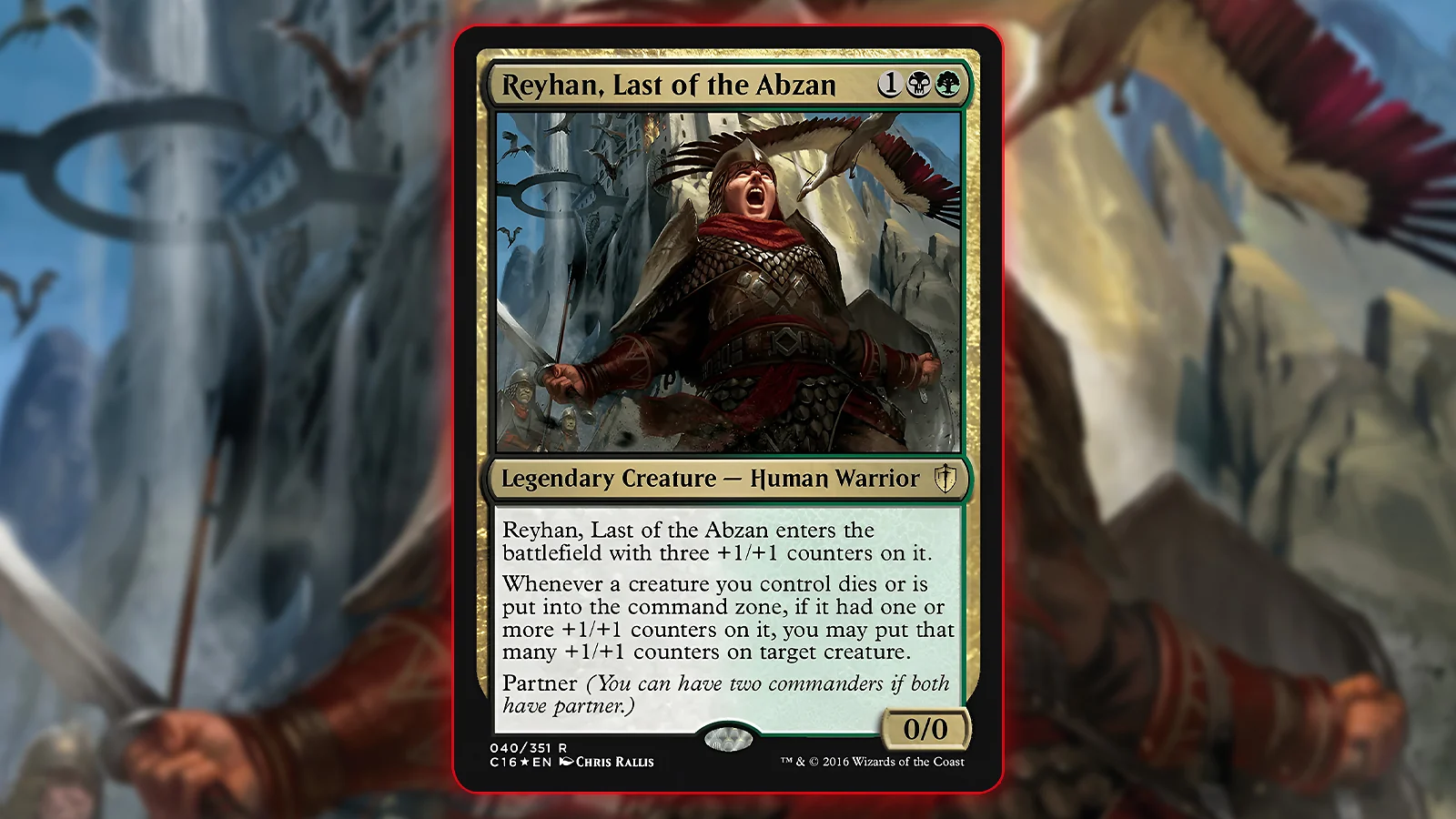
15. Reyhan, Last of the Abzan [Best +1/+1 Counter Support]
| Color identity | Abzan (White-Black-Green) |
| Primary role | Counter support |
| Primary strength | Counter preservation |
| Synergy reliance | Medium |
| Power level | High |
| Best pairing type | Counter-based Partner |
Reyhan, Last of the Abzan maintains board pressure by preserving invested resources. She ensures that +1/+1 counters do not disappear when creatures leave play, which reduces the impact of removal and board wipes while increasing the importance of stable mana access through the top dual lands in MTG.
Spread counters across multiple creatures instead of stacking one threat. This makes Reyhan’s ability harder to disrupt.
Her defining strength is retaining counters across creatures. Each transfer keeps power on the battlefield and allows threats to rebuild quickly. In Partner decks, this resilience supports long-term scaling and consistent combat presence.
How to Build a Partner Commander Deck in MTG
Building a strong Partner Commander deck requires careful coordination between two commanders that support the same strategy. Many successful lists built around the best Partner Commanders MTG follow a structured deck-building process that keeps synergy, consistency, and win conditions aligned.
- Choose Commanders With Complementary Abilities – Start by selecting two Commanders whose abilities support the same game plan.
- Define Your Core Strategy Early – Identify whether the deck will focus on value, combo, aggro, or control. Establishing a clear direction early helps narrow card choices and ensures each inclusion supports the central plan instead of adding unnecessary complexity.
- Build Around Shared Synergies – Both Commanders should function as part of the same engine. Focus on cards that benefit the pair together rather than highly specialized commander-specific effects. Many decks rely on staples that appear among the top MTG cards because they offer flexibility and reliability.
- Prioritize Ramp and Color Fixing – Partner decks often use multiple colors, which increases the importance of mana stability. Reliable ramp and efficient fixing allow both commanders to enter play on curve and remain available after removal.
- Add Protection and Interaction – Removal spells, counterspells, and protection pieces keep the deck’s engine online.
A well-constructed Partner deck balances synergy, consistency, and interaction. Many of the best Partner Commanders MTG succeed because their abilities naturally support these principles, allowing the deck to scale effectively across different power levels.
My Overall Verdict on The Best Partner Commanders MTG
The best Partner Commanders MTG expand deckbuilding in ways that single cards rarely achieve. Two commanders in the command zone provide broader color identity, flexible game plans, and reliable value engines throughout longer Commander games.
Many of the best Partner Commanders MTG succeed because their abilities naturally support scalable strategies such as card advantage, mana generation, or combat pressure.
Some commanders stand out more consistently across different metas and power levels.
- Tymna the Weaver – One of the strongest card advantage engines in Partner decks. Consistent combat triggers keep hands full and maintain pressure across multiplayer tables.
- Thrasios, Triton Hero – A powerful mana sink that converts extra resources into long-term value, making him extremely reliable in slower or control-focused games.
- Kraum, Ludevic’s Opus – A flying threat that punishes spell-heavy tables while generating steady card advantage.
Overall, the best Partner Commanders MTG combine efficient abilities, flexible pairings, and scalable value, allowing players to build competitive decks across a wide range of Commander strategies.
FAQs
The best Partner Commander in MTG depends on the deck’s goal, but Tymna the Weaver and Thrasios, Triton Hero remain the most widely recognized for their consistency, card advantage, and flexibility across competitive and high-power Commander environments.
The Partner mechanic allows you to use two commanders instead of one, as long as both have Partner. Each Commander starts in the command zone, and their combined color identities determine the deck’s color range.
Yes, Partner Commanders can be competitive at high-power and tournament-level Commander tables. Their strength comes from expanded color access, redundancy in the command zone, and the ability to combine value engines with win conditions efficiently.
Yes, Partner commanders can work well for beginners, especially value-based pairs. They allow flexible deckbuilding and forgiveness after mistakes, though some advanced pairings may require stronger rules knowledge and sequencing skills.
No, you cannot mix Partner and non-Partner Commanders. Both Commanders must have the Partner ability. If only one has Partner, the deck must use a single Commander instead.
A Partner Commander deck can have up to four colors, depending on the two commanders chosen. This wide color access allows stronger mana bases, broader interaction, and more adaptable game plans.