

Formula 1 Esports: Complete Guide

Formula 1 esports is the digital extension of the world’s premier racing series. In this guide I draw on personal experience with the official EA Sports F1 games to explain what the scene looks like, how big it is, and which cars, players, and teams rule the grid. Whether you’re curious about getting involved or just want to follow the action, this guide will help you feel at home in the sim racing world.
Jump to:
What Is Formula 1 Esports?
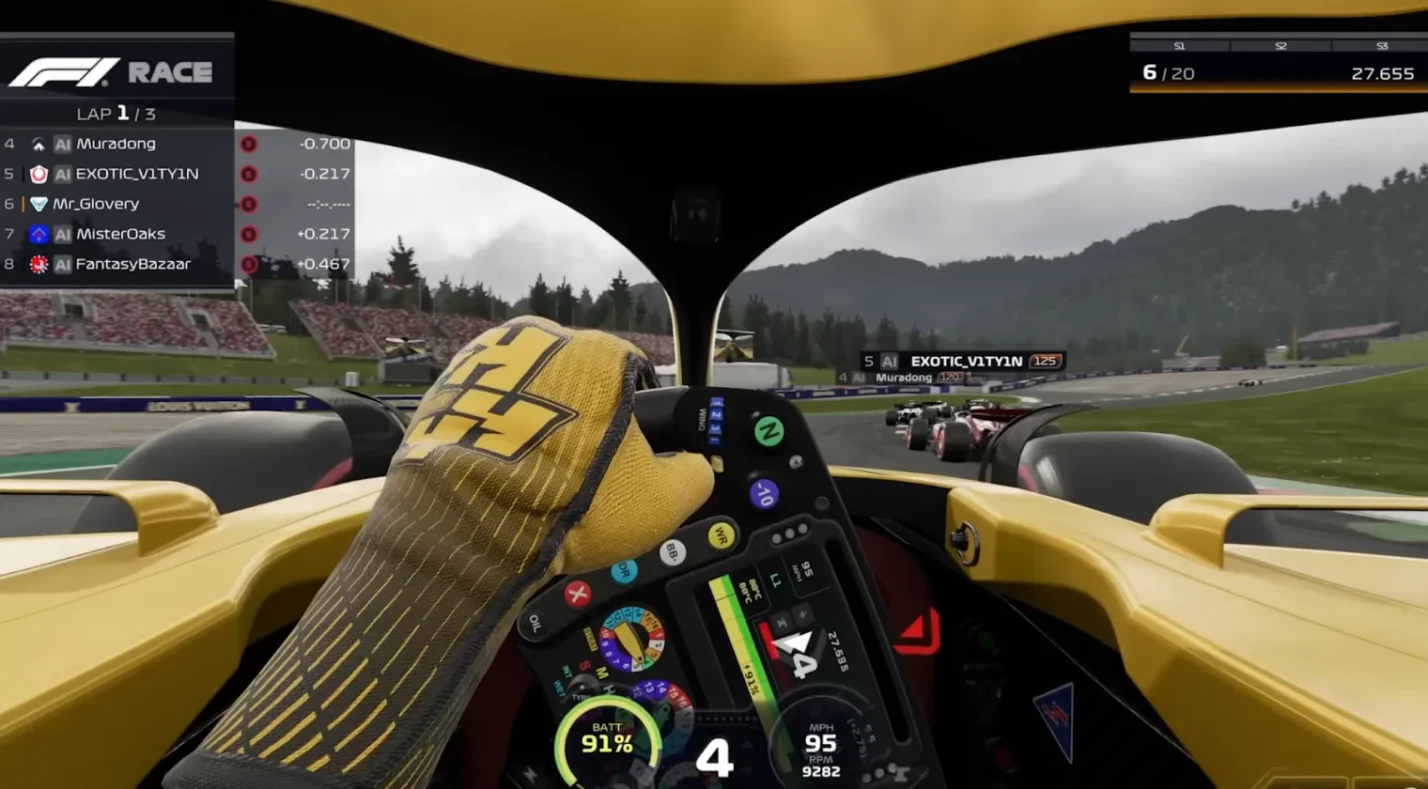
Formula 1 esports is an officially sanctioned competitive scene built around EA Sports’ annual F1 games. The series launched in 2017 to bridge the gap between real racing and gaming by giving fans a chance to compete as virtual drivers for the same teams that appear on television.
Official Formula 1 teams scout top performers from open qualifiers, draft them to pro rosters, and compete in a season of races that mirror the real calendar. Each pro event is broadcast live, complete with commentary and in‑studio analysts.
At its core, Formula 1 esports is a sim‑racing league with rigorous rules. Drivers race on equal‑performance cars, which means setups and skill decide the results rather than real‑world budgets. Qualification opens to anyone who owns the current F1 game and meets the age requirement, with online races whittling tens of thousands of hopefuls down to a handful of challengers. The best of those challengers get drafted by teams such as Red Bull Sim Racing, Ferrari HP Esports, and Mercedes‑AMG Petronas Esports.
Because the games mirror the sport so closely, joining Formula 1 esports is also a crash course in racing culture. You’ll need to learn strategy, tire management, fuel use, and how to adapt to weather changes. If you’re curious about other competitive titles, our article on the most popular esports games shows how racing fits into the wider scene.
How Many People Play Formula 1 Every Day?
The player base for Formula 1 esports is smaller than that of shooters or MOBAs but still impressively dedicated. During the first season in 2017, open qualifiers attracted around 60,000 entrants, and participation has remained in the tens of thousands every year since. On Steam alone, F1 24 averages around a thousand concurrent players, with peak numbers exceeding 2,000 around new content drops. When you add PlayStation and Xbox, the total daily player count is estimated between 20,000 and 50,000, depending on the time of year.
Viewership tells a similar story. Major races routinely attract hundreds of thousands of live viewers across Twitch, YouTube, and television. The pandemic‑era Virtual Grand Prix series even drew over 400,000 concurrent viewers for a single race. While the numbers aren’t at the level of League of Legends or Counter‑Strike, Formula 1 esports thrives on an engaged niche audience that values realism and strategy.
One reason the player base stays steady is the yearly release cycle. Each new F1 game brings updated cars, physics, and tracks, which encourages fans to keep practicing. With cross‑play now supported on most platforms, it’s easier than ever to find a race.
For a broader look at sim racing gear, check out our guide to the best sim racing setup for tips on wheels, pedals, and cockpits.
Best Formula 1 Esports Cars
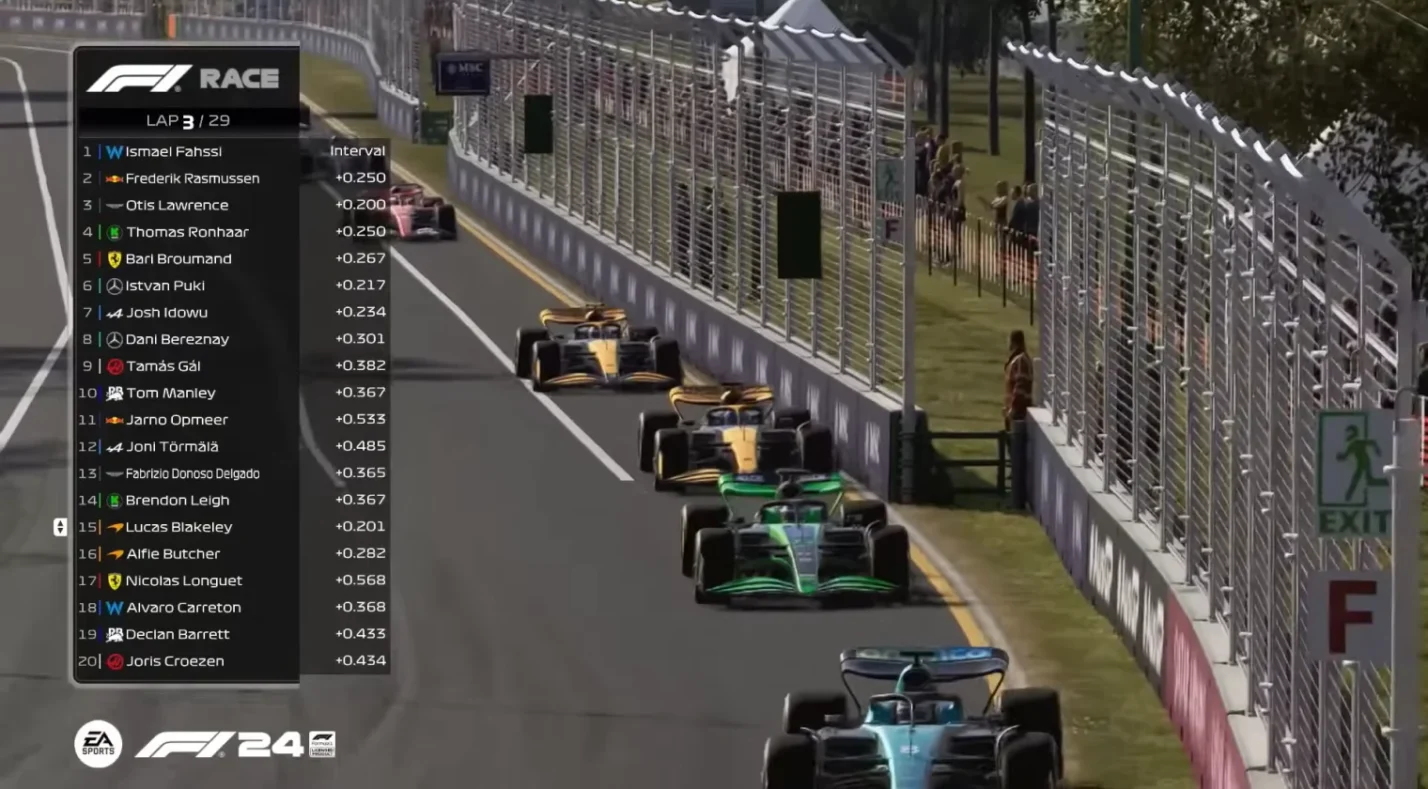
Picking the right car in Formula 1 esports makes a noticeable difference in handling and strategy. Although all cars are balanced for official races, casual lobbies and time trials still reflect the unique characteristics of each team’s design. Here are the standout cars and why elite drivers gravitate toward them:
| Car | Role | Signature pros | Playstyle/strengths | Why they matter |
| Red Bull RB20 | Dominant car | Jarno Opmeer, Frederik Rasmussen | Highest top speed, strong straight‑line performance | Red Bull’s 2024 chassis combines outright speed with good tire life; it is the benchmark for time‑trial laps |
| Ferrari SF‑24 | Balanced car | Bari Broumand, David Tonizza | Responsive handling, agile in medium‑speed corners | The Ferrari’s nimble feel makes it forgiving for aggressive drivers, which explains why many qualify well with it |
| Mercedes W15 | Consistent car | Dániel Bereznay, Jake Benham | Stable rear end, predictable tire wear | Mercedes cars reward smooth driving and suit long stints, helping drivers avoid costly mistakes |
| McLaren MCL38 | Challenger car | Lucas Blakeley, Alfie Butcher | Excellent acceleration, strong traction | McLaren’s car is quick off the line and favors circuits with heavy braking zones, giving opportunistic drivers a chance to attack |
| Aston Martin AMR24 | Handling‑focused car | Otis Lawrence | High downforce, strong in slow corners | Aston Martin’s chassis excels on technical tracks like Monaco and Singapore, which allows precision drivers to shine |
| KICK Sauber C44 | Dark‑horse car | Thomas Ronhaar | Good tire economy, underrated pace | Sauber’s car isn’t flashy but performs well in mixed conditions, which lets adaptable drivers surprise the field |
These cars reflect real‑world designs but are adapted for the game. Pros tend to pick the Red Bull or Ferrari because those cars have the best balance of speed and stability, but every chassis is competitive in equal‑performance modes. Before racing seriously, test each car in time trial to see which one suits your driving style.
Best Formula 1 Esports Drivers
The talent in Formula 1 esports spans the globe. These drivers have honed their skills through thousands of practice laps and intense league races. Here are some of the top players as of 2025:
| Player | Country | Team | Notable achievements |
| Jarno Opmeer | Netherlands | Oracle Red Bull Sim Racing | Three‑time champion (2020, 2021, 2025); known for calm race craft and late‑race tyre management |
| Frederik Rasmussen | Denmark | Oracle Red Bull Sim Racing | 2023/24 drivers’ champion; holds the record for most race wins in F1 esports history |
| Lucas Blakeley | United Kingdom | McLaren Shadow | 2022 champion; known for aggressive overtakes and consistent qualifying pace |
| David Tonizza | Italy | Ferrari HP Esports | 2019 champion; first Italian to win the series; respected for smooth and strategic racing |
| Bari Broumand | Iran | Ferrari HP Esports | 2025 podium finisher; excels at tire conservation and late‑race charges |
| Ismael Fahssi | Spain | Williams Sim Racing | 2025 runner‑up; strong qualifier who brings Williams back to contention |
| Thomas Ronhaar | Netherlands | KICK F1 Sim Racing Team | Rising star with multiple wins in community leagues; praised for adaptability |
These players represent the pinnacle of virtual racing. What sets them apart is not just speed but also mental strength. They practice complex strategies, work closely with engineers, and handle pressure like their real‑world counterparts. Many of them stream their practice sessions, giving fans a chance to learn from the best.
Best Formula 1 Esports Teams/Orgs
Professional drivers race under the banners of real Formula 1 teams and a few dedicated esports outfits. Each organization brings its own approach to car setups, strategy, and driver development. Here is a look at the top squads:
| Rank | Team | Region | Key players | Playstyle/strengths | Why they matter |
| 1. | Oracle Red Bull Sim Racing | Austria/United Kingdom | Jarno Opmeer, Frederik Rasmussen | Aggressive qualifying, strategic race management | Consistent champions with multiple drivers’ and constructors’ titles; they set the standard for preparation |
| 2. | Scuderia Ferrari HP Esports Team | Italy | David Tonizza, Bari Broumand, Nicolas Longuet | Balanced strategy, strong teamwork | Ferrari blends pace with reliability and often challenges Red Bull for championships |
| 3. | Mercedes‑AMG Petronas Esports Team | Germany/United Kingdom | Dániel Bereznay, Jake Benham, István Puki | Methodical race strategy, steady points scoring | Mercedes focuses on consistency; their drivers rarely make mistakes and often finish in the top five |
| 4. | Williams Sim Racing | United Kingdom | Ismael Fahssi, Álvaro Carretón | Quick in qualifying, aggressive on starts | Williams returned to prominence in 2025 thanks to Fahssi’s pace and bold racecraft |
| 5. | KICK F1 Sim Racing Team | Switzerland | Thomas Ronhaar | Adaptive strategy, opportunistic overtakes | A newer team that builds around Ronhaar’s versatility; known for shaking up the order |
| 6. | Aston Martin Aramco F1 Esports Team | United Kingdom | Otis Lawrence | High‑downforce setups, late‑race pace | Aston Martin excels on technical tracks and leverages strong car setups to score podiums |
| 7. | McLaren Shadow | United Kingdom | Lucas Blakeley, Alfie Butcher | Fast starts, creative strategy calls | McLaren’s 2022 title proves they can beat larger teams; they specialize in taking risks that pay off |
Each of these teams operates like a miniature version of its real‑life counterpart, with engineers, data analysts, and driver coaches. The competition among them fuels innovation in car setups and race tactics.