


ASUS ROG Strix G16 review 2026

Eneba Hub contains affiliate links, which means we may earn a small commission if you make a purchase through them—at no extra cost to you. Learn more


My ASUS ROG Strix G16 review covers the 2024 G614 model – Intel‘s i9-14900HX paired with an NVIDIA RTX 4070 at full 140W TGP – and it is the most value-dense gaming laptop ASUS has offered at this price in years. This ROG Strix G16 2024 review covers the G614JIR-AS94 at ~$1,840 for gamers who want desktop-replacement performance without crossing $2,000.
The ROG Nebula Display’s QHD 240Hz panel and 100% DCI-P3 color coverage is a genuine differentiator at this price – paired with Thermal Grizzly’s Conductonaut Extreme liquid metal on the CPU, you get a machine engineered to hold its performance ceiling consistently, not just hit it once during a benchmark. Both RAM and SSD slots are user-accessible, making this one of the more upgrade-friendly options at this tier.
In a sub-$2,000 gaming laptop, what matters is whether the hardware justifies the price – and the G16 answers that with QHD performance, thermal endurance, and clear portability trade-offs.
Jump to:
ROG Strix G16 at a Glance
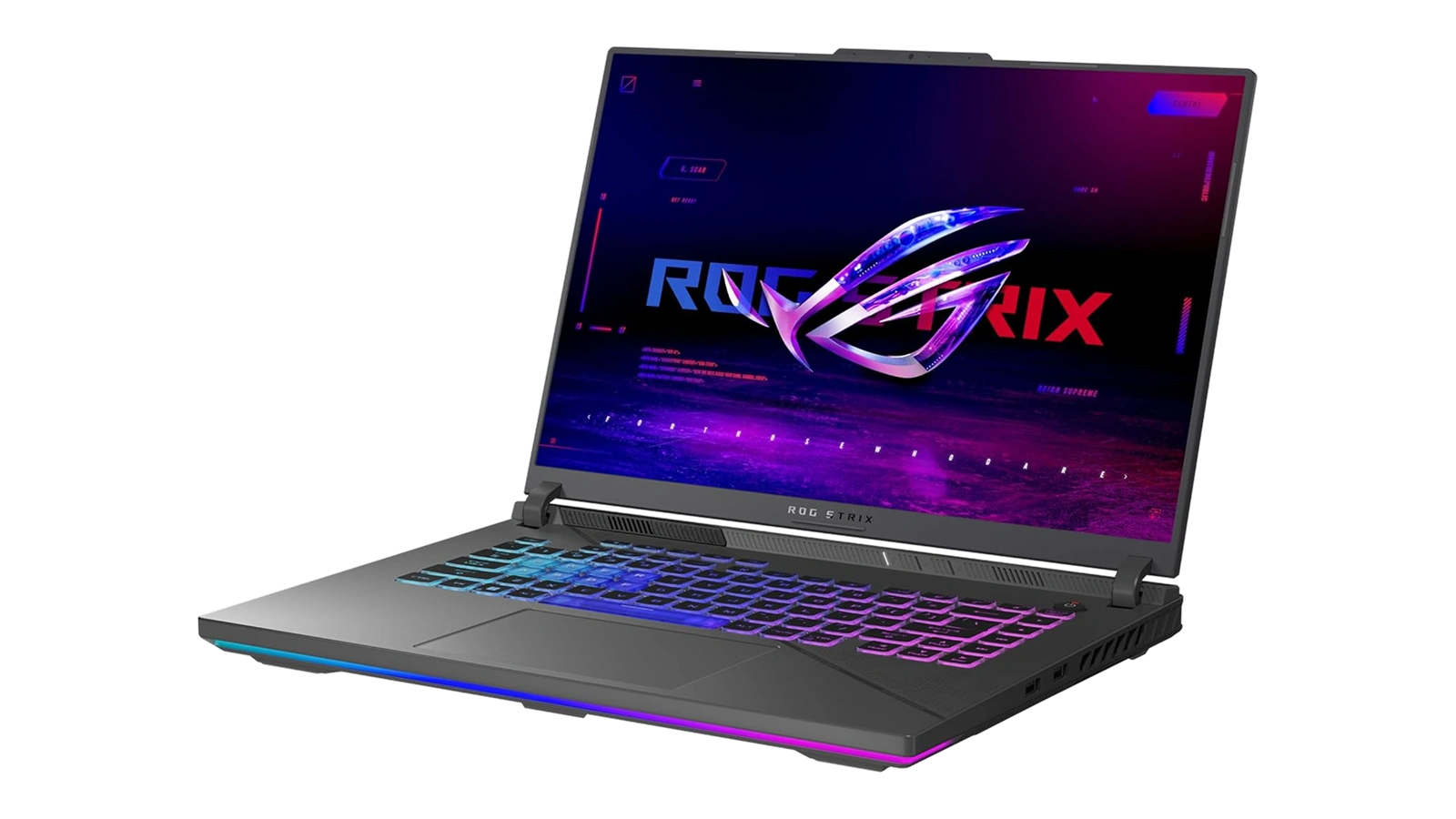
Here is a quick look at the G614JIR-AS94 – the RTX 4070 flagship most ROG Strix G16 G614 reviews cover.
| Specs | Details |
|---|---|
| Display | 16″ QHD (2560×1440), 240Hz, 3ms, 16:10 |
| Panel Type | IPS, ROG Nebula standard |
| Color Coverage | 100% DCI-P3, Pantone Validated |
| Processor | Intel Core i9-14900HX (24 cores) |
| GPU | NVIDIA GeForce RTX 4070 at 140W TGP |
| GPU VRAM | 8GB GDDR6 |
| RAM | 16GB DDR5-5600 (2 slots, upgradeable to 64GB) |
| Storage | 1TB PCIe Gen4 NVMe SSD (2 slots) |
| Battery | 90Wh Li-Ion |
| Weight | 2.5 kg (5.5 lbs) |
| Wireless | Wi-Fi 6E, Bluetooth |
| Ports | 8 total: HDMI, DisplayPort, 4x USB, audio |
| OS | Windows 11 Home |
| Price | ~$1,840 |
Key Features and Benefits
Not every laptop at this price stacks a full-power GPU, an upgradeable build, and a premium display – the Strix G16 does.
- ROG Nebula Display (QHD 240Hz, 100% DCI-P3) – The 240Hz refresh rate eliminates motion blur in fast-paced games, and the 100% DCI-P3 color coverage means game environments look rich and true to the developer’s intent.
- Intel Core i9-14900HX at 140W RTX 4070 TGP – ASUS doesn’t throttle the GPU to fit the design. Running the RTX 4070 at full 140W TGP means performance closer to a desktop 4070 setup than most laptop implementations. The i9-14900HX‘s 24-core architecture handles simultaneous background workloads without pulling resources from your game.
- Thermal Grizzly Conductonaut Extreme Liquid Metal – Most gaming laptops use standard thermal paste on the CPU. ASUS applies Conductonaut Extreme liquid metal instead, which transfers heat more efficiently. Paired with a third dedicated intake fan, this cooling setup sustains higher performance over longer sessions rather than throttling early.
- Expandable RAM and Storage (No Soldering) – Both RAM and SSD slots are physically accessible without voiding the warranty. The factory ships in single-channel RAM – adding a matched second stick to unlock dual-channel mode is the most impactful out-of-box upgrade you can make.
- Wi-Fi 6E and 8-Port I/O – Wi-Fi 6E cuts wireless latency on compatible routers, which matters for online competitive play. The eight-port I/O layout covers HDMI 2.1, DisplayPort, USB-A, and USB-C without needing a hub.
Performance and Real-World Experience
The Strix G16 is built to run games at max settings and sustain that performance – not to be light or quiet.
At QHD with the RTX 4070 at full 140W, most modern AAA titles hold high-to-ultra settings with solid frame rates. The 140W TGP is the differentiator – most laptop RTX 4070 configurations run at 115-125W, and ASUS not capping it closes the gap between this and a desktop 4070 in meaningful ways. The i9-14900HX keeps up with CPU-intensive titles without becoming the bottleneck.
The ROG Strix G16 thermals review is honest: the i9-14900HX runs hot, with CPU temperatures in the 90-100°C range under load. The liquid metal compound and triple-fan layout manage this without chronic throttling, but the default Armoury Crate fan profile is conservative – a custom profile stabilizes frame rates and takes two minutes to set up.
The 16GB DDR5 in single-channel at stock is the one thing to fix first. A matched 16GB stick ($40-60) unlocks dual-channel and noticeably improves minimum frame rates in open-world titles. The trackpad is below expectations – functional, but an external mouse is the practical choice.
| Pros | Cons |
|---|---|
| ✅ QHD 240Hz Nebula Display with 100% DCI-P3 – color accuracy and refresh rate that rival dedicated gaming monitors ✅ RTX 4070 runs at full 140W TGP – no power limits holding back GPU performance ✅ Liquid metal CPU cooling sustains performance better than standard thermal paste designs ✅ Both RAM and SSD slots are user-accessible – upgrading to dual-channel takes minutes ✅ 24-core i9-14900HX handles gaming plus background workloads without choking ✅ Eight-port I/O covers external monitors, USB-A peripherals, and USB-C without an adapter | ❌ Gaming battery life drops to 2-3 hours under load – this is a plugged-in machine, and the 2.5kg weight means you’ll feel the power brick in your bag |
The ROG Strix G16 squeezes a full-power RTX 4070 – not a cut-down mobile version – and a QHD 240Hz Nebula Display into the same chassis under $2,000. At this price, most competitors force you to choose between the display and the uncapped GPU. The user-upgradeable chassis means your investment scales as you add RAM and storage over time.
Getting a QHD 240Hz Pantone-validated panel and a full-power GPU under $2,000 is rare – most rivals sacrifice one to hit the number.
“The metal build makes other gaming laptops feel cheap by comparison. Both the SSD and RAM slots are easy to access – I added a second drive right away. The 24-core i9 keeps up with anything I run at the same time.” – AnthonyW
Choosing Conductonaut Extreme liquid metal signals that ASUS engineered this chassis to sustain its power ceiling, not just reach it on paper – and long-term owner feedback backs that up.
“Nine months in and the screen still surprises me. Elden Ring on ultra settings with ray tracing looks almost three-dimensional on this panel. Gaming at QHD holds up well – just set a proper fan profile in Armoury Crate first.” – AldoEF
The Armoury Crate fan profile tip is practical advice, not a workaround. Factory defaults run quieter for casual use – the thermal headroom is already built in. Dialing in a custom profile takes two minutes and is the first step worth making for sustained gaming.
Display and Visual Quality
The ROG Nebula Display is why you choose the G16 over rivals at this price, and the ROG Strix G16 display review backs that up.
The QHD panel runs at 2560×1440 in a 16:10 aspect ratio – more vertical real estate than standard 16:9 layouts, which makes a real difference in open-world games and productivity. The 100% DCI-P3 rating means game environments appear as developers intended, without the color compression of cheaper IPS panels at this price.
“ROG Nebula Display” is ASUS‘s certification requiring 100% DCI-P3, Pantone Validation, 3ms response time, and anti-glare coating – the G16 hits all four. At 240Hz, the display keeps pace with the RTX 4070 output with no refresh rate bottleneck, and the anti-glare coating holds up in bright room conditions.
One limitation: the built-in panel has limited HDR output – ASUS‘s HDR claim applies to external monitors via HDMI 2.1 or DisplayPort, not the built-in screen. For anyone prioritizing color accuracy and high refresh rate, this panel compares favorably to what you’d pay $300-$400 more for from competing brands.
Battery Life and Portability
The Strix G16‘s portability story is straightforward: powerful when plugged in, limited when not.
The 90Wh battery is larger than average for a gaming laptop, but the i9-14900HX and RTX 4070 are high-draw components. ASUS ROG Strix G16 battery life under gaming load consistently lands at 2-3 hours – that holds across different game types. Light tasks extend runtime to 6-8 hours. Disabling the NVIDIA GPU via Windows Device Manager on battery extends productivity runtime meaningfully – not elegant, but effective.
The Strix G16 weighs 2.5 kg – the power brick adds to that, and daily commuters will feel the combination. Treat it as a desktop replacement that moves rooms: anywhere with a desk and outlet, it performs at its ceiling.
My Overall Verdict on ASUS ROG Strix G16
My ASUS ROG Strix G16 review comes down to one finding: at this price, you are not finding another laptop that combines a full-power RTX 4070, a QHD 240Hz Pantone-validated display, and a user-upgradeable chassis under $2,000. The ROG Strix G16 vs ROG Scar 16 comparison is common – the Scar 16 pushes higher GPU tiers at higher prices with less display value per dollar. For the sub-$2K bracket, the Strix G16 is the stronger package.
Buy it if you want desktop-replacement performance at a desk or with power access, and plan to upgrade RAM and storage – this chassis rewards that. Skip it if you need 6+ hours of gaming battery or prioritize a thin travel form factor. The 2024 G614JIR (RTX 4070 / i9-14900HX) is distinct from the 2025 Strix G16 lineup with RTX 5070 Ti or 5080 options at higher prices.
The Enebameter score of 8.1/10 reflects display quality and GPU performance that lead the sub-$2K category – the battery limitation and single-channel RAM at stock account for the modest deduction – both fixable. For a gaming laptop under $2,000 that doesn’t compromise on display or GPU power, this ASUS ROG Strix G16 review lands firmly in the ‘worth every dollar’ column.
Budget Alternative
The ROG Strix G16 is the premium pick at ~$1,840. For anyone who needs to stay under that mark, a budget gaming laptop covers 1080p gaming at a fraction of the cost – you’re accepting a lower GPU, 1080p instead of QHD, and simpler cooling. For casual gamers or students for whom the Strix G16 is out of reach, a budget pick handles today’s popular titles without the investment. The Strix G16 is the stronger long-term bet if the budget allows, but if the choice is waiting versus playing now, go budget.
Complete Your Setup
Two accessories that complete the Strix G16‘s desktop gaming setup.
CHERRY XTRFY K5 Pro TMR Gaming Keyboard
The K5 Pro uses CHERRY‘s magnetic switch technology – fast actuation and long-term durability that matches the G16‘s performance tier. The compact form factor pairs cleanly with any of the laptop’s USB ports.
MO1 Wireless Gaming Mouse
The Strix G16‘s trackpad is functional but not gaming-grade. The MO1 connects via 2.4GHz for low-latency wireless play and charges via USB – one upgrade that fixes the G16‘s only weak point.
FAQs
Yes, the ASUS ROG Strix G16 delivers on its headline specs without compromise – full-power RTX 4070 at 140W, QHD 240Hz Nebula Display, and an upgradeable chassis under $2,000. The Enebameter score of 8.1/10 reflects performance-per-dollar that’s difficult to match at this price.
Yes, the ROG Strix G16 has a strong long-term track record, backed by a 1-year warranty and ASUS‘s service network. Long-term owners report stable performance with no systemic hardware failures, and the metal chassis holds up to daily use without the flex common in plastic-framed competitors.
The most common issues are CPU temperatures running high under sustained load – manageable with a custom Armoury Crate fan profile – gaming battery life dropping to 2-3 hours, and a below-average trackpad. All three are workable: the first two with settings adjustments, the third with an external mouse.
The liquid metal compound and triple-fan design keep performance from throttling over extended play, though CPU temperatures run high by design. Setting a custom fan profile in Armoury Crate unlocks the built-in cooling headroom and keeps frame rates consistent across long sessions.
Yes, this ASUS ROG Strix G16 review confirms it as one of the strongest gaming laptops under $2,000 for anyone prioritizing display quality and sustained GPU performance over battery life and portability. The full-power RTX 4070 at 140W paired with the QHD 240Hz Nebula Display defines a value ceiling that competing laptops at this price rarely reach.