




Mastering RimWorld Hydroponics: A Guide to Indoor Farming


RimWorld is a story generator where you start with a handful of colonists trying to survive on a distant world. Food production is central to this survival, and Rimworld hydroponics systems offer a powerful way to grow crops under almost any conditions. In this guide, I’ll explain how hydroponics works, when it makes sense to build basins and sun lamps, and share my own tips from hundreds of hours spent tending to hungry colonists. What matters most is that this article will give you the insight to know when hydroponics fits your colony’s needs.
Jump to:
Why RimWorld Hydroponics Matters
Outdoor farming is simple in RimWorld: select fertile ground, plant seeds, and let sunlight and rain do the rest. But that approach fails in extreme biomes such as deserts, ice sheets, or when your colony is dug into a mountain. Without natural sunlight and warm temperatures, crops wither and quickly die. That’s where RimWorld hydroponics comes into play. Hydroponics basins provide a man‑made “soil” with 280% fertility, allowing plants to grow far faster than they would on normal dirt. When paired with one sun lamp and heaters, they create an indoor farming system that can keep colonists fed even during toxic fallout or volcanic winters.
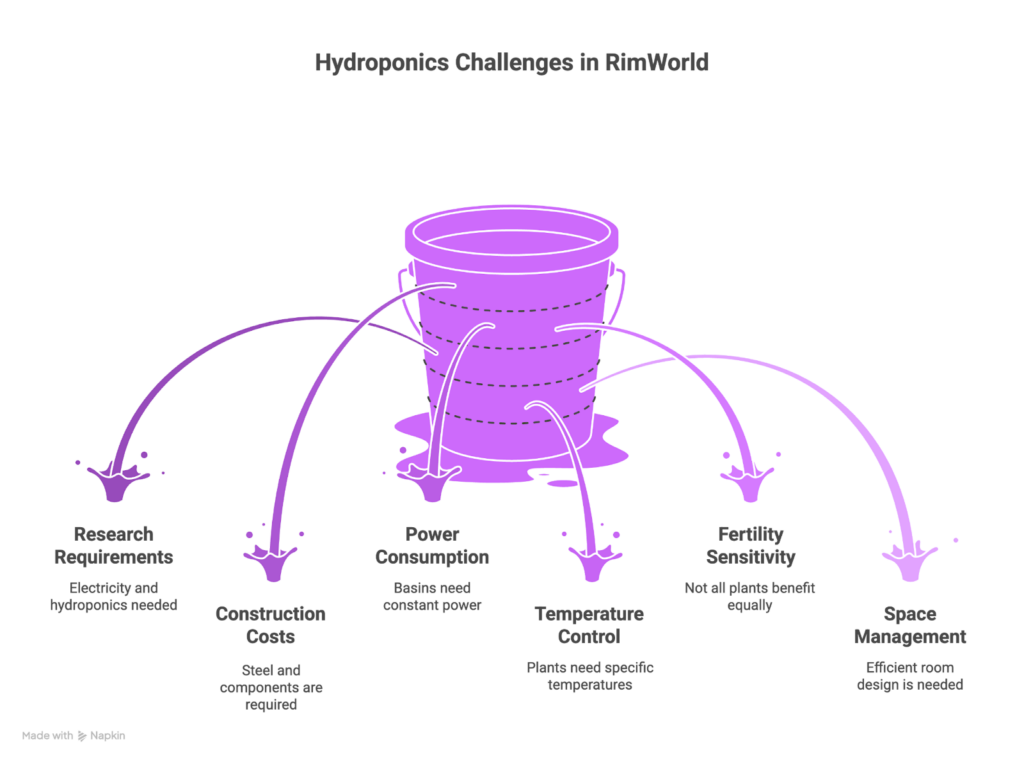
Hydroponic farms reduce the space needed for agriculture. A single basin takes up four tiles but yields the same crop as 11 tiles of regular soil. You can fit 24 basins under one sun lamp, producing huge amounts of rice, berries, or cotton in a small room. If you’ve ever tried to maintain a sprawling field while defending against raiders, you know the value of keeping everything compact. Hydroponics also eliminates fertility sensitivity for some crops: rice and cotton thrive, while potatoes gain only a small boost. When built indoors, basins protect plants from manhunter packs and harsh weather. That combination of high fertility, protection, and space efficiency makes hydroponics a vital option when your colony outgrows the natural soil around it.
If you crave more brutal sandbox challenges, our article on games like DayZ showcases survival titles that will push your instincts to the limit.
Setting Up Hydroponics Basins and Sun Lamps
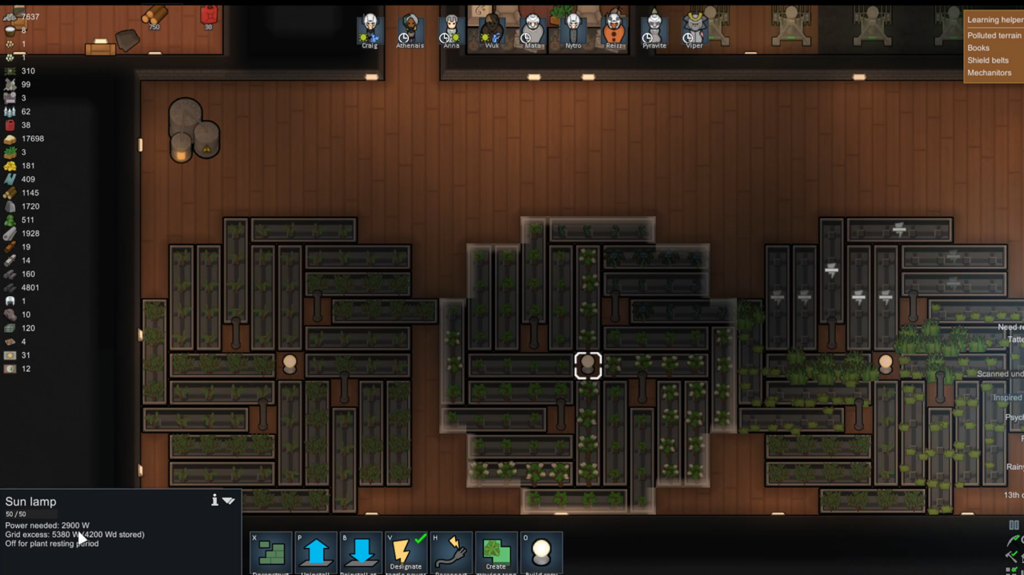
Hydroponic farming isn’t available on day one. You first need to research both electricity and hydroponics. Once your researchers have learned the necessary tech, basins can be built with 100 steel and one component each. Each basin requires 70 W of power draw 24/7. Turn off the basin’s power, and plants will rapidly die, so make sure you have reliable generators and batteries before starting. Basins cannot be moved once placed, so plan the layout carefully.
Research and Construction Requirements
A construction skill of at least 4 is needed to build basins. For sun lamps, you only need the electricity research and 40 steel. Sun lamps automatically turn off at night, drawing 2,900 W from 6 AM to 7:12 PM and then shutting down while plants rest. On average, each lamp consumes about 1,600 W per day. Early in a playthrough, you may not have enough generators or batteries to meet these demands. Solar panels provide free energy during the day, but you’ll need wind turbines, chemfuel, or wood‑burning generators to keep things running through the night. My rule is to build at least two batteries before switching to hydroponics and to place power conduits along walls to avoid vulnerable cables on the ground.
If building facilities appeals to you, our guide to games like XCOM highlights tactical RPGs where every decision matters.
Power Management and Light
Sun lamps provide 100% light within a 5.5‑tile radius, allowing crops to reach their maximum growth rate. You can fit up to 24 basins under one sun lamp by following a 3×8 pattern: six basins on each side and a two‑tile walkway down the middle. Don’t cram them tighter than that, or colonists will struggle to harvest and reseed. Because a sun lamp draws so much electricity, it’s important to pair it with a sustainable power source. A single sun lamp plus 24 basins draws 4,580 W during the day and 1,680 W at night. This is why many players stick with soil farming early on. When I built my first indoor farm, I underestimated the power needed and watched my crops wilt during a solar flare. Now I always build backup generators and a battery bank before flipping the switch.
In addition to light, plants need the right temperature. A hydroponics room should be roofed to retain heat and cooled or heated as needed. Heaters or coolers maintain 21–25 °C for most crops. If you live in a desert, coolers will prevent heat waves from cooking your strawberries. In a tundra, heaters stop freeze damage. Remember that leaving even a few roof tiles unroofed will allow natural sunlight in but also let heat escape, so fully roofed rooms with sun lamps are best for climate control.
For players who enjoy crafting and base building in a competitive environment, check out our list of games like Rust to discover new sandboxes that reward resourcefulness.
Selecting Crops for Your Hydroponic Farm
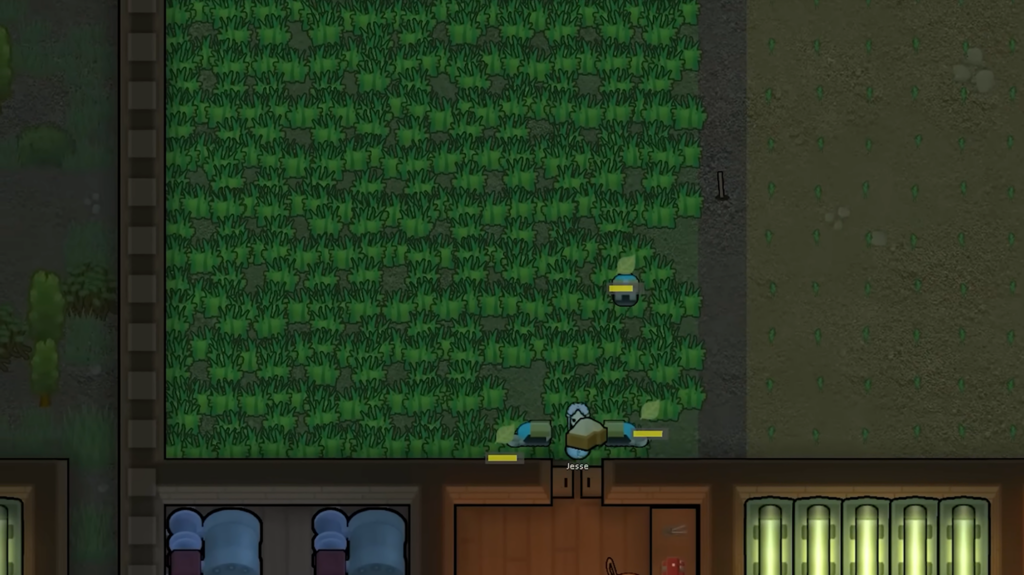
Not every plant benefits equally from hydroponics. Plants have a fertility sensitivity stat that determines how much yield they gain from high‑fertility soil. Rice has 100% fertility sensitivity, so it receives the full 280% boost from a basin. It yields about 24 rice every 1.98 days, roughly 12 food per day. Strawberries (berries) have a sensitivity of around 75%, yielding about 10.5 food per day. Potatoes have only 40% sensitivity, producing 7 food per day. While potatoes take less time to plant and harvest, the lower yield makes them less appealing for hydroponics unless you’re extremely short on grower time.
Crops like cotton, healroot, smokeleaf, and psychoid plants also benefit from hydroponics because their high fertility sensitivity means faster growth. I like to dedicate one row of basins to smokeleaf or psychoid when playing a colony with a heavy drug economy, as the shorter growth cycle increases profit. DLC crops such as nutrifungus or fibercorn have very low fertility sensitivity; they grow fine on normal soil, so basins are a waste for them. Trees, devilstrand, corn, and haygrass can’t be grown in basins at all. Always check each crop’s fertility sensitivity before planting. If you need to feed colonists quickly, rice is the obvious choice. Strawberries are second best because colonists can eat berries raw without mood penalties, useful during early setups or power outages. Potatoes come third but still beat soil farming on a per‑tile basis.
Rice, Berries, and Potatoes
Let’s compare these staples more closely:
- Rice: Fastest growth and highest yield, reaching harvest in less than two days when conditions are perfect. Rice must be cooked before consumption, but the quantity makes it ideal for large colonies or for fueling chemfuel generators.
- Berries (Strawberries): A bit slower but still efficient. Colonists can eat berries raw, saving cooking time and making them an excellent emergency food. I often plant berries in one or two basins for times when the stove goes offline.
- Potatoes: Slowest in hydroponics due to poor sensitivity, but they require less sowing and harvesting time. For players who struggle with managing grower work, potatoes can fill a niche, but only when other crops are restricted or when colonists are busy.
Designing an Efficient Indoor Farm
Once you’ve chosen your crops, it’s time to design the room. The classic setup fits 24 basins around one sun lamp. Picture a 12×9 room: basins line the walls and leave a central aisle for colonists to walk. The sun lamp hangs in the middle, and power conduits run underneath the basins so that raiders can’t cut a single cable and destroy your harvest. Double walls on the outside help insulate the room, and vents or doors allow heat to move between rooms to balance temperature. Don’t forget to place sterile tiles or at least stone flooring; although basins are not dirty, colonists walking through a dirt floor create filth, reducing medical room cleanliness if your greenhouse shares walls with a hospital.
Managing Temperature and Environment
Indoor farming means controlling more than just light and power. Extreme heat or cold can kill plants just as quickly as a power outage. Place at least one heater and one cooler in your hydroponics room, and use a thermostat mod if available to automate them. In cold biomes, I keep a wood stockpile nearby; during a solar flare, colonists can build campfires to keep the room above freezing. Insulated walls are essential in deserts to prevent heat waves from pushing the temperature over 60 °C, at which point even heat‑tolerant crops die. If you’re playing on an ice sheet or deep in a mountain, your main challenge will be heat rather than cooling.
Pollution events from the Biotech DLC can poison soil. Hydroponic basins don’t protect plants from pollution; only psychoid and toxipotato plants survive. If you’re expecting toxic fallout, roof the farm and make sure your sun lamps provide all the light. When building outside, remember that basins can be destroyed by raiders and that basins do not short‑circuit in rain, but sun lamps do. Consider leaving the farm unroofed until an emergency arises; then roof it to hide from toxic fallout and cold snaps.
When Hydroponics Is a Viable Option
Hydroponics isn’t always the correct answer. One tile of hydroponic soil equals 2.8 tiles of regular soil. Because soil costs nothing, it is often cheaper to expand your fields if you have space. In the early game, the 100 steel and 1 component per basin are better spent on weapons, defenses, and bedroom furniture. A good rule of thumb is: if you still need to dig up and smelt steel, you’re not ready for hydroponics. However, there are times when basins make sense:
- Limited space: Building inside a mountain or in a desert means fertile soil is scarce. Hydroponics lets you grow food in the smallest footprint possible. Having all of your crops indoors reduces the risk of losing them to raiders or animals.
- Unpredictable events: Toxic fallout, cold snaps, volcanic winters, and solar flares can wipe out outdoor fields. Hydroponic rice grows so quickly that even after a flare shuts down your lamps, the plants can be harvested before they rot. Indoor farms are easier to defend against enemy raids because you only need to guard a single door.
- Late game: Once steel and components are plentiful, hydroponics shines. Colonists walk shorter distances between basins, improving efficiency. The high yield per tile means fewer growers can feed larger populations. When your wealth triggers bigger raids, having a compact farm inside your fortress keeps it safe.
The trade‑off is cost and power. If you can’t afford a constant power draw of around 3,300 W per sun lamp and basins, stick with soil farming and use multiple sun lamps for greenhouses. In many cases, building two additional sun lamps and expanding soil fields provides 300% crop area compared to using hydroponics with a single lamp, all at a fraction of the steel and component cost. Knowing when to switch is critical.
If you enjoy refining your colony’s efficiency through hydroponics in RimWorld, you might also love our breakdown of the most engaging games like RimWorld (Survival & Building). Each game offers its own twist on colony management and survival strategy.
Common Obstacles and How to Overcome Them
Hydroponics introduces its own set of challenges. Here are some issues you may encounter and how to solve them:
- Power outages: Solar flares, breakdowns, and conduit explosions can shut down basins. Keep batteries charged and have redundant power lines. During a flare, manually harvest any nearly mature plants to salvage food.
- Colonist workload: Hydroponics requires frequent sowing and harvesting because plants grow so fast. Assign at least two colonists with high plant skill to manage the farm. If your colony is short on growers, consider focusing on potatoes or corn outside, which need less tending.
- Temperature spikes: Without proper heaters and coolers, indoor temperatures can reach dangerous levels. Use double walls and place your hydroponics room near the center of your base to help regulate temperature.
- Raiders and animals: Hydroponics basins have moderate hit points and can be destroyed easily. Build defensive choke points at the entrance to your farm or place traps around it. If building outdoors, use stone walls to protect basins and consider building a roof that you can quickly remove when not needed.
Harvesting the Benefits and Where to Get RimWorld
RimWorld’s hydroponics system offers enormous potential once you understand the math behind power consumption, crop yields, and space savings. In my own colonies, I use hydroponics selectively, early on for cotton and healroot, and later for full‑scale indoor rice farms once components are plentiful. The key is recognizing that hydroponics is a solution to specific obstacles: limited land, harsh climates, and unpredictable events.
When those factors align, 24 basins under one sun lamp can sustain dozens of colonists with minimal fuss. If you haven’t experienced the challenge of managing a RimWorld colony yet, it’s the perfect time to dive in. You can get RimWorld for PC on Eneba to start building your own hydroponic setup, recruit quirky colonists, and see how long you can survive.
FAQs
How many hydroponics basins can fit under one sun lamp in RimWorld?
To fit hydroponics basins under one sun lamp in RimWorld, you can arrange up to 24 basins in a 3×8 pattern around the lamp. This layout leaves walkways for colonists and ensures every basin receives 100% light. Compact designs like this maximize yield while minimizing travel time for your growers.
Is hydroponics worth it in RimWorld?
Hydroponics is worth it in RimWorld when space is limited or when you need reliable indoor farming during harsh events. In fertile biomes with plenty of soil, it’s usually cheaper to use extra sun lamps and grow on the ground. Once resources are abundant and you need efficiency, hydroponics pays off with high yields and compact layouts.
What plants grow best in RimWorld hydroponics?
The plants that grow best in RimWorld hydroponics are rice, cotton, healroot, and berries because of their high fertility sensitivity. Rice gives the highest food per day, cotton and healroot benefit from faster growth for textiles and medicine, while berries provide an edible raw crop when power is scarce.
Do hydroponics need sunlight in RimWorld?
Hydroponics need sunlight in RimWorld in the form of artificial light provided by a sun lamp if the room is roofed. Without at least 51% light, plants will not grow, so sun lamps are essential indoors. Outdoors, natural sunlight suffices, but you must still power the basins to prevent crops from dying.
How do you power hydroponics in RimWorld?
To power hydroponics in RimWorld, connect each basin and sun lamp to your electrical grid using power conduits and provide sufficient generation and batteries. Each basin draws 70 W constantly, and a sun lamp draws 2,900 W during the day. Solar panels, wind turbines, chemfuel generators, and batteries work together to supply this demand and keep your indoor farm running.