

What is Myriad in MTG?

Eneba Hub contains affiliate links, which means we may earn a small commission if you make a purchase through them—at no extra cost to you. Learn more

In Commander games, attacking one opponent often feels like a disadvantage. You spend resources while other players benefit from staying back. The myriad mechanic solves this problem by letting a single creature attack everyone at once.
So, what is Myriad in MTG? Myriad is a triggered keyword ability that creates token copies of a creature when it attacks. Each token attacks a different opponent, turning one attacker into a coordinated assault across the entire table. This guide covers everything you need to know about myriad, from basic mechanics to the best cards using this ability.
Jump to:
What is Myriad in MTG and How Does It Work?
Myriad is a creature ability built for multiplayer formats like Commander. When you attack one opponent with a myriad creature, you get to make token copies of it. These copies enter the battlefield tapped and attack your other opponents.
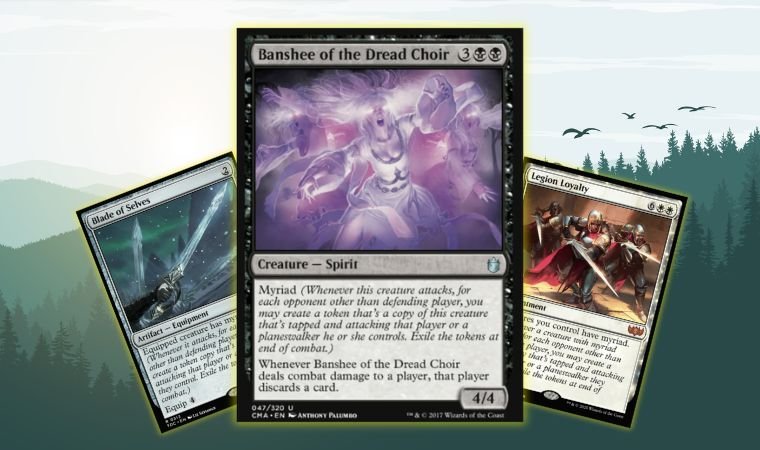
Here is the official rules text: “Whenever this creature attacks, for each opponent other than the defending player, you may create a token that’s a copy of this creature that’s tapped and attack that player or a planeswalker they control. Exile the tokens at the end of combat.“
In a four-player Commander pod, this means attacking with one myriad creature gives you two extra token copies. Your original creature swings at your chosen target while the tokens hit your other two opponents. One attacker becomes three.
The tokens only stick around for combat. Once the dust settles, they get exiled. You cannot keep them for blocking or use them later. This limitation keeps myriad fair while still making it a powerful combat tool.
If you are still learning the game, our guide on how to play Magic: The Gathering covers all the fundamentals you need.
How Does Myriad Work Step by Step?
Knowing the exact steps helps you play myriad correctly and get the most out of it. Here is what happens during combat:
- First, you declare your attack and pick which opponent you want your creature to swing at. This player is called the “defending player” in rules terms.
- Next, myriad triggers as soon as you declare the attack. You decide whether to create tokens for each of your other opponents.
- The tokens then enter the battlefield already tapped and attacking. For each token, you pick whether it goes after the player directly or one of their planeswalkers.
- Combat plays out normally from there. Opponents declare blockers, damage gets dealt, and any triggers resolve.
- Finally, at the end of combat, the myriad tokens leave the game. They go to exile rather than the graveyard.
One key detail is that the tokens enter attacking instead of being declared as attackers. This matters because abilities that say “whenever this creature attacks” will not trigger for the tokens. The tokens technically have myriad themselves, but since they never declared an attack, that ability stays dormant.
Rules of Myriad in MTG
Myriad interacts with other game mechanics in ways that can trip up newer players. Here are the most important rules to remember.
The legend rule still applies. If you put myriad on a legendary creature, all the token copies enter the battlefield like normal. But then you have to pick one to keep and send the rest to the graveyard. The upside is that any enters the battlefield abilities still trigger for each copy before they die.
Enters the battlefield abilities work great with myriad. When the tokens show up, they trigger any ETB effects on the creature you copied. Pairing myriad with strong ETB creatures can generate huge value.
Attack triggers do not work on the tokens. Since the copies enter already attacking, abilities that say “whenever this creature attacks” never fire. This also prevents the tokens from triggering their own myriad, which would create an infinite loop.
Equipment and auras stay behind. The tokens copy only what is printed on the card. Anything attached to your original creature, like equipment or enchantments, does not come along for the ride. Counters do not copy either.
Myriad is always optional. The word “may” in the rules text means you can skip making tokens if you want. You might do this to avoid giving an opponent a beneficial blocker or to dodge a punishing trigger.
In 1v1 games, myriad does nothing at all. If you only have one opponent, there is nobody else for the tokens to attack. This makes myriad cards dead weight in formats like Standard or Modern. The best MTG decks for competitive play avoid myriad entirely for this reason.
Examples of Myriad Cards
A handful of cards stand out as top picks for myriad strategies. These are the ones you will see most often in Commander.
Blade of Selves
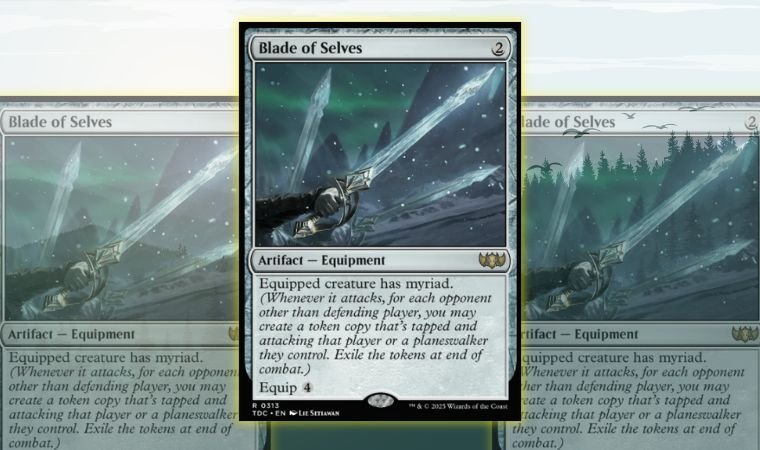
This artifact equipment costs two mana to cast and four to equip. It grants myriad to whatever creature you attach it to. The beauty of Blade of Selves is flexibility. You can stick it on creatures with powerful ETB effects or combat damage triggers and multiply those abilities across the table.
Legion Loyalty
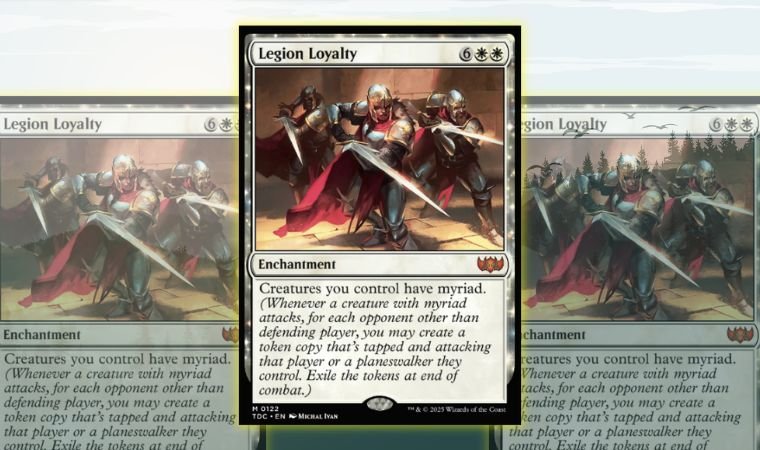
At eight mana, this enchantment is expensive. But it gives myriad to every creature you control. Swinging with four or five creatures suddenly means creating a massive wave of tokens. Even though they vanish after combat, that kind of pressure can close out games on the spot.
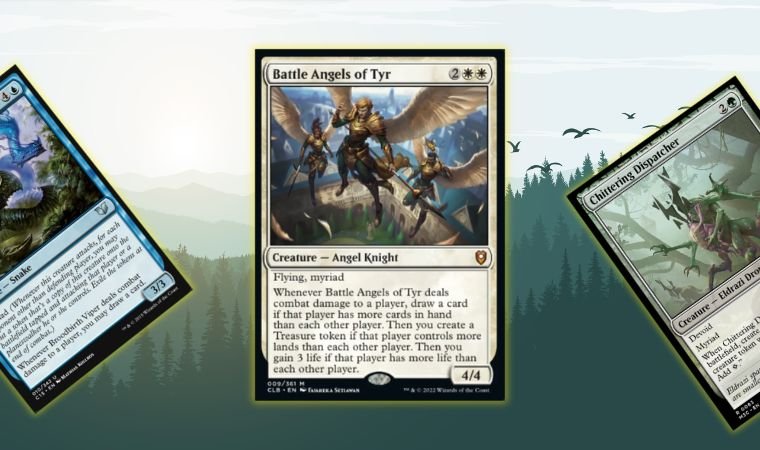
Battle Angels of Tyr
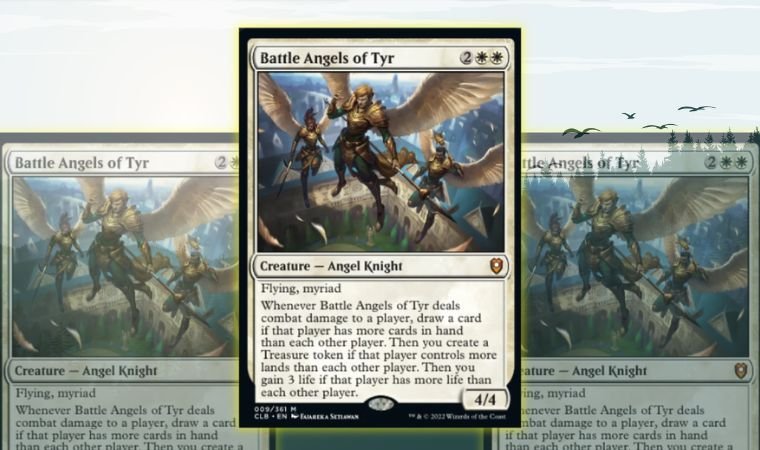
This angel costs four mana for a 4/4 body with flying and myriad. Whenever it deals combat damage to a player, you check three conditions. You draw a card if they have the most cards in hand. You make a Treasure if they control the most lands. You gain three life if they have the most life. With myriad making multiple copies, you can rack up different bonuses from different opponents all at once.
Banshee of the Dread Choir
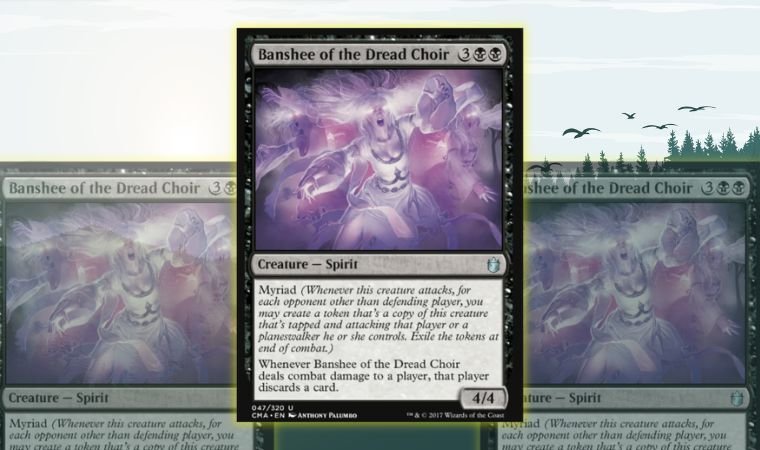
A five mana spirit with myriad that forces a discard whenever it connects. Multiple copies mean multiple triggers, and your opponents will find their hands empty fast.
If you want to build around myriad or explore other Commander strategies, check out our list of the best MTG Commander decks for inspiration.
The History of Myriad in MTG
Myriad debuted in Commander 2015. Wizards of the Coast designed it to solve a specific problem in multiplayer games: players often refused to attack because it put them at a disadvantage. Myriad rewards aggression by letting you hit everyone instead of picking just one target.
That first release gave us Blade of Selves along with a cycle of uncommon myriad creatures, one in each color. Cards like Herald of the Host and Caller of the Pack demonstrated what the mechanic could do across different playstyles.
The mechanic returned in a big way with Commander Legends: Battle for Baldur’s Gate in 2022. This set added more myriad creatures and introduced cards that spread the ability to other permanents. Duke Ulder Ravengard can grant myriad to another creature, while Legion Loyalty hands it out to your whole board.
Myriad has popped up in several other products since then. The Doctor Who Commander decks used it to represent swarming enemy forces. Modern Horizons 3 Commander and Ravnica: Clue Edition both featured myriad cards as well.
When Battle for Baldur’s Gate came to Magic Arena, the myriad mechanic had to be replaced. A 1v1 digital game has no use for an ability that requires multiple opponents. Wizards created a new digital-only mechanic called double team that captured a similar feel.
Given how popular myriad remains in Commander, expect to see it again whenever Wizards releases multiplayer-focused sets. Keep an eye on MTG sets in order for future releases that might include new myriad cards.
Master the Myriad Mechanic
Myriad changes the math on attacking in Commander. Instead of making enemies with one player, you apply pressure to the whole table equally. Combine it with ETB triggers, combat damage abilities, or sacrifice synergies to squeeze out maximum value.
Blade of Selves slots into almost any Commander deck that wants to attack. Dedicated myriad builds can flood the board and overwhelm opponents before they can stabilize. Add a few myriad pieces to your deck and see how much more aggressive your games become.
FAQs
No, myriad does not work in 1v1 games. The ability creates tokens for each opponent other than the defending player. If you only have one opponent and you attack them, there are no other opponents to create tokens for. Myriad becomes a blank ability in formats like Standard or Modern.
Yes, myriad works with legendary creatures, but the legend rule applies immediately. All token copies enter the battlefield and trigger ETB abilities. Then you must choose one legendary permanent to keep while the rest go to the graveyard.
Yes, myriad triggers ETB abilities. The tokens created by myriad enter the battlefield normally, so any enters the battlefield effects on the copied creature trigger for each token. This makes creatures with strong ETB abilities particularly powerful when combined with myriad.
No, you do not have to attack everyone with myriad. The ability says you “may” create tokens, making it entirely optional. You can choose to create tokens for all opponents, some opponents, or none at all. You can also choose whether each token attacks the player or a planeswalker they control.
Yes, you can attack a planeswalker using myriad tokens. When each token is created, you choose whether it attacks the player or a planeswalker that player controls. This flexibility lets you remove problematic planeswalkers while still dealing damage to other opponents directly.