


Riftbound Legends List: All Champion Legends Cards 2026

Eneba Hub contains affiliate links, which means we may earn a small commission if you make a purchase through them—at no extra cost to you. Learn more


If you’re looking for a complete Riftbound legends list, you’re in the right place. Riftbound has quickly become one of the most talked-about trading card games in 2026, and the Legend cards are a major reason why. These are powerful, one-per-deck Champion cards that can shift the entire flow of a match.
I’ve spent the past few weeks testing decks, collecting Origins packs, and tracking which Legends show up where. This guide covers every Champion Legend in the Riftbound: Origins set, how they play, and what to expect if you’re just getting started. If you’re looking to build smarter decks or understand what makes these Legends stand out, you’re in the right place.
Jump to:
Best Riftbound Cards: What Makes Legends Stand Out
Legends are the centerpiece of many powerful strategies in Riftbound that offer unique abilities that regular Champion cards don’t. Each one is limited to a single copy per deck, which makes your choice meaningful. Below, you’ll find a full breakdown of every card featured in the Riftbound legends list.
1. Kai’Sa: Daughter of the Void
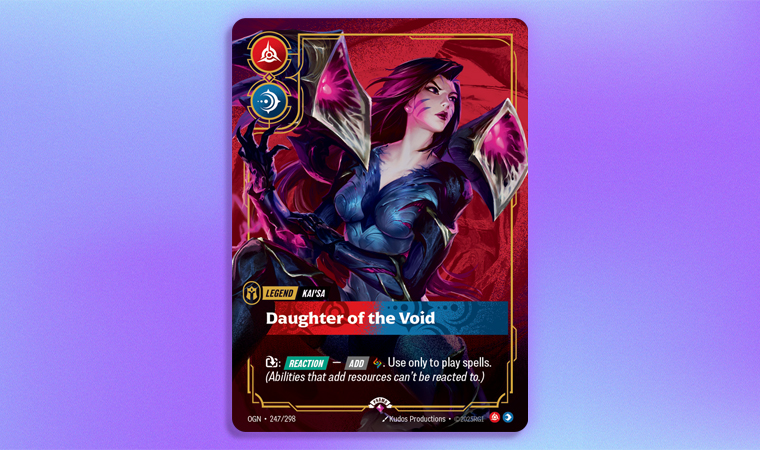
| Card Name | Kai’Sa: Daughter of the Void |
| Champion | Kai’Sa |
| Primary Role | Win condition |
| Playstyle Fit | Aggressive |
| Deck Identity | Void pressure decks |
| Complexity | Medium |
| Competitive Relevance | High |
Kai’Sa’s Legend card represents constant pressure that scales as the game progresses. Strategically, she rewards players who want to stay proactive while forcing opponents to respond.
Hold at least one protection spell before committing Kai’Sa to the board to avoid losing tempo.
This Legend becomes most impactful in the mid to late game, once supporting units and spells are online. She works best with protection effects and spell-based triggers that keep her active on the board.
2. Master Yi, Wuju Bladesman
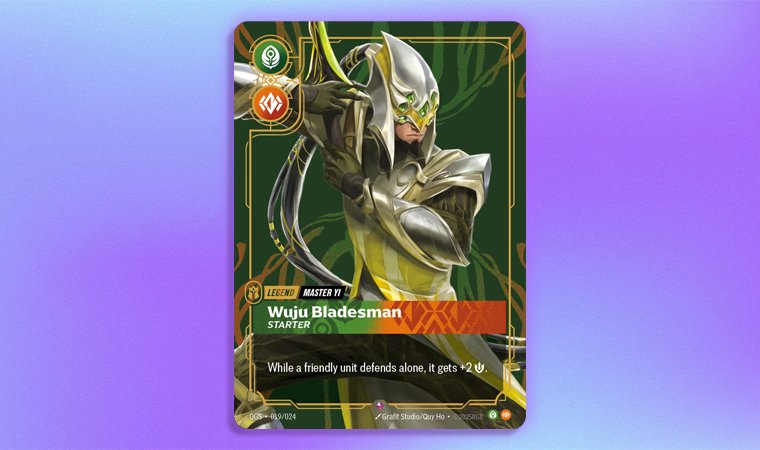
| Card Name | Master Yi, Wuju Bladesman |
| Champion | Master Yi |
| Primary Role | Value engine |
| Playstyle Fit | Tempo |
| Deck Identity | Blade combo decks |
| Complexity | Medium |
| Competitive Relevance | High |
Master Yi, Wuju Bladesman focuses on repeated strike value and spell synergy. As a Riftbound Champion Legend, he gives you tempo advantages by enabling multiple trades and buffs in one turn. His strategic role is all about snowballing small gains into major board swings.
Don’t overextend too early, Yi shines most when he enters with spell support already in hand.
Most players use him in the mid-game, especially in Riftbound decks built around action chaining and fast pressure. He pairs well with low-cost buffs and attack triggers that extend his presence on the board.
3. Viktor, Herald of the Arcane
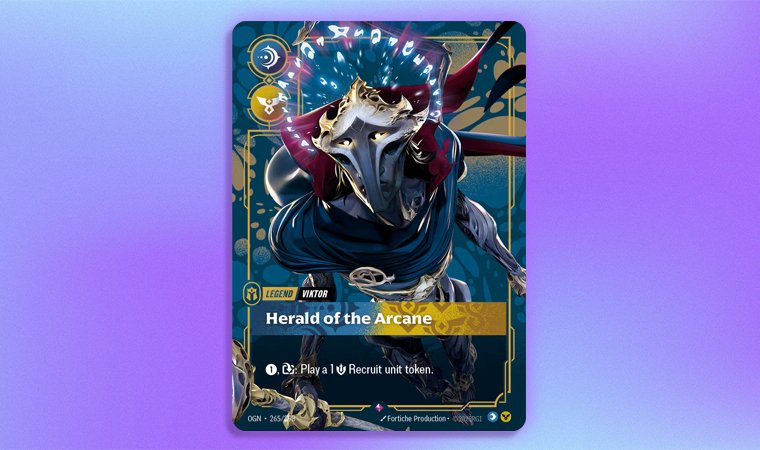
| Card Name | Viktor, Herald of the Arcane |
| Champion | Viktor |
| Primary Role | Control |
| Playstyle Fit | Spell-based |
| Deck Identity | Arcane ramp/control decks |
| Complexity | High |
| Competitive Relevance | Medium |
Viktor, Herald of the Arcane controls the pace of the game using spell interactions and delayed power spikes. As a high-complexity control piece, he fits well into arcane builds that scale over time.
Stack Arcane charges early using cheap cantrip spells, Viktor rewards planning, not rush tactics.
Players choose Viktor as a centerpiece when they want slow, calculated wins over raw pressure. He’s often considered a top Riftbound card due to his unique synergy scaling, even if he isn’t always favored in faster metas. You’ll find him listed often in any serious Riftbound Champions list.
4. Sett, The Boss
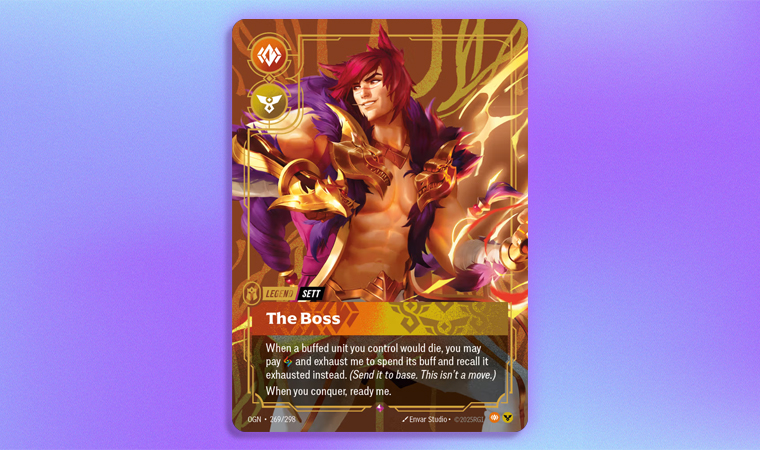
| Card Name | Sett, The Boss |
| Champion | Sett |
| Primary Role | Pressure |
| Playstyle Fit | Midrange |
| Deck Identity | Combat-focused bruiser decks |
| Complexity | Low |
| Competitive Relevance | High |
Sett, The Boss brings brute force and board control to the table. As one of the most reliable Riftbound Legend cards, he’s perfect for midrange players who want to win through repeated combat dominance.
Use Sett as a follow-up to clear turns, he punishes opponents who try to reset without a clear finisher.
Sett thrives in the mid-game, where his durability and raw stats allow him to swing board state without needing spells or setup. His synergy favors unit-heavy Riftbound Champion decks that apply pressure without losing control.
5. Teemo, Swift Scout
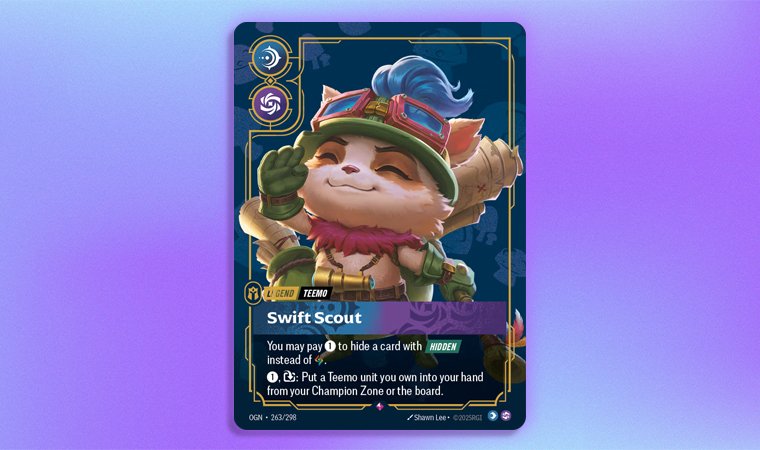
| Card Name | Teemo, Swift Scout |
| Champion | Teemo |
| Primary Role | Support |
| Playstyle Fit | Tempo |
| Deck Identity | Trap/misdirection decks |
| Complexity | Medium |
| Competitive Relevance | Medium |
Teemo, Swift Scout adds disruption and chip damage potential to any board. Among Riftbound Legend cards, Teemo is unique, he doesn’t win outright, but he tilts games slowly in your favor through distraction and incremental gain.
Pair Teemo with fast-activation triggers to maximize his effect before your opponent can adapt.
He shines in early to mid-game turns, often setting up traps or evasive units that confuse your opponent’s board plan. In Riftbound Champion decks built for tempo control or trick-based plays, Teemo becomes a vital piece.
6. Miss Fortune, Bounty Hunter
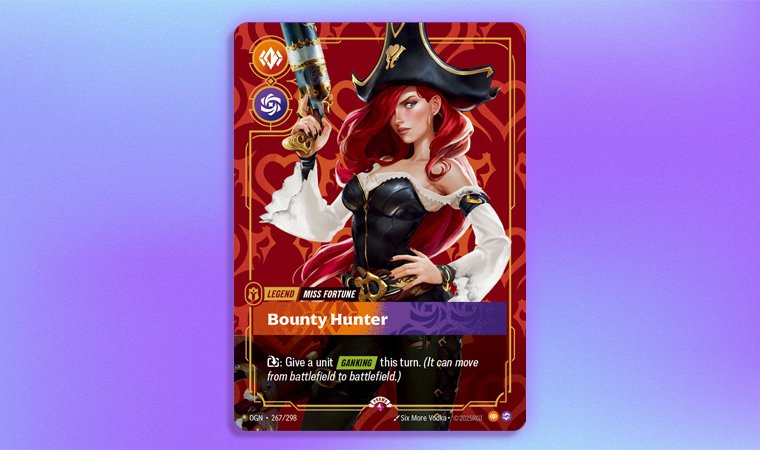
| Card Name | Miss Fortune, Bounty Hunter |
| Champion | Miss Fortune |
| Primary Role | Win condition |
| Playstyle Fit | Aggressive |
| Deck Identity | Burn/quick damage decks |
| Complexity | Low |
| Competitive Relevance | High |
Miss Fortune, Bounty Hunter delivers fast-paced, front-line pressure that closes games early. She’s one of the most straightforward Riftbound Legend cards for players who prefer decisive plays and relentless attacks.
Don’t hold her back, Miss Fortune is most dangerous when played early and backed by immediate aggression.
Typically used in aggressive Riftbound Champion decks, she enables early tempo leads that force bad trades and limited response windows. Her damage output snowballs quickly, especially when supported by low-cost units and combat tricks.
7. Annie, Dark Child
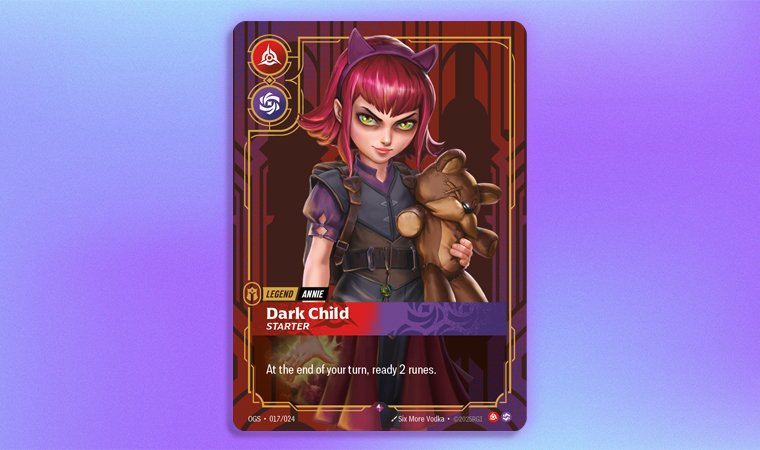
| Card Name | Annie, Dark Child |
| Champion | Annie |
| Primary Role | Control |
| Playstyle Fit | Spell-based |
| Deck Identity | Burn/control hybrid decks |
| Complexity | Medium |
| Competitive Relevance | Medium |
Annie, Dark Child brings destructive control in the form of targeted spells and area removal. She’s a strong choice in any Riftbound TCG card list focused on denying the board while slowly burning down the opponent.
Keep mana open on your opponent’s turn, Annie’s reactive spells punish bad timing.
Most impactful during the mid-game, Annie shines when the opponent starts to build a board, punishing overextension with burst damage. She’s a favorite for players who enjoy tactical spell use without committing to full control. In a top trading card game like Riftbound, her presence is always felt.
Given that card availability influences the meta, a Riftbound rarity overview provides necessary insight into the drop rates and distribution of such essential champions.
8. Ahri, Nine-Tailed Fox
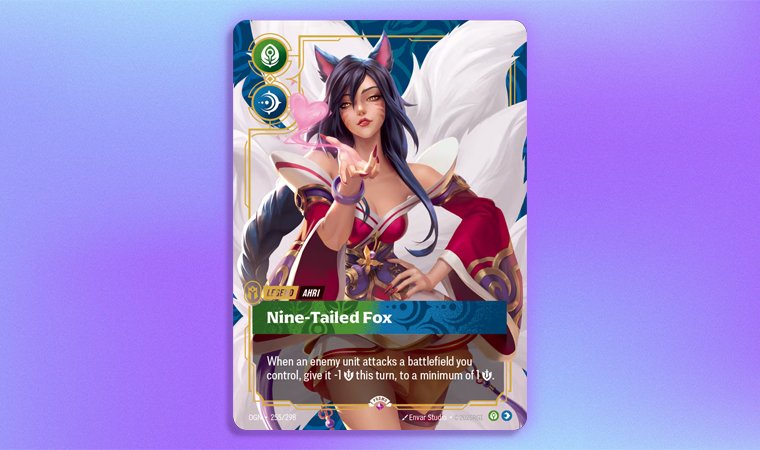
| Card Name | Ahri, Nine-Tailed Fox |
| Champion | Ahri |
| Primary Role | Value engine |
| Playstyle Fit | Tempo |
| Deck Identity | Recall/combo decks |
| Complexity | High |
| Competitive Relevance | Medium |
Ahri, Nine-Tailed Fox offers combo-driven flexibility that opens space for recall synergies and value loops. Her role in the Riftbound TCG card list is tied to smart sequencing, Ahri rewards players who plan turns ahead.
Build around recall chains that keep your board light while reusing high-impact units or spells.
She’s usually activated early and scales through repeat actions over time. Ahri stands out for fluid play that adapts to any board state.
9. Darius, Hand of Noxus
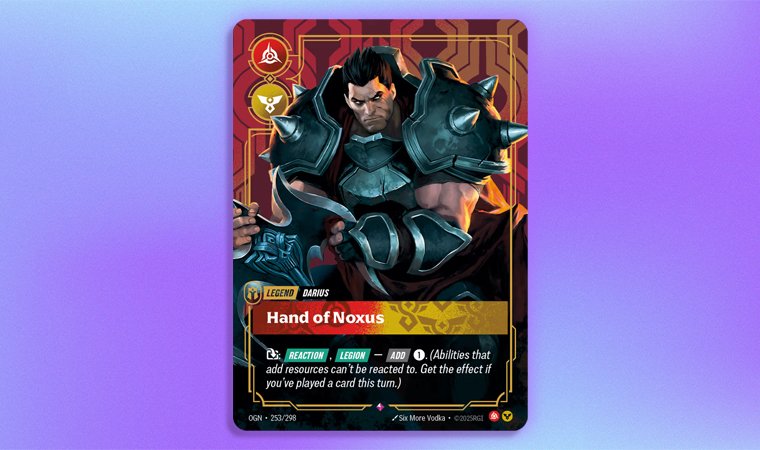
| Card Name | Darius, Hand of Noxus |
| Champion | Darius |
| Primary Role | Win condition |
| Playstyle Fit | Aggressive |
| Deck Identity | Overwhelm/finisher decks |
| Complexity | Low |
| Competitive Relevance | High |
Darius, Hand of Noxus is a straight-line finisher that fits cleanly into damage-focused builds. He belongs in any list built around pushing unrelenting pressure and ending games fast.
Use damage amplifiers or Overwhelm effects to force lethal the turn Darius lands.
Darius enters best in the mid-game, where he can follow early aggression with a clean, overwhelming finisher.
10. Jinx, Loose Cannon
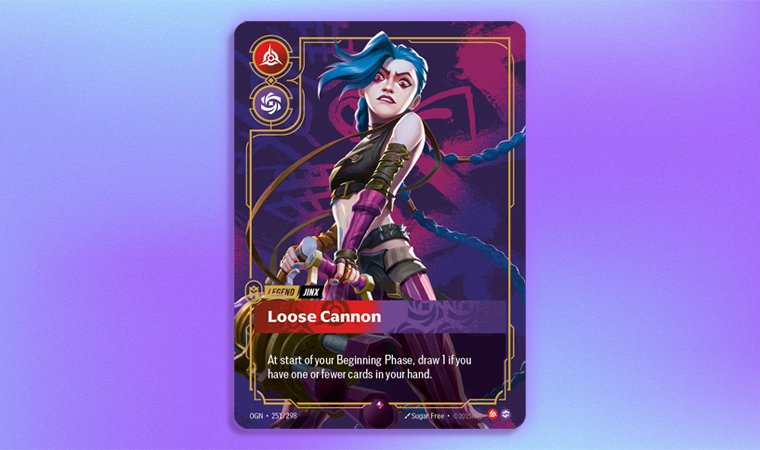
| Card Name | Jinx, Loose Cannon |
| Champion | Jinx |
| Primary Role | Value engine |
| Playstyle Fit | Aggressive |
| Deck Identity | Discard/burn hybrid decks |
| Complexity | Medium |
| Competitive Relevance | Medium |
Jinx, Loose Cannon thrives in chaos. She rewards fast hand cycling and discard synergy, turning what looks like randomness into pure value.
Don’t hoard your hand, Jinx unlocks her full potential when your cards are always moving.
Jinx shines in early to mid-game tempo decks that don’t mind losing cards if it means gaining explosive damage. She offers a unique angle in a card game where planning usually dominates.
11. Yasuo, Unforgiven
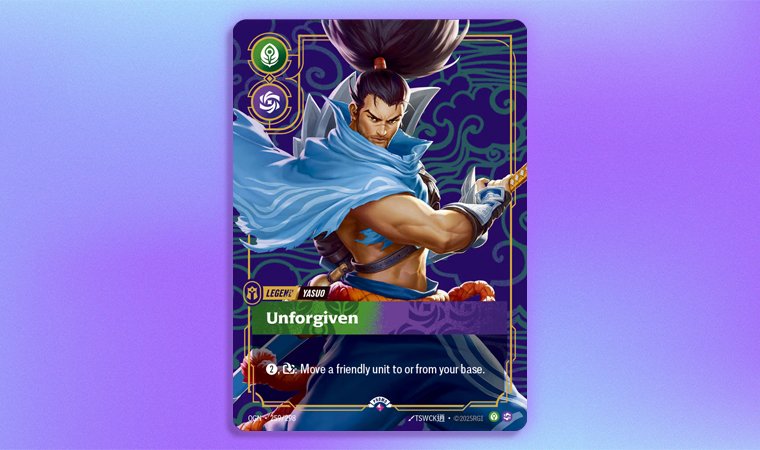
| Card Name | Yasuo, Unforgiven |
| Champion | Yasuo |
| Primary Role | Disruption |
| Playstyle Fit | Control |
| Deck Identity | Stun/tempo manipulation |
| Complexity | High |
| Competitive Relevance | Medium |
Yasuo, Unforgiven is all about stopping enemy momentum through repeated stuns and tempo shifts. He fits naturally in control decks that turn the tide without relying on brute force.
Chain multiple stun effects in a single round to trigger Yasuo’s ability consistently.
His impact starts in the mid-game, when your board is developed and your opponent has committed threats. Players use Yasuo when they want a tactical response to aggressive setups.
12. Lee Sin, Blind Monk
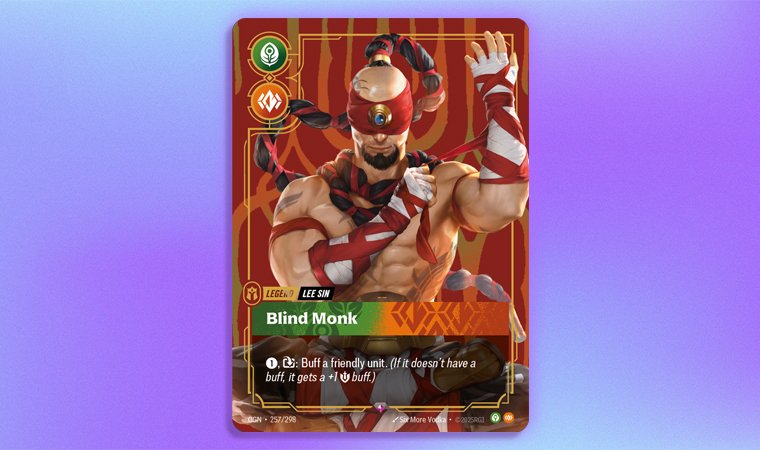
| Card Name | Lee Sin, Blind Monk |
| Champion | Lee Sin |
| Primary Role | Combo finisher |
| Playstyle Fit | Spell-focused burst |
| Deck Identity | Reactive combo decks |
| Complexity | Very High |
| Competitive Relevance | Niche but strong in right hands |
Lee Sin, Blind Monk is a classic high-risk, high-reward finisher. He’s used in combo decks that rely on chaining spells to push out massive damage in one swing.
Stack cheap burst spells and only drop Lee Sin when your hand gives you a full execution line.
Most impactful during the mid to late game, Lee Sin punishes players who leave their board unguarded. Every move with him must be precise.
13. Leona, Radiant Dawn
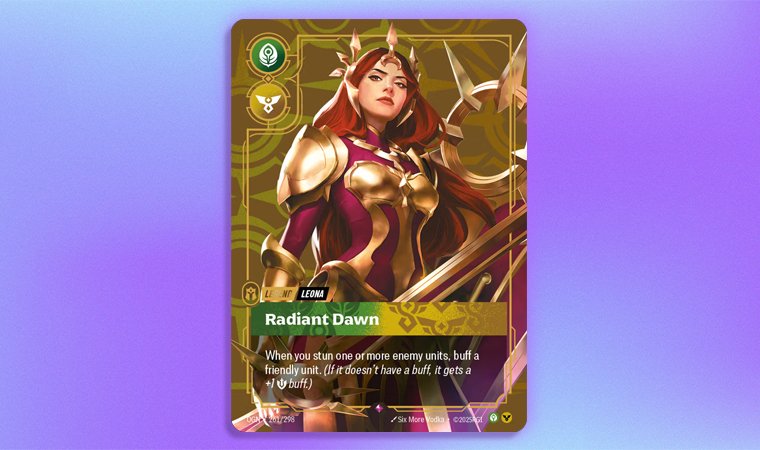
| Card Name | Leona, Radiant Dawn |
| Champion | Leona |
| Primary Role | Board stabilizer |
| Playstyle Fit | Midrange |
| Deck Identity | Sun/defense decks |
| Complexity | Low |
| Competitive Relevance | Consistent |
Leona, Radiant Dawn is a midrange defender who excels at slowing down aggressive decks. Her durability and reliable stats let you control the pace without falling behind.
Time Leona’s entrance to absorb two attacks and set up a board flip.
She becomes especially useful in the mid-game, where tempo shifts often decide the match. Players pick her when they want safe trades and board presence without overcomplication.
14. Volibear, Relentless Storm
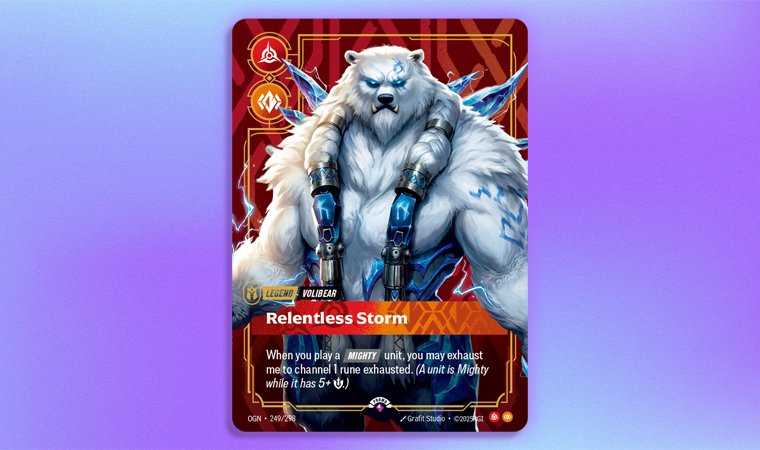
| Card Name | Volibear, Relentless Storm |
| Champion | Volibear |
| Primary Role | Ramp payoff |
| Playstyle Fit | Big units |
| Deck Identity | Overwhelm/ramp decks |
| Complexity | Medium |
| Competitive Relevance | High in specific metas |
Volibear, Relentless Storm serves as a late-game sledgehammer in decks built to ramp and explode. He brings massive stats and pressure, demanding an immediate answer.
Always hold at least one backup threat, removal on Volibear is expected the moment he hits.
Ideal for players who like overwhelm strategies, Volibear typically hits the board after you’ve stalled or ramped safely for 4–5 turns.
15. Lux, Lady of Luminosity
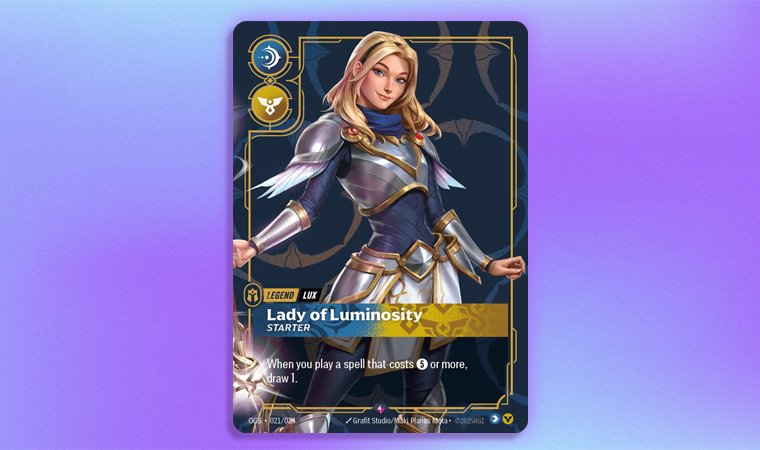
| Card Name | Lux, Lady of Luminosity |
| Champion | Lux |
| Primary Role | Spell synergy engine |
| Playstyle Fit | Control |
| Deck Identity | Light/control hybrid decks |
| Complexity | Medium |
| Competitive Relevance | Consistent |
Lux, Lady of Luminosity shines in decks that generate value through repeated spell use. She supports board clears and card cycling, making her a control player’s favorite.
Pair Lux with low-cost light spells to trigger her ability across several rounds without losing tempo.
Her ideal timing is in the mid-game, when you’ve used cheap spells to prep the field. Left unchecked, she creates a value loop most decks can’t stop.
16. Garen, Might of Demacia
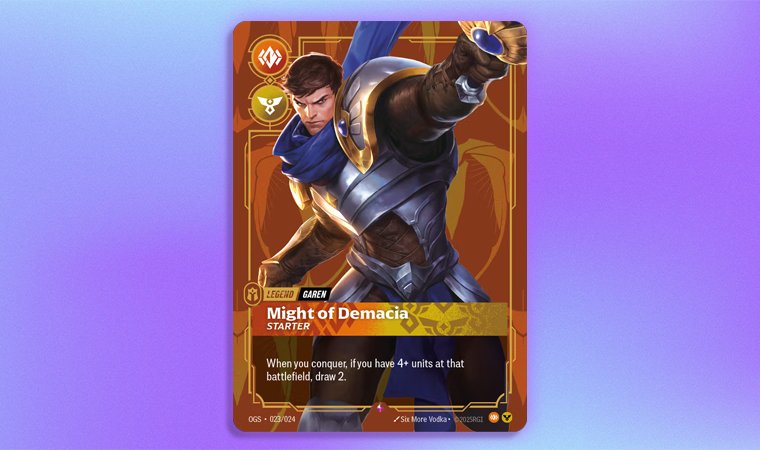
| Card Name | Garen, Might of Demacia |
| Champion | Garen |
| Primary Role | Tempo anchor |
| Playstyle Fit | Midrange |
| Deck Identity | Buff/support combat decks |
| Complexity | Low |
| Competitive Relevance | Strong in beginner builds |
Garen, Might of Demacia is a no-nonsense, stat-based brawler. He anchors midrange boards and thrives when backed by simple buffs or early trades.
Use combat buffs right after Garen’s attack to snowball hard without losing momentum.
His presence in the mid-game forces unfavorable decisions from opponents who rely on smaller units or tempo tricks. If you’re building your first combat-focused deck, Garen is a natural inclusion. Constructing a balanced list from scratch can be daunting for fresh accounts, but a Riftbound starter preconstructed champion decks guide simplifies the process by highlighting proven archetypes where reliable cards like this truly shine.
How Legends Affect Your Deck
Every Legend card in Riftbound serves as the strategic core of a deck. You’re choosing your entire deck’s direction. Because players can only include one Legend per deck, that single decision shapes everything from card choices to endgame tactics. Your success on the ladder depends on knowing how your chosen leader interacts with the powerful Riftbound decks types defined by the current meta.
This kind of pre-game deck construction is a defining trait of many top deck-building card games, and Riftbound follows the same philosophy by tying strategy and core rules to a single, powerful card. Here’s how:
- Deck Identity: Your Legend defines your deck’s core strategy, control, aggression, tempo, or hybrid.
- Rune Access: Certain runes are only compatible with specific Legends, which limits or enables certain spell paths.
- Card Selection: Supporting units and spells must reinforce the Legend’s ability, timing, or synergy conditions.
- Playstyle Direction: The Legend sets the tone for how you approach matchups, fast-paced, reactive, or value-driven.
- Complexity: Some Legends demand precision and tight sequencing, while others support simpler, more forgiving lines.
- Win Conditions: Most decks close games using their Legend’s core ability or by enabling a finisher that fits the theme.
While Origins is the first set, Riftbound will continue to expand. New releases, such as Spiritforged and beyond, are expected to introduce fresh Legends and new mechanics over time.
FAQs
There are 16 Legends available in Riftbound: Origins. Each Legend represents a specific champion and serves as a unique, one-per-deck card.
No, a Riftbound deck does not strictly require a Legend. Some players choose to build decks without one, especially for learning or casual play.
No, you can only use one Legend per deck. This rule is intentional and ensures that each deck has a clear identity and balance.
Yes, Legends are based on champions from League of Legends. However, their abilities are adapted to fit Riftbound’s card game mechanics. While the theme stays familiar, how they play can differ significantly from their original MOBA roles.
Yes, some preconstructed or starter decks may include a Legend, depending on the product. These decks are designed to showcase how a Legend functions in a full build, making them useful for new players learning the game.
Yes, Legends heavily influence deck difficulty. Some Legends support straightforward play patterns, while others require precise timing and advanced decision-making.
Yes, more Legends are expected in future Riftbound expansions. While Origins is the first set, upcoming releases like Spiritforged and later expansions are planned to introduce new Legends, mechanics, and deck-building options over time.