

Riftbound Decks: Types, Card Structure, and Player Guide 2026

Eneba Hub contains affiliate links, which means we may earn a small commission if you make a purchase through them—at no extra cost to you. Learn more

Riftbound decks were the first thing I had to understand when I sat down for my initial games, because the deck you choose immediately shapes how the match feels and how quickly you learn the system.
Riftbound is a competitive tabletop card game set in the League of Legends universe, built around champions, regions, and structured turn-based play. Very early on, it becomes clear that Riftbound is not designed around a single universal deck format.
Instead, the game offers several official deck types, each created with specific player experience levels and play styles in mind, and the next section breaks down exactly how these deck types differ, what each one brings to the table, and which format suits your goals as a player.
Jump to:
What Are Riftbound Decks?
A Riftbound deck is a player’s complete set of cards used to play a match, built according to official rules and limits. In simple terms, the deck is the core gameplay unit of Riftbound because every decision, draw, and action during a game comes from the cards it contains.
Riftbound decks are designed to create structure, balance, and clear progression for players as they learn the game.
Rather than acting as a loose collection of cards, a deck defines how a player interacts with the game system, how turns unfold, and how strategies develop over time. Understanding decks is essential because all gameplay flows directly from deck construction.
Official Types of Riftbound Decks
Before choosing a deck, it helps to understand how Riftbound officially organizes them. Each type is designed with a specific purpose, learning curve, and player progression path in mind.
This structure keeps the game accessible while still allowing depth. The following section breaks down how these Riftbound decks are officially categorized.
1. Champion Decks (Preconstructed Starter Decks)
| Sold As | Individual products |
|---|---|
| Card Source | Prebuilt |
| Deck Size | Fixed |
| Cardboard | Optional |
| Complexity | Easy |
| Ideal For | Beginners / Casual players / LoL fans |
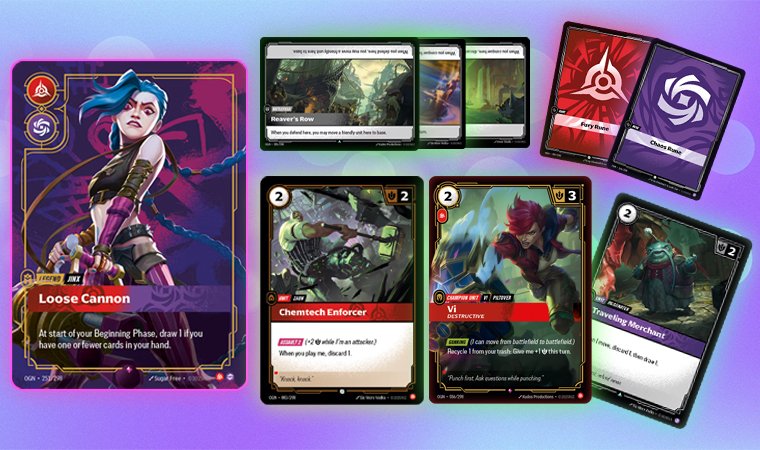
Champion Decks are fully preconstructed Riftbound decks designed to be opened and played immediately without any setup or customization. They serve as the primary entry point for new players, removing deck-building decisions so the focus stays on learning rules, turn flow, and core mechanics.
These decks are commonly used for first-time play, casual matches, demos, and teaching sessions, especially for players coming from League of Legends rather than traditional card games.
Play several matches with the same deck before changing cards to better understand card flow.
Because they are fixed and balanced out of the box, Riftbound Champion decks help players understand how official Riftbound decks are structured before moving on to more flexible formats.
2. Proving Grounds Decks

| Sold As | Individual products |
|---|---|
| Card Source | Prebuilt |
| Deck Size | Fixed |
| Cardboard | Yes |
| Complexity | Easy |
| Ideal For | Beginners / Groups / Casual play |
Proving Grounds Decks come bundled inside the Proving Grounds box set and are designed specifically for learning Riftbound in a multiplayer setting. These decks are prebuilt, evenly balanced, and meant to be played against each other, which makes them ideal for groups discovering the game together.
Their beginner-friendly design focuses on clarity and repetition, helping new players understand turn structure, card interactions, and pacing without added complexity.
Keep the decks unmodified at first so every player learns under the same conditions.
Because they are part of a controlled learning environment, many players later reference the Riftbound Proving Grounds deck list when comparing these decks to other official Riftbound decks and planning next steps.
3. Custom / Player-Built Decks
| Sold As | Individual products |
|---|---|
| Card Source | Player collection |
| Deck Size | Fixed |
| Cardboard | Optional |
| Complexity | Medium to High |
| Ideal For | Experienced players / TCG fans |
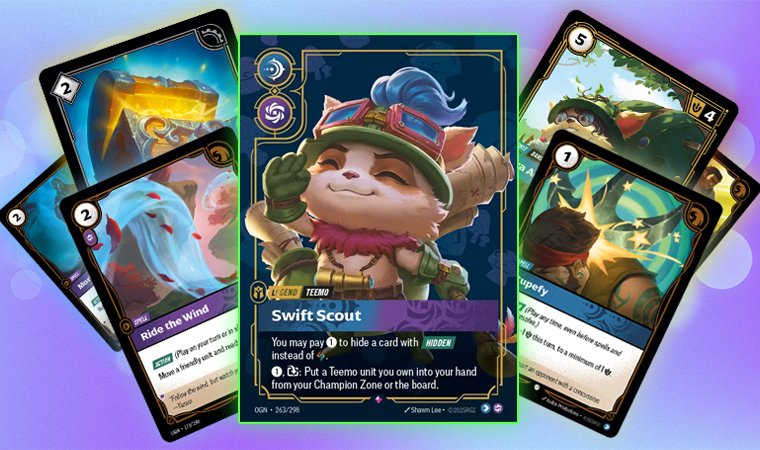
Custom or player-built decks are created by assembling cards from a personal collection rather than using a preconstructed product. This format gives players full control over card selection, synergy, and strategy, which naturally increases complexity and decision-making.
As players experiment with interactions and refine their ideas, deck-building becomes a core part of long-term engagement, similar to other best deck-building games in the tabletop space.
Build around consistency first, then experiment with tech choices.
Because they rely on owned cards and deeper system knowledge, custom builds represent the most flexible form of official Riftbound decks and are typically explored after players understand the game’s fundamentals.
What Cards Are in a Riftbound Deck?
Before learning how decks differ, it helps to understand the core card types that make up every Riftbound deck. Each card serves a distinct role, and together they define how a match unfolds.
Riftbound keeps these categories clear and readable, which is one reason it appeals to players coming from both tabletop games and digital titles, often compared to other best trading card games.
- Legend: The champion-style card that leads the deck and defines its overall identity and direction
- Rune: Passive or rule-modifying cards that shape how other cards behave during play
- Battlefield: Cards that alter the match environment and influence how turns and interactions play out
- Unit: Characters or creatures placed on the board to contest space and apply pressure
- Spell: One-time effect cards used for tactical moments or momentum shifts
- Gear: Equipment cards that enhance units or enable specific interactions
Understanding these categories helps players evaluate card value, spot synergy, and eventually identify which cards stand out when exploring the best Riftbound cards available for deck building.
Riftbound Decks by Player Type
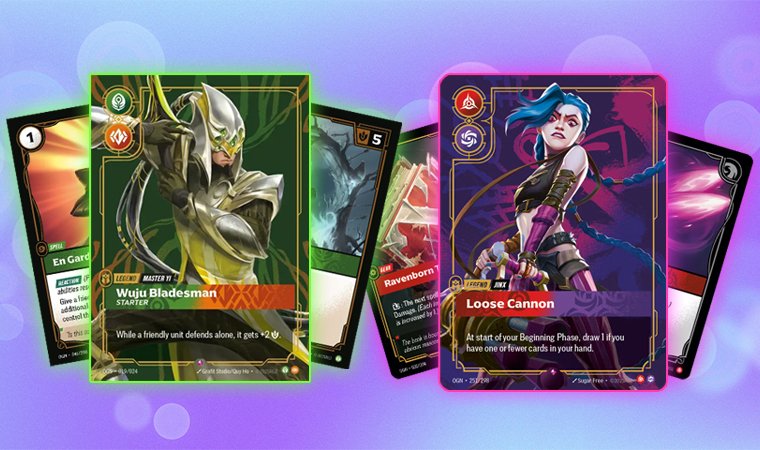
Choosing between different Riftbound decks depends on experience, comfort level, and what a player wants from each match.
This section is meant to guide players toward deck formats that match how they learn and play, not to label any option as better than another.
Beginners
For new players, the priority is learning how Riftbound works without added complexity. Preconstructed decks are recommended because they are fully built and ready to play, require no card selection decisions, and are intentionally designed to teach core Riftbound mechanics through repetition.
Their game plans are clear and easy to follow, helping beginners focus on turn structure, card flow, and basic interactions instead of optimization. For players just getting started, knowing where to buy Riftbound products also removes friction and makes the entry process smoother. Consulting a detailed Riftbound starter preconstructed champion decks overview provides clear insight into the specific strategies found in each box so new players can choose the one that appeals to them most.
Casual Players
Casual players often want more flexibility without committing to full deck construction. Champion Decks and Proving Grounds Decks work well here because they support light customization while keeping a clear structure.
These options suit players who understand the basic rules, play regularly with friends, and want to make small upgrades rather than rebuild from scratch. Swapping a few cards or exploring variations based on a Riftbound Legends list allows casual groups to experiment while keeping games balanced and approachable.
Competitive/Advanced Players
Competitive and advanced players benefit most from Custom (Player-Built) Decks, where deeper strategy and full control over card choices matter.
This approach suits players who are comfortable with deckbuilding, actively follow the evolving metagame, and play in tournament or high-skill environments. At this level, optimization, consistency, and matchup planning become central, similar to how experienced players approach other best strategy board games.
Competitive Riftbound players often reference tier lists such as S-Tier, A-Tier, or Tier 1, and B-Tier or Tier 2 to describe deck strength in the current metagame. These rankings are community-driven, based on tournament results and matchup performance, change frequently, and are not intended for beginners.
FAQs
There are multiple Riftbound sets planned for 2026, but the exact number has not been finalized publicly. Release schedules can change, so players should rely on official updates for the most accurate information.
A Riftbound deck uses a fixed number of cards defined by the official ruleset. This consistency helps maintain balance across matches and makes it easier for players to compare different Riftbound deck types without worrying about size differences.
The difference between Champion Decks and Proving Grounds decks is that Champion Decks are sold individually and designed for solo learning or casual play. Proving Grounds decks come inside a boxed set and focus on multiplayer learning.
Deck cost varies based on format and customization level. Preconstructed decks are more affordable, while custom builds depend on card availability. Reviewing a Riftbound deck list or comparing multiple Riftbound deck lists helps players estimate potential spending.
The best Riftbound deck for starters is a preconstructed deck. They are ready to play, easy to understand, and designed to teach core mechanics without requiring deckbuilding knowledge or additional card purchases.
Yes, Riftbound decks can be customized. Once players are comfortable with the rules, decks can be customized using cards from their collection. This allows for experimentation and strategy refinement, often guided by an existing list of Riftbound decks used as a reference.
Yes, all Riftbound decks include a champion. Every legal Riftbound deck includes a champion-leading card. This card defines the deck’s identity and plays a central role in how the deck functions, regardless of whether it is preconstructed or player-built.